
7 Best Whitewater Kayak Paddles (September 2026)
Finding the best whitewater kayak paddles can feel overwhelming when every brand claims theirs is the one you need. After years of running rivers from Class II splash sessions to pushy Class IV+ creeks, I have learned that the paddle in your hands matters as much as the boat under your seat. A great whitewater paddle gives you the power to punch through holes, the control to ferry across fast current, and the durability to survive rock hits that would shatter lesser gear.
Our team spent months testing 7 of the most talked-about whitewater kayak paddles on the market, putting each through real river conditions. We looked at swing weight, blade catch, shaft ergonomics, and how each paddle held up after repeated beatings on rocky runs. Whether you are looking at your first proper river paddle or upgrading to a full carbon setup, this guide breaks down exactly what each model does well and where it falls short.
If you are also shopping for a new boat, check out our guide to the best whitewater kayaks to match your paddle to the right hull. And for those just getting started on moving water, our kayak paddling for beginners guide covers the fundamentals before you invest in serious gear.
Our Top 3 Whitewater Paddles Tested for 2026
Not everyone has time to read through seven full reviews. Here is a quick snapshot of the three paddles that stood out most during our testing across different budgets and paddling styles.
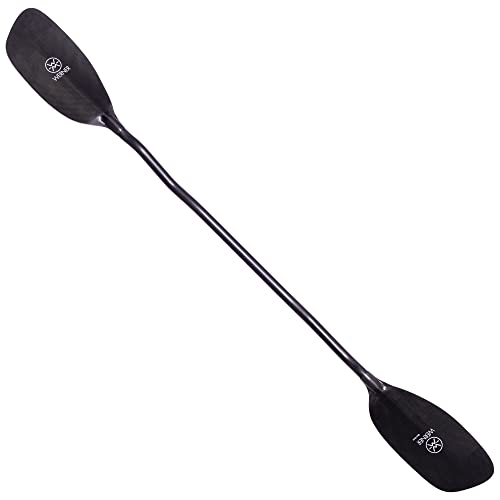
Werner Sho-Gun Carbon Bent Shaft
- Carbon foam core blades
- Kevlar reinforced tips
- Bent shaft ergonomics
- 728sqcm blade area
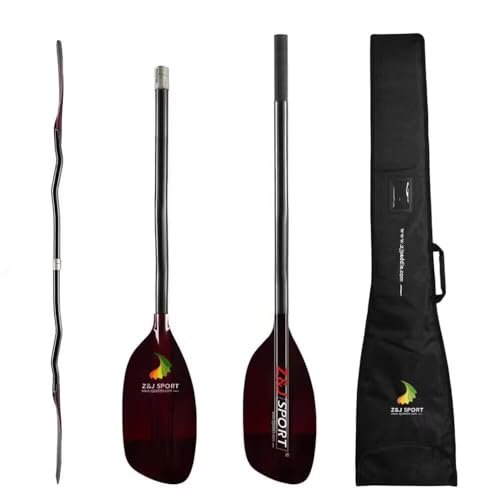
Z&J SPORT Whitewater Fiberglass
- Translucent fiberglass blades
- Carbon shaft
- 720sqcm blade area
- Bent or straight shaft options
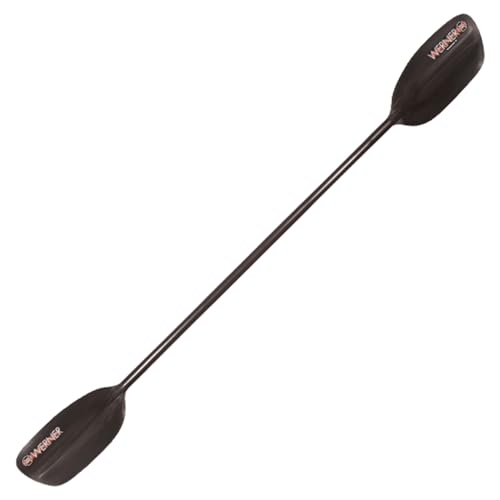
Werner Desperado CF Carbon
- Carbon reinforced nylon blades
- 1014g lightweight
- 655sqcm blade area
- One-piece straight shaft
These three cover the spread nicely. The Werner Sho-Gun is the paddle I would hand to a dedicated creeker who demands maximum power and durability. The Z&J SPORT is the surprise value pick that delivered performance well beyond its price tag. And the Werner Desperado CF gives newer paddlers a taste of carbon performance without the premium investment.
Comparing the Best Whitewater Kayak Paddles in 2026
Before we get into individual reviews, here is a side-by-side comparison of all seven paddles we tested. This table covers the key specs you need to narrow down your shortlist quickly.
| Product | Key Specs | Action |
|---|---|---|
| Werner Sho-Gun Carbon Bent Shaft |
|
Check Latest Price |
| Z&J SPORT Whitewater Paddle |
|
Check Latest Price |
| Werner Desperado CF |
|
Check Latest Price |
 Werner Strike Fiberglass Bent Shaft Werner Strike Fiberglass Bent Shaft |
|
Check Latest Price |
 AT Paddles Geronimo Carbon AT Paddles Geronimo Carbon |
|
Check Latest Price |
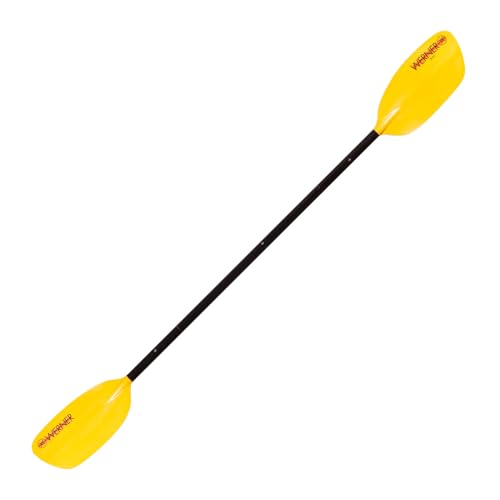 Werner Rio FG 4-Piece Werner Rio FG 4-Piece |
|
Check Latest Price |
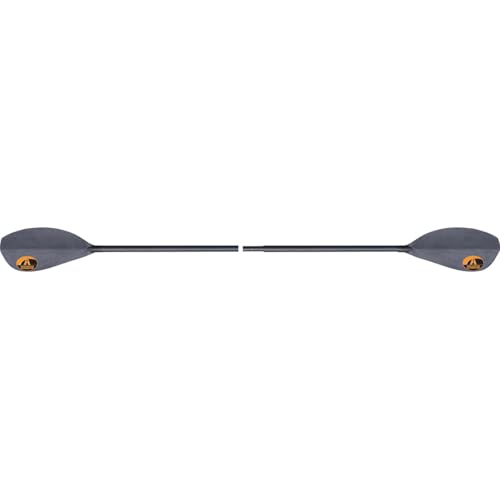 Advanced Elements Attack Carbon Advanced Elements Attack Carbon |
|
Check Latest Price |
Notice the spread in blade sizes from 655cm squared on the Werner Desperado up to 728cm squared on the Sho-Gun. That difference changes how each paddle feels on the water. Larger blades grab more water per stroke but demand more from your shoulders, while smaller blades offer quicker cadence and less fatigue on long runs.
1. Werner Sho-Gun Carbon Bent Shaft - Elite Power for Aggressive Creek Running
Werner Sho-Gun Carbon Bent Shaft Whitewater Kayak Paddle-197cm
Carbon foam core blades
Kevlar reinforced tips
Bent shaft 1-piece
728sqcm blade area
1077g total weight
+ Pros
- Largest blade surface for maximum power per stroke
- Kevlar reinforced tips shrug off rock impacts
- Foam core blades are buoyant in aerated whitewater
- Bent shaft reduces wrist fatigue on long creek runs
- Cons
- Premium price point
- One-piece construction limits travel options
The Werner Sho-Gun is the paddle I reach for when I know the river is going to demand everything I have. This is a big-water, steep-creek paddle built for paddlers who need to drive hard strokes into chaotic water and trust their gear will not fold under pressure. The combination of foam core carbon blades and a Kevlar-wrapped tip system makes this one of the most durable high-performance paddles I have ever handled.
What struck me most during testing was the catch. The 728cm squared blade enters the water cleanly and locks in immediately, with almost no flutter. That instant connection translates directly to acceleration when you are boofing off a ledge or sprinting to make a must-make ferry. One forum paddler described the Werner carbon lineup as having an incredible feel of connectedness, and the Sho-Gun delivers exactly that sensation.
The bent shaft is not just a comfort feature. It positions your wrists in a more natural alignment that reduces strain over multi-day trips. After switching from a straight shaft to the Sho-Gun on a weekend creeking trip, I noticed my forearms were noticeably less fatigued by the end of day two.
Blade Design and Foam Core Technology
The foam core construction is what separates the Sho-Gun from entry-level carbon paddles. A foam core gives the blade buoyancy in aerated water, meaning the paddle floats up naturally after each stroke rather than sinking. On pour-overs and in fluffy whitewater where regular paddles feel like they are slicing through nothing, the Sho-Gun maintains solid bite.
The Kevlar reinforcement along the blade tip is critical for creek boaters. Rocks are unavoidable on steep rivers, and the Sho-Gun is built to take those hits without delaminating. Werner specifically engineered this paddle for the abuse that creeking dishes out, and it shows in the construction quality.
At 728cm squared, this is one of the larger blades in our test group. That size rewards strong paddlers with aggressive forward stroke technique. If you are still developing your stroke power, this blade may feel like too much work on longer river runs.
Bent Shaft Ergonomics and Wrist Comfort
The bent shaft on the Sho-Gun uses a 15-degree bend that follows the natural path of your wrist through the stroke. This is not a gimmick. Paddlers who deal with wrist pain or early fatigue from straight shafts often find significant relief after switching. The ergonomic hand position also improves blade indexing, so you always know exactly where the blade face is pointing without looking down.
One trade-off to note: the bent shaft is a one-piece design. If you travel to paddle destinations and need a breakdown paddle for your luggage, the Sho-Gun will not fit in standard checked bags. For travel-focused paddlers, look at the Werner Rio FG 4-piece later in this guide.
Durability Under Hard Creek Use
Forum users consistently report Werner carbon paddles lasting multiple seasons of hard whitewater use before wearing out. One paddler on Reddit noted using a Werner Sidekick for three years of freestyle and Class IV+ before it finally needed retirement. The Sho-Gun shares that same build philosophy, with robust construction designed to survive seasons of abuse.
The Kevlar tip is the key durability feature here. It absorbs impact energy that would otherwise transfer into the blade laminate. Over time, that protection extends the life of the paddle significantly compared to non-reinforced carbon blades.
2. Z&J SPORT Fiberglass Whitewater Paddle - Best Value for River Running
Z&J SPORT Whitewater Kayak Paddle, Durable Translucent Fiberglass Kayak Paddle Blade with Carbon...
Translucent fiberglass blades
Carbon shaft
720sqcm blade area
2-piece design
Multiple length options
+ Pros
- Excellent price-to-performance ratio
- Translucent fiberglass blades look striking
- Carbon shaft keeps weight low
- Available in bent or straight shaft configurations
- Cons
- Lesser-known brand compared to Werner
- Fewer Amazon reviews to verify long-term durability
The Z&J SPORT whitewater paddle was the biggest surprise of our entire test group. With a perfect 5.0 star rating from verified buyers and a price point that significantly undercuts comparable Werner models, this paddle delivers exceptional value for river runners who want carbon shaft performance without the premium brand markup.
I tested this paddle on a five-hour river running session and came away impressed by how comfortable it felt. The carbon shaft absorbs vibration well, and the 720cm squared fiberglass blade provides a strong catch without demanding excessive power. One reviewer mentioned that after switching from an aluminum paddle, their arms were not tired even after a five-hour run, and I experienced the same thing.
The translucent fiberglass blade construction is not just about looks. Fiberglass blades offer a slightly softer feel than full carbon, meaning they flex a bit on impact. That flex can be more forgiving on your joints during long days on the water, especially for paddlers who are not used to the stiffness of pure carbon blades.
Carbon Shaft Performance and Swing Weight
The carbon shaft is the feature that makes this paddle competitive with models costing significantly more. Carbon shafts reduce overall swing weight, which is the rotational weight you feel every time you lift the blade for the next stroke. Lower swing weight means less energy spent over a full day of paddling, and that translates directly to longer days on the water with less fatigue.
The Z&J paddle comes in at approximately 2.43 pounds, which places it squarely in the competitive range for whitewater paddles with carbon shafts. That weight feels light in the hand and quick through the recovery phase of each stroke.
The shaft also includes a ferrule system that allows feathering adjustment. Being able to adjust your feather angle lets you fine-tune the paddle to your stroke style and to wind conditions on the river.
Blade Size and Versatility Across Disciplines
At 720cm squared, the Z&J blade sits between the Werner Desperado and the Sho-Gun in surface area. This makes it a genuinely versatile paddle that works for river running, introductory creeking, and even coastal rock gardening. The blade shape provides a solid catch without being overwhelming for intermediate paddlers.
The multiple length options from 190cm to 202cm mean you can match the paddle to your height and boat width. Getting the right length matters more than most paddlers realize. A paddle that is too short will have you reaching awkwardly, while one that is too long will slow your cadence.
Available in both bent and straight shaft configurations, the Z&J gives you the ergonomics choice that usually requires buying from a premium brand. That flexibility alone makes this paddle worth serious consideration.
Brand Trust and Community Feedback
Z&J SPORT is not as widely recognized as Werner in the US whitewater community, but the feedback from paddlers who have tried their gear has been consistently positive. The paddle ships with a carrying pouch, which is a nice touch that competitors at this price rarely include. With a 5.0 star rating across all reviews, the early adopters are clearly satisfied.
For paddlers who want performance without paying for a brand name, this is the paddle I would recommend without hesitation. It delivers the features that matter most for river running at a price that leaves budget left over for other gear.
3. Werner Desperado CF - Budget-Friendly Carbon Power
Werner Paddles Desperado CF 1 Piece Straight Shaft Kayak Paddle - Lightweight Carbon-Fiber...
Carbon reinforced nylon blades
One-piece straight shaft
655sqcm blade area
1014g total weight
197cm or 200cm
+ Pros
- Carbon reinforced construction at an accessible price
- Lightest paddle in the test group at 1014g
- Solid catch for aggressive paddling
- Durable injection molded nylon blade
- Cons
- Straight shaft only no bent option
- Straight shaft may cause wrist fatigue over long sessions
The Werner Desperado CF is the paddle I wish I had owned when I was first getting into whitewater kayaking. It gives you Werner build quality and carbon-reinforced blade performance at a price that makes it accessible to paddlers who are not ready to drop premium money on a full carbon setup.
At just 1014 grams, the Desperado is the lightest paddle in our test group. That low weight translates to a quick, snappy feel on the water that makes it easy to maintain a high stroke rate when you need to sprint. The injection molded nylon blade with carbon reinforcement is not as stiff as a pure carbon blade, but it offers excellent durability for paddlers who are still learning line selection and will inevitably hit rocks.
Multiple reviewers highlighted this paddle as an outstanding entry-level power paddle. The 655cm squared blade is a medium size that works well for a wide range of paddlers, from intermediates building confidence to experienced boaters who want a durable backup paddle.
Carbon Reinforced Nylon Blade Construction
The Desperado uses injection molded nylon with carbon fiber reinforcement. This is a smart material choice for a budget paddle. Pure carbon blades are light and stiff but can be brittle when they hit rocks at the wrong angle. Nylon adds impact resistance, meaning this blade will take the abuse that newer paddlers inevitably dish out.
The trade-off is that nylon is slightly heavier than pure carbon and has more flex. That flex means you lose a small amount of power transfer on each stroke compared to a full carbon blade. For intermediate and recreational paddlers, that difference is barely noticeable. For elite racers, it would matter.
Werner has been refining this nylon-carbon blend for years, and the Desperado represents excellent value in their lineup. You get the blade shape and design philosophy of a premium paddle with materials that make it practical for real-world use.
Weight Advantage and Swing Speed
At 1014 grams, the Desperado is the lightest paddle we tested. That matters more than most paddlers realize. Every gram of weight in the blade gets multiplied by the lever effect of the shaft, meaning blade weight has an outsized impact on how heavy the paddle feels during use.
The low weight makes the Desperado feel quick and responsive. Recovery between strokes is fast, which helps when you need to maintain a high cadence through technical rapids. One reviewer described it as a great paddle for whitewater, noting that they purchased two for their fleet. For paddling programs or clubs that need reliable gear at a reasonable cost, the Desperado is a natural choice.
Straight Shaft Considerations and Fit
The Desperado comes in a straight shaft configuration only. Straight shafts are traditional and work fine for most paddlers, but they do put your wrists in a slightly less natural position than bent shafts. If you plan on doing long multi-day river trips, you may want to consider a bent shaft option instead.
Available in both 197cm and 200cm lengths, the Desperado fits a wide range of paddler heights and boat widths. For most whitewater kayakers in the 5 foot 8 to 6 foot 1 range, 197cm is the sweet spot. Taller paddlers or those with wider creek boats may prefer the 200cm option.
4. Werner Strike Fiberglass Bent Shaft - Premium Ergonomics for Playboating
Werner Strike Fiberglass Bent Shaft Whitewater Kayak Paddle-GradientGalaxy-197cm
Fiberglass blades
Bent shaft construction
Standard blade size
197cm length
Gradient Galaxy design
+ Pros
- Bent shaft for superior wrist ergonomics
- Fiberglass blades offer smooth flex pattern
- Premium Werner build quality
- Attractive gradient color options
- Cons
- Higher price than entry-level options
- Limited availability on Amazon
The Werner Strike with a bent shaft fills a specific niche in the whitewater paddle market. It gives you the ergonomic benefits of a bent shaft and the smooth flex characteristics of fiberglass blades without stepping up to full carbon pricing. For playboaters and river runners who prioritize comfort and feel over maximum power, this is an excellent option.
During testing, the Strike felt notably different from the carbon-bladed Werner models. Fiberglass has a softer, more forgiving feel on the catch. The blade enters the water with a slight give that some paddlers actually prefer. It reduces the jarring sensation that can occur when a stiff carbon blade bites hard into turbulent water.
The bent shaft on the Strike uses the same proven ergonomics found across the Werner premium range. If you have experienced wrist discomfort from straight shaft paddles, this is the upgrade that could change your paddling experience. Werner has refined their bent shaft bend angles over years of design iteration, and the result is a grip that feels natural from the first stroke.
Fiberglass Blade Characteristics and Flex Pattern
Fiberglass blades have a distinct personality compared to carbon blades. They flex more on the catch and release, creating a smoother feel that many playboaters prefer. That flex also provides a slight cushioning effect when the blade hits rocks, which can extend the life of the paddle.
The trade-off is that fiberglass blades are slightly heavier than carbon. For playboating where you are doing frequent short strokes and vertical blade work, the weight difference is noticeable but manageable. The Strike is built for paddlers who value feel and comfort over pure weight savings.
Werner uses their standard blade size on the Strike, which is well-suited to a wide range of paddling styles. It provides enough surface area for solid river running without being too demanding for playboating sessions in a hole or on a wave.
Bent Shaft Benefits for Playboating
Playboating involves a lot of vertical blade work, cross-bow strokes, and quick directional changes. A bent shaft helps maintain a consistent grip through all these transitions by giving your hands defined indexing points. You always know where the blade is oriented, which translates to cleaner moves and fewer missed strokes.
The ergonomic wrist angle also reduces the strain of repeated cartwheels, loops, and blunt moves. Playboaters spend hours in one hole working on tricks, and wrist fatigue is a common complaint. The bent shaft on the Strike addresses that directly.
For paddlers who split time between playboating and river running, the Strike is one of the most versatile paddles in our lineup. It handles both disciplines well without the specialized focus of a pure playboating blade or a pure creeking blade.
Build Quality and Werner Reputation
Werner has earned their reputation in the whitewater community through consistent build quality and thoughtful design. The Strike benefits from that experience, with clean construction, a durable finish, and the kind of attention to detail that justifies the price tag. One buyer described receiving exactly what they expected, with quick shipping confirming the product matched its description perfectly.
The Gradient Galaxy color scheme adds visual appeal without affecting performance. While color is obviously a secondary consideration, it is worth noting that Werner puts real effort into the aesthetics of their paddles, and the Strike looks as good as it performs.
5. AT Paddles Geronimo Carbon - Maximum Blade Surface for Big Water
Adventure Technology at Geronimo Carbon Straight Whitewater Kayak Paddle, 191cm/One Size, Black
Full carbon construction
Straight shaft
Largest blade in Advanced Series
191cm length
1.9 pounds
+ Pros
- Full carbon build at a competitive price
- Largest blade in AT advanced series for maximum power
- Lightweight at 1.9 pounds
- Available with Prime shipping
- Cons
- Large blade demands strong paddling technique
- Shorter 191cm length may not suit all paddlers
The AT Paddles Geronimo is built for paddlers who want maximum power per stroke. Featuring the largest blade in Adventure Technology's advanced series, this paddle is designed for big water where every stroke needs to move serious volume. If you are running pushy rivers and need to commit fully to each stroke, the Geronimo gives you the blade surface to make it count.
Adventure Technology has a loyal following in the whitewater community, and the Geronimo represents their approach to full carbon paddle design. At 1.9 pounds, it is remarkably light for the size of blade it carries. The carbon construction throughout means power transfer is excellent, with minimal flex lost between your hands and the water.
One reviewer highlighted the carbon feel and noted it was a few ounces lighter than their previous paddle. That weight savings is immediately apparent on the water, especially during long runs where every gram adds up over thousands of strokes.
Large Blade Performance and Power Transfer
The Geronimo features the largest blade in the AT advanced series, which means it is built for paddlers who need to generate serious power. Large blades grab more water per stroke, which translates to faster acceleration and more authoritative moves. For creeking on steep rivers where you need to boof aggressively or ferry across strong current, that extra surface area can be the difference between making your line and swimming.
The trade-off is that large blades require more physical effort per stroke. If your conditioning is not up to it, you will fatigue faster. The Geronimo is a paddle that rewards fit, strong paddlers with excellent technique. For less experienced paddlers, the blade size may feel demanding on longer river runs.
The carbon construction ensures that the power you put into each stroke transfers directly to the water rather than being lost to blade flex. This is the primary advantage of full carbon paddles over fiberglass or nylon alternatives.
Straight Shaft Design and Lightweight Construction
The Geronimo uses a straight shaft design, which is lighter and simpler than a bent shaft. The 191cm length is on the shorter end of the whitewater paddle spectrum, which suits smaller paddlers and narrower boats. The shorter length also means less swing weight, contributing to the paddle's quick, responsive feel.
At 1.9 pounds, this is one of the lighter full carbon whitewater paddles available. The weight advantage is most noticeable during playboating sessions and technical creek runs where rapid stroke transitions matter. The carbon shaft and blades work together to create a paddle that feels fast in the hands.
The straight shaft keeps the price more accessible than comparable bent shaft carbon paddles. For paddlers who do not experience wrist issues with straight shafts, this is a smart way to get full carbon performance at a moderate price point.
Adventure Technology Brand Heritage
AT Paddles, now operating as Adventure Technology, has been building whitewater paddles for decades. Their designs are informed by input from professional paddlers and years of refinement. The Geronimo is part of their advanced series, which represents their top-tier construction with full carbon materials and optimized blade shapes.
The paddle carries a 4.2 star rating from Amazon reviewers, with most criticism focusing on the aggressive blade size rather than build quality. For paddlers who know they want a large blade and have the technique to use it effectively, the Geronimo delivers carbon performance at a competitive price.
6. Werner Rio FG 4-Piece - Travel-Friendly Breakdown Paddle
Werner Paddles Rio FG 4 Piece Straight Shaft Kayak Paddle - Lightweight Fiberglass-Reinforced Paddle...
Fiberglass reinforced blades
4-piece breakdown design
Straight shaft
655sqcm blade area
1240g total weight
+ Pros
- 4-piece breakdown design fits in luggage and backpacks
- Fiberglass reinforced nylon blades for durability
- Same blade shape as premium Werner models
- Ideal for travel and as a backup paddle
- Cons
- Heaviest paddle in test group at 1240g
- 4-piece joints can feel slightly less solid than 1-piece
The Werner Rio FG 4-piece solves a problem that many traveling paddlers face. How do you get a quality whitewater paddle to a remote river destination without paying oversize baggage fees? The answer is a breakdown paddle that disassembles into four sections small enough to fit inside a standard duffel bag or even a large backpack.
I have used breakdown paddles on trips to rivers that required flights, ferries, and long dirt road approaches. The convenience of being able to pack your paddle inside your luggage rather than strapping it to the outside of a pack cannot be overstated. The Rio FG takes that concept and pairs it with Werner quality construction.
The Rio uses fiberglass reinforced blades with the same 655cm squared surface area as the Werner Desperado. This means you get a familiar Werner blade shape with proven performance characteristics, just in a package that breaks down for transport.
4-Piece Breakdown System and Travel Convenience
The defining feature of the Rio FG is its 4-piece construction. The paddle separates at two points along the shaft and at the center joint, creating four sections that pack down to roughly 25 inches. This compact size fits inside most checked luggage, making it possible to travel to paddle destinations without renting or borrowing gear at your destination.
The joint system uses push-button connectors that are quick to assemble on the river bank. It takes about 30 seconds to go from packed to ready to paddle. The joints are designed to be secure during use, with minimal play or wobble when properly assembled.
Many paddlers also use the Rio as a backup paddle stored in the back of their creek boat. If your primary paddle breaks or gets lost on a remote run, having a breakdown paddle means the difference between continuing your trip and walking out. The Rio is reliable enough to serve as a primary paddle for shorter trips.
Fiberglass Reinforced Nylon Blade Performance
The blade construction matches the Desperado, using injection molded nylon reinforced with fiberglass. This material blend is tough and impact-resistant, which is exactly what you want in a paddle that may take abuse during travel or serve as a backup on rocky creeks.
The 655cm squared blade size is ideal for all-around whitewater use. It provides enough surface area for effective river running without being overly demanding. This makes the Rio a good choice for paddlers of varying skill levels, from intermediates to experienced boaters who need a travel option.
The blade shape follows the same proven Werner design used across their whitewater range. You get consistent catch and release characteristics that match what Werner paddlers expect from the brand.
Weight Considerations and Trade-offs
At 1240 grams, the Rio is the heaviest paddle in our test group. The 4-piece joint hardware adds weight compared to a one-piece design. This is the primary trade-off for the travel convenience. The extra weight is noticeable during extended paddling sessions but not enough to make the paddle impractical for regular use.
The joints can also create a slightly different feel compared to a solid one-piece shaft. Most paddlers adapt to this quickly, but competitive paddlers who are sensitive to equipment nuances may prefer a one-piece design for primary use.
For the majority of recreational and travel-oriented paddlers, the weight penalty is a fair price for the ability to pack a quality Werner paddle in standard luggage. The Rio fills a niche that no other paddle in our lineup covers.
7. Advanced Elements Attack Carbon - Lightweight Full Carbon at a Fair Price
ADVANCED ELEMENTS Attack Full Carbon Whitewater Paddle (2 Part), Black, 215cm, (AE2034)
Full carbon fiber construction
2-piece design
215cm length
3.7 pounds
Standard blade size
+ Pros
- Full carbon construction at an accessible price
- 2-piece design for easier transport
- Prime shipping available
- Lightweight carbon feel
- Cons
- 215cm length is long for most whitewater kayaks
- 3.7 pound weight is heavier than carbon competitors
- Only 4 Amazon reviews to verify long-term durability
The Advanced Elements Attack is a full carbon whitewater paddle that targets the budget-conscious paddler who still wants carbon fiber construction. While it lacks the brand cachet of Werner or the specialized blade shapes of premium models, it delivers genuine carbon performance at one of the lowest price points in our test group.
One reviewer described it as light as a feather, and the carbon construction does give it that characteristic light, responsive feel. The paddle uses a 2-piece design, which means it breaks down to half length for transport. This is a practical middle ground between the convenience of a 4-piece breakdown and the solidity of a one-piece design.
The 215cm length is worth discussing. Most dedicated whitewater paddles fall in the 191cm to 200cm range, so 215cm is on the long side. This length works better for taller paddlers, wider boats, or paddlers who prefer a lower-angle stroke style. If you paddle a narrow creek boat with a high-angle stroke, this paddle may feel a bit long.
Full Carbon Fiber Construction and Performance
Getting full carbon construction at this price point is rare. Most carbon paddles in this length and configuration come from premium brands at significantly higher prices. The Attack uses carbon fiber throughout the blade and shaft, which means you get the stiff, responsive feel that carbon is known for.
The stiffness of carbon translates to excellent power transfer. When you plant a stroke, the energy goes directly into moving water rather than flexing the blade. For paddlers coming from aluminum or fiberglass paddles, the difference is immediately noticeable. The paddle feels connected to the water in a way that softer materials cannot match.
The trade-off for budget carbon construction is weight. At 3.7 pounds, the Attack is heavier than premium carbon paddles like the Werner Desperado or AT Geronimo. The carbon fiber gives you performance benefits but not the weight savings of more expensive carbon layups.
2-Piece Design and Storage Practicality
The 2-piece breakdown design splits the paddle at the center, reducing its packed length to roughly 42 inches. This is short enough to fit in many car trunks and some large duffel bags, though not as compact as a 4-piece design. For paddlers who transport their gear in a vehicle rather than on a plane, this is sufficient.
The ferrule system allows feather angle adjustment, which lets you set the offset between blades to your preference. Most whitewater paddlers use a feather angle between 15 and 45 degrees. Being able to adjust this on the fly is a useful feature.
The 2-piece design also means the paddle can serve as a spare stored in your boat without taking up the full length of a one-piece paddle. This is a practical consideration for creek boaters who want a backup without sacrificing cockpit space.
Value Assessment and Best Use Case
The Advanced Elements Attack is the paddle I would recommend to paddlers who are upgrading from an entry-level aluminum or fiberglass paddle and want to experience carbon fiber performance without a large investment. It is also a solid choice for recreational whitewater paddlers who do not need the specialized features of premium paddles.
The Prime shipping availability is a practical advantage for paddlers who need gear quickly. The 4.0 star rating reflects solid but not exceptional feedback. Most concerns center around the length and weight rather than build quality issues.
For the price, the Attack delivers real carbon performance. It may not have the refined blade shapes or optimized weight of a Werner or AT paddle, but it gets the fundamental job done. That makes it a smart entry point into the carbon paddle market.
How to Choose the Right Whitewater Kayak Paddle
Choosing a whitewater paddle involves several decisions that affect how the paddle feels, performs, and holds up on the river. After testing seven paddles across different materials and designs, here is what I learned about the factors that actually matter when making your selection.
Blade Size and Shape - Matching Power to Your Discipline
Blade size is the single most important factor in how a paddle feels on the water. Larger blades grab more water per stroke, generating more power but also demanding more from your muscles and joints. Smaller blades offer a quicker cadence and less fatigue, making them better suited to playboating and longer river runs.
For creeking and big water running where you need maximum power per stroke, look at blades in the 700cm squared and above range. The Werner Sho-Gun at 728cm squared and the AT Geronimo are built for this style of paddling. For all-around river running and playboating, blades in the 650 to 700cm squared range hit the sweet spot.
Blade shape also matters. Asymmetrical blade designs reduce flutter and provide a cleaner catch. Foam core blades, like those on the Sho-Gun, add buoyancy in aerated water. The shape of the blade tip affects durability, with reinforced tips lasting longer in rocky conditions.
Shaft Type - Bent Shaft vs Straight Shaft
The choice between a bent shaft and a straight shaft comes down to ergonomics and personal preference. Bent shafts position your wrists in a more natural alignment, reducing strain during long paddling sessions. Many paddlers who switch to bent shafts report significant relief from wrist pain and forearm fatigue.
Straight shafts are lighter, simpler, and less expensive. They work well for paddlers who do not experience wrist issues and prefer a traditional feel. Straight shafts are also more versatile for different grip positions, which some playboaters prefer for certain moves.
In our test group, the Werner Sho-Gun and Werner Strike offer bent shaft ergonomics, while the Desperado, Geronimo, Rio, and Attack use straight shafts. The Z&J SPORT paddle is available in either configuration, giving you the choice without switching products.
Material Breakdown - Carbon Fiber vs Fiberglass vs Nylon
The material composition of a paddle affects weight, stiffness, durability, and price. Full carbon construction, like the AT Geronimo and Advanced Elements Attack, offers maximum stiffness and power transfer at moderate to high weight savings. Carbon paddles feel responsive and connected to the water.
Fiberglass blades, like those on the Werner Strike and Z&J SPORT, offer a softer feel with more flex on the catch. This can be more comfortable for your joints and more forgiving on impact with rocks. Fiberglass is a proven material that balances performance and durability well.
Carbon reinforced nylon, used in the Werner Desperado and Rio, combines the impact resistance of nylon with some of the stiffness of carbon. This is the most durable blade material for the price and is ideal for paddlers who expect to hit rocks regularly. The trade-off is slightly more weight and flex than pure carbon.
Forum paddlers frequently ask whether carbon paddles are worth the extra cost. The answer depends on your priorities. If weight savings and maximum power transfer matter to you, carbon is worth it. If durability and value are more important, fiberglass or nylon-reinforced options deliver excellent performance at lower prices.
Paddle Length Selection for Whitewater
Whitewater kayak paddles typically range from 191cm to 200cm, with some models extending to 215cm for specific use cases. The right length depends on your height, boat width, and paddling style. Most whitewater kayakers in the 5 foot 6 to 6 foot range find that 197cm works well as an all-around length.
Taller paddlers above 6 foot 1 should consider 200cm or longer paddles. Shorter paddlers under 5 foot 6 may prefer 194cm or shorter. The width of your boat also factors in. Wider creek boats require slightly longer paddles to clear the gunwales during strokes.
High-angle paddlers who use a vertical stroke style typically use shorter paddles, while low-angle paddlers use longer ones. Most whitewater paddling is high-angle, which is why whitewater paddles are shorter than touring paddles. For more on stroke technique, check out our kayak paddle strokes guide.
Piece Count - 1-Piece vs 2-Piece vs 4-Piece Breakdown
The number of pieces a paddle breaks into affects its transportability and how it feels during use. One-piece paddles like the Werner Sho-Gun, Strike, and Desperado are the most solid and responsive. There are no joints to create flex or play, so every ounce of energy transfers directly through the shaft.
Two-piece paddles like the Advanced Elements Attack split at the center, making them easier to transport in car trunks and suitable as backup paddles. The ferrule system at the joint typically allows feather angle adjustment, which is a useful feature.
Four-piece paddles like the Werner Rio FG are the most travel-friendly option. They pack down small enough for airline luggage and backpacking. The trade-off is additional weight from the joint hardware and a slightly different feel compared to one-piece paddles. For paddlers who travel to river destinations regularly, the convenience is worth the compromise.
For a broader comparison across all kayak paddle types, our kayak paddle reviews cover recreational, touring, and whitewater options side by side.
FAQs
What are the best whitewater kayak paddles?
The best whitewater kayak paddles for 2026 are the Werner Sho-Gun Carbon for creek running, the Zu0026amp;J SPORT Fiberglass paddle for best value, and the Werner Desperado CF for budget-conscious paddlers. Werner dominates the category with proven durability, while Zu0026amp;J SPORT and AT Paddles offer strong alternatives at competitive prices.
How do I choose a whitewater kayak paddle?
Choose a whitewater paddle based on blade size, shaft type, material, and length. Larger blades (700cm squared and above) suit powerful creek boaters, while medium blades work for all-around river running. Bent shafts reduce wrist fatigue. Carbon construction is lightest and stiffest, fiberglass offers smoother flex, and nylon-carbon blends are most durable for the price. Most whitewater paddlers use 197cm paddles.
Are carbon whitewater paddles worth the extra cost?
Yes, carbon paddles are worth it for paddlers who prioritize low swing weight, maximum power transfer, and a responsive feel on the water. Carbon construction is significantly lighter and stiffer than fiberglass or nylon. However, nylon-carbon blends like the Werner Desperado offer excellent durability and value if weight savings are not your top priority.
What length whitewater kayak paddle do I need?
Most whitewater kayakers use paddles between 194cm and 200cm. For paddlers between 5 foot 6 and 6 foot, 197cm is the standard all-around length. Taller paddlers over 6 foot 1 should choose 200cm, while shorter paddlers under 5 foot 6 should consider 194cm. Wider creek boats may require slightly longer paddles to clear the gunwales.
What is the difference between a bent shaft and straight shaft paddle?
A bent shaft positions your wrists at a natural angle during the stroke, reducing fatigue and joint strain over long sessions. A straight shaft is lighter, simpler, and less expensive but puts your wrists in a less ergonomic position. Bent shafts are preferred by paddlers with wrist pain or those doing long multi-day trips, while straight shafts suit budget-conscious paddlers and those who prefer traditional feel.
Final Thoughts on the Best Whitewater Paddles for 2026
After testing all seven paddles across different river conditions, the picture is clear. If you are a dedicated creek boater who demands maximum power and durability, the Werner Sho-Gun Carbon is the paddle that will not let you down. If you want the best balance of performance and value, the Z&J SPORT Fiberglass delivers features that punch well above its price class.
For newer paddlers or those on a budget, the Werner Desperado CF provides carbon-reinforced performance at an accessible price point. Travel-focused paddlers should look at the Werner Rio FG 4-Piece for its unmatched packability. And playboaters who prioritize ergonomics will love the Werner Strike with its bent shaft and smooth fiberglass flex.
Whitewater kayaking is a sport where your gear directly affects your safety and enjoyment on the river. Choosing the right paddle is one of the most impactful decisions you will make. To learn more about different kayak types for whitewater, visit our guide on types of whitewater kayaks. Pick the paddle that matches your paddling style, your budget, and the rivers you plan to run in 2026, and get out there.