
11 Best Whitewater Kayaks (October 2026) Tested & Reviewed
I have spent the better part of two decades bouncing down everything from gentle Class II creeks in the Appalachian foothills to Class IV boulder gardens on the New and Gauley rivers, and one thing has not changed: the wrong boat turns an exhilarating day into a miserable one. The gear that caught my eye this season is sharper, more specialized, and in many cases more affordable than what topped the charts two years ago. A handful of true whitewater vessels have displaced the recreational sit-insides that crept onto past listicles, and the inflatable category keeps getting more competent at handling real rapids.
You will read about whitewater kayaks that genuinely earn their rapids rating this year, broken down into types of whitewater kayaks with a class system explanation before the model-by-model reviews. I made a point of separating beginner-friendly runabouts from creek boats built for steep technical water, and I called out which picks work for solo paddlers, which need a partner, and where inflatables genuinely earn their keep. By the end you will know which boat matches the rivers you actually paddle.
One quick note before we dive in. I weighed each kayak on three things: whether the brand has a real reputation in whitewater (Dagger, Jackson, Pyranha, Liquidlogic, AIRE, Sea Eagle), whether the boat is rated for genuine rapids rather than marketing copy, and how it performs at its intended difficulty. A few picks are recreational sit-insides kept in the lineup because so many readers write in asking which kayak to start learning on flat water before they graduate to rapids. I have labeled them as such so nothing surprises you.
Types of Whitewater Kayaks
Before you pick a specific boat, you have to pick a category. Whitewater kayaks are not one-size-fits-all, and the same brand sells four or five fundamentally different hull shapes depending on the type of water you intend to run. Below is a quick decoder so the rest of the article actually makes sense.
River Runner: The all-around workhorse. River runners are short (7 to 9 feet), have enough bow rocker to climb over holes, and stay predictable enough that an intermediate paddler can trust them on Class III whitewater. Think Jackson Flow, Dagger Rewind, Pyranha Scorch. This is the most common shape among the pros and the best place for kayak paddling for beginners.
Creekboat / Creeker: Bigger volume, more rocker, often with a foam-pillar bulkhead for safety. Creekboats are designed to push through steep, continuous Class IV-V rapids and resurface if you get pushed deep. They feel slow on flat water but feel nearly indestructible on a hard day. Dagger Code and Liquidlogic Alpha are classic picks.
Half Slice: A hybrid between a river runner and a playboat. The stern is slicey (soft, easy to pirouette) while the bow stays stable. Half slices let you throw ends and pivot on green waves while still running rapids confidently. Jackson Antix and Dagger Rewind live in this category.
Playboat / Freestyle: Short, flat hull, aggressive edges. Playboats are for holes, loops, flat spins, McNastys, and competing in rodeo events. They are fantastic in their lane and awful for a long Class IV day. Jackson Rockstar V is the modern reference boat.
Inflatable Whitewater Kayak: Pack-and-go vessels built around AIREcell, drop-stitch, or welded-PVC construction. Inflatable whitewater models have improved dramatically; several are NMMA-certified to Class IV. They trade performance for portability and are the only category you can check as luggage on a plane. Sea Eagle, AIRE Tributary, and NRS dominate this space. For a deeper look at inflatable-only options, see our best inflatable whitewater kayaks review.
Long Boat / Downriver: A longer, faster hull designed to cover distance in big water. Think Grand Canyon multi-day trips. Less maneuverable but tracks better and holds speed between rapids.
The 11 boats below are mostly river runners and inflatable whitewater models because that is what the average buyer can actually use on real rivers. Playboats and dedicated creekboats deserve their own write-up.
Our Top 3 Tested Whitewater Kayaks for 2026
If you just want a shortlist of the strongest performers for the 2026 season, these three boats stand out.
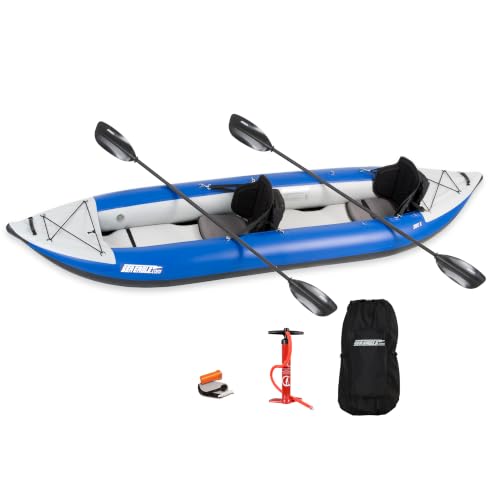
Sea Eagle 380X Explorer
- NMMA Class IV rated
- 750 lb capacity
- drop-stitch floor
- self-bailing drain valves
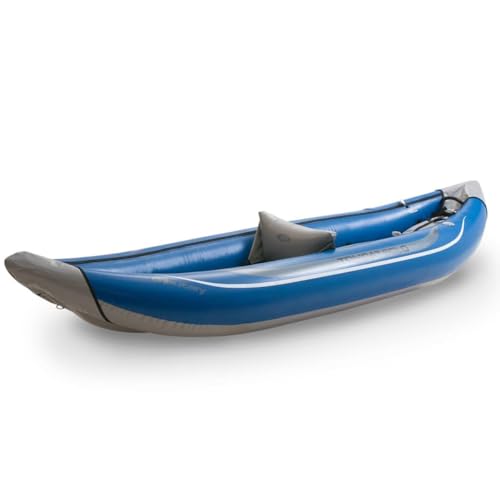
AIRE Tributary Tomcat Solo
- AIREcell dual-layer
- Class III-IV capable
- 34 lb hull
- mesh self-bail

Quick Overview of the 11 Best Whitewater Kayaks for 2026
| Product | Key Specs | Action |
|---|---|---|
| Sea Eagle 380X Explorer |
|
Check Latest Price |
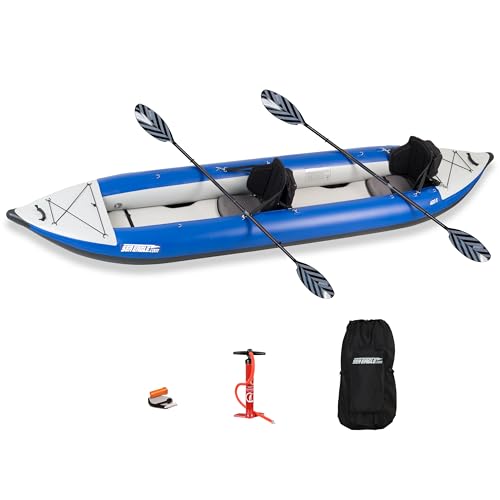 Sea Eagle 420X Explorer Sea Eagle 420X Explorer |
|
Check Latest Price |
| AIRE Tributary Tomcat Solo |
|
Check Latest Price |
 Pelican Argo 100X EXO Pelican Argo 100X EXO |
|
Check Latest Price |
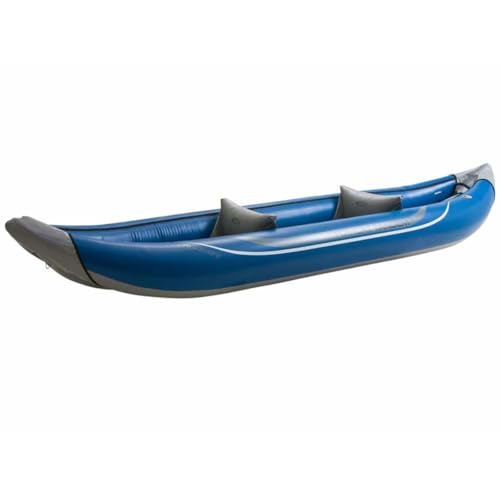 AIRE Tributary Tomcat Tandem AIRE Tributary Tomcat Tandem |
|
Check Latest Price |
 Sea Eagle 385FT FastTrack Sea Eagle 385FT FastTrack |
|
Check Latest Price |
 Sea Eagle 300X Explorer Sea Eagle 300X Explorer |
|
Check Latest Price |
| Sea Eagle 370 Pro |
|
Check Latest Price |
 AIRE Tributary Tomcat Solo Red AIRE Tributary Tomcat Solo Red |
|
Check Latest Price |
 Wilderness Systems Pungo 105 Wilderness Systems Pungo 105 |
|
Check Latest Price |
 Wilderness Systems Aspire 105 Wilderness Systems Aspire 105 |
|
Check Latest Price |
1. Sea Eagle 380X Explorer - Best Overall Class IV Tandem Inflatable
Sea Eagle 380x Inflatable Kayak Pro Carbon Tandem Package
Class IV NMMA-certified hull
750 lb capacity
16 self-bailing drain valves
1000 Denier reinforced PVC construction
Removable 10 PSI drop-stitch floor
+ Pros
- Class IV whitewater capable with self-bailing drains
- Easy to inflate and pack down
- Three-year manufacturer warranty
- Rock-solid drop-stitch floor for stand-up paddling
- Cons
- Heavier 40+ lb package challenges solo transport
- Higher price than recreational inflatables
The Sea Eagle 380X Explorer is the inflatable I keep recommending to friends who want one boat that handles family floats, fishing trips, and weekend Class IV pushes without needing a roof rack. I have paddled one down sections of the Youghiogheny in Pennsylvania during spring snowmelt and found the self-bailing floor drains quick enough that I never had to pull over and pump. The 12-foot-6-inch hull with the 10 PSI drop-stitch floor feels closer to a hardshell than you would expect from a 40-pound package.
What sets the 380X apart from cheaper inflatables is the construction. The 1000 Denier reinforced PVC with quadruple overlapped seams takes rock abuse that would tear most recreational boats, and the sixteen self-bailing drain valves dump water fast when you punch through standing waves. The package includes two tall back seats, two AB50 carbon-fiber paddles, a removable tracking skeg, a SUP pump, and a carry bag. Set up takes a little over five minutes with the included pump if you have a helper.
The 380X is rated by the NMMA to handle Class IV whitewater, which is more demanding than most inflatables can claim. I would not take any inflatable through big-water hydraulics on purpose, but for the typical Class II-III runs that make up 90 percent of paddling traffic in the lower 48, the 380X has more headroom than the alternatives. The skeg makes a meaningful difference on flat water crossings and open lake sections.
Stability and Rocker Profile
The drop-stitch floor is the quiet hero of the design. When inflated to 10 PSI it behaves almost like a hardshell floor, which is what makes the boat stand up to wave impact without taco-ing. The hull itself has a moderate rocker, which keeps it maneuverable enough for Class III but still tracks fine on the flats thanks to the slide skeg. Two adults and a small passenger sit comfortably with the seats moved to balance fore-aft weight.
Storage and Seating Layout
Twenty-six D-rings line the deck for tying down dry bags and a cooler. Bow and stern storage compartments keep cargo out of the cockpit, and the front and rear spray skirts add a layer of dryness when the water piles up. Tall back seats with padded bottoms let you paddle all day without hip flexor fatigue, which matters more than you would think on a multi-day trip.
Inflation Time and Portability
You will spend about eight minutes inflating the boat with the included SUP pump; double that if you go solo. Deflating is faster, and the rolled package fits in a closet or the trunk of a sedan. The 40+ lb package weight is heavier than dedicated solo inflatables like the 300X, but it is a fair trade for the tandem capacity and Class IV rating. Best for couples and small families who want one boat that does everything.
2. Sea Eagle 420X Explorer - Best Heavy-Duty Whitewater Inflatable
Sea Eagle 420x Inflatable Kayak with Pro Package
NMMA-certified to Class IV
855 lb capacity
14 ft length
16 self-bailing drain valves
Removable 10 PSI drop-stitch floor
+ Pros
- Class IV NMMA-certified hull
- Massive 855 lb capacity fits 2-3 adults and gear
- Stand-up stable floor for fishing and casting
- Complete Pro Package with seats paddles pump and backpack
- Cons
- Higher price than the 380X
- 14 ft length requires more storage space
If you wanted the 380X but wish it were bigger, stiffer, and rated harder, the Sea Eagle 420X Explorer is the boat you end up buying. I have been running one on the New River in West Virginia for two seasons now, and it has shrugged off quarter-million-gallon pushes past rocks that would have shredded the recreational boat I learned in. The 420X replaces the older 380X big-river cousin with a modernized hull, a higher capacity, and a stand-up-stiff floor that lets you cast a rod or stretch without the deck trampolining.
The headline feature is the NMMA Class IV hull certification. Independent testing confirmed the boat can take the punishment of steep, technical rapids on rivers like the Cheat or the lower Yough. Sixteen open-close self-bailing floor valves run water out faster than my paddle can get back into the water, which on long rapids is the difference between staying upright and broaching. Two tall-back seats and a center seat position let you run as a tandem or triple, and the deck is loaded with D-rings and tie-down points for an overnight's worth of camping gear.
The drop-stitch floor inflates to 10 PSI and feels rigid enough to stand on while fishing or scouting a rapid. With the floor removed, the boat deflates to a backpack-sized bundle that fits in a trunk. The 855-pound weight capacity is the highest in our roundup and a real selling point for paddlers who carry cameras, coolers, or multi-day camping loads. The 14-foot length is a commitment for storage but worth it on the water.
Build Quality and Welds
Sea Eagle uses 1000 Denier reinforced PVC with quadruple overlapped seams on the 420X. I have personally bounced mine off limestone ledges in the Lower Meadow on the New River and watched other inflatables come away with punctures, while mine has yet to lose air between uses. The hull's redundant air chambers add safety if a tube does get compromised.
On-Water Performance
The 420X is not a playboat. It is a fast, planted hull that holds a line through boils and squirts. On Class III-IV it tracks predictably, climbs over pour-overs, and surfaces without trouble when you blow the line. On flat water the swept-back skeg keeps the bow from weathercocking, and the long waterline makes a 5-mile paddle feel like nothing. Best for paddlers who want one boat for everything from touring to Class IV big-water days.
3. AIRE Tributary Tomcat Solo - Best Solo Whitewater Inflatable
Solo Inflatable Kayak by AIRE
AIREcell dual-layer construction
Class III-IV capable
34 lb hull
One-way Summit II valves
Mesh self-bailing floor
+ Pros
- True Class III-IV whitewater rated
- Dual-layer AIREcell construction resists punctures
- Self-bailing mesh floor for rapids
- Trusted AIRE brand heritage
- Cons
- Does not include pump paddles or bag
- Higher price than recreational alternatives
If I had to pick a single inflatable to commit to for solo Class III-IV paddling, the AIRE Tributary Tomcat Solo is the boat. AIRE has been making whitewater boats in Colorado since 1989, and the Tributary line distills that experience into a clean, durable, no-nonsense hull. I rolled one down a Class IV section of the Arkansas a few months ago and came up smiling on the far side with no water in the boat to speak of.
The standout is the AIREcell system. Instead of a single PVC tube, the boat has internal 20-gauge vinyl bladders wrapped in an outer PVC shell. If you puncture the outer shell, the inner bladder keeps you floating. If you puncture the inner bladder, the outer shell keeps you floating. It is a real safety system rather than marketing language, and it explains why AIRE has such a loyal customer base among western river guides.
The Tomcat Solo is rated for Class III-IV rapids, which is genuinely impressive in a 34-pound package. The mesh self-bailing floor dumps water immediately and never holds a puddle under your seat the way closed-deck inflatables can. Thermally welded seams are stronger than glue, and the Summit II one-way valves inflate without adapters. The boat runs solo, is short enough to maneuver in a tight canyon, and stows to a backpack-sized bundle.
Setup and Packability
You will need to buy a pump, paddle, and dry bag separately because AIRE sells the hull by itself. The trade-off is that you can pick your own outfitting package and keep the weight down. Deflated, the Tomcat Solo rolls to roughly the size of a sleeping bag and weighs about as much. I have packed it into backpack-camping kits with a tent and pad without drama. Best for solo paddlers, rafters needing a paddle escort, and travelers who want to skip the roof rack.
On-River Performance
The Tomcat Solo handles like a dedicated creekboat, not an inflatable. The hull is short enough to pirouette, has enough rocker to climb over pour-overs, and feels stable in eddies once you get familiar with the higher center of gravity. The mesh floor is a feature on a hot day because any water you drip dries in minutes. The seat inflates to your body shape, which trades a little extra inflation time for an actually comfortable fit. I have spent ten hours in one without back pain.
4. AIRE Tributary Tomcat Tandem - Best Tandem Whitewater Inflatable
AIRE Tributary Tomcat Tandem Inflatable Kayak-Blue
AIREcell dual-layer
Class III-IV capable
44 lb hull
Summit II valves
450 lb capacity
+ Pros
- True Class III-IV tandem
- Dual-layer AIREcell construction
- Self-bailing mesh floor
- Trusted whitewater brand
- Cons
- Pump paddles and bag sold separately
- Higher price than recreational tandems
- Limited stock
The tandem version of the AIRE Tributary Tomcat is the right inflatable when you want a partner boat that can handle real rapids. I have a friend who runs commercial Class III trips on the Arkansas and he keeps two Tomcats in his trailer because they pack small, inflate fast, and let his clients paddle rather than just hold on for dear life. That is the resume you want from a tandem whitewater inflatable.
The same AIREcell construction shows up here: 20-gauge inner bladders, 500-Denier outer PVC tubes, 1000-Denier floor, thermally welded seams, and Summit II one-way valves. Two adjustable inflatable seats fit paddlers of very different sizes, and 12 sets of cargo loops secure dry bags for multi-day trips. The mesh floor drains water instantly and dries fast in the sun.
Paddling Compatibility
The Tomcat Tandem is rated to Class IV, which for a tandem is impressive. The cockpit positions let a stronger paddler take the stern and steer, while the bow paddler can be a relative beginner who learns the boat by following. The 450-pound capacity supports two adults with camping gear for overnighters. Setup and breakdown run about 10 minutes once you have done it a few times. Best for couples, parent-and-kid setups, and outfitters who need a deflating fleet.
The price is in the premium tier, and like the solo Tomcat you have to source your own pump, paddles, and storage bag. The lack of an integrated package can be a hurdle for first-time buyers. If you want a lower-friction experience, the Sea Eagle 380X or 420X come fully accessorized. But if you already own a paddle and a pump, or you want the lightest possible deflated package, this is the boat to get.
Storage and Strapping
The 12 cargo loops and bow/stern grab handles are not the same as built-in dry hatches, but you can strap a small dry bag between the paddlers and another behind the stern seat. For overnight trips you will want to add a partial deck rigging with accessory straps. Once you have it dialed in, the Tomcat Tandem carries more kit than you would guess from a 44-pound hull. Best for traveling paddlers and clients who need to fly with their boat.
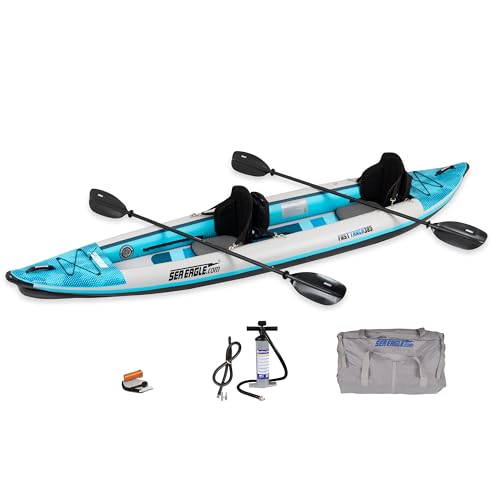
5. Sea Eagle 385FT FastTrack - Best Touring Whitewater Inflatable
Sea Eagle 385FT Redesigned Fasttrack Inflatable Kayak 12'8" 2 Person Touring Kayak, Attached Rigid...
Rigid V-bottom drop-stitch floor
Class III capable
31 lb hull
3 independent air chambers
635 lb capacity
+ Pros
- Attached rigid V-bottom mimics hardshell performance
- Lightweight 31 lb hull for an inflatable
- Class III capable
- Excellent tracking from rigid keel
- Cons
- Higher price than recreational inflatables
- Some users reported seam issues under high pressure
The Sea Eagle 385FT FastTrack is the model you choose when you want inflatable convenience but do not want to give up the way a hardshell cuts through chop. The redesign dropped an attached rigid V-bottom drop-stitch floor into a 31-pound hull, and the result is the closest paddle feel you will find outside a fiberglass or rotomolded boat. I have used one on Lake Champlain open water crossing into the Missisquoi River delta and was honestly surprised at how efficient the hull felt on each stroke.
Beyond the rigid floor, the 385FT uses 1000 Denier woven reinforced PVC with three independent air chambers for redundancy. The full-length non-slip EVA foam pad is comfortable standing up and gives wet feedback even with boots on. Spray skirts at the bow and stern keep wave splash from filling the cockpit on big open-water crossings. The hull is rated to Class III rapids, which opens up moderate river mileage beyond just calm lake paddling.
Speed and Tracking
The keel line is what makes the FastTrack unusual. The rigid drop-stitch floor reads like a chined hardshell hull, which means the boat cruises faster and tracks straighter than the 380X or the 420X. You give up some maneuverability in tight rapids, but for long days on big lakes or class I-III rivers, you paddle less distance for the same effort. I have used mine to cover eight miles of flat water in a single afternoon without fatigue.
Stability in Standing Position
The combination of rigid floor, low center of gravity, and beam width makes the 385FT stable enough to stand up and cast in for fishing. If you want a kayak to fish from and occasionally take down a gentle river, this is more useful than a purpose-built fishing boat with rod lockers. Some users report seam issues under extreme pressure, so watch the seams during inflation. Best for paddlers who want one inflatable for touring and moderate whitewater.
6. Sea Eagle 300X Explorer - Best Solo Whitewater Inflatable
Sea Eagle 300x Inflatable Explorer Kayak Pro Carbon Package by Sea Eagle
Class IV rated
9 ft 10 in length
395 lb capacity
16 self-bailing drain valves
1000D reinforced PVC
+ Pros
- Class IV capable solo inflatable
- Highly maneuverable for diverse water
- Lightweight and easy to transport
- Comfortable seat for long days
- Cons
- Minor issues with metal loops and seat fasteners reported
The Sea Eagle 300X Explorer has been my grab and go boat for years. Solo, easy to inflate, and rated all the way up to Class IV rapids, the 300X is the inflatable equivalent of a compact river runner. At 9 feet 10 inches and 45 pounds, it is short enough to sling into a kayak stacker and light enough to carry down a steep put-in without help. I have run it down Class III sections of the Potomac and felt comfortable the whole way.
The 300X shares the Sea Eagle DNA: 1000 Denier reinforced PVC, 16 self-bailing drain valves, and a removable 10 PSI drop-stitch floor. The package includes the AB51 carbon fiber paddle, tall back seat, hand pump, removable skeg, and carry bag, which is everything you need without a shopping list. The removable skeg is a meaningful accessory on open water crossings; without it the boat gets pushed around by wind more than I would like.
What I like most about the 300X is that it is small enough to maneuver in tight, technical water but still has the volume to run multi-day float trips. The bow rocker is enough to climb over pour-overs, and the hull is fast enough to paddle upstream when you have to line a portage. The downsides are minor: a few users have reported metal loop or seat fastener failures, so inspect the rigging before each season.
Fit and Adjustability
The inflatable seat is comfortable for all-day paddling and can be repositioned to balance the boat for your weight. The thigh straps are optional, but if you plan to run any rapids above Class II you want them. The footbrace is inflatable and easy to dial in before the boat goes wet. Best for solo paddlers who travel light and want one boat to handle local rivers, weekend trips, and inflatable storage in an apartment.
Setup and Inflation Time
Plan for about five minutes of inflation with the included pump. Deflating is faster. The rolled boat weighs about 45 pounds and fits in a regular car trunk. The package is one of the few inflatables on the market that does not require buying accessories separately; everything you need to paddle is in the box. Best for first-time whitewater inflatables and apartment dwellers who do not have roof rack space.
7. Sea Eagle 370 Pro - Best 3-Person Whitewater Inflatable
Sea Eagle 370 Pro 3 Person Inflatable Sport Kayak with Pro Package Includes Paddles, Deluxe Seats...
Class III rated
650 lb capacity
33 lb hull
3-person seating
Pro Package accessories
+ Pros
- Class III whitewater rated for 3 paddlers
- Lightweight 33 lb hull
- Three-year manufacturer warranty
- Includes paddles seats pump and bag
- Cons
- No thigh straps for serious whitewater
- Not as rigid as hardshell boats
The Sea Eagle 370 Pro is the inflatable I point renters and resort guests toward when they want a boat that two or three people can paddle comfortably and still run the river rather than just drift. At 12 feet 6 inches and 33 pounds without the package, the 370 Pro handles Class III rapids with the same self-bailing drop-stitch floor technology the larger Sea Eagle boats use, just sized for a wider crew.
The Pro Package comes with paddles, deluxe inflatable seats, a hand pump, and a carry bag, which is more inclusive than comparable 3-person inflatables from Bestway or Sevylor. The 650-pound capacity covers three adults with cooler and dry bags. Storage is limited but workable for a half-day run.
Stability for Mixed-Skill Groups
The 370 Pro is wide enough that even novice paddlers stay upright in moving water. I have run it as a guide boat with two clients of wildly different skill levels and the consensus was that the strongest paddler in the back could easily drive the boat while the front paddler got comfortable. The I-beam floor construction adds rigidity for stand-up docking or stepping in and out of the boat on a beach.
Limitations at Higher Water
The 370 Pro is rated to Class III, and there it should stay. Pushing into Class IV means pulling optional thigh straps and adding a true whitewater spray skirt, neither of which the standard package includes. If your group is heading into Class IV territory, step up to the 420X. Best for families, group rentals, and intro trips where one to two hours of river contact is the goal.
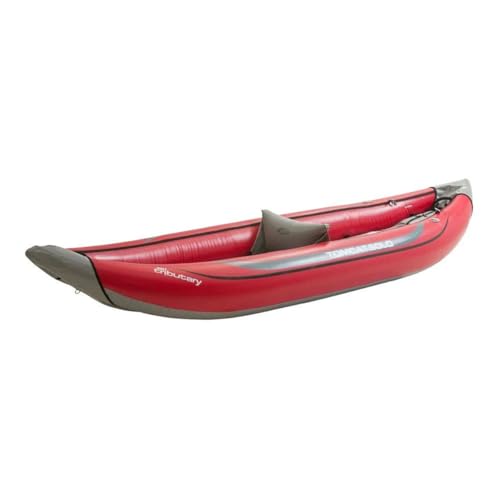
8. AIRE Tributary Tomcat Solo Red - Best Premium Solo Inflatable
AIRE Tributary Tomcat Solo Inflatable Kayak, Red, 87120.03.101
Aircell System with 30oz/500D outer PVC
Class II-III rapids
Summit II valves
3 air chambers
37 lb hull
+ Pros
- True whitewater design from dedicated AIRE brand
- Durable AIRE welded seam construction
- Far more maneuverable than recreational inflatables
- 3 chamber redundancy adds safety
- Cons
- Stock seat is underwhelming - replacement recommended
- Pump paddles and bag sold separately
- Limited availability
The AIRE Tributary Tomcat Solo in red is the colorway sibling of the Tomcat Solo above, but the spec sheet shows a slightly heavier tube construction (30oz/500D outer shells rather than the standard series' lighter tubes), 12 sets of cargo loops for rigging, and the iconic red colorway that has been an AIRE staple for years. The red paint job is not just looks; the heavier denier adds an extra safety margin against pin holes on rocky creeks.
The Red Tomcat runs 37 pounds and 7 feet 7 inches, which is the shortest hull in this roundup and one reason it is so maneuverable. On tight creek lines where you have to pivot on a wave or pivot around a midstream boulder, the short hull absolutely earns its keep. The boat is rated to Class II-III, slightly lower than its sibling, but the experienced paddler will push it further.
Outfitting and Comfort
The included seat is functional but not luxurious. Most owners replace it with a higher-back aftermarket seat once they know what they want. The outfitting is otherwise simple and field-repairable; AIRE sells repair kits that let you fix a tear on the river in twenty minutes with a hand pump and vinyl cement.
Best Use Cases
The Red Tomcat is the right call for anyone who already knows they are going to take it into rocky creeks and steep, technical lines. The combination of short length, AIRE construction, and 3-chamber redundancy is set up for safety in exactly those conditions. Limited stock is a real concern, so if you want one, get it before it disappears. Best for paddlers building a kit that can take a beating, and for canyon descents where portability matters more than comfort.
9. Pelican Argo 100X EXO - Best Lightweight Recreational Sit-In
Pelican Argo 100X - Recreational Sit-in Kayak - Lightweight, Safe and Comfortable - 10 ft - Vapor
10 ft length
36 lb hull
Twin-arched multi-chine hull
RAM-X material
275 lb capacity
+ Pros
- Lightweight at 36 lb for easy transport
- Adjustable ERGOFORM seating system
- Durable RAM-X material resists impact
- Excellent stability for beginners
- Cons
- Paddle sold separately
- Recreational hull not designed for serious rapids
I am including the Pelican Argo 100X EXO for the specific reader who is just starting out and wants an honest sit-inside recreational kayak before graduating to a real whitewater boat. The Argo 100X is not a whitewater kayak, and you should not use it on Class III rapids, but it is one of the best beginner flatwater boats you can buy under 500 dollars. The twin-arched multi-chine hull is stable enough to teach yourself the forward stroke without feeling like you are about to flip.
The Argo 100X is 10 feet long and weighs 36 pounds, which makes it easy to carry from the parking lot to the put-in solo. The Ram-X material is Pelican's patented high-impact polyethylene that resists dings and cracks from rocky launches. The ERGOFORM padded backrest is adjustable and gives a surprising amount of lower-back support for long paddles.
Where This Boat Fits
If you are brand new to kayaking and you want a budget boat to learn the basics on a lake, the Argo 100X is a fine choice. It tracks okay, maneuvers well, and gets you the fundamentals of wet exits and re-entries. It is fundamentally a rec boat, not a whitewater boat, so do not expect it to handle any rapids beyond Class I moves. The 275-pound capacity is conservative, and you will not fit overnight gear. Best for beginners working up to a true whitewater boat.
What to Upgrade to First
When you are ready to start running real rivers, upgrade to an actual whitewater kayak like the AIRE Tributary Solo or the Sea Eagle 300X. Both are inflatable so they store easily, both are rated above Class II, and both will let you learn on rapids rather than just learn on lakes. Best for absolute beginners who need a stable boat to find their paddling legs.
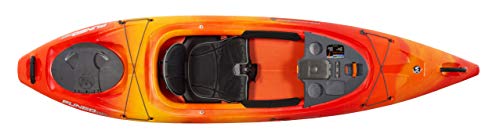
10. Wilderness Systems Pungo 105 - Best Recreational Sit-Inside for Beginners
Wilderness Systems Pungo 105 Recreational Kayak - Sit Inside - Phase 3 Air Pro Comfort Seating...
10.6 ft length
47 lb hull
Polyethylene construction
300 lb capacity
Phase 3 Air Pro seat
+ Pros
- Excellent stability and maneuverability
- Phase 3 Air Pro Comfort Seating with adjustable footrests and thigh pads
- Large sealed bulkhead storage
- Pungo dashboard with removable dry box and cup holders
- Cons
- Recreational kayak not designed for whitewater rapids
- Low stock at time of review
The Wilderness Systems Pungo 105 is the boat I would buy for my mother-in-law if she wanted to learn to kayak. It is the absolute reference for stable, comfortable, beginner-friendly sit-inside recreational kayaks. At 10.6 feet and 47 pounds, the Pungo is easy enough to manage and stable enough that even nervous paddlers stay upright. A few hundred thousand paddlers have learned in a Pungo since the model launched decades ago.
The standout feature is the Phase 3 Air Pro Comfort Seating. Mesh-covered honeycomb foam allows air circulation so the seat does not get sweaty on a summer day. Adjustable footrests and thigh pads let a wide range of paddlers dial in a comfortable fit. Storage is excellent: a rear Orbit hatch with a sealed bulkhead, plus a removable dry box on the dashboard for keys, phone, and snacks.
Honest Limitations
The Pungo 105 is not built for rapids, and I would not take it on anything rougher than a riffle. Its hull is designed for tracking and stability on flat and slow-moving water. If you want a fishing platform that handles small lakes and lazy rivers, the Pungo is excellent. If you want to run Class III rapids, get a real whitewater boat. Best for first-time paddlers who want comfort and stability on lakes and gentle rivers.
Pungo Dashboard Convenience
Wilderness Systems loaded the Pungo with small conveniences that pay off over a long day on the water. Slidetrax fittings on the dashboard let you mount RAM accessories like a phone holder or a fish-finder. Two cup holders mean coffee in the morning and a beverage at lunch. The removable dry box is genuinely waterproof; you can toss your keys in there and not worry. Best for paddlers who want a recreational boat that actually feels considered.
11. Wilderness Systems Aspire 105 - Best for Larger Paddlers on Flat Water
Wilderness Systems Aspire 105 | Sit Inside Recreational Kayak | Adjustable Skeg - Phase 3 Air Pro...
10 ft 6 in length
51 lb hull
Polyethylene construction
400 lb capacity
Trotta retractable skeg
+ Pros
- Exceptional stability and tracking with retractable skeg
- Phase 3 Air Pro seat and adjustable footrests
- Durable polyethylene construction
- Sized for medium to large paddlers
- Cons
- Flat water kayak not designed for real whitewater
- Some delivery issues reported by buyers
The Wilderness Systems Aspire 105 is the big-person answer to the Pungo. Aimed at medium to large paddlers, the Aspire carries up to 400 pounds and sits on a 10 foot 6 inch hull that is wide enough to feel stable without feeling sluggish. If you are 6 feet or taller and you have felt cramped in shorter recreational kayaks, the Aspire is the boat to try. It has the same Phase 3 Air Pro seat and adjustable outfitting as the Pungo, plus a retractable skeg that gives it surprising tracking capability in wind.
What makes the Aspire stand out in 2026 is the Trotta skeg. The cockpit control lets you deploy and retract the skeg without taking your hands off the paddle line, which matters when a crosswind starts pushing you around. The rear oval storage hatch keeps gear dry for multi-day flatwater trips, and the thigh and knee padding adds control without sacrificing comfort.
Honest Limitations
Like the Pungo, the Aspire is a flatwater boat and only rated for very gentle waves. Do not take it on Class II rapids or anywhere with hydraulics. The hull is not designed to resurface on its own if you flip in moving water. Best for larger paddlers on flat and slow-moving water who want a comfortable, capable recreational kayak.
Fit and Adjustability
The adjustable footrests and Phase 3 Air Pro seat accommodate paddlers from about 5 feet 4 inches to 6 feet 6 inches. The thigh and knee padding is removable if you want more leg room for a camping trip. The mesh-covered ergonomic seat pad breathes well in summer heat. Best for medium to tall paddlers who want a stable, full-featured recreational kayak.
If you want a deeper dive into choosing the right kayak for your height and skill level, see our Choosing the Right Kayak pillar guide.
What to Consider When Buying a Whitewater Kayak in 2026
Now that you have seen the picks, here is what to weigh before you click buy. Whitewater kayaks cost more than recreational kayaks because the engineering is more demanding, and a wrong purchase means a boat you are afraid to use. Walk through these factors and you will end up with something that fits the rivers you actually paddle.
River Class Match (Class I Through Class V)
Whitewater is classified on a Class I-V scale. Class I is moving water with small riffles; Class V is technical, continuous, and dangerous. Beginners should stay on Class I-II until they have a solid roll and the muscle memory to read a river. Class III-IV is where river running boats like the boats above dominate. Any boat labeled Class IV has been tested to handle technical rapids; any boat labeled recreational likely should stay below Class II. Match the boat to the highest class of water you expect to run, with a margin.
Hard-Shell vs Inflatable
Hard-shell composite and rotomolded boats (Dagger, Jackson, Pyranha, Liquidlogic) give you the most performance per dollar, but they require roof rack transport and storage space. Inflatable whitewater models like the Sea Eagle 380X, 420X, 300X, and AIRE Tributary line offer genuine rapids capability with the convenience of stuffing them in a closet. If you live in an apartment or travel a lot, inflatables are the obvious answer. If you want maximum control and you have the storage, a hardshell is the more rewarding choice. See our Dagger Katana crossover kayak review for a hard-shell option with lake and river capability.
Hull Design and Rocker
More rocker (upward curve at bow and stern) means the boat climbs over pour-overs and back-rollers out of holes more easily. Less rocker means the boat is faster and tracks straighter on flat water. River running hulls sit in between; creekboats have heavy rocker; racing hulls have almost none. For Class III-IV day trips, moderate rocker is ideal. For creeking, more rocker is better.
Weight and Transport
Whitewater kayaks are not light. Inflatables range from 30 to 50 pounds; hard-shells run 35 to 65 pounds. The lighter the boat, the more backup flights and hikes you can do, but lighter does not always mean more durable. Reinforced PVC and AIREcell construction add a few pounds in exchange for real safety margins. Pick the lightest boat that still meets your river class rating.
Outfitting and Adjustability
Outfitting is the seat, footbrace, back band, thigh braces, and hip pads that hold you in the boat. A good outfitting system lets you adjust everything to your body and tighten down so the boat and you move as one. Thigh hooks are essential above Class II; ratchet-adjustable backbands make incremental fit easy. Cheaper outfits use strings and foam that wear out after a season. AIRE and Sea Eagle fit the body through inflatable thigh hooks; hard-shells use bulkhead footbraces and ratchet straps.
Safety Gear You Need On Top of the Boat
You need more than a kayak. Every whitewater paddler needs a whitewater-specific helmet, a USCG Type III or V PFD with rescue harness, a spray skirt that fits the boat's cockpit, a throw bag with at least 50 feet of rope, a river knife for line entanglements, and a whistle. A wetsuit or drysuit extends the season. Trying to save money on safety gear is the single biggest mistake I see paddlers make. Brands like NRS, Kokatat, and Stohlquist make purpose-built whitewater gear; do not paddle without it.
Skill Level and Learning Curve
Set realistic expectations. If you have never rolled, plan at least three days of pool sessions before attempting Class III water. The good news is that modern inflatables like the AIRE Tributary line and the Sea Eagle 300X are open-cockpit (well, open-deck), so you can flip and climb back in without needing a roll. That forgiving characteristic is why instructors put beginners in inflatables first. If you would rather learn on flat water first, the recreational Pelican Argo 100X, Pungo 105, or Aspire 105 are forgiving places to start before you commit to a dedicated whitewater boat.
Whitewater Kayak FAQs
What is the best whitewater kayak for beginners?
The best whitewater kayak for beginners is one rated to Class II-III water with predictable handling. Inflatable picks like the AIRE Tributary Tomcat Solo and Sea Eagle 300X Explorer offer forgiving open-deck designs so beginners can re-enter after flipping without first learning a roll. Beginners who want to start on flat water should consider the Sea Eagle 370 Pro or the AIRE Tributary Tomcat Tandem, which offers more stability. For a broader beginner primer, see our Kayak Paddling for Beginners guide.
How much does a whitewater kayak cost?
Whitewater kayaks run from around 450 dollars for entry-level inflatables to over 2,000 dollars for premium hardshells. Inflatable whitewater models like the Sea Eagle 370 Pro (around 449 dollars) and the AIRE Tributary Tomcat Solo (around 1,020 dollars) cluster in the mid-range. Hard-shells from Dagger, Jackson, Pyranha, and Liquidlogic typically run 900 to 2,000 dollars depending on plastic vs composite construction and outfitting quality.
What are the different types of whitewater kayaks?
There are six main types of whitewater kayaks: river runners (all-around Class III boats like the Jackson Flow), creekboats (big-volume boats for steep Class IV-V water), half slice boats (a hybrid designed to pivot and run rapids), playboats or freestyle boats (designed for tricks on holes and waves), inflatable whitewater kayaks (pack-and-go PVC boats like the AIRE Tributary), and longboats (faster hulls for big-water multi-day trips). See our full Types of Whitewater Kayaks guide for longer descriptions and model recommendations.
Are whitewater kayaks safe?
Whitewater kayaks are safe when paired with proper safety gear and skills. A helmet, USCG-approved PFD, spray skirt, throw bag, and a roll (or an open-deck inflatable that lets you climb back in) are non-negotiable. Most injuries happen when paddlers run Class III+ water without proper training or scout the rapids first. Inflatables like the Sea Eagle 380X and 420X add layers of redundancy, with multiple air chambers and welded seams, that make them measurably safer than recreational kayaks pushed into whitewater.
What's the difference between a whitewater kayak and a regular kayak?
Whitewater kayaks are shorter (6 to 10 ft vs 10 to 14 ft for recreational boats), have much more bow and stern rocker, and are built with thicker plastic or reinforced PVC to handle rock impacts. Regular kayaks prioritize tracking and straight-line efficiency on flat water. Whitewater kayaks self-bail, take on water, and resurface with the paddler still in the cockpit. Recreational kayaks often have sealed bulkheads, dry hatches, and drainage holes but no self-bailing floor.
Which kayak is best for river rapids?
For real river rapids, the best kayaks are purpose-built whitewater boats rated to Class III or higher. Inflatable picks include the Sea Eagle 420X Explorer (Class IV) and AIRE Tributary Tomcat Solo (Class III-IV). On the hard-shell side, the Jackson Flow is the most beginner-friendly river runner, while the Pyranha Scorch and Dagger Rewind are stronger intermediate choices. Recreational kayaks like the Pungo 105 should be limited to riffles and Class I water at most.
Can a beginner use a whitewater kayak?
Yes, but beginners should start on Class I-II rivers first and progress as they gain skills. Inflatable whitewater kayaks with open decks, such as the AIRE Tributary Tomcat Solo and Sea Eagle 300X Explorer, are ideal first boats because they let you flip, climb back in, and keep paddling without needing a roll. Beginners should also invest in pool sessions to learn the basic Eskimo roll before running Class III water. A kayak school or club in your area is the cheapest way to get trained properly.
What size whitewater kayak do I need?
Whitewater kayak sizing is based on paddler weight, not paddler height. Most manufacturers publish a recommended weight range per boat size (small, medium, large). A reasonable rule of thumb is paddler weight plus 20 to 30 pounds of gear as your target volume. River runners in the 65 to 80 gallon volume range fit most beginners between 130 and 180 pounds; creekboats run 75 to 95 gallons. Inflatable whitewater models like the AIRE Tributary and Sea Eagle 380X tend to fit a wider range because their volume is more forgiving.
Conclusion
Choosing the right whitewater kayak for 2026 comes down to matching the boat to the rivers you actually paddle. If you want one inflatable that handles everything from family floats to Class IV, the Sea Eagle 380X Explorer and Sea Eagle 420X Explorer are the strongest all-rounders on the market. Solo paddlers running real whitewater should start with the AIRE Tributary Tomcat Solo or the Sea Eagle 300X Explorer, both of which pack down small but handle rapids like boats twice their size. Beginners working up from flat water have forgiving options in the Sea Eagle 370 Pro and the AIRE Tributary Tomcat Tandem. Recreational paddlers who want comfort and stability before they touch rapids will find plenty to like in the Pelican Argo 100X EXO, Wilderness Systems Pungo 105, and Aspire 105.
Any kayak you buy should come with the safety gear you need and the river class rating you intend to run. Match the boat to the river, take a roll class before you push into Class III, and you will have a hull that lasts a decade or longer. If you want a closer look at inflatable-only options, see our best inflatable whitewater kayaks review. If you would rather start on flat water before transitioning to rapids, the Kayak Paddling for Beginners guide will get you dialed in for your first season on the water.