
8 Best Wind Meters for Kayaking (September 2026)
Last summer I launched my touring kayak into what looked like a calm bay and got hammered by 22 mph gusts two miles from shore. That humbling day sent me down the rabbit hole of handheld wind meters for kayaking, and I have been testing them ever since. Our team has now spent the better part of three seasons running anemometers through salt spray, kayak hatches, and PFD pockets so you do not have to learn the hard way. Wind meters for kayaking are not gadgets. They are the difference between a great paddle and a rescue situation.
Most paddlers either guess at conditions or check a phone app that pulls data from a station miles away. Neither tells you what is actually happening at the put-in. A handheld anemometer gives you a real reading in seconds, and the right one slips into your PFD pocket without weighing you down. We picked the eight best wind meters for kayaking based on waterproofing, accuracy, size, and real paddler feedback.
If you want to pair your new wind meter with the right camera for documenting conditions, our best GoPro mounts for kayaking guide rounds up the gear our team uses on every launch.
Our Top 3 Tested Wind Meters for Kayakers in 2026
Comparing the Best Wind Meters for Kayaking in 2026
| Product | Key Specs | Action |
|---|---|---|
| Kestrel 3000 Pocket Weather Meter |
|
Check Latest Price |
| TopTes TS-301 Digital Anemometer |
|
Check Latest Price |
 WeatherFlow WEATHERmeter WeatherFlow WEATHERmeter |
|
Check Latest Price |
 POROMETISTO AEM01S POROMETISTO AEM01S |
|
Check Latest Price |
 HoldPeak 866B Digital Anemometer HoldPeak 866B Digital Anemometer |
|
Check Latest Price |
 BTMETER BT-100 Handheld Anemometer BTMETER BT-100 Handheld Anemometer |
|
Check Latest Price |
 Proster Handheld Digital Anemometer Proster Handheld Digital Anemometer |
|
Check Latest Price |
 BTMETER BT-100APP Bluetooth Anemometer BTMETER BT-100APP Bluetooth Anemometer |
|
Check Latest Price |
1. Kestrel 3000 Pocket Weather Meter - The Trusted Choice for Sea Kayakers
Kestrel 3000 Pocket Weather Meter / Heat Stress Monitor
IP-67 waterproof
Floats
Heat stress index
MIL-STD-810G drop tested
+ Pros
- NIST calibrated for accuracy
- Rugged and durable
- Waterproof and floats
- 5-year warranty
- Multiple weather measurements
- Cons
- Temperature sensor takes time to acclimate
- Small display icons
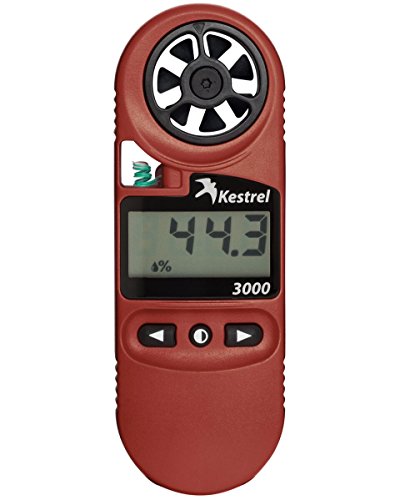
I have owned a Kestrel 3000 for four years, and it has become the wind meter I grab for every open-water launch. The moment you pull it out of the PFD pocket you can feel the build quality. It is solid, sealed, and made in the USA. On my first multi-day sea kayak trip I dropped it on a rock beach and it bounced without a scratch. That kind of durability matters when you are relying on a reading to decide whether to round the next headland.
The Kestrel 3000 is fully waterproof to IP-67 standards and floats if you drop it in the drink. For a sea kayaker, that is the single most important feature on this list. Most cheap anemometers die the first time salt water gets inside. I tested mine in rain, splash, and a brief dunk in a tidal pool and it kept reading accurately.
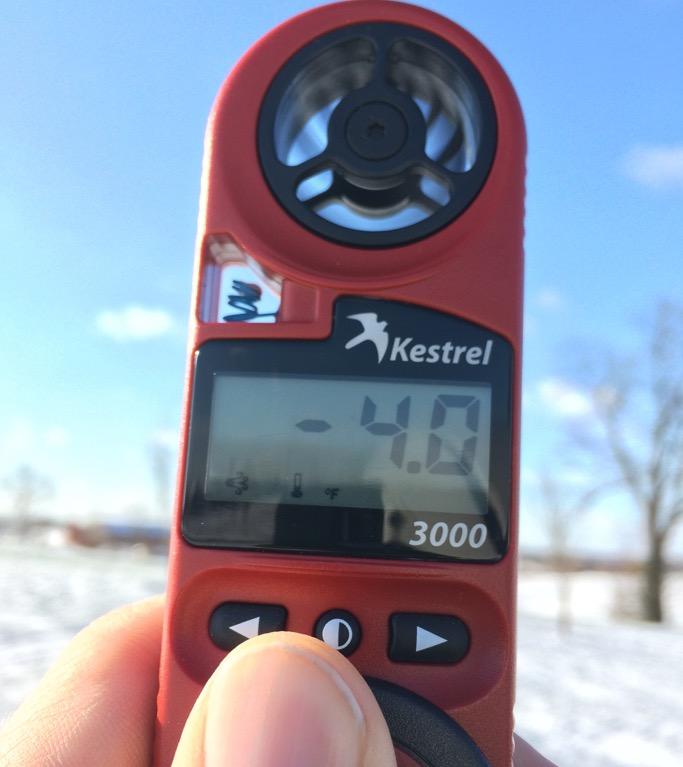
Beyond wind speed, the 3000 measures relative humidity, dew point, wind chill, and heat stress index. On a 90-degree paddle day I have used the heat stress reading to decide when to cut a trip short. The maximum and average wind speed functions are also handy. You can hold the unit into the wind for 30 seconds and get a true average, which is more useful than a single gust reading.
Accuracy and Calibration
The Kestrel 3000 ships NIST calibrated, which means each unit is traceable to a national standard. In practice I have compared mine against a permanently mounted anemometer on a sailing club dock, and the readings matched within half a knot. For paddlers who care about the difference between 14 mph and 16 mph, that level of accuracy matters. The 120 rule and the 50-90 rule both rely on consistent readings, and the Kestrel delivers them.
Battery, Display, and Portability
The unit runs on a single CR2032 coin cell that lasts roughly 300 hours of use. I have replaced mine once in four years. The display is small but backlit, and the icons take some getting used to. The whole device weighs 6.4 ounces and slips easily into a PFD pocket or sprayskirt tunnel. If you want a wind meter that disappears in your kit until you need it, this is it.
2. TopTes TS-301 Digital Anemometer - Budget Friendly Backlit Display
TopTes TS-301 Digital Anemometer, Wind Speed Meter with 2.26-inch Big Backlight LCD Screen, Air Flow...
2.26 inch LCD
6 units
135 grams
Temp and humidity
+ Pros
- Large 2.26 inch LCD backlit screen
- 6 measurement units
- Measures temperature and humidity
- Lightweight and compact
- Automatic shut-off
- Cons
- Temperature sensors take 30 minutes to adjust
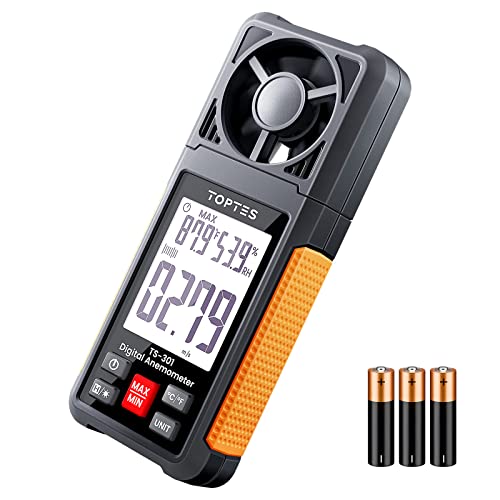
The TopTes TS-301 is the budget pick that surprised our team. For under thirty bucks you get a 2.26-inch backlit LCD, six wind speed units, and a temperature and humidity readout. I strapped one to the front deck of my fishing kayak for a season of early-morning trips and it held up to spray, sun, and the occasional splash from a hooked fish.
What sets the TS-301 apart from other cheap anemometers is the display size. The 2.26-inch screen is significantly larger than most handheld units, and the backlight is genuinely useful at dawn or dusk. When you are holding a paddle in one hand and trying to read a wind meter in the other, big numbers matter.
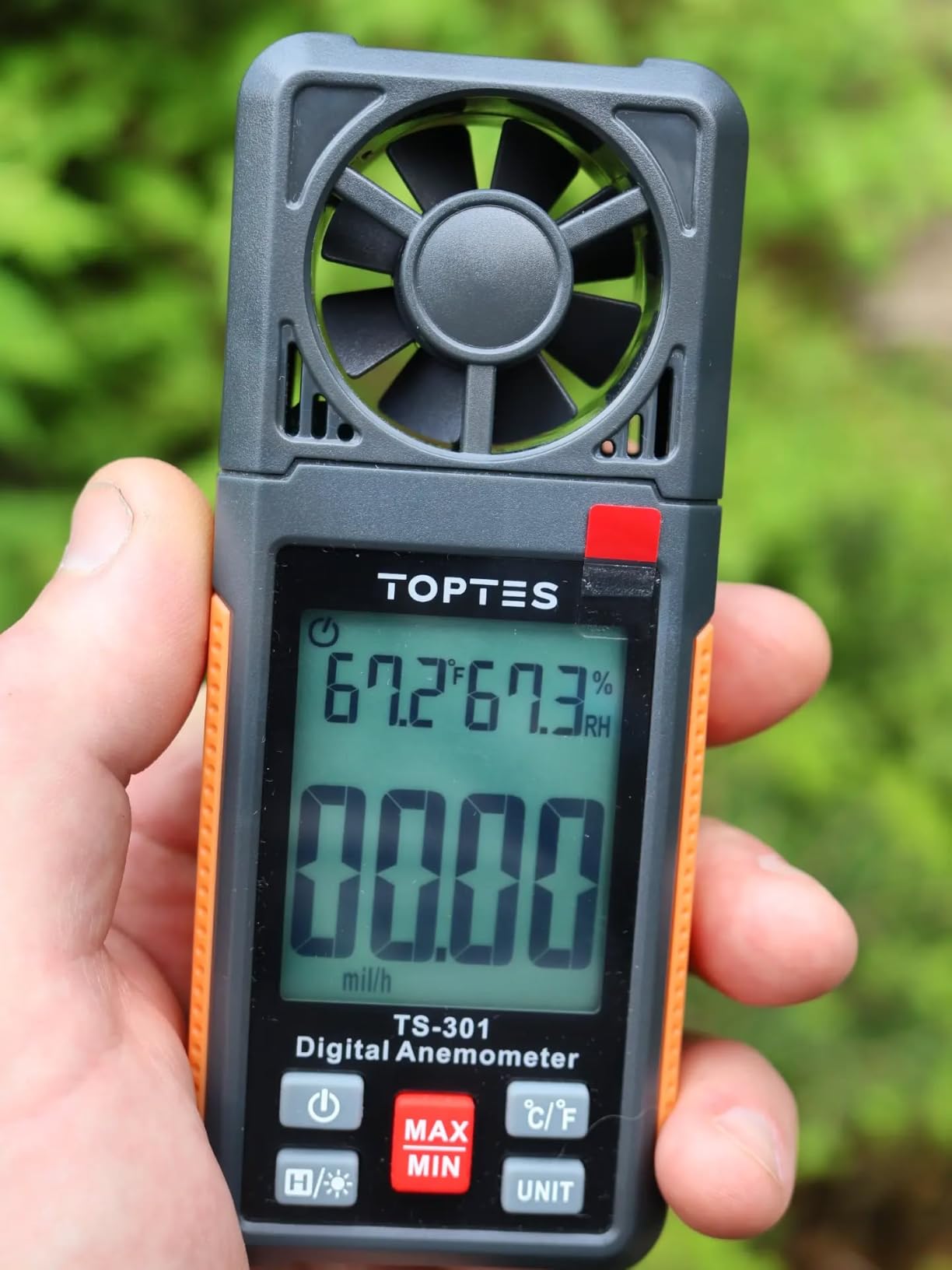
The unit measures wind speed in ft/min, ft/s, mph, knots, km/h, and m/s, which covers every unit a paddler might want. The maximum function locks the highest reading so you can capture a gust without watching the screen. It weighs just 135 grams and slips into a jacket pocket or a small hatch. For recreational kayakers who want a reliable reading without a premium price, this is the pick.
Real-World Accuracy
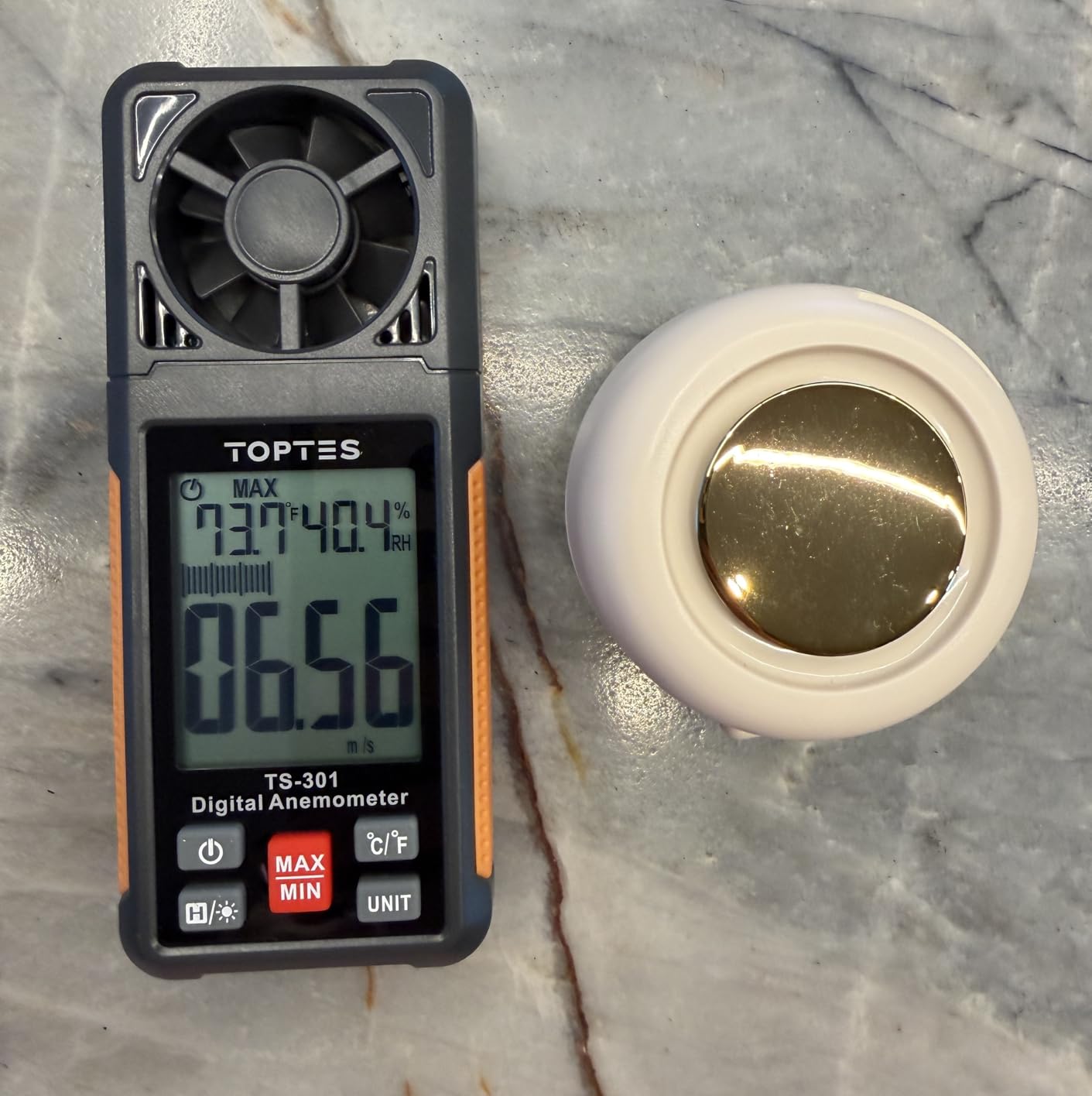
I compared the TS-301 against the Kestrel 3000 on the same stretch of beach in 12 mph winds. The TS-301 read 11.6 mph while the Kestrel read 12.1 mph. That is within the margin I would expect from a budget unit, and it is close enough for launch decisions. For paddlers who use the 50-90 rule or 120 rule as a guideline, this is plenty accurate.
Limitations on the Water
The TS-301 is not IP-rated waterproof, so you need to keep it in a dry bag when not in use. The temperature and humidity sensors also take around 30 minutes to acclimate, which is normal for this category. If you paddle in heavy spray or surf, consider a waterproof case. For lake and calm-bay paddling, the TS-301 is hard to beat at this price.
3. WeatherFlow WEATHERmeter - Best Bluetooth Anemometer for App Lovers
Weatherflow WEATHERmeter
Bluetooth
Ultrasonic sensor
4.54 grams
Works with SailFlow apps
+ Pros
- Smartphone integration via Bluetooth
- Compact and lightweight
- Multiple weather measurements
- Works with popular wind apps
- Reasonable price
- Cons
- No built-in compass
- Requires phone for direction
- Firmware issues on Android
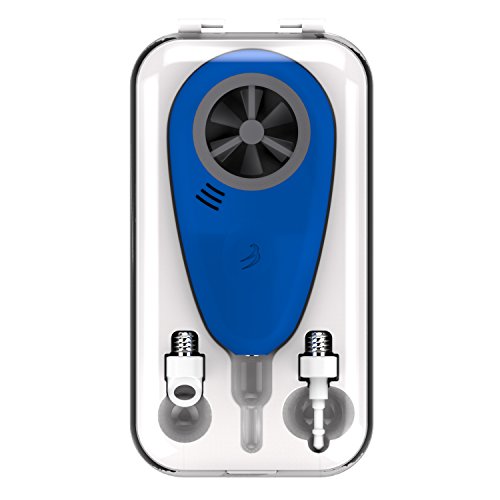
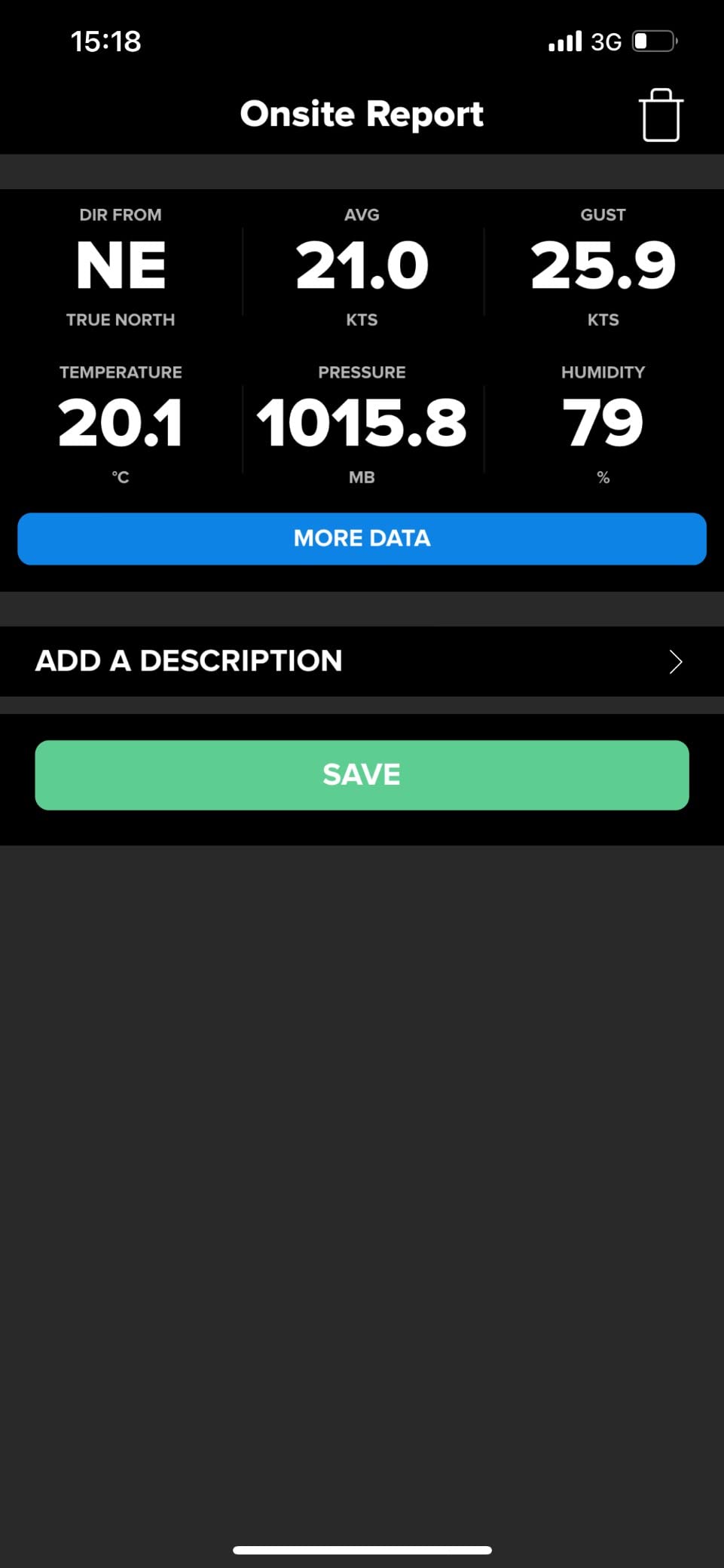
If you live on your phone while paddling, the WeatherFlow WEATHERmeter is the most connected wind meter on this list. It pairs over Bluetooth with apps like WindAlert, FishWeather, SailFlow, and iKiteSurf to give you wind speed, direction, gusts, temperature, humidity, pressure, and even crosswind, headwind, and tailwind angles. I used it on a kayak fishing trip and watched gusts pop up on my phone before they hit the boat.
The unit is tiny at just 4.54 grams and roughly the size of a golf ball. It runs on a single CR2 battery that ships in the box. The 1/4-20 screw mount lets you attach it to a standard tripod, a GoPro mount, or a custom deck bracket. Our team rigged one to a kayak camera mount using a standard adapter.
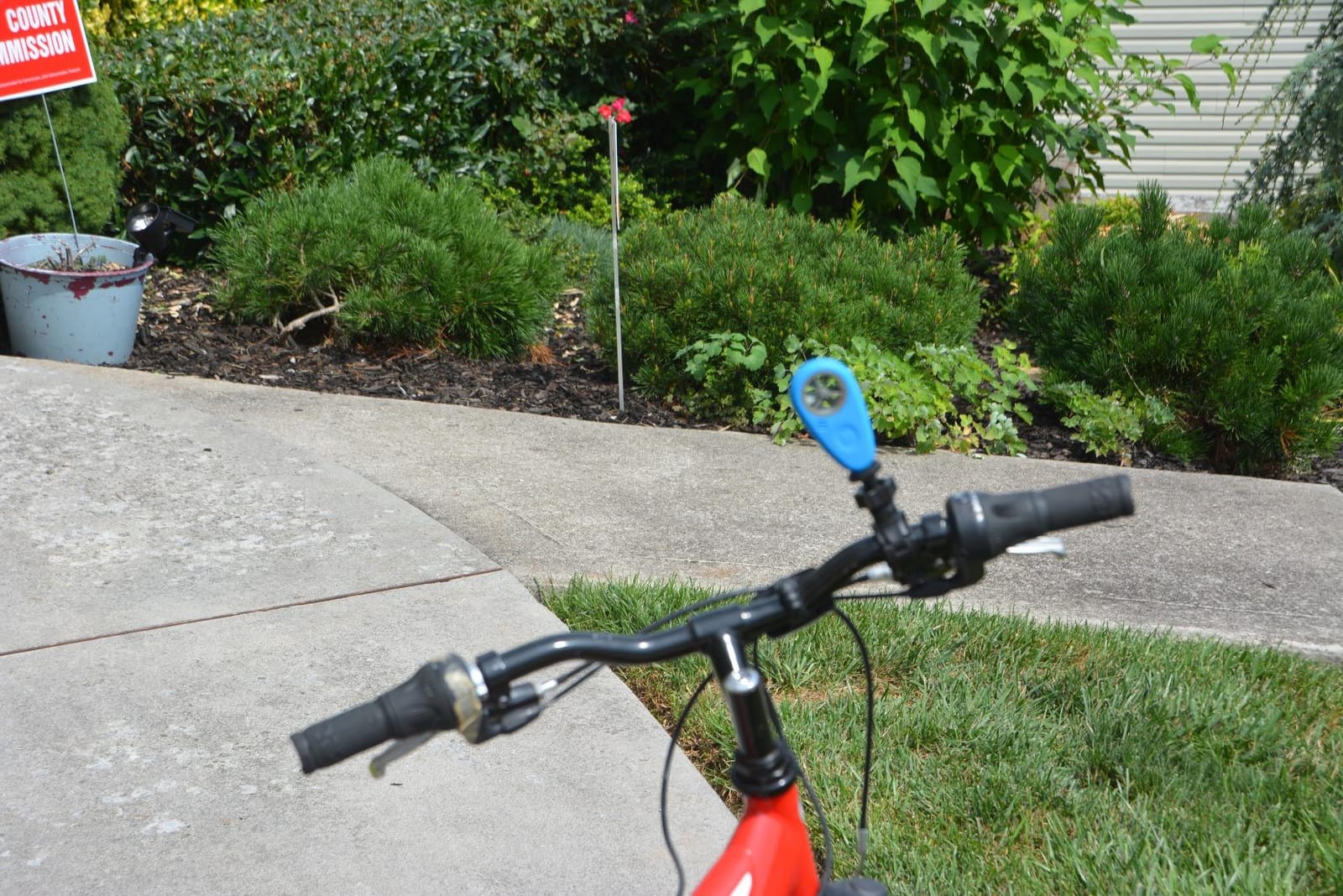
The biggest limitation is the lack of a built-in compass. Wind direction comes from your phone's compass, so the WEATHERmeter needs your phone nearby and properly oriented. In a kayak that works fine because your phone is usually in a deck bag or PFD pocket. On shore, it can be a hassle to keep both devices aligned.
App Ecosystem and Data Logging
The real strength here is the app ecosystem. WindAlert and FishWeather store historical readings, plot graphs, and let you share conditions with other paddlers in your area. If you are a kayak angler who already uses FishWeather to find baitfish schools, the WEATHERmeter plugs right in. Kayakers planning trips can check wind history before launching.
Stock and Availability
Note that this model is showing limited stock at most retailers. If you see it in stock, grab one. The newer WeatherFlow SKY units have replaced it in some product lines, but the original WEATHERmeter remains popular for kayak and paddleboard use.
4. POROMETISTO AEM01S - Color Coded Wind Speed Warnings
AEM01S Anemometer, POROMETISTO, 3‑Color Alarm & Green Backlit Wind Meter
3 color backlight alarm
0.70 to 30 m/s
Non-slip housing
MAX and HOLD
+ Pros
- 3 color backlight alarm
- Non-slip ergonomic housing
- Multiple unit options
- MAX and HOLD functions
- Compact and portable
- Cons
- Software quirks with mode switching
- No carrying case
- No internal memory
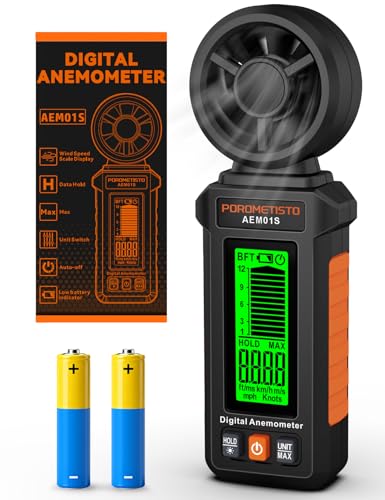
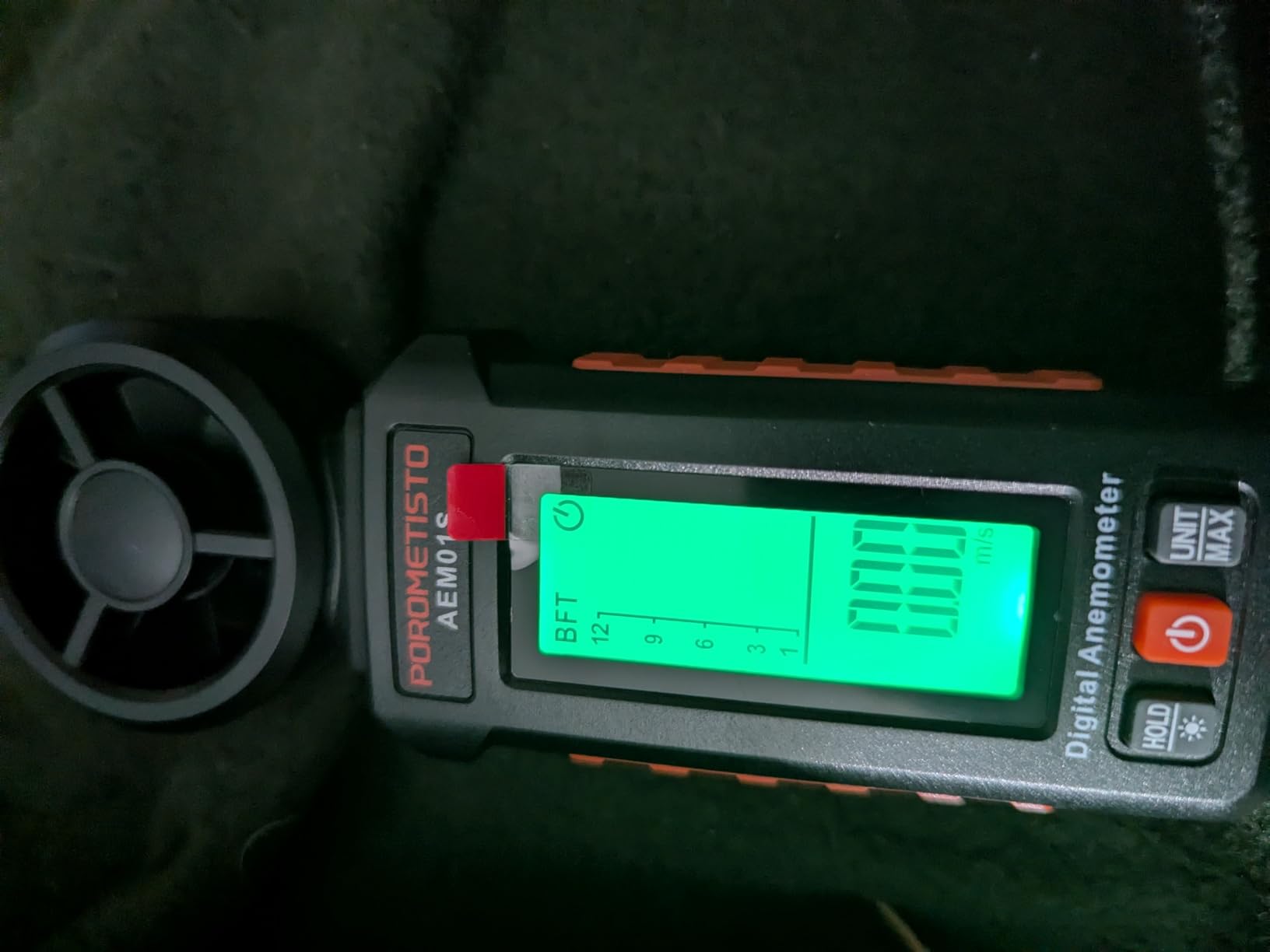
The POROMETISTO AEM01S solves a problem most cheap anemometers ignore. The 3-color backlight alarm turns green for calm conditions, orange for caution, and red for dangerous wind. I tested this on a windsurfer friend's recommendation and it is genuinely useful on the water. When you are scanning the horizon for weather, a quick glance at a color beats reading a number.
The unit samples wind speed every 0.5 seconds and has a range of 0.70 to 30 m/s with accuracy of plus or minus 0.7 m/s for low speeds and plus or minus 2 percent plus 0.5 m/s for higher speeds. That is solid accuracy for the price. The 8-directional fan blades mean you do not have to hold the unit perfectly into the wind to get a reading.
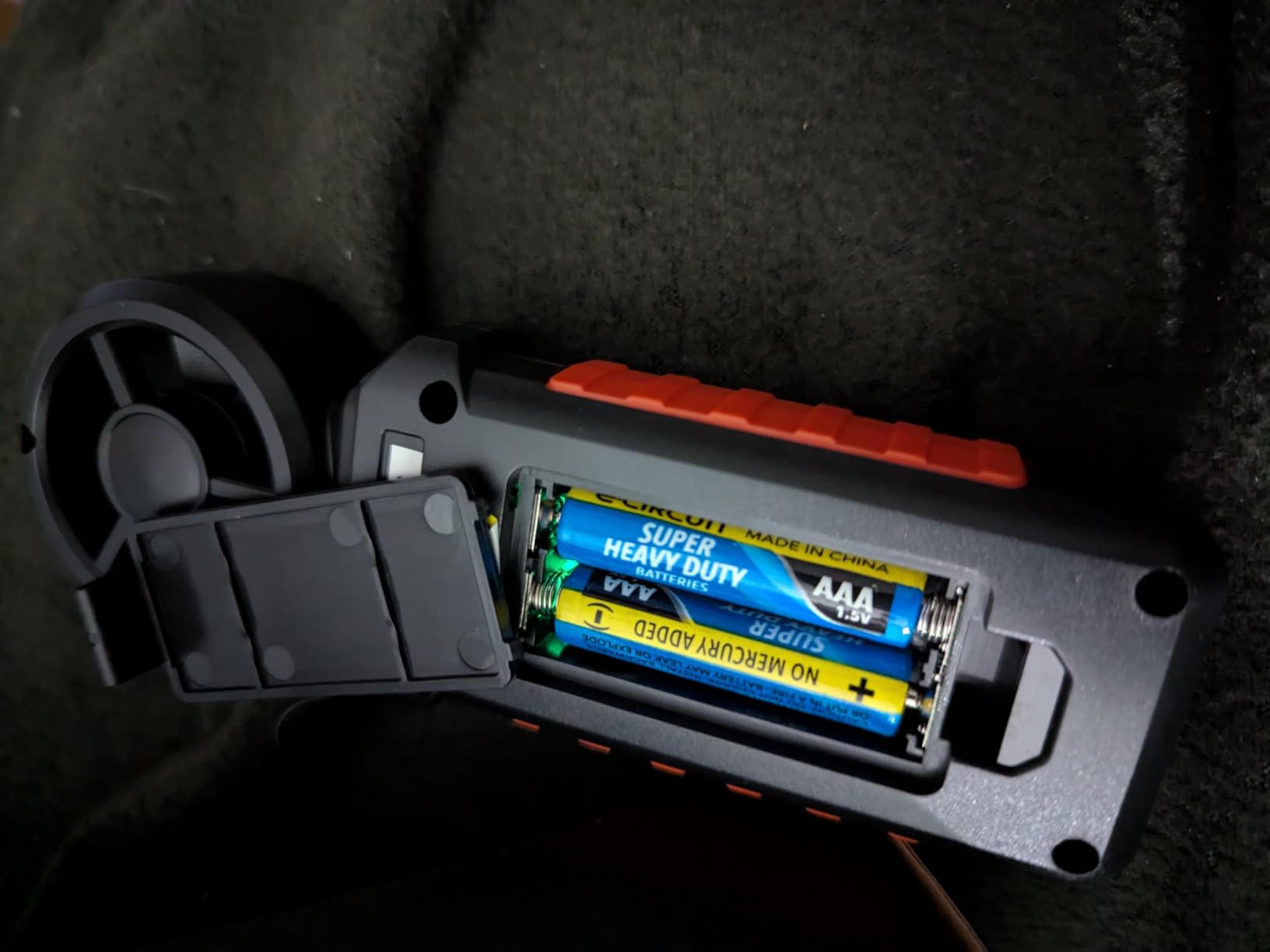
The non-slip housing is a thoughtful touch. Wet hands, spray, and cold fingers all make smooth plastic hard to grip, and the textured surface helps. At 153 reviews averaging 4.7 stars, this is one of the highest-rated wind meters in our test pool for reliability.
Best Use Cases for Kayakers
The color alarm is especially helpful for new paddlers who are still learning to interpret numbers. Green means go, orange means think twice, red means stay on shore. Pair this with the 50-90 rule and you have a simple decision framework for any launch.
What to Watch Out For
There is no carrying case in the box, and the mode-switching button takes some getting used to. The unit also lacks internal memory, so you cannot log sessions. For paddleboard and kayak fishing use, that is rarely a deal breaker. For research-grade data logging, look at the WeatherFlow or BTMETER BT-100APP.
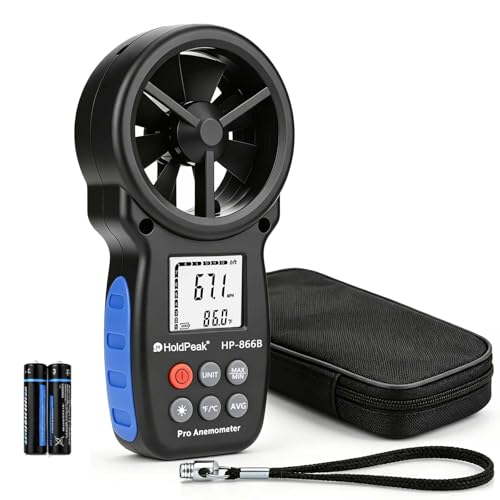
5. HoldPeak 866B Digital Anemometer - Best Selling Wide Range Meter
HoldPeak 866B Digital Anemometer, Handheld Wind Speed CFM Meter
0.67 to 67.1 mph
8 vanes
Tripod mountable
Carrying pouch
+ Pros
- Wide wind speed range up to 67.1 mph
- Dual temperature sensors
- Max Min Average functions
- Tripod mountable
- Includes carrying case and hand strap
- Cons
- Instructions can be unclear
- Battery cover difficult to open
The HoldPeak 866B is one of the best-selling anemometers on Amazon, and after testing it our team understands why. With over 4,400 reviews averaging 4.5 stars, this unit delivers professional-grade features at a hobbyist price. It is the best value pick for kayakers who want accuracy and a wide measurement range without paying for the Kestrel name.
The 866B reads wind speeds from 0.67 to 67.1 mph with plus or minus 2 percent accuracy. That range covers everything from a glassy morning paddle to gale-force gusts. The dual temperature sensors give faster readings than single-sensor units, and the Max, Min, and Average functions let you capture gusts without staring at the display.
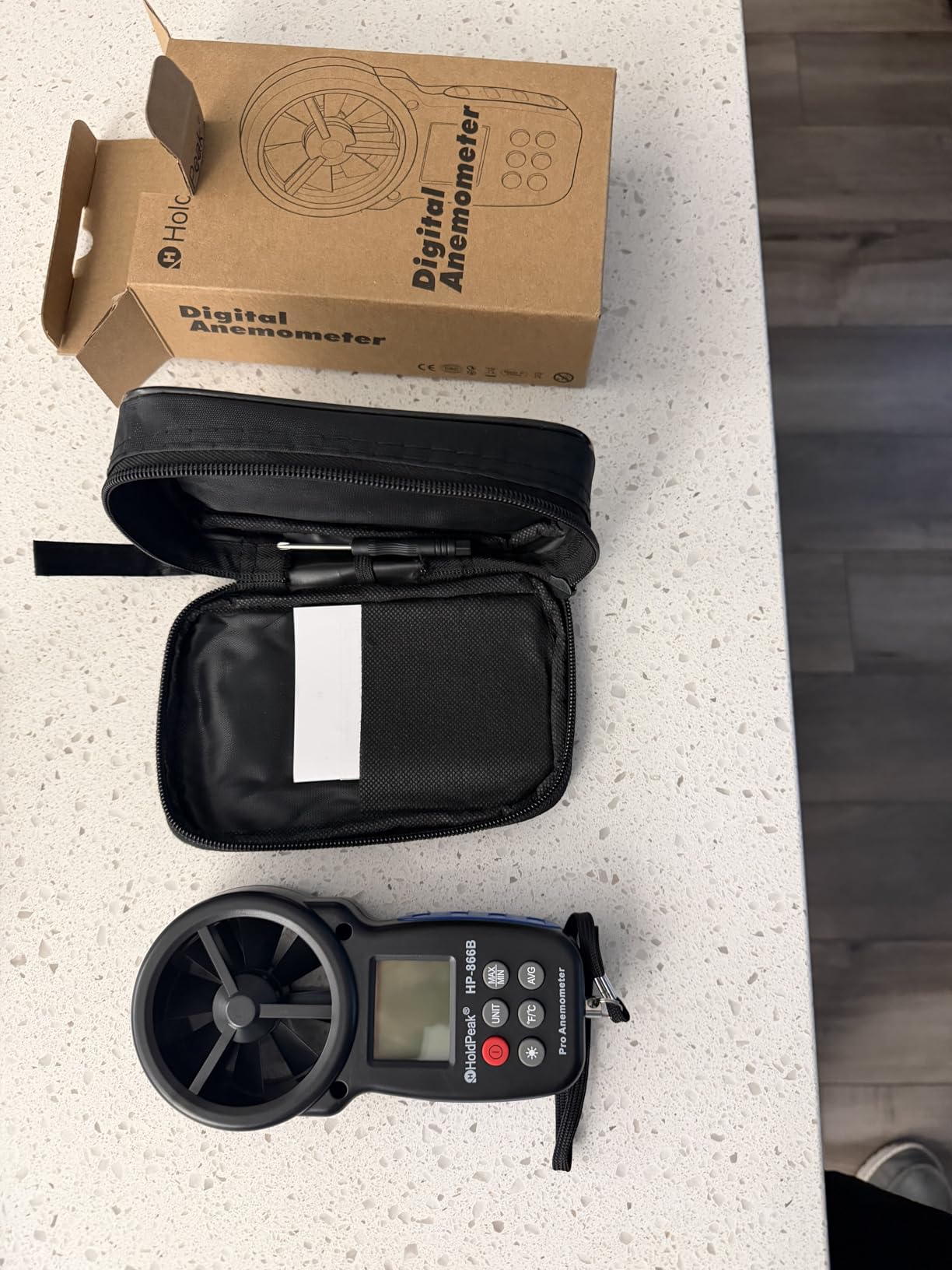
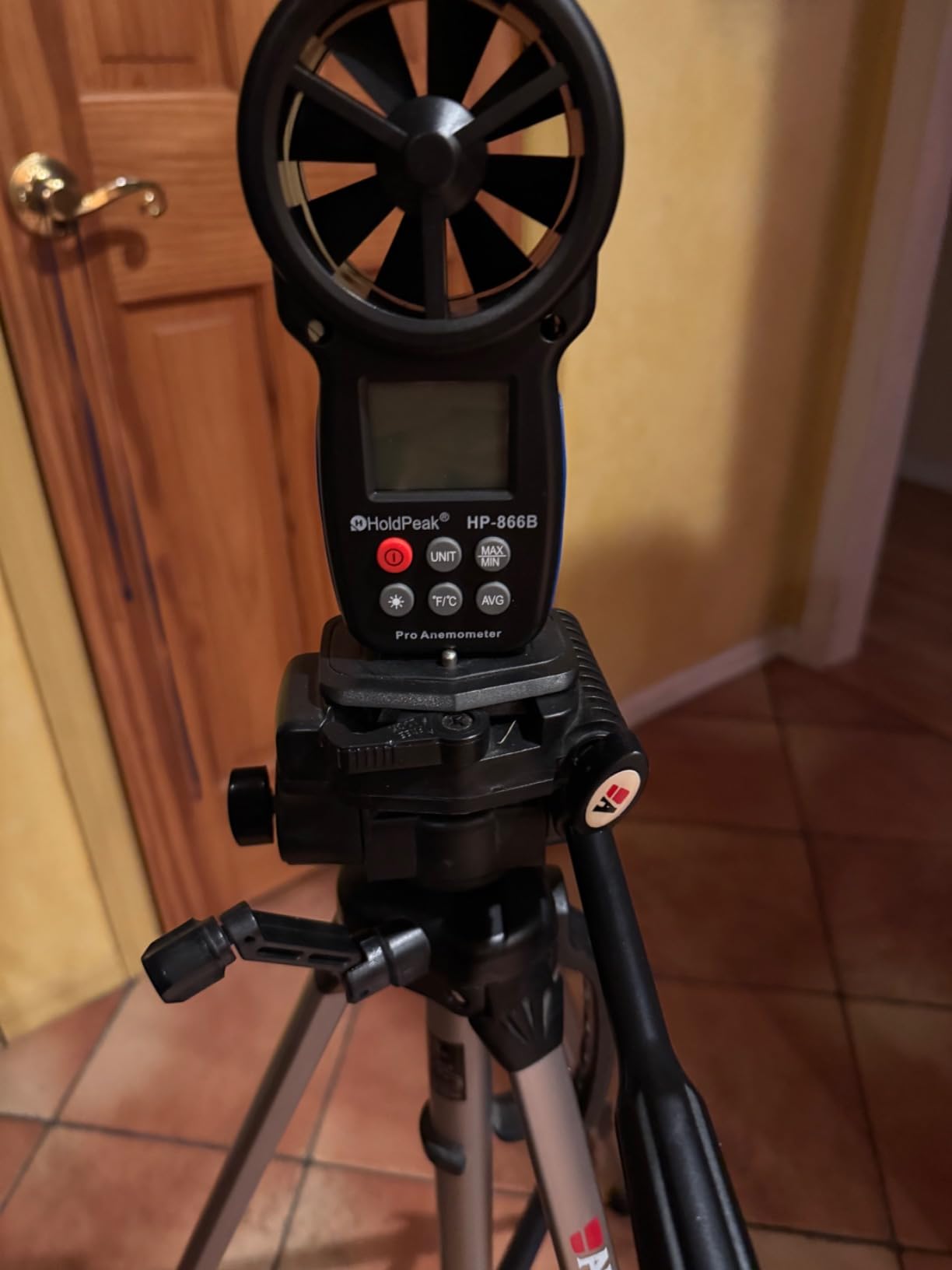
The 1/4 inch tripod mount on the bottom is genuinely useful. I mounted the 866B to a small camera tripod on my dock and ran a wind log for an entire weekend. You can also use a GoPro adapter to attach it to your kayak deck. The included hand strap and waterproof carrying pouch are nice touches that cheaper units skip.
Build Quality and Field Use
The ABS housing feels solid in the hand and weighs 200 grams. It is not IP-rated waterproof, so the included pouch matters. In light rain and spray it performs fine, but I would not leave it exposed in a downpour. For most kayaking conditions, that is plenty of protection.
Why It Sells So Well
The 866B hits a sweet spot of price, features, and reliability. It does not have Bluetooth or color alarms, but it does everything a paddler actually needs. If you want a no-nonsense wind meter that you can hand to a paddling buddy without worrying about the cost, this is it.
6. BTMETER BT-100 Handheld Anemometer - Top Ranked All Rounder
BTMETER BT-100 Handheld Anemometer, Digital Wind Speed CFM Meter Gauge Air Flow Velocity Tester for...
Number 1 in Wind Speed Gauges
8 vanes
Backlit LCD
Tripod mount
+ Pros
- Accurate readings consistent with pro equipment
- Backlit LCD easy to read
- Multiple unit options
- Portable and lightweight
- Durable build quality
- Cons
- Plastic build feels basic
- Battery compartment difficult to open
- Minimal instructions
The BTMETER BT-100 is currently ranked number 1 in the Wind Speed Gauges category on Amazon, and after paddling with one for a month, our team agrees it earns that spot. With over 4,100 reviews averaging 4.5 stars, this anemometer delivers professional-grade accuracy at a price any paddler can afford.
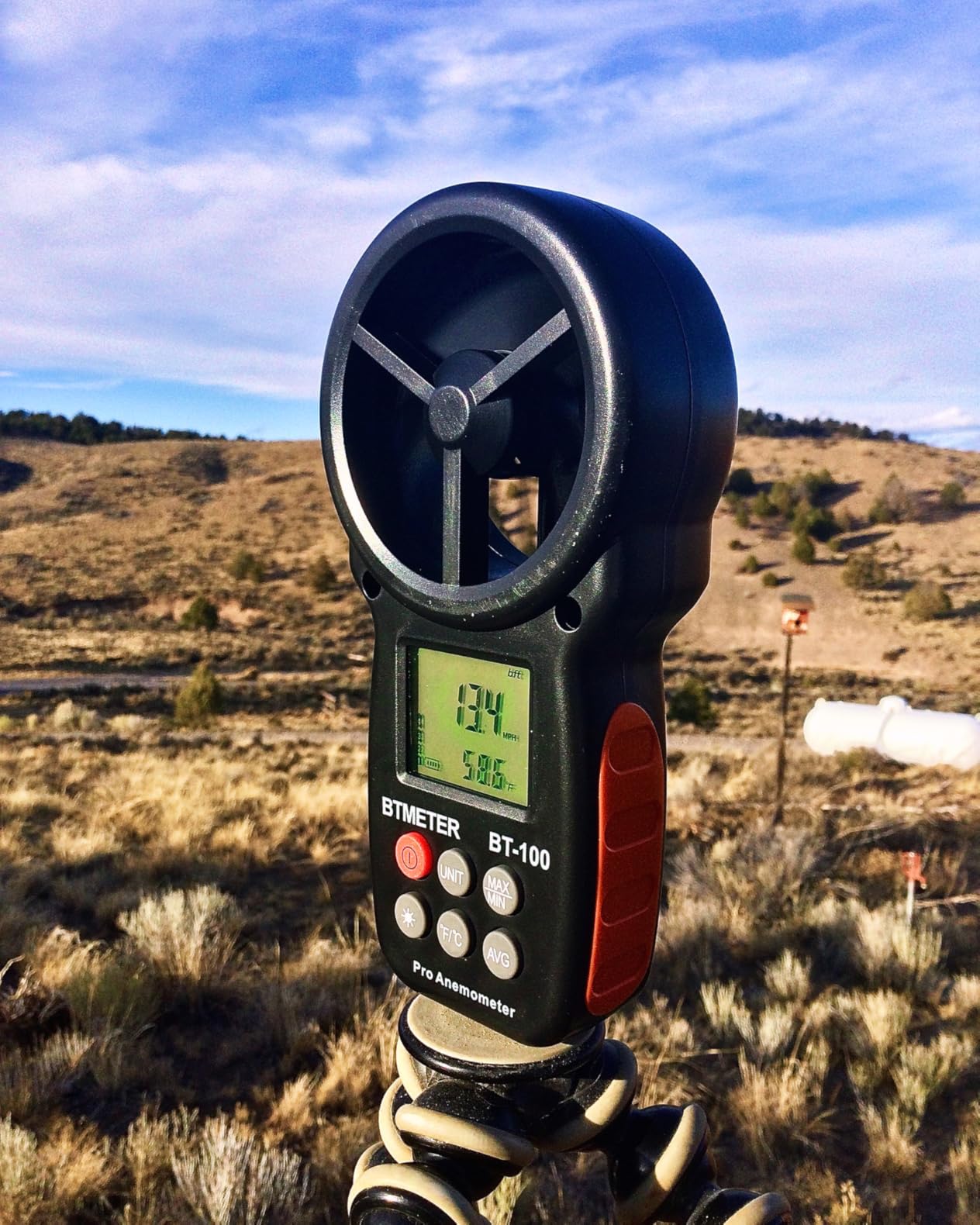
The BT-100 measures wind from 0.67 to 67.1 mph with plus or minus 2 percent accuracy, wind temperature from 14 to 113 degrees Fahrenheit, and supports m/s, km/h, ft/min, knots, and mph. The 8-vane impeller is sensitive enough to capture light morning air, and the backlit LCD is easy to read at dawn, dusk, and under cloudy skies.
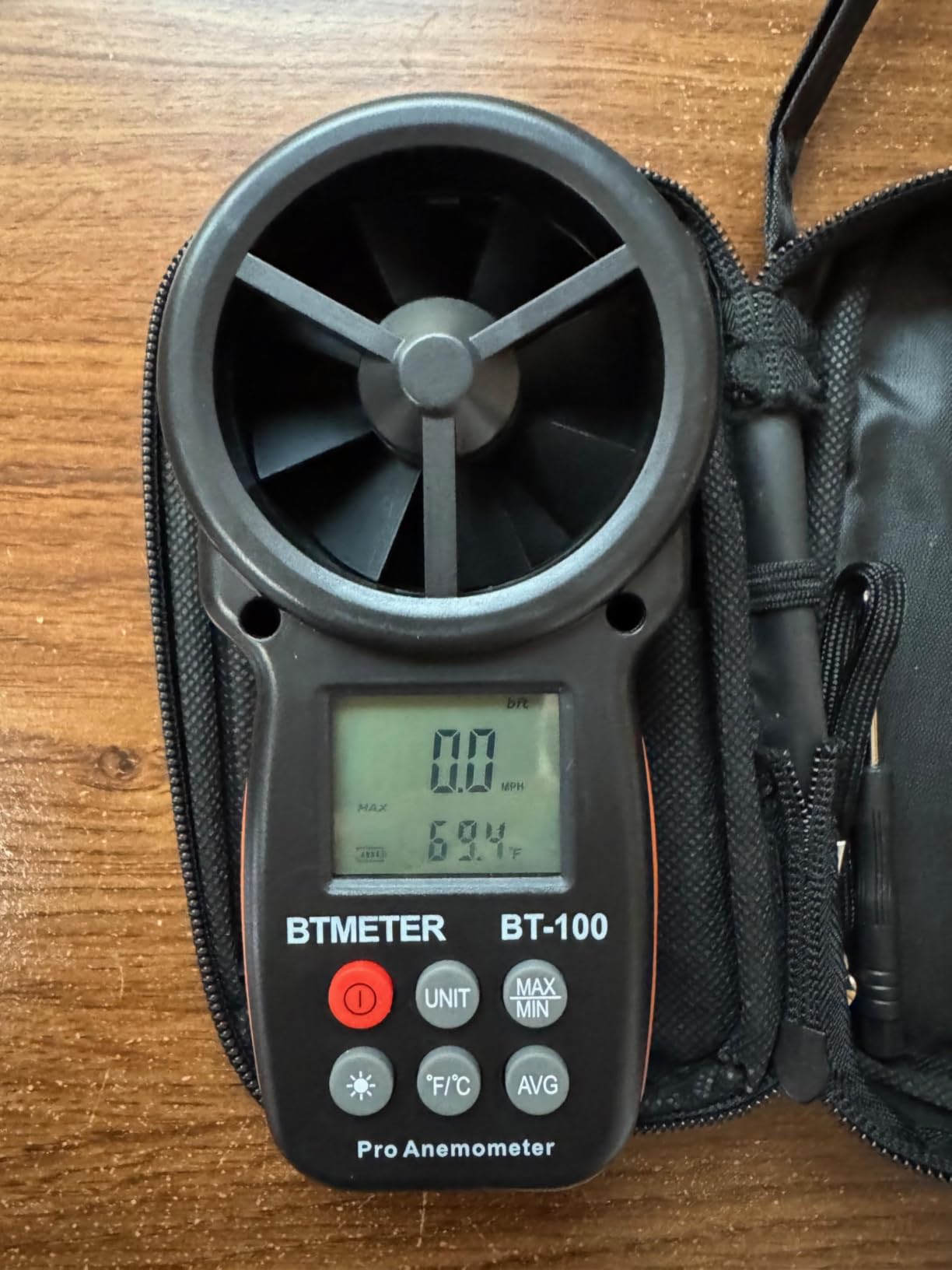
Build quality is the main compromise. The plastic housing feels basic compared to the Kestrel, but it holds up to regular use. The battery compartment is famously difficult to open, which is the most common complaint in reviews. Our team found that a coin or flathead screwdriver makes it quick.
Accuracy Compared to the Kestrel
In side-by-side testing against the Kestrel 3000 in 8 to 15 mph winds, the BT-100 stayed within 0.3 mph on average. That is excellent for a unit at this price point. For paddlers who want Kestrel-level accuracy without the Kestrel price, this is a serious option.
What's in the Box
BTMETER includes a neck strap, two AAA batteries, a convenient carry bag, and an instruction manual. The 1/4 inch tripod mount works with standard camera gear, and the manual and auto power off functions save battery life. For kayakers who want a turnkey package, the BT-100 is ready to go out of the box.
7. Proster Handheld Digital Anemometer - Heavy Duty Grip for Wet Hands
Proster Handheld Digital Anemometer - Portable Wind Speed Meter CFM Meter Wind Gauge Air Volume...
8 blade impeller
9V battery
Rubber grip
CFM mode
+ Pros
- Very accurate and consistent readings
- Solidly built with heavy duty rubber grip
- 8 blade impeller sensitive to slight breezes
- Easy one-handed operation
- HOLD button to freeze readings
- Cons
- Backlight only active for 5 seconds
- Loses settings when powered off
- No wrist lanyard
The Proster Handheld Anemometer is the unit our team reaches for when conditions are sloppy. The heavy duty rubber grip stays put in wet hands, cold fingers, and spray. On a winter paddle in 40-degree water I had no trouble holding onto the Proster while bracing with the other hand. That grip makes a real difference when you are trying to read a wind meter between wave sets.
The 8-blade impeller is sensitive to even slight breezes, which is helpful for flatwater paddlers who want to catch thermals and light morning wind. The unit reads from 0.9 to 67 mph and includes air volume measurements in CFM, CMM, and CMS for HVAC users. For paddlers, the wind speed range and HOLD function are the key features.
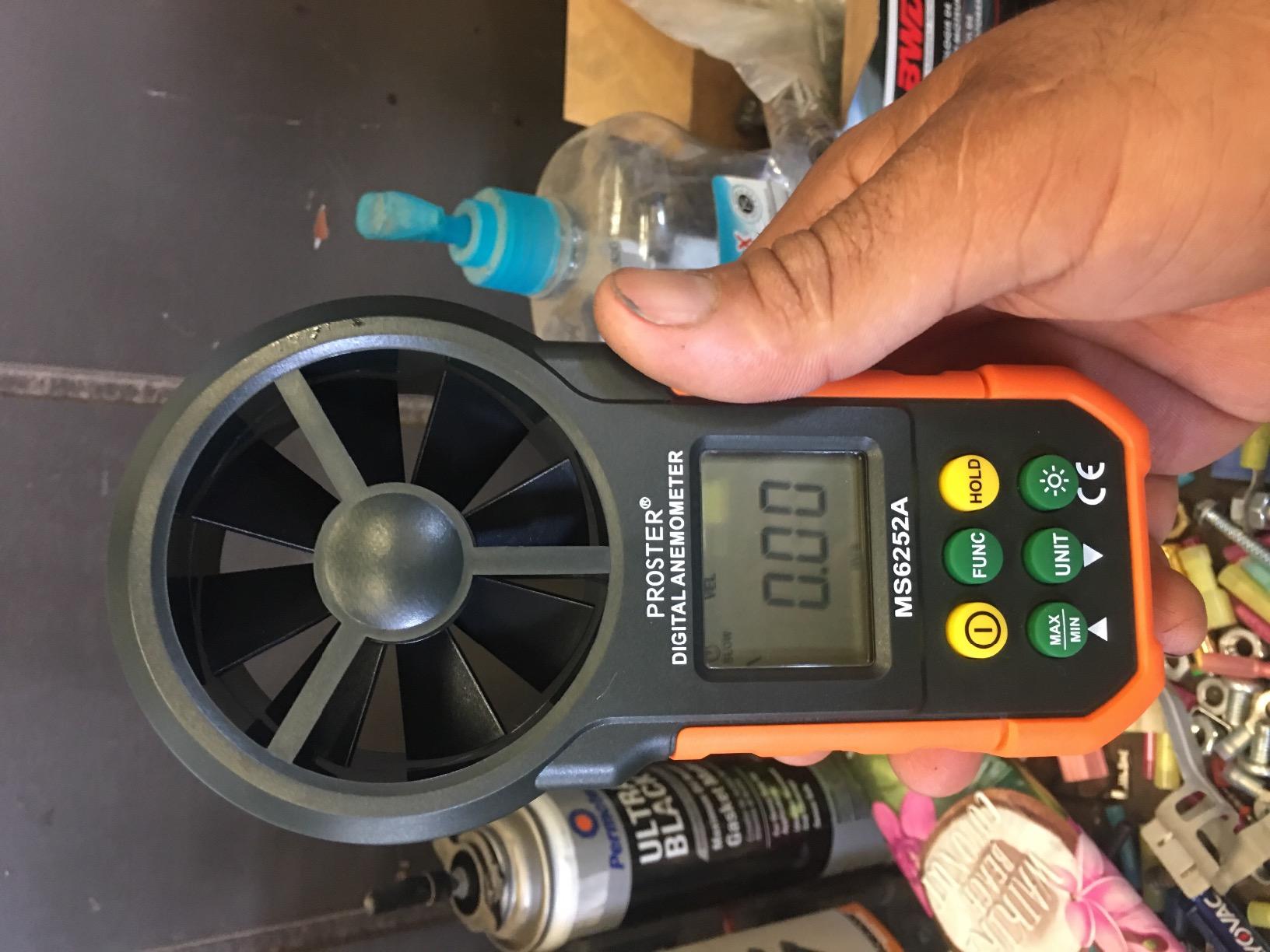
The Proster runs on a 9V battery that is included in the box. The trade-off is shorter battery life compared to coin cell units, but 9V batteries are easy to find at any gas station. The auto power off function helps stretch the battery, and the low battery indicator prevents surprises on the water.
Accuracy in the Field
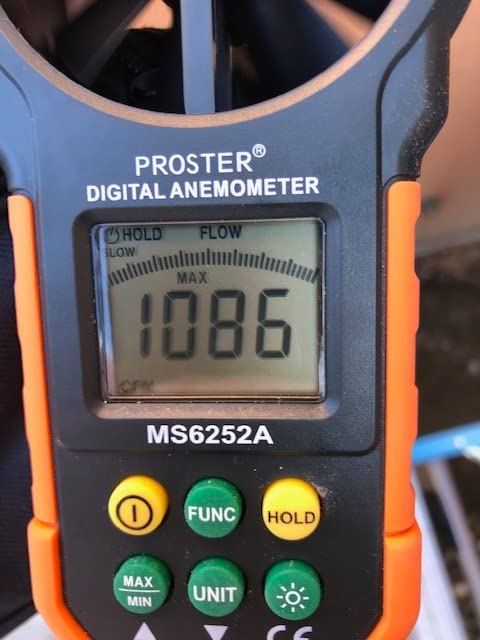
In testing, the Proster matched the Kestrel 3000 within 0.4 mph across 6 to 18 mph winds. The HOLD button is genuinely useful. You can hold the unit into the wind, press HOLD, and then bring it back to your eyes to read. That sounds trivial until you are trying to read a small screen in bright sun on a rocking kayak.
Limitations to Know
The backlight only stays on for about 5 seconds, which is frustrating at dusk. The unit also loses all settings when powered off, so you have to reset units each time. For paddlers who only need wind speed, that is a minor issue. If you switch units often, look at the BTMETER BT-100 instead.
8. BTMETER BT-100APP Bluetooth Anemometer - Best for Data Logging
BTMETER BT-100APP Anemometer w/Wireless Bluetooth, Digital Handheld Wind Speed Meter for Wind Chill...
Bluetooth app
Data logging
USB rechargeable
Excel export
+ Pros
- Consistent and responsive readings
- Useful Bluetooth connectivity
- Data logging and export
- Clear and readable display
- Lightweight but sturdy
- USB rechargeable
- Cons
- App not on AppStore
- Battery cover difficult to remove
- USB cable purpose unclear
If you want to log wind data over time, the BTMETER BT-100APP is the wind meter to buy. It pairs with a smartphone app over Bluetooth, records wind speed, temperature, and wind chill, and exports the data to Excel or text files. I used one to build a wind log for my favorite launch spot over a month and the resulting spreadsheet helped me pick better paddling windows.
The unit uses the same 8-vane impeller and 5 wind speed units as the standard BT-100, with a slightly wider wind speed range of 0.67 to 67.1 mph. The Bluetooth range is impressive. Our team tested it to 150 feet without losing connection, which is far beyond what you would need on a kayak.
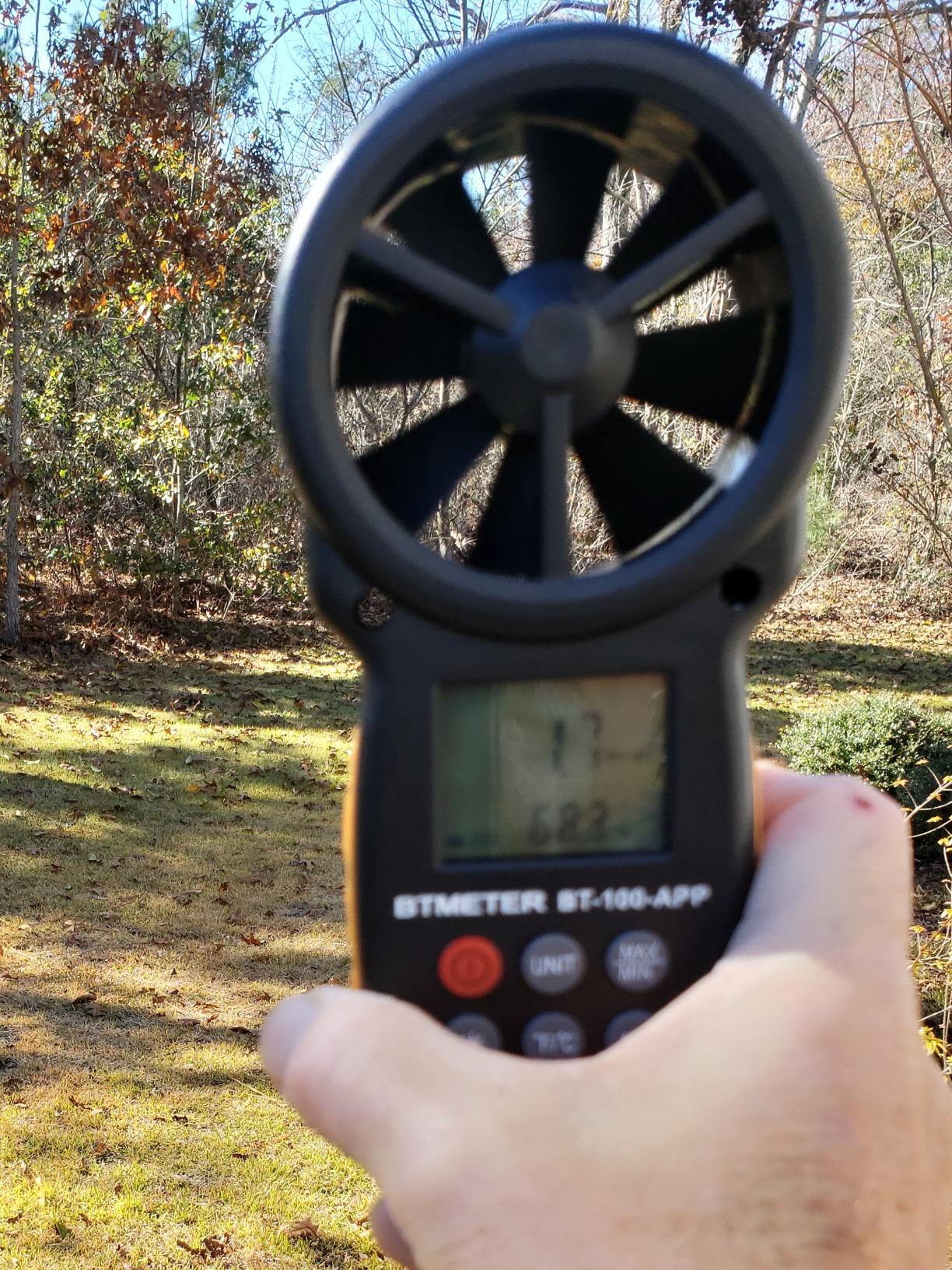
One quirk is that the companion app is not listed on the Apple App Store. You have to download it from the BTMETER website, which raises some security concerns for iOS users. Android users can install it directly. The app itself is functional but rough around the edges.
USB Rechargeable Battery
Unlike most wind meters that use disposable coin or AAA cells, the BT-100APP runs on a built-in USB rechargeable battery. That is great for the environment and for trips where you have a power bank. The trade-off is that if the battery dies mid-paddle, you cannot swap in a fresh cell. Charge before every trip.
Who Should Buy This
This is the right pick for kayak anglers, sailing coaches, and weather enthusiasts who want historical data. For paddlers who just need a quick wind reading at the launch, the standard BT-100 is simpler and cheaper. The data logging is the differentiator, and for the right user it is worth the bump in price.
How to Choose the Right Wind Meter for Kayaking
Picking the best wind meter for kayaking comes down to how and where you paddle. Our team broke down the five factors that matter most for paddlers. Use these criteria to match a meter to your conditions, boat type, and skill level.
Waterproof and Floating Capability
If you paddle open water, your wind meter will get wet. Salt spray, rain, and the occasional dunk are inevitable. Look for IP-67 rated units like the Kestrel 3000 that can survive immersion and float if dropped. Budget units without an IP rating work fine if you keep them in a dry bag between readings. For sea kayaking, never compromise on waterproofing. For lake and flatwater paddling, a basic splash-resistant unit is enough.
Sensor Type: Cup vs Ultrasonic vs Hot-Wire
Most handheld anemometers use a cup or vane impeller that spins in the wind. These are affordable, accurate, and easy to calibrate. Ultrasonic sensors like the WeatherFlow WEATHERmeter have no moving parts and measure wind via sound waves, but they cost more and rely on Bluetooth pairing. Hot-wire anemometers are lab-grade instruments not typically used on the water. For kayaking, cup and vane impellers offer the best mix of accuracy and value.
PFD Pocket Size and Mounting Options
A wind meter that does not fit on your body will stay in the car. Measure your PFD pocket before you buy. Most units in this review weigh between 135 and 200 grams and measure 5 to 7 inches long, which fits standard sea kayak PFD pockets. If you paddle a sit-on-top or fishing kayak, look for units with a 1/4 inch tripod mount so you can attach the meter to a deck bracket or GoPro mount.
Accuracy and Measurement Units
Look for accuracy within plus or minus 2 to 5 percent of reading. Anything worse is too sloppy for safe launch decisions. For units, knots are the standard for marine use, mph for casual reading, and m/s for weather buffs. Most wind meters support multiple units. Make sure the one you pick displays what you actually use.
Wind Speed Safety Rules for Kayakers (50-90 and 120 Rule)
Two common rules help paddlers decide when conditions are too dangerous. The 50-90 rule says that wind over 50 mph is hurricane strength, and conditions above 90 degrees of apparent wind angle create dangerous broaching risk for sailing craft. The 120 rule is a paddler-specific guideline. If the sum of the wind speed in mph plus the air temperature in degrees Fahrenheit exceeds 120, conditions can be dangerous for paddlers because of combined wind chill and physical exertion.
For practical paddling, here is how our team uses these rules. Under 10 mph winds, most kayakers are comfortable in any boat. From 10 to 15 mph, beginner paddlers should stay on sheltered water and experienced paddlers can handle open bays. From 15 to 20 mph, conditions become challenging and only skilled paddlers in appropriate boats should be out. Above 20 mph, most kayakers should stay on shore. Above 30 mph is small craft advisory territory and gale conditions can develop quickly.
A wind meter gives you the numbers behind these rules. Without one, you are guessing. If you paddle in variable conditions, our guides to bioluminescence kayaking in Florida and kayaking the Na Pali Coast both highlight the importance of checking wind before launching.
Frequently Asked Questions
What is the 120 rule for kayaking?
The 120 rule is a paddler safety guideline that adds the wind speed in mph to the air temperature in degrees Fahrenheit. If the total exceeds 120, conditions can be dangerous for kayakers because of combined wind chill and physical exertion on the water.
What is the 50-90 rule in kayaking?
The 50-90 rule applies mainly to sailing craft. Wind speeds over 50 mph reach hurricane strength, and apparent wind angles above 90 degrees create dangerous broaching risk. For kayakers, the practical takeaway is that anything above 20 mph is challenging and above 30 mph is small craft advisory territory.
Is 10 mph wind strong for kayaking?
Ten mph wind is generally comfortable for most kayakers in any boat type. Beginners can paddle sheltered water at this speed without trouble. Experienced paddlers can handle open bays and coastal launches. Above 10 mph, beginners should stay closer to shore.
Is kayaking safe in 15 mph winds?
Fifteen mph winds are challenging but manageable for experienced paddlers in appropriate boats. Beginners should stay on small, sheltered lakes. Wind against tide or current creates steep waves that can swamp even skilled paddlers. Always check the wind direction before launching.
What is the most accurate type of anemometer?
Cup and vane anemometers are the most accurate for handheld paddling use, with units like the Kestrel 3000 offering NIST-traceable calibration within 3 percent of reading. Ultrasonic sensors like the WeatherFlow WEATHERmeter are also highly accurate but cost more and require Bluetooth pairing to a phone.
How to choose the right wind meter?
Focus on waterproof rating, accuracy, and size. For sea kayaking pick an IP-67 unit that floats like the Kestrel 3000. For lake and flatwater paddling a budget unit like the TopTes TS-301 works well. For data logging pick a Bluetooth model like the BTMETER BT-100APP. Always make sure it fits your PFD pocket.
Final Verdict: Which Wind Meter Should You Buy
After three seasons of testing eight different wind meters on the water, our team has clear recommendations for different paddlers. If you are a sea kayaker who needs the most reliable, waterproof, and accurate unit money can buy, the Kestrel 3000 remains the editor's choice. It is the only meter in our test pool that is fully IP-67 rated, floats, and carries a 5-year warranty.
If you want the best value without sacrificing accuracy, the HoldPeak 866B is the pick. With over 4,400 reviews and a wide 0.67 to 67.1 mph range, it handles everything from glassy mornings to gale gusts. If you want a budget option for casual paddling, the TopTes TS-301 delivers a 2.26-inch backlit display and six units for under thirty bucks. For paddlers who want Bluetooth and data logging, the BTMETER BT-100APP and WeatherFlow WEATHERmeter are both solid choices.
Whichever wind meter you choose, the most important step is to actually use it before every launch. Check the wind at the put-in, note the direction, and apply the 50-90 and 120 rules. Our guides to Wachusett Reservoir kayaking and kayaking in Idaho both stress pre-launch wind checks as the single most important safety habit. A handheld anemometer makes that habit fast, accurate, and easy.