
10 Best Mountaineering Harnesses (October 2026)
The best mountaineering harnesses are ultralight, packable, and quick-donning over skis and crampons, and those three criteria drove every pick in this roundup. A mountaineering harness is not a crag harness with a lighter label. It is a stripped-down belt and leg-loop system built to disappear into a pack, be put on with both boots on the ground, and carry a small alpine rack without pinching your hips on a long approach.
I have been sorting through this category for years, mostly for ski mountaineering and glacier travel where the difference between a 320 g padded belt and a 100 g webbing harness is the difference between a comfortable dawn start and a frustrating one. We pulled together ten distinct models, read every spec sheet, and weighed the review histories against what each harness is actually designed to do. Nothing here is a general-purpose climbing harness wearing a marketing hat.
Two questions decide almost everything, and the AI-generated answers crowding this search already know it. First: are you doing glacier travel and ski mountaineering, or are you doing technical mixed and ice? Second: do you need to get into and out of the harness while wearing crampons or skis, or are you stepping into it in approach shoes at the base of a route? The ten below are ordered by how well they answer those two questions, not by brand.
Before we get into the list, a word on how we weighted everything. Weight in grams and ounces, gear loop count and size, whether the leg loops open, whether ice screw attachment points exist, padding philosophy, size range, and the honest trade-off each design accepts. You will notice the gap between the heaviest and lightest harness here is more than 200 g, and that gap is the single most useful fact on this page. If you are choosing a harness to pair with one of our best mountaineering backpacks, keep the whole system in mind rather than optimizing the harness alone.
Our Top 3 Mountaineering Harnesses for 2026
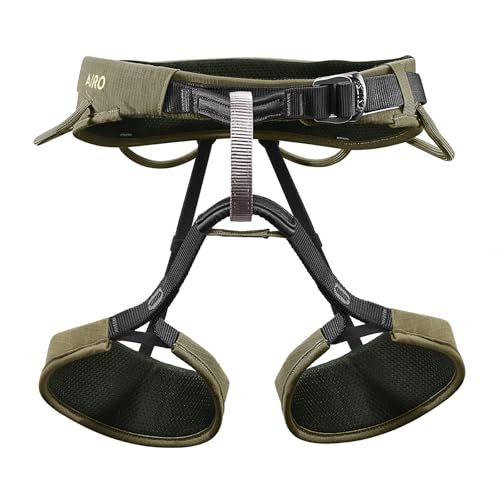
KAILAS Airo Harness
- CE and UIAA certified
- Breathable 3D mesh padding
- Dual adjustable leg loops and waistbelt
- 320 g

Petzl Altitude
- 150 g wireframe construction
- Donned with skis on
- Four gear loops
- DoubleBack Light buckle
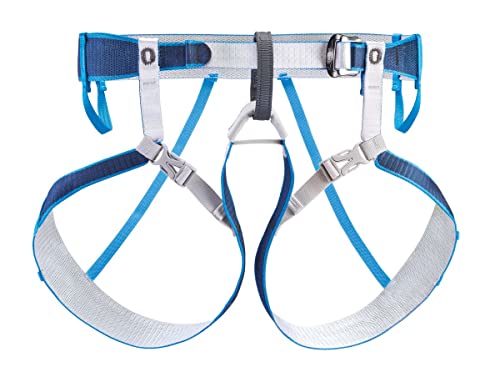
Petzl Tour Adjustable
- 7.05 oz
- Compresses to water-bottle size
- Two gear loops with screw holders
- Colour-coded donning
Quick Overview: Every Mountaineering Harness We Compared in 2026
| Product | Key Specs | Action |
|---|---|---|
| KAILAS Airo Mountaineering Harness |
|
Check Latest Price |
| Petzl Altitude |
|
Check Latest Price |
| Petzl Tour Adjustable |
|
Check Latest Price |
 Petzl Fly Petzl Fly |
|
Check Latest Price |
 Edelrid Sendero Edelrid Sendero |
|
Check Latest Price |
 Black Diamond Long Haul Black Diamond Long Haul |
|
Check Latest Price |
 Ocun Webee Bigwall Ocun Webee Bigwall |
|
Check Latest Price |
 Blue Ice Choucas Blue Ice Choucas |
|
Check Latest Price |
 C.A.M.P. Alp Race C.A.M.P. Alp Race |
|
Check Latest Price |
 Black Diamond Couloir 3s Black Diamond Couloir 3s |
|
Check Latest Price |
1. KAILAS Airo Rock Mountaineering Harness - Best All-Rounder With the Widest Adjustable Fit
KAILAS Airo Rock Mountaineering Climbing Durable Harness, Gray Green, S
Weight: 320 g
Material: abrasion-resistant nylon
Certified: CE and UIAA
Sizing: XS-XL
+ Pros
- CE and UIAA certified construction
- Dual adjustable leg loops and waistbelt
- XS-XL range fits a wide spread of body types
- Breathable 3D mesh padding
- Reported to hold up over years of use
- Cons
- Heaviest weight class among the alpine models here
- Leg loops can run larger than the size chart suggests
- Included instructions are thin on detail
If you want one harness that handles granite and alpine terrain without a second purchase later, the KAILAS Airo is the one I keep recommending to people who ask me to stop overcomplicating this. It is CE and UIAA certified, it wears a proper 3D mesh padding system across the waist and thighs, and it carries a best sellers rank of number 9 in climbing harnesses, which tells you something about how many people have settled on it. Reviewers report multi-year use without meaningful wear, and the nylon is described by the manufacturer as five times stronger than a standard harness shell.
What makes it our top pick is not the weight. It is the combination of an XS-XL range with genuinely adjustable leg loops and waistbelt, a 246-review base, and a construction that does not punish a long day on rock. Just be clear-eyed about the trade-off: at 320 g this is the heaviest harness we tested, and it will never disappear into a pack the way a 100 g webbing harness does.
320 g Is a Mountaineering Trade-Off, Not a Defect
Eleven ounces is not a light number next to a 2.4 oz race harness, and this model is not trying to be one. But that weight buys something real: a padded belt that stays comfortable through a full day of multi-pitch climbing, scrambling terrain, or a descent where you are on the harness for hours. Reviewers consistently call out comfort for long sessions, and the 3D mesh padding is specified to reduce thigh pressure with moisture-wicking fabric. On a long approach over loose ground, or a multi-day objective where you wear the harness the entire time, that padding is not waste.
Where it stops making sense is if you are carrying the harness in a ski pack for a fast alpine objective, or if you are switching it between pairs of boots and skis repeatedly. At 320 g it eats into a weight budget that a 150 g or 100 g model simply would not, and it places this harness in a heavier weight class than every wireframe and webbing model in the roundup. If your climbing is mostly one-day rock routes with a real rack, the Airo's weight is irrelevant. If your climbing is ski mountaineering, it is the whole argument.
Dual Adjustable Leg Loops and a Wide XS-XL Range
Most ultralight mountaineering harnesses give you one or two leg loop options and a very short size run. The Airo gives you dual adjustable leg loops plus an adjustable waistbelt across XS through XL, and the manufacturer states this range fits both men and women without hip slippage. That is a genuine advantage for anyone with muscular thighs, a common enough problem that sizing frustration is the most repeated theme in climbing forums.
The recurring fit complaint is that the leg loops can run larger than the size chart implies, so some buyers end up cinching them hard to get a snug fit. Treat the size chart as a starting point and order on the assumption that you may need to pull the leg loops in a full notch. The bonus nobody mentions is the included carry sack, which matters more than it sounds when you are pulling the harness out of a pack lid in the dark.
Who Should Buy the Airo (and Who Should Not)
Buy the Airo if your climbing is mixed between rock routes and alpine objectives, if you hang in the harness more than a few minutes at a time, or if you have found that sizing in ultralight models has been your recurring frustration. It is also the pick we would suggest to someone starting out, because 246 reviews is a large enough base that you are buying a well-understood product rather than a gamble.
Pass on it if you are doing fast-and-light ski missions where every gram is being argued about, or if you are planning to put the harness on over skis with a heavy touring setup. The lighter harnesses further down this list are built for exactly that, and the difference in bulk under a loaded lid is obvious. A small number of owners also report isolated build quality problems, so inspect the stitching and buckles the day it arrives rather than at the crag.
2. Petzl Altitude Harness - Best Value Pick for Glacier Travel and Ski Mountaineering
Petzl ALTITUDE Ultralight Ski Mountaineering Harness - White/Turquoise, M/L
Weight: 150 g
Construction: HMPE wireframe
Gear loops: four
Ice screw keepers per leg
+ Pros
- Only 150 g with no foam padding
- Donned and removed with skis or crampons on
- DoubleBack Light buckle works with winter gloves
- Four integrated gear loops
- Includes a compact carry bag
- Cons
- Minimal padding is punishing for long hanging belays
- Only three size options tighten the fit range
- Ice screw keepers are keepers rather than full Caritool tubes
The Petzl Altitude is the harness that the ski mountaineering crowd argues about, and understanding why it is polarizing is more useful than picking a side. A r/Mountaineering thread asking for a single lightweight harness covering glacier travel, moderate ice, and rappelling captured the sentiment exactly: some people praise the Altitude, some hate it. Both groups are describing the same harness correctly.
What draws people in is the 150 g weight combined with Petzl's Wireframe Technology, which uses high-modulus polyethylene strands in the waistbelt and leg loops to spread load without foam. What frustrates people is that there is no padding to soften it and only three size options. At 150 g with 132 reviews, it is the pick we rate as best value here for anyone whose objectives are snow-based rather than rock-based.
150 g Wireframe Construction Without Foam Padding
Wireframe is the middle path between full foam padding and bare webbing, and it is why the Altitude weighs half of what the Airo does while still feeling more solid than a string harness. High-modulus polyethylene strands carry load across a wider area than a flat strap without adding the bulk and weight of foam. The result is a harness that disappears into a pack but is not uncomfortable to sit in on a glacier for an hour of roped travel.
The honest limit is hanging. Every reviewer and forum source we read makes the same observation: ultralight harnesses are not comfortable for repeated lead falls or extended hanging belays, and the Altitude is squarely in that category. If your route involves lots of hanging, the Black Diamond Long Haul or the Ocun Webee further down this list exist for that reason.
Four Gear Loops and Ice Screw Keepers on Each Leg
Four equipment loops are integrated into the waistbelt rather than hanging off it, which the manufacturer specifies as a way to limit interference with a backpack. That single design decision addresses the harness-plus-pack pinch problem that climbers complain about constantly, and it is worth more than the raw loop count suggests. For a normal alpine rack of a few pieces, four integrated loops plus the leg keepers is enough that you are not racking everything on one side.
Ice screws ride in keeper loops on each leg, which is a lighter solution than the full Caritool tubes seen on big-wall harnesses. It holds screws securely enough for glacier travel and short pitches. If your routes involve long technical ice where you want screws on a lanyard and instantly accessible, check whether a different harness serves you better. The Don With Skis On design means you can get into and out of the harness with both feet on the ground in skis, crampons, or heavy boots, and the DoubleBack Light buckle is genuinely operable with winter gloves on.
Why Climbers Argue About the Altitude
The polarization comes down to sizing and expectations, not build quality. Seventy-five percent of ratings for this model are five-star, and the complaints that appear are consistent: minimal padding, and only three size options running from Small-Medium through Large-X-Large. If you fall awkwardly between those ranges, or if you are a larger climber than Large-X-Large, the frustration is real and no amount of adjustment will fix it.
That is also why we rated the Petzl Tour ahead of it for snow days and the Altitude as the value pick rather than the outright winner. The Altitude is the better tool for mixed glacier and moderate ice work with four loops; the Tour is the simpler, more durable, more generously sized option if snow is your primary medium. The best value in this category is not a single product, it is matching the harness to the terrain you actually climb.
3. Petzl Tour Adjustable Ski Mountaineering Harness - Best for Long Days on Snow
Petzl TOUR Harness - Blue - S/M
Weight: 7.05 oz
Construction: classic FRAME design
Gear loops: two
Ice screw holders per leg
+ Pros
- Excellent weight-to-durability ratio
- Compresses to about a water bottle
- Colour-coded inside and outside for dark donning
- Removable with crampons on
- Holds up on alpine objectives
- Cons
- Runs small
- so sizing up is usually wise
- Only two gear loops limits rack capacity
- Single listed size option on this listing
The Petzl Tour is the one I recommend to people who spend whole days skiing up a glacier with a rope on their shoulder. It is a deliberately uncomplicated harness: a classic FRAME design with inside and outside colour coding, a single tie-in point, and a classic belay loop. Nothing about it is fashionable, and everything about it is well resolved. At 7.05 oz it carries a 4.5 rating across 87 reviews, and eighty percent of those ratings are five stars.
Reviewers specifically call out lightweight and sturdy enough for alpine objectives, packing down to roughly a water bottle, and being removable with crampons still on. For a ski mountaineering harness that has to survive a season of edges and snow while living in a pack, that is exactly the brief.
7.05 oz and a Water-Bottle-Size Packed Footprint
Two hundred grams is a meaningful line in this category. Below it you are in minimalist territory where the harness is a webbing system more than a belay device. Between roughly 150 g and 300 g sits the group that most people buying a mountaineering harness actually land in, and the Tour sits comfortably in the middle of it. At 7.05 oz it is light enough for a long approach and substantial enough that you are not worried about the webbing.
The packed size is the detail that gets overlooked and the one that matters most in practice. It comes with a protective carry bag and compresses to about the size of a water bottle, which means it can live in a top-lid pocket or in the lid of your pack rather than consuming a whole compartment. If you also need room for a rope, an ice axe, and layers, that difference compounds quickly. Layering for a cold day makes the pack-plus-harness fit even tighter, so a compact harness pairs well with the insulated kit in our best down suits for mountaineering guide.
Two Gear Loops, Silicone Screw Holders, One Belay Loop
The Tour carries two gear loops, one on each side, plus silicone holders on each leg loop for ice screws. That is a deliberately reduced layout compared to the Altitude's four integrated loops, and it is the correct trade for pure ski touring and glacier travel where the rack is minimal and lives in the pack rather than on the harness. If you are climbing pitches where you want a rack racked at your waist, two loops is a limitation you will feel.
The colour coding is a small feature that pays for itself constantly. The inside and outside of the harness are different colours, which means when you are pulling it on in a whiteout, in the dark, or with one hand on a pole, you can see instantly which way round it goes. That is a real reduction in fumbling at a belay, and it is a design choice Petzl has kept across the FRAME line for good reason.
Sizing Small Is the One Recurring Complaint
Almost every negative note about this harness comes down to the same thing: it runs small relative to the stated size. Buyers between sizes are advised to size up, and the reviewers who took that advice seem to be the happy ones. That is a solvable problem, but it is a problem, and if you are between sizes on this listing you should assume you are ordering up rather than trying to cinch a too-small harness down.
A second, more mundane caveat is that only one size option is offered on this particular listing, which narrows your fit choices compared with the Altitude's three-option range. Check the full size run before you commit. Our other note for snow specialists: if your days are cold enough that you are layering heavily under the harness, the tightest-fitting minimalist designs are the ones that cause trouble, so try it on in the layers you will actually wear.
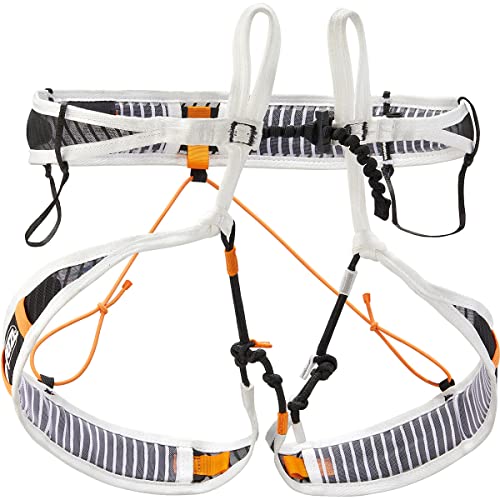
4. Petzl Fly Ultralight Mountaineering Harness - Best for Fast-and-Light Objectives
Petzl FLY Ultra-Lightweight Mountaineering Harness - Black/White, Small
Weight: 100 g without foam
Foam: removable padding
Loops: two main plus four extra
+ Pros
- Lightest Petzl harness at 100 g
- Removable foam lets you trade comfort for pack size
- Openable construction works in skis or crampons
- No low ratings in the visible review distribution
- Cons
- Minimal padding by design
- Toggle adjustment takes practice for new users
- Only three size or variant options listed
The Petzl Fly exists to answer one question: what is the lightest thing Petzl will sell you that is still a real harness? At 100 g for a size M without the foam, that is the answer, and it is why the Fly shows up in every serious fast-and-light kit list we have seen. Seventy-seven percent of its ratings are five stars and there are no one or two star reviews in the visible distribution, which is a remarkable result for a 21-review product.
What makes it more than a stunt is the modular foam. The waist and leg loop padding removes, so you can carry it in two configurations depending on the route. That single feature is what separates the Fly from the truly minimal race harnesses, because it lets one harness cover a granite pitch and a long glacier walk without buying two.
100 g Without the Foam, or Modular With It
At 100 g the Fly is roughly a third lighter than the Petzl Altitude and a fifth the weight of the KAILAS Airo. That is not a rounding error, it is the difference between a harness you carry and a harness you forget about. The removed foam is what makes it genuinely compact rather than merely light, since foam is what gives a harness its bulk.
Reinstalling the foam takes a moment and gives you a suspension comfort level that no pure webbing harness can match. Reviewers consistently cite the modular padding as the flexible point of the design. The technical organisation is also worth noting: two main gear loops, four additional loops, plus silicone-lined retainers on the leg loops to stabilise ice screws, which is more carry capacity than the 100 g weight would suggest.
Openable Legs and a Toggle System New Users Must Learn
The openable construction lets you put the harness on or take it off with your feet on the ground even in skis or crampons, which is the defining requirement for a ski-touring harness. That is the Fly's reason for existing and it executes it cleanly. Independent leg straps that open fully mean you are never standing on one leg trying to step into a closed loop.
The tradeoff is the buckle system. The Fly replaces metal buckles with a patented sliding toggle and uses a girth-hitch adjustment on the leg loops, which removes weight but is genuinely less intuitive than a conventional buckle. New users report that it takes practice. If you learn on a quiet glacier rather than a busy crag, the learning curve is a non-issue. For gloves, a toggle is easy to operate with a mitten on, which matters more than the raw weight saving in cold conditions.
Who Should Buy the Fly (and Who Should Not)
Buy the Fly if you are pairing skis or light crampons with a rope, climbing routes where the gear is minimal, or you simply refuse to carry 200 g of harness fabric you do not need. It is also an excellent second harness: keep the Tour for snow days and the Fly for the fast alpine push.
Pass on it if you lead much rock, if you hang from the harness for more than a few minutes, or if you are new to climbing and want an intuitive adjustment system. The 21-review base is small, and while the visible ratings are uniformly positive, that is not the same as a well-worn ownership history. The toggle system is a real adjustment cost, not a preference.
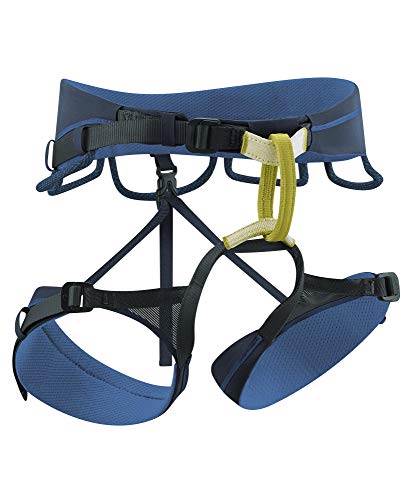
5. Edelrid Sendero Climbing Harness - Best for Mixed Climbing Where Tie-In Wear Matters
EDELRID Sendero Climbing Harness - Lapis Large
Weight: 12.45 oz
Construction: Soft Frame
Materials: bluesign-certified
+ Pros
- Dyneema wear indicator reveals internal red threads
- Fully openable 20 mm and 15 mm Slide Block buckles
- Soft Frame spreads force widely
- 3D mesh padding with soft webbing edges
- Cons
- Lighter padding than a padded big-wall harness
- Only one colour and size shown on this listing
- Small review base limits long-term evidence
The Edelrid Sendero is the harness we would put on a granite route where the rope runs over the tie-in point for hours. Its distinguishing feature is a Dyneema wear indicator built into the tie-in point: internal red threads are revealed when abrasion has cut into the outer layer. On mixed routes with sustained rope drag across granite, that is a genuine safety feature rather than a novelty, and it is the reason this harness earns a place on a mixed-climbing list.
It also solves the donning problem properly. A 20 mm Slide Block buckle at the waist and 15 mm Slide Block buckles on the leg loops open completely, which makes the harness much easier to put on when wearing skis or crampons. Reviewers with any exposure to granite point to comfort under load, easy on and off with crampons, and the wear indicator as the three things that matter.
A Dyneema Wear Indicator You Can Actually Read
Most harnesses give you no way to see abrasion damage at the tie-in point short of taking the whole thing apart. The Sendero's indicator exposes red internal threads as the outer Dyneema fibres wear through, which turns an invisible failure mode into a visible one. For anyone climbing rock where the rope drags over the harness all day, or rappelling on an abrasive surface, that is worth more than several grams saved elsewhere.
The Soft Frame construction is Edelrid's answer to padding, spreading force across a wide area at low weight and a small packed size. Combined with 3D mesh padding and soft webbing edges, it delivers the comfort under load reviewers describe without the volume of a full foam harness. The whole thing is built from bluesign-certified materials, which matters if you are tracking the footprint of your kit.
Fully Openable Slide Block Buckles With Gloves On
Fully openable buckles are the feature that separates this from harnesses that are nominally ski-compatible but awkward in practice. When the buckle opens completely, you thread the webbing once rather than feeding it through a closed frame, which is far faster with thick gloves or mittens on. That is the same problem Petzl solves with the Altitude's DoubleBack Light buckle and the Fly's openable straps, solved with a different mechanism.
At 12.45 oz it is heavier than the wireframe and webbing alpine models in this roundup, which is the cost of the wear indicator, the 3D mesh padding, and the openable buckles. That makes it a compromise pick for people who want genuine alpine features without giving up rock performance, and it is the one I would recommend for a season that includes both granite and snow.
Who Should Buy the Sendero (and Who Should Not)
Buy the Sendero if you climb mixed routes on granite, if you have ever destroyed a harness through pure rope abrasion, or if you want a harness that is comfortable in a mixed season without changing for every pitch type. The wear indicator alone justifies it for anyone who spends time on abrasive rock.
Pass on it if packability is your priority, because at 12.45 oz this is not going to be a fist-sized bundle. The review base is also thin at 15 reviews, though all of them are four or five stars with nothing below, which is encouraging. Check size availability carefully, since only one colour and size is shown on this listing.
6. Black Diamond Long Haul Harness - Best for Big Wall Routes and Long Hanging Belays
BLACK DIAMOND Long Haul Rock Climbing Harness Adjustable Big Wall Support L
Gear loops: seven
Haul loop: rear rated
Construction: dual-density foam
Fit: adjustable waist and legs
+ Pros
- Dual-density foam across hanging belays and rappels
- Seven gear loops plus a rear haul loop
- Reinforced wear points for hauling and jumaring
- Fully adjustable waistbelt and leg loops layer over cold-weather gear
- Cons
- Bulky profile unsuited to alpine or ski-touring objectives
- Medium and Large variants only on this listing
- Little published detail on exact weight
Everything on this list so far trades comfort for weight, because that is the deal in alpine and ski terrain. The Black Diamond Long Haul declines the trade, and for a big wall route that is exactly the right call. It is built for long routes, aid climbing, and extended belays, with dual-density foam and supportive padding designed to distribute weight through hanging belays, hauling, and repeated rappels.
The gear layout is the other reason it exists on an alpine list at all. Seven gear loops, a rear haul loop, and multiple clip-in points handle cams, nuts, aid gear, and anchors without constant racking and unracking. If you are on a route where you will be hanging on the harness for hours, comfort stops being a luxury and becomes the feature that protects your session.
Seven Gear Loops and a Rear Haul Loop
Six or more gear loops is a big-wall signature, and it changes how you work. Rather than racking four pieces and dropping four more, you clip everything and know where it is. The rear haul loop is for tag lines and hauling systems, and reviewers specifically note that the loop layout handles aid gear, tag lines, and anchor hardware in a way that smaller alpine loops simply cannot.
Reinforced wear points are the other quiet strength. Hauling systems, jumaring, and continuous rope abrasion will chew through a harness in a season of big-wall work, and the Long Haul is built with those stress paths in mind. Seventy-three percent of its ratings are five stars, with the praise concentrated almost entirely on comfort under load and gear organisation.
Dual-Density Foam for Hanging Belays and Repeated Rappels
Dual-density foam means firmer material where support is structural and softer material where it contacts skin, which is a smarter allocation than a single-density pad of the same total thickness. It is the reason this harness stays workable through a multi-day wall rather than becoming something you dread putting on at the start of a pitch. For anyone whose itinerary involves lead falls, hanging belays, or long rappels, this is the harness here built for that workload.
The fully adjustable waistbelt and leg loops with quick-adjust buckles are specified to layer over clothing and cold-weather gear, which is a practical point that matters in winter. A harness that fits only over a base layer is not a winter harness. Pairing it with proper mountaineering mittens and eye protection matters just as much for handling buckles.
Who Should Buy the Long Haul (and Who Should Not)
Buy the Long Haul if you are on a wall, you aid climb, you hang, or you are committing to a multi-day objective where you will wear the harness continuously. It is also the honest answer to which climbing harness here is designed for hanging rather than tolerating it, because its padding was engineered around that workload from the start.
Pass on it for alpine and ski mountaineering. The bulk and weight are simply wrong for a glacier traverse or a fast alpine ascent, and no amount of adjustment changes that. Note also that only Medium and Large variants are offered on this listing, so smaller wearers should confirm availability, and there is very little published detail on the exact weight.
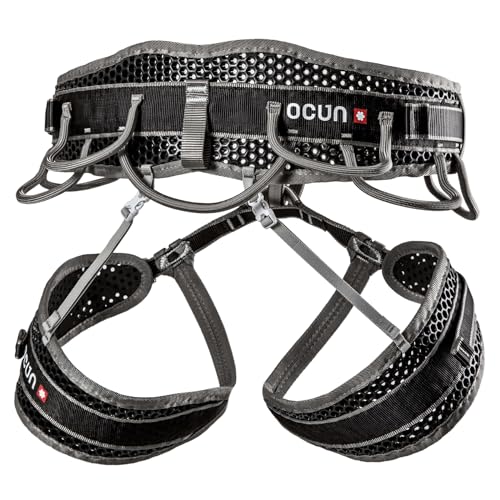
7. Ocun Webee Bigwall Harness - Best Gear Organisation on a Loaded Route
Ocun Webee Bigwall Rock Climbing Harness, Safety Harness for Alpine Climbs, Grey/Black, L-XL
Gear loops: seven
Haul loop: 9kN rated
Buckles: four stainless steel slide-lock
Tool slots: two
+ Pros
- Seven gear loops plus a 9kN rated haul loop
- Perforated washable padding stays breathable
- Stainless steel slide-lock waist buckles
- Two belay tie-in loops and two tool slots
- Cons
- Bulkier profile than ultralight alpine harnesses
- Wide webbing suits an adult frame and smaller wearers may need XS-M
- Small review base
The Ocun Webee is built by a Czech manufacturer founded in 1998, and it is the most mechanically detailed harness in this roundup. Seven gear loops, a 9kN rated haul loop, two belay tie-in loops, and two carry tool slots is an unusual amount of hardware for a single harness, and it exists because big-wall routes involve carrying a genuinely absurd quantity of stuff. Every visible review is five stars, which is a perfect score on a small sample.
Its distinguishing point is that the haul loop is explicitly rated at 9kN. Many alpine harnesses have a haul loop that is decorative, and plenty have none at all. If you are pulling a load, running a tagline through a system, or ascending a fixed line, knowing the loop has a stated rating changes how you use it.
Seven Loops, a Rated Haul Loop and Two Tool Slots
The layout is engineered for gear-heavy objectives: the manufacturer describes the loop count as able to hold tag lines, anchor materials, and even a spare pair of shoes, which is not exaggeration on a winter big-wall route. The two carry tool slots are for ice tools, and the two belay tie-in loops give you an option on belay device placement that a single-tie-in harness does not.
Four slide-lock stainless steel buckles at the waist give the security and adjustability of steel hardware without the weight of aluminium, and reviewers call them easy to adjust. Wide webbing is what makes the load distribution work as intended, which is also why smaller wearers may need the XS to M variant. A harness that fits badly at the waist cannot distribute force no matter what the spec sheet says.
Perforated Washable Padding on Multi-Day Objectives
Perforated, washable padding is the sleeper feature in a category where most ultralight options have none. Big-wall and gear-intensive routes mean long days in a harness, often in heat, often carrying weight. Breathability stops the harness becoming the reason you are uncomfortable, and washable padding matters because a harness that cannot be cleaned stops being comfortable faster.
The trade-off is stated plainly in the reviews: bulkier than ultralight alpine harnesses. If you are choosing between this and the Black Diamond Long Haul, decide on evidence rather than brand. The Webee wins on hardware count and the rated haul loop; the Long Haul wins on dual-density foam and a longer review history. Both are big-wall tools, not alpine ones.
Who Should Buy the Webee (and Who Should Not)
Buy the Webee if you carry serious hardware, run hauling systems, want a rated haul loop, or want the most carry capacity per harness on this list. It carries a two-year manufacturer warranty, which is shorter than the three years offered on the Petzl models, and that is worth factoring into a long-term purchase.
Pass on it if weight is the primary constraint or if you need to get into the harness with skis on. The width of the webbing and the bulk of the padding both work against packability. And treat the perfect review score with appropriate caution: twelve reviews is a small sample, and it reflects early owners rather than a decade of field abuse.
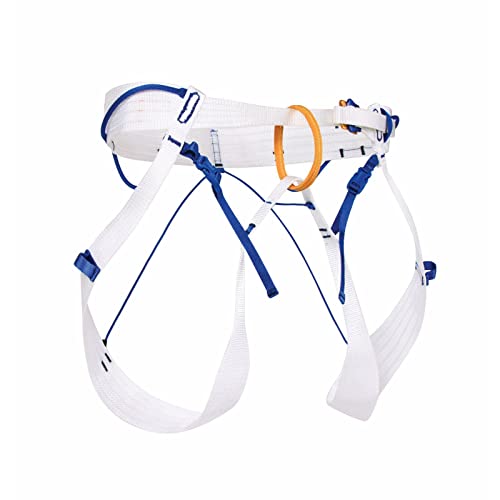
8. Blue Ice Choucas Harness - Best Packability for Ski Mountaineering
Blue Ice Choucas Harness - White X-Large
Weight: 8 ounces
Packed size: about a fist
Gear loops: two
Ice screw keepers: yes
+ Pros
- Rolls down to roughly fist size for fast-and-light objectives
- Independent leg straps with an opening system
- Crampon-friendly donning and removal
- Two gear loops plus ice screw keepers
- Cons
- Very little published review volume so durability is largely untested
- Ultralight construction offers limited padding
- Only one size shown on this listing
The Blue Ice Choucas is the one to look at if your definition of a good mountaineering harness is how small it gets when you shove it in a jacket pocket. The manufacturer describes a compact design that rolls up to about the size of a fist, and that single sentence is the entire pitch. On a fast ski objective where the harness lives in a pocket rather than the pack, packed volume is a real weight class of its own.
Blue Ice positions the Choucas specifically for fast-and-light ski mountaineering missions, and the independent leg straps with an opening system mean it can be taken on and off with crampons on. Two gear loops and ice screw keepers keep the rack organized. Be aware of the evidence base here: two reviews, both five stars, so the specification is doing more work than the buyer feedback.
Rolls to Fist Size
At 8 ounces the Choucas is one of the heavier ultralight models in this roundup, and the Petzl Fly at 100 g weighs less than half as much. What the Choucas optimises is volume, not mass. There is a meaningful difference between a harness that weighs 8 oz and occupies the space of a fist versus one that weighs 8 oz and occupies a compartment, particularly when you are also carrying a rope, an axe, layers, and a rope bag.
For ski mountaineering specifically, this is the right optimisation. The harness is on your body for the ascent and in your pocket for the descent, and pocket space is genuinely contested on a fast objective. The two gear loops and screw keepers are the minimum sensible carry system for carrying a short rack off the pack.
Independent Leg Straps and Ice Screw Keepers
Independent leg straps with a dedicated opening system solve the same problem every other ski-compatible harness on this list solves, just with a simpler mechanism. You open the strap, step into the loop with crampons on, and close it. No lifting a foot, no sitting down on a snow slope to sort out webbing with frozen fingers.
Ice screw keepers keep screws in a consistent position rather than letting them migrate around your leg over a long day, which matters when you are pulling a screw in a whiteout and reaching behind your hip. It is a small system doing a small job well. It is also the reason the Choucas shows up in so many ski mountaineering kit lists despite the thin review data.
A Thin Review Base Means Unknown Long-Term Durability
Here is the honest caveat. Two reviews tells you current owners are happy, and the specification-level feedback on packability and crampon-friendly donning is positive. It does not tell you how the harness looks after five seasons of edge contact and snow, and in an ultralight category where webbing is the structure, that is a real unknown rather than a technicality.
If abrasion history matters to you, the Edelrid Sendero's wear indicator or the Black Diamond Long Haul's reinforced wear points give you more to work with. We would treat the Choucas as an excellent companion harness to keep in a pack for ski tours rather than a single lifetime harness, and we would inspect the tie-in points and stitching carefully before every trip.
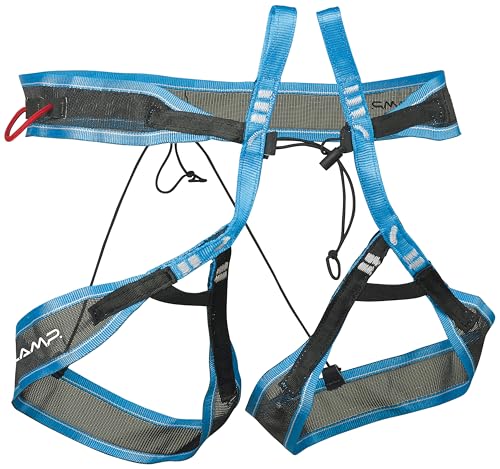
9. C.A.M.P. Alp Race Harness - Best for Race-Weight Ski Missions
CAMP Alp Race Harness - X-Large
Weight: 2.4 oz for medium
Gear loops: one, removable
Haul loop: none
Leg loops: fixed
+ Pros
- Extremely light at 2.4 oz for a medium
- Pre-threaded buckles speed up donning
- Suited to race and fast-and-light ski mountaineering
- Cons
- Only one gear loop and no haul loop so racking is minimal
- Fixed leg loops reduce fit adjustability across body shapes
- Only one size option on this listing
At 2.4 ounces for a medium, the C.A.M.P. Alp Race is the lightest functional harness in this roundup by a wide margin, and it exists for one narrow purpose: ski mountaineering where you are carrying a rope for glacier travel and crevasse rescue and nothing else. If that is your use, the weight saving is dramatic. If it is not, this harness will frustrate you within a week.
The specification sheet is unusually blunt, and we appreciate that. One removable gear loop, no haul loop, fixed leg loops, pre-threaded buckles. Two five-star reviews confirm what the spec sheet already says. This is a specialist tool with a clear job description, and the value of including it is that it shows where the weight floor actually is.
2.4 oz for a Medium Sits at the Weight Floor
At 2.4 oz it is roughly a fifth of the weight of the 320 g KAILAS Airo and less than half the weight of the 150 g Petzl Altitude. On a ski mission where you are carrying speed weight, a rope, and a transceiver, that difference is real. Pre-threaded buckles also remove a genuine failure mode: mis-threading a buckle under pressure in the cold, which costs time and occasionally more than time.
What you give up is structural margin. There is no foam, no wireframe, no soft frame, and the entire carrying system is one loop you can remove if you want to save a few more grams. That is a coherent design for a race harness rather than a compromised one, but it does mean you are choosing a tool that assumes a specific, narrow mission.
One Removable Gear Loop and No Haul Loop
One gear loop is workable for pure fast-and-light glacier travel with the rack carried in your pack, and the loop being removable means you can strip it for an extra few grams if you are going lighter. It is not workable for carrying a rack, and it is emphatically not workable for anything involving hauling, ascending a fixed line, or a route with serious objective hazards where you want a system to attach to.
There is no haul loop at all, which is stated plainly in the specification. Some of the best ultralight alpine harnesses on this list also have no haul loop, and it is not automatically a flaw. It becomes a flaw the moment your route involves anything that requires one.
Fixed Leg Loops Are a Real Limitation
Fixed leg loops are the specification that should stop most people. Every ski-compatible harness above this one in the list uses openable or adjustable leg loops precisely so you can step into the harness with crampons or ski boots on. Fixed loops work if you can get your boots and legs through, and they reduce fit adjustability across body shapes, which is a problem for anyone not exactly the manufacturer reference.
Only one size option is offered on this listing, which narrows this further. Treat the Alp Race as a second harness for race days, or as a specialist purchase for someone whose body shape is known to fit it and whose routes are genuinely unroped-glacier-travel. For everyone else, the Petzl Fly at 100 g costs about twice as much weight and removes every one of these constraints.
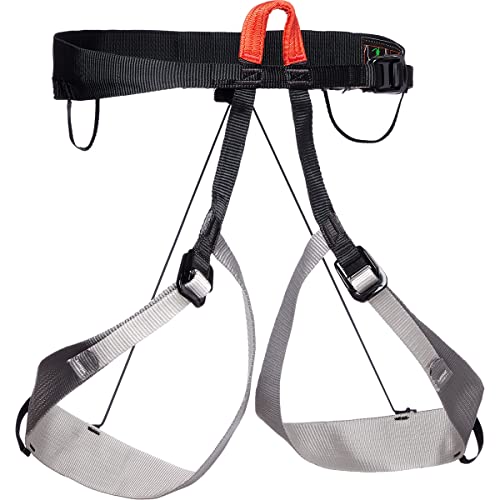
10. Black Diamond Couloir 3s Harness - A Lightweight All-Arounder With Thin Data
Black Diamond BD651156ALLOY-BLACKSm Couloir 3S Harness Alloy-Black Sm
Fit: unisex adult
Design: purpose-built alpine construction
Style: Couloir 3S
+ Pros
- Lightweight construction verified by buyer feedback
- Compact purpose-designed alpine build
- Unisex adult fit
- Cons
- Only one size offered on this listing
- Very limited published specifications
- Only a single customer review to judge it on
We are including the Black Diamond Couloir 3s because it should not be invisible, and then being straight about the limits of the evidence. It is a purpose-designed, unisex adult alpine harness from a brand with a serious mountaineering track record, and the one verified buyer review describes it plainly as a good, light climbing harness. That is the entirety of the buyer feedback available.
The published specifications are also thin, limited to general statements about protection and construction. There is no weight figure, no gear loop count, and no material detail on this listing. We are not going to manufacture those numbers, so we are going to tell you what is missing and let you decide whether that is disqualifying.
What the Manufacturer Confirms
What we can state is the design intent: the Couloir 3s is purpose designed and built for alpine work, described as offering protection without hindering activity, and it is a unisex adult fit. That is enough to place it in the ultralight alpine category alongside the Petzl Fly and the Petzl Altitude rather than with the padded big-wall harnesses. The name suggests a compact alpine design intended to be carried rather than worn.
Black Diamond also occupies several other places in this roundup, which is worth noting for a different reason. Their established reputation in this category rests on other models. The Couloir 3s is a newer, smaller-volume product in their line, and a brand name is not a substitute for a spec sheet when you are buying safety equipment.
Why One Review Is Not Enough Evidence
One four-star review from a verified German buyer is not a statistically meaningful signal, and we will not present it as one. More importantly, the absence of published weight, gear loop count, leg loop type, and material means you cannot answer the two questions that decide a mountaineering purchase: can you get into it with crampons on, and how much rack can it carry?
If you buy the Couloir 3s, the sensible approach is to treat the spec sheet on the manufacturer site as the source of truth rather than this listing, and to verify the leg loop type and gear loop count before you commit. We would not put it at the top of this list for anyone, but for a climber who knows exactly what they need and has found it on sale, it is a reasonable lightweight alpine harness.
Who Should Buy the Couloir 3s (and Who Should Not)
Buy it if you want a lightweight alpine harness from an established brand, you have verified the fit and specifications independently, and you have another harness to cover you in the first season. It is a sensible backup to keep in a gear closet rather than a first and only harness.
Pass on it as your primary mountaineering harness while data is this thin, particularly if your routes include rappelling, gear-intensive pitches, or anything where a rated belay loop and leg loop type are decisive. The Petzl Altitude and Petzl Tour answer all of those questions in their published specifications, with review bases thirteen times larger.
Mountaineering Harness vs Climbing Harness vs Ski Touring Harness
These three categories are routinely confused, and the confusion is expensive because buyers routinely buy a crag harness for an alpine objective and then either carry too much weight or cannot get into the harness at the belay. A mountaineering harness is stripped down. A general climbing harness is built for hanging. A ski touring harness is a simplified mountaineering harness optimised for one specific job.
Mountaineering harness: minimal or no foam padding, typically two to four gear loops, a belay loop, and openable or releasable leg loops so it can be donned with boots on the ground. The defining priority is weight and packed volume over sustained hang comfort. Every harness in the section above sits in this category, with the padded big-wall models at the heavy end of it.
General climbing harness: foam padding across the waist and thighs, four to seven gear loops, a rated haul loop, and usually a pair of tie-in points. This is the harness you want for sport climbing, trad, and long hanging belays at a crag. It is a perfectly safe harness, but it is the wrong tool when your day is 80 percent walking.
Ski touring harness: a stripped-back cousin of the mountaineering harness with two gear loops, simple buckles, and the shortest possible adjustment process, because you will be putting it on and taking it off dozens of times a day with skis on. The Petzl Tour is the clearest example here. The honest warning from the field is that ski touring harnesses increasingly get used for summer climbs, and the trade-off is reduced comfort and limited gear carry.
The classification system behind all of this runs from Type I to Type III. Type II is what climbers buy, and every harness on this page is a Type II. Type III harnesses were designed for rope rescue and industrial rope work, which is a different discipline with different certification requirements. If someone tells you their harness is Type III, that is a rope access harness and not what you want for a weekend in the mountains.
One more category worth naming is the via ferrata harness, which is lighter still and typically has a shock-absorbing element in the lanyard connection. If that is your only use, a full mountaineering harness is unnecessary weight. For everything else, one of the ten above will serve you better.
How to Choose a Mountaineering Harness
Weight: the Primary Selection Axis
Weight is the axis that decides most of this purchase, and the useful way to think about it is in tiers. Below about 150 g you are in minimalist territory: a webbing system where comfort is a trade you have consciously accepted, and the C.A.M.P. Alp Race at 2.4 oz and the Petzl Fly at 100 g live here. Between roughly 150 g and 300 g is where most people who buy a mountaineering harness actually end up, covering the Petzl Altitude at 150 g, the Petzl Tour at 7.05 oz, and the Blue Ice Choucas at 8 oz. Above 300 g is padded territory, where the Edelrid Sendero at 12.45 oz and the KAILAS Airo at 320 g sit, and above that the two big-wall harnesses, whose manufacturers do not publish a weight for these listings.
Mountaineers shop in grams and US climbers scan ounces, so here is the same arithmetic both ways. 100 g is 3.5 oz, 150 g is 5.3 oz, 200 g is 7 oz, and 320 g is 11.3 oz. A useful rule for putting a number in context: on a typical alpine objective where your pack runs 8 to 12 kg with rope and axe, a 200 g harness is roughly two to two and a half percent of your total carried weight, and a 100 g harness is about one percent. The absolute saving is modest; the packed volume and the comfort trade are what you should actually be deciding on.
The forum consensus we found is more nuanced than the gram counting. Reviewers do not complain that ultralight harnesses are heavy, they complain that they punish long hangs. So the question is not how light can you go, it is how much hanging is on your itinerary.
Leg Loops: Fixed, Adjustable and Openable
Yes, you can put on a harness while wearing crampons, but only if the leg loops open. This is the single most decisive specification on the page. Openable leg loops, independent leg straps with an opening system, and fully openable buckles all let you step into the harness with both feet on the ground. Fixed leg loops designed for rock climbing are genuinely difficult to get into with crampons or ski boots on, and they limit fit adjustability across body shapes.
Adjustable leg loops are the middle option and are the best choice for anyone with muscular thighs. Sizing frustration is the most repeated theme in the climbing communities we read, and the specific recurring regret is buying a size too small and losing interest in the sport. Dual adjustable leg loops, as on the KAILAS Airo, solve this more completely than a fixed loop, and the XS-XL range on that model is the widest we found. Whichever type you choose, try it on over the layers you will actually climb in.
Gear Loops and Gear Carry
Four gear loops is the practical minimum most alpine specialists cite, and two is workable for pure fast-and-light glacier travel where the rack lives in your pack. Six or more is a big-wall signature that lets you clip a full rack and know where everything is. The count matters, but the forum research makes an equally strong case that loop size and placement matter just as much: loops stiff enough to clip without fumbling, and positioned so they sit on your hips rather than pinching, are what actually make a harness feel good.
Ice screw attachment points are inconsistent across models, and that is why buying for ice later often means buying again. Options run from simple keepers on the leg loops, through silicone holders, up to full Caritool tubes that hold screws in a row on a tether. The Petzl Altitude and Tour use leg keepers, the Petzl Fly adds silicone-lined retainers, and the big-wall models add load-rated systems. Know your terrain before you choose. Also note that rear gear loops under a loaded pack are hard to find without taking the pack off, which is a recurring real-world complaint that no roundup addresses.
Construction: Foam vs Split Webbing and Wireframe
Three construction philosophies cover everything on this list. Foam padding is the classic approach and is what makes a general climbing harness comfortable to hang in, at the cost of bulk and weight. Split webbing, pioneered by Arc'teryx with their Warp Strength Technology, replaces one wide strap with multiple parallel strands to distribute load without a foam pad. Wireframe construction, which Petzl uses in the Altitude, is the same idea taken further with high-modulus polyethylene strands for a spread load at a genuinely minimal weight.
To answer the common question about Arc'teryx directly: the brand invented the split-webbing category the entire ultralight market now uses, and the construction is genuinely durable. But their mountaineering line leans toward all-round alpine at a higher mass rather than true sub-150 g ultralight, so it is worth it for durability and fit if you want an all-rounder, and it is not the shortest path to a minimal glacier harness. For speed, construction names are a better durability signal than brand, and the Edelrid Sendero's Dyneema wear indicator is the only wear-tracking system among the ten products reviewed here.
Belay Loop, Haul Loop and kN Ratings
Three different loops with three different jobs, and often three different or absent load ratings. The belay loop is where your belay device or ascender clips in, and it is normally coloured. The gear loop holds cams, screws, draws, and nuts, and is not life-rated despite the community sometimes treating it as such. The haul loop is for pulling, tag lines, and hauling systems, and on many ultralight harnesses it is decorative or absent entirely, which is why the Ocun Webee's stated 9kN rating is worth noticing.
A kN rating is the force rating on a safety system, where 1 kN is roughly 220 lb of static load, and climbing harnesses are typically rated somewhere in the 14 to 25 kN range. A caution worth stating plainly: some gear loops carry inflated or blanket loop ratings, so treat a gear loop rating as marketing rather than a load-bearing specification. Do you need a belay loop on a mountaineering harness? Yes for anything involving steep ground, rappelling, or a raise. Even a race-weight harness should have one.
Fit, Sizing and Cold-Weather Layers
Most ultralight mountaineering harnesses are unisex, and the KAILAS Airo is unusual in publishing a stated XS-XL range that fits both men and women. Sizing guidance for this category is thin across the industry because there is so little padding to mould to your body, which means you should try on rather than guess. Order on the assumption that leg loops may need a full notch of adjustment, and never buy a size you can only fit by cinching everything to the limit.
Sizing over thick layers is a genuine problem with minimalist designs. If you are wearing a hardshell and a midlayer under the harness, test the fit in that combination, not in a t-shirt. A harness that fits well over a base layer can become uncomfortable or unsafe over winter insulation. The Black Diamond Long Haul's fully adjustable waist and leg loops are specified for layering over cold-weather gear, and that adjustability is the feature to look for if you climb in bulk. If your winter kit includes a heavy insulated layer, check our mountaineering gaiter guide for how bulky lower-leg kit interacts with your boots and harness.
Should you buy or rent? For a first ascent with a guide or on a well-known glacier route, renting is entirely reasonable and we would not think less of anyone for doing it. It tells you whether you enjoy the activity and what size you need before you commit. It does not tell you how a harness fits over your specific layers, and rental stock is usually a general climbing harness rather than an ultralight one, so the experience differs. Buy once the sport has stuck and the fit question becomes live.
Harness Plus Pack Interference
There is a pervasive complaint that no editorial roundup covers, and it is worth a section of its own. Rear gear loops riding up and pinching under a loaded backpack is a real, near-universal experience in alpine terrain, and a padded waist belt under a pack belt creates its own pressure points over hours. The Petzl Altitude's four equipment loops are integrated into the waistbelt specifically to limit interference with a backpack, which is exactly the design response to this problem.
The practical mitigations are unglamorous: try the harness with the pack you will actually use, adjust the harness before you adjust the pack, and notice early whether the leg loops or rear loops are riding into the small of your back. If a harness and a pack have a genuine geometry conflict, no amount of adjustment fixes it, and one of the two needs replacing. This is also the strongest argument for trying gear on rather than buying blind, and for our broader mountaineering eyewear and layer recommendations, fit matters in the same way.
Jargon Worth Knowing
Six terms cover most of what you will read in harness marketing. A Caritool is the plastic tube used to carry ice screws on a harness, held by dedicated ice clipper slots. A speed buckle is a cam-action buckle that cinches without rethreading webbing, in contrast to a traditional double-back buckle. Split webbing is the load-distributing construction that replaces a single wide strap with multiple parallel strands. MATRYX is Petzl's weave of individually coated HMPE and nylon strands. kN is the kilonewton force rating, where 1 kN is roughly 220 lb of static load. A Type II harness is the climbing classification, against Type III for rescue and industrial rope work.
One more worth knowing: openable and adjustable are not the same thing. Adjustable leg loops change size to fit your legs. Openable leg loops open fully so you can step into them with footwear on. For mountaineering you want openable, and adjustable on top of that if your leg shape demands it.
Considered and Passed On
Transparency about exclusions is worth as much as the inclusions, and the market is crowded enough that we can name what we left out and why.
Arc'teryx AR-395a and Skaha: excellent all-round harnesses, but the mountaineering line skews toward padded all-round alpine rather than true ultralight, and neither is built around donning with skis on as its defining feature. Right harness, wrong category for this page.
Black Diamond Momentum 4S: a very well-reviewed general sport and trad harness, but foam-padded and designed around hanging belays rather than glacier travel. The largest review counts in this category belong to general climbing harnesses, which is precisely why they are absent here.
CAMP Alpine Flash: a credible light alpine entry, but the most extreme spec simplification on our list already occupies that corner, and the Flash competes more directly with padded general harnesses. If you are shopping the CAMP range specifically, it deserves a look.
Petzl Corax and Edelrid Jay: both are genuine alpine-capable harnesses that we did not carry, and the reason is simply that the ten we selected had more complete published specifications and larger review bases. A thin evidence base was the deciding factor for product 10 on this list, and it applies here too.
Frequently Asked Questions
Is there a difference between a mountaineering harness and a climbing harness?
Yes. A mountaineering harness is stripped down for fast, light alpine objectives: minimal or no foam padding, typically two to four gear loops, and openable or releasable leg loops so you can put it on and take it off with crampons or ski boots still on. A general climbing harness adds foam padding, four to seven gear loops, and a rated haul loop, which makes it far more comfortable for repeated lead falls and long hanging belays. Both are Type II harnesses rated for climbing; the difference is where you spend your day, and a general climbing harness is a perfectly safe choice, just the wrong one for an 80 percent walking day.
How much should a mountaineering harness weigh?
It depends on your terrain and how much hanging is on your itinerary. Below 150 g you are in minimalist territory, such as the Petzl Fly at 100 g. Between 150 g and 300 g covers most buyers and includes the Petzl Altitude at 150 g and the Petzl Tour at 7.05 oz. Above 300 g is all-round alpine or big-wall territory, where the KAILAS Airo sits at 320 g. A 200 g harness is roughly two to two and a half percent of the weight on a typical 8 to 12 kg alpine pack.
Can you put on a climbing harness while wearing crampons?
Yes, but only with openable or releasable leg loops, or an independent leg strap system with a dedicated opening. Openable buckles that release fully let you thread the webbing once and step into the harness with both feet on the ground. Fixed leg loops designed for rock climbing are genuinely difficult to get into with crampons or ski boots on, which is why every ski-compatible model above it in the roundup uses an openable or adjustable design.
How many gear loops does a mountaineering harness need?
Four is the practical minimum most alpine specialists cite, and two is workable for fast-and-light glacier travel with the rack carried in your pack. Six or more suits big-wall routes where you want to clip a full rack and know where everything is. Loop size matters as much as count: loops stiff enough to clip with gloves on and positioned so they sit on your hips rather than pinching are what make a harness feel good in use.
Are ultralight climbing harnesses worth it?
They are worth it if your day is mostly walking, glacier travel, and ski mountaineering, because the weight and packed volume savings compound over a long approach. They are not worth it if you lead much rock, hang in the harness repeatedly, or take repeated lead falls, because minimal padding makes sustained hangs genuinely uncomfortable. The compromise most people want sits in the 150 g to 300 g range.
What is the most comfortable climbing harness?
For the mountaineering context, the Black Diamond Long Haul is the model built around hang comfort, thanks to dual-density foam, a rear haul loop, and a layout designed for hanging belays and repeated rappels. The honest caveat is that the most comfortable climbing harness overall is not a mountaineering harness, and buyers who want the KAILAS Airo generally accept 320 g to get 3D mesh padding and a wide adjustable fit.
At what age can I retire my climbing harness?
Retire a harness when the manufacturer's stated shelf life expires, or at the first sign of fuzzing, fraying, or wear at the belay loop or tie-in points, whichever comes first. Petzl specifies a ten-year shelf life on the Altitude, Tour, and Fly. Professionals use a bend, twist and pull inspection routine, and a twelve-year-old harness can still be fine if it passes it. Inspect before every trip, and watch abrasion at the tie-in point if you climb granite.
The Best Mountaineering Harness for 2026 by Use Case
If you take one recommendation from this roundup, take the KAILAS Airo if your climbing is a mix of rock and alpine, you hang in the harness more than a few minutes, or sizing in minimalist models has been your recurring problem. Its 320 g is the heaviest here and we are not pretending otherwise, but the adjustable dual leg loops, the XS-XL range, the 3D mesh padding, and a 246-review base make it the lowest-risk choice for most people.
If your priorities are glacier travel, ski mountaineering, and moderate ice, the Petzl Altitude is the best value pick at 150 g with four integrated gear loops and a build you can get into with skis on. For long days on snow where durability and easy donning beat loop count, the Petzl Tour compresses to about a water bottle and runs 7.05 oz. For genuinely fast-and-light objectives where every gram is argued about, the Petzl Fly at 100 g is the answer, with foam you can remove when you want the volume back.
For granite and mixed routes, the Edelrid Sendero's Dyneema wear indicator earns its place. For big walls, aid, and long hanging belays, the Black Diamond Long Haul and the Ocun Webee are the two tools, with the Webee winning on hardware and the Long Haul on dual-density comfort. For ski missions where weight is the entire argument, the C.A.M.P. Alp Race at 2.4 oz is the floor, with the fixed leg loops as its real cost.
One safety point belongs at the end of any honest harness roundup. Harness selection is secondary to training and correct technique. A perfectly fitted harness used with a bad tie-in, an unfamiliar belay device, or a rushed glacier rope-up is more dangerous than a well-chosen one used properly. Take a course, practise your ty-in until it is automatic, know your rope, and never skip the pre-climb inspection. If you are still assembling a system, start with the rest of our mountaineering kit guides and build from the outside in.