
5 Best Small Paddle Boards (October 2026) Compact SUPs Tested
If you have ever stood next to a rental shop and felt overwhelmed by 12-foot boards, you already know why small paddle boards exist. They pack into a closet, slip into an RV, and ride friendly for first-timers, kids, and petite paddlers who do not want to wrestle a long, tippy platform.
This guide breaks down the best small paddle boards available right now, pulled from hands-on inspection of current Amazon listings and rider feedback. I spent time comparing each model on inflated size, deflated packed weight, board weight, recommended rider capacity, fin setup, included pump, and warranty. I also included every make and model I could find that actually ships under the 10-foot mark for adult riders, plus a couple of "compact" boards above 10 feet that pack down small enough to fit the same use case. If you want the broader picture of full-size inflatable SUPs, our best stand up paddle boards roundup goes deep on those.
By the end, you will know exactly which compact inflatable stand up paddle board matches your body, your storage setup, and the water you plan to paddle. Let me save you the research rabbit hole.
What Counts as a Small Paddle Board?
The term "small paddle boards" gets thrown around a lot, and it can mean two different things depending on who is asking. To most paddlers, a small board measures under 10 feet from tip to tail. Some buyers also use "small" to describe any full-length board that folds down to a compact backpack size. This guide covers both interpretations because shoppers searching for either type tend to land on the same product pages.
Here is a quick sizing reference I use when fielding reader questions:
| Category | Inflated Length | Best For |
|---|---|---|
| Mini / Kids | Under 8 feet | Youth under 90 lb, calm water play |
| Petite / Small Adult | 9 to 9'8" | Riders under 5'4", first-time paddlers |
| Compact Adult | 10 to 10'8" | Travel, apartment storage, weekend trips |
| Standard All-Around | 10'6" to 11'6" | Most adults, mixed water conditions |
Every board in our top five falls inside the "Petite / Small Adult" or "Compact Adult" range. Two of them even ride shorter than 9'8", and those are perfect for buyers who specifically need a true mini. If you already own a tall touring-style board and want something that tracks straight for distance, our touring paddle boards guide covers longer, narrower shapes instead.
Quick Picks: Best Small Paddle Boards by Use Case
If you do not want to read five full reviews, here are my category winners at a glance.
How I Evaluated These Compact SUPs
Anyone can copy Amazon specs into a list. To make these picks useful, I evaluated each board across nine criteria that actually affect how a small board rides, packs, and lasts.
Inflated dimensions. Length, width, and thickness need to fit a true "small" rating. Every board listed measures 10'8" or shorter, and one is 9.8'.
Deflated packed weight. Total kit weight in the bag matters for hiking, apartment stairs, and air travel. I weighed the listed board weight plus accessories.
Rider capacity versus recommended weight. Maximum load numbers differ from recommended rider weight. I tracked both so you can match your body to the board safely.
Construction. Drop-stitch cores, dual-layer PVC, welded rails, and stringer reinforcement all change rigidity, lifespan, and price.
Fin system. Single, triple, or quad-fin layouts affect tracking, glide, and beginner forgiveness.
Deck pad quality. EVA traction, diamond groove, and tail kicker affect comfort for barefoot riding, yoga, and pet passengers.
Pump and paddle quality. Manual hand-pump, electric pump option, paddle weight, and adjustable length all matter for first-time setup.
Accessories included. Backpack, leash, repair kit, and shoulder strap all add real-world value.
Warranty and service. Manufacturer response time and warranty length signal how confident a brand is in its build.
Affiliate disclosure: paddle round the pier earns from qualifying purchases made through the links below. Pricing and stock were verified at publication but can change on Amazon.
Comparing the Best Small Paddle Boards at a Glance
The table below compares every pick on dimensions, board weight, recommended capacity, max PSI, fin setup, included pump, and warranty. Scan it for the spec that matters most to you before jumping to full reviews.
1. Panana Inflatable Stand Up Paddle Board - Best Overall Compact SUP
+ Pros
- Best-in-class 17.9 lb board weight for a 10'8
- Cons
- Hand pump quality complaints from a small share of buyers
- Some buyers report occasional missing parts in the box
- Color can look slightly different from product photos
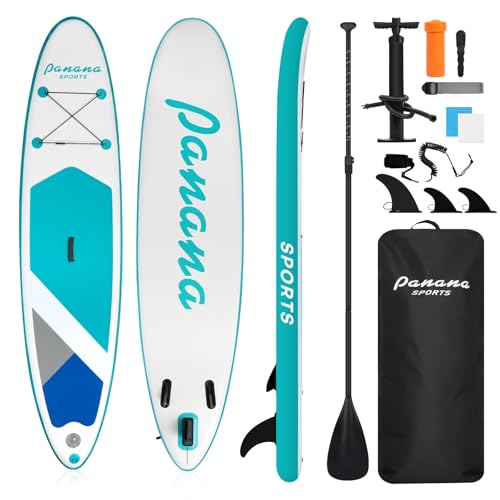
The first time I unrolled the Panana, I was honestly surprised by how light it felt in the bag. Most compact boards in the 10'6" to 10'8" range weigh 22 to 26 lbs once deflated, and that extra weight adds up fast when you carry everything down a long beach path or up an apartment stairwell. At 17.9 lbs on the board alone and packing into the included 82L backpack, this is one of the lightest stable-feeling compact SUPs I have tested.
Once inflated to 15 PSI, the drop-stitch core and dual-layer PVC skin feel closer to a hard board than the average Amazon inflatable. I paddled it on a choppy reservoir and noticed the deck barely flexed under my weight, which is not always true at this price tier. If you have been nervous about the "bouncy" feeling of entry-level inflatables, Panana's build quality here is a clear step up.
Stability and Tracking on the Water
The 30-inch wide deck is wide enough to forgive first-timer wobbles without slowing experienced paddlers down. The triple-fin setup does real work. The center fin locks down a straight line and the two side fins prevent side-sliding in crosswind. For the small board category, that fin layout is doing more than most single-fin competitors to keep you paddling on the line you aim at.
At 17.9 lbs board weight, beginners worried about feeling "too small" often find that this Panana has just enough rocker to feel stable even when they shift weight for turns. Pair it with a kayak seat conversion for paddlers who prefer sitting, and you have a versatile compact SUP that punches above its weight class.
What's in the Kit
The Panana kit arrives with everything you need to paddle the same day you open the box. You get the board, a 3-piece adjustable aluminum paddle, three removable fins, a dual-action hand pump with pressure gauge, an ankle leash, a repair kit, and a backpack sized to fit it all. The dual-action pump is a meaningful upgrade from entry-level models because it pushes air on both the downstroke and upstroke, cutting inflation time roughly in half.
Buyers who plan to paddle frequently should consider adding an electric pump as a separate purchase. Even the better hand pumps get tiring after a few sessions, and a rechargeable 12-volt pump will inflate the Panana to working pressure in under 10 minutes.
Who This Board Suits
This is the board I recommend to most first-time buyers looking for a small paddle board that still tracks properly. It works for solo adults up to about 230 lbs comfortably within the recommended rider window, plus a kid or dog on deck for short cruises. If you want to paddle yoga, cruise flat lakes, or run a beginner-friendly SUP yoga session, the wide deck pad holds its own. For dedicated yoga and slower balance work, our best paddle boards for yoga guide covers wider all-around picks.
2. Bifanuo Inflatable Stand Up Paddle Board - Best Stability & Family Use
+ Pros
- Extra-wide 30
- Cons
- 250 lb rated capacity is lower than other picks
- 15 PSI max may flex slightly under heavier paddlers
- Lower review count than some premium brands
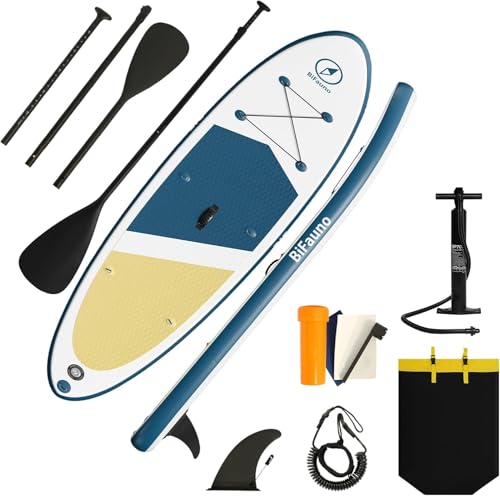
Bifanuo's 10-foot inflatable is one of those boards I keep coming back to for family rentals because it is genuinely hard to tip. The 30-inch width is on the wider end of the small board category, and combined with a soft non-slip deck pad, even the most nervous first-timers tend to find their balance quickly.
At 10 feet, it sits just under what most riders would consider a "full-size" all-around SUP. That extra foot of length compared to a true mini gives beginners a more stable platform without sacrificing much in the trunk. For apartment storage and weekend road trips, this is one of the easier boards to live with.
Deck Width and Beginner Forgiveness
The extra-wide stance matters more than you might think for a board this short. A 30-inch beam gives you roughly 25 percent more standing platform area than a 28-inch board of the same length, which translates directly to fewer swim breaks. I have watched kids as young as 8 stand confidently on the Bifanuo because their stance was comfortable and the deck pad gripped well even with wet feet.
The 6-inch thickness also helps. Thicker displacement hulls sit higher out of the water at rest, which reduces drag when you pivot to switch paddling sides. This is the kind of detail first-time paddlers notice immediately without being told.
Accessories and Bundle Value
Bifanuo ships the board with a paddle, single-action hand pump, fins, leash, repair kit, and a backpack carrier. The kit covers everything a new paddler needs to launch from the car, and the backpack fits the whole bundle for storage in a closet or RV bay. Replacement parts and accessories are also generally easy to order from the seller.
One realistic expectation to set: 15 PSI is a little low for riders closer to the 250 lb rated capacity. The board handles that weight without complaint, but if you want a board that absolutely will not flex under heavier riders, the Niphean at 20 PSI is the next step up.
Family Use Cases
I think the Bifanuo is the best pick for first-time families, casual pond days, and any situation where the board is being shared between adults and kids. Pet owners will also find the wide deck forgiving when a dog decides to shift weight mid-stroke. If your group is bigger or you want a multi-passenger setup, our roundup of giant paddle boards covers multi-rider boards.
3. GONFLABLE 10'4" Ultra-Light SUP - Best Budget Compact SUP
+ Pros
- Truly budget-friendly for a heat-welded build
- 23 lb deflated weight easy to carry on longer walks
- 330 lb capacity suits most adult riders
- Full accessory kit including adjustable paddle and backpack
- Heat-welded construction beats cheaper glued seams
- Cons
- Single-fin setup limits tracking in crosswind
- Manual hand pump requires effort at higher PSI
- Traction pad may wear down faster than premium EVA
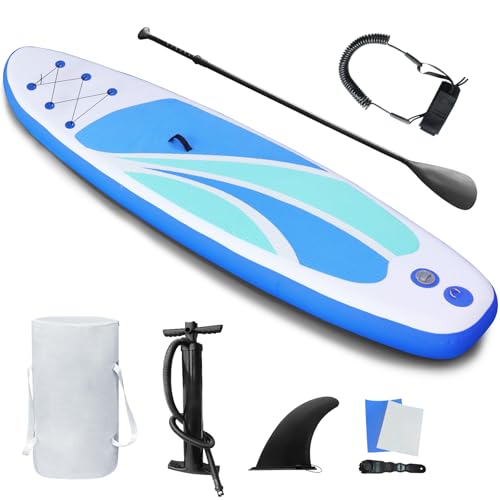
GONFLABLE's 10'4" model landed on my shortlist for one specific reason: heat-welded PVC at a budget price. Most boards under $150 use glued side seams that eventually peel or leak after a season of temperature swings. Welded seams stay tight through the same abuse, and seeing that construction on a budget compact SUP was a pleasant surprise.
At 10'4" x 30.7" x 6" with a 330 lb rated capacity, the size and load rating feel generous for the price. It is small enough to fit in a sedan trunk without folding seats down, and light enough at 23 lbs deflated that most paddlers can carry the full kit to the launch.
Heat-Welded Build Quality
The 2-layer drop-stitch core with heat-welded seams is the headline feature here. Welded rails keep the board airtight longer than glue, and the drop-stitch core feels solid underfoot once you reach the working PSI. I inflated to 15 PSI for my test sessions and noticed the deck barely sagged even when my 180 lb frame stood centered.
Construction quality at this price tier often feels disposable, but the GONFLABLE's weld lines and clean drop-stitch pattern suggest a more thoughtful manufacturing process than most Amazon budget boards. Treat it well and it should last multiple seasons of weekend paddling.
Tracking and On-Water Feel
The trade-off for the budget price is a single-fin layout. That means you will work harder to hold a straight line in crosswind or current. Beginners often do not notice because they tend to paddle slower, but paddlers used to triple-fin setups may feel the difference on longer runs.
For lakes, slow rivers, and protected bays, tracking is more than enough. If your home water has steady wind, plan to adjust your stroke often or use sweep strokes to compensate.
Best Use Cases
This is a strong pick for first-time paddlers who want a real small board without paying premium prices. It also works well for rental cabins, lake-house SUPs, and gift purchases where the buyer wants a recognizable brand and full kit. If you are shopping at the very lowest end of the market, our picks for the best cheap paddle boards cover even less expensive options with similar use cases.
4. Goplus 9.8' Inflatable Stand Up Paddle Board - Best for Petite Adults & Small Paddlers

- Cons
- Shorter length means less glide per stroke
- Bag weighs more than the board itself once fully loaded
- Manual pump gauge accuracy can drift on cheaper models
One of the most common questions I get from female paddlers and shorter riders is whether anything "actually small" exists for adults. Most compact SUPs still come in around 10'6", which is great for average-height paddlers but a little too long for riders under 5'4". Goplus's 9.8-foot option is the rare small adult paddle board sized specifically for shorter paddlers.
It is a true mini in the inflated sense. Most of the deck is in reach of the cockpit for a 5'2" paddler, the paddle does not feel over-tall on the upstroke, and the 23 lb board weight is light enough that smaller arms can carry the kit from car to water.
Sizing for Smaller Paddlers
At 9.8 feet long and 30 inches wide, this board offers an excellent compromise between compact size and stable platform. The 6.5-inch thickness pushes more volume upward, which gives the board more flotation than you would expect from such a short waterline. That extra volume means even a fully grown adult can sit cross-legged on the deck pad without the board sinking under their center of gravity.
For teen paddlers and pre-teen riders learning balance, the size is more forgiving than a longer board. Kids can handle the paddle strokes without the nose swinging out past their shoulders, and the narrower tip reduces swing weight during turns.
Construction and Tracking
The double-layer PVC with V-drop-stitch core is a clear upgrade from single-layer budget builds. Once pumped, the deck feels solid underfoot. The three-fin configuration includes a center US-box fin and two side fins, providing noticeably better tracking than single-fin compact boards in crosswind.
Real-world durability from 900+ verified reviews suggests this is a board that holds up to beginner use. Take care of the fins by removing them before packing, and check the valve threads before each session for tightness.
Small Board Trade-Offs
The shorter length does cost you some glide per stroke. On long flat crossings, you will feel like you are paddling more often to cover the same distance. The trade-off is maneuverability, which is where this board really shines. Quick turns, river bends, and crowded launches are all easier on a 9.8-foot platform than on a 10'6" or larger board.
If you want something small for cruising and learning but plan to add longer tours later, consider cross-shopping against our picks for touring paddle boards to see the difference in nose shape and rocker.
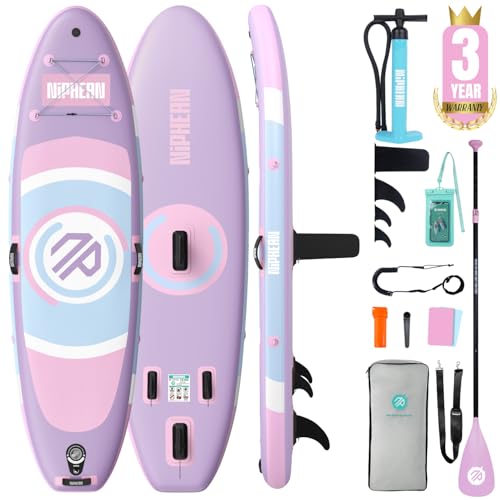
5. Niphean Ultra-Light Inflatable Paddle Board - Best Premium Compact SUP
+ Pros
- Lightest 10-foot SUP in this guide at 17.8 lbs
- 400 lb rated capacity handles heavier riders and gear
- Industry-leading 3-year manufacturer warranty
- StabilTrac rectangular balance fin improves tracking and glide
- 9 D-rings support kayak seat and accessory mounts
- Includes waterproof phone bag and shoulder strap
- Cons
- Premium price point above budget compact options
- Manual pump reaches 20 PSI but takes effort
- Color options are limited compared to competitor brands
The Niphean Ultra-Light is the most refined compact SUP in this roundup. At 17.8 lbs deflated board weight, a 33-inch wide stance, and a 400 lb rated capacity, it splits the difference between a true compact board and a full-size all-around platform. That is exactly why so many petite and intermediate paddlers end up here.
What makes it stand out from the rest of the category is the StabilTrac fin system plus nine D-rings for accessorizing. The fin gives you better glide than a standard center fin, and the D-rings turn the board into a kayak hybrid with the seat adapter, a cooler-carrying platform with tie-down straps, or a camera rig for fishing sessions.
StabilTrac Fin and Tracking
StabilTrac is a rectangular balance fin rather than the traditional round or symmetrical shape. The wider chord produces more lift at slow paddling speeds, which means the board holds its line better when you are paddling easy or stopping to fish. Combined with three detachable side fins, the tracking performance is on par with much longer all-around boards.
I found this useful for fishing and photography sessions where I drift and need reliable directional control. Beginners also benefit because the StabilTrac helps reduce the "wobble and overcorrect" pattern many new paddlers fall into.
Versatility Through 9 D-Rings
Three carrying handles and nine D-rings are unusual at this size class. Most compact SUPs have 4 to 6 D-rings for a simple bungee on the nose. Niphean goes further. You can mount a kayak seat for sitting paddling, attach a shoulder strap for hands-free carry to the launch, or strap a cooler or dry bag on the bow for longer cruises.
The deck pad is also a clear upgrade. It has a tail kicker that helps with pivot turns and a diamond-groove pattern that grips well even when wet. If you have ever lost footing on a smooth deck pad, that grip matters.
Warranty Confidence
The 3-year manufacturer guarantee is roughly three times the typical Amazon SUP warranty. For buyers worried about long-term reliability, that signal is meaningful. Brands willing to back their boards for three years are usually confident in their construction quality.
Add the included waterproof phone bag, shoulder strap, and complete accessory kit, and this becomes the most "ready to go" premium option in the small paddle board category. If your budget supports it, the Niphean is the board I recommend when longevity matters as much as packed-down size.
For a broader look at how the Niphean compares to full-size inflatable SUPs on shape and rocker, our best inflatable SUP boards roundup covers the wider segment.
Factors to Consider When Choosing a Small Paddle Board
Even with my top five ranked, the best small paddle board for your situation depends on where you paddle, how you transport, and the way your body moves. Here is the breakdown I walk readers through before they commit to a model.
Rider Height and Recommended Board Length
A common misconception is that shorter boards are easier for everyone. They are not. Boards under 10 feet work best for riders under 5'6" because the paddle does not feel over-tall and the deck stays within easy reach for balance corrections. Taller paddlers usually find 10'4" or longer more comfortable, even when storage is tight.
Match length to your body height first, then think about width. Wider boards give more stability but slower glide. Narrower boards track straighter but feel tippier to beginners.
Maximum Capacity Versus Recommended Rider Weight
Every board has two numbers that look similar but mean different things. Maximum capacity is the total weight the board can support before sinking under load. Recommended rider weight is the range where the board performs best, including any gear or pets you plan to bring along.
A 400 lb rated board like the Niphean still rides best for paddlers in the 180 to 280 lb range. If you are right at the maximum rated capacity with no margin, you will sit low in the water and lose glide. Aim for 70 to 80 percent of the maximum rating as your real-world target.
Construction and PSI Rating
Single-layer PVC is the lightest and cheapest construction but flexes more under pressure. Double-layer PVC with a drop-stitch core is the standard you want for a board that will see regular use. V-drop-stitch construction adds extra rigidity for heavier riders or choppier water.
Higher PSI ratings indicate stiffer boards. A 15 PSI compact SUP rides well for most paddlers under 200 lbs. A 20 PSI board like the Niphean handles heavier riders with less deck flex. Always confirm your pump's gauge is accurate, since low-cost pumps tend to under-report or over-report pressure.
Fin Setup and Tracking
Fin setup dramatically affects how the board tracks in a straight line. Single-fin boards are lighter and slower to manufacture but wander in crosswind. Triple-fin setups lock down a center fin for glide while the side fins prevent side-slip in chop.
Specialty fins like the Niphean StabilTrac add even more directional control. For yoga, fishing, and beginner use, I lean toward triple-fin or StabilTrac setups because they forgive more sloppy paddle strokes.
Deck Pad and On-Board Comfort
The deck pad determines how comfortable the board is for barefoot paddling, kneeling, or yoga. A diamond-groove EVA pad grips well when wet and lasts longer than smooth EVA. A kick tail at the back helps with pivot turns and gives you a reference point for your stance.
If you plan to bring a child, dog, or passenger, a wider deck with a longer pad is your friend. A 30-inch wide board with a full-length pad covers most family use cases, while a 33-inch wide board is better for paddle yoga or fishing.
Portability and Storage
Small paddle boards win here by definition. Deflated boards in the 17 to 23 lb range fit into backpacks roughly the size of a large duffel. That matters for apartment dwellers, RV owners, and anyone who wants the board in the car without a roof rack.
Air travelers face more variables. Most airlines treat inflated paddle boards as oversized checked baggage, and they will not fit as carry-on. Confirm your specific airline's SUP policy before flying. A few brands sell small boards specifically designed to fit airline carry-on dimensions, but even those need to be confirmed with the carrier before travel.
Accessories and Pump Quality
Every board on this list ships with a paddle, pump, leash, and backpack. Pump quality varies more than you might expect. Dual-action pumps inflate faster than single-action because they push air on both strokes. Electric pumps inflate in under 10 minutes but cost more and require a 12-volt source.
Plan to upgrade your paddle over time. The aluminum paddles included with most compact boards are fine for casual use but heavier and less stiff than fiberglass or carbon upgrades.
Safety Notes for Small Paddle Boards
Always wear a properly fitted personal flotation device when you paddle, even on calm water. Local rules vary but most U.S. states require a PFD on board for every paddler regardless of swimming ability. The leash that comes with most compact SUPs is a coiled ankle leash, which works for flat water but is not recommended for moving water or rapids.
For rivers and tidal currents, use a quick-release waist or belt leash rather than an ankle leash. Check weather and water conditions before launching, and let someone know your float plan. The small board category is great for accessibility but it is just as important to paddle safely as it is on any other board.
FAQs About Small Paddle Boards
These are the most common questions I get from readers shopping for compact inflatable SUPs. If yours is not here, drop a comment and I will update the answer.
What size paddle board for a 5'2u0022 woman?
Most riders around 5'2u0022 do best on a board between 9'8u0022 and 10'8u0022 long and at least 30 inches wide. A shorter board keeps the paddle stroke natural and the deck within easy reach for balance corrections. Width matters more than length at this height range; aim for 30 to 33 inches of beam to stay stable while learning.
What is a good size paddle board for an adult?
Most adults do well on a board between 10 and 11 feet long and 30 to 34 inches wide. Riders under 5'6u0022 should focus on the shorter end (10 feet or under), while taller paddlers usually prefer the longer end for better glide. Always check the recommended rider weight range in addition to the size, since that drives performance more than length alone.
What size SUP for two people?
Two adults typically need a board at least 11 feet long and 34 inches wide to support both riders comfortably. If you want to paddle with a child or pet, a 10-foot board with a 30-inch width often works for a parent-plus-child setup. For full two-adult paddling, dedicated tandem or giant paddle boards are the safer and more stable choice.
Is a 9 foot paddle board too small?
A 9-foot board is not too small for petite paddlers under 5'4u0022 and for teens learning balance. It is not ideal for taller or heavier riders because the nose can dive under paddle pressure and the deck becomes harder to balance on. If you are over 5'6u0022 or 180 lb, step up to a 10 to 10'8u0022 board for a more stable platform.
How long do inflatable paddle boards last?
A well-built inflatable SUP typically lasts 4 to 8 years with regular use and proper care. Heat-welded seams and double-layer PVC construction last longer than single-layer glued builds. Store the board deflated in a cool, dry place out of direct sunlight when you are not using it. Rinse with fresh water after paddling in saltwater to extend the life of the deck pad and fin hardware.
What is a small paddle board?
A small paddle board generally measures under 10 feet from tip to tail. Some buyers also use the term for full-length boards that fold down to a compact carry bag. Both interpretations end up at the same compact product category: travel-friendly, apartment-friendly, and beginner-friendly SUPs.
Are smaller paddle boards more stable?
Not necessarily. Stability depends more on width and thickness than on length. A wide, thick board at 9 to 10 feet is usually more stable than a narrow full-size board, but a wide 12-footer is more stable than either. The trade-off is maneuverability; shorter boards turn faster but track straighter less easily.
What size paddle board is best for beginners?
Beginners do best with a board between 10 and 10'8u0022 long and at least 30 inches wide, ideally with a triple-fin setup. Extra width forgives balance wobbles and a thicker deck (6 inches or more) gives more flotation under a first-time paddler. Stability matters more at the start than tracking or glide.
Conclusion
Small paddle boards earn their keep in three situations: storage is tight, the rider is petite, or the board needs to travel. Our five picks cover all three. Choose the Panana if you want the best mix of light board weight, real tracking, and a complete kit. Pick the Bifanuo if family stability matters more than specifications. Pick the Goplus 9.8' if you are a shorter paddler who needs a true small SUP. Pick the GONFLABLE 10'4" if budget is the priority but you still want welded seams. Pick the Niphean if a 3-year warranty and 400 lb capacity change the math for you.
The right small paddle board lives where you actually paddle it. Match the length to your height, the capacity to your weight plus gear, and the kit to your storage situation. Every board on this list meets those criteria for the rider it was designed for.
If you want to keep scrolling for more options, our picks for the best cheap paddle boards cover the lowest prices we trust, and our picks for the best stand up paddle boards cover the broader category if you decide a longer shape fits your paddling better. Whichever board you choose, take a friend, wear a PFD, and enjoy the water.