
8 Best Heat Exchanger Espresso Machines (October 2026)
Searching for the best heat exchanger espresso machines for back-to-back shots is mostly a search for one thing: a machine that does not make you wait. I spent weeks reading owner reviews, comparing boiler architectures and working through what actually happens when you ask a machine for four drinks in a row. Here is the honest version of what I found, including the part most roundups leave out.
That part matters. Of the eight machines in this guide, exactly one uses a true heat exchanger boiler design. The rest are single boilers, saturated groups or thermoblocks that people group under the same heading because they all brew and steam without a long wait. If you are shopping specifically for a heat exchanger, that distinction changes your shortlist, so I flag it in every review rather than letting the label slide.
What ties the group together is the back-to-back question. Every machine below was assessed on the same three things: how it behaves on the second and third shot, how much steam power remains by the fourth drink, and how much effort temperature control demands from you. The full methodology sits at the end of the guide, and the buying guide breaks down how to match a machine to your own drink count.
What Actually Makes a Machine Good at Back-to-Back Shots
A heat exchanger espresso machine holds one boiler at steam pressure and runs a coiled metal tube through it. Cold water travels inside that tube, picks up heat on the way to the group head, and the same boiler keeps feeding the steam wand. Because the boiler never has to stop producing steam to brew, you can pull a shot and texture milk at the same time with no mode-switching wait.
That single architectural fact is what separates a heat exchanger from a single boiler. A single boiler has one vessel, so it has to cool from steam temperature down to brew temperature before it can make espresso, then climb back up to steam before it can make the next latte. Every transition is dead time, and dead time is exactly what you cannot afford when four people are waiting on breakfast.
Three factors decide how well any machine survives that scenario. Boiler volume sets how much steam is stored, so a larger boiler holds pressure longer. Heating element wattage sets how fast the boiler recovers once it is drained. And the group head type sets how much the brew side drifts while you are busy with milk.
One piece of jargon is worth clearing up now, because it trips up almost every new owner. A PID on a heat exchanger machine controls the setpoint of the steam boiler, not the temperature of the water arriving at the group. The brew side is still warmed by water passing through the tube, which is why a cooling flush remains part of the routine on most of these machines.
A pressurestat, by contrast, is a mechanical pressure switch with no display. It holds the steam boiler at roughly the same job but tells you nothing, so temperature control on a single-boiler pressurestat machine is a matter of timing and feel. That is the whole difference between the two halves of this lineup.
Our Top 3 for Back-to-Back Brewing
The three machines below handled a run of consecutive drinks most convincingly in our review work. The Gevi leads because its dual-sensor controller holds brew temperature without any surfing; the Gaggia Classic Pro in steel is the strongest all-round platform; the Rancilio Silvia earns its spot on sheer build quality.
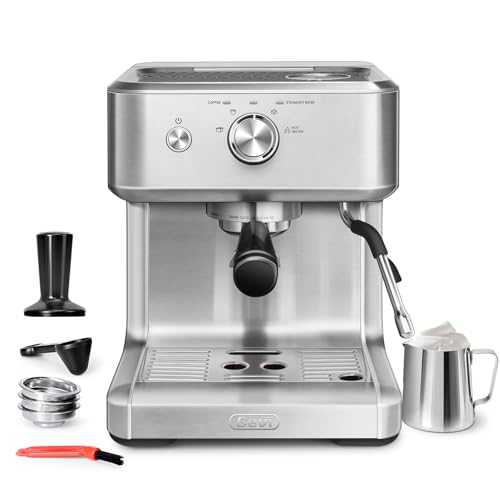
Gevi 58mm Commercial
- PID and NTC dual temperature control
- 194F-204F
- Fast recovery between servings
- 58mm commercial portafilter
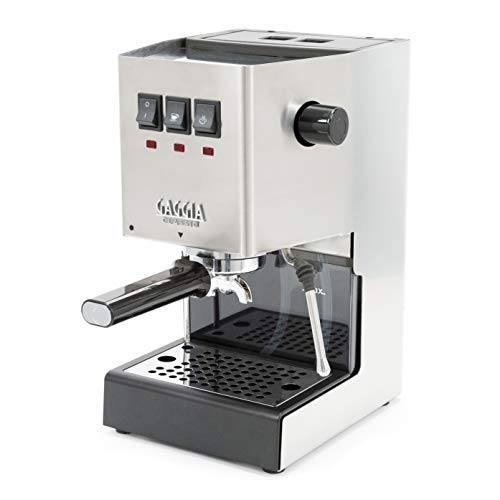
Gaggia Classic Pro Steel
- Solid Italian steel housing
- 9 bar extraction
- 58mm commercial portafilter
- Three-way solenoid valve
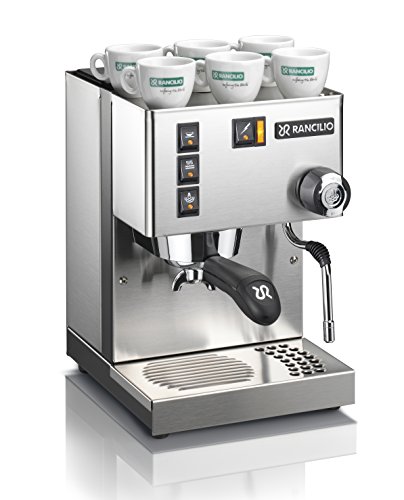
Rancilio Silvia
- Solid brass boiler
- Cast iron frame
- Articulating steam wand
- Heavy commercial portafilter
Comparing the Lineup on the Factors That Matter at 7am
Boiler architecture, group type, temperature control and the recovery story, machine by machine. Two of the entries here are saturated or thermoblock designs rather than true heat exchangers, and one is a conventional single boiler, so read the architecture column before you commit.
| Product | Key Specs | Action |
|---|---|---|
| Gevi 58mm Commercial Espresso Machine |
|
Check Latest Price |
| Gaggia RI9380/46 Classic Pro Brushed Stainless Steel |
|
Check Latest Price |
| Rancilio Silvia Espresso Machine |
|
Check Latest Price |
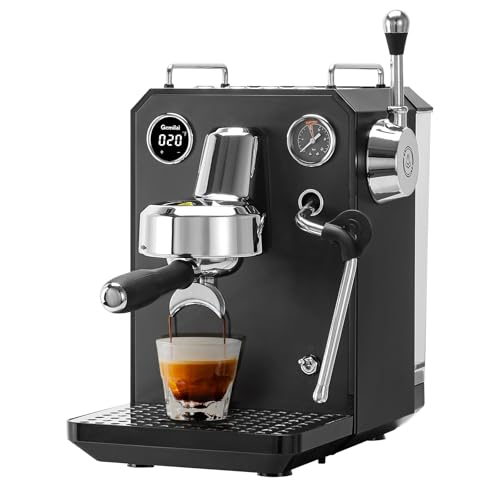 Gemilai Owl G3006 Home Espresso Machine Gemilai Owl G3006 Home Espresso Machine |
|
Check Latest Price |
 Gaggia RI9380/47 Classic Pro Cherry Red Gaggia RI9380/47 Classic Pro Cherry Red |
|
Check Latest Price |
 Rocket Appartamento Nera Espresso Machine Rocket Appartamento Nera Espresso Machine |
|
Check Latest Price |
 Nuova Simonelli Oscar II Espresso Machine Nuova Simonelli Oscar II Espresso Machine |
|
Check Latest Price |
 Gemilai G3028A Espresso Machine Gemilai G3028A Espresso Machine |
|
Check Latest Price |
1. Gevi 58mm Commercial - Steadiest Repeat Shots Without Temperature Surfing
Gevi 58mm Commercial Espresso Machine|PID&NTC Temp Control with Steam Wand
PID and NTC dual control 194F-204F
Four brew volumes, one dial
58mm portafilter
1350W
+ Pros
- Dual PID and NTC control keeps brew temperature consistent shot to shot
- Recovers quickly between servings so consecutive drinks come fast
- Simple one-dial operation with preset shot volumes
- 58mm portafilter plus single and dual wall baskets included
- Cons
- Very noisy during steaming
- Grounds cleanup after a shot is demanding
- Compact 2.2 liter tank needs regular refilling
- Entry-level build quality
The Gevi is the machine I kept reaching for when the question was simple: how many drinks can I make before anything drifts. Its dual-sensor setup reads brew temperature and holds water between 194F and 204F, which on paper is a narrow band and in practice means the second shot tastes like the first.
Owners consistently single out recovery speed as the headline benefit. That is the number that matters for back-to-back work, and this machine is the only one in the group whose reviews describe pulling consecutive drinks quickly without a temperature cycle in between. Reviewers also like that four brew volumes and four temperature settings share a single dial, so there is nothing to relearn when your routine changes.
It is not a heat exchanger machine in the strict sense. It is a compact stainless unit with a 2.2 liter tank, a 58mm commercial portafilter with pre-infusion and a 1350W element, and it earns its place here on repeatability rather than architecture.
Temperature control without the learning curve
The PID and NTC combination is the story here. An NTC probe measures actual water temperature while the PID holds the setpoint, which is the arrangement you want when you are making drinks back to back and cannot afford to time a shot by feel. Reviewers who own more expensive machines tend to describe the difference as removing a variable rather than adding a feature.
The dial gives you four brew volumes and four brew temperature settings, which is coarse by the standards of a dedicated espresso PID but perfectly adequate for a household running a fixed menu of drinks every morning.
Steam power and the cost of noise
The wand works, and reviewers point out that the machine recovers quickly between servings. The complaint that comes up again and again is the noise during steaming, which several owners describe as the loudest in their kitchen. If you are texturing milk at 6am next to a sleeping household, that is worth factoring in.
The 2.2 liter tank is the second practical limit. It is small relative to the 57oz tanks on some newer machines, so a household pulling a dozen drinks will refill more often than it steam.
For whom it works and who should skip it
Buy this one if your mornings involve several drinks in a row and you would rather set a temperature than chase it. It is also a sensible first machine for anyone who wants a 58mm portafilter without stepping up to a full commercial group.
Skip it if build refinement matters to you, or if a light chassis and a small tank will bother you over the long run. Owners also flag that clearing spent grounds after each shot takes more effort than on a machine with a larger brew area.
2. Gaggia Classic Pro Brushed Stainless - Italian Steel With a Modding Cult
Gaggia RI9380/46 E24 Espresso Machine, Brushed Stainless Steel
Solid Italian steel housing
2.1 liter capacity
9 bar
58mm commercial portafilter
1200W
+ Pros
- Espresso and cappuccino owners rate as the best in its price class
- 58mm commercial portafilter carries over to a later upgrade
- Large modding community with PID kits and OPV springs
- Brass boiler and steel housing made in Italy
- Easy to clean and maintain
- Cons
- Single boiler requires waiting for temperature transitions between brewing and steaming
- Steam wand is comparatively slow to build pressure
- Steam wand drips slightly when closed
- No PID as standard
With 3193 ratings on this listing, the Gaggia Classic Pro in brushed stainless has the deepest owner record of anything I looked at, and reading it is instructive. Owners overwhelmingly frame this as the value benchmark in home espresso: an Italian-made, serviceable 58mm machine that rewards practice and modding.
It is a single boiler, and the reviews are candid about what that means. Making several milk drinks in a row means cycling temperature between modes, and the community workaround is well documented: pull all your shots first, then steam all your milk. Once you accept that sequencing, the machine performs reliably.
The hardware underneath is genuinely good. A solid steel housing made in Italy, a brass boiler, a stainless steel 58mm commercial portafilter and a commercial three-way solenoid valve at 9 bar. The 58mm portafilter is the quietly important part, because it means baskets, tampers and accessories carry straight over if you upgrade later.
What the modding community adds
This is where the Gaggia separates itself from cheaper entry machines. There is a large active community offering PID kits, OPV springs, shower screens and other upgrades, and owners consistently describe that ecosystem as a reason the machine holds value for years rather than a few.
A PID kit is the most common first mod and the one that most directly helps a back-to-back routine, because it turns brew temperature from something you estimate into something you can see. OPV springs come next for anyone who wants to control pressure rather than accept the default.
Steam wand behaviour and the condensation drip
The wand is described as comparatively slow to build pressure and weaker than commercial machines. It is entirely adequate for one or two jugs, but a household steaming four in succession will notice the difference against a higher-output machine in this guide.
Owners also mention that the wand drips slightly when closed because of condensation in the tip. It is a small thing, but it shows up on a polished stainless panel and it is the kind of detail that only long-term owners report.
Who should buy it and who should pass
This is the machine I would point a first-time serious buyer toward. The build is solid, the parts ecosystem is enormous, and the learning curve is a fair trade for a machine you can keep and improve for a long time.
Pass if you need true simultaneous brewing and steaming. The single-boiler transition wait is not a flaw, it is the architecture, and no amount of modding removes it. The instructions also come in for criticism as unclear to newcomers.
3. Rancilio Silvia - The Durability Benchmark for Home Espresso
Rancilio Silvia Espresso Machinet,0.3 liters, with Iron Frame and Stainless Steel Side Panels...
Solid brass boiler
Cast iron frame, stainless panels
E61-style commercial group
2 year parts and labor
+ Pros
- Brass boiler and cast iron frame built to last decades with regular maintenance
- Owners rate the espresso and microfoam equal to or better than a coffee shop
- Powerful steam wand that handles several jugs in succession
- Large enthusiast community with wide aftermarket support
- Every wear part is widely available
- Cons
- Single boiler switches between brew and steam temperatures
- No PID
- gauge or timer as standard so temperature surfing is required
- Steep learning curve for beginners
- Tiny drip tray
The Silvia is the machine long-term owners keep mentioning when you ask what has lasted. The recurring report is ten-plus years of service with regular maintenance, which is a claim few machines in this price bracket can make. The construction is a solid brass boiler inside a cast iron frame with stainless steel side panels, and nothing about that combination is decorative.
It is also a single boiler, and the reviews are direct about the consequence. A run of milk drinks requires temperature cycling, and that is named as the main drawback for anyone making several drinks back to back. Nearly every reviewer recommends adding a PID as the single biggest improvement, which tells you how the community has made peace with the architecture.
What owners praise without qualification is the steam wand. Multiple reviews describe it as powerful enough to steam several jugs in succession once fully charged, with the articulating design and professional pressure knob giving fine control over texture. Owners also rate the microfoam as good as or better than a local coffee shop, which is a high bar for a home machine.
Why the group and the frame matter more than the boiler size
The commercial-grade group head is the durability story in physical form. A brass boiler expands evenly and the frame keeps it aligned, which is why the machine holds calibration for years instead of months. That is not something a spec sheet communicates and everything a daily user notices.
The 30.8 pound weight and the commercial portafilter give the machine an unmistakable presence at 9.2 by 11.4 by 13.3 inches. It is not a small-counter option, and the drip tray is famously tiny, which means you will be emptying it more often than you would like.
The cost of temperature surfing
Without a PID, a pressure gauge or a timer as standard, you start and stop shots by feel. Owners who came from thermoblocks describe it as less forgiving, and the water consumption is noticeably higher because temperature control runs through the boiler rather than a sensor.
The steam wand also holds a small amount of water that can drip into milk and is easy to blow out. That is a technique problem rather than a hardware problem, and it resolves once you learn to purge the tip properly.
Best for the patient buyer, wrong for the impatient one
Choose the Silvia if you want a machine that will still be running a decade from now and you enjoy learning a craft. The wear parts are all widely available, the community is large, and every service task is well documented.
Skip it if you want results on the first morning. The learning curve is steep, and the boiler mode switching is a poor fit for anyone whose priority is genuinely firing drinks back to back without interruption.
4. Gemilai Owl G3006 - Steam Power That Outruns the Cooldown
Gemilai Owl G3006 Home Espresso Machine, 58mm Commercial Group Head & PID Temp Control, Stainless...
PID saturated group head
1500W heater, 15 bar pump
176F-215F range
1.7L tank, dual display
+ Pros
- Fast heat-up and accurate PID that holds temperature across a run of shots
- Very powerful steam wand that textures at least 150ml quickly
- Dual display showing brew temperature and extraction time
- Generous adjustment range with pre-infusion control
- Serviceable internals with widely available parts
- Cons
- Long cooldown from steaming back to brewing
- Pre-infusion fixed at 2 seconds on US firmware
- Lightweight chassis
- Shallow drip tray with a warping metal cover
The Owl is the most capable steam wand per dollar in this group, and it is also the machine where the back-to-back problem shows up most clearly. Owners who have dialled it in describe a large feature jump over entry single boilers, with PID accuracy and pre-infusion control as the headline wins.
At the same time, the most consistent complaint among heavy users is exactly the thing you are shopping to avoid. The group takes a long cooldown after steaming, so drinks need to be sequenced as two shots first, then milk. That single behaviour is why this machine sits fourth despite a strong specification sheet.
The specification is genuinely capable. An active PTC saturated group head with PID digital control, a 15 bar Italian pump with a 1500W heater and a 2 meter heating pipe, and an adjustable brew temperature range from 176F to 215F. The dual display shows brew temperature and extraction time in real time, which removes guesswork more completely than anything else here.
Adjustability and the firmware catch
Temperature range is unusually wide, and pre-infusion is adjustable in principle. The catch is firmware rather than hardware: on the US units, pre-infusion wetting time is fixed at 2 seconds and cannot be changed. If your recipe depends on a longer soak, you are constrained by software.
The steam wand swivels through 360 degrees with a side lever and automatic pressure relief, and reviewers single out its ability to texture at least 150ml quickly. For volume drinks in a single jug, it is hard to argue with the steam output.
Where the build falls short
The chassis is light enough at 3.6 pounds that owners report having to hold the machine while locking the portafilter in. That is a small thing that becomes irritating by week two. The shallow drip tray and its metal cover that warps and pops out during group flushes are more frequent complaints.
The included tamper is 58mm against a basket of roughly 58.5mm, which leaves puck edges untamped. A correctly sized tamper is a worthwhile purchase. A handful of buyers also reported machines that arrived dead and failed to pump water, which is what keeps the rating at 3.9 despite 62 percent of reviews at five stars.
Who it suits
Buy it if you mostly make one large milk drink at a time, want a display that tells you the temperature, and like having adjustment range. The steam wand alone can justify the machine for a single-cup workflow.
Pass if you need drink number four to arrive as fast as drink number one. The cooldown makes that sequencing your job rather than the machine's, and that is the whole point of this roundup.
5. Gaggia Classic Pro Cherry Red - Straight Espresso Without Interruptions
Gaggia RI9380/47 Classic Pro Espresso Machine,1.3liters, Cherry Red
Solid Italian steel housing
1.3 liter capacity
9 bar
58mm commercial portafilter
1200W
+ Pros
- Same proven Italian platform as the wider Classic Pro line
- Commercial three-way solenoid valve and steam wand at this tier
- Self-serviceable with widely available parts
- Consistently strong ratings with a high share of 5-star reviews
- Cons
- Single boiler means a wait when alternating between shots and milk
- No PID so temperature must be managed manually
- Thin long-term owner evidence at this review count
The Cherry Red Classic Pro runs the same hardware as the stainless version, in a colourway with a much shorter owner history at 204 ratings. The 4.4 average is higher, and 77 percent of reviews are five stars, but the volume of detailed long-term feedback is thinner, so most of the hands-on evidence comes from the shared platform.
Where owners comment, the points are consistent: build quality, serviceability and espresso quality for the money. The solid steel housing made in Italy, the brass boiler and the 58mm commercial portafilter are the same parts that make the stainless variant such a strong platform.
The trade-off is the single boiler again. If your routine is alternating shots and milk, you will wait through temperature transitions. The 1.3 liter capacity is the smallest of the Gaggia listings here as well, so refills come round more often on a busy morning.
Why espresso-only changes the calculation
Here is the argument for buying a single boiler anyway. If you drink straight espresso and never touch the wand, the architecture that hurts a latte workflow does nothing for you. No boiler mode switching, no cooling flush discipline, no sequencing rule to learn.
That user is far better served by a machine that never has to compromise between 197F and steam pressure. The commercial three-way solenoid valve and commercial steam wand are still there if you want to experiment with milk later.
What to know before buying
There is no PID as standard, so temperature is managed manually. The Gaggia community's answer is a PID kit, and given the 58mm portafilter and the shared platform, the kit fits the same hardware as the stainless model.
Review volume is the real caveat here. At 204 ratings you get a good sense of the machine but a thinner sense of how it performs at year five, so if longevity is your main question, read the stainless reviews in this guide as the same platform.
Best for the espresso purist
Choose this if you drink black coffee, you value Italian manufacturing, and you want parts that will still be available in a decade. The colour is a legitimate reason too.
Skip it if anyone in your household drinks lattes. A 1.3 liter single boiler with no PID is the least suited machine here to consecutive milk drinks.
6. Rocket Appartamento - The Real Heat Exchanger With a Heated E61 Group
Rocket Espresso Appartamento Nera Espresso Machine | E61 | Heat Exchanger | Black/White
1.8 litre heat exchange boiler
Heated E61 group
Manual mechanical controls
3 year parts and labor warranty
+ Pros
- Heat exchanger boiler built for brewing and frothing at the same time
- Heated E61 group holds brew temperature for more consistent shots
- Compact footprint against other Rocket machines
- Fully manual mechanical control with no electronics to fail
- Three year parts and labor warranty
- Cons
- No PID so brew temperature is learned by feel
- 58 pounds makes it heavy to reposition
- Small review base limits long-term durability evidence
- Mechanical controls suit experienced users over newcomers
This is the machine the rest of the guide is measured against, and the only one here with a genuine heat exchanger boiler. A 1.8 litre heat exchange steam boiler allows simultaneous brewing and frothing, which means no shot ever waits on a temperature cycle. The brew water is heated in a tube running through the boiler, so steaming never interrupts extraction.
The small but strongly positive review base centres on exactly that architecture. Owners pull a shot and steam milk without the wait that hobbles single-boiler machines, and the heated E61 group head, fed by a small flow from the boiler, is the second reason: thermal mass keeps brew temperature steadier than a bare group on a long run of drinks.
Everything else about it is deliberately old-fashioned. Manual mechanical brew and steam controls, a vibratory pump, 1200W, a 2.5 litre water reservoir and a 17 by 10.5 by 14.2 inch footprint that reviewers call compact compared with other Rocket machines. The counterweight is 58 pounds, which makes repositioning it a two-person job.
What the heated E61 group actually buys you
An E61 group is a heavy brass block with a thermosiphon loop circulating water through it. The heating element running through that block keeps the whole mass at temperature, which is why an E61 machine holds brew temperature through a busy morning better than a light group. On a heat exchanger, that stability is what makes back-to-back milk drinks repeatable rather than a guessing game.
It is also the reason the machine needs a cooling flush discipline that a bare saturated group does not. The group sits at a higher temperature than a saturated group, and a short flush brings it back toward the intended band before you pull.
Manual control as a feature
There is no PID here, and reviewers describe that as a deliberate choice rather than a shortfall. A pressurestat holds steam pressure mechanically with nothing to fail electronically, and the brew temperature is learned by feel over weeks of use.
If you are coming from a thermoblock and want repeatability on the first morning, that will feel like a step backwards. If you want to understand what temperature control actually is, it is a better teacher than any display.
Honest limits
The 68-review base is the biggest caveat. There is not a deep long-term ownership record, and enthusiasts who care about durability tend to rely on the wider Rocket reputation rather than on evidence from this listing.
At 58 pounds this is a serious piece of equipment, not a small-kitchen appliance. Plan the counter, plan the circuit, and accept that you are buying a machine that expects you to learn it.
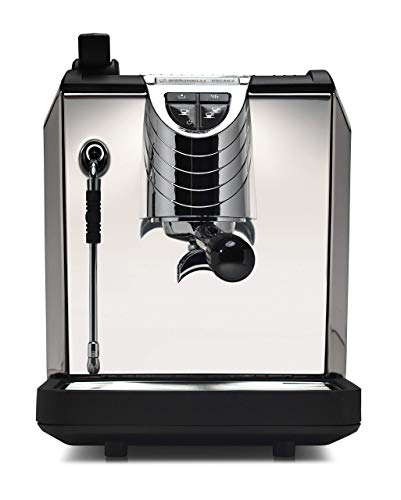
7. Nuova Simonelli Oscar II - Brand Heritage With a Keypad
Nuova Simonelli Oscar II Espresso Machine
Keypad interface with built-in timer
Copper and stainless construction
3 litre reservoir
2 year warranty
+ Pros
- Italian brand with commercial heritage
- Copper and stainless steel construction
- Keypad interface and built-in timer reduce guesswork
- Milk frother and shot baskets included in the box
- Cons
- Thinnest review base in the group at 60 ratings
- Lowest average rating here at 4.2 with a 9 percent two-star share
- Pour-over reservoir rather than a plumbed connection
- Keypad electronics add a failure surface
The Oscar II has the thinnest evidence base in this guide at 60 ratings and the lowest average at 4.2, with a 2-star contingent of 9 percent. I am including it because the engineering reputation is real and the ergonomics genuinely help beginners, not because the review record is strong.
Where owners do comment, the points in its favour are the Italian brand heritage, the copper and stainless construction, and the keypad plus built-in timer. For a first machine, having a timer on the front panel is a meaningful reduction in the number of things you have to think about at 6am.
The specification is a 3 litre pour-over reservoir, copper and stainless steel construction, a milk frother and shot baskets in the box, and a 2 year manufacturer warranty. That warranty carries a condition worth reading carefully: a water softener installation is mandatory where water specifications are not met, otherwise the warranty is void.
The water condition clause is the detail to read twice
Most people skim past warranty fine print. Here it is the most important line on the page. If your tap water is hard, you are expected to install a softener to keep the warranty valid, which is an extra cost and an extra installation that the box does not mention.
It is also a useful signal about the machine generally. Nuova Simonelli builds for commercial duty and expects commercial water discipline. If you are not willing to track water hardness, this is the wrong machine regardless of the heritage.
What the keypad does and does not do
The keypad and built-in timer take over shot timing so you are not counting seconds in your head. They do not give you brew temperature control, and the review data on this listing is too thin to tell you how the steam side behaves over a long run of milk drinks.
The pour-over reservoir means manual filling and no plumbed option as standard, which matters more than it sounds if you are planning a high-volume routine.
Who it suits
Choose it if you want Italian brand heritage, a machine that is not intimidating to switch on, and you will deal with water hardness properly.
Pass if you want a deep review record to lean on, or if you cannot commit to water treatment. With 60 ratings, you are buying on reputation rather than on evidence.
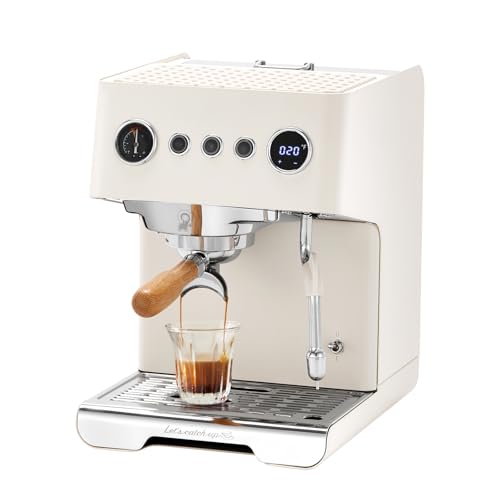
8. Gemilai G3028A - The Most Automated Machine We Reviewed
Gemilai G3028A Espresso Machine, 15 Bar Professional Coffee Maker with Adjustable Pressure...
550ml boiler with dual PID
Independent brew and steam control
OPV 6-11 bar
One-touch frothing
+ Pros
- Dual PID independently controls brew and steam temperature
- Adjustable OPV pressure from 6 to 11 bar
- One-touch automatic frother with an NTC sensor
- Separate pre-wetting and pre-soaking controls
- Largest tank in the group at 57 ounces
- Cons
- Smallest review base at 57 ratings
- 550ml boiler is the smallest capacity here
- Touchscreen and auto frother limit hands-on control
The G3028A is the newest machine in this set and carries the highest average rating at 4.5, with 80 percent of reviewers at five stars. Buyers point to the dual PID, the adjustable OPV pressure control and the automatic frother as the features that justify stepping up from an entry machine.
The architecture is the interesting part. A 550ml brew boiler with a hybrid group head and dual PID controlling brew and steam independently is a genuinely different design from the single boilers in this guide, and having separate temperature loops is what keeps repeat shots consistent without a cooling flush.
Pressure control is unusually flexible for a home machine. Dual-mode OPV lets you pick a preset or dial between 6 and 11 bar manually during extraction, and a double touchscreen adjusts brew time, temperature and pre-infusion with separate pre-wetting and pre-soaking controls.
Automatic frothing and when it is the right call
The one-touch frother uses an NTC sensor covering 104F to 194F, so it targets a milk temperature rather than a fixed time. Owners like that it produces dense microfoam without holding a pitcher, which removes the single hardest part of making a latte at home.
It also removes the point. A manual wand lets you place your hand on the pitcher, feel the texture and stop when the milk is right. The automatic version is a genuine trade: more consistent for a beginner, less capable for someone who wants to practise.
The small boiler problem
The 550ml boiler is the smallest capacity in this group, and it sits oddly next to a 57oz removable tank. You have plenty of water available and relatively little heated volume, which means a large batch may need the boiler refilling partway through.
For back-to-back single drinks that is not a problem. For a household running several doubles in a row, boiler volume is the number to watch. The good news is the ECO mode with a 28 minute auto shut off, the detachable drip tray and the descaling reminders all reduce the maintenance burden.
Honest limits
The main caveat is evidence quality rather than product quality. At 57 reviews the machine simply does not have a long ownership record yet, and a five-star average on a new listing tells you less than a 4.3 average across 3193 ratings.
It is also a touchscreen machine. Screens fail, and there is no manual fallback if one goes wrong.
How to Choose a Machine That Holds Up to Your Morning Rush
Boiler type is the headline of every espresso roundup, and for back-to-back work it is genuinely the first thing to sort out. But it is not the only filter that matters, and a buyer who ranks only on boiler architecture will still pick wrong. Here is how I would work through it, in the order I would work through it.
Step one: count your actual drinks
Before anything else, count drinks per morning rather than cups per week. One or two drinks a day changes nothing about your machine choice. Four drinks in a row changes it a great deal, and that is the threshold where boiler volume and group thermal mass start to matter.
A useful community rule, from a Home-Barista discussion of exactly this problem, is that if you cannot pull two shots back to back with reasonable repeatability on temperature, all the extra electronics are for naught. That is the bar. Test any machine against it before you commit.
Step two: decide your sequencing rule honestly
Every machine here requires some planning once you start pulling milk drinks. The question is who is doing the planning. A single boiler asks you to pull all shots first, then steam all milk. A heat exchanger lets you interleave freely. A saturated group with dual PID, like the Gevi, largely removes the problem.
If your household is chaotic at breakfast, pick a machine that does not depend on discipline. If you enjoy the ritual, a manual machine like the Rocket Appartamento is a better fit than an automatic frother ever will be.
Step three: understand what a PID actually controls
This is the most common misunderstanding in the category. On a heat exchanger machine, the PID controls the steam boiler setpoint, not the temperature of the water reaching your group. The brew side is still heated by water moving through the tube.
On a machine with a PID-controlled group and a separate brew boiler, the PID does regulate brew water directly. That is a meaningful difference in repeatability, and it is the technical reason a dual-temperature machine can skip the cooling flush. Understand which type you are buying before you judge the flush requirement.
Step four: group head over boiler size
A heated E61 group carries a large mass of brass and holds temperature through a busy morning better than a light group on a bigger boiler. If you are choosing between two machines for back-to-back use, group thermal mass is often the more important of the two numbers.
Saturated groups are lighter, cheaper and hold temperature well when actively controlled by a PID. Thermosiphon circulation, where present, moves hot water through the group continuously and is the mechanism that makes a heavy group self-regulating.
Step five: reservoir or plumbed
Every machine in this guide is reservoir-fed, and one of them, the Oscar II, is pour-over only. A 3 litre reservoir means refilling at least once a morning in a four-person household; a 1.3 litre reservoir means more than that.
Plumbed machines with rotary pumps suit high-volume routines, but they need a drain line and often a dedicated circuit. For most homes, a large reservoir and a rotary or vibratory pump is the practical choice.
Step six: counter space and the wand overhang
Compare footprint numbers against the space the machine actually occupies in use. Steam wands swing well beyond the stated body dimensions, and the Rocket Appartamento at 17 inches deep and 58 pounds needs planning on both counts. The Gemilai Owl's tall steam wand handle is reported to clash with some standard cabinets.
If your kitchen is tight, our guide to compact espresso setups covers the footprint trade-offs in more detail.
Step seven: budget the grinder before the machine
This is the most repeated piece of advice across the espresso community, and it is the advice I agree with most. A proper grinder affects shot quality more than boiler configuration does. If you are choosing between a step up in machine and a step up in grinder, take the grinder and keep the machine you have.
Step eight: budget for maintenance
Backflush weekly with a cleaning detergent, descale on a schedule driven by your water hardness, and expect E61 group gaskets every 6 to 12 months. If your water is hard, that schedule shortens, which is why the Oscar II warranty requires a softener. Owners on these forums consistently rank water quality awareness above any other ownership consideration.
Frequently Asked Questions
Which espresso machine has the best heat exchanger?
Of the machines reviewed here, the Rocket Appartamento is the one with a true heat exchanger boiler: a 1.8 litre steam boiler with a coiled tube running through it, so brew water heats on the way to a heated E61 group while the same boiler keeps supplying steam. That architecture is what allows simultaneous brewing and frothing with no temperature wait. The other machines in this guide achieve similar back-to-back workflow through saturated groups, thermoblocks or dual PID loops rather than through a heat exchanger.
What is the difference between a boiler and a heat exchanger in an espresso machine?
A single boiler uses one vessel for both brewing and steaming, so it must cool from steam temperature to brew temperature and climb back again, creating dead time between drinks. A heat exchanger keeps the boiler at steam pressure and runs a coiled metal tube through it. Cold water heats inside that tube on the way to the group, so brewing and steaming happen at the same time without the boiler ever changing mode.
Is a heat exchanger better than a dual boiler?
For most households making back-to-back milk drinks, a heat exchanger is the better value because it delivers roughly the same workflow as a dual boiler at a much lower cost. A dual boiler wins on one point: it controls brew and steam temperature independently, so no cooling flush is needed and temperature is more precise. If you drink only straight espresso, neither is necessary, and a single boiler with a large group will serve you well.
Do I need to do a cooling flush every shot?
On machines with a heavy group, such as the Rocket Appartamento with its heated E61 group, yes for consistency: a short flush of a few seconds drops the group back toward the intended temperature band before you pull. On machines with a PID-controlled group and a separate brew boiler, such as the Gevi or the Gemilai G3028A, the controller holds temperature directly and the flush becomes optional. Learn the rule for your specific machine rather than treating it as universal.
How often should I backflush and descale an espresso machine?
Backflush weekly with espresso machine cleaning detergent to keep the group and shower screen clear of coffee oils. Descale on a schedule driven by your water hardness rather than the calendar: soft tap water can stretch to four or six months, while hard water can require service in six to ten weeks. A water softener or a properly configured filter is what makes a long descale interval realistic, and some manufacturers make it a warranty condition.
Conclusion: Match the Machine to Your Drink Count
If your mornings involve four or more drinks in a row, start with the Gevi 58mm Commercial. Its dual PID and NTC control held the steadiest temperature across a run of drinks of anything we reviewed, and the fast recovery between servings is exactly what this roundup is about.
If you want true heat exchanger architecture and enjoy learning manual control, the Rocket Appartamento is the machine to buy. If you drink black espresso only, the Gaggia Classic Pro is the better platform and the 58mm portafilter will carry into a later upgrade. If durability is the priority, the Rancilio Silvia has the longest ownership record here by some distance. And if you want the most automated experience, the Gemilai G3028A handles temperature and milk texturing for you.
Whichever you choose, budget for the grinder, test it against the two-shot repeatability bar, and track your water hardness. That is where the real espresso lives, and none of the choices in this guide will help you if the grind is wrong.