
SUP Paddle Size Guide 2026: Find Your Perfect Fit
Finding the correct SUP paddle size can make the difference between a frustrating workout and a smooth glide across the water. Whether you are just starting out or looking to upgrade your gear, understanding how to select and adjust your paddle is essential for comfort, efficiency, and injury prevention. In this comprehensive SUP paddle size guide, we will walk you through everything from basic height calculations to advanced considerations like blade size, shaft materials, and discipline-specific adjustments.
By the end of this guide, you will know exactly how to measure yourself for the perfect paddle length, understand the trade-offs between different paddle types, and recognize the warning signs that your current paddle is sized incorrectly. Let us get started on finding your ideal fit for the water.
Recognizing SUP Paddle Sizing
The foundation of enjoyable stand-up paddleboarding starts with proper equipment sizing. Your paddle acts as the direct connection between your body and the water, and even small errors in length can lead to significant discomfort over time. Many beginners focus solely on board selection, but experienced paddlers know that the paddle is equally important for long-term satisfaction on the water.
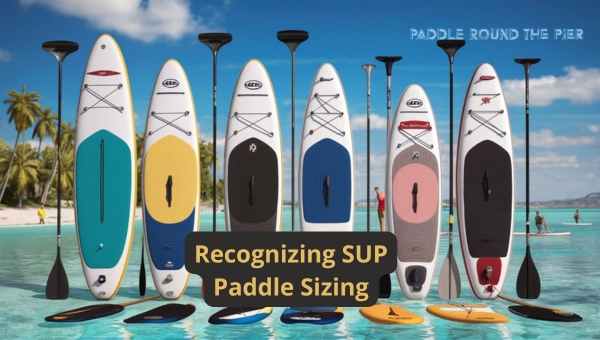
Proper paddle sizing affects not only your immediate comfort but also your long-term paddling development. A correctly sized paddle allows you to maintain proper form, engage your core muscles effectively, and develop an efficient stroke technique. Conversely, an incorrectly sized paddle can reinforce bad habits, create muscle imbalances, and even lead to repetitive strain injuries that take months to resolve.
The Ideal Paddle Length
Determining your ideal paddle length begins with a simple formula based on your height, though several refinements can help dial in the perfect fit for your specific needs. The general rule that serves most paddlers well is to add a specific number of inches to your height depending on your primary paddling activity.
- Recreational Flatwater Paddling: Add 8-10 inches to your height. This range provides comfortable reach for relaxed cruising on lakes and calm water without overextending your shoulders.
- SUP Surfing: Add 6-8 inches to your height. The shorter length allows for quick maneuverability in waves and a lower stance that improves stability in dynamic conditions.
- Racing and Fitness: Add 10-12 inches to your height. The additional length maximizes your reach and power output for each stroke, critical for competitive paddling and high-intensity workouts.
- Touring and Long-Distance: Add 8-10 inches to your height, similar to recreational paddling, but err toward the longer end for improved efficiency over extended distances.
Factors Affecting Paddle Length
While the height-based formula provides an excellent starting point, several additional factors can influence your optimal paddle length. Understanding these variables allows you to fine-tune your selection for maximum performance and comfort.
Board Volume and Reserve Buoyancy: One of the most overlooked factors in paddle sizing is your board's volume relative to your weight. Boards with higher reserve buoyancy (volume significantly exceeding what is needed to float you) sit higher in the water, effectively increasing the distance between your hands and the water surface. If your board's volume-to-weight ratio is greater than 40, you will likely benefit from a slightly longer paddle to maintain proper reach without bending excessively at the waist.
Paddling Style and Cadence: Your natural stroke rate and style also affect paddle length preferences. Paddlers with a higher cadence (faster stroke rate) often prefer slightly shorter paddles that allow quicker recovery between strokes. Those with a more powerful, slower stroke may benefit from additional length to maximize the power phase of each stroke.
Board Type Considerations: The type of board you ride significantly impacts your paddle length needs. Inflatable boards typically sit higher in the water due to their increased volume and thicker construction, often requiring 1-2 inches of additional paddle length compared to hard boards of similar dimensions. Surf-specific boards sit lower and require shorter paddles for the crouched stance used in waves. When choosing the right SUP board, consider how its characteristics will interact with your paddle selection.
Water Conditions: The environment where you paddle most often should influence your length choice. Choppy conditions and downwind paddling often require a slightly lower stance for stability, which may warrant a shorter paddle. Calm flatwater allows for an upright posture and longer reach.
Physical Considerations: Your body proportions, flexibility, and any existing injuries should inform your decision. Paddlers with longer torsos relative to their height may need slightly longer paddles. Those with shoulder issues or limited flexibility might benefit from staying on the shorter end of the recommended range to reduce overextension.
Adjusting Your SUP Paddle
Once you understand the theory behind paddle sizing, the practical matter of adjustment comes into play. Modern paddles offer various methods for changing length, each with distinct advantages and trade-offs. Understanding these systems helps you make informed decisions when purchasing and maintaining your equipment.
The adjustment method you choose affects not only the convenience of changing lengths but also the paddle's weight, durability, and performance characteristics. Some systems prioritize quick adjustments for sharing paddles between family members, while others focus on maximum stiffness and minimal weight for serious performance paddling.
Methods to Adjust Paddle Size
Today's paddles employ several distinct adjustment technologies, each suited to different needs and budgets. Understanding these options helps you select the right system for your paddling style.
Adjustable Clamp Systems: The most common adjustment method uses a cam lever or screw mechanism to lock the paddle shaft at variable lengths. These systems typically offer 6-10 inches of adjustment range, making them ideal for paddlers who share equipment or engage in multiple disciplines. High-end systems like Posi-Lok and Versa-Lok provide secure locking with minimal added weight and excellent durability.
Telescoping Shafts: Some entry-level and mid-range paddles use telescoping sections that slide within each other. While convenient for quick adjustments, these systems can introduce flex in the shaft and may not lock as securely as cam lever systems. They are best suited for recreational paddling where absolute stiffness is less critical.
Fixed Length with Cut-to-Size: Performance-oriented paddles often come as fixed-length shafts that must be cut to your exact specification. This approach eliminates the weight and potential flex of adjustment mechanisms, providing the stiffest and most direct power transfer. Once cut, the length is permanent, so accurate measurement is essential before cutting.
Hot Glue Assembly Method: An innovative approach used by some manufacturers involves securing the handle with hot glue during the fitting process. This allows for temporary length testing before permanent epoxy installation. The hot glue method enables you to paddle with your proposed length for several sessions to confirm comfort before committing to the final cut. To adjust, simply heat the handle area with a hair dryer or heat gun to soften the glue, reposition, and re-secure.
Measuring for Correct Paddle Length
Several reliable methods exist for determining your ideal paddle length before making any adjustments or purchases. Using multiple methods and comparing results helps ensure accuracy.
The Overhead Reach Method: Stand barefoot on a flat surface with the paddle blade resting on the ground. Raise one arm straight overhead. For recreational paddling, the paddle handle should reach approximately to your wrist or base of your palm. For surfing, it should reach closer to your knuckles. For racing, it can extend slightly above the wrist.
The Shaka Method: Make a "shaka" hand gesture with your fingers extended and thumb up. Place your thumb on top of your head and measure from there to the water line when standing on your board. This informal method works surprisingly well for quick estimates in the field.
The Height Plus Formula: Convert your height to inches and add the discipline-specific increment. For example, a 6-foot (72-inch) paddler would add 8-10 inches for recreational use, resulting in an 80-82 inch paddle length. Remember to consider the board volume adjustments discussed earlier when using this method.
On-Water Testing: The most accurate method involves testing paddles of various lengths on the water. Your ideal length should allow you to submerge the entire blade with each stroke while maintaining an upright posture and relaxed shoulders. If you find yourself bending at the waist to reach the water, the paddle is too short. If your shoulders feel strained or you cannot fully submerge the blade without overreaching, the paddle is too long.
Also Read: essential paddle board accessories like paddle bags and leashes to protect your investment once you have found your ideal length.
SUP Paddle Types and Sizing
The paddle you choose should match not only your body dimensions but also your preferred paddling discipline and performance goals. Modern paddle design has evolved to create specialized tools for everything from casual lake cruising to competitive ocean racing and wave riding.
Understanding the relationship between paddle design and sizing helps you make informed decisions when expanding your quiver or upgrading your primary paddle. Each discipline places unique demands on paddle characteristics.
Types of SUP Paddles
Modern SUP paddles fall into several categories based on construction, materials, and intended use. Each type offers distinct advantages for specific paddling scenarios.
All-Around Recreational Paddles: These versatile paddles suit beginners and casual paddlers who enjoy varied conditions. They typically feature moderate blade sizes (85-95 square inches), standard shaft stiffness, and adjustable length systems. While not specialized for any single discipline, they perform adequately across flatwater, light surf, and fitness paddling. Sizing follows the standard 8-10 inches above height formula for most users.
Surf-Specific Paddles: Designed for wave riding, these paddles feature shorter overall lengths (6-8 inches above height), smaller blades for quick recovery between strokes, and increased shaft flexibility for absorbing impact when bracing in turbulent water. The reduced length accommodates the lower, more athletic stance required for surfing.
Racing and Fitness Paddles: Built for speed and efficiency, racing paddles feature longer lengths (10-12 inches above height), stiffer shafts for maximum power transfer, and blade designs optimized for catch and release. Many racers prefer fixed-length paddles to eliminate the weight and potential flex of adjustment systems. Blade sizes tend toward the smaller end (80-90 square inches) for high-cadence paddling.
Touring Paddles: Long-distance paddlers benefit from lightweight construction and efficient blade designs that reduce fatigue over hours of continuous use. These paddles typically measure 8-10 inches above height with moderate blade sizes that balance power and endurance. When planning extended trips, consider pairing your touring paddle with touring-specific paddle boards designed for efficiency.
SUP Foil Paddles: An emerging category designed for the unique demands of foil boarding, these paddles typically feature longer lengths to accommodate the elevated riding position when on foil. Lengths often exceed standard recommendations by 2-4 inches, with blade designs focused on efficient water entry and minimal cavitation. As foil paddling continues to grow in popularity, dedicated foil paddles are becoming more widely available.
Travel and Multi-Piece Paddles: Designed for portability, these paddles break down into 3 or 4 pieces for easy transport and storage. While convenient for travel, the additional connection points can introduce flex and weight compared to 1-piece or 2-piece designs. They are excellent for vacation paddling or as backup paddles but may not satisfy performance-oriented paddlers as primary equipment.
Shaft Materials and Performance
The material composition of your paddle shaft significantly affects weight, stiffness, durability, and cost. Understanding these trade-offs helps you select appropriate equipment for your budget and paddling intensity.
Carbon Fiber Shafts: The premium choice for performance paddling, carbon fiber offers the best stiffness-to-weight ratio available. High-modulus carbon shafts transfer power efficiently with minimal flex, making them preferred by racers and serious enthusiasts. However, carbon fiber is more susceptible to impact damage than other materials and comes at a higher price point. Carbon paddles typically weigh 15-25 ounces.
Fiberglass Shafts: A middle-ground option offering good durability, reasonable weight, and moderate flex characteristics. Fiberglass paddles provide a more forgiving feel than carbon, absorbing some of the shock from rough water and stroke imperfections. They represent excellent value for recreational paddlers and those learning proper technique. Expect weights in the 25-35 ounce range.
Aluminum Shafts: Common in entry-level paddles and rental fleets, aluminum shafts offer durability and low cost at the expense of weight and performance. These paddles often exceed 35 ounces and can feel cold in cool weather. While suitable for occasional use and beginners testing the sport, most paddlers eventually upgrade to lighter materials as their commitment grows.
Hybrid Constructions: Many manufacturers combine materials to balance performance and value. Common configurations include carbon shafts with fiberglass blades, or fiberglass shafts with plastic blades. These hybrids offer middle-ground performance characteristics at accessible price points.
Blade Size Considerations
While paddle length receives the most attention, blade size significantly affects your paddling experience and should be considered alongside length when selecting equipment. Blade size, measured in square inches of surface area, determines how much water you move with each stroke.
Small Blades (75-85 square inches): Ideal for smaller paddlers, high-cadence techniques, and long-distance touring where endurance matters more than explosive power. Smaller blades reduce shoulder strain and allow for quicker stroke rates. Many experienced paddlers and racers prefer blades in this range despite being physically capable of using larger sizes.
Medium Blades (85-95 square inches): The versatile choice suitable for most recreational paddlers. Medium blades offer a balance of power and control that works across various conditions and paddling styles. This range accommodates the majority of adult paddlers in typical flatwater and light surf conditions.
Large Blades (95-105+ square inches): Designed for larger paddlers, powerful strokes, and situations requiring maximum acceleration. While tempting for beginners seeking stability and power, large blades can cause shoulder fatigue and injury if your technique and conditioning are not developed. Consider your fitness level and paddling goals before selecting blades in this range.
Weight-Based Recommendations: As a general guideline, paddlers under 150 pounds often prefer blades under 90 square inches. Those between 150-200 pounds typically suit 85-95 square inch blades. Paddlers over 200 pounds may prefer 90-100 square inch blades. These are starting points, and individual preference may vary based on strength, technique, and paddling style.
Choosing the Right Paddle for Your Discipline
Selecting the appropriate paddle requires honest assessment of where and how you will use it most often. While multi-purpose paddles exist, discipline-specific designs offer meaningful advantages for dedicated practitioners.
Flatwater and Recreational Paddling: Focus on comfort and versatility. An adjustable paddle with moderate blade size allows you to adapt to different conditions and share with family members. Prioritize a comfortable T-grip handle and reasonable weight to encourage longer sessions on the water.
SUP Surfing: Prioritize maneuverability and durability. Shorter paddles with smaller blades and flexible shafts help you navigate waves and recover from brace strokes. Consider reinforced blade edges to withstand impacts with your board and the ocean floor.
Racing and Fitness: Maximize efficiency and power transfer. Stiff carbon fiber construction, fixed length for minimum weight, and optimized blade designs provide competitive advantages. Work with a coach or experienced racer to dial in your exact length based on stroke analysis.
Downwind and Foil Paddling: These emerging disciplines have unique requirements. Downwind paddles often feature longer lengths to reach the water from the elevated stance used when gliding between swells. Foil paddles similarly trend longer and may feature specialized blade shapes for the high-speed, elevated riding position.
Understanding understanding paddleboard components helps you make informed decisions about how each element of your setup works together for optimal performance.
Correctly Holding Your Paddle
Proper technique in holding and using your paddle is as important as having the correct size. Even a perfectly sized paddle will perform poorly if held incorrectly.
- Hand Positioning: Place one hand on the T-grip at the top of the paddle. Your other hand should grip the shaft approximately shoulder-width apart, creating a stable triangle of control. Adjust this width slightly based on your comfort and the power you need.
- Blade Orientation: The blade should angle away from you, with the power face facing backward. This positions the scooped portion of the blade to catch water effectively during the power phase of your stroke. Many beginners hold the paddle backward, significantly reducing efficiency.
- Grip Pressure: Maintain a relaxed grip, using only the pressure necessary to control the paddle. White knuckles indicate excessive tension that will lead to forearm fatigue and reduced feel for the water. Your fingers should wrap securely but without squeezing.
- Posture and Body Position: Stand with knees slightly bent and core engaged. Your back should remain relatively straight throughout the stroke, with rotation coming from your hips and torso rather than your lower back. The paddle should reach the water without requiring you to bend significantly at the waist.
- Stroke Mechanics: Enter the blade smoothly into the water near the nose of your board. Pull straight back, keeping the blade vertical and close to the board's rail. Exit the water cleanly near your feet and recover with a low, efficient return stroke.
Also Read: difference between paddles and oars to deepen your understanding of paddling terminology and equipment.
Common Mistakes and Solutions
Even experienced paddlers sometimes struggle with paddle sizing and technique. Recognizing the signs of an improperly sized paddle allows you to make adjustments before developing bad habits or experiencing pain.
Signs Your Paddle Is Too Long
An excessively long paddle creates distinct symptoms that become more pronounced over time. Addressing these issues promptly prevents injury and improves your paddling experience.
- Shoulder Pain and Fatigue: The most common symptom of an overly long paddle is discomfort in your shoulders and rotator cuffs. Overreaching at the top of each stroke strains these joints and surrounding muscles. If you experience shoulder pain that worsens during paddling, your paddle is likely too long.
- Inefficient Stroke Recovery: A paddle that extends too high above your head makes the recovery phase awkward and slow. You may find yourself swinging the paddle wide to clear the water or altering your stroke pattern to compensate.
- Difficulty Controlling Entry Angle: When the paddle is too long, maintaining the correct blade angle during entry becomes challenging. The blade may flutter or dive unexpectedly, creating splash and reducing power transfer.
- Lower Back Arching: To reach the water with an overly long paddle, you may unconsciously arch your lower back, leading to discomfort and potential injury over time.
Signs Your Paddle Is Too Short
An undersized paddle forces you into compromised positions that reduce power and increase injury risk. Watch for these indicators.
- Excessive Bending at the Waist: If you find yourself constantly bending forward to submerge the blade fully, your paddle is too short. This posture strains your lower back and reduces your ability to engage core muscles effectively.
- Incomplete Blade Submersion: A properly sized paddle allows you to bury the entire blade with each stroke while maintaining good posture. If only half the blade enters the water, you are losing significant power with each stroke.
- Elbow Dropping Below Hand Height: During the power phase, your lower elbow should remain roughly level with or above your hand on the shaft. If your elbow drops significantly, you are compensating for insufficient length.
- Feeling of Working Too Hard: An undersized paddle requires more strokes to cover the same distance, increasing fatigue without increasing speed. If you feel like you are paddling constantly but moving slowly, length may be the culprit.
- Instability in Rough Water: A shorter paddle provides less leverage for bracing strokes, making you feel less stable in choppy conditions or when recovering from wobbles.
Troubleshooting Length Issues
If you suspect your paddle length is incorrect, take a systematic approach to finding the right size. Start by verifying your current measurement against the height formulas provided earlier. If you have an adjustable paddle, experiment with different settings over several sessions, noting how each position feels in terms of comfort, power, and fatigue.
Consider borrowing paddles of different lengths from friends or rental shops before committing to a purchase. What feels correct on land may prove different on the water, especially after extended use. Many paddlers find their preferences evolve as their technique and fitness improve, so periodic reassessment of your paddle size remains worthwhile throughout your paddling journey.
FAQs
What size paddle should I get for my height?
For recreational flatwater paddling, add 8-10 inches to your height. For SUP surfing, add 6-8 inches. For racing and fitness paddling, add 10-12 inches. These formulas provide starting points that you can adjust based on board type, paddling style, and personal preference.
How do you choose the right size SUP paddle?
Start with the height-plus formula for your primary discipline. Then consider adjustments for board volume (add 1-2 inches for high-volume inflatables), your physical proportions, and typical water conditions. Test paddles on the water whenever possible, as the ideal length should allow full blade submersion while maintaining upright posture and relaxed shoulders.
Is it better to have a longer or shorter paddle?
Neither is universally better. A longer paddle maximizes reach and power but can cause shoulder strain. A shorter paddle offers quicker recovery and better maneuverability but may require excessive bending. The ideal length balances your height, paddling discipline, and physical capabilities. Most paddlers benefit from starting with the recommended formula and adjusting based on comfort.
Should I get an adjustable or fixed SUP paddle?
Adjustable paddles offer versatility for sharing, traveling, and dialing in your ideal length before committing to a fixed paddle. They are ideal for beginners and families. Fixed paddles provide better stiffness, lighter weight, and simpler construction, making them preferred by serious paddlers who have established their ideal length. Consider starting with adjustable and transitioning to fixed as your preferences solidify.
What blade size do I need for SUP?
Smaller paddlers (under 150 lbs) typically prefer blades under 90 square inches. Average-sized paddlers (150-200 lbs) usually suit 85-95 square inch blades. Larger paddlers (over 200 lbs) may prefer 90-100 square inches. However, fitness level and paddling style matter more than weight alone. High-cadence paddlers and those prioritizing endurance often choose smaller blades regardless of size.
How long should your paddle be for paddleboarding?
For most recreational flatwater paddling, your paddle should reach approximately 8-10 inches above your head when standing barefoot with the blade on the ground. SUP surfing requires 6-8 inches above height, while racing and fitness paddling typically calls for 10-12 inches above height. Consider these figures as starting points and adjust based on board type and personal comfort.
Does board volume affect paddle length?
Yes, board volume significantly affects paddle length requirements. High-volume boards with greater reserve buoyancy sit higher in the water, effectively increasing the distance between your hands and the water surface. If your board's volume-to-weight ratio exceeds 40, consider adding 1-2 inches to your standard paddle length calculation. This is particularly relevant for inflatable boards, which typically have higher volume than hard boards of similar dimensions.
How do I measure my SUP paddle correctly?
Use the overhead reach method: stand barefoot on flat ground with the paddle blade touching the floor. Raise one arm straight up. For recreational paddling, the handle should reach your wrist or base of your palm. For surfing, it should reach your knuckles. For racing, slightly above the wrist. Alternatively, convert your height to inches and add 8-10 for recreational use, 6-8 for surfing, or 10-12 for racing.
Is my SUP paddle too long?
Signs that your paddle is too long include shoulder pain or fatigue during or after paddling, difficulty maintaining a smooth stroke rhythm, feeling like you are overreaching at the top of each stroke, and having to swing the paddle wide during recovery. If the handle extends well above your wrist when overhead, or if you cannot fully submerge the blade without arching your back, your paddle is likely too long.
Is my SUP paddle too short?
Your paddle is too short if you find yourself bending excessively at the waist to reach the water, if only part of the blade submerges with each stroke, or if your lower elbow drops below hand height during the power phase. Other indicators include lower back strain, feeling like you are working harder than necessary for your speed, and difficulty bracing effectively in choppy conditions.
Conclusion
Finding your ideal SUP paddle size transforms your experience on the water from a frustrating workout into a smooth, enjoyable glide. By understanding the height-based formulas, accounting for board volume and paddling discipline, and recognizing the warning signs of improper sizing, you can select equipment that enhances rather than hinders your performance.
Remember that paddle sizing is not an exact science, and personal preference plays a significant role. Start with the guidelines provided in this SUP paddle size guide, but do not hesitate to experiment and adjust based on your unique physiology and paddling style. The perfect paddle is one that allows you to maintain proper form, paddle comfortably for hours, and develop your skills without pain or limitation.
Now that you understand how to size your paddle correctly, explore our complete paddle board buying guide to ensure your entire setup works in harmony. With properly fitted equipment and good technique, you will be well on your way to countless enjoyable hours on the water.