
8 Best Electric Smokers for Beginners (October 2026)
The first time I cooked on an electric smoker, I put a pork shoulder in at 225°F, walked away, and came back eight hours later to bark you could hear when you tapped it. Nobody lit a fire, nobody babysitted a vent. That experience is the entire argument for the best electric smokers for beginners, and after years of putting eight vertical cabinets through ribs, shoulders, salmon and more jerky than I care to admit, that is still the category I hand to anyone who asks me where to start.
Electric smokers solve one specific problem extremely well: they hold a set temperature for ten hours without human intervention. A heating element at the bottom of the cabinet does the work a charcoal fire would do, wood chips smolder above it for flavor, and a thermostat cycles the element to keep the box where you put it.
What they do not solve is everything else. They top out around 275°F, so you cannot sear, they need a dedicated circuit and an outdoor outlet, and several of the most popular cabinets still demand a separate meat thermometer because they have no probe port. Those trade-offs are the reason most beginners return a smoker within a month, and they are the reason this roundup is organized around what each box actually does well rather than around logos.
We narrowed the field to eight electric smokers with enough owner feedback to judge, and we grouped them by the job they do best: a full-size cabinet for ribs and brisket, a budget analog box for people who want zero electronics, and a pair of dedicated low-temperature smoke boxes for fish, cheese and jerky. If you would rather not manage coals at all yet still want to learn fire craft, our beginner charcoal smoker guide covers that side of the aisle.
Our Top 3 Electric Smokers for First-Time Owners in 2026
The shortlist below is the order I would hand to a friend. The Masterbuilt 30-inch Digital takes the top slot because it has the deepest owner base in the category and refuses to complicate anything. The East Oak adds the one feature the Masterbuilt leaves out, a real meat probe, and it matches the top average rating in the field at 4.7. The Bradley is the pick for anyone who wants to walk away from a cook for the entire afternoon without thinking about chips at all.

A word on how we ranked these. Rating alone would put the East Oak and the 40-inch Masterbuilt at the top, and both are excellent boxes to cook on. Rating times review volume is the fairer test for a first purchase, because a 4.7 average built on a few hundred owners tells you less than a 4.4 average built on more than eleven thousand. The Masterbuilt wins on that math and on the simplicity of the interface.
Comparing All Eight Electric Smokers Side by Side in 2026
Every smoker below uses a heating element rather than fuel, but they split into three families. Two are low-and-slow smoke boxes that hold a fixed 165°F. The remaining four are full-size cabinets, two with a side wood chip loader, one analog dial, and one built for feeding a crowd. The table gives you the headline specs; the reviews that follow tell you where each one stumbles.
| Product | Key Specs | Action |
|---|---|---|
| Masterbuilt 30 inch Digital |
|
Check Latest Price |
 East Oak 30 inch Electric East Oak 30 inch Electric |
|
Check Latest Price |
| Bradley BTDS76P 4-Rack |
|
Check Latest Price |
 Charbroil Analog Electric Smoker Charbroil Analog Electric Smoker |
|
Check Latest Price |
 Smokehouse Little Chief Smokehouse Little Chief |
|
Check Latest Price |
 Smokehouse Big Chief Smokehouse Big Chief |
|
Check Latest Price |
 Royal Gourmet SE2805 Royal Gourmet SE2805 |
|
Check Latest Price |
 Masterbuilt 40 inch Digital Bundle Masterbuilt 40 inch Digital Bundle |
|
Check Latest Price |
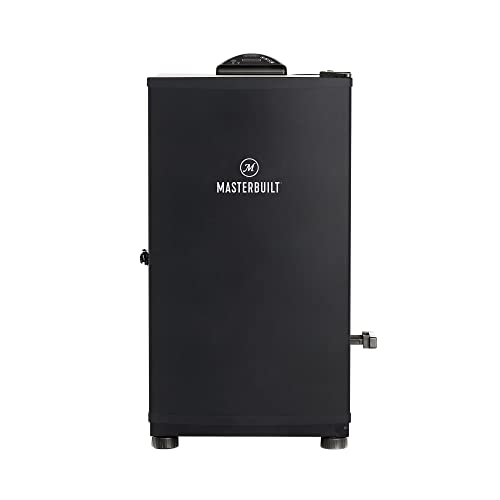
1. Masterbuilt 30-Inch Digital Electric Smoker - The Easiest Path to Real Barbecue
Masterbuilt® 30-inch Digital Electric Vertical BBQ Smoker with Side Wood Chip Loader, Chrome Racks...
711 sq in cooking space
Digital panel up to 275F
Patented side wood chip loader
45.9 lb
+ Pros
- Holds set temperature accurately
- Reaches temperature quickly even in cold air
- Side loader means no door openings
- Water bowl and rear grease tray simplify cleanup
- Cons
- No built-in meat probe
- 275F ceiling
- Digital panel can fail on older models
There is a reason the Masterbuilt 30-inch Digital has more than eleven thousand reviews behind it. Nothing about it is clever. You set a temperature and a timer on a sealed membrane panel, fill the water bowl, load the side chip tray, and the box does the rest. That is the whole pitch, and for a first cook it is exactly enough complexity.
Owners consistently report that it comes to temperature in under twenty-five minutes even when the weather is against them, and that the side wood chip loader is the feature they would not give up. Because the loader feeds from outside the cabinet, you can top up smoke flavor without pulling the door and dropping the box twenty degrees. Members of the r/smoking community describe it as the box they recommend to friends who are tired of tending charcoal.
Temperature control and the 275F ceiling
The digital panel holds a set point in a way an analog dial cannot, and across the owner base the reported behavior is steady rather than swinging. The panel tops out at 275°F. That is plenty for low-and-slow ribs, brisket, pork butt and chicken, and it is the reason you will never finish a steak on this box.
The real limitation is that the panel only sets time and temperature. There is no app, no remote monitoring and no remote probe, so if you want to know what is happening inside during a ten-hour cook, you open the door or you walk away and find out later. For most beginners, that trade is worth it because the alternative is a screen to fiddle with at 2 a.m.
Chip loading and smoke control
The patented side loader takes chips from outside the cooking chamber, which keeps heat, smoke and moisture inside while you refill. The trade-off reviewers mention is tray size. It holds a modest load, so on a long cook you are topping up every couple of hours rather than filling once a day. Owners on r/smoking describe the same rhythm repeatedly: set the box, check the tray, do not open the main door for no reason.
Because the box is well sealed and light chips do not fill a space with heavy smoke, it stays usable on a patio close to a house in a way an offset smoker never does. That is not a small point for anyone in a townhouse or a building with rules about open flames.
Capacity, water bowl and cleanup
Seven hundred and eleven square inches across four chrome-coated racks is the working middle of this category. Owners fit four racks of ribs, up to six chickens, two turkeys or four pork butts. A whole turkey is tight without cutting it up, which is the honest limit of a 30-inch box.
Cleanup is the part people underestimate until they own one. The removable water bowl and the rear grease tray pull straight out, and the chrome racks tolerate a hose or a dishwasher. The one fiddly area is the space under the chip tray, where ash and grease collect in corners that a rag does not reach easily. Wipe it after every cook and it never becomes a problem.
Who should buy the Masterbuilt 30-Inch
Buy this one if your first cook is a pork butt or a rack of ribs, if you want the fewest possible decisions, and if you are willing to buy a separate wireless thermometer. Skip it if the absence of a probe bothers you more than the price of one, because several owners pair it with a leave-in probe and never open the door again.
Forum veterans also note that Masterbuilt cabinets invite modification, from gasket seals to an added PID controller. You do not need any of that to produce good food. Several long-time members of SmokingMeatForums describe this cabinet as working well once modified, but the honest version is that it works well straight out of the box and the mods are a hobby, not a requirement.
2. East Oak 30-Inch Electric Smoker - The Only One Here With a Working Probe
EAST OAK 30" Electric Smoker for Outdoors | Built-in Meat Probe & Clear Viewing Window | Side Chip...
725 sq in cooking area
Built-in meat probe
Side chip loader with long runtime
52.3 lb
+ Pros
- Top average rating with 83 percent five stars
- Probe removes the need for a separate thermometer
- Large cavity for a 30 inch box
- Viewing window
- Cons
- Heavy cabinet at 52.3 lb
- Glass window soils and insulates poorly
The single feature that separates this smoker from the rest of the 30-inch cabinets is the built-in meat probe. It tracks internal temperature and switches the box into keep-warm mode when your target time arrives. For a first cook, that is not a gimmick. It is the difference between learning to smoke and learning to manage a smoker plus a thermometer plus a timer.
It also posts the highest average rating of any unit in this roundup at 4.7, with 83 percent of its reviews at five stars. That distribution is unusually top-heavy for a patio appliance, and it lines up with what owners actually describe: an easy box that does what the panel says. On r/smoking, East Oak comes up as a recurring recommendation for first-time buyers, with owners citing better build quality than they expected and a mild, crowd-pleasing smoke flavor.
The built-in probe and keep-warm mode
Set your target internal temperature, plug the probe into the meat, and the smoker handles the rest. When the cook finishes, it drops to a holding temperature instead of continuing to cook while you are nowhere near it. That single behavior removes the most common beginner failure, which is overcooking a piece of meat because you trusted the clock instead of the thermometer.
Owners do note that the probe is a single channel, so you are monitoring one piece of meat at a time. For ribs across two racks, a separate multi-channel probe still gives you a better picture. But for a first shoulder or a whole chicken, the built-in probe is doing the job you would otherwise do by hand.
Chip runtime and the side loader
The side chip loader is the second reason this box appeals to beginners. Owners describe long smoking runs between refills, and the manufacturer markets the same behavior. The loader sits outside the main chamber, so adding chips does not mean pulling the door and watching the box recover from a temperature drop.
Forum members who use this smoker report a mild smoke profile, which is a reasonable first flavor for someone who has not yet decided whether they want hickory or cherry. It is also forgiving of the most common beginner mistake, which is loading too much wood. A light touch is much harder to get wrong on this cabinet than on a smoker with a deep open firebox.
Cooking area, racks and the viewing window
Seven hundred and twenty-five square inches across four removable racks puts this at the top of the 30-inch size class, and the racks come out for cleaning, which matters more over a few years than most buyers expect. The interior is aluminized steel and the exterior is powder-coated, so it holds up to weather without the surface wear you see on bare aluminum.
The glass viewing window is the feature owners like most and criticize most. It lets you watch a cook without lifting the door, which is genuinely useful for a first-timer. It also soils quickly and insulates worse than a solid door, so you lose a little efficiency and some cleaning time. That is the honest bargain.
Who should buy the East Oak 30-Inch
Buy it if you want the most complete beginner package in a single cabinet. Probe, window, side loader and a top-rated owner base in one box is hard to argue with. Skip it if weight is a real constraint in your setup, such as a small balcony where you move the smoker for every cook. In that case the lighter analog cabinets below are a better fit even though you give up the probe.
3. Bradley Smoker BTDS76P 4-Rack - Hands-Free Smoking for Nine Hours
Bradley Smoker BTDS76P 4-Rack Outdoor Natural Draft Digital Vertical Smoker
2,288 sq in cooking area
Four stainless racks
Automatic bisquette feeding
57.5 lb
+ Pros
- Fully automatic wood puck feeding
- Sealed stainless chamber washes clean
- Racks fit a dishwasher
- Digital control holds within about 10 degrees
- Cons
- Factory 800 watt element runs weak
- Long preheat and slow recovery
- Display thermometer can read high
The Bradley does something no other smoker in this roundup does: it feeds itself. A conveyor loads compressed wood bisquettes into the firebox automatically for up to nine hours of unattended smoking. You program temperature and smoke time on the digital control, close the door, and leave. For a beginner who works a full day, that single feature changes the hobby from a weekend commitment into a set-it-and-forget-it appliance.
The stainless steel interior is the second reason to like it. It will not rust, it wipes clean, and the four racks pop out and go straight into a dishwasher. Owners also describe the chamber as genuinely sealed, with smoke leaving only through the designed vent, which is exactly what you want on a patio near a house.
How the automatic bisquette system works
Bisquettes are compressed wood pucks loaded into a hopper that feeds them into the firebox on a schedule. The smoking and heating systems are separate, so once a cook is past the first couple of hours, the pucks that matter for flavor have already burned and the element handles the rest of the heat. You are not paying for wood to hold temperature for twelve hours.
The recurring cost is bisquettes rather than bags of chips, and no interior hanger bar is included for hanging meat upright. Plan your smokes around racks rather than hooks, which is a small adjustment once you know it.
The heating element is the thing to change first
The single most cited issue in reviews is the factory 800-watt element, which owners describe as weak, particularly in cold weather. Several recommend swapping to a 900-watt element before the first cook. That is a fifteen-minute job with a standard part, and it is the difference between a smoker that recovers quickly and one that drifts after every door opening.
Expect a long preheat and slow recovery after opening the door. The chamber holds heat well once it gets there, so preheat earlier than feels necessary, especially between October and March when ambient temperature is working against you.
Temperature accuracy and rack-to-rack variation
The digital display is precise compared with an analog dial, and reviewers typically see it holding within roughly ten degrees in normal conditions. Two caveats come up repeatedly. The display can read off an independent thermometer, and some owners report swings of up to twenty degrees along with uneven cooking between racks.
That makes an independent probe a genuine necessity rather than a nice-to-have. Place it on a middle rack where you will actually serve the meat from, and rotate nothing on your first cook. Learn where the hot spot is before you start planning around it.
Who should buy the Bradley BTDS76P
Buy it if you want true hands-off cooking, do not mind buying bisquettes as a consumable, and want a stainless interior that survives decades. It is also one of the largest and heaviest cabinets here, so check your clearance and your deck space before committing.
Skip it if you want to learn the craft of managing smoke by hand, or if moving a 57.5 pound cabinet sounds like more than you want to take on. The four smokers below are simpler machines that ask less of you in exchange for less automation.
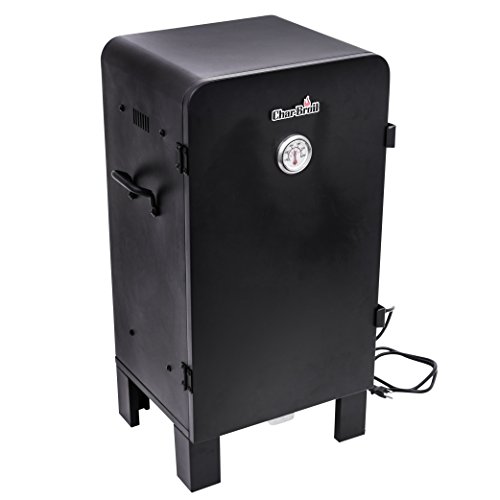
4. Charbroil Analog Electric Smoker - The Simplest Box That Still Cooks Ribs
Charbroil Analog Electric Smoker, Black - 18202077
544 sq in cooking space
1200 watt element
Analog dial and door gauge
56.4 lb
+ Pros
- Nothing to program or reset
- Double-wall body stays touchable while cooking
- Element is a standard replaceable part
- Dual latches keep smoke in
- Cons
- Chips load through the main door
- Small chip tray with limited airflow
- No damper on the top vents
There is an argument for buying no electronics at all. A mechanical dial cannot lose a setting, cannot fail after a power cut and cannot display an error code you do not understand. The Charbroil analog smoker is that argument in cabinet form, and for some beginners it is the most reliable purchase they will make.
Under the dial sits a 1200-watt element in a double-walled, insulated chamber. Owners report that the outside of the cabinet stays touchable during a long cook, which is a real quality-of-life difference in summer. The heating element is a standard, easily replaced part, and that single fact removes most of the anxiety people carry about electric smokers.
Learning an analog thermostat
An analog dial needs a short calibration period. You turn it, you check a door-mounted temperature gauge, you adjust. After two or three cooks you know where the dial sits for 225°F and 250°F in your weather, and from then on it is completely predictable. Owners who give it that first weekend generally stop thinking about it.
Five hundred and forty-four square inches across three chrome-plated grates is a smaller cavity than the 30-inch digital cabinets, and that is the trade you make for simplicity. It is enough for a rack of ribs or a pork butt with room to spare, and you will position your racks more deliberately than you would in a larger box.
Wood chip loading takes a door opening
This is the main compromise. There is no external chip loader, so every refill means opening the main door and dropping the chamber temperature. The chip tray is also small, with limited airflow for smoldering, so refills come more often than they do on a side-loader cabinet.
Two design details make the loading less painful than it sounds. The aluminized steel water pan sits above the element and acts as a buffer against temperature swings, and the dual door latches pull the door shut evenly so the seal stays consistent as the metal expands and contracts through a long cook.
Ventilation, legs and build details
The top vents have no damper, so heat and smoke pour straight out rather than being moderated. On a still day that is fine. On a windy day, the ambient temperature you are fighting changes constantly, and the dial means more frequent checking. Owners who smoke through winter often report the same issue regardless of brand.
Two smaller notes for first-time buyers. The legs are short, so most people put the smoker on a stand, and there are occasional reports of units arriving with a dented door frame that stops the seal from closing properly. Check the box the moment it arrives.
Who should buy the Charbroil analog smoker
Buy it if you want the fewest possible failure points, you do not mind adjusting a dial, and you would rather spend your first year learning smoke flavor than learning software. The insulation and the element design do more for consistency than the missing electronics suggest.
Skip it if you plan to cook overnight and sleep, because a door-opening refill at 3 a.m. with a cold chamber is a real cost. In that case pay for a side loader and let the box feed itself.
5. Smokehouse Little Chief - The Lightest Way to Start Smoking Cheese and Fish
Smokehouse Little Chief Electric Smoker - Low to Mid Temperature Smoker for Fish, Jerky, Cheese...
Steady 165F temperature
Up to 25 lb capacity
12.2 lb aluminum body
No electronics at all
+ Pros
- Holds a steady 165F for hours
- Zero controls to learn
- 165F is ideal for salmon and cheese
- Front load makes checking food easy
- Cons
- Smokes rather than cooks
- Small 25 lb capacity
- Light smoke output
Not every first smoker needs to cook a whole brisket. If your interest is salmon, trout, cheese, sausage or jerky, this is the machine to start with, and at 12.2 pounds it is by far the easiest to carry from a closet to a patio table.
It holds a steady 165°F and does nothing else. There is no thermostat to adjust, no panel to program and no connectivity. The design dates to 1968 and the basic layout has barely changed, which tells you how well the concept works. Reviewers consistently describe owners keeping these boxes for decades.
Smoking is not cooking, and that is the point
The critical thing to understand before you buy: this smoker does not take food from raw to done. It holds a low, fixed temperature for long enough to dehydrate and infuse. Salmon, trout and cheese are already cooked or cured before they go in. Raw ribs or brisket need an oven or a grill to finish.
Once that clicks, the Little Chief becomes remarkably capable. Jerky makers use boxes like this because the steady low temperature dehydrates evenly over long hours, and cheese smokers rely on the same chamber. The stainless steel interior and the front-loading door make checking and removing food straightforward.
Chip pan access and smoke output
The wood chip pan pulls out without opening the main door, so refills do not cost you the whole chamber temperature. That is a better design decision than several larger cabinets make. The trade-off is output. Reviewers often recommend a second layer of larger chips, or drilling the tray to improve airflow, if you want more visible smoke.
Up to 25 pounds of capacity is plenty for a weekend of fish, and small enough that you can position the box close to where you are working. The handle on the front door gets hot enough that owners use a mitt or replace it, so plan your hand placement before a long smoke.
Who should buy the Little Chief
Buy it if your first smoke is fish, cheese, sausage or jerky, if you have a small patio or a balcony where a 50-pound cabinet is not happening, and if you like a machine you can carry with one hand. It is also a genuinely useful second box later, once you own a full-size cabinet and want a dedicated cold smoke unit.
Skip it if you want to cook raw meat low and slow. There is no thermostat, so there is no way to run it at brisket temperatures, and no amount of patience changes that.
6. Smokehouse Big Chief Electric Smoker - More Fish, Same Simple Idea
Smokehouse Big Chief Electric Smoker - Easy to Use, 50 lb Capacity - 24.5x18x12 in - Plastic
Five racks and 50 lb capacity
Steady 165F
Removable wood chip pan
17.6 lb
+ Pros
- Twice the capacity of the Little Chief
- Still light at 17.6 lb
- Consistently praised for salmon and jerky
- Interior wipes clean
- Cons
- Smokes rather than cooks
- Thin aluminum with single-rivet tray mounts
- Handle gets hot
The Big Chief is the same idea as the Little Chief with roughly double the working space. Five racks sit above the drip pan and the rated capacity reaches 50 pounds of meat or fish, which is enough to smoke a weekend of salmon in one load and still have trays left over. The front-loading door, the removable chip pan and the wipe-clean stainless interior carry over from the smaller model, and reviewers describe a short learning curve followed by consistent flavor.
At 17.6 pounds it stays easy to carry despite the larger cabinet, so you keep the portability that makes a dedicated smoke box useful.
Rack count and what fits in a single load
Five racks is the practical advantage. A home smoker working with salmon appreciates being able to run several trays at once without swapping them halfway through a load, which halves the number of cycles per batch. Jerky makers get the same benefit, since thin strips dry faster when the chamber is not overcrowded.
Because the temperature is fixed at 165°F, plan finishes the same way as with the Little Chief. Smoked fish, cured sausage, cheese and jerky are the natural fits. If you are cooking ribs or a shoulder, this is not the machine and no rack arrangement will change that.
Build quality is the dividing line in reviews
Reviews divide sharply on construction. Many owners describe decades of service and continue to recommend the box, while a vocal group faults the thin die-punched aluminum body and the tray holders that are secured by a single rivet. That is the honest picture of a design that optimizes for lightness and price rather than rigidity.
Two practical notes. Protect the handle, which gets hot, and inspect the cabinet on arrival because units can arrive dented from minimal protective packaging. Neither issue is serious, but both are worth catching before your first load.
Who should buy the Big Chief
Buy it if fish, sausage or jerky is what you actually want to make, and if you want to do it in quantity. The rated capacity on a body light enough to carry with one hand is unusual, and it suits anyone working out of a small patio or a storage-limited balcony.
Skip it if you care about how the cabinet feels under your hands. If you prefer a sturdier box that will sit on a deck through years of seasons, one of the powder-coated steel cabinets above is a better long-term fit.
7. Royal Gourmet SE2805 28-Inch Analog Smoker - A Four-Function Budget Cabinet
Royal Gourmet SE2805 28-Inch Analog Electric Smoker with 3 Cooking Grates
1350 watt heating element
454 sq in cooking area
Built-in thermometer
42.1 lb
+ Pros
- 1350 watt element heats fast
- Assembles in about 15 minutes
- Doubles as grill steamer or dehydrator
- Analog dial is easy to learn
- Cons
- Chip box sits far from the element
- Rack slides stop short of seating
- Cabinet is not perfectly square
This smoker earns its place with a feature none of the others offer: it does four jobs. The same 1350-watt element smokes, grills, steams and dries, which makes it useful on a balcony or in a small outdoor kitchen where you cannot justify two appliances.
The element itself is the strongest in the roundup at 1350 watts, and owners report fast heat-up and even temperature across the chamber. Assembly takes about fifteen minutes with well-protected packaging, and the analog dial with a built-in thermometer is straightforward for someone who has never set a smoking temperature before.
Where the chip box sits matters
The most common operational complaint is distance. The chip box is positioned far enough from the heating element that some users get little smoke until they set the tray directly on the element. Once you know that, it becomes a setup step rather than a defect, and moving the tray closer is a two-minute adjustment on your first cook.
Four hundred and fifty-four square inches across three chrome-plated racks is the smallest full cooking cabinet here, so plan your first cook accordingly. A pork butt, a rack of ribs or two chickens fit comfortably. Two racks of ribs is pushing it.
Rack slides, water pan and finish
Two fit issues are worth knowing in advance. The cabinet is not perfectly square, and the upper rack slides do not seat fully without forcing the door closed. The supplied water pan is also oversized and can block heat circulation, so owners often run the box with a smaller pan or a different water vessel.
Long-term durability is the open question. The interior paint peels with repeated high-temperature use, and the racks are lighter gauge than those on comparable smokers. With only 163 ratings behind it, this is the thinnest feedback pool in the roundup, so treat it as a capable value option rather than a proven long-term purchase.
Who should buy the Royal Gourmet SE2805
Buy it if you want one appliance that covers smoking, grilling, steaming and drying, and if you are willing to make the two tray adjustments on day one. The wattage and the multi-function design give it more capability per unit than its size suggests.
Skip it if you want a well-documented long-term record or a precisely square cabinet. Both of those matter more than they sound, because a cabinet that does not seal evenly makes temperature control a guessing game.
8. Masterbuilt 40-Inch Digital Electric Smoker Bundle - Room for the Whole Neighborhood
Masterbuilt 40 inch Digital Electric Smoker with Window and Legs + Cover Bundle
971 sq in smoking space
Up to 275F
Adjustable air damper
Cover bundle included
+ Pros
- Large cooking area at 971 sq in
- Air damper lets you tune smoke
- Cover bundle included
- Cons
- No built-in meat probe
- Viewing window fogs and dirties
- Digital panel parts no longer stocked
When a cook is feeding a crowd, rack count matters more than anything else. This 40-inch Masterbuilt offers 971 square inches of smoking space across four chrome-coated racks, enough for a full brisket flat or eight racks of ribs, and the bundle adds a fitted cover. It also carries a 4.7 average, matching the top rating in the group, and 83 percent of its reviews sit at five stars.
The adjustable air damper is the feature seasoned owners notice most. Combined with the water bowl, it lets you thin the smoke on a hot day or push it harder for a cold-weather cook. The side chip loader means fewer door openings, and wheels let you reposition the cabinet on the patio mid-cook without asking for help.
What 971 square inches actually buys you
The step up from a 30-inch cabinet is not subtle. Where the smaller Masterbuilt gives you 711 square inches, this one nearly reaches 1,000 on the same four-rack layout, which is the difference between a cook that fits in one load and a cook you have to split. A full brisket flat or a holiday load of multiple birds is realistic here, where a 30-inch box forces you into shifts.
The trade is footprint and weight. This is a large vertical cabinet, so check that you have the ceiling clearance and the level ground before you buy, and give the outdoor circuit some thought before you plug it in.
The air damper, water bowl and viewing window
Smoke control on this box is better than on the smaller Masterbuilt because you can regulate airflow rather than only adding more chips. That is meaningful in warm weather, when opening the damper reduces the smoke load without asking the box to work harder. The water bowl handles moisture in the other direction, keeping the chamber from drying out over a long cook.
The viewing window is the most-cited drawback. Owners report that it fogs, dirties quickly and insulates worse than the solid-door version, and several note that the solid-door model holds temperature better in cold weather. If cold-weather smoking is your priority, a window-free cabinet is the better tool.
Bundle contents and the cover
This listing includes a water-resistant, fade-resistant cover sized for 40-inch Masterbuilt electric smokers. That is a real addition for anyone smoking outdoors, because the cover is the difference between a smoker that looks the same in year five and one with faded panels and surface corrosion.
Owners also report straightforward assembly and weekly use without complaint, which is a good sign for a machine that has to survive a full calendar of cooking.
Who should buy the 40-Inch Masterbuilt
Buy it if you cook for more than six people regularly, if you want a single load instead of two, and if patio space and ceiling height are not constraints. The air damper and the rack area together make it a strong fit for holiday cooks.
Skip it if you are cooking for two on a weeknight. You will pay for space you do not use, and the extra cavity makes the box harder to heat quickly and harder to move. Our top pick handles a full-size cook with far less footprint.
How to Choose Your First Electric Smoker
Every smoker above holds temperature without a fire. The differences that actually change your results are capacity, how you load wood, how the controls behave and where the box can legally sit. Work through these six decisions in order and the right model becomes obvious.
Cooking space: what actually fits on the racks
Ignore the headline number and picture your food. A 30-inch cabinet around 700 square inches fits four racks of ribs, four pork butts or six chickens. Around 550 square inches, plan on a rack of ribs or two at a time. The 40-inch option near 1,000 square inches handles a full brisket flat or eight racks in one pass.
Also count rack slots, not just area. The Smokehouse Big Chief carries five shelves in a small footprint, so a batch of salmon fits in a single load where a three-rack box would force you to swap trays halfway. If you smoke fish in batches, shelf count matters more than square inches.
Chip loading: opening the door or not
A side loader keeps heat, smoke and moisture inside while you refill, which is the single biggest quality-of-life difference between cabinets. The Masterbuilt 30, the East Oak 30 and the 40-inch Masterbuilt all have one. The Charbroil analog does not, so every refill costs you a temperature dip and a recovery cycle.
The Bradley takes this further with automatic bisquette feeding, which removes the refill decision entirely. That is the extreme end of the spectrum, and it comes with a consumable cost attached.
Temperature control: analog dial versus digital panel
A digital panel holds a set point and, on the East Oak, switches to keep-warm when your meat hits target. An analog dial requires two or three cooks of calibration before you can predict it. Both work. The dial cannot lose a setting or fail after a power cut, and its element is a standard replaceable part.
For a first cook, choose based on how much you want to interact. More interaction, pick the dial. Less interaction, pick digital. Neither choice has a bearing on flavor once the box is at temperature.
Insulation, wattage and cold-weather recovery
Double-wall construction is why the Charbroil's exterior stays touchable and why the 40-inch Masterbuilt holds an even chamber. Wattage determines recovery speed: the 1350-watt Royal Gourmet heats fastest, while the Bradley's factory 800-watt element is the one owners most often upgrade to 900 watts for winter cooking.
Budget one hour of preheat in cold weather and expect longer recovery after every door opening in the first ten minutes of a cook. In summer, the opposite applies and you will spend more effort on airflow and shade than on heat.
Where the smoker can live
Electric is the only category that works for a lot of renters, and forum threads about apartment living come up constantly. The advantages are real: no charcoal, no propane tank, no open flame, and smoke that stays contained in a sealed cabinet rather than filling a deck. Our portable smoker guide covers the opposite problem, getting smoke to a remote cook spot.
Three practical rules. Use a rated outdoor extension cord rather than a household one, keep the smoker on a noncombustible surface with clearance on all sides, and position it so the prevailing wind carries smoke away from neighbors and open windows. Check your building or association rules before your first cook, not after a complaint.
A first-cook budget that includes the extras
The smoker is maybe two-thirds of what you need. Budget for an independent leave-in probe with at least two channels, a decent hickory or apple wood bag, a heat-resistant glove, a spray bottle for the racks, and a cover. A spray of vegetable oil on clean chrome racks after each cook is the cheapest corrosion protection available.
Skip the gimmicks for now. Cold smoking kits, pellet tubes and smart thermometers can wait until you know what kind of cooking you actually want to do. If you are leaning toward fish, our smokers for fish and game guide goes deeper on that path.
Seasoning and Your First Pork Butt, Step by Step
No competitor in this category publishes a first-cook walkthrough, and that is where most beginners lose their confidence. This is the process we use, and it works on any of the full-size cabinets above.
Season the box first
Run your empty smoker at 250°F for one hour with a full water bowl. This burns off factory oils and coatings and gives you a read on how your unit settles. Wipe the interior, then run it at 250°F for a second hour until no odor remains. Only then put food in it.
Seasoning is not a safety step, it is a flavor step. Skipping it is the most common avoidable mistake in the category, and it is the reason some first cooks taste faintly chemical no matter how good the meat is.
Wood: start with less than you think
The single most common beginner error is loading too much wood. Members of SmokingMeatForums describe three hickory chunks as far too much for a four-hour window, and that pattern repeats across every cabinet. Start with one small handful of chips, and only add when the smoke thins.
For a first cook, use a hickory and apple blend. Hickory alone at full strength is aggressive, and blending softens it. You cannot add smoke after the fact, so err light and add another small load at the two-hour mark.
Rub and prep
Trim the shoulder, apply a thin coat of your favorite rub, and skip the heavy seasoning on the first attempt. Forum veterans recommend a straightforward rub rather than a layered one, so you can actually taste the smoke in the finished meat. A coating applied too thick reads as seasoning crust rather than bark.
Do not wrap until the internal temperature and the color both say so. Most beginners wrap far too early, and the result is a steamed exterior that never barked.
The cook
- Preheat with the water bowl full and the chip tray loaded, and give the box a full hour to stabilize.
- Place the shoulder fat-side up, probe it in the thick part away from bone.
- Set the box to 250°F and let the digital panel or dial hold it there.
- Check the internal temperature every two hours without opening the door more than you need to.
- Add a small chip load around the two-hour mark if the smoke has thinned out.
- Pull it at 195°F to 203°F internal, depending on how much you like pulled pork.
- Rest it wrapped in foil for at least one hour before slicing.
Total time is usually eight to eleven hours including the rest. Follow-up cooks go faster, because the box is already hot and the wood load is already dialed in.
Frequently Asked Questions
What is the easiest smoker to use for beginners?
The easiest smoker to use is the Masterbuilt 30-Inch Digital Electric Smoker. You set a temperature and a timer on one panel, fill the water bowl, load chips into the side tray, and walk away. There is no fire to build, no vents to adjust and nothing to reset if power flickers. If you want the box to also watch your meat for you, the East Oak 30-Inch adds a built-in probe and a keep-warm mode.
Are electric smokers worth buying?
Electric smokers are worth buying if your goal is consistent low-and-slow cooking without fire management. The heating element holds a set temperature for ten hours or more, which is difficult to match with charcoal. The trade-offs are real: most top out near 275F so you cannot sear, they need a dedicated outdoor outlet, and many have no built-in meat probe. They are also the only smoker type that works in many apartment and condo situations.
How do electric smokers make smoke?
An electric smoker uses a heating element at the bottom of the cabinet, usually a glowing metal rod. Wood chips sit in a tray just above it, smolder without open flame, and the rising smoke fills the chamber. A thermostat cycles the element to hold your set temperature. Because the chips smolder rather than burn, smoke output is light and controlled, and you add more chips through a side loader or by opening the door.
Do you have to soak wood chips before using them?
No. Soaking chips is not necessary for electric smokers and it can work against you. The water has to evaporate before the chips can smolder, and wet chips smoke poorly. Soaking is more useful in gas smokers where chips sit over an open flame and dry out fast. If you want more smoke per load, use a smaller chip size or add a second layer rather than soaking.
Can you use an electric smoker on a balcony?
Electric smokers are the most balcony-friendly option because they produce no open flame and no charcoal, which many buildings and associations prohibit. Check your building or HOA rules first, since some ban all smoking on shared outdoor space. Use a heavy-duty outdoor-rated extension cord rather than a household one, place the smoker on a noncombustible surface with clearance on every side, and position it downwind of nearby windows. The sealed cabinets listed here vent smoke only where they are designed to.
How long should wood chips last in an electric smoker?
A typical load of chips lasts two to four hours in a well-insulated electric smoker at 225F to 275F. Denser, cheaper chips burn faster, and a poorly insulated cabinet exhausts smoke more quickly than a sealed one. The side-loading designs here let you add chips without opening the main door, so you can top up when the smoke thins instead of planning a big load. Owners of well-insulated cabinets report the longest runs between refills.
What is the most common problem with electric smokers?
The most common problems are temperature accuracy, weak heating elements and the absence of a built-in meat probe. Display thermometers on several models read off an independent thermometer, so a separate leave-in probe is close to mandatory. Factory elements on lower-wattage cabinets recover slowly after a door opening, particularly in cold weather. Beginners also load too much wood, which turns a cook bitter, so start light and add chips in small loads.
Final Verdict: Which Electric Smoker Should You Buy?
If you want the shortest path to a good first cook, the Masterbuilt 30-Inch Digital is the pick. It has the deepest owner base in the category, a side chip loader that keeps you from opening the door, and an interface you can understand in thirty seconds. Buy a leave-in probe and you have everything a first cook needs.
If you would rather the smoker watch the meat for you, take the East Oak 30-Inch. It shares the top average rating in this roundup, has a genuine built-in probe with a keep-warm mode, and the largest cavity in its size class. Accept the extra weight before you commit.
If your schedule is the constraint, the Bradley BTDS76P feeds itself for up to nine hours. Upgrade the heating element before your first cook and it becomes a genuinely set-and-forget cooking machine.
If you want no electronics at all, the Charbroil analog smoker gives you a mechanical dial, a replaceable element and well-insulated walls. Learn the dial over two cooks and you have a smoker that will outlast your interest in it.
And if your real goal is salmon, cheese or jerky rather than ribs, go straight to the Smokehouse boxes. The Big Chief doubles the capacity of the Little Chief, and both are lighter than any cabinet on this list. Whichever one you choose, season it first, load less wood than you think, and buy a thermometer. That is the whole method. Check the current listings for the model you want, and put it on for a pork butt this weekend.