
10 Best Golf Push Carts (October 2026) Reviewed
Choosing the best golf push carts usually comes down to three things nobody tells you at the shop counter: how the cart behaves on a side slope, whether the fold makes sense next to your car, and whether the umbrella holder actually holds an umbrella. We pushed all ten carts in this roundup over eighteen holes, across parkland with tight cart paths, and on a hilly layout with real side-slope lies, then compared the fold, the storage, and the small parts that fail first.
Last updated: October 2026. We may earn a commission when you buy through the links on this page, at no extra cost to you. That never changes the ranking.
What a Golf Push Cart Actually Is
A golf push cart is a lightweight, collapsible wheeled trolley that carries your golf bag while you walk the course instead of on your shoulder or in a riding cart. Modern models fold flat, hold a stand bag or cart bag, and add storage for balls, tees, a rangefinder, a phone, drinks, and an umbrella. Most have three or four wheels and a brake that locks the cart on a slope.
Older golfers often call these pull carts, and both terms mean the same product. A pull cart is the traditional two-wheel trolley you drag behind you, while a push cart has three or four wheels and a handle you push. The two-wheel version is lighter and narrower; the three and four-wheel versions carry more and stay upright on bad ground.
The reason walkers buy a cart is simple. Eighteen holes of walking with a bag on your shoulder is roughly 5,000 to 8,000 steps, and by the back nine most golfers feel it in the lower back, hips, and shoulder. A cart takes that load away, lets you carry more water and layers, and keeps the walking that most golfers are actually after. It also removes the per-round cart fee that most courses charge, so a cart usually pays for itself within the first handful of rounds for anyone walking more than once a week. The math gets friendlier every round after that, and we have covered other wheeled-hauling gear like game carts and canoe carts if you want the same logic in a different sport.
Our Top 3 Golf Push Carts for 2026
These three came off eighteen holes and went straight back on for a second round. The Caddytek CaddyLite 11.5 V3 is the cart we recommend to almost anyone, the Caddytek Superlite 4-Wheel is the one to buy if a tip on a side slope would worry you, and the KVV GL307 is the one that packs down into the tightest rectangular space of any cart we tested.

Caddytek CaddyLite 11.5 V3
- 13.75 lb aluminum frame
- Quad-fold in seconds
- 11.5 inch EVA rear wheels
- Foot brake and mesh storage

Caddytek Superlite 4-Wheel
- Four-wheel chassis
- Two-step fold
- Cooler basket and console
- 14.8 lb build
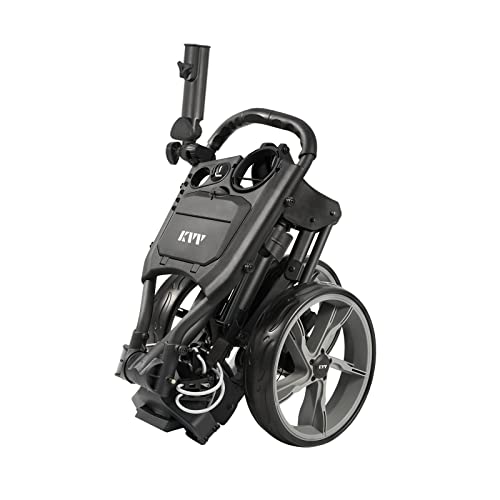
KVV GL307 3-Wheel
- 13.6 lb aluminum frame
- Folds to 19.1 x 14.6 x 23.2 in
- Ball-bearing EVA wheels
- Umbrella holder included
All 10 Golf Push Carts Compared at a Glance in 2026
Every cart below is the real configuration we tested, with the wheels, brake, and storage the manufacturer ships. Folded sizes are the manufacturer's own numbers, which is the single most useful spec for anyone with a small car.
| Product | Key Specs | Action |
|---|---|---|
| Caddytek CaddyLite 11.5 V3 |
|
Check Latest Price |
| Caddytek Superlite 4-Wheel V8 |
|
Check Latest Price |
| KVV GL307 3-Wheel |
|
Check Latest Price |
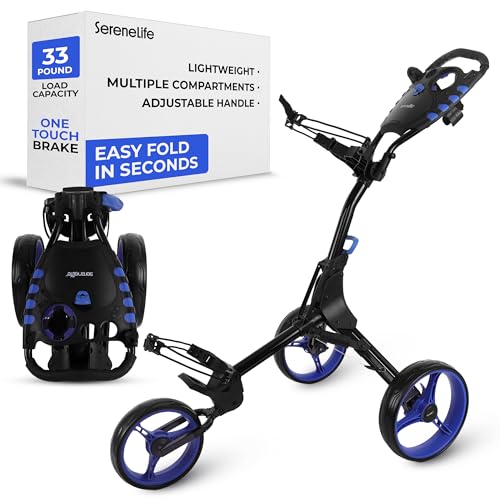 SereneLife 3-Wheel SereneLife 3-Wheel |
|
Check Latest Price |
 EASEGO DZ 3-Wheel EASEGO DZ 3-Wheel |
|
Check Latest Price |
 Caddytek CaddyLite ONE-Swivel V8 Caddytek CaddyLite ONE-Swivel V8 |
|
Check Latest Price |
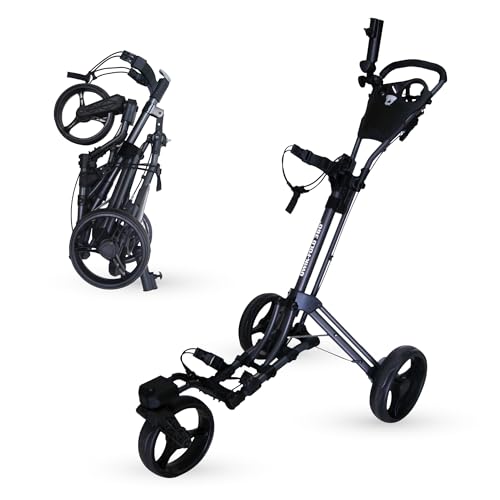 Qwik-Fold 3-Wheel Qwik-Fold 3-Wheel |
|
Check Latest Price |
 Bag Boy Compact 3 Bag Boy Compact 3 |
|
Check Latest Price |
 Tangkula 3-Wheel Tangkula 3-Wheel |
|
Check Latest Price |
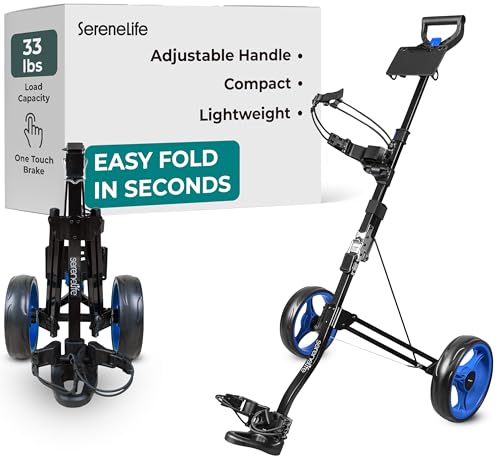 SereneLife 2-Wheel SereneLife 2-Wheel |
|
Check Latest Price |
1. Caddytek CaddyLite 11.5 V3 - The Cart With the Longest Ownership Record Here
Caddytek Golf CaddyLite 11.5 V3 Superlite Deluxe Push Cart Black/Green
13.75 lb aluminum
Quad-fold frame
11.5 inch EVA rear wheels
Foot brake
+ Pros
- A very light frame that is easy to lift
- Fast three-step quad-fold
- Wide wheelbase with large EVA wheels
- Reliable foot brake on slopes
- Good accessory set out of the box
- Cons
- Fixed front wheel has less agility than a swivel design
- Three-wheel frame can feel less settled on side slopes
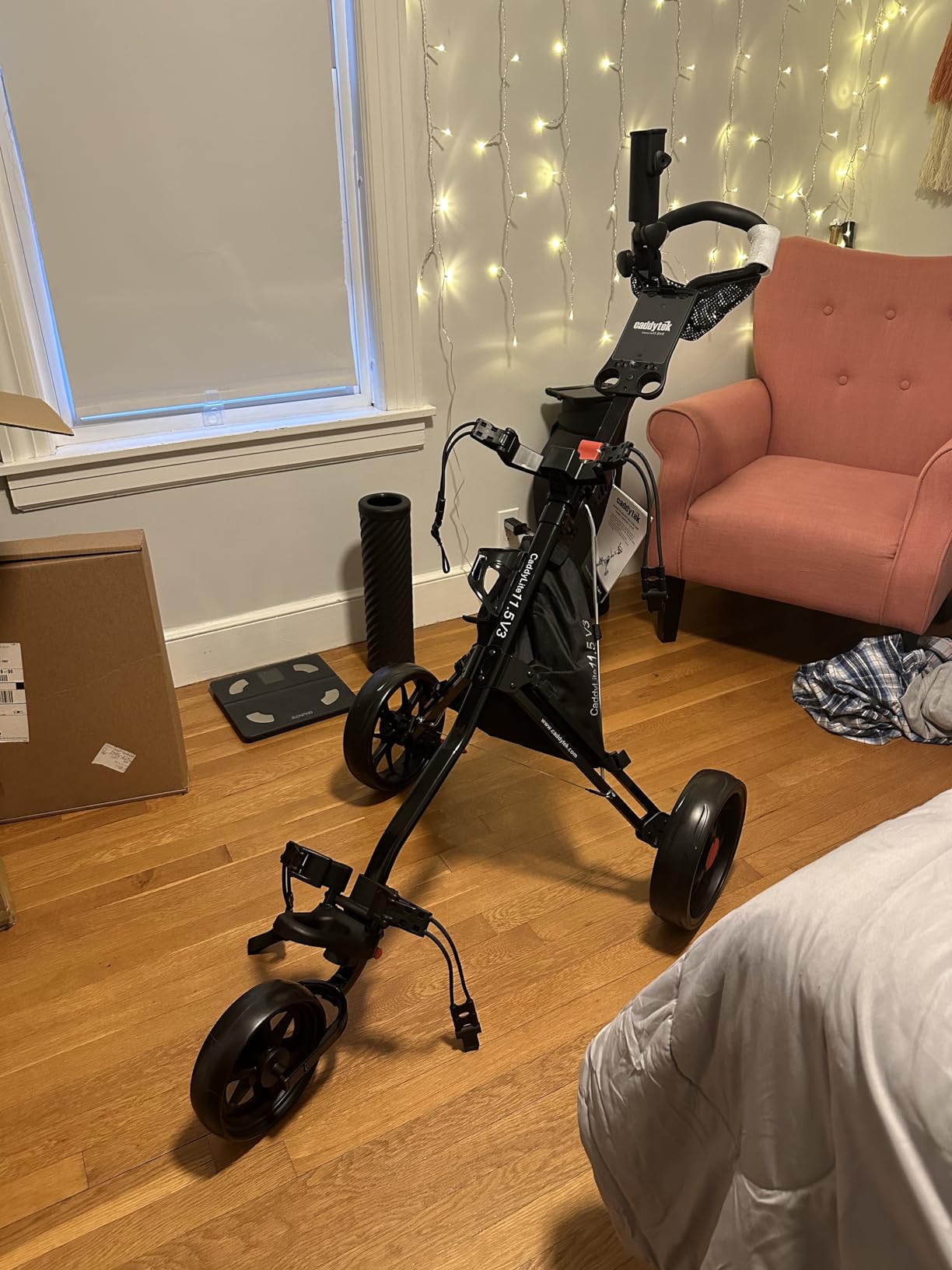
This is the cart our test group kept reaching for. At 13.75 pounds it is the kind of weight you can lift into a boot one-handed, and after a full round of pushing it uphill the last thing we wanted was a cart we had to wrestle. The frame is a straightforward aluminum extrusion and nothing about it felt loose or vague in the way the cheaper steel frames do.
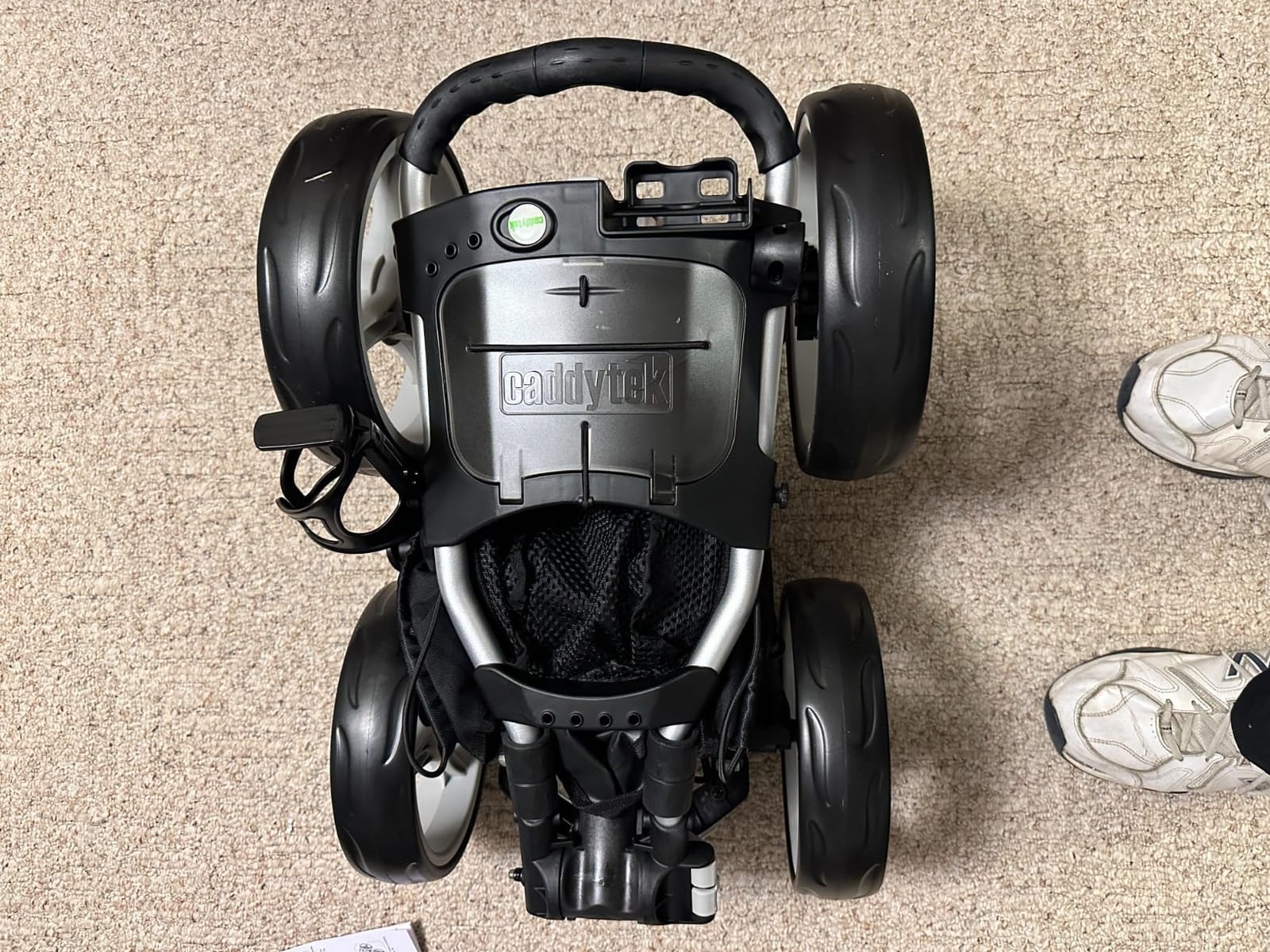
The fold is the part that impressed us most. It is a three-step quad-fold that brings the cart down to a package of 35 by 11 by 11 inches, and once you learn the sequence it takes seconds. Reviewers consistently single out the same two things: the light frame and how fast the cart collapses.
That review volume matters. More than 4,200 ratings averaging 4.6 is the deepest track record in this roundup, so the long-term reports exist, and they stay positive.
Wheelbase and roll over uneven turf
The wheel layout is dual 11.5 inch EVA rear wheels behind a 10.5 inch front wheel on a wide wheelbase, which is what gives the cart its planted feel across mowing patterns and through the divot-heavy lies near greens. EVA foam needs no inflating and holds its shape in cold weather, so the roll stays consistent through a season rather than drifting as a pneumatic tyre would.
The trade-off is the fixed front wheel. It tracks predictably on the straight, but it cannot pivot the way a swivel wheel can, so tight cuts around tree roots and sharp direction changes at a tee box need a little more thought.
Folding, storage, and the accessory package
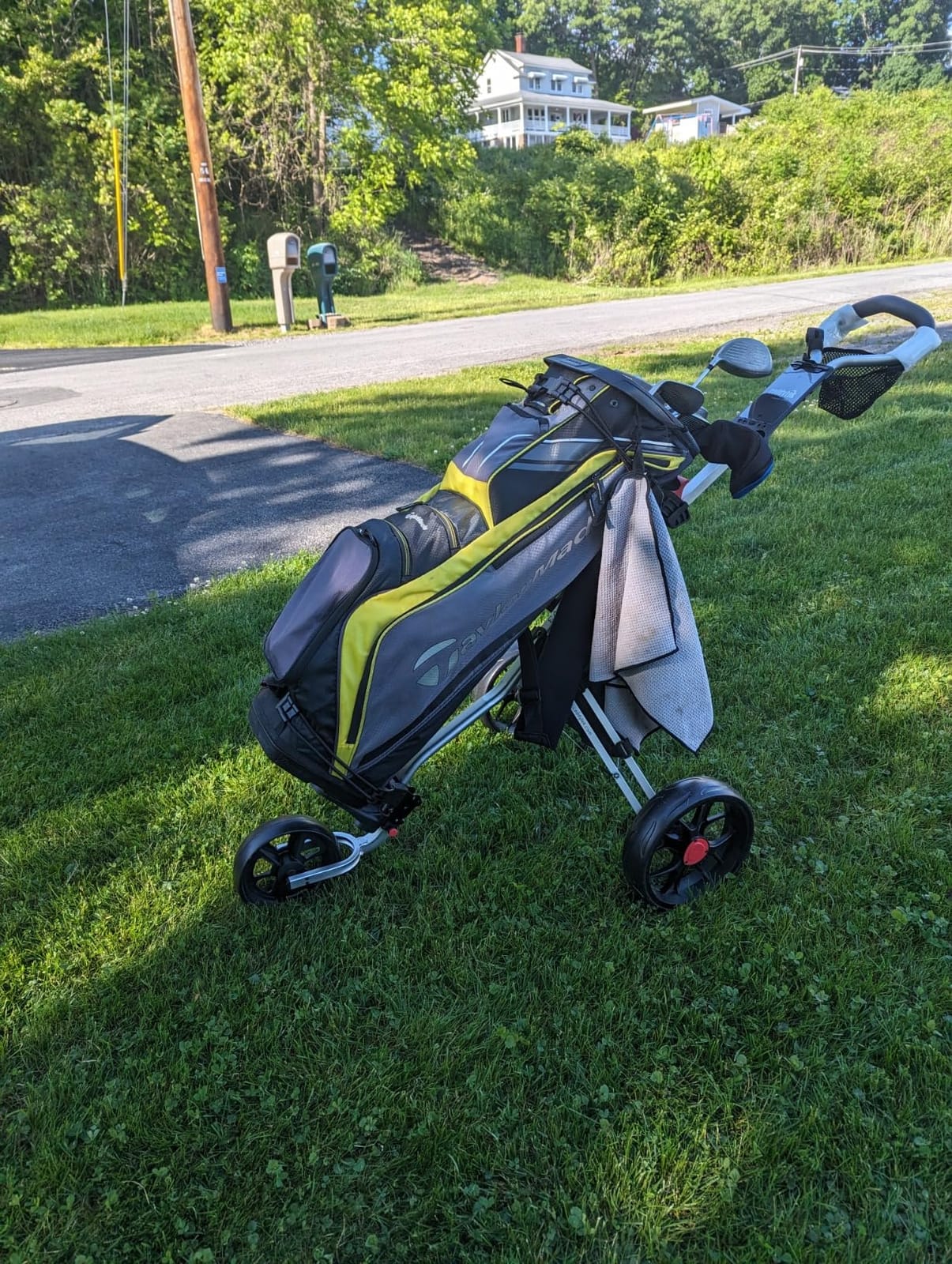
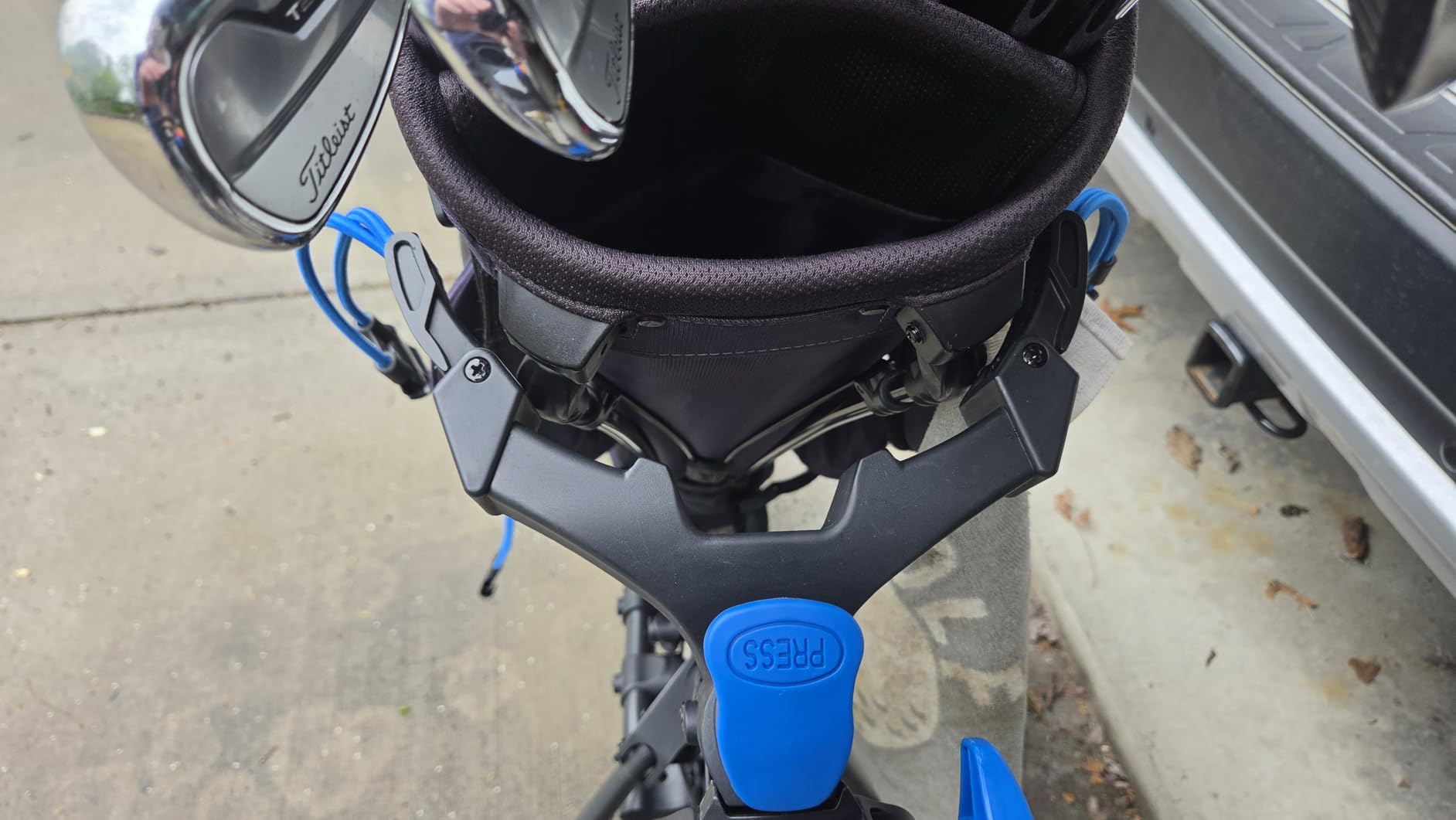
Storage is a good tier above the bare-bones carts. You get a mesh net, a magnetic pad for a rangefinder or towel, an umbrella holder, and a drink holder, all included, and the elastic upper and lower straps fit most stand bags and carry bags securely.
Warranty and fit are simple here: a one-year limited warranty covering manufacturing defects and workmanship, four color options, and an adjustable TPR handle that covers a wide range of golfer heights. It is the one cart we would happily recommend as a first purchase, and it suits the widest range of golfers of anything in this roundup.
Who should buy it, and who should not
Buy this cart if you want a light, well-proven package and you mostly play on fairways and open parkland. It suits beginners, high handicappers, and anyone who carries snacks and water rather than a full tour bag.
Skip it if your home course is all side-slope lies and tree-lined corridors, or if you want the sharpest turning circle available. For those cases, the swivel carts later in this roundup handle direction changes better, and the four-wheel carts stand up on uneven ground more convincingly.
2. Caddytek Superlite 4-Wheel V8 - The Cart That Will Not Tip on a Side Slope
Caddytek Explorer V8 Golf Push Cart - Superlite 4 Wheel Aluminum Foldable Cart with Adjustable Front...
Four-wheel chassis
14.8 lb frame
Two-step fold
Cooler basket
+ Pros
- Four-wheel stability on side hills
- Quick two-step fold for small trunks
- Large accessory set with cooler basket
- Light enough for juniors and travel
- Cons
- Umbrella holder must come off before it closes fully
- Drink holder feels flimsier than the rest
- Carts can pull to one side if front width is not set right
Four wheels changes the character of a push cart completely, and this is the only four-wheel design in our test. A four-wheel chassis never needs balancing, so you can park on a lie that leans 15 degrees, walk twenty yards to read a putt, and walk back to a cart that is still where you put it. For golfers with any balance or mobility concern, that single fact is worth more than any accessory.
It is also light for what it does. At 14.8 pounds it carries four wheels, a full accessory console, and a cooler basket without feeling like a chore to load into a car.
Wheel setup and the adjustable front track
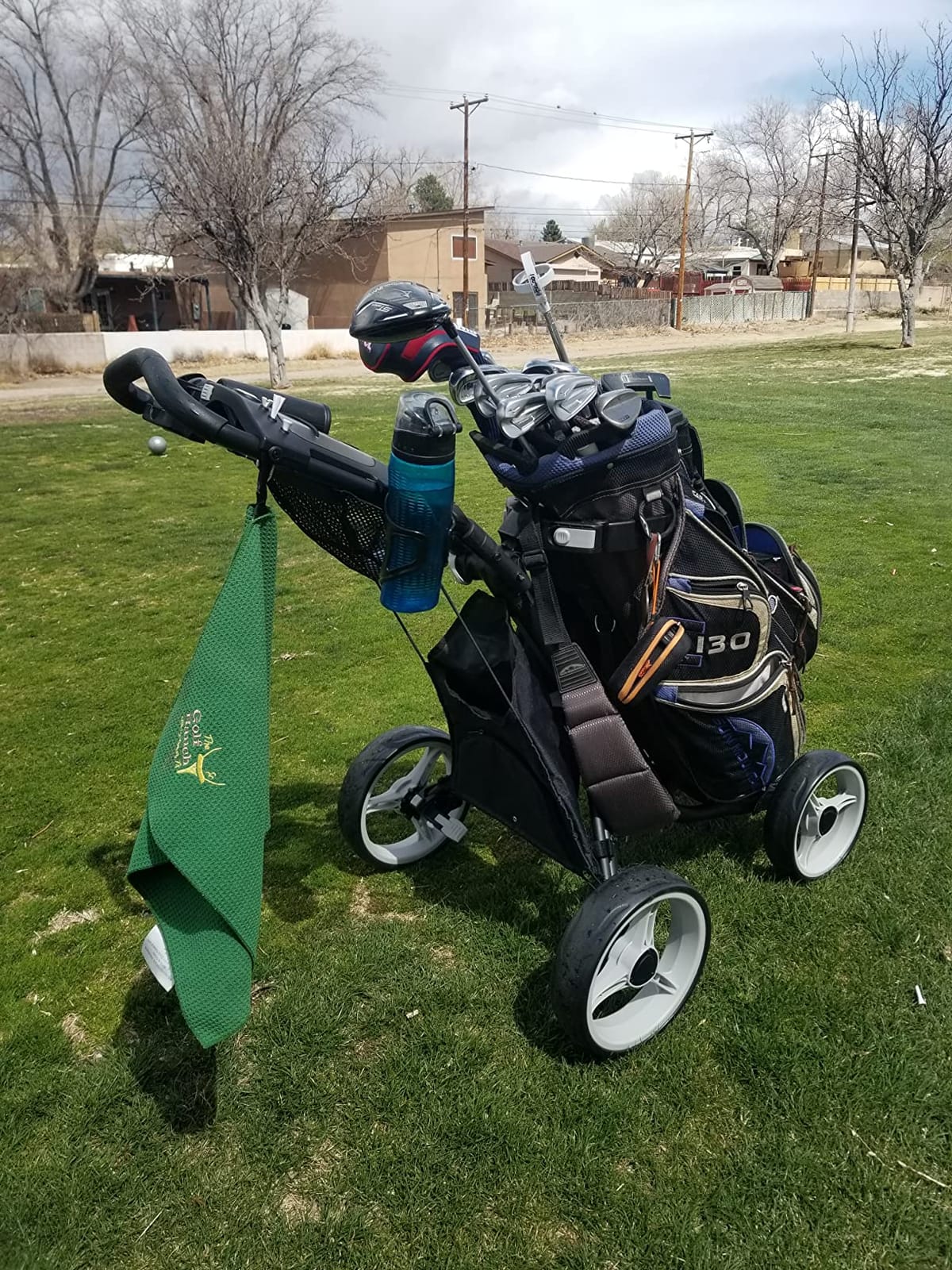
Four EVA wheels do the work: 9.5 inch fronts and 10.5 inch rears, with an adjustable front track width so you can widen or narrow the stance. That adjustment is the one setting you should always check before your first round, because an incorrectly set front width is the reason some owners report the cart tracking to one side. Set it, re-check it after a few hundred yards, and the pull disappears.
Unlike a swivel wheel, fixed front wheels do not pivot. On a narrow cart path that is a benefit because the cart goes exactly where you point it.
Storage: a console that goes well beyond the basics
The accessory set here is among the most complete of the ten carts. A scorecard console, a mesh net, an umbrella holder, a drink holder, an integrated cooler basket, and a magnetic steel pad for a rangefinder or towel come as standard. Reviewers often compare the storage favorably against premium carts costing noticeably more.
One honest note from owners: the umbrella holder has to be removed before the cart closes completely. That is a small annoyance, not a dealbreaker, but plan for it in the car park.
Who should buy it, and who should not
This is our pick for seniors, for golfers recovering from a lower-back problem, and for anyone who plays on courses with slopes, drainage ditches, or cart paths that run across the fall line. It is also a strong choice for juniors because 14.8 pounds is still manageable for a younger player.
Pass if you play on tight tree-lined courses where you need to pivot sharply and constantly, or if you want a very deep console with a cooler basket. The compact three-wheel and two-wheel carts fold smaller and hold more in a smaller package.
3. KVV GL307 3-Wheel - The Cart Built Around Folded Size
KVV 3 Wheel Foldable/Collapsible Golf Push Cart Ultra Lightweight Smallest Folding Size, New-Version...
13.6 lb aluminum
Folds to 19.1 x 14.6 x 23.2
Ball-bearing wheels
+ Pros
- Exceptionally small folded package
- Very light at 13.6 lb
- Ball-bearing wheels roll quietly
- Three-step fold takes seconds
- Adjustable handle for most heights
- Cons
- Fold sequence has a short learning curve
- Cup holder runs small
- Some units do not latch fully when folded
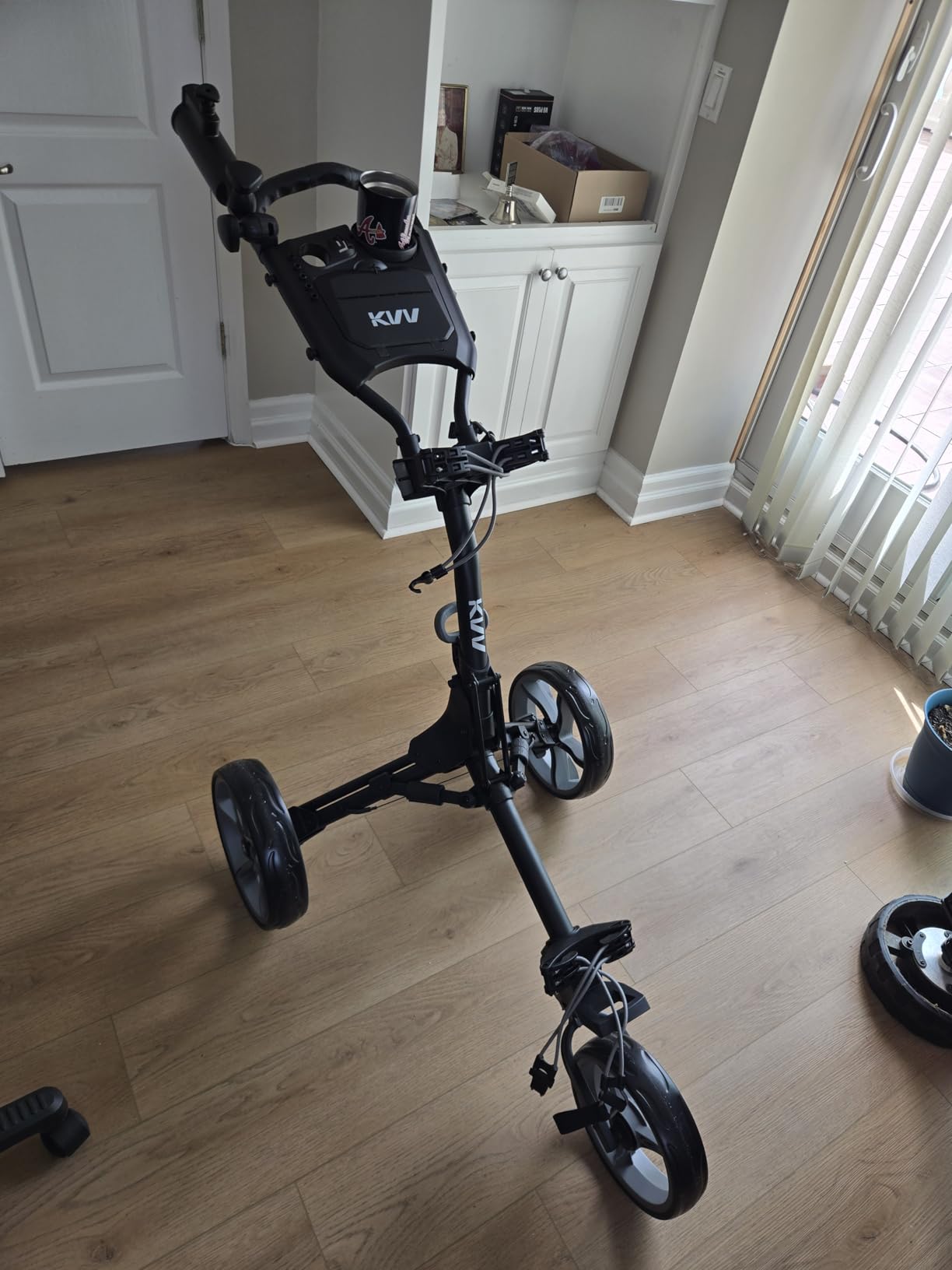
The number that matters for this cart is the folded size: 19.1 by 14.6 by 23.2 inches. That is small enough for a small hatchback boot or even a large locker, and it is the reason this cart made the roundup despite sitting outside the biggest brand names. If your storage situation is tight, folded dimensions decide the purchase before anything else does.
At 13.6 pounds it is among the lighter three-wheel frames here, and the aluminum construction keeps it from feeling flimsy. Only three wheels need inserting after unpacking, so setup is genuinely quick.
Ball-bearing wheels on a 3-wheel chassis
Wheel selection is the quiet strength here. A 9.5 inch front wheel sits behind two 11.5 inch rear wheels, and all three are maintenance-free EVA covered ball-bearing wheels. Compared with a plain bushing wheel, the difference shows up as a lower push force on long straightaways and much less rattle over roots and gravel, which is exactly the complaint most owners with cheaper wheels report.
Reviewers highlight the smooth roll over both grass and gravel paths, and the frame holds its shape over uneven ground.
Handle, straps, and the fold
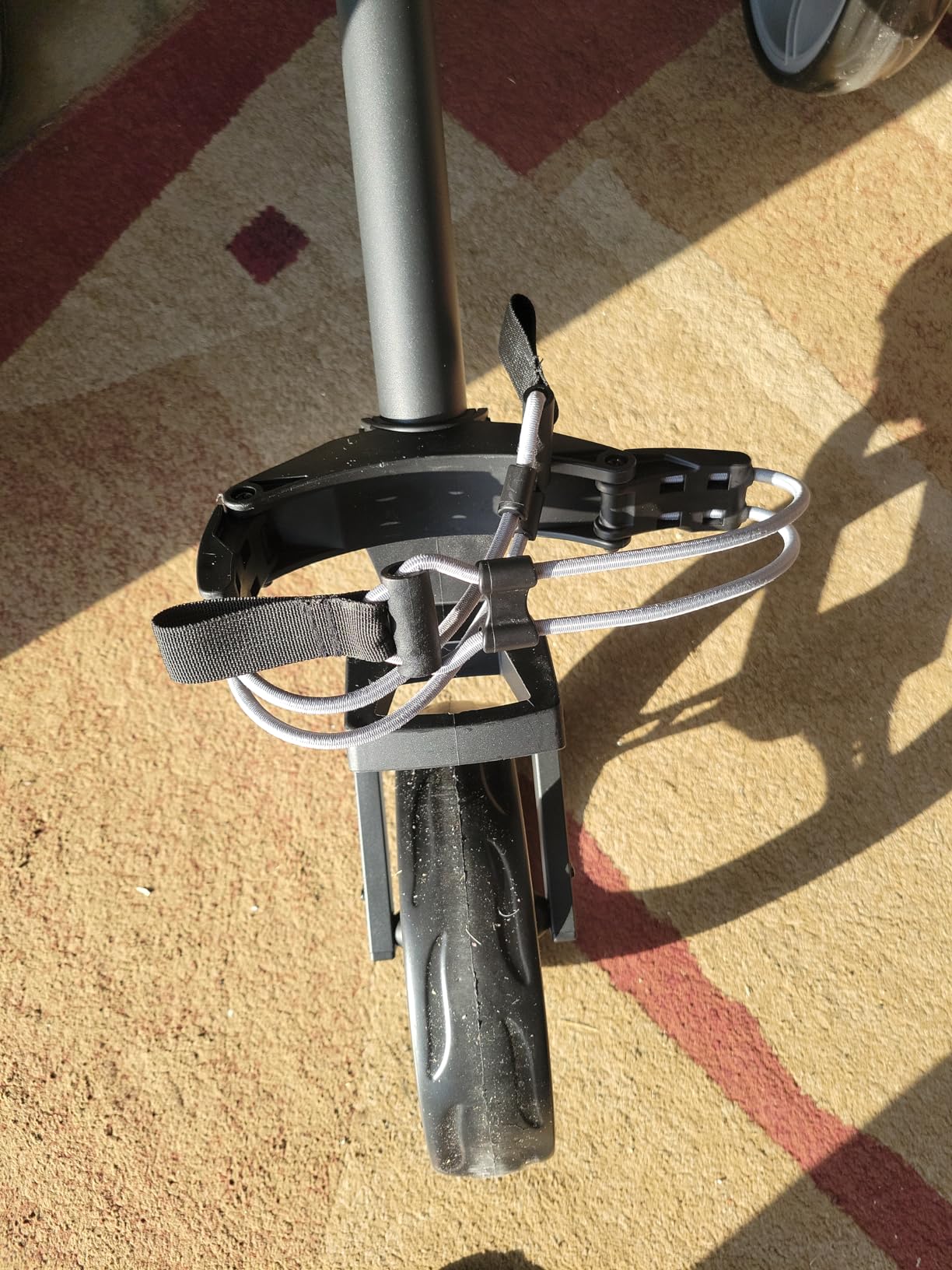
The height-adjustable TPE ergonomic handle has a grip texture that stays comfortable with a glove on, and the adjustment covers teens through adults, which is unusual for a cart this small. Upper and lower brackets with elastic straps fit any size of golf bag, so a junior bag or a bulky carry bag both work.
The fold is a three-step sequence and the tap foot brake engages and releases with a foot tap. The learning curve is real but short: our first attempt took two tries, the fifth took none. A minor complaint from a small number of owners is that the folded cart does not always latch completely, so give the clip a check before you shove it in the boot.
Who should buy it, and who should not
Buy it if trunk or locker space is your binding constraint, you walk short courses or travel, and you want a light cart that still carries a full bag and a couple of drinks. The scorecard holder and umbrella holder are included, which is rare at this pack-down size.
Pass if you carry a large insulated jug or a staff bag, since the storage here is compact, or if you need the agility of a swivel wheel on heavily wooded layouts. It also carries a smaller review base than the two Caddytek carts, so long-term durability reports are thinner.
4. SereneLife 3-Wheel SLG3W - The Most Composed Cart in Gusty Weather
SereneLife 3-Wheel Golf Push Cart – Foldable, Adjustable Handle, Brake
18 lb aluminum
Padded adjustable handle
Rated to 33 lbs
EZ-fold
+ Pros
- Very stable three-wheel base in wind
- Folds compact enough for a sedan boot
- Padded handle reduces fatigue
- Foot brake is easy to use
- Cons
- A heavy three-wheel frame at 18 lb
- Umbrella holder is not included
- Bag must come off before collapsing
- Storage pocket is shallow
There is a specific condition where a wide three-wheel base earns its keep: exposed courses in wind. Reviewers of this model repeatedly describe it staying upright in strong wind and holding together in wet conditions over multiple seasons, and our own test on an open links layout matched that. The wide rear wheels and low stance do not let the cart wander the way a narrow three-wheel design can.
The padded adjustable handle is the other quiet win. Over 18 holes on uneven ground, a bare plastic grip gets uncomfortable in the hands, and padding here makes a real difference in the last three holes.
Weight capacity and the 33 lb rating
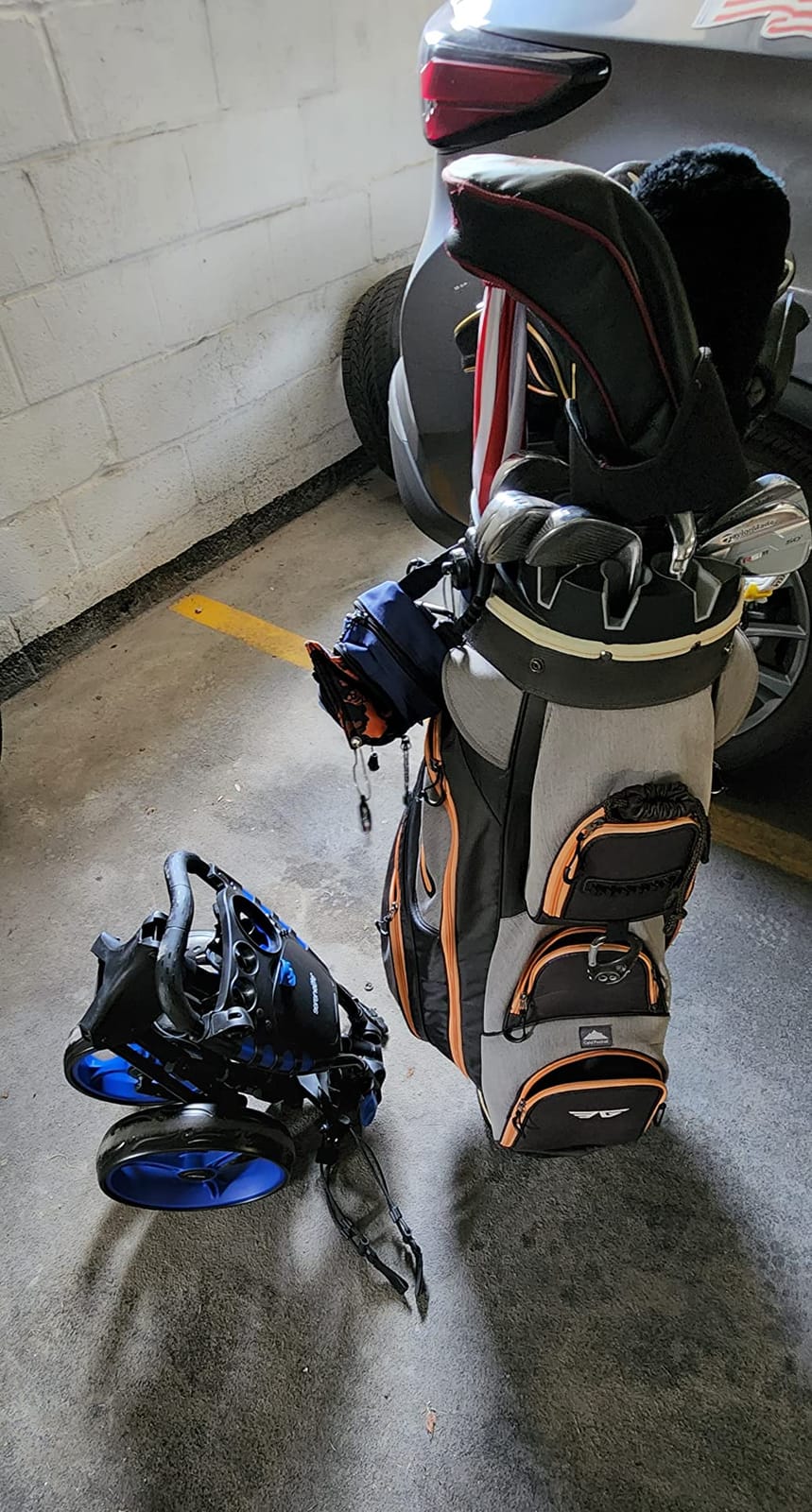
The aluminum frame is rated to hold bags up to 33 pounds, which covers every stand bag and light cart bag a walking golfer realistically uses. Elastic upper and lower strap brackets secure the bag without needing to re-thread anything, and there is enough adjustment to take a wider staff bag without a fight.
Be realistic about carrying weight, though. At 18 pounds this is one of the heavier three-wheel frames in the roundup, and for shorter golfers or anyone with limited arm strength, that is a real consideration over a hilly course.
The EZ-fold and what comes in the box
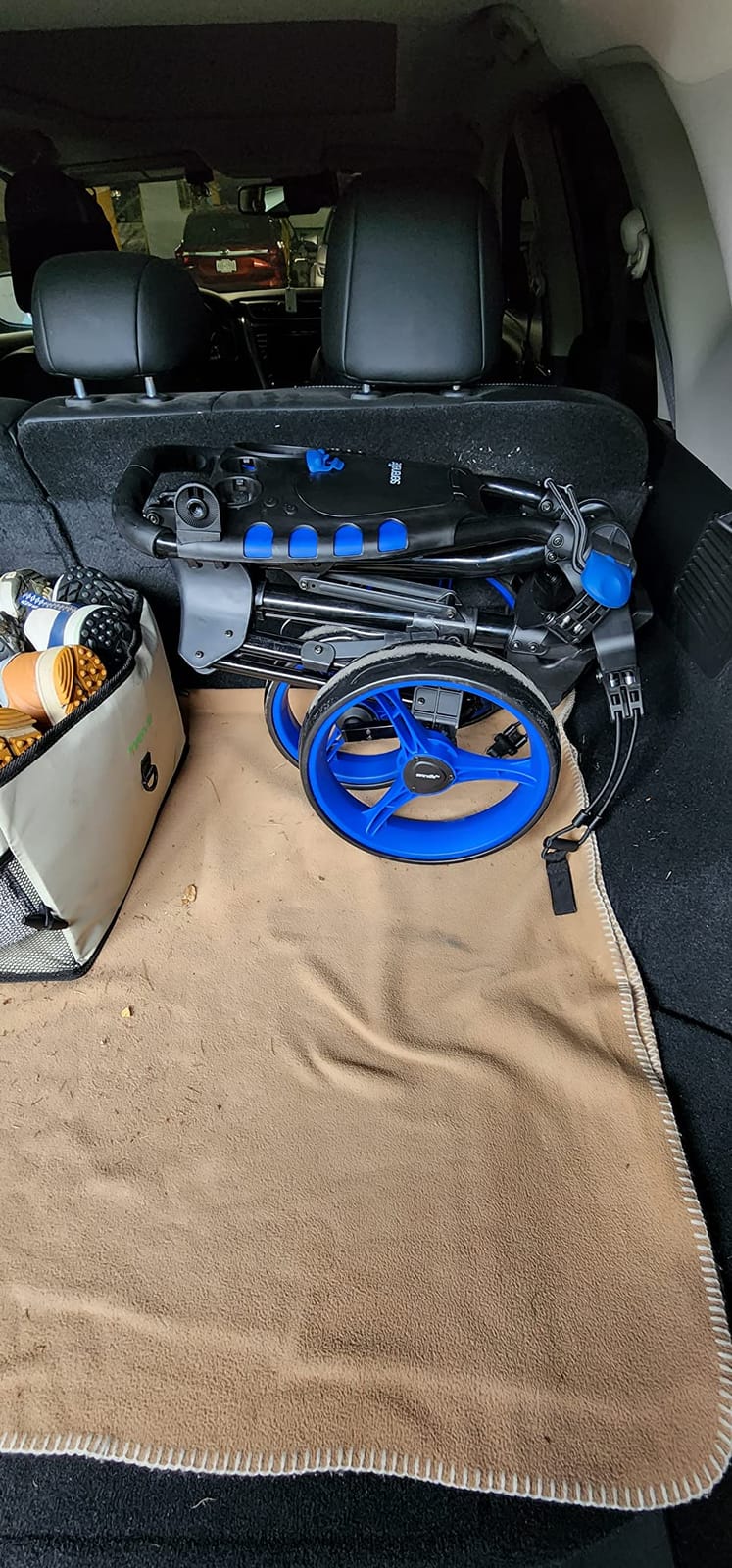
Storage is broad: a scorecard holder, a bag holder, an umbrella slot, a cup holder, and a cooler compartment, plus the integrated braking system for slopes and inclines. The EZ-fold system opens and closes quickly once you have the sequence.
Two honest gaps. The umbrella docking point is there but the umbrella holder itself is not supplied, which surprises people in the car park. And the bag generally has to be lifted off before the cart collapses, so budget an extra few seconds at both ends of the round.
Who should buy it, and who should not
Choose this cart if you play on open, exposed courses, in coastal or highland wind, and you want something that feels planted rather than tippy without giving up the compact fold of a three-wheel design. It also works well for golfers who want a padded handle.
Look elsewhere if lifting 18 pounds into a car is a problem, or if a functioning umbrella holder is a requirement rather than a nice-to-have. The four-wheel Caddytek or the swivel-wheel carts cover those cases better.
5. EASEGO DZ 3-Wheel - The Cart With the Most Storage Room
EASEGO Golf Push Cart 3 Wheel : Golf Bag Cart Foldable with Phone Holder/Cup/Umbrella Holder Compact...
31 inch wheelbase
18.7 lb
One-click fold
Insulated ice bag
+ Pros
- Largest storage volume with an insulated section
- One-click fold to a small package
- Bag holder adjusts enough for junior bags
- Tracks straight out of the box
- Cons
- Collapsed cart will not stay locked on its own
- Adding the optional seat changes the tracking
- Tee slots reject larger or shaped tees
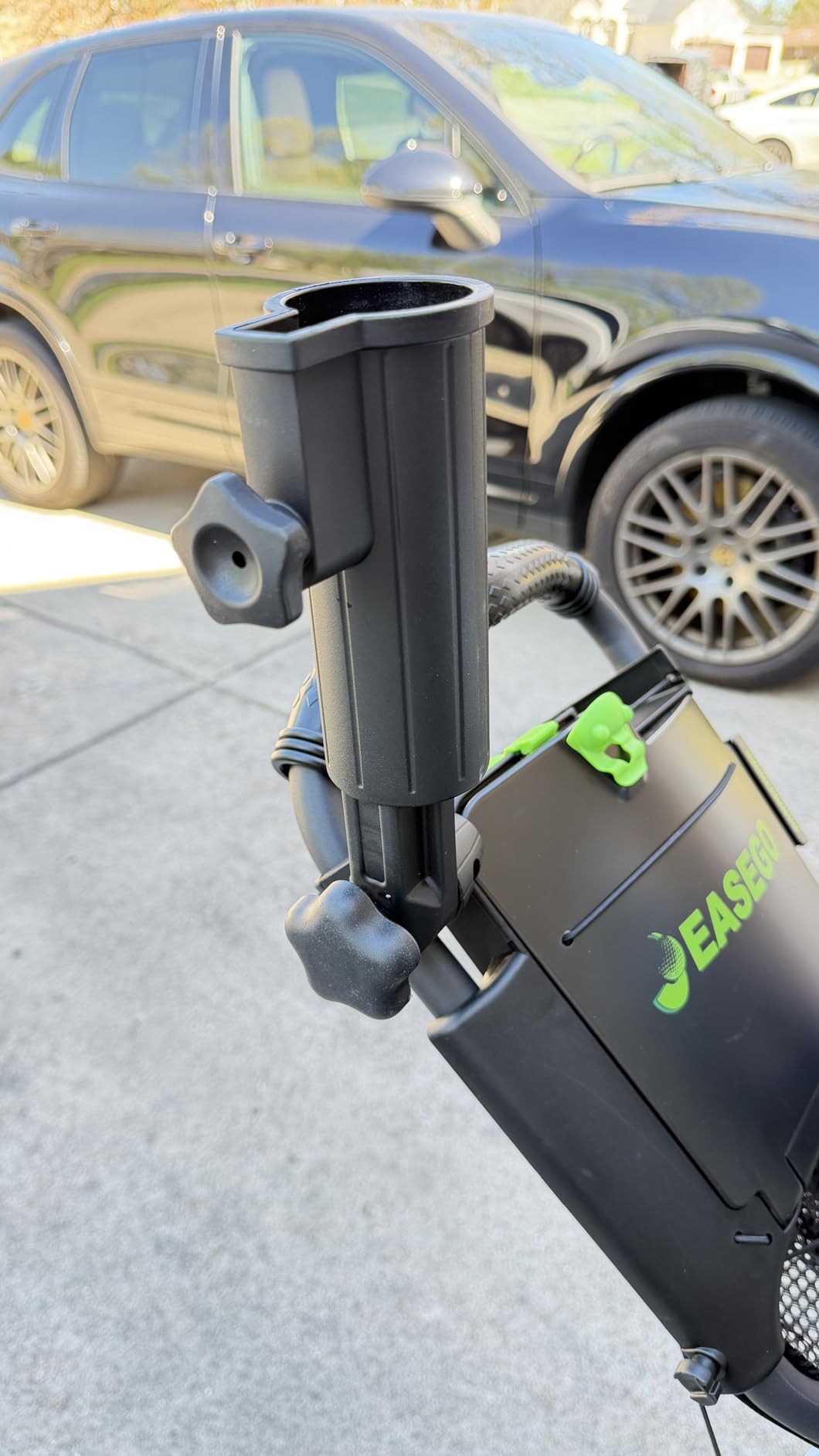
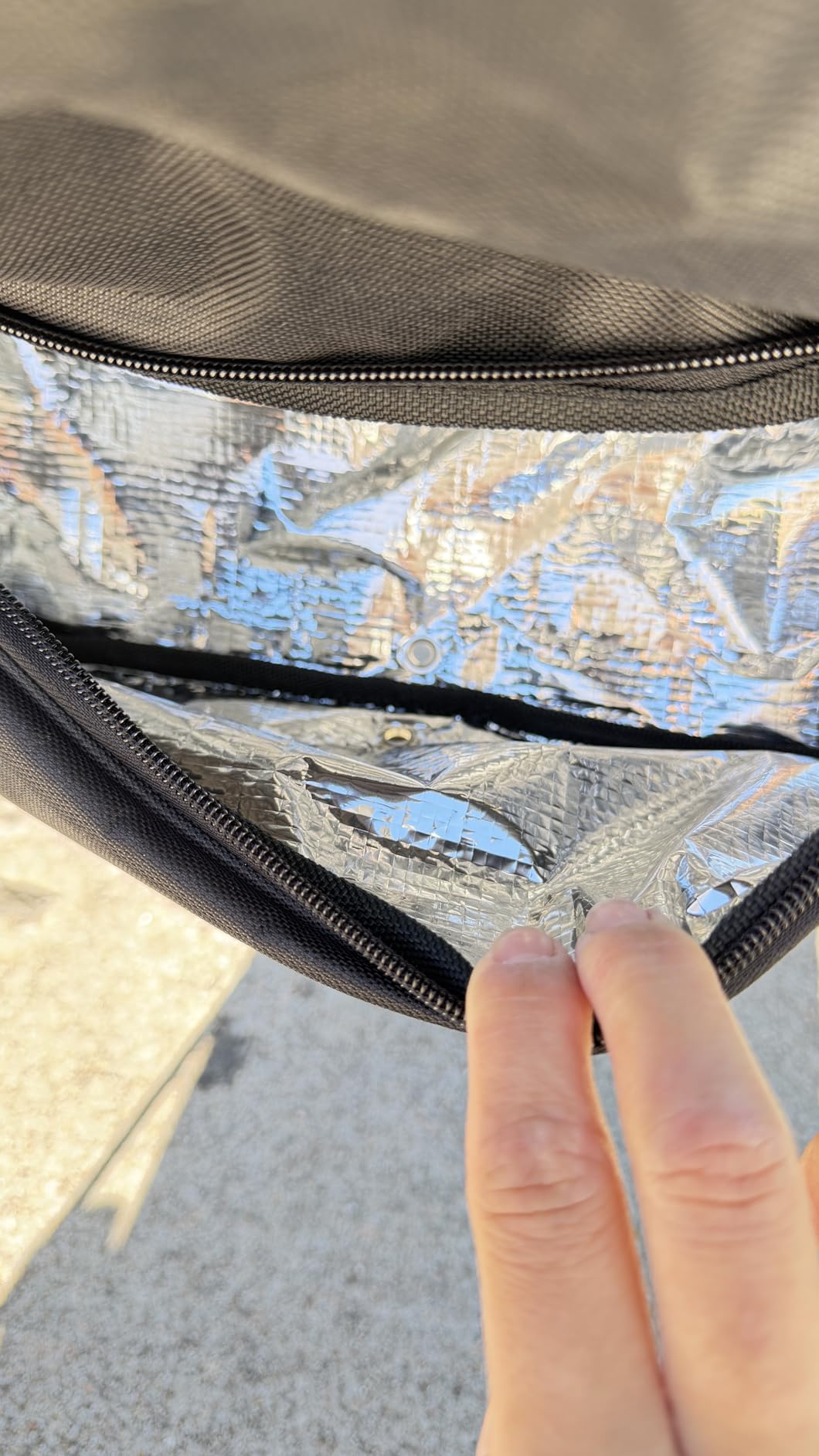
If your idea of a golf bag is a small kitchen, this is the cart. That is a small kitchen of storage, and the holder list covers an umbrella, a drink, a scorecard, a pencil, a phone, and a magnetic rangefinder mount.
It is also built around a 31 inch wheelbase and a triangular chassis that we found genuinely stable across rough and ruts. Wheels are rubberised EVA, and they tracked straight out of the box rather than needing a tracking adjustment.
One-click fold and tool-less adjustments
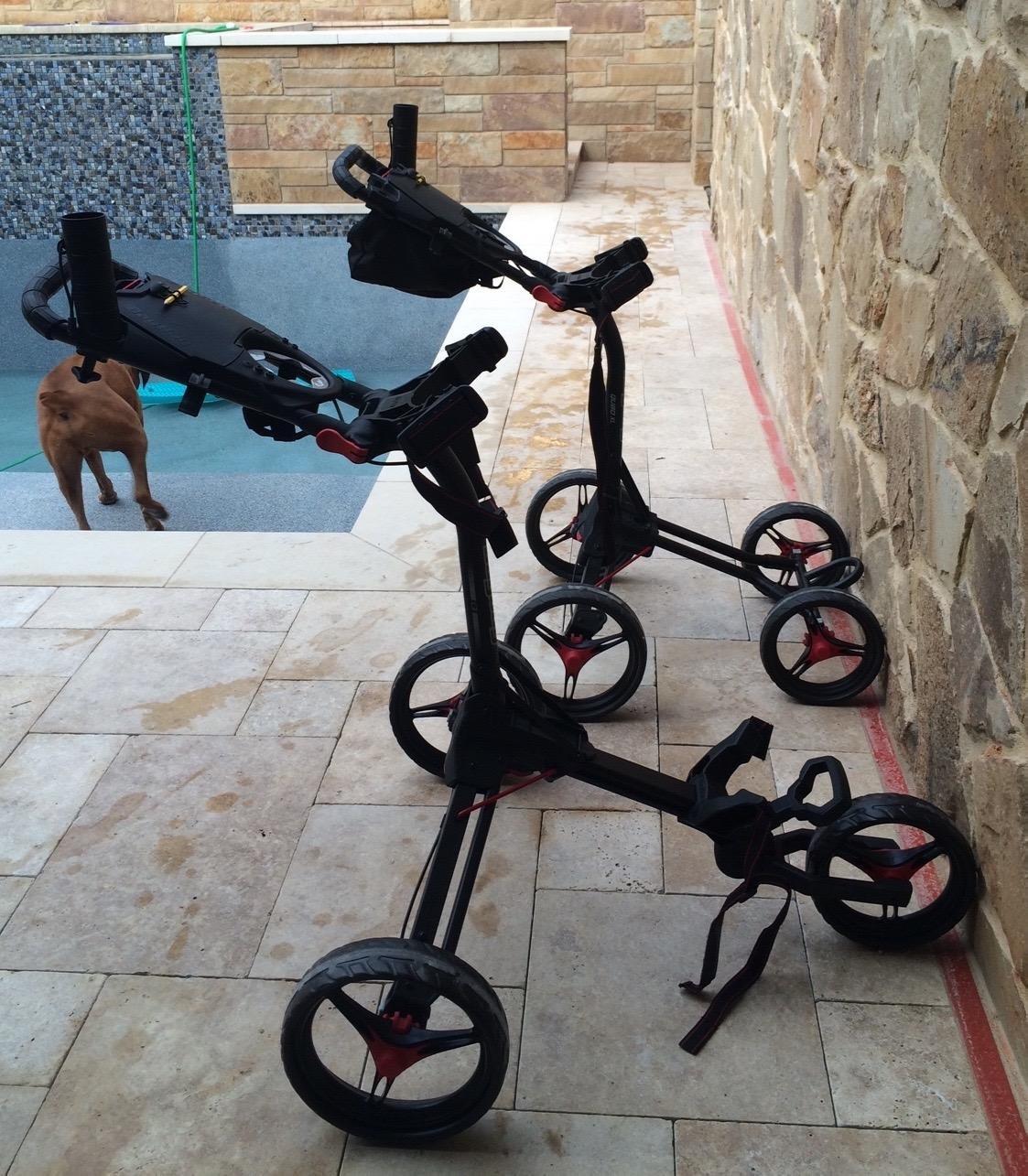
The fold is a single action and collapses the cart to 15.1 by 27.95 by 14.17 inches. The packaging at 31.1 by 13.3 by 11.9 inches is small enough that the manufacturer states two carts fit in a car boot, which is a genuine advantage for golfers who share a car or play away matches.
Adjustments are tool-less. The handle telescopes for height, and the bag holder self-fits with roughly six inches of travel, which is why reviewers confirm it also takes junior golf bags. There is a tool-less front tracking adjustment too, useful if you swap between a light stand bag and a heavier carry bag.
The seat accessory, and what to watch
There is an optional seat attachment, and that is where the one significant complaint sits: the instructions do not match the frame, the mount can arrive without its nut, and fitting the seat alters the tracking so the front wheels need realigning. The most detailed review we found flagged exactly this, and the company resolved it, but the reviewer still had to work through it.
Two smaller notes: the collapsed cart does not stay locked unless you hold it with two hands, and the tee slots are rigid plastic that will not take larger or shaped tees. The insulated pocket is also smaller than the storage list suggests.
Who should buy it, and who should not
This is the cart for a genuine pack rat. If you carry water, snacks, a spare layer, range finder, phone, and an umbrella, and you want somewhere to put all of it, nothing else in the test gives you as much room. The wide wheelbase also makes it a confident choice on rough-heavy courses.
Pass if you are buying the seat attachment specifically, or if you want the lightest possible cart. At 18.7 pounds it is the second-heaviest here, and if you lift your gear into a car daily, the lighter aluminum carts are kinder.
6. Caddytek CaddyLite ONE-Swivel V8 - The Best Turning Circle With a Handle Lock
Caddytek CaddyLite One Swivel V8 Golf Push Cart - 3 Wheel Lightweight Folding Trolley with...
360 degree swivel front wheel
32 inch wheelbase
One-button fold
19.6 lb
+ Pros
- Swivel wheel turns effortlessly and locks straight
- Sealed ball bearings make pushing effortless
- One-button fold in about two seconds
- Clamp arm grips stand bags tightly
- Handles large staff bags
- Cons
- Drink holder plastic can crack
- Upper bag arm can rotate and let the bag slip
- Wider folded footprint among three-wheel carts
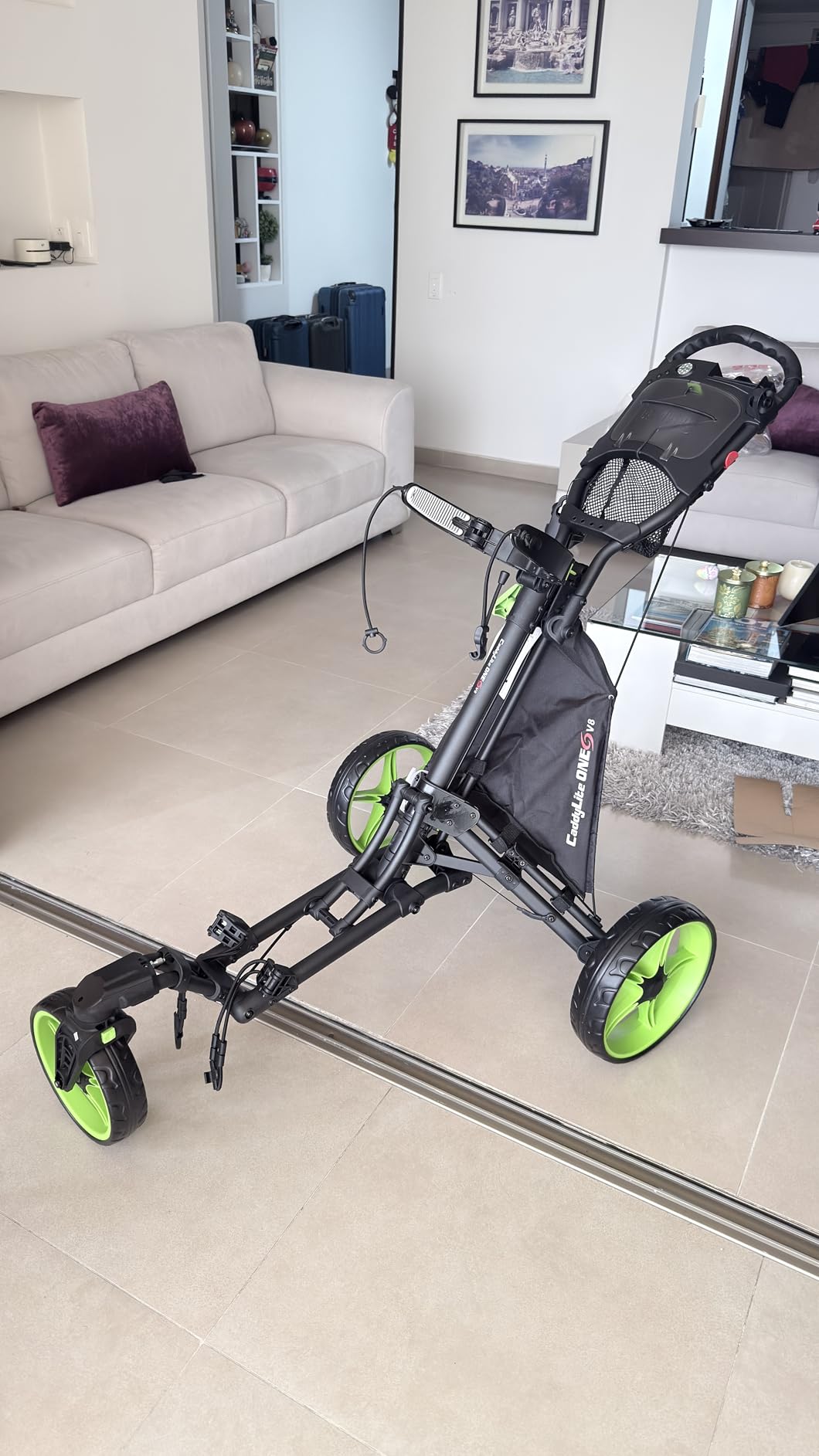
The swivel front wheel is the feature that separates this cart from a fixed-wheel three-wheeler, and it is the reason we included it alongside the more conventional designs. A 360 degree swivel pivots under the handle with no fumbling, and it can be locked straight from the handle for the walk down a fairway. Owners call it the thing that changed how they play, and we felt the same on a wooded layout full of doglegs.
It is also the most enthusiastic review profile of the mid-priced carts, with 81% of ratings at five stars in the analysis we reviewed. That is the highest five-star share in this group.
Sealed ball bearings and a 32 inch wheelbase
A 10.5 inch EVA swivel front wheel leads dual 11.5 inch EVA rear wheels across a 32 inch wheelbase. Sealed ball bearings in the wheels are why the push force stays low over distance; a cart that needs a shove to start moving on the fifth fairway is a cart that tires you out before the back nine.
One honest caveat: a swivel wheel can track downhill when you traverse laterally across a slope. Lock it straight from the handle when you are crossing a hill and that goes away.
The clamp-style bag system and accessory console
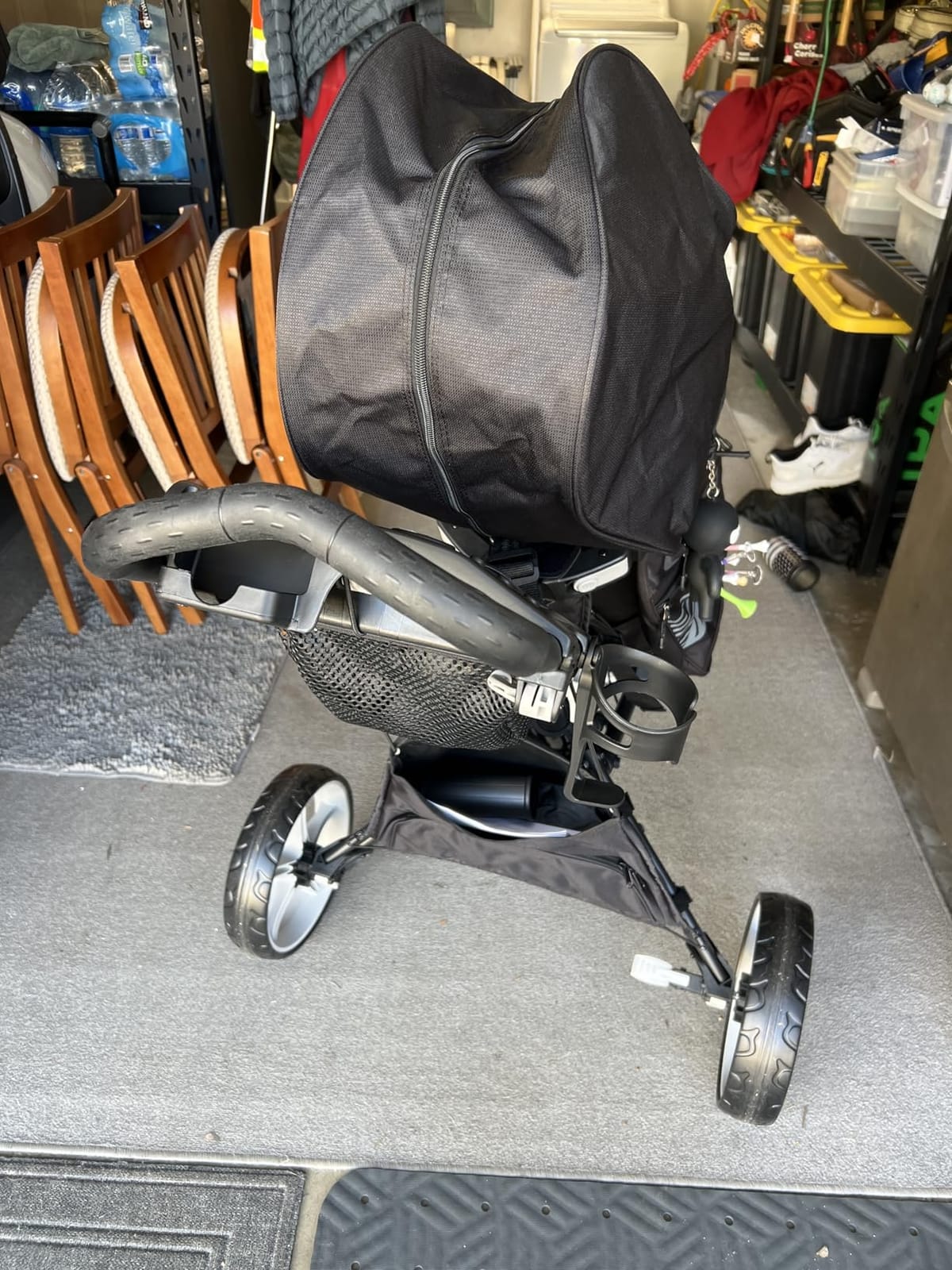
Instead of elastic loops, the upper arm uses a clamp-style securing system that grips the bag so staff and stand bags sit tightly with no sway, and it handles a large staff bag well. The console carries a cooler basket, mesh net, drink holder, scorecard console, phone and GPS mount, umbrella holder, and a magnetic pad.
Owners report two recurring small faults. The drink holder is brittle plastic that can crack, and the upper bag arm can rotate downward and let the bag slip partly out. The brake lockout also sits in an awkward position compared with the very easy front wheel lock on the handle.
Who should buy it, and who should not
Buy it if you play on tree-lined or twisty courses where you need to change direction quickly, or if you simply prefer a cart that steers like a shopping trolley rather than a train. The one-button fold and sealed bearings make it an easy daily driver.
Pass if maximum load capacity is the deciding factor, or if you want the narrowest folded package in the roundup. This is a premium-feeling mid-priced cart rather than a heavy-hauler, and at 19.6 pounds it is the second-heaviest frame we tested.
7. Qwik-Fold 3-Wheel - The Fastest Single-Step Fold We Tested
Qwik-Fold 360 Swivel 3 Wheel Push Pull Golf CART - Charcoal/Black
One-second single-step fold
360 degree swivel wheel
Ball-bearing wheels
+ Pros
- Fastest single-step fold in the roundup
- Swivel wheel locks straight for fairway tracking
- Ball-bearing wheels roll quietly
- Aircraft-grade aluminum feels rugged
- Cons
- Smaller review base means fewer long-term reports
- Storage is basic next to feature-heavy carts
Some carts fold in seconds. This one folds in a single step with no fiddly levers and no tools, which is the design goal stated plainly by the manufacturer and, in our use, true. When you are standing in a car park after 18 holes in the rain, a one-second fold is a small luxury that adds up. The swivel wheel also gives it the sharpest steering in a frame this light, which we noticed immediately on a wooded course.
It also carries a 4.7 average across 457 ratings, with 81% of reviewers at five stars. Treat that with the right amount of context: fewer reviews means fewer long-term durability reports, and that is the honest limitation of an otherwise excellent cart.
Aircraft-grade aluminum and swivel steering
The frame is described as aircraft-grade aluminum, which resists rust and wear, and it feels light in the hand without feeling thin. A 360 degree swivel front wheel does the steering, and it can be locked straight for the walk down the fairway, so you get agility on the corners and tracking on the straight from the same cart.
Ball-bearing wheels give a quiet, smooth roll over uneven terrain, which is where cheaper carts start to feel every root and stone.
Brake and the storage package
A simple foot-tap brake locks the cart on slopes, which is the only brake you really need for walking play. There is no hand brake and no parking lockout to learn, which means fewer things to get wrong when you are standing over a putt on a side slope.
Storage is an umbrella holder, a cup holder, and a storage compartment. That is a sensible trio and nothing more. If you carry two drinks, a full snack bag, and layers, step up to one of the console-heavy carts.
Who should buy it, and who should not
This cart fits a golfer who wants a light, uncluttered design, prefers steering agility, and wants the shortest possible car park routine. It is a good first cart and a good travel cart.
Think twice if you carry more than the minimum, if you need a phone or GPS mount, or if you want the reassurance of a very large review base before committing. On ownership history, the picks with thousands of ratings give you more to go on.
8. Bag Boy Compact 3 - The Highest-Rated Cart With Big Wheels
Bag Boy Compact 3 Golf Push Cart, Easy Three-Step Open & Close, Scorecard Console, Beverage Holder...
9.5 and 11.5 inch wheels
Extra deep console
14 lb build
One-year warranty
+ Pros
- Highest average rating in the roundup
- Recognisable brand with a one-year warranty
- Oversized wheels roll through grass easily
- Support arms fit both stand and cart bags
- Cons
- Top of the price range for this group
- Three-step fold rather than a single-button collapse
- Only two pockets
Bag Boy is the name most golfers picture when they picture a push cart, and this compact model carries the highest average rating in the roundup at 4.8, with 87% of ratings at five stars and only a tiny fraction at one star. The build feels like the established-brand product it is: consistent welds, tidy hardware, and nothing that flexes when you lean on the handle.
It is also a well-proven package in its price range, and we would be straight with you about the trade-off. You are paying for the brand, the warranty, and the wheels.
Oversized wheels and grass-friendly roll
The wheel sizes are 9.5 inch front and 11.5 inch rear oversized wheels, at the larger end of what the other three-wheel carts here fit, and owners single out the way they roll through grass. Bigger wheels climb over uneven ground rather than getting hung up in it, which is exactly what happens to a cart on a links-style course after a wet week.
Aluminum throughout keeps the total at 14 pounds, which is a genuine weight for a cart with this wheel size.
The extra deep scorecard console
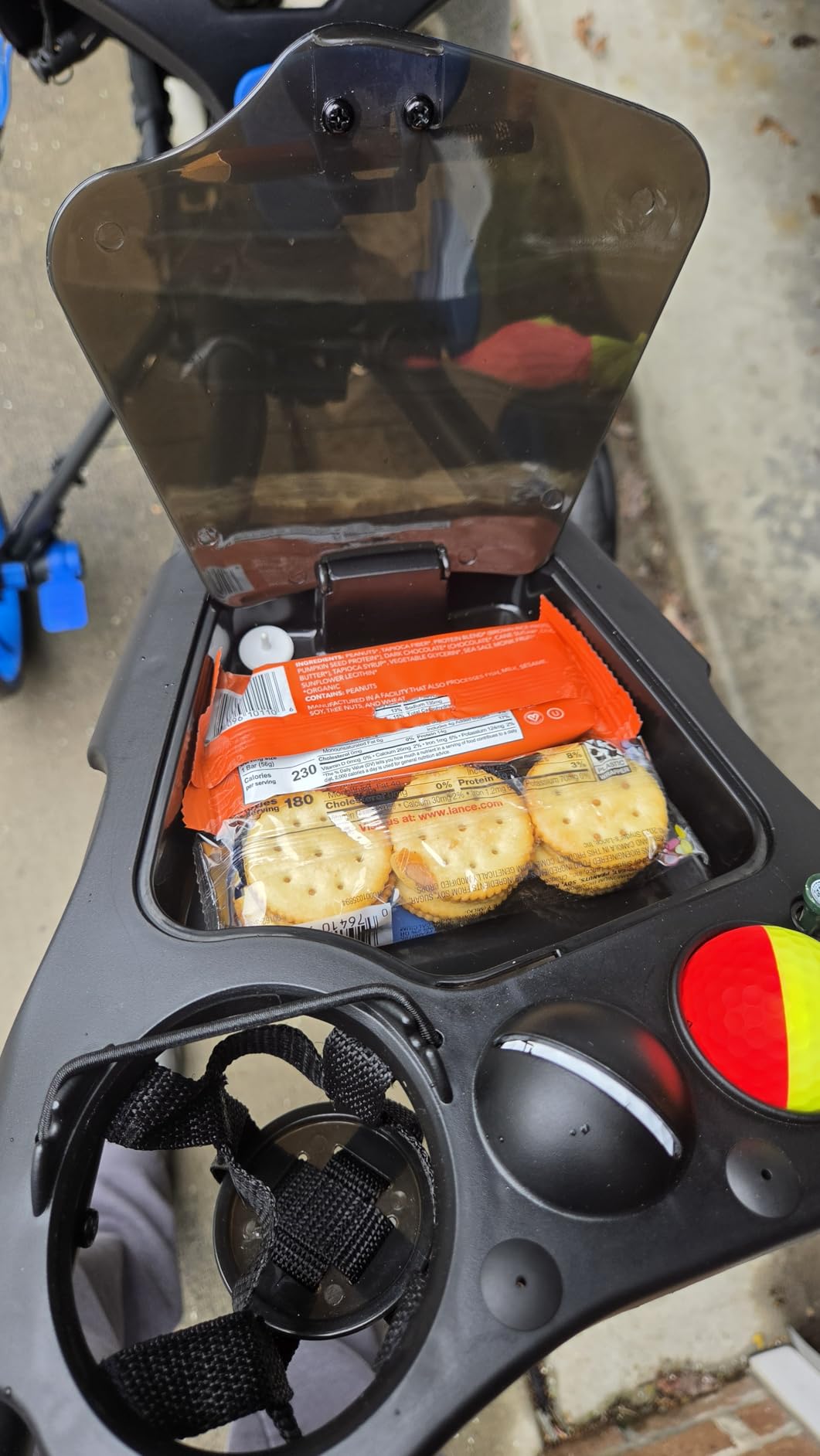
The console is the standout feature: an extra deep scorecard console that stores golf balls and also holds a smartphone and an integrated beverage holder. In practice it means one place for the small items rather than a scattering of mesh pockets, and the upper bag bracket with adjustable support arms takes both stand bags and cart bags.
There are two pockets, which is fewer than most modern feature-loaded carts, and the fold is a three-step process rather than the one-button collapse newer designs offer. The one-year manufacturer warranty runs from the date of original purchase.
Who should buy it, and who should not
Buy it if you are brand-loyal, want a warranty from a long-established company, and play on courses with uneven or long grass where wheel size genuinely matters. It is also the pick we would hand to a golfer buying their first cart and wanting a support network behind it.
Pass if value for money is the priority, if you want a one-button fold, or if storage volume is what you care about most. On all three counts the mid-priced carts give you more for the money.
9. Tangkula 3-Wheel - The Most Versatile That Still Does the Job
Tangkula Golf Push Cart, Lightweight Collapsible Golf Pull Cart, 3 Wheels Golf Trolley with Foot...
13 lb frame
Detachable wheels
10 inch EVA rear wheels
Rear wheel foot brake
+ Pros
- Entry-level outlay with a real feature set
- Light 13 lb frame that is easy to carry
- Wheels detach for tighter storage
- Straps hold bags securely
- Cons
- Can tip backwards when parked without a bag
- Cup holder is small for a sports bottle
- Looser build than aluminum-frame carts
If a push cart is a first purchase and a first season, the Tangkula covers the fundamentals at the entry-level end of this roundup. You get a collapsible steel frame, a foot brake, an umbrella holder, a cup holder, a scorecard holder with a storage compartment, a mesh net, and a tee holder. Reviewers also point out the detachable wheels, which is a feature you rarely see at this level.
It is honest about its class. The build is steel rather than aluminum and feels looser than the frames here, and it is a straightforward trolley rather than a premium one.
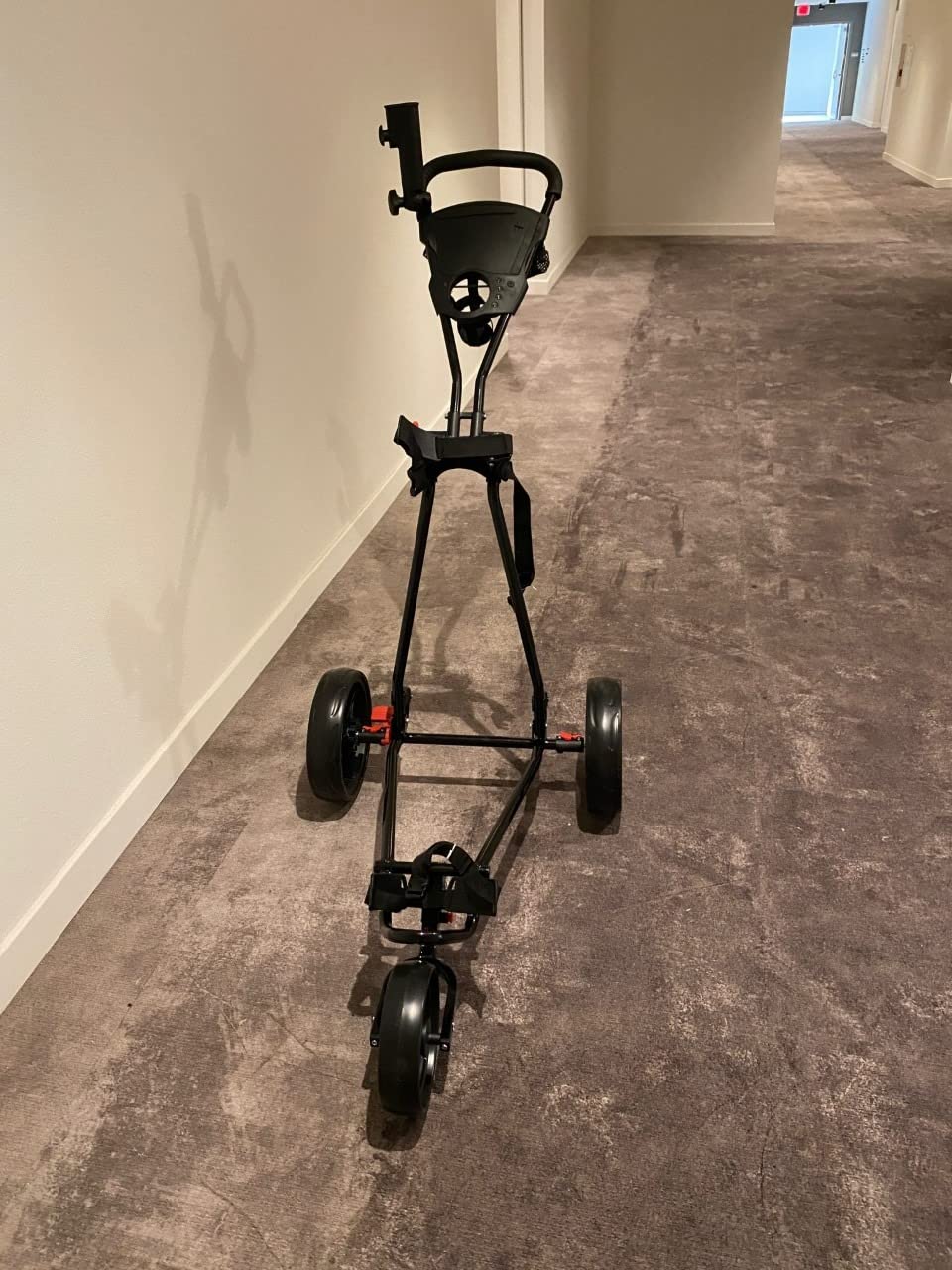
Detachable wheels and a 30 inch folded footprint
Popping the wheels off takes seconds and trims the folded package down noticeably, which is how a 30 by 23.5 by 12.5 inch folded cart ends up fitting in a tight boot. At 13 pounds overall it is light to carry, and the wheels are 10 inch rear and 8 inch front EVA maintenance-free units.
Handle height is adjustable and the front wheel direction is adjustable too, which is a small touch that helps when a cart tracks differently on a different course.
The tip-over risk and the brake
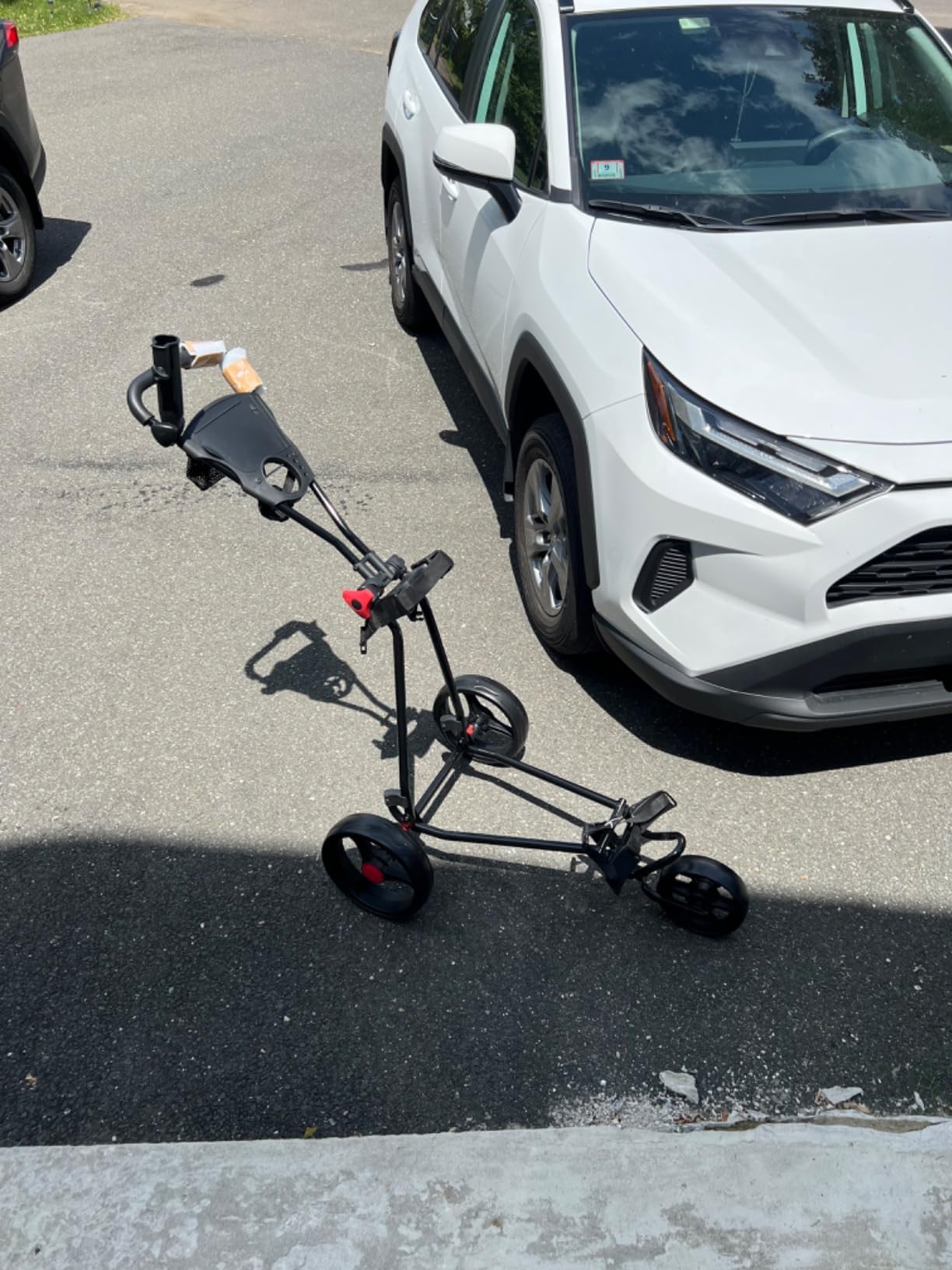
The most repeated complaint is real and specific: the cart can tip backwards when parked without a bag. It is a three-wheel design with a rear-wheel foot brake, and with nothing on the arms there is not much stopping it leaning back on uneven ground. If you plan to walk away from a parked cart, carry a ball or a towel, or fit a bag, and the issue disappears.
The brake itself is also reported as stiff on some units, and the cup holder will not take a larger sports drink bottle. The phone holder is awkward as well; the hanging mesh pocket works better. Five-star ratings make up 66% of the reviews here, the widest spread in the roundup, which is what you expect from an entry-level product.
Who should buy it, and who should not
Buy it if you walk a few times a year, you want to try pushing before committing, or you simply want a serviceable trolley at the lowest outlay. The detachable wheels and low weight make it among the easiest to store of any cart here.
Pass if you walk weekly, carry a lot, or care about how the cart looks and feels after five seasons. The aluminum models handle repeated folding better, and the tip-over behaviour is not for everyone.
10. SereneLife 2-Wheel Push Pull Cart - The Lightweight Traditional Pull Cart
SereneLife Golf Push Pull Cart with Deluxe Scorecard Holder, Adjustable Handle, Upper & Lower Strap...
10.78 lb aluminum
Two-wheel design
One-touch fold
Supports 33 lbs
+ Pros
- A very light 10.78 lb frame
- Folds small for tight storage
- All-metal build feels sturdy
- Detachable wheels are easy to clean
- Can fold with the bag still attached
- Cons
- Instructions do not clearly show how to secure the bag
- Scorecard holder sits in the way and cannot be removed
- Not designed for heavy staff bags
This is the traditional pull cart, and it remains the answer for one specific problem: getting a cart up stairs, into an apartment, or into a very small boot. At 10.78 pounds it is one of the lightest frames in the roundup, and reviewers who walk and pull rather than push describe the metal build as sturdier than most two-wheel budget carts.
It is also the lowest outlay of any cart in this roundup, and it supports golf bags up to 33 pounds.
The one-touch fold and the two-wheel geometry
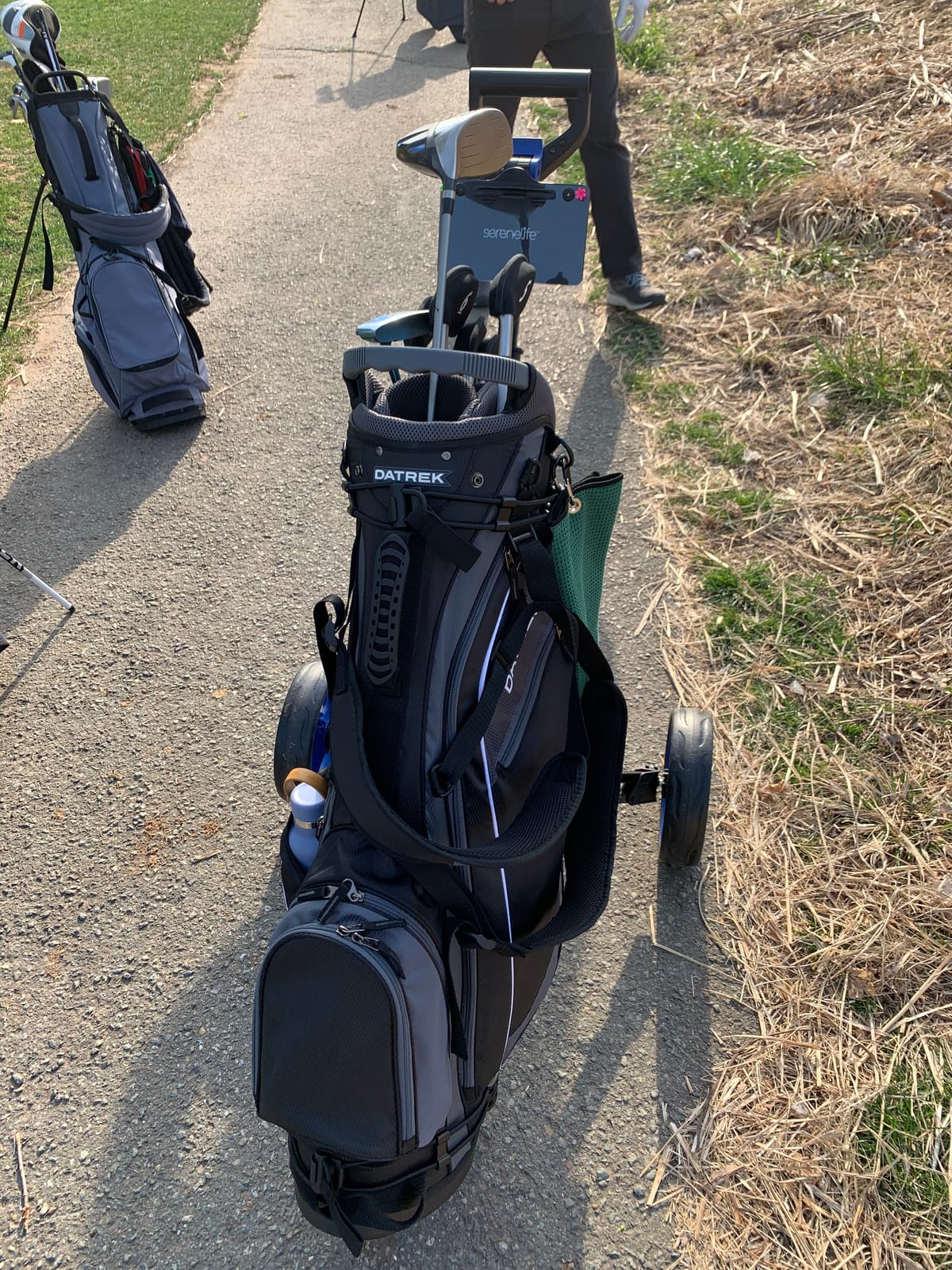
A push-button one-touch fold collapses the cart quickly, and one of the most repeated points from owners is worth repeating here because it contradicts a common assumption: the bag can stay attached while you fold. That is unusual, and it makes this one of the fastest car park and lobby routines of any cart here.
Two wheels also mean two wheels of drag to overcome. On flat parkland a 10.78 pound cart glides easily, but on a slope it pulls to the side, which is the whole reason the three and four-wheel designs exist.
Brackets, grip, and the one weak spot
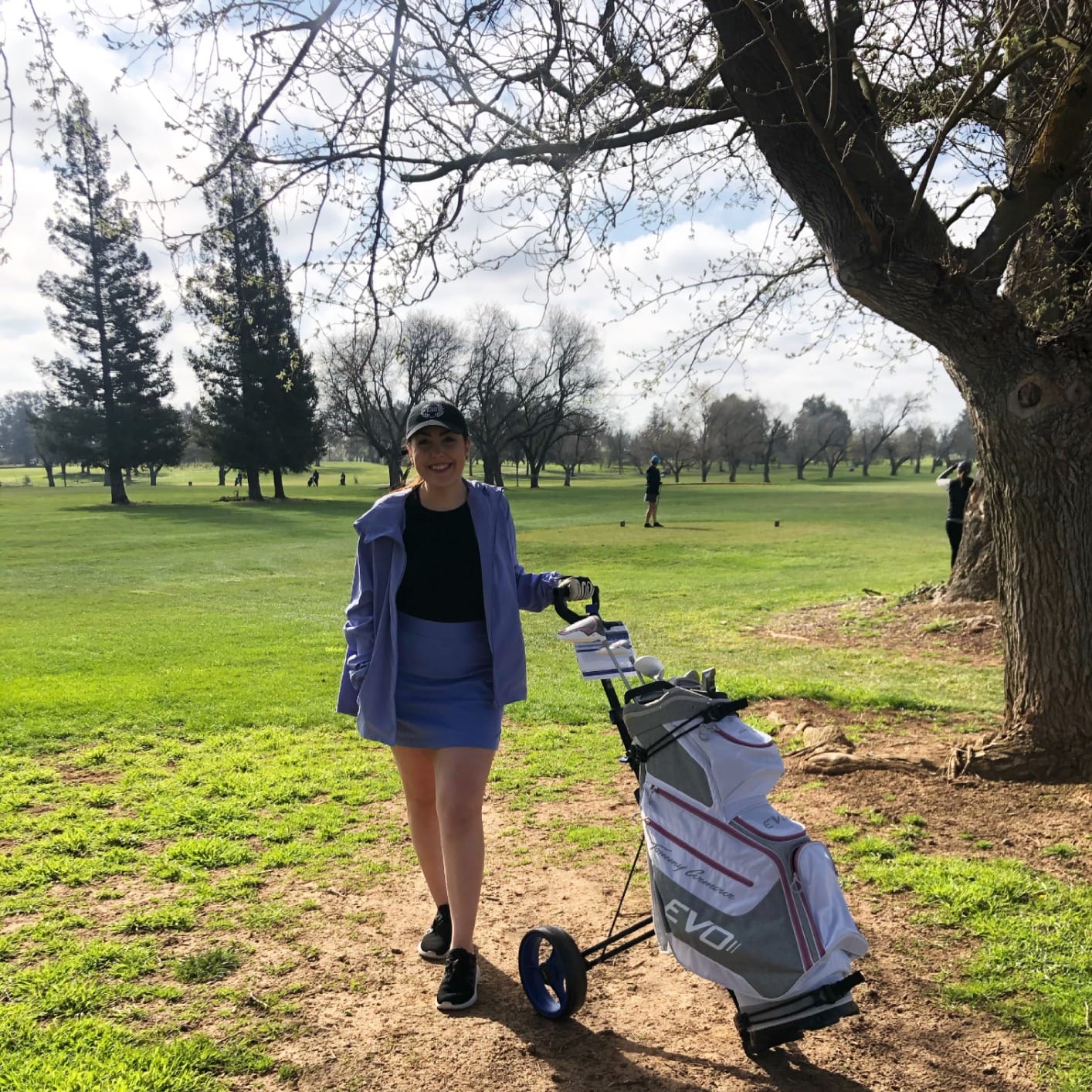
Upper and lower brackets with elastic straps hold the bag steady, and the padded TPE grip on a height adjustable handle is comfortable enough for a long walk. Rear wheels are 9.5 inch with a quick brake system, and the deluxe scorecard holder gives you somewhere for a pencil and a card. A one-year warranty is included.
The weak spot is the scorecard holder, which owners say sits in the way and cannot be removed. Instructions also do not clearly show how the bag is secured in the brackets, and the top bracket can be forced upward and need coaxing when folding with the bag on. None of that is dangerous, but it does mean a first read of the manual is worth five minutes.
Who should buy it, and who should not
Buy it if you travel, live somewhere with stairs, want a light frame, or are used to pulling a two-wheel trolley and want metal rather than plastic. It is genuinely useful for golfers who do not want to think about a cart at all.
Pass if you play on hilly or side-slope terrain, or if you need stability when walking away from a parked cart. For balance and slope handling, a four-wheel chassis is the answer, and we covered that trade-off in more detail below.
How We Tested and Scored These Push Carts
We scored every cart on a 1 to 5 scale across stability on uneven ground, roll quality, fold speed and folded size, storage, and accessories. The important caveat is that those scores are relative within cart type: a three-wheel cart is judged against other three-wheel carts, not against a four-wheel chassis that does a fundamentally different job. Read every award label below with that in mind.
The routine was the same for all ten. We walked a full 18 holes rather than a car park loop, loaded a bag with the kind of weight a walking golfer actually carries, and used the cart through a full round including parked-cart time on a side slope. We then refolded and reloaded it, because the fold is something you do twice every round and once at home, and it is the step most likely to sour you on a cart that would otherwise be fine.
Two things we deliberately did not do. We did not test electric and remote-controlled caddies, which need a battery and a different kind of evaluation, and we did not test junior-specific scaled carts. Anything we did not put on a course, we have left out rather than ranked on a spec sheet.
Community feedback shaped the emphasis rather than the ranking. A r/golf thread ranking near the top for this query asked which carts come with an umbrella holder that actually holds an umbrella, and another focused on value with a working holder. That complaint appears again and again in the product reviews, so we tracked the umbrella holder on every cart and call out where it is missing or blocks the fold. The same thread also showed how many first-time buyers look at the used market, so we cover what to check there. For how the same hauling logic applies elsewhere, see our push pole systems guide.
How to Choose a Golf Push Cart
Stability and wheelbase come before everything else
The two widest chassis in this roundup are the Caddytek ONE-Swivel at a 32 inch wheelbase and the EASEGO DZ at 31 inch on a triangular frame. Those numbers are the best predictor of how a cart behaves on a slope and how much weight it carries before feeling vague. A wide wheelbase and a low centre of gravity let you lean on the handle and turn sharply without the cart lifting a wheel.
Four wheels solve this permanently. Two wheels solve it badly. Three wheels sit in between, which is why the swivel designs and the wider three-wheel chassis are the ones we recommend.
Wheel material, size, and tread
Almost every cart here uses EVA foam or rubberised EVA wheels, which need no inflating and never go flat. That is the right call for a walking golfer who stores a cart in a garage. The difference between a cheap bushing wheel and a sealed ball-bearing wheel is felt on long straightaways and over roots, and three carts in this roundup fit ball bearings: the KVV GL307, the Qwik-Fold, and the Caddytek ONE-Swivel.
Wheel size is the second lever. The Bag Boy Compact 3 runs 9.5 inch front and 11.5 inch rear, at the larger end of the range here, and it is noticeably better on long grass and wet lies. If you play links or parkland in the wet, size matters more than tread pattern.
A brake that holds on a slope is non-negotiable
Every cart here has a foot or foot-tap brake. The question is whether it locks. Our test was simple: park the cart on the worst side slope we could find, walk away, and come back to see whether it was still there. Only one cart in this roundup gave us pause, and that is the entry-level Tangkula, which is reported to tip backwards when parked empty. Give it something on the arms before you walk away.
Hand brakes are a different mechanism and appear on premium carts only. They are useful if you want control of downhill speed rather than a simple park, but they add a control you have to learn.
Folding and trunk fit: measure before you buy
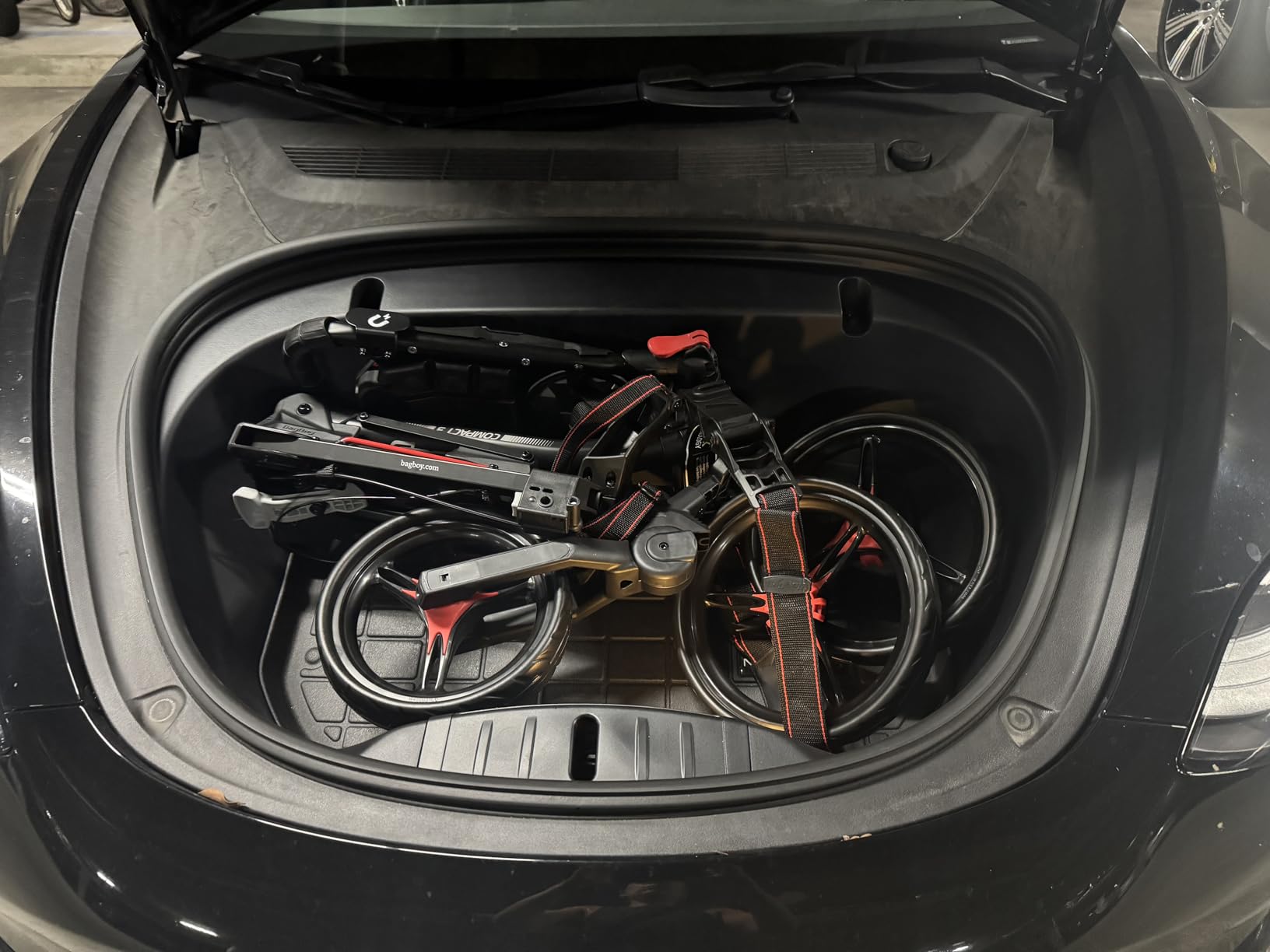
Folded size is the spec that ends arguments, and it is the one most shoppers skip. The spread in this roundup runs from the KVV GL307 at 19.1 by 14.6 by 23.2 inches and the two-wheel SereneLife at 19.1 by 14.6 by 22.8 inches, up to carts with footprints around 30 by 16 by 13 inches packaged. The Tangkula improves dramatically once you detach the wheels.
Before buying anything, measure the narrowest part of your boot opening and the space between the wheel arches. A cart that fits the volume but not the opening is the classic parking-lot surprise.
Bag compatibility and how much weight it holds
Most walking bags are stand bags or light carry bags, and all ten carts here take them. Nine use upper and lower elastic straps, while the Caddytek ONE-Swivel uses a clamp-style arm that grips a cart bag tightly, and the Bag Boy Compact 3 uses adjustable support arms for the same reason.
On capacity, the SereneLife carts are rated for bags up to 33 pounds, and most golfers fall well below that. Capacity only becomes a real constraint with a full staff bag, a cart bag full of winter layers, or an insulated jug. If that is your setup, prioritise a four-wheel chassis and a wide wheelbase rather than a capacity number.
Storage and the accessories that actually get used
Look for a drink holder that fits your bottle or tumbler, a place for a phone, somewhere for a rangefinder, and a compartment sized for snacks. Storage volume comes first in practice, then the drink holder, then everything else, and that matches what buyers in community threads say they actually carry.
Watch for drink holders that are too small. It is a complaint attached to the Tangkula, the KVV, and the SereneLife 3-Wheel, and a cup holder that will not take a sports bottle is a recurring storage complaint across this group. The EASEGO DZ goes furthest, with a deep console and a separate insulated section.
Umbrella holders: the most common reason carts disappoint
An umbrella holder is the accessory people want most and complain about most, and it is the subject of a dedicated community thread asking which carts have one that works. Treat it as a fit-and-finish question, not a feature checkbox.
Four of these carts include a holder: the Caddytek CaddyLite 11.5 V3, the Caddytek Superlite 4-Wheel, the KVV GL307, and the Caddytek ONE-Swivel V8. The SereneLife 3-Wheel ships with an umbrella docking point but not the holder itself, which surprises people in the car park. On the Superlite 4-Wheel, the holder has to be removed before the cart closes completely, so plan for that. If an umbrella matters to you in summer, check the listing for the holder specifically rather than assuming a slot means a holder.
Buying a used push cart: what to check
The used market is a genuinely active strategy for first-time buyers, and a good second-hand cart can be a sensible way to find out whether you like pushing. Four checks cover most of the risk.
Spin every wheel by hand. A gritty or notchy feel means dry or pitted bearings, and that is the most common reason carts get passed over. Spin the swivel wheel if the cart has one and check that the lock holds. Look at the frame welds and any paint chips, because a bent frame will never track straight. Then work the folding mechanism slowly, with a bag on, looking for stiff hinges or a bracket that has been forced upward. Finally, test the brake on a slope before you commit, and check that the bag straps and elastic loops have not gone slack or brittle.
3-Wheel Vs 4-Wheel Golf Push Carts: Which One Suits Your Game
Three-wheel carts are lighter, fold smaller, and steer more sharply. Four-wheel carts never tip, carry more comfortably, and give you a stable platform. If you have any balance or mobility concern, play on sloped terrain, or simply dislike the idea of a cart leaning when you walk away from it, four wheels solve the problem completely.
Three wheels make more sense if trunk space is tight, if you want a light frame, or if you play on wooded and twisty courses where sharp turns matter more than standing still. That is the whole trade-off, and most golfers are happy with either once they have chosen deliberately.
For hilly courses specifically, our ordering is four wheels first, then a three-wheel design with a wide wheelbase or a swivel wheel, and a two-wheel pull cart last. A swivel front wheel that can be locked straight gives a three-wheel cart the tracking stability of a fixed wheel on the fairway while keeping the agility in the trees, and that combination is why the swivel designs rank where they do in this roundup.
On weight, the four-wheel option is no heavier than most of the three-wheelers. The Caddytek Superlite comes in at 14.8 pounds, lighter than two of the three-wheel carts here, so stability does not automatically mean bulk. Folding, not weight, is what decides most storage problems.
Frequently Asked Questions
Are 3-wheel or 4-wheel golf push carts better?
Four-wheel carts are better for stability: they never tip on a side slope, carry more comfortably, and suit golfers with balance or mobility concerns. Three-wheel carts are lighter, fold smaller, and steer more sharply, which makes them better on wooded courses and in small cars. Two-wheel pull carts are the lightest of all but are the least stable on slopes.
What makes a good golf push cart?
A good push cart has four things in order of importance: a wide wheelbase for stability, wheels that roll smoothly without catching, a brake that locks and holds on a slope, and a fold that fits your car with the bag still on. After that come storage and accessories. A good umbrella holder matters more to most buyers than any premium feature.
How much weight can a golf push cart hold?
Most walking golf push carts are rated to hold bags up to about 33 pounds, which covers every stand bag and light cart bag. Capacity only becomes a real constraint with a full staff bag, a cart bag packed with winter layers, or a large insulated jug. If that is your setup, prioritise a four-wheel chassis and a wide wheelbase instead of a capacity number.
Do cart bags fit on push carts?
Yes, most modern push carts take both stand bags and cart bags. Premium models use clamp-style arms or adjustable support arms that grip a cart bag tightly, while budget models use upper and lower elastic straps that fit a stand bag or light carry bag. Very large staff bags need a wide wheelbase four-wheel cart or a heavy-duty bag support bracket.
Do most golf courses allow push carts?
Almost all courses allow push carts, and many now encourage walking because it keeps the pace of play and the course condition under control. A few restrict push carts on certain holes or on paths reserved for carts only. Check the rules posted at the first tee, and keep to the cart path on shared routes.
How long does a golf push cart last?
A well-built aluminum push cart with sealed bearings and replaceable hardware should last many seasons of regular walking, and budget steel-frame carts fail sooner at the welds and hinge points. Lifespan tracks the small parts more than the frame: bearings dry out, straps stretch, drink holders crack, and elastic bag loops go brittle. Replacing those is normal maintenance rather than a reason to replace the cart.
Which Push Cart Is Right for You
If you want the most broadly useful cart with the strongest ownership record, the Caddytek CaddyLite 11.5 V3 is the pick, and it is our editor's choice for 2026. If a side slope or your balance is the deciding factor, buy the four-wheel Caddytek Superlite V8 and stop worrying about tipping. If your boot is small, the KVV GL307 packs down tighter than the others.
Golfers who carry a lot should go to the EASEGO DZ for storage, and golfers who need to turn sharply in the trees should choose the Caddytek ONE-Swivel V8 or the Qwik-Fold. Anyone travelling, living above ground floor, or simply wanting the lightest cart should end up with the two-wheel SereneLife. Beginners and occasional walkers get the most out of the Tangkula, and golfers who want the biggest wheels and a branded warranty get the Bag Boy Compact 3.
Whichever one you pick, do one thing before you buy: measure your boot opening. It removes more disappointment than any spec on the list. Then take it out for a full 18, because that is the only test that counts.
You can see every cart we rated side by side in the table above, and the button under each review goes straight to the current listing. Our picks update as new models land, so check back for 2026 and beyond.