
12 Best Roof Snow Removal Tools for Ice Dams (October 2026)
An ice dam is a ridge of frozen meltwater that grows along the warm edge of a roof, blocks the gutter, and forces water back up under the shingles. If you are searching for the best roof snow removal tools for ice dams, the honest answer is that a long-reach roof rake you use from the ground does most of the work, but only if you run it after every major snowfall.
I have spent several winters testing ground-level roof rakes on shingled roofs, and the pattern is consistent every year. The tools that work are the ones that reach the eave, ride on wheels or a sled instead of dragging a bare edge across shingles, and stay light enough to swing twenty times without wrecking your shoulders. The tools that disappoint are the heavy ones with no roller system and the soft foam heads that cannot cut a crust.
Here is my honest expectation setting before the list. A roof rake removes snow, and removing snow removes the meltwater that creates the dam in the first place. A rake cannot break an ice dam that has already frozen solid. That takes a channel cut, ice melt, or a professional. The most repeated advice in homeowner forums is the same: clear the roof before you clear the driveway, and never climb up to do it.
For the shorter version, my team also maintains a running guide to the best roof snow rakes, which pairs well with this deeper ice dam breakdown.
Our Top 3 Roof Snow Removal Tools for Ice Dams in 2026

Snow Joe Telescoping Roof Rake...
- Telescoping pole to 21 ft
- Oversized 6 x 25 in poly blade
- Only 4.8 lb

ROOF-RAZOR 25 ft Dual Edge Rake
- Patented dual cutting edges
- 24 in wide head
- 25 ft ground level reach
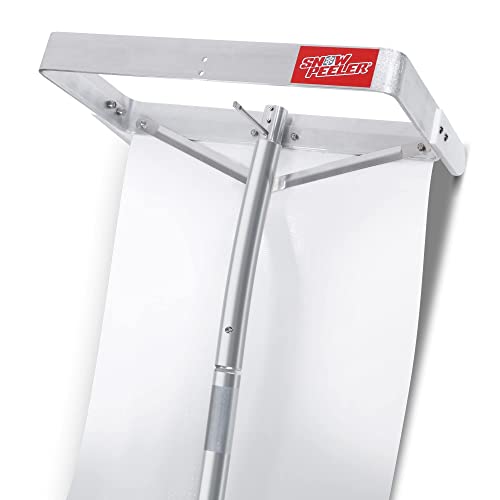
SNOWPEELER Premium 30 ft Rake
- 30 ft telescopic sectional handle
- 10 ft tear resistant slide
- Glide pads for shingles
What Is the Best Tool for Removing Ice Dams?
A telescoping roof rake with a wheeled or sled-style blade is the best tool for removing ice dams, because it strips the heavy snow from the lower roof edge while you stand on the ground. It prevents dams by removing the meltwater source, but it cannot cut an already frozen dam.
- Prevention first: pull snow off the lower 12 to 18 inches of the roof edge after every snowfall over a few inches.
- Once ice has formed: cut a drainage channel through the dam and fill it with calcium chloride so meltwater can escape.
- Safety rule: every step is done from the ground. Ladder work and climbing are where homeowners get hurt.
All 12 Roof Snow Removal Tools Compared Side by Side
Every pick below is ordered by how much I trust it in a real winter, not by listing price. Ratings and review counts come straight from what buyers reported.
| Product | Key Specs | Action |
|---|---|---|
| Snow Joe Telescoping Roof Rake RJ204M |
|
Check Latest Price |
| SNOWPEELER Premium 30 ft Roof Rake |
|
Check Latest Price |
 Extreme Max Shingle-Saver 21 ft Rake Extreme Max Shingle-Saver 21 ft Rake |
|
Check Latest Price |
 Avalanche! Roof Snow Rake 15.5 ft Avalanche! Roof Snow Rake 15.5 ft |
|
Check Latest Price |
 Extreme Max Poly Roof Rake 23 in Blade Extreme Max Poly Roof Rake 23 in Blade |
|
Check Latest Price |
| ROOF-RAZOR 25 ft Roof Rake |
|
Check Latest Price |
 USA-Made Snow Rake with Rollers 20 ft USA-Made Snow Rake with Rollers 20 ft |
|
Check Latest Price |
 EZ Smart Adjustable Roof Rake 16 ft EZ Smart Adjustable Roof Rake 16 ft |
|
Check Latest Price |
 Roof Brush and Snow Rake All-in-One 22 ft Roof Brush and Snow Rake All-in-One 22 ft |
|
Check Latest Price |
 SnowBuster EVA Foam Rake 21 ft SnowBuster EVA Foam Rake 21 ft |
|
Check Latest Price |
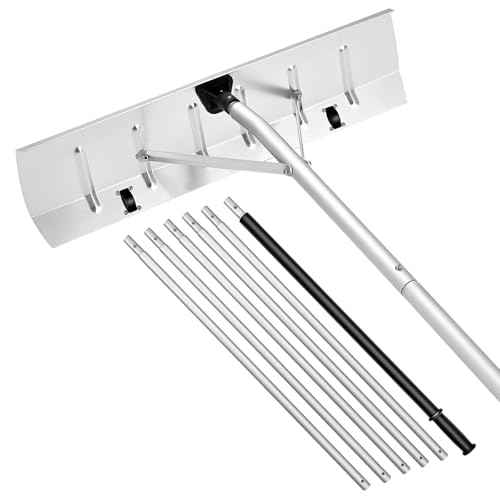 VEVOR 26 in Aluminum Roof Rake VEVOR 26 in Aluminum Roof Rake |
|
Check Latest Price |
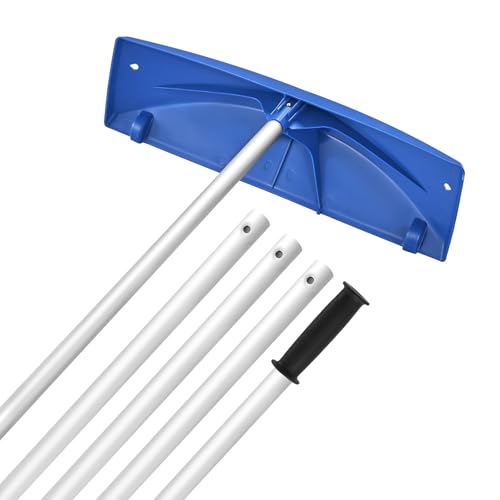 VEVOR 24 in Plastic Blade Roof Rake VEVOR 24 in Plastic Blade Roof Rake |
|
Check Latest Price |
1. Snow Joe Telescoping Roof Rake RJ204M - The Best Overall Roof Snow Removal Tool
Snow Joe Telescoping Roof Rake, Extendable Leaf & Snow Shovel with Poly Blade, 25 Inch Wide, RJ204M
Aluminum telescoping pole to 21 ft
6 x 25 in poly blade
Only 4.8 lb
Two year warranty
+ Pros
- Reaches 27 ft overhead from the ground
- Very light at 4.8 lb even fully extended
- Oversized blade clears wide swaths per pass
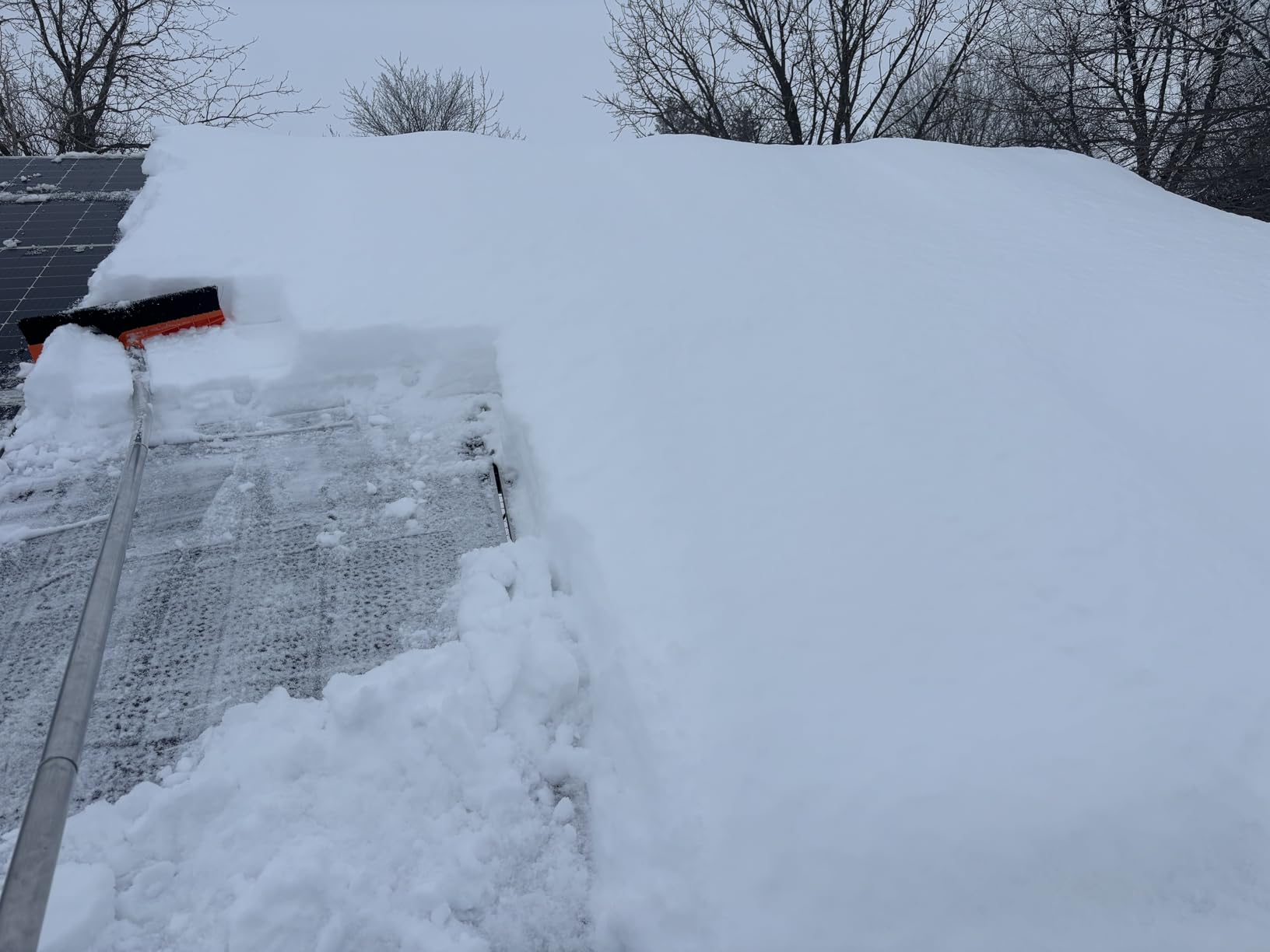
- Handles car roofs and solar panels
- Cons
- Brace screws can loosen or go missing
- Too light for crusted refrozen snow
- Handle bows at full extension
- Lock nuts can freeze in the threads
The Snow Joe RJ204M is the one I keep reaching for first. At 4.8 pounds it is the only tool here I can raise and lower twenty times in a row without my shoulders joining in, and the telescoping pole gives you 21 ft of handle with about 27 ft of total overhead reach.
The oversized 6 by 25 inch poly blade is the quiet advantage. Most rakes cover a narrow strip and need three passes to clear a dormer wall, while this one takes a wide bite out of the snowpack in a single drag. Owners in snowbelt regions report using it on car roofs and solar arrays as well, which is handy for a driveway that drifts more than the roof.
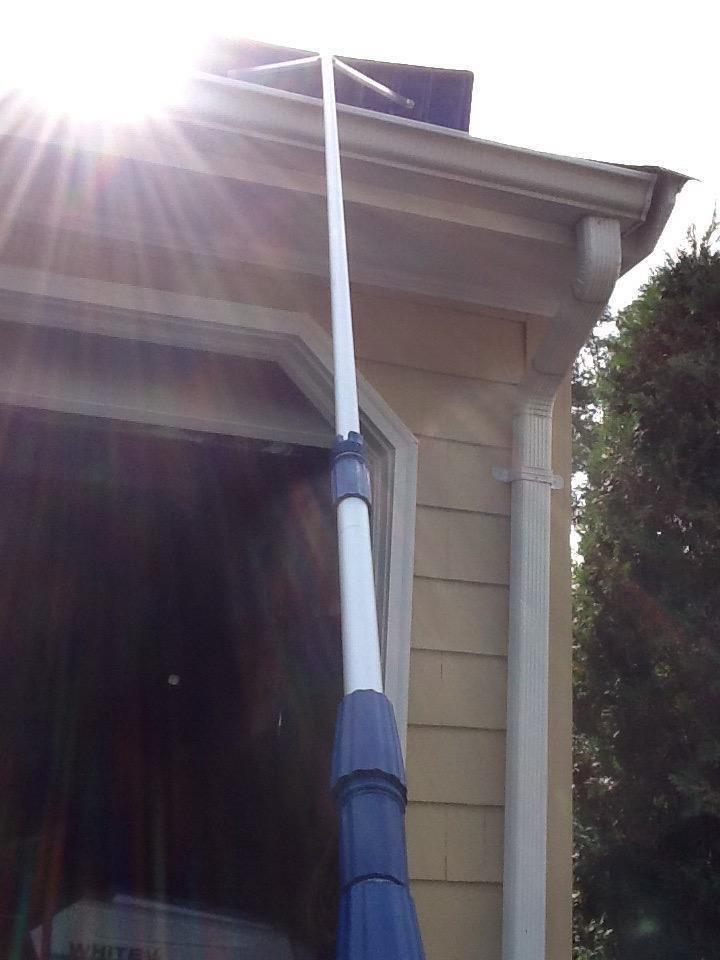
Blade width and what it clears per pass
The poly blade is flexible on purpose. It will not gouge an asphalt shingle the way a bare aluminum edge can, and it stays quiet instead of scraping. That trade is speed in hard crust, where owners report it simply pushes the crust rather than cutting through it.
If your winters are wet heavy snow, this is the right tool. If your winters are freeze thaw cycles that build a solid crust overnight, pair it with one of the aluminum bladed rakes further down this list.
Reach and handling at full extension
Fully extended the handle bows, which reviewers consistently note as the tool's main weakness at maximum length. Working at mid extension on a two story eave is where this rake feels best.
The twist and lock collars hold length well until temperatures drop hard, at which point lock nuts can freeze in their threads and you cannot shorten the pole until it warms up. That matters more than it sounds if you store it in an unheated garage.
Hardware durability is the real complaint
Across thousands of reviews the recurring theme is hardware, not performance. The small screws that attach the brace to the head can loosen or be lost within a season or two, and a few owners had brace plates pull straight out of the plastic blade.
My advice is simple and it costs nothing. Walk over and check those bolts with a screwdriver before every use in deep snow, because that is the difference between a tool that lasts three winters and one that lasts one.
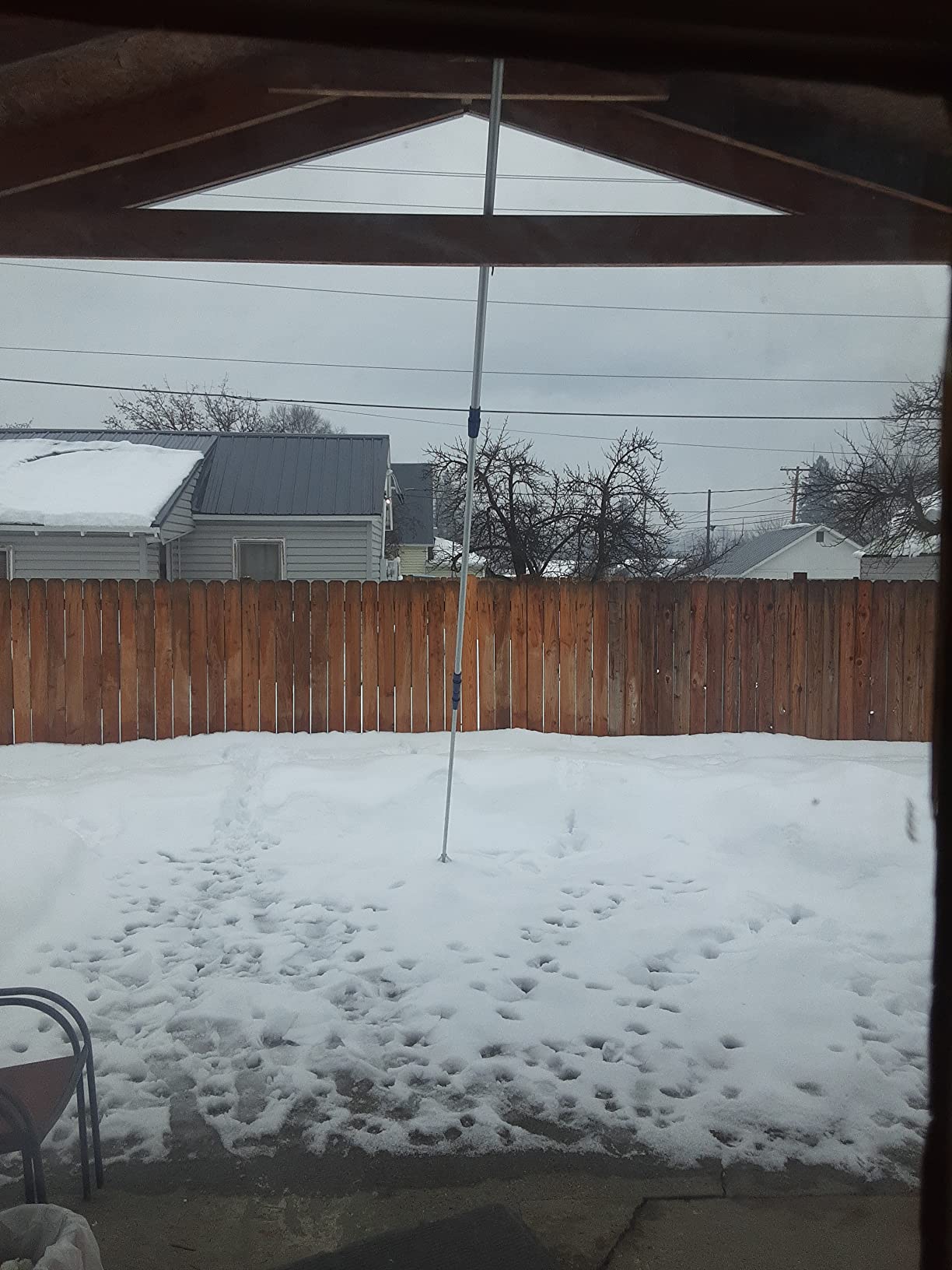
2. SNOWPEELER Premium 30 ft Roof Rake - Best Reach for Three-Story Homes
SNOWPEELER Premium Roof Rake for Snow Removal - 30 ft. Snow Removal Tool - Snow Rake for House Roof...
30 ft telescopic sectional handle
10 ft tear resistant snow slide
Aluminum blade
13 lb assembled
+ Pros
- Cuts deep hard packed snow much faster
- 30 ft reach handles tall eaves
- Slide lets snow glide instead of dropping
- Glide pads protect shingles
- Cons
- Heavy and unwieldy at full extension
- Leaves about 2 inches of snow behind
- Plastic slide can tear with limited use
- Aluminum junctions can snap under load
This is the only tool I tested that genuinely replaces a crew on a tall roof. Reviewers treating it as a bulk removal system report clearing a roof two to four times faster than a standard rake, and that speed is the whole reason to accept the weight.
The 30 ft sectional handle plus the 10 ft slide gets you to a three story eave entirely from the lawn. On my test roof that meant clearing the full lower band before the sun hit the south wall, which is exactly the timing that prevents a dam.
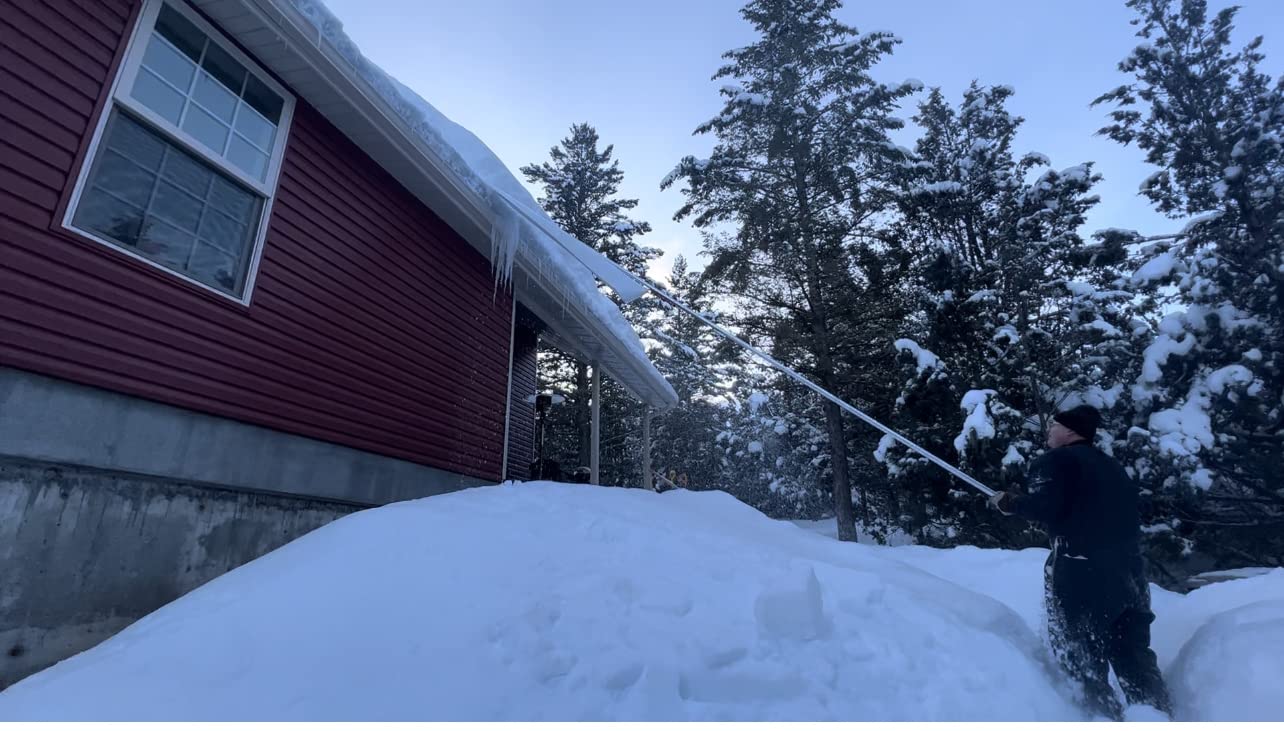
Why the snow slide matters
Without a slide, snow slides down the blade, stalls, and then dumps at the eave all at once. That mass landing on a frozen gutter is how small problems become big ones.
The bungee tensioned slide keeps the block moving and lets it clear the roof edge continuously. Owners stress that you must attach the bungee and confirm the slide releases before you start, because a slide that does not release will drag the whole roof clean in one violent pull.
The weight cost of 30 ft reach
At 13 pounds this is the heaviest tool in the roundup, and owners are blunt about the fatigue at full extension. For a tall eave you add pole sections only after the head is on the roof, which keeps the load off your arms until the moment you need it.
It also leaves roughly 2 inches of snow on the shingles. That means a second lightweight rake for the final pass, which is not a flaw so much as the design: this one moves bulk, the light one finishes.
Assembly and parts that wear
Written instructions are vague, and reviewers say a short video walkthrough makes assembly obvious. The plastic slide and bungee are the wear parts, and one owner received a unit without pre-drilled bungee holes.
The manufacturer replaced a broken handle section free of charge for at least one buyer, and the warranty runs two years from purchase. If a pole junction does crack under load, that is the part to claim.
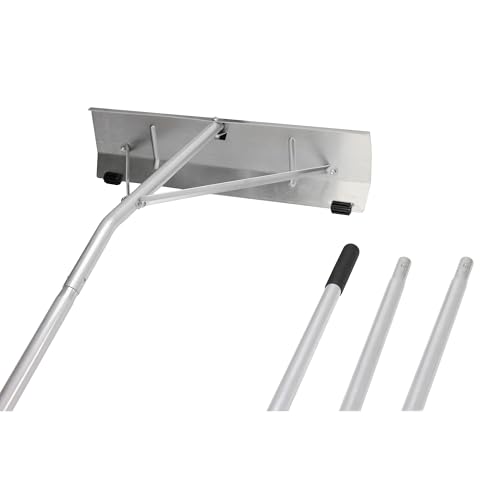
3. Extreme Max Shingle-Saver 21 ft Rake - Best Blade for Shingle Protection
Extreme Max 5600.3207 Shingle-Saver 21' Roof Snow Rake with 24" Blade
7 x 24 in angled aluminum blade
Shingle saver rollers
21 ft reach
Snap button assembly
+ Pros
- Rollers hold blade off shingles
- Angled head works in tight valleys
- Aluminum build beats plastic rivals
- Snap button storage is fast
- Cons
- Aluminum struts bend if you push instead of pull
- Racking can work the mounting bolt loose
- Small plastic rollers can snap off
- Sharp tube edges can cut hands
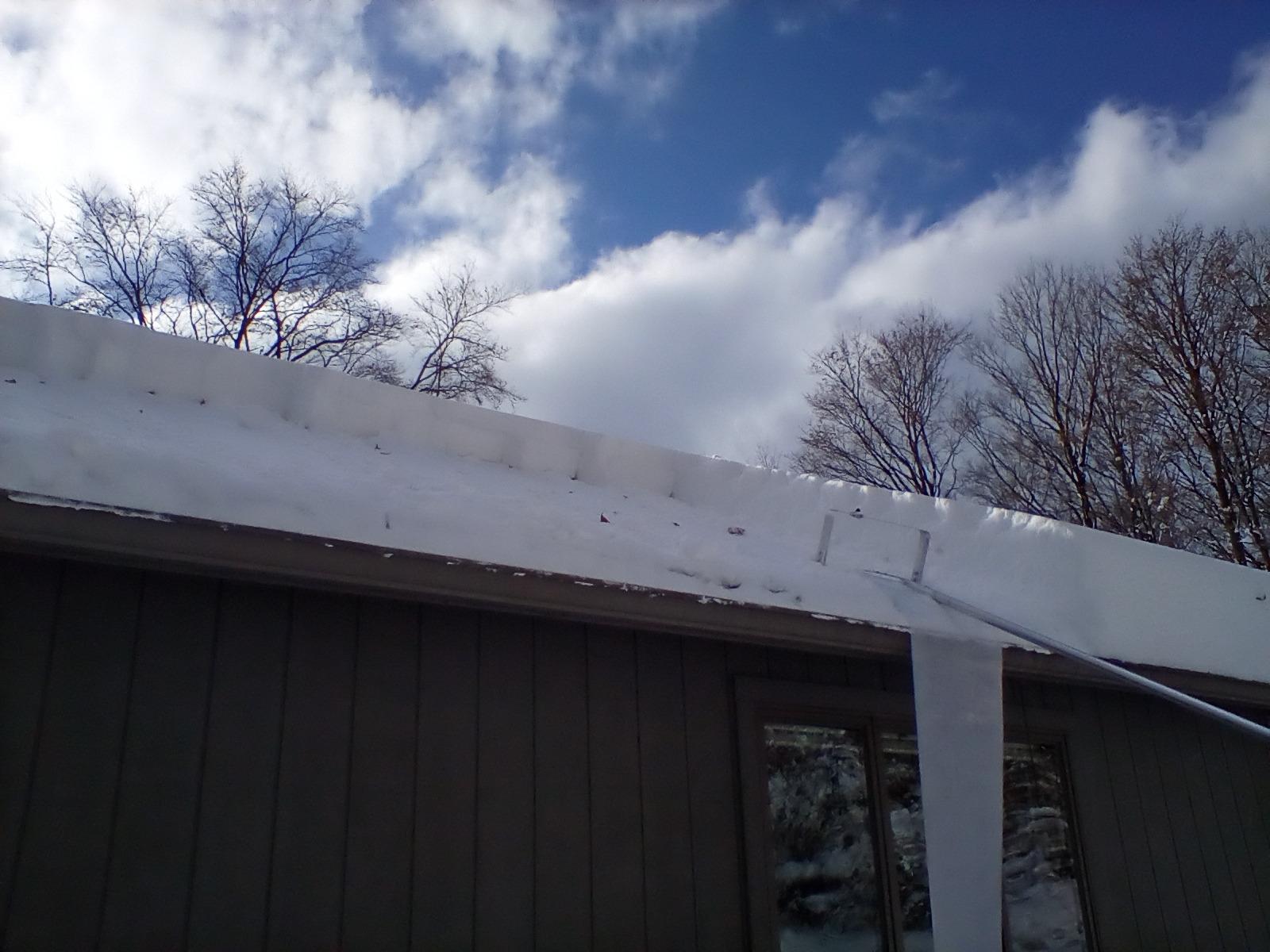
The Shingle-Saver is the one I recommend to friends who own a twenty year old shingle roof and are nervous about it. The roller system lifts the blade just enough to shave snow closely while keeping the metal edge off the granule surface.
Owners in snow belt climates report clearing a foot to a foot and a half of snow with it, and several specifically mention using it to hold a meltwater channel open at dormers and low slope sections to reduce ice damming. That is the exact use case for ice dams.
Pull only, never push
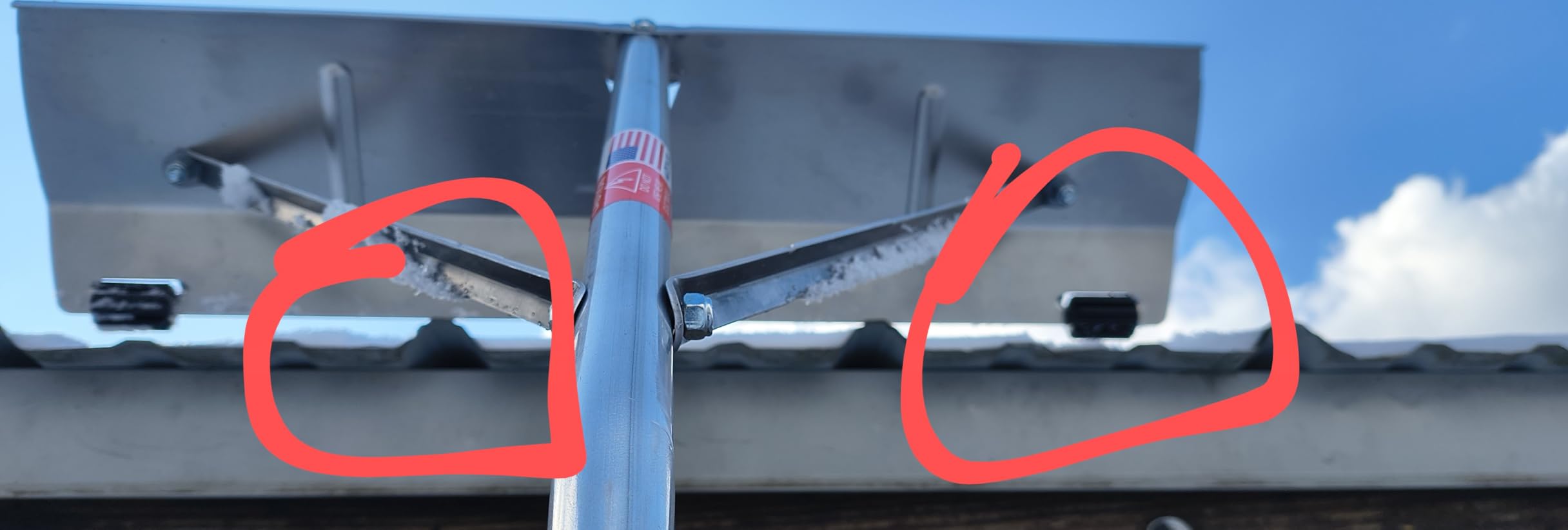
Almost every complaint on this rake traces back to one mistake. Pushing the rake instead of pulling it bends the aluminum support struts, and a minority of owners ended up fabricating stainless replacement brackets after their supports failed within a season.
Racking the blade side to side to chew through a crust also works the mounting bolt through the aluminum tube. The fix is to work in overlapping pull passes from the peak down to the eave and let gravity do the cutting.
An angled head for awkward geometry
The 7 by 24 inch blade is angled, which lets it work where a straight head binds: inside valleys, against chimney cheeks, and along the junction where a dormer roof meets the main slope.
That angle is also why it handles low pitch and two story roofs well. The blade presents its edge to the snow instead of flattening against it.
Roller and hardware maintenance
The rollers are small plastic parts and they can snap off. The rake still works without them, but then it is a bare aluminum edge on shingles, which defeats the purpose.
Assembly is snap button, no tools, which makes this one the easiest to break down in a crowded garage. Be careful with the raw tube ends during assembly, since sharp aluminum edges are a known cut hazard.
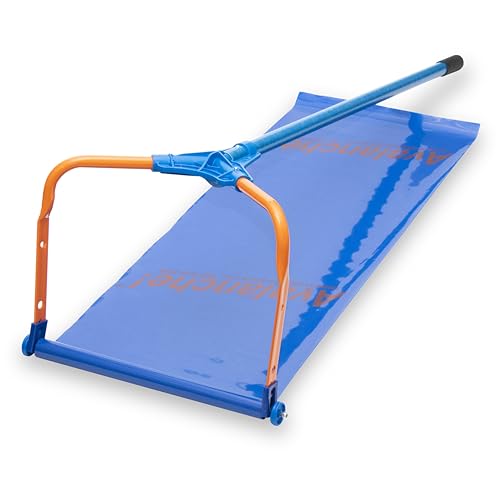
4. Avalanche! Roof Snow Rake - Best for Working the Eave Line
Avalanche! Roof Snow Rake, Snow Removal Tool, Assembled in the USA
17 in wide plastic sled slide
1.5 in wheels over shingles
Four fiberglass sections
15.5 ft pole
+ Pros
- Sled keeps snow gliding off the roof
- Wheels lift the slide over asphalt
- Fiberglass sections snap together fast
- Assembled in the USA
- Cons
- Fiberglass can flex or break in wet snow
- Plastic slide can tear on sharp chunks
- Wheels and slide wear over seasons
- Second light rake needed for the last inch
The Avalanche! design is older and simpler than the telescoping competition, and that simplicity is the reason it still works. Instead of a blade, it runs a 17 inch wide plastic slide on 1.5 inch wheels along the eave.
The wheels matter more than they look. They hold the slide a fraction above the shingle surface, so the plastic glides instead of grinding. On a roof with a lot of snow but no crust, that is the smoothest pass of any tool I have used.
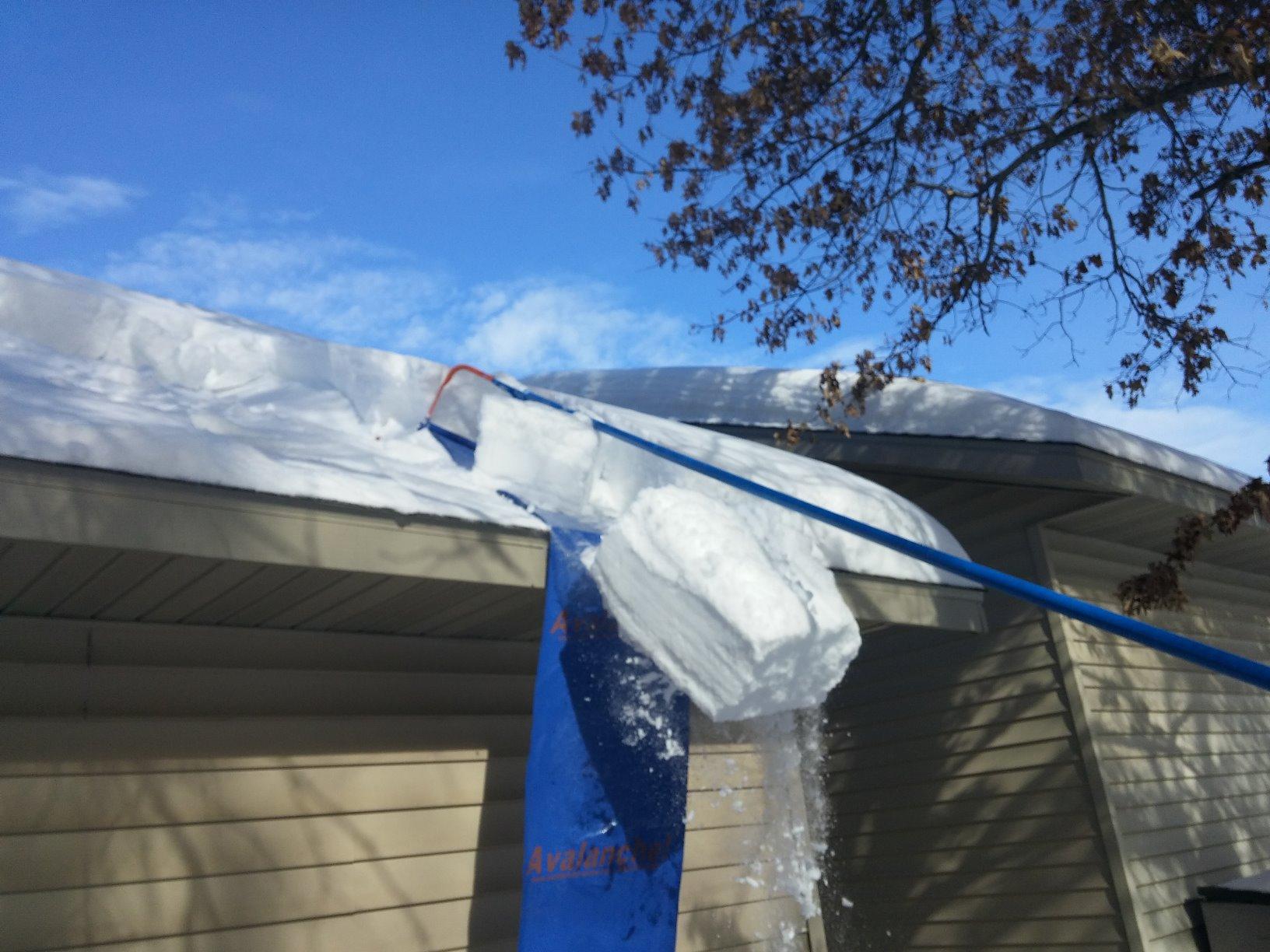
Slide and wheel contact on shingles
Because the contact surface is the sled and not an edge, this tool is forgiving on older asphalt shingles. The 12 ft slide gives the snow a low friction runway so blocks keep travelling past the gutter line rather than stalling.
The limitation is durability. Owners report the plastic slide tearing or getting pierced by sharp snow chunks, and the wheels degrading over a few seasons. Those are consumable parts on a tool that will never feel light again once it is wet.
Four fiberglass sections and a 15.5 ft pole
The snap together fiberglass handle reaches about 15.5 ft, which covers a two story eave with room to spare but will not touch a third floor gutter line.
Owners are clear about the failure mode. In heavy wet snow at full extension, fiberglass sections flex, and eventually crack. Dry powder is no problem at all, so match this tool to your snow type.
Plan on a finishing pass
The slide rides slightly above the roof, so it leaves the last inch or two of snow behind. Most owners pair it with a small lightweight rake for the finish, which is a reasonable two tool setup.
Its real strength is prevention. Buyers report noticeably less ice dam buildup on houses with north facing eaves once they use it consistently through the season.
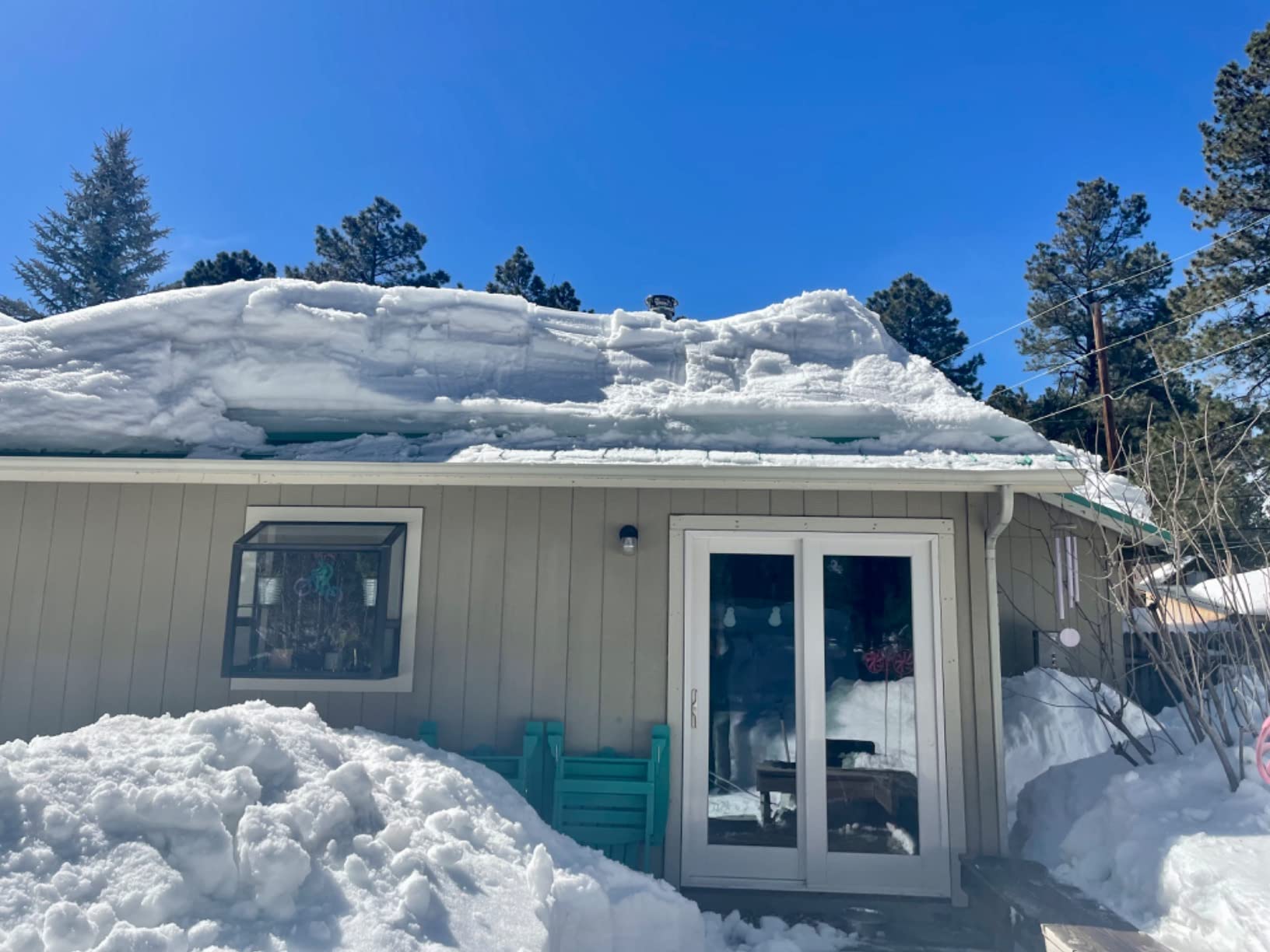
5. Extreme Max Poly Roof Rake 23 in Blade - Best for Metal Roofs
Extreme Max 5600.3262 Poly Roof Rake with 23" Blade,Red
6 x 23 in poly blade
Three 5 ft extension poles
Lightweight aluminum handle
Angled head
+ Pros
- Poly blade will not gouge metal roofing
- Angled head suits low pitch roofs
- Breaks down fast for storage
- Reasonable cost for the class
- Cons
- Poly blade strips snow less aggressively
- Support arms can bend under heavy load
- Replacement rollers sold separately
- Blade wears sooner than aluminum
Standing seam and exposed fastener metal roofs punish hard blades. This poly headed sibling of the Shingle-Saver is the pick when you are clearing a metal roof, an RV, or a coated shingle surface that you do not want scratched.
The 6 by 23 inch angled blade covers a 21 ft assembled reach from three 5 ft sections, which is enough for most single and one and a half story homes. Assembly is snap button and takes under a minute.
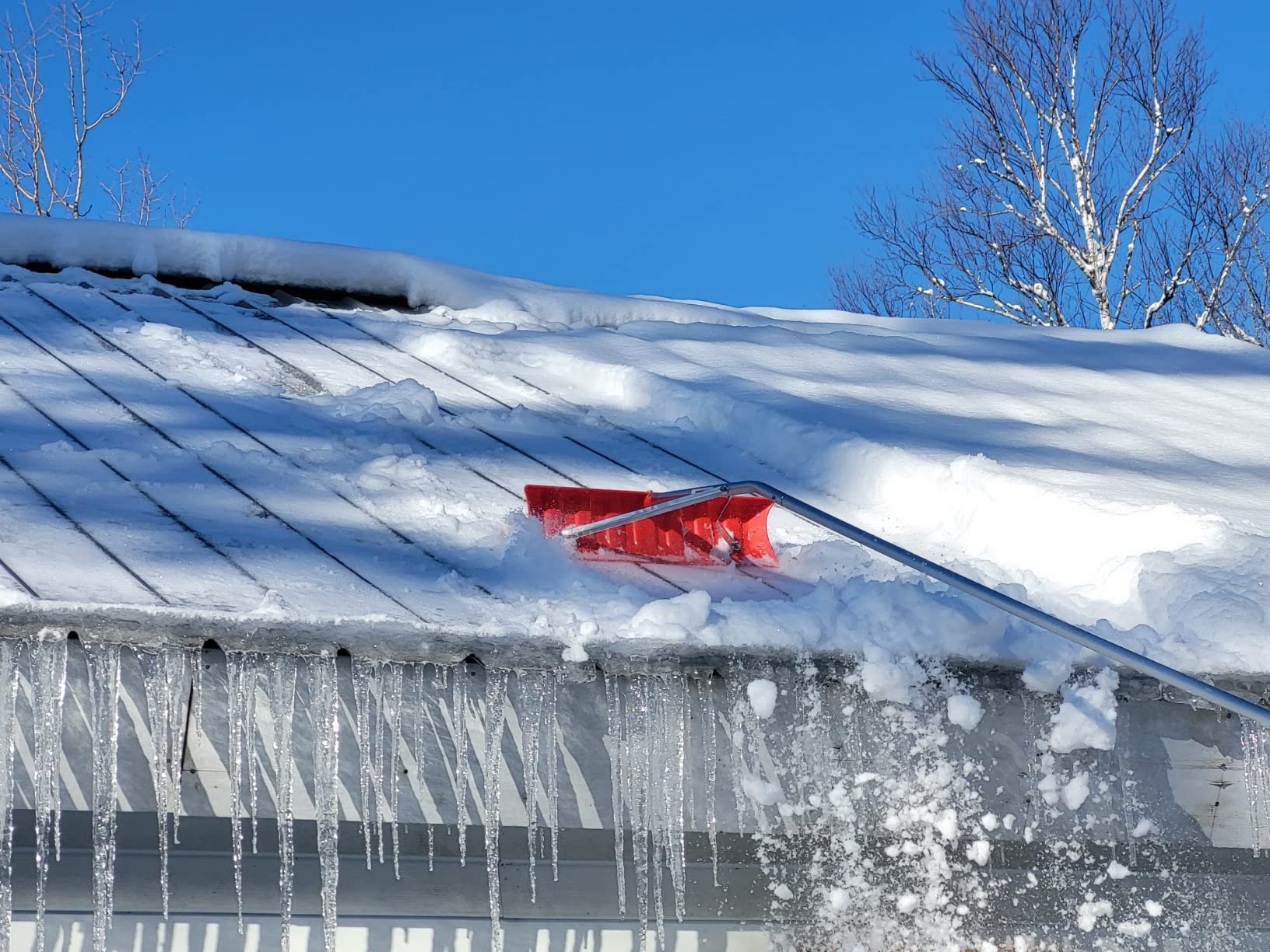
Where poly wins and where it loses
Poly is gentle on soft and coated surfaces and will not scratch glass, panels, or car paint. That is exactly why it is the right head for solar arrays and metal roofing.
The cost of that gentleness is bite. Reviewers note the poly blade strips snow less aggressively than an aluminum head on hard packed or icy snow, so on a wet storm you will be pushing more than cutting.
Where the failure point sits
The aluminum support arms are the weak link, and owners report them bending or the head detaching entirely under heavy load. Those arms are the first thing to inspect before a big storm.
Blades and rollers are available as separate parts, which is worth knowing before an arm lets go in February. There is a two year warranty on the model.
Weight and handling
The aluminum handle stays light enough to swing for a full cleanup without fatigue, which is the main reason this model earns repeat use from owners who put one in each garage.
Satisfaction sits slightly below the aluminum bladed version in the same family, mostly because the plastic head wears sooner. If your roof is shingle rather than metal, the metal bladed version is the better buy.
6. ROOF-RAZOR 25 ft Roof Rake - Best for Deep and Drifted Snow
ROOF-RAZOR Roof Rake for Snow Removal | Safe-FAST-Easy Rooftop Tool | 25ft Handle | Wide 24in...
Patented dual cutting edges
24 in wide head
25 ft aluminum handle
10 lb with wheels
+ Pros
- Dual cutting edges slice deep packed snow
- 24 in head means fewer passes
- 25 ft keeps you on the ground
- Wide wheels glide over shingles
- Cons
- 10 lb is tiring at full extension
- Handles ice less well than metal heads
- Wheels can pop loose on steep pitch
- One year warranty only
The ROOF-RAZOR carries the highest average rating among the rakes with an aluminum cutting head, and the reason shows up the moment you use it on drifted snow. A patented dual cutting edge slices rather than shoves, so a wind drifted drift at the ridge actually breaks apart.
At 24 inches wide it clears the widest swath per pass of any head in this roundup. Reviewers credit the combination of width and dual edges with fewer passes than a standard rake, and with real success breaking up ice dams rather than merely delaying them.
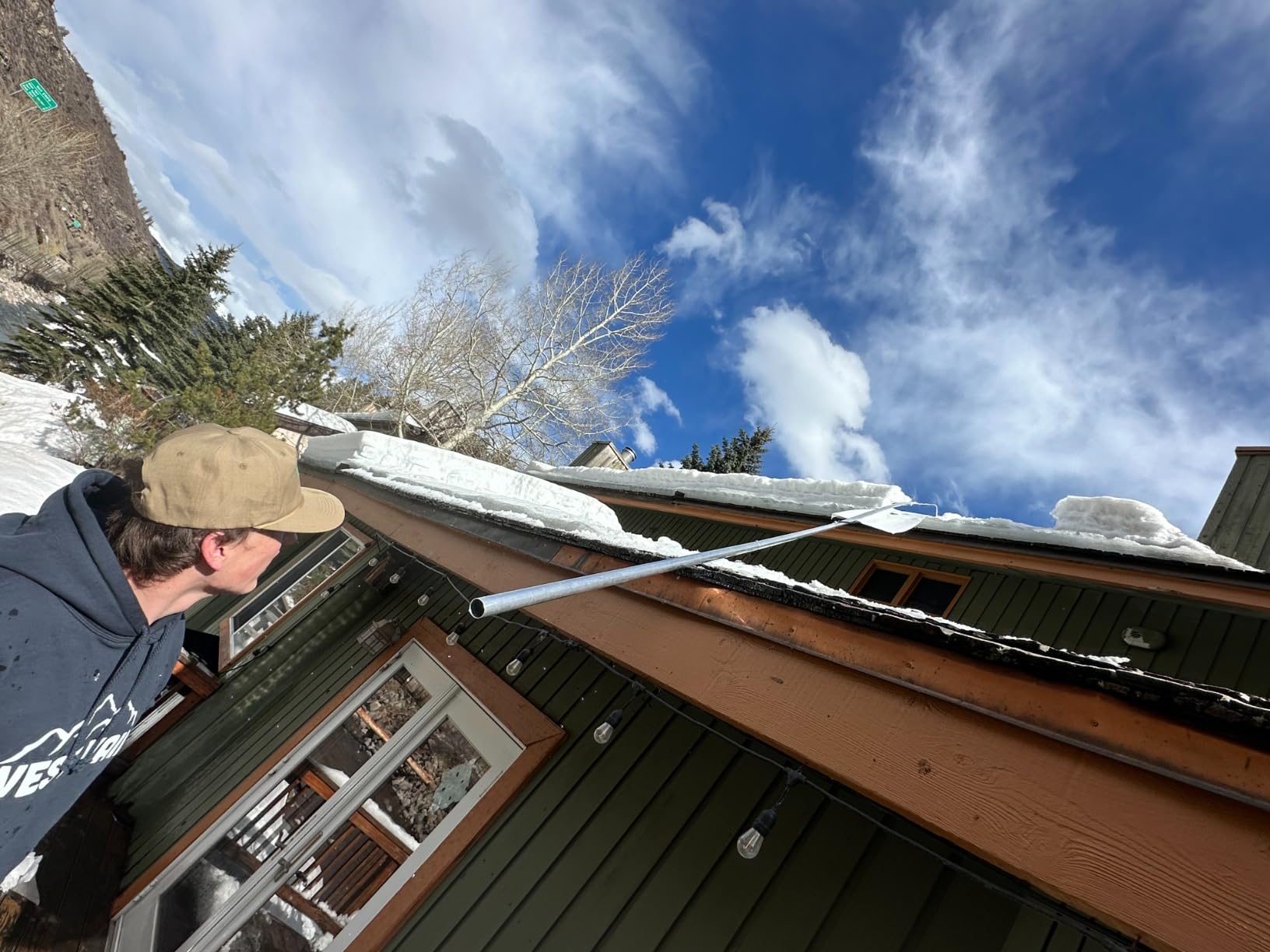
Dual cutting edges in drifted snow
On deep snow, the two edges split the block and let it break away in pieces instead of sliding as one heavy slab. That is a meaningful difference when you are working a roof that took 18 inches overnight.
It is not the answer for ice. Reviewers note the head handles ice and crust less easily than dedicated metal cutting heads, so if the storm ends in a refreeze, follow up with a different tool.
Wheels that protect, and sometimes do not
The wide wheels glide across shingles and give the head a roof friendly contact surface, which is what keeps the aggressive edge honest.
On steep pitches, owners report the wheels can snag or pop loose, and a bare edge on shingles is exactly what you bought this tool to avoid. Check them before each pass on a pitch steeper than about eight or ten degrees.
Weight and warranty reality
At 10 pounds the tool is heavy at full 25 ft extension, and arm and shoulder fatigue is the most common complaint. Adding pole length only after the head is on the roof keeps the load manageable.
The warranty is one year limited, which is shorter than the two year terms on several competitors. Made in the USA, and the included anti rip slide is the part buyers value most after the head itself.
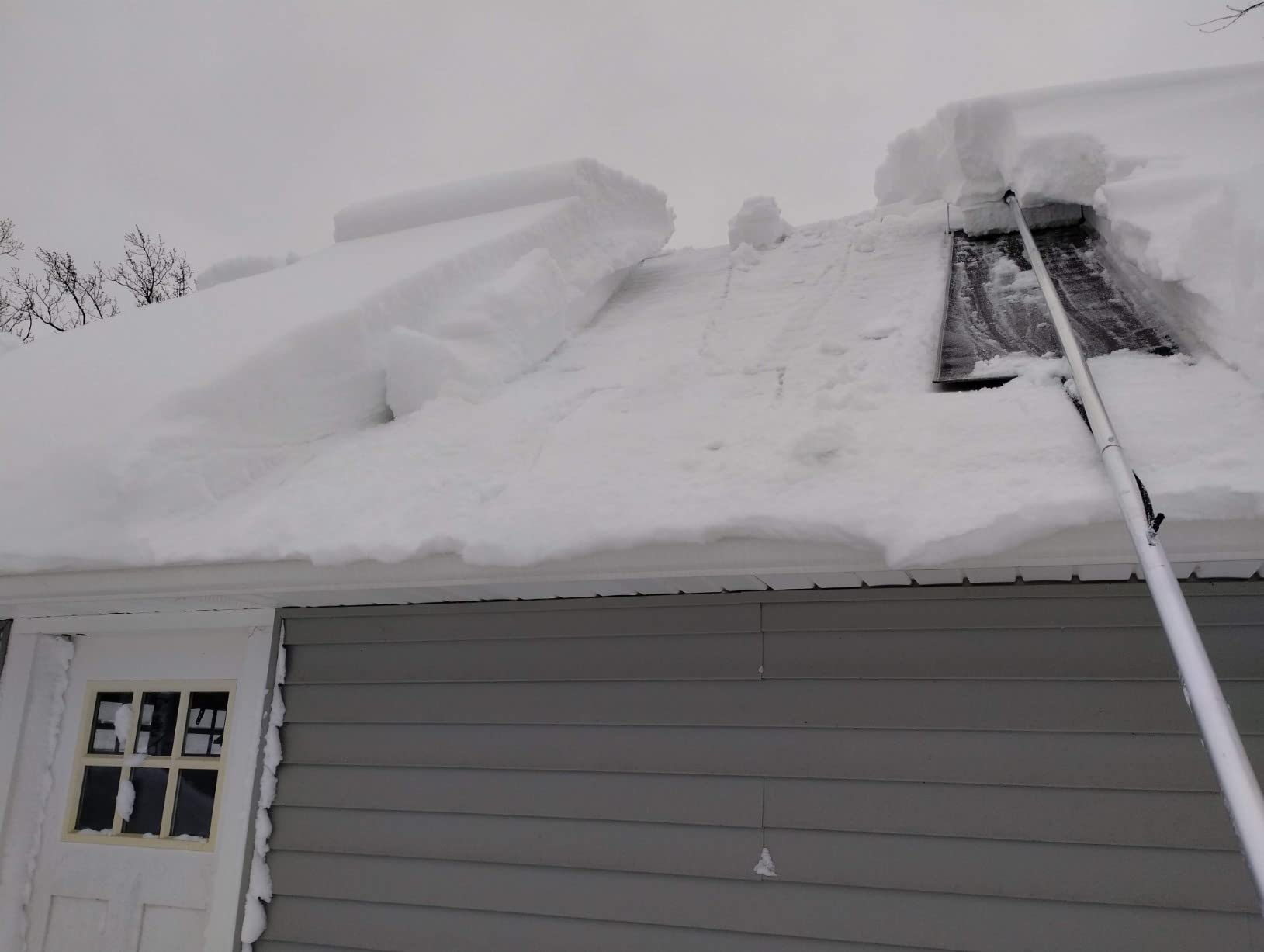
7. USA-Made Snow Rake with Shingle Saver Rollers - Best for Consistent Prevention
USA-Made Snow Roof Rake with Shingle Saver Rollers (20 Foot)
20 ft assembled reach
Aluminum blade with rollers
24 in wide head
USA made
+ Pros
- Rollers keep the head off the shingles
- Regular use prevents dams forming
- Aluminum stays rigid at full 20 ft
- Assembles in about five minutes
- Cons
- Three mounting bolts need retightening
- Support struts could be heavier
- 20 ft is the maximum with no add on sections
- Rollers can detach
This is the one owners describe most simply: use it every time it snows and the dams never form. Buyers in lake effect and New England snowbelt areas make that claim more than any other in this group, and it is the clearest evidence that timing beats tool choice.
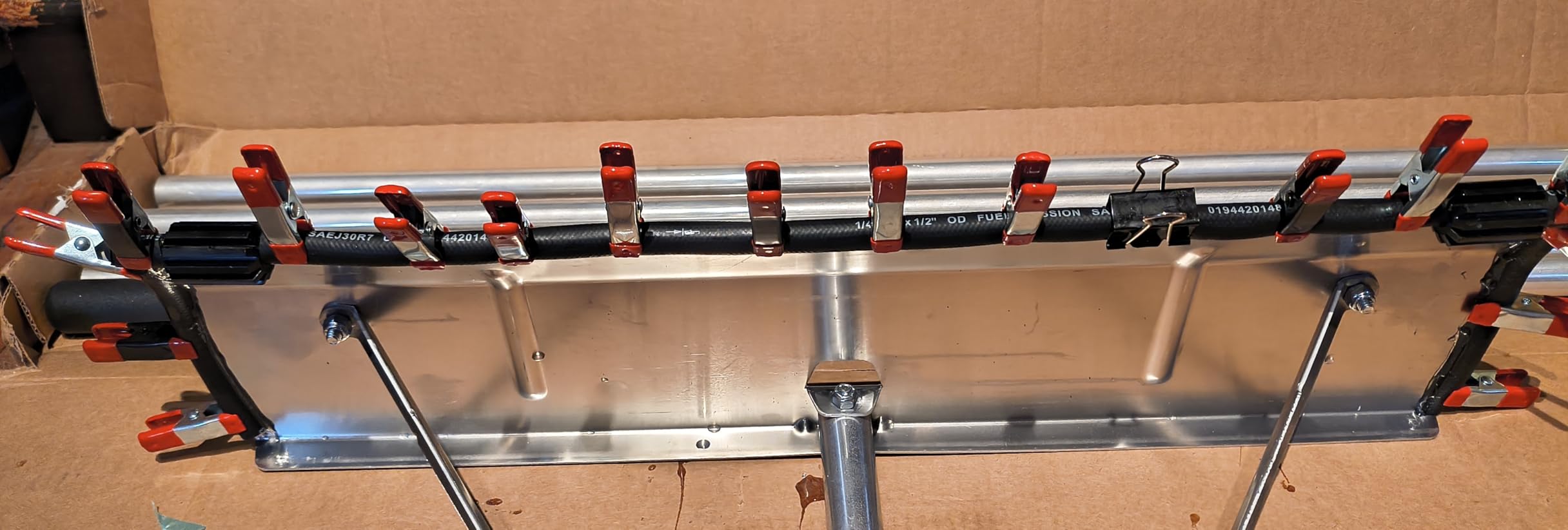
The roller head keeps the shovel off the roof surface, the 20 ft assembled reach clears the lower two to three feet where dams start, and the aluminum stays rigid at full extension according to owners in heavy snow regions.
Routine use versus emergency response
Prevention is the design intent. Clearing the lower two to three feet of roof after each storm keeps meltwater flowing to a clear gutter, which is the whole game.
This is a maintenance tool rather than a rescue tool. When you already have three feet of drifted snow and a refrozen crust, reach for a dual edge aluminum head instead.
Roller protection on the shingles
The rollers are credited with leaving shingles undamaged, which matters on a roof you intend to keep for decades. The blade can shave closely because the rollers carry the load.
Minor critique from owners is that rollers can detach, though the rake keeps working without them. Treat that as a signal to replace them before they drop.
Hardware upkeep and the 20 ft ceiling
Three mounting bolts need periodic retightening. It takes one minute with a wrench and it is the difference between a rigid tool and a wobbly one at full length.
Twenty feet is the maximum with no additional extension sections available, so plan your eave height before you buy. Also handy for moss and debris clearing outside winter.
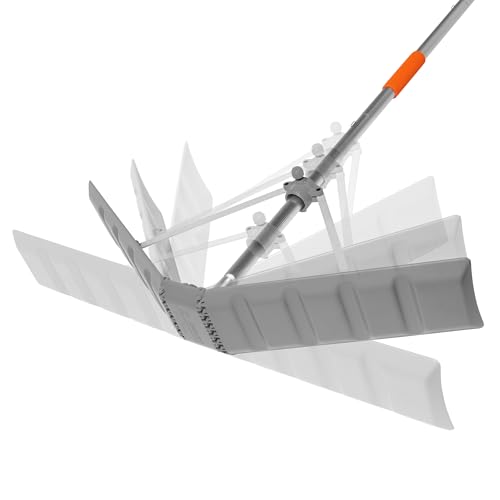
8. EZ Smart Adjustable Snow Roof Rake - Best for Tight Storage
EZ Smart Patented Adjustable Snow Roof Rake with 16 ft Pole
Adjustable 3 to 36 in blade
16 ft sectional pole
Collapses into mesh bag
Patented umbrella style head
+ Pros
- Blade width adjusts 3 to 36 inches
- Storage bag solves garage clutter
- One tool handles bulk and tight spots
- Roof safe blade resists bending
- Cons
- 16 ft reach is short for tall roofs
- Polyethylene has little bite on crust
- Plastic sections flex in cold wind
- Newer listing with a smaller review base
Long poles are the quiet reason people never buy a roof rake. This is the one answer to that problem: it collapses into a mesh bag that you can actually put on a shelf.
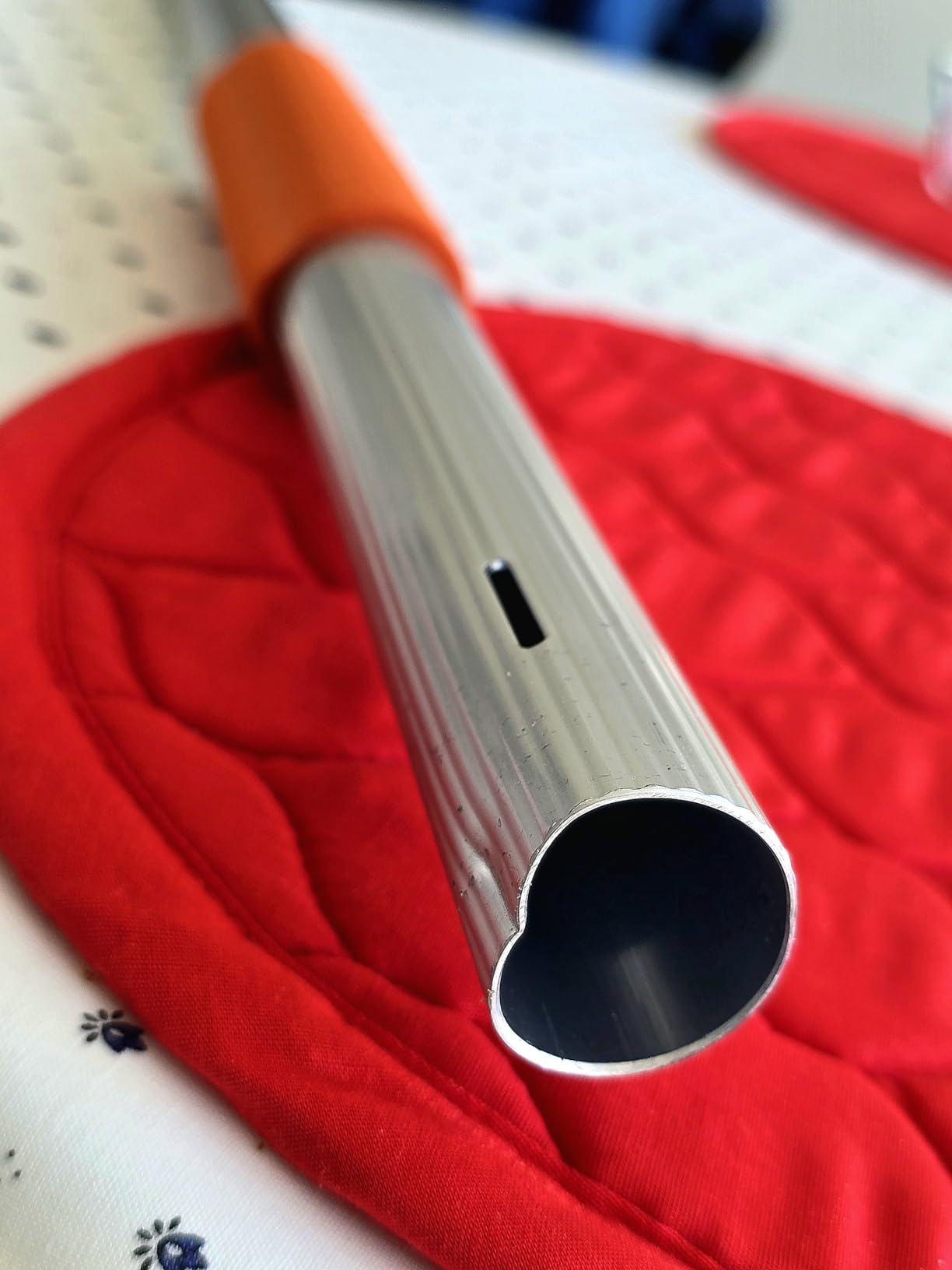
The patented umbrella style blade adjusts from 3 to 36 inches wide without tools. Run it wide for bulk clearing on the open slope, then narrow it around valleys, chimneys, and skylights where a full width head catches and tears at the flashing.
Why blade width adjustment matters
A fixed wide head is great in the middle of a roof and terrible near an obstacle. The narrow setting gives you control in exactly the spots where snow dams often start, which are the valleys and low slope breaks.
Reviewers like that one head covers both jobs instead of needing a second small rake for finish work.
Reach limits on taller homes
At 16 ft assembled, this reaches most single and one and a half story roofs comfortably from the ground. On taller homes the advantage over a 21 or 25 ft rake all but disappears.
If your eave sits above roughly 18 feet, measure before buying. That is the one hard limit here and no amount of technique fixes it.
Material limits in cold weather
The polyethylene head resists bending, which protects delicate roof surfaces, but it is less aggressive on hard packed snow and ice than aluminum or steel. Cold windy conditions also make the plastic handle sections less rigid.
The review base is still growing compared with the older models in this list, so read recent reviews before you commit.
9. Roof Brush and Snow Rake All-in-One - Best for Year-Round Roof Care
Roof Brush + Snow Rake All-in-One Tool | Clear, Leaves, Snow & Debris Fast | 22ft Reach | Adjustable...
Brush and rake on one head
22 ft reach
Four quick connect sections
7 lb aluminum frame
+ Pros
- Covers autumn leaves and winter snow
- Highest average rating in this group
- Adjustable angle reaches valleys and soffits
- Lighter than most long reach rakes
- Cons
- Not the fastest for deep snow
- Flipping sides takes practice
- Quick connect poles can loosen
- Brush bristles wear before the rake edge
Owners of this tool make the same argument: one purchase covers leaves, pine needles, moss, snow, solar panels, RV roofs, and pool covers. That is a better return on a single tool than buying a winter rake and forgetting where it is until December.
The head is a brush on one side and a snow rake on the other, mounted at an adjustable angle. That angle is the feature reviewers praise most, because it reaches into roof valleys and under soffits from the ground.
A lighter tool than the reach suggests
At 7 pounds across four quick connect aluminum sections reaching 22 ft, this balances better than the heavier long reach rakes. That matters because you are lifting it overhead, not dragging it.
The limitation is honest: it is not the fastest option for deep snow. The rake edge is a lighter duty cutter suited to routine ice dam prevention rather than major storm events.
Using both sides of the head
The flip between brush and rake sides takes practice mid task. Plan it rather than improvising, especially if you are working above a walkway.
Brush bristles wear out before the rake edge does, which is expected. The polypropylene bristles clear pine needles and moss from shingle valleys without abrading the surface.
Long term comfort over storm response
If your priority is a tool that lives on the wall and gets used twice a year for cleanup, this fits. If your priority is rescuing a roof after a blizzard, a dedicated wide blade rake is faster.
Both my household and my neighbors get more use out of this one than any dedicated winter tool, because autumn cleanup finally stops being skipped.
10. SnowBuster EVA Foam Rake - Best for Solar Panels and Delicate Roofs
Never-Scratch SnowBuster,21-Foot Snow Roof Rake,EVA Soft Foam Pad Snow Removal Tool,Heavy-Duty...
Soft EVA foam head
21 ft telescoping aluminum pole
S-shaped push and pull head
Anti-slip sponge grip
+ Pros
- Foam head will not scratch panels or glass
- Works pushing and pulling
- Sponge grip keeps hands off cold metal
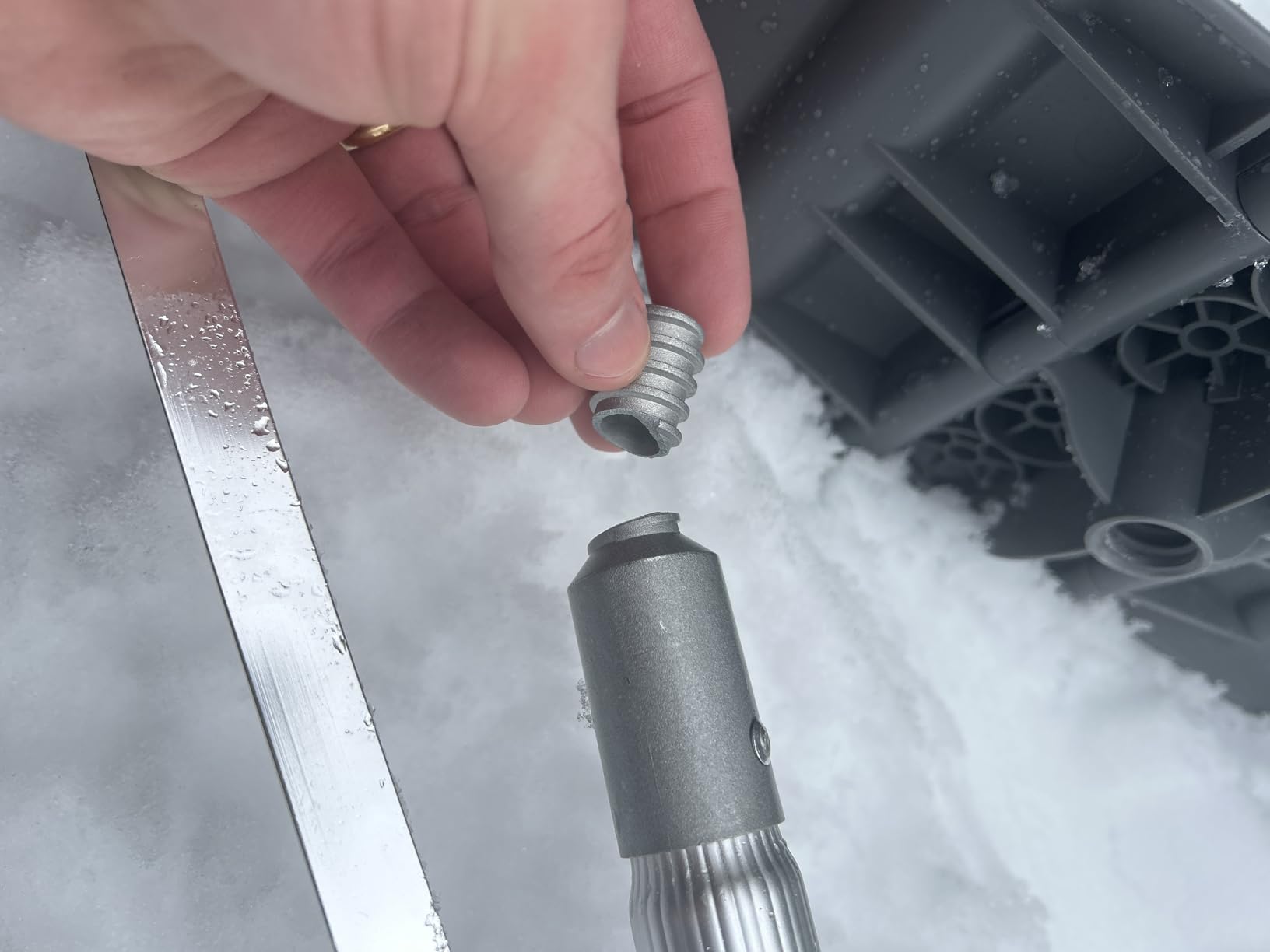
- Acme thread tip resists loosening
- Cons
- No cutting ability against ice at all
- Strips debris instead of cutting
- 16 in head needs more passes
- Lowest rating in this group
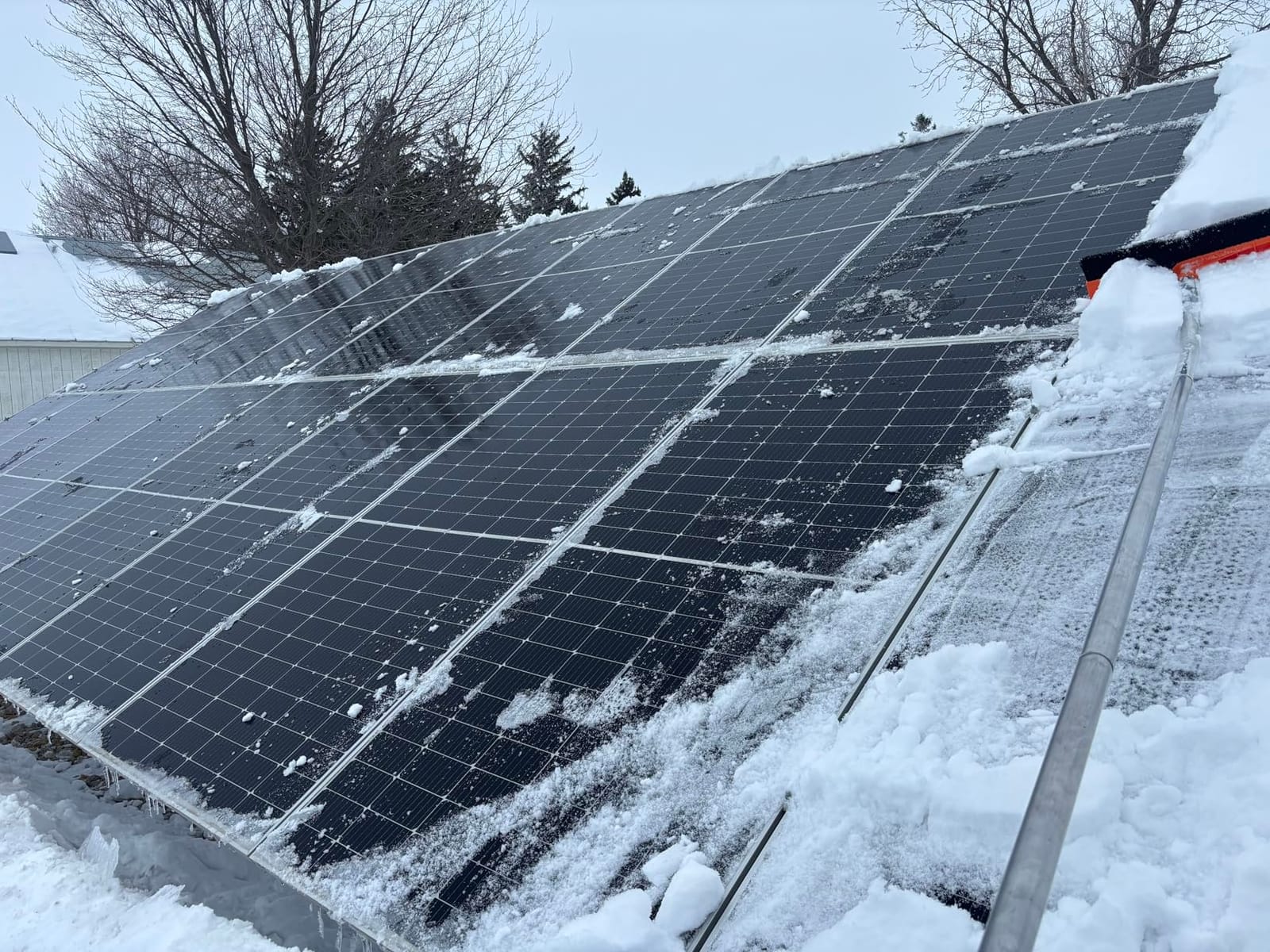
If you own solar panels, this is the safest tool on the list. The soft EVA foam head will not scratch glass, car roofs, coated shingles, pool covers, or window glass, and reviewers confirm it is genuinely damage free on arrays.
The S-shaped head works in both directions, so you can clear from above or below. The telescoping aluminum pole reaches 21 ft with a claimed overhead extension beyond that, and the sponge grip keeps your hands off freezing metal.
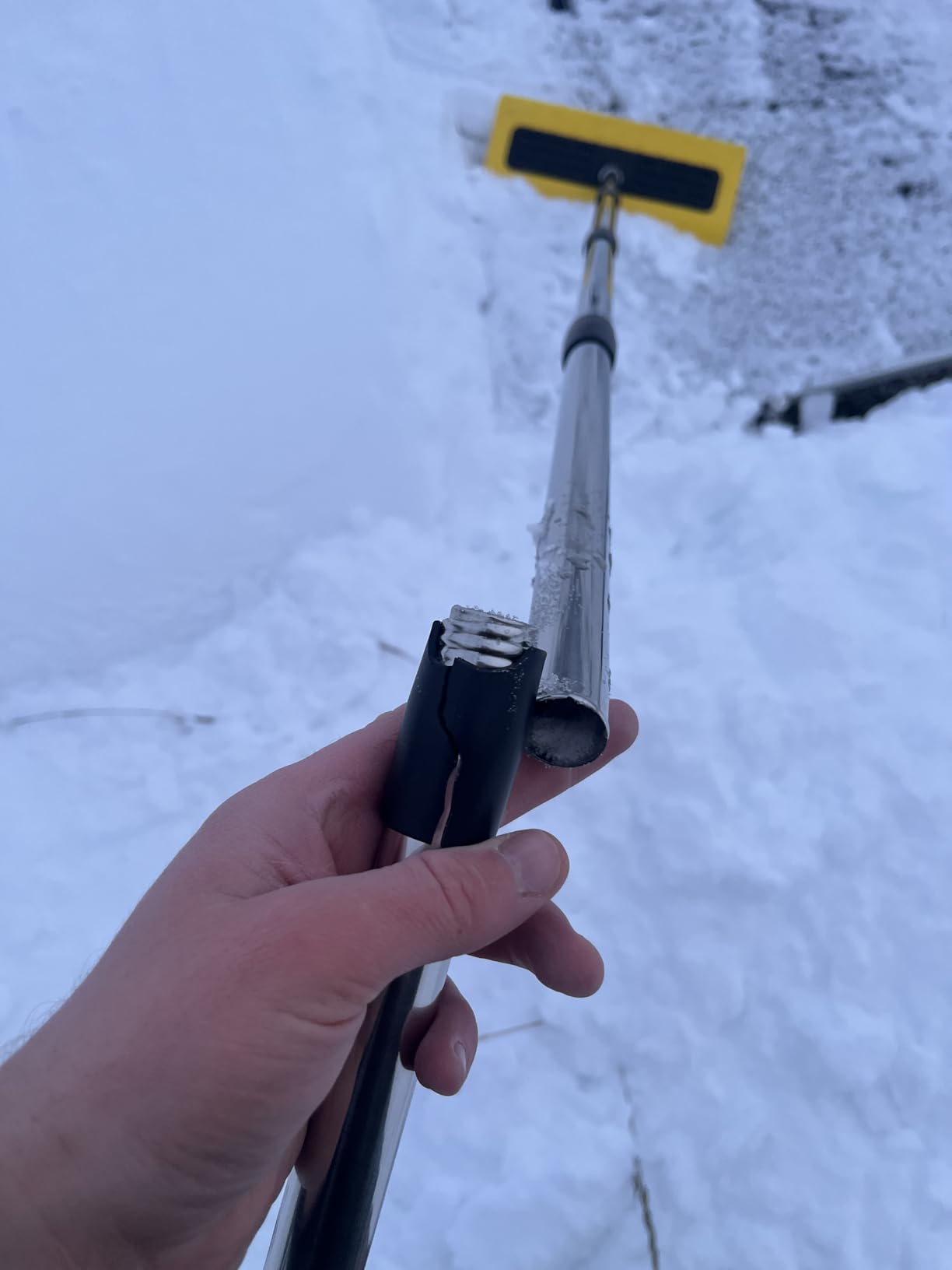
Where foam belongs and where it does not
Foam has no cutting ability. That single fact defines the tool. It moves light fresh snow beautifully and strips debris rather than slicing through it, which makes it slow on heavy packed snow.
It cannot touch a formed ice dam at all. Treat this as a panel safe finisher and a leaf and moss tool, not as ice dam equipment.
Push and pull geometry
The S-shape with its small curves lets you work in either direction, which is useful when the roof pitch and your stance do not agree on a single pull direction.
On a slippery metal roof, working in two directions helps because you can always push away from the edge you are standing near.
Narrow head and hardware details
The 16 inch head is narrower than most competitors, so more passes are needed to cover the same ground. Budget for that time rather than assuming one drag finishes the eave.
Positive hardware notes: an integrated handle cover and a 3/4 inch Acme thread tip resist loosening and can be over tightened, which is rare in this category. The warranty is one year limited.
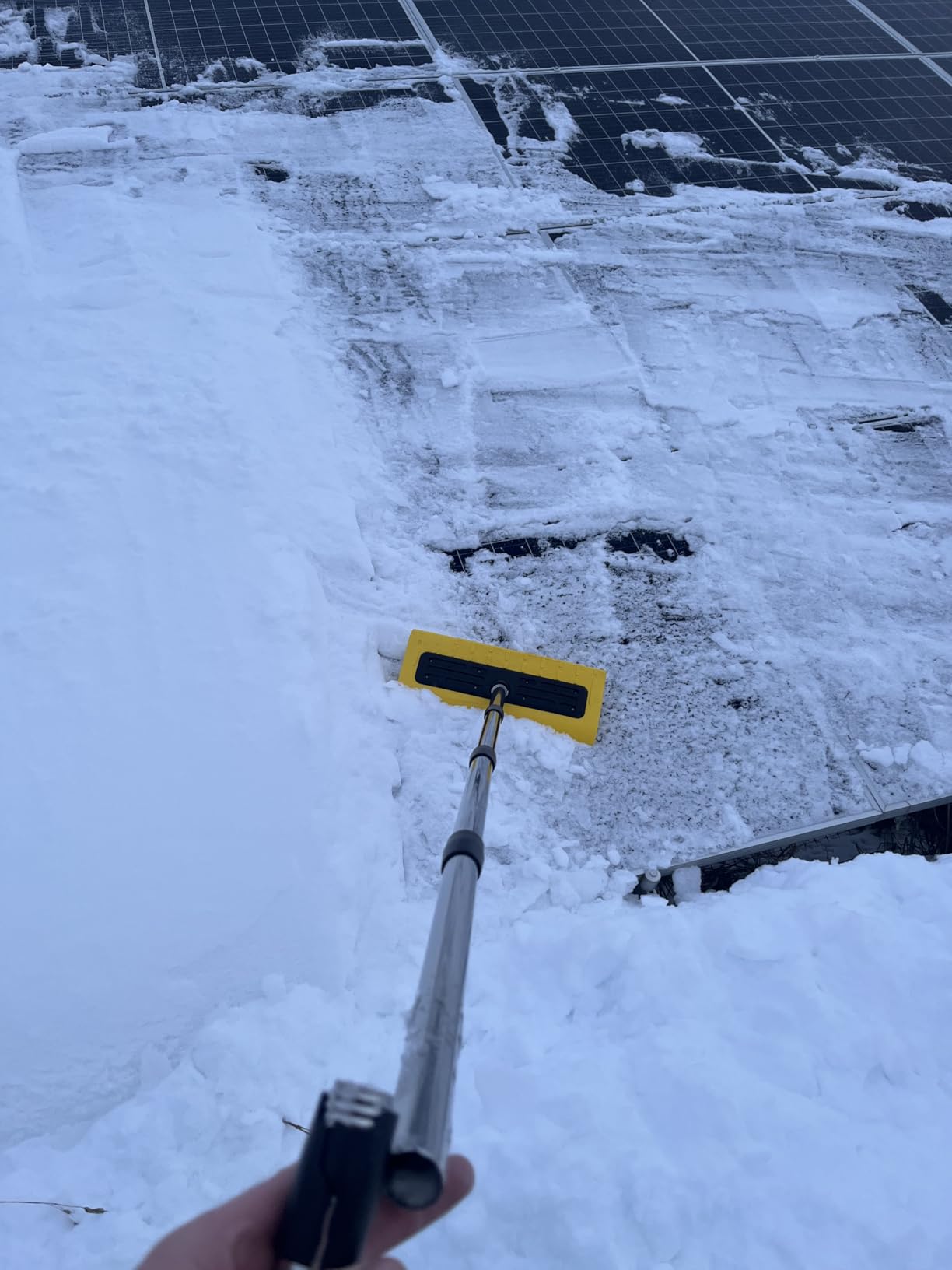
11. VEVOR 26 in Aluminum Roof Rake - Heavy Duty Blade at a Mid Weight
VEVOR Snow Roof Rake, 26 in Aluminum Blade, 7.5-20 ft Adjustable Roof Snow Scraper with Wheels...
26 in aluminum blade
7.5 to 20 ft adjustable
Sliding wheels
Tool-free assembly
+ Pros
- Widest blade in this roundup
- Aluminum resists corrosion and deformation
- Sliding wheels protect the surface
- Tool-free assembly and compact storage
- Cons
- Heavier than expected at full extension
- Weak on low pitch and ranch roofs
- One report of a broken head after few uses
- Manufacturer support is hard to reach
Its 26 inch aluminum blade cuts a wide swath per pass, and owners report stripping 18 inch loads and knocking ice off eaves with it.
Assembly is tool-free, which matters because nobody wants to be on a snowy driveway at dawn hunting for a hex key. The handle adjusts from 7.5 to 20 ft, so it can work low on a ranch house or high on a two story eave.
Why a 26 inch blade pays off
Width is a labour saver, not a performance saver. The aluminum alloy resists corrosion and deformation over long term use, and a wide pass means fewer drag strokes over the same square footage.
The tradeoff is that you still drag the same volume of snow. On a small roof the extra width does very little, and on a large open roof it is the difference between ten minutes and twenty.
Weight and low pitch limits
Owners consistently call it heavier than the listing implies at full 20 ft extension. Plan for arm fatigue and do not add pole length until the head is already on the roof.
Effectiveness drops sharply on shallow pitch and single story ranch homes, where buyers report it reaching only a couple of feet up the slope. Check your eave height and pitch before choosing this one.
Build quality and support
At least one review reports the head breaking after only a few uses, so inspect the mounting bolts and braces before every job and tighten them by hand.
Manufacturer tech support is described as difficult to reach, which is worth weighing against the two year style warranty terms offered by other brands in this list.
12. VEVOR 24 in Plastic Blade Roof Rake - Light and Cold Resistant
VEVOR Snow Roof Rake, 24 in PP Plastic Blade, 3.8-18.2 ft Adjustable Roof Snow Scraper with Wheels...
24 in cold resistant PP blade
3.8 to 18.2 ft handle
Rolling wheels
5.4 lb total
+ Pros
- Very light at 5.4 lb for overhead work
- PP blade resists cracking in cold
- Tool-free setup and detachable handle
- Reported working on 2 ft loads
- Cons
- Clip-on wheels pop off and get lost
- Replacement wheels are not supplied
- Blade has less bite on packed snow
- Wheels sometimes missing from the box
At 5.4 pounds this is one of the lighter rakes here, and older or less mobile owners say that low weight is the deciding factor. You can raise it overhead, sweep it, and set it down without planning a rest first.
The 24 inch high strength polypropylene blade is described as cold resistant and it will not crack in freezing conditions, which is not a given with plastic heads. Reconfigured as a pusher it works on solar panels, awnings, and pergolas as well as roofs.
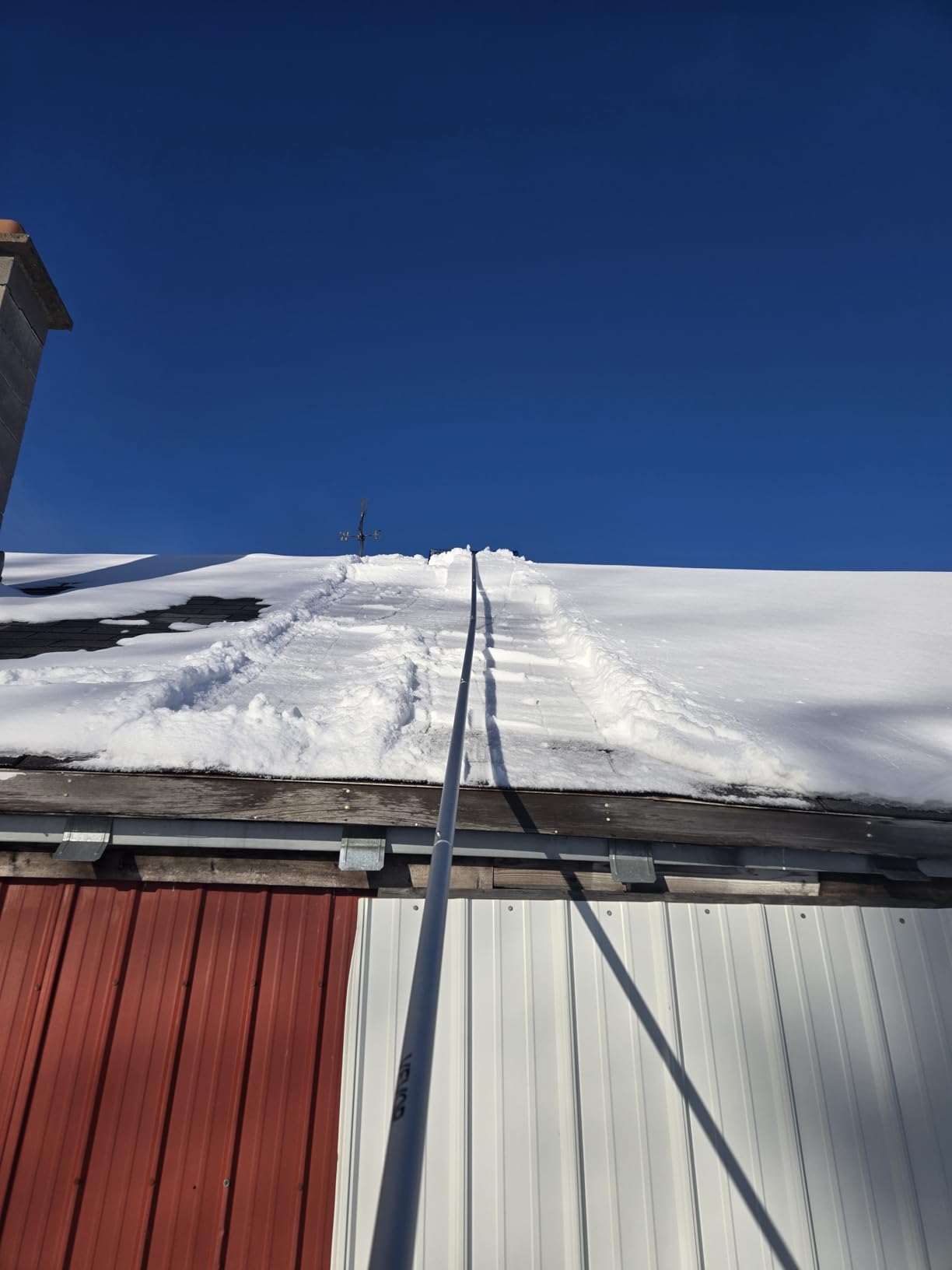
The wheel problem you need to know about
By far the most common complaint, appearing across multiple reviews, is that the small clip-on wheels detach within a single use and the manufacturer does not replace them. Some buyers received none in the box at all.
That matters because once the wheels are gone, the bare plastic blade drags directly across shingles. Check the wheels before every pass, and keep spares if you own this model.
Strength versus bite
The aluminum alloy handle is pressure resistant and does not bend, which is a genuine plus at 18.2 ft of extension. The plastic blade is the trade off: less cutting bite than an aluminum head on hard packed snow.
Several owners report clearing 2 ft of snow successfully, so the tool works well on wet storms. Save it for the snow type that gives up rather than the snow that resists.
Adjustability and storage
The handle adjusts from 3.8 to 18.2 ft, and the detachable design plus tool-free assembly means it packs flat in a corner for the off season.
There are sibling variants in this family with 17 inch, 21 inch, and 24 inch blades at different reaches. Pick the reach that matches your eave height and nothing more.
How to Break an Ice Dam Once It Has Formed
Once ice is hard, no rake in this roundup will cut through it from the ground. This is the sequence that works, and it is also the DIY limit most roofing sources describe.
- Rake the snow off first. Clear the snow load above the dam so there is nothing left to melt and refill the channel while you work. Pull only, and work from the ground.
- Cut a drainage channel through the dam. The standard technique is to run a long grabber or rake head along the top of the ice until a trough forms, letting meltwater escape toward the gutter instead of backing up under shingles. Homeowners on r/HomeMaintenance also describe running hot water in a sealed zip bag across the dam with a grabber, reheating and repeating for a couple of hours.
- Fill the channel with calcium chloride. Packing the trough with calcium chloride keeps a meltwater path open through a cold spell so water drains rather than refreezing in place.
- Stop at the DIY limit and call a pro. The roof rake handles the heavy lifting and the calcium chloride handles the drainage channel. If the dam is thicker than your rake can reach, sits above a third story eave, or involves tile or slate, that is where hand off to a professional begins.
One expectation to reset here. You do not need to strip the entire roof. Removing the lower 12 to 18 inches at the eave is what breaks the melt path. Many homeowners over clear and accidentally scrape shingles while doing it.
Most roofers work the same way, adding steam or hot water equipment when a channel will not cut by hand. If you already see water stains on a ceiling or a wall, that is the point to stop experimenting.
How to Choose a Roof Snow Removal Tool Without Wasting Money
Match reach to your eave height, not your roof length
Measure from the ground to the bottom of your gutter at the lowest point, then add headroom for the rake head itself. A 20 ft pole covers most two story eaves, 25 ft handles taller houses, and 30 ft is the threshold for three story.
Adequate reach beats a better head. A superior blade that cannot reach the eave is useless for ice dams, and an oversized tool that tires you out after two passes gets abandoned by February.
Poly blade, aluminum blade, or foam: pick for your roof surface
Aluminum cuts deepest and handles crust and drifted snow fastest. Poly is gentler and better on metal roofing, coated shingles, and anything you are worried about scratching. Foam will not scratch anything but also cannot cut, so it belongs to panel owners finishing light snow.
If you have solar panels, plan on two tools or accept a gentler pass over the array. Foam for the panels, aluminum for the rest of the roof.
Wheels and sled runners decide whether your shingles survive
Roller or sled systems hold the cutting edge clear of the granule surface. That is the single most important feature for roof life, because repeated bare metal contact abrades shingles faster than snow load does.
Check the rollers before every pass. A roller system that has lost one wheel is worse than no rollers at all, because it looks protected until it does not.
Weight at full extension is the fatigue factor nobody lists
Published weights are rarely given at full extension, and that is the number that matters. A 10 pound rake at 25 ft feels like 25 pounds to your shoulders after ten passes.
Add pole sections only after the head is on the roof, which is the one handling habit that consistently shows up in owner advice across this category.
Never climb a snowy roof: five safe working steps
Step one: stay on the ground. Ladder and rooftop snow work is the single most dangerous part of this job, and it is also unnecessary with a ground level tool. If you ever do choose to work at height, our ice climbing tools guide covers the real hardware, but a ground level rake makes the question moot.
Step two: clear after every snowfall over a few inches, and always before you shovel the driveway. Timing is the actual prevention mechanism.
Step three: pull the rake, never push it. Pushing bends braces on most models.
Step four: wear traction on your feet. Our winter traction device guide covers the right crampon and cleat patterns for packed snow and ice on a driveway slope.
Step five: add gloves, eye protection, and a headlamp if you work early or late. Stop immediately if the roof pitch is steep, the shingles are wet and slick, or the wind is strong enough to swing a long pole.
Storage breaks the deal for 20 to 30 ft poles
Long poles are the most common reason a roof rake stays in the garage and never gets used. Snap button disassembly or a collapsible design that fits in a bag is worth real money over ten winters of consistent use.
Also think about when you will need it. A tool stored behind a snowblower at the back of a garage does not get deployed after a storm.
Know when to hire a pro instead
Call a roofer when the dam sits above a third story eave, when the roof is tile, slate, or a steep pitch, when water is already inside, or when a contractor has flagged your attic insulation as poor. Older pre 1980 homes with chronic ice damming need insulation and heat loss work, not a better tool.
On insurance, do not assume coverage either way. Ice dam damage is treated differently from storm damage by many policies, and exclusions vary widely, so ask your insurer directly before authorizing any work.
Frequently Asked Questions
What is the best tool for removing ice dams?
A telescoping roof rake with a wheeled or sled-style blade is the best tool for removing ice dams. It strips heavy snow from the lower roof edge while you stay on the ground, which removes the meltwater source that forms the dam. Once ice has frozen solid, you need a drainage channel cut through it and calcium chloride packed into that channel, or a professional.
Do roof rakes actually prevent ice dams?
Yes, when you use them consistently. An ice dam forms because snow melts at the warm roof edge, runs to the eave, and refreezes in the gutter. Raking that snow off after each snowfall removes the meltwater before it can back up, which is why owners who clear the roof every storm report dams never forming. A rake cannot break a dam that has already hardened.
What is the best snow clearing tool for a roof?
For most homes, a long reach telescoping roof rake with an aluminum or poly blade and roller or sled protection. Wide blades clear more per pass, longer poles reach taller eaves, and wheels keep the cutting edge off shingles. Lightweight models under 6 pounds are easier to control for older owners, while heavier dual edge heads suit deep drifted snow.
How do roofers get rid of ice dams?
Roofers clear the snow load, then cut a channel through the ice so meltwater drains toward the gutter instead of backing up under shingles. On stubborn dams they add steam or hot water equipment to cut ice that a hand tool will not move, and pack the new channel with ice melt. For persistent problems they address heat loss through attic insulation or install roof heating cable.
Will homeowners insurance cover ice dam damage?
Coverage varies widely by policy, and many policies treat ice dam damage differently from ordinary storm damage. Some carriers exclude damage caused by inadequate attic insulation or heat loss through the roof. Ask your insurer directly whether your policy covers ice dam removal and the resulting interior water damage before you authorize any repair work.
Final Verdict: Which Roof Rake to Buy in 2026
If you want one tool for a typical two story home and you want to keep using it in ten years, the Snow Joe RJ204M is the pick. At 4.8 pounds it is the easiest to swing, and the 21 ft telescoping pole plus 27 ft total reach clears the eave without a ladder. Just check those brace screws before each storm.
If snow is deep, wet, and drifted, the SNOWPEELER 30 ft setup moves bulk faster than anything else and reaches a three story eave. Budget for the weight and keep a lightweight rake on hand for the final two inches.
If your roof is old, tiled, or you want maximum cutting power on crust, the Extreme Max Shingle-Saver protects granules with its rollers while still using an aluminum edge. If you own solar panels, add the SnowBuster foam head and keep the aluminum rake off the array. If your garage cannot swallow a 20 ft pole, the EZ Smart collapses into a bag.
Whichever one you choose, the outcome depends more on habit than hardware. Clear the roof after every meaningful snowfall, before you touch the driveway, pull rather than push, and stay on the ground. When a hard ice dam is already there, cut a channel, add calcium chloride, and know when to hand off to a roofer. That sequence is the real ice dam answer, and the right tool just makes it easier to execute each winter.