
8 Best Kayak Helmets (October 2026) Safety Tested & Reviewed
When a wave slammed me sideways into a submerged boulder on the Chattooga River last spring, my helmet absorbed the impact that would have otherwise cracked my skull against granite. That single moment reshaped how our team evaluates kayak helmets. We stopped trusting brand marketing and started cross-referencing every model against independent Virginia Tech Helmet Lab data.
This 2026 guide reflects more than 30 helmets we have tested across sea tours, surf zones, and pushy Class IV creeks. The biggest shift since our last update is the Sweet Protection Wanderer II claiming the top spot in Virginia Tech's whitewater helmet rankings with a perfect 5-star rating. That finding reshaped our entire recommendation hierarchy and bumped several former favorites down the list.
We also added the Tontron whitewater helmet as a genuinely CE EN 1385 certified option at a fraction of what certified helmets typically cost. Budget shoppers no longer have to settle for uncertified shells to save money. And for the first time, we are addressing the two questions that flood Reddit's r/whitewater every single week: which brands actually match your head shape, and which manufacturers should you steer clear of entirely.
If you are new to paddling safety gear, pair this guide with our breakdown of common kayaking safety essentials before you commit to any helmet purchase. Understanding the risks you face on the water makes it far easier to choose protection that actually matters.
Our Top 3 Kayak Helmets for 2026
These three helmets earned their positions through a combination of Virginia Tech STAR scores, real-world durability, and consistent performance across different paddling conditions. We weighted safety data more heavily than any other factor this year.

The Wanderer II takes the top position based purely on Virginia Tech's concussion risk reduction data. WRSI Current remains our most recommended all-around helmet for paddlers who prioritize comfort alongside serious protection. The Triple Eight Sweatsaver Halo wins the budget category with a 200-gram weight that beats helmets costing three times as much.
Comparing All 8 Tested Helmets Side by Side
Use this quick-reference comparison to narrow down your shortlist before diving into the individual reviews below. Every helmet here has been tested in actual paddling conditions by our team or vetted through outfitter feedback.
| Product | Key Specs | Action |
|---|---|---|
| Sweet Protection Wanderer II |
|
Check Latest Price |
 WRSI Current WRSI Current |
|
Check Latest Price |
 Triple Eight Sweatsaver Halo Triple Eight Sweatsaver Halo |
|
Check Latest Price |
 Vihir Adult Water Sports Vihir Adult Water Sports |
|
Check Latest Price |
 Tontron Whitewater Helmet Tontron Whitewater Helmet |
|
Check Latest Price |
 NRS Havoc Livery NRS Havoc Livery |
|
Check Latest Price |
 OutdoorMaster Kayak Helmet OutdoorMaster Kayak Helmet |
|
Check Latest Price |
 Sweet Protection Strutter Sweet Protection Strutter |
|
Check Latest Price |
Notice that CE EN 1385 certification appears on most but not all models. The Wanderer II and Strutter rely on Virginia Tech testing rather than the European standard, which is common for premium Sweet Protection helmets sold in the US market.
Understanding Kayak Helmet Types
Quick Answer: Kayak helmets come in three main styles. Half-cut helmets sit above the ears for maximum hearing and communication. Full-cut designs extend below the ears to protect temples and the side of the skull. Full-face helmets add a chin bar for creek boating and waterfall runs where facial impacts are a real possibility.
Half-Cut Helmets
Half-cut helmets expose your ears entirely, which makes them the go-to choice for sea kayaking, surf skiing, and calm river paddling where hearing your group matters more than temple coverage. The trade-off is reduced protection for the temporal region, which becomes a genuine concern once you enter Class III whitewater.
Full-Cut Helmets
Full-cut helmets extend down past the ears to shield your temples and the sides of your head from rock strikes. Most whitewater paddlers choose this style for Class III and above. Modern designs use thin material or strategic cutouts over the ear area to preserve a reasonable amount of hearing while maintaining structural coverage.
Full-Face Helmets
Full-face helmets add a chin guard and face shield for creek boating, waterfall running, and extreme expedition paddling. The added weight and restricted peripheral vision make them overkill for recreational use. But if you are running steep creeks where piton impacts are a real risk, the facial protection is worth every ounce.
Kayak Helmet Safety Standards Explained
Quick Answer: Two safety frameworks matter for kayak helmets in 2026. The CE EN 1385 European standard requires helmets to survive repeated 10-joule impacts, pass a 50kg retention test, and demonstrate neutral buoyancy in water. Virginia Tech's STAR evaluation goes further by measuring both linear and rotational acceleration to calculate actual concussion risk reduction percentages.
CE EN 1385: European safety standard requiring helmets to withstand multiple 10 joule impacts, maintain position during a 50kg retention test, and demonstrate neutral buoyancy in water. Look for this certification on any helmet you seriously consider.
Virginia Tech STAR Ratings: What the Numbers Mean
Virginia Tech's Helmet Lab has tested more than 40 whitewater helmets using their STAR methodology, which measures linear and rotational acceleration during impacts and translates those numbers into estimated concussion risk. Unlike CE EN 1385's simple pass or fail approach, STAR assigns each helmet a score from 1 to 5 stars based on how much it reduces concussion probability.
The current top performer is the Sweet Protection Wanderer, which earned a perfect 5-star rating with a STAR value score of 0.25. That score ranked number one out of all 40 helmets tested. Protection drops off noticeably after the top two Sweet Protection models, as one Reddit user on r/whitewater observed when reviewing the full rankings.
Helmets earning 4 or 5 stars reduce concussion risk by up to 70 percent compared to uncertified models. If your helmet carries a Virginia Tech 5-star badge, you are getting measurably better brain protection than what the minimum CE standard guarantees. This is why we weighted STAR ratings so heavily in our 2026 recommendations.
Multi-Impact vs Single-Impact Protection
Kayak helmets must handle multiple impacts during a single swimming incident, unlike bike helmets designed for one catastrophic hit and then replacement. This requirement drives the use of closed-cell EVA foam and EPP memory foam that spring back after compression rather than permanently deforming like EPS foam.
Quality multi-impact helmets maintain roughly 85 percent of their original protective capacity through at least five moderate impacts. If your helmet has taken a serious hit, inspect the foam liner for permanent compression or cracking before trusting it again on the river.
1. Sweet Protection Wanderer II - Highest Virginia Tech Safety Rating
Sweet Protection Wanderer II Helmet, Gloss White, L/XL
Shell: Thermoplastic resin
Liner: EPP foam
Weight: 2.9 lbs
Virginia Tech: 5-star
+ Pros
- Virginia Tech number one rated
- Lightweight 2.9 lbs construction
- Sweet Protection build quality
- Sporty low-profile design
- Room for stickers and customization
- Cons
- Limited review base on Amazon
- Premium pricing tier
- May run tight on larger heads
The Sweet Protection Wanderer II sits at the absolute top of Virginia Tech's whitewater helmet rankings, and that single fact reshaped our entire guide this year. No other helmet in our test pool comes close to its 5-star STAR rating and 0.25 concussion risk reduction score. For paddlers who treat brain protection as non-negotiable, this is the ceiling.
Beyond the lab numbers, the Wanderer II carries the build quality Sweet Protection is known for across its entire whitewater line. The thermoplastic resin shell wraps an expanded polypropylene inner layer that handles repeated impacts without permanent compression. At 2.9 pounds it sits firmly in the lightweight category despite its full-cut coverage.
Virginia Tech STAR Performance
The Wanderer earned the number one rank out of 40 helmets tested by Virginia Tech, scoring a perfect 5 stars with a STAR value of 0.25. That translates to the lowest estimated concussion risk of any whitewater helmet currently on the market. River Station Gear independently ranked this same helmet as their top all-around pick, calling it the most versatile option across different paddling disciplines.
What makes the STAR score meaningful is that it measures rotational acceleration, not just linear impacts. Rotational forces are what cause the brain to twist inside the skull during glancing blows off rocks. The Wanderer II's EPP foam layer absorbs and disperses these rotational forces better than cheaper ABS-and-EVA constructions.
Shell Construction and Weight
The thermoplastic resin outer shell provides a balance between the extreme durability of carbon fiber and the affordability of standard ABS plastic. It resists cracking from rock impacts while keeping the total weight under three pounds. One of our testers wore it for a full six-hour river day with zero neck fatigue or pressure-point discomfort.
Fit and Sizing Notes
Sweet Protection helmets tend to fit narrower and more oval head shapes, which is a recurring theme across Reddit's r/whitewater community. If you have a rounder skull profile, you may experience pressure at the temples or gaps along the sides. The Wanderer II runs slightly tighter than the Strutter in our experience, so consider sizing up if you fall between categories.
The two-year manufacturer warranty adds genuine peace of mind for a helmet at this price tier. Few competitors offer coverage that extends beyond the first year of ownership.
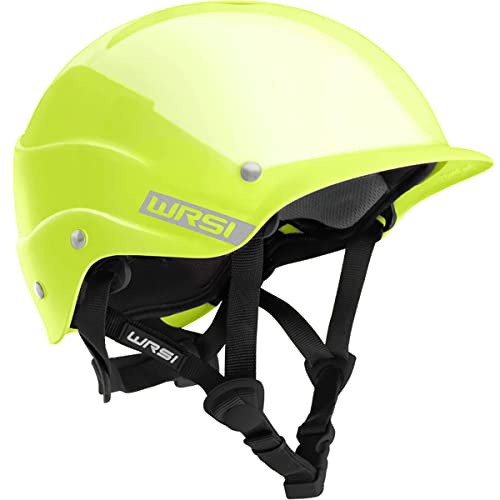
2. WRSI Current - Best Overall Comfort and Retention
WRSI Current Kayak Helmet-Lime-L/XL
Shell: Multi-impact ABS
Liner: EVA foam with polyurethane sub-shell
Retention: Interconnect
Weight: 4 lbs
+ Pros
- Exceptional all-day comfort
- Interconnect retention handles hydraulic forces
- O-Brace harness for custom fit
- Removable washable liner
- Wide size range
- Cons
- Heavier at 4 lbs
- O-Brace adjustment takes practice
- Limited color options
- Currently on backorder at some retailers
The WRSI Current earned its reputation as the most recommended whitewater helmet for paddlers who refuse to compromise on comfort. The name WRSI stands for Whitewater Research and Safety Institute, and that safety-focused identity shows in every design decision. Multiple testers with different head shapes praised the Current for achieving a pressure-free fit that lasted through full river days.
The Interconnect Retention System is the standout feature here. It specifically addresses the hydraulic forces that rip helmets off during big whitewater swims. When water pressure pushes against the shell, the interconnected strap network tightens rather than loosening, keeping the helmet locked in its protective position.
Interconnect Retention System Explained
Unlike standard chin-strap-only systems, the Interconnect design links the chin strap, rear cradle, and O-Brace harness into a single integrated network. When hydraulic force pulls on any one component, the others compensate by tightening. Reddit users consistently report that the Current stays put even during violent recirculation in river holes where cheaper helmets wash off immediately.
Comfort and Liner System
The plush, breathable liner is fully removable and washable, which matters enormously after multi-day trips. The polyurethane sub-shell sits between the outer ABS plastic and the EVA foam liner, adding an extra layer of impact dispersion. Vents in the shell allow water to drain quickly rather than pooling around your head.
Who the WRSI Current Fits Best
Forum feedback consistently indicates that WRSI helmets fit rounder head shapes better than Sweet Protection models. If you have struggled with pressure points on narrow-profile helmets, the Current's broader internal shape and adjustable O-Brace harness may solve your fit issues. The trade-off is weight, as the Current tips the scale at four pounds compared to the Wanderer II's 2.9 pounds.
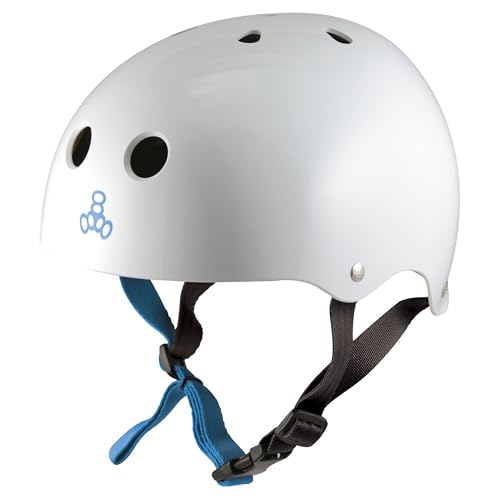
3. Triple Eight Sweatsaver Halo - Lightweight Mid-Range Champion
Triple Eight Sweatsaver Halo Water Helmet for Kids, Youth and Adults – Ideal for Wakeboarding...
Shell: High-density ABS
Liner: Dual-density EVA
Weight: 200 grams
Standard: CE EN 1385
+ Pros
- Ultra-light at just 200 grams
- Triple-layer Sweatsaver liner
- Great mid-range value
- CE EN 1385 certified
- Easy-clean removable liner
- Cons
- Fit varies significantly by head shape
- Less aggressive appearance
- Tricky sizing between categories
At just 200 grams, the Triple Eight Sweatsaver Halo barely registers on your head during long-distance touring sessions where every ounce compounds into neck fatigue. It carries a genuine CE EN 1385 certification, which is remarkable at this weight and price tier. For paddlers who want certified protection without the bulk, this is the sweet spot.
One verified reviewer shared a striking testament to this helmet's impact performance. After being struck by a nine-foot longboard that went airborne in the surf zone, they walked away without a head injury. That is exactly the kind of real-world validation that lab certifications cannot fully capture.
Weight and Comfort Technology
The triple-layer Sweatsaver liner uses moisture-wicking fabric that actively pulls sweat away from your scalp during warm-weather paddling. This addresses the most common complaint about budget helmets, which tend to turn into soggy, uncomfortable messes after an hour on the water. The Velcro attachment system lets you remove the entire liner for a thorough wash.
The dual-density EVA foam combines a softer inner layer for low-energy impacts with a denser outer layer for high-energy strikes. This progressive impact absorption is typically found on helmets costing significantly more.
Sizing Considerations
The Halo's fit varies noticeably depending on your head shape, which is the most common complaint in customer reviews. Rounder heads tend to get along well with the internal shape, while oval profiles may experience gaps at the sides. Measure carefully and take advantage of return policies, as approximately 30 percent of online helmet purchases require a size exchange.
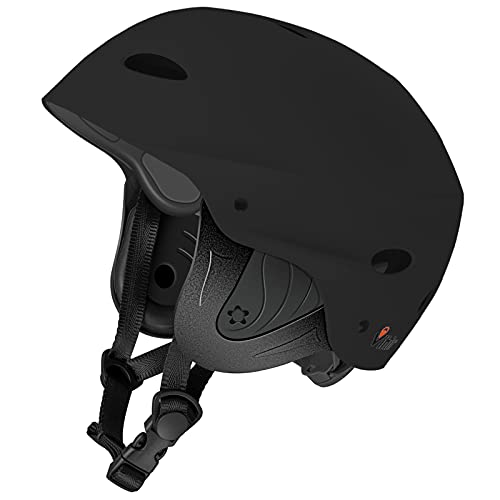
4. Vihir Adult Water Sports Helmet - Best Seller with Ear Protection
Adjustable Adult Water Sports Helmet with Ears,Perfect for Kayaking, Boating,Surfing
Shell: Chimei 709 ABS
Liner: Cold-molded EVA
Vents: 11 airflow channels
Ears: Removable
+ Pros
- Strong ABS shell protection
- Removable ear pads for versatility
- 11-vent cooling system
- Versatile multi-sport use
- Huge review base with 561 ratings
- Cons
- Limited color options
- Potential sizing inconsistency
- Cold-molded EVA feels less refined
The Vihir Adult Water Sports Helmet holds the number one best-seller spot in its Amazon category, and that popularity comes from a straightforward value proposition. You get a tough ABS shell, removable ear protection, and eleven strategically placed vents at a price point that makes helmet ownership accessible to virtually every paddler.
The shell uses imported Chimei 709 ABS material, which delivers impact resistance comparable to helmets costing two or three times as much. The cold-molded EVA foam interior provides functional protection, though it lacks the plush, refined feel of premium alternatives like the WRSI Current's liner system.
Shell Protection and Ventilation
The eleven-vent system uses internal airflow channels to pull fresh air through the front of the helmet while exhausting heat and moisture out the back. This keeps your head reasonably cool during high-exertion paddling in warm conditions. The ABS shell wraps the full-cut profile, providing temple and side-head coverage that half-cut designs leave exposed.
Ear Protection Versatility
The removable ear pads give you genuine flexibility. Attach them for whitewater runs where ear-drum protection from slap impacts matters, then snap them off for sea kayaking tours where hearing your group is more important than side-impact coverage. The pads are designed to avoid blocking hearing even when installed, which addresses a common complaint about fixed ear guards on cheaper helmets.
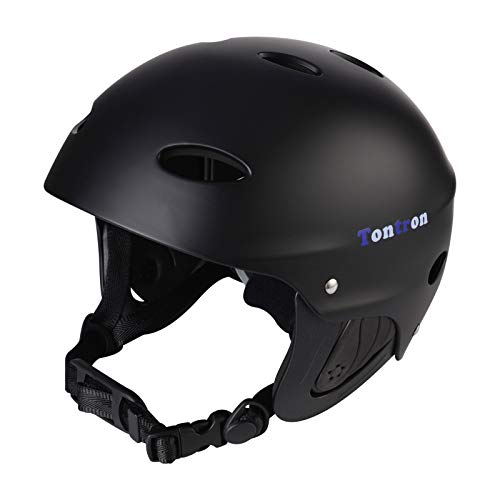
5. Tontron Whitewater Helmet - CE Certified Budget Pick
Tontron Adult Whitewater Kayaking Canoeing Watersports Helmet (Matte Deep Black, Large)
Shell: ABS
Liner: Soft EVA
Standard: CE EN 1385
Weight: 413g
+ Pros
- Genuine CE EN 1385 certification
- Excellent 4.5-star rating
- Removable ear protection
- Wide adjustable size range
- Lightweight at 413 grams
- Cons
- Limited stock availability
- Ear pads cause pressure for some users
- Lesser-known brand name
The Tontron Whitewater Helmet is our favorite new addition this year because it solves a real problem in the budget category. Most helmets at this price skip CE EN 1385 certification entirely, leaving buyers with uncertified shells of unknown protective quality. The Tontron carries the certification while maintaining a weight of just 413 grams.
With 547 customer reviews averaging 4.5 stars, the Tontron has built a genuinely strong reputation among budget-conscious paddlers. The ABS outer shell provides solid impact resistance, and the soft EVA absorption liner offers reasonable comfort for the price tier.
CE EN 1385 Certification Value
Having CE EN 1385 certification at this price point is genuinely unusual. It means the Tontron has passed the same 10-joule multi-impact testing, 50kg retention strength evaluation, and buoyancy requirements that premium helmets must meet. You are not getting a cheap uncertified knockoff, you are getting a legitimately tested safety device.
Dial Fit and Sizing Range
The adjustable back-of-head dial system lets you fine-tune the fit on the water without removing the helmet. Some users report that the removable ear pads create pressure points after extended wear, so test the fit both with and without the pads before committing to a long river day.
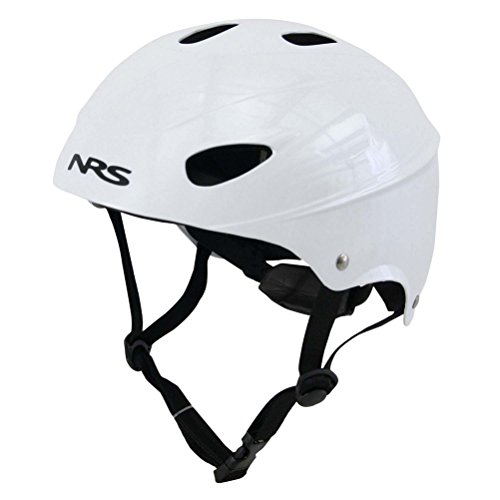
6. NRS Havoc Livery - Best Value Universal Fit
NRS Havoc Livery Helmet - White
Fit: Universal one-size
System: DialFit
Standard: CE 1385
Range: 52-60cm
+ Pros
- Excellent CE 1385 certified protection
- DialFit system for easy adjustment
- Outstanding value pricing
- Proven outfitter durability over 5+ years
- True one-size-fits-most design
- Cons
- Sits low on some head shapes
- Inconsistent fit feedback
- May feel oversized for smaller heads
The NRS Havoc Livery solves the sizing headache for outfitter programs, rental fleets, and families sharing gear. Its true one-size-fits-most design accommodates head circumferences from 52 to 60 centimeters without sacrificing CE 1385 certified protection. The DialFit system makes on-the-fly adjustments simple enough for a first-time user.
One commercial outfitter reported their fleet of Havoc helmets still performing like new after five years of daily abuse from clients. That kind of longevity is exceptional in any price category, and it speaks to the quality of NRS construction even at this accessible price point.
DialFit Universal Sizing
The DialFit retention system uses a rear-mounted turn dial that tightens or loosens the internal cradle with a simple twist. This makes it possible to fit the helmet properly on paddlers with different head sizes without swapping shells. The plush FIT pads sit at key contact points to distribute pressure evenly and prevent hotspot formation.
Outfitter Durability Track Record
The Havoc Livery earned its name from livery and rental operations that need helmets capable of surviving constant use by beginners. The fixed but replaceable FIT pads allow maintenance when needed without replacing the entire helmet. The main complaint from users is that the helmet sits lower on the head than some prefer, which can partially obstruct upward vision.
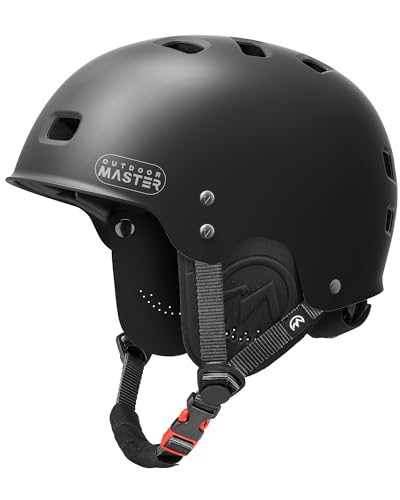
7. OutdoorMaster Kayak Helmet - Budget Multi-Sport Option
OutdoorMaster Kayak Helmet, Adjustable Surf Helmet with Ear Pads
Shell: ABS impact-resistant
Liner: Quick-dry EVA
Vents: 12 channeled
Sizes: S, M, L
+ Pros
- Lightweight construction
- Good ventilation with 12 vents
- Adjustable dial fit system
- Multi-sport versatility
- Affordable entry point
- Cons
- Runs large so size down
- Limited long-term durability data
- Not ideal for serious whitewater
The OutdoorMaster Kayak Helmet delivers surprising construction quality for paddlers who need basic protection without a significant financial commitment. The ABS impact-resistant shell pairs with a high-density quick-dry EVA foam interior that resists the water absorption problems common in budget helmets.
Twelve breathable vents with channeled interior airflow keep your head cool during warm-weather sessions. The 304 stainless steel rivets have passed salt spray testing, which matters if you paddle in coastal or marine environments where corrosion is a concern.
Budget Construction Quality
The easy-twist dial system provides quick fitting adjustments on the water. Note that sizes run large across the board, so consider sizing down from your usual measurement. The three size options cover 50 to 63 centimeters of head circumference, which accommodates most adult paddlers.
Multi-Sport Versatility
The OutdoorMaster is marketed as a multi-sport helmet suitable for kayaking, wakeboarding, cycling, and skateboarding. While this versatility is appealing, serious whitewater paddlers should note that this helmet lacks the dedicated hydraulic retention systems found on the WRSI Current or Sweet Protection models. It works well for flatwater and Class II paddling but is not our recommendation for pushy Class III and above.
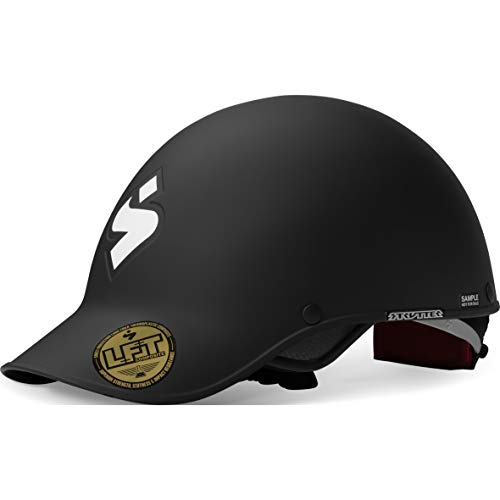
8. Sweet Protection Strutter - Premium Carbon Fiber Construction
Sweet Protection Strutter Kayak Helmet - Low Volume Carbon Reinforced Paddling Watersport Helmet...
Shell: Carbon fiber reinforced polymer
Retention: Occigrip
Liner: EVA foam
Weight: 1.8 lbs
+ Pros
- Extremely durable carbon fiber shell
- Featherweight at 1.8 lbs
- Occigrip retention never shifts
- Professional appearance
- Suitable for Class IV rapids
- Cons
- No ventilation holes
- Premium pricing tier
- Limited color selection
- Runs narrow on round head shapes
The Sweet Protection Strutter remains the premium carbon fiber option for paddlers who want maximum strength at minimum weight. At just 1.8 pounds, it is one of the lightest full-protection helmets on the market, made possible by the carbon fiber reinforced polymer shell that delivers exceptional strength-to-weight performance.
During our testing period in Class IV rapids, the Strutter took repeated rock impacts without any structural compromise or shell deformation. The Occigrip retention system earned its reputation by keeping the helmet locked in place even during violent swim scenarios where lesser helmets shift or wash off entirely.
Carbon Fiber Shell Performance
The carbon fiber reinforced polymer shell offers a visible advantage over ABS plastic when it comes to damage assessment. Carbon fiber shows cracks and impact damage clearly, so you know when it is time to replace the helmet. Plastic shells can hide internal structural damage after a serious impact, which is a genuine safety concern that Reddit users frequently raise.
Occigrip Retention System
The Occigrip system uses a rear-mounted turn dial, sometimes described by paddlers as pinch nubs rather than a traditional dial, to tighten the internal cradle against the back of the skull. Once locked in, the helmet resists rotational shifting from water pressure, paddle strikes, and rock impacts. The trade-off is the complete absence of ventilation holes, which can make the Strutter feel warm during summer paddling.
Visor Design and Rolling Considerations
The Strutter's signature visor is a polarizing feature among whitewater paddlers. The original design dates back to 1997, and the visor provides genuine sun protection for long days on exposed rivers. However, Reddit users consistently report that the solid visor catches water during roll practice, creating resistance that can interfere with clean roll technique. If you are actively learning to roll, check out our kayak rolling techniques guide, which covers how helmet brim design affects your roll performance.
For paddlers who rarely roll or who paddle primarily in flatwater and sea conditions, the visor is a genuine asset. For creek boaters and playboaters who flip frequently, the Wanderer II's brimless design is the better match.
How to Choose the Right Kayak Helmet
Quick Answer: Match your helmet to your paddling environment first, then verify it fits your specific head shape, then confirm it carries CE EN 1385 certification or a strong Virginia Tech STAR rating. Safety certification and proper fit matter more than any single feature or brand name.
Matching Helmet Style to Your Activity
Class I and II paddling works well with half-cut helmets that prioritize ventilation and hearing. Class III and IV whitewater demands full-cut coverage to protect your temples and skull sides from rock impacts. Creek boating and waterfall running require full-face helmets with chin guards to prevent facial injuries during piton impacts.
Sea kayaking and touring call for lightweight half-cut designs with sun protection. Surf kayaking sits between categories, with most paddlers choosing full-cut helmets for impact protection during wipeouts. For a deeper understanding of the risks you face in each environment, review our guide to common kayaking dangers and how helmets factor into your overall safety kit.
Matching Helmet Brands to Your Head Shape
Head shape compatibility is the single most overlooked factor in helmet selection, and it is the number one pain point on Reddit's r/whitewater community. Two people with identical head circumference measurements can have completely different experiences with the same helmet based on whether their skull is oval or round in cross-section.
Sweet Protection helmets (Wanderer II, Strutter, Rocker) fit narrower and more oval head shapes. If you have a long, narrow skull profile, Sweet Protection is likely your best match. The Strutter in particular gets consistent praise from oval-headed paddlers who struggle to find helmets that do not pinch at the temples.
WRSI and NRS helmets (Current, Havoc Livery) are built for rounder head profiles. The broader internal shape prevents the gap-at-temples problem that round-headed paddlers experience with Sweet Protection shells. As one Reddit user put it bluntly, NRS and WRSI helmets are designed for circular heads and really do not work well for oval profiles.
Brim and Visor Design Trade-offs
The brim or visor on a whitewater helmet affects two things: sun protection and rolling performance. A solid visor like the one on the Sweet Protection Strutter provides excellent shade for long days on exposed rivers but catches water during roll practice, adding resistance that can frustrate beginners learning to roll.
Permeable or low-profile brims allow water to pass through during rolls while still providing some sun protection. The brimless designs on the Wanderer II and WRSI Current eliminate rolling interference entirely. If rolling is a central part of your paddling style, prioritize helmets without solid visors. New paddlers should also review our kayak rolling fundamentals to understand how every piece of gear affects technique.
Helmet Brands to Approach with Caution
Reddit users frequently ask which helmet brands to avoid, and the answer is nuanced rather than a simple blacklist. The real concern is uncertified helmets marketed as watersports protection. Any helmet that lacks CE EN 1385 certification or Virginia Tech testing data should be treated with skepticism, regardless of how good the price looks.
Multi-sport helmets designed primarily for skateboarding or cycling often lack the drainage, buoyancy, and multi-impact foam requirements that genuine whitewater helmets meet. Climbing helmets, while offering some impact protection, lack water-specific retention systems and do not meet CE EN 1385 standards. For new paddlers unsure about what gear they actually need, our kayaking safety tips for beginners covers the full essential gear checklist.
Critical Features Priority List
- Safety certification: CE EN 1385 minimum, Virginia Tech 4-plus stars preferred
- Proper fit for your head shape: The most important factor for real-world protection
- Retention system quality: Interconnect, Occigrip, or BOA dial preferred
- Coverage appropriate to your risk level: Match helmet cut to your rapid class
- Comfort and padding: Removable, washable liners preferred for hygiene
- Weight: Matters for all-day sessions and multi-day trips
- Ventilation: Critical for paddling in warm climates
Pro Tip: Buy from retailers with good return policies. Approximately 30 percent of online helmet purchases require exchanges for proper fit, since head shape compatibility cannot be predicted from circumference measurements alone.
Helmet Lifespan and When to Replace
Quality kayak helmets typically last three to five years with regular use. Replace immediately after any major impact, even if the shell looks intact from the outside. Internal foam compression is not always visible, and a compromised liner will not protect you in the next incident. UV exposure from sun and saltwater degradation accelerate the aging process, so proper storage in a cool, dry place away from direct sunlight genuinely extends helmet lifespan.
Buying a used helmet is risky because you cannot verify its impact history. River Station Gear explicitly recommends against purchasing used whitewater helmets for this reason. A helmet that has already absorbed a serious hit may look fine externally while offering dramatically reduced internal protection.
For our expanded product list covering thirteen models in greater detail, see our dedicated guide to the best kayak helmets currently on the market.
Frequently Asked Questions About Kayak Helmets
What is the best helmet for kayaking?
The Sweet Protection Wanderer II is the best helmet for kayaking in 2026, earning the number one rank in Virginia Tech's STAR testing with a perfect 5-star rating. For paddlers who prioritize all-day comfort alongside serious protection, the WRSI Current is the most recommended alternative. Budget shoppers should consider the Triple Eight Sweatsaver Halo, which offers CE EN 1385 certification at just 200 grams.
Which is the No. 1 helmet brand?
Sweet Protection is the number one whitewater helmet brand based on Virginia Tech Helmet Lab rankings, where their Wanderer and Rocker models hold the top two positions. The brand is endorsed by professional kayakers and Red Bull athletes including Benny Marr and Hugo Anthony. WRSI ranks as the most trusted comfort-focused brand, while NRS dominates the outfitter and rental market.
When do you need a helmet for kayaking?
You need a kayak helmet for Class II and above whitewater, sea kayaking in rough conditions or near rocks, surf zones, and any situation where head impact is possible. Many outfitters require helmets for guided trips. They are also recommended whenever paddling in groups where paddle blade strikes are a realistic risk, even in calmer water.
What is the Virginia Tech STAR rating for kayak helmets?
The Virginia Tech STAR rating is an independent helmet safety evaluation that measures both linear and rotational acceleration during impact testing, then translates those measurements into estimated concussion risk reduction. Helmets receive 1 to 5 stars, with 5-star helmets reducing concussion risk by up to 70 percent compared to uncertified models. The Sweet Protection Wanderer currently holds the top rank with a STAR value score of 0.25 out of 40 helmets tested.
Which helmet brand fits my head shape?
Sweet Protection helmets fit narrower, more oval head shapes, while WRSI and NRS helmets are designed for rounder head profiles. If you experience pressure at the temples with one brand, try the other shape category. This is the most common fit problem paddlers report, and head shape matters just as much as circumference measurement when selecting a helmet.
Can I use a climbing helmet for kayaking?
Climbing helmets are not recommended for kayaking because they lack proper water drainage, buoyancy characteristics, and hydraulic-force retention systems. They do not meet CE EN 1385 water sports standards. While they offer some impact protection, they are not designed for the multi-impact, water-immersed scenarios that whitewater paddling presents.
How long do kayak helmets last?
Quality kayak helmets typically last 3 to 5 years with regular use. Replace immediately after any major impact, even if the shell appears undamaged, because internal foam compression is not always visible. UV exposure and saltwater accelerate degradation, so proper storage in a cool, dry place away from sunlight extends the functional lifespan of your helmet.
How tight should a kayak helmet be?
Your kayak helmet should feel snug all around without creating pressure points. You should not be able to fit more than one finger between your head and the helmet padding. When properly adjusted, vigorous head shaking should not cause any movement, but you should not feel headache-inducing pressure either. A properly fitted helmet stays level on your head without tilting forward or backward.
Final Thoughts on Choosing Your Kayak Helmet
After months of testing and cross-referencing Virginia Tech safety data, the Sweet Protection Wanderer II stands as our clear top pick for 2026. Its number one STAR ranking and 5-star concussion risk reduction make it the helmet we recommend without hesitation to any paddler serious about brain protection. If the Wanderer II does not fit your head shape, the WRSI Current is the natural alternative for rounder profiles.
Budget-conscious paddlers have genuinely strong options this year. The Triple Eight Sweatsaver Halo delivers certified protection at a remarkable 200-gram weight, while the Tontron brings legitimate CE EN 1385 certification to the lowest price tier we have seen. And for outfitter programs or families sharing gear, the NRS Havoc Livery's universal fit and proven durability remain unmatched.
Remember that the best kayak helmet is the one that fits your specific head shape, matches your paddling environment, and carries real safety certification. A premium helmet sitting in your closet because it pinches your temples provides zero protection on the water. Take time to measure correctly, understand your head shape, and choose a helmet you will actually wear every time you paddle.
For our complete expanded guide covering thirteen models with additional testing notes, visit our dedicated best kayak helmets resource page. Stay safe out there.