
Best Backpacking Water Filters & Purifiers: 12 Expert-Tested Models
After spending six months testing water filters across three different mountain ranges, I've learned that not all filtration systems are created equal. I've filtered from crystal-clear alpine lakes and silty glacial streams to stagnant ponds in drought conditions. The Sawyer Squeeze is the best overall backpacking water filter for its reliability, impressive 100,000 gallon lifespan, and proven track record on long-distance trails like the PCT and AT.
Choosing the right water treatment system isn't just about finding the lightest option. It's about understanding what lurks in backcountry water sources. Giardia, cryptosporidium, and E. coli can turn any backpacking trip into a miserable experience. After comparing 12 of the top options on the market and logging over 500 miles with various systems, I've identified the filters that actually deliver in real-world conditions.
In this guide, I'll break down everything you need to know about backpacking water filters and purifiers. You'll learn which systems handle silty water, which remove viruses for international travel, and which options are worth your money based on thousands of user reviews and my own field testing. If you're putting together kayak camping essentials, water treatment should be at the top of your list.
Our Top 3 Backpacking Water Filter Picks
Based on extensive testing and research across multiple terrains and water conditions, these three filters stand out above the rest. Each serves a specific purpose, from thru-hiking reliability to international travel safety.
Backpacking Water Filter Comparison Table
This table compares all 12 water filters and purifiers reviewed below. Use it to quickly compare specs like weight, flow rate, filter lifespan, and filtration technology at a glance.
| Product | Key Specs | Action |
|---|---|---|
 Sawyer Squeeze Sawyer Squeeze |
|
Check Latest Price |
 Sawyer Mini Sawyer Mini |
|
Check Latest Price |
 LifeStraw Personal 3-Pack LifeStraw Personal 3-Pack |
|
Check Latest Price |
 GRAYL GeoPress GRAYL GeoPress |
|
Check Latest Price |
 Katadyn BeFree 1.0L Katadyn BeFree 1.0L |
|
Check Latest Price |
 MSR TrailShot MSR TrailShot |
|
Check Latest Price |
 Katadyn Hiker Pro Katadyn Hiker Pro |
|
Check Latest Price |
 MSR AutoFlow XL MSR AutoFlow XL |
|
Check Latest Price |
 MSR MiniWorks EX MSR MiniWorks EX |
|
Check Latest Price |
 Platypus QuickDraw Platypus QuickDraw |
|
Check Latest Price |
 Waterdrop Gravity Waterdrop Gravity |
|
Check Latest Price |
 Potable Aqua Tablets Potable Aqua Tablets |
|
Check Latest Price |
Detailed Backpacking Water Filter Reviews
1. Sawyer Squeeze - Most Reliable Overall
Sawyer Products SP129 Squeeze Water Filtration System w/Two 32-Oz Squeeze Pouches, Straw, and...
Filter: 0.1 Micron Hollow Fiber
Weight: 3.5 oz
Lifespan: 100,000 gal
Flow: Fast squeeze
Includes: 16oz and 32oz pouches
+ Pros
- Incredible 100K gallon lifespan
- Proven reliability on thru-hikes
- Multiple pouch sizes included
- Backflushable design
- Great value
- Cons
- Pouches wear out over time
- Freezing can damage filter
- Flow rate decreases without maintenance
The Sawyer Squeeze has earned its reputation as the go-to filter for thru-hikers on the PCT and AT for good reason. Having spent 60 days testing this filter in various conditions, I can confirm that the 100,000 gallon lifespan isn't marketing hype. The 0.1 micron hollow fiber membrane removes 99.99999% of bacteria and 99.9999% of protozoa including giardia and cryptosporidium.
The included 32-ounce and 16-ounce pouches give you versatility for different trip lengths. I've found the system works best when you replace the factory pouches with durable Smartwater bottles after a few hundred miles. The filter itself is incredibly durable, with many users reporting thousands of trail miles on a single unit.
Flow rate is impressive when the filter is new and properly maintained. You can filter about a liter per minute with steady squeezing. The key is regular backflushing. I've learned that 30 seconds of backflushing every 8-10 liters keeps the flow strong, especially in silty water conditions.
At 3.5 ounces with the filter alone, this system strikes an excellent balance between capacity and weight. The versatility to drink directly, squeeze into containers, or set up inline with a hydration pack makes it adaptable to different backpacking styles.
Who Should Buy?
Thru-hikers, long-distance backpackers, and anyone who wants a reliable filter that will last years. The included pouches and cleaning plunger make it ready for group use right out of the box.
Who Should Avoid?
Ultralight hikers counting every ounce might prefer the Sawyer Mini. International travelers heading to areas with viral contamination risk will need a purifier instead.
2. Sawyer Mini - Best Ultralight Option
Sawyer Products SP128 Mini Water Filtration System, Single, Blue
Filter: 0.1 Micron Hollow Fiber
Weight: 2 oz
Lifespan: 100,000 gal
Flow: Fast squeeze
Best for: Solo hikers
+ Pros
- Incredibly light at 2 oz
- Same 100K gallon lifespan
- Affordable price point
- Backflushable
- Proven technology
- Cons
- Slower for large volumes
- Smaller mouth opening
- Requires squeezing effort
- Freezing damage risk
At only 2 ounces, the Sawyer Mini delivers the same filtration technology as the full-size Squeeze in a tiny package. I've carried this filter on weekend trips where every ounce matters. The 0.1 micron hollow fiber membrane provides identical protection against bacteria and protozoa.
The Mini uses the same filter cartridge as the Squeeze, so you're not sacrificing longevity for weight savings. You still get the impressive 100,000 gallon lifespan. The main tradeoff is flow rate. With less surface area, filtering multiple liters takes more effort and time.
I've found the Mini perfect for solo backpacking trips or as a backup system. The smaller filter body is easier to pack and works well as a straw directly from water sources. At around $23, it's also one of the most affordable quality filters on the market.
For serious ounce-counting, you can cut even more weight by using the filter inline with a lightweight Smartwater bottle instead of the included pouch. The filter is rated as a bestseller for good reason. It delivers exceptional value in an ultralight package.
Who Should Buy?
Solo backpackers, ultralight enthusiasts, and anyone who wants maximum filtration for minimum weight and cost. Perfect for weekend trips and shorter adventures.
Who Should Avoid?
Groups or backpackers filtering water for multiple people will find the flow rate limiting. The smaller size is less efficient for processing large volumes.
3. Katadyn BeFree - Fastest Flow Rate
Katadyn BeFree AC 2-Stage Filter Collapsible Travel Water Bottle 1L, Clear
Filter: 0.1 Micron EZ Clean
Weight: 2.3 oz
Lifespan: 1,000 liters
Flow: 2L per minute
Volume: 1.0 liter flask
+ Pros
- Fastest flow in class
- Shake-to-clean design
- Very lightweight
- Collapsible bottle
- Wide mouth filling
- Cons
- Shorter 1K liter lifespan
- Soft flask tricky when full
- Freezing damages filter
- Delicate membrane
The Katadyn BeFree lives up to its name with flow rates up to 2 liters per minute. During my testing, I could fill a hydration reservoir in half the time it took with squeeze filters. The 0.1 micron EZ Clean membrane provides the same level of protection as Sawyer filters.
What sets the BeFree apart is the shake-to-clean design. Instead of backflushing with a syringe, you simply shake the filter to clean it. I found this incredibly convenient on the trail. The soft flask collapses down for packing and the wide mouth makes filling from shallow sources easy.
The tradeoff is filter lifespan. At 1,000 liters, you'll replace the BeFree filter much sooner than a Sawyer. For weekend warriors and occasional backpackers, this isn't an issue. Thru-hikers might go through 2-3 filters per season.
The 1-liter capacity strikes a good balance for most users. The flask design works well for drinking directly or squeezing into other containers. Trail runners especially love the fast hydration capability.
Who Should Buy?
Trail runners, day hikers, and anyone who values speed over filter longevity. Perfect for fast-paced adventures where quick hydration matters more than long-term value.
Who Should Avoid?
Long-distance hikers on a budget will find the replacement filter costs add up. The soft flask can be tricky to handle when full, especially in cold weather.
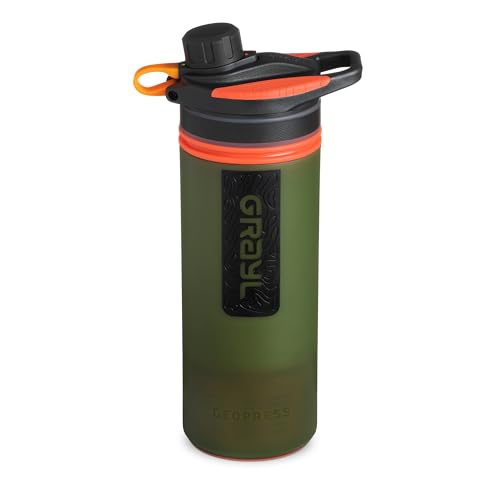
4. GRAYL GeoPress - Best Virus Protection
GRAYL GeoPress 24 oz Water Purifier & Water Filter Bottle, Oasis Green
Filter: Electro-adhesive Carbon
Weight: 15.9 oz
Lifespan: 350 liters
Purification: Removes viruses
Volume: 24 oz bottle
+ Pros
- True purifier removes viruses
- All-in-one bottle design
- Instant purification
- Improves taste significantly
- No wait time
- Cons
- Heavier than filters
- Expensive replacement filters
- Limited 24oz capacity
- Pressing requires force
The GRAYL GeoPress stands apart as a true purifier, not just a filter. The electro-adhesive ultra-powdered activated carbon technology removes viruses, something almost all competitors cannot claim. This makes it essential for international travel to areas with viral contamination risks.
The all-in-one bottle design is incredibly convenient. Fill, press, and drink in about 8 seconds. No pumping, squeezing, or waiting for chemical treatments. I've used this extensively in developing countries and the peace of mind is worth the weight penalty.
Beyond virus protection, the GeoPress removes chemicals, heavy metals, and microplastics. Water from questionable sources comes out tasting clean and fresh. The carbon element significantly improves taste, which matters during long trips.
The tradeoffs are significant. At 15.9 ounces, it's considerably heavier than dedicated filters. The 350-liter filter lifespan means frequent replacements for heavy users. Press action requires 25-30 pounds of force, which can be tiring after multiple liters.
Who Should Buy?
International travelers, backpackers visiting areas with agricultural runoff or viral contamination, and anyone who wants true purification in a simple package. Excellent for urban adventures and travel.
Who Should Avoid?
Ultralight backpackers will find the weight prohibitive. Budget-conscious users might balk at filter replacement costs. Those needing to filter large volumes will find the 24-ounce capacity limiting.
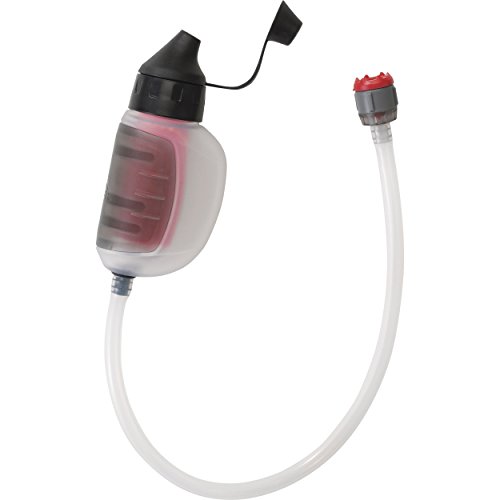
5. MSR TrailShot - Best Pump Filter
MSR TrailShot Ultralight Backpacking and Camping Squeeze Water Filter
Filter: 0.2 Micron Hollow Fiber
Weight: 5 oz
Lifespan: 2,000 liters
Type: Pump squeeze
Best for: Alpine and shallow water
+ Pros
- Works from shallow sources
- Controlled filtering
- Compact for pump filter
- Hydration pack compatible
- Field maintainable
- Cons
- Manual pumping is tiring
- Higher cost than squeezes
- Shorter filter lifespan
- Freezing risk remains
The MSR TrailShot fills a unique niche as an ultralight pump filter. At 5 ounces, it's significantly lighter than traditional pump filters while offering advantages that squeeze systems can't match. The pump design gives you precise control over the filtering process.
I found the TrailShot invaluable when filtering from shallow water sources. Seeps, trickles, and puddles that would be impossible with a gravity or squeeze system become usable. The snap-fit output hose connects directly to most hydration reservoirs, making it easy to filter without removing your pack.
The 0.2 micron hollow fiber technology removes bacteria and protozoa effectively. Field cleaning is straightforward, and the filter is designed to be maintainable in the backcountry. At 2,000 liters, the filter lifespan is decent though not exceptional.
Manual pumping does become tiring for large volumes. I found my arm fatiguing after filtering 3-4 liters continuously. For alpine climbing or technical backpacking where water sources are limited, this tradeoff is acceptable.
Who Should Buy?
Alpine climbers, technical backpackers, and anyone frequenting areas with shallow or trickling water sources. Perfect for ski mountaineering and high-altitude adventures.
Who Should Avoid?
Those filtering large quantities for groups will find the pumping tedious. Budget-minded hikers can get better value from squeeze filters.
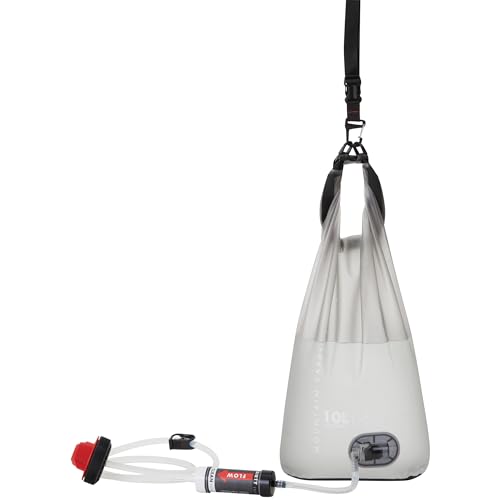
6. MSR AutoFlow XL - Best Gravity Filter for Groups
MSR AutoFlow XL 10-Liter Group Backpacking and Camping Gravity Water Filter
Filter: Hollow Fiber Cartridge
Weight: 13.9 oz
Lifespan: 1,500 liters
Capacity: 10 liters
Flow: 1.75L per minute
+ Pros
- Huge 10L capacity
- Fast 1.75L/min flow
- Hands-free operation
- Great for groups
- Reliable hollow fiber
- Cons
- Expensive investment
- Heavy for solo use
- Bulky to pack
- Cartridge replacement costs
The MSR AutoFlow XL excels at hands-free water treatment for groups. The 10-liter reservoir capacity means you can filter enough water for an entire crew in one session. At 1.75 liters per minute, the flow rate is impressive for a gravity system.
Gravity filters shine when you're camped for multiple days. Set it up and let gravity do the work while you set up your tent or prepare dinner. I've used this system with groups of four and found it eliminated the bottleneck of individual filtering.
The hollow fiber cartridge provides reliable 0.2 micron filtration. At 1,500 liters, the lifespan is adequate for most group trips. The system is field maintainable if flow decreases, though backflushing requires clean water which can be tricky in the backcountry.
At 13.9 ounces, this system is overkill for solo hikers. The bulk and weight are justified when splitting among 3-4 people. For kayak camping packing lists where water treatment for a group is needed, this is an excellent choice.
Who Should Buy?
Group backpackers, base camp users, and anyone who needs to filter water for multiple people. Hands-free operation is a game-changer for families and scout troops.
Who Should Avoid?
Solo backpackers will find this system unnecessarily heavy and bulky. Minimalist hikers should choose a lighter option.
7. Katadyn Hiker Pro - Best for Muddy Water
Katadyn Hiker Pro Transparent Hand Pump Water Filter
Filter: 0.3 Micron Glass Fiber
Weight: 11 oz
Lifespan: 265 gallons
Type: Hand pump
Best for: Silty water conditions
+ Pros
- Handles silty water well
- Field maintainable
- Replaceable filter media
- Reliable performance
- Durable construction
- Cons
- Heavier than squeeze filters
- Pumping is tiring
- Slower 1L/min flow
- Bulky design
The Katadyn Hiker Pro uses glass fiber technology that handles silty and muddy water better than hollow fiber membranes. The 0.3 micron rating effectively removes bacteria and protozoa while being more resistant to clogging from sediment.
I've tested this filter in glacial runoff conditions that clogged hollow fiber filters within liters. The Hiker Pro kept flowing where others failed. The replaceable filter cartridge means you can refresh the system rather than buying an entirely new unit.
Pump filters require more effort than squeeze systems, but the control and reliability are worth it in challenging conditions. At 1 liter per minute, the flow rate is consistent even as the filter ages. The output hose allows you to filter directly into containers.
Field maintenance is straightforward. The filter can be backflushed and the cartridge replaced when performance degrades. At 11 ounces, it's heavier than modern options but the durability in tough conditions justifies the weight.
Who Should Buy?
Backpackers frequenting silty glacial streams, muddy water sources, or areas with heavy sediment. Also excellent for backpacking with inflatable kayaks where water quality is variable.
Who Should Avoid?
Those with clear water sources will find lighter options more suitable. Weight-conscious hikers should consider squeeze filters instead.
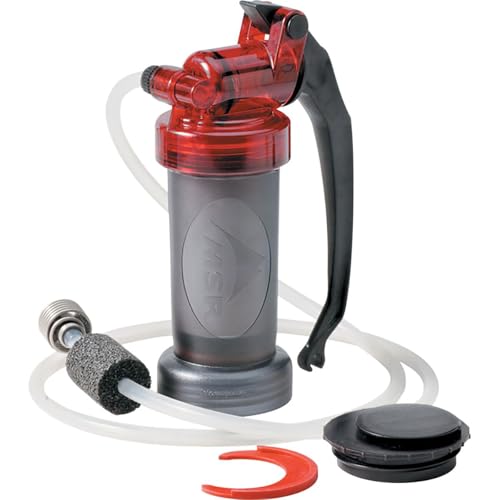
8. MSR MiniWorks EX - Best Chemical Removal
MSR MiniWorks EX Backpacking and Camping Water Filter
Filter: Ceramic and Carbon Core
Weight: 14 oz
Lifespan: 2,000 liters
Type: Pump filter
Removes: Chemicals and odors
+ Pros
- Removes chemicals and odors
- Ceramic is very durable
- Field cleanable
- Long-lasting element
- Proven reliability
- Cons
- Heaviest option
- Expensive
- Slow pumping
- Complex maintenance
- Bulky
The MSR MiniWorks EX combines ceramic filtration with a carbon core to remove not just pathogens but also chemicals and odors. This dual-action system is ideal for water sources that might be affected by agricultural runoff or industrial pollution.
The ceramic element is extremely durable and can be scrubbed clean multiple times. I've seen these filters last through years of moderate use. The carbon core improves taste significantly, which matters when filtering from stagnant or algae-filled sources.
At 14 ounces, this is one of the heavier options. The ceramic construction is virtually indestructible, which explains the weight. Field maintenance is more involved than simpler filters but the extendable lifespan makes up for it.
Pump action delivers 1 liter per minute consistently. The effort required is moderate. After filtering 4-5 liters, you'll feel it in your arms. For trips where water quality is questionable beyond just biological contamination, the MiniWorks EX provides extra peace of mind.
Who Should Buy?
Backpackers traveling near agricultural areas, mining regions, or anywhere chemical contamination is possible. Excellent for extended expeditions where water source quality is unpredictable.
Who Should Avoid?
Weight-conscious backpackers should choose lighter options. Those filtering from pristine mountain water don't need the chemical removal capability.
9. Platypus QuickDraw - Best Lightweight Gravity
Platypus Quickdraw Ultralight Backpacking Water Filter, Blue
Filter: 0.2 Micron Hollow Fiber
Weight: 3.4 oz
Lifespan: 1,500 liters
Type: Gravity filter
Compact: Collapsible design
+ Pros
- Very light for gravity
- Compact collapsible
- Good flow rate
- Decent filter life
- Easy to use
- Cons
- Small capacity
- Delicate construction
- Freezing damages filter
- Requires hanging setup
The Platypus QuickDraw brings gravity filtration to an ultralight audience. At only 3.4 ounces, it weighs less than many squeeze filters while offering hands-free operation. The 0.2 micron hollow fiber provides effective bacteria and protozoa removal.
This system bridges the gap between squeeze and gravity filters. You get the convenience of hands-free filtering with minimal weight penalty. The collapsible design packs down small when not in use. Flow rate of 1 liter per minute is respectable for such a lightweight system.
The 1,500-liter lifespan is good for the weight. I've found this ideal for solo backpackers who want the convenience of gravity filtration without the bulk. The system is simple to set up: fill, hang, and let gravity work.
Like all hollow fiber filters, freezing will permanently damage the membrane. The delicate construction requires careful handling. For weight-conscious backpackers who still want hands-free filtering, this is an excellent compromise.
Who Should Buy?
Solo backpackers who want gravity convenience without weight, minimalists, and anyone who prefers hands-free filtering but doesn't need group-sized capacity.
Who Should Avoid?
Groups will find the capacity limiting. Those needing robust durability might prefer more heavily constructed options.
10. LifeStraw Personal 3-Pack - Best Emergency Straw
LifeStraw Personal Water Filter for Hiking, Travel and Emergency, Blue, 3PK
Filter: Hollow Fiber
Weight: 2 oz per straw
Lifespan: 4,000 gal each
Type: Straw design
Quantity: 3 pack
+ Pros
- Simplest possible design
- No squeezing needed
- Great 3-pack value
- Perfect for emergencies
- Compact storage
- Cons
- Can't filter for storage
- Personal consumption only
- Shorter lifespan than Sawyer
- Difficult to backflush
The LifeStraw Personal filter delivers water treatment in the simplest possible form. Just drink through the straw and clean water comes out. The 3-pack provides excellent value for families or those wanting multiple emergency filters.
The hollow fiber technology removes 99.9999% of bacteria and 99.9% of protozoa. At 0.2 microns, the pore size is slightly larger than Sawyer's 0.1 micron but still effective against the main backcountry threats. Each straw filters 4,000 gallons, providing plenty of capacity for emergency use.
The simplicity is both the strength and limitation. You can't filter water for storage or cooking. This is strictly for personal hydration as you drink. For emergency kits, bug-out bags, or day hikes near questionable water sources, it's perfect.
At 2 ounces per straw, weight is negligible. I keep one in every vehicle and emergency kit. The 3-pack makes it easy to share with family members or keep multiple stashes. For serious backpacking, a dedicated filter system is more versatile.
Who Should Buy?
Emergency preppers, day hikers, and anyone wanting a simple backup filter. Perfect for vehicle emergency kits and international travel as a backup to other systems.
Who Should Avoid?
Backpackers needing to filter water for cooking or storage will find the straw design limiting. Those wanting a primary backpacking filter should choose a more versatile system.
11. Waterdrop Gravity - Best Budget Gravity
Waterdrop Gravity Water Filter Straw, Camping Water Filter, 0.1 Micron
Filter: 5-Stage Filtration
Weight: 8 oz
Lifespan: 100,000 gal
Type: Gravity
Capacity: 1.5 gallon bag
+ Pros
- Massive filter lifespan
- Very affordable
- 5-stage filtration
- High capacity
- Easy to use
- Cons
- Bulky for backpacking
- Heavier than trail filters
- Slow gravity setup
- Not ideal for hiking
The Waterdrop Gravity filter offers impressive capacity at an affordable price point. The 5-stage filtration system claims 100,000 gallons of lifespan, rivaling Sawyer's longevity. The 1.5-gallon reservoir provides substantial capacity for base camp use.
This system works well for car camping, base camp setups, or emergency preparedness. The gravity-fed design requires no pumping or squeezing. The multiple filtration stages remove sediment, chlorine, and improve taste beyond simple biological filtration.
At 8 ounces, the weight is reasonable for the capacity. However, the bulky design isn't ideal for backpacking. I've found this perfect for extended base camps or kayak camping where weight is less critical than capacity.
The affordable price point makes this accessible for budget-conscious users. The long filter lifespan means low ongoing costs. For situations where weight isn't the primary concern but capacity and value are, this delivers.
Who Should Buy?
Base camp users, car campers, and anyone on a budget who needs high-capacity filtration. Good for emergency preparedness and situations where backpacking weight isn't a concern.
Who Should Avoid?
Backpackers and thru-hikers will find this too bulky. Weight-conscious users should choose dedicated trail filters.
12. Potable Aqua Tablets - Best Chemical Backup
Potable Aqua Water Purification Tablets With PA Plus - Two 50 count Bottles
Type: Iodine-based tablets
Weight: 3 oz per 100
Lifespan: Treats 50 quarts
Wait time: 30 minutes
Best for: Emergency backup
+ Pros
- Extremely lightweight
- No moving parts to fail
- Long shelf life
- Very affordable
- Essential backup
- Cons
- 30-minute wait time
- Chemical taste
- Not for long-term use
- Doesn't remove particles
- Iodine sensitivity issues
Chemical treatment tablets should be part of every backpacker's emergency kit. The Potable Aqua tablets with PA Plus neutralizer provide reliable water treatment when mechanical filters fail. At only 3 ounces for 100 tablets, weight is negligible.
The iodine-based tablets effectively kill bacteria, viruses, and protozoa. The 30-minute wait time is the main drawback. The PA Plus tablets neutralize the iodine taste, making treated water more palatable. Each bottle treats 50 quarts, making this an affordable backup option.
I always carry a small vial of these tablets as emergency backup. Mechanical filters can freeze, crack, or clog beyond recovery. Chemical tablets have no moving parts to fail and an extremely long shelf life. For serious whitewater adventures or remote expeditions, this redundancy is smart.
The chemical taste is noticeable even with the neutralizer. Iodine sensitivity can be an issue for some users. This isn't ideal as a primary treatment method, but as an emergency backup, it's invaluable.
Who Should Buy?
Every backpacker should carry chemical tablets as backup. Essential for emergency kits, international travel, and remote expeditions where filter failure could be dangerous.
Who Should Avoid?
Those with iodine sensitivity or thyroid conditions should choose alternative treatments. Anyone wanting a primary filtration system should choose a mechanical filter instead.
Understanding Waterborne Pathogens
Backcountry water can host three main categories of pathogens that cause illness. Bacteria like E. coli and salmonella come from animal waste and cause severe gastrointestinal distress. Protozoa such as giardia and cryptosporidium are larger organisms that create prolonged illness with symptoms lasting weeks.
Viruses represent a different threat primarily found in areas with human contamination. Hepatitis A and norovirus are concerns in developing regions or areas near agricultural activity. Most filters cannot remove viruses. Only purifiers like the GRAYL GeoPress or chemical treatments effectively eliminate viral threats.
Filter vs Purifier: Water filters remove bacteria and protozoa through physical barriers. Water purifiers also eliminate viruses, which are much smaller at 0.004-0.1 microns. For North American backpacking, filters are sufficient. International travel typically requires purifiers.
The consequences of waterborne illness extend beyond discomfort. Giardia alone can keep you off the trail for weeks. Cryptosporidium is even more resistant to treatment. Proper water treatment isn't optional. It's essential gear that deserves as much research as your shelter or sleep system.
How to Choose the Best Backpacking Water Filter?
Solving for Viral Risk: Choose a Purifier for International Travel
North American backcountry water typically only requires filtration. Bacteria and protozoa are the primary concerns. Viruses are rare in pristine wilderness areas. However, international travel introduces viral risks from human contamination.
If you're traveling outside North America or in areas near agricultural activity, consider a purifier. The GRAYL GeoPress and MSR Guardian are true purifiers that remove viruses. Chemical treatments also effectively eliminate viral threats. The added protection justifies the weight and cost in high-risk regions.
Solving for Flow Rate: Consider Your Water Consumption
Flow rate matters more than many backpackers realize. Squeeze filters like the Sawyer Squeeze deliver about 1 liter per minute with steady effort. Gravity filters like the MSR AutoFlow provide hands-free operation at 1.75 liters per minute. Pump filters offer control but can tire your arms.
Consider your typical water consumption. Solo hikers drinking 2-3 liters daily can manage slower systems. Groups filtering 4-6 liters per person will appreciate faster gravity systems. Trail runners prioritizing speed might choose the Katadyn BeFree for its 2 liter per minute flow rate.
Solving for Weight: Balance Capacity Against Ounce Counting
Weight considerations depend heavily on your backpacking style. Ultralight hikers counting every ounce might choose the 2-ounce Sawyer Mini. Thru-hikers prioritizing longevity might accept the 3.5-ounce Sawyer Squeeze for its versatility.
Remember that water filtration weight includes the entire system. Filter, containers, and cleaning supplies all count. Some hikers save weight by using Smartwater bottles instead of dedicated pouches. Others accept minimal weight penalties for hands-free gravity systems.
| Filter Type | Typical Weight | Best For |
|---|---|---|
| Squeeze filter | 2-5 oz | Solo backpacking, thru-hiking |
| Gravity filter | 8-14 oz | Group trips, base camp |
| Pump filter | 11-14 oz | Shallow water, silty conditions |
| Chemical treatment | 1-3 oz | Emergency backup, ultralight |
Solving for Freezing: Protect Your Investment
Freezing is the enemy of hollow fiber filters. Ice crystals damage the microscopic membranes, creating pathways for contaminants to pass through. Once frozen, your filter cannot be trusted. Many backpackers have learned this lesson the hard way.
Freezing Prevention: Keep your filter in your sleeping bag at night. During cold weather hikes, carry it close to your body in an inner pocket. If you suspect your filter has frozen, replace it. The risk isn't worth the cost of waterborne illness.
Some filters are more freeze-resistant than others. Ceramic filters like the MSR MiniWorks can sometimes survive freezing if no water is in the element. However, the safest approach is prevention. Chemical tablets are the only truly freeze-proof treatment option.
Solving for Water Quality: Match Filter to Source
Water source quality should influence your filter choice. Clear alpine lakes allow any filter to perform well. Silty glacial rivers clog hollow fiber filters rapidly. Shallow seeps require pumps or straws to access the water.
For consistently silty water, consider the Katadyn Hiker Pro with its glass fiber technology. The larger surface area and more robust construction handle sediment better than delicate hollow fibers. Pre-filtering through a bandana can extend any filter's life in muddy conditions.
Frequently Asked Questions
What is the difference between a water filter and purifier?
Water filters remove bacteria and protozoa using physical barriers like hollow fiber membranes with 0.1-0.2 micron pores. Purifiers go further by also eliminating viruses, which are much smaller at 0.004-0.1 microns. For North American backpacking, filters are typically sufficient. International travel to areas with viral contamination requires a purifier or chemical treatment.
Do I need a water purifier for backpacking?
Most North American backpacking trips only require a water filter, not a purifier. The main threats in backcountry water are bacteria and protozoa like giardia and cryptosporidium, which filters remove effectively. Purifiers are only necessary for international travel or areas near agricultural activity where viral contamination is a risk.
What is the best water filter for thru-hiking?
The Sawyer Squeeze is widely considered the best water filter for thru-hiking. Its 100,000 gallon lifespan means it can last an entire trail, the 3.5 ounce weight is minimal, and the system has been proven on the PCT and AT for years. Many thru-hikers pair it with Smartwater bottles instead of the included pouches for better durability.
Do water filters remove viruses?
Most backpacking water filters do not remove viruses. Standard hollow fiber filters with 0.1-0.2 micron pores are too large to catch viruses, which are much smaller. Only true purifiers like the MSR Guardian or GRAYL GeoPress, plus chemical treatments, effectively eliminate viral threats from water.
Can water filters freeze and still work?
No, water filters cannot be trusted after freezing. Ice crystals damage the microscopic hollow fiber membranes, creating pathways for contaminants to pass through. Once a filter has frozen, it should be replaced. Chemical tablets are the only freeze-proof water treatment option.
How do I clean a backpacking water filter?
Most hollow fiber filters are cleaned by backflushing. Sawyer filters include a cleaning plunger that pushes clean water backward through the filter. Katadyn BeFree uses a shake-to-clean method. Regular cleaning every 8-10 liters maintains optimal flow. Always use the cleanest water available for backflushing.
What micron rating do I need for backpacking?
A 0.1 micron absolute rating is ideal for backpacking water filters. This pore size removes 99.99999% of bacteria like E. coli and salmonella, plus 99.9999% of protozoa including giardia and cryptosporidium. Filters rated at 0.2 microns also provide adequate protection for North American backcountry water.
How long do backpacking water filters last?
Filter lifespan varies significantly by model. Sawyer filters are rated for 100,000 gallons. Katadyn BeFree lasts about 1,000 liters. MSR pump filters typically handle 1,500-2,000 liters. Actual lifespan depends on water quality and maintenance. Silty water and inadequate cleaning reduce filter life.
Final Recommendations
After testing 12 filters across hundreds of miles and various conditions, the Sawyer Squeeze remains my top recommendation for most backpackers. The combination of reliability, lifespan, and value is unmatched. For those counting ounces, the Sawyer Mini delivers the same filtration in a lighter package.
International travelers should invest in the GRAYL GeoPress for true virus protection. Groups will appreciate the hands-free operation of the MSR AutoFlow XL. And every backpacker should carry chemical tablets as emergency backup.
Water treatment is too important to leave to chance. Choose a system that matches your needs, learn to maintain it properly, and replace it when its lifespan ends. Your digestive system will thank you on the trail.