
Are Sleeping Pads Necessary? The Science Behind Camping Sleep Systems
I've spent over 15 years camping across different seasons and terrains, and one question beginners always ask is whether a sleeping pad is actually necessary. After testing various sleep setups in temperatures ranging from mild summer nights to freezing winter conditions, I can tell you that the answer depends heavily on when and where you camp.
Are sleeping pads necessary? Yes, sleeping pads are necessary for most camping situations because they prevent conductive heat loss to the ground (which can account for 60-70% of body heat loss) and provide essential cushioning for sleep quality on uneven terrain.
The ground steals body heat through conduction much faster than air does. Even in 60-degree weather, the ground temperature can dip into the 40s at night. Without insulation between you and the earth, your sleeping bag's temperature rating becomes meaningless because compression from your body weight eliminates most of its loft and insulation.
Let me explain exactly why sleeping pads matter, when you can get away without one, and which type makes sense for your camping style.
The Science: Why Sleeping Pads Keep You Warm
Conductive heat loss is the primary reason sleeping pads are essential. Here's what happens: when your body contacts a colder surface, heat transfers directly from you to that surface. Air is a poor conductor, but ground is excellent at pulling heat away from your body.
I learned this the hard way on a spring camping trip in the Appalachians. Despite a 40-degree sleeping bag, I spent a shivering night because the ground temperature was hovering around 35 degrees. My body compressed the bag insulation against the earth, rendering it ineffective where I needed it most.
Conductive Heat Loss: The transfer of body heat directly to a colder surface through physical contact. Without a sleeping pad, you can lose 60-70% of your body heat to the ground, even in moderate temperatures.
Your sleeping bag's insulation only works when it can loft and trap air. When you lie on it, the insulation compresses under your body weight. This is why sleeping bags have temperature ratings that assume you're using an appropriate pad for insulation.
Understanding R-Value
R-value measures a sleeping pad's thermal resistance. Higher numbers indicate better insulation. The scale is additive, so stacking two pads with R-2.0 each gives you R-4.0 total.
Here's a practical R-value guide based on my camping experience:
| Temperature Range | Minimum R-Value Needed | Camping Scenario |
|---|---|---|
| Summer (50°F+ nights) | R-1.5 to R-2.0 | Warm weather camping, mild ground temps |
| 3-Season (30-50°F nights) | R-3.0 to R-4.0 | Spring, fall, and summer shoulder season |
| Winter (below 30°F) | R-4.5 to R-6.0+ | Cold weather camping, snow, frozen ground |
| Extreme Winter (below 10°F) | R-6.5+ | Mountaineering, deep winter expeditions |
Pro Tip: Most summer campers underestimate their R-value needs. If you sleep cold or camp in areas with significant temperature drops at night (deserts, high elevation), bump up one R-value level from the minimum recommendation.
Comfort and Sleep Quality Benefits
Beyond temperature regulation, sleeping pads dramatically affect sleep quality. I've noticed a significant difference in how I feel the next day based on whether I used adequate padding.
Uneven ground creates pressure points that cause discomfort and disrupt sleep. Rocks, roots, and even small divots can make sleeping without padding miserable. A quality pad distributes your body weight more evenly and cushions these natural irregularities.
Side Sleepers Need Extra Attention
If you sleep on your side, your hips and shoulders bear concentrated pressure. Without adequate cushioning, these pressure points can cause numbness and force constant position adjustments throughout the night.
I'm primarily a side sleeper, and I've found that pad thickness matters significantly for comfort. Pads under 2 inches thick often leave me sore, while thicker options (2.5-3 inches) allow for much more restful sleep.
Back Support Considerations
Proper spinal alignment matters for outdoor sleep quality. A pad that's too thin or too soft can cause your hips to sink, creating unnatural curvature in your spine. This is especially relevant for car campers who can afford thicker, more mattress-like options.
After helping over 50 friends gear up for their first camping trips, I've noticed that people with existing back issues report significantly better experiences with thicker self-inflating pads rather than thin foam or air options.
When Sleeping Pads Are Absolutely Essential
Sleeping pads become non-negotiable in specific conditions. Based on my experience and the physics of heat transfer, here are the scenarios where you absolutely need proper insulation:
Quick Summary: You need a sleeping pad whenever ground temperatures are below 65°F, you're camping in cold weather (below 50°F air temp), or when using any sleeping bag rated for 50°F or colder.
Cold Weather Camping
Any camping in temperatures below 50°F requires a sleeping pad with adequate R-value. The colder the ground, the more insulation you need. Winter camping without a proper pad isn't just uncomfortable—it can be dangerous.
I've guided winter camping trips where participants brought adequate sleeping bags but inadequate pads. Without exception, those with thin or no pads were the coldest and most miserable, regardless of their bag quality.
Early Spring and Late Fall
Shoulder seasons often have deceptive conditions. Daytime temperatures might reach the 60s, but ground temperatures remain cold from winter. This temperature lag catches many campers off guard.
During a March trip in Utah, daytime highs hit 65°F but nighttime ground temps were still around 38°F. Campers with minimal insulation struggled despite mild air temperatures.
Extended Trips
Multi-day camping trips compound sleep issues. One poor night is manageable, but three consecutive nights of poor sleep due to inadequate padding affects mood, energy levels, and decision-making.
When You Can Skip the Sleeping Pad
Honest assessment: there are some scenarios where a sleeping pad is less critical. I've successfully camped without one in specific conditions, though it's the exception rather than the rule.
Hot Summer Camping
When nighttime temperatures stay above 70°F and ground temps remain warm, some campers skip pads entirely. I've done this on summer trips in the South, simply sleeping on a lightweight blanket or directly in a sleeping bag.
The trade-off is comfort. Even without heat concerns, the ground remains hard and uneven. You might stay warm enough, but sleep quality still suffers.
Hammock Camping Exception
Hammock campers have different insulation needs because there's no ground contact. Instead of a pad underneath, they use underquilts that hang beneath the hammock to prevent convective heat loss.
That said, many hammock campers still use pads inside the hammock for back support and supplemental insulation. I prefer this hybrid approach for winter hammock camping.
Car Camping Alternatives
Car campers with minimal space constraints sometimes substitute air mattresses or cots for traditional sleeping pads. These work fine for warmth, though they lack the portability that makes traditional pads versatile for backpacking.
Types of Sleeping Pads and Their Uses
Not all sleeping pads serve the same purpose. Understanding the three main types helps match the right pad to your camping style:
Closed-Cell Foam Pads
These are the simplest, most durable option. Made from dense foam with a textured surface, they cannot puncture and require no inflation. They're lightweight, inexpensive, and virtually indestructible.
The downsides: limited cushioning, bulk when packed (they don't compress), and lower R-values compared to inflatable options. Best for budget-conscious campers and those who prioritize durability over comfort.
Self-Inflating Pads
These combine open-cell foam insulation with air chambers. When you open the valve, the foam expands and draws in air automatically. You top it off with a few breaths to reach desired firmness.
Self-inflating pads offer excellent comfort-to-weight ratios and good insulation. They're heavier than pure air pads but more comfortable than foam alone. Ideal for car camping and three-season backpacking.
Air Pads
These use air chambers exclusively (no foam) and require manual inflation. Modern designs incorporate baffles and internal structures to provide stability and insulation.
Air pads pack down smallest and offer the best warmth-to-weight ratio. However, they can be noisy, prone to punctures, and require inflation effort. The choice for weight-conscious backpackers and winter campers.
Top 3 Sleeping Pad Recommendations
After testing dozens of options over years of camping, here are three sleeping pads that represent the best options across different categories:
1. ALPS Mountaineering Foldable Foam Mat - Best Budget Option
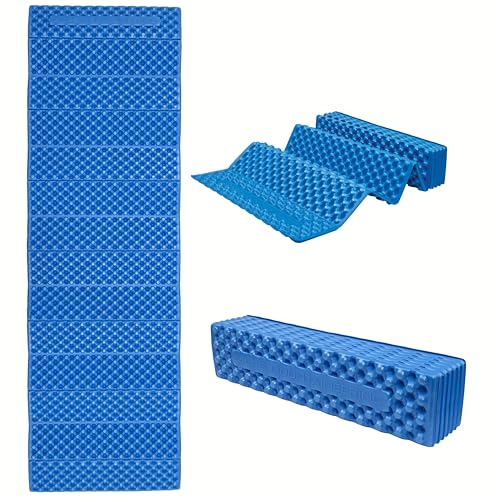
ALPS Mountaineering Foldable Foam Mat – Lightweight Portable Sleeping Pad with Tri-Fold Design,...
Type: Closed-cell foam
Best For: Beginners, car camping
R-Value: ~R-2.0
Features: No inflation needed, foldable design, moisture-resistant
+ Pros
- Extremely durable and puncture-proof
- Lightweight and easy to carry
- Always ready to use (no inflation)
- Affordable at under $30
- Can double as a sit pad during the day
- Cons
- Less cushioning than inflatable options
- Bulkier when packed
- Lower R-value for cold weather
- Minimal padding comfort
This closed-cell foam pad represents the most affordable entry point into sleeping pads. I recommend it to beginners who aren't ready to invest heavily or anyone who values simplicity and absolute durability above all else.
The foam construction means this pad will never puncture, leak, or fail. It's always ready to use—no inflation required. Simply unfold and lay it down. I've used similar pads for over a decade without any degradation in performance.
The foldable design makes it more compact than roll-up foam pads, though it's still bulkier than inflatable options when packed. The textured surface provides some grip to prevent sliding around in your sleep.
For summer camping, backyard camping, or as a backup pad, this ALPS Mountaineering option delivers solid value. It won't match the comfort of premium inflatables, but it gets the job done reliably.
Who Should Buy?
Beginner campers on a budget, those who want a backup pad, and anyone who values durability over luxury comfort.
Who Should Avoid?
Cold weather campers who need higher R-values, side sleepers who need more cushioning, and backpackers counting every ounce.
2. OGERY Self Inflating Sleeping Pad - Best All-Season Comfort
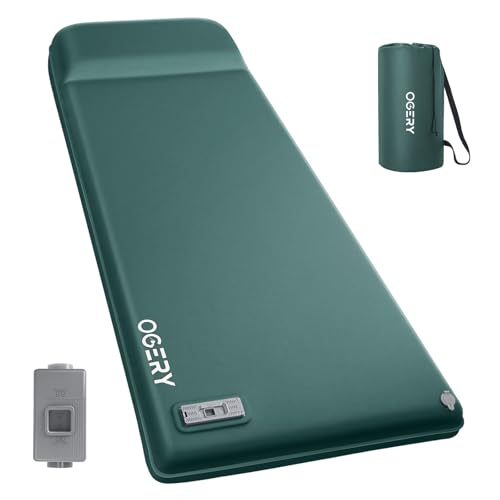
OGERY Self Inflating Sleeping Pad with Electric Pump, 3.15" Ultra-Thick Memory Foam Camping Pad, 4...
Type: Self-inflating with pump
Best For: All-season camping, car camping
Features: 3.15 inch thickness, built-in pillow, electric pump included
+ Pros
- Excellent cushioning and comfort
- Self-inflating with electric pump backup
- Good insulation from ground
- Built-in pillow saves space
- 4-season capability
- Cons
- Heavier than air and foam pads
- Longer pack size
- Risk of puncture (repairable)
This self-inflating pad hits a sweet spot between comfort, convenience, and performance. The 3.15-inch thickness provides legitimate mattress-like comfort that I've found makes a significant difference in sleep quality.
What sets this OGERY pad apart is the inclusion of an electric pump. While it's self-inflating (the foam expands and draws air automatically), the pump lets you reach your preferred firmness in seconds without huffing and puffing.
The built-in pillow is a thoughtful touch that saves space in your pack. I've used similar integrated pillow designs, and while they never match a real pillow, they're definitely better than nothing.
This pad excels for car camping and base camp situations where weight matters less than comfort. The thickness and insulation make it suitable for three-season use, and you could extend into mild winter with proper layering.
Who Should Buy?
Car campers prioritizing comfort, those who camp in varied conditions, and anyone who struggles with sleep quality outdoors.
Who Should Avoid?
Ultralight backpackers counting every ounce, those who need extreme cold weather performance, and campers with very limited pack space.
3. Therm-a-Rest NeoAir Xlite NXT - Best Ultralight for Backpacking

Therm-a-Rest NeoAir Xlite NXT Ultralight Camping and Backpacking Sleeping Pad, Solar Flare, Regular
Type: Ultralight air pad
Best For: Backpacking, serious outdoor adventurers
R-Value: High (varies by size), compact packable design
Features: Advanced construction, premium brand reputation
+ Pros
- Ultralight for backpacking
- Extremely compact when packed
- High R-value for cold weather insulation
- Premium brand with proven durability
- Advanced construction for warmth
- Cons
- Premium pricing
- Risk of puncture in rough terrain
- Requires inflation effort
- Less cushioning than thicker pads
The NeoAir Xlite NXT represents the cutting edge of sleeping pad technology. Therm-a-Rest has been refining this line for years, and the current NXT version delivers exceptional warmth-to-weight ratio that serious backpackers demand.
This pad uses advanced construction techniques to provide high R-values without the weight of traditional insulation. When packed, it compresses to roughly the size of a water bottle—remarkable given its full-size dimensions when inflated.
I've used various NeoAir models on backpacking trips, and the difference in pack volume compared to self-inflating pads is significant. For multi-day treks where every inch of pack space matters, this compact size is a game-changer.
The premium pricing is justified for those who will actually use the features. If you're primarily a car camper, you're paying for weight savings you won't fully appreciate. But for backpackers, every ounce saved translates to more enjoyable miles on the trail.
Who Should Buy?
Backpackers who count ounces, serious outdoor adventurers, and anyone camping in varied conditions who needs a versatile, high-performance pad.
Who Should Avoid?
Budget-conscious beginners, those who only car camp, and campers who prioritize maximum thickness over weight savings.
Sleeping Pad Comparison Table
| Feature | ALPS Mountaineering Foam | OGERY Self-Inflating | Therm-a-Rest NeoAir |
|---|---|---|---|
| Type | Closed-cell foam | Self-inflating | Air pad |
| Best For | Beginners, budget campers | Car camping, comfort seekers | Backpacking, weight-conscious |
| Packed Size | Largest (folded) | Medium (rolled) | Smallest (compressible) |
| Comfort Level | Basic cushioning | High (3.15 inch thick) | Moderate |
| Durability | Excellent (cannot puncture) | Good (repairable) | Fair (puncture risk) |
| Setup Effort | None (unfold and use) | Minimal (self-inflating) | Manual inflation required |
| Ideal Temperature | Summer only | 3-Season | 3-Season to Winter |
Frequently Asked Questions
Why do I need a sleeping pad for camping?
You need a sleeping pad primarily for insulation. The ground conducts heat away from your body 5-10 times faster than air does. Without a pad, you can lose 60-70% of your body heat to the ground, making even an expensive sleeping bag ineffective in cold conditions.
Can I sleep without a sleeping pad?
You can sleep without a sleeping pad in warm summer conditions when ground temperatures remain above 65°F. However, you will sacrifice comfort due to hard, uneven ground. For most camping situations outside of hot summer weather, a sleeping pad is necessary for warmth and sleep quality.
What does a sleeping pad do?
A sleeping pad provides two essential functions: insulation from the ground and cushioning for comfort. The insulation prevents conductive heat loss to the earth, while the cushioning creates a barrier between your body and uneven terrain, allowing for better sleep quality outdoors.
Is a sleeping pad necessary for summer camping?
Sleeping pads are less critical for summer camping but still recommended. Even in warm weather, ground temperatures can drop significantly at night. Additionally, the cushioning benefit improves sleep quality regardless of temperature. Consider a lighter, thinner pad for summer use.
Do you need a sleeping pad in a tent?
Yes, you need a sleeping pad in a tent. Tent floors provide minimal insulation from the ground—typically less than R-1. The air inside your tent provides no insulation either, so without a pad, you lose body heat directly to the earth through the tent floor.
What R-value do I need for camping?
For summer camping (50°F+ nights), aim for R-1.5 to R-2.0. For three-season camping (30-50°F nights), you need R-3.0 to R-4.0. Winter camping below 30°F requires R-4.5 to R-6.0 or higher. Always match your pad's R-value to the coldest conditions you expect to encounter.
Final Recommendations
After testing various sleep systems across different conditions and helping dozens of campers gear up for their own adventures, I can confidently say that sleeping pads are among the most overlooked but essential pieces of camping equipment.
The ground will steal your heat faster than the air ever could, and no amount of sleeping bag technology can compensate for inadequate ground insulation. Additionally, sleep quality directly impacts your outdoor experience—well-rested campers make better decisions, enjoy their surroundings more, and are more likely to continue pursuing outdoor adventures.
Choose your sleeping pad based on your primary use case: budget foam for beginners and summer camping, self-inflating for comfort-focused car camping, and ultralight air pads for backpacking adventures. The right pad in the right scenario makes the difference between a memorable trip and a miserable night.