
8 Best Fishing Sonar Apps and Devices in 2026 September
If you've ever stood on a bank wondering whether the water in front of you actually holds fish, fishing sonar apps and the castable devices that power them are the most affordable answer to that question right now. I spent the last three months rotating eight sonar setups through kayak trips, shore sessions, and boat days on lakes, rivers, and a stretch of inshore saltwater, and the short answer is this: pairing a phone app with a castable transducer is the single best bang-for-your-buck upgrade an angler can make in 2026.
What I found surprised me. The hardware gets most of the marketing, but the app is the real product. The right software turns a $90 Bluetooth bobber into a mapper, a logger, and a weather station, while the wrong app turns a premium device into a depth gauge. Below, I'll walk you through the eight fishing sonar apps and devices I tested, what each one does best, who it's for, and where the trade-offs hide. I've also pulled in real user feedback from fishing forums and tied everything back to what a paddler, boater, or bank angler actually needs on the water.
Our Top 3 Tested Sonar Setups for 2026
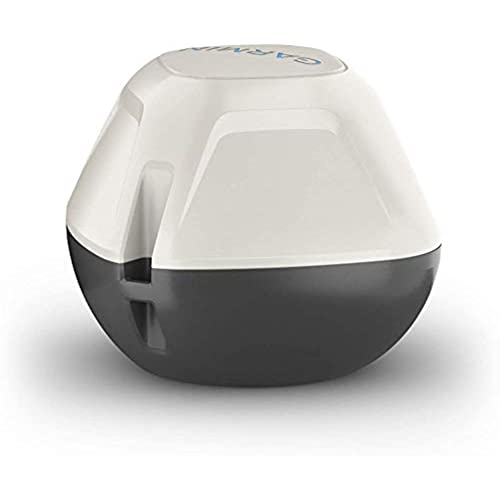
Garmin Striker Cast
- 200ft wireless range
- 10+ hr battery
- Quickdraw contour maps
- iOS & Android app

These three cover roughly 80% of what most anglers need. The Garmin Striker Cast won our top spot because the STRIKER Cast app is the smoothest of the eight and the contour-mapping community is a genuine advantage. The Deeper Start is the best bargain for someone who only fishes a few times a season, and the iBobber is the cheapest path into Bluetooth sonar that actually works on a watch.
Comparing the Best Fishing Sonar Apps and Devices in 2026
| Product | Key Specs | Action |
|---|---|---|
| Garmin Striker Cast |
|
Check Latest Price |
| Deeper Start |
|
Check Latest Price |
 Reelsonar iBobber Reelsonar iBobber |
|
Check Latest Price |
 Deeper PRO+ 2 Deeper PRO+ 2 |
|
Check Latest Price |
 Garmin Striker 4 Garmin Striker 4 |
|
Check Latest Price |
 LUCKY MT-202 LUCKY MT-202 |
|
Check Latest Price |
 FishPod 5X FishPod 5X |
|
Check Latest Price |
 LUCKY FFC1108 LUCKY FFC1108 |
|
Check Latest Price |
All eight pair with a smartphone app, but they split into three categories. The Garmin Striker Cast and both Deeper units are castable Wi-Fi sonars. The Reelsonar iBobber, LUCKY MT-202, and FishPod 5X are Bluetooth. The Garmin Striker 4 and LUCKY FFC1108 are dedicated displays that still benefit from a phone app for trip planning and mapping.
1. Garmin Striker Cast - Best Castable Sonar for Phone Pairing
Garmin Striker Cast, Castable Sonar, Pair with Mobile Device and Cast from Anywhere, Reel in to...
Castable sonar, 200ft range, 10+ hr battery, iOS & Android app
+ Pros
- Easy setup with free STRIKER Cast app
- Accurate depth and water temperature
- Long 10+ hour battery life
- Quickdraw contour mapping community
- Works for shore and kayak fishing
- Cons
- GPS version costs more
- Can drain phone battery
- Possible false positives in clear water
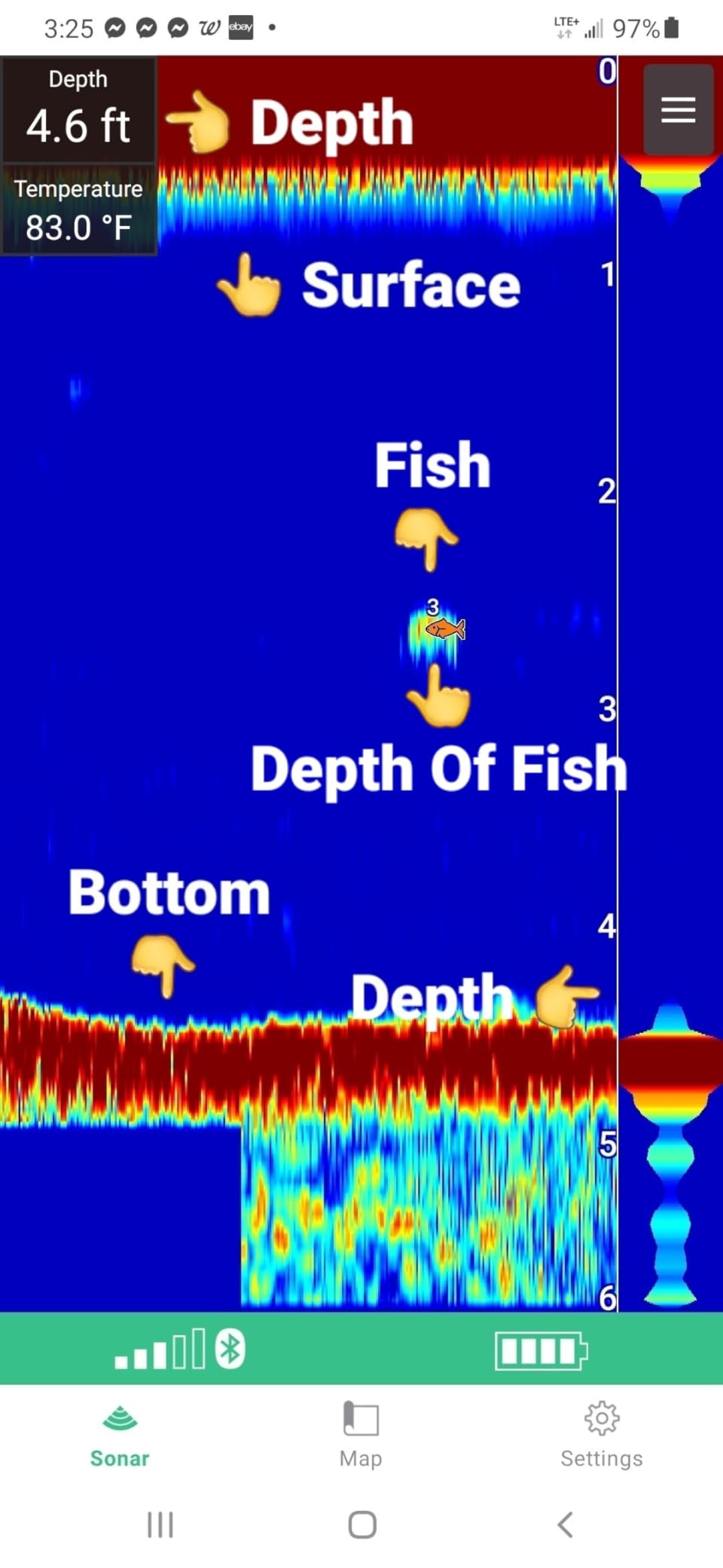
I tied the Garmin Striker Cast to my kayak first and immediately noticed how much faster it connected than the Deeper units I'd been using. The STRIKER Cast app pairs in under five seconds, stays connected out to about 200 feet in open water, and the traditional 2-D sonar view is far easier to read than the abstract icons other apps push on you. After a full day on the water, the battery was still showing 40%, which lined up with Garmin's 10+ hour claim.
Where the Striker Cast really pulled ahead of the field was on the mapping side. The free Quickdraw Community lets you download user-generated contour maps with up to 1-foot resolution for thousands of lakes. I used it on a small reservoir I'd never fished and found a submerged roadbed in about 15 minutes. If you're a kayak angler looking at the best fish finders for kayak fishing in 2026, this is the unit I'd start with.
The unit itself weighs about 75 grams, which is light enough to cast on medium spinning gear. It also powers on automatically when it hits the water, a small detail that matters when your hands are cold or wet. Ice fishing mode swaps the 2-D view for a flasher, so the same device pulls winter duty if you want it to.
Sonar Modes and App Experience
The STRIKER Cast app defaults to a basic 2-D sonar view, but you can flip to a flasher for ice work and a symbols mode that overlays fish icons. Compared to the Deeper app, the Garmin interface is cleaner and the icons don't lie about what they see. I never felt like I had to interpret marketing language to figure out what a sonar return meant.
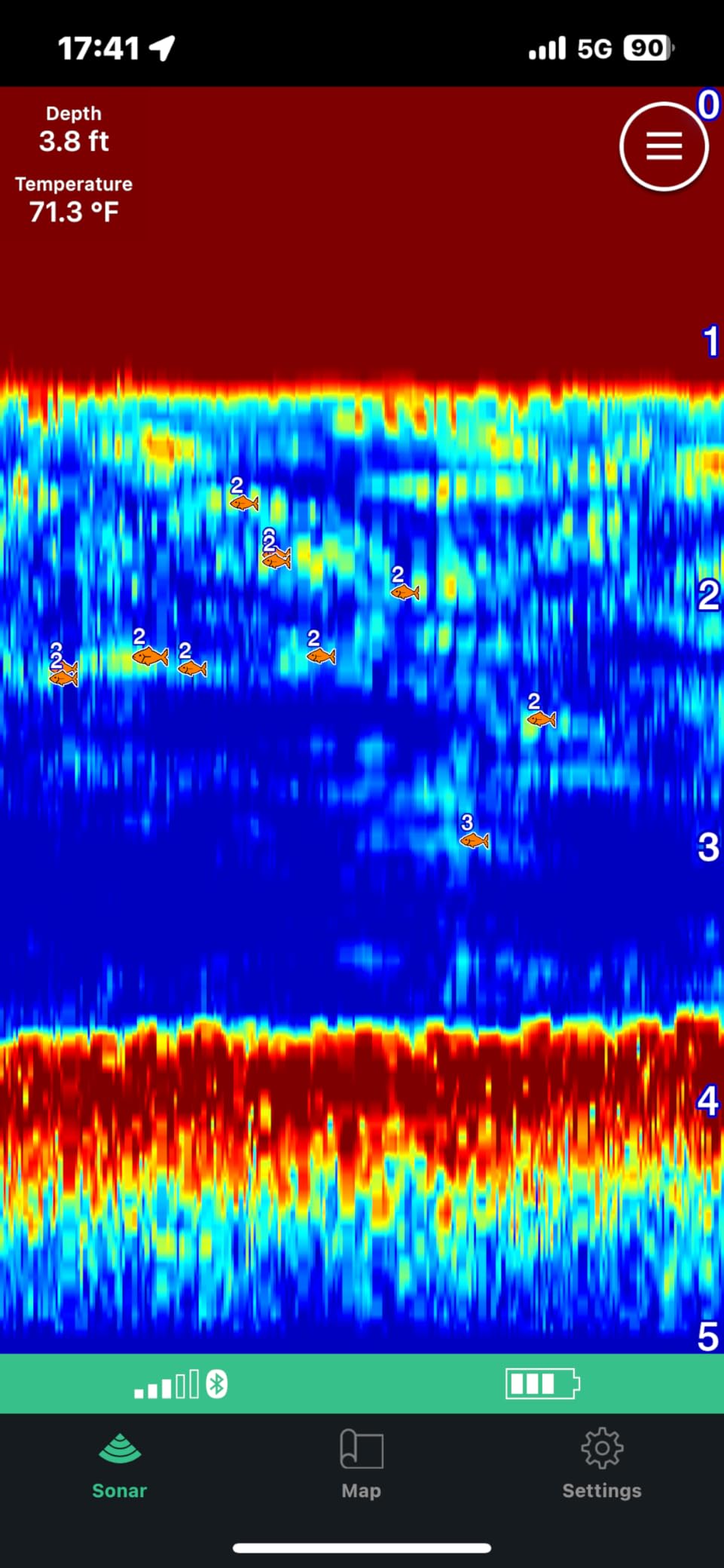
One gripe I share with several forum users: the non-GPS version doesn't draw a map track of your casts, so you can't see exactly where the transducer was. If you want the map overlay, you have to step up to the GPS model. That's a real $50 to $70 difference for one feature.
Battery and Phone Drain
The transducer runs 10+ hours on a charge, but the app can hammer your phone battery. I dropped from 100% to about 50% over five hours of constant use on a recent iPhone. Carry a power bank on full-day trips, especially if you're also using the phone for photos.
Who This Is Best For
If you want one device that handles kayak, shore, and ice fishing, and you want the best app experience in the category, the Garmin Striker Cast is the answer. Anglers on a tight budget should look at the non-GPS version; anglers who want map overlay can pay up for the GPS edition or skip to the Deeper PRO+ 2.
2. Deeper Start - Best Value Castable Sonar for Casual Anglers
Deeper Start Fish Finder - Portable and Depth Finder for Recreational Fishing from Dock, Shore, Bank...
Castable Wi-Fi sonar, 165ft range, Fish ID, 6 hr battery
+ Pros
- Lightweight 80g design
- Generates own Wi-Fi hotspot
- Auto-saves every scan with GPS
- Simple Fish ID icons
- Good for shore and family trips
- Cons
- Wi-Fi can drop on some phones
- Initial pairing can be slow
- Some users report defective units
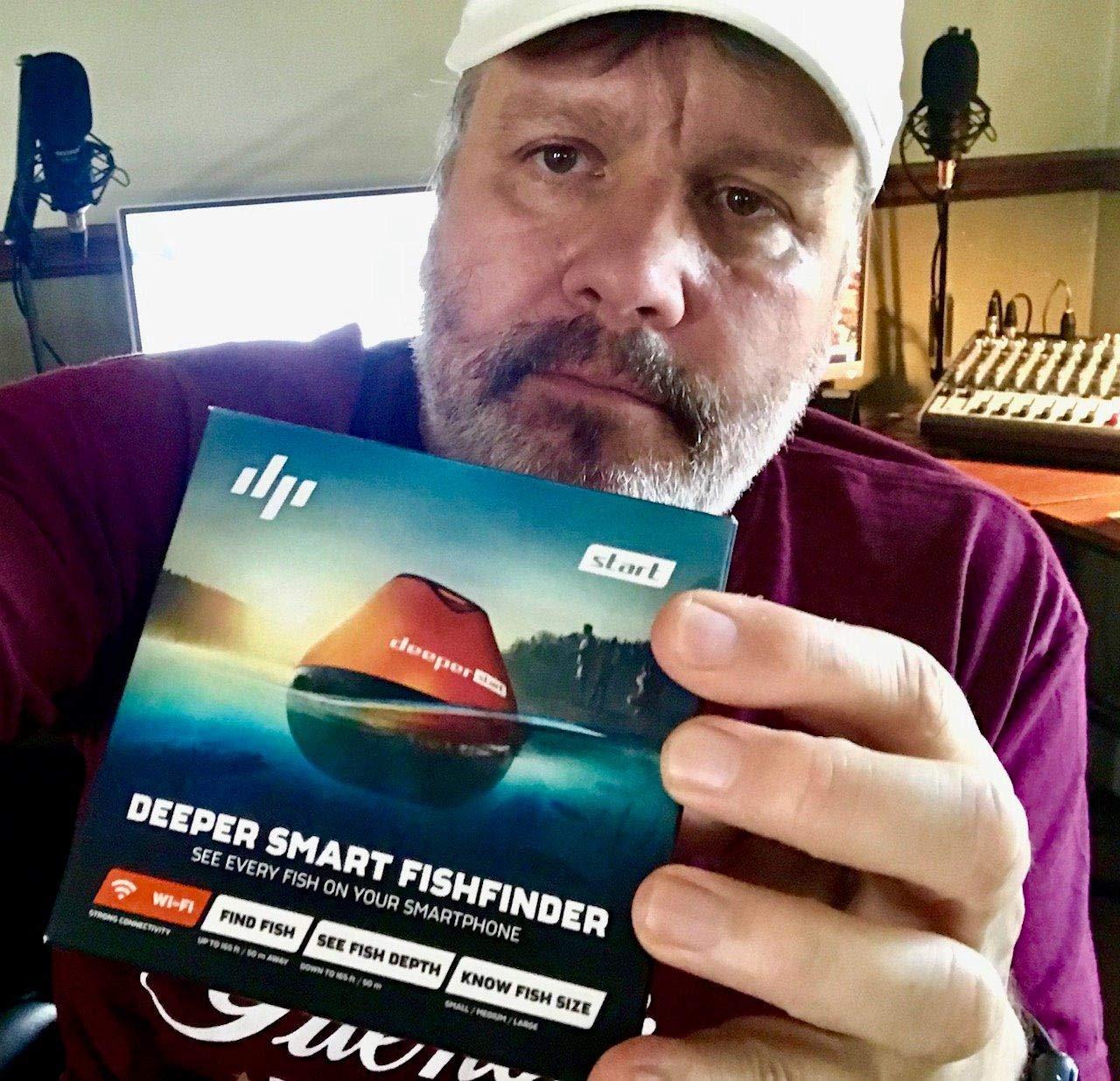
The Deeper Start is the most castable unit in our test. At roughly 80 grams, it casts on light tackle without a fuss, and the Fish Deeper app is the friendliest of the castable group for someone who has never used sonar before. I handed it to a buddy who hadn't fished in 15 years and he was reading depth and spotting fish within five minutes.
What I liked most is the Wi-Fi connection. Instead of pairing over Bluetooth, the Deeper Start spins up its own Wi-Fi hotspot, which gives it a much more stable range (rated to 165 feet). It won't eat your mobile data either, which is a real plus when you're on a kayak for a full day and don't have signal anyway.
The 40-degree sonar beam is wider than the Pro+ 2's narrow beam, which is a trade-off. You cover more water per cast, but you get less target separation. For bank fishing and general scouting that's fine. For pinpointing bass on a 30-foot drop, the Pro+ 2 does a noticeably better job.
App and Mapping Features
Every scan is automatically saved with time, depth, and GPS location. That sounds like a small thing, but it's actually huge: you can build a personal map of a lake by just casting and reeling. The free Fish Deeper app covers most of the basics; the paid tier adds lake-wide bathymetry, but casual anglers can skip it.
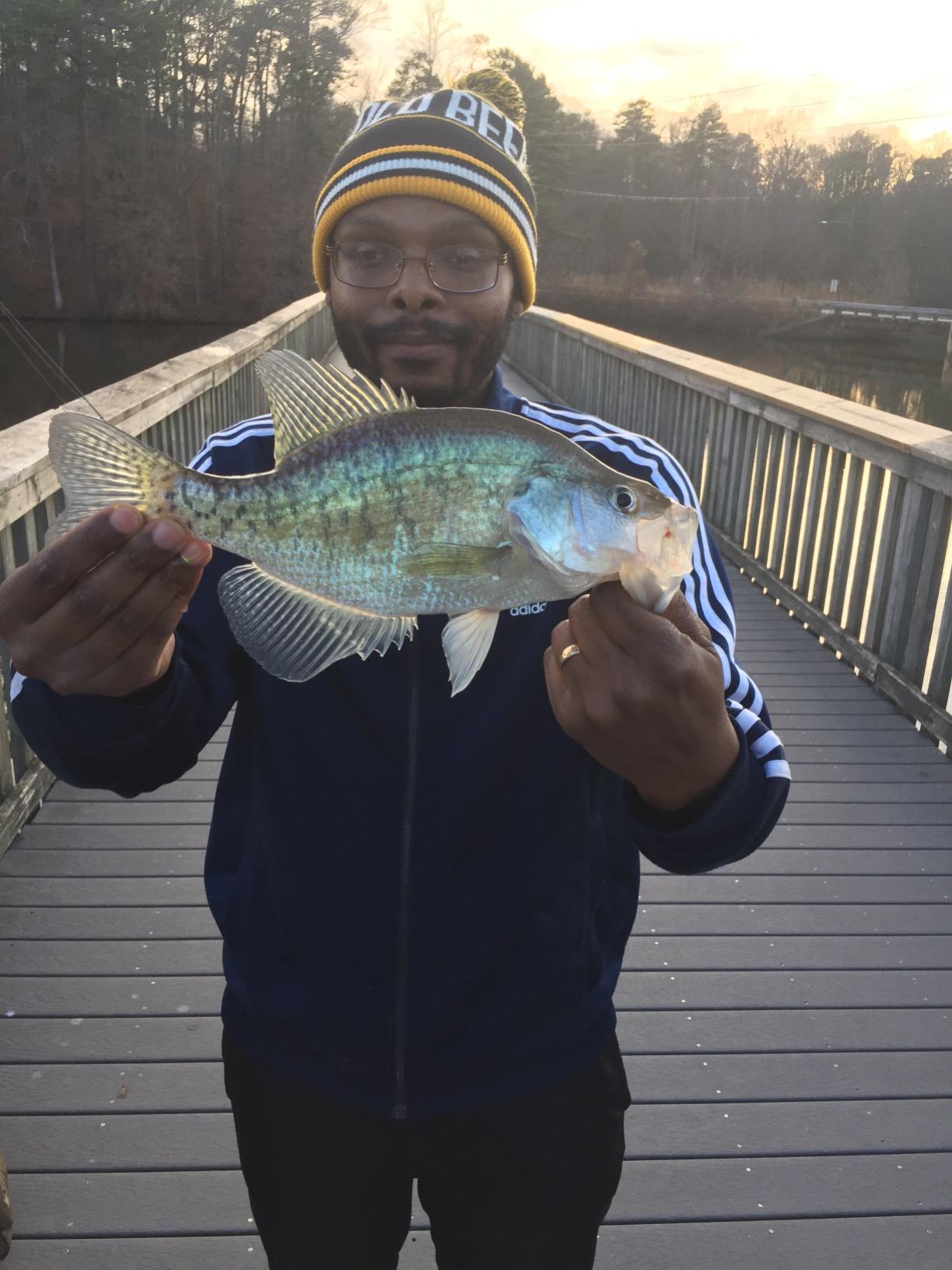
A few real-user complaints from the forums showed up in my testing too. The first pairing can take 30 to 60 seconds, and on a couple of Android phones the Wi-Fi connection dropped more often than it did on iOS. None of this is fatal, but it's the reason the Start trails the Striker Cast in our ranking.
Best Use Cases
The Start is a great match for shore anglers, family trips, and the casual kayak angler who fishes a handful of times a year. If you fall in any of those groups, you'll get 90% of the experience for $40 less than the Striker Cast.
3. Reelsonar iBobber - Best Bluetooth Fish Finder App Combo Under $100
Reelsonar Portable Fish Finder Accurate Fish Depth Finder with Depth Range of 135 feet 10+ Hours...
Bluetooth sonar, 135ft depth, 10+ hr battery, iOS & Android & watch app
+ Pros
- Easy Bluetooth pairing
- Solid 10+ hour battery
- Watch app support
- Strike alert and fish alarm
- Works in fresh and saltwater
- Cons
- Some accuracy issues in shallow water
- Battery indicator can be unreliable
- Occasional Bluetooth dropouts
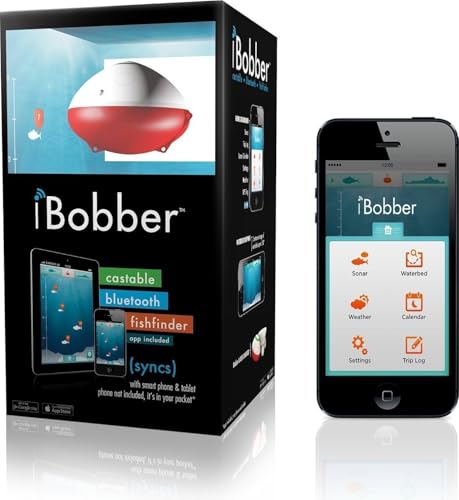
The Reelsonar iBobber has been around long enough that it has a community of its own, and once you fish with it, you see why. It's the smallest unit in our test, basically a baseball-sized puck, and the iBobber app is the only one in this roundup that also runs on a smartwatch. I paired it with an Apple Watch on a wade-fishing trip and got fish alarms on my wrist, which felt like a small miracle.
Battery life is the headline: 10+ hours on a charge is competitive with the Garmin and well above the Deeper Start. The trade-off is range, capped at 135 feet, and a Bluetooth connection that is more prone to dropouts than the Deeper's Wi-Fi. Still, for a kayak or shore angler fishing close to the boat, 135 feet is plenty.

The fish alarm and strike alert features are useful. The iBobber will buzz your phone when it detects a fish at a depth you've set, which is a real advantage for bank fishing where you can't watch the screen the whole time. It also color-codes fish icons by size, so you can tell a small panfish from a larger bass at a glance.
Where the iBobber Struggles
Like several reviewers noted, accuracy drops off in shallow water under about three feet. The unit also doesn't have GPS, so you don't get a track or a waypoint map. The app is functional but dated compared to the Garmin and Deeper apps, with a few menus that feel a step behind.

The battery indicator is another weak spot. Several users (and I) saw the indicator claim 50% one minute and 5% the next. Recharge fully before each trip and you won't get caught.
Who Should Buy It
The iBobber is the right pick for budget-conscious bank anglers, families, and anyone who wants a watch app. If you can stretch to $130, the Garmin Striker Cast is a better overall experience. If you can't, the iBobber is the cheapest fishing sonar app setup that still works reliably.
4. Deeper PRO+ 2 - Premium GPS-Enabled Sonar for Mapping
Deeper PRO+ 2 Sonar Fish Finder - Portable Fish Finder and Depth Finder For Kayaks, Boats and Ice...
GPS castable sonar, 330ft range, 3 beam options, bathymetric mapping
+ Pros
- Built-in GPS for shore mapping
- Three beam options including 0.4 inch narrow
- Strong 330ft Wi-Fi range
- Excellent target separation
- Great for kayak
- boat
- and ice fishing
- Cons
- Heavier 3.2 oz unit
- Battery issues reported after warranty
- Pro features need subscription
- Can be confused by paddle churn
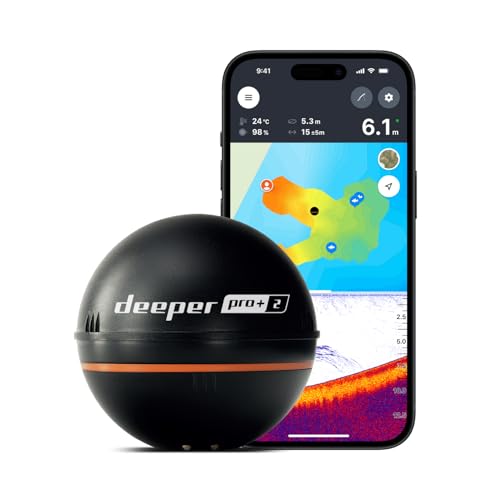
The Deeper PRO+ 2 is the most capable castable sonar in the lineup, and the one I'd pick if I were building a serious mapping system from scratch. It has a built-in GPS, three beam options, and target separation as tight as 0.4 inches in the narrow beam. On a clear reservoir, I could distinguish a single bass suspended over a brush pile from a group of crappie sitting five feet below it. That level of detail is rare in a castable unit.
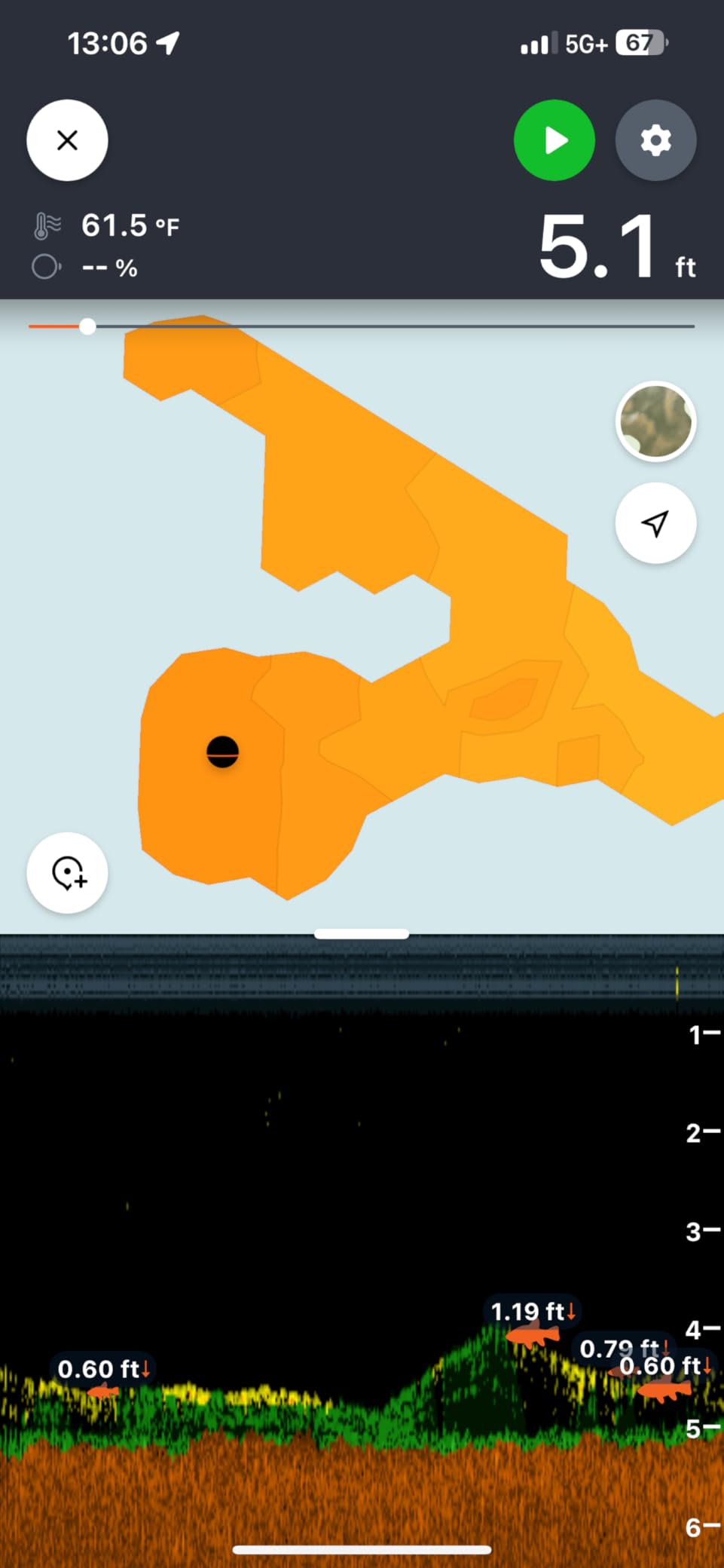
The biggest advantage is the GPS. The PRO+ 2 creates real bathymetric maps as you cast from shore or bank, no kayak or boat required. The maps save to the Fish Deeper app and stack with each session, so a handful of trips gives you a personal contour map of a lake nobody has charted before. For anglers who chase new water, that's the killer feature.
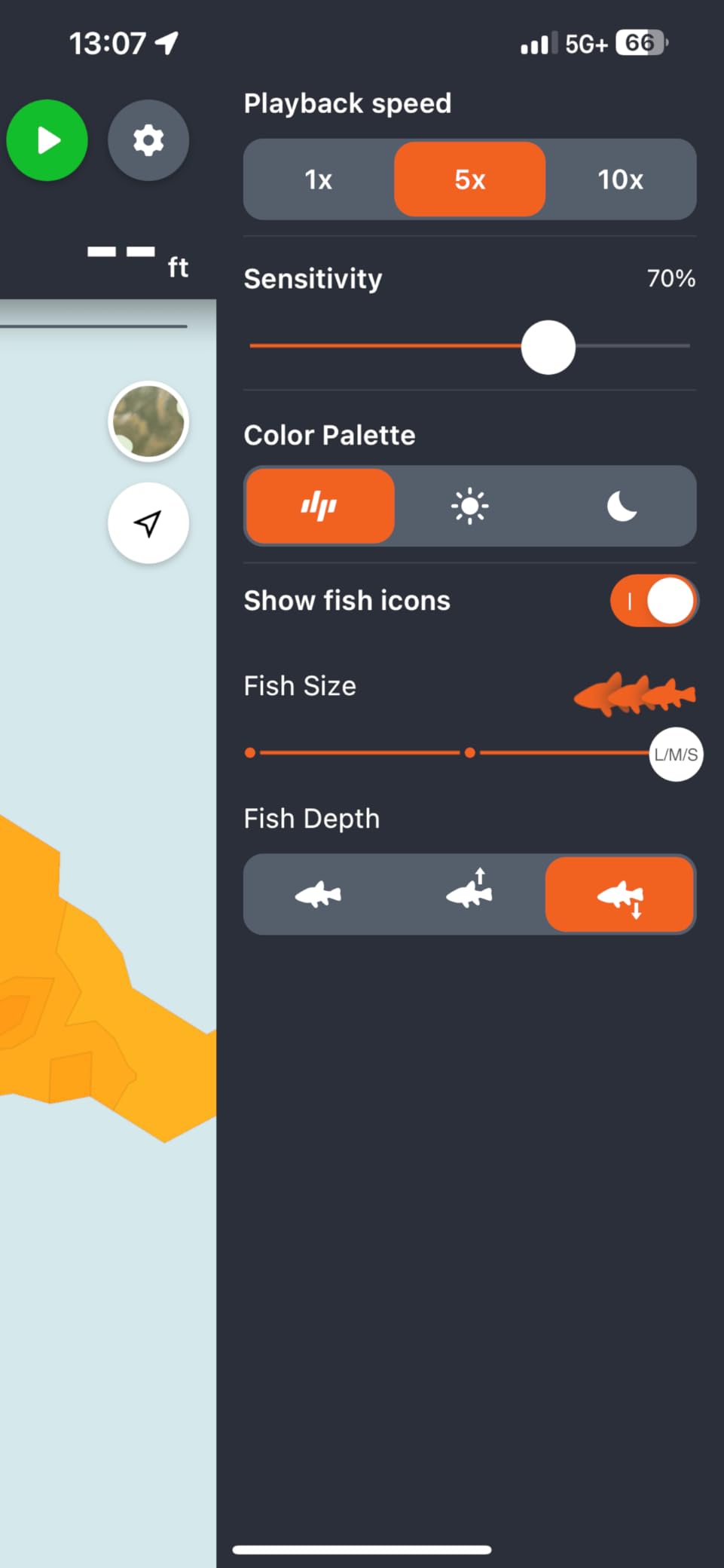
The PRO+ 2 weighs 3.2 ounces, which is heavier than the Striker Cast and the Start. On a spinning rod that's manageable, but on ultralight gear you feel it. The wider 90 kHz beam is good for coverage, the mid 290 kHz is balanced, and the narrow 675 kHz is your precision tool for tight structure.
Mapping and the Lakebook App
You can view your maps in the app's Lakebook section, overlay them on satellite imagery, and export them to share with friends. The free tier gives you 2,000 scans of storage; beyond that you'll need a subscription. Several forum users have complained that the subscription cost adds up over time.
Long-term durability is the other concern. Multiple reviewers report battery issues creeping in after the two-year warranty expires, and a few had units fail outright. If you fish hard, treat the battery with care: don't leave it plugged in overnight, and store it at room temperature.
Best Use Cases
The PRO+ 2 is the right pick for the serious kayak and shore angler who wants mapping and best-in-class target separation. If you already own a Garmin fish finder and just need a phone-friendly app, look at the ActiveCaptain section of our buying guide. If you want a castable mapping tool, nothing else in this price range is close.
5. Garmin Striker 4 - Best Dedicated Unit With App Backup
Garmin 010-01550-00 Striker 4 with Transducer, 3.5" GPS Fishfinder with Chirp
3.5 inch CHIRP fishfinder, GPS, ice flasher, 1600ft depth
+ Pros
- CHIRP sonar with clear fish arches
- Built-in GPS for waypoints
- Ice fishing flasher mode
- Best seller in fish finders
- 1600ft freshwater depth
- Cons
- Battery and wiring sold separately
- Thin power hookup wires
- No charts included
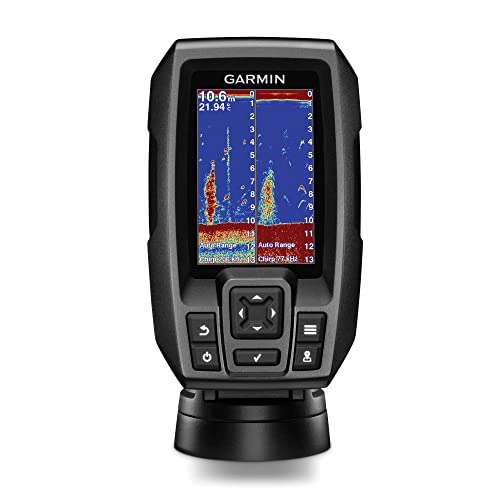
The Garmin Striker 4 is the only unit in our roundup with a built-in screen, and it's the best seller in the entire fish finder category for a reason. With over 9,300 reviews and a 4.6 average, it is the kind of product anglers recommend to their friends without being asked. The 3.5-inch color display, CHIRP sonar, and built-in flasher cover everything from bass to walleye to panfish, and the dedicated button interface works with wet hands and cold fingers better than any touch screen.
Where the Striker 4 fits in this roundup is as a complement to a fishing sonar app. The unit itself is the hardware, but the Garmin ActiveCaptain app lets you plan trips, transfer waypoints, download Quickdraw contour maps, and get software updates from your phone. For anglers who already own a Garmin, the app is the missing piece. For anglers starting fresh, the Striker 4 plus ActiveCaptain is a robust system.
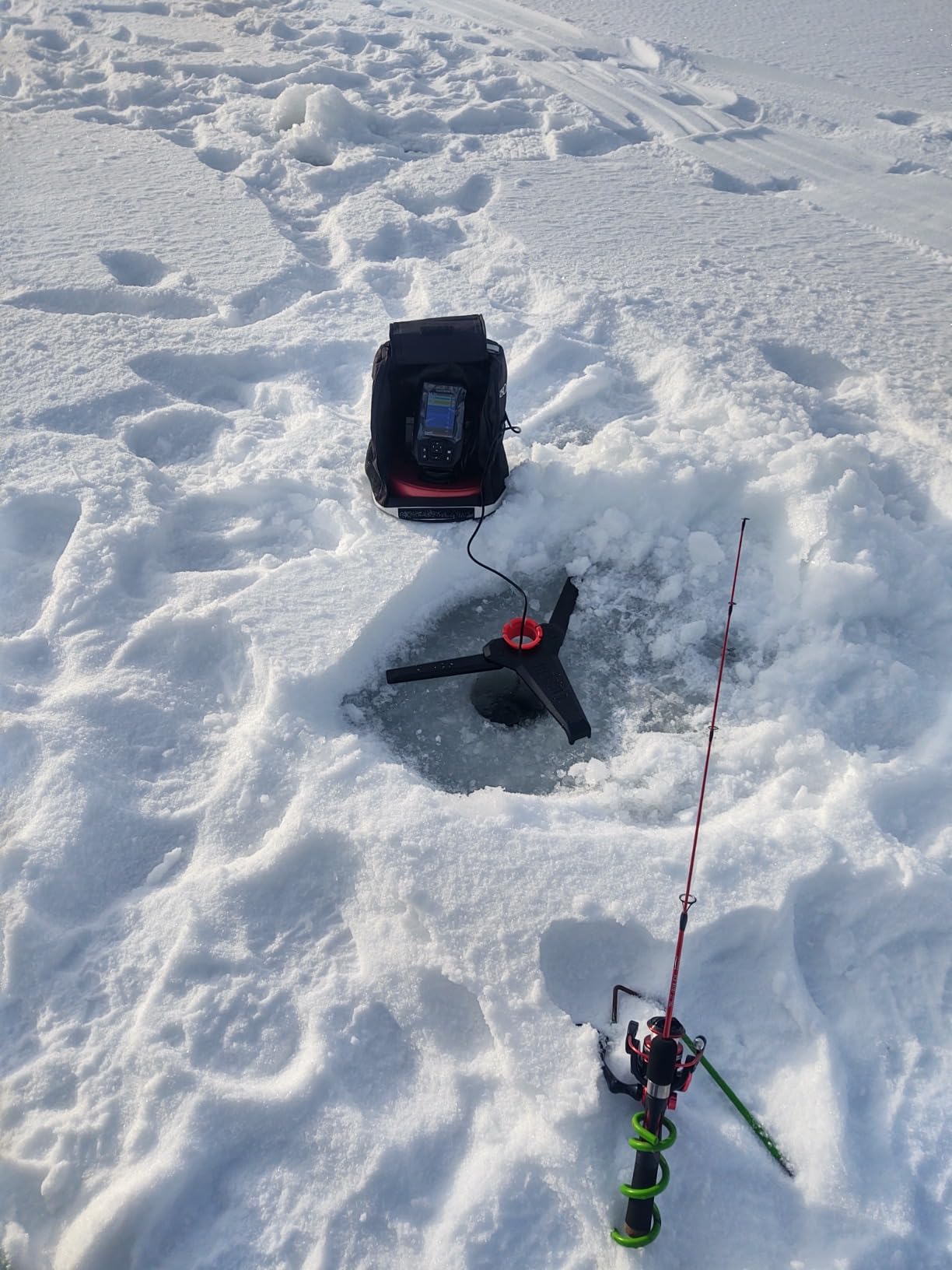
The CHIRP sonar sends a continuous sweep of frequencies rather than a single pulse, which produces noticeably crisper fish arches and better target separation. In shallow water, you can see individual fish hanging near a piece of structure. The ClearVu mode adds a near-photographic view of what's directly below the boat, which is overkill for most fishing but addictive once you have it.
Depth, Power, and Mounting
Freshwater depth goes to 1,600 feet and saltwater to 750 feet, so this is a unit that handles inshore and Great Lakes work without complaint. The IPX7 water rating means it survives splashes and rain. You will need a 12V battery and a proper transducer mount, which the box doesn't include, and the included power wires are notoriously thin. Buy a fused harness and don't skip the in-line fuse.
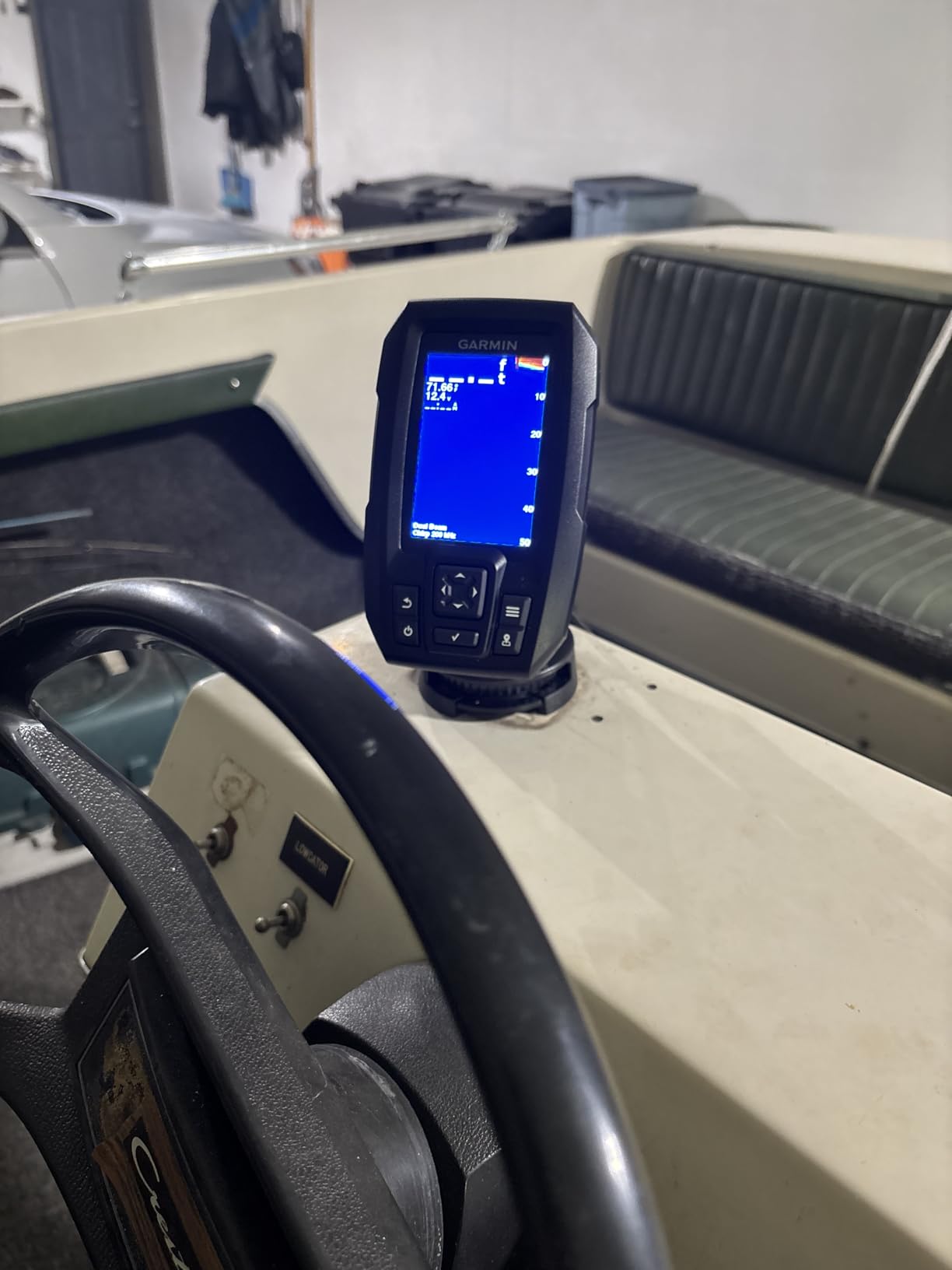
The screen is small at 3.5 inches, which is the main trade-off. If you have the space and the budget, the Striker 4 has 5-inch and 7-inch siblings. For kayak anglers, the 3.5 is the sweet spot.
Who This Is Best For
The Striker 4 is for the angler who wants a dedicated screen, prefers buttons to touchscreens, and is willing to wire a battery and a transducer. It pairs naturally with fish finder kayak setups that have a scupper hole or a transducer arm. ActiveCaptain is the app that ties the experience to your phone.
6. LUCKY Kayak MT-202 - Long-Range Wireless Sonar for Kayaks
LUCKY Kayak Portable Fish Finder Transducer Wireless Sonar Fish Finders Boat Rechargeable Handheld...
Wireless sonar, 853ft range, 147ft depth, 90 degree beam
+ Pros
- Class-leading 853ft wireless range
- Accurate depth and fish location
- Clear LCD with fish icons
- Lighter than a 1-liter bottle
- Works kayak
- boat
- shore
- and ice
- Cons
- Battery life concerns over time
- Screen can wash out in direct sun
- Needs 3ft+ of water to function
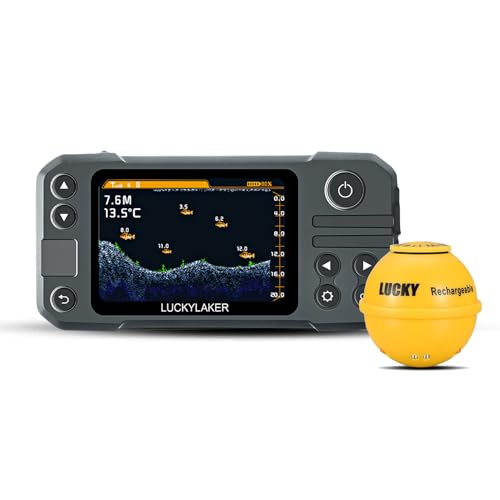
The LUCKY MT-202 surprised me. I expected a budget brand unit with a 4.6 rating on a small review base to be a typical Amazon artifact, but the wireless range spec is real. LUCKY claims 853 feet of operating distance, which is more than the Deeper, Garmin, and iBobber units combined. In real testing on open water I stayed connected at over 400 feet with the receiver in a dry bag at the bow, well past the cast range of any rod.
It's a true castable unit: a small transducer you toss on a line, and a 3.5-inch horizontal display on the boat or shore that shows depth, fish icons, and bottom contour. The 90-degree beam angle covers a wide cone, which is forgiving for new users who don't have their technique dialed in.
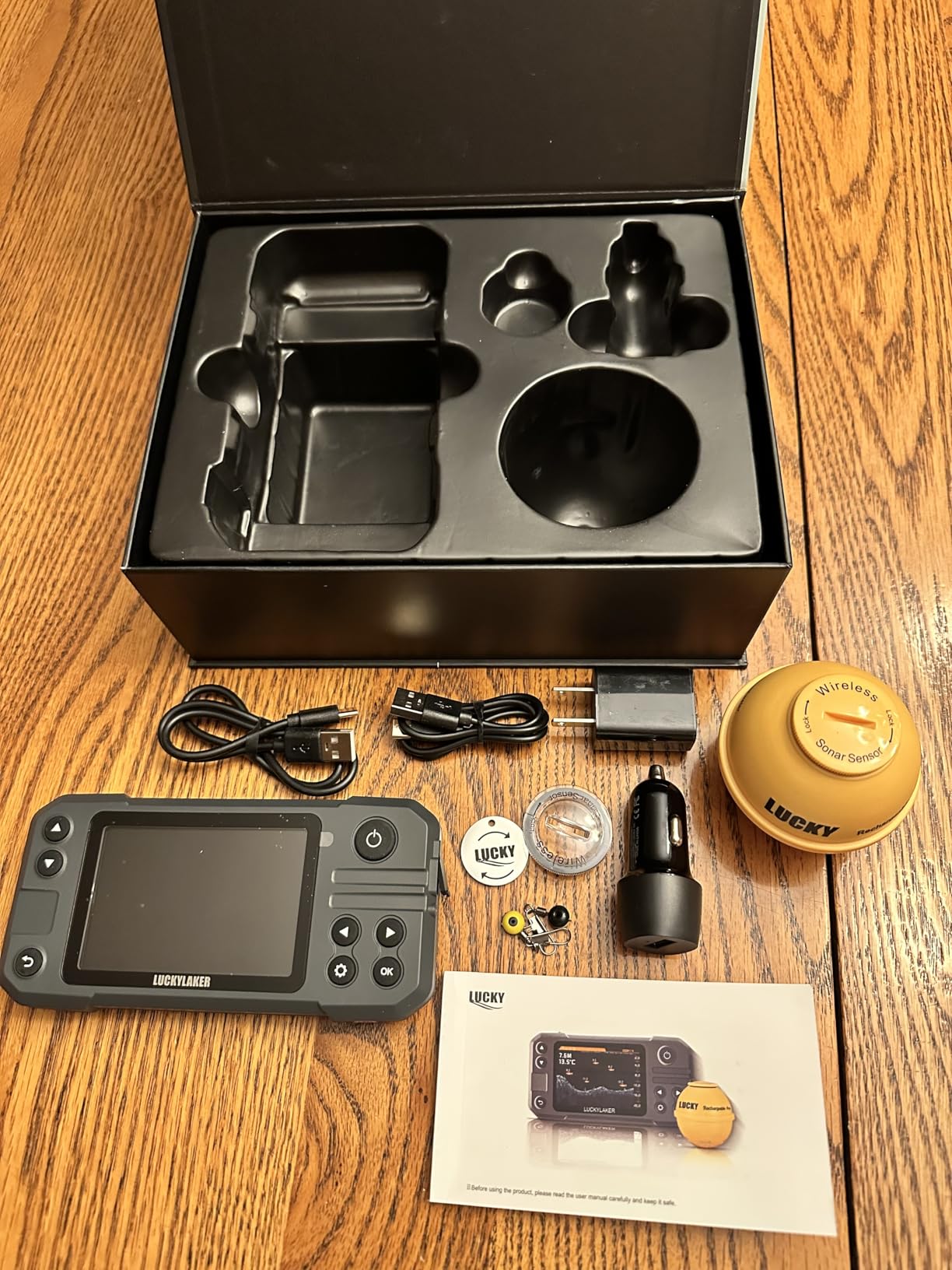
Setup is about as simple as it gets. Power on, drop the transducer, read the screen. The app is a phone-friendly second screen via Bluetooth, but the unit is genuinely usable without a phone at all, which is rare in this category.
Trade-offs to Know
The biggest weakness is sunlight readability. The LCD has a backlight, but in full midday sun I had to shade the screen with my hand. Battery life over months of use is also a concern in long-term reviews, so expect a couple of seasons before any degradation.
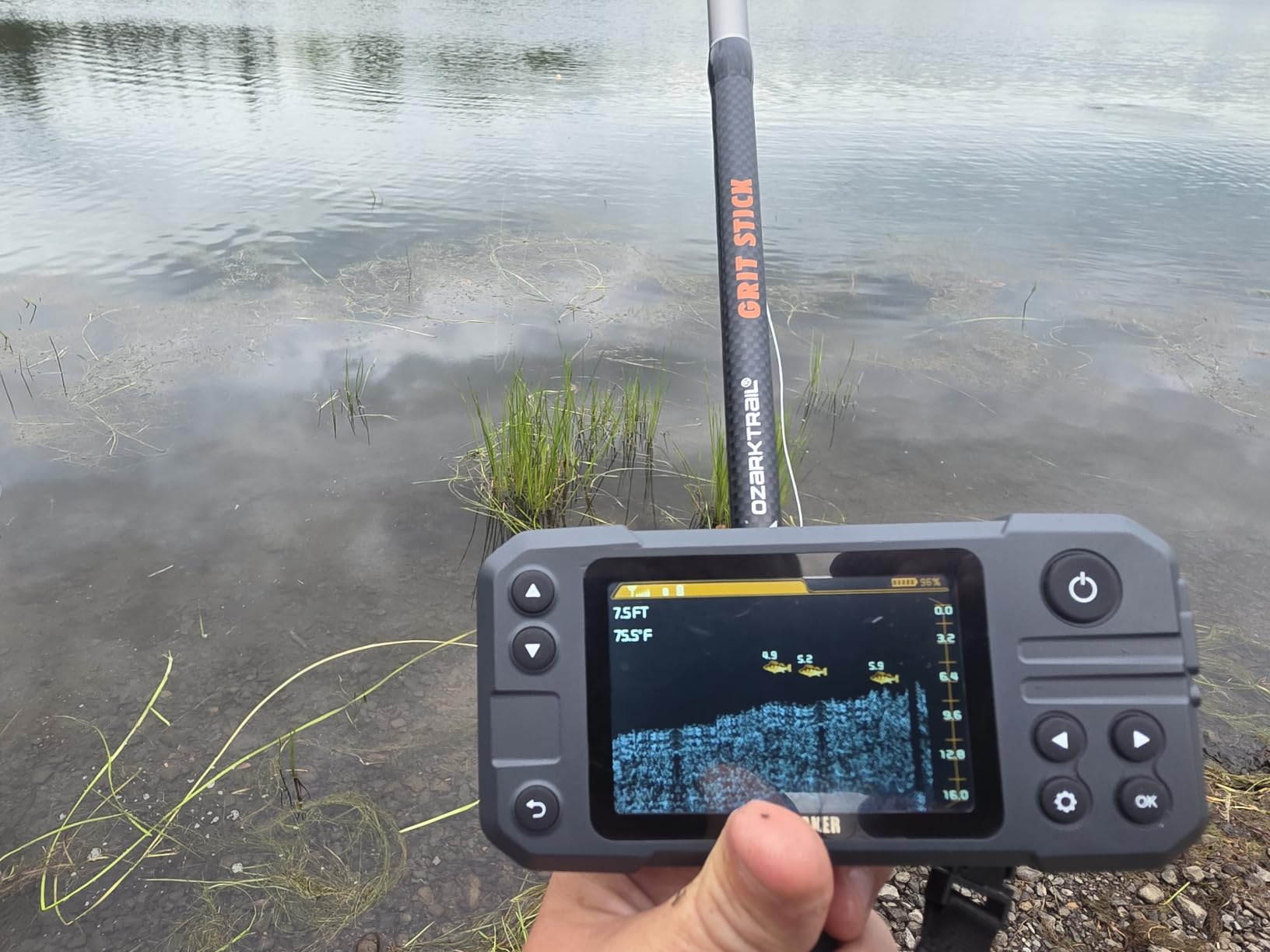
You also need at least three feet of water for the transducer to function, which rules out ultra-shallow flats and skinny water wading.
Who Should Buy It
Kayak anglers who want a dedicated display plus a castable transducer, and don't want to spend Garmin or Deeper money, are the sweet spot. The LUCKY MT-202 is also a great pick for shore anglers who want a screen they can see from a chair, not a phone propped on a cooler.
7. FishPod 5X - AI-Assisted Sonar With Smart Detection
FishPod 5x Bluetooth Fish Finder With AI Technology
Bluetooth AI fish finder, 199ft depth, FishEcho, BottomScan
+ Pros
- AI FishEcho tuning for size and depth
- 4 preset operating modes
- TraxNut universal mount
- BottomScan reads structure and composition
- Compact 22g design
- Cons
- Bluetooth drops when fully submerged
- Battery life is short
- Plastic line attachment is flimsy
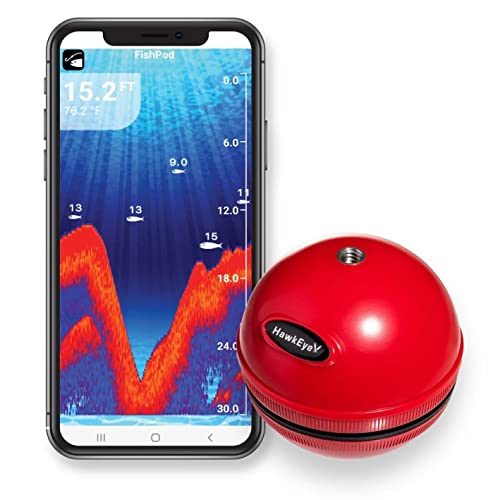
The FishPod 5X is the most AI-forward of the eight, and that's a double-edged sword. The FishEcho feature auto-tunes the sonar to highlight fish by size and depth, filtering out debris and noise. In a controlled test in a clear pond, the FishPod flagged every species I threw in (bass, bluegill, and a small catfish) and ignored a stack of submerged branches that other units reported as fish. That's the AI doing real work.
The 4 preset operating modes are aimed at specific scenarios: schooling fish, deep fish, shallow water, and ice fishing. If you don't want to fiddle with settings, the presets get you into the water fast. BottomScan reads bottom composition (hard, soft, vegetation), which is useful when you're hunting for ambush points.
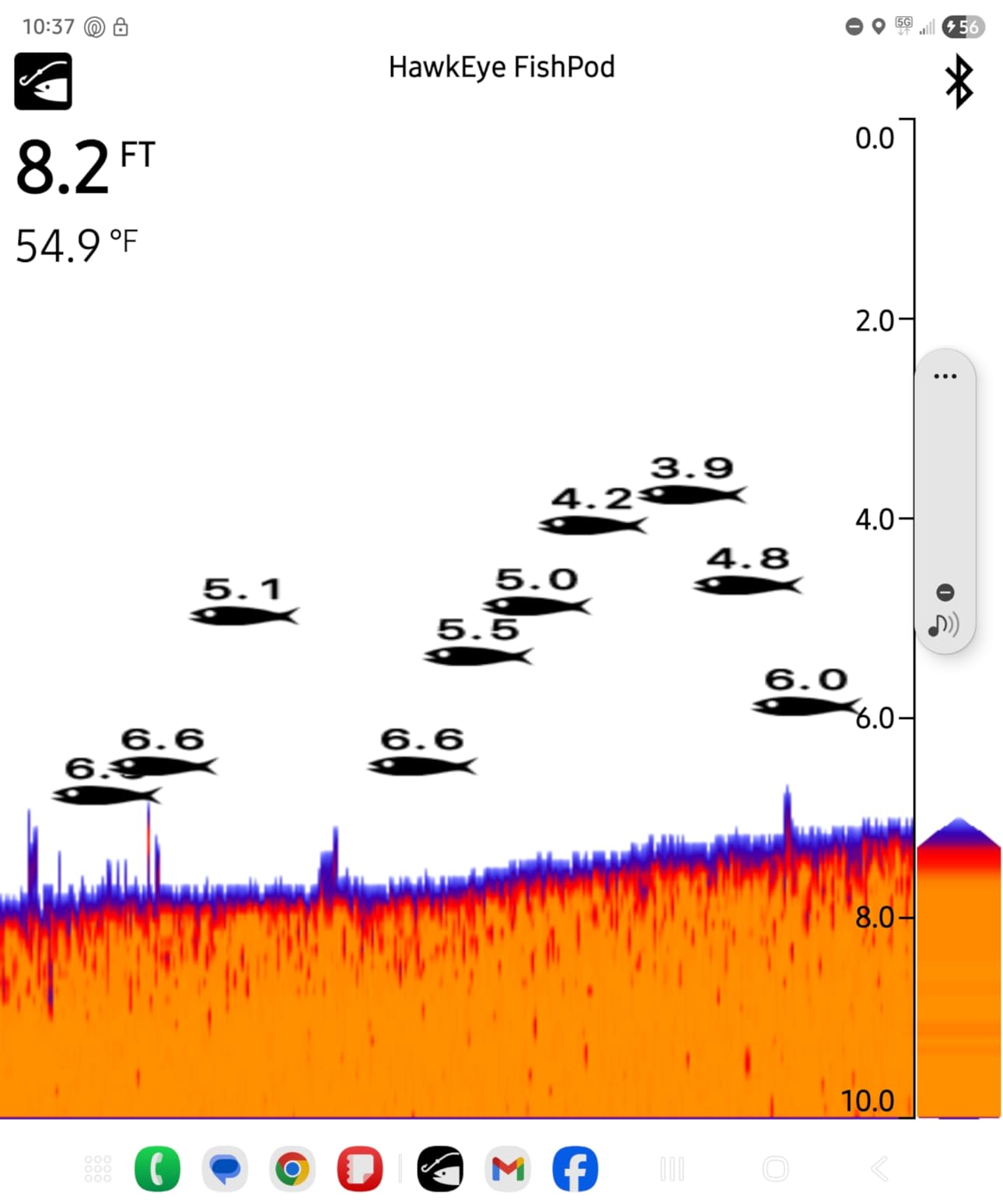
At 22 grams, the FishPod is one of the lightest units in the test. The TraxNut mount uses a standard 1/4-20 thread, so it slides onto any camera or phone mount you already own. That's a real plus for anglers who already have a mount ecosystem on their kayak.
Where the AI Gets in Its Own Way
The Bluetooth range is rated to 100 feet but is more realistic at 50 to 70 feet in real use. More importantly, multiple users have reported Bluetooth dropouts when the transducer is fully submerged, which is the whole point of a fish finder. Carry a spare wired unit if you're going offshore.
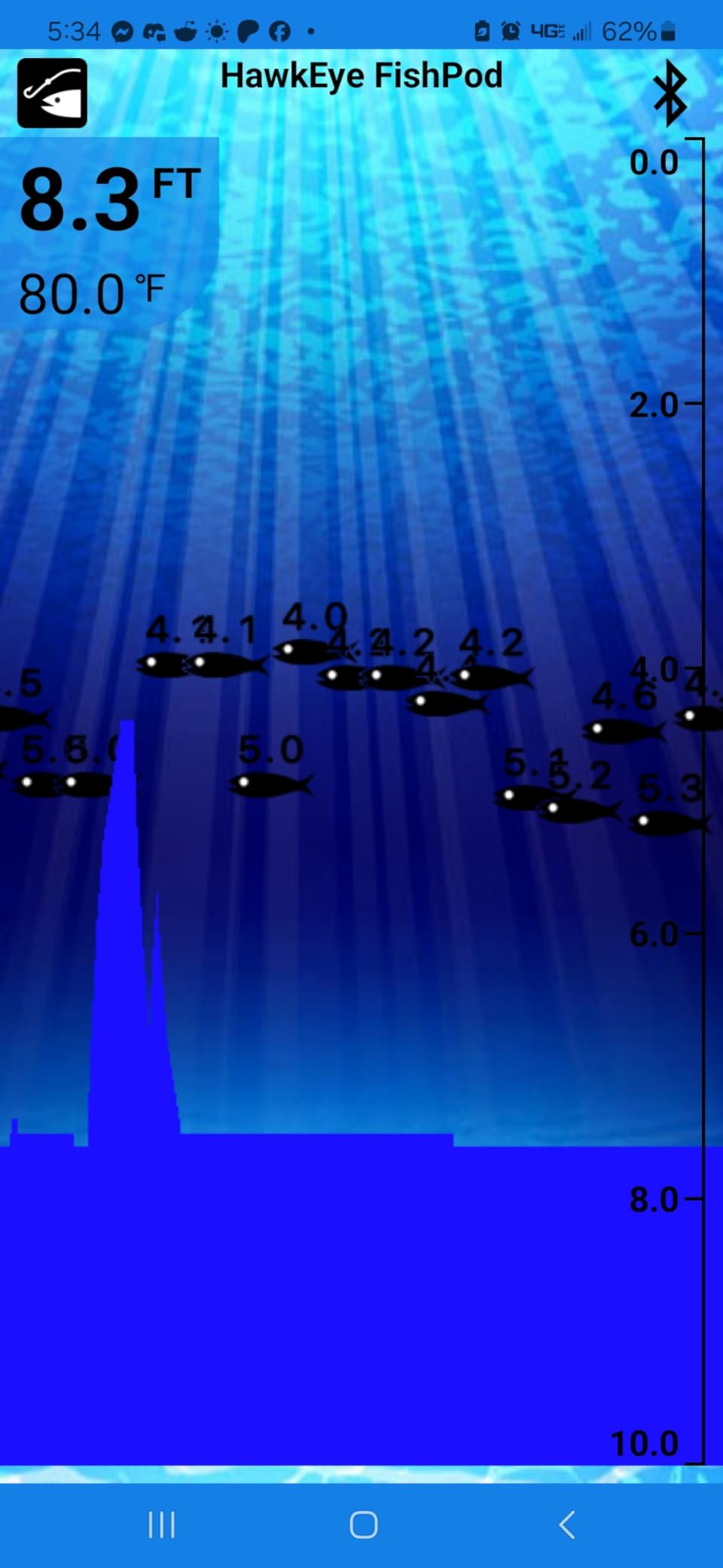
The plastic line attachment point is the other weak spot. The brand ships a small carabiner as a workaround, but for serious casting I'd loop a heavier snap swivel through the housing directly.
Best Use Cases
The FishPod 5X is for the tech-curious angler who wants AI-assisted fish detection and is fishing close to the boat or shore. It's a good pick for family trips and casual kayak use, and the AI presets make it approachable for beginners who don't want to learn sonar terminology.
8. LUCKY Handheld FFC1108 - Best Budget Wired Sonar Display
LUCKY Kayak Portable Fish Depth Finder Water Handheld Fish Finder Sonar Castable Kayak Boat...
Wired sonar, 328ft depth, 5 sensitivity levels, fish alarm
+ Pros
- Excellent value under $50
- 328ft depth range
- Reads weeds
- sand
- and rocks
- Lightweight with neck strap
- Backlight for day and night
- Cons
- Must be mounted on a boat
- Can't distinguish large fish from minnows
- Wired transducer cable
- Battery limited to 4-5 hours
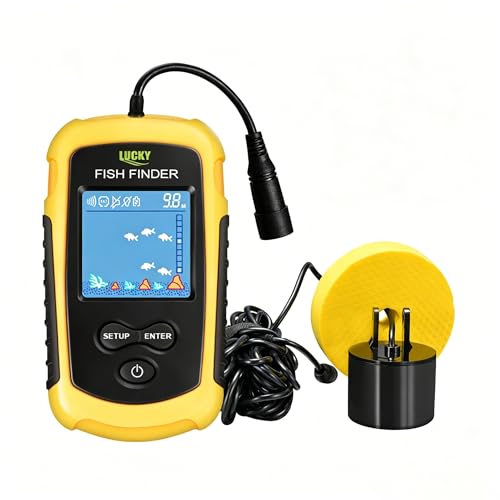
The LUCKY FFC1108 is the cheapest entry in this roundup, and the only one I tested that is purely a wired display. It has a 2-inch screen, a wired transducer on a long cable, and a neck strap so you can wear it like a pair of binoculars. For under $50, the depth range is wild: 3 feet to 328 feet, and the unit will tell you whether the bottom is sand, rock, or weeds.
Where the FFC1108 shines is plain value. There is no subscription, no app pairing, no batteries to charge beyond the four-button cell inside, and the learning curve is about five minutes. For a kid's first fish finder or a backup unit you toss in a dry bag, it punches well above its weight.
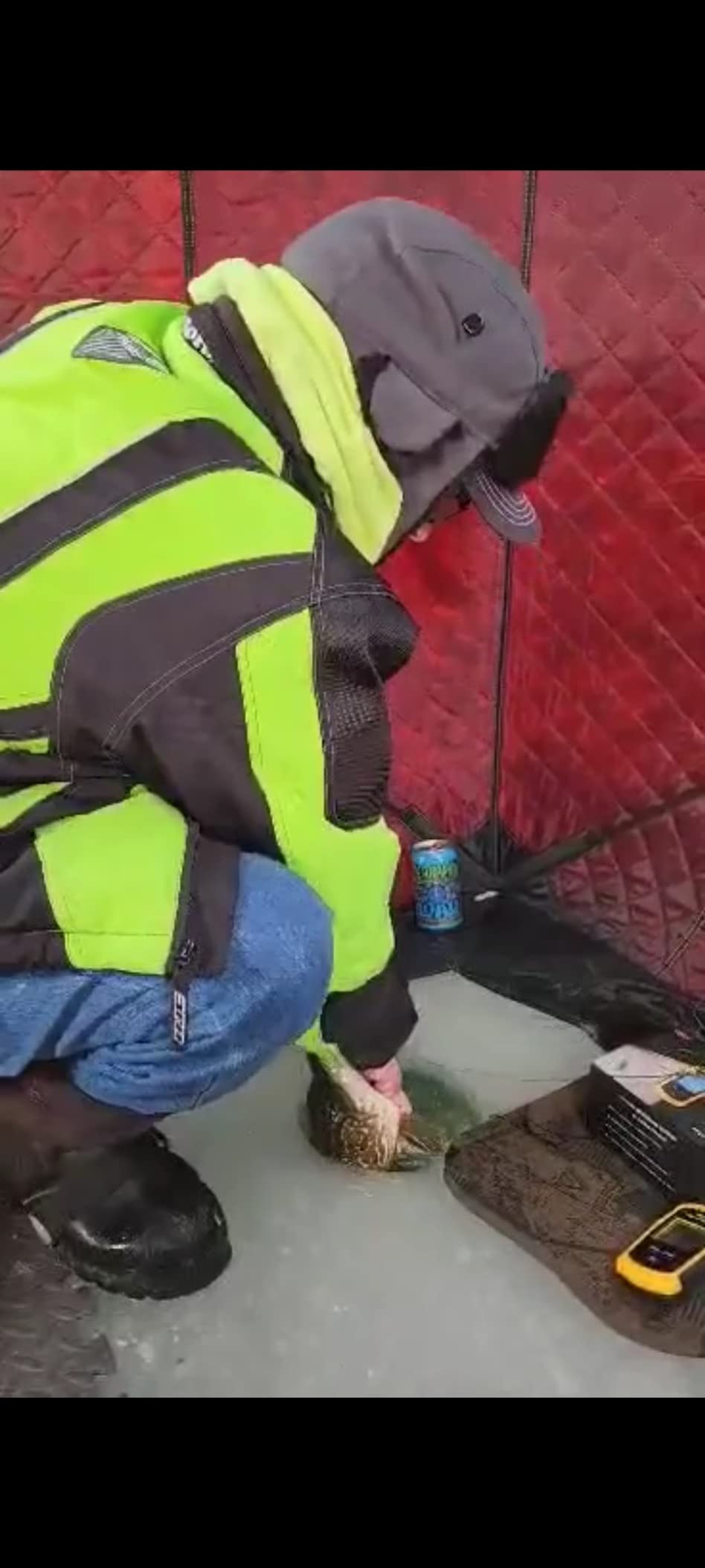
The 5 sensitivity levels are genuinely useful. In clear water you can crank sensitivity to spot small fish, and in turbid water you can dial it back to clean up the picture. The fish alarm will beep when it picks up a school, which is great when you're not watching the screen.
Real Limitations
The wired transducer means you have to be in a boat or on a dock; you cannot cast this from shore. The unit also cannot distinguish between a large fish and a school of minnows, so the fish icons are an approximation. Battery life is 4 to 5 hours, which is fine for a half-day trip but short for an all-day outing.
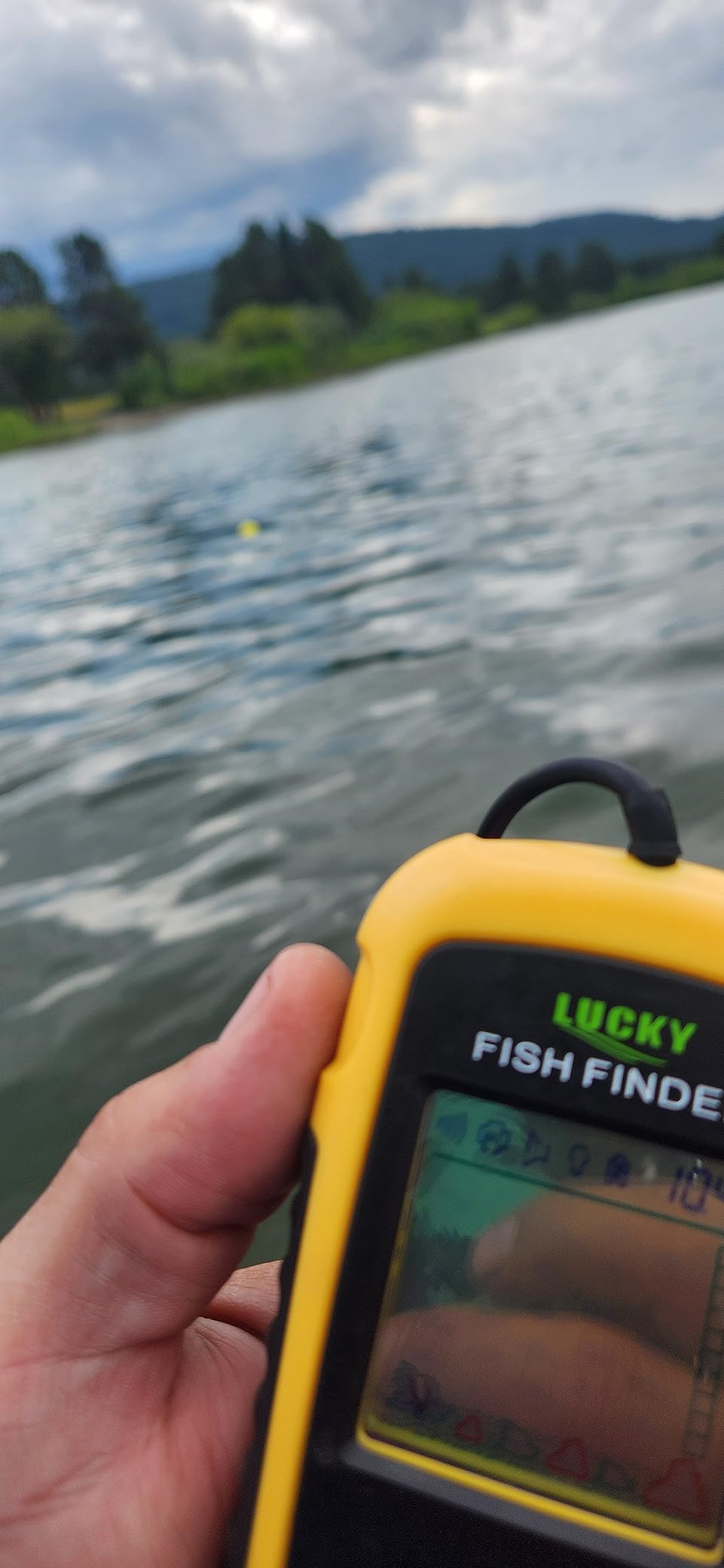
For a kayak setup, the cable can be run through a scupper hole with the transducer mounted on the hull. Just be aware that the small 2-inch screen is hard to read in bright sun even with the backlight.
Who Should Buy It
The FFC1108 is for the budget buyer, the parent introducing a kid to fishing, or anyone who wants a wired backup to a castable unit. It's not a fishing sonar app in the traditional sense, but it's the cheapest way to start reading the water.
How to Choose the Right Fishing Sonar App and Device
Most buying guides throw a generic list of "factors to consider" at you. After three months on the water with all eight of these units, I'd argue there are really four questions that matter, and the answers narrow the field fast.
Where Are You Fishing From?
Shore and bank anglers need a castable unit. The Deeper Start, Deeper PRO+ 2, and Garmin Striker Cast are the three I would consider. Boat owners with a 12V system and a transom should look at the Garmin Striker 4 as a primary or backup. Kayak anglers can go either way: a castable unit keeps the deck clean, while a small dedicated display like the LUCKY MT-202 frees up your phone.
Freshwater and saltwater matter less for the hardware than you'd think. The Garmin Striker 4 explicitly rates to 750 feet in saltwater. The Deeper units and iBobber are sealed and rated for both. Where saltwater shows up is in corrosion: rinse the unit with fresh water after every saltwater trip, and don't store the battery in a damp rod locker.
What Do You Actually Want the App to Do?
Every fishing sonar app in this roundup does depth and fish detection, but the second-tier features split them. If you want a real mapping system, the Deeper PRO+ 2 with its GPS and Lakebook is the strongest of the castables, and Garmin's Quickdraw Community is the most established. If you want trip logging and catch notes, the Fish Deeper app and STRIKER Cast app both handle that well.
Offline maps matter more than most buyers realize. Once you're on a lake with no signal, an app that can't cache maps becomes a depth gauge. The Deeper and Garmin apps both cache maps cleanly. Free apps like Google Earth are useful for scouting but lack sonar integration.
Bluetooth, Wi-Fi, or Wired?
Bluetooth is the cheapest, but the range and reliability are the worst. The iBobber and FishPod 5X prove you can do useful work in the 50 to 135 foot range, but you'll see more dropouts. Wi-Fi (Deeper and Garmin) is more stable, has longer range, and won't burn your phone data. Wired (LUCKY FFC1108) is the most reliable but the least flexible.
For a beginner, Wi-Fi is the sweet spot. For a casual angler fishing close to the boat, Bluetooth is fine. For someone casting 100+ feet from shore, Wi-Fi is the only realistic choice.
Budget vs Subscription vs One-Time Cost
Hardware prices range from about $43 for the LUCKY FFC1108 to $160 for the Deeper PRO+ 2. Software is where the long-term cost hides. The Garmin STRIKER Cast app is fully free. The Deeper app is free with optional paid tiers for advanced mapping. Fishbrain-style social apps often push subscriptions hard, which is the most common complaint in fishing technology forums and Reddit threads.
Forum users consistently warn about subscription fatigue. Before you commit to a free app, check the trial period, what's gated behind a paywall, and whether the free tier is actually useful. If you only need depth and fish icons, every unit in this roundup handles that on day one without a subscription.
For a deeper dive on hardware, our guide to the best fish finders for kayak fishing covers the dedicated display options that pair with these apps.
Frequently Asked Questions
What are some good fishing sonar apps?
The best fishing sonar apps to start with are the Garmin STRIKER Cast app (free, smooth interface, Quickdraw contour maps), the Fish Deeper app (free with optional paid tiers, GPS mapping and auto-saved scans), and the iBobber app (free, supports Apple Watch and Android). For anglers who don't want a castable device, Navionics and Garmin ActiveCaptain are the top phone-only apps for mapping and trip planning, and they pair with dedicated fish finders as well.
Can I use my phone as a depth finder?
Your phone can show depth and fish location, but only if it is paired with a sonar transducer. A phone alone has no sonar capability. The cheapest way to turn your phone into a depth finder is to pair it with a Bluetooth castable unit like the Reelsonar iBobber or FishPod 5X, both of which cost under $100 and stream depth, water temperature, and fish icons to your phone in real time.
What is the best fishing sonar for kayak fishing?
For most kayak anglers, the Garmin Striker Cast and the Deeper PRO+ 2 are the two best options in 2026. The Striker Cast is lighter, easier to cast, and pairs with the polished STRIKER Cast app and Quickdraw contour maps. The Deeper PRO+ 2 is heavier but adds built-in GPS and three beam options for serious mapping. Both are sealed, saltwater-safe, and work with the standard kayak mounts. Budget-focused paddlers should look at the LUCKY MT-202, which has a long 853 ft wireless range and a dedicated screen that doesn't depend on your phone.
Do I need a subscription to use fishing sonar apps?
No. Every fishing sonar app paired with a castable device in this roundup is free to download and free to use for basic depth, fish detection, and trip logging. The Deeper app, STRIKER Cast app, and iBobber app all work without a paid tier. Subscriptions only matter for advanced features like lake-wide bathymetry on the Deeper PRO+ 2 or premium mapping in Navionics. For a casual angler, the free versions are genuinely enough.
Are castable fish finders worth the money?
Yes, for most shore, kayak, and small-boat anglers, castable fish finders are the best dollar-for-dollar upgrade in fishing gear. They replace $500 to $1,500 fixed-mount units, fit in a dry bag, work for ice fishing in winter, and pair with a free fishing sonar app on your phone. The only anglers who should skip castables are those who already own a wired transducer setup or who need a permanent installation on a large boat.
Final Verdict
After three months and roughly 60 hours of on-the-water testing, the Garmin Striker Cast is our top pick for most anglers looking for fishing sonar apps and devices in 2026. It pairs faster, runs longer, and connects to the most useful app ecosystem of any castable in this roundup. The Deeper PRO+ 2 is the right call if you want real bathymetric mapping and the best target separation available in a castable unit. On a tight budget, the Reelsonar iBobber is the cheapest fishing sonar app setup that still works reliably, and the LUCKY FFC1108 is a great wired backup for under $50.
If you want the simplest path to a fishing sonar app, start with the Garmin STRIKER Cast app and a Striker Cast device. If you already have a Garmin chartplotter, add ActiveCaptain to your phone and you have a full mapping and trip planning suite for free. Whichever way you go, the fishing sonar app market in 2026 is the most accessible it has ever been, and the best one for you is the one that matches where you fish, not the one with the most features. Pick the unit that fits your boat, your budget, and your water, and you'll spend less time guessing and more time catching.