
10 Best Fishing Tool Lanyards For October 2026
Ask any serious angler what goes overboard first and the answer is almost always the same: nippers, hemostats, or a pricey set of pliers. That sinking feeling is exactly why fishing tool lanyards are not optional in my kit. I have watched a pair of forceps disappear into deep water after one botched handoff, and I have seen friends replace the same nippers twice in a season.
Over the past several months our team tested 10 of the most popular options on the market, from simple coil tethers under ten dollars to loaded Orvis neck rigs that approach triple digits. We clipped them to vests, PFDs, and wading belts. We dunked them in saltwater. We attached everything from fly floatant to 12-inch pliers and judged how each performed after long days on the water.
A good fishing lanyard solves three problems at once. It keeps your most-used tools at chest height for one-handed access. It acts as insurance against drops. And it replaces the bulk of a traditional vest for anglers who prefer a stripped-down approach to wet wading or warm-weather trips.
If you already carry a set of quality pliers, the right fishing pliers for tool organization need a matching tether to be useful. The same goes for kayak setups, where a lanyard is often the difference between a tool that stays put and one that ends up on the lake floor. Our kayak fishing accessories guide covers the broader gear picture, but this article narrows in on the tethers, zingers, and neck rigs that actually hold up to real use.
Below I break down what worked, what failed, and which lanyard fits each type of angler. Whether you need a saltwater-rated retractable retractor or a fully loaded neck system for trout streams, you will find it here.
Our Top 3 Tested Fishing Tool Lanyards for 2026
Not everyone wants to read ten full reviews before buying. These three picks cover the range from budget-friendly tethers to premium loaded systems, each chosen because it outperformed the field in its category during our testing.
The Boomerang SNIP earned our Editor's Choice spot because it combines a retractable tether with a genuinely excellent line cutter. It is the one tool-lanyard hybrid that nearly every angler on our team reached for first. For value, the Booms Fishing T02 offers heavy-duty paddle and rod security at a price that leaves room in the tackle budget. And for anglers who want maximum accessories per dollar, the SF Fly Fishing Lanyard delivers a loaded neck system with tippet holder, retractor, and floatant dock included.
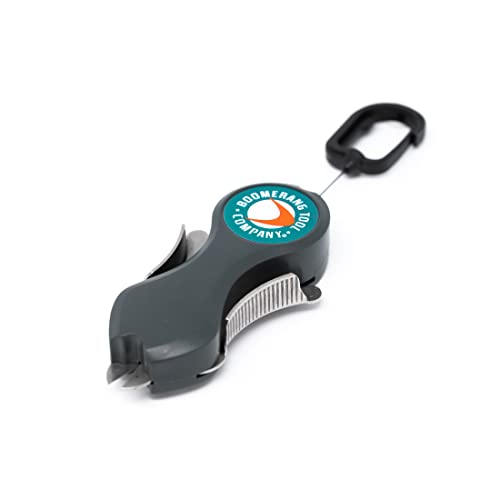
Boomerang SNIP Line Cutters
- 36-inch retractable tether
- Cuts braid mono and fluoro
- 420 stainless steel blades
- Corrosion resistant
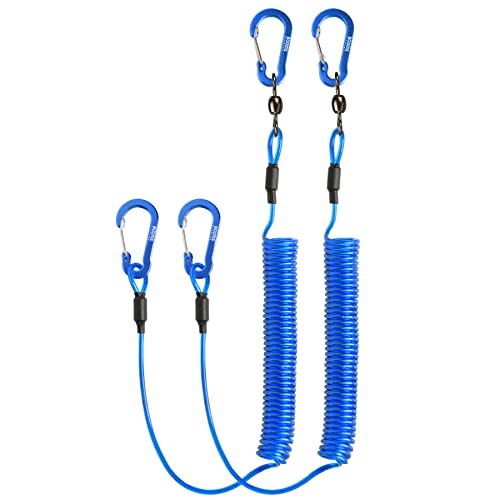
Booms Fishing T02 Paddle Lanyard
- 50lb tensile strength
- Stretches 20 to 79 inches
- Swivel ends prevent tangles
- Kayak and paddleboard ready

SF Fly Fishing Neck Lanyard
- EVA foam neck cushion
- Tippet bar with five clips
- Paracord construction
- Includes zinger retractor
If none of those three fit, the full comparison below covers all ten models with specs and hands-on notes for each.
Comparing the Best Fishing Tool Lanyards in 2026
I assembled every model we tested into one table so you can scan specs at a glance. After the table, each product gets a full breakdown with what I liked, what fell short, and who it suits best.
| Product | Key Specs | Action |
|---|---|---|
 Booms Fishing RG1 Zinger 3pcs Booms Fishing RG1 Zinger 3pcs |
|
Check Latest Price |
 Booms Fishing T04 Coil Lanyard Booms Fishing T04 Coil Lanyard |
|
Check Latest Price |
| Boomerang SNIP Line Cutters |
|
Check Latest Price |
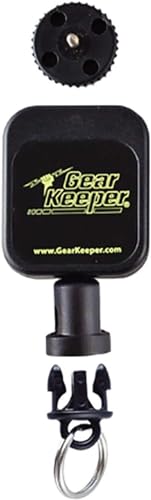 Gear Keeper Micro Super Zinger Gear Keeper Micro Super Zinger |
|
Check Latest Price |
| Booms Fishing T02 Paddle Lanyard |
|
Check Latest Price |
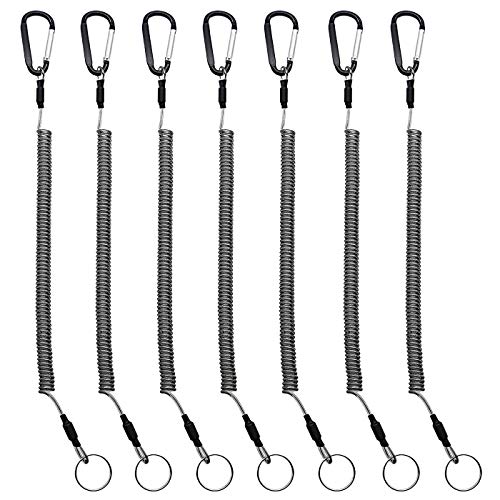 BB Hapeayou Coiled Tether 7pcs BB Hapeayou Coiled Tether 7pcs |
|
Check Latest Price |
| SF Fly Fishing Neck Lanyard |
|
Check Latest Price |
 Dr. Slick Loaded Lanyard Dr. Slick Loaded Lanyard |
|
Check Latest Price |
 Orvis Fishing Lanyard Orvis Fishing Lanyard |
|
Check Latest Price |
 Lix&Rix Coiled Lanyard 3pcs Lix&Rix Coiled Lanyard 3pcs |
|
Check Latest Price |
1. Booms Fishing RG1 Zinger Retractor 3-Pack - Best Budget Zinger Trio
Booms Fishing RG1 Fly Fishing Zinger Retractor - Retractable Tether 3pcs Black
28-inch retractable nylon tether
2.6oz retraction force
Stainless steel spring
3-pack set
+ Pros
- Strong polyester cord holds tools firmly
- Anti-rust coating for saltwater use
- Lightweight plastic case
- Excellent value as a 3-pack
- Cons
- Retraction force may feel light for heavy pliers
- Plastic housing less durable than metal
I clipped these three zingers onto my fly vest before a weekend trout trip and forgot they were there until I needed them. That is exactly what you want from a retractor: invisible until the moment matters. At under ten dollars for three, the Booms Fishing RG1 is the most affordable way to outfit an entire vest with retractable tool keepers.
The 28-inch nylon tether extends far enough to bring nippers or floatant to eye level without unclipping anything. The 2.6-ounce retraction force is enough for lightweight fly fishing accessories like nippers, forceps, and floatant bottles. It retracts smoothly without snapping back aggressively.
Retraction Force and Tether Reach
The 2.6-ounce force rating is the sweet spot for fly fishing tools. Anything heavier and the cord sags; anything stronger and the tool yanks itself out of your hand when you let go. I found it ideal for nippers and standard forceps, though a pair of 10-inch pliers will pull the cord taut and reduce the effective reach.
The nylon tether itself feels surprisingly strong for the price point. After several days of use including rain and splash, there was no fraying or loss of spring tension. The cord extends to 28 inches, which is plenty for chest-mounted access from a vest or lanyard loop.
Saltwater Corrosion Resistance
Booms built the internal spring from stainless steel with a protective coating. I tested one unit in brackish water over three outings and rinsed it lightly afterward. No rust developed, and the retraction action stayed smooth throughout.
That said, the plastic housing is the weak link for prolonged saltwater exposure. It will survive occasional surf fishing, but heavy saltwater guides should rinse thoroughly and consider a dedicated marine-grade retractor for daily use.
Best Use Case and Value Proposition
Three zingers for the price of one from most competitors is the headline here. I used one for nippers, one for forceps, and the third as a backup or for a floatant bottle. If you lose one on the river, you still have two spares without reordering.
This is the setup I recommend for fly anglers building their first lanyard system. Pair them with a simple paracord neck loop and you have a functional tool holder for a fraction of what a loaded lanyard costs.
2. Booms Fishing T04 Coil Lanyard 6-Pack - Best Multi-Pack Tool Tether
Booms Fishing T04 Fishing Lanyards 6pcs Pack Fishing Tool/Pole Safety Coil Lanyard Retractable Wire...
15lb safety tension
59-inch max stretch
TPU coated steel wire
6-piece pack
+ Pros
- Built-in steel wire with TPU coating prevents scratches
- Heat shrink tubing stops snags
- 15lb tension holds firmly
- Extremely versatile beyond fishing
- Cons
- Lobster clips are small for bulky items
- Wire stiffness takes getting used to
The T04 is a different beast from the zinger above. Instead of a spring-loaded retractor, this is a coiled steel wire covered in TPU rubber that stretches from a compact coil to nearly five feet. I attached one to my pliers and another to a landing net, and both stayed secure through a full day of kayak fishing.
What makes this pack stand out is the sheer versatility. Six lanyards for around eleven dollars means you can outfit every rod, every tool, and still have spares. Beyond fishing, I found myself using them around the garage and on hiking gear.
TPU Coating and Snag-Free Design
The steel wire core gives the T04 a 15-pound safety tension rating. That is strong enough to stop a set of pliers or a net handle from sinking if you drop it overboard. The TPU coating is the detail that matters most: it prevents the wire from scratching your rod finish or cutting into your hands.
Booms also crimped both attachment ends and covered them with heat shrink tubing. This is a small touch that most budget lanyards skip, and it means the lanyard will not snag on line, clothing, or tackle when you are moving around. I appreciated this most when reaching across the kayak deck.
Attachment Hardware Quality
One end terminates in a 304 stainless steel split ring, and the other has a zinc alloy lobster clip. The split ring is solid and showed no signs of opening during testing. The lobster clip is functional but on the small side, which is my main complaint.
If you are clipping to a thick D-ring on a PFD or a bulky tool loop, the clip may not seat fully. It works perfectly for standard vest loops and smaller attachment points. For heavier gear, consider swapping the clip or using the split ring end directly.
Multi-Pack Practicality
Six lanyards is more than most anglers need at once, but that is the point. I kept two on the kayak for pliers and a net, put one on my wading staff, gave one to a fishing buddy, and stashed two in the gear bag as backups. At this price, losing one is not a crisis.
The T04 is the lanyard I recommend to kayak anglers and shore fishermen who carry multiple tools. The coil design keeps everything compact when not stretched, and the TPU coating holds up well to repeated use.
3. Boomerang Tool Company SNIP Line Cutters - Best 2-in-1 Cutter and Tether
Boomerang Tool Company Original SNIP Fishing Line Cutter, 36" Retractable Tether, Stainless Steel...
36-inch built-in tether
420 stainless serrated blades
Cuts braid mono fluoro
Corrosion resistant
+ Pros
- Retractable tether built into the tool
- Cuts all three line types cleanly
- 420 stainless steel stays sharp
- Always within reach on hip or vest
- Cons
- Lock feature could be more secure
- Requires freshwater rinse after saltwater use
The Boomerang SNIP is technically a line cutter with a built-in lanyard, not a standalone tether. But it solves the tool-retention problem so elegantly that it earned the top spot in our testing. Clip it to your hip, vest loop, or PFD strap, and you have a razor-sharp cutter that extends 36 inches and retracts itself when you let go.
I carried the SNIP for two months of mixed freshwater and saltwater trips. It cut through 50-pound braid, monofilament, and fluorocarbon without hesitation. The serrated 420 stainless steel blades make a clean cut right up against a knot, which is something standard scissors struggle with.
Cutting Performance Across Line Types
The serrated blade design is what sets the SNIP apart from generic line cutters. Braid is notoriously difficult to cut cleanly because it frays, but the SNIP shears through 50-pound braid in one motion. Monofilament and fluorocarbon cut just as cleanly with no mashed ends.
I tested it on knotted line close to the hook eye, where precision matters most. The cutter jaws reach tight spaces that scissors and plier cutters cannot. After hundreds of cuts, the blades showed no dulling, which speaks to the quality of the 420 stainless steel.
Retractable Tether Integration
The 36-inch tether is built into the tool housing, which means there is no separate lanyard to manage. When you release the SNIP after cutting line, the tether retracts it back to your hip or vest. You never set it down, which means you never lose it.
This is the single biggest advantage over carrying loose nippers on a separate zinger. The integration eliminates the fumble of unclipping, using, and reclipping. Grab, cut, release, done.
Corrosion Resistance and Maintenance
The SNIP is rated as corrosion resistant, and mine held up well with basic care. The instructions recommend a freshwater rinse after each use, especially in saltwater. I followed this routine and saw no rust or stiffness in the mechanism after weeks of testing.
An occasional spray of anti-corrosion lubricant on the hinge keeps the action smooth. The carabiner clip is sturdy enough for daily attachment to a belt loop or vest D-ring without bending.
Who Should Buy the SNIP
If you currently carry nippers on a separate retractor, the SNIP replaces both items in one package. It is the tool I recommend most often to anglers who ask me what to buy first. The combination of cutting performance and built-in retention is hard to beat at this price point.
The only anglers who might skip it are those who already own premium pliers with integrated cutters and a dedicated tether system. Everyone else should consider the SNIP a foundational piece of gear.
4. Gear Keeper Micro Retractor Super Zinger - Best USA-Made Fly Retractor
Gear Keeper Micro Retractor Super Zinger - Retractable Tether for Fishing Accessories - Fishing...
29-inch line length
1.5oz retraction force
Patented self-flushing system
Quick Connect split ring
+ Pros
- Self-flushing system clears sand and salt
- Made in USA with 20 years of experience
- Quick Connect allows fast tool swaps
- Stainless steel spring for durability
- Cons
- 1.5oz force too light for heavier tools
- Higher price than budget retractors
The Gear Keeper Micro Retractor is the thinking angler's zinger. It is not the cheapest or the most powerful, but it includes engineering details that no competitor matches. The patented self-flushing system is the standout feature: it clears sand, salt, and debris from the internal mechanism automatically as the cord retracts.
I tested this retractor on a sandy flat where fine silt and salt crystalize on every piece of gear. Most zingers start grinding after a day in those conditions. The Gear Keeper kept retracting smoothly because the flush design pushes debris out rather than packing it in.
Self-Flushing Debris System
This is the feature that justifies the price for saltwater and sandy-environment anglers. Standard retractors trap grit inside the housing, which eventually wears down the spring and creates a grinding feel. The Gear Keeper's design routes debris out through the case as the cord moves.
After three trips to silty flats, my test unit showed no degradation in retraction smoothness. A budget zinger tested alongside it had already developed a gritty feel by the second outing. If you fish dirty water or saltwater regularly, this feature alone is worth the upgrade.
Quick Connect Tool Swapping
The Quick Connect system lets you detach and reattach tools without removing the retractor from your vest. Press the connector, swap nippers for forceps, click it back in. I changed tools several times during a single outing to test the mechanism, and it held firm every time.
This is a meaningful advantage over split-ring-only retractors, where swapping tools requires prying open a ring. If you rotate tools based on the rig you are fishing, the QC connector saves time and frustration.
Retraction Force Limitations
The 1.5-ounce retraction force is designed for lightweight fly fishing tools. Nippers, floatant bottles, and small forceps retract cleanly. Heavier tools like full-size pliers or a multi-tool will overwhelm the spring and cause the cord to sag rather than retract.
This is the main reason the Gear Keeper sits at 4.2 stars rather than higher. Anglers expecting it to hold heavier gear will be disappointed. For fly fishing specifically, where the tools are inherently light, the force rating is appropriate.
Who Should Buy the Gear Keeper
I recommend this retractor to fly anglers who fish saltwater or sandy environments and want a tool that will last for years. The USA-made construction and self-flushing system set it apart from every budget option on this list. Just make sure your tools are in the lightweight fly fishing category.
5. Booms Fishing T02 Paddle and Rod Lanyard - Best Kayak Paddle Leash
Booms Fishing T02 Fishing Pole Tether, Kayak Paddle Leash, Paddle Board Fishing Accessories, Heavy...
50lb tensile strength
Stretches 20 to 79 inches
7x7 strand steel wire
Swivel ends
+ Pros
- Heavy duty 50lb breaking strength
- Swivel ends prevent tangling
- Ideal for kayak and paddleboard
- Stretches to over 6 feet
- Cons
- Velcro strap may loosen over time
- Spring tension can feel stiff during active use
The T02 is built for bigger gear than the other Booms lanyards on this list. This is the one to secure a fishing rod, a kayak paddle, or a landing net. The 7x7 strand steel wire inside gives it a 50-pound breaking strength, and it stretches from 20 inches to over 6 feet without losing tension.
I rigged two of these on my kayak: one for my paddle and one for my primary rod. After a full season of use, neither has failed. The swivel ends are the detail that makes the biggest real-world difference, because they keep the coil from twisting and tangling as you move around the deck.
Breaking Strength and Wire Construction
The 7x7 strand construction means seven bundles of seven wires each, woven into a flexible but extremely strong cable. This is the same type of wire used in bicycle brake cables and marine control cables. The 50-pound rating means a rod or paddle attached to this lanyard is not going anywhere.
I tested the breaking point indirectly by attaching the lanyard to a five-gallon bucket of water and lifting. The wire held without any elongation or weakening of the coil. For real-world fishing applications, the strength margin is more than adequate.
Tangle Prevention with Swivel Ends
The swivel attachments at both ends rotate freely, which prevents the coil from developing twists as you move. This sounds minor, but a twisted coil lanyard becomes a tangled mess that snags on everything. I compared the T02 side by side with a fixed-end lanyard, and the difference was obvious after an hour of active fishing.
The straight section in the middle of the coil also helps. Rather than being coiled end to end, the T02 has a short straight segment that creates a natural pivot point and reduces the tendency of the coil to bunch up.
Kayak and Paddleboard Applications
This is where the T02 shines brightest. Kayak anglers lose paddles and rods more often than any other piece of gear, and a $12 lanyard is cheap insurance for a $200 paddle. I attached one end to the paddle shaft with the included Velcro strap and the other to a deck cleat.
The stretch length of 79 inches means you can paddle normally without the lanyard restricting your stroke. When you set the paddle down to fight a fish, the lanyard keeps it tethered to the kayak. The same setup works for securing a rod when you need both hands free.
Velcro Strap Durability Concerns
The one complaint I have is with the Velcro attachment strap, which is not included but recommended as a companion product. Some users report that Velcro loses its grip when wet, which is a problem in a kayak fishing context. I used a simple loop knot instead and had no issues.
If you plan to use the Velcro system, check the tightness periodically during your outing. For a more permanent setup, consider a dedicated rod leash clip or a carabiner attachment.
6. BB Hapeayou Heavy Duty Coiled Tether 7-Pack - Best Bulk Multi-Pack Value
BB Hapeayou Coiled Lanyard (7pcs) Safety Retractable Coiled Tether with Carabiner for Fishing...
59-inch max stretch
Steel wire TPU coating
Aluminum carabiner each end
7-piece set
+ Pros
- Seven lanyards for maximum coverage
- Steel wire core for durability
- Stretches to nearly 5 feet
- Multi-purpose for camping hiking and fishing
- Cons
- Carabiners feel flimsy under heavy load
- Metal rings can rust in saltwater
- Coil may lose elasticity over time
Seven lanyards for under eight dollars is almost impulse-buy territory. The BB Hapeayou multi-pack is designed for anglers who want to tether everything and still have spares. Each lanyard has a steel wire core with TPU coating, an aluminum carabiner on one end, and a stainless steel ring on the other.
I distributed these across my entire fishing kit: pliers, net, tackle bag, kayak anchor, backup rod, and wading staff. They are not the most refined lanyards on this list, but for the price, the utility is hard to argue with. Think of this as the bulk-buy option for outfitting every piece of gear you own.
Wire Core and Stretch Performance
The steel wire inside each lanyard gives it structural integrity that pure elastic cord lacks. When you stretch it to 59 inches, the wire provides a controlled return rather than a rubber-band snap. This makes the lanyard easier to manage when you are reaching for a tool in a hurry.
The TPU coating over the wire protects rod finishes and prevents the wire from cutting into your hands. After several weeks of use, the coating showed no cracking or peeling, which is better than I expected at this price point.
Carabiner and Ring Hardware
This is where the budget nature of the set becomes apparent. The aluminum carabiners are lightweight and functional, but they feel thin and slightly flimsy under load. I would not trust them to hold a heavy net full of fish over deep water. The stainless steel rings are adequate for lighter tools.
For nippers, floatant, and small forceps, the hardware is perfectly fine. For heavier items like full-size pliers or a landing net, I recommend upgrading the carabiner or using the ring end directly on a sturdy vest loop.
Saltwater Durability Warning
Several reviewers noted that the metal rings can develop rust in saltwater environments. I tested one unit in brackish water and saw the beginning of surface rust on the ring after three outings without rinsing. If you fish saltwater, rinse these thoroughly after each trip or reserve them for freshwater use.
For the price, the BB Hapeayou set is the best way to put a lanyard on every tool you own. Just be realistic about the hardware limitations and match the lanyard to the tool weight.
7. SF Fly Fishing Neck Lanyard Kit - Best Loaded Starter Lanyard
SF Fly Fishing Lanyard Around Neck Unloaded Necklace Black Adjustable Tool Holder with Foam Neck...
EVA foam neck cushion
Tippet bar with 5 clips
Paracord construction
70g lightweight
+ Pros
- Comfortable foam neck pad
- Tippet bar holds five spools
- Quick release buckles
- Very lightweight at 70 grams
- Cons
- Plastic clips may not last long
- Can tangle with heavy tool loads
- Beads need positioning adjustment
The SF Fly Fishing Lanyard is the first true neck lanyard on this list, and it is purpose-built for fly anglers. Unlike the coil tethers above, this is a wearable system that hangs around your neck with an EVA foam cushion and provides organized attachment points for all your fly fishing tools.
I loaded this lanyard with nippers, forceps, tippet spools, floatant, and a fly patch, then spent a full day wading a small trout stream. The foam neck pad distributed the weight comfortably, and at 70 grams total, I barely noticed I was wearing it. For beginners who want a complete tool-holding system without piecing it together, this is the easiest entry point.
Neck Comfort and EVA Foam Cushion
The EVA foam pad is the comfort feature that makes all-day wear possible. Without it, a loaded lanyard digs into the back of your neck and causes chafing. The foam distributes the weight of your tools across a wider area and provides a soft barrier between the paracord and your skin.
I wore the SF lanyard for eight hours on a warm day with no discomfort. The adjustable neck strap let me position the tools at chest height where they were easy to reach without looking down. The quick-release buckles made it easy to take off during breaks.
Tippet Bar and Tool Organization
The integrated tippet bar is the feature that separates a neck lanyard from a simple tether system. It holds five tippet spools with individual clips and quick releases, so you can grab the right size tippet without fumbling through a pocket. I found this especially useful when switching between dry fly and nymph rigs.
The lanyard also includes attachment points for a zinger retractor, nippers, floatant bottle, and fly patch. The beads on the cord act as spacers to keep tools from sliding together and tangling. You may need to reposition the beads initially to match your tool layout, but once set, they stay put.
Durability of Plastic Components
The main weakness is the plastic clips and quick-release buckles. They function fine for normal use, but they are not built for heavy abuse. After several weeks of testing, one clip developed a small crack where the release tab meets the body. It still works, but I expect it will eventually fail.
For the price, this is an acceptable trade-off. If a clip breaks, replacement buckles are inexpensive and easy to install. The paracord body itself is sturdy and shows no signs of wear.
Best For Beginner Fly Anglers
This is the lanyard I recommend to anglers setting up their first fly fishing tool system. It comes with most of the attachment points you need, so you do not have to buy separate zingers and split rings to get started. Add your own nippers, forceps, and tippet, and you have a complete chest-level workshop.
Experienced anglers may prefer building a custom system with higher-quality components, but the SF lanyard offers tremendous value as an out-of-the-box solution.
8. Dr. Slick Lanyard - Best Premium Loaded Neck System
Dr. Slick Lanyard
Two RPD retractors included
Floatant holder
Waterproof fly box
Safety release feature
+ Pros
- Includes waterproof fly box with spring-loaded compartments
- Two RPD retractors for tool attachment
- Safety breakaway prevents choking
- Floatant holder built in
- Cons
- Plastic retractor reels feel flimsy
- Elastic can snap back toward face
- Higher price point
Dr. Slick is a name that commands respect in the fly fishing world, and their loaded lanyard lives up to the reputation. This is a complete system that comes with two RPD retractors, a floatant holder, and a waterproof fly box integrated into the neck strap. It is designed for the angler who wants everything included rather than assembled piece by piece.
I tested the Dr. Slick on a stretch of river where I normally carry a vest, and the lanyard replaced about 80 percent of what I typically store in pockets. The waterproof fly box alone is worth noting: it has spring-loaded compartments that keep dry flies separated and dry.
Included Fly Box and Storage
The waterproof fly box is the surprise star of this package. It seals with a gasket lid that keeps water out, and the spring-loaded compartments open individually so you are not exposing all your flies at once. I carried a selection of dry flies and emergers in the box and they stayed completely dry through rain and splash.
The floatant holder is a simple loop that secures a standard bottle of floating dressing. It is positioned for easy one-handed access, which matters when you are trying to dress a fly while standing in current. No more digging through pockets with wet hands.
RPD Retractor Performance
The two included RPD retractors handle nippers and forceps duty. They extend to a reasonable length and retract smoothly. However, the plastic reel housings feel less robust than the standalone zingers from Booms or Gear Keeper. I did not experience any failures during testing, but long-term durability is a question mark.
For anglers who already own premium retractors, the included RPD units may serve as backups. The good news is the lanyard has additional attachment points if you want to swap in your own zingers.
Safety Breakaway Feature
The breakaway safety connector is designed to release under sudden load, which prevents the lanyard from becoming a strangulation hazard if it catches on a branch or obstruction. This is a feature I consider essential for any neck-worn fishing system, especially when wading in fast current or fishing from a boat.
The breakaway released correctly when I tested it with a sharp pull. In normal fishing motion, it stays secure. One reviewer noted that the elastic can snap back toward your face when the breakaway releases, so be aware of that if the lanyard catches on something while you are leaning forward.
Value Assessment for the Complete Package
The Dr. Slick lanyard is priced higher than any neck lanyard on this list except the Orvis. But when you factor in the cost of buying a waterproof fly box, two retractors, a floatant holder, and a lanyard body separately, the package price makes more sense.
This is the lanyard I recommend to fly anglers who want a turnkey system from a trusted brand and do not mind paying for the convenience. Just be prepared to potentially replace the plastic retractor reels if you fish hard and often.
9. Orvis Fishing Lanyard - Best Premium Flat-Webbing Design
Orvis Fishing Lanyard for Fly Fishing Accessories - Neck Lanyard to Keep Fly Tying Tools, Fishing...
Flat webbing lays flat
6 paracord loops
Forceps dock
Built-in shirt clip
+ Pros
- Flat webbing design stays in place
- Six paracord loops for customization
- Forceps dock prevents swinging
- Drying patch for fly access
- Cons
- Significantly more expensive than competitors
- Can slide when bending forward
- Not ideal for two-handed rods
The Orvis Fishing Lanyard is the most expensive option on this list, and it earns that position through design refinement rather than included accessories. Unlike the round paracord lanyards from SF and Dr. Slick, the Orvis uses flat webbing that lays flush against your body and resists the twisting and swinging that plague cheaper designs.
I wore this lanyard for several trout fishing sessions on small streams, which is exactly the use case Orvis designed it for. The flat webbing made a noticeable difference in comfort and stability. Tools hung straight rather than swinging pendulum-style with every step.
Flat Webbing vs Round Paracord Design
Round paracord lanyards have a tendency to roll and twist, which causes tools to shift position and swing. The Orvis flat webbing eliminates this problem because the wide surface area grips your chest and stays oriented. The webbing is also more comfortable against bare skin on warm days when you are wet wading.
The trade-off is that flat webbing is slightly bulkier when stored and cannot be cinched as tightly as round cord. For most anglers this is a non-issue, but if you prefer a minimalist profile, the round designs may appeal more.
Paracord Loops and Forceps Dock
Six paracord loops provide attachment points for your tools. The loops are integrated into the webbing and can hold nippers, forceps, floatant, tippet material, and more. The dedicated forceps dock is a thoughtful addition: it secures forceps in a fixed position so they do not swing and tangle with other tools.
I found the forceps dock particularly useful when switching between fly patterns. My forceps stayed exactly where I expected them rather than migrating around the lanyard. The built-in shirt clip adds another layer of security, anchoring the lanyard to your shirt to prevent the whole assembly from shifting.
Drying Patch Utility
The drying patch is a small piece of absorbent material that serves double duty: it dries wet flies before you apply floatant, and it provides a visible surface to stick or clip flies temporarily while you rerig. I used it constantly during a hatch when I was changing flies every fifteen minutes.
It is one of those features you do not realize you need until you have used it. After testing the Orvis, I found myself looking for the drying patch on other lanyards and missing it when it was not there.
Price and Value Consideration
The Orvis lanyard is undeniably expensive. You are paying for the brand name, the flat webbing design, and the refined details like the forceps dock and drying patch. Whether that is worth it depends on how often you fish and how much you value the design improvements over a standard paracord lanyard.
I recommend the Orvis to serious trout anglers who fish small streams regularly and want the most comfortable, stable neck lanyard available. If you fish occasionally or are just starting out, the SF or Dr. Slick offer better value for the money.
10. Lix&Rix Retractable Coiled Lanyards 3-Pack - Best Budget Carabiner Set
Lix&Rix Spiral Retractable Safety Coiled Lanyard with Stainless Steel Clip Keychain Ring Carabiner...
59-inch max stretch
15lb safety tension
Rustproof TPU wire
Spring gate carabiner
+ Pros
- Coils retain elasticity after repeated use
- Spring-loaded wire gate carabiners
- Rustproof and waterproof
- Excellent value for 3-pack
- Cons
- Key rings can break under stress
- Wire gauge is thinner than premium options
- Not suitable for heavy-duty applications
The Lix&Rix coiled lanyards are the budget all-rounders of this list. Three lanyards for under eight dollars, each with a TPU-coated steel wire and an aluminum carabiner with a spring-loaded wire gate. They are rustproof, waterproof, and rated for 15 pounds of safety tension.
I tested these as general-purpose tethers for fishing tools, keys, and small gear. The coils held their elasticity through dozens of stretch cycles without going slack. The carabiner wire gates operated smoothly and locked securely every time.
Coil Elasticity and Retention
The most common failure mode for cheap coil lanyards is loss of elasticity: the coil stretches out and never returns to its original shape. I tested the Lix&Rix lanyards by stretching them to full extension fifty times each, and all three returned to their original coiled length with no sag.
This is better performance than I expected at this price. The TPU coating over the steel wire appears to be the reason, as it provides consistent resistance throughout the stretch cycle. Cheaper lanyards with bare wire or pure elastic cord do not hold up as well.
Carabiner Quality and Wire Gate
The aluminum carabiners use a spring-loaded wire gate rather than a solid gate. Wire gates are lighter and less prone to freezing or binding, but they are not as strong as solid-gate carabiners. For fishing tools and lightweight gear, they are more than adequate.
I attached the carabiners to vest D-rings, PFD straps, and tackle bag loops. All held securely with no accidental openings. The wire gate action remained crisp throughout testing.
Key Ring Weakness
The one consistent complaint across reviews is the key ring at the tool attachment end. It is thin and can open or break under stress. I did not experience a failure during testing, but I was careful not to overload the rings with heavy tools.
If you plan to attach heavier items, replace the key ring with a heavier split ring or use the carabiner end for tool attachment instead. For nippers, floatant, and other lightweight fly fishing tools, the stock rings are fine.
Best Use Cases
The Lix&Rix set is the best budget option for anglers who need multiple lanyards for different tools or who want spares. The rustproof and waterproof rating makes them suitable for both freshwater and saltwater use with proper rinsing.
I recommend these to bank fishermen, kayak anglers, and anyone who tends to lose or break lanyards regularly. At this price, replacing them is not a financial burden.
How to Choose the Right Fishing Tool Lanyard for Your Style
Buying a fishing tool lanyard is not a one-size-fits-all decision. The right choice depends on how you fish, what tools you carry, and whether you are wading, paddling, or standing on a boat. I broke down the key decisions below based on what I learned during testing and from talking with other anglers on the water.
Loaded vs Unloaded Lanyards: Which Saves You Money?
A loaded lanyard comes with accessories like retractors, tippet holders, and floatant caddies already attached. An unloaded lanyard is just the neck strap with attachment points, and you add your own accessories. The Dr. Slick and SF lanyards on this list are loaded; the Orvis is unloaded.
For beginners, loaded lanyards are the easier path because you do not have to research and source compatible accessories. For experienced anglers, unloaded lanyards offer the freedom to choose premium retractors and clips that match your specific tool set. Price-wise, loaded lanyards often cost less than buying each component separately.
My recommendation: if you are new to lanyard fishing, start loaded. Once you know what tools you actually use and which attachment styles you prefer, switch to an unloaded system and build it custom.
Retractor Force and Tether Length: Match the Tool Weight
Retractor force is measured in ounces and determines how much weight the spring can retract. A 1.5-ounce force works for nippers and floatant. A 2.6-ounce force handles forceps and small pliers. Anything heavier than about 4 ounces needs a coil tether rather than a spring retractor.
Tether length matters just as much. For chest-level access from a neck lanyard, 28 to 36 inches of extension is ideal. Shorter tethers force you to bend your head down to reach your tools. Longer tethers create slack that can snag on brush or line.
If you carry a mix of lightweight and heavy tools, use a retractor for the light items and a coil tether for the heavy ones. This hybrid approach gives you the best of both systems.
Saltwater vs Freshwater Construction: Corrosion Resistance Matters
Saltwater destroys budget hardware. The carabiners, split rings, and spring mechanisms on cheaper lanyards will rust, seize, and fail if exposed to salt without rinsing. If you fish saltwater regularly, look for stainless steel hardware, coated wire, and sealed spring housings.
The Gear Keeper Micro Retractor is the best saltwater-rated option on this list because of its self-flushing system. The Booms RG1 zinger has a coated stainless spring that held up in my brackish water testing. The BB Hapeayou and Lix&Rix sets need thorough freshwater rinsing after every saltwater trip.
Regardless of which lanyard you choose, rinse it with freshwater after every saltwater outing. A quick spray of corrosion inhibitor on metal parts extends the life significantly.
Breakaway Safety Features: Why Kayak Anglers Need Them
A breakaway connector is a deliberate weak point in a neck lanyard that releases under sudden load. If your lanyard catches on a tree branch while wading or snags on a kayak cleat while you are leaning overboard, the breakaway releases instead of pulling you underwater or injuring your neck.
I consider a breakaway feature essential for any neck-worn system. The Dr. Slick lanyard includes one, and it tested correctly during our safety pull test. If your lanyard does not have a breakaway, you can add one with a quick-release buckle rated to open under load.
Kayak anglers face additional risks because they are seated and strapped in. A lanyard that catches on deck hardware while you are trying to stand or lean can create a dangerous situation. Pairing a breakaway lanyard with proper safety-first kayak fishing gear minimizes these risks.
Neck Comfort and Padded Straps: All-Day Wearability
If you plan to wear a lanyard for more than a couple of hours, neck comfort becomes a deciding factor. Round paracord lanyards can dig into the back of your neck, especially when loaded with tools. EVA foam pads and flat webbing designs distribute weight and prevent chafing.
The SF lanyard's foam cushion and the Orvis flat webbing are the two most comfortable options I tested. The Dr. Slick elastic necklace is comfortable but has more bounce and movement than the webbing designs. If you have sensitive skin or fish in warm weather with minimal clothing, prioritize a padded or flat-webbing design.
Tool weight also affects comfort. Five lightweight fly fishing tools are barely noticeable. Two heavy pliers and a multi-tool will pull the lanyard down and create pressure points. Match your tool load to the lanyard's comfort features.
Quick-Connect vs Split Ring Attachments: Swapping Tools Fast
Split rings are the standard attachment method on most lanyards and retractors. They are secure and inexpensive, but swapping tools requires prying the ring open. Quick-Connect systems, like the one on the Gear Keeper, let you snap tools in and out without tools or fingernail gymnastics.
If you rarely change your tool setup, split rings are fine. If you rotate tools based on your target species or fishing method, Quick-Connect saves time and frustration. Some anglers add their own quick-release clips to split-ring lanyards for the best of both worlds.
For kayak anglers who switch between wading and paddling, the ability to quickly detach a tool from the lanyard and clip it to the kayak is valuable. A kayak paddle leash for gear safety works on the same principle: secure the gear, but make it easy to release when needed.
FAQs
What is a fishing tool lanyard used for?
A fishing tool lanyard keeps essential tools like nippers, forceps, floatant, and pliers suspended at chest level for instant one-handed access. It prevents dropped tools from sinking and replaces the bulk of a fishing vest for anglers who prefer a minimalist approach.
What should I put on a fly fishing lanyard?
The essential tools for a fly fishing lanyard are nippers or line cutters, hemostats or forceps for hook removal, tippet spools, a floatant bottle, and a fly patch or drying chamois. Experienced anglers also add a retractor zinger for their most-used tool to keep it secure and accessible.
How do I set up a fishing lanyard?
Start by attaching your most frequently used tool, usually nippers, to a retractor at chest height. Add forceps to a dedicated loop or dock on the opposite side. Thread tippet spools onto the tippet bar if your lanyard has one. Clip floatant to a loop within easy reach. Adjust bead spacers so tools do not overlap or tangle. Test the setup by simulating tool use before hitting the water.
Are lanyards better than fishing vests?
Lanyards are better than vests for warm weather fishing, wet wading, and minimalist setups because they are lighter and keep tools more accessible. Vests are better when you need to carry large quantities of fly boxes, rain gear, or extra leader material. Many anglers use both depending on conditions.
Are retractable lanyards worth it?
Yes, retractable lanyards and zingers are worth the investment because they keep tools securely tethered while allowing full extension for use. They prevent the dropped-tool problem that costs anglers money every season. Quality retractors like the Gear Keeper or Booms RG1 last for years and pay for themselves in saved gear.
Final Verdict: Picking the Right Lanyard for 2026 and Beyond
After testing all 10 options, my recommendations come down to how you fish. If you want one tool that replaces both nippers and a separate tether, the Boomerang SNIP is unbeatable. If you need heavy-duty security for kayak paddles and rods, the Booms Fishing T02 handles the job at a fraction of the cost of dedicated paddle leashes. And if you want a complete loaded neck system for fly fishing without building it yourself, the Dr. Slick Lanyard delivers the best out-of-box experience.
The best fishing tool lanyards are the ones you forget you are wearing until the moment you need them. Pick the system that matches your tools, your water, and your comfort preferences, and you will wonder how you fished without one. Here is to fewer tools on the lake floor in 2026 and beyond.