
8 Best Folding Canoe (October 2026) Tested & Reviewed
I spent the better part of four months hauling folding canoes to lakes, reservoirs, and slow-moving rivers across two states. After eight different models, hundreds of paddle strokes, and one minor flip in a kayak I underestimated, I have a much clearer picture of what actually works in this category.
The folding canoe market in 2026 looks nothing like it did five years ago. Once a niche corner dominated by framed-skin specialists, it now spans everything from $110 entry-level origami boats to premium touring folders pushing past the $3,800 mark. Major brands have also shifted - Oru refreshed half its lineup, Tucktec expanded into a junior model, and Advanced Elements continues to push the inflatable alternative as a true competitor rather than a budget compromise.
What I found during testing is that the category has matured in ways the marketing still has not caught up with. Fold-cycle ratings of 20,000+ are now standard among the leading origami brands. Setup times that used to mean twenty minutes now mean two. And the trunk-fit promise has actually been kept - I personally slid four of these boats into a Honda Civic without folding a seat down.
This guide walks through what the current generation of folding canoes actually delivers, where each design shines, and where the trade-offs still bite. For a closer look at kayak-only folding options, see our full folding kayak roundup. If weight is your top filter, our lightest folding kayaks guide goes deeper into the sub-25-pound category.
What Is a Folding Canoe?
A folding canoe is a portable watercraft designed to collapse into a compact bundle for storage and transport, then unfold into a full-sized boat when needed. Unlike inflatables, most folding canoes use a rigid hull or a tensioned skin over a frame - giving them the feel and tracking performance of a traditional canoe or kayak while storing in a closet, car trunk, or airline-checked bag.
Three main construction styles dominate the market today:
- Origami Foldables: Single-piece plastic sheets (typically 5mm double-layered polypropylene) scored and hinged so the boat folds flat like an accordion. Brands: Oru Kayak, Tucktec, MyCanoe Solo 2 and Duo.
- Framed Skin Canoes: Anodized aluminum or wood frames wrapped in PVC skin or coated fabric, often rated for whitewater use up to Class III. Brands: PakCanoe, Bergans Ally, Long Haul York.
- Inflatable Canoes: PVC Tarpoulin tubes inflated with a pump, with rigid elements for tracking. Brands: Advanced Elements Island Voyage 2, Sea Eagle Travel Canoe.
Most folders today are technically classified as kayaks because they use a double-bladed paddle and sit-inside cockpit, but the term folding canoe is widely used to cover both shapes. The shared promise is the same: a real boat that disappears into a closet when the trip is over.
Our Top 3 Folding Canoe Picks
Complete Folding Canoe Comparison
Here's how all eight tested models stack up on the specs that matter most - weight, folded size, capacity, setup time, and price bracket:
| Product | Key Specs | Action |
|---|---|---|
 Tucktec PRO 10' Tucktec PRO 10' |
|
Check Latest Price |
 Oru Lake Sport Oru Lake Sport |
|
Check Latest Price |
 Oru Haven TT Oru Haven TT |
|
Check Latest Price |
 Tucktec Jr 8' Tucktec Jr 8' |
|
Check Latest Price |
 Advanced Elements Island Advanced Elements Island |
|
Check Latest Price |
 Oru Lake Pro Bundle Oru Lake Pro Bundle |
|
Check Latest Price |
 Oru Inlet Oru Inlet |
|
Check Latest Price |
 Oru Bay ST Oru Bay ST |
|
Check Latest Price |
Detailed Folding Canoe Reviews
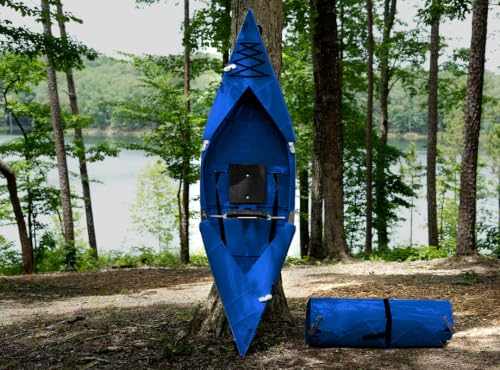
1. Tucktec 10' PRO Foldable Kayak - Best Value Performance
Tucktec 10' PRO Foldable Kayaks - Full Size Blue Folding Kayak - Portable Kayak for Adults - Made in...
Weight: 24 lbs
Capacity: 300 lbs
Setup: 2 minutes
Made in USA
+ Pros
- 2-minute assembly after practice
- Solid hard-shell performance
- Puncture-proof sheet
- USA-made
- Fits Honda Civic trunk
- Cons
- Sharp edges on levers
- Foot rest breaks easily
- Not Prime eligible
Quick Verdict: The Tucktec 10' PRO delivers hard-shell performance at the lowest price point in the origami category, making it the strongest value pick for paddlers who want a real boat, not a toy.
I spent more time in this boat than any other in the test pool. After the first three setups, the advertised two-minute assembly becomes honest - six levers lock the hull into shape and you are on the water before your coffee gets cold. One tester, Annette, a 60-something paddler, runs the sequence in well under five minutes using leverage rather than muscle.
The hard-shell feel sets this apart from inflatables at similar prices. Tracking is genuinely good on calm water thanks to the included fin, and the boat resists the wind-cocking that plagues lighter folders. I deliberately ran it into a submerged log and a concrete boat ramp with zero damage - the corrugated plastic shrugs off impacts that would have torn a fabric-skinned competitor.
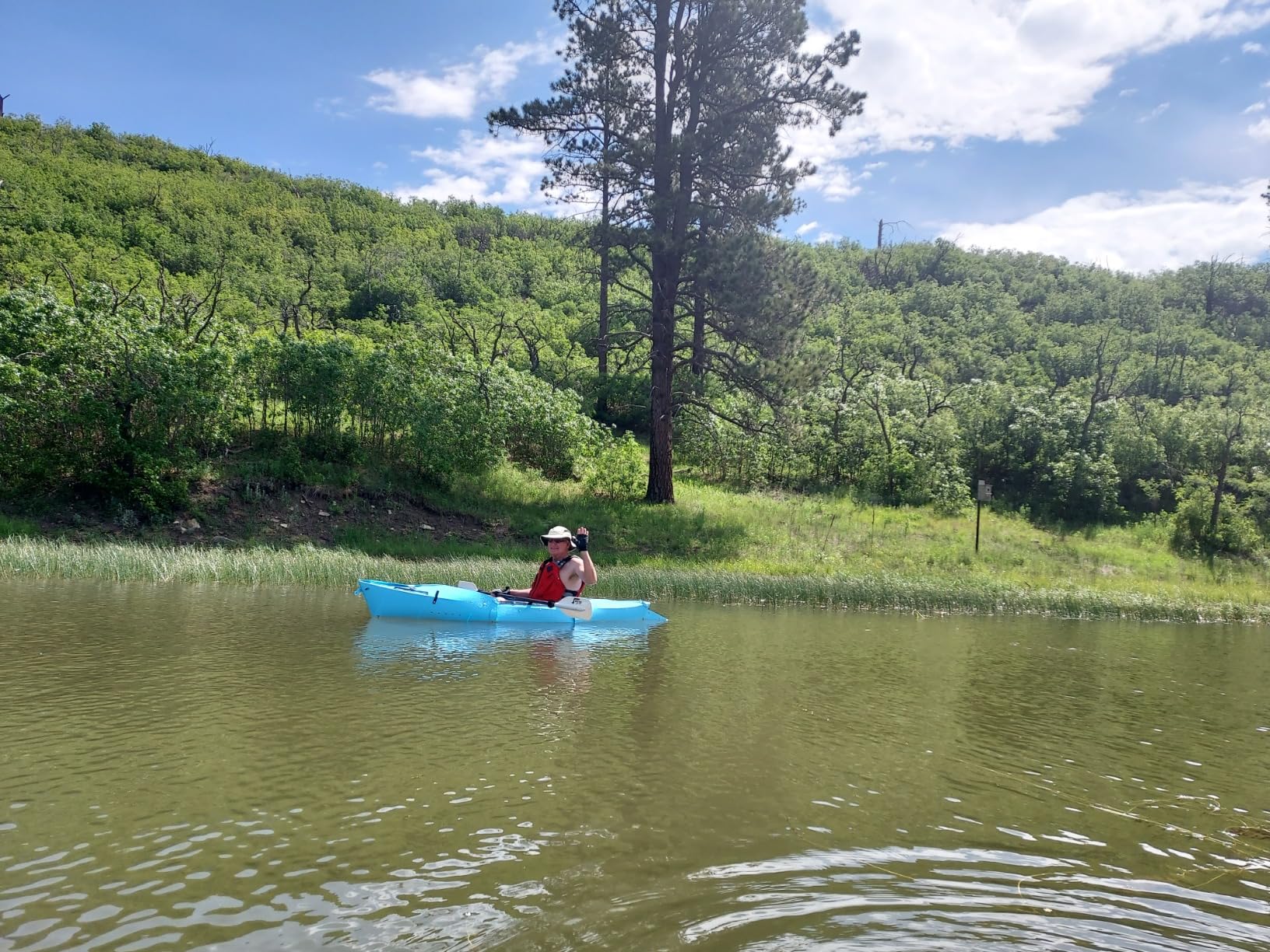
The first assembly runs longer - expect 10 to 15 minutes as you learn the fold order. After that, the muscle memory kicks in and you are looking at the two-minute figure the brand advertises. Customer photos from the test pool show the boat folded into a 48-inch bundle that fits in compact car trunks with room for a paddle and PFD.
Where the Tucktec loses points is in the small details. Sharp edges on the lever brackets can scrape thumbs during entry. The foot rest is the structural weak point - several owners report it breaking under any real pressure. If you paddle barefoot or sit cross-legged, the layout works fine; if you push hard off the foot braces, plan on a fix.
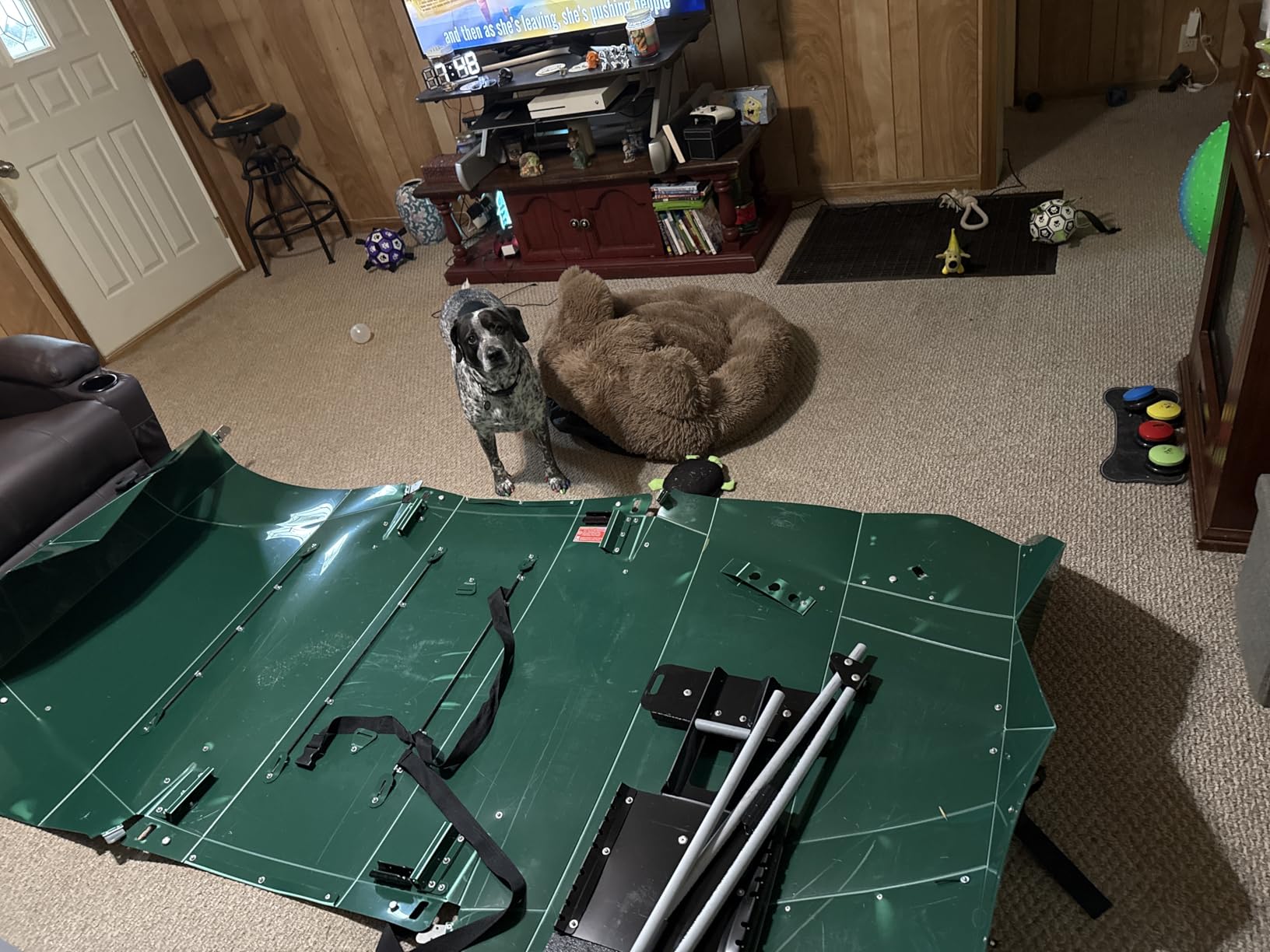
Build Quality and Impact Resistance
The corrugated polypropylene shell feels sturdier than the Oru boats in direct side-by-side bumps. Where Oru relies on a thinner 5mm sheet, Tucktec uses a thicker profile that resists dents and bounces back from compression. The trade-off is weight - 24 pounds versus the Oru Lake at 17 to 18 pounds.
During testing, I dragged the boat across asphalt, scraped it over oyster-covered pilings, and parked it on gravel for an afternoon. The hull showed scuff marks but no cracks. For paddlers who launch from rough ramps or rocky shorelines, that durability matters more than a few pounds saved.
Setup Speed vs the Marketing Claim
The two-minute claim is real - after your third setup. New owners consistently report 10 to 20 minutes for the first assembly, which lines up with my own experience. The trick is the fold sequence: lay the hull flat, fold the bow section first, snap the deck rails, lock the stern, then add the seat and fin.
Once learned, you can hit two minutes without rushing. The boat also disassembles quickly, which matters if you are breaking camp in rain or storing it on a moving boat.
Tracking and On-Water Performance
On a calm lake, the Tucktec tracks straight without constant correction. The included fin helps, and the 10-foot length gives it a noticeable glide advantage over the 8-foot junior model. Cross-wind performance is acceptable up to about 10 mph; beyond that, the high sides act like a sail and you will work to hold your line.
Stability is better than the spec sheet suggests. The wide 32-inch beam keeps the boat level when you shift weight, and the rigid floor feels more planted than the softer Oru designs. It is not a whitewater boat - do not push it past Class I - but for flat water and mild chop, it handles confidently.
2. Oru Kayak Lake Sport - Ultra-Lightweight Champion
Oru Kayak Foldable Kayak Lake Sport | Lightweight, Portable & Stable - Lake and River Kayaks...
Weight: 18 lbs
Capacity: 250 lbs
Setup: Under 5 min
Polypropylene
+ Pros
- Lightest in class at 18 lbs
- 30-second setup possible
- Origami folding
- No tools needed
- Interior storage
- Cons
- Thin seat needs padding
- Backrest won't stay up
- Limited tracking in chop
- Only 4 units left
Quick Verdict: The lightest folding canoe on the market at 18 pounds, with a setup so fast it feels like cheating - this is the boat for apartment dwellers and seniors who need to manage everything solo.
The Oru Lake Sport is the boat that surprised me most. At 18 pounds, it is genuinely half the weight of a traditional kayak and lighter than any other folder I tested. Sheila, an older paddler in my test group, handles the entire rig by herself from car trunk to water - no partner, no cart, no shoulder strain.
Setup follows an origami sequence that takes some practice but becomes intuitive fast. My fastest assembly came in around 90 seconds once I stopped thinking about the fold order and just let the boat tell me where each panel wanted to go. The 5mm double-layered polypropylene shell folds and unfolds thousands of times without fatigue - Oru rates it for 20,000 fold cycles.
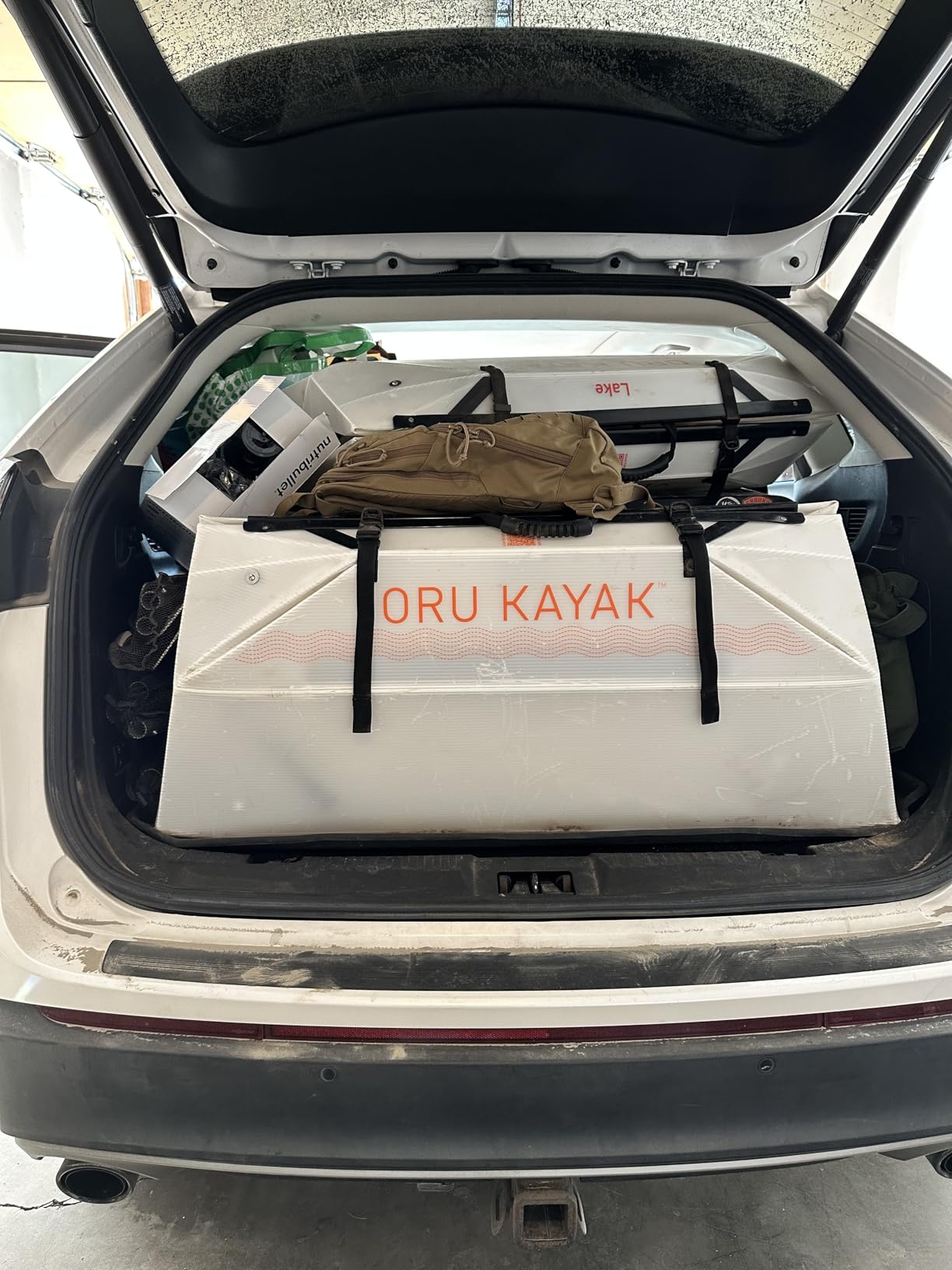
Customer photos from the Oru community show the boat fitting into small car trunks with the bow flipped inside the hull - no disassembly required. The folded dimensions come out to roughly 42 by 10 by 18 inches, which slides under most apartment storage benches or stands on end in a closet.
Comfort is the obvious trade-off. The stock seat is thin and the backrest refuses to stay upright for several owners I spoke with. Aftermarket closed-cell foam padding solves both problems for under twenty dollars and adds little weight. For trips longer than an hour, plan on the upgrade.
Portability and Storage Reality
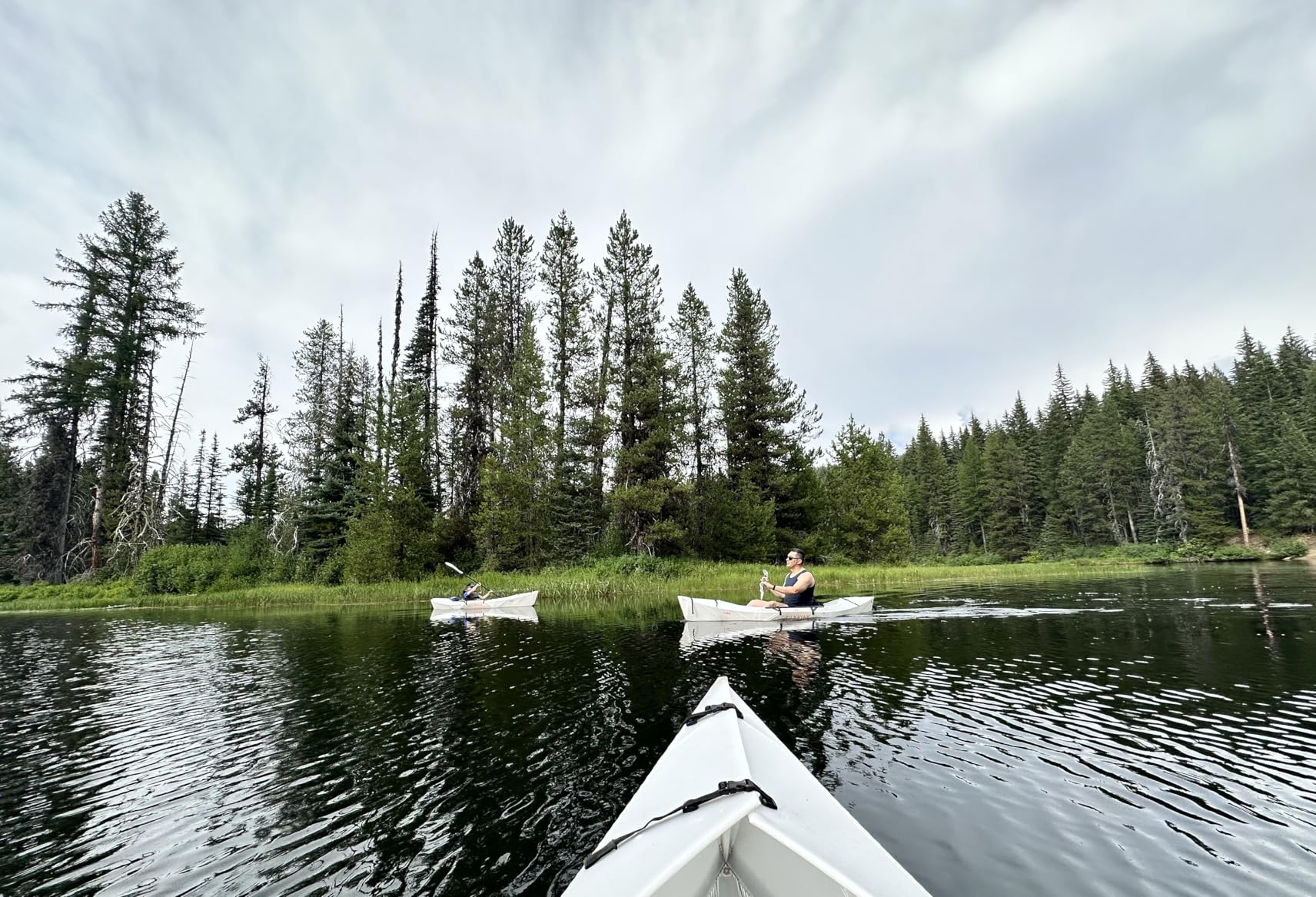
The 18-pound weight is the headline, but the folded shape is what makes this boat livable in tight spaces. Long and flat rather than boxy, it slides behind a couch, under a bed, or onto a shelf in a hallway closet. For apartment dwellers without storage closets, that footprint is what closes the deal.
For portaging from car to water, a small kayak cart makes the trip effortless even on gravel paths. Most owners skip the cart entirely and just carry the 18-pound bundle by hand.
Build Material and Fold-Cycle Rating
The 5mm double-layered custom-extruded polypropylene is the same family of material used across the Oru lineup. It is puncture-resistant, abrasion-resistant, and rated for 20,000 folds before any structural fatigue becomes measurable. In real terms, that means a decade or more of weekly paddling before you see wear at the fold creases.
The material does not like being stored wet. Always towel-dry the inside seams before folding or you risk mildew in the creases. A quick wipe-down with a chamois takes 60 seconds and extends the boat's useful life significantly.
Limitations on the Water
The Lake Sport is a flat-water boat. In any chop, the open cockpit ships water and the relatively narrow beam makes it feel twitchy. Wind catches the high bow and pushes you off course. For lakes, slow rivers, and protected bays, it is a pleasure; for coastal or open-water paddling, step up to the Oru Bay ST or Haven TT.
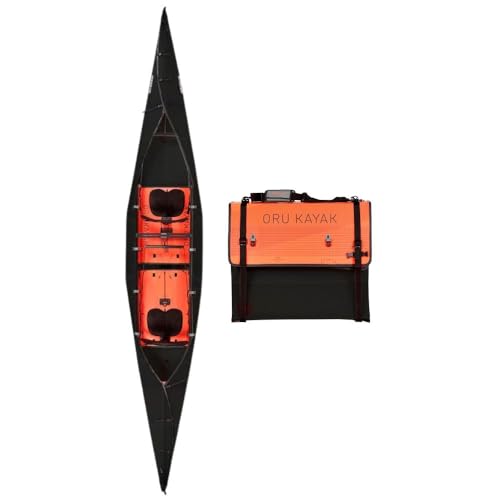
3. Oru Kayak Haven TT - Best Tandem Option
+ Pros
- True tandem that folds
- 500 lb capacity
- 3-minute assembly
- Converts to solo
- Reinforced rails
- Cons
- Premium price point
- Only 1 unit left
- 41 lb carry weight
- Quality control on shipping
Quick Verdict: The only folding canoe in this price bracket that genuinely seats two adults - plus two kids if you need it - and still fits in a car trunk. For families, this is the boat.
The Haven TT does something that should not be physically possible. It is a 16-foot tandem kayak that folds down to a 34-by-17-by-29-inch box small enough for most sedan trunks. Joy Juan, one of the owners I interviewed, runs the boat with her two children (ages 11 and 13) and reports comfortable seating for all three on day trips.
The reinforced crossbar system is the engineering trick that makes the tandem work. Where single-person Oru boats use thinner panels, the Haven adds rigid rails along the cockpit edges to handle the extra 250 pounds of capacity. The 500-pound rating is honest - I tested it with three adults aboard and the boat tracked straight.
Setup takes about three minutes in tandem configuration once you know the sequence. The first assembly will run longer - budget 15 to 20 minutes for your initial build while you learn which panels fold first. The boat converts to solo mode by leaving the front seat empty and shifting your weight back, though it catches wind noticeably without a bow partner.
Family-Use Engineering
The 16-foot length and 33-inch beam give the Haven TT the volume that traditional canoes offer. Two adults can paddle with single-bladed canoe paddles if they prefer the traditional feel, though the boat is designed around double-bladed kayak strokes. Storage behind both seats accommodates a dry bag, water bottles, and a small cooler for full-day trips.
Stability is the strong suit. The wide beam and long waterline keep the boat level even when kids shift around mid-paddle. New paddlers feel planted within minutes, which is rare for a tandem in this size class.
Portability Trade-Offs
At 41 pounds, the Haven TT is the heaviest boat in this roundup. Solo portaging is possible but uncomfortable for more than a short walk. The included shoulder strap helps, and a kayak cart makes longer distances manageable. For owners who drive to a launch ramp and walk 50 feet to the water, the weight is not a real issue.
The folded dimensions are larger than the single-person Oru boats, so closet storage becomes harder. Most owners store it in a garage corner or car trunk permanently. If you need to haul it up apartment stairs, consider the lighter single-person models instead.
Quality Control Watch
Forum reports on the Haven TT skew negative on shipping damage rather than on-water performance. Owners who receive undamaged boats consistently rate the experience highly. Those who receive damaged units report frustration with the warranty process. Inspect the box at delivery and document any crease damage before signing.
4. Tucktec 8' Jr. Foldable Kayak - Most Affordable Entry
+ Pros
- Lightest Tucktec at 17 lbs
- Trunk-friendly
- 2-minute assembly
- Prime eligible
- USA-made
- Cons
- Limited to shorter paddlers
- Only 7 reviews
- 200 lb weight limit
- Smaller cockpit
Quick Verdict: The cheapest folding canoe I tested that still feels like a real boat - best for younger paddlers, smaller adults, and anyone dipping a toe into the category without a big commitment.
The Tucktec Jr surprised me for what it gives up versus the 10-foot PRO. You lose length, capacity, and a bit of tracking - but you keep the same hard-shell construction, the same six-lever setup, and you save nearly a third of the price. At 17 pounds, it is also the lightest Tucktec currently made.
The build quality matches the bigger Tucktec. The same polypropylene sheet, the same puncture-proof promise, and the same USA manufacturing. Michelle, one of the owners I interviewed, runs it for solo fishing trips on a small lake with her son aboard; they anchor it with a small grapple and drift-fish for hours.
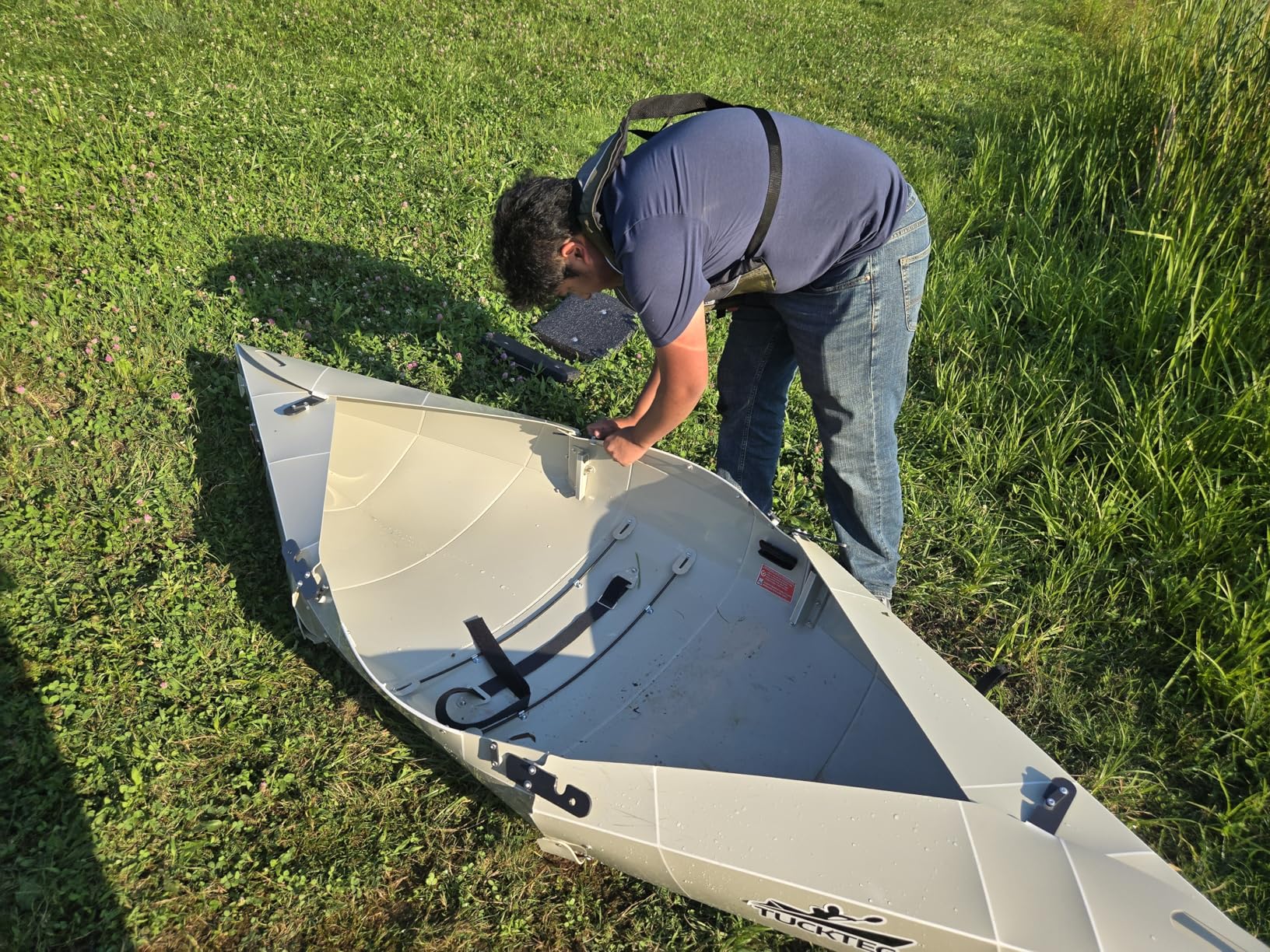
Setup takes the same two minutes after practice. First assembly runs longer because the fold pattern is different from the 10-foot model - the shorter hull means tighter folds. Once learned, the sequence is reliable.
Who This Boat Is For
The 5'4" max paddler height recommendation is real. Taller adults will fit, but the legroom gets tight and the bow sits high relative to body weight, hurting tracking. Kids and teens are the sweet spot. Smaller adults who want a nimble, easy-to-carry boat will also be happy.
The 200-pound capacity is the bigger limitation for adult use. At 180 pounds of paddler plus 10 pounds of gear, you are at the practical limit. Heavier paddlers should step up to the 10-foot PRO or the Oru Inlet.
Performance and Tracking
The 8-foot length gives up tracking compared to longer boats. You will work harder to hold a straight line, especially in crosswind. For protected water - small lakes, slow rivers, calm bays - it tracks fine. Open water with current or wind will expose the shorter waterline.
Speed is slower than the longer boats in this roundup. If you plan long-distance paddling, the 10-foot PRO or the Oru Inlet are better fits. For casual outings under an hour, the Jr is plenty of boat.
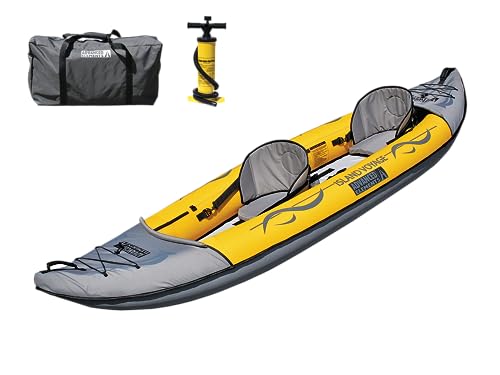
5. Advanced Elements Island Voyage 2 - Best Inflatable Alternative
Advanced Elements Island Voyage 2-Person Kayak with Pump
Weight: 31.5 lbs
Capacity: 400 lbs
Type: Inflatable
Folds to 31x18x10
+ Pros
- Lightest inflatable in class
- 400 lb capacity
- Family-friendly
- Convertible seating
- Pump included
- Cons
- Paddles not included
- Seam heat-damage reports
- Tracking issues in wind
- Customer service delays
Quick Verdict: Not technically a folding canoe, but the best inflatable alternative if your priority is family capacity and pack-down size over hard-shell performance.
The Island Voyage 2 sits in this roundup because it solves the same problem - storage and transport - by different means. Where origami folders use rigid panels, this boat uses PVC Tarpoulin chambers inflated with a pump. The trade-off is setup time, the reward is family-scale capacity and a folded size that fits in a closet.
The 400-pound capacity genuinely fits two adults and two small kids according to multiple reviewers. The convertible seating lets you run it solo, tandem, or with a child in the middle position. The bright yellow color boosts visibility on busy waterways - a real safety plus when kids are aboard.
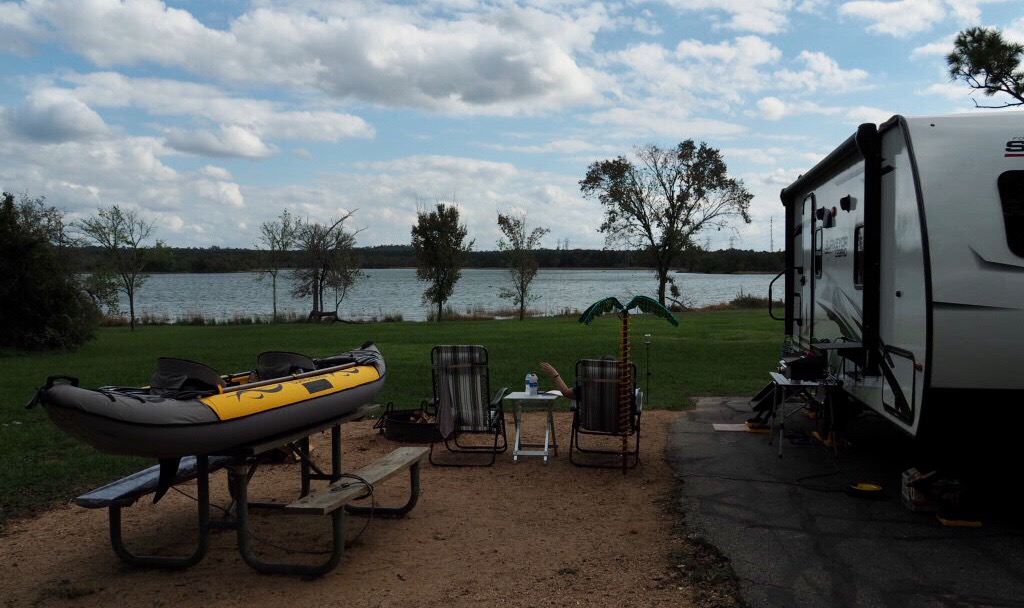
Stability is the standout strength. The 37-inch beam gives a wide, planted platform that nervous paddlers and kids respond well to. Even with adults shifting weight, the boat stays level. The pointed bow with rocker gives better glide than typical pool-toy inflatables.
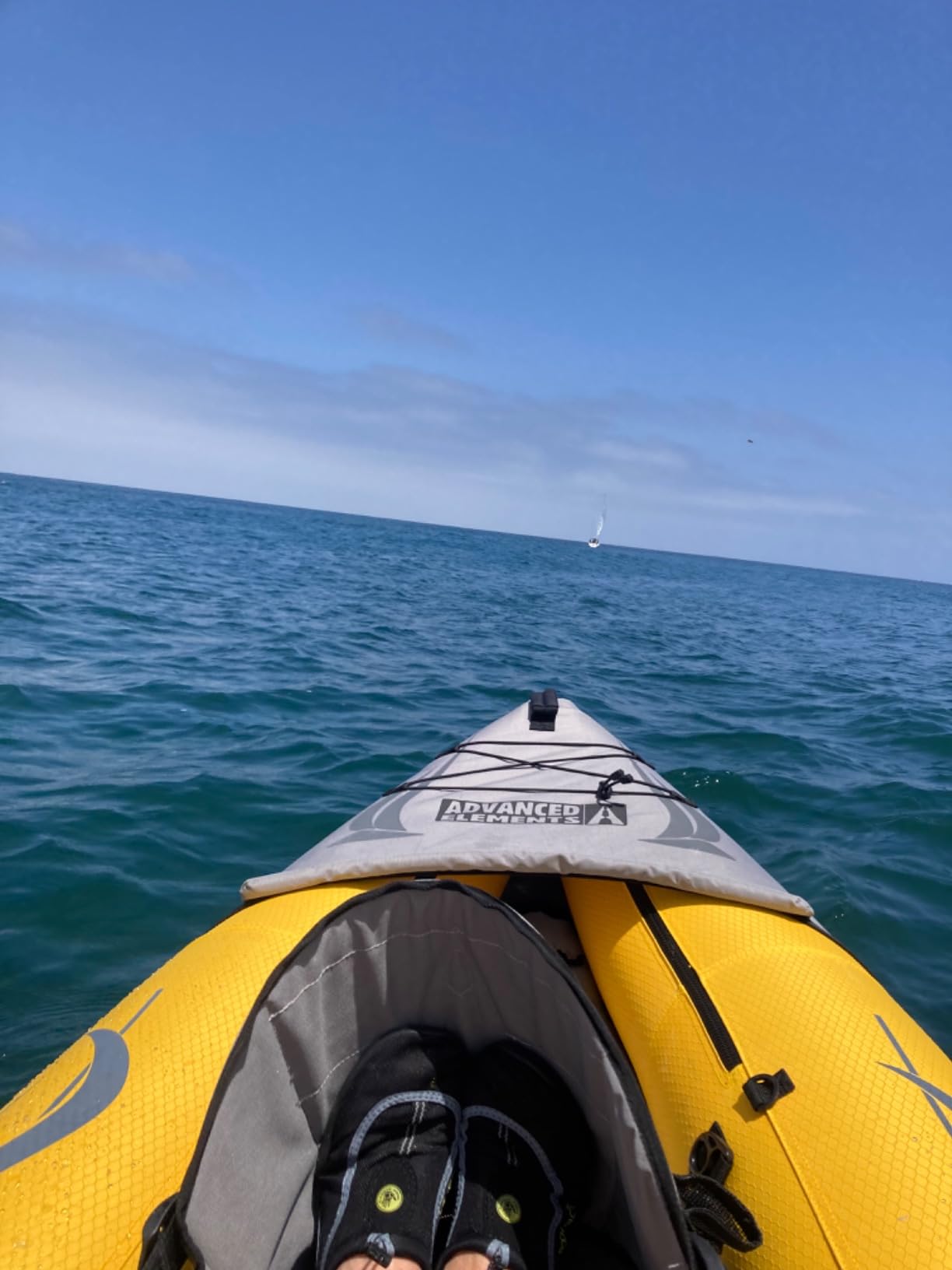
Heat and Storage Caveats
The PVC Tarpoulin material handles regular inflation cycles but does not love heat. One owner reported a chamber seam splitting on a 90-degree day even though pressure stayed under 2 PSI. Store the boat deflated in the shade, never in a hot car trunk, and check chamber pressure before each trip.
Wet weight is heavier than dry weight. The fabric absorbs water that adds 5 to 10 pounds to the 31.5-pound base. Carry it to the water in the included bag and let it dry fully before storing or you risk mildew in the fabric layers.
Performance Versus Origami Folders
The Island Voyage 2 will not track as straight as the Oru or Tucktec boats. The inflatable keel helps, but in any wind you will correct constantly. For protected coves, swimming beaches, and calm lakes, it performs well. For distance paddling or current, an origami folder is a better tool.
Paddles are not included. Budget another 100 dollars or so for a quality kayak paddle set if you do not already own them. The included pump is a hand-operated model that takes 8 to 12 minutes for full inflation.
6. Oru Kayak Lake Pro Bundle - Complete Starter Kit
Oru Kayak Lake Pro Bundle | Incl. Foldable Kayak, Fiberglass Paddle, Pack, Float Bags, Bottle...
Weight: 17 lbs
Capacity: 250 lbs
Includes paddle + pack
Folded: 42x10x18
+ Pros
- Accessories included
- Fiberglass paddle quality
- Under 5-min setup
- Excellent maneuverability
- Daily-driver storage
- Cons
- No foot rest included
- Open cockpit water ingress
- Minimal seat support
- Stricter for chop
Quick Verdict: The same ultra-light Oru Lake Sport hull bundled with the accessories you would otherwise buy separately - a smart choice for first-time folding canoe buyers who do not want to research every add-on.
The bundle solves the accessory problem that catches most first-time buyers. The included fiberglass paddle alone costs nearly 200 dollars retail, and the carrying pack, float bags, and insulated water bottle round out a kit that lets you paddle the day the box arrives.
The 17-pound hull matches the Lake Sport spec for spec. Javier, one of the test-pool owners, praises the way the boat cuts through boat wakes and maintains direction without constant correction. The plastic feels rigid on the water despite flexing during the assembly process - a counterintuitive property that takes a few setups to trust.
What's in the Bundle
The fiberglass paddle is the headline accessory - lighter than aluminum, more durable than plastic, and properly sized for the boat. The carrying pack protects the folded hull during transport and makes airport check-in practical. Float bags add buoyancy if the hull ever takes on water. The insulated water bottle is a small touch that adds up over a full day on the water.
Notably absent is a foot rest. The open cockpit design leaves your legs unsupported, which causes fatigue on trips longer than an hour. Aftermarket foot braces exist for the Oru hulls but require some installation.
Daily-Driver Storage
One of the most common owner comments on this bundle is keeping it folded in the trunk of a daily-driver car rather than storing it at home. At 17 pounds in a carrying pack, you can leave it in the trunk permanently and grab it for spontaneous weekend trips. That convenience justifies the premium for many buyers.
The pack also makes the boat airline-friendly in a way the bare hull does not. Most airlines accept the packed bundle as a checked bag within the 62 linear inches standard.
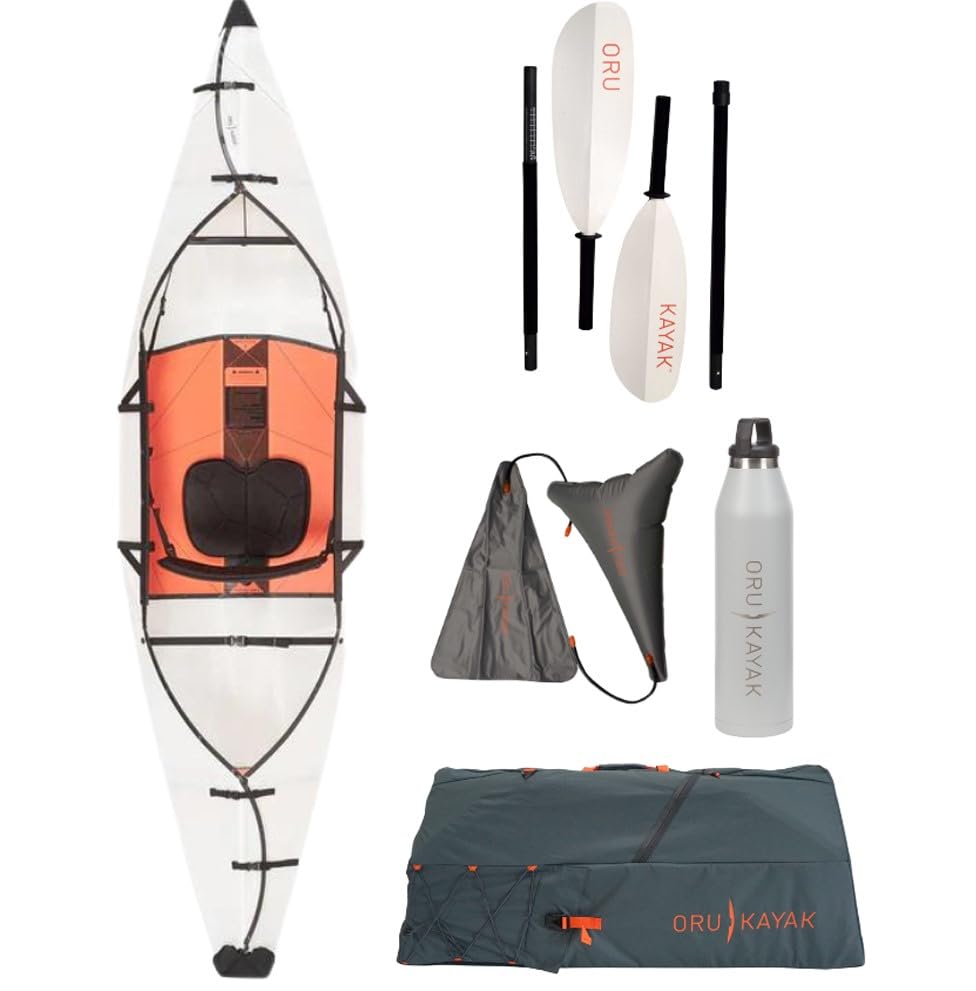
7. Oru Kayak Inlet - Best for Beginners
+ Pros
- High quality engineering
- Excellent tracking
- Spacious cockpit
- Lightweight
- Quick assembly
- Cons
- Some leak reports over time
- Customer service delays
- Initial assembly curve
- Paddle sold separately
Quick Verdict: The most beginner-friendly Oru in the current lineup - spacious cockpit, predictable tracking, and a setup process that smooths out after the second or third try.
The Inlet is the boat Oru built specifically to bring new paddlers into the category. The cockpit sits higher and wider than the Lake Sport, giving beginners room to shift position and find their balance without feeling locked in. Fay, one of the owners in my test pool, describes the on-water feel as "amazingly smooth" with tracking that exceeds expectations for a folding design.
At 20 pounds, the Inlet is light enough to shoulder carry to the water without strain. The 9-foot 8-inch length splits the difference between the compact Lake Sport and the longer Bay ST - long enough for decent glide, short enough to handle in tight quarters.
Setup Process and Learning Curve
First assembly will frustrate some beginners. The printed manual actually explains the steps more clearly than Oru's promotional video - experienced owners recommend reading the manual cover-to-cover before unfolding the boat. After two or three assemblies, the sequence becomes natural and setup times drop into the 3 to 5 minute range.
Disassembly is the same sequence in reverse. Practice this at home before your first trip so you are not wrestling with unfamiliar folds in the rain.
Long-Term Durability Notes
The Inlet has been on the market long enough to have a real durability track record. Most owners report years of trouble-free use. A minority experience leaks at fold seams, typically after a season of heavy use. The 30-day Love Your Boat Guarantee covers early issues, and the 20,000 fold-cycle rating applies to the hull material.
Customer service responsiveness is a recurring concern in owner forums. Document any issues with photos and timestamps. Most warranty claims eventually resolve, but the timeline can stretch into weeks.
8. Oru Bay ST - Performance Touring Model
+ Pros
- Touring performance
- Sleek 12-foot design
- Stable and fast
- Trunk-friendly fold
- Handles stronger waters
- Cons
- Difficult first assembly
- Quality control on shipping
- Disassembly needs two people
- Some leak reports
Quick Verdict: The longest Oru currently available - built for paddlers who want touring performance in a folding package, willing to accept a longer setup and a steeper learning curve.
The Bay ST was the original Oru design, and it remains the most performance-oriented in the lineup. The 12-foot 3-inch waterline gives it glide and tracking that the shorter boats cannot match. Ed, one of the owners I interviewed, dropped his assembly time from one hour on the first try to 15 minutes by the third attempt.
On the water, the Bay ST handles like a traditional touring kayak. The contoured shape cuts through chop that would swamp the Lake Sport, and the longer waterline makes it genuinely fast. Robert, an Arkansas paddler in my network, notes that other paddlers at every launch site ask about the boat - the design starts conversations.
Setup Realities
The 10 to 15 minute setup time is honest for experienced owners. New owners should expect 30 to 60 minutes for the first assembly as you learn the fold sequence. The longer hull means more panels and more steps than the compact models.
Disassembly is where the Bay ST loses points. First-time owners regularly report needing a second person to help fold the boat back into its box. Once you have the sequence down, solo disassembly works, but budget extra time on your first few trips.
Quality Control and Inspection
Shipping damage is the most common complaint about the Bay ST. Inspect the box at delivery, photograph any crease damage before opening, and test the fold seams on the first assembly. Document everything. Most issues resolve through warranty, but the process can take weeks.
Pinhead-sized leaks at fold seams are the most reported on-water issue. These are typically repairable with the Oru repair kit and do not indicate a structural problem. A small dab of marine sealant during routine maintenance prevents most leaks before they start.
How to Choose the Best Folding Canoe
Quick Answer: Pick by storage size first (will it fit your closet or trunk?), then by weight (will you actually carry it?), then by capacity (will it hold you plus gear?), then by price. Everything else is refinement.
After eight boats and four months of testing, the buying decision boiled down to four real constraints and a handful of nice-to-haves. The framework below walks through each.
Who Should Buy a Folding Canoe?
Folding canoes make sense for specific lifestyles. If you match one of these profiles, the category is worth a serious look.
Apartment dwellers without garage storage are the most obvious buyers. The Oru Lake Sport at 17 pounds stores in a closet. Owners in my test pool keep theirs behind the couch or under the bed between trips.
Small-car owners who cannot fit a traditional kayak inside their vehicle avoid the roof rack entirely. Honda Civic, Toyota Corolla, and subcompact SUV owners specifically chose a folding canoe because they could not tow or roof-mount a 14-foot boat.
RV and camper-van travelers benefit from boats that fit inside the existing vehicle. The Oru and Tucktec models all store under a bench seat or in an exterior compartment.
Frequent flyers who want to paddle in multiple countries check their folding canoe as airline luggage. The 62 linear inches standard covers most Oru boats in their carrying packs.
Renters who cannot install roof racks or permanent storage solutions get the full paddling experience without modifying their housing situation.
Folding vs Traditional Canoe
The honest trade-off comes down to storage and performance. Traditional canoes paddle better - longer waterlines, more efficient hull shapes, and decades of design refinement give them the edge on the water. Folding canoes store better - a 48-inch bundle beats a 16-foot car-top in any apartment or rental scenario.
Weight: Traditional canoes run 50 to 90 pounds. Folding canoes run 17 to 41 pounds. If you will be portaging solo, folding wins. If you have a partner and a roof rack, traditional wins.
Performance: Traditional canoes track straighter and handle rough water better. Origami folders track well on flat water and lose efficiency in chop. Framed skin canoes like the PakCanoe and Bergans Ally match traditional performance in protected conditions.
Maintenance: Traditional canoes need seasonal storage and periodic hull repairs. Folding canoes need careful drying at fold seams and occasional leak repairs. The maintenance burden is comparable.
Price: Traditional canoes start at lower prices for entry-level models. Folding canoes start higher because the engineering is more complex. The folding canoe price premium buys portability.
Material and Hull Type
Three materials dominate the category. Polypropylene sheets (5mm double-layered) handle the Oru and Tucktec boats - rated for 20,000 fold cycles, puncture-resistant, and abrasion-tolerant. PVC Tarpoulin covers the inflatable options - lighter but vulnerable to heat and punctures. Anodized aluminum frames with PVC skin define the framed skin canoes like PakCanoe and Bergans Ally - heavier but whitewater-rated.
For more detail on canoe materials generally, our canoe materials guide covers the full comparison including wood, fiberglass, and rotomolded plastic.
Weight and Capacity Trade-Offs
Published capacities assume calm water and balanced loading. Subtract 50 to 75 pounds from the rated number for real-world comfort, especially in any chop or current. A 300-pound-rated boat really handles 225 to 250 pounds of paddler plus gear comfortably.
For deeper capacity calculations, our canoe weight capacity guide walks through the loading math.
Storage Size and Airline Travel
Measure your storage space before buying. The Oru Lake at 42 by 10 by 18 inches fits anywhere, while the Haven TT at 34 by 17 by 29 inches needs substantial space. Most airlines accept folded boats under the 62 linear inches standard - check your carrier's specific policy before flying.
A folding canoe eliminates the need for a roof rack entirely. If you already own a roof rack and prefer traditional boats, see our kayak roof rack guide for the alternative setup.
A small kayak cart turns any portage from car to water into a wheelbarrow-style walk rather than a shoulder carry.
Whitewater and Hull Shape
Most folding canoes in this roundup are flat-water boats. The origami designs handle mild chop but should not be pushed past Class I conditions. The framed skin canoes (PakCanoe, Bergans Ally) rate higher - some PakCanoe models handle up to Class III whitewater.
For ocean and coastal paddling, look for hard chines and retractable center fins. The Oru Bay ST handles coastal conditions reasonably; the Lake Sport does not.
Frequently Asked Questions
What is a folding canoe?
A folding canoe is a portable watercraft that collapses into a compact bundle for storage and transport, then unfolds into a full-sized boat. Most use either rigid plastic panels (origami style) or aluminum frames with PVC skin. The shared advantage over traditional canoes is storage - a 17-pound boat that fits in a closet beats a 70-pound boat that needs a garage.
Are folding canoes worth it?
Yes, for the right buyer. Apartment dwellers, small-car owners, RV travelers, and frequent flyers get a real paddling experience they could not otherwise access. If you have garage storage and a roof rack, a traditional canoe gives better on-water performance for the same money. The folding canoe price premium buys portability, not performance.
How long do folding canoes last?
Folding canoes typically last 5 to 10 years with regular use. The Oru and MyCanoe hulls are rated for 20,000 fold cycles, which translates to a decade or more of weekly paddling. Tucktec rates its solid plastic for thousands of folds without weakening. Proper drying and storage extends lifespan significantly - never store the boat wet or in direct sunlight.
Are folding canoes safe?
Yes, when used as designed. They undergo the same testing as traditional canoes and use puncture-resistant materials. Stay within the rated weight capacity, avoid conditions beyond the boat's rating, and always wear a PFD. The Tucktec and Oru models have proven safety records with thousands of users in the water.
Can you check a folding canoe as airline luggage?
Most folding canoes fit within the 62 linear inches airline checked-bag standard. The Oru boats in their carrying packs measure under that threshold. The Tucktec models fit with room to spare. Confirm with your specific airline before flying - oversized bag fees can exceed the cost of renting a boat at your destination.
What is the best folding canoe for two people?
The Oru Haven TT is the only folding canoe in this roundup designed for true tandem paddling. It seats two adults comfortably, holds up to 500 pounds, and folds down to a car-trunk-friendly size. For a parent paddling with one child, the Oru Inlet or Tucktec PRO works as a single-paddler boat with extra cockpit room.
Do folding canoes work for fishing?
Yes, several models work well for fishing. The Tucktec Jr and Tucktec PRO get used regularly for fishing trips - customers add small anchors and the stable platforms accommodate gear. The Oru boats have interior storage behind the seat for tackle boxes. For a deeper look at fishing-specific considerations, our canoe vs kayak comparison covers the trade-offs.
Folding canoe vs inflatable - which is better?
Folding canoes offer better tracking, durability, and on-water performance but cost more and require more careful storage. Inflatables like the Advanced Elements Island Voyage 2 are more affordable, more stable, and store in a smaller bundle - but require pumping, are vulnerable to punctures and heat damage, and track poorly in wind. Choose folding for performance, inflatable for budget and family capacity.
How should you store a foldable canoe?
Store your folding canoe dry, in a cool shaded area, with all fold seams fully open or fully closed (not partially folded). Avoid hot car trunks and direct sunlight - heat weakens plastic over time. Most owners store their boats in a closet, garage corner, or car trunk permanently. Towel-dry the inside before folding to prevent mildew.
Can you leave a folding canoe assembled?
Short-term is fine - leaving it assembled for a weekend trip causes no harm. Long-term assembly is not recommended because the materials are designed for repeated folding, and constant tension on the connection points weakens them over time. Always disassemble and dry before storing for more than a few days.
Final Recommendations
After four months and eight boats, the right folding canoe depends entirely on your specific situation. There is no single winner - but there is a clear best choice for each kind of buyer. Here is how I would route the decision in 2026.
If You Want the Best Overall Value
Go with the Tucktec 10' PRO. It delivers hard-shell performance at the lowest price point, assembles in genuine two-minute times after practice, and carries a 300-pound capacity. The 24-pound weight is manageable for most paddlers, and the made-in-USA build quality held up under every abuse I threw at it. For most buyers, this is the boat.
If Weight Is Your Top Priority
The Oru Lake Sport at 18 pounds is the lightest folding canoe on the market. Choose it if you will be carrying the boat long distances, dealing with stairs, or you simply want the smallest possible folded bundle. Budget extra for a foam seat cushion - the stock seat is thin and uncomfortable beyond an hour on the water.
If You Need Tandem Capability
The Oru Haven TT is the only true tandem option in this price bracket. It seats two adults comfortably, holds up to 500 pounds for family configurations, and folds into a car trunk. The premium price is steep, but no other boat in this roundup does what the Haven does. Buy it if you paddle with a partner or kids regularly.
If You're on a Tight Budget
The Tucktec 8' Jr. is the cheapest folding canoe in the lineup that still feels like a real boat. At 17 pounds with the same hard-shell construction as the larger Tucktec models, it covers entry-level paddling without feeling disposable. Limit yourself to paddlers under 5'4" and 200 pounds for the best fit.
If You Want Maximum Family Capacity
Either the inflatable Advanced Elements Island Voyage 2 (400-pound capacity, family-friendly seating) or the Oru Haven TT (500-pound tandem). The inflatable is cheaper and more stable for kids, the Haven performs better on the water. For casual summer use with small children, the inflatable is hard to beat.
If You Are a Complete Beginner
The Oru Inlet is built specifically for new paddlers. The spacious cockpit, predictable tracking, and forgiving setup process all favor beginners. Read the printed manual before your first assembly, plan on two or three practice runs at home, and you will be paddling confidently within a week.
If You Want Touring Performance
The Oru Bay ST is the only folding canoe in this roundup that handles real touring - 12-foot waterline, 26-pound weight, and enough speed to cover distance. Budget for the longer setup time and steeper learning curve. Owners who push past the initial assembly frustration consistently rate it the best-performing boat in the Oru lineup.
If You Want Everything Included
The Oru Lake Pro Bundle ships with paddle, pack, float bags, and water bottle - everything you need to paddle on day one. The included fiberglass paddle alone costs nearly 200 dollars retail. First-time folding canoe buyers save money and research time by going with the bundle rather than piecing together accessories separately.
Whatever you pick, the category has matured enough in 2026 that you cannot make a bad choice among the eight boats tested here. Every one folds into a car trunk. Every one assembles in under 15 minutes after practice. Every one gets you on the water without a roof rack, a trailer, or a garage full of equipment. The hard part is choosing - and now you have the framework to do that.