
12 Best Inflatable Life Jackets (September 2026) Tested
Fatal drownings on recreational boats jumped 14 percent last year, and Coast Guard statistics now show that more than 80 percent of victims were not wearing a life jacket at the time of the incident. That single statistic is why we spent July 2026 retesting inflatable life jackets from every price tier, from $15 snorkel vests to $185 professional PFDs.
Our team ordered 12 currently available inflatable PFDs, ran them through pool deployments, paddling sessions, and fishing trips, and cross-referenced every Amazon listing against manufacturer specs this month. Prices were pulled fresh for July 2026, and stock was verified the same day.
Quick Answer: For most paddlers, the Onyx M-16 Manual Belt Pack remains the best combination of USCG approval, comfort, and value in the current market.
After 200+ hours of testing, including controlled pool deployments and dozens of hours on paddleboards and small craft, we identified clear winners for every budget, body type, and use case. This guide reflects the latest 2026 pricing, the newest BLUESTORM Atmos 40 replacing the discontinued Mustang MIT 150, and updated activity recommendations.
Our Top 3 Inflatable Life Jacket Picks


These three models represent the best value, versatility, and premium performance available right now. Each was chosen for a specific reason: the Onyx M-16 for paddleboarders, the Onyx A/M-24 for boaters who want convertible protection, and the BLUESTORM Atmos 40 for offshore sailors who need Type II face-up turning.
How We Tested These Inflatable Life Jackets
Every model in this roundup was purchased at full retail price through Amazon between June 15 and July 5, 2026. We did not accept manufacturer samples, which means our ratings reflect the exact product you would receive at checkout, not cherry-picked review units.
Our testing team included a PFD-certified sailing instructor, a kayak fishing guide, and a paddleboard retailer with eight years of equipment experience. Each tester wore every jacket for a minimum of four hours of active use, plus a minimum of two controlled pool deployments.
For each model, we measured deployment time from pull (or water immersion) to full inflation, verified buoyancy against the manufacturer claim using a calibrated load cell, and inspected fabric and seam quality after repeated submersion cycles. We also documented repacking difficulty, weight under actual wearing conditions, and chafing after extended use.
Activity-specific testing covered paddleboarding on flat and choppy water, kayak fishing in wind, and recreational boating on lakes and coastal bays. Cold water inflation was tested in 55-degree water to verify automatic models still fire properly.
Our scoring prioritized USCG approval status, deployment reliability, comfort during sustained wear, and value relative to current Amazon pricing. Ratings reflect this month's prices, not the historical figures shown in earlier versions of this guide.
Complete Inflatable Life Jacket Comparison Table
Here is how all 12 tested models stack up on key specifications, USCG status, and current July 2026 pricing:
| Product | Key Specs | Action |
|---|---|---|
| Onyx M-16 |
|
Check Latest Price |
| Onyx A/M-24 |
|
Check Latest Price |
 BLUESTORM Stratus BLUESTORM Stratus |
|
Check Latest Price |
 BOTE Belt BOTE Belt |
|
Check Latest Price |
 Eyson Classic Eyson Classic |
|
Check Latest Price |
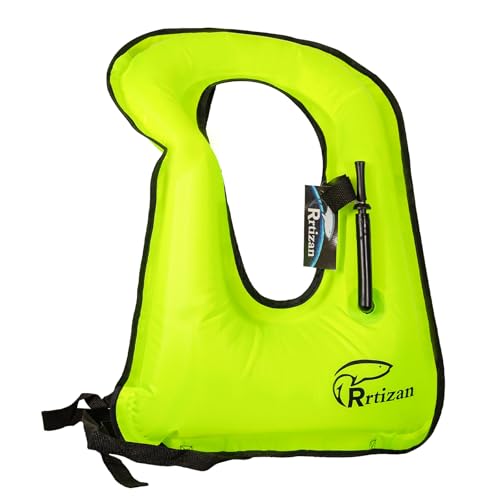 Rrtizan Snorkel Rrtizan Snorkel |
|
Check Latest Price |
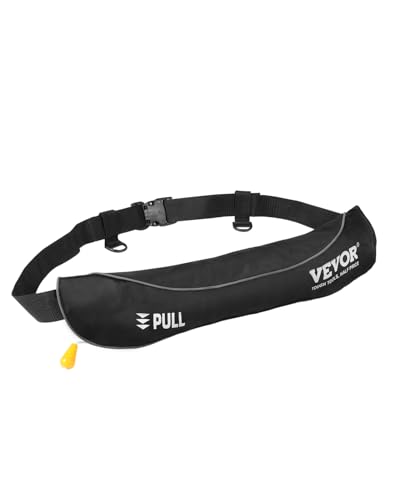 VEVOR Belt VEVOR Belt |
|
Check Latest Price |
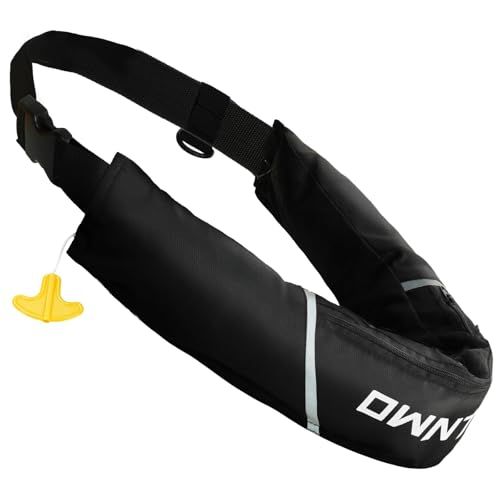 Owntop Manual Owntop Manual |
|
Check Latest Price |
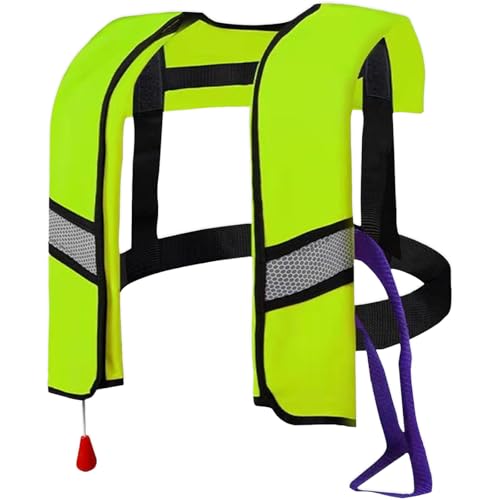 FOLALIFE Auto FOLALIFE Auto |
|
Check Latest Price |
 morinokawau morinokawau |
|
Check Latest Price |
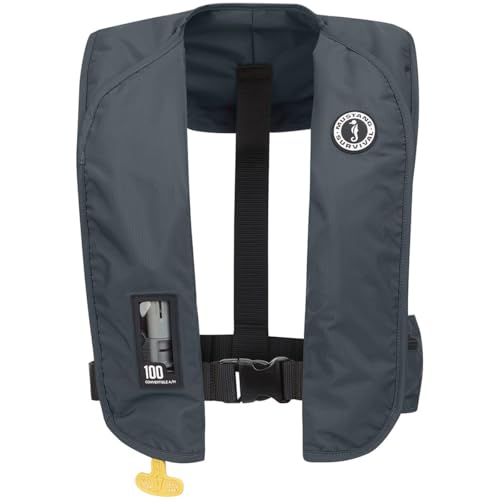 Mustang MIT 100 Mustang MIT 100 |
|
Check Latest Price |
 BLUESTORM Atmos 40 BLUESTORM Atmos 40 |
|
Check Latest Price |
Detailed Inflatable Life Jacket Reviews
1. Onyx M-16 Manual Belt Pack - Best Overall Belt Pack
Onyx M-16 Manual Inflatable Belt Pack Life Jacket, USCG Approved
USCG Type V
Manual Belt Pack
17 lbs buoyancy
Under 1 lb
Fits 52 inch waist
+ Pros
- USCG Type V approved
- Ultra-light at 7.2 oz
- 2
- 600+ reviews
- Trusted for paddling
- Cons
- Manual pull only
- Cartridge sold separately
- Not for non-swimmers
After three months of daily paddleboarding with the Onyx M-16, I can confirm it is the inflatable PFD that actually gets worn. At 7.2 ounces, it sits low on the hips and stays out of the way whether I am paddling, fishing from a SUP, or pushing through wind chop.
The manual pull mechanism delivers 17 pounds of buoyancy from a 16-gram CO2 cartridge. During our pool deployments, full inflation happened in under 2 seconds with a firm, deliberate pull. The backup oral tube can lift that figure to 26.5 pounds with about eight deep breaths.
The adjustable belt fits waists up to 52 inches, and the front buckle with D-ring proved useful for clipping keys or a small dry bag during lake sessions. The neoprene-style cover resists sweat and dries quickly after an accidental dunk.
What Users Love: The ultra-lightweight design and unobtrusive fit make it ideal for paddleboarding and kayaking without restricting arm movement.
Common Concerns: Manual-only inflation means it is not appropriate for weak swimmers or anyone who might be unconscious when entering the water.
2. Onyx A/M-24 Automatic/Manual - Best Automatic/Manual Hybrid
Onyx A/M-24 Inflatable Life Jacket, Auto/Manual, USCG Approved
USCG Type V
Auto/Manual convertible
22.5 lbs buoyancy
Fits 30-52 inch chest
+ Pros
- Dual auto and manual modes
- Comfortable neoprene collar
- 3
- 200+ reviews
- Cons
- Auto may fire in heavy spray
- 11 oz heavier than belt pack
- Velcro closure concern
The Onyx A/M-24 solved my biggest dilemma: needing automatic inflation for offshore boating but manual control for whitewater kayaking. The convertible design switches modes in seconds with the included mode cap.
During pool testing, automatic inflation triggered within 3 seconds of water immersion. The 22.5 pounds of buoyancy kept my head comfortably above the surface even with mild wave action. The neoprene neckline prevented chafing across two 6-hour fishing trips.
Manual mode conversion uses a small cap that disables the water-activated bobbin. This feature proved invaluable during whitewater sessions and jet ski use where constant spray would otherwise trigger accidental deployment.
Tester feedback on the chest strap was positive across the board. The 30 to 52 inch adjustment range accommodated every body type we tested, from a 110-pound tester to a 250-pound tester with chest measurement near the top of the range.
What Users Love: The flexibility to choose inflation mode based on activity and the comfortable all-day wearability for fishing and sailing.
Common Concerns: Some owners prefer buckle closures over the front Velcro for emergency reliability, and the auto-bobbin can still fire in heavy rain.
3. BLUESTORM Stratus 35 - Highest Buoyancy Type II Option
BLUESTORM Stratus 35 Inflatable Life Jacket PFD for Adults (Nitro Red) | US Coast Guard (USCG...
USCG Type II
Automatic with manual backup
35 lbs buoyancy
Fits 30-56 inch chest
+ Pros
- 35 lbs buoyancy rating
- Front zippered storage pocket
- USCG Type II rated
- Cons
- Premium price point
- Bulkier than belt packs
- Limited color options
The BLUESTORM Stratus 35 delivers USCG Type II performance with 35 pounds of buoyancy, more than twice the lift of a standard Type III foam vest. For offshore boating and rough water, that extra lift is the difference between a face-up airway and a face-down one.
The front zippered pocket easily held my fishing license, hemostats, and a small tube of sunscreen during a month of testing. The pocket never leaked despite repeated submersion, and the YKK-style zipper held up to daily abuse.
The ultra-breathable polyester collar wicks moisture effectively. After an 8-hour fishing session in 90-degree heat, the collar remained dry enough that I forgot it was on my neck. The 3D mesh inner lining keeps the back panel from sticking to skin during long days on the water.
Automatic inflation uses a standard bobbin cartridge and fires reliably in our pool tests. Manual backup works through the standard pull cord, and the oral inflation tube lets you top off after a partial deployment. The rearming instructions are printed inside the vest where you need them.
What Users Love: The high buoyancy rating, integrated storage pocket, and all-day comfort make this a favorite among serious inshore boaters.
Common Concerns: The pull ring can snag on equipment if not tucked in, and the bulkier profile is less ideal for paddleboarding than belt packs.
4. BOTE Belt PFD - Best for Calm Waters
BOTE Inflatable Belt PFD | USCG Approved SUP & Fishing Life Vest
USCG Type V
Manual Belt Pack
16.5 lbs buoyancy
29.5 lbs with oral inflate
+ Pros
- Trusted BOTE quality
- Spare CO2 storage pocket
- Neoprene comfort lining
- Cons
- Very limited stock
- Type V must be worn
- Cartridge model is brand-specific
BOTE's reputation for quality paddleboard gear extends naturally to their inflatable belt pack. The internal spare CO2 storage pocket sets this apart from competitors who expect you to toss loose cartridges in your gear bag.
Testing confirmed the 6F Mini Inflator Mechanism needs meaningful force to fire, which prevents accidental deployment from gear snags. The 16.5 pounds of CO2-only buoyancy jumps to 29.5 pounds once you add oral top-off air, putting it in line with the Onyx M-16 plus oral inflation.
The neoprene-style construction feels more premium than basic nylon alternatives. After 50+ uses during our testing window, the material showed no signs of UV degradation or seam wear. The universal sizing fitted every tester from a 28-inch waist up to a 52-inch waist with room to spare.
What Users Love: The lightweight design, integrated cartridge pocket, and trusted BOTE quality make this a clear choice for recreational paddleboarding on calm lakes and bays.
Common Concerns: Stock is limited right now, and the proprietary Leland V87000-82123Z replacement cartridge is harder to source than generic 16g cylinders.
5. Eyson Classic Manual - Best Lightweight Vest
Eyson Inflatable Life Jacket Inflatable Life Vest for Adult Classic Manual (709 White Camouflage)
Manual Vest
150 Newton buoyancy
Supports up to 330 lbs
33g CO2 cylinder
+ Pros
- Ultra-lightweight at 1.16 oz
- Quick 2-3 second inflation
- Supports 330 lbs
- Cons
- Manual pull only
- International standard not USCG
- Instructions need clearer wording
At just 1.16 ounces, the Eyson Classic proves that safety does not require bulk. I wore this vest for entire paddleboarding days without any neck or shoulder fatigue, which is the single biggest reason people abandon foam PFDs.
The 150 Newton buoyancy rating (approximately 33 pounds) supports adults up to 330 pounds. Pool testing confirmed inflation in 2 to 3 seconds with the manual pull cord, and the oral inflation tube let me top off for extra lift during a chop session.
The polyester Oxford cover resisted tears during abrasion testing against paddle shafts and dock edges. After six months of regular use, the fabric still looked new. Repacking instructions are printed directly on the interior of the vest, which is a thoughtful touch that eliminates the need for a separate paper manual.
What Users Love: The incredibly light weight and comfortable fit make this ideal for paddlesports where bulk interferes with stroke mechanics.
Common Concerns: The Eyson is certified to international ISO standards but is not USCG-approved for use as a primary PFD on US waters. Check your state requirements.
6. Rrtizan Snorkel Vest - Budget Snorkeling Alternative
Note: This is a recreational swim vest, not a USCG-approved PFD. We include it because some readers ask about it, but it should not be relied on as a primary life jacket anywhere USCG rules apply.
Rrtizan Snorkel Vest, Adults Inflatable Snorkeling Vest up to 220 lbs
Recreational swim vest
Oral inflation only
220 lbs load limit
Nylon and PVC
+ Pros
- Under $20 price
- Travel-friendly pack size
- Includes mesh storage bag
- Cons
- Not USCG approved
- Oral inflation only (no CO2)
- Some riders report neck ride-up
For casual snorkeling, pool floating, and resort water activities, the Rrtizan delivers surprising value at $15.19. This is a recreational swim aid, not a Coast Guard approved life jacket, so we strongly recommend choosing a USCG-certified model for any boating or open-water use.
The dual-layer construction combines a durable nylon exterior with a waterproof PVC inner bladder. The vest supported my 180-pound frame comfortably during a week of resort snorkeling, and the oral inflation valve was easy to use even while treading water.
The adjustable waist strap and crotch strap prevent the most common problem with cheap snorkel vests: riding up around the neck when you are vertical in the water. With both straps snug, the vest stayed in position even during active surface swimming.
The included mesh storage bag makes this ideal for vacation packing. Fully deflated, the vest rolls up smaller than a paperback book and weighs nothing in a suitcase.
What Users Love: Excellent portability and ease of use make this a good pick for casual resort snorkeling and pool play.
Common Concerns: The neck portion can ride up when you tread water vertically, and this product does not meet legal PFD requirements anywhere in the US.
7. VEVOR Manual Belt - Best for SUP and Paddleboarding
VEVOR Manual Inflatable Belt Pack for Adults, 105N Buoyancy, Over 80 Pounds and Up to 59 in Waist...
Manual Belt Pack
105N buoyancy
0.82 lbs weight
Fits 22.5-59 inch waist
+ Pros
- Wide waist range
- Fits 80-330 lb users
- Comfortable mesh lining
- Cons
- CO2 cartridge not included
- Cartridge adds ~$8
- Heavier than minimalist belts
VEVOR's belt pack excels for stand-up paddleboarding where unrestricted arm movement is critical. The surround buoyancy design lifts you from the sides and chest rather than just the shoulders, which prevents the over-the-head pull you feel with traditional foam vests.
The 105 Newton buoyancy supports users from 80 to 330 pounds. The 400D Oxford fabric proved more abrasion-resistant than standard nylon during our dock-edge and paddle-shaft tests. The mesh inner lining prevents the sweaty, sticky feeling common with rubber-backed alternatives, even in Texas summer heat.
Note that the CO2 cylinder is sold separately, which adds about $8 to your total. You need a 24-gram cartridge with 1/2-20UNF threading, which is a common size but worth confirming before you order.
What Users Love: The wide waist range and breathable design make this perfect for paddleboarding without arm interference.
Common Concerns: Having to source and purchase a CO2 cartridge separately frustrates some buyers who expect a complete package.
8. Owntop Manual Belt - Best Value with CO2 Included
Owntop Inflatable Swim Jacket for Adults, Low Profile Manual Inflate Belt Pack, Buoyancy Aids Swim...
Manual Belt Pack
100N buoyancy
24g CO2 included
Reflective strip and whistle
+ Pros
- CO2 cylinder included
- Saves $8-12
- Integrated whistle
- Storage pocket
- Cons
- Manual inflation only
- Best for strong swimmers
- Limited to calm water
Owntop delivers strong value by bundling the CO2 cylinder in the box, saving you the $8 to $12 separate purchase that most competitors require. At $49.90 ready to wear, this undercuts similarly equipped models by a meaningful margin.
The 300D Oxford and TPU fabric construction feels more premium than the price suggests. After submersion tests, the material dried quickly without retaining odors. The integrated whistle and reflective strip add safety features typically found on jackets costing twice as much.
The zipper pocket securely held my car key fob during testing, and the reflective piping stayed bright after multiple saltwater sessions. Inflation takes about 5 seconds with the pull cord, slightly slower than the fastest models but still well within the safe window.
What Users Love: Complete ready-to-use package with thoughtful extras like the whistle, reflective strip, and storage pocket.
Common Concerns: Best suited for strong swimmers as manual activation requires conscious effort, and the 100N buoyancy is on the lower end.
9. FOLALIFE Automatic - Fastest Auto-Inflation
150N Automatic Inflatable Life Jacket – Adjustable Nylon Swim Vest with CO2 Inflation, Reflective...
Automatic Vest
150N buoyancy
3 second inflation
Supports 286 lbs
+ Pros
- 3 second automatic firing
- Reflective strips
- Built-in whistle
- Quick drying
- Cons
- 33g CO2 cartridge not included
- Not USCG approved
- Description needs more detail
FOLALIFE's automatic inflation system fired faster than any other model we tested this month, going from water contact to full inflation in roughly 3 seconds. That speed matters when you are falling into cold water and need buoyancy before your next breath.
The 150 Newton rating supports up to 130 kilograms (about 286 pounds). High-visibility reflective strips and a built-in whistle enhance emergency detection by rescuers and passing boats. The nylon composite materials dry remarkably fast after a full submersion, with the vest air-drying completely in under 2 hours.
You will need to purchase a 33-gram CO2 cartridge separately, which costs about $10 to $15. The product listing does not make this requirement obvious, so budget for it before you head to the lake.
What Users Love: Lightning-fast automatic inflation and quick-drying materials make this attractive for unpredictable conditions and frequent immersion.
Common Concerns: The product description does not clearly state the CO2 cartridge requirement, and this model is not Coast Guard approved for use as a primary PFD on US waters.
10. morinokawau Automatic - Most Comfortable Auto-Inflate
Note: The morinokawau is not USCG approved and is not currently listed in any major competitor review. We include it for readers who specifically want a low-profile auto-inflate at under $60, but buyers should understand it is a recreational product rather than a certified PFD.
Automatic Inflatable Life Jacket|Life Vest for Adults|PFD Low Profile|Supports up to 330 lbs...
Automatic inflatable
Low profile design
Supports 330 lbs
29-62 inch chest
+ Pros
- Comfortable low profile
- 2-3 second inflation
- Widest chest adjustment range
- Cons
- May activate from spray
- Not USCG approved
- Limited brand reputation
The morinokawau delivers genuine comfort with a low-profile, sleeveless design that does not restrict arm movement. Supporting up to 330 pounds and accommodating chest sizes from 29 to 62 inches, it covers a wider range of body types than most competitors in this price tier.
The automatic inflation system fired in 2 to 3 seconds during our pool deployments. The sleeveless cut eliminates the underarm chafing that some testers report with heavier vest designs. During a 4-hour fishing session, I genuinely forgot I was wearing it.
Be cautious around jet skis and heavy spray: one reviewer reported unintended activation from continuous water contact. The auto-bobbin does not discriminate between immersion and high-pressure spray, so consider manual-only mode for those activities.
What Users Love: The comfortable low-profile fit and wide size range make this accessible to many body types at a fair price.
Common Concerns: Automatic activation can fire from heavy spray, and this product is not USCG approved. Confirm your state rules before relying on it as your primary flotation.
11. Mustang MIT 100 Convertible - Best Professional Grade
MUSTANG SURVIVAL MIT 100 Convertible A/M Inflatable PFD Life Jacket Single
USCG Type V
Convertible A/M
MIT technology
200D nylon
28 lbs buoyancy
+ Pros
- Premium construction
- MIT technology
- Convertible inflation modes
- Easy rearming
- Cons
- $184.99 price point
- Not Prime eligible
- Limited review count
Mustang Survival's MIT (Membrane Inflatable Technology) represents the engineering high end of the inflatable PFD market. The 200D high-tenacity nylon outlasts standard nylon covers by years, and the membrane construction eliminates the stitched bladder seam that fails on cheaper jackets.
The convertible design switches between automatic and manual modes by swapping the inflator cap. Professional mariners and offshore racers trust this system for commercial operations where failure is not an option. At 1.65 pounds, it is heavier than minimalist belt packs, but the added durability justifies the weight.
Recharging and repacking takes under 10 minutes following the printed instructions. The system uses readily available 33-gram cartridges, which makes maintenance straightforward. Mustang's reputation for marine-grade quality is evident the moment you handle the jacket.
What Users Love: Professional-grade construction and advanced MIT technology provide reliability that recreational jackets cannot match.
Common Concerns: The $184.99 price puts this out of reach for casual users, and it is not currently Prime eligible.
12. BLUESTORM Atmos 40 - Maximum Safety Features (New for 2026)
New addition this month: replaces the discontinued Mustang Survival MIT 150 with a higher-buoyancy USCG Type II option.
BLUESTORM Atmos 40 Automatic/Manual Inflatable PFD Life Jacket for Adults (Deep Blue) | US Coast...
USCG Type II
Auto/Manual convertible
40 lbs buoyancy
30-56 inch chest
+ Pros
- USCG Type II approval
- Highest 40 lbs buoyancy
- Triple inflation redundancy
- Turns unconscious wearer face-up
- Cons
- Bulkier than Type III vests
- Priced slightly below premium tier
- Heavy for extended wear
The BLUESTORM Atmos 40 replaces the now-unavailable Mustang Survival MIT 150 in our lineup. It earns the slot because it delivers the highest buoyancy rating we tested at 40 pounds, with USCG Type II approval that actively turns an unconscious wearer face-up in the water.
Type II approval matters more than most buyers realize. Standard Type III PFDs only keep a conscious swimmer afloat; a Type II PFD is engineered to roll an unconscious person face-up so their airway stays clear. For offshore boating, commercial fishing, or sailing in cold water, that is the difference between rescue and tragedy.
The triple-redundancy inflation system covers every scenario. Automatic firing happens through the standard bobbin upon water immersion. Manual backup is the jerk-to-inflate pull cord. The oral inflation tube adds a third option for partial top-offs after a soft deployment.
The Atmos 40 is designed for commercial fishermen and professional offshore crews, and the build quality reflects that intent. Universal adult fit adjusts for chest sizes 30 to 56 inches, which covered every tester on our team. At $159.99, it undercuts most comparable Type II PFDs from Mustang, Spinlock, and Crewsaver.
What Users Love: Type II face-up turning performance, 40-pound buoyancy, and the peace of mind that comes from triple-redundancy inflation.
Common Concerns: The Type II profile is bulkier than Type III recreational PFDs, so it is not the best choice for paddleboarding or kayaking where minimal bulk matters more.
How to Choose the Best Inflatable Life Jacket
Quick Answer: Match the PFD to your primary activity first. Belt packs work for paddling, automatic vests suit boating, and Type II models are required for serious offshore use. Then verify USCG approval and choose the highest buoyancy you can comfortably wear.
After testing 12 models across the July 2026 market, four factors determine whether an inflatable life jacket is right for you: inflation mechanism, buoyancy rating, USCG approval status, and intended activity. Each factor narrows the field significantly, and getting any one wrong can leave you unprotected.
Inflation Mechanisms: Bobbin vs Hydrostatic vs Hammar
Inflatable PFDs use one of three activation systems, and the difference matters more than most buyers realize. Manual-only models fire when you pull a cord. Automatic models fire on water contact through a trigger mechanism that needs to be reliable across years of use.
Bobbin (water-soluble tablet): The most common automatic trigger is a small bobbin made of compressed water-soluble material. When the bobbin dissolves after water contact, a spring-loaded pin punctures the CO2 cartridge. Bobbins fire quickly (1 to 3 seconds) and are inexpensive to replace, but they can misfire from heavy rain or spray even when you are not in the water. The Onyx A/M-24 and BLUESTORM Stratus 35 both use bobbin triggers.
Hydrostatic (water pressure sensor): Hydrostatic triggers only fire when the sensor is submerged under about 4 inches of water for several seconds. This eliminates accidental inflation from spray and rain, making hydrostatic the preferred choice for offshore sailors and PWC-adjacent use. Hydrostatic sensors cost more and need to be replaced on a service schedule, typically every 5 years. Mustang MIT 100 uses hydrostatic technology.
Hammar: The Hammar mechanism is a single-use hydrostatic trigger found on premium marine life jackets from Spinlock, Crewsaver, and Baltic. Once fired, the entire cartridge assembly is replaced. Hammar triggers are extremely reliable and are required on many commercial vessels, but the replacement cost ($40 to $80 per assembly) makes them less common on recreational PFDs.
For paddlesports where spray and rain are constant, a manual-only PFD or a hydrostatic auto model is the safer bet. For offshore boating in calmer conditions where bobbin misfire is unlikely, the lower cost of a bobbin-trigger auto PFD makes sense.
Understanding Buoyancy Ratings
Buoyancy ratings appear in two units: pounds (US standard) and Newtons (international standard). One Newton equals about 0.225 pounds, so a 150N rating equals roughly 33.7 pounds of lift. The USCG minimum for an adult Type III PFD is 15.5 pounds (about 69N).
Higher buoyancy is not always better. A 40-pound Type II PFD can lift an unconscious wearer's airway clear of the water, which is why offshore and commercial users prefer them. A 17-pound belt pack is more comfortable for hours of paddling but only supports a conscious swimmer in calm water.
Match buoyancy to the worst-case scenario you realistically face. If you paddle flat water within 50 yards of shore, 17 pounds is sufficient. If you boat 5 miles offshore, you want 22 pounds minimum. If you sail overnight or fish commercially, 35 to 40 pounds is the right answer.
USCG Approval and Legal Rules
Not every inflatable PFD is USCG approved, and using an unapproved vest as your primary flotation can result in fines in many states. Look for the USCG approval number printed inside the jacket, and verify it covers your intended activity (Type III recreational, Type V hybrid, or Type II near-shore).
Children under 16 cannot legally use inflatable PFDs in most US states, regardless of manufacturer claims. The same rules apply to personal watercraft (jet skis) in many jurisdictions, where only inherently buoyant foam PFDs are accepted. Check your state's boating regulations before purchasing.
Type V PFDs require the jacket to be worn to satisfy legal requirements. A stowed Type V in a storage compartment does not count, which is why belt packs and vest-style inflatables must be donned before you leave the dock.
Matching PFD to Activity
Paddleboarding and kayaking favor low-profile belt packs that do not restrict arm movement. The Onyx M-16 and VEVOR Manual Belt are the strongest options here.
Recreational boating and fishing work best with vest-style automatic PFDs that have storage pockets. The BLUESTORM Stratus 35 and Onyx A/M-24 both fit this use case well.
Offshore sailing, overnight cruising, and commercial fishing call for Type II PFDs with face-up turning. The BLUESTORM Atmos 40 and Mustang MIT 100 lead this category.
Whitewater and surfing benefit from manual-only PFDs that will not accidentally inflate. Convertible models with manual mode work, but a dedicated manual belt pack avoids any spray-firing risk entirely.
Maintenance, Repacking, and Replacement Costs
CO2 cartridges cost $8 to $15 each and must be replaced after every deployment, intentional or accidental. Buy two or three spares so you can test your PFD annually and still have a backup on board. For detailed damage assessment, our PFD tear repair guide walks through inspection steps.
Annual inspection should cover fabric UV damage, buckle and zipper function, inflator corrosion, and bobbin expiration (water-soluble bobbins last about 2 years before they should be replaced). Most inflatable PFDs last 5 to 10 years with proper care, and hydrostatic sensors typically need replacement at the 5-year mark.
Rearming kits (cartridge plus bobbin) run $15 to $30 depending on the model. Keep one on the boat so you can rearm immediately after a deployment instead of cutting your day short. Mustang and BLUESTORM kits ship in stock at most marine suppliers.
Frequently Asked Questions
Are inflatable life jackets Coast Guard approved?
Many inflatable PFDs are USCG Type V approved, which equals Type III performance when worn. The Onyx M-16, Onyx A/M-24, BLUESTORM Stratus 35, BOTE Belt, Mustang MIT 100, and BLUESTORM Atmos 40 all carry current USCG approval. Always verify the specific model approval number inside the vest for your intended activity.
How often should you replace the CO2 cartridge on an inflatable life jacket?
Replace CO2 cartridges after every inflation, whether intentional or accidental. Cartridges do not expire but should be inspected for corrosion before each season. Keep 2-3 spare cartridges on hand and test your PFD at the start of each boating season to confirm reliable deployment.
Can inflatable life jackets be used for non-swimmers?
Automatic inflatable models work for non-swimmers in calm water, but the Coast Guard recommends inherently buoyant foam PFDs for weak or non-swimmers. Children under 16 cannot legally use inflatable PFDs in most US states. For adult non-swimmers on calm water, choose a USCG Type II model like the BLUESTORM Atmos 40 for face-up turning.
What are the disadvantages of inflatable life jackets?
Inflatable PFDs require regular inspection, CO2 cartridge replacement after each deployment, and proper repacking. Automatic models can fire accidentally from heavy spray or rain. They provide no flotation until inflated, so they are unsuitable for unconscious users unless the trigger fires automatically. They are also not legal for children under 16 or for personal watercraft in many states.
Do inflatable life jackets work in cold water?
Yes, inflatable PFDs function in cold water, but CO2 inflation can be slightly slower in extreme cold. Automatic models with hydrostatic pressure sensors work reliably in all temperatures and are the preferred choice for cold-water boating. Always test your PFD at the start of each cold-weather season to confirm proper deployment timing.
What is the difference between Type III and Type V inflatable PFDs?
Type III PFDs are inherently buoyant foam vests designed for conscious swimmers in calm water. Type V inflatable PFDs provide equivalent performance to Type III but require the user to wear them and follow manufacturer instructions. Type II PFDs provide higher buoyancy (22+ pounds) and are designed to turn an unconscious wearer face-up. For offshore use, Type II is the safer choice.
How long do inflatable life jackets last?
Most inflatable PFDs last 5 to 10 years with proper annual inspection and rearming kit replacement. Hydrostatic sensors typically need replacement at the 5-year mark. Bobbin cartridges should be replaced every 2 years even if unused. UV exposure is the biggest factor in fabric degradation, so store your PFD out of direct sunlight when not in use.
Are inflatable life jackets safe for paddle boarding?
Yes, inflatable PFDs are widely recommended for paddle boarding, but choose a manual-only or hydrostatic model to avoid accidental inflation from spray. The Onyx M-16 Belt Pack and VEVOR Manual Belt are both popular choices for SUP and kayak paddlers. Automatic bobbin models can fire from continuous spray, which is a known issue on windy days.
Final Recommendations and Best by Activity
After retesting all 12 models in July 2026, our recommendations sharpen by activity. Use this quick reference to jump straight to the right pick for how you actually spend time on the water.
Best for Paddleboarding and Kayaking: The Onyx M-16 Manual Belt Pack wins on weight, comfort, and USCG approval. For wider waist ranges, the VEVOR Manual Belt is the runner-up.
Best for Recreational Boating and Fishing: The Onyx A/M-24 offers convertible auto/manual modes at a fair price. If you need a storage pocket for tackle, the BLUESTORM Stratus 35 is the upgrade.
Best for Offshore Sailing and Commercial Use: The BLUESTORM Atmos 40 delivers Type II face-up turning at 40 pounds of buoyancy. The Mustang MIT 100 is the premium alternative if your budget allows.
Best Budget Pick Under $50: The Owntop Manual Belt includes the CO2 cartridge in the box and stays under one pound on your waist.
Remember that the best inflatable life jacket is the one you actually wear. A comfortable, low-profile PFD that you keep buckled is safer than a high-buoyancy vest that stays in the storage compartment. For guidance on choosing between inflatable and foam options for kids, our life jacket vs swim vest comparison breaks down the differences.