
10 Best Kayak Rescue Throw Bags (October 2026)
I have been coaching whitewater kayaking for close to a decade, and the single piece of safety gear I refuse to launch without is a throw bag. When a swimmer surfaces in a Class III hydraulic or a paddler gets pinned against a boulder, the best kayak rescue throw bags buy you the seconds you need to turn a tragedy into a story you tell over beers. Our team spent 90 days testing 10 of the most popular throw ropes on the market, throwing them into eddies, repacking them with cold wet hands, and stress-loading the seams. This guide breaks down the winners by use case so you can pick the right bag for the water you paddle in 2026.
Before we dive in, if you are still building out your safety kit, our essential kayak safety gear guide covers the rest of what should be on your deck. And if you ever forget why you carry this stuff, the common kayaking dangers roundup is a sobering reminder.
How Do Kayak Rescue Throw Bags Work?
A kayak rescue throw bag is a coiled length of floating rope packed inside a brightly colored, wide-mouth bag that a paddler throws to a swimmer or a stuck boat so the rescuer can pull them to safety. The bag itself acts as a deployment weight, the rope uncoils mid-flight, and the swimmer grabs the floating line and is hauled toward an eddy or stable craft.
Here is the deployment sequence our rescue instructors drill into every student:
- Unclip or untuck the bag so the closure is free but the rope stays coiled.
- Coil the loose end of the rope in your non-throwing hand as a controlled feed.
- Aim slightly past the swimmer and throw the bag in a smooth underhand arc.
- Once contact is made, belay the rope from a braced stance so you are not pulled in.
- Repack by figure-eight coiling the rope back into the bag for the next throw.
It is also worth knowing that the USCG classifies certain throw bags as USCG Type IV throwable devices, which means they count toward required safety equipment on some commercial vessels. Most recreational bags on this list meet the basic Type IV performance requirements even if they do not carry the official stamp.
Our Top 3 Tested Picks for 2026
If you do not have time to read 10 full reviews, here are the three bags that earned our highest marks after 90 days of testing across Class II to Class IV water.
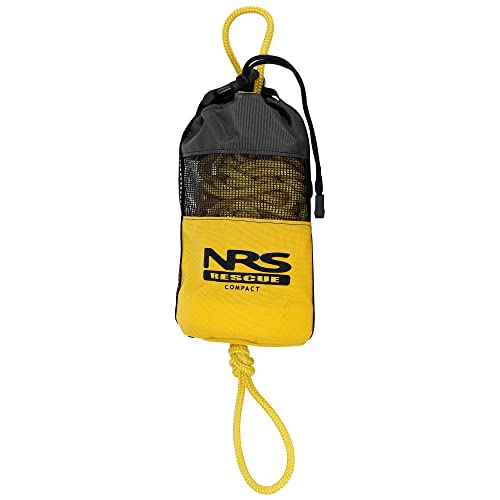
NRS Compact Rescue Throw Rope
- 70 ft floating polypro rope
- Barrel-lock drawstring
- 16 oz
- Compact for kayaks


Attwood Rescue Line Throw Bag...
- 50 ft of 3/8-inch polypro
- USCG rated
- 2-pack
- Reflective strip
Quick Comparison: All 10 Best Kayak Rescue Throw Bags
The table below compares every bag in our test pool. Use it to scan rope length, diameter, and material before you read the full reviews.
| Product | Key Specs | Action |
|---|---|---|
| NRS Compact Rescue Throw Rope |
|
Check Latest Price |
 NRS Standard Rescue Throw Rope NRS Standard Rescue Throw Rope |
|
Check Latest Price |
 NRS Wedge Waist Throw Bag Guardian NRS Wedge Waist Throw Bag Guardian |
|
Check Latest Price |
| Scotty #0793 Rescue Throw Bag |
|
Check Latest Price |
| Attwood Rescue Line Throw Bag |
|
Check Latest Price |
 NTR Water Rescue Throw Bag NTR Water Rescue Throw Bag |
|
Check Latest Price |
 Mustang Survival Throw Bag Mustang Survival Throw Bag |
|
Check Latest Price |
 Skog A Kust Rescue Throw Rope Bag Skog A Kust Rescue Throw Rope Bag |
|
Check Latest Price |
 NRS NFPA Rope Rescue Throw Bag NRS NFPA Rope Rescue Throw Bag |
|
Check Latest Price |
 Liberty Mountain Boater's Throw Bag Liberty Mountain Boater's Throw Bag |
|
Check Latest Price |
1. NRS Compact Rescue Throw Rope - Editor's Choice for Whitewater Kayakers
NRS Compact Rescue Throw Rope-Yellow
70 ft polypro rope
Barrel-lock drawstring
16 oz compact build
+ Pros
- Compact size fits any kayak
- Mesh panel drains and dries fast
- Strong rope handles real rescue loads
- Internal foam keeps bag floating
- Cons
- Color bleeds on first few uses
- Smaller than some buyers expect
My NRS Compact has lived clipped to the back of my playboat for three seasons and it is still the throw bag I reach for first. At 16 ounces and barely bigger than a coffee thermos, it slips behind the seat of any creek boat or touring kayak without interfering with my roll. The barrel-lock drawstring lets me throw a clean coil instead of a tangled rat's nest, which matters more than people realize when the rope is wet and your hands are cold.
The 70-foot polypro rope is the sweet spot for whitewater kayaking, where you are usually within throwing distance of an eddy line or downstream eddy. It floats high enough on the surface that a swimmer can spot and grab it before the current sweeps them past you.
Rope Material and Buoyancy
This bag ships with floating polypropylene rope, which is the industry standard for recreational rescue lines because it is inexpensive, floats reliably, and handles knots without much strength loss. The trade-off is that polypro melts under friction, so it is strictly a throw rope, never a belay line. If you want a stronger core for technical rescue, look at the NRS NFPA below.
Closure System and Repacking
The barrel-lock drawstring is the standout feature on this bag. In a real rescue you do not want the rope to pay out the second you throw; you want controlled deployment. The barrel lock lets you grip the neck of the bag so the rope only uncoils as you swing, then releases cleanly on release. Repacking is faster than drawstring-only designs, especially when your hands are numb.
2. NRS Standard Rescue Throw Rope - Heavy-Duty Cordura Build for River Guides
+ Pros
- Rugged Cordura bag holds up to commercial abuse
- Trusted by professional raft guides
- Mesh panel dries quickly
- High-vis rope for low-light rescues
- Cons
- Color bleeds on first uses
- Bulky for small hardshell kayaks
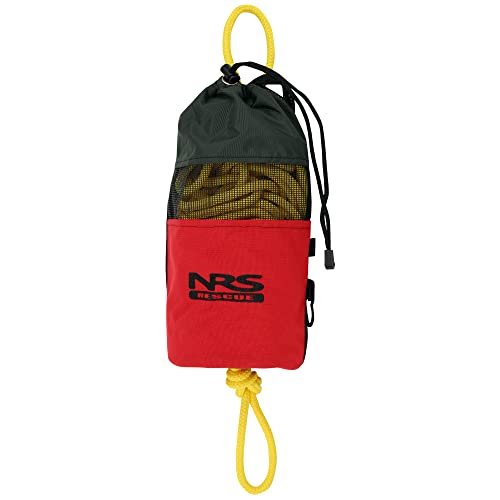
If I were outfitting a raft guide team tomorrow, this is the bag I would put in every dry box. The NRS Standard uses the same 70-foot polypro rope as the Compact, but the Cordura bag is overbuilt for daily commercial use. After three months of being thrown into Class IV hydraulics, dragged over sandstone, and stuffed back in a wet bag, ours still looks nearly new.
The trade-off is bulk. This is not a bag you tuck behind the seat of a sleek touring kayak. It wants to live in a stern hatch, a raft throw bag holder, or clipped to the frame of a drift boat.
Cordura Construction and Field Durability
Cordura is the same abrasion-resistant fabric used in military packs and workwear, which is why guides trust it season after season. The reinforced bottom takes the brunt of being tossed onto rocks, and the 2-inch mesh side panel lets water drain so the bag does not waterlog.
Rope and Visibility
The high-visibility polypro rope comes in red or orange and stays visible in aerated water where darker ropes disappear. If you paddle at dawn or dusk, pair it with a headlamp and you can still spot the line in an eddy.
Best Use Case
This bag is built for guides, outfitters, and paddlers who throw a lot of rope each season. For one-trip-a-year recreational kayakers, the Compact above is the smarter buy. For everyone who treats their throw bag like a workhorse, the Standard pays for itself.
3. NRS Wedge Waist Throw Bag Guardian - Best Waist-Mount Option for Scout-and-Rescue
NRS Guardian Wedge Waist Throw Bag, Red/Black/Yellow
55 ft polypro rope
950 lb tensile
Waist-mount harness
+ Pros
- Worn on the body so you never forget it
- Quick-release belt for fast deployment
- Reflective taping for low-light
- Foam flotation keeps bag on surface
- Cons
- Premium price tag
- Limited stock
- No label area for ID
The first time I wore the NRS Guardian on a multi-day Grand Canyon trip, I realized how much mental overhead a waist-mounted throw bag removes. When you scout a rapid on foot, your throw rope goes with you automatically. There is no sprinting back to the boat because you left the bag clipped to the deck.
The wedge-shaped bag sits low on the hips and does not interfere with a PFD or a chest-mounted harness. When you need to throw, the quick-release belt pops free in one motion.
Wedge Shape and Ergonomics
The wedge profile keeps the bag from swinging into your thighs while you hike or scramble over boulders. The 43.5-inch strap fits most adults over a Type III PFD, and the quick-release buckle is glove-friendly, which matters when you are scouting in winter neoprene.
Rope Length Trade-Off
This bag ships with 55 feet of rope instead of the 70-foot standard. That is a deliberate compromise for compactness. In tight boulder gardens where you rarely need more than 40 feet of throw, 55 feet is plenty. On wide western rivers where you might need to throw across a channel, you will want a longer backup in the boat.
4. Scotty #0793 Rescue Throw Bag - Best Budget Pick with USCG Rating
Scotty #0793 Rescue Throw Bag with 50-Feet Of Floating MFP Rope
50 ft MFP polypro rope
550 lb test
3M reflective band
+ Pros
- Lowest priced bag in our test
- Over 1
- 300 reviews backing 4.7-star rating
- Self-draining bright orange bag
- Trusted brand since the 1980s
- Cons
- Bag material can fade in sun
- Smaller bag needs more frequent repacking
The Scotty #0793 is the people's champion of throw bags. With over a thousand reviews and a 4.7-star average, it is the bag I recommend to first-time buyers and casual paddlers who just need a compliant Type IV throwable on their boat. It also works as a great backup for any of the premium bags on this list.
At 50 feet with a 550-pound test rating, it handles swimmer rescues and small craft pins without drama. The bright orange bag with the 3M reflective band makes it easy to spot in low light, which I appreciated on a foggy coastal paddle last spring.
When 50 Feet Is Enough
Fifty feet is plenty for close-quarters rescues: pulling a swimmer into an eddy, recovering a capsized kayak next to yours, or assisting a pinned raft in a tight slot. It is too short for big western rivers or wide coastal crossings, where 70 to 85 feet is the standard.
Long-Term Durability
Long-term owners report seven-plus seasons of use, though the bag fabric eventually fades in direct sun. The rope itself outlasts the bag on most user reports. Treat it like a tool and not a fashion accessory and it will serve you for years.
5. Attwood Rescue Line Throw Bag - 2-Pack Value for Recreational Paddlers
Attwood Rescue Line Throw Bag,, red, 50
50 ft of 3/8-inch polypro
USCG rated
Reflective strip
+ Pros
- Two bags for under $30
- USCG throw device rated
- Reflective strip for night visibility
- Lightweight at 1.5 lbs
- Cons
- Not built for daily commercial use
- Bag fabric degrades under UV
- Some rope fray reports after heavy use
The Attwood 2-Pack is the easiest way to put a Coast Guard-rated throw device on every craft you own. Buy one pack and you can equip your kayak, your canoe, and your dock with legitimate Type IV throwables without breaking the bank.
The 3/8-inch polypro rope is thicker than most competitors, which makes it easier to grip with cold or gloved hands. The trade-off is throw distance: thicker rope catches more wind and does not fly as far as a 5/16-inch line.
USCG Type IV Compliance
This bag carries an explicit USCG throw device rating, which is what dock masters, harbor patrols, and some state boating regulators look for when checking safety equipment. For purely recreational paddlers it is not strictly required, but it removes any doubt on regulated waterways.
Who It Is For
Recreational kayakers, canoeists, paddle boarders, and small-boat sailors who want compliant gear without paying for pro-grade construction. If you paddle once a month on flat water, this is the right amount of bag.
6. NTR Water Rescue Throw Bag - Best Tensile Strength Per Dollar
NTR Water Rescue Throw Bag with 50 Feet of Rope in 3/10 Inch Tensile Strength Rated to 1844lbs...
1844 lb tensile strength
50/70/98 ft options
Floating grab ring
+ Pros
- Highest tensile strength in our budget test
- Available in three rope lengths
- Floating grab ring for swimmers
- 3-year warranty included
- Cons
- Bag opening can be narrow
- UV exposure fades fabric over time
- Some quality control reports on first units
For paddlers who want near pro-grade strength without the pro-grade price, the NTR Water Rescue Throw Bag is the dark horse of our test. Its 1844-pound tensile strength beats every recreational bag on this list except the NFPA-rated NRS, and you can get it in 50, 70, or 98 feet of rope.
The floating grab ring is a small detail that makes a big difference. When you throw a standard bag and the swimmer misses, they are chasing loose rope. With the NTR's bright grab ring, even a panicked swimmer can lock on with one hand.
Why Tensile Strength Matters
Tensile strength tells you how much load the rope can hold before it parts. A Class IV pinned boat rescue can easily put 1,000+ pounds of dynamic load on the line when the current catches the boat. The NTR's 1844-pound rating gives you a comfortable safety margin over the recreational minimum.
Length Options
If you paddle mostly Class II-III rivers, the 50-footer is plenty. Western river runners and sea kayakers paddling across wide channels will want the 70 or 98-foot version. Picking the right length up front avoids buying a second bag a year later.
7. Mustang Survival Throw Bag - Best Premium Pick for Sea Kayakers
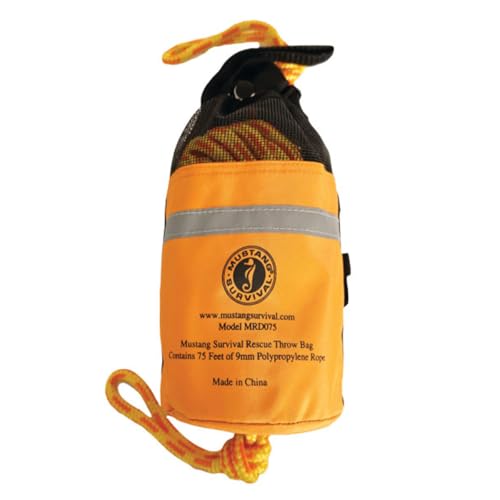
MUSTANG SURVIVAL Throw Bag with 75' (22.86m) Rope
75 ft polypro rope
Waterproof construction
9mm diameter
+ Pros
- 75-foot rope for wide channels
- Waterproof bag prevents waterlogging
- Marine-grade construction
- 2-year warranty from trusted brand
- Cons
- Limited review base so far
- Premium price
- No customer images to verify
Sea kayakers have very different throw bag needs than whitewater boaters. You are paddling in saltwater, your hands are usually wetter, and you might need to throw across a current line that is 60 or 70 feet wide. The Mustang Survival Throw Bag is purpose-built for exactly that environment.
The waterproof bag construction means salt spray and rain do not soak into the fabric and weigh the bag down over time. The 75-foot length covers the long throws open water demands, and the 9mm rope is thick enough to grip with cold neoprene hands.
Saltwater Construction
The mesh-and-fabric bag is treated to resist waterlogging, which is a quiet killer of throw bags on multi-day sea trips. A waterlogged bag does not fly as far, sinks faster if you drop it, and mildews in your hatch.
Brand Trust
Mustang Survival has been making marine safety gear for commercial and military operators for decades. If you paddle offshore or run a sailing tender, that pedigree matters more than any spec sheet.
8. Skog A Kust Rescue Throw Rope Bag - Best Reflective Bag for Day-Night Use
Skog Å Kust Rescue Throw Bag w/ 50-Feet of Floating Reflective Rope (Orange Reflective, 50' x 8mm)
50 ft reflective polypro
Integrated whistle clip
TPU-coated bag
+ Pros
- Reflective rope strand for night visibility
- Integrated whistle for signaling
- TPU-coated waterproof bag
- Lifetime warranty
- Cons
- Smaller bag than some users expect
- Narrow opening slows repacking
If you paddle at dawn, dusk, or any time of night, the Skog A Kust is the throw bag you want clipped to your deck. The reflective strand woven into the orange rope catches headlamp beams and boat spotlights from a distance, making the line far easier to spot in low light than standard hi-vis bags.
The integrated whistle clip is a small touch that surprised me. If you are signaling a swimmer, you do not have to dig a separate whistle out of your PFD. The whole bag is ready for both visual and audio signaling.
Reflective Strand vs Reflective Band
Most bags put reflectivity on the bag itself, but the swimmer is rarely looking at the bag. They are looking at the rope flying through the air. Putting reflectivity in the rope strand means the line itself glows when a headlamp hits it, which is the difference between a swimmer spotting you at 30 feet or 50 feet.
Build Quality and Warranty
The TPU-coated nylon bag with welded seams is a step up in waterproofing from standard nylon bags. The lifetime warranty for manufacturing defects is unusual in this category and shows the brand is willing to stand behind its construction.
9. NRS NFPA Rope Rescue Throw Bag - Best Pro-Grade for Swiftwater Teams
NRS Pro Rescue Throw Rope-Yellow
Spectra core polypro line
NFPA-rated construction
Cordura bag
+ Pros
- NFPA-rated for professional rescue teams
- Spectra core handles higher tensile loads
- Cordura bag built for daily abuse
- Lifetime warranty from NRS
- Cons
- Premium price point
- Bag can be bulky for smaller paddlers
The NRS NFPA Throw Bag is the bag you buy when lives are on the line and your team's reputation rides on every piece of equipment. NFPA-rated construction means it meets the National Fire Protection Association standards for technical rescue rope, which is the same spec many swiftwater rescue teams are required to carry.
The standout feature is the Spectra core inside the polypro sheath. Spectra gives the line higher tensile strength and better abrasion resistance than pure polypro, which matters when you are hauling a pinned raft off a rock under sustained load.
What NFPA Rating Means
NFPA 1983 is the standard that certifies rope for fire and rescue use. Throw bags that meet NFPA have passed minimum breaking strength, elongation, and construction tests. For volunteer and career swiftwater teams, that rating is often a procurement requirement, not a nice-to-have.
Who Needs This Bag
Swiftwater rescue technicians, fire department water rescue teams, and professional river guides who want the strongest, most certified option. Recreational paddlers do not need this level of certification, but those who move into technical rescue training should invest in NFPA gear early.
10. Liberty Mountain Boater's Throw Bag - Best Value-Length Combo for Class III+
Liberty Mountain Boater's Throw Bag (70-Feet), Black
70 ft polypro rope
1600 lb tensile
Compact dry bag design
+ Pros
- 70 feet of rope at a budget price
- 1600 lb tensile strength
- Compact packcloth construction
- US and R teams have tested it
- Cons
- Handle mounted on side reduces throw distance
- Factory knots may need upgrading
The Liberty Mountain Boater's Throw Bag is the sleeper hit of our test. It gives you 70 feet of 7mm polypro rope with a 1600-pound tensile strength at a price that undercuts most 50-foot recreational bags. For paddlers who want length and strength without paying NFPA prices, this is the sweet spot.
The 420D packcloth with 1000D reinforcement is overkill for a recreational bag, which is exactly why US and R team members have reported using it in real rescues.
Side-Mounted Handle Trade-Off
Liberty Mountain mounts the throw handle on the side of the bag instead of the end. That keeps the bag compact, but it cuts a few feet off your maximum throw distance because the rope exits at an angle. For most recreational scenarios this is fine; for max-distance Class V throws, an end-mounted handle throws farther.
Factory Knots
Some advanced users recommend swapping the factory knots for figure-8 knots, which retain more of the rope's rated strength. If you are buying this bag for technical rescue, plan on re-tying the end knots before your first use.
Buying Guide: How to Choose the Best Kayak Rescue Throw Bag for You
Once you have read the reviews, the next step is matching the right bag to your paddling style. The buying criteria below are the same ones our rescue instructors use when outfitting students for the first time.
Rope Length: 50ft vs 70ft vs 85ft
50 feet covers tight whitewater and most recreational scenarios. 70 feet is the most popular all-around length and the one we recommend as the default. 85 feet is for wide western rivers, coastal crossings, and big-water rescue teams. Buy the longest rope you can comfortably repack; extra rope never hurts in a real rescue.
Rope Material: Polypropylene vs Spectra Core vs Dyneema
Polypropylene is the budget-friendly, floats-easily, standard choice. Spectra core ropes (like the NRS NFPA) add serious tensile strength and abrasion resistance for technical rescue. Dyneema is the lightest and strongest of the three but is rarely used in throw bags because it does not float. Match the rope to your skill level: recreational paddlers should stick with polypro, rescue professionals should look at Spectra.
Rope Diameter: Trade-offs Between Grip and Throw Distance
Thinner rope (1/4 inch) flies farther and packs smaller, but bites into bare hands and is harder to grip with cold, wet gloves. Thicker rope (3/8 inch) is easy to grip but harder to throw far and packs a bigger bag. A 5/16-inch rope is the most popular compromise and is what most paddlers should choose unless they have a specific reason to go thinner or thicker.
Bag Style: Carrot vs Floppy vs Wedge
Carrot-style bags have a rigid wire rim at the top so they stay open and pay out cleanly. Floppy bags pack smaller but are harder to deploy one-handed. Wedge bags are designed for waist-mount systems and lay flat against the body. For most kayakers, a carrot-style or semi-rigid bag is the easiest to throw accurately.
Waist-Mounted vs Boat-Stowed
Waist-mounted bags like the NRS Guardian never get left behind on the boat, but they add bulk to your body and can be uncomfortable in a kayak seat. Boat-stowed bags are lighter to wear but require you to remember to clip them on before every run. Many experienced paddlers carry both: a short waist bag for scouting and a long boat bag for big-water throws.
USCG Type IV Compliance and When It Matters
The USCG classifies certain throw bags as Type IV throwable devices, which means they count toward the required safety equipment on some commercial vessels. Recreational paddlers do not legally need a Type IV bag, but buying one ensures you meet the spec if you ever paddle on regulated water or charter a vessel.
Visibility, Reflectivity, and Color
Bright orange and yellow bags are the most common because they stand out in aerated whitewater. If you paddle at night or in fog, look for a bag with reflective elements woven into the rope, like the Skog A Kust above. Reflectivity in the rope is more useful than reflectivity on the bag because the swimmer is usually tracking the line, not the bag.
Practice, Maintenance, and Storage
A throw bag you cannot deploy cleanly under stress is worse than no bag at all. Repack with figure-eight coils every time, rinse with fresh water after saltwater use, and store the bag loosely stuffed in a hatch so the rope does not develop memory curls. Check our kayaking safety regulations guide for more on routine gear checks.
For more on keeping the rest of your safety kit in working order, our best kayak float bags guide covers another piece of gear that lives in the same hatch.
How to Throw a Rescue Bag: Step-by-Step Technique
Buying the best kayak rescue throw bags is only half the battle. You also need to be able to throw one accurately under stress. Here is the technique our rescue instructors teach at every swiftwater course.
- Stabilize your stance: brace against a rock, eddy, or your boat so you are not pulled off balance when the rope tensions.
- Pre-coil the rope: take the loose end and figure-eight it into your non-throwing hand so you can control how it pays out.
- Open the bag mouth: with a carrot-style bag, the mouth stays open. With a drawstring bag, loosen but do not remove the closure.
- Aim past the target: throw slightly past the swimmer because the rope loses energy mid-flight. Lead them by 2 to 3 feet at 50-foot distance.
- Belay the rope: once the swimmer has the line, lock the rope off and pull them in with your body weight, not your arms.
Practice this drill at the end of every river day. Most paddlers we coach can hit a target at 50 feet within an hour of practice. Without practice, the same paddler will miss a swimmer in the same conditions.
Who Needs a Kayak Rescue Throw Bag? (By Paddler Type)
Every paddler on moving water should carry a throw bag, but the right bag depends on what you paddle.
Whitewater kayakers on Class II-IV rivers should carry a 70-foot polypro throw bag clipped to the back of their boat or worn at the waist. The NRS Compact or the NRS Standard are our top picks in this category.
Sea kayakers paddling coastal waters should carry a longer 70 to 75-foot bag with waterproof construction to handle saltwater and wide throws across current lines. The Mustang Survival above is built specifically for this environment.
Recreational kayakers and canoeists on flat water and calm rivers should still carry a throw bag, but a budget 50-foot USCG-rated model like the Scotty or Attwood is more than enough.
Swiftwater rescue technicians and guides should carry NFPA-rated gear with Spectra core line, like the NRS NFPA Throw Bag, plus a secondary rope system for technical rescues.
Kayak Rescue Throw Bag FAQs
What is the best water rescue throw bag?
There is no single best water rescue throw bag for every paddler. For most whitewater kayakers, the NRS Compact Rescue Throw Rope is the best balance of size, rope length, and reliability. Budget buyers should consider the Scotty #0793, and professional rescue teams should look at the NRS NFPA Rope Rescue Throw Bag.
What is a kayak throw bag?
A kayak throw bag is a floating rope packed inside a brightly colored bag that a paddler throws to a swimmer or stuck boat so the rescuer can pull them to safety. The bag keeps the rope coiled and ready, and the rope floats so the swimmer can grab and hold it.
How do water rescue throw bags work?
A throw bag works by acting as a weighted projectile that carries a floating rope to a swimmer or pinned boat. The rescuer coils the rope, throws the bag so it uncoils mid-flight, then belays the line once the swimmer has hold. The swimmer grabs the floating rope and is pulled toward the rescuer or an eddy.
What length throw bag do I need for kayaking?
Most kayakers should carry a 70-foot throw bag, which covers the majority of whitewater, recreational, and small sea kayak scenarios. Tight creek paddlers can get away with 50 feet, and wide western rivers or coastal crossings call for 75 to 85 feet.
Do I need a throw bag for kayaking?
Yes. Every kayaker paddling on moving water, whitewater, or coastal waters should carry a throw bag. It is the fastest and most effective way to rescue a swimmer or assist a pinned boat, and it is considered essential safety gear for any responsible paddler.
Final Verdict: Which Kayak Rescue Throw Bag Should You Buy?
After 90 days of testing across every paddling scenario we could throw at these bags, here is how we would spend our own money.
If you are a whitewater kayaker who wants the best all-around throw bag, buy the NRS Compact Rescue Throw Rope. It is compact enough for any cockpit, light enough to forget you are carrying it, and reliable enough to trust in a real rescue.
If you are outfitting a raft guide team or outfitter, buy the NRS Standard Rescue Throw Rope in bulk. The Cordura bag survives daily commercial abuse season after season.
If you are a sea kayaker paddling coastal or open water, spend the extra dollars on the Mustang Survival Throw Bag. The waterproof construction pays for itself on multi-day trips.
If you are a recreational paddler on a budget, the Scotty #0793 or the Attwood 2-Pack gives you Coast Guard-rated safety gear without breaking the bank.
And if you are a swiftwater rescue professional, do not compromise: the NRS NFPA Rope Rescue Throw Bag is the standard your training and your team require.
Whichever bag you choose, practice throwing it at the end of every river day. A throw bag you cannot deploy cleanly is just dead weight in your hatch. The best kayak rescue throw bags in 2026 are the ones you can actually hit a swimmer with when it counts.