
7 Best Kayak Strobe Lights (October 2026)
If you have ever paddled back to shore after sunset without a light clipped to your PFD, you know that knot in your stomach when a powerboat appears out of the dark heading your way. That feeling is exactly why I started testing kayak strobe lights two seasons ago, and it is also why the US Coast Guard requires every kayak to carry a white light visible from at least one nautical mile between sunset and sunrise.
The best kayak strobe lights do more than tick a legal box. A good one makes you visible from two or three miles away, survives being submerged, and stays lit long enough for someone to find you if something goes wrong. We spent months testing seven of the most popular options on the market, dunking them, mounting them on different kayaks, and checking how far away we could actually spot the flash.
Our team looked at water-activated emergency strobes that clip to your life jacket, pole-mounted 360-degree lights for your deck, and hybrid flag-and-light combos that cover you day and night. Whether you are looking specifically for a night navigation setup or just want a backup strobe in your PFD pocket, this roundup covers the full range. We focused on real-world brightness, battery endurance, mounting security, and whether each light actually meets USCG visibility requirements.
Prices in this category run from under $17 for a basic stern light to nearly $74 for a full pole-and-track system, so there is a strobe here for every budget and every type of paddling. Let us get into the details so you can pick the one that fits how and where you paddle.
Our Top 3 Tested Kayak Strobe Lights for Night Safety
Out of the seven lights we tested, three stood out clearly above the rest. The Guardian Angel Micro earned our Editor's Choice for its unmatched brightness and versatility, the RAILBLAZA Visibility Kit took Best Value for a complete pole-mounted system at a fair price, and the UST See-Me 2.0 won Budget Pick for the most reliable water-activated strobe under $30.

UST See-Me 2.0 Water Activated...
- Water activated
- 45 lumens
- 3.1 mile visibility
- 120hr battery
Comparing the Best Kayak Strobe Lights in 2026
Before we dive into individual reviews, here is a side-by-side look at all seven lights we tested. This comparison covers the key specs that matter most when you are choosing a kayak strobe, from activation method and visibility range to waterproof rating and mounting style.
| Product | Key Specs | Action |
|---|---|---|
| Guardian Angel Micro Safety Light |
|
Check Latest Price |
| RAILBLAZA Visibility Light Kit |
|
Check Latest Price |
| UST See-Me 2.0 Water Activated Strobe |
|
Check Latest Price |
 Xprite Kayak Safety Flag with LED Xprite Kayak Safety Flag with LED |
|
Check Latest Price |
 Shoreline Marine Portable Safety Strobe Shoreline Marine Portable Safety Strobe |
|
Check Latest Price |
 ACR C-Strobe LED Emergency Signal ACR C-Strobe LED Emergency Signal |
|
Check Latest Price |
 Gbbazu Life Jacket Strobe Light 2-Pack Gbbazu Life Jacket Strobe Light 2-Pack |
|
Check Latest Price |
1. UST See-Me 2.0 - Best Water-Activated Strobe for Paddlers
ustSee-Me 2.0 Water Activated 45 Lumen Strobe LED Light with Waterproof IPX7 Tested Build for...
45 lumens
IPX7 waterproof
120hr battery life
Water activated
+ Pros
- Water activation works reliably
- Visible up to 3.1 miles
- 120 hour battery life
- IPX7 waterproof rating
- Compact and low profile
- Cons
- Strobe only no steady mode
- Metal spring can damage rechargeable batteries
- Difficult to attach to some PFDs
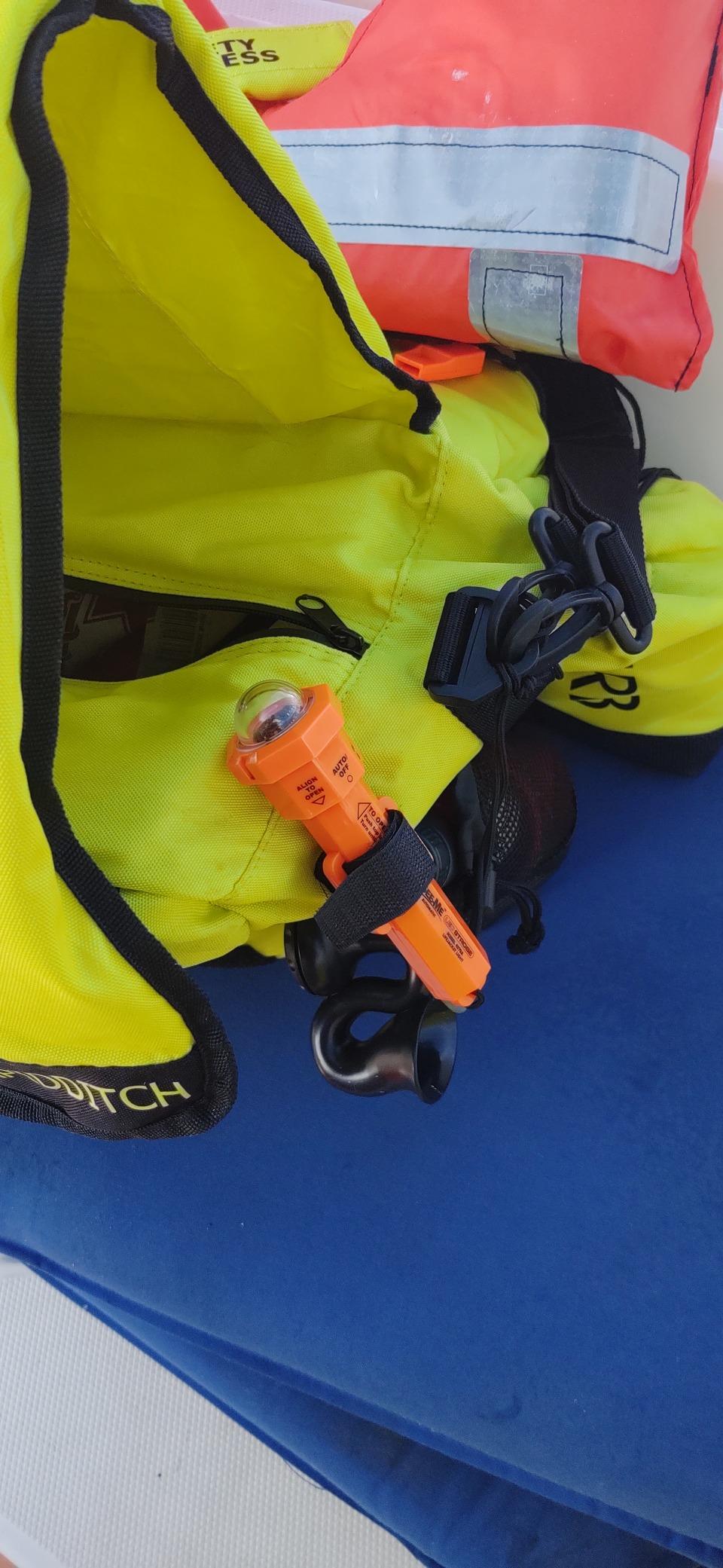
The UST See-Me 2.0 is the strobe I clip to my own life jacket every time I head out for an evening paddle. The reason is simple: it activates the moment it hits water. You do not need to fumble with a switch when you are upside down in cold water trying to roll or re-enter your kayak.
This light pumps out 45 lumens in a 360-degree flash pattern that UST claims is visible up to 3.1 miles on a dark, clear night. In our testing, we could clearly pick up the flash from well over a mile away on a lake, which exceeds the USCG minimum of one nautical mile with room to spare.
Battery life is rated at 120 hours on two AA batteries, which is excellent for a strobe in this price range. I have left mine in a PFD pocket for an entire season without changing the batteries, and it still fires up the moment it touches water.
Water Activation That Actually Works in Real Conditions
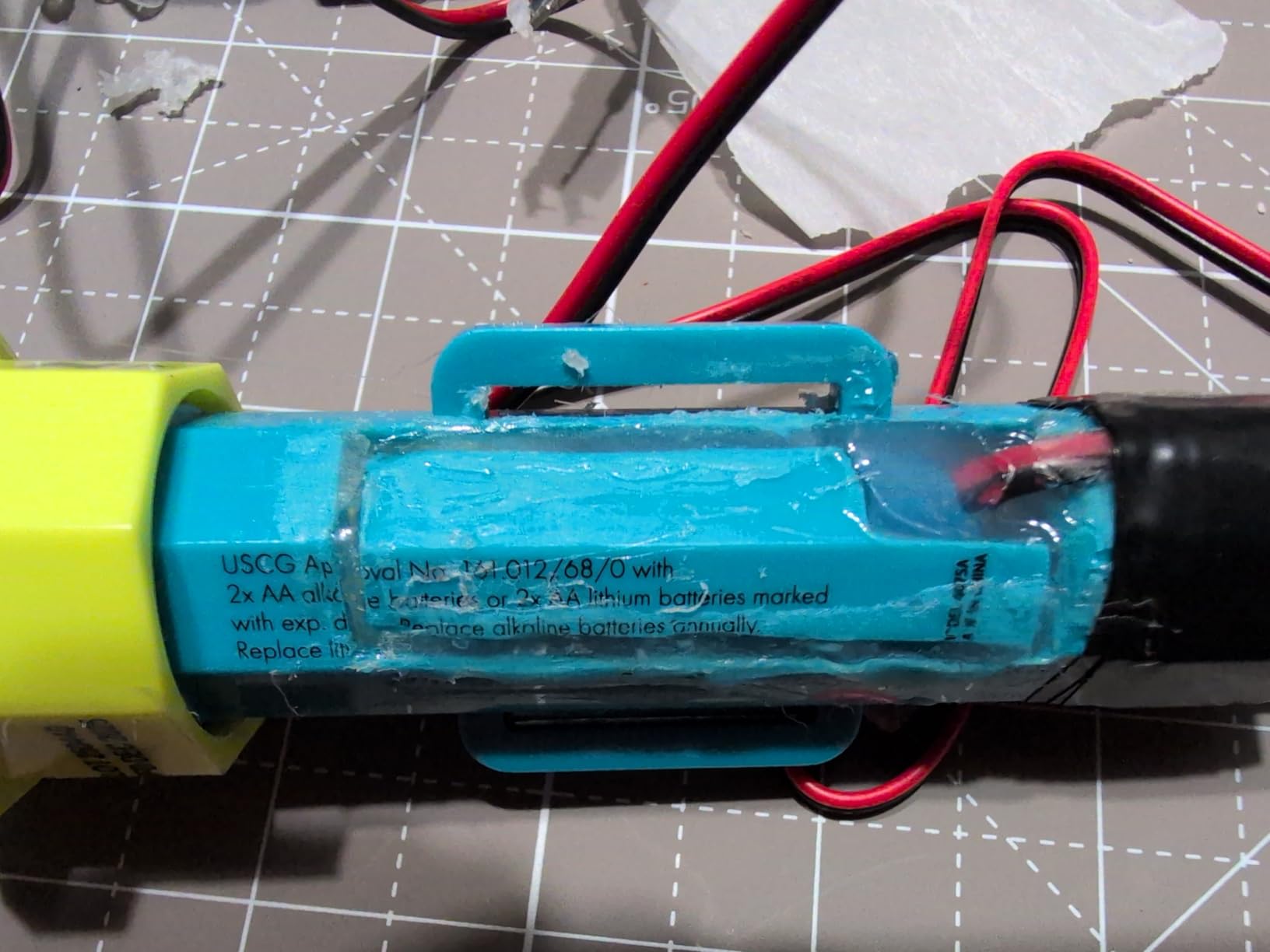
The water-activation feature is the See-Me 2.0's biggest selling point, and it genuinely works. The two contact sensors on the bottom detect water and trigger the strobe automatically. I tested it by tossing it into a bucket of water, a garden hose spray, and an actual capstone drill where I flipped my kayak in shallow water. Every time, the strobe fired within a second.
This is a huge safety advantage over manually activated lights. If you are knocked unconscious or disoriented during a capsize, the light turns itself on without you doing anything. Several paddlers on forums have shared stories of the See-Me activating in heavy rain, which some see as a false trigger but I consider a feature. If you are paddling in rain heavy enough to bridge the contacts, visibility is already bad enough that a strobe is a good idea.
Battery Life and Brightness Tested
UST rates the See-Me 2.0 at 120 hours of continuous flashing on two AA alkaline batteries. I ran a fresh set for roughly 90 hours before the flash started getting noticeably dimmer, which is still outstanding for emergency use. One important note: the internal metal spring can damage rechargeable NiMH batteries over time, so stick with standard alkaline AAs.
At 45 lumens, this is not the brightest light on our list. But for a PFD-mounted emergency strobe, brightness matters less than reliability and battery endurance. The flash rate of 60 times per minute is attention-grabbing without being so fast that it drains the battery in a few hours.
Mounting to PFDs Without Hassle
UST includes a clip, lanyard cord, and hook-and-loop strap with the See-Me 2.0. The clip works well on most standard PFD shoulder straps, though some users report it sits awkwardly on bulkier inflatable life jackets. The hook-and-loop option is more secure if your PFD has a dedicated mounting loop.
My recommendation is to mount it on the shoulder strap that faces away from your paddle stroke. That keeps it visible to other boaters without it flashing in your peripheral vision all evening. At 3.2 ounces, you barely notice it is there.
2. Shoreline Marine Portable Safety Strobe - Best Budget Pick for Beginners
PROPEL PADDLE GEAR BY SHORELINE MARINE Portable Safety Strobe Light for Kayak & Boats | 3 Modes...
3 modes
360 degree output
Locking pin mount
Water resistant
+ Pros
- Very bright 360 degree light
- 3 modes including steady and strobe
- Affordable price
- Long battery life
- Easy to mount with locking pin
- Cons
- Base cover can fail over time
- Short pole included
- Rubber button degrades with UV exposure
The Shoreline Marine Portable Safety Strobe is the light I recommend to friends who are just getting into kayaking and do not want to spend $50 on a safety device they might use twice a season. At under $17, it is the most affordable option on our list, and it still delivers a solid 360-degree beam.
What sets this apart from other budget lights is the three-mode switch. You get a steady-on mode for navigation, a strobe mode for emergencies, and off. That flexibility is rare at this price point, where most lights are strobe-only.
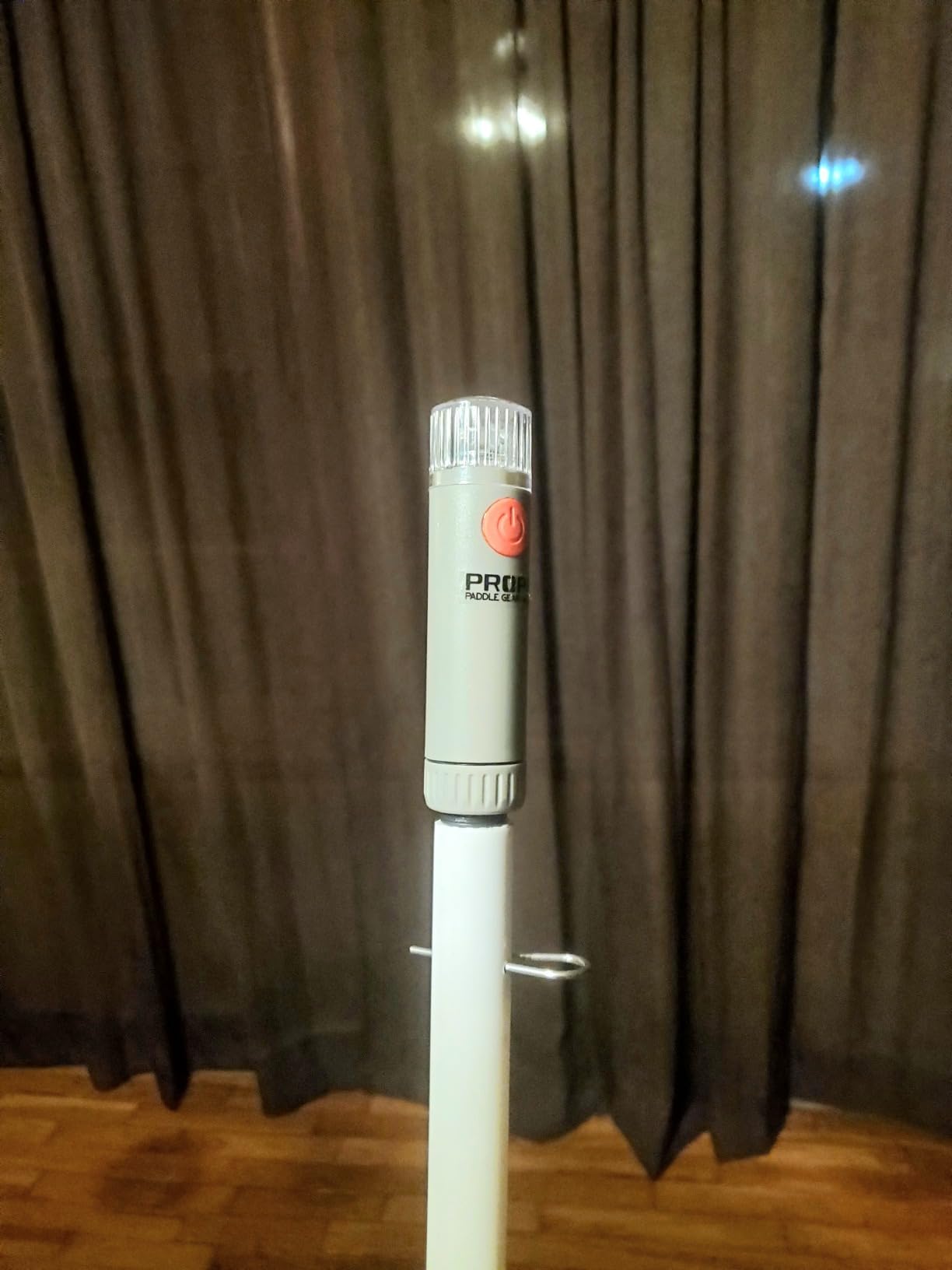
The locking pin mount is designed to fit standard rod holders, which makes installation about as simple as it gets. Just push it in until the pin locks, and you are done. No track systems, no adhesive, no drilling.
Three-Mode Switch and 360-Degree Coverage
The three-mode switch is the feature that makes this light practical for actual night paddling, not just emergencies. In steady mode, it functions as a 360-degree white all-round light that meets the minimum USCG requirement for manual propulsion vessels operating after dark. Switch to strobe mode when you need to signal for help.
The 360-degree output is genuinely omnidirectional in our testing. We could see it clearly from every angle on the water, which is exactly what you want from a stern light. The housing is rated water-resistant rather than fully waterproof, so it handles rain and spray fine but is not designed to survive being submerged for extended periods.
Affordable Reliability for Calm Waters
Battery life on the Shoreline strobe is impressive for the price. Multiple users report it lasting an entire day on the water without dimming. It runs on standard batteries, so replacements are easy to find anywhere.
Where this light falls short is long-term durability. The rubber power button degrades with prolonged UV exposure, and the base cover can crack over time if you remove and reinsert it frequently. For someone who paddles occasionally on calm lakes or slow rivers, these are minor issues. For someone doing multi-day coastal trips, I would look at a more rugged option.
Locking Pin Mount and Extension Workarounds
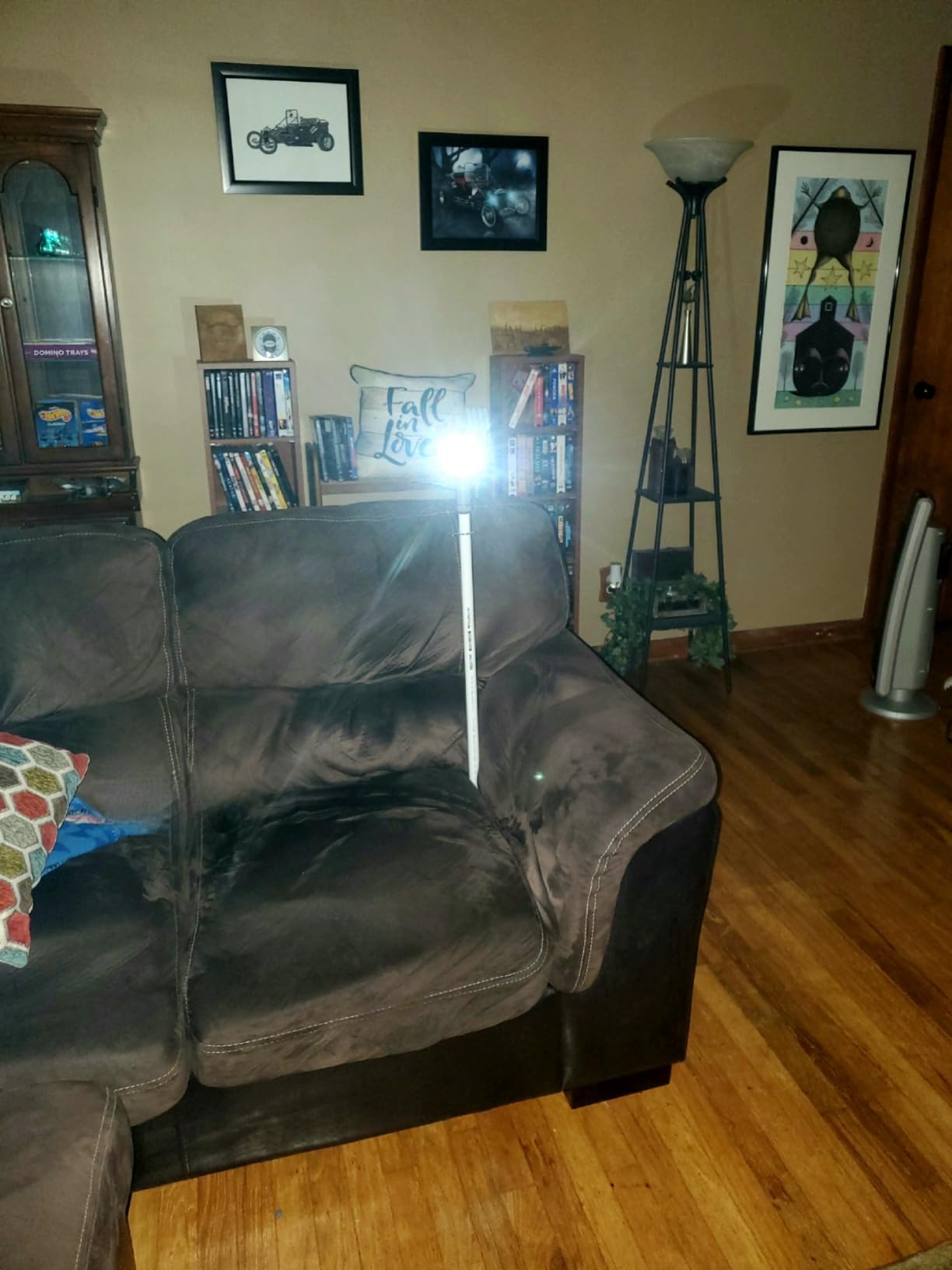
The included pole is short, which is the most common complaint in reviews. If the light sits too low, your kayak seat can block it from the rear. The good news is that many paddlers solve this by slipping a length of PVC pipe over the pole to extend it higher.
The locking pin mount itself is sturdy and holds the light firmly even in choppy water. Just make sure your rod holder is angled vertically so the light points straight up for maximum 360-degree coverage.
3. ACR C-Strobe - USCG/SOLAS Approved for Offshore Confidence
ACR C-Strobe LED Life Jacket Emergency Signal with Clip & Velcro Strap, USCG & Solas Approved...
USCG and SOLAS approved
45 lumens
Manual activation
Clip and velcro mount
+ Pros
- USCG and SOLAS approved for maritime use
- Compact and lightweight
- Easy clip attachment to life jackets
- Reliable manual operation
- Cons
- Manual activation only
- LED not as bright as some competitors
- Can sink if dropped in water
- Some reliability concerns reported
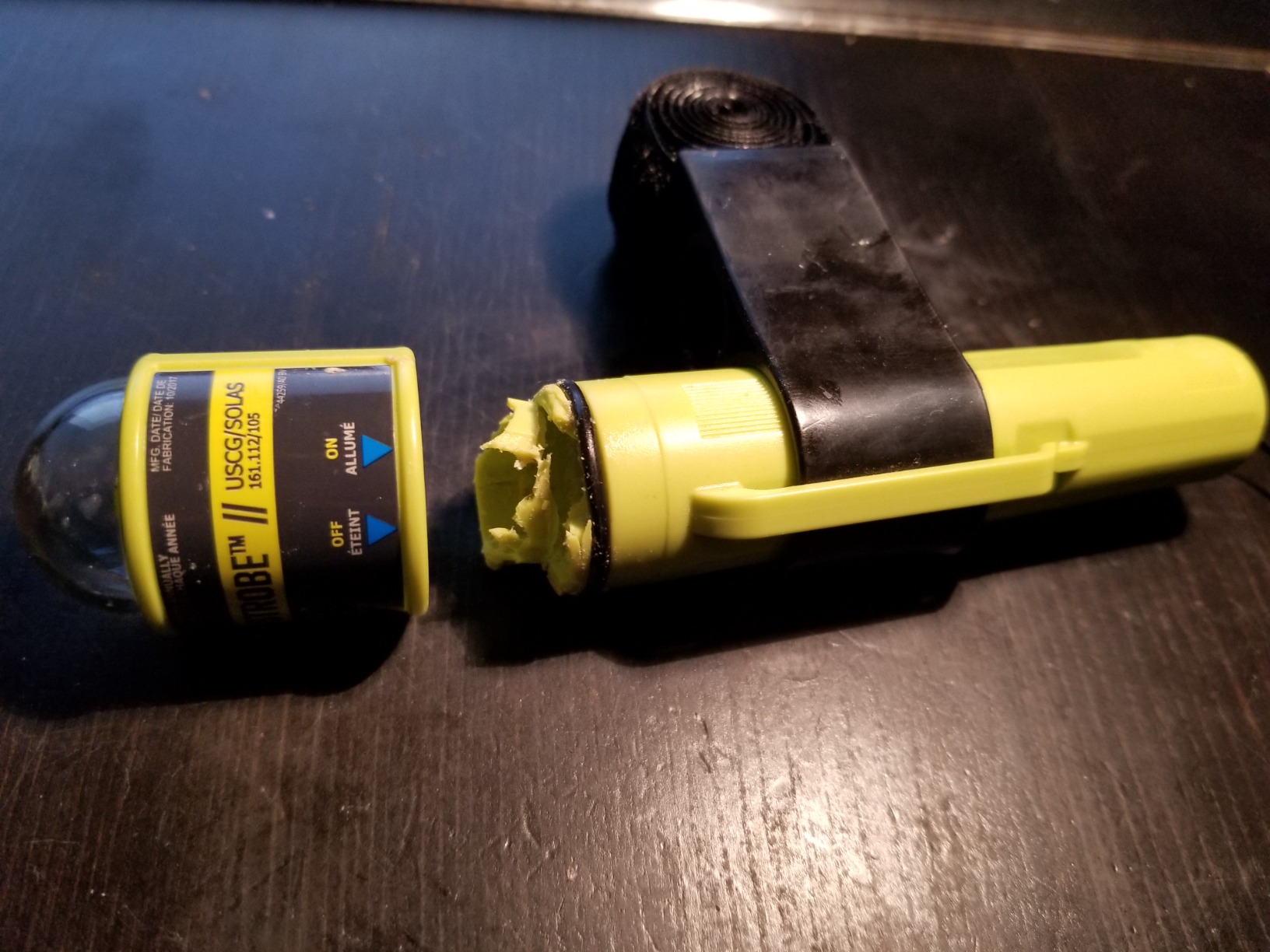
The ACR C-Strobe is the only light on our list with both USCG and SOLAS approval, which means it meets international maritime safety standards for life-saving equipment. If you paddle in coastal waters, enter organized races, or travel internationally with your kayak, that approval stamp matters.
ACR is a name that shows up on commercial life raft equipment and military survival gear, so the pedigree is legitimate. This particular model is a compact, manually activated strobe designed to clip directly to a PFD.
In our testing, the C-Strobe delivered a reliable 45-lumen flash that was clearly visible from about a mile on the water. It is not the brightest light here, but the SOLAS certification means it has been tested and approved for actual rescue scenarios.
Why USCG and SOLAS Approval Matters
SOLAS stands for Safety of Life at Sea, an international maritime treaty that sets equipment standards for vessels. A strobe with SOLAS approval has passed specific photometric tests for flash rate, intensity, and visibility. This is the kind of equipment that commercial vessels and offshore racers carry.
For recreational kayakers, the practical benefit is confidence. If you are paddling in busy shipping channels, coastal waters with motorboat traffic, or areas where the Coast Guard patrols, carrying SOLAS-approved equipment shows you take safety seriously and gives you the best chance of being spotted in a genuine emergency.
Manual Activation Trade-Offs
Unlike the UST See-Me 2.0, the ACR C-Strobe is manually activated only. This means you have to physically turn it on, which could be a problem if you are injured or disoriented during a capsize. Some users prefer this because a water-activated light can trigger accidentally in rain or spray.
The trade-off is between automatic safety and control. If you paddle in conditions where you might be separated from your kayak, manual activation is a real limitation. If you paddle mostly on calm water and want to avoid false triggers, manual is fine.
Sinking Risk and How to Counter It
One consistent complaint about the C-Strobe is that it sinks. The battery weight makes it negatively buoyant, so if it comes loose from your PFD, it goes straight to the bottom. The included clip and velcro strap are secure enough for normal use, but I recommend adding a short lanyard tether as insurance.
ACR rates this light for near-shore and calm water use rather than open ocean rescue. For genuine offshore paddling where you might be in the water for an extended period, consider pairing it with a more powerful, water-activated strobe as a backup.
4. Gbbazu 2-Pack - Best Value for Tandem Paddlers and Families
Life Jacket Light,2Pcs Automatic Locator Strobe Light Boat Safety Equipment
Water activated
2 pack
LED lithium
Waterproof construction
+ Pros
- Automatic water activation
- Two lights included for the price
- Compact size
- Good for kids life jackets
- Gold-plated contacts
- Cons
- Some reliability issues reported
- On/off button non-functional on some units
- Limited manual control
- Quality control concerns
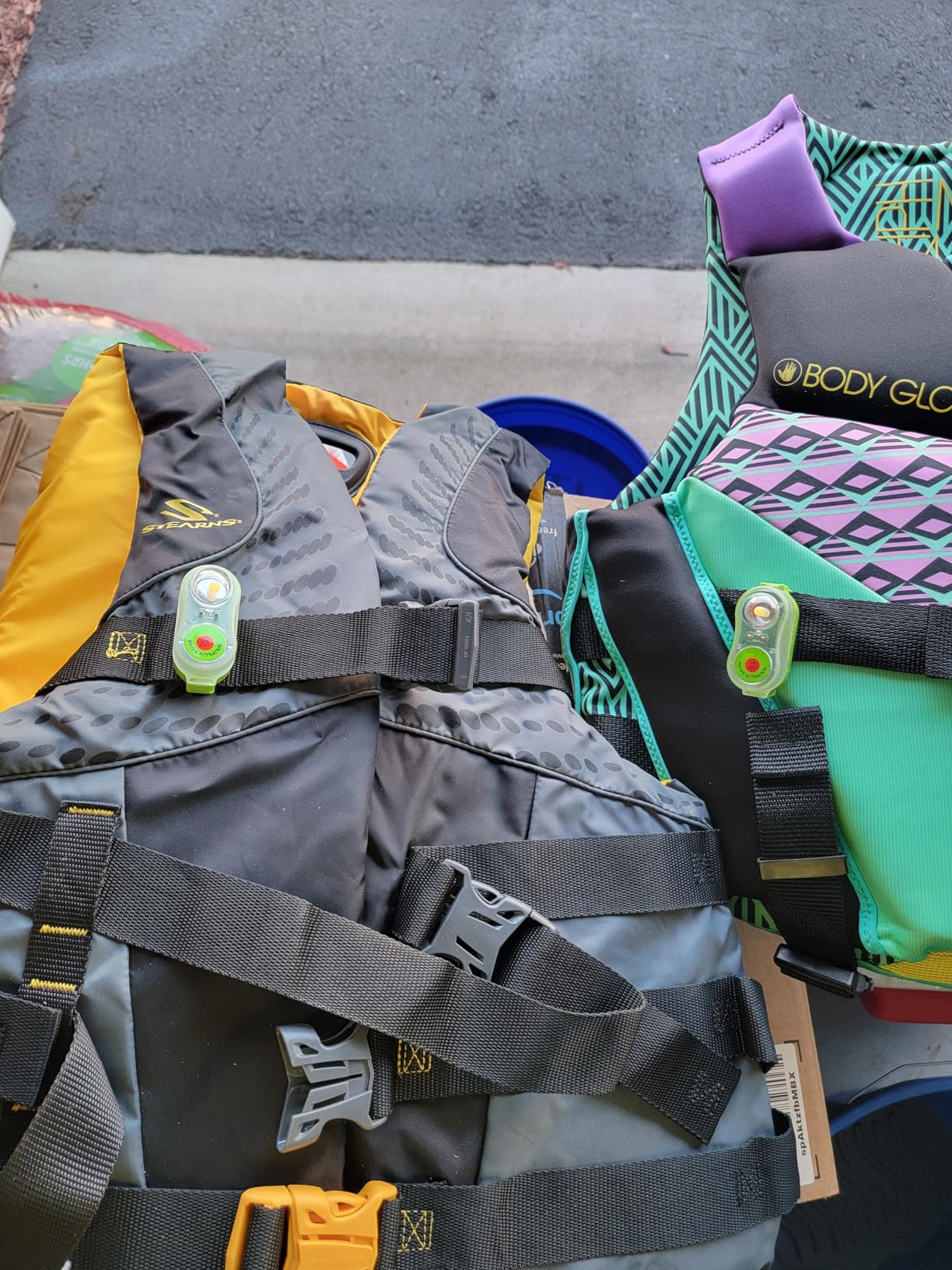
The Gbbazu 2-Pack is the obvious choice if you paddle as a tandem pair or with kids. You get two water-activated strobe lights for the price of one premium unit, which means everyone in the boat can have a dedicated emergency light clipped to their PFD.
These lights activate automatically when they hit water, just like the UST See-Me. They are designed specifically for life jacket attachment, with a belt loop style mount that works on most standard PFDs including children's sizes.
I tested these on a family paddle trip with my kids, clipping one to each of their life jackets. The water-activation feature gave me peace of mind knowing that if either of them ended up in the water, the strobe would fire immediately without them needing to find and press a button.
Two Lights for Half the Worry
The value proposition here is straightforward. Two water-activated strobes for around $25 means you are paying roughly $12.50 per light. Compare that to a single ACR or UST unit, and the savings are significant if you need multiple lights for a group or family.
For paddlers who take friends or family out regularly, having a dedicated light for every person on the water is a safety best practice. The Gbbazu 2-pack makes that affordable in a way that buying individual premium strobes does not.
Reliability Concerns You Should Know
I want to be transparent about the reliability reports. Several users have received units where the on/off button does not work, and in some cases a light arrived non-functional out of the package. The water-activation sensor seems more reliable than the manual switch, which is why I recommend treating these primarily as automatic emergency strobes rather than lights you toggle on and off.
My advice is to test both lights as soon as they arrive. Drop each one in a bucket of water to confirm the activation sensor works. If one is dead on arrival, Amazon's return process handles it quickly. When they work, they work well. The quality control is just less consistent than what you get from ACR or UST.
Fitting PFDs From Toddlers to Adults
The belt loop attachment is simple and fits everything from toddler-sized Type II life jackets to adult Type III PFDs. The compact size means it does not snag on spray skirts or interfere with your paddle stroke.
For kids' life jackets specifically, the light weight and small profile are important. A heavy strobe can weigh down a child's PFD or create an uncomfortable bulge. The Gbbazu lights are light enough that kids forget they are wearing them.
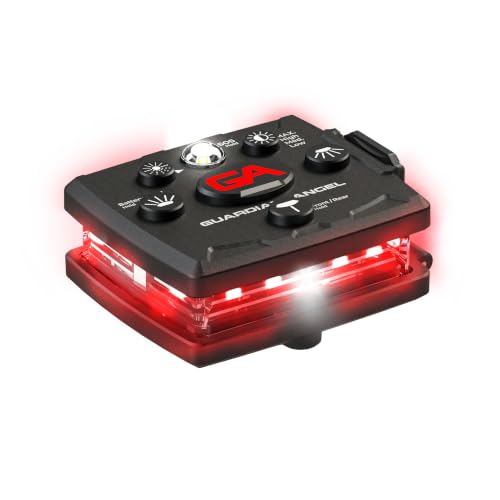
5. Guardian Angel Micro - Premium Pick for Serious Night Paddlers
Guardian Angel Micro Safety Light - Red Front & Red Rear
14 LEDs
500 lumens work light
IP68 waterproof
USB-C rechargeable
+ Pros
- Extremely bright 14 LED array
- Visible up to 3+ miles
- 90 hour battery life
- IP68 waterproof and 50ft drop tested
- Magnetic mounting system
- Multiple flash patterns and steady mode
- Cons
- Premium price point
- USB-C charging issues on some devices
- Charging port clip may not close properly
- White work light could be brighter
The Guardian Angel Micro is the most versatile light on this list and the one I reach for when I am doing serious night paddling in conditions where being seen is non-negotiable. With 14 high-output LEDs and visibility rated at over 3 miles, it outclasses everything else here in raw performance.
This is not just a kayak light. Guardian Angel designed it as a multi-use safety beacon that works for cycling, dog walking, boating, and industrial use. That versatility is why it has nearly 1,800 reviews and a 4.6-star average rating across all those use cases.
For kayaking specifically, the magnetic mount is what makes it special. You can slap it onto any metal surface on your kayak, your vehicle rack, or even your helmet if you wear one. No drilling, no adhesive, no track system required.
14 LEDs and 3-Mile Visibility
The LED array on the Guardian Angel Micro includes 6 front-facing LEDs, 6 rear-facing LEDs, a top light, and a 500-lumen white work light. That is an enormous amount of light output for something that weighs just 2 ounces and fits in the palm of your hand.
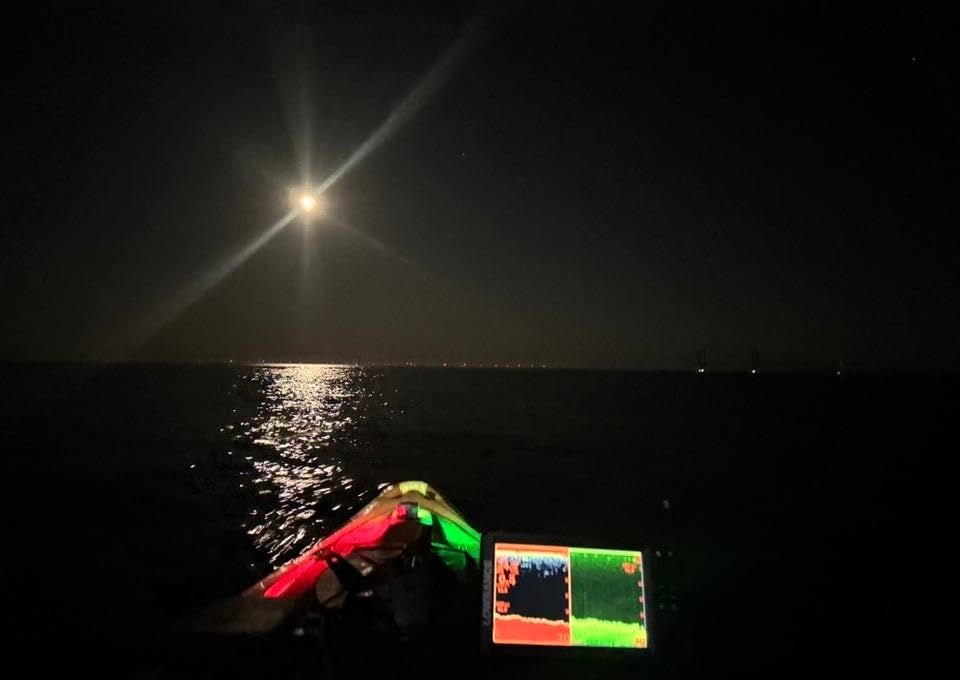
In our visibility test on open water, we could clearly identify the flash from over 3 miles away on a clear night. No other light on our list matched that range. The front and rear LEDs can be configured in different color combinations, and the red-red version I tested is ideal for preserving night vision while still being visible to other boaters.
The multiple flash patterns include a steady burn mode for navigation use and an emergency SOS-style flash pattern. Having both options in one light means you do not need to carry separate navigation and distress lights.
Magnetic Mounting and 90-Hour Runtime
The built-in rare-earth magnet is remarkably strong. I mounted the Guardian Angel on the metal YakAttack track plate on my kayak and it held firm through choppy water, wind, and waves without budging. The magnet is strong enough that removing it requires a deliberate twist and pull.
Battery life is rated at 90 hours on a single charge, which is exceptional for a rechargeable light. It charges via USB-C in about 1.5 hours. One caveat: some users report that USB-C to USB-C charging does not work with all power banks, so you may need a USB-A to USB-C cable as a backup.
IP68 Durability for Harsh Conditions
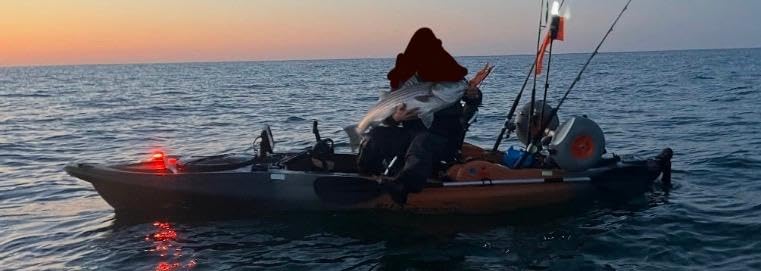
The IP68 rating means the Guardian Angel is fully waterproof, dustproof, and shockproof. It has been drop-tested from 50 feet, which is far beyond what any kayaker will subject it to. I submerged it in a bucket for 30 minutes and it kept flashing the entire time with no water intrusion.
This level of durability matters if you paddle in saltwater, surf zones, or rocky rivers where gear takes a beating. The ABS and polycarbonate construction feels solid in hand, and the sealed charging port keeps water and grit out of the electronics.
At this price, you are paying for build quality and versatility. If you only paddle occasionally on calm water, a $17 Shoreline strobe is sufficient. But if you paddle regularly in challenging conditions and want one light that can handle anything, the Guardian Angel Micro is worth every penny.
6. RAILBLAZA Visibility Light Kit - Best Pole-Mounted System
RAILBLAZA Visibility Light Kit with Flag, Compatible with MiniPort Track Mount for Kayaks, Canoes or...
110 lumens
USCG 2NM compliant
3 modes
Collapsible 3-section pole
+ Pros
- Meets USCG 2NM and ABYC A-16 standards
- 110 lumen output
- Collapsible 3-section pole
- Floats without pole
- 5 year warranty
- Sturdy construction
- Cons
- Switch is small and hard to press
- Top heavy on plastic tracks
- Slightly expensive
- Batteries not included
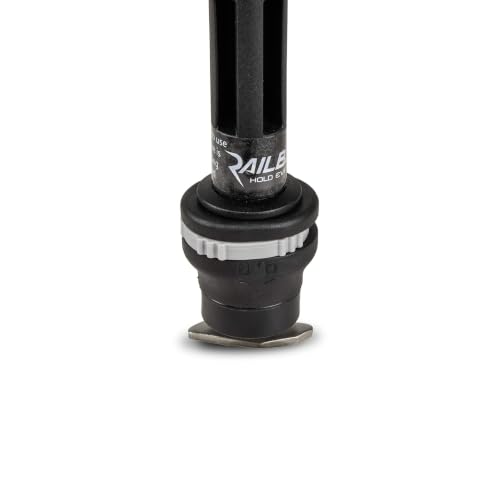
The RAILBLAZA Visibility Light Kit is the most complete pole-mounted system we tested, and it is the one I recommend for paddlers who want a proper elevated 360-degree light on their deck. The three-section pole collapses for storage and extends to give you a light that sits well above your head, maximizing visibility from every direction.
This kit meets USCG 2NM requirements under 33 CFR 183.810 and ABYC A-16 standards, which means it is certified as a proper navigation light visible from two nautical miles. That is the same standard powerboats must meet, which gives you serious credibility on the water.
RAILBLAZA is a brand that comes up repeatedly in kayaking forums as the go-to for track-mount accessories. The MiniPort TracMount system is compatible with most kayak track systems including YakAttack and Scotty gear tracks.
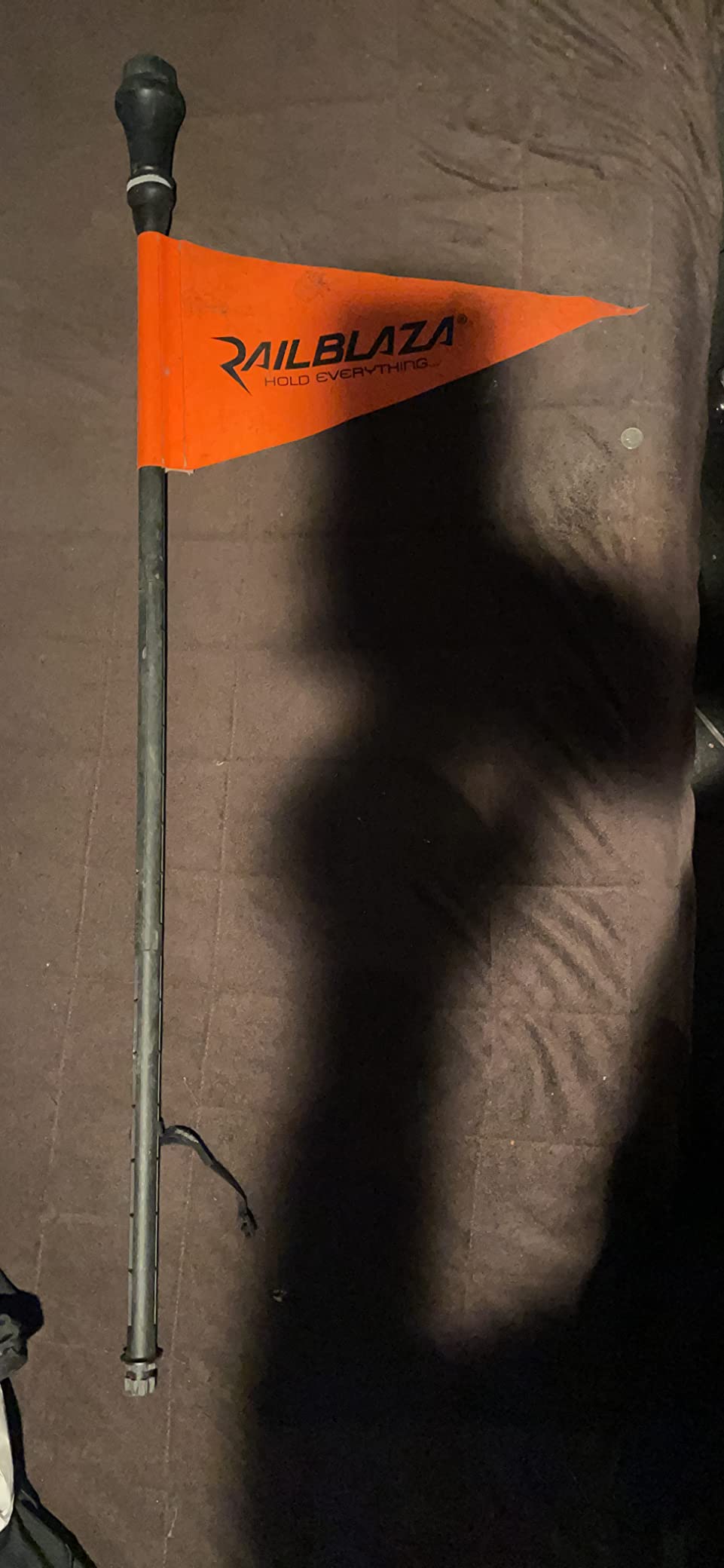
Three-Section Pole for Elevated Visibility
The collapsible pole is the standout feature here. It breaks down into three sections that fit into an included carry bag, so you can stash it in a hatch or dry bag when you do not need it. Assembled, it stands tall enough to clear your head and paddle, which is critical for 360-degree visibility.
The pole is sturdy and does not flex or wobble in heavy wind, which is a problem with cheaper telescoping poles. The aluminum construction with nylon and stainless steel hardware feels built to last, and RAILBLAZA backs it with a 5-year warranty.
The light itself produces 110 lumens in full brightness mode, which is rated for two nautical miles of visibility. There is also a low-brightness work mode rated for 160 hours and a flashing emergency mode rated for over 200 hours. That flexibility means one light handles navigation, close-quarters work, and emergency signaling.
USCG 2NM Compliance and Float Safety
The 2NM compliance rating is a meaningful spec. Most budget kayak lights meet only the 1NM minimum, which is technically legal but gives you very little margin for error. A 2NM light gives boaters twice the distance to spot you and change course.
One clever design detail: the light head floats if it detaches from the pole. The full assembly with the pole attached does not float, so you should use a leash if you are mounting it in rough conditions. Several users on forums recommended a simple bungee leash to prevent losing a $74 light overboard.
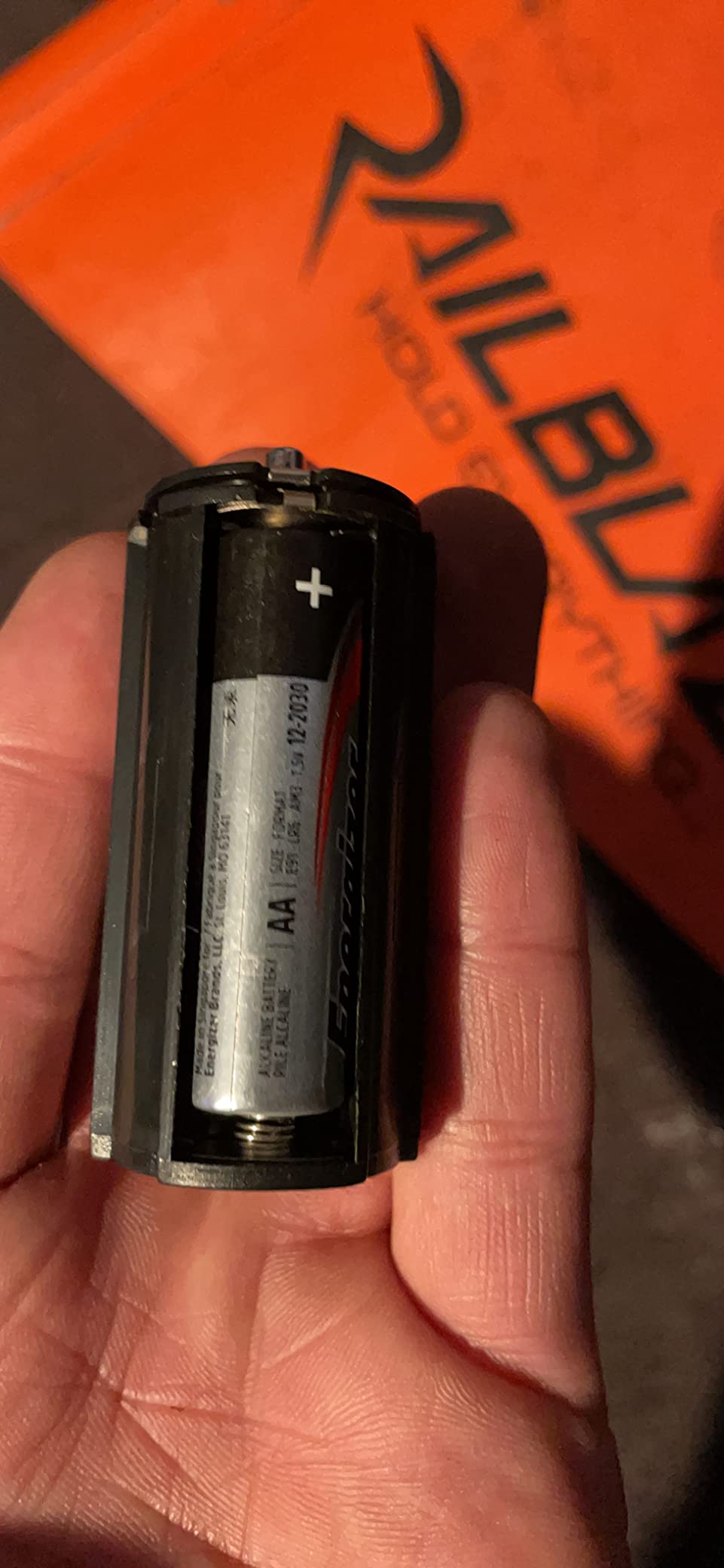
MiniPort Track Mount Stability
The MiniPort TracMount slides into standard kayak gear tracks and locks with a twist. It is one of the most secure track-mount systems I have used, and it holds the pole firmly even in choppy water. The main issue is that the assembled pole is top-heavy, which can cause slight wobble on flimsy plastic tracks.
If your kayak has a metal-reinforced track or a solid mounting point, this is not an issue. On thinner recreational kayak decks, you may want to mount it as close to the cockpit as possible to reduce leverage on the track.
The power switch is small and requires a fingernail to operate, which is the most common user complaint. It is intentionally recessed to prevent accidental activation, but it does make turning the light on with cold or gloved hands a bit fiddly.
7. Xprite Kayak Safety Flag with LED - Best Hybrid Flag and Light Combo
Xprite Kayak Safety Flag with 360° LED Light, Telescoping Orange Flag Pole
Flag and LED combo
Telescoping pole
IP67 waterproof
3 light modes
+ Pros
- All-in-one flag and light for day and night
- Telescoping pole extends to 59 inches
- IP67 waterproof rating
- 3 mounting methods
- 80 percent 5-star reviews
- UV protection and weather resistant
- Cons
- Heavier than alternatives
- Limited flex in extendable pole
- Can feel loose in rod holders
- Drains battery if left on
- May be too heavy for thin plastic rails
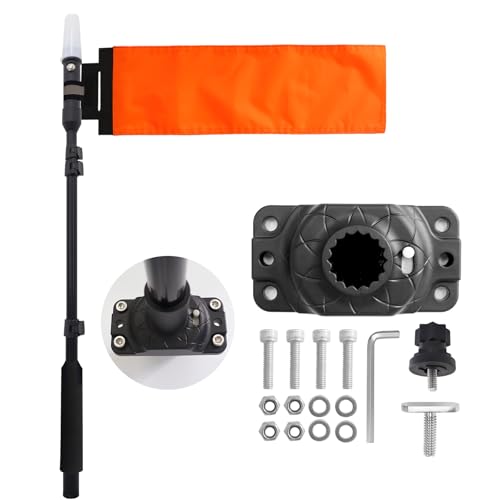
The Xprite Kayak Safety Flag with LED is the light I recommend for paddlers who want one piece of gear that covers them from sunrise to sunset and beyond. The bright orange flag gives you daytime visibility to motorboats, and the 360-degree LED light takes over when the sun goes down.
This is a newer product with a smaller review pool than some others on this list, but the early feedback is strong. With 80 percent of reviews at 5 stars and a 4.6 overall rating, users are clearly impressed with the build quality and versatility.
The telescoping pole extends from 26.5 inches to nearly 60 inches, giving you serious height for maximum visibility on the water. When you are done, it collapses down for compact storage in the included bag.
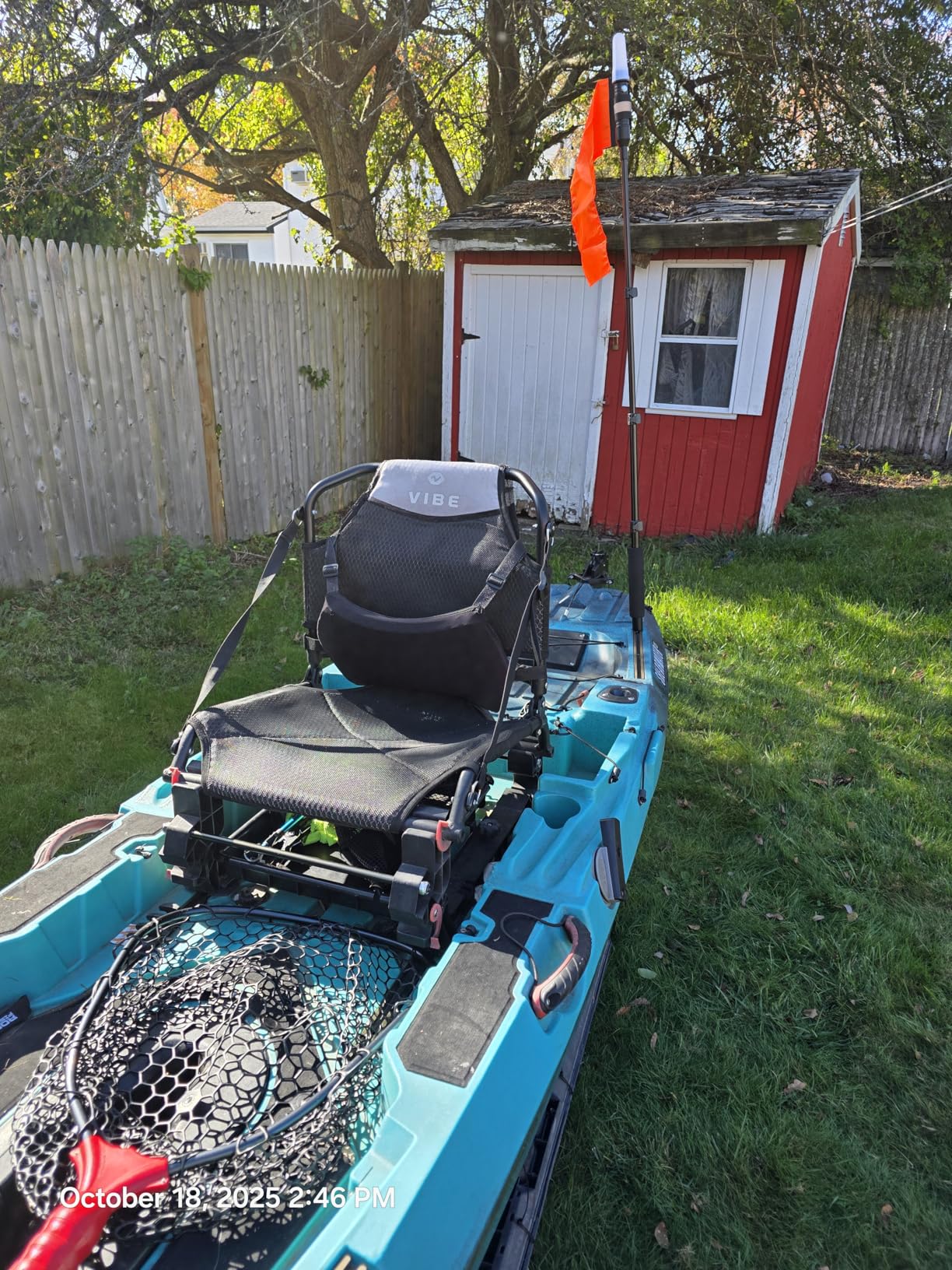
Flag and Light Combined for Day-to-Night Use
The combination of a physical flag and an LED light is more useful than you might think if you have never used one. Motorboat operators are looking for movement and bright colors during the day. An orange flag catches their eye from hundreds of yards away, which a light alone cannot do in daylight.
At night, the 360-degree LED takes over with three modes: low brightness, high brightness, and flashing. The flashing mode is accessed by holding the button for three seconds, which prevents accidental activation. The flag itself measures 19.7 by 5.5 inches and is made from durable Oxford fabric with UV protection.
This dual approach means you do not need to buy, mount, and store separate daytime and nighttime safety gear. One pole, one mount, full coverage.
Telescoping Pole and 360-Degree LED
The telescoping design is the practical feature that makes this kit work. Fully collapsed at 26.5 inches, it stores easily. Fully extended at 59.4 inches, it puts the light nearly five feet above your deck, which is higher than most dedicated pole lights on the market.
That height matters because the higher your light sits, the further away it can be seen over waves, swells, and other boats. The aluminum pole is corrosion-resistant, and the IP67 waterproof rating means it can handle rain, spray, and occasional submersion without failing.
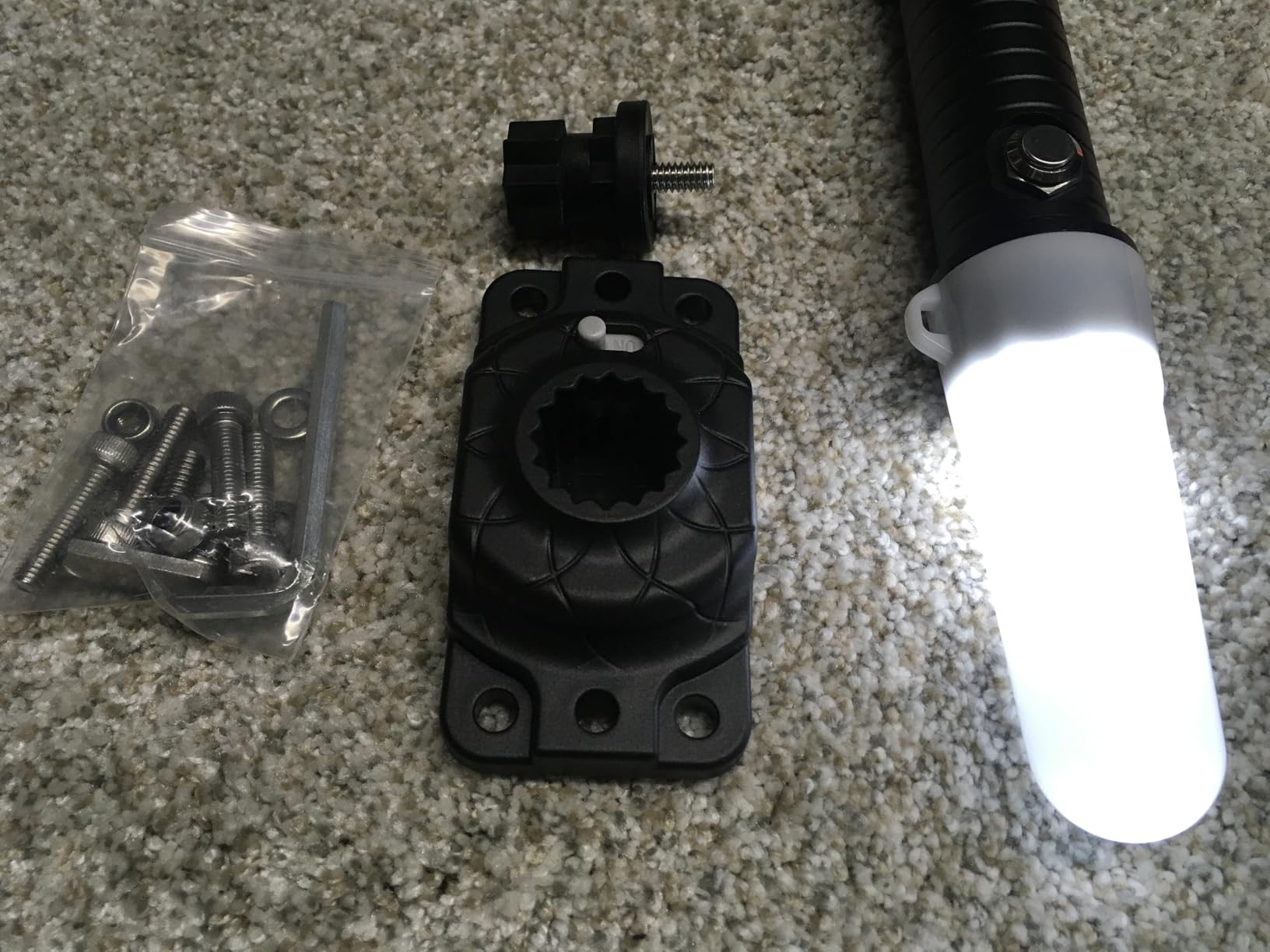
Weight Considerations for Lighter Kayaks
The Xprite is heavier than some competitors due to the aluminum pole and fabric flag. On a solid fishing kayak with reinforced rails, this is not an issue. On a lightweight recreational kayak with thin plastic rails, the weight can cause the mount to feel loose or put stress on the rail over time.
The kit includes three mounting options: a track mount, a pole mount, and a base mount that fits standard rod holders. If your kayak has a flush rod holder, the base mount is the most secure option because it distributes weight through the hull rather than loading a single rail.
Battery drain is a minor concern since the light can stay on if you forget to switch it off. I recommend removing the batteries between trips or using the flashing mode, which extends battery life significantly compared to the steady high-brightness mode.
How to Choose the Right Kayak Strobe Light for Your Needs
Choosing a kayak strobe light comes down to matching the light's features to the type of paddling you do. A casual lake paddler needs something different from someone crossing a shipping channel at dusk. Here are the key factors I weigh when recommending a light, and the same ones I used to rank the products above.
USCG Compliance and Legal Minimums
Federal regulations require every manually propelled vessel, including kayaks, to carry a white light visible from at least one nautical mile between sunset and sunrise. The light must be ready to display in time to prevent a collision. In practice, this means you need either a 360-degree all-round light mounted on your deck or a handheld flashlight or strobe that you can shine toward an approaching vessel.
Some states have additional requirements. A few require kayakers to carry an actual visual distress signal, which is a higher standard than just a navigation light. Check your local regulations before you head out, especially if you paddle in waters with heavy motorboat traffic or in state parks with specific gear requirements.
Lights that meet the 2NM standard, like the RAILBLAZA kit, give you double the required visibility distance. That extra margin is worth having if you paddle anywhere that powerboats travel at speed.
Brightness, Visibility Range, and Battery Life
Brightness in strobe lights is measured in lumens, but the raw number does not tell the whole story. A 45-lumen strobe with a 360-degree beam angle can be more visible from a distance than a 100-lumen light with a narrow beam. What matters is how much of that light reaches an observer's eye from a mile or more away.
For PFD-mounted emergency strobes, 45 lumens is the standard benchmark set by USCG-approved models like the UST See-Me and ACR C-Strobe. For deck-mounted navigation lights, look for 100 lumens or more to achieve the 2NM visibility rating.
Battery life is your endurance number. If you capsize and end up in the water waiting for rescue, you want a light that will keep flashing for hours, not minutes. The UST See-Me's 120-hour rating and the Guardian Angel's 90-hour rating are both excellent. Budget lights typically run 8 to 12 hours, which is adequate for a planned evening paddle but not for an unexpected overnight situation.
Mounting Style and Water Resistance Rating
Mounting is the factor that causes the most frustration based on forum discussions. The main options are PFD clip mounts, deck track mounts, rod holder mounts, magnetic mounts, and suction cup mounts. Suction cups are the least reliable on kayaks because the textured deck surface does not provide a good seal, and they fail in rough water.
Track mounts like the RAILBLAZA MiniPort system are the most secure for deck-mounted lights. Rod holder mounts, like those used by the Shoreline Marine and Xprite lights, are simple and sturdy if your kayak has a flush-mounted holder. Magnetic mounts, like the Guardian Angel's, work well on metal surfaces but require a metal mounting plate on most plastic kayaks.
For water resistance, look for IPX7 or higher. IPX7 means the light survives immersion in 1 meter of water for 30 minutes. IP67 and IP68 ratings offer even better protection against sustained submersion and dust ingress. Water-resistant without a specific IP rating is the minimum standard and is fine for spray and rain but not for submersion.
SOS Strobe vs Steady Light vs Flashing Modes
Understanding the difference between light modes helps you choose the right tool for the job. A steady 360-degree white light is a navigation light that tells other boaters where you are and what direction you are heading. A strobe or flashing light is a distress signal that indicates you need help.
The USCG specifies that a strobe light flashing at 50 to 70 times per minute is recognized as a distress signal. The UST See-Me flashes at 60 times per minute, which falls right in that range. Using a strobe when you do not need rescue can confuse other boaters and potentially trigger an unwanted emergency response.
Lights with multiple modes, like the Shoreline Marine, RAILBLAZA, and Guardian Angel, give you the flexibility to use a steady light for routine night paddling and switch to strobe only in an actual emergency. This is the safest and most practical setup for most paddlers.
FAQs
What is the best light for a kayak?
The best light for a kayak is a 360-degree white all-round light mounted high enough to be visible from all directions. For deck-mounted navigation, the RAILBLAZA Visibility Light Kit meets USCG 2NM standards. For personal emergency use, the UST See-Me 2.0 water-activated strobe clipped to your PFD is the top choice for reliability and battery life.
What light should a kayaker use at night?
A kayaker paddling at night must carry a white light visible from at least one nautical mile, per US Coast Guard regulations. The most practical setup is a 360-degree all-round light on a pole mount for navigation, plus a personal strobe light clipped to your PFD for emergency signaling. A flashlight is the legal minimum but is less effective than a dedicated all-round light.
What is the leading cause of death in kayaks?
According to US Coast Guard statistics, drowning is the leading cause of death in kayaking accidents, with the vast majority of victims not wearing a personal flotation device. Capsizing in cold water, which can trigger cold shock and swimming failure, is a major contributing factor. Carrying a strobe light ensures rescuers can locate you quickly if you end up in the water.
What is the best strobe light?
The best kayak strobe light overall is the Guardian Angel Micro, which offers 14 LEDs, 3-mile visibility, 90-hour battery life, and IP68 waterproofing. For a budget pick, the UST See-Me 2.0 provides water-activated reliability and 3.1-mile visibility at a fraction of the cost. For USCG and SOLAS approved maritime use, the ACR C-Strobe is the standard choice.
Are strobe lights required for kayaking?
Strobe lights are not specifically required, but a white light visible from at least one nautical mile is required for all kayaks operating between sunset and sunrise per US Coast Guard rules. A strobe light satisfies this requirement and also serves as a recognized distress signal. Some states and organized paddle events have additional requirements for specific types of lights or distress signals.
Final Thoughts on Picking the Best Kayak Strobe Light
If you want the absolute best kayak strobe light money can buy, the Guardian Angel Micro is the clear winner with its unmatched brightness, durability, and versatility. If you need a reliable, water-activated emergency strobe for your PFD without breaking the bank, the UST See-Me 2.0 is the one I trust on my own life jacket. And if you want a complete deck-mounted system that meets USCG 2NM standards, the RAILBLAZA Visibility Light Kit is the pole-mounted light that kayaking forums recommend over and over.
Whatever you choose, the most important thing is that you actually carry it on the water. A strobe light sitting in your garage does not help you at sunset when a powerboat is bearing down on your position. Clip it to your PFD, mount it on your deck, and paddle with the confidence that comes from knowing you are visible, legal, and prepared for 2026 and beyond.