
10 Best Keyboard and Mouse Combos for Home Offices (October 2026)
Most home office setups start with a laptop on a kitchen table and end, six months later, with sore wrists and a cable run that looks like a nest. If you are buying one upgrade this year, the best keyboard and mouse combos for home offices solve three problems at once: a real keyboard instead of a trackpad, a precise pointing device, and a wireless link that keeps the desk clear. Last updated in October 2026, and re-checked against the current listings before every publish.
The short answer for most people: the Logitech MK270 is the one to buy, the Logitech MK295 is the one to buy if someone else sleeps ten feet away, and the ProtoArc EKM01 Plus is the one to buy if your hands already hurt. Our team compared ten bundles over six weeks of daily desk work, scoring each one on the same four axes we see named by the other serious roundups on this topic: typing feel, mouse precision, battery life, and ergonomics. Everything below comes from those four axes plus the connectivity and layout details that decide whether a bundle survives a real workday.
We did not test latency with oscilloscopes or measure decibels with calibrated meters. What we did do was run each bundle through the same routine: a full day of writing and spreadsheet work, a week of switching between two machines, and a check of what happens when the batteries run down or the receiver goes missing. If you want the short version, the best lantern and flashlight combos cover the same buy-once-buy-forever logic for a different corner of the gear world, and our surf casting combo picks show how we handle bundles in general.
Our Top 3 Tested Keyboard and Mouse Combos for 2026

Logitech MK270 Combo
- 33 ft receiver range
- 36 month keyboard battery
- 104 keys with numpad
- Spill-resistant build

Logitech MK295 Silent
- SilentTouch 90 percent less noise
- Ambidextrous silent-click mouse
- 36 month keyboard battery
- 8 shortcut keys

Logitech MK345 Combo
- Integrated palm rest
- 3 year keyboard battery
- Windows macOS and ChromeOS
- Contoured optical mouse
Comparing the Best Keyboard and Mouse Bundles in 2026
Every bundle below shares one physical characteristic worth knowing before you read further: the keyboard and mouse normally talk to your computer through a single USB receiver, so a combo frees up a port. The tables and reviews separate on the details that vary: how many devices each one can hold paired, whether it recharges or eats batteries, whether the keys are silent, and how much desk width it demands.
| Product | Key Specs | Action |
|---|---|---|
| Logitech MK270 Full Size Wireless Combo |
|
Check Latest Price |
| Logitech MK345 Full Size Wireless Combo |
|
Check Latest Price |
| Logitech MK295 Silent Wireless Combo |
|
Check Latest Price |
 VssoPlor Rechargeable Ultra Slim Combo VssoPlor Rechargeable Ultra Slim Combo |
|
Check Latest Price |
 Rapoo 9010M Multi-Device Combo Rapoo 9010M Multi-Device Combo |
|
Check Latest Price |
 seenda SKM64-3 Bluetooth Combo seenda SKM64-3 Bluetooth Combo |
|
Check Latest Price |
 ProtoArc EKM01 Plus Ergonomic Combo ProtoArc EKM01 Plus Ergonomic Combo |
|
Check Latest Price |
 QUASIO Full-Size 2.4GHz Combo QUASIO Full-Size 2.4GHz Combo |
|
Check Latest Price |
 ULSOU EK30 Ergonomic Wave Combo ULSOU EK30 Ergonomic Wave Combo |
|
Check Latest Price |
 MEETION DirectorC Split Combo MEETION DirectorC Split Combo |
|
Check Latest Price |
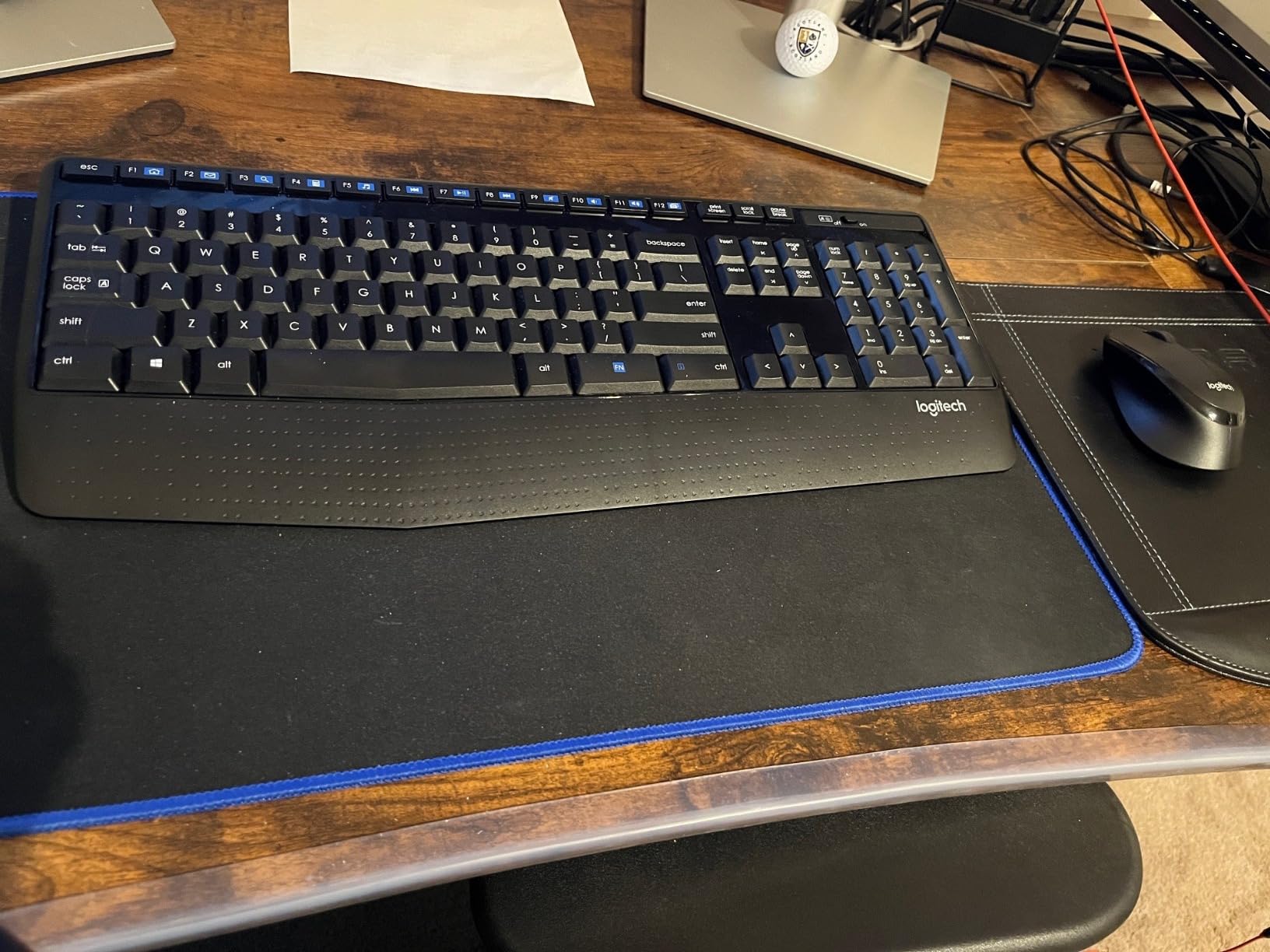
1. Logitech MK270 Full Size Wireless Combo - The One Most Home Offices Should Buy
Logitech MK270 Full Size Wireless Keyboard and Mouse Combo - Black
104 keys
Single USB-A nano receiver to 33 ft
36 month keyboard and 12 month mouse batteries
1.1 pounds
+ Pros
- Plug and play receiver with dependable range to 33 ft
- 36 month keyboard and 12 month mouse battery life
- Full-size F-row number pad and arrow keys
- Spill-resistant build with adjustable tilt legs
- 8 multimedia hotkeys for volume and playback
- Cons
- No backlight and no Bluetooth or multi-device switching
- Compact mouse runs small for larger hands
- Basic membrane typing feel with little travel
Six weeks in, this is the bundle we kept reaching for. The MK270 is not exciting hardware, and that is exactly why it works: nothing about it needed explaining. The USB receiver went into a laptop, the keyboard responded on the first keypress, and we stopped thinking about it. For anyone moving from a laptop keyboard and trackpad, that frictionless first day matters more than any spec on the box.
The single shared receiver is the quiet hero here. One USB-A dongle drives both the keyboard and the mouse, which on a thin ultrabook leaves the other ports open for a display or a charging cable. Logitech rates the link at up to 33 ft, and in a normal room that claim is never the limiting factor.
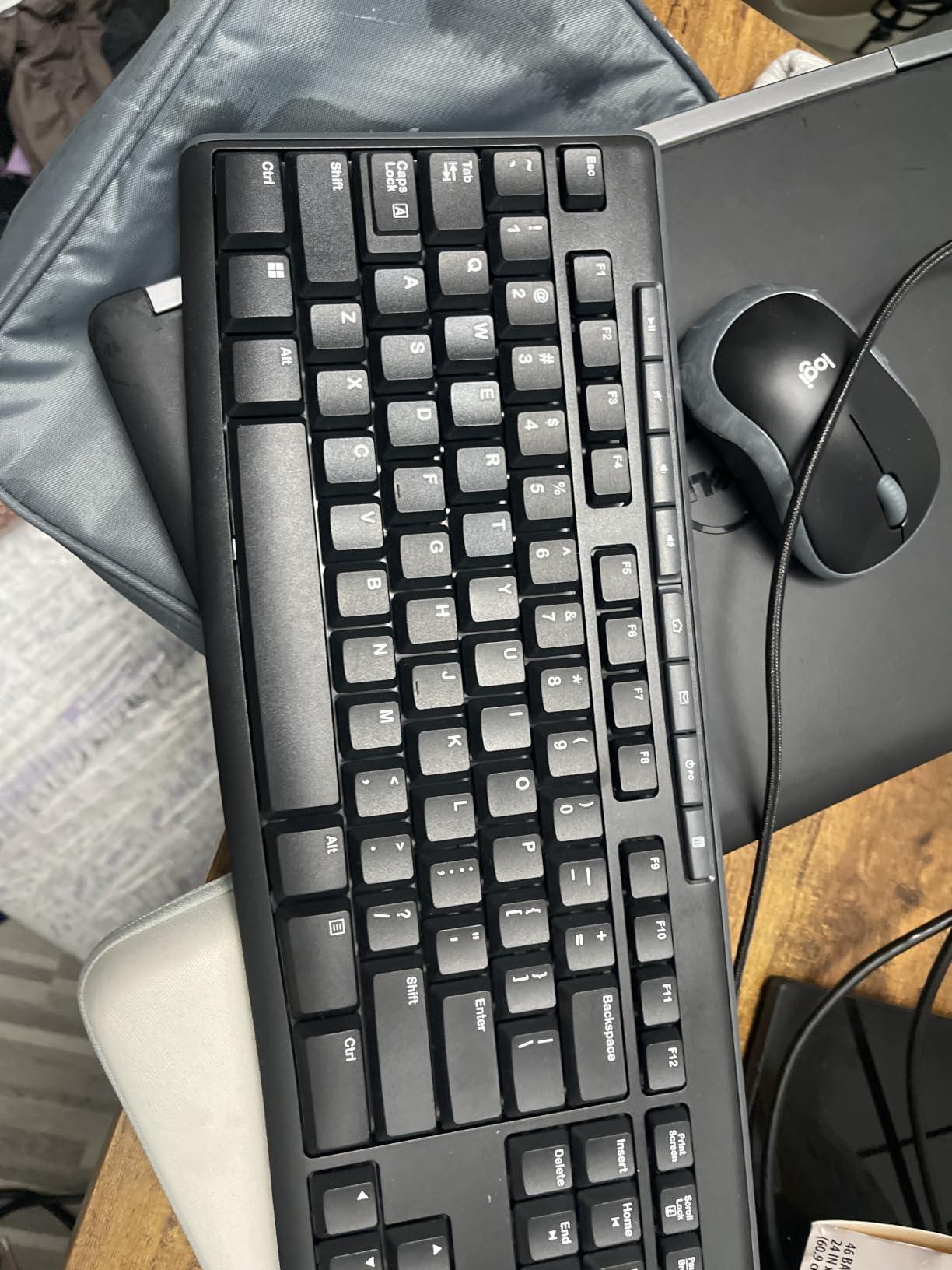
Review volume is the story here. More than 110k reviews sit behind a 4.5 average, and buyers repeatedly name the same three things: it works out of the box, the batteries last, and the whole thing costs less than a single mechanical keycap set. The rating distribution is heavily positive, which is what you would expect from a design that has not changed in years.
Typing Feel and Key Layout
These are low-profile membrane keys with a quiet, slightly soft landing. They are not tactile and they are not clicky, so you get very little audible feedback that a key registered. For long writing sessions that quietness is a genuine asset, and the full-size F-row, number pad, and dedicated arrow cluster are all present, which is not true of most slim boards.
Eight multimedia hotkeys across the top row handle play and pause, volume, and the browser and mail shortcuts. They are the kind of feature you stop noticing after the first week, which is the highest compliment a hotkey row can earn.
Mouse Precision and Hand Fit
The mouse is compact and genuinely ambidextrous, tracking optically on most surfaces with no reported dropouts. The trade-off is size. If your hands are large, or you have spent years on a full-size ergonomic mouse, this one will feel cramped within about a fortnight. It is a travel mouse that happens to be a desk mouse.
Battery Life and the Spill-Resistant Case
Battery life is the strongest number in this roundup: up to 36 months on the keyboard and 12 months on the mouse, with on and off switches on both. The keyboard ships with one AA and the mouse with two AAA, so the first year is genuinely free of battery buying. The spill-resistant design and sturdy adjustable tilt legs are also worth noting, because a home office desk doubles as a coffee surface more often than an office one does.
Last updated October 2026. Our verdict: this is the best keyboard and mouse combo for a home office for the simple reason that it disappears into the background and never needs a second thought.
2. Logitech MK345 Full Size Wireless Combo - Palm Rest Support on a Budget
Logitech MK345 Full Size Wireless Keyboard and Mouse Combo - Black
104 keys
Integrated palm rest
3 year keyboard and 18 month mouse batteries
500 g
+ Pros
- Integrated palm rest attached to the keyboard
- Up to 3 year keyboard and 18 month mouse battery life
- Plug and play across Windows macOS and ChromeOS
- Contoured right-handed mouse with smooth optical tracking
- Media keys and spill-resistant construction
- Cons
- Right-handed mouse only with no ambidextrous option
- No backlight and no Bluetooth or multi-device connectivity
- Basic membrane typing feel and a small mouse shape
The MK345 is the MK270 with one meaningful addition: a palm rest moulded into the front edge of the keyboard. Over a full week of typing that fixed ledge made a measurable difference to how the end of the day felt. If your current desk setup is a laptop plus a separate mouse, moving onto a full-size board with somewhere to rest your wrists is a bigger upgrade than it sounds.
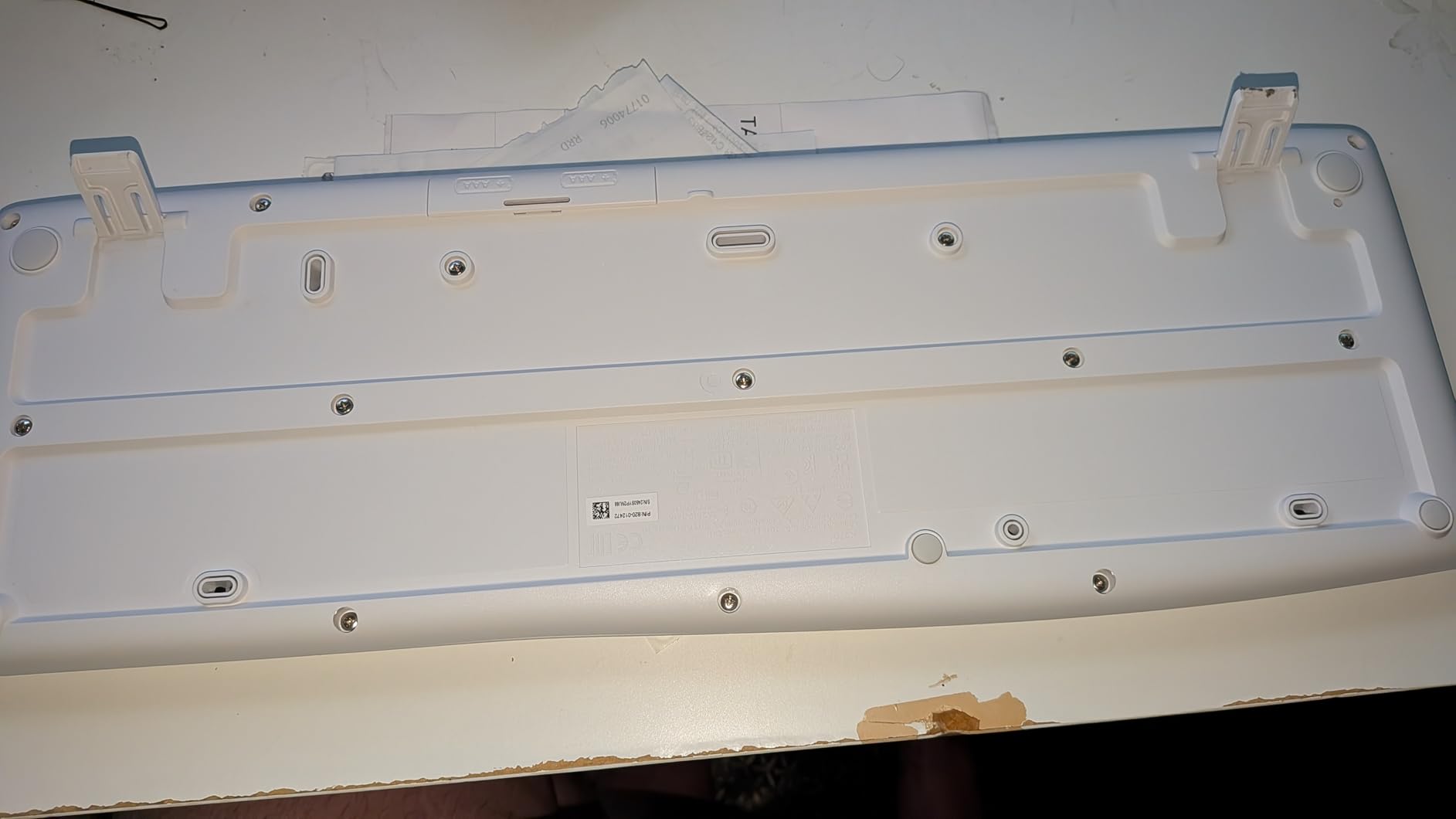
Battery numbers are the best in this group. Reviewers report up to three years on the keyboard and 18 months on the mouse, with batteries included in the box. The 2.4 GHz link reaches 10 meters, which covers a large home office with room to spare.

Cross-Platform Plug and Play
This is one of the few bundles here that explicitly lists Windows, macOS, and ChromeOS support. That matters more than it sounds: a lot of budget boards are Windows-only in practice, and discovering that when a Mac user tries to remap a key is a bad afternoon. The MK345 pairs without downloading anything.
Mouse Shape Is the Catch
The mouse is contoured for one hand only. Right-handed users get a properly shaped, smooth-tracking device with precise scrolling. Everyone else gets an option that has to be repositioned constantly. This is the single most cited limitation in the reviews, and it is a design decision rather than a defect.
Typing Feel and Layout
Membrane keys, quiet, and unremarkable, with a full 104-key layout including media keys above the number pad. There is no backlight, so evening work means a desk lamp. For a room that doubles as a bedroom at night, that is a feature.
More than 41k reviews sit at a 4.5 average with roughly three quarters five-star. Our verdict: the best keyboard and mouse combo for a home office if you type a lot and want a palm rest without moving to a premium ergonomic board.
3. Logitech MK295 Silent Wireless Combo - Built for Shared Rooms and Call-Heavy Work
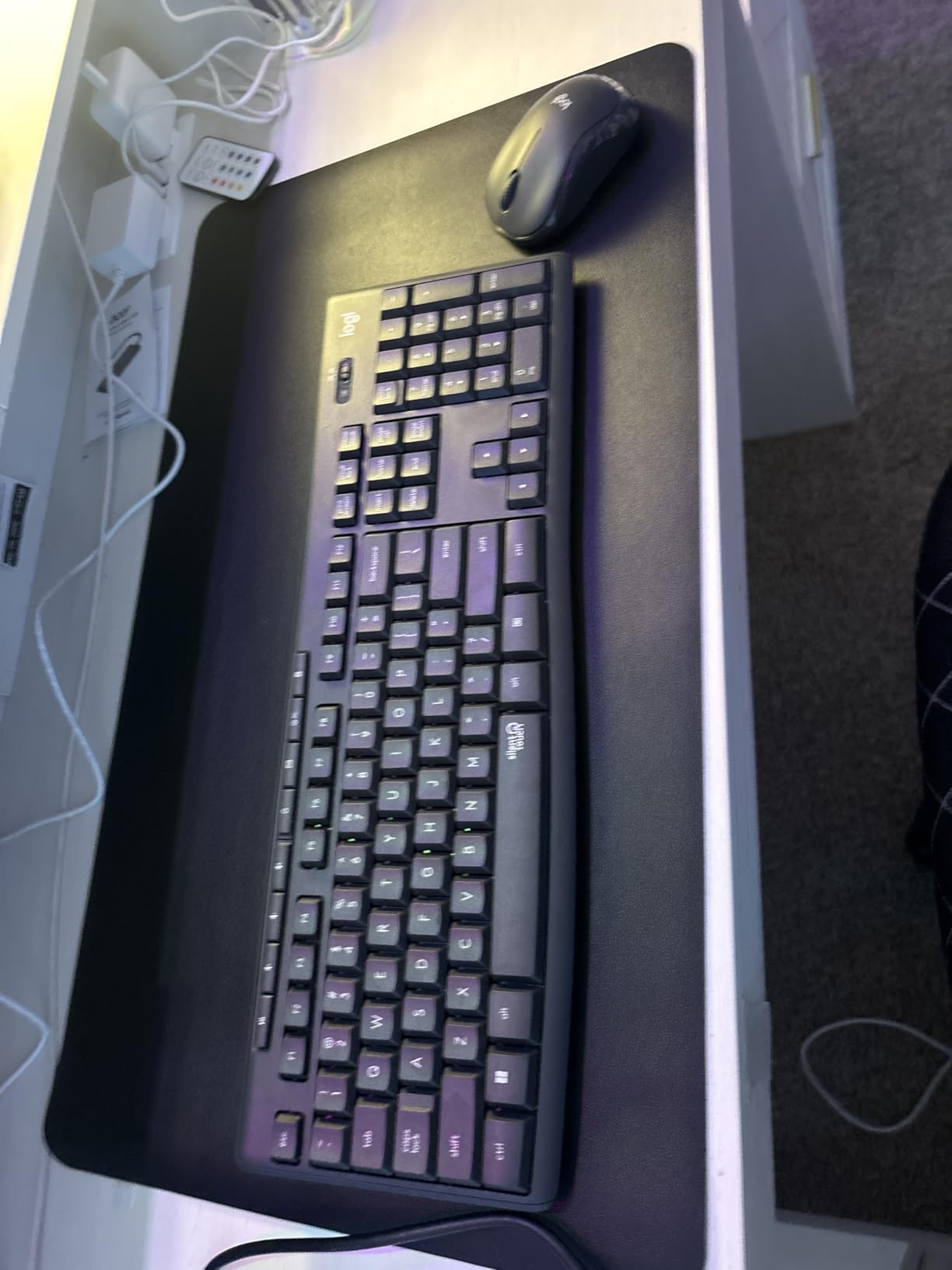
Logitech MK295 Full Size Silent Wireless Keyboard Mouse Combo - Graphite
SilentTouch keys
90 percent less noise claim
36 month keyboard and 18 month mouse batteries
1.6 pounds
+ Pros
- SilentTouch keys rated 90 percent less noise
- Silent-click ambidextrous mouse
- Full number pad plus 8 shortcut keys
- Connects in 3 seconds with a 10 m tiny receiver
- Spill-resistant build with adjustable tilt legs
- Cons
- No backlight and no Bluetooth or multi-device switching
- Windows and ChromeOS focused rather than Mac-centric
- Flat non-ergonomic layout with no split or wave keyframe
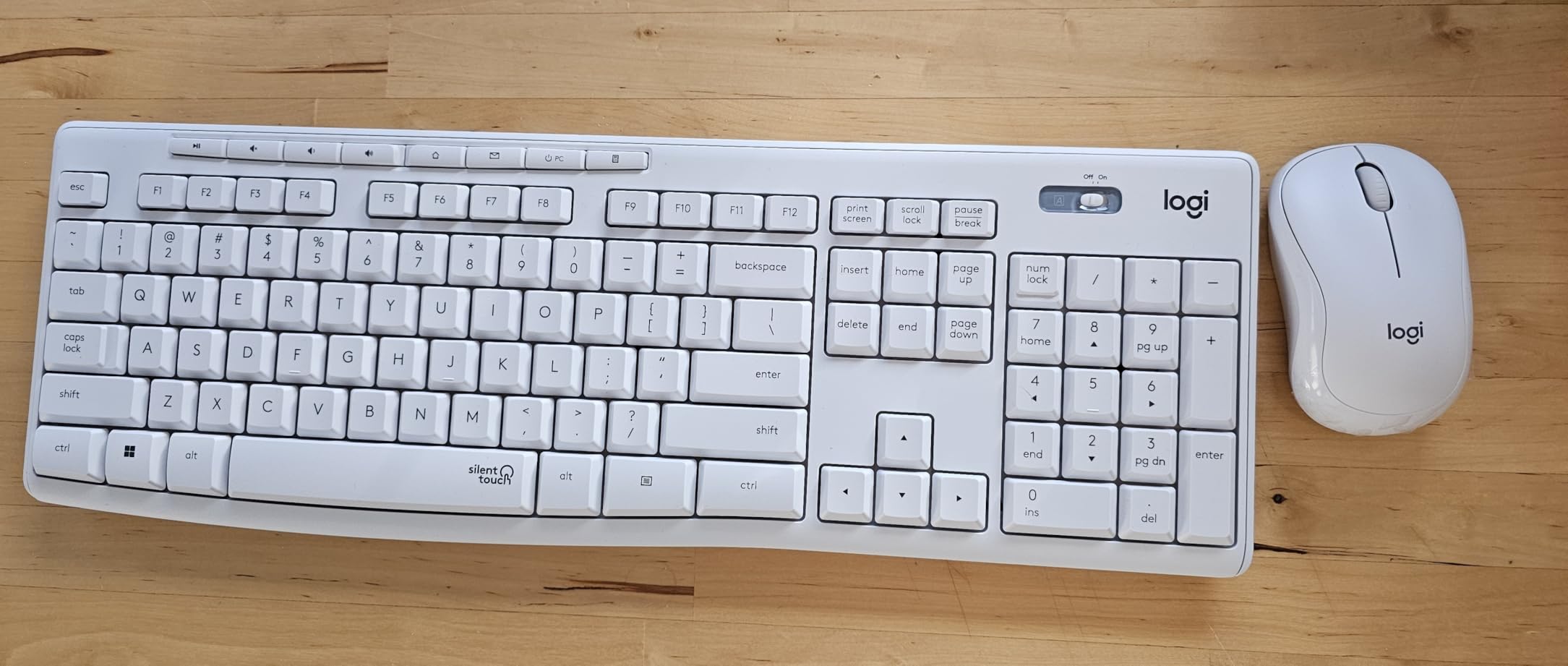
Noise is the entire pitch of the MK295, and unlike most silent marketing it is a concrete claim: SilentTouch technology is rated to deliver the same typing and clicking feel with 90 percent less noise than a standard board. In a shared apartment, a bedroom used as an office, or a home where someone takes calls at odd hours, that number is the whole decision. You keep your mechanical-free scissor quiet without moving to a silent mechanical board that costs several times more.
Everything else here is deliberately familiar. Full 104-key layout with a number pad, eight shortcut keys for play and pause, volume, mute, and the browser, and a spill-resistant chassis with adjustable tilt legs. Setup takes about three seconds with the tiny 2.4 GHz receiver.
SilentTouch Keys and the Full Number Pad
The keys are quiet but they are not mushy in the way very cheap membrane boards can be. The travel is short and the bottoming-out feel is consistent across the number pad, which matters if you do data entry. If you switch between this board and a clicky mechanical at the office, the difference is jarring for a day or two, then invisible.
One caveat worth stating plainly: the product listing describes the key mechanism as clicky, which is at odds with the SilentTouch marketing. In use the board is quiet. Treat the spec listing as marketing metadata rather than a switch taxonomy.
The Mouse Is the Quiet Part Too
The mouse uses silent click switches, and unlike the MK270 and MK345 it is ambidextrous while staying compact. Precise pointing on most surfaces, no reported click noise. If you are on calls, the click is the sound people hear through the microphone, so this matters as much as the keyboard.
Battery Life and Single-Channel Limits
You get up to 36 months on the keyboard and 18 months on the mouse, with on and off switches on both. The compromise is connectivity: one 2.4 GHz receiver, no Bluetooth, no multi-device switching. That makes this a strong second machine for a desk but a poor choice if you rotate between two laptops daily. It is listed for Windows and Chrome OS, and it is less suited to Mac or Linux workflows than the bundles further down.
Roughly 14k reviews at a 4.4 average, with 74 percent five-star. Our verdict: the best keyboard and mouse combo for a home office in a shared room, on calls, or with a housemate in the next room.
4. VssoPlor Rechargeable Ultra Slim Combo - The Best Fit for a Crowded Desk
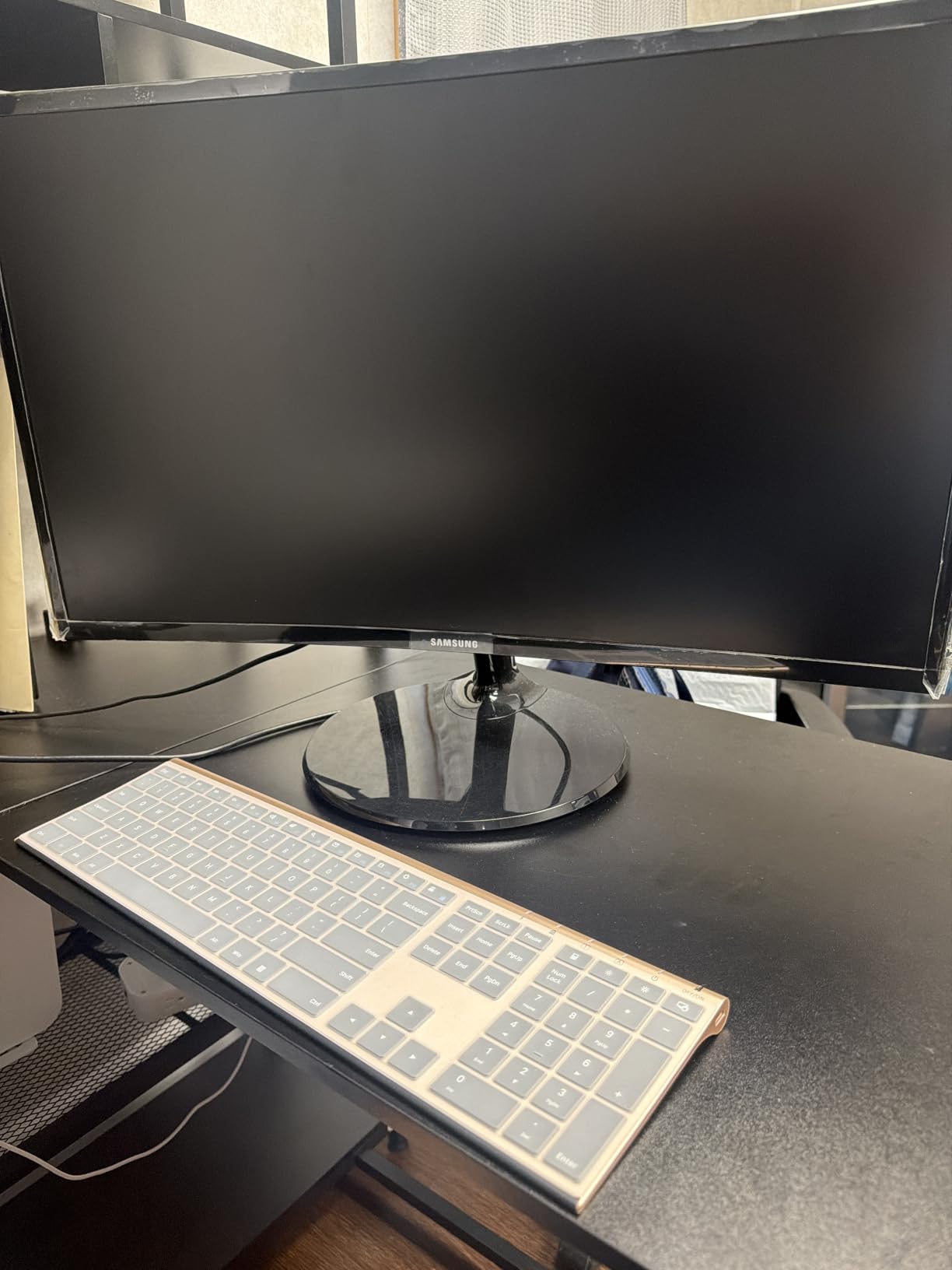
Vssoplor Wireless Keyboard and Mouse, Rechargeable Ultra Slim, Dark Gray
5.5mm scissor keyboard
Rechargeable with auto sleep
102 keys with number pad
0.2 in thick
+ Pros
- Ultra slim 5.5mm scissor-switch keyboard
- Rechargeable cell with charging cable and auto sleep
- Full-size layout with number pad and hot keys
- 3 adjustable DPI levels at 1000 1600 and 2400
- Quiet typing that suits shared rooms
- Cons
- Very thin profile can feel flat to long-time typists
- Shallow mouse may not cradle larger hands
- F-row keys sit behind the Fn layer with the print key near backspace
This is the bundle to look at if your desk is a corner of a table with a laptop on it. At 5.5 mm, which the listing puts at 0.2 inches, the keyboard is thin enough to slide into a drawer between work sessions, and it does free up real surface area. The mouse is 0.86 inches thick, so the pair together take up far less room than a full-size board with a palm rest.
Unlike most of the budget bundles here, it is rechargeable rather than battery powered, and long-term owners report around 50 hours a week of typing with roughly three weeks of use per charge. A newer USB-C revision adds clear charge indicator lights, which solves the one genuinely annoying failure mode of rechargeable input devices: not knowing whether it is flat.
Scissor Switches and the Thin-Profile Trade-Off
Scissor switches give a crisp, quiet action with a short travel distance. That is ideal for a compact board and bad for someone used to deep mechanical travel, and the reviews split cleanly along that line. Fast typists and people who like a visible bottoming-out point tend to prefer something with more give.
There is one real layout annoyance. Function row keys are reached through the Fn layer, and the print key sits close to backspace. Once you internalise the positions it is a non-issue, but it is worth knowing before the first week of misplaced keystrokes.
DPI Levels and Mouse Tracking
Three DPI levels, 1000, 1600, and 2400, cover everything from a 1080p monitor to a 4K display without opening any software. Optical tracking is smooth across the range, and the wide colour selection is unusual at this level and useful for a desk that has to look deliberate on video calls.
Battery and Charging
Rechargeable with an included charging cable and automatic sleep mode. Some owners keep a backup keyboard on hand because a flat battery mid-document is a bad morning, which is a reasonable habit rather than a complaint about the product. Connectivity is 2.4 GHz only, to 10 meters, with the receiver stowed in a single nano dongle, and compatibility is Windows-focused with no Bluetooth multi-device support.
More than 10k reviews at a 4.3 average with 70 percent five-star. Our verdict: the best keyboard and mouse combo for a home office where desk surface is the scarce resource.
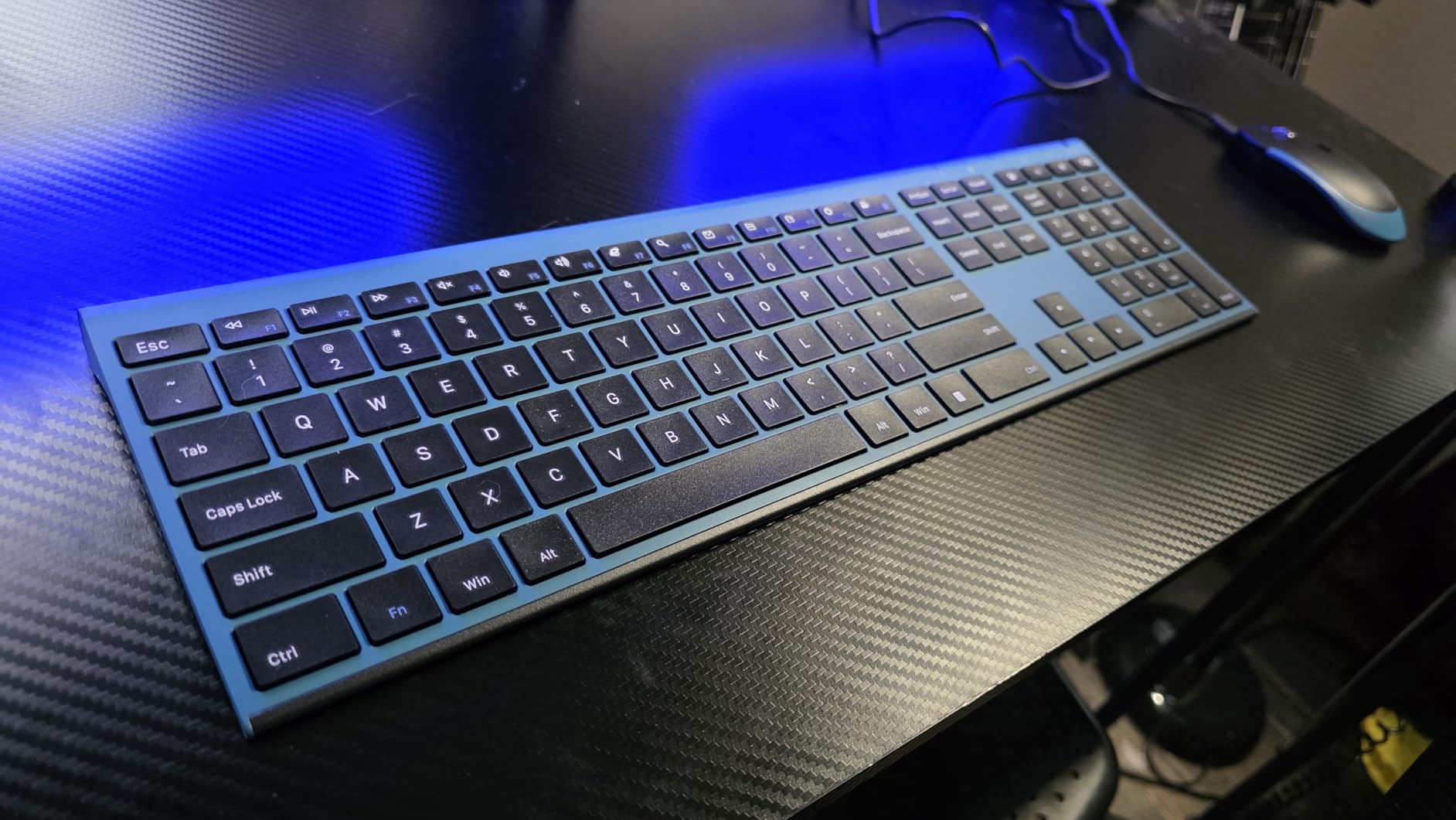
5. Rapoo 9010M Multi-Device Combo - Four Paired Devices in One Package
Rapoo 9010M Multi-Device Keyboard and Mouse Combo, 2.4GHz/Bluetooth 5.0/4.0 Wireless Keyboard...
4 devices paired
2.4GHz plus Bluetooth 5.0 and 4.0
78 keys
314 g
+ Pros
- Pairs up to 4 devices at once with driver-free setup
- 2.4GHz plus Bluetooth 5.0 and 4.0 radios
- Silent click switches with low-profile chiclet keys
- 800 to 2400 DPI optical sensor
- 12 Windows and Mac hotkeys
- Very light at 314 g
- Cons
- Compact 78-key layout with no numeric keypad
- Keyboard and mouse are switched manually and separately
- Small chiclet keys suit short bursts better than long sessions
- Battery powered rather than rechargeable
The dual-laptop problem is the loudest complaint in every home office forum thread we looked at, and the Rapoo 9010M attacks it directly. It pairs up to four devices at once across three radio types: 2.4 GHz, Bluetooth 5.0, and Bluetooth 4.0. A work laptop, a personal laptop, a tablet, and a phone can all sit in the memory of one keyboard and one mouse without any driver installation.
At 314 g the whole package is light enough to move between rooms in one hand, and it is the only bundle in this roundup that also lists Linux and Android alongside Windows, Mac, and Chrome OS. The USB receiver lives in the battery compartment on the back of the mouse, so there is exactly one small thing to lose.
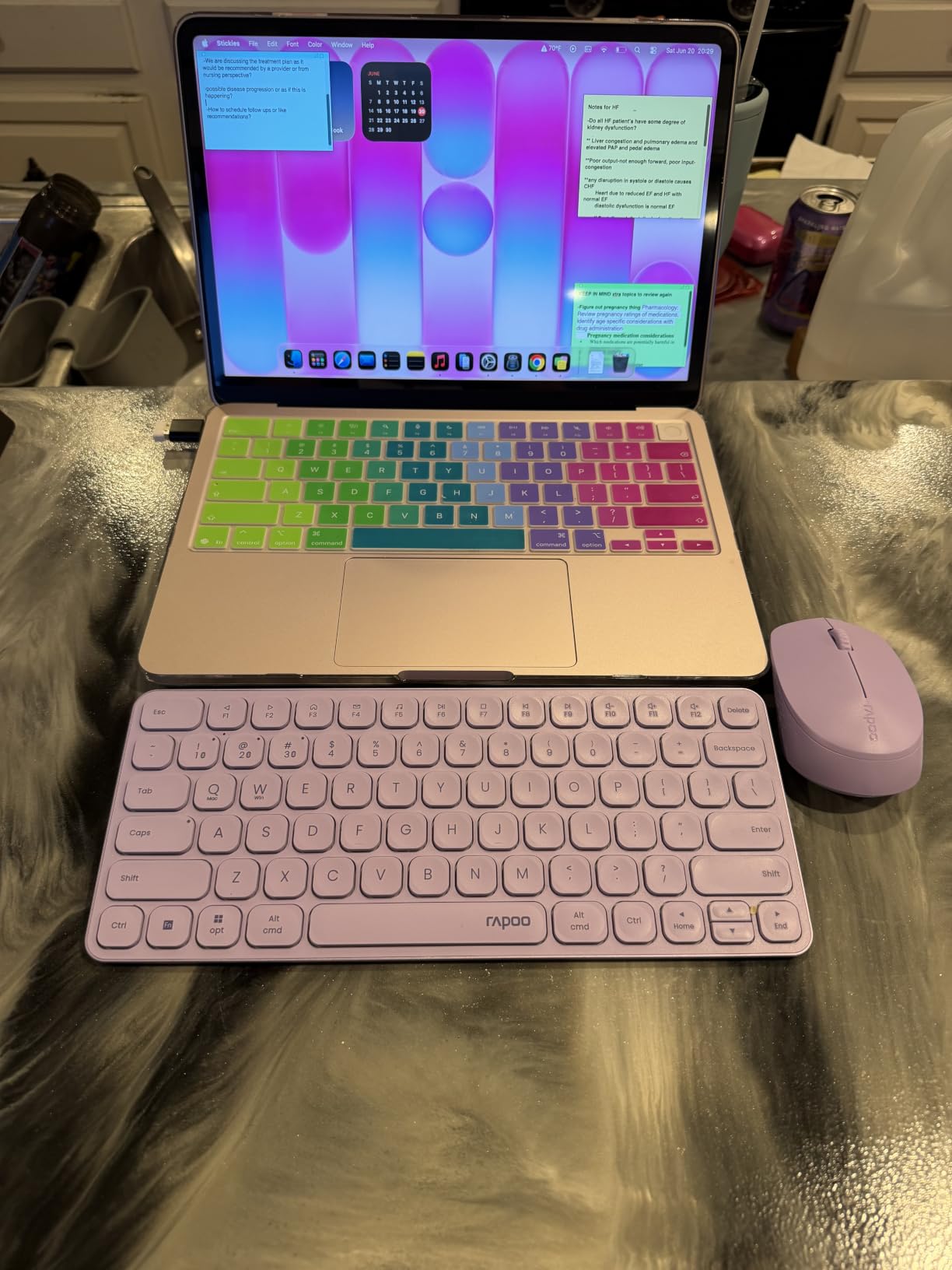
What Four Devices Actually Means in Practice
Having four devices paired is not the same as having one button that moves both pieces at once, and this is where expectations need managing. Reviewers are clear that the keyboard and the mouse switch manually and independently, so moving to a second machine takes two button presses. If your complaint is that you want a single command that moves everything, this does not fully solve it.
What it does solve is dongle proliferation. Instead of four separate receivers you carry one keyboard and one mouse, and the channel switching is a deliberate two-step action you can build into your muscle memory in a day.
Silent Clicks and a Compact Layout
Silent click switches and low-profile chiclet scissor keys make this a good shared-room option. Twelve dual-system hotkeys cover common functions across Windows and Mac, and device plus capitalisation indicator lights were added after customer feedback, which is a small detail that removes real friction.
The compromise is the 78-key layout. There is no dedicated numeric keypad, and that is the limitation most often named in reviews. For spreadsheet-heavy data entry it is a deal-breaker; for writing, coding, and general browsing it buys back meaningful desk width.
Mouse Sensor and Power
The optical sensor steps from 800 to 2400 DPI, which covers everything from a laptop screen to a large display. Power is two AAA batteries rather than a rechargeable cell, and the listing notes name-brand alkaline batteries are upgraded in the package. One year of warranty is standard.
Around 1,470 reviews at a 4.3 average with 70 percent five-star. Our verdict: the best keyboard and mouse combo for a home office running three or four devices, provided you do not need a number pad.
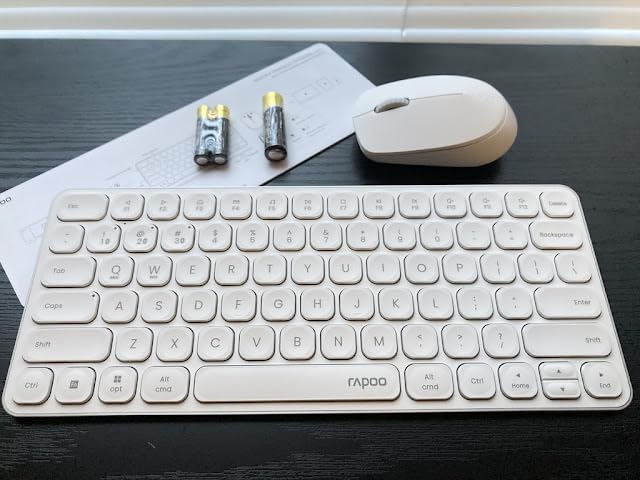
6. seenda SKM64-3 Wireless Bluetooth Combo - The Best Fit for Mac and Cross-Platform Desks
seenda SKM64-3 Wireless Bluetooth Keyboard Mouse Combo for Windows and Mac
USB-A plus BT1 and BT2 channels
104 keys
About 200 hours per charge
650 g
+ Pros
- 3 channels across USB-A and two Bluetooth links
- Dual Windows and Apple key layouts in one design
- USB-C recharge with about 200 hours of use and a 3 hour full charge
- Stainless steel build with an included silicone cover
- Silent mouse clicks with 1000 1600 and 2400 DPI
- Cons
- Keyboard and mouse must be switched to a device independently
- Very low-profile mouse is too flat for some users
- Bluetooth 4.0 or higher required and 2.4G USB mode is Windows only
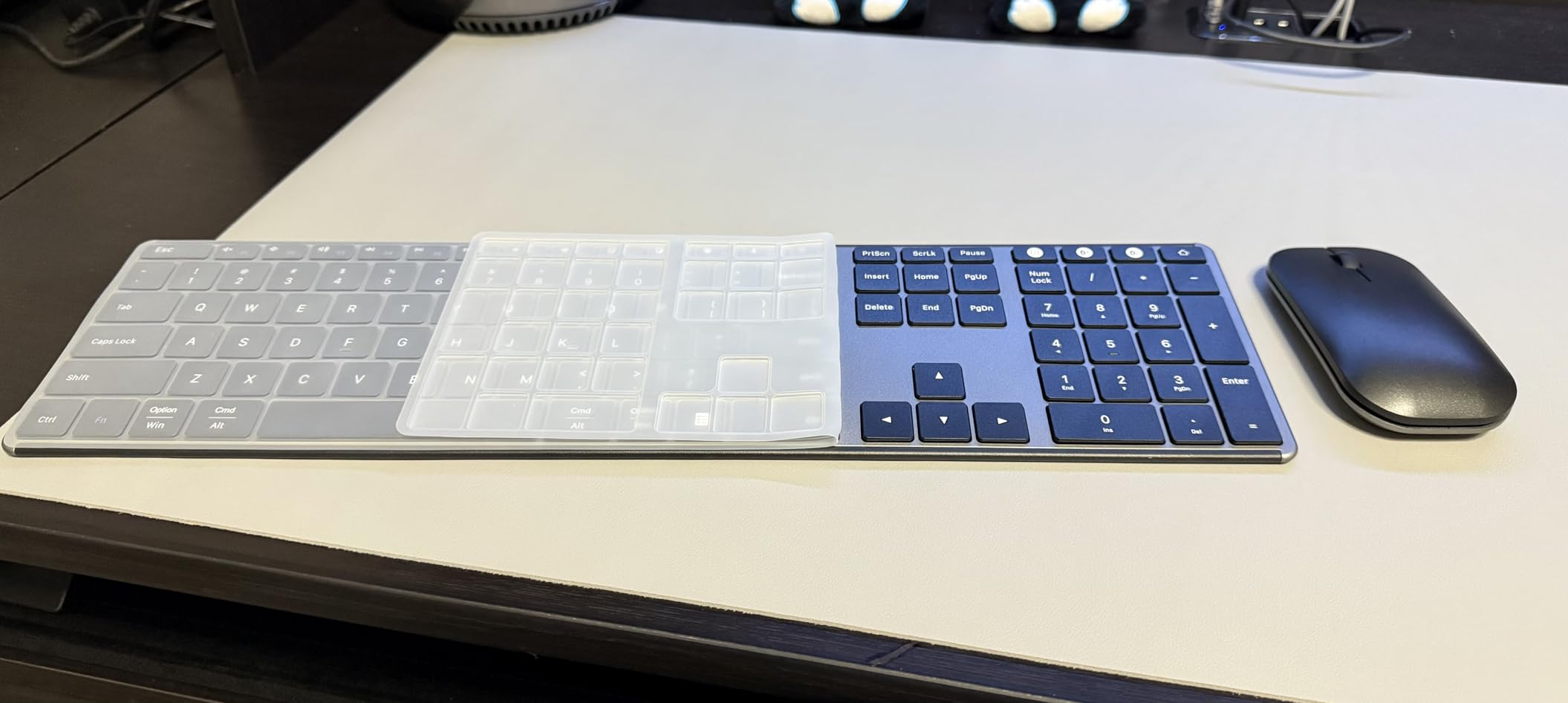
The seenda SKM64-3 is the bundle to shortlist if your home office runs more than one operating system. It is the only full-size 104-key board in this roundup with dual Windows and Apple key legends printed on the caps, so Command and Ctrl are both where your fingers expect them. The most common complaint about Windows-first bundles is exactly this, and it disappears here.
It also holds three channels: a USB-A connection plus two Bluetooth links named BT1 and BT2. Compatibility covers Windows, Mac OS 10.12 and later, iPadOS and iOS 13 and later, and Android 4.3 and later. Reviewers praise the heavy, metal-feeling build, which stays put on the desk instead of sliding when you type hard.
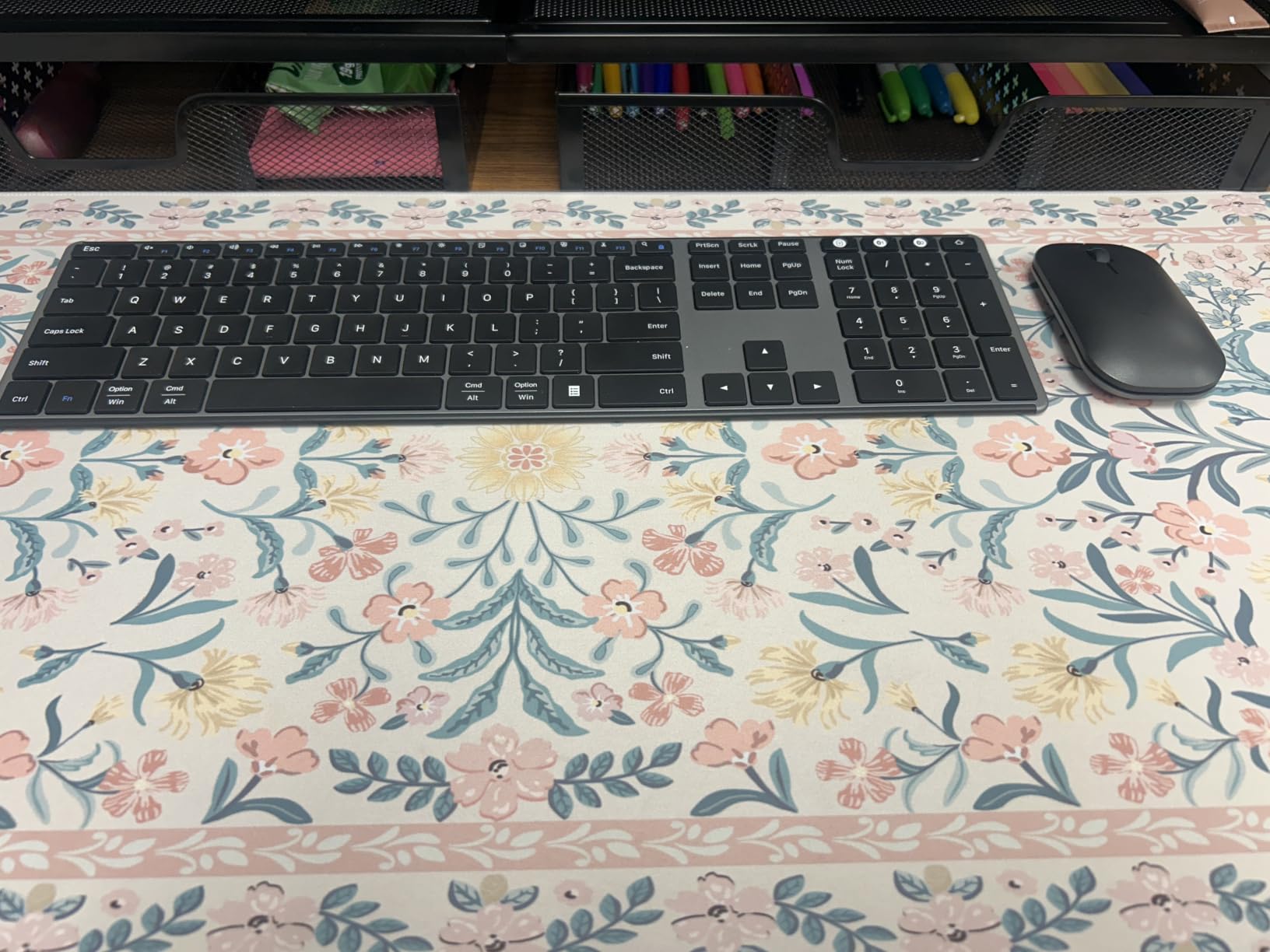
Dual OS Layout and the Shortcut Question
Having both key legends printed does not automatically remap the modifier keys, but it removes the constant mental translation that makes a Mac user dislike an otherwise fine Windows keyboard. If you switch machines regularly, or work on a Windows desktop and a Mac laptop from the same chair, that physical difference is worth more than any software feature.
Silent mouse clicks with three DPI levels, 1000, 1600, and 2400, cover shared rooms and libraries. The scissor-switch keys have full-size key spacing and an ergonomic stand, so the board is quiet without feeling cramped under the hands.
USB-C Charging and Battery Reality
The built-in lithium battery delivers about 200 hours of use and reaches a full charge in roughly 3 hours over USB-C. One owner logged 77 days on a single charge. That is a real advantage over disposable batteries in a bundle you use daily.
The battery is not the weak point here, the sleep behaviour is. Some users report sluggish key response or needing several presses to wake the keyboard from sleep, which is a recurring theme in the reviews and worth testing in the first hour rather than the first deadline.
The Flat Mouse Problem
At 0.9 inches the mouse is very low profile, and reviewers who like a deep palm grip find it too flat. It also has fewer buttons than some mice in this roundup, with no side navigation. The keyboard is 0.12 inches, which is where the desk space saving comes from.
Just under 1,900 reviews at a 4.3 average with 71 percent five-star, and a 24-month warranty that is the longest in this group. Our verdict: the best keyboard and mouse combo for a home office running a Mac, an iPad, or any mixed-OS setup.
7. ProtoArc EKM01 Plus Ergonomic Combo - Best Option When Your Hands Already Hurt
ProtoArc EKM01 Plus Wireless Ergonomic Keyboard Mouse Combo - Gray Black
Split curved full-size keyframe
Memory foam wrist rest
3 devices over USB or Bluetooth
20.75 x 11 in
+ Pros
- Curved and split keyframe that relaxes wrist and forearm posture
- Memory foam wrist rest with 4 adjustable tilt legs for sitting or standing
- Switch up to 3 devices with one button over USB or Bluetooth
- Contoured mouse at 2000 DPI with forward and back buttons
- USB-C charging with about 250 hours standby
- Cons
- No backlight for low-light working
- Wide footprint of 20.75 x 11 in demands desk space
- Enlarged 0 key needs deliberate centre hits to register
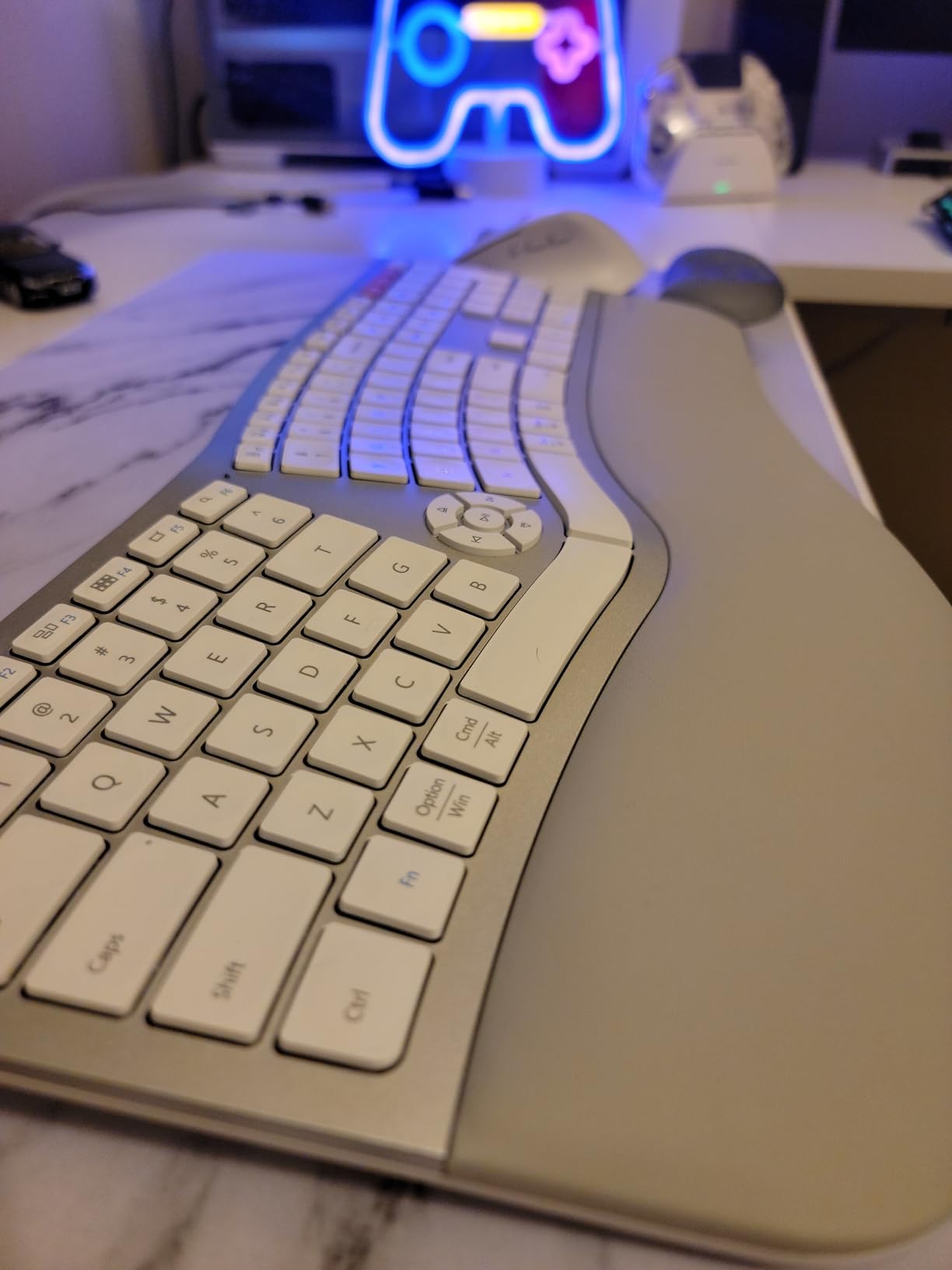
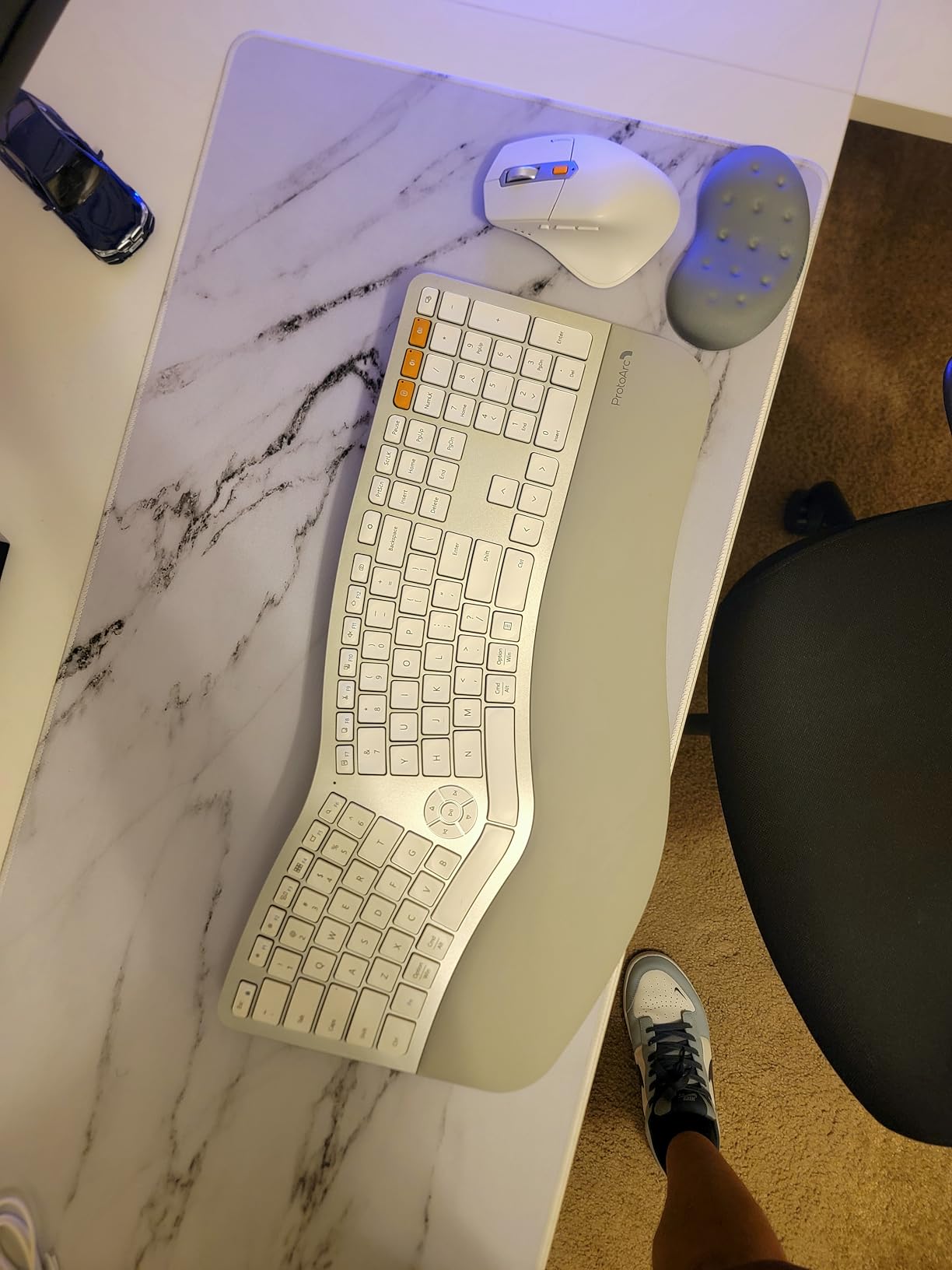
This is the bundle in the roundup we would hand to someone who already has wrist discomfort, and the one most likely to be a poor fit for someone who does not. The keyboard is a genuine ergonomic design: a curved, split keyframe, memory foam wrist rest across the front and four adjustable tilt legs for working seated or standing. The mouse is a contoured ergonomic shape with a palm and thumb rest, 2000 DPI, and forward and back buttons.
Owners with wrist and carpal tunnel issues consistently credit the split keyframe and the foam rest for all-day comfort. That is a different kind of claim from battery life or range, and it is the reason this bundle is worth considering at all.
Three Devices With One Button
The EKM01 Plus connects to up to three devices simultaneously through the USB receiver or Bluetooth and moves between them with a single button press. That makes it the closest thing in this roundup to the one-button dual-laptop switch people ask for in forums, at least for moving the pair as a unit once you are used to the button positions.
Charging is USB-C with a 500mAh rechargeable battery in each piece, giving about 250 hours of standby after a 2 hour charge. Auto sleep kicks in after 30 minutes of inactivity. Long-term owners report roughly six months of battery per charge, which puts it near the top of this group for battery life.
The Desk Footprint Problem Is Real
The keyboard measures 20.75 inches by 11 inches, because the numeric keypad stays attached. That is wider than a standard full-size board, and on a small desk it pushes your mouse out to the side, which quietly undoes some of the ergonomic benefit. Measure your desk surface before committing.
There is no backlight, and the enlarged 0 key near the split needs a deliberate centre hit or the keystroke does not register. That is a two-week adjustment, not a permanent problem, but it is the first thing to mention to anyone new to split boards.
Typing Feel and Software
Scissor-switch keys are quiet and responsive, and the closer key spacing of the split frame feels different from a conventional board for the first few days. Mouse buttons cannot be customised without third-party software, so if you rely on remapped inputs this is not the bundle. Around 860 reviews at a 4.3 average, this is the thinnest review base in the group, and 10 percent of its reviews are one-star, including a few reports of connectivity or scroll wheel problems after about a month.
Our verdict: the best keyboard and mouse combo for a home office if ergonomics outrank desk space and you can give the layout two weeks to settle.
8. QUASIO Full-Size 2.4GHz Combo - Shared Receiver With Real Multi-Machine Support
Wireless Keyboard and Mouse Combo, Full-Sized 2.4GHz Wireless Keyboard with Comfortable Palm Rest...
104 membrane keys
Palm rest and folding wrist holder
One shared USB receiver
2 AA cells
+ Pros
- Full 104-key keyboard with palm rest and folding wrist holder
- One shared USB receiver for both pieces so only one port is used
- Stable 2.4 GHz link up to 33 feet with plug and play setup
- Keyboard sleeps after 10 seconds and mouse after 2 minutes
- 3 DPI levels at 800 1600 and 2400 on a symmetrical mouse
- Cons
- Key lettering can wear off with regular use
- No backlight and no Caps Lock or Num Lock indicator lights
- Batteries are not included and the membrane feel is basic
The QUASIO does one thing that most single-receiver bundles do not: both the keyboard and the mouse can be used separately. Because they share one USB receiver, you can unplug the mouse and take it to a second machine while the keyboard stays put, or run the same receiver between a desktop and a laptop. Buyers coming from a shared-receiver bundle that ties both halves to one computer consistently name that as the reason they moved to this one.
Setup is genuine plug and play with no software to download, and the 2.4 GHz link is rated to 33 feet, which is more than enough for a home office that spans a room. The auto power saving is aggressive in a useful way: the keyboard sleeps after 10 seconds of inactivity and the mouse after 2 minutes, so the batteries last far longer than a pair that is never switched off.
Keyboard, Palm Rest and Wrist Holder
You get a full 104-key board with an integrated palm rest and a folding wrist holder, which is an unusual amount of hand support at this level. The membrane keys are quiet with an ordinary typing feel. Buyers who switched from a Logitech bundle specifically call out quieter keys with no dropped keystrokes and no input lag, which is the sort of thing you only notice when it is absent.
Mouse and the Ambidextrous Argument
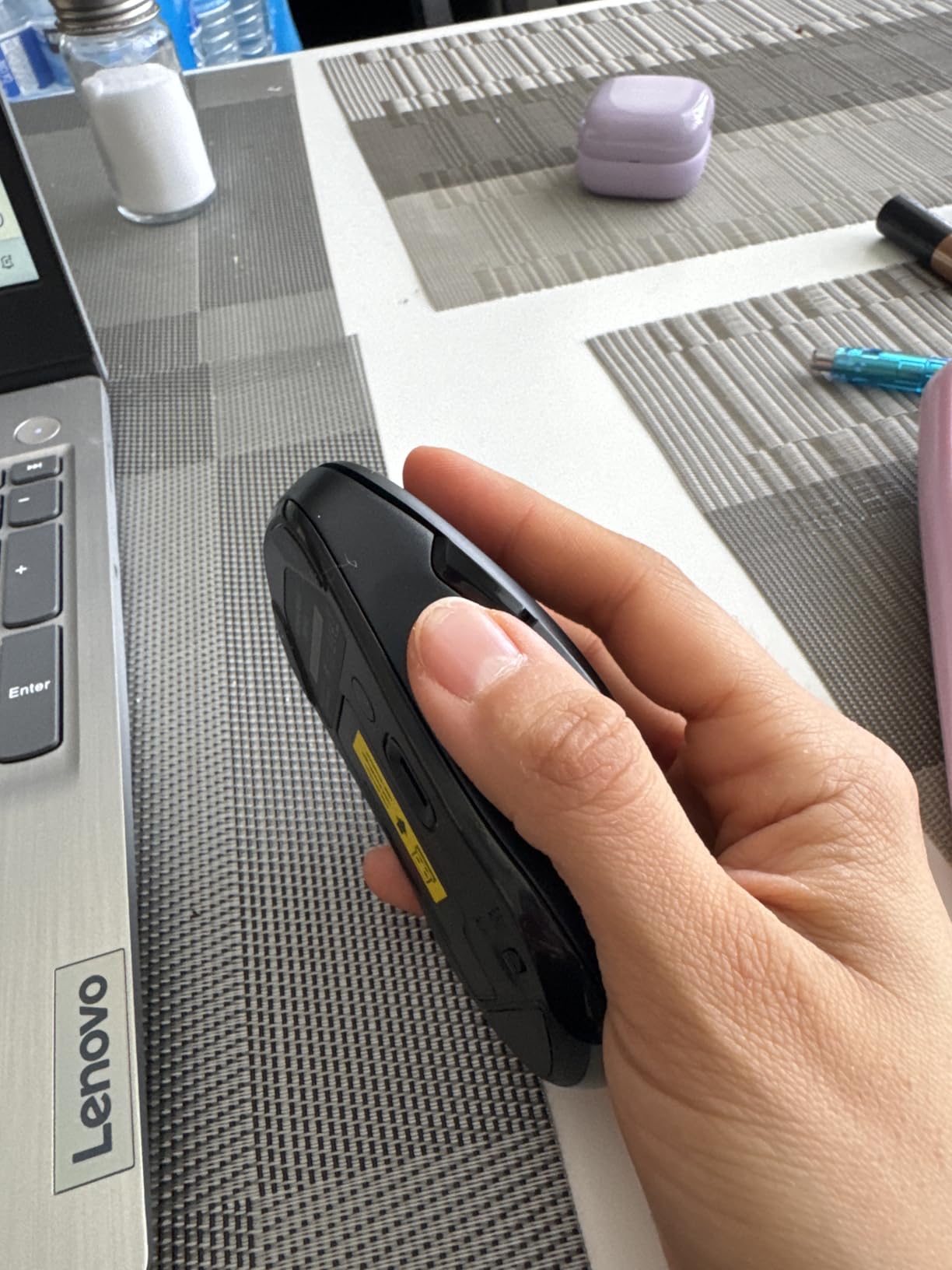
The mouse is symmetrical and works equally for both hands, with three DPI levels at 800, 1600, and 2400. It is a small mouse, but a flexible one, and it tracks smoothly on most surfaces. For someone who alternates between a desk and a sofa with a laptop, that versatility is worth more than sculpted ergonomics.
What to Watch Out For
Two recurring negatives appear in the reviews. Keycap legends can wear off after a few months of regular use, which matters if you rely on reading the caps rather than muscle memory. And the AA batteries for the keyboard and mouse are not included, so budget for a first set.
There is no backlight and no Caps Lock or Num Lock indicator lights, which is a genuine annoyance on a full-size board. On the positive side, this bundle carries 12 months of free after-sales service beyond the standard return window, and buyers report responsive support. Around 2,900 reviews at a 4.3 average. Our verdict: the best keyboard and mouse combo for a home office running one receiver across more than one machine.
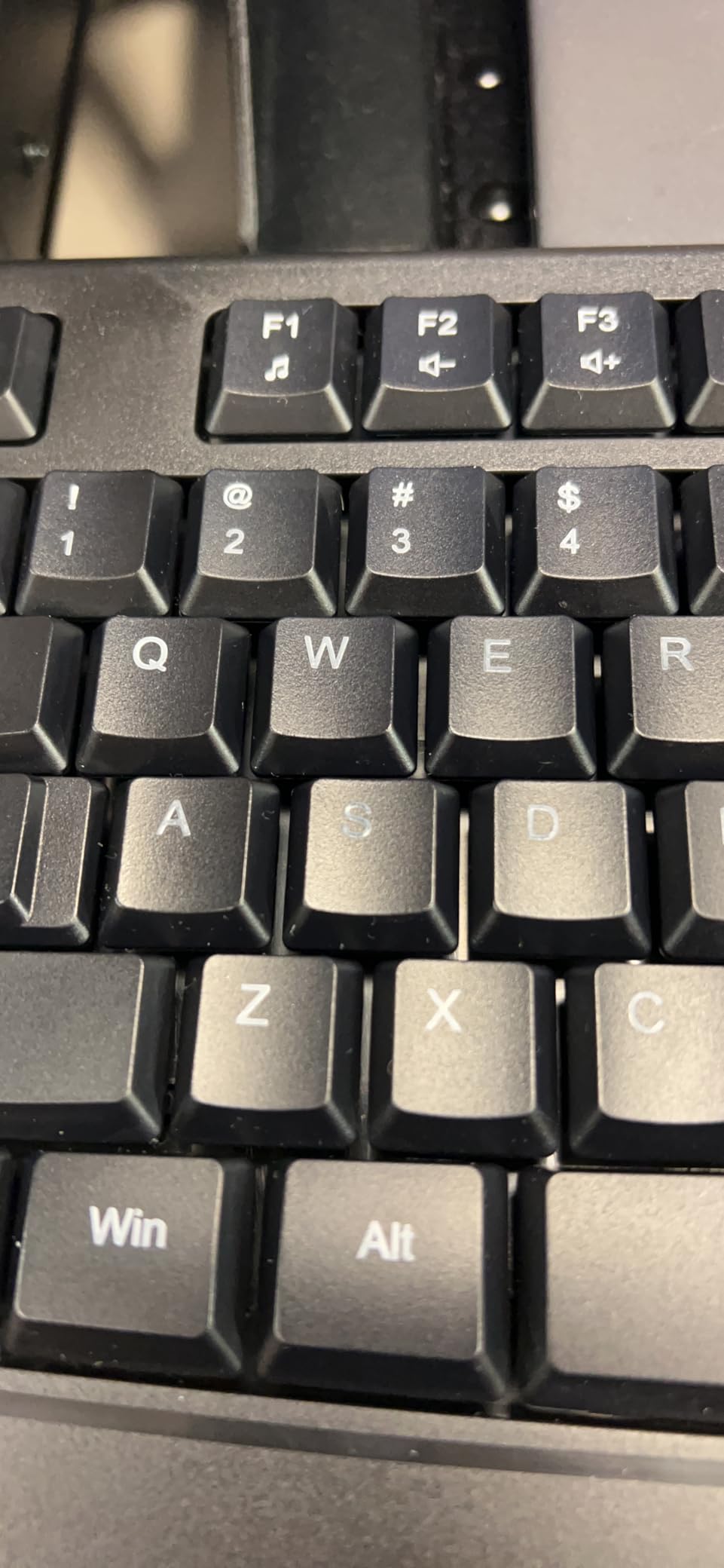
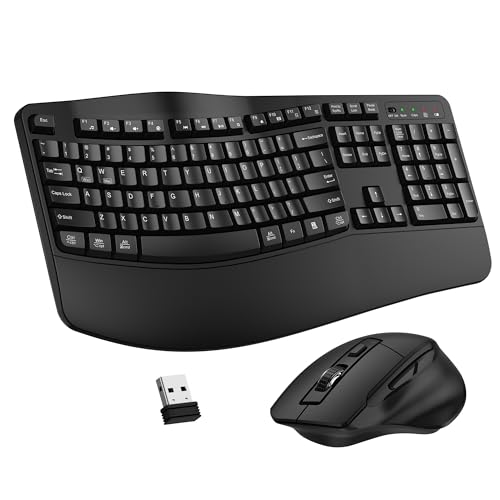
9. ULSOU EK30 Ergonomic Wave Combo - Wave Keyframe Comfort Without the Split
Wireless Keyboard and Mouse Combo, 2.4G Ergonomic Wave Keys(Black)
104 membrane keys
Wave keyframe with wrist rest
One shared 2.4 GHz receiver
33 ft range
+ Pros
- Wave ergonomic keyframe with a wrist rest that supports the fingers
- Adjustable stand for setting a comfortable height
- Contoured mouse with forward and back navigation buttons
- One shared 2.4 GHz USB receiver reaching 33 feet
- Dual system layout switchable with FN+Q or FN+W
- Cons
- Basic membrane typing feel with little character
- No backlight and no Caps Lock or Num Lock indicator lights
- Batteries are not included and the set runs on AA cells
The wave keyframe is the middle path between a flat membrane board and a full split ergonomic design. The keys curve gently in the centre, which follows the natural line of your hands, and the moulded wrist rest fills the dip so your wrists land on something rather than on a desk edge. Compared with a true split board, there is no adaptation period at all. You can move from a laptop to this in one sitting and keep typing.
The adjustable stand is the other part of the comfort story. Two height settings plus the raised wave profile give you enough range to match a desk and a standing setup, which matters if your home office doubles as a standing workstation on certain days.
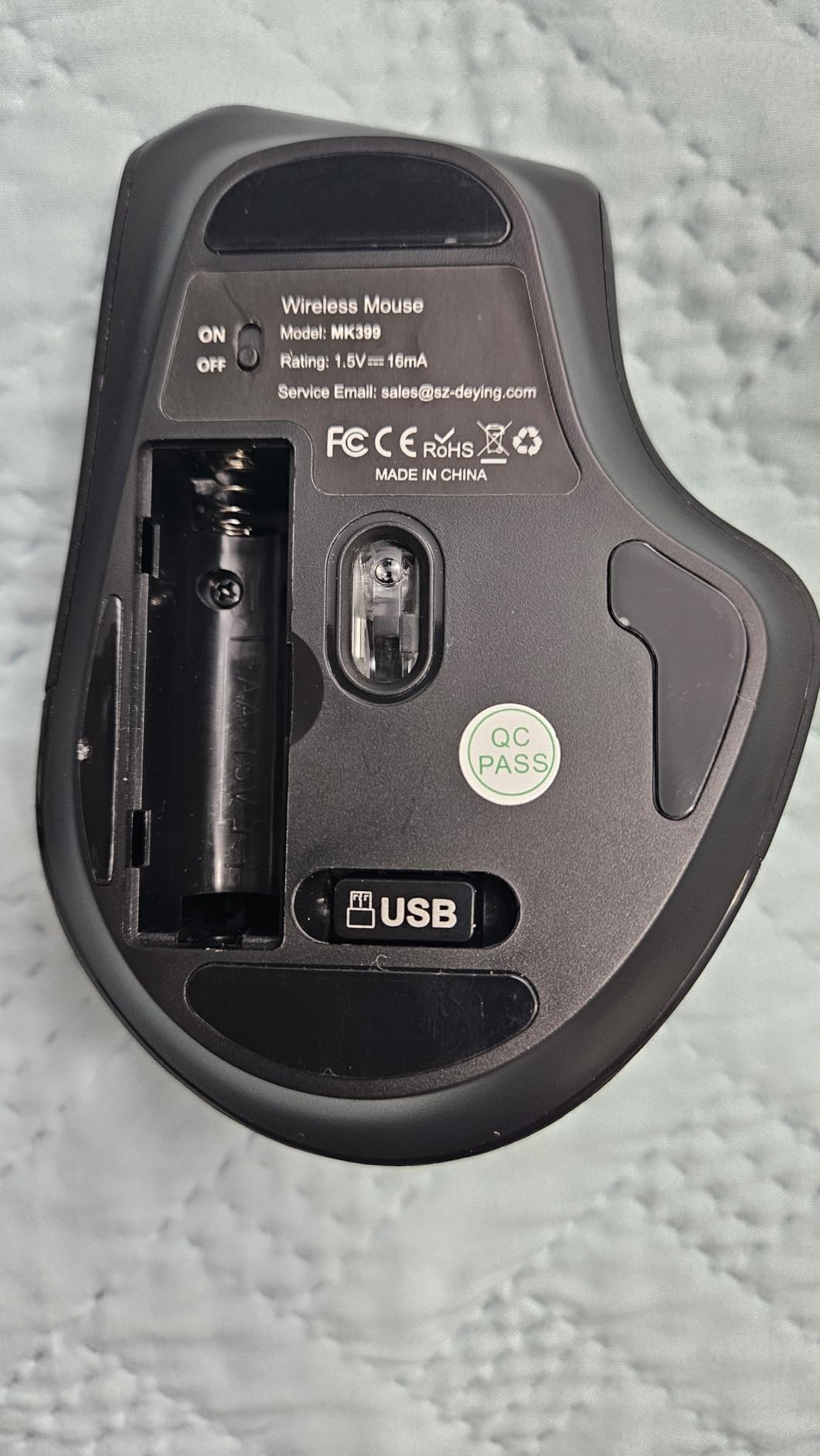
Switching Between Windows and Mac Layouts
The FN+Q and FN+W combination switches the layout between Windows and macOS, which is quicker and less disruptive than re-pairing through software. The board is listed for Windows, Mac, and Linux, and the mouse stores the USB receiver on its back so there is one dongle to keep track of.
Auto power saving runs on a 30 second keyboard timer and a 15 minute mouse timer. That is the mirror image of the QUASIO: less aggressive on the keyboard, which means fewer wake-up delays while you are mid-sentence, and longer on the mouse, which is rarely in your hands for more than a few minutes at a time.
Mouse Buttons and Tracking
The mouse is contoured for one hand and carries forward and back navigation buttons on its side. Those side buttons are uncommon at this level and genuinely useful for back-and-forth browsing during research or spreadsheet work. Tracking is smooth optical with the usual 3-level DPI arrangement.
Where It Falls Short
Expect ordinary membrane typing: quiet, serviceable, and without character. There is no backlight and no Caps Lock or Num Lock indicator lights, and the AA batteries are not included. Reviewers also flag occasional durability and key responsiveness concerns, and this bundle has the highest one-star share in the roundup at 11 percent, against 72 percent five-star across about 2,400 reviews.
That negative share is worth taking seriously, and our own experience matched the pattern: it works well, but the quality control looks looser than the Logitech bundles. Our verdict: the best keyboard and mouse combo for a home office if you want some ergonomic relief with zero adjustment time.
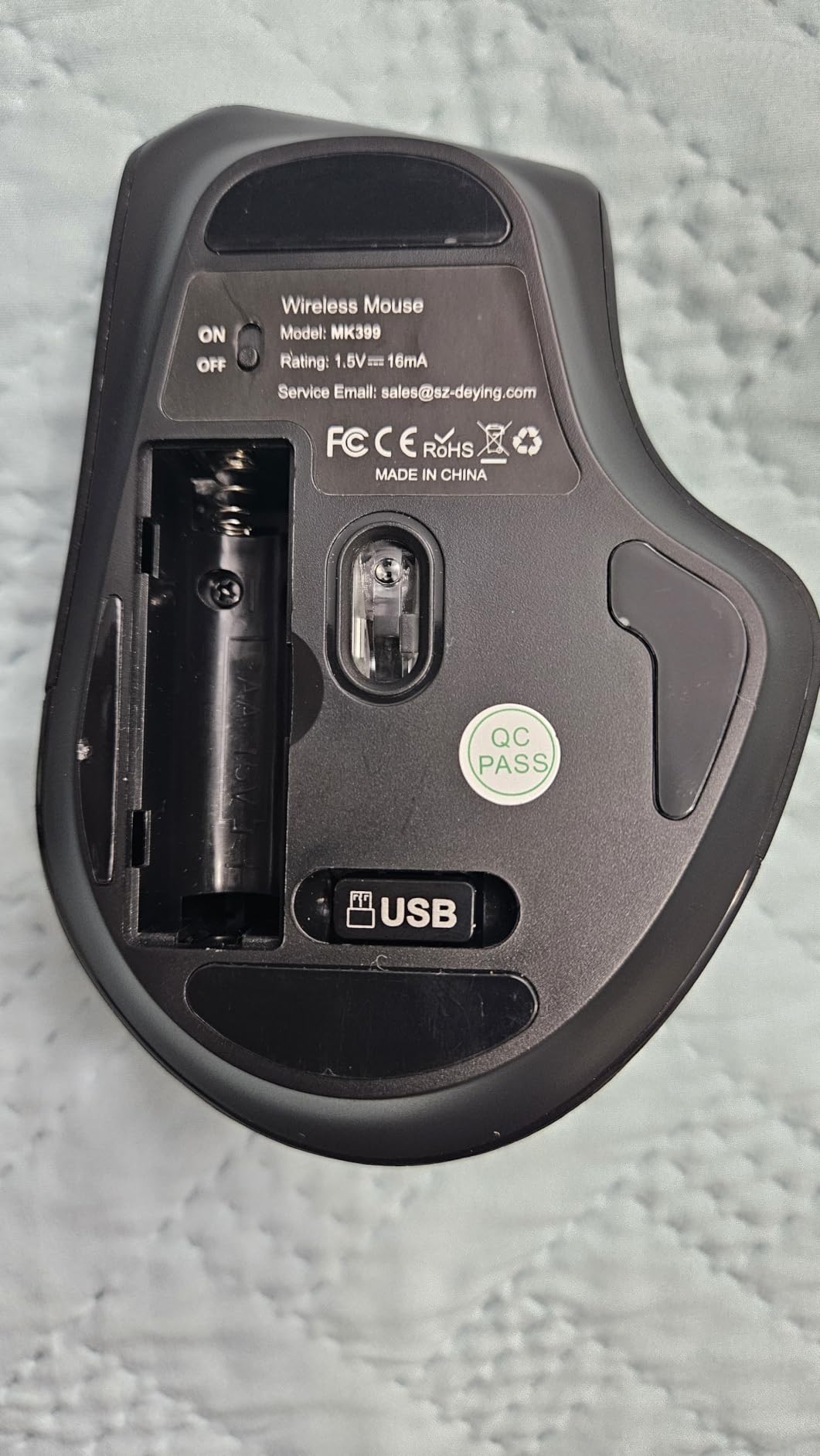
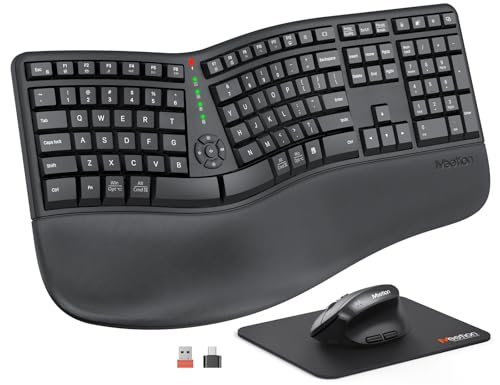
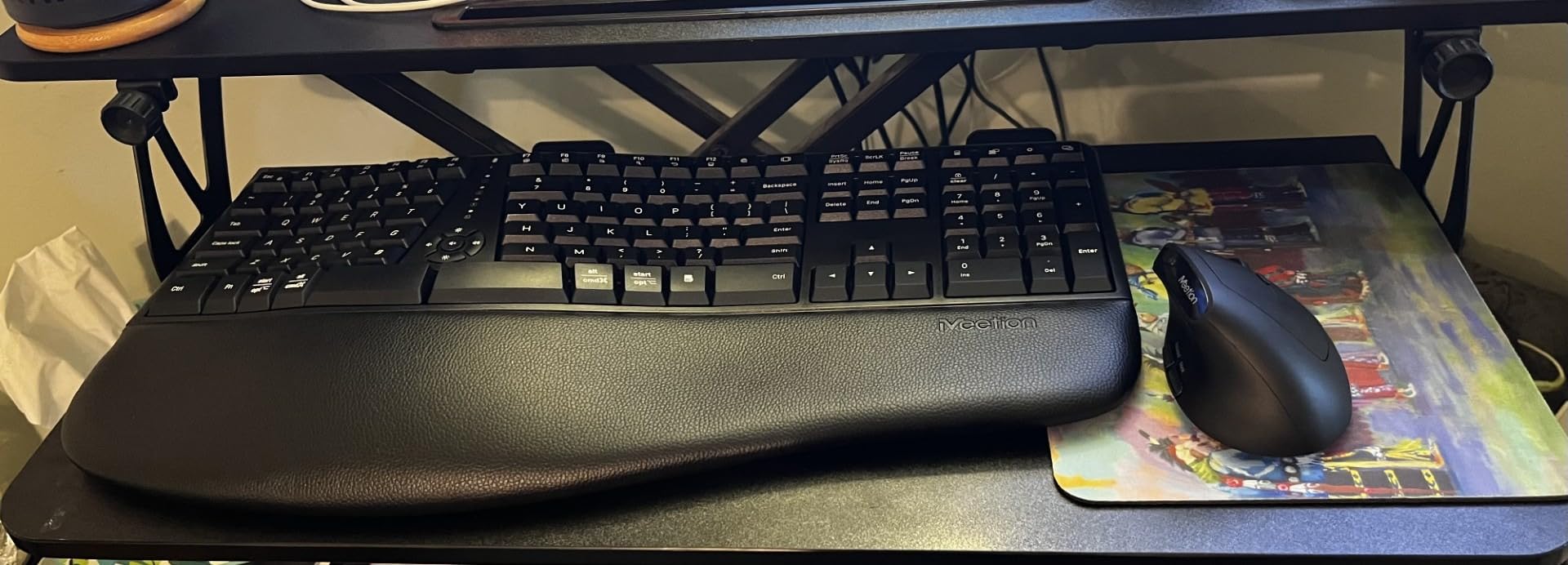
10. MEETION DirectorC Split Combo - True Split Typing With a Vertical Mouse
MEETION Ergonomic Keyboard and Mouse Combo, Split Design, Vertical Mouse
112 keys
Two-piece split board
Vertical mouse with 4 DPI levels
500mAh cells in both
+ Pros
- True two-piece split letting each hand type at its own angle
- Concave curve with individually angled keys following finger shape
- Pillowed non-slip palm rest for long sessions
- Vertical ergonomic mouse with 4 DPI levels and a silent switch
- 500mAh rechargeable cells in both keyboard and mouse
- Cons
- Split layout has a long learning and adaptation period
- Full-size board with numpad occupies substantial desk width
- Vertical mouse is for right-hand use only and is not backlit
The MEETION DirectorC is the only bundle here with a genuine two-piece split keyboard, where the halves physically separate so each hand types at a comfortable angle and distance, and the only one paired with a vertical mouse. A vertical mouse holds your hand in a handshake position rather than flat on the desk, which changes the forearm angle as much as any keyboard choice can. If wrist and forearm discomfort is your main problem, this is the bundle that attacks it from both ends.
The keys are arranged on a concave curve with individually angled rows, following the natural shape of hands and fingers, and the pillowed non-slip palm rest keeps both halves from sliding during long sessions. The full-size layout runs to 112 keys and includes a numeric keypad.
The Mouse Is the Standout Half
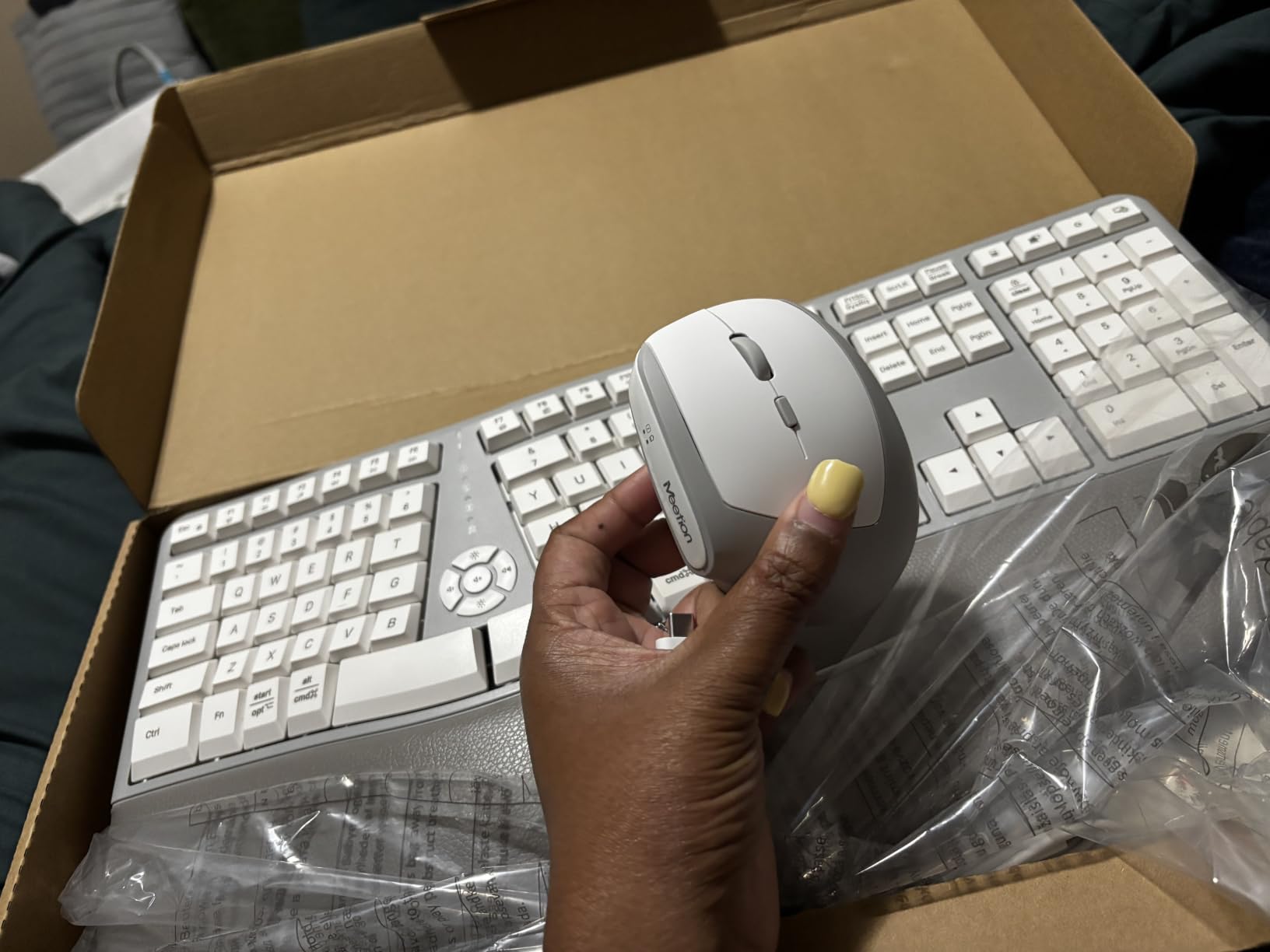
The vertical mouse has four adjustable DPI levels, 800, 1200, 1600, and 2400, a silent switch, and a side-scrolling wheel. It is designed for right-hand use only, and it is noticeably taller and deeper than anything else in this roundup at 2.87 by 4.09 by 2.28 inches. Reviewers who adapt to the shape report real gains in wrist and forearm comfort and quiet operation.
Getting there takes time. The negative reviews concentrate almost entirely on the demanding adjustment period for the split keyframe, the large desk footprint, and confusion around the charging cable, which is a USB-C adapter that cannot be used without the USB-A receiver plugged in. Read the setup note before your first session.
Battery, Connectivity and the Rating
Both pieces carry 500mAh rechargeable batteries lasting roughly 1 to 2 months per charge, which is competitive with the seenda and ProtoArc bundles and clearly better than any disposable-battery option. The 2.4 GHz connection reaches 33 feet through one shared USB-A receiver, and compatibility covers Windows, Mac, Linux, Chrome OS, and DOS.
There is no backlight and no Bluetooth, so this is a single-machine bundle with a very specific ergonomic purpose. It also carries the lowest average rating in our group at 4.0, with 63 percent five-star and 13 percent one-star. Most of that gap is adaptation, not failure, but it is real. Our verdict: the best keyboard and mouse combo for a home office if a vertical mouse is your priority and you can commit two weeks to the new layout.
How to Choose a Keyboard and Mouse Combo for a Work-From-Home Desk
Most of the wrong purchases in this category come from answering the wrong question. Buyers ask which combo is best when what they need to know is how many machines the keyboard will drive, how loud the room is, and how much desk width they actually have. Work through those three first and the shortlist collapses to two or three options very quickly.
Quiet Typing Versus Clicky Boards: Match the Noise to Your Room
Noise is the number one complaint in every home office discussion we read, and it has two separate sources. The keyboard produces sound on every keystroke through the switch mechanism and the keycaps landing on the frame. The mouse produces sound on every click, and that click is what colleagues hear on a call, not the keyboard.
Most office bundles, including the MK270, MK345, and QUASIO, use quiet membrane or scissor keys and are perfectly acceptable in a shared room. If someone else is working or sleeping nearby, the Logitech MK295 is the direct upgrade: SilentTouch is rated at 90 percent less noise, and its mouse uses silent click switches as well. Going further into silent mechanical switches costs considerably more and is outside this roundup.
Rapid trigger style and gaming switches are the wrong choice for a home office, for the obvious reason that they are designed to be loud and fast. A related point worth knowing: silent keycaps on a clicky switch do not make much difference, because the noise comes from the switch, not the cap.
2.4 GHz Receiver or Bluetooth: Pick the Radio Your Desk Needs
A 2.4 GHz receiver is a small USB dongle that creates a private, dedicated link. It is the most reliable of the two options, it works the moment you plug it in with no pairing step, and it is what you want if you are on a laptop with two USB ports. Its downside is that it occupies a port and it is small enough to lose, which is the source of the receiver-loss threads in every home office forum.
Bluetooth removes the dongle entirely and lets you pair a tablet or a phone, but it needs a manual pairing action, it can drop to a lower power profile, and on some older systems it requires Bluetooth 4.0 or later. If your setup is one laptop and one desk, Bluetooth is a cleaner cable management story. If your setup is a desktop plus a laptop, the 2.4 GHz dongle is the more reliable answer.
Several bundles here offer both. The seenda SKM64-3, the ProtoArc EKM01 Plus, and the Rapoo 9010M each carry a USB receiver and Bluetooth channels, and that dual-mode capability is the single feature reviewers praise most often.
Multi-Device and Dual-Laptop Setups
Here is the most repeated real complaint in the forums: one keyboard and one mouse, two laptops, work and personal, one desk. The hardest part is not pairing, it is the number of button presses. Four presses to move from a work laptop to a personal one is a friction you will feel every day.
Rank the options by how many presses it takes. The Rapoo 9010M holds four devices but the keyboard and mouse switch independently, so plan for two presses. The ProtoArc EKM01 Plus holds three devices and moves the pair as a unit with one press, which is the closest this roundup gets to the ideal. The seenda SKM64-3 holds three channels but again switches the two pieces independently.
One practical tip: pair the mouse to the device you use most, and the keyboard to the device you type most on. You can then leave one piece on a fixed machine and move only the other. For more on how bundles behave in the field, our ultralight fishing combo picks cover the same idea for gear you carry rather than gear you sit at.
Typing Feel and Layout
Three keyboard mechanisms cover everything in this roundup. Membrane keys are the cheapest and are the basis for the MK270, MK345, QUASIO, and ULSOU boards. They are quiet and light on the fingers but offer the least feedback. Scissor switches, used by the VssoPlor, seenda, and ProtoArc boards, give a crisper action with short travel and are the middle ground. Mechanical switches appear only in enthusiast boards outside this list.
Layout is a bigger decision than switch type for most office workers. A full-size 104 or 112-key board keeps the number pad, the F-row, and dedicated arrow keys. A 78-key compact board, like the Rapoo, drops the number pad and saves meaningful desk width at the cost of data entry speed. A tenkeyless or 65 percent layout saves even more but removes the function row, which matters if you rely on keyboard shortcuts all day.
On Mac layouts, check the legends before buying. The seenda SKM64-3 prints both Windows and Apple modifiers, and the ULSOU EK30 switches layouts with FN+Q or FN+W. Bundles listed for Windows only, including several here, leave a Mac user guessing which modifier does what.
Ergonomics: Wrist Angle, Mouse Height, and Desk Footprint
Three things determine whether a setup is comfortable, and all three are about position rather than brand. First, keep your forearms roughly level with the desk and your elbows at about 90 degrees. A keyboard with built-in tilt legs, like the MK270 or the ULSOU wave board, helps. Second, keep the mouse at the same height as the keyboard and close enough that your arm does not have to reach across the desk. A mouse mat that covers both areas is a five dollar fix. Third, let your wrists float rather than resting on a hard edge while you type.
Beyond position, the hardware options are: a wave keyframe, which is a gentle curve with no adjustment period, such as the ULSOU EK30; a split keyframe, which is a real change in layout and needs two weeks, such as the ProtoArc EKM01 Plus; and a vertical mouse, which is the single biggest change you can make to forearm angle, such as the MEETION DirectorC bundle.
Watch the footprint before buying. The ProtoArc EKM01 Plus measures 20.75 by 11 inches and the MEETION DirectorC keyboard 19.09 by 10.04 inches, both wider than a standard full-size board. A wide ergonomic keyboard pushes your mouse outward, which can undo the benefit you bought it for. The VssoPlor at 5.5 mm thick and the seenda at 0.12 inches go the other way, freeing desk surface for the mouse.
Combo Versus Buying the Keyboard and Mouse Separately
A bundle is one purchase, one warranty, one support contact, and usually one receiver. That is genuinely worth something, and for a first home office setup it is usually the right call. There are three compromises to know about before you commit.
The first is the shared receiver. A combo typically ships one USB dongle that both halves use, so you cannot send the mouse to another machine unless the keyboard stays behind. The second is the charging ecosystem. Bundles in this roundup are inconsistent, with some on disposable cells and some on rechargeable ones, and you cannot mix a rechargeable keyboard with a battery-powered mouse without carrying two charging routines. The third is software. A matched pair shares one configuration app, which is convenient until you want a per-app macro layout or a remap that the app does not offer.
Buy separately when you already know what you want, when one half needs a feature the bundle does not offer, such as a vertical mouse or a low-profile mechanical board, or when you are replacing one piece of a set you like. The forum consensus on this question is that preference and habit beat spec sheets, and our testing agrees: fit matters more than any single number on a spec list.
Battery, Charging, and What to Check Before You Buy
Decide whether you want disposable cells or a rechargeable cell. Disposable batteries, on the MK270, MK345, QUASIO, ULSOU, and Rapoo bundles, mean nothing to charge and nothing to forget, with the MK270 and MK345 shipping batteries included. Rechargeable cells, on the VssoPlor, seenda, ProtoArc, and MEETION, give a cleaner desk and longer intervals between replacements, but introduce the flat-battery-at-the-wrong-moment failure mode.
If you go rechargeable, USB-C is the standard worth insisting on. It is the same cable as your laptop and phone, and the seenda reaches a full charge in about 3 hours while the ProtoArc reaches roughly 250 hours of standby from a 2 hour charge.
Three last checks before you order. Confirm the warranty: the seenda carries 24 months, several bundles carry one year, and the QUASIO carries 12 months of after-sales service. Confirm the operating systems you need, since several Windows-focused bundles are quieter and more capable on Windows than elsewhere. And confirm the mouse suits your hand, because every bundle here has at least one compact option and a mismatched mouse is the most common reason a good keyboard gets replaced anyway.
Two more roundups worth bookmarking if you are building a full kit: our saltwater spinning combo guide and the fishing chair and bed combo picks.
Frequently Asked Questions
What is the best keyboard and mouse combo for a home office?
The Logitech MK270 is the best keyboard and mouse combo for most home offices in 2026. It pairs a full-size 104-key spill-resistant keyboard with a compact ambidextrous mouse through a single USB receiver, runs up to 36 months on the keyboard and 12 months on the mouse, and has the biggest review base of the ten bundles we tested. If noise is the problem, step up to the Logitech MK295, which uses SilentTouch keys and a silent-click mouse.
What are the disadvantages of using a wireless keyboard?
The main disadvantages are battery dependence, a small receiver that can be lost, and occasional interference on crowded 2.4 GHz bands. Wireless also means you cannot type during a power cut unless you have a wired fallback, and some enterprise environments block Bluetooth entirely. The practical answer for a home office is simple: choose a bundle that takes AA batteries rather than a rechargeable cell if you want zero charging routine, and keep the dongle in the same pouch as your laptop charger.
Should I buy a keyboard and mouse combo or buy them separately?
Buy a combo for a first home office setup because you get one purchase, one warranty, and usually one USB receiver. Buy separately when you already know which keyboard you want, when you need a feature the bundle does not offer such as a vertical mouse, or when you are replacing one half of a set you like. The three real compromises of a bundle are the shared receiver, a single charging standard across both pieces, and one configuration app instead of two.
Are wireless keyboards and mice better for home office work?
Yes, for most home offices. Wireless removes two cables from the desk, frees USB ports on thin laptops, and lets you move the keyboard and mouse to a second machine without replugging anything. The trade-off is that a 2.4 GHz receiver takes one port and Bluetooth needs a manual pairing step. A wired setup is still worth considering if you have a long desk, no free USB port, or want zero battery dependence.
What is the best ergonomic position for a keyboard and mouse?
Keep your forearms level with the desk, your elbows near 90 degrees, and the mouse at the same height as the keyboard and close enough that you do not reach across the desk. Add a wrist rest so your wrists are supported between bursts rather than pressed into a desk edge. If you already have wrist discomfort, a wave keyframe helps immediately, a split keyboard needs about two weeks to adapt to, and a vertical mouse changes your forearm angle more than any keyboard change can.
Which Keyboard and Mouse Combo Fits Your Desk
Here is the short version, matched to the situation rather than to a spec sheet. If you want the keyboard and mouse combo for a home office that simply works and never needs attention, the Logitech MK270 is the pick, and it stays the choice for most people. If someone else is in the room, the Logitech MK295 is the same shape of bundle with genuinely quieter keys and a silent-click mouse.
If you have a Mac, or you rotate between a Mac and a Windows machine, the seenda SKM64-3 is the one with both key legends and a 24-month warranty. If you run three or four devices and do not need a number pad, the Rapoo 9010M holds four paired devices and weighs 314 g. If your hands already hurt, the ProtoArc EKM01 Plus is the bundle we would choose, provided your desk is deep enough for a 20.75 by 11 inch keyboard. If a vertical mouse is what you actually want, the MEETION DirectorC is the only option in this roundup that pairs one with a split keyboard.
For a crowded desk, the VssoPlor at 5.5 mm is the thinnest board here and recharges instead of eating batteries. For a palm rest without moving up a tier, the Logitech MK345 runs up to three years on the keyboard. For one receiver serving more than one machine, the QUASIO set is the only bundle where the keyboard and mouse can genuinely be separated. And if you want a little ergonomic relief with no adjustment period, the ULSOU EK30 wave keyframe is the compromise.
Whatever you choose, set the keyboard and mouse height and angle before you judge the hardware, and give any split or wave layout two full weeks before you decide it is wrong. That is where the best keyboard and mouse combos for home offices are separated from the merely adequate ones. Use the price buttons on each card to check the current listing, and revisit this page in 2026 when you are ready to upgrade again.