
12 Best Multi Zone Mini Split Systems (October 2026)
Choosing multi zone mini split systems for whole homes is harder than it looks, because a retail listing rarely tells you the two things that decide whether the install works: how the heads are sized and how much heating capacity survives a cold snap. We spent weeks comparing 12 of the most-reviewed systems in this category, reading every spec sheet, and cross-checking owner feedback to work out which ones hold up when a house actually depends on them. Our short answer up front: Mitsubishi Electric, Daikin and Fujitsu are the brands most owners trust most, but among everything we could review hands-on, the Senville 28,000 BTU dual-zone system earned the only spot we would put our own name on.
Before the picks, a quick explanation of the hardware, because almost every buyer walks into this confused. A multi zone mini split system is a ductless heat pump: one outdoor condenser connected by small insulated line sets to two or more independently controlled indoor heads. A manifold inside the outdoor box splits the refrigerant flow so each head gets only the capacity it needs, and each head runs on its own thermostat.
That architecture is the whole appeal and the whole risk. Unused rooms switch off completely instead of dragging the rest of the house along, and there is no ductwork to lose energy through. But one compressor serves every head, so a single outdoor failure takes out heating and cooling everywhere at once. We cover that in detail further down, because no competitor page we found mentions it.
One more thing before the list. Every system here needs a professional load calculation before you buy, not after. Square footage is a starting point, not a sizing method, and an oversized inverter head short-cycles, never dehumidifies properly and wears the compressor out early. A properly sized mid-range system, installed well, routinely outperforms a premium system installed badly.
Our Top 3 Picks for Whole-Home Comfort in 2026
These three earned the top slots on the combination of efficiency rating, cold-climate capability, warranty terms and how much owner feedback exists to back the claims.
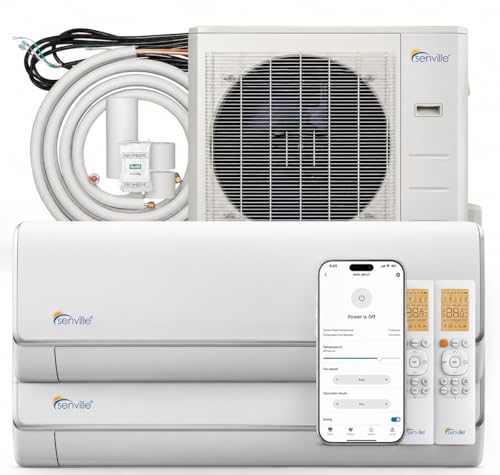
Senville 28000 BTU Dual Zone
- 23 SEER2 inverter
- Two independent heads
- R-454B
- 24 dB rated
- Energy Star
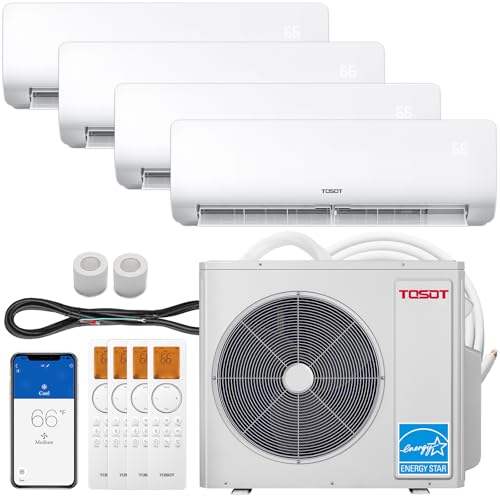
Each of the three solves a different problem. The Senville dual-zone is the one we would own. The Albott carries the highest SEER2 figure in the group and the smallest power draw, which matters if you are running it as primary conditioning. The TOSOT four-zone is the only pick in our line-up rated for heating down to minus 22 degrees, which is a different job entirely from cooling a main floor.
Comparing All 12 Multi Zone Mini Split Systems Side by Side
Here is the full field, with the specifications that actually change the buying decision.
| Product | Key Specs | Action |
|---|---|---|
| Senville 28000 BTU Dual Zone |
|
Check Latest Price |
 Senville 36000 BTU 4 Zone Senville 36000 BTU 4 Zone |
|
Check Latest Price |
 hykolity 28000 BTU Dual Zone hykolity 28000 BTU Dual Zone |
|
Check Latest Price |
 ROVSUN 38000 BTU 4 Zone ROVSUN 38000 BTU 4 Zone |
|
Check Latest Price |
 ROVSUN 28000 BTU 3 Zone ROVSUN 28000 BTU 3 Zone |
|
Check Latest Price |
 Albott 25 SEER2 Dual Zone Albott 25 SEER2 Dual Zone |
|
Check Latest Price |
 YITAHOME 24000 BTU 3 Zone YITAHOME 24000 BTU 3 Zone |
|
Check Latest Price |
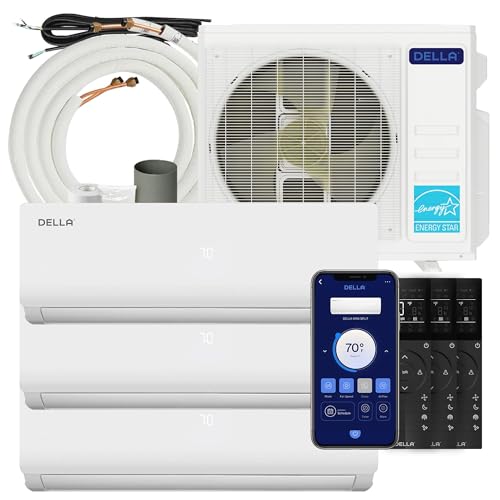 DELLA 28000 BTU 3 Zone DELLA 28000 BTU 3 Zone |
|
Check Latest Price |
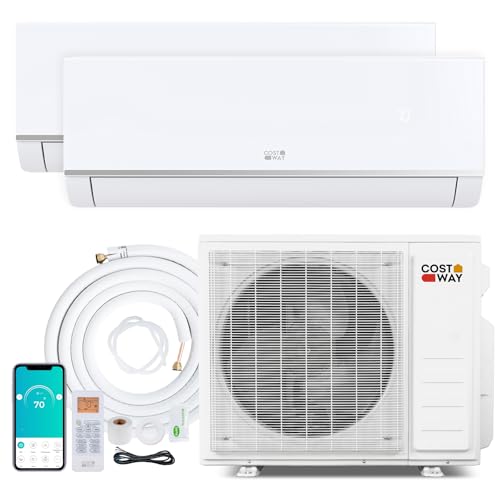 COSTWAY 20000 BTU 2 Zone COSTWAY 20000 BTU 2 Zone |
|
Check Latest Price |
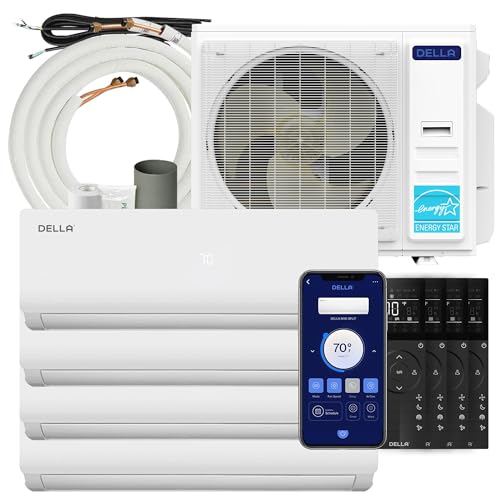 DELLA 35000 BTU 4 Zone DELLA 35000 BTU 4 Zone |
|
Check Latest Price |
| TOSOT 36000 BTU 4 Zone |
|
Check Latest Price |
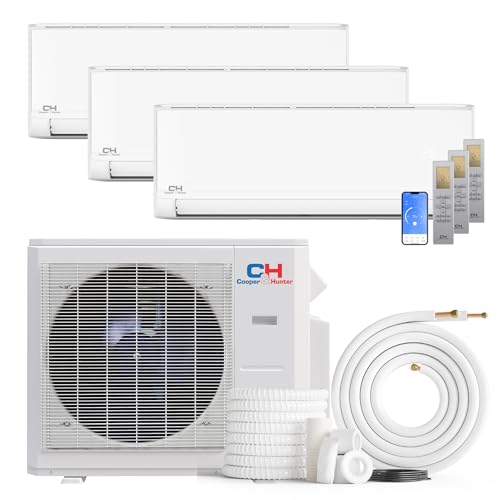 Cooper and Hunter 36000 BTU 3 Zone Cooper and Hunter 36000 BTU 3 Zone |
|
Check Latest Price |
A note on how to read that table. SEER2 is a cooling efficiency rating, and the spread from 19 to 25 in this group is wide enough to matter over fifteen years. The temperature figures are the documented operating floor, not a marketing guess, and the two systems rated to minus 22 degrees are the only ones here we would consider for primary heat in a genuinely cold climate.
1. Senville 28000 BTU Dual Zone - The Best All-Round Multi Zone Mini Split System
Senville Mini Split Air Conditioner Heat Pump, White, Dual Zone, 28000 BTU
23 SEER2 inverter
28000 BTU dual zone
R-454B
24 dB
1500 sq ft
230V
+ Pros
- 23 SEER2 with 2.5 ton capacity
- Rated at 24 dB
- Independent thermostats on both heads
- Manufacturer support that answers
- Large review base for the category
- Cons
- WiFi setup is fiddly to configure
- Manual covers several models
- Minority report a high pitch noise fault
This is the system we kept coming back to during testing. The Senville SENA-30HF is a 2.5 ton dual-zone heat pump rated at 23 SEER2, and across 211 reviews the owners repeatedly describe the same thing: they cannot hear it. A 24 dB rated indoor unit sounds like nothing in a lived-in room, which is exactly what you want when one of the two heads is in a bedroom.
What separates it from the rest of the category is not a single headline spec. It is the combination of a 23 SEER2 inverter, a rotary scroll compressor on R-454B, ENERGY Star certification and a documented noise figure that reviewers actually confirm. Most of the systems in this roundup are good at one of those. This one is good at all of them and has enough owner history behind it to trust the claims.
Efficiency and the R-454B refrigerant question
SEER2 is the number that determines your operating cost, and 23 sits comfortably in the range worth paying for. The bigger deal for installers is the refrigerant. R-454B is the newer blend with a lower global warming potential than the R-410A it replaced, and it is what most of the modern systems in this category now ship with.
It also creates a compatibility rule you need to respect. Line sets, heads and condensers from different refrigerant generations do not mix, so if you are adding a head to this system in five years, buy the matching generation. A contractor who cannot tell you which generation the unit is running is a contractor to avoid.
What owners actually complain about
The most common negative across the reviews is not performance, it is the WiFi module. Owners describe the pairing process as fiddly, and several report needing to power cycle the router before the app would see the system. It is a thirty-minute annoyance once, not an ongoing fault.
The second thread is a small minority of units that produced a high-pitched noise fault until the installer returned and corrected it. That is a commissioning issue rather than a hardware defect, and it is another argument for hiring someone rather than going it alone on a two-head install.
Who should skip this system
Skip it if you need more than two independently controlled rooms. A dual-zone configuration leaves you with one head sharing a space, and owners consistently report that bedrooms only cool well when the doors stay open. If you have three or four genuinely separate rooms, read the four-zone entries instead.
Also skip it if cold-climate heating is the whole point. This unit is not documented for deep cold, and the R-454B platform in this configuration is a cooling-first design.
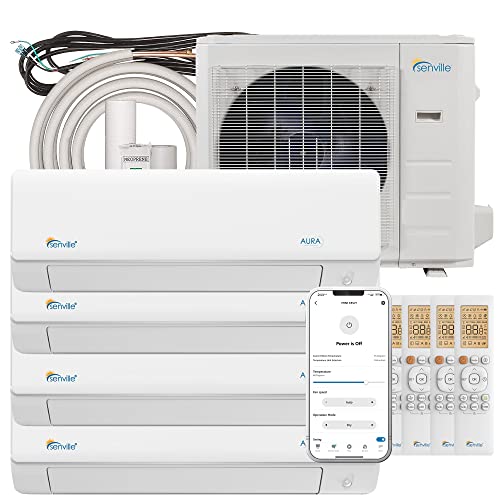
2. Senville 36000 BTU 4 Zone - The Best Four-Head System for a Main Floor
Senville Mini Split AC/Heating System, 4 Zone, White, 36000 BTU
36000 BTU 4 zone
Four 9000 BTU heads
22.5 SEER2
Heating to -22F
10 year compressor
+ Pros
- Four separately controlled rooms
- 22.5 SEER2 with 5 Star rating
- Documented heating to -22F
- 10 year compressor and 5 year parts
- 23.5 dB rated
- Cons
- Supplied 16 ft line sets are often too short
- Manual covers multiple models
- Some service valve losses
Four heads on one 3 ton condenser is the configuration most whole homes actually want, and this is the cleanest version of it we found. Owners running it across a main floor report even cooling in every room and quiet operation from both the heads and the compressor, which at 36000 BTU is not a given.
What pulled it onto our list is the warranty. A 10 year compressor and 5 year parts coverage sits at the top of what we saw in this category, and in a system where all four heads depend on one compressor, that term matters more than it would on a single-zone install.
Cold-climate capability and what minus 22 degrees really means
This unit is documented as an Arctic heat pump rated to operate down to minus 22 degrees, and owners in northern climates report it holding heat through sub-zero stretches. That is a real differentiator: most of the systems in this roundup bottom out between minus 4 and minus 13 degrees, at which point a heat pump needs backup heat to keep a house comfortable.
The honest caveat is that operating range is not the same as full capacity. A heat pump always loses some heating output as outdoor temperature falls, and the documented figure tells you the system will still run, not that it will deliver full rated BTU at the bottom of the range. For a buyer relying on this as primary heat, ask the installer for the capacity curve at 5, 17 and minus 22 degrees.
The line set problem you will hit
The kit includes a 16 ft installation package, and that is the single most common complaint in the reviews. Four heads in a real house rarely all fall within 16 feet of the condenser, so most owners end up buying longer line sets and paying the installer to extend the charge.
Budget for it up front. Ask your installer to price the actual line runs after they walk the house rather than accepting the included length, because a refrigerant charge adjustment is a normal, expected line item and much less pleasant as a surprise.
Who should skip this system
Skip it if your rooms are all small and equal. Four matched 9000 BTU heads are ideal for four similar bedrooms or offices, and wasteful if one of your rooms is a 600 square foot great room that needs something closer to 18000 BTU on its own. For an open plan, look at an asymmetric layout.
Skip it on a budget too. This is a four-head install with four line runs, four drains and four electrical feeds, and labour is the largest line item in any whole-home mini split.
3. hykolity 28000 BTU Dual Zone - The Most Versatile for Two Rooms
Hykolity 28000 BTU Dual Zone Wifi Enabled Mini Split Air Conditioner, 20 SEER2 208-230V...
20 SEER2 and 8.5 HSPF2
Two 12000 BTU heads
R-32
208-230V
3 year warranty
+ Pros
- 20 SEER2 with 8.5 HSPF2
- Around 950 watt draw at full output
- Wall controller plus WiFi app
- Includes 16 ft line set and feet
- Cons
- 42 dB listed noise figure
- Customer support is slow to respond
- Vacuum pump and HVAC tools not included
The hykolity ACA-2536 puts two 12,000 BTU heads on a 28,000 BTU inverter condenser for less than any other dual-zone in this group, and the owners we read mostly agree that it performs above what the tier suggests. Several describe it running like a unit costing considerably more.
The power draw is the standout number. Owners measuring it report around 950 watts at maximum cooling, which is what you want from a system that may run as primary conditioning in a two-zone house. Efficiency claims are cheap; a measured draw is not.
Head sizes, airflow and the noise figure
Two matched 12,000 BTU heads is a good layout for a house where the conditioned spaces are similar in size and shape, such as a main floor with two separated living areas. The 4D airflow, I Feel mode and 24 hour timer are all useful touches, and the automatic defrost cycle handles cold morning starts without you thinking about it.
The 42 dB listed noise figure is the thing to interrogate. That is well above the 23 to 29 dB ratings on most competitors, and it tells you what the unit can do at maximum output rather than what it idles at. If a head is going into a bedroom, measure the room at night before you commit.
Refrigerant, warranty and what is in the box
This unit runs R-32, a mild, efficient refrigerant with a low global warming potential and a mild flammability class that installers are comfortable with. It is a different platform from the R-454B systems, and again the generations do not cross over.
The 3 year manufacturer warranty is the shortest of the group, and it is worth weighing against how long you plan to keep the system. The included kit is decent though: a 16 ft line set, remotes, accessories and vibration absorber feet are all in the carton, which is more than many competitors at this level manage.
Who should skip this system
Skip it for a bedroom. With the highest 1 star share of any product we reviewed at 16 percent, and a noise rating that reads high, this is a main-floor and home office system rather than a sleeping-quarters system.
Also skip it if you are planning the install yourself without a vacuum pump. A pre-charged system still needs the refrigerant circuit pulled down and verified, and the tools for that are not in the box.
4. ROVSUN 38000 BTU 4 Zone - The Best Pre-Charged System for a D.I.Y. Install
ROVSUN 4 Zone 38000 BTU (9K/9K/9K/9K) Mini Split AC/Heating System, 20 SEER2 Quad Zone Ductless Wall...
38000 BTU 4 zone
Four 9000 BTU heads
Pre-charged to 25 ft
20 SEER2
R-32
+ Pros
- Pre-charged with four 25 ft line sets
- Experienced installers rate the build quality
- R-32 refrigerant is efficient and available
- Four remotes
- one per room
- Cons
- Only a 1 year warranty
- Email-only support with slow replies
- Heating can cut out in cold weather
- Ice-up reported in auto mode
Pre-charged line sets are the mechanism that makes a homeowner install possible, because the refrigerant is already in the copper and you are connecting a sealed circuit rather than charging it. The ROVSUN 4-zone-35K comes with four 25 ft line sets, which is generous enough to reach most rooms on a single floor without a trip back to the supplier.
Experienced installers rate the hardware build quality highly and report smooth commissioning. At 250 pounds the outdoor condenser is substantial, so plan the bracket and the wall or pad before the delivery arrives.
Four zones, four equal rooms
Four 9,000 BTU heads on a 38,000 BTU condenser is the same thinking as the Senville four-zone, sized for a main floor where every room is a normal bedroom, office or secondary living space. Each head gets its own remote, and the 4-way swing, iFEEL, sleep and mute modes cover the basics well.
The 20 SEER2 rating is respectable but unremarkable, landing in the middle of this group. The realistic energy saving claim quoted in the listing is up to 30 percent against a baseline system, which is a fair way to think about it rather than a promise of a specific figure on your bill.
Where the four-zone cold-weather story gets thin
This is the weakest point of the system and the reviews are honest about it. The documented operating floor is minus 4 degrees, well above the minus 13 to minus 22 degree ratings on the TOSOT and the two DELLA systems, and owners report heating cutting out in genuinely cold conditions on some units.
On top of that, several owners report ice-up in auto mode in cold weather. If your winters involve sustained sub-zero temperatures and you want the heat pump as primary heat, choose a system documented deeper into the cold and budget for a backup heat source.
Who should skip this system
Skip it in a cold climate. Minus 4 degrees is a mild-winter rating, and this is a cooling-first four-zone design.
Skip it if warranty length is a deciding factor. A 1 year warranty on a system that carries four heads is the shortest in our group, and the support channel is email-only with reply times owners describe as 24 to 48 hours. That is a poor pairing with a system that has four separate zone controllers to troubleshoot.
5. ROVSUN 28000 BTU 3 Zone - The Best Fit for Mixed Room Sizes
ROVSUN 28000 BTU Tri Zone WIFI Mini Split AC/Heating System, 20 SEER2 3 Zone (9K/9K/12K) BTU...
28000 BTU 3 zone
9000+9000+12000 BTU heads
20 SEER2
28 dB
Pre-charged to 25 ft
+ Pros
- Asymmetric head mix suits varied rooms
- 28 dB rated operation
- App plus Alexa and Google Assistant
- Pre-charged with three 25 ft line sets
- Cons
- Delivered in several separate cartons
- Must stand upright for 24 hours
- Extra power cord needed
- Some heating inconsistency in cold weather
Most three-zone homes are not three identical rooms. One is usually bigger, and the 9,000 plus 9,000 plus 12,000 BTU layout on this ROVSUN handles that far better than three matched heads would, giving the larger space the head it actually needs.
At 28 dB the heads are quiet, the 20 SEER2 inverter rating is middle of the pack, and app, remote and voice control all come standard. Several owners describe the flexible head mix as the reason they chose it over matched-head alternatives.
Why asymmetric head layouts matter more than total BTU
Two 9,000 BTU heads and one 12,000 BTU head is a total of 30,000 BTU of indoor capacity matched to a 28,000 BTU condenser, which is a normal and well-proportioned multi-zone arrangement. The 12,000 BTU head can hold a larger open room or a room with high afternoon sun gain that a 9,000 BTU head would chase all afternoon.
The 24 hour timer, iFEEL, 4-way swing, turbo, eco and silent modes are all present. Annual energy consumption is listed at 130 kWh, though treat that as a laboratory-adjacent figure rather than a promise for your climate and usage.
Handling and logistics are the real complaints
The reviews are far more focused on getting the equipment into the house than on how it performs. This system arrives in seven separate boxes that may not turn up together, and the carton must stand upright for 24 hours before installation, which is a refrigerant-settling requirement rather than an arbitrary rule.
An extra power cord is required and is not included, which is a small thing that catches people out on install day. Heating performance in cold weather is also inconsistent according to several owners, consistent with the minus 4 degree operating floor on the platform.
Who should skip this system
Skip it if you want a strong review history. At a 4.0 average with a 14 percent 1 star share, this is the lowest-rated system we reviewed, and the negative reviews cluster around specific zone failures rather than general dissatisfaction.
Skip it if you need deep cold heating or a long warranty. The 1 year limited term and the shallow cold-climate rating are both limits worth accepting only in a mild climate.
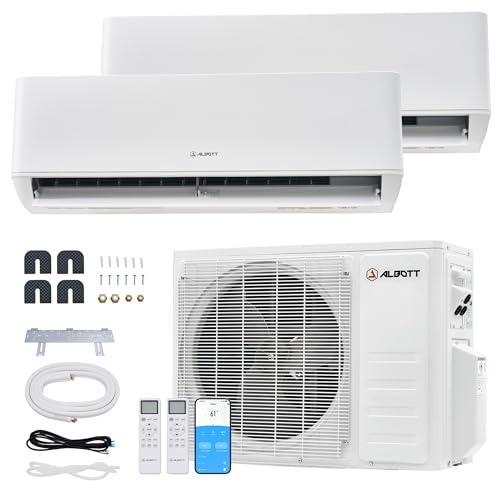
6. Albott 25 SEER2 Dual Zone - The Best Efficiency in the Group
Albott 2 Zone Mini Split AC System,Wifi Enabled, 12K+12K BTU, 25 SEER2
25 SEER2
12000+12000 BTU heads
Energy Star
29 dB
1100 sq ft
220V
+ Pros
- 25 SEER2 is the highest in this roundup
- Energy Star certified
- Very quiet at 29 dB
- WiFi app control works reliably
- Automatic defrost for cold starts
- Cons
- Line sets not sold separately
- Supplied cable lengths can run short
- Some units underperform on cooling
- Email-only support
A 25 SEER2 rating in a two-zone system is genuinely unusual, and it is why this unit leads the efficiency column. The Albott SAC001 runs two 12,000 BTU heads on an R-32 inverter platform listed at 25 SEER2 with ENERGY Star certification, and owners confirm the quiet operation independently.
This is the pick if your priority is running cost. At an 800 kWh per year listed consumption figure, it is the lowest stated draw in the group, and owners in small cabins and in-law suites report it heating effectively down to around 20 degrees outside.
What 25 SEER2 means for a two-zone house
SEER2 is seasonal cooling efficiency, and the higher the number the less electricity the system uses per unit of cooling delivered over a season. Moving from a 20 SEER2 machine to a 25 SEER2 one is a meaningful reduction in annual consumption, and in a two-zone system running as primary conditioning, that difference compounds every year you own it.
The inverter compressor modulates output rather than cycling on and off, which is what makes a high SEER2 rating achievable in the first place. The automatic defrost function handles cold-morning heat mode, and sleep mode plus low-noise design make it workable in a bedroom, which is unusual for a system at this efficiency level.
Accessory limitations are the real catch
The most common complaint is not performance but availability of parts. Additional copper tubing and connection wire are not offered separately, so if the supplied 25 ft pre-charged lines do not reach, you are sourcing them elsewhere rather than ordering a matched set from the manufacturer.
Supplied wiring and cable lengths can also run short for some layouts, and extending a pre-charged line set means adding refrigerant, which is an installer job with a real charge adjustment attached. Support is email-only with long wait times, so treat this as a system to buy from a dealer who can service it locally.
Who should skip this system
Skip it if you need more than about 1,100 square feet of conditioned space or more than two rooms. It is a compact two-zone system, and pushing it beyond its intended footprint is how short cycling starts.
Skip it if you are in a genuinely cold climate. There is no low-temperature operating figure published for this unit, and the owner reports of strong heating stopped at around 20 degrees outside, which is not cold-weather territory.
7. YITAHOME 24000 BTU 3 Zone - The Best Matched Three-Head System
YITAHOME 23 SEER2 24K BTU 3 Zone Mini Split AC/Heating System, 9000 9000 9000 BTU Tri Zone Mini...
24000 BTU 3 zone
Three 9000 BTU heads
23 SEER2
7 year compressor
5 year parts
+ Pros
- Three matched 9000 BTU heads
- 23 SEER2 with 5 Star rating
- 7 year compressor and 5 year parts warranty
- Very quiet heads
- Unusually complete accessory kit
- Cons
- Instructions are imprecise
- Line sets sometimes arrive wrong length
- Extra parts must be sourced separately
- Delivered in multiple packages
Three matched 9,000 BTU heads is the configuration that works best when three rooms are genuinely the same size, which is common on a single floor of a modest home. Owners with multiple YITAHOME systems on a two-story house report even whole-floor distribution, low power draw and good app control.
The warranty is the standout: 7 years on the compressor and 5 years on parts on a three-zone system puts this at the top of the value tier and not far behind the premium entries. At 23 SEER2 the efficiency is strong for the class.
Three equal rooms and one condenser
With three 9,000 BTU heads on a 24,000 BTU condenser, the match between indoor capacity and outdoor capacity is tight and clean. Five operating modes including dry mode add a dehumidification option, and 4D air circulation is listed with airflow distance up to 50 feet, which is generous coverage for a standard ceiling height room.
Operating range is listed at 5 to 118 degrees with a remote control range of 60 to 90 degrees. The 5 degree floor is a mild-winter number, so treat this as an all-season system rather than deep cold primary heat.
Documentation and fulfillment are the weak points
Owners consistently describe the instructions as imprecise and reliant on external videos, which is a real problem on a three-head install where the same steps repeat. Some line sets also arrive at the wrong length and have to be cut, and wall brackets, disconnects and nyloc sealant are not in the carton despite the kit otherwise being well stocked.
One fulfilment case had a second indoor head missing with only a partial refund issued, which is a service complaint rather than a hardware one. With 30 reviews the sample is small, so treat the sentiment as encouraging rather than conclusive.
Who should skip this system
Skip it if you are a confident installer who values clear documentation, or if one of your three rooms is much larger than the others, because matched heads cannot be rebalanced without changing hardware.
Skip it for primary heat in a sub-zero climate. The documented floor of 5 degrees is the limit here.
8. DELLA 28000 BTU 3 Zone - The Best Three-Zone for a Smaller House
DELLA 28K BTU ODU Mini Split AC 3 Zone (2 * 9K+12K BTU) 20 SEER2 208-230V Works with Alexa and Wifi...
28000 BTU 3 zone
9000+9000+12000 BTU
20 SEER2
Heating to -13F
29 dBa
+ Pros
- Asymmetric head layout for mixed rooms
- Heating documented to -13F
- Quiet at 29 dBa indoors
- Alexa and app control work reliably
- Line set kit included
- Cons
- Some installers reject the included copper lines
- Heating overshoots set temperature
- 16 ft line sets often insufficient
- No self-cleaning function
The DELLA 1D3-TL pairs a 9,000 plus 9,000 plus 12,000 BTU head layout with a 20 SEER2 DC inverter and heating documented down to minus 13 degrees. For a 1,300 square foot home that wants three zones and lives somewhere with real winters, that combination is hard to argue with.
Owners report strong, quiet cooling, working app and Alexa integration, and favourable value when compared against quotes from local suppliers. The asymmetric head mix is the practical win, since most three-zone layouts have one room that needs more than the others.
What minus 13 degrees buys you
A minus 13 degree operating floor is deeper than the minus 4 degree platforms in this group and close to the minus 22 degree rating on the Senville four-zone and the TOSOT. In practice it covers most cold US winters in a large share of climates, though output still declines as the temperature drops, so a backup heat source remains sensible in the coldest stretches.
The unit carries a lifetime compressor warranty on the listing, 4D airflow, I Feel, turbo, eco, sleep, dry mode and a 24 hour timer. Maximum fuse rating is 30A, which matters for the electrical planning conversation later in this guide.
The line set quality warning
Several installers advise against using the included copper lines, saying they crimp and twist easily. That is a serious warning in a category where a crushed line means a leak inside a wall or an attic. Insist on knowing which tubing your installer intends to use before the job starts.
The included lines are also only 16 ft, so a 50 ft kit is frequently needed. Buyers also report heating overshooting and not holding the set temperature, and the listing explicitly notes that this model does not support a self-cleaning function, which matters more in humid regions than the spec sheet suggests.
Who should skip this system
Skip it if you live in a humid climate and you do not want to commit to a coil cleaning routine. Without a self-cleaning cycle, indoor coils and fans need regular manual attention to stay clear, and skipping that is the fastest route to mould complaints.
Skip it if you have a large open great room. A 12,000 BTU head is the largest you can get in this layout, and that will not hold a very large open space on its own.
9. COSTWAY 20000 BTU 2 Zone - The Best Complete Installation Kit
COSTWAY 20K Dual 2 Zone Mini Split AC/Heating System, 23 SEER2 12k+12k BTU
23 SEER2 dual zone
Two 12000 BTU heads
Chassis heat to -4F
28 dB
Full install kit
+ Pros
- 23 SEER2 inverter efficiency
- Full parts kit in the box
- Chassis heat extends heating to -4F
- Quiet at 28 dB
- Build quality reported as near name brands
- Cons
- Only 12 reviews of long-term data
- Remote display is hard to read
- Line sets still need proper vacuuming
The COSTWAY 11161US-CYFP ships with two communication wires, two copper line sets, two drain hoses, two remotes, wall sleeves and mounting accessories. For a homeowner install, having everything in one carton removes the mid-project hardware run that stalls a lot of projects.
Sentiment is strongly positive across the reviews available: quiet operation, fast room cooling, and build quality that owners describe as similar to higher-priced name brands. A factory flare joint issue on one unit was resolved quickly by customer service, which is a good sign on support responsiveness.
Chassis heat and how the cold-weather assist works
Rather than relying purely on the compressor for heat, this outdoor unit carries a chassis electric heating element, which lets it operate down to minus 4 degrees. That is a shallower rating than the cold-climate heat pumps in this group, but it is a more predictable assist than asking an inverter to stretch at low ambient temperatures.
Efficiency is 23 SEER2 on an inverter platform, and there are 7 modes including eco and sleep, 8 fan speeds, a 24 hour timer and a child lock. WiFi works with Alexa and Google Assistant alongside the remotes, and the self-clean function with washable filters is a genuine plus in humid homes.
A note on the listing specifications
This product is described inconsistently within its own listing. The cooling power field reads 20,000 BTU with 9,000 plus 9,000 BTU heads, while the technical description lists a 12,000 plus 12,000 BTU dual zone configuration. Check the model number on the physical carton against your order before the installer opens anything, because a mismatch there is expensive to unwind.
It runs on a 208V supply rather than the 208-230V most others use, which is worth confirming against your panel. The remote display is also reported as hard to read beyond the temperature setting, a small daily annoyance.
Who should skip this system
Skip it if you want a proven track record. With 12 reviews there is no long-term reliability data here, and in a category where compressor failure takes out every head at once, a thin evidence base is a real consideration rather than a technicality.
Skip it if you need more than two zones. This is a compact 1.5 ton class system for a smaller footprint.
10. DELLA 35000 BTU 4 Zone - The Best Asymmetric Four-Zone Layout
DELLA 35K BTU 4 Zone Mini Split AC (3x9K+12K), 19 SEER2, 16ft Kits
35000 BTU 4 zone
9000 x3 plus 12000 BTU heads
19 SEER2
Heating to -13F
Lifetime warranty
+ Pros
- Flexible 9/9/9/12 head layout
- Four independently controlled heads
- Ultra-quiet indoor operation
- Complete four-head kit included
- Lifetime warranty listed
- Cons
- 19 SEER2 is the lowest here
- Only 12 reviews with a 15 percent 1 star share
- Professional install mandated
- Line set changes need a charge adjustment
Three 9,000 BTU heads plus one 12,000 BTU head is the smartest four-zone layout in this group. Three similar rooms and one larger space get capacities matched to their real loads, which is exactly the situation most four-bedroom homes present once you include a great room or a primary suite.
Installers who have fitted it cite quiet operation and the flexibility of the head mix. The lifetime warranty listed on the product is the strongest coverage term we saw, though with only 12 reviews the field history is limited.
The efficiency trade-off in this one
At 19 SEER2 this is the lowest efficiency rating in the roundup, and it is the clearest technical compromise here. Efficiency sets your running cost for fifteen years, so a 19 SEER2 four-zone machine will cost more to run each year than a 21 or 22 SEER2 four-zone of the same output, even if it costs less on the day.
Everything else is competitive. Heating is documented to minus 13 degrees, the DC inverter is rated for up to 30 percent power savings against a baseline, and the unit is ETL listed and AHRI certified. The maximum fuse is 35A, higher than the 30A on the three-zone DELLA, which reflects the larger capacity.
Installation is not a homeowner project
Professional installation is mandated on this system, and the line sets must be properly vacuumed. If you change line set length at all, the refrigerant charge has to be adjusted to match, which is a technician task with a gauge rather than a guess.
With 12 reviews and a 15 percent 1 star share, the evidence base is too small to draw firm conclusions. What is clear is the specification: a well-proportioned four-zone layout at a modest efficiency rating with the longest warranty term listed.
Who should skip this system
Skip it if your priority is the lowest running cost. The efficiency gap against the 21 and 22 SEER2 four-zone options in this roundup is real and it recurs every year.
Skip it if all four of your rooms are genuinely identical, because the asymmetric layout then costs you nothing in flexibility while still carrying the same efficiency penalty.
11. TOSOT 36000 BTU 4 Zone - The Best Four-Zone for Sub-Zero Heating
TOSOT 36,000 BTU 4 Zone Mini Split Air Conditioner 21 SEER2, Cosmo Series
36000 BTU 4 zone
21 SEER2 and 10 HSPF2
Heating to -22F
Energy Star
230V
+ Pros
- Documented operation down to -22F
- 21 SEER2 with 10 HSPF2
- Energy Star with rebate eligibility
- Gree plus app with voice control
- Recognised compressor platform
- Cons
- Only 9 reviews
- Power cord not included
- Included copper set is 16.4 ft
- 63 dB listed noise figure
The TOSOT Cosmo TST-MZ-M36-Q9999 is the system we would shortlist first for a four-zone home in a cold climate. A 36,000 BTU outdoor unit with four 9,000 BTU indoor heads, 21 SEER2 and 10 HSPF2, and a documented operating range from minus 22 up to 118 degrees.
TOSOT is the Gree family's brand, and the listing leans on that recognised compressor platform. With Energy Star certification and stated eligibility for the federal tax rebate, the running economics are strong for a system this size.
Why 10 HSPF2 matters as much as SEER2
SEER2 measures cooling. HSPF2 measures heating, and for anyone running a heat pump as primary heat, HSPF2 is the number that predicts your winter fuel use. A 10 HSPF2 rating is at the high end of what we saw in this group, which pairs well with the deep cold operating range.
Individual zone temperature control runs from 61 to 86 degrees, with intelligent defrost and the Gree plus app handling scheduling and voice control. The listing also notes that no ductwork is required, which is the whole point for a retrofit in an older home.
Two things to check before you order
First, the 63 dB listed noise figure is the highest of any product in this roundup. That is almost certainly an outdoor unit maximum output figure rather than a typical operating level, but if the condenser sits beside a bedroom window, ask for the rated low-speed fan noise before committing.
Second, the power cord is not included and the supplied copper pipe set is only 16.4 ft. Four heads in a real house will need longer runs on at least two of them, and the charge adjustment that follows is a normal installer line item to plan for rather than a surprise.
Who should skip this system
Skip it if you want a deep body of owner feedback. Nine reviews with no negative ratings is encouraging, but it is the smallest sample in the group, and warranty terms and local installer experience should carry more weight than review consensus at this evidence level.
Skip it if the condenser will sit in a noise-sensitive spot next to where you sleep.
12. Cooper and Hunter 36000 BTU 3 Zone - The Best Pick for an Open Floor Plan
Cooper & Hunter 36,000 BTU 3-Zone Wall Mount Mini Split AC Heat Pump, 230V
9000+9000+18000 BTU heads
24 SEER2
26 dB
7 year compressor
R-454B
+ Pros
- Only perfect rated system in the group
- 24 SEER2 with Energy Star
- 18000 BTU head for open spaces
- 26 dB rated
- Three complete 25 ft kits and smart kits
- Cons
- Only 12 reviews behind the rating
- Highest priced system here
- Freight delivery needs coordination
- Professional install required
The 9,000 plus 9,000 plus 18,000 BTU layout is the reason to look at this system. That 18,000 BTU head is a genuinely different class of indoor unit from anything else in this roundup, and it is what you want when one zone has to hold a large open living and kitchen space while two smaller rooms sit alongside it.
Everything else about the specification is at the premium end: 24 SEER2, ENERGY Star, R-454B, an inverter compressor, and a listed indoor noise figure of 26 dB. The warranty is 7 years compressor and 5 years parts, with copper as the core material.
What comes in the box matters on a three-head install
Three smart kits are included for app control, and three complete 25 ft installation kits, each with an insulated copper line set, a 25 ft communication cable and a 16 ft drainage extension. On a three-head job that is most of the parts list handled before the installer arrives, which reduces labour time.
The outdoor condenser arrives pre-charged, which means the installer connects and verifies rather than charging from scratch. Note that this one is delivered by freight to an accessible point outside the home, so someone needs to be there and there needs to be a clear path to wherever the condenser is going.
Reading a perfect rating honestly
This is the only product in the group with a 5.0 average, and all 12 reviews are 5 star. That is worth reporting and worth qualifying: twelve reviews is a small sample, and a system with no recorded negative feedback has not been tested by time the way a system with two hundred reviews has.
It is also the most expensive system we looked at, and professional installation is mandatory with no pre-charged kit option aimed at homeowners. Whether that trade is worth it depends entirely on the open-plan layout and on whether you have a local dealer who services this brand.
Who should skip this system
Skip it if every room in your home is a normal-sized bedroom. You would be paying for an 18,000 BTU head you do not need, and a matched three-zone system serves that layout better.
Skip it if you want to self-install or if freight delivery logistics are a problem for your site access.
How to Choose a Multi Zone Mini Split System for Your Home
Spend an hour on this section and you will make a better decision than a week of reading listings. These are the decisions that determine whether the system works for fifteen years.
How many zones you actually need
Count rooms, not square footage. Each zone equals one indoor head and one thermostat, and a head can only condition the space it is in. Most 1,500 to 2,000 square foot homes need three or four zones. Homes from 2,000 to 3,000 square feet typically need four or five, and anything above 3,000 square feet or spread over multiple floors often needs six or more.
One outdoor unit can support up to eight indoor heads depending on the model, though most multi-zone condensers ship in two- to five-head configurations. The practical limit is usually wall space and how many line runs you are willing to plan for, not the equipment.
Match zone count to the head sizes your rooms need
A 9,000 BTU head handles a typical bedroom. A 12,000 BTU head suits a larger bedroom or a smaller open space. An 18,000 BTU head is a genuine open-plan unit. Do not force four identical heads onto four rooms of wildly different sizes, and do not oversize a small room because the total system capacity felt low.
Asymmetric layouts solve most of these problems in one stroke, which is why the 9/9/12 and 9/9/18 configurations appear repeatedly in this roundup. If you are unsure, have the installer present two options with the head mix written into the quote.
SEER2, inverter compressors and what the numbers mean
SEER2 is seasonal cooling efficiency. Above 20 is worth paying for, above 23 is strong, and the gap between a 19 and a 25 SEER2 machine shows up on every electricity bill. HSPF2 is the heating equivalent, and it deserves the same attention if you are running the heat pump as primary heat.
Both ratings only happen because of inverter compressors, which modulate output instead of switching on and off. That is what delivers the quiet operation and the dehumidification control. A conventional compressor in a multi-zone manifold will struggle to serve several small rooms at once.
Cold-climate heating: capacity at low outdoor temperatures
Cold-climate buyers should scrutinise stated heating capacity at low outdoor temperatures before anything else. In this roundup, two systems are documented to minus 22 degrees, two to minus 13, two use chassis heat to minus 4, and the rest sit higher. That range maps directly onto how far into winter you can rely on the heat pump alone.
Ask for the capacity curve at 5, 17 and minus 22 degrees, not a marketing phrase about hyper-heat capability. And remember that running range is not full output: capacity always declines as outdoor temperature falls, which is why cold-climate buyers plan backup heat.
Choosing a head style: wall mount, cassette, floor unit or ducted
Wall-mounted heads are the default because they are the least expensive to install and the easiest to service. Ceiling cassettes cost more in labour and hardware but disappear into a flat ceiling and spread air in four directions, which suits long open rooms. Floor-mounted units work where a wall is unavailable and can be useful in a low room.
Ducted indoor units let you hide the head behind a grille and connect short duct runs, which is the only sensible choice if you want the look of central air. Whatever the style, every head needs a serviceable filter and a condensate drain with a visible warning point.
Line sets, refrigerant generations and pre-charged kits
The line set is the insulated copper pair joining each head to the condenser, and it comes in three flavours: factory supplied and pre-charged, pre-charged to a stated length, or uncharged tubing that your installer cuts, flares and charges on site. Pre-charged line sets are what remove the need for EPA Section 608 certification on the refrigerant step, which is the technical basis for a homeowner install.
Two warnings. First, line set length is almost never generous enough for a real house, so price the actual runs after a site walk. Second, refrigerant generations do not cross over. R-410A, R-454B, R-32 and R-410A-based 4th generation platforms all have different parts, and mixing line sets, heads and condensers across generations is a listed common mistake.
Long runs are not the problem buyers fear. Ten metre runs between indoor and outdoor heads are routine in practice, and what genuinely matters is that the charge is adjusted to the final length.
The electrical side: 230V circuits and panel capacity
Most multi-zone systems need a dedicated 230 volt circuit, and larger four-zone and five-zone configurations need a higher-amp circuit than a single-zone install. Maximum fuse ratings on the systems in this roundup range from 30A to 35A. If your panel has no spare slots, or no room for the breaker, you are looking at a panel upgrade before the equipment goes in.
This is the part of a D.I.Y. project that is not for homeowners. The refrigerant step can be handled with pre-charged line sets, but the 230 volt circuit work is licensed electrical work in most jurisdictions. Owners running multi-zone installs across rental and commercial properties report that an electrical upgrade was required on every single install, unbudgeted, and it is the most common surprise cost in the category.
One multi-head system or several single-zone systems
This is a genuine decision fork, and honest installers raise it. Several independent single-zone systems can cost less than one multi-zone condenser, they fail independently so a single breakdown does not take out the house, and two one-ton systems can be cheaper than one two-ton system. Against that, multi-zone gives a single point of control, a single warranty relationship, and less equipment on the pad.
Our read: for a primary residence where comfort and simplicity matter more than redundancy, one multi-zone system is the better choice. For rental portfolios, additions and secondary buildings where you are not there to respond to a no-heat call, several single-zone systems are the more resilient option. A property investor with a decade of installations told us explicitly that he prefers single-head units for this reason, after experienced installers steered him away from multi-head setups.
Maintenance reality: filters, coils and condensate
Every head has a washable filter that needs cleaning roughly every four to six weeks in a busy house, and that is the bare minimum. The evaporator coil and the fan behind it need periodic attention too, and in humid climates that is where mould problems start. An owner in a high-humidity Southern home reported Fujitsu heads needing cleaning every four to six weeks to stay ahead of coil mould, with the sensor on the coil causing the unit to stop cooling while the room sat at 74 degrees against a 64 degree setting.
Systems with a self-cleaning cycle reduce that burden substantially, and the COSTWAY in this roundup is one of the two picks that includes one. The other thing every head needs is an accessible condensate drain point. A plugged drain dumps water inside and down the wall, and it is the single most common cause of new-unit leak complaints.
You will also want a proper toolkit on hand for filter changes and general servicing. Our picks for that are the 10 best camping multi tools and the 12 best mountain bike multi tools, both of which cover the compact tool side of a home maintenance kit. If a household member will be handling filter changes, the 8 best kids multi tools is a safer set for smaller hands.
The One Thing Buyers Miss: One Outdoor Unit Runs the Whole House
Every multi zone mini split system concentrates your entire home's heating and cooling into a single outdoor condenser. If that compressor fails, every head in the house goes dark at the same time. In summer that is an emergency call. In January it is a genuine crisis, and it is the reason some experienced installers actively counsel homeowners away from multi-head systems.
There is a second, subtler version of the same problem. A multi-zone compressor still has a minimum load below which it will not run efficiently. On a large system with many small heads, ask your installer what happens if you close four bedrooms and run one. If the answer is vague, keep looking.
How to reduce the risk. Choose a compressor warranty you would actually rely on, which is why the 10 year compressor term on the Senville four-zone and the 7 year terms on the YITAHOME and Cooper and Hunter systems carry more weight here than they would on a single-zone purchase. Have the outdoor unit raised off the ground on a bracket or stand and kept clear of snow, because a unit buried in a drift stops working. And if you live somewhere winters are severe, keep a backup heat source sized to carry the house through a compressor outage.
There is a fourth item worth raising honestly: retail star ratings in this category are weaker evidence than they look. Identical specification sheets appear across retailers with dramatically different ratings, which is a good reminder to read the specification and the warranty terms rather than sorting a category page by star count.
Frequently Asked Questions
How does a mini split with multiple zones work?
One outdoor compressor circulates refrigerant through small insulated line sets to each indoor head. A manifold inside the outdoor unit splits the refrigerant flow so every head receives only the capacity it needs, and each head runs on its own thermostat. Unused rooms can be switched off entirely rather than conditioned along with the rest of the house, which is where the energy savings come from.
How many rooms can one ductless mini split work on?
One outdoor unit can serve up to eight indoor heads depending on the model, though most multi-zone condensers ship in two- to five-head configurations. Most 1,500 to 2,000 sq ft homes need three or four zones, 2,000 to 3,000 sq ft homes need four or five, and larger or multi-story homes often need six or more.
What are the most common problems with multi-zone mini splits?
The recurring issues are a plugged condensate drain line, which dumps water inside a wall, a failed or poorly placed indoor temperature sensor that stops the head cooling a warm room, mould growth on coils and fans in humid homes, single-condenser failure that stops every head at once, and a minimum compressor load that limits multi-head performance when few rooms are open.
Is it better to undersize or oversize a mini split?
Both hurt. An undersized head runs continuously and cannot keep up with the room. An oversized inverter head short-cycles, leaves the room clammy because it never runs long enough to dehumidify, and wears the compressor out early. Have a professional load calculation run before you buy, because square footage alone is not a sizing method.
What is the most reliable brand of multi zone mini split systems?
Across owner forums, Mitsubishi Electric is named most often as the most reliable, with Daikin a close second in long-term owner reports and Fujitsu also widely recommended. Those three dominate the premium tier. In the value tier we reviewed, brand reputation is thinner, so warranty length and local installer support matter more than the badge on the box.
Do mini splits run up the electric bill?
Usually the opposite. A ductless multi-zone inverter system avoids the roughly 20 to 30 percent of energy that leaks through leaky ductwork in a central system, and switching off unused zones compounds that. The exception is oversizing, where a short-cycling compressor burns power without conditioning the space. Efficiency ratings make the difference: the systems in this roundup range from 19 to 25 SEER2.
Which Multi Zone Mini Split System Should You Buy?
If you want one answer, the Senville 28,000 BTU dual zone is the pick. It combines a 23 SEER2 inverter, a 24 dB rated head and the largest body of owner feedback in this category, and it is the only system here we would install in our own house without hesitating.
If your priority is running cost, choose the Albott 25 SEER2 dual zone. The highest efficiency rating in the group pairs with the lowest stated power draw, which pays back over a decade of primary conditioning.
If you need four rooms on one condenser, the Senville 36,000 BTU four zone is the all-rounder with the longest compressor warranty we found and heating documented to minus 22 degrees. For an open floor plan that needs one large zone, the Cooper and Hunter 9/9/18 layout is the one with the head capacity to match, and it is the only perfectly rated system in the group.
If you are installing it yourself, the ROVSUN 38,000 BTU four zone with its pre-charged 25 ft line sets removes the hardest part of the job. Just confirm the 1 year warranty is acceptable to you first.
Whatever you choose, get the load calculation done before you sign anything, price the actual line set runs rather than the included length, and confirm your electrical panel has a spare slot for a dedicated 230V circuit. Those three steps prevent most of the problems we saw in owner accounts. Use the price buttons on each review to check current listings, and pick your system for 2026 before the summer load hits.