
10 Best Pole Saws for Tall Trees (October 2026)
Reach is the whole game when you own tall trees. The best pole saws for tall trees are the ones that put a cutting head exactly where the deadwood is while your boots stay on the ground, and the number that decides it is simple: overhead reach equals your own height plus the length of the pole. Get that math wrong and you will spend an afternoon stretching for a branch you still cannot reach.
I have spent a lot of time comparing these tools, and the first thing I tell anyone is that the market splits into two very different families. Powered pole saws carry a small chain on a motor and cut hardwood cleanly, but most of the good ones top out between 11 and 16 feet of reach. Manual pole saws and pole pruners have no motor at all, extend to 24 or even 27 feet, and will handle lighter growth just as long as you can pull.
That second family is the answer to the tall tree question that almost every roundup online gets wrong. If your tallest branches sit above 16 feet, a cordless saw with an 8 or 10 inch bar is the wrong purchase no matter how good the motor is. What you want instead is a long-reach manual pole saw with a real blade, and I have included four of them below.
There is also a second reason the tall-tree buyer needs different gear entirely: nothing on this list is for a branch thick enough to drop a whole tree section on your head. For that work you want a certified arborist, not a longer pole. I have a whole section on where the line sits.
A note on the gear side of things: if you are still assembling a kit, our trekking pole tips and baskets guide covers the other kind of extendable pole in your life, and our freestanding versus trekking pole tent comparison is useful if the trees come with a campsite attached.
Our Top 3 Picks for Reaching High Branches
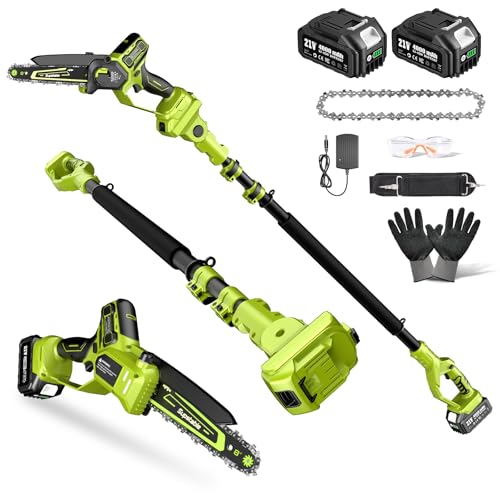
Supstable 2-in-1 Pole Saw
- 16ft telescoping reach
- 6in and 8in bars
- Two 4.0Ah batteries
- 100 minute runtime

Greenworks 40V 8-Inch Pole Saw
- Aluminum shaft
- 11ft max reach
- Automatic chain oiler
- 7.8 pounds
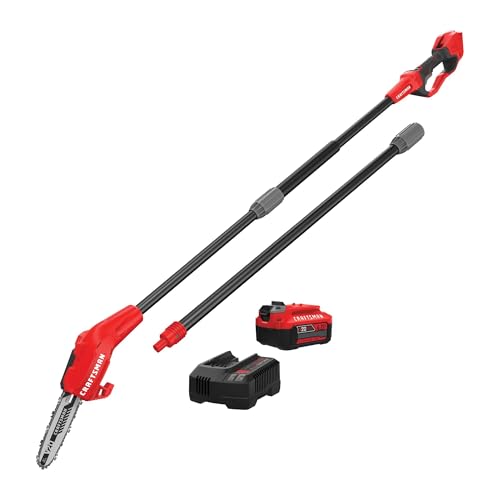
CRAFTSMAN V20 Cordless Pole Saw
- 14ft reach
- 8in high speed steel bar
- 325 cuts per charge
- 6 pounds
Two of those three are powered and one decision away from each other, so let me explain the split. The Supstable is the only tool here that converts from a handheld mini chainsaw to a pole saw with no tools at all, and its 16 foot reach is the longest of any powered option in this roundup. The Greenworks gets the nod for people who care more about how the saw feels in their hands at full extension, because its aluminum shaft is stiffer than the fiberglass and sectioned poles most rivals use. The CRAFTSMAN simply weighs 6 pounds, which matters more than most spec sheets admit once you are holding it overhead.
All 10 Pole Saws Compared Side by Side in 2026
| Product | Key Specs | Action |
|---|---|---|
| Supstable 2-in-1 Cordless Pole Saw |
|
Check Latest Price |
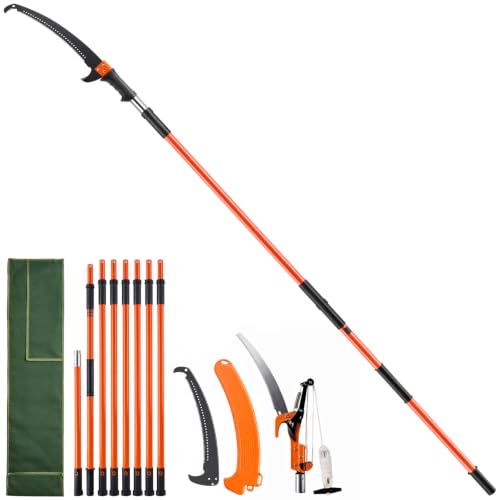 VEVOR Manual Pole Saw 7.3-27ft VEVOR Manual Pole Saw 7.3-27ft |
|
Check Latest Price |
| CRAFTSMAN V20 Cordless Pole Saw |
|
Check Latest Price |
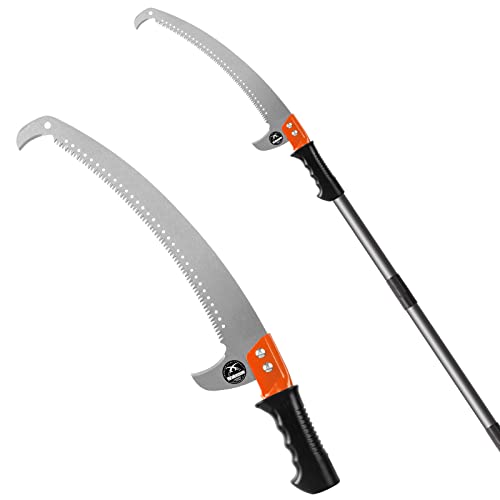 Walensee 14FT 2-in-1 Manual Pole Saw Walensee 14FT 2-in-1 Manual Pole Saw |
|
Check Latest Price |
| Greenworks 40V 8-Inch Cordless Pole Saw |
|
Check Latest Price |
 Likeem 27FT Manual Pole Saw Likeem 27FT Manual Pole Saw |
|
Check Latest Price |
 LETYANGER 7.3-27FT Pole Saw and Pruner Kit LETYANGER 7.3-27FT Pole Saw and Pruner Kit |
|
Check Latest Price |
 SKIL PWR CORE 40 10-Inch Pole Saw SKIL PWR CORE 40 10-Inch Pole Saw |
|
Check Latest Price |
 Greenworks 60V 10-Inch Electric Pole Saw Greenworks 60V 10-Inch Electric Pole Saw |
|
Check Latest Price |
 TONYINGO 5-24FT Manual Pole Saw TONYINGO 5-24FT Manual Pole Saw |
|
Check Latest Price |
Two columns deserve a note before we get into the individual entries. First, reach figures in the table are the manufacturers' own numbers, and for the manual saws they are measured from the ground with an average person standing flat-footed, not from your own shoulder height. Second, this list is deliberately not ten near-identical battery saws. Four entries are manual, which is unusual for a roundup and exactly what a genuinely tall tree demands.
1. Supstable 2-in-1 Cordless Pole Saw - Longest Powered Reach and Tool-Free Conversion
Electric Pole Saws for Tree Trimming, 8 Inch & 6 Inch Mini Chainsaw Cordless with Extension Pole...
16ft reach
6in and 8in bars
2x 4.0Ah batteries, 100 min runtime
+ Pros
- 16ft reach is the longest powered option in this roundup
- Converts from pole saw to handheld mini chainsaw with no tools
- Two 4.0Ah batteries let you swap while one charges
- 180-degree adjustable head
- Generous box includes spare chain plus gloves and belt
- Cons
- Chain needs frequent re-tensioning
- Chains dull quickly and need periodic replacement
- Automatic oiler is unreliable so bar oil is a manual top-up
This is the pick I recommend to almost anyone starting out, and the reason is the conversion rather than the numbers. The saw head unbolts from the pole in seconds, so the same 800W brushless motor that handles a 15 foot branch also handles the hedge at waist height. Owners report making well over 300 cuts on a single charge, and the two-battery setup is what makes that possible: one pack in the tool, one on the charger.
At 16 feet of reach it out-extends every other powered saw in this roundup, which pushes it closer to the manual saws' territory than any competitor. The 180-degree adjustable head means you are not stuck cutting from one angle, and the auto oiling system has a transparent window so you can see the level instead of guessing.
The honest weakness is chain maintenance. Reviewers consistently report re-tensioning mid-job, chains that dull faster than the bar deserves, and an auto oiler that needs manual refilling once or twice a day of cutting. None of that is dangerous, but it is friction, and if you are the kind of person who will not touch a wrench this is not your saw.
What the 6 and 8 Inch Bars Actually Mean
Two bars ship in the box, which solves the reach-versus-capacity problem neatly. The 6 inch bar is lighter and faster, and it is the right choice for the last foot or two of a high branch where the wood is thin. The 8 inch bar is where the real cutting work happens, and the manufacturer claims branches up to 8 inches, and experienced users generally put the honest limit for an 8 inch bar closer to 3 to 6 inches of hardwood.
That gap between claimed and real capacity is normal for the category, and it is why bar length should drive your purchase more than the motor wattage. A saw with more power and a shorter bar will always lose to a longer bar on tall trees.
Battery Life and Work-Through Setup
Two 4000mAh packs and a roughly 100 minute runtime per charge is a genuinely useful amount of working time. In practice that means a full morning of scattered pruning rather than one property's worth. The two-pack format also removes the anxiety of a single dead battery ending the job, which is the most common complaint people have with cheaper single-battery kits.
The charger running hot is worth knowing about if you are working in dry brush, but it is a normal behavior for a fast charger of this type and not a fault.
Who This Saw Is Right For
Buy this one if your highest branches sit under 16 feet, if you want a chainsaw that also does hedges and small logs, and if you are not precious about the tools in your shed sharing a battery ecosystem. The included kit is unusually complete: two batteries, a charger, a spare chain, a spare blade sleeve, gloves, and a pole belt that actually helps at height.
Skip it if you need to cut limbs more than about 6 inches thick, if your branches live above 20 feet, or if a loose chain would bother you more than a slightly shorter reach would.
2. VEVOR Manual Pole Saw - Adjustable 7.3 to 27 Foot Reach for Light Growth
VEVOR Manual Pole Saw, 7.3-27 ft Extendable Tree Pruner, Sharp Steel Blade and Scissors High...
Manual 7.3-27ft range
8 fiberglass sections
Teflon carbon steel blade
+ Pros
- Adapts from 7.3 to 27 feet so the pole matches the job
- Dual hooks at both ends of the blade keep teeth in the cut
- Double-lock joints reduce pole flex
- Detaches into a handheld pruning saw
- Spare blade
- sleeve and bag included
- Cons
- Significant shaft flex beyond roughly 15 feet
- Thin blade flexes under heavy load
- Scissor head lacks mechanical advantage over about half an inch
This is the tool for someone whose problem is height rather than diameter. Eight fiberglass sections take it from 7.3 feet to 27 feet, which means one purchase covers a 10 foot job on a Tuesday and a 25 foot job later in the year. There is no motor, no battery, and no fuel, so it will start in cold rain when everything else on the shelf has dried its hands.
The teflon-coated carbon steel blade carries hooks at both the top and the bottom. That detail matters more than it sounds: the upper hook helps you pull the saw out of a cut where the branch has closed around it, and the lower hook lets you snag a twig and drag it back into position. Both are things you will miss immediately if you have used a plain blade.
Where the Shaft Flex Bites
Reviewers split cleanly at extension. Below about 15 feet the double-lock joints hold and the saw feels solid. Past that point the fiberglass shaft bows noticeably, and the control problem gets real once you are working on a branch that is trying to fall in an unexpected direction.
There is also a fair divide on the blade itself. Many users call the 0.05 inch carbon steel blade efficient with little force needed, and a smaller group describe it as too thin for hard work. The difference is almost always the wood species. Soft growth, dead twigs, palm frond stems and fresh spring growth suit it well. Dried oak does not.
The Scissor Head Is a Twig Tool, Not a Branch Tool
The included manganese steel scissors head runs on an 11.5 foot nylon rope through a pulley system, and it is genuinely useful for dead twigs and small suckers. It is not a lopper in the 1 inch sense, and reviewers are blunt about that: mechanical advantage runs out at roughly a half inch of diameter.
Treat it as a tidying accessory rather than a cutting head. When it matters, swap to the saw head, which is the reason the saw head and the pruner head are separate pieces.
Who This Saw Is Right For
It suits acreage owners and anyone managing hedgerows, fruit trees, or tall conifers where the growth is mostly under 3 inches. The detachable handheld mode is a genuine bonus, because the shortest configuration is a perfectly good pruning saw for work you would otherwise do on a ladder.
Pass on it if you have any upper body concerns, since the listing weight is 14.8 pounds before you even factor in the flex at full extension. A 27 foot working length is a capability claim more than a practical one.
3. CRAFTSMAN V20 Cordless Pole Saw - 6 Pounds and 14 Feet of Reach
CRAFTSMAN V20 Cordless Pole Saw, 14-Foot, Battery and Charger Included, Pole Saws for Tree Trimming...
14ft reach
8in high speed steel bar
325 cuts per charge
6 pounds
+ Pros
- Only 6 pounds in the powered category
- 14-foot reach handles high limbs without a ladder
- 4.0Ah battery covers a full morning of trimming
- Angled head and blade give clean precision cuts
- Shares the V20 battery platform with other CRAFTSMAN tools
- Cons
- Pole feels flimsy with visible head wobble at full extension
- Extension joint loosens during use and needs retightening
- No automatic chain oiler and a very small oil bottle
Weight is the spec nobody puts on a spec sheet and everybody notices at 14 feet. At 6 pounds this is the lightest powered pole saw here, and that is not a rounding error. When the head is at the end of a long pole, every extra pound becomes torque at your hands, and a 6 pound tool is the difference between a controlled cut and a tired one for anyone over 50.
It also does real work. Owners report cutting several inch limbs with little effort, and the manufacturer rates it at up to 325 cuts per charge on the included 4.0Ah pack. The angled head and blade are designed to cut down onto a branch rather than into its side, which is the geometry you want for overhead work.
Runtime and the V20 Platform Advantage
One 4.0Ah lithium-ion battery and a charger are included, so there is nothing to buy before the first cut. The stated 325 cuts per charge is a manufacturer figure measured on a specific branch size, but it lines up with what owners describe as a full morning of trimming on one pack.
If you already own CRAFTSMAN V20 tools, this is the strongest buy in the roundup on a cost-per-use basis. Owners with existing V20 batteries single this out as the reason to choose it, and the same logic applies to any platform in this list. Buying a second battery for a platform you own beats buying a whole new setup for the privilege of a slightly different saw.
Flex, Joints and the Missing Oiler
The two-piece pole is the weak point. At full extension owners report visible wobble in the head, and the extension joint loosens during use and wants periodic tightening. Neither issue is dangerous on its own, but wobble makes it harder to place a cut accurately at height, which is exactly when precision matters most.
There is also no automatic chain oiler. The included oil bottle is small, and manual oiling during a long session is an extra step. Check the chain before you start and top up between cuts rather than trying to oil mid-branch.
Who This Saw Is Right For
This is the one I would put in the hands of an older homeowner, or anyone who already owns V20 batteries. Dense cypress and typical oak limb work is well within its ability, and 14 feet of reach covers most residential trees without any ladder at all.
It is not the answer above about 15 feet, and the lack of an auto oiler makes it a poor choice for anyone cutting a large volume of dry wood. If those describe you, the Greenworks below or the SKIL both do the job with less fuss.
4. Walensee 14FT Manual Pole Saw - Sharp Triple-Ground Teeth for Smaller Limbs
14FT Pole Saw for Tree Trimming 2-in-1 Hand Saw Steel Blade Extension Pole
Manual 14ft
Triple-ground teeth, dual-hook blade
Detaches as handheld saw
+ Pros
- Triple-ground teeth and dual hooks give fast clean cuts
- Manganese steel blade is rust resistant and light
- Stainless powder-coated poles resist corrosion
- Reinforced locking screw holds the head firmly
- Detaches into a normal handheld pruning saw
- Cons
- Reach ceiling is modest next to 27 foot options
- Light-gauge pole limits thick hardwood capacity
- Multiple sections take time to assemble and disassemble
This is the manual saw to buy if 14 feet is genuinely enough, and for a lot of residential trees it is. At about 4.7 pounds assembled it is the lightest tool in this roundup, which makes it far easier to control overhead than the long-reach manual pruners.
The blade is the reason. Triple-ground teeth on manganese steel are sharp out of the box and stay sharp, and the dual-hook design both pulls branches toward you and gives you control on the return stroke. Owners pruning oak, pine, fir and palm singles out the cutting quality, and the blade is detachable so it works as an ordinary handheld saw.
Sections, Locking and Rust
The 14 foot version is built from stainless steel extension sections of roughly 1.3 feet each, and the same head and pole kit is also configured at 7.7 and 10 feet. That modularity is useful if you move, but it does mean assembly and disassembly take real time compared with a two-piece powered pole.
The powder coating on the poles is not a gimmick. Manual pole saws live outdoors in rain and sap, and corrosion at the joints is what usually kills them first, so stainless and coated sections are worth a look when two otherwise similar tools differ on that detail.
Where the Capacity Ceiling Sits
This is a 2 to 3 inch branch saw and it is honest about that. The serrated blade and the light-gauge pole both work against thick hardwood, and reviewers consistently name the reach ceiling and the light construction as the limiting factors.
That makes it a genuinely good pairing with one of the powered saws. Use the Walensee for everything thin and high, and keep a battery saw on the truck for the branches too thick to pull on.
Who This Saw Is Right For
It suits a homeowner clearing seasonal light growth, an orchard where most of the pruning is finger-thick, or anyone who wants a saw that costs little, weighs almost nothing, and does not care about weather. It detaches into a handheld tool, so it is not a single-purpose purchase.
Choose something else if your branches run past 3 inches, or if you are working above 14 feet regularly. A saw that runs out of reach on a mature tree is worse than no saw at all, because it is the one that sends you up a ladder.
5. Greenworks 40V 8-Inch Cordless Pole Saw - Rigid Aluminum Shaft and an Auto Oiler
Greenworks 40V 8-Inch Cordless Polesaw, 2.0Ah Battery and Charger Included PS40B210
8in bar and chain
3-piece aluminum shaft, 11ft reach
Auto chain oiler
+ Pros
- Aluminum shaft stays rigid and is lighter than fiberglass
- Automatic oiler means no manual lubrication
- Tool-free quick chain adjustment
- Battery counterbalances the saw head
- Shares the Greenworks 40V platform
- Cons
- Chain may arrive too tight and need adjusting first
- Oiler needs the cover removed periodically to clear chips
- 2.0Ah is the smallest pack in the range
This saw is built around one idea: keep the shaft stiff. The 3-piece extendable aluminum shaft reaches 9 feet and gives 11 feet of total reach, and owners who have used competing fiberglass poles consistently single out the aluminum as both stiffer and lighter. At full extension that is the difference between a controlled cut and hunting for the branch.
The 4.5 star rating comes on a 1,954 review base, one of the larger sample sizes here. The recurring theme in those reviews is straightforward: it cuts dead and live branches of several inches without drama, and it starts instantly with no cord, no fuel and no emissions.
The Automatic Oiler Is Worth Real Money
On a long session the auto oiler is not a convenience feature, it is a chain life feature. A chain that runs dry dulls fast, and a dull chain needs more force, and more force at height is exactly what you do not want. Reviewers treat the automatic chain oiler as a headline reason this saw holds its rating over time.
The one maintenance note is that the oiler path does need the chain cover removed occasionally to clear chips and debris. It is a two-minute job done with a gloved hand and a brush.
Reach Limits and the 2.0Ah Battery
Reach on this one is a good match for pruning the lower and middle canopy, which is where most residential work happens. It is not the top pick for genuinely tall trees, because eleven feet of total reach runs out well before the top of a mature specimen.
The included 2.0Ah battery is the smallest capacity in the Greenworks range. Higher capacity packs are available on the same platform and add meaningful runtime, which is the argument for buying into the platform rather than around it.
Who This Saw Is Right For
It fits anyone who wants a pole saw with a long service life, hates the smell and pull cord of gas, and owns other 40V tools. The 7.8 pound weight is light for a powered saw of this class, and the automatic oiler means less fuss between jobs.
Setup is the one thing to budget time for. The chain can arrive too tight and want adjusting before the first cut, which is a common complaint with this model, and it is a five-minute job with a wrench that is already in the box. Once it is dialled in, the tool-free adjustment makes every subsequent check quick.
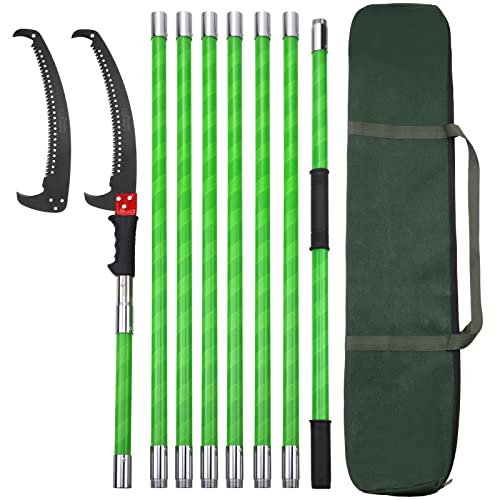
6. Likeem 27FT Manual Pole Saw - Screw-Together Sections That Survive Full Extension
27 Feet Tree Pole Pruner Manual Branches Trimmer Tree Branch Garden Tools Loppers Hand Pole Saws...
Manual 27ft reach
Screw-together epoxy sections
Alloy steel head with hooks
+ Pros
- Reaches limbs around 25 to 30 feet without a ladder
- Screw-together joints hold strength better than friction-fit telescopes
- Rounded blade cuts thick limbs cleanly
- Two blades and a carry bag included
- Spare sections can be replaced individually
- Cons
- Very heavy and awkward to control at full extension
- Sections can start unscrewing mid-use
- Threads can cross-thread if left assembled too long
This is the answer for the person who keeps looking up at a 25 foot branch and shrugging at their 14 foot saw. The screw-together sections extend to 27 feet, and the important difference from every other long manual saw in this roundup is how the joints are made. Screw threads compress metal against metal. Telescoping friction fittings depend on a clamp holding, and they loosen.
Owners with 1,021 reviews rate it 4.5 stars, and the cutting feedback is strong across the board. Reviewers pruning palm and Bradford pear call out the rounded blade profile and the hooks at both ends, and note that the blade is stiff enough not to bend on thicker limbs.
Heavy, Flexing, and Honest About It
Nobody claims this saw is pleasant at 27 feet. Reviewers describe a pole that flexes heavily but springs back without breaking, and describe needing rest breaks during long trimming sessions. That is the trade for reach, and it is a trade most people make willingly once they see a 25 foot limb come down.
The flex is the reason to work at 20 to 22 feet rather than fully extended unless the branch is thin. At that working length the tool is controllable and the reach is still well past anything a homeowner battery saw can do.
Hardware Details That Matter
Two details separate this from cheaper equivalents. The saw head connecting rod is fixed with two screws rather than one, which is a real improvement on a head that carries load at the end of a long lever. And the rounded blade profile is claimed to resist bending and breakage in a way a flat profile is not.
Against that, the lower rubber grips can slide off, and the threads are unforgiving if you cross-thread them. Tighten by hand until snug, do not wrench them.
Who This Saw Is Right For
It is for the landowner with mature trees on acreage, the storm cleanup after a branch drops across a driveway, and anyone who has decided ladders are not part of the job. If the branch is over 20 feet, this class of tool is the only sensible answer that fits in a vehicle.
It is a poor fit if you have shoulder or back issues, or if you plan to make a few cuts a year. For occasional work a shorter, lighter manual saw or a battery saw is easier to justify.
7. LETYANGER 7.3-27FT Pole Saw Kit - Two Heads at 9.5 Pounds Assembled
7.3-27FT Extendable Long Handle Pole Saw with Blade and Branch Scissors
7.3-27ft range, 7 poles
Saw head plus pruner head
65Mn alloy blade
+ Pros
- Only 9.5 pounds assembled
- well under other 27 foot manual pruners
- Thickened epoxy resin poles with aluminum alloy joints
- 65Mn alloy steel blade cuts better than plain carbon steel
- Includes both a saw head and a pruner head plus a spare saw and sheath
- High-visibility yellow finish
- Cons
- Still hard to control at the full 27 foot setting
- Manufacturer recommends a back support for long sessions
- Many configurations between the two extremes
The headline number here is 9.5 pounds for the full seven-section configuration with a head attached. That is several pounds lighter than the 14.8 pound 27 foot manual pruner in this roundup, and light weight is the single biggest factor in whether a long pole is controllable overhead.
It also gives you a saw head and a separate pruner head in the box, plus a spare saw, a sheath and a carry bag. Seven pole sections give roughly 7.3 to 27 feet of range, and the three-direction pulley system on the pruner reduces the force needed to close it.
65Mn Steel and Epoxy Joints
The blade material is the differentiator versus most manual pruners. 65Mn alloy steel is a harder steel than the plain carbon used on cheaper saws, and owners notice it on harder growth. The pole joints use thickened epoxy resin rods with aluminum alloy fittings, which is where cheaper kits twist.
The high-visibility yellow is not a gimmick either. When you are extended to 20 feet near a driveway, being visible to anyone approaching matters.
Use the Manufacturer's Own Advice
The brand recommends working at about 20 feet rather than at full extension, and owners echo that guidance directly when they describe fatigue at maximum reach. That is a reasonable piece of advice to follow: the difference between 20 and 27 feet is rarely worth the loss of control.
A back support is also suggested for extended sessions. It is one of the few accessories worth adding to a manual pole saw, because it transfers the load from your arms to your hips.
Who This Saw Is Right For
Choose this one if you want maximum reach, a lopper and a saw in a single purchase, and the lightest way to carry that combination. It is the most complete package in the manual category and the one most likely to replace a second tool in your shed.
Pass if you only have a few thin branches to cut, because a 7 to 27 foot telescoping design is more than the job needs. The pruner head also remains limited to smaller diameter growth, so keep a powered saw for anything heavy.
8. SKIL PWR CORE 40 10-Inch Pole Saw - Angled Head That Cuts Down Onto the Branch
SKIL PWR CORE 40 Brushless 40V 10'' Pole Saw Kit with Over 9ft. Telescoping Shaft & Angled Head...
10in high speed steel bar
Over 9ft telescoping shaft, angled head
40V brushless
+ Pros
- Angled head cuts down onto the branch instead of into its side
- 10in bar handles 4 to 5 inch hardwood branches
- Integrated telescoping extension adds reach in seconds
- Tool-less chain tensioning dial
- 5-year limited warranty
- Cons
- Top-heavy and unwieldy at full extension for some users
- Bar oil can leak slightly in storage
- Adding chain oil is awkward and prone to spilling
The angled head is the feature to understand here, and it changes how the saw cuts. Most pole saws drive the bar into the side of a branch, which pinches the kerf and makes the cut bind. An angled head approaches from above, cutting down onto the wood, which is a cleaner entry and a far better way to finish a cut on a heavy branch.
The 10 inch bar is longer than most saws in this roundup, and owners report it moving through 4 to 5 inch hardwood branches without difficulty. The 500W digital brushless motor is unusually strong for the class, and the PWR CORE 40 2.5Ah pack holds its charge through a run of large branches.
Telescoping Versus Sectioned Poles
Rather than bolting on an extra tube, this shaft telescopes in place, adding a couple of feet in seconds and collapsing back for storage. That matters on a truck or in a garage where a 9 foot rigid pole is awkward to live with.
The trade-off is the top-heavy feel owners mention. At full extension the head is the heaviest part of the tool by some distance, and a handful of users find it unwieldy. If you are smaller in stature or older, test it at full extension before you commit.
Oil Handling and the Auto PWR JUMP Charger
Chain oil handling is the most consistent complaint. Adding oil is awkward and prone to spilling, and the bar can leak a little oil during storage. Neither affects cutting, but both are annoying in a shed.
The Auto PWR JUMP charger is a genuine convenience with a 2.5Ah pack, because it charges while the pack cools rather than after. The four-LED charge indicator and the tool-less chain tensioning dial are small quality-of-life touches that remove the two most common setup frustrations.
Who This Saw Is Right For
It fits a landowner managing a mix of trees where branches run 4 to 5 inches and the reach ceiling of 9 feet of shaft is enough. Owners with acreage work rate it highly for exactly that reason, and the 5-year warranty is the longest of the warranties listed here.
It is not the lightest option at 12.9 pounds, and it comes with no pruner head, so if your work is mostly thin twigs and small live growth you will be hand-kerfing rather than clipping. Pair it with a manual pole saw if your trees need both.
9. Greenworks 60V 10-Inch Electric Pole Saw - Gas-Equivalent Power With 14.5 Foot Reach
Greenworks 60V 10 in Electric Pole Saw, 2.0 Ah Battery and Charger
60V brushless, 21cc gas-equivalent
10in bar
14.5ft max reach
+ Pros
- Brushless motor delivers fade-free 21cc gas-equivalent power
- 10in bar handles larger branches than 8in saws
- 14.5ft reach from a three-piece aluminum shaft
- Push-button start with no pull cord or choking
- Shoulder strap included for working at height
- Cons
- 12.1 pounds is heavy for a 60V pole saw
- 2.0Ah pack gives the shortest runtime in the 60V range
- No pruner head for small twigs
This is the reach-versus-power compromise at its most interesting. A 60V brushless motor rated at 21cc gas-equivalent drives the chain up to 43 feet per second, which is a different class of cutting from the small 8 inch battery saws, and the three-piece aluminum shaft still gives 14.5 feet of total reach.
It starts on a button. No pull cord, no choke, no priming, and the variable speed trigger means you can creep up to a cut and then hold speed through it. The automatic oiler has a transparent fill window, so oil level is a glance rather than a guess.
Cutting Speed Versus Battery Capacity
Chain speed of 43 feet per second and 6,823 rpm on a 15-degree pitch 10 inch bar is what lets it take branches that stall smaller saws. The trade is capacity: the included 2.0Ah pack is the smallest in the 60V line and gives up to 120 cuts per charge, with a 40 minute recharge on the rapid charger.
For heavy work you will want a higher-capacity pack from the same platform. That is fine, because the same battery fits 75 other Greenworks 60V products, and the 4-year tool and battery warranty covers both.
Weight Is the Trade for the Bigger Bar
At 12.1 pounds this is the second-heaviest powered saw here, and the review base of 157 is the smallest. The reservations owners voice are consistent: the weight, and the small included battery. Neither is a flaw, but both are worth weighing if you already have a lighter saw.
What you get in return is reach and power together, which almost nothing else in this roundup does. If you want one powered tool rather than a pair, this is the one to consider.
Who This Saw Is Right For
It suits a property owner with larger mature trees who wants chain speed and a longer bar without a gas engine, and who is comfortable with a shoulder strap and a heavier tool overhead. The strap is included, which is a good sign about how the maker expects it to be used.
It is the wrong pick for thin-branch work, since there is no pruner head, and for anyone who wants the lightest tool at height. Check your existing batteries first, because 60V packs do not cross over into the 40V tools.
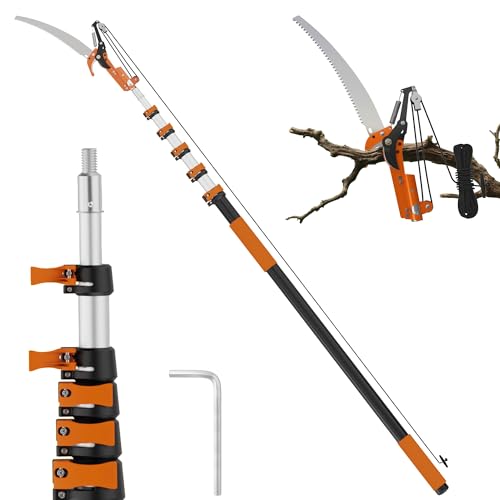
10. TONYINGO 5-24FT Manual Pole Saw - 30 Foot Reach at Only 6 Pounds
TONYINGO 30FT Reach Manual Pole Saw, Tree Trimming Pruner with 5-24 FT Extendable Flip & Screw Dual...
5-24ft pole, up to 30ft reach
13in alloy steel blade
3-pulley pruner head
+ Pros
- Up to 30 feet of overhead reach from a 24 foot pole
- Dual flip-and-screw locks stop accidental retraction
- Three-pulley pruner head reduces closing force
- Only 6 pounds for a tool with this reach
- EVA foam handle reduces hand fatigue
- Cons
- Telescoping aluminum feels less rigid at full extension than screw-together poles
- Reach figures measured from the ground rather than your own height
- Best suited to modest branch diameters
Six pounds for a pole that reaches up to 30 feet overhead is the standout number here, and it changes who can realistically use a long reach tool. The 24 foot telescoping pole breaks down to sections starting at 5 feet, so it packs into a car boot in a way the screw-together 27 foot pruners do not.
The 13 inch alloy steel blade is a long manual blade in this roundup, and the pruner head uses a three-pulley system to spread the closing force across your arm. Owners point to the flip-and-screw dual lock on each section as the detail that stops the pole retracting while you are mid-cut.
Where the Telescoping Trade Shows Up
Stiffness at full extension is the open question, and it is the same weakness that makes a telescoping joint different from a screw-together one. Owners report the sections feeling less rigid than screw-together poles when fully extended, which is a structural consequence of how the joints are made rather than a defect.
One specification note matters more than it sounds. The 30 foot reach figure is measured from the ground, not from your own overhead height, so treat it as a capability ceiling rather than a working length. Owners also fit it to oak, maple, pine and fruit trees for modest diameter work rather than heavy limbs.
Who This Saw Is Right For
It fits someone who needs to reach high but cannot comfortably handle a 14 pound pole, and who wants one tool that packs down small. The EVA foam handle is a genuine comfort feature for a tool you will hold overhead.
It is the wrong choice for thick limbs or for someone who needs a rock-stiff pole at maximum extension. If stiffness matters more than weight, the Likeem screw-together design above is the better answer.
How to Choose a Pole Saw for Your Trees
Work Out the Reach You Actually Need
Measure the height of the branch you want gone, not the height of the tree. Then add your own height plus the reach of your raised arm. If a branch sits 14 feet up and you are 5 foot 9 with an arm that adds roughly 1 foot 6 when raised, you have about 7 feet 3 of overhead reach before a pole enters the picture, which means you need a pole roughly 7 feet long to cut that branch comfortably.
Add a foot of margin on top of that. Branch tips move, your footing on uneven ground is not level, and being slightly short means repositioning every few cuts. Once you have a pole length, the rule is simple: anything up to 16 feet is comfortably handled by a powered cordless saw, and anything above 16 feet is a manual pole saw job.
If you are assembling other adjustable-pole gear at the same time, our trekking pole tent stakes guide covers the anchoring side of that problem, since a pole you cannot pin to the ground is a pole you cannot lean against.
Gas, Cordless or Manual: Which Power Source Fits
Battery has taken over the homeowner market, and it is not close. No pull cord, instant start, low noise, no exhaust near the tree you are pruning, and no carburetor to rebuild. The two limits are reach and per-charge work, and both are solved for you by simply staying under about 16 feet.
Manual is not the inferior option, it is a different instrument. A sharp blade on a 24 foot pole cuts living branches from 1 inch up as well as a battery saw does, needs no charging, and lasts essentially forever. Its cost is physical effort, and that is a real consideration for anyone with joint problems.
Gas still makes sense for sustained heavy cutting on thick deadwood, and on professional arborist forums the pro tier is where the real durability conversation happens. Owners running these tools daily talk far more about shaft reliability and weight than about price. If you are cutting multi-inch hardwood week after week, a gas professional saw is the honest recommendation, and we are not including one in this roundup because none of the pro models we verified were available in a configuration we could stand behind.
Bar Length and Cutting Capacity Are Not the Same Number
Bar length is the length of the guide bar. Cutting capacity is the thickest branch it can realistically close through. They correlate, but they are not equal, and manufacturer claims tend to describe the best case rather than the average case.
Use this rule instead. An 8 inch bar is a 3 to 6 inch branch tool in hardwood, a 10 inch bar is a 4 to 8 inch tool, and anything past 8 inches of hardwood is a different machine or a different day. A saw whose listing claims it cuts 8 inch branches is describing green wood, not dead oak. For tall trees this matters because the longer the bar, the more of the pole's length is spent as cutting head, which changes your effective reach.
Telescoping or Fixed Length, and What the Shaft Is Made Of
Screw-together sections hold their strength better than friction-fit telescoping poles because metal threads compress against metal rather than depending on a clamp. That is the structural difference behind the durability complaints that appear in owner reviews, and it is why the Likeem design holds up at full extension better than most.
Aluminum sections are stiffer and lighter than fiberglass or epoxy at the same diameter, which is why the Greenworks shaft gets singled out for feel. The trade is that telescoping designs of any material lose stiffness as they extend, and that is physics rather than a manufacturing fault. Work at 20 feet on a 27 foot pole rather than 27 feet, and the tool will feel like a different product.
On telescoping lengths specifically, the longest configurations in this roundup run 24 and 27 feet of pole. Add your own overhead height to that and you are looking at branches above 25 feet, which is genuinely tall tree territory and the reason these tools exist at all.
Battery Platform Lock-In: Buy the Saw, Not the Kit
This is the most repeated piece of advice in the pole saw communities we read, and it is correct. If you already own batteries on a platform, the saw that fits that platform is almost always the better purchase, even if a different model has better specs on paper. One ArboristSite owner put it plainly: it is only smart to buy the pole saw attachment, which is the cheaper choice, than buying a whole new set up.
The platforms represented here are Greenworks 40V and 60V, CRAFTSMAN V20, and SKIL PWR CORE 40. The Greenworks 60V saw alone shares its battery with more than 75 other products in that range, so the economics improve fast if you are buying the platform anyway.
One maintenance note that costs nothing and prevents the most common complaint we found in owner reviews: keep the oiler hole and oil path clean, or the bar stops getting oil. It is a thirty-second check with a brush, and a dry chain is the leading cause of chains that mysteriously stop cutting well.
When a Pole Saw Is the Wrong Tool
None of the ten saws on this list is appropriate for a branch thick enough to weigh more than you do, a trunk, or a tree that is leaning on a structure. That is arborist territory, and the definition of the boundary is simple: if a cut could drop more than about 8 inches of hardwood, stop and hire someone insured to do it.
The Undercut Step Arborists Insist On
Users on ArboristSite are unambiguous about this. One commenter frames it as a rule rather than a suggestion: under cuts are a must, because he does not want limbs falling on him at 65.
The undercut is the first cut you make, slicing upward into the branch from below, roughly a third of the way through. The branch then hinges downward on the wood left above the cut, breaking its own fibers and dropping free of the bark you were about to tear.
You make a second cut from above to finish the job. The result is a clean cut surface, a clean bark surface on the tree, and a branch that drops in a direction you chose rather than one it chose for you. The bark stripping that happens when you cut straight down through a branch is what leaves an ugly wound on the trunk, and it is also what sends a large piece of wood down in an uncontrolled direction.
Two more rules come from the same conversations. Never cut a branch that is hanging or that is likely to fall toward you, and never stand directly under the cut. Clear the area first, tell anyone nearby, and plan where the branch lands before you pull the trigger.
Kickback, Falling Limbs and Ladders
Kickback happens when the tip of the bar catches wood and the saw is driven back toward your face. Reduce it by keeping the tip clear, cutting with the underside of the bar where possible, and never forcing a cut that is not progressing. A blunt chain is a kickback risk because it makes you push.
On ladders, the consensus is simply that you should not be there. A pole saw exists so you can stay on the ground, and combining the two removes the safety margin entirely. A saw that reaches the branch should replace the ladder, not ride on it.
One last physical point that gets overlooked: total weight on the saw counts against your balance at height. A saw that is manageable on the ground becomes unwieldy when the head is 14 feet up. That is why the 6 pound CRAFTSMAN and the 6 pound TONYINGO earn their places in this list, and it is worth testing any heavy saw at full extension before you buy it.
Frequently Asked Questions
How high can you reach with a pole saw?
Your overhead reach equals your own height plus your raised arm plus the length of the pole. A 5 foot 9 person with a raised arm has roughly 7 feet 3 before a pole is added, so a 9 foot pole puts the cutting head at about 16 feet. That is the practical ceiling for most homeowner cordless saws, and anything higher needs a 24 or 27 foot manual pole saw.
What is the longest reach for a pole saw?
The longest reach among consumer pole saws is around 30 feet of overhead reach, from a 24 foot telescoping pole. Screw-together manual pruners reach 27 feet of pole, which puts the head at roughly 25 to 30 feet for a tall operator. Powered cordless saws top out near 16 feet of reach because bar length eats into the pole.
How long should a pole saw be for tall trees?
Measure the branch you want to cut, add your own height and raised arm reach, then add a foot of margin. Stay under 16 feet total reach for a cordless saw, and move to a 24 or 27 foot manual pole saw above that. The 15 to 20 foot band is where homeowner cordless saws run out of capability.
Do I need a pole saw or a pole pruner?
Use a pole pruner, which has a scissor-style bypass blade, for live green growth and thin branches up to about 1 inch. Use a pole saw with a chain or saw blade for anything over 1.5 inches or for deadwood. A pole pruner is a cutting blade rather than a chain, and users who do a lot of work often keep both.
Can a pole saw cut a whole tree?
No. A pole saw is designed for branches, and the honest limit for an 8 inch bar is roughly 3 to 6 inches of hardwood. If a cut could drop more than about 8 inches of wood, or if the tree is leaning on a structure, the work belongs to a certified arborist with climbing gear and a proper insurance policy.
Which Pole Saw Fits Your Trees Best
If your highest branches sit under 16 feet, start with the Supstable, which converts between a pole saw and a handheld chainsaw with no tools and reaches further than any other powered option here. If you already own CRAFTSMAN V20 batteries, take that saw instead and save the money. If you want the stiffest feel at full extension, the Greenworks 40V gets there on an aluminum shaft with an automatic oiler.
Above 16 feet, a manual pole saw is the only realistic answer. The Likeem is the strongest structure at full extension thanks to its screw-together sections, the LETYANGER is the lightest way to carry that much reach and includes both a saw and a pruner head, and the TONYINGO gets to roughly 30 feet of overhead reach at only 6 pounds. Pick on weight first and reach second, because an unwieldy tool is the one that ends up abandoned in a shed.
Whatever you choose for the best pole saws for tall trees, do the reach math before you buy, undercut every cut, and treat any branch over about 8 inches as a job for an arborist. That is what keeps a tall tree a manageable problem instead of a dangerous one. Updated for 2026.