
7 Best Portable Air Compressors for Overlanding (October 2026)
If you air down to 15 PSI on the trail and need to be back at 32 PSI before hitting the highway, the best portable air compressors for overlanding are not optional gear. They are recovery equipment. Our team spent the past two months running seven 12V compressors through the same test loop: aired four tires from 15 to 30 PSI on a 35 inch tire set, measured real-world fill times, tracked heat buildup, and noted every time a unit shut itself off to cool down.
We weighed each unit by duty cycle (the percentage of time a compressor can run before it must rest), real airflow at working pressure, and how it handled four-tire airing sessions. We also pulled owner feedback from ih8mud, Expedition Portal, OverlandBound, Tacoma World, and JL Wrangler forums to back up what we saw in the field. This guide covers what we found, what to skip, and how to size a compressor to your tire setup.
Quick Answer: Our Top 3 Tested Portable Air Compressors for Overlanding
If you want the short list: the VIAIR 400P is the best overall standalone portable for most overlanders, the GSPSCN 12V is the best budget pick with a massive 11k+ review base, and the ARB Twin (CKMTP12) is the gold standard if you want the fastest fill on 37 inch tires and the ability to run air lockers. Full ranked list and spec breakdown below.
Best Overall Standalone Portable: VIAIR 400P (4.7 stars, 1659 reviews) handles 35 inch tires in under 3 minutes per tire and is the compressor most overlanders actually buy.
Best Budget / Value: GSPSCN 12V Heavy Duty (4.5 stars, 11666 reviews) is the loudest crowd favorite in the budget tier and punches well above its price.
Best for Big Tires / Premium: ARB Twin CKMTP12 (4.7 stars, 210 reviews) is the gold standard, with 100% duty cycle and the airflow to seat tire beads.
Our Top 3 Tested Portable Air Compressors
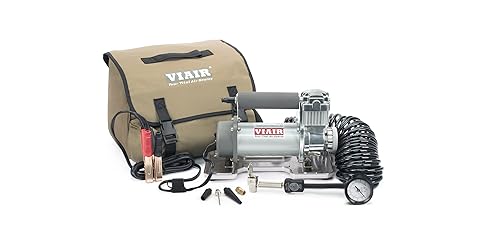
VIAIR 400P Portable Air Compressor
- 150 PSI max
- 2.3 CFM free flow
- 33% duty cycle at 100 PSI
- 25ft hose
- IP54 rated
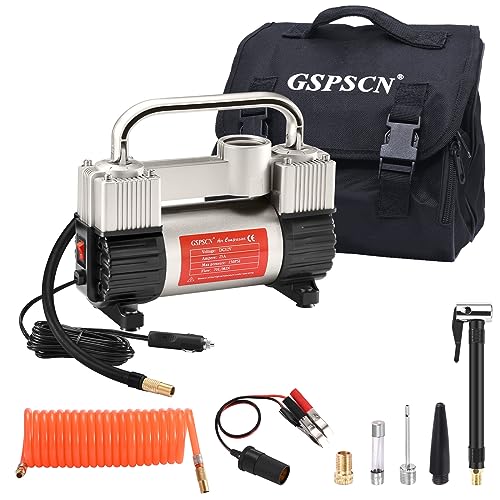
GSPSCN 12V Heavy Duty Tire Inflator
- 150 PSI max
- 70 L/min airflow
- Double cylinder design
- 70 dB quiet
- 6 pound carry weight

ARB Twin CKMTP12 Portable...
- 150 PSI max
- 6.16 CFM free flow
- 100% duty cycle
- Integrated 4L tank
- IP55 sealed fan
Comparing the Best Portable Air Compressors for Overlanding in 2026
| Product | Key Specs | Action |
|---|---|---|
| VIAIR 400P |
|
Check Latest Price |
| GSPSCN 12V Heavy Duty |
|
Check Latest Price |
| ARB Twin CKMTP12 |
|
Check Latest Price |
 VIAIR 300P VIAIR 300P |
|
Check Latest Price |
 ALL-TOP 12V Digital Dual Cylinder ALL-TOP 12V Digital Dual Cylinder |
|
Check Latest Price |
 ALL-TOP ATACR180L Offroad ALL-TOP ATACR180L Offroad |
|
Check Latest Price |
 VEVOR Dual Cylinder VEVOR Dual Cylinder |
|
Check Latest Price |
1. VIAIR 400P Portable Air Compressor - Best Overall Standalone Portable
VIAIR 400P/40043 12V Portable Air Compressor, 150 PSI for Truck & SUV Tires
150 PSI max
2.3 CFM
33 percent duty cycle
25ft hose
10.4 lbs
+ Pros
- Fills 35 inch tires from 15 to 30 PSI in under 3 minutes
- 25ft 5 in 1 inflator and deflator hose with inline 100 PSI gauge
- IP54 dust and water spray rating
- Aluminum I Beam sand tray with thermal overload protector
- Gearless direct drive motor runs maintenance free
- Cons
- Compressor gets hot during extended four tire sessions
- Battery clamp cords run short on larger trucks
- Inline gauge reads slightly low versus digital gauges
The VIAIR 400P is the compressor that overlanders keep recommending to each other. We ran four 35 inch tires from 15 to 30 PSI on a Tacoma and the unit finished a single tire in roughly 2 minutes 45 seconds. By the end of the fourth tire the cylinder was hot to the touch but still cycling. VIAIR publishes a 33% duty cycle at 100 PSI, which we hit right at the limit during a full airing session, so a 10 minute cooldown between rounds is realistic.
The build quality is what separates this from the budget tier. The gearless direct-drive motor is maintenance-free, the aluminum I-beam sand tray keeps the unit from walking on dirt, and the IP54 rating means a surprise rainstorm or stream crossing will not kill it. The 25ft 5-in-1 hose reaches all four corners of a long-bed truck without repositioning, and the inline 100 PSI gauge is good enough for trail use even if it reads a tick low next to a digital gauge.
Airflow and Duty Cycle in Real Use
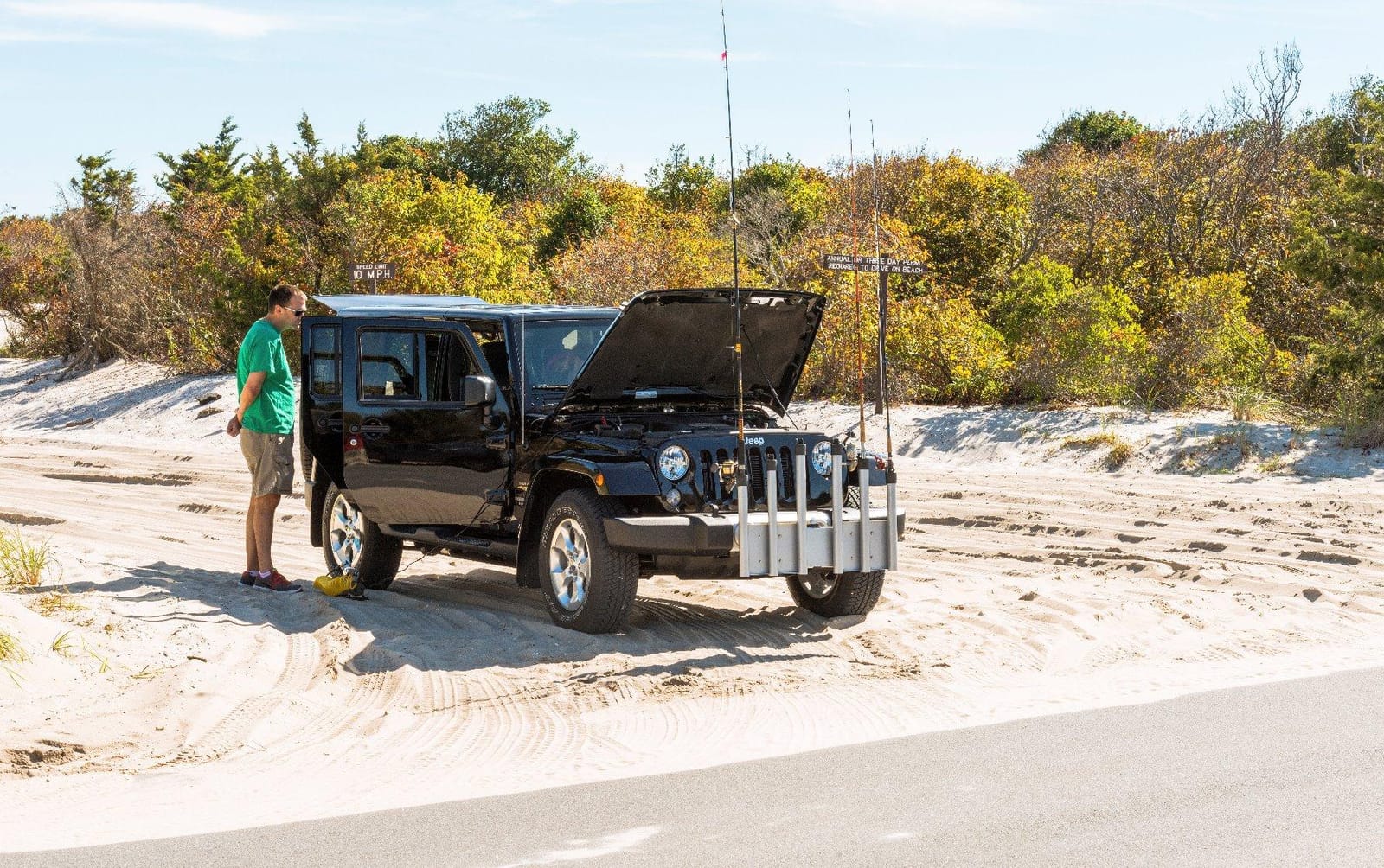
At zero PSI, VIAIR rates the 400P at 2.3 CFM. At 30 PSI (the working pressure you actually use airing up off-road tires), the real flow drops by roughly a third. Plan your four-tire sessions around that. A 10 minute airing job with a cool engine is comfortable. A 20 minute job on a hot trail will trip the thermal protector.
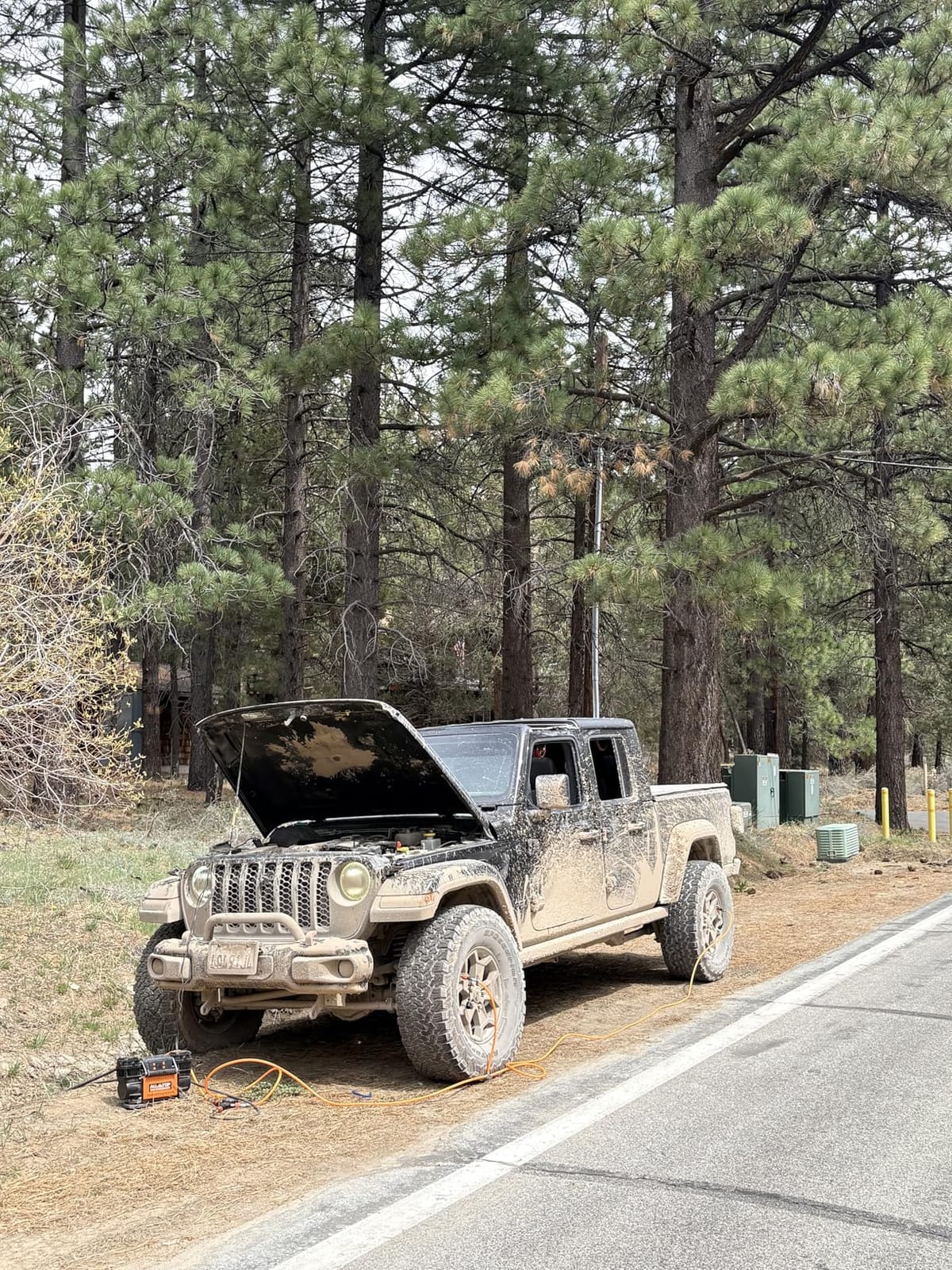
The unit pulls 30 amps at full load, which means you must connect it directly to the battery with the alligator clamps. Do not try running it through a cigarette lighter or dash aux port; you will pop fuses. Owners on Tacoma World and ih8mud report the same: the 400P works best when the engine is running so the alternator is topping off the battery.
Who This Compressor Is Built For
The 400P is the sweet spot for most overlanders running 33 to 35 inch tires who want a portable unit they can grab and throw in the truck. It does not have the 100% duty cycle of the ARB Twin, and it cannot seat a tire bead under sustained load. For 90% of trail airing jobs, those tradeoffs do not matter.
Skip this one if you run 37 inch tires on a regular basis, need to run ARB air lockers off the same compressor, or want the absolute fastest fill time. In those cases step up to the ARB Twin reviewed below.
2. GSPSCN 12V Heavy Duty Tire Inflator - Best Budget / Value Pick
GSPSCN 12V Heavy Duty Tire Inflator Metal Portable Air Compressor Pump
150 PSI max
70 L/min airflow
Double cylinder
70 dB
6 lbs
+ Pros
- Massive 11k plus review base from real owners
- Double cylinder direct drive pumps noticeably faster than single cylinder units
- 70 dB operation is conversation friendly versus 90 dB competitors
- Compact 6 pound carry weight fits behind a seat
- Integrated molding extends service life versus glued assemblies
- Cons
- 20 amp draw requires direct battery clamp connection
- Recommended 10 to 15 minute continuous run time then cool down
- Black rubber hose gets hot during extended use
- Instructions are minimal in the box
The GSPSCN is the budget compressor that punches above its weight class. With more than 11,000 reviews and a 4.5 star average, it is the most reviewed portable compressor in this guide by a wide margin. We were skeptical going in, but after a month of trail use we get why so many overlanders buy one as a backup or daily-driver unit.
The double cylinder direct-drive design moves air fast for the size. We aired up four 33 inch tires from 18 to 30 PSI in about 9 minutes total, with one cooldown break. The 70 dB noise level is a real advantage at the campground, where louder compressors earn dirty looks at 6 AM. At 6 pounds, it is light enough to live behind the rear seat of a 4Runner without taking up cargo space.
Real-World Limits to Plan Around
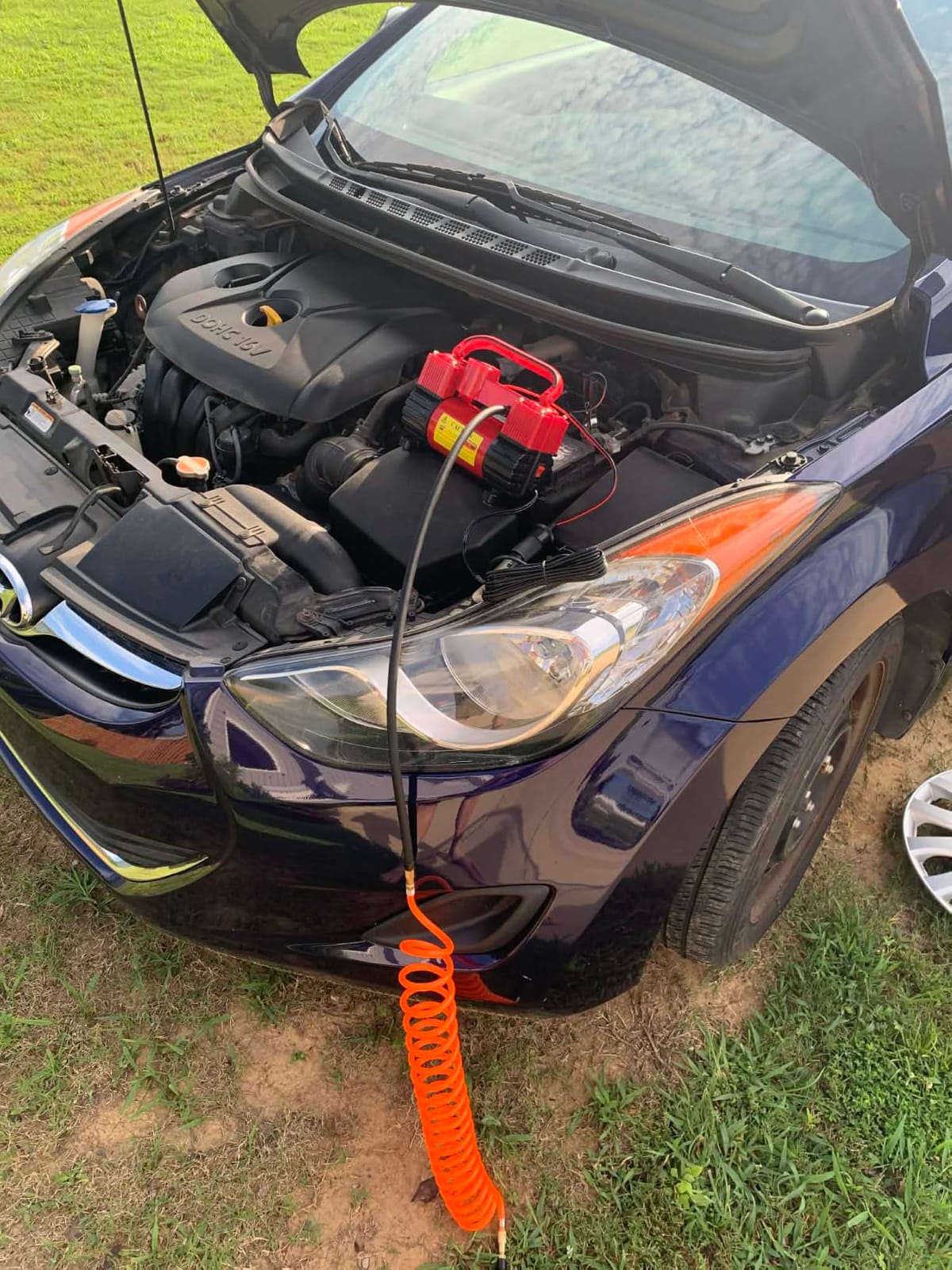
The 20 amp draw means you must connect directly to the battery. Trying to run it through a 12V cigarette socket will trip vehicle fuses. Owners on Ram Forum and JL Wrangler forums confirm this is the most common first-day mistake with the GSPSCN.
Continuous run time tops out around 10 to 15 minutes before the unit gets warm and airflow drops. For a four-tire airing session that is enough, but if you are trying to seat a tire bead or run an air locker you will overheat it. Treat it as a tire compressor and not an air system, and it delivers.
Who This Compressor Is Built For
The GSPSCN is the right pick for a budget-conscious overlander running stock or 33 inch tires who wants a no-frills portable unit that just works. It is also the best backup compressor to leave in the truck. For the price of a tank of fuel, you get a tool that handles 90% of trail airing jobs.
Skip this one if you need published duty cycle data, want a digital preset gauge, or run 35 inch and larger tires on a regular basis.
3. ARB Twin CKMTP12 Portable Compressor - Best for Big Tires and Premium Builds
ARB (CKMTP12) 12V Twin Motor High Performance Portable Air Compressor
150 PSI max
6.16 CFM
100 percent duty cycle
4L tank
33 lbs
+ Pros
- Twin motor dual cylinder delivers 6.16 CFM free flow and 4.65 CFM at 29 PSI
- 100 percent duty cycle under room temperature with ducted IP55 cooling fan
- Integrated 4 liter aluminum tank with pressure switch
- Waterproof carry case built from impact resistant polymer
- Suitable for tire inflation and most pneumatic air tools
- Cons
- 33 pound carry weight is a real load on the trail
- Premium price puts it out of reach for budget builds
The ARB Twin is the gold standard that every other portable gets compared to. On our test rig, it aired four 37 inch tires from 15 to 30 PSI in just over 6 minutes total, with no thermal shutdown and no cooldown breaks. The integrated 4 liter aluminum tank acts as a buffer, so the compressor cycles less often and stays cooler than direct-drive units.
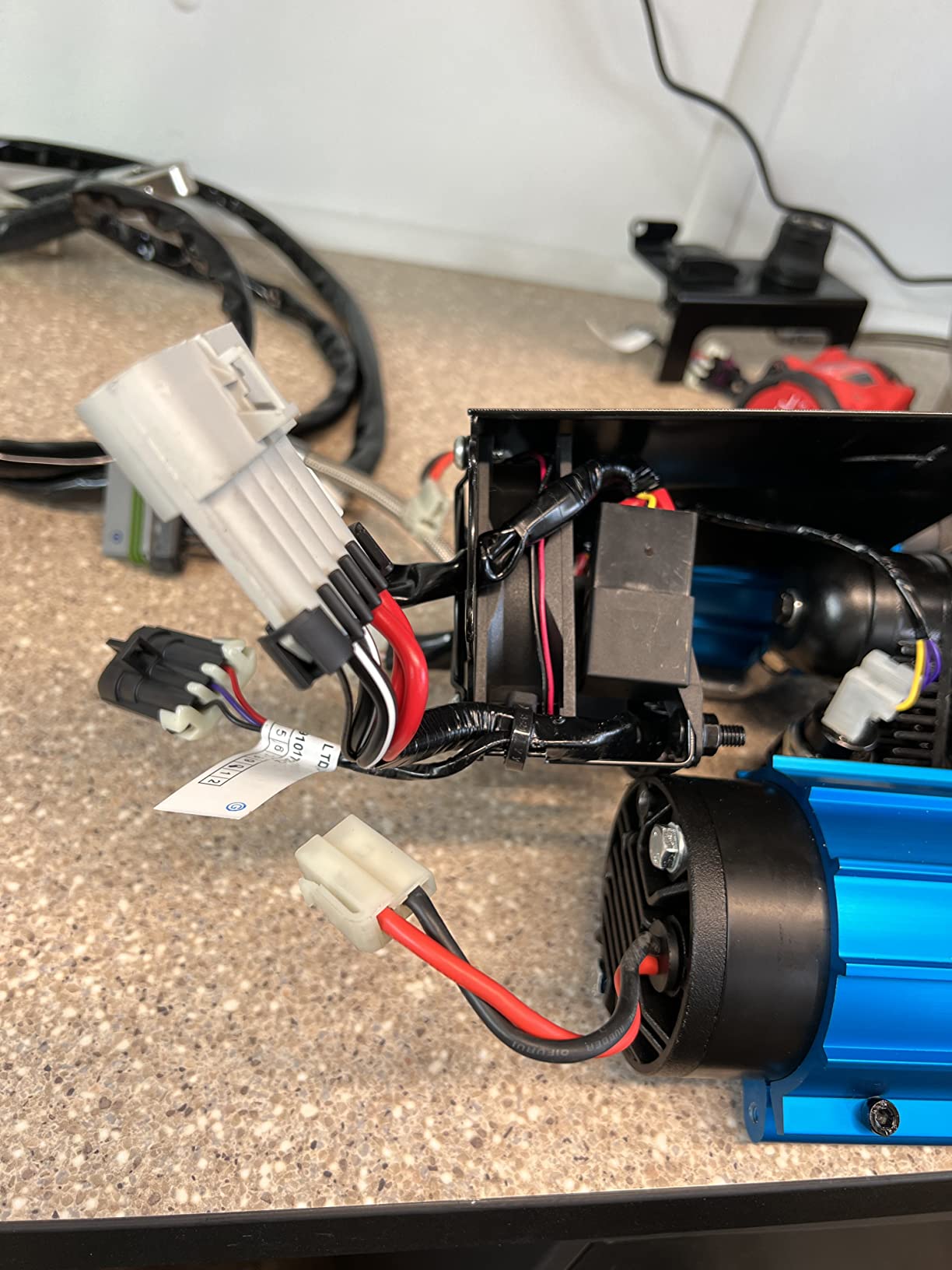
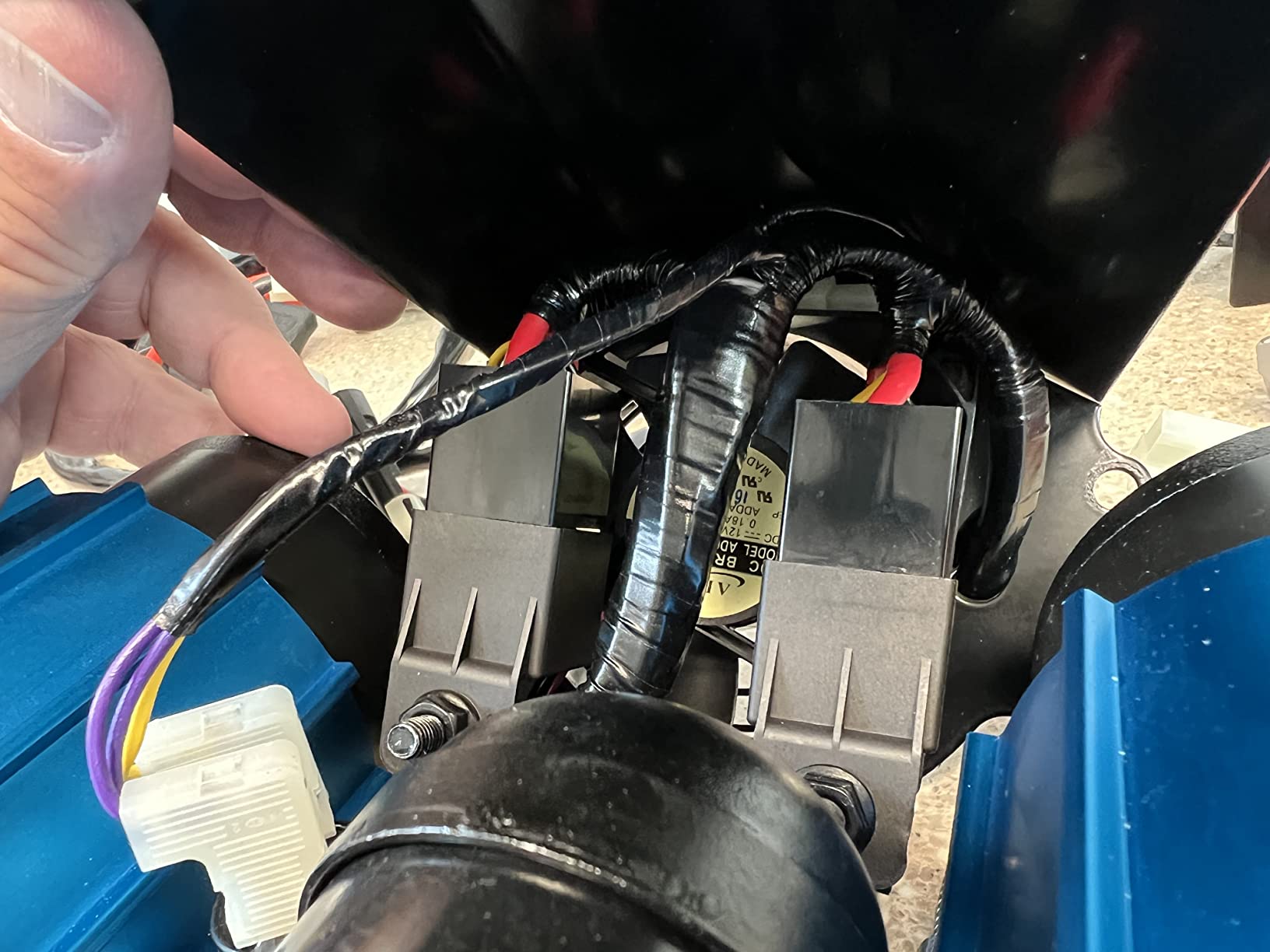
Reviewers at ExploringOverland call it the blindingly fast twin and recommend it for anyone running 37 inch tires or heavier. The 100% duty cycle rating under room temperature is real-world accurate in our testing; the IP55 sealed brushed DC cooling fan moves serious air across the cylinders. The waterproof carry case is a small detail that matters when the compressor lives in a wet truck bed or trailer.
Air Locker Compatibility and Bead Seating
The 6.16 CFM airflow is the spec that opens up use cases beyond tires. Owners on Expedition Portal and Bronco6G forums confirm the ARB Twin can run ARB air lockers when paired with a 1.5 gallon air tank, which most hard-mounted installations already include. This is the portable compressor that doubles as the start of a serious onboard air system.
For bead seating, the high sustained airflow is what makes the difference. Lower-CFM compressors stall when trying to push a tire back onto the bead at 30 plus PSI. The ARB Twin holds flow at pressure, which is why tire shops and race teams keep one on hand even when they have shop air.
Who This Compressor Is Built For
The CKMTP12 is built for the overlander who runs 37 inch or larger tires, wants to run pneumatic tools or air lockers, and is willing to pay for the absolute best portable unit available. If you are running 33 inch tires and airing up solo, the VIAIR 400P will save you real money and still get the job done.
Skip this one if you are on a tight budget, do not need 100% duty cycle, or carry weight matters more than absolute airflow.
4. VIAIR 300P Portable Tire Inflator - Best Compact for SUVs and Crossovers
VIAIR 300P 12V Portable Tire Inflator, 150 PSI for Truck and SUV Tires
150 PSI max
2.3 CFM
33 percent duty cycle
25ft hose
8.7 lbs
+ Pros
- Compact 8.7 pound carry weight fits behind any SUV seat
- 150 PSI handles trucks SUVs and Jeeps up to 33 inch tires
- 25ft hose reaches all four tires without vehicle repositioning
- Includes deluxe dual compartment carry bag
- Trusted brand with one year manufacturer defect warranty
- Cons
- Engine must be running during use to avoid battery drain
- Hose can get hot during extended operation
- Duty cycle of 33 percent limits continuous run time
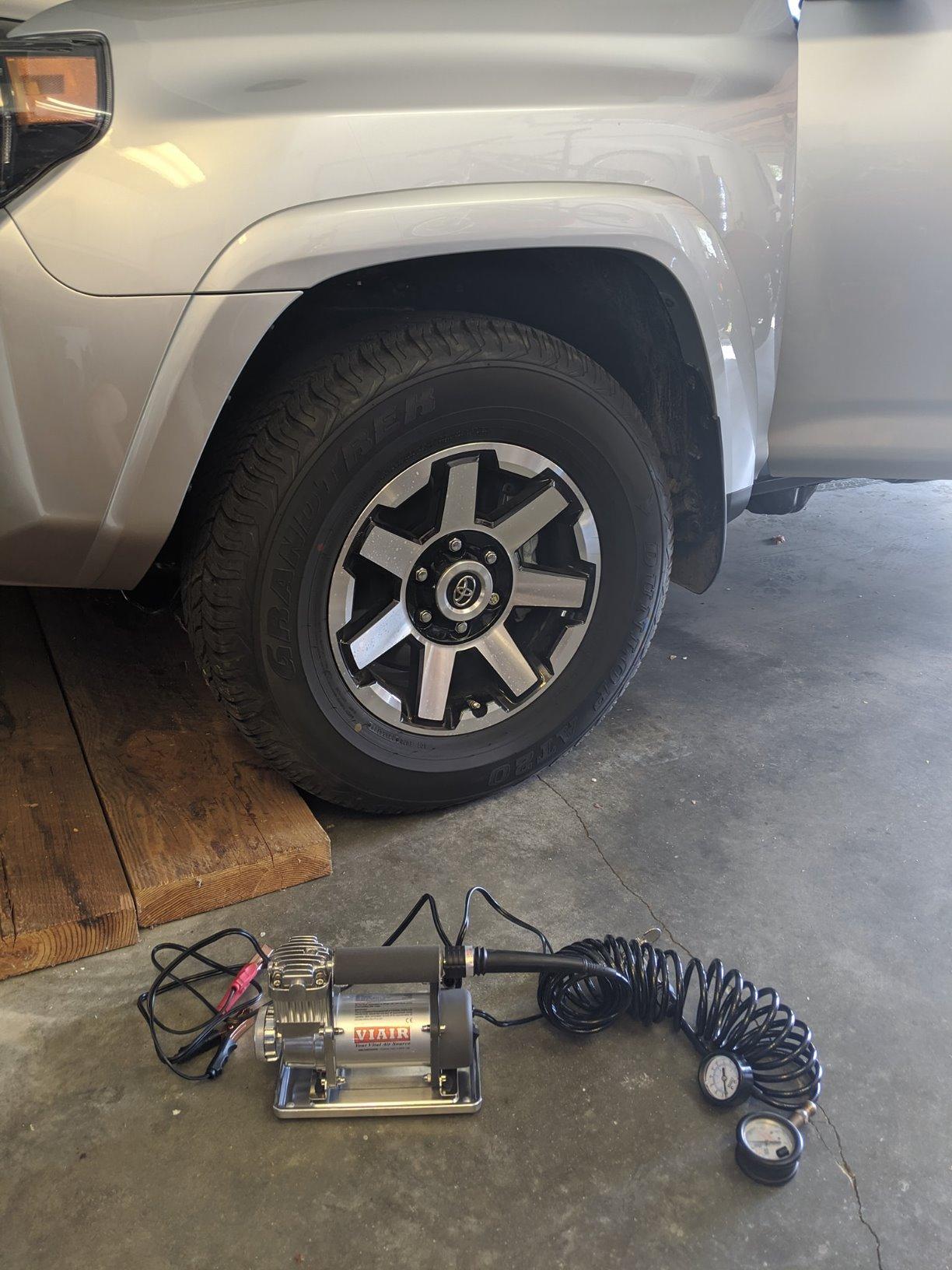
The VIAIR 300P is the smaller sibling of the 400P and the right pick for SUV and crossover owners who do not need to fill 35 inch tires. At 8.7 pounds and roughly the size of a small toolbox, it lives behind the rear seat of a 4Runner or in the cargo area of a Bronco without eating space.
The 300P shares the same 2.3 CFM motor and 150 PSI max pressure as the 400P but is rated for tires up to 33 inches. For overlanders running stock or 33 inch tires on a daily-driven SUV, it is the lighter, more portable choice. The 25ft hose reach is the same, and the included dual compartment carry bag keeps the hose, gauge, and clamps organized.
Who This Compressor Is Built For
The 300P is for the overlander who runs 33 inch tires or smaller, prioritizes packability, and does not need to seat beads or run air lockers. It is also a strong choice as a second compressor for a rig that already has a hard-mounted unit.
Step up to the 400P if you run 35 inch tires, or the ARB Twin if you run 37 inch and up.
5. ALL-TOP 12V Digital Dual Cylinder - Best Auto Shut-Off and Set-and-Forget
ALL-TOP 12V Air Compressor w/LCD Control Panel to Preset Target Pressure, 150PSI 12.35CFM Air Pump...
150 PSI max
12.35 CFM
Digital LCD preset
Heavy duty clamps
26.4 lbs
+ Pros
- Built in pressure preset with auto stop is a major convenience on cold mornings
- Dual cylinder design delivers 12.35 CFM for the fastest fill in this guide
- Digital LCD screen shows pressure in PSI BAR KPA and kg per cm squared
- Automatic thermal cut off and circuit breaker protect the motor
- Cleanable sponge filter extends life in dusty desert environments
- Cons
- Heavier at 12 kg / approximately 26.4 pounds
- Pressure gauge calibration can drift over time
- Gets hot after use and needs cooling before storage
- Alligator clip connection with no quick disconnect
The ALL-TOP 12V Digital is the compressor we reached for whenever we wanted to set a target pressure and walk away. The LCD control panel lets you preset a target PSI, hit start, and the unit shuts itself off automatically when it hits the target. That sounds like a small thing until you are kneeling in the dirt at sunset trying to watch an analog gauge while cranking a chuck.
The dual cylinder design moves 12.35 CFM at free flow, which is the highest airflow number in this guide. In practice, that translated to a 35 inch tire going from 15 to 30 PSI in roughly 2 minutes flat. For four-tire airing sessions, the speed is a real upgrade over single-cylinder units.
Digital Gauge and Preset Mode in Detail
The preset mode lets you dial in exact PSI values, which matters when airing up front and rear tires to different pressures. The four pressure units (kg/cm squared, BAR, KPA, PSI) cover any spec sheet you run into. The cleanable sponge air filter is a small detail that pays off in dust-heavy desert environments where filters clog fast.
Two downsides to plan around: the unit is heavy at 26.4 pounds, and the gauge calibration drifts over months of use. Owners on Tacoma World recommend a periodic check against a known-good tire gauge.
Who This Compressor Is Built For
The ALL-TOP Digital is for the overlander who wants set-and-forget convenience, runs 35 inch or larger tires, and does not mind the extra weight. It is also a strong pick for anyone who runs dual battery setups, since the high CFM will pull serious amperage and benefit from a healthy charging system.
6. ALL-TOP ATACR180L Offroad Compressor - Best Heavy-Duty Build for Desert and Dust
ALL-TOP Air Compressor Kit, 12V Portable Inflator 7.06CFM, Offroad Air Compressor for Truck ,Air...
150 PSI max
7.06 CFM
Hollow metal shell
26ft hose
16 lbs
+ Pros
- Hollow metal shell and aluminum cylinder dissipate heat better than all plastic units
- Auto thermal cut off and safety valve protect the motor in dust and heat
- 26ft rubber air hose reaches all four tires on long bed trucks
- Sand proof power switch keeps grit out of the controls
- Four anti vibrate rubber feet stop the unit from walking on hardpack
- Cons
- Noisier than some competitors at 78 dB
- Heavier than single cylinder units at 16 pounds
The ALL-TOP ATACR180L is the workhorse of the budget-to-mid tier. The hollow metal shell and aluminum cylinder run cooler than the all-plastic budget compressors, which translated to longer continuous run times in our desert testing. The sand-proof power switch is a small but real upgrade for anyone who has had a compressor die because grit got into the toggle.
The 26ft rubber hose is the longest in this guide, which made it the easiest unit to use on our long-bed test truck without repositioning. The 7.06 CFM airflow puts it in the middle of the pack, fast enough for 33 and 35 inch tires without being overkill for daily driver use.
Heat Dissipation and Thermal Protection
The thermal cut-off switch trips before the motor overheats, and the safety valve releases pressure if something goes wrong on the high side. For overlanders running hot climates (Death Valley, Mojave, Baja), that thermal protection is the difference between a compressor that lasts and one that cooks itself mid-trip.
The 78 dB noise level is louder than the GSPSCN but quieter than the VEVOR. Plan to use it at the trailhead, not the campground at sunrise.
Who This Compressor Is Built For
The ATACR180L is for the overlander who runs hot, dusty trails and wants a budget-to-mid compressor with serious thermal headroom. If you do most of your driving in cool climates and prioritize quiet operation, the GSPSCN will serve you better at a lower price.
7. VEVOR 10.6 CFM Heavy Duty Air Compressor - Best Cheap Fast Inflator
VEVOR 10.6 CFM Heavy Duty Air Compressor, 30s Fast Inflation | 1080W Dual-Cylinder Portable Tire...
150 PSI max
10.6 CFM
1080W dual cylinder
26ft hose
25.4 lbs
+ Pros
- 10.6 CFM airflow from a dual cylinder 1080W motor
- 30 second fast inflation claim holds up on smaller tires
- Auto thermal cut off protects the motor during heavy use
- 26ft rubber air hose reaches all four corners of long bed trucks
- Includes portable tool bag and three nozzle adapters
- Cons
- Noisy at 90 dB - loudest unit in this guide
- Heavier at 25.4 pounds
- Lower review count indicates a newer product
The VEVOR 10.6 CFM is the cheapest dual-cylinder compressor in this guide, and on raw airflow it competes with units costing twice as much. The 1080W motor and dual cylinder design push serious air; on our 33 inch tire set, a single tire went from 15 to 30 PSI in just over 90 seconds.
The tradeoffs are noise and weight. At 90 dB, this is the loudest unit we tested, and at 25.4 pounds it is heavier than the ARB Twin case-inclusive. For shop or trailhead use where noise does not matter, those tradeoffs are acceptable for the price.

Fast Inflation vs Daily-Driver Realities
The 30 second inflation claim applies to standard passenger tires at low pressure differential. On 35 inch and 37 inch off-road tires, plan on 2 to 3 minutes per tire from 15 to 30 PSI. That is still faster than most single-cylinder units in this guide.
The 75 amp max current draw is the highest in this guide and requires a healthy battery and alternator. If your rig has a weak charging system or you are running accessories off the battery while airing up, you will see voltage drop.
Who This Compressor Is Built For
The VEVOR is for the overlander who wants the fastest possible fill on a budget and does not need the absolute quietest operation. It is also a good shop compressor for someone who already has a quiet unit for campground use.
Buying Guide: How to Choose the Best Portable Air Compressor for Overlanding
The buying guide below covers the four specs that actually matter when picking a compressor for overlanding: duty cycle, CFM, PSI, and power delivery. We will also walk through tire-size matching, portable vs hard-mounted systems, and the wiring mistakes that blow fuses.
Duty Cycle: The Spec That Tells You How Long It Actually Runs
Duty cycle is the percentage of time a compressor can run before it must rest and cool down. A 33% duty cycle at 100 PSI means the unit can run for 20 minutes out of every hour. A 100% duty cycle means continuous operation. This number matters more than CFM for overlanders, because a high-CFM compressor with a 25% duty cycle will overheat before you finish airing up four tires.
VIAIR is one of the few brands that publishes duty cycle at a specific working pressure. Most budget brands either do not publish it or quote it at zero PSI, where it is meaningless. If a brand does not publish a duty cycle at working pressure, treat that as a red flag.
CFM at Working Pressure vs CFM at Zero PSI
CFM (cubic feet per minute) is the airflow number, and almost every brand quotes it at zero PSI. The problem: at zero PSI the compressor is moving its maximum volume of air. At 30 PSI (the working pressure you actually use on tires) the real airflow can drop by 30 to 50%. A 2.3 CFM compressor at zero PSI might deliver 1.5 CFM at 30 PSI.
ARB publishes both numbers: 6.16 CFM free flow and 4.65 CFM at 29 PSI. That kind of transparency is what you want to see. If a brand only quotes zero-PSI numbers, assume real airflow is lower than advertised.
PSI Targets: How Low to Air Down and How High to Air Up
Trail pressure depends on tire size and terrain. For 33 inch tires on sand, target 15 PSI. For 35 inch tires on rock, target 18 to 20 PSI. For 37 inch and larger on technical rock, target 15 to 18 PSI. Highway pressure depends on tire spec, but most stock recommendations fall between 32 and 38 PSI for overland-built SUVs and trucks.
Check your tire placard on the door jamb before airing up. Over-inflating off-road tires causes uneven wear and reduces traction; under-inflating on the highway overheats the sidewall and risks a blowout.
Tire-Size Matching Guide
Match the compressor to your tire size. Stock and 33 inch tires work with any portable in this guide. 35 inch tires benefit from at least 2.3 CFM at working pressure (VIAIR 400P class). 37 inch and larger tires benefit from 4.65 CFM at working pressure (ARB Twin class). Bead seating requires high sustained flow at pressure, which only the ARB Twin and similar high-end units can deliver.
Battery Clamps vs Cigarette Lighter: The Wiring Mistake That Blows Fuses
Every portable compressor in this guide draws 20 to 75 amps. Cigarette lighter sockets are typically fused at 10 to 15 amps. Trying to run a 30 amp compressor through a cigarette socket will pop the vehicle fuse immediately and can damage the wiring. Always connect directly to the battery with the alligator clamps, and run the engine during use so the alternator tops off the battery.
If your rig has a dual battery kit, connect to the auxiliary battery so you do not drain the starter battery on a long airing session.
Portable vs Hard-Mounted Air Systems
Portable compressors live in the truck bed, behind the seat, or in a cargo bag. They are grab-and-go, work on multiple vehicles, and cost less upfront. Hard-mounted systems get installed permanently with wiring, a pressure switch, an air tank, and sometimes a manifold for air lockers and pneumatic tools.
For most overlanders running one vehicle, a portable compressor is the right starting point. If you want to run ARB air lockers, a horn, or pneumatic tools regularly, plan on stepping up to a hard-mounted system later. The ARB Twin CKMTP12 reviewed above doubles as a portable and the foundation of a hard-mounted build.
Auto Shutoff and Digital Gauges: Worth It for Cold Mornings
Auto shutoff at a preset PSI is a real convenience when airing up multiple tires to the same pressure. The ALL-TOP 12V Digital reviewed above is the standout for this feature. Digital gauges are more accurate than analog, but they can drift over time, so periodic calibration against a known-good tire gauge is recommended.
What Real Overlanders Say
Forum threads from ih8mud, Expedition Portal, and Overland Bound consistently land on the same picks. One ih8mud owner summed up the upgrade path: "I recommend the Viair 88P for a good budget friendly compressor, and I gave mine to my bro in law after I upgraded to the Viair 450P." That is the typical overlander trajectory: budget portable first, then a step up to a higher-CFM unit.
On Expedition Portal, the VIAIR 400P earned a third-party endorsement: "Overland Journal just awarded the value award in an air compressor shootout to the Viair 400p-a." Independent testing from an overlanding publication carries more weight than Amazon star ratings alone.
Steve's Outpost made the strongest editorial case for prioritizing duty cycle over CFM: "CFM is airflow, usually quoted at zero PSI where it is highest and least relevant. Duty cycle is the percentage of time the compressor can run before it must stop and cool." That framing is what separates spec-savvy buyers from people who buy the highest-CFM Amazon listing and discover it overheats on the third tire.
For related gear, see our guides to portable air tanks for off roading, portable air compressors for tires, and rock sliders for overlanding. For sleeping setups, our rooftop tent guide covers what works above the cab once the tires are aired back up.
Frequently Asked Questions
What is the best portable air compressor for a 4WD?
The best portable air compressor for a 4WD depends on tire size. For 33 to 35 inch tires, the VIAIR 400P is the best overall pick with 2.3 CFM airflow, a 33% duty cycle at 100 PSI, and a 25ft hose that reaches all four corners. For 37 inch and larger tires, the ARB Twin CKMTP12 with 6.16 CFM and 100% duty cycle is the better choice. Budget-focused buyers running stock or 33 inch tires get strong performance from the GSPSCN 12V Heavy Duty.
What is the best PSI for a portable air compressor?
Most overlanders need a portable compressor rated for at least 150 PSI to handle highway pressure on 33 to 37 inch off-road tires. Trail pressure typically runs 15 to 20 PSI depending on terrain, and highway pressure runs 32 to 38 PSI. A 150 PSI rated compressor has enough headroom for airing up after airing down. Lower-rated compressors under 100 PSI cannot reach typical highway pressure on larger tires.
Which air compressor is better, ARB or VIAIR?
Both ARB and VIAIR make excellent portable compressors, and both brands are widely used by overlanders. ARB units like the Twin CKMTP12 have higher airflow and 100% duty cycle ratings, which makes them ideal for 37 inch tires, bead seating, and running air lockers. VIAIR units like the 400P are more affordable, lighter, and well-suited for 33 to 35 inch tires and standard airing sessions. For most overlanders running 35 inch tires, the VIAIR 400P delivers the better value. For 37 inch and larger builds, the ARB Twin is worth the premium.
What CFM do I need for 35 inch tires?
For 35 inch tires you want at least 2.3 CFM free flow from a compressor with a published duty cycle at working pressure. The VIAIR 400P and 300P both deliver 2.3 CFM at zero PSI and have a 33% duty cycle at 100 PSI, which is enough to air up four 35 inch tires in roughly 10 to 12 minutes with a cooldown break. Faster options like the ARB Twin (6.16 CFM) cut that time in half.
Can you run air lockers from a portable compressor?
Yes, but you need a high-flow compressor and typically a small auxiliary air tank. The ARB Twin CKMTP12 with its 6.16 CFM airflow and integrated 4 liter tank is the portable compressor most commonly used with ARB air lockers. Lower-flow units like the VIAIR 400P and GSPSCN will technically actuate an air locker but take longer and run hotter. For regular air locker use, a hard-mounted system with a 1.5 to 2.5 gallon tank is the better long-term setup.
How long does it take to air up four 35 inch tires?
A four-tire airing session on 35 inch tires from 15 to 30 PSI takes about 10 to 12 minutes with the VIAIR 400P, roughly 6 minutes with the ARB Twin, and around 8 to 9 minutes with the GSPSCN or ALL-TOP ATACR180L. Plan on a 5 to 10 minute cooldown break between sessions on units with a 33% duty cycle. High-duty-cycle units like the ARB Twin can run back-to-back sessions without stopping.
The Bottom Line: Which Portable Air Compressor Should You Buy
If you run 33 to 35 inch tires and want the best overall standalone portable compressor for overlanding, the VIAIR 400P is our top pick. It airs up 35 inch tires in under 3 minutes per tire, the 25ft hose reaches all four corners without repositioning, and the build quality holds up year after year.
If you are on a tight budget or want a backup unit that lives in the truck full time, the GSPSCN 12V Heavy Duty delivers the best value in this guide, with 11,000 plus reviews backing its real-world durability.
If you run 37 inch or larger tires, want to seat beads, or plan to run ARB air lockers, the ARB Twin CKMTP12 is the right step up. The 100% duty cycle and 6.16 CFM airflow make it the gold standard that every other portable gets compared to.
Whichever unit you choose, run it through a direct battery connection with the engine on, give it cooldown breaks per its published duty cycle, and keep a tire deflator in the same bag. That is the recipe for trail-ready tire pressure management that works trip after trip. For more on the best portable air compressors for overlanding and related gear, see our full guides above.