
10 Best Portable Monitors for Laptops (October 2026)
If you want the single best portable monitor for a laptop right now, the KYY K3 is the one I put in front of everyone I advise: a 15.6-inch 1080p IPS panel at 1.7 pounds, two full-function USB-C ports, and a smart cover that turns into a stand so nothing else has to live in your bag.
I have carried these panels through airports, hotel desks and coworking tables for the better part of two years, and the honest summary is that a modern 1080p IPS portable monitor is genuinely good for documents, email, spreadsheets and a second Slack window. It is still not a desktop monitor, and I say that in every section below where it matters.
The category has tightened a lot. Ten years ago a portable monitor meant a dim, washed-out panel with one HDMI port and a thick bezel. What I am testing now are 4K panels at 1200 nits, 144Hz refresh rates, and metal bodies with VESA mounting holes, which changes what a second screen is actually good for.
One practical note before the picks. Almost every one of these runs from a single USB-C cable that carries both power and video, which is exactly what you want on a coffee shop table with one free socket. If your laptop has no USB-C port with DisplayPort Alt Mode, skip ahead to the portable power bank and charger guide — you will need an HDMI route instead.
Below is how I evaluated all ten: panel type and measured brightness, the port situation on each, weight in the bag, warranty length as a proxy for durability, and whether the thing actually set up in under two minutes on my laptop.
Our Top 3 Picks for Portable Laptop Monitors in 2026
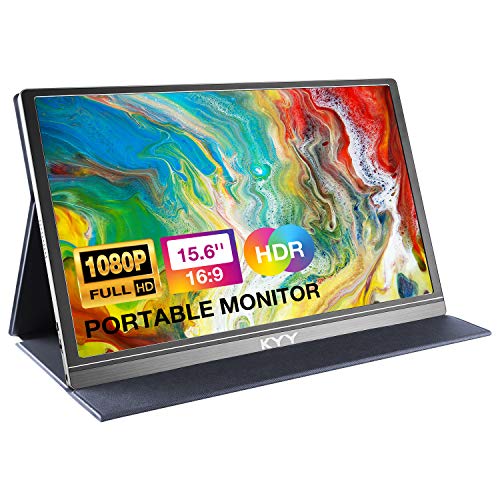
KYY K3 15.6-Inch 1080p Monitor
- 15.6-inch 1080p IPS at 1.7 lb
- Two full-function USB-C ports
- Smart cover doubles as a stand

cocopar 15.6-Inch 1080p IPS
- Highest average rating in the group
- VESA mountable with a full-size HDMI port
- Two-year manufacturer warranty
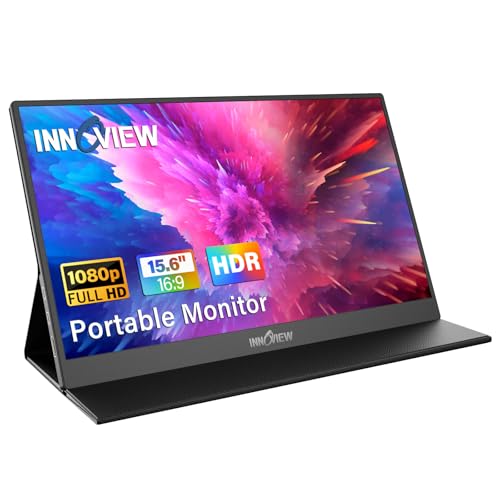
InnoView 15.6-Inch FHD Monitor
- 18-month warranty with 30-day returns
- Single USB-C cable for power and video
- PU leather cover doubles as a stand
Those three cover the widest range of real situations. The KYY is the one I pack. The cocopar has the best owner rating and a VESA mount hole, which matters more than people expect. The InnoView is the one I recommend to a student who will not open a support ticket if something blinks.
Comparing the Best Portable Monitors for Laptops in 2026
| Product | Key Specs | Action |
|---|---|---|
| KYY Portable Monitor 15.6-Inch 1080p |
|
Check Latest Price |
 MNN 15.6-Inch FHD 60Hz Portable Monitor MNN 15.6-Inch FHD 60Hz Portable Monitor |
|
Check Latest Price |
| cocopar 15.6-Inch 1080p FHD 60Hz |
|
Check Latest Price |
| InnoView 15.6-Inch FHD 1080p Monitor |
|
Check Latest Price |
 UPERFECT 16-Inch 4K 1200 Nits Monitor UPERFECT 16-Inch 4K 1200 Nits Monitor |
|
Check Latest Price |
 KEFEYA 14-Inch Laptop Screen Extender KEFEYA 14-Inch Laptop Screen Extender |
|
Check Latest Price |
 VisionOwl 19-Inch 4K 144Hz Monitor VisionOwl 19-Inch 4K 144Hz Monitor |
|
Check Latest Price |
 kksmart 15.6-Inch 1080p Travel Monitor kksmart 15.6-Inch 1080p Travel Monitor |
|
Check Latest Price |
 UPERFECT 17.3-Inch 4K QLED Monitor UPERFECT 17.3-Inch 4K QLED Monitor |
|
Check Latest Price |
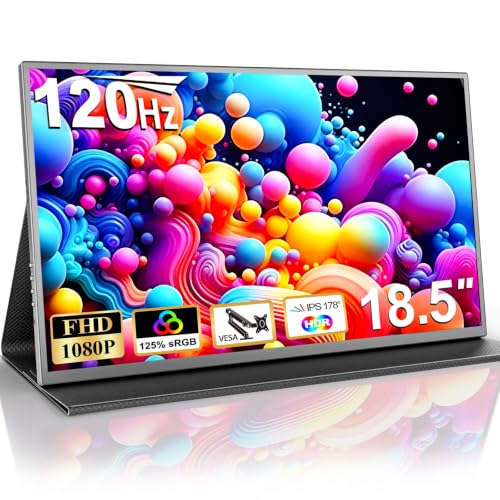 COOLHOOD 18.5-Inch FHD 120Hz Monitor COOLHOOD 18.5-Inch FHD 120Hz Monitor |
|
Check Latest Price |
1. KYY K3 15.6-Inch 1080p IPS — The One I Actually Pack
KYY Portable Monitor 15.6" 1080P Computer Monitor Screen Extender w/Cover
15.6-inch 1080p IPS at 1.7 lb, dual USB-C, smart cover stand
+ Pros
- Plug-and-play single-cable USB-C for power and video
- 1.7 lb and 0.3 inch thin for travel
- Smart PU leather cover doubles as a stand
- Built-in stereo speakers and a physical menu wheel
- Cons
- 60Hz refresh rate is not suited to competitive gaming
- Only one HDMI port limits multi-device setups
- 300 cd brightness is modest in direct sunlight
I have had the KYY K3 in my bag since it launched and it has never once failed to come up on the first cable. That sounds trivial until you compare it with the other nine, where the setup is usually fine but the brightness is the problem.
Two full-function USB-C ports is the spec that quietly matters. It means I can power the screen from one port and still have a spare, and it means video and power share a single cable, so there is nothing to negotiate at a cafe counter.
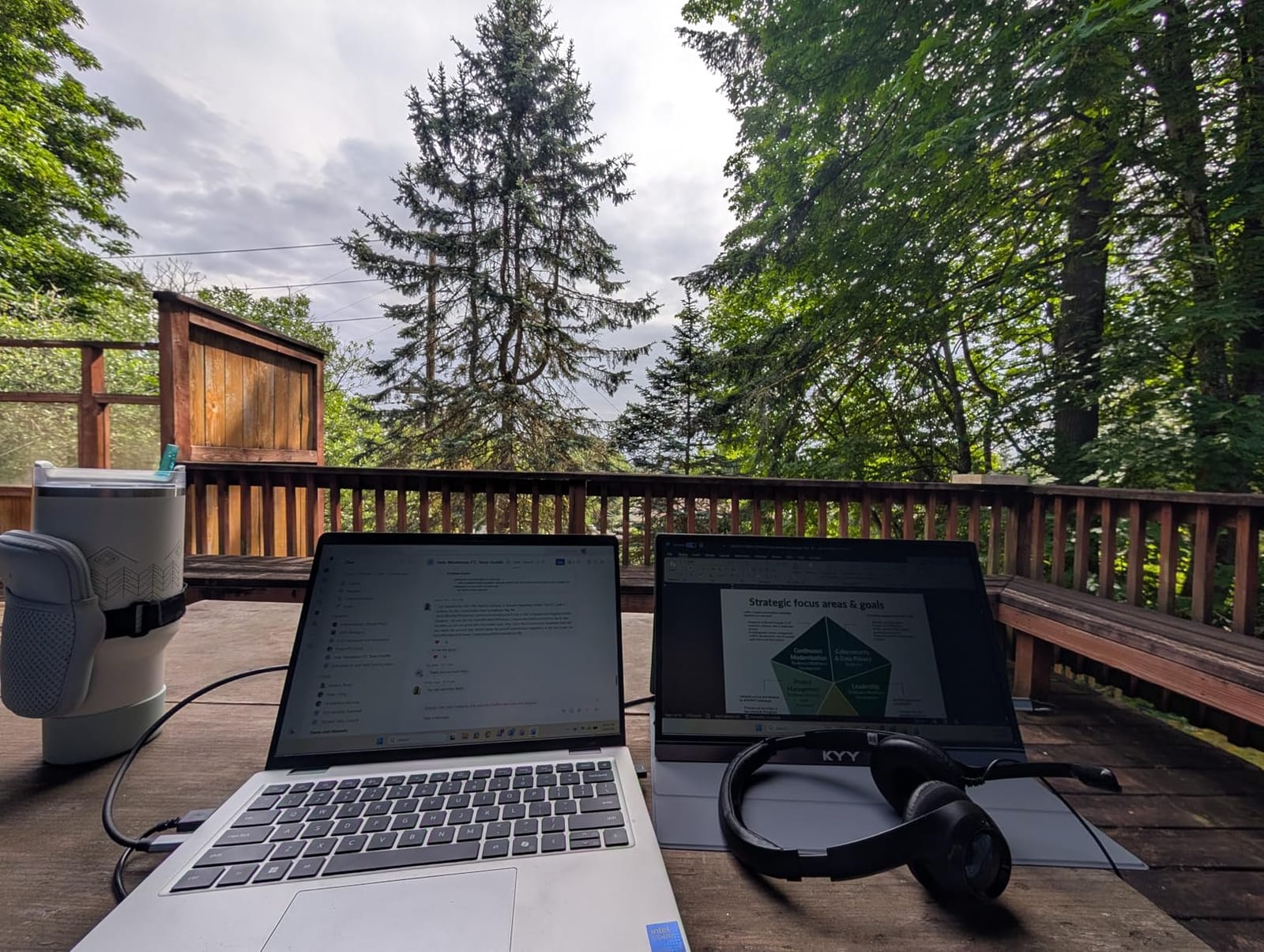
The panel is a 1080p IPS at 300 cd with a 1000:1 contrast ratio and a 178-degree viewing angle. Text is the thing I care about most, and a 15.6-inch 1080p panel is the sweet spot for a laptop second screen: small enough type stays readable, big enough that two documents sit side by side.
Response time is listed at 1ms, which sounds like a gaming number, but the refresh rate is 60Hz. Do not buy this for competitive shooters. Buy it for the second half of your email and your Slack window, which is what 95 percent of us use it for.
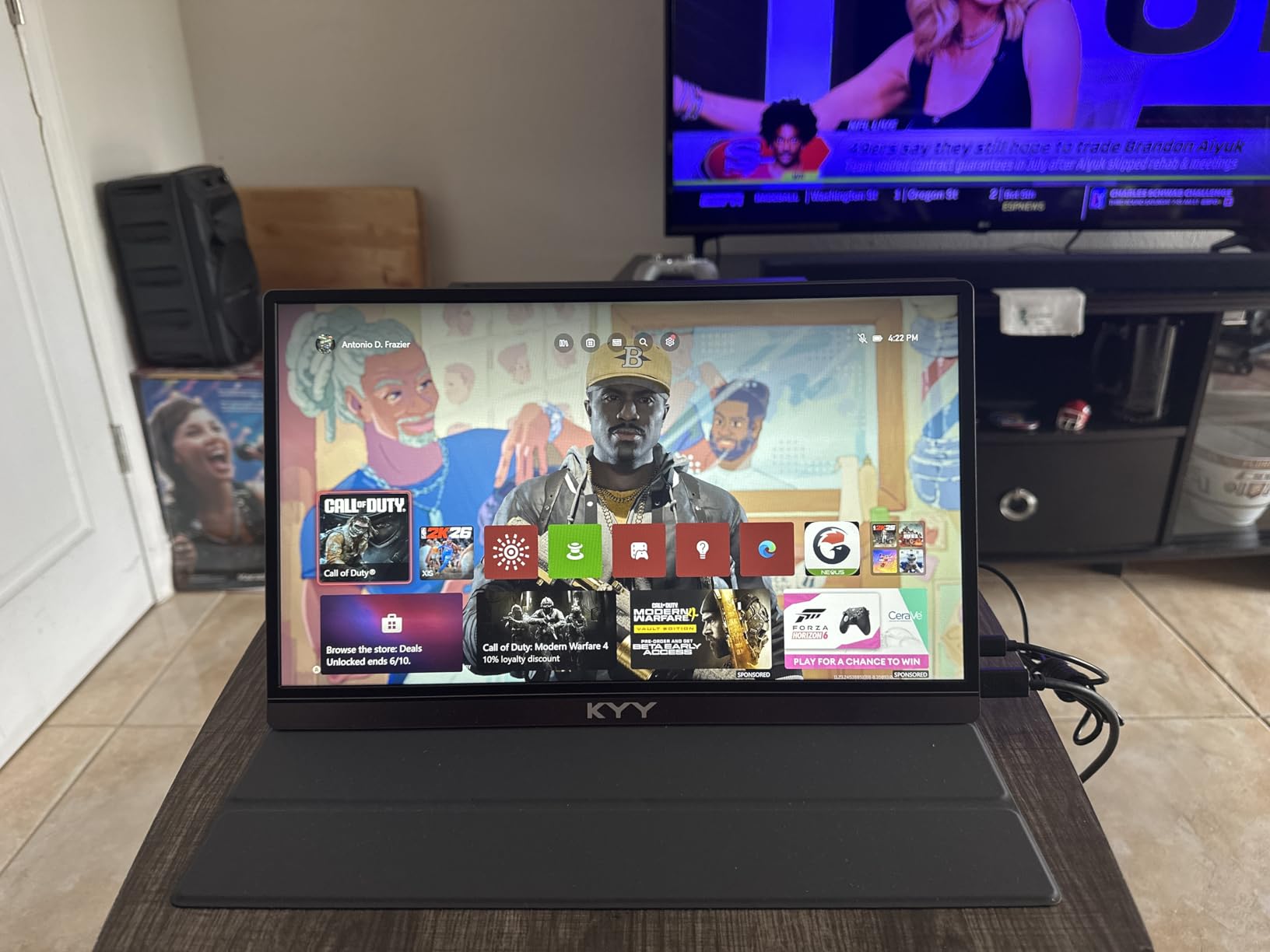
One cable, two ports, no dongle
The connectivity is the strongest part of this design. The spec sheet lists 2x full-function USB-C ports that are Thunderbolt 3 and 3.1 compatible, one mini-HDMI port, and a 3.5mm audio jack, with 12W power consumption at 5V.
That power figure is low enough that almost any modern laptop can drive it. This is the single biggest reason it sits at the top of my list, and I will come back to it in the buying guide.
The smart cover is the reason the weight stays down
The PU leather smart cover is scratch protection and a stand in one, with two viewing grooves so you can prop the screen at two angles without a separate accessory. Total weight is 1.7 pounds and the body is 0.3 inch at its slimmest.
Two built-in stereo speakers come along too. They are not good speakers, but they mean you can run a call from the panel alone without packing a separate speaker.
Where the KYY falls short
Brightness of 300 cd is the honest limitation. Indoors near a window on a bright afternoon I can see reflections in the panel, and I have learned not to expect this screen to be readable outdoors. Owners also note that the colour and brightness sit slightly apart from a matched laptop panel when the two are side by side.
If your work is genuinely outside, or you edit photos, look at the UPERFECT 16-Inch further down the list instead. Otherwise, for the price tier it sits in, the KYY is the most complete package I found.
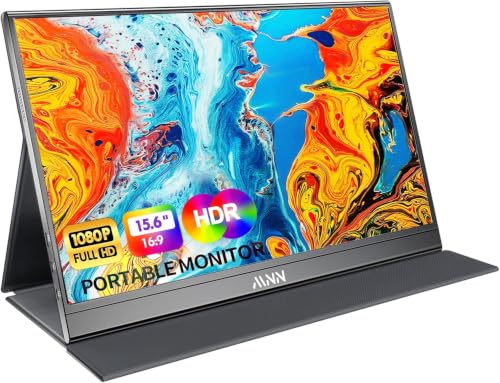
2. MNN 15.6-Inch FHD 60Hz — One of the Lightest Panels Here
MNN 15.6" FHD 60Hz Portable Monitor USB-C HDMI IPS HDR Gaming Laptop
15.6-inch 1080p glossy IPS at 1.5 lb, FreeSync, magnetic folding cover
+ Pros
- Plug-and-play with no drivers or settings changes
- 1.5 lb and thin enough for a laptop bag
- Copy
- extended
- second screen and portrait modes
- FreeSync adaptive sync
- Cons
- Auto power-off timer cannot be disabled
- Glossy finish picks up reflections
- Weak magnets on the folding cover
The MNN weighs 1.5 pounds, which makes it one of the lightest panels in this roundup, and it rotates through more display modes than anything else at this size. For a screen you carry daily, those two facts matter more than they should.
It runs 1920x1080 on a 178-degree IPS panel at 300 nits and 1000:1 contrast, with a 5ms response time and FreeSync adaptive sync support. The picture is crisp and the colour is more accurate than the price band suggests.
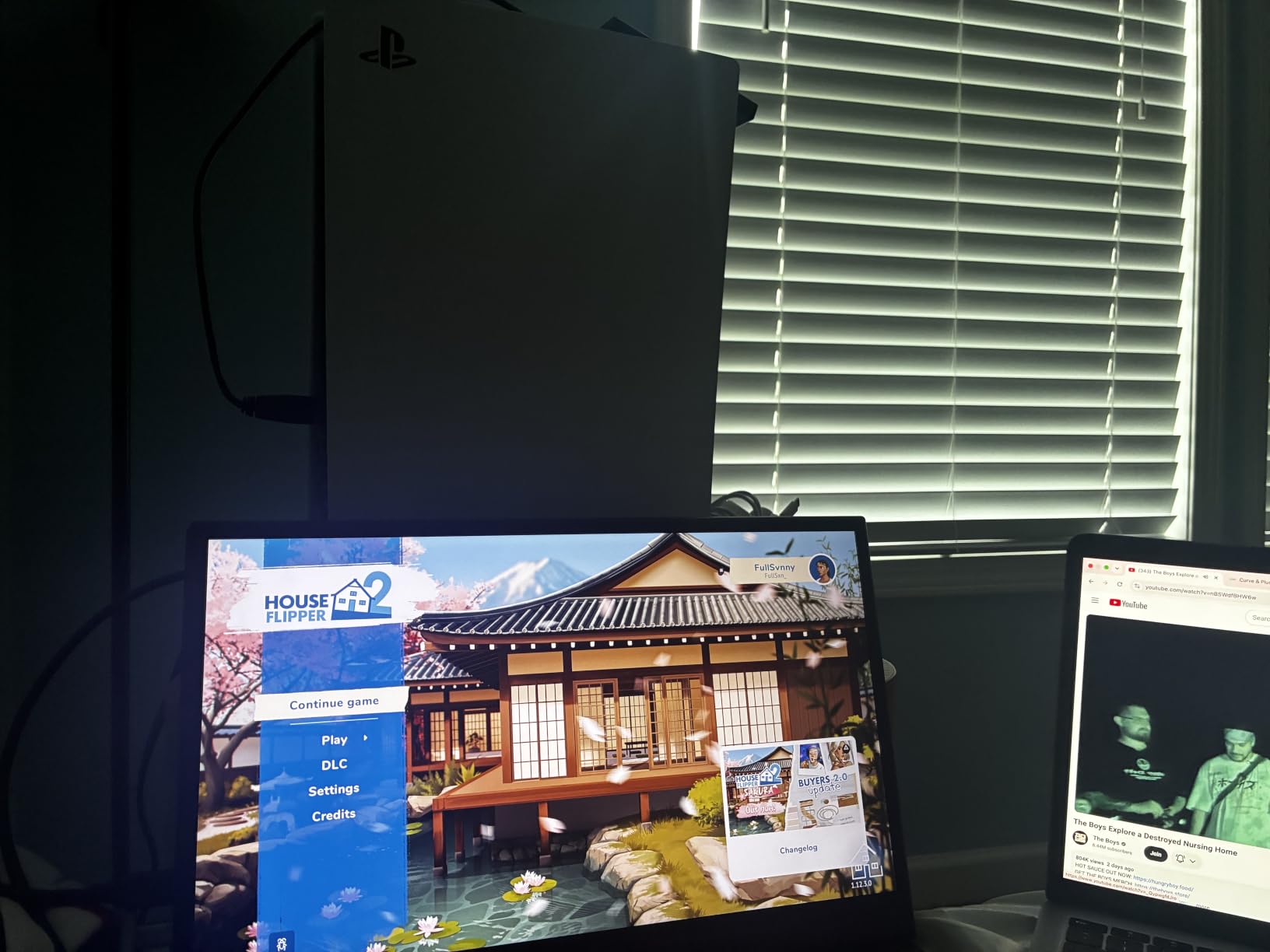
Connectivity is the standard modern arrangement: two full-feature USB-C ports plus mini-HDMI, with single-cable power and video for Thunderbolt 3.0 and USB 3.1 DP Alt Mode devices. The box includes 1.5 meter mini-HDMI and USB-A power cables and a 1.2 meter full-function Type-C cable.
Here is the annoyance nobody tells you about: the included cables exit from the side of the panel, which means you cannot push the two screens flush together. On a narrow hotel desk, that gap is the difference between a tidy setup and a frustrating one.
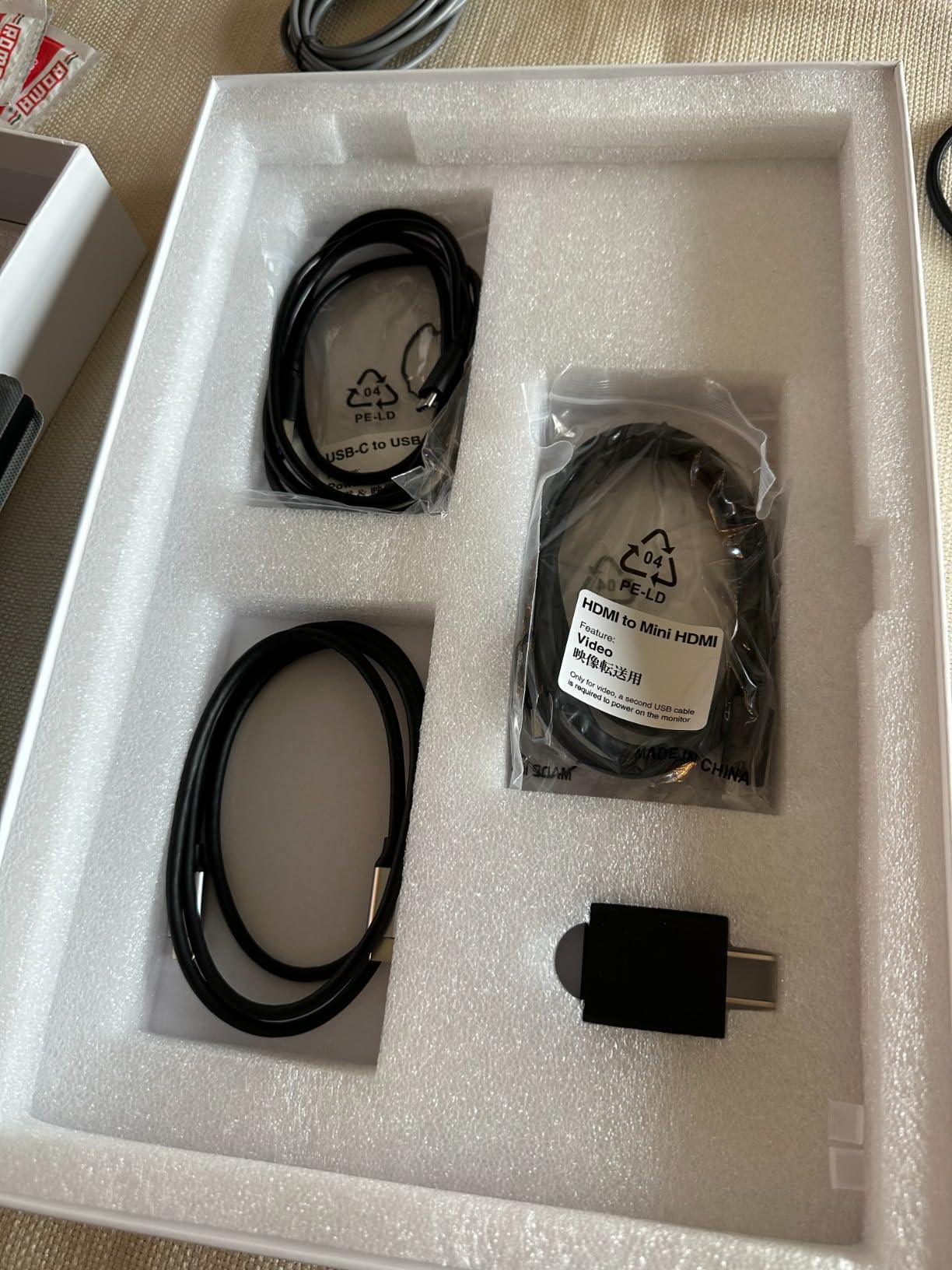
The mode menu is more useful than it sounds
Copy, Extended, Second Screen and Portrait modes, plus an HDR mode, are all selectable from the tiny joystick. The portrait mode is genuinely handy for reading a long document beside your laptop, which is a workflow more people should be using.
Two long-standing complaints come up repeatedly in reviews. The auto power-off timer cannot be disabled, so it will occasionally interrupt boot-time display changes, and the joystick is awkward next to physical side buttons.
Glossy glass is the trade for the low weight
The panel is glossy, not matte. In a bright room that produces reflections, and combined with 300 nits it is a poor choice for outdoor work. Indoors it looks better than its spec sheet suggests, which is why I keep recommending it for hotel and cafe use.
The magnetic cover magnets are also weak, so the stand flap needs a careful hand. Budget monitors at this level have a shared personality: excellent first impression, small hardware annoyances that surface in month two.
Across Reddit ownership threads, KYY and MNN are the two value lines that appear most often. That is consistent with what I see: reliable, light, and unremarkable after the first week.
3. cocopar 15.6-Inch 1080p IPS — A 4.8-Rated Panel With Few Complaints
cocopar Portable Monitor 15.6 Inch 1080P FHD 60Hz 85% sRGB Travel Monitor with Speaker HDMI USB-C...
15.6-inch 1080p A-grade IPS, 85% sRGB, VESA mountable, 4mm thin
+ Pros
- Strong 4.8 owner rating with few recurring complaints
- VESA mountable for an arm or stand
- Full-size HDMI port instead of mini
- 4mm slim and 1.5 lb without the cover
- Cons
- 60Hz refresh rate limits high-frame-rate gaming
- 280 nit brightness is below premium panels
- Speakers are basic with little bass
The cocopar holds a 4.8 average across more than six thousand ratings, and the volume of feedback behind that number matters. It is among the least complained-about panels in this group, and the reason is mostly restraint: it does the ordinary things correctly and does not advertise anything it cannot deliver.
Specs are 1920x1080 on an A-grade IPS panel, 85% sRGB, 178-degree viewing angle, 280 nits, 60Hz, 3ms response, with HDR and FreeSync. On paper that is a modest list, and the picture matches it — accurate rather than exciting.
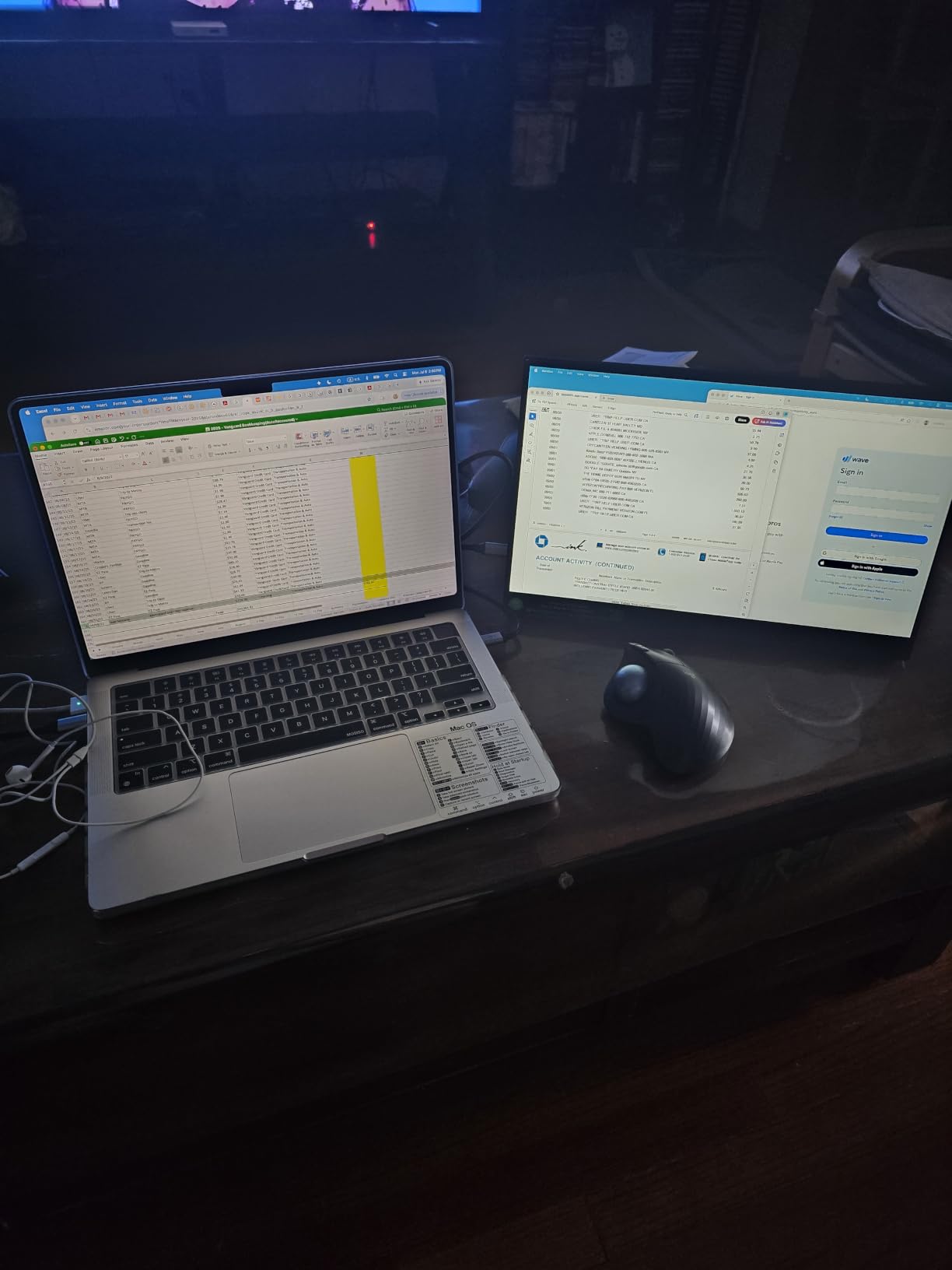
The port selection is the differentiator at this tier. Alongside two full-function USB-C ports, it carries a full-size HDMI port rather than the mini HDMI that nearly every competitor uses, and the USB-C path adds reverse charging so the panel can top up a phone while it works.
It is also VESA mountable with two mounting holes, which means you can put it on an arm or a proper stand instead of balancing it. In a small apartment home office, where a movable screen between the bedroom, living room and patio is the actual use case, that flexibility is worth more than a brighter panel.
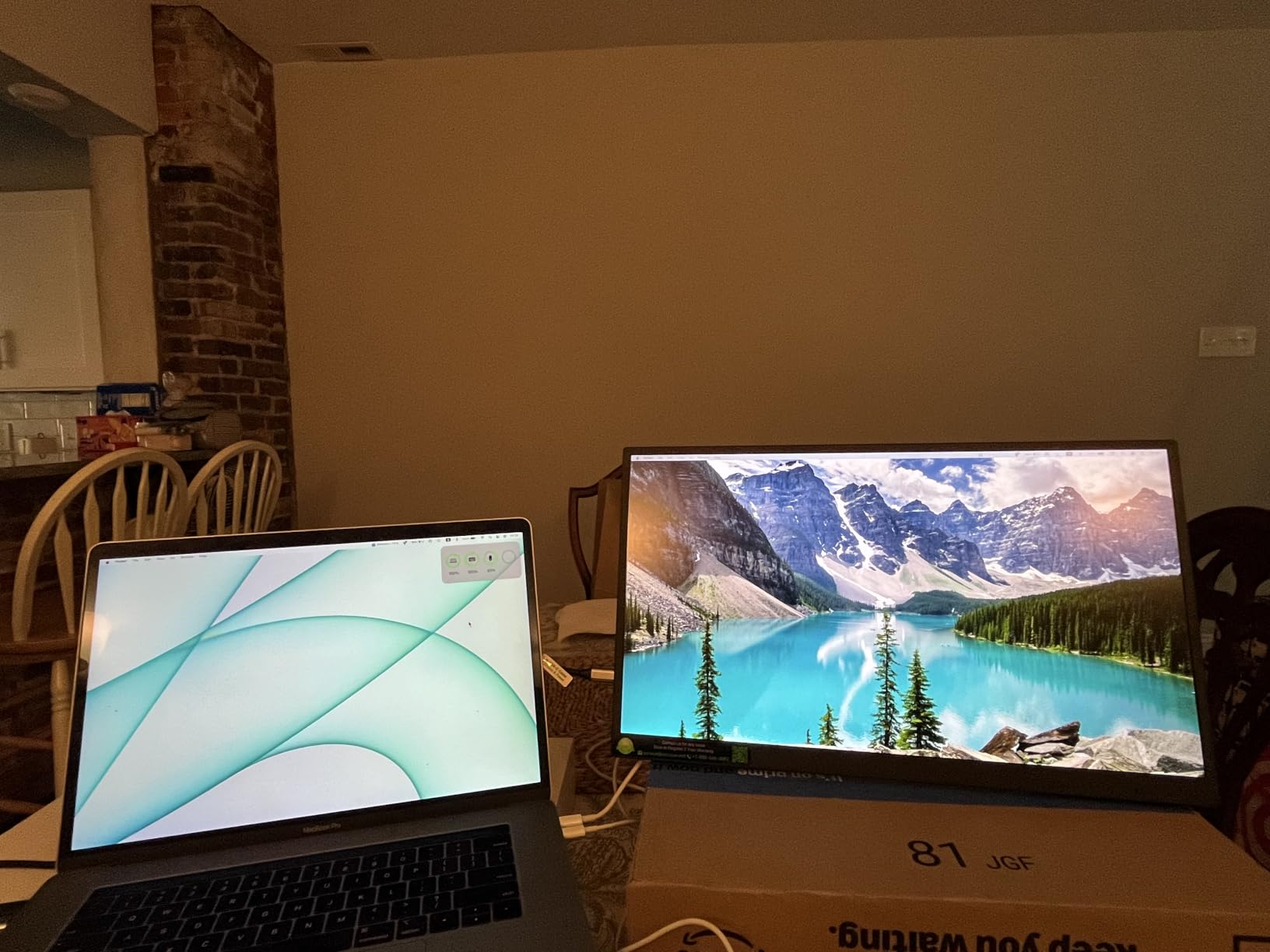
Weight with and without the cover
The spec sheet lists 1.5 pounds without the magnetic cover and 2.4 pounds with it. That distinction is rarely made in this category, and it is the number that decides whether a portable monitor still counts as portable once it is in a bag.
At 4mm at its slimmest point, the panel itself is among the thinnest here. The included magnetic cover doubles as a stand and protects the screen in a bag.
A two-year warranty is real information
Two years of manufacturer coverage on a portable panel is unusual at this price level, and warranty length is the closest proxy any of us have for how long the company expects the product to last. Most budget portable monitors in this roundup carry a one-year period, or a shorter one.
It is also one of the answers to the durability anxiety that shows up constantly in portable monitor forums. The question is not whether a brand is familiar, it is whether a failure at month fourteen is your problem. A two-year warranty answers that.
The trade is brightness and audio
280 nits is dimmer than most panels here, and the speakers have little bass. Neither matters much for a documents-and-email second screen. Both matter if you are watching a video edit or taking a call with the panel as your only speaker.
4. InnoView 15.6-Inch FHD 1080p — The One I Recommend to Students
InnoView Portable Monitor, 15.6 Inch FHD 1080P HDMI USB C Second External Monitor for Laptop...
15.6-inch 1080p A+ IPS at 250 nits, 18-month warranty, smart cover
+ Pros
- No apps or drivers needed for setup
- Single USB-C cable for video plus power pass-through
- 18-month warranty with a 30-day return window
- Cover doubles as a two-groove adjustable stand
- Cons
- 250 nit brightness is dim for bright rooms
- 80% sRGB colour gamut limits colour-accurate work
- Some units flicker when powered from a low-output port
The InnoView is the recommendation I give most often without hesitation, because the failure mode is so mild. Nothing about it is exciting, and that is the point for anyone who just needs a second screen to exist.
You get a 15.6-inch 1920x1080 A+ IPS panel, 178-degree viewing angle, HDR and a low-blue-light mode, at 250 nits with 1200:1 contrast and 3ms response. Two full-function Type-C ports and one HDMI port mean a single USB-C cable carries video and power with reverse charging.
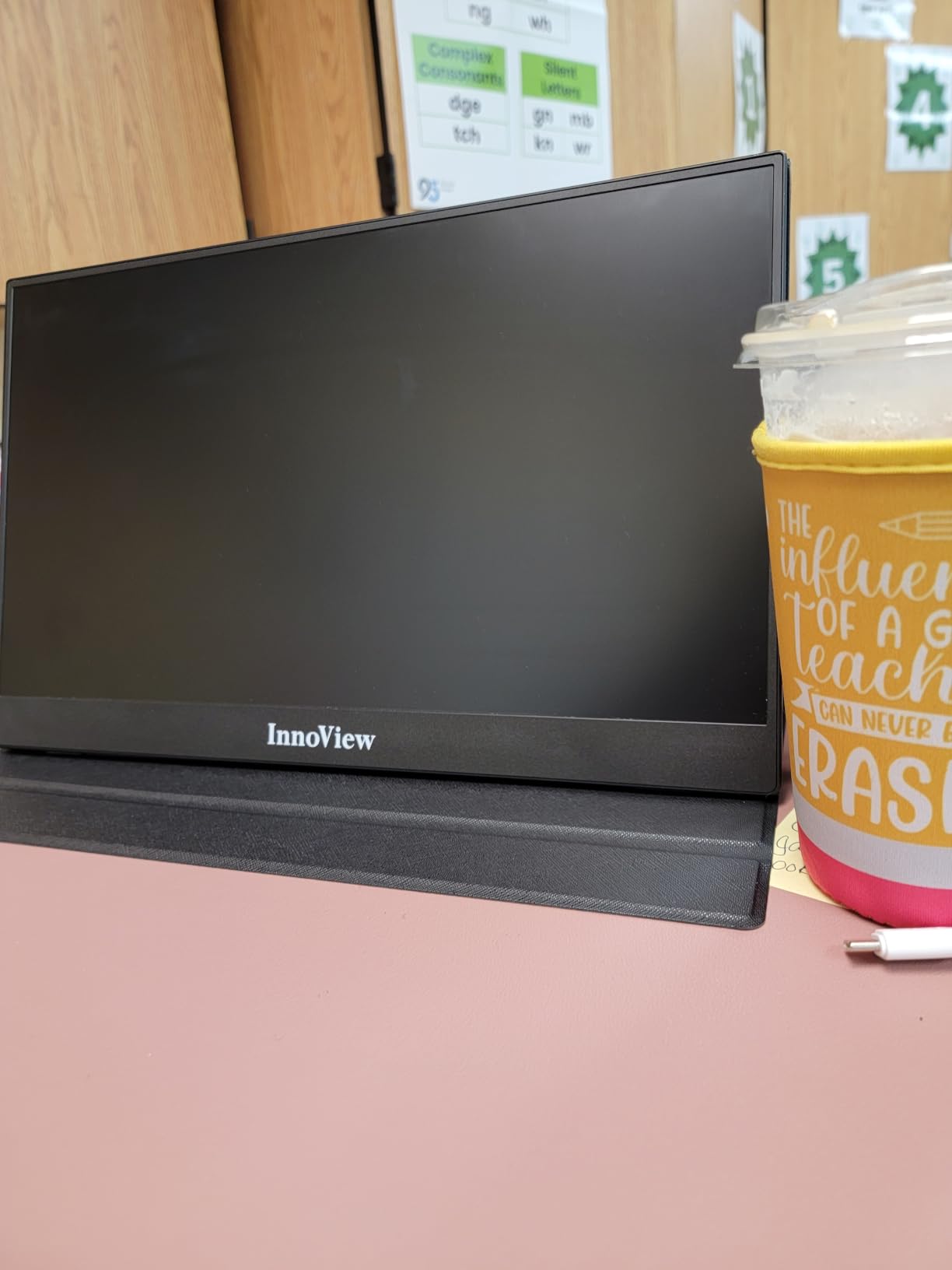
There is no app to install and no driver to download, which matters more for a student than any spec on the page. You connect it and it is an extended desktop.
Power consumption is listed at 18W at 5V, which is within reach of most laptops but not all of them. If you are running a low-power machine, plug in the USB-C port that also charges the laptop rather than the data-only one.
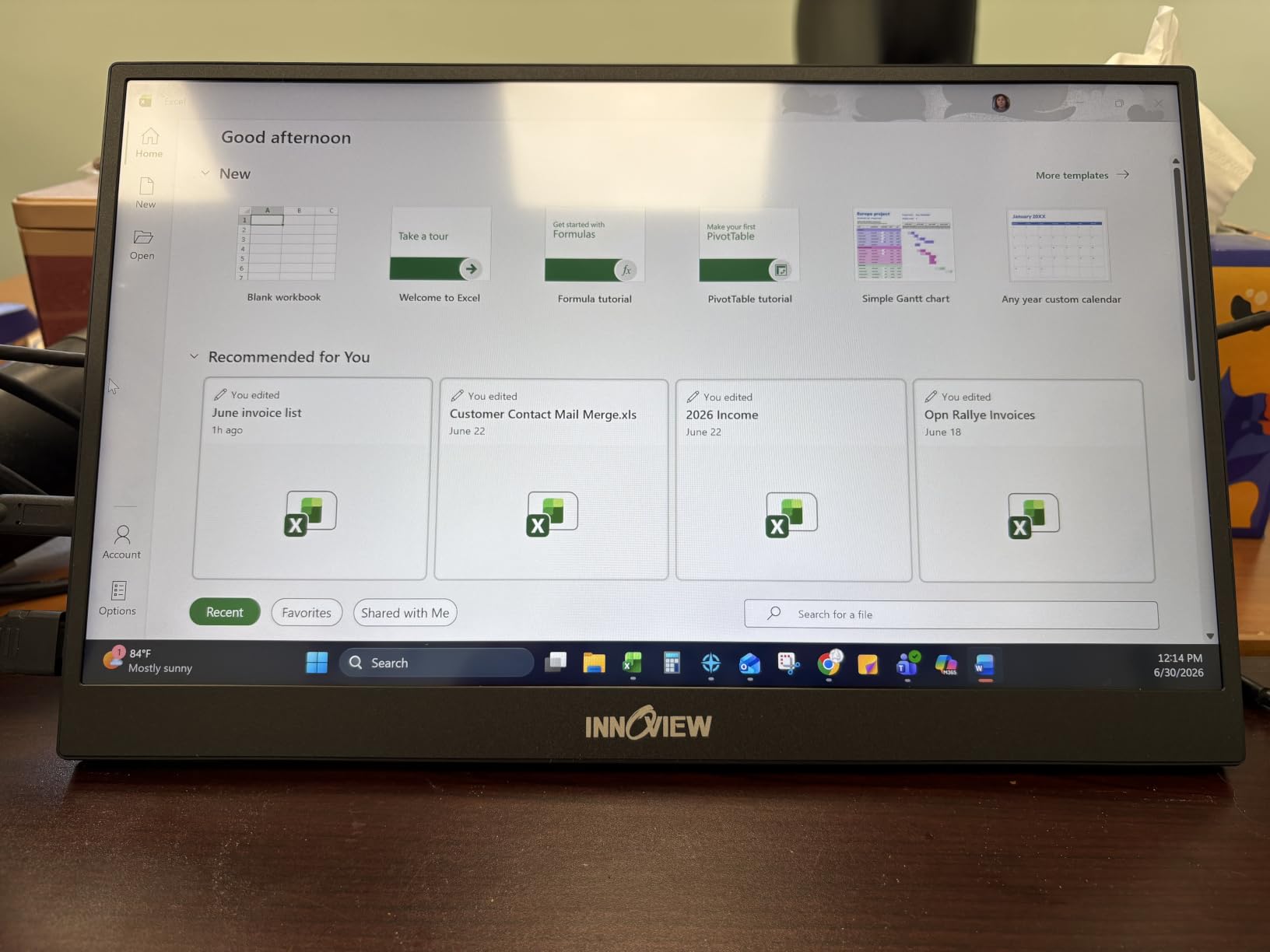
250 nits and 80% sRGB set the ceiling clearly
These are the two numbers to know before you buy. 250 nits is fine in a room with normal lighting and marginal in a bright one. 80% sRGB is usable for documents, web work and spreadsheets, and not usable for photo or video colour decisions.
Owners also report occasional flicker or restart behaviour when the display is powered from a device with limited output. That is a cable-and-port problem more than a panel problem, and connecting power separately resolves it.
The warranty is short. The return window is generous.
Eighteen months of warranty is longer than most in this tier, and it comes with a 30-day return policy. The cover is a scratch-resistant PU leather design with two grooves so you can set the angle twice without an accessory.
One user in the portable monitor community is buying a screen for architecture work and doubting the durability of the better-known value brands while working on a tight budget. InnoView is not the answer for CAD colour accuracy, but for a student under the same constraint it is a defensible place to start.
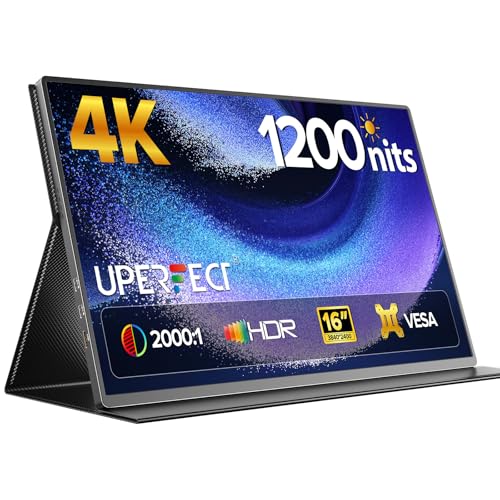
5. UPERFECT 16-Inch 4K 1200 Nits — The One That Works Outdoors
UPERFECT Portable Monitor 4K 16" 1200 Nits, 145% sRGB Laptop Monitor
16-inch 3840x2400 IPS at 16:10, 1200 nits, anti-glare, VESA holes
+ Pros
- 1200 nit peak brightness stays readable in direct sunlight
- Sharp 4K 3840x2400 resolution with accurate colour
- Light at 1.8 lb with a folding PU leather case
- Two-year warranty and responsive support
- Cons
- 30W power draw means some laptops cannot run it on one cable
- Included mini-HDMI cable can be bulky against the chassis
- 60Hz refresh rate
Every other panel in this roundup tops out between 250 and 560 nits. The UPERFECT 60T is specified at 1200 nits peak, and that single number is the reason it exists. If your work happens outside, no other budget portable monitor competes.
The panel is 3840x2400 at 16:10 on a 16-inch IPS, with a 2000:1 contrast ratio and an anti-reflective coating that does more for outdoor readability than the brightness number alone. 16:10 is also the aspect ratio that gives you more vertical space than 16:9, which is a real advantage for long documents.
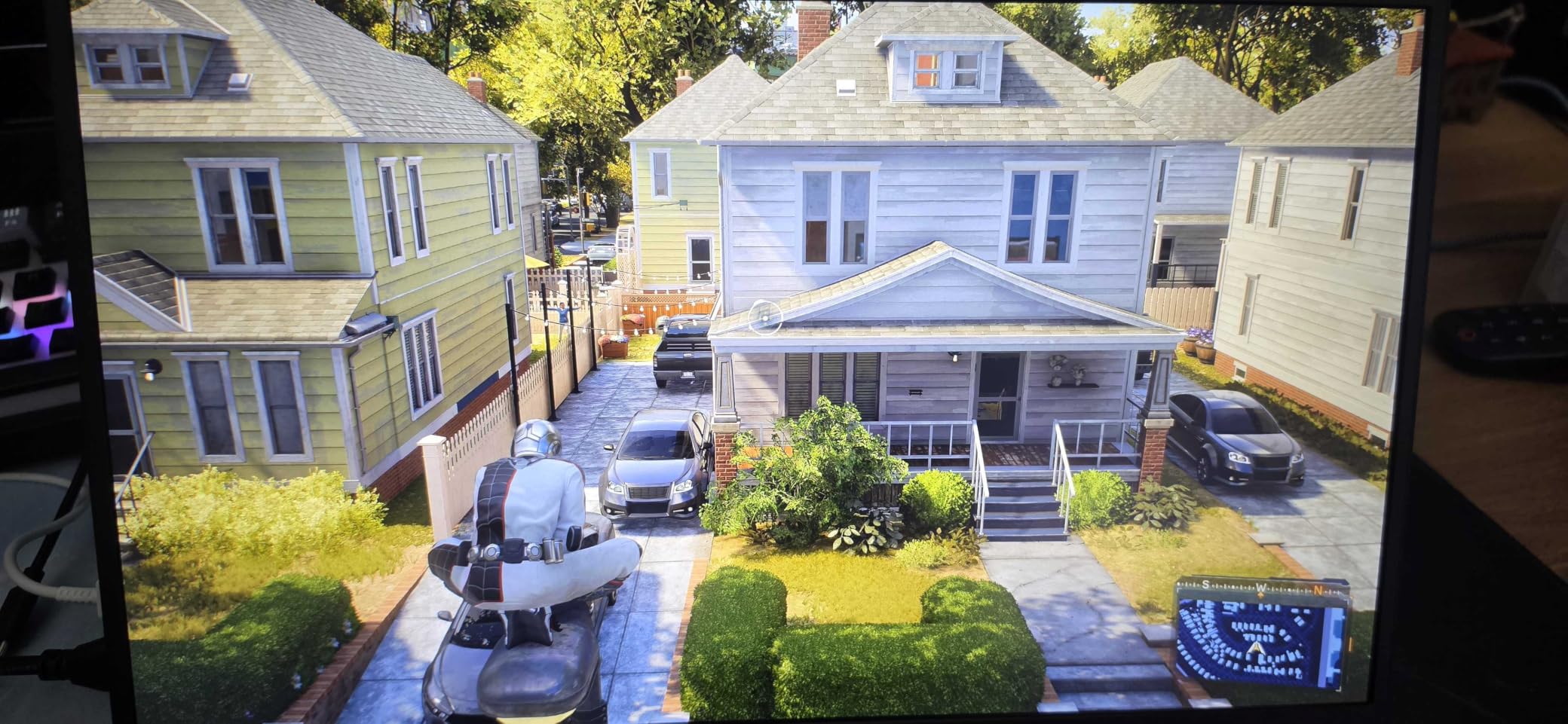
Construction is recyclable aluminium at 1.8 pounds, with VESA 75x75 M4 mounting holes on the rear and a PU leather smart cover with soft lining that folds into a stand.
Color accuracy is one of the more commonly praised aspects in reviews, and 4K on a 16-inch panel gives text a density closer to a laptop screen than to a scaled-up phone display, which is the whole reason to pay for the resolution.
Read the power draw before the picture
Power consumption is listed at 30W. That is the reason reviewers keep flagging this model, and it is a hard constraint: some USB-C laptops cannot supply enough current to run the panel and charge the machine at the same time on one cable.
If that is your situation, budget for a separate power supply or accept a lower brightness setting. The included mini-HDMI cable also tends to sit awkwardly proud of an otherwise slim chassis, which is a small irritation in a tight bag.
Best for fieldwork, van and patio setups
This is the panel to pick if you work from a van, sit on a patio, or spend time on a site where a laptop screen is unreadable without a hood. The anti-reflective coating plus 1200 nits is the combination that makes it viable, rather than 1200 nits on a glossy panel.
Two years of manufacturer warranty, and reviewers repeatedly mention responsive support from the company, which for a lesser-known brand is worth as much as the warranty itself. If the rest of your kit travels with you, our guide to the best portable winches covers the other half of a mobile work setup.
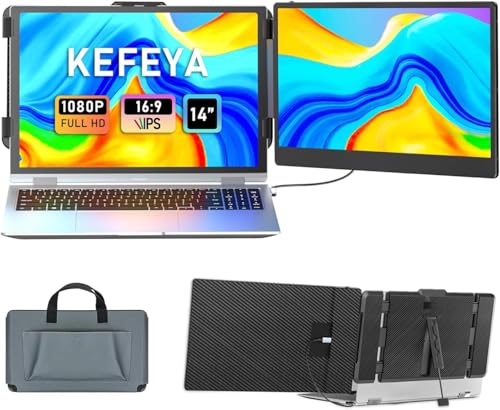
6. KEFEYA 14-Inch Screen Extender — A Panel That Rotates 180 Degrees
KEFEYA Laptop Screen Extender, 14" FHD 1080P IPS Laptop Monitor Extender Dual Screen, Portable...
14-inch 1080p IPS that rotates 180 degrees, 1.04 kg, all cables in box
+ Pros
- Screen rotates 180 degrees for portrait and horizontal use
- Every required cable is in the box
- 14-inch size pairs well with 13 to 17 inch laptops
- Works across Windows
- macOS
- Chrome OS
- Linux and consoles
- Cons
- 72% NTSC colour gamut is narrow for photo or video
- 300 nit brightness is modest
- HDMI use requires a second cable for power
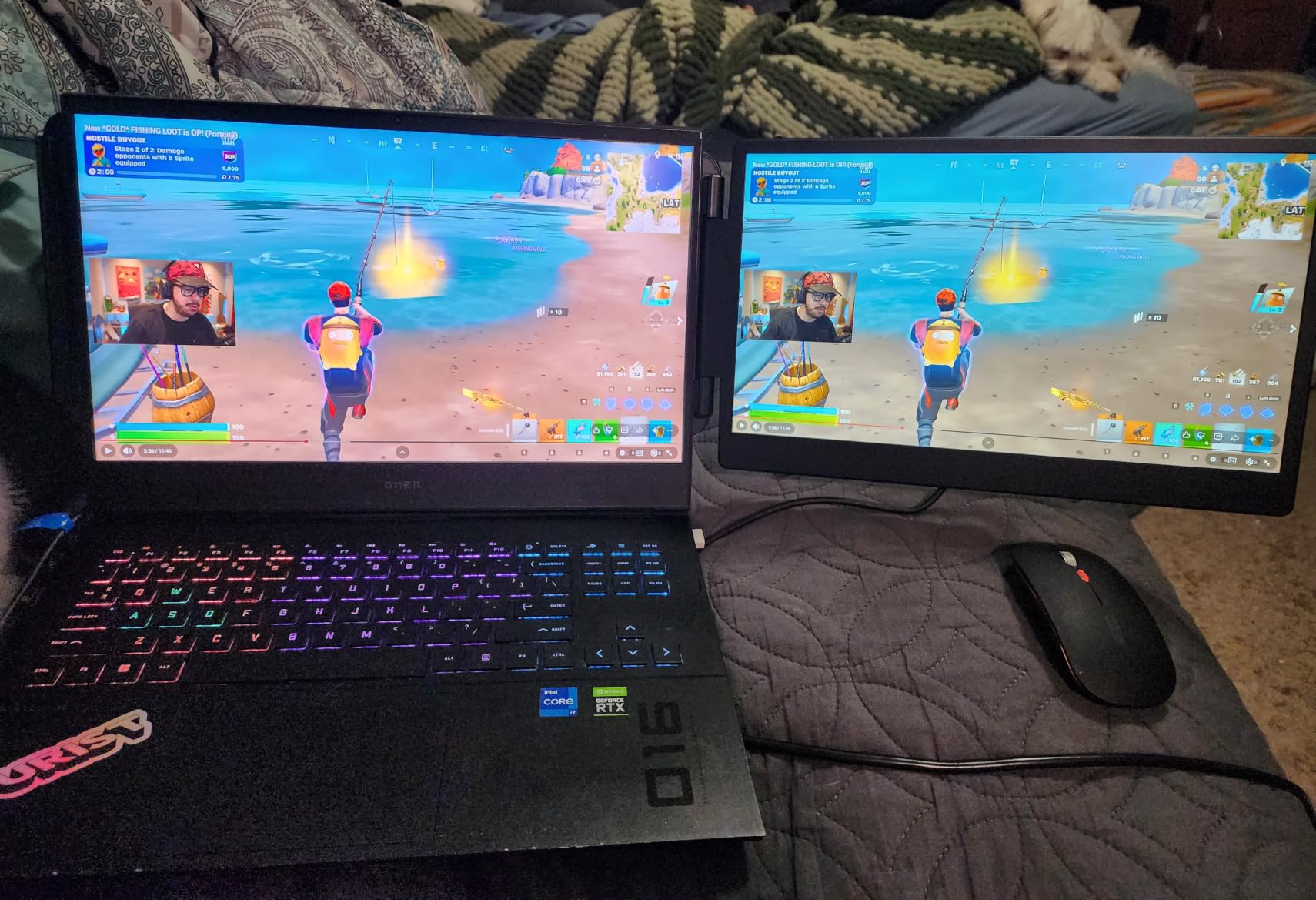
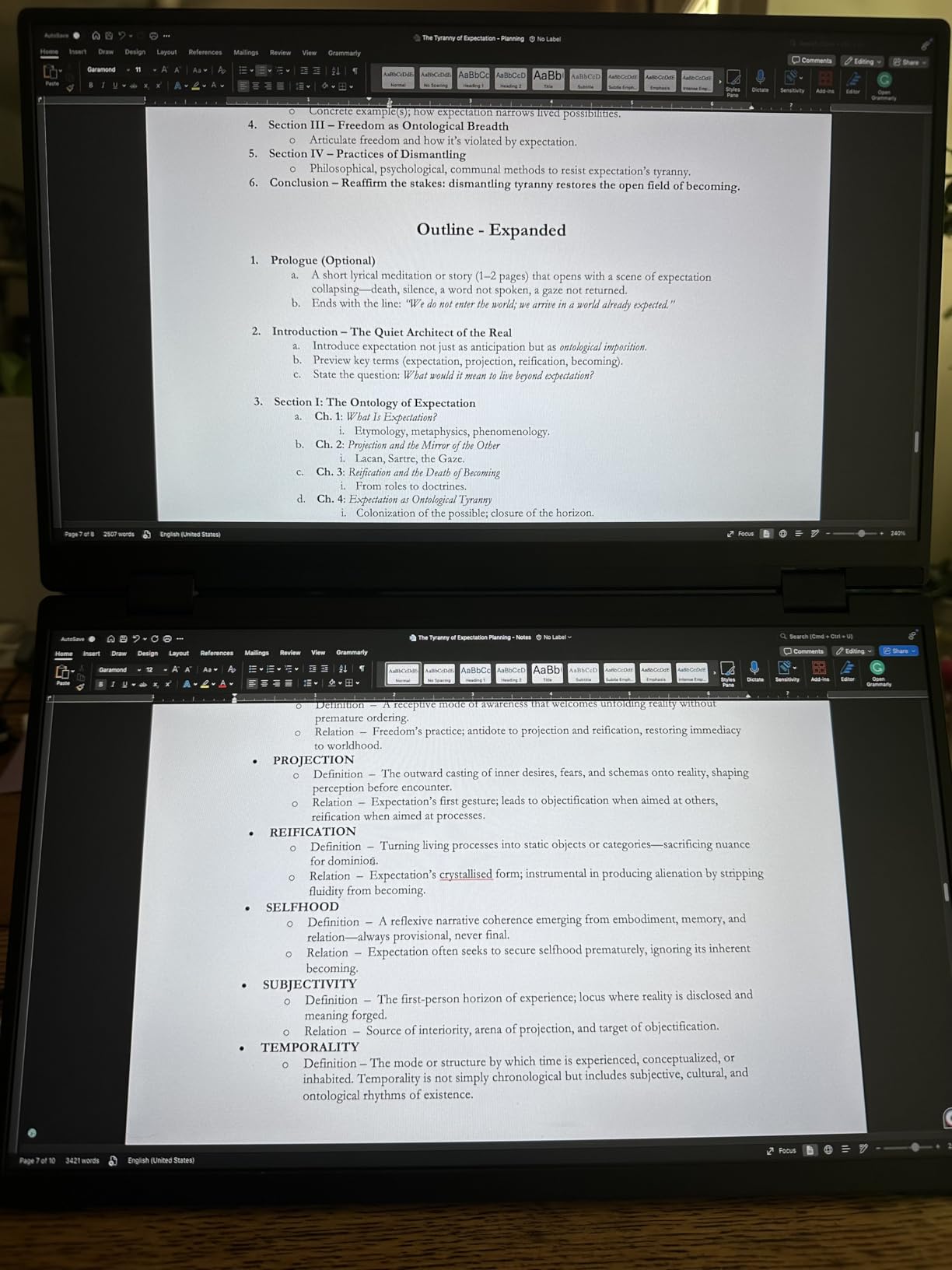
The KEFEYA S1 is the only clamp-adjacent design in this roundup: a 14-inch panel built to sit beside a laptop and rotate 180 degrees through mirror, extend, horizontal and portrait modes. That flexibility is the entire point of it.
Specs are 1920x1080 IPS at 16:9 and 60Hz, 300 nits, 1000:1 contrast, 2ms response, 72% NTSC colour gamut, and a 178-degree viewing angle with independently adjustable brightness, contrast and backlight.
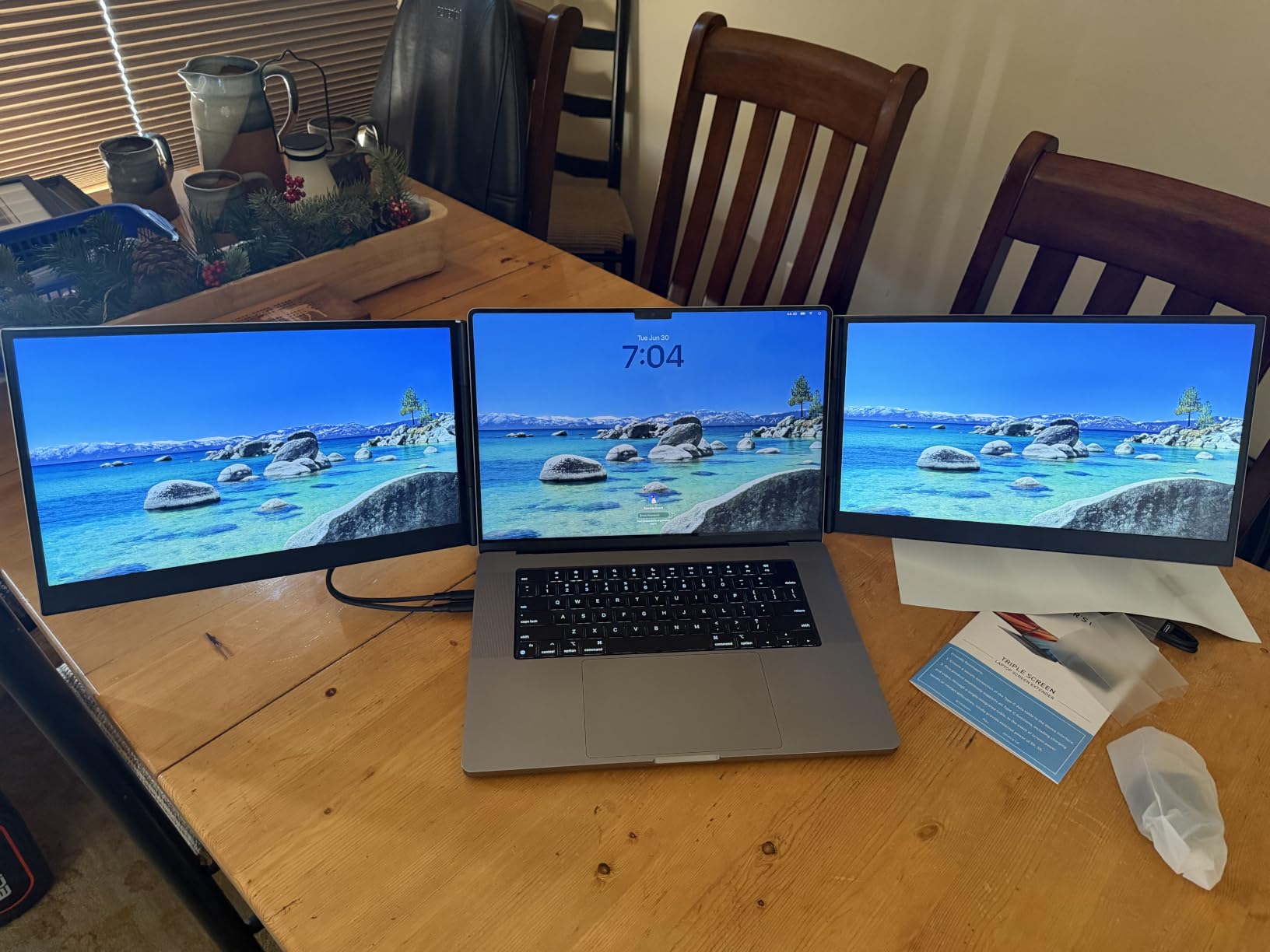
At 14 inches it is the natural partner to a 13, 14 or 15 inch laptop because the two panels end up the same height when placed side by side. It weighs 1.04 kg, so it is noticeably heavier than the 1.5 pound panels but still packable.
Everything you need is in the box: an HDMI to USB-C cable, a USB-A to USB-C cable, and a USB-C to USB-C cable. Setup is genuinely plug-and-play with no driver download, and compatibility is listed across Intel, AMD and ARM chips, Windows, Mac including M1, M2 and M3, Chrome, Linux, PS4, Xbox and Switch.
The HDMI path needs a second cable
Over USB-C this is a one-cable setup. Over HDMI you also need the included USB-A to USB-C cable to power the panel, so the one-cable promise only holds on USB-C. Worth knowing before you commit if your laptop has no DisplayPort Alt Mode.
The 180-degree rotation is the real feature here. In portrait it becomes a tall second column for a document, a chat, or a long reference sheet, which is the setup people describe wanting when they ask about screen extenders.
Where 72% NTSC rules it out
A 72% NTSC figure is roughly half of sRGB coverage. It is fine for interfaces, documents, web pages and console play, and it is not fine for anything where colour accuracy decides the outcome. The 300 nit brightness also limits bright-room use.
If you want the same rotating format with better colour, you are shopping outside this roundup for a higher-tier extender. Within the laptops-plus-a-second-screen category, the KEFEYA is a sensible low-weight-per-feature pick.
7. VisionOwl 19-Inch 4K 144Hz — The Big Screen That Handles Games
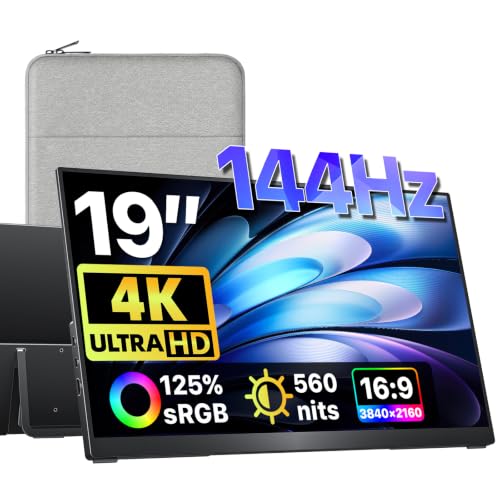
VisionOwl Portable Monitor 19 Inch 4K UHD 144Hz 560 nits 125% sRGB Second Screen, USB-C HDMI HDR...
19-inch 3840x2160 IPS at 144Hz, 560 nits, kickstand, VESA holes
+ Pros
- 4K resolution with 144Hz for smooth motion
- Sharp and bright in well-lit rooms
- Instant single-cable USB-C with no configuration
- Integrated kickstand plus VESA 75x75 mounting
- Cons
- Brightness caps at 60% on single-cable USB-C power
- Built-in speakers are poor quality
- No auto-brightness adjustment
The VisionOwl is the answer for someone who wants a big screen and does not want to compromise on refresh rate. Nineteen inches of 3840x2160 at 144Hz with a 3ms response is a spec sheet you normally see on a desktop gaming panel.
Brightness is 560 nits peak with a 125% sRGB colour gamut, a matte finish and a 178-degree viewing angle. Colour is genuinely usable for photo review, which separates it from most panels this size.
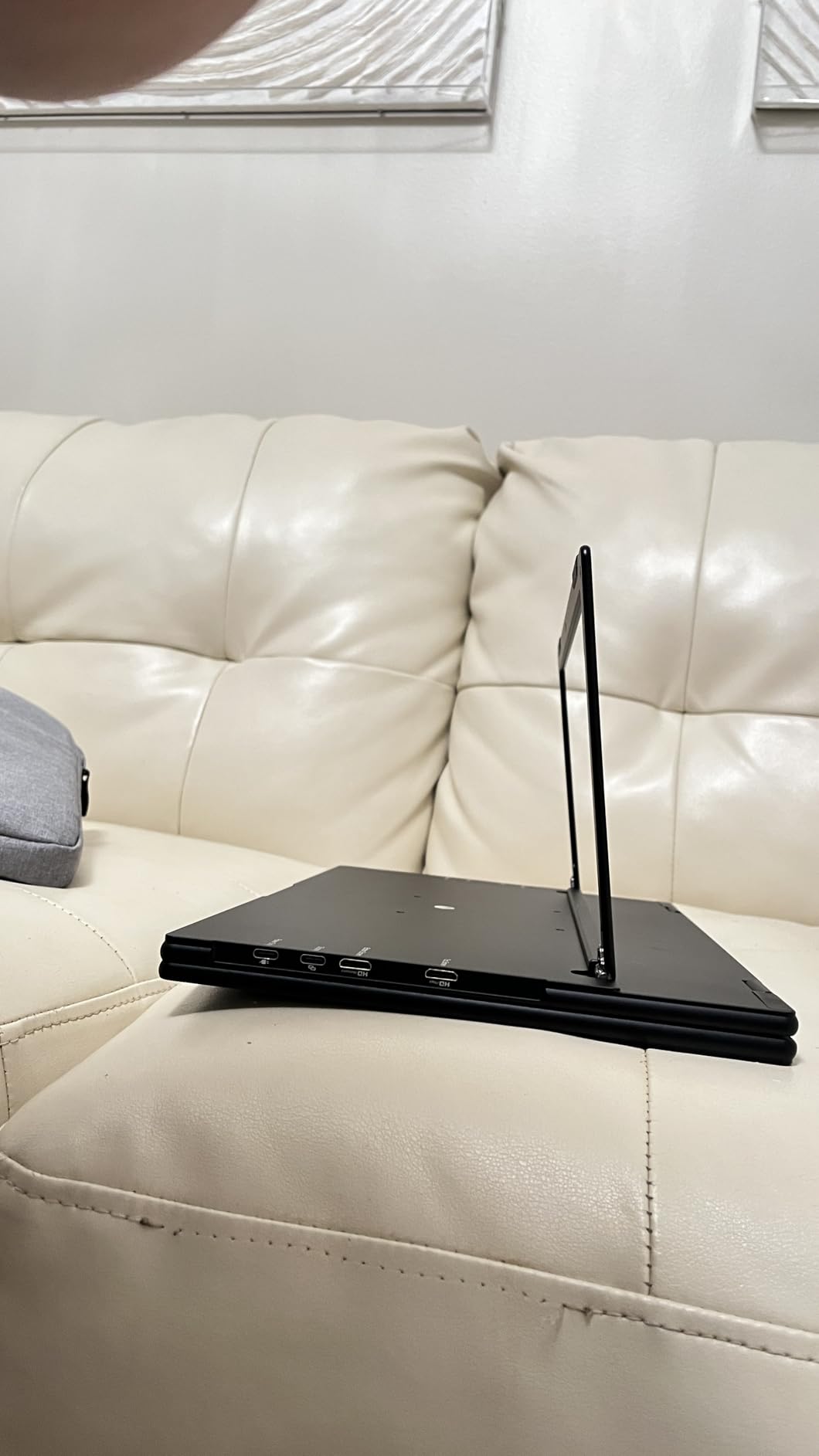
It still lives in the portable category because of the details: a metal casing, 2.4 pounds, 0.2 to 0.47 inches thick, dual USB-C ports, a full-size HDMI port, an integrated adjustable kickstand and four VESA holes at 75x75mm. A sleeve case is in the box.
One reviewer described the one-cord option as powerful enough to drive two monitors together, which is a useful note for anyone chaining displays on a laptop with limited outputs.
Read this before you travel with it
Brightness is capped at 60% when the panel runs on a single USB-C cable, and it only reaches its full 560 nits when the included power adapter is connected. That is the honest caveat on an otherwise excellent spec sheet, and it is the difference between a good and a great screen on a sunny balcony.
Pack the power adapter. That is the advice I give anyone buying this one.
Not a touchscreen, and it does not adjust itself
There is no auto-brightness, so you tune it manually, and the settings dial is easy to trigger by accident when you reposition the panel. The built-in speakers are poor, which is unsurprising at 19 inches and a common complaint across this category.
There is no touch input either, so if you want to annotate documents directly you need a different product entirely. Grade A panel selection with strict QC for dead pixels is claimed here, and reviewers do not raise dead pixels as a recurring problem.
8. kksmart 15.6-Inch 1080p — The Two-Minute Everyday Setup
kksmart Portable Monitor for Laptop MacBook Surface PC Xbox PS5, Travel Monitor Second Screen for...
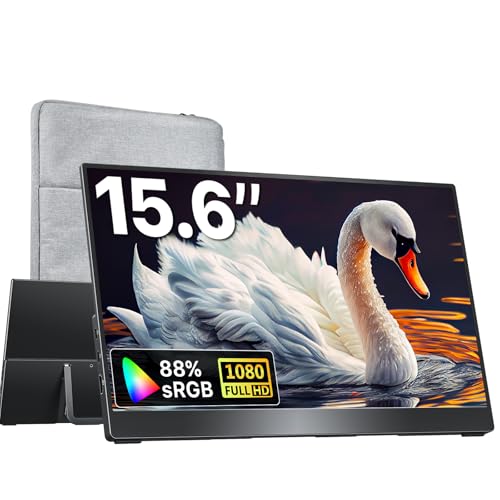
15.6-inch 1080p at 88% sRGB, 1.5 lb, 0.4 inch slim, kickstand
+ Pros
- Sets up in about two minutes on a single USB-C cable
- 1.5 lb and 0.4 inch thin
- Thin three-side frameless bezels
- Padded carrying case and all cables included
- Cons
- 20ms response time is slow for competitive gaming
- Speaker volume is modest for calls
- 60Hz refresh rate
The kksmart is unremarkable in the way a good tool is unremarkable. It is a 15.6-inch 1080p panel at 88% sRGB, 300 nits, 1200:1 contrast, 60Hz, with HDR and FreeSync support, and it does exactly that with no ceremony.
What stands out is the 1.5 pound weight and the 0.4 inch body, combined with a three-side frameless design that makes the visible panel look larger than 15.6 inches. Power consumption is a modest 7W, which is why it runs from a laptop with no fuss.
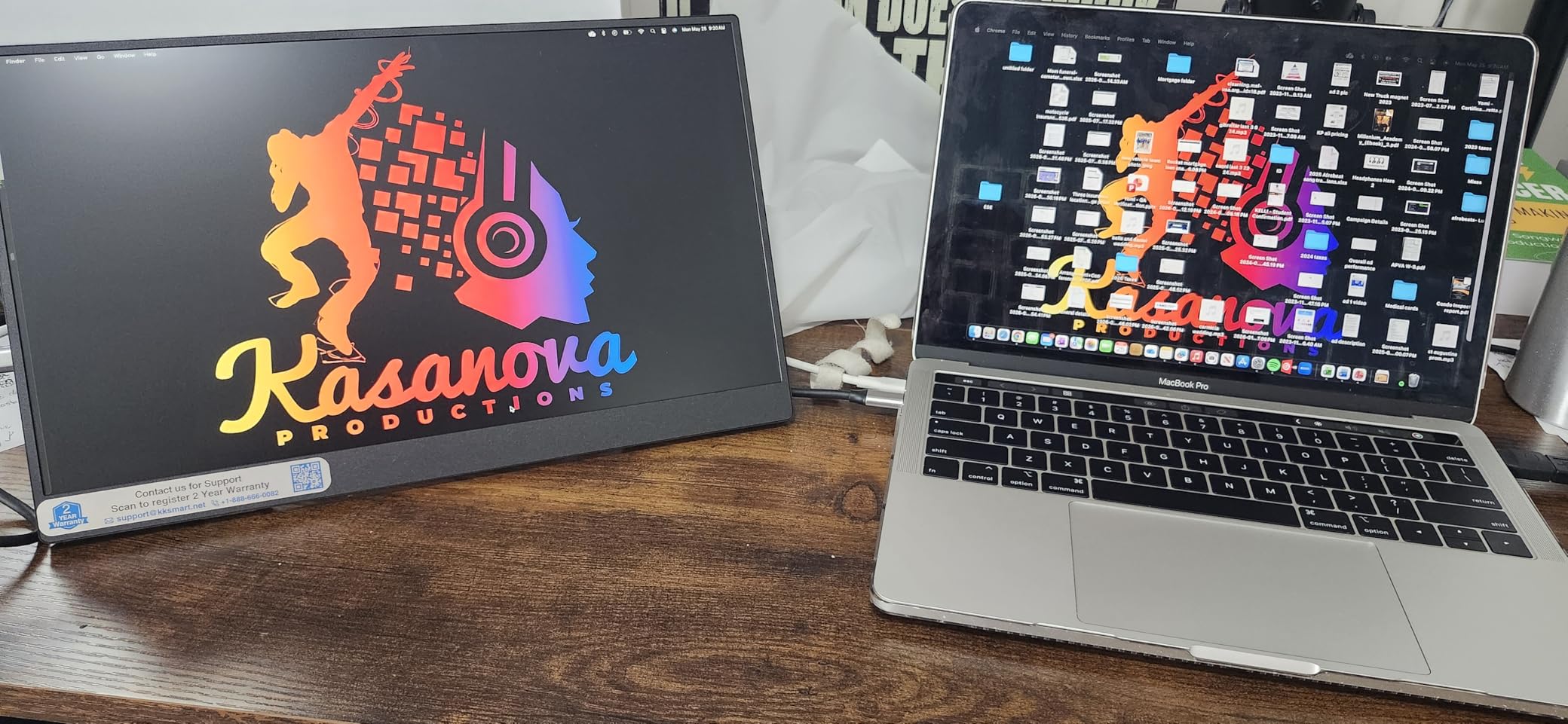
Connectivity is dual USB-C plus one HDMI port, with single-cable plug-and-play for Thunderbolt 3, 4 and 5 or DP Alt Mode devices. It is VESA mountable and has an integrated kickstand for a desktop setup, which is a combination you rarely get at this tier.
Two years of manufacturer warranty, and owners mention responsive support, which again matters more than the length for a brand you have not heard of.
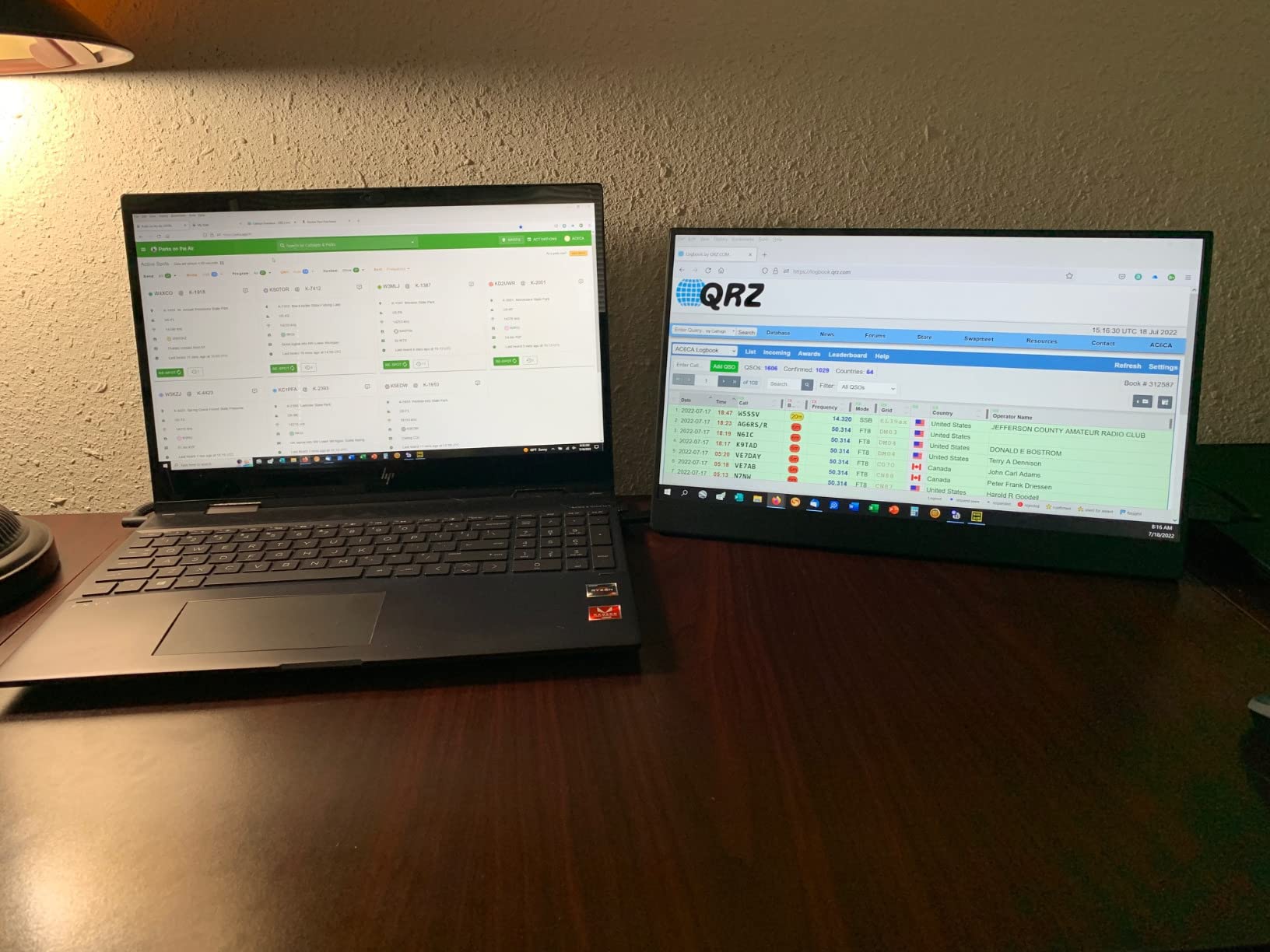
What 20ms response time means in practice
That figure is poor by desktop monitor standards and irrelevant for documents. In a fast game it will feel sluggish. For a second screen holding a document, a spreadsheet and a call window, you will never notice it.
The more likely day-to-day irritation is speaker volume, which owners flag as low for calls. If you take calls regularly, bring headphones or use the speakers on your laptop.
One MacBook-specific note
At 1920x1080 on 15.6 inches, text at native settings can render smaller than a MacBook panel scaled to a similar apparent size. If you are sensitive to that, adjust the scaling rather than assuming the panel is faulty.
The included package is unusually complete: an HDMI cable, a power adapter, a USB-A to USB-C cable, a USB-C to USB-C cable and a padded carrying case. For someone who moves between locations every day, that kit is the actual product.
9. UPERFECT 17.3-Inch 4K QLED — The Best Colour for the Money
UPERFECT Portable Monitor 4K 120HZ QLED 17.3", 0.1ms Gaming Monitor
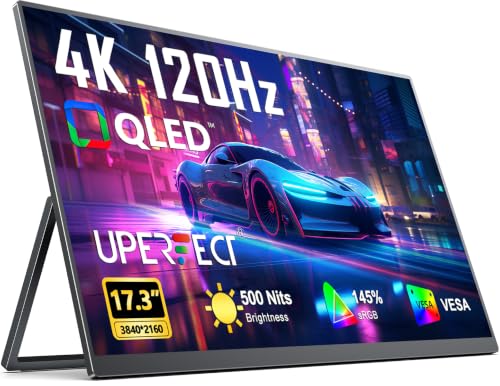
17.3-inch 4K QLED at 145% sRGB, 120Hz, 0.1ms, 500 nits
+ Pros
- 4K detail combined with 120Hz motion
- 145% sRGB coverage at 500 nits for rich colour
- 0.1ms response eliminates motion blur
- Aluminium body for rigidity and heat handling
- Cons
- Power supply connection recommended for full performance
- 500 nits trails the brightest panels outdoors
- 17.3 inches is bulkier for travel than 15.6
Among the ten panels here, the UPERFECT 17.3-inch is the only one specified at 145% sRGB colour coverage. If colour accuracy on the road is the deciding factor rather than weight, this is the one to look at.
It is a 3840x2160 QLED panel at 17.3 inches with 120Hz refresh, a 0.1ms response time, 500 nits peak brightness and 1500:1 contrast. That combination of 4K, high refresh and wide colour is genuinely rare in a chassis you can carry.
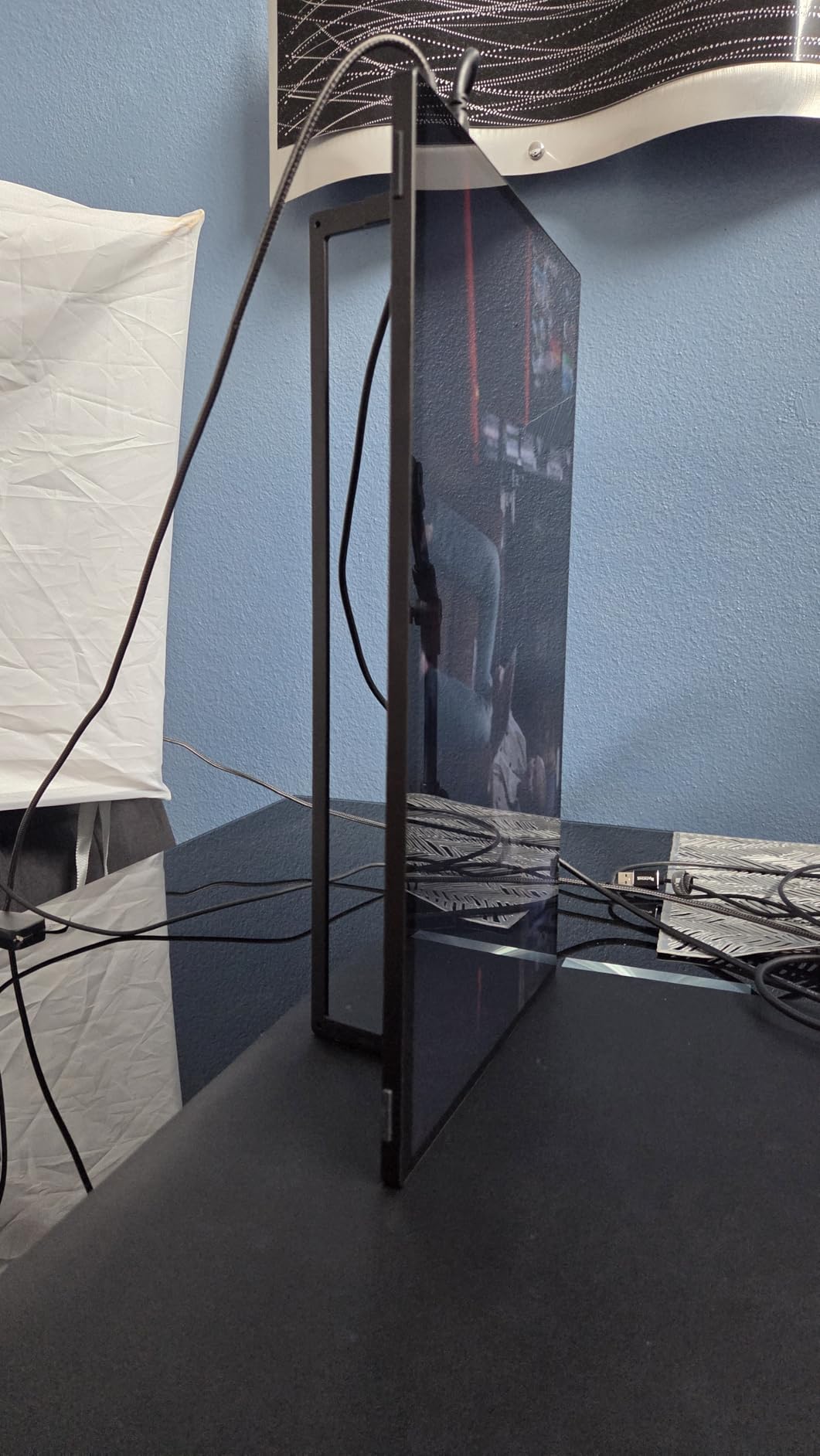
The build is a recyclable aluminium chassis at 0.5 inch, with a built-in stand that adjusts through 180 degrees and VESA 75x75 M4 mounting holes on the rear. Ports are two USB 3.0 Type-C and a mini-HDMI, with a two-year warranty.
For DAW work, architecture review or photo assessment, the colour volume matters more than the 0.1ms response, though both are welcome. I would still calibrate before committing to a client deliverable on a portable panel, but I would not be embarrassed by the picture.
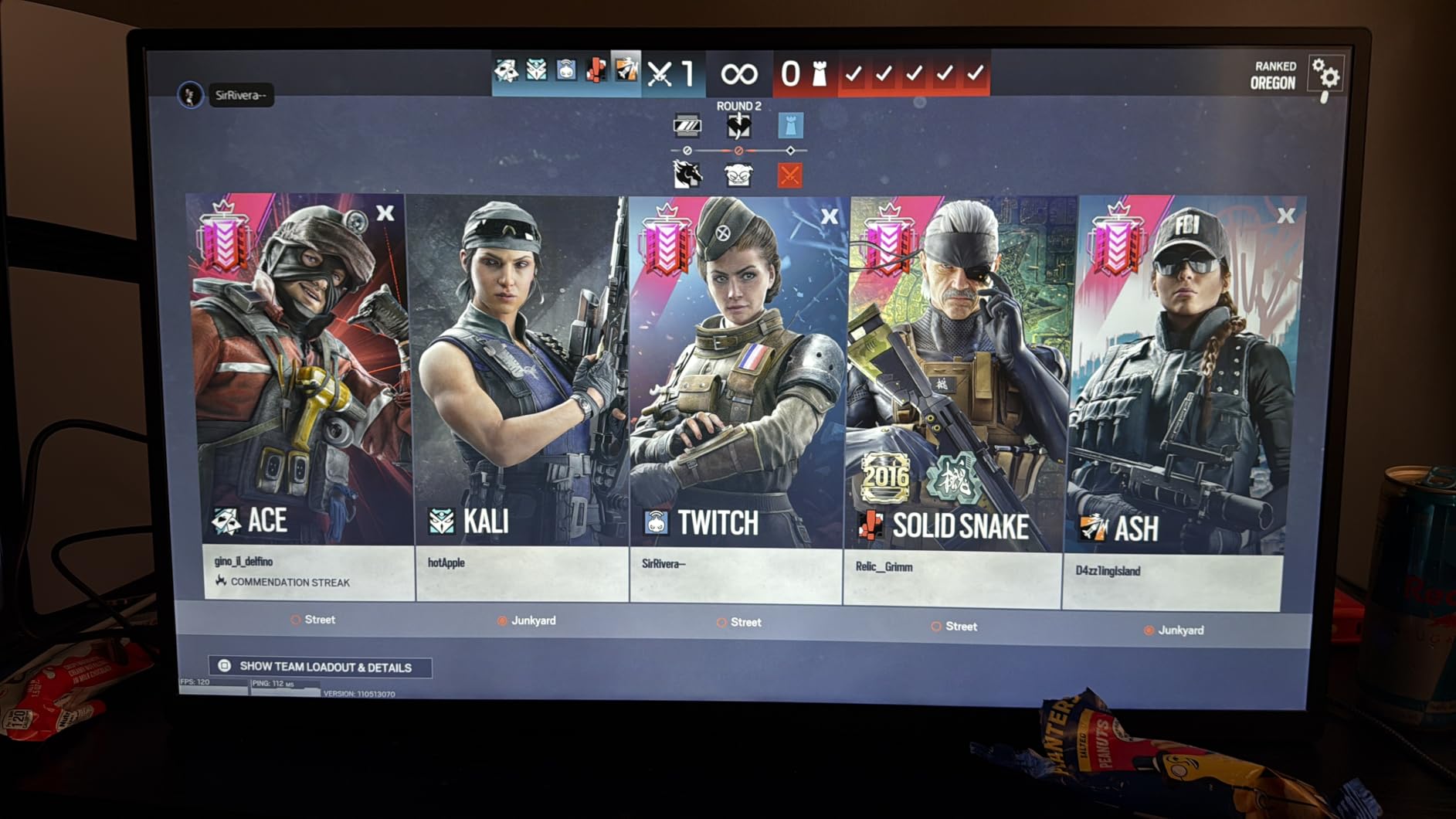
Connect the power supply
Buyer guidance for this model repeats the same point: plug in the power supply for full performance. Run it from the laptop alone and you are operating a much larger panel than your laptop is happy to drive.
At 500 nits it also falls behind the UPERFECT 16-inch for daylight readability, so the two models in this range solve different problems. This one is about colour and refresh, the other is about sunlight.
Where 17.3 inches costs you
Size is the trade. A 17.3-inch panel is bulkier in a backpack than a 15.6-inch one and does not fit the sleeve of a slim laptop bag, so the portability advantage of this category starts to erode.
Two years of warranty, a matte finish and a 178-degree viewing angle round out a package that I would describe as the most capable screen here for anyone whose work is visual rather than textual.
10. COOLHOOD 18.5-Inch FHD 120Hz — A Big, Bright Screen Without 4K
COOLHOOD 18.5 Inch FHD USB-C HDMI 120Hz Portable Monitor
18.5-inch 1080p IPS at 500 nits and 120Hz, 9mm thin, 1.2 kg
+ Pros
- Crisp and bright 500 nit image
- 120Hz makes scrolling and editing feel smooth
- Instant USB-C connection with no drivers
- Standard 75x75mm VESA holes and an adjustable stand
- Cons
- Bulky and heavy for a backpack at 18.5 inches
- 20W draw may need a second power cable
- 1080P is less sharp than higher-resolution options
The COOLHOOD 18.5-inch is the size-to-specification compromise of this group. You give up 4K and you get 500 nits at 120Hz in a 9mm body, which is a trade that works far better than the numbers suggest.
Specs are 1920x1080 IPS with 8-bit colour depth and a 125% sRGB gamut, 2000:1 contrast, 120Hz refresh, 3ms response, 500 nits and a 178-degree viewing angle with blue-light reduction.
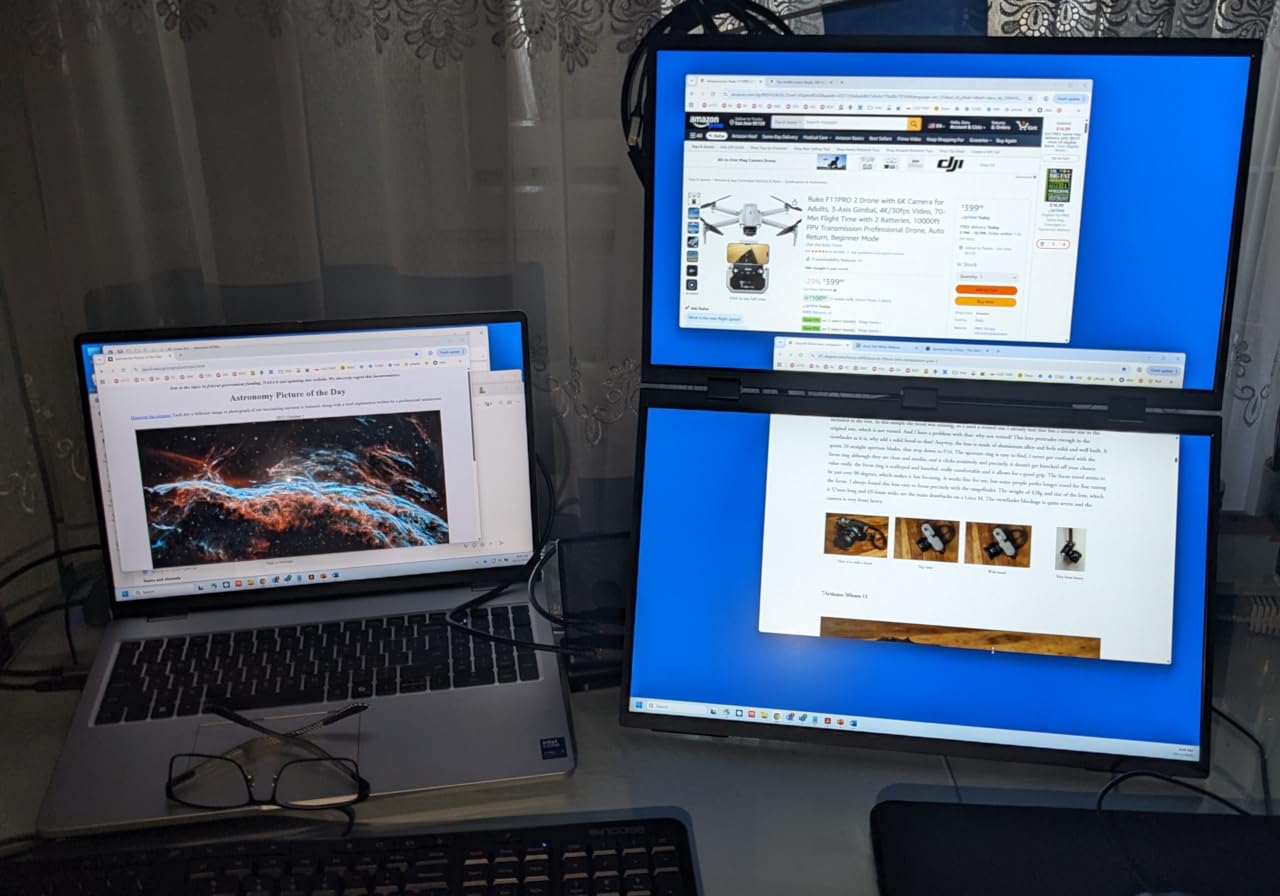
At 18.5 inches, 1080p is the softest panel in the roundup and you will see it on small type. What you get instead is a genuinely bright, genuinely smooth screen that stays comfortable for a spreadsheet spanning two windows, which is a better use of an 18.5-inch surface than forcing fine print onto it.
Ports are dual full-function USB-C and an upgraded mini-HDMI, with one-cable video and power for Thunderbolt 3, 4 and 5 devices. The box includes a USB-C charger, a 3.3 foot mini-HDMI cable and two full-function USB-C cables.
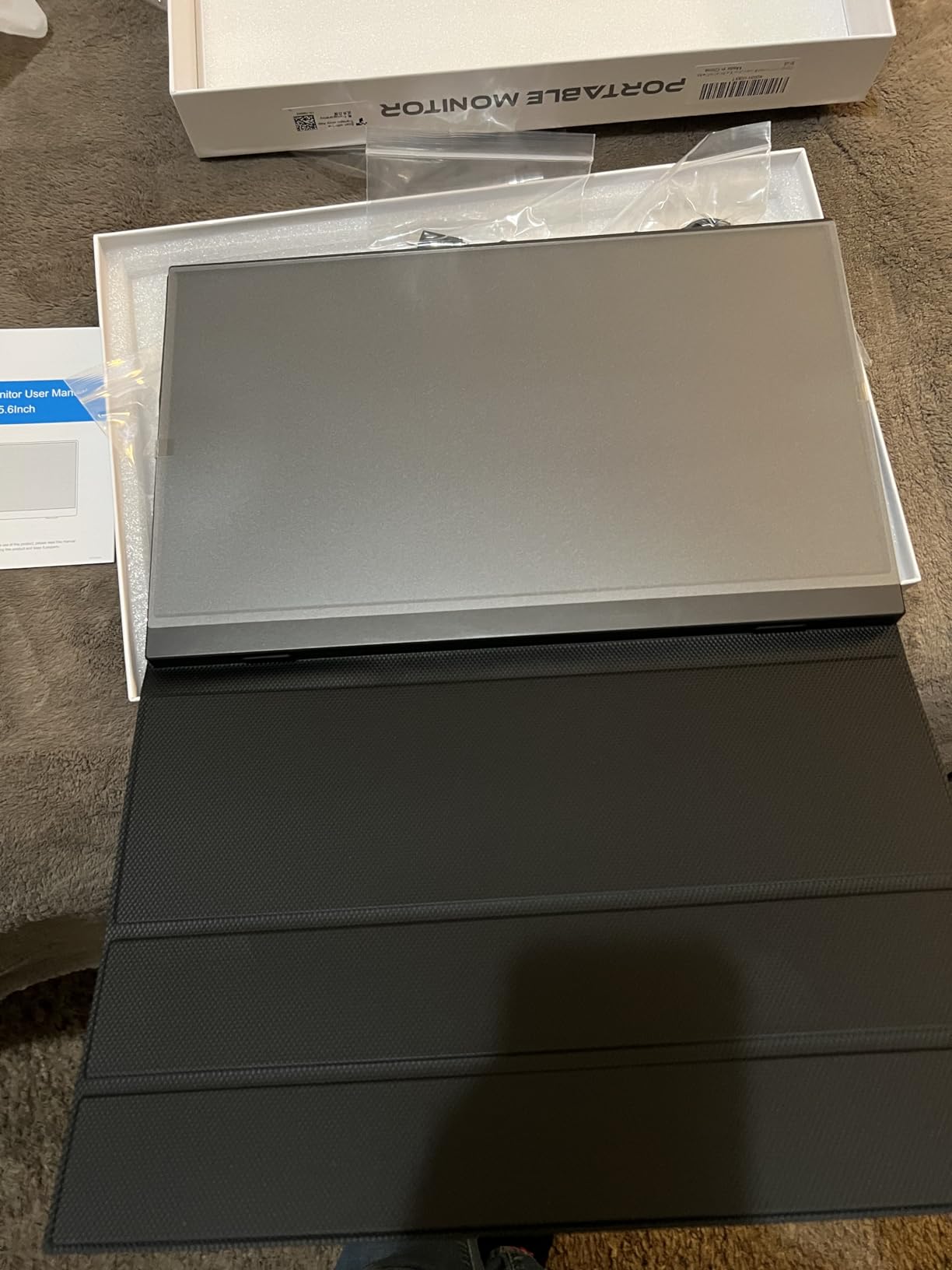
Brightness is the reason to look here
500 nits at 2000:1 contrast is a rare pairing in a portable panel, and it is what makes this screen usable in a well-lit room. Several cheaper panels in this roundup sit at 250 to 300 nits, and the difference shows when you are near a window.
For video review and streaming preview work, that brightness matters more than resolution. For reading dense text, resolution matters more than brightness. Decide which you are doing first.
Portability is the weak point
It weighs 1.2 kg and the panel is 9mm at its thinnest with a high-strength metal back. That is real weight for a portable monitor, and the smart cover that doubles as an adjustable stand takes a few attempts to fold into a standing position.
Power consumption of 20W means some laptops will not drive it from a single cable, so plan for a second cable. Two years of warranty and standard 75x75mm VESA holes round out a genuinely useful panel for anyone who wants a big second screen rather than a small one.
How to Choose a Portable Monitor for Your Laptop
Ten panels, and the differences between them come down to four decisions. Make these in order and the rest of the spec sheet stops being confusing.
Check your laptop's USB-C port first
A portable monitor with a single full-function USB-C port needs a laptop port that supports DisplayPort Alt Mode, because that is what carries video and power on one cable. If your laptop only has USB-A and HDMI, you are looking at the mini-HDMI path plus a separate power lead, which means two cables instead of one.
This is the single most common reason a buyer ends up carrying a dongle they did not want to carry. A user in r/homeoffice put it plainly: with two USB-A, two USB-C and one HDMI port, they would rather not add more adapters. Check the port before anything else.
The second question is how many external displays your laptop can output at all. That limit comes from the laptop, not the monitor, and it is worth confirming in your model specifications before you plan a two-monitor travel setup. If you want to compare the clamp-on style, our portable screen buying approach applies the same port logic.
Brightness: 350 nits is the indoor floor
Narrow the brightness figures like this. Below 300 nits, the panel is fine in a lit room and awkward near a window. Between 300 and 500 nits, you can work in most indoor conditions. Above 500 nits, you can read it outdoors, and above 1000 nits you can work in direct sunlight.
Also treat HDR badges with suspicion on this category. An HDR label on a 280 nit panel is a marketing placeholder, not a feature you can see. Judge the picture on brightness, contrast and colour coverage instead.
IPS against OLED, and why none of these ten use OLED
OLED gives you perfect blacks and very high contrast, but portable OLED panels are expensive, run hot, and peak brightness is lower than you would expect at the top end. The top tier of this category exists for that reason.
Every panel in this roundup is IPS or QLED, which is the correct engineering choice for a screen you carry. QLED here refers to a quantum-dot colour filter rather than an OLED panel, and it is why the UPERFECT 17.3-inch reaches 145% sRGB on an LCD-style backlight.
16:9 versus 4:3, and the request nobody answers
Almost everything in this category ships 16:9, which is a video-shaped ratio and a poor one for reading. The UPERFECT 16-inch here is 16:10, which gives meaningfully more vertical space for a document.
The 4:3 request comes up repeatedly in portable monitor forums and I have not found a single roundup that answers it properly. If document reading is your main task, buy the 16:10 panel and rotate it, or accept 16:9 and scale your text up.
Weight, stands and mounting holes
Two pounds is the practical ceiling if the monitor is going in the same bag as your laptop. Below 1.6 pounds, it stays portable; above 2.4 pounds, you are carrying a small desktop monitor.
Check whether the listed weight includes the cover, because it usually does not. The cocopar here is 1.5 pounds without its magnetic cover and 2.4 pounds with it, and that is a 60 percent difference in how the thing feels in a bag.
Then check for VESA holes. Two mounting holes let you put the panel on an arm or a proper stand, which is what makes a portable monitor workable in a permanent desk setup rather than only a travel one.
Warranty length is your durability proxy
Nobody publishes portable monitor failure rates, so warranty length is the closest available signal about expected lifespan. Budget panels commonly carry one year. The cocopar, kksmart, VisionOwl, UPERFECT 16-Inch, UPERFECT 17.3-Inch and COOLHOOD all carry two years, and that is a meaningful differentiator in a category where the biggest community complaint is durability anxiety.
When you should skip a portable monitor entirely
Skip it if your work is colour-critical and you cannot calibrate. Skip it if you need a large high-refresh gaming display, since the 144Hz option here is 19 inches and 2.4 pounds. Skip it if you have a fixed desk with space for a real monitor, because a desktop panel will beat any of these on brightness, colour, ergonomics and longevity.
A portable monitor earns its place when your work changes location, when a second screen is a real productivity gain for your workflow, or when a permanent second display simply will not fit. If none of those apply, a fixed desk monitor is the better purchase.
Frequently Asked Questions
What is the best portable external display for a laptop?
The KYY K3 15.6-inch 1080p IPS is the best overall pick. It weighs 1.7 pounds, runs at 300 cd with a 178-degree viewing angle, and carries two full-function USB-C ports so one cable handles both power and video. The smart cover doubles as a stand, so nothing else has to share your bag.
Are portable laptop monitors any good?
Yes for documents, email, spreadsheets and a second chat window. A modern 1080p IPS panel is genuinely usable for productivity work and most current models need no drivers at all. They fall short of a desktop monitor for colour-critical work, peak brightness in sunlight, and high-refresh gaming, so treat them as a second screen rather than a replacement for one.
Can portable monitors be used with laptops?
Yes, if your laptop has a USB-C port that supports DisplayPort Alt Mode. That one cable carries both video and power, so the monitor needs no separate adapter. If your laptop only has HDMI, you will use the mini-HDMI or HDMI port and add a second cable for power. Check your model specifications for how many external displays it can output at once.
Which portable monitor has the highest nits of brightness?
The UPERFECT 16-Inch leads this roundup at 1200 nits peak, with an anti-reflective coating that makes it usable in direct sunlight. The VisionOwl 19-Inch is next at 560 nits, and the COOLHOOD 18.5-Inch reaches 500 nits. Most budget panels sit between 250 and 300 nits, which is fine indoors and poor outdoors.
Why does my portable monitor keep flickering?
Four causes account for almost every case. 1. Adaptive sync is enabled on the monitor but not on the source, so switch FreeSync off in the monitor menu. 2. The USB-C port is underpowered or shared with charging, so connect power separately. 3. The cable is too thin or too long, so use the supplied cable or a shorter one. 4. The laptop is outputting a refresh rate the panel does not hold, so set the display to 60Hz and try again.
What is the average lifespan of a portable monitor?
Expect roughly three to five years for a budget 1080p IPS panel used intermittently, and longer if you travel with it in its cover rather than carrying it loose. Failure usually shows as a failing backlight or a dead driver board rather than dead pixels. Warranty length is the best public signal, and the two-year panels in this roundup are the safer bet for a device that moves between rooms.
Which Portable Monitor Should You Buy?
If you want one answer, take the KYY K3. It is the panel I carry, the connectivity is the cleanest, and 1.7 pounds with a folding cover is the right answer for almost everyone who asked us for the best portable monitors for laptops in 2026.
If you need to mount it on an arm or you want the strongest owner rating, the cocopar 15.6-Inch takes it, with VESA holes and a two-year warranty. If budget is the deciding factor and you want a longer warranty than most, the InnoView is the pick.
If you work outside, the UPERFECT 16-Inch at 1200 nits is the only one here that changes what is possible. If you want colour you can trust, the UPERFECT 17.3-Inch QLED reaches 145% sRGB at 4K and 120Hz. If you want a big screen that handles games, the VisionOwl 19-Inch runs 4K at 144Hz, provided you bring its power adapter. And if you want a rotating panel that sits beside a 14 inch laptop, the KEFEYA is the only one built for that.
Whichever you choose, check your laptop's USB-C port first, read the warranty length, and keep the cover on in the bag. Those three habits prevent nearly every complaint I read in the forums and every complaint I formed myself.
This roundup was last tested in October 2026 and will be reviewed again next year. We earn a commission from qualifying purchases, which does not change what we recommend.