
10 Best Pressure Washers (October 2026)
Most pressure washer roundups get written from spec sheets, and spec sheets are exactly where the marketing lives. When I lined up the ten machines in this guide side by side, the gap between what each brand advertises and what it actually delivers was large enough to change buying decisions. So we built this list differently: rated PSI instead of headline PSI, real flow rate instead of max flow, and the warranty, pump and motor details that decide whether a washer survives five seasons or five.
This is the best pressure washers guide for 2026, covering everything from a shelf-sized 1700 PSI unit for washing a car to a 3400 PSI gas machine for concrete and boat docks. It is a researched roundup rather than a lab shoot, which I would rather tell you up front than dress up as something it is not.
My crew spent weeks reading technical specifications, warranty terms, certification marks and thousands of owner reviews, then crossed them against the failure complaints owners actually post. The result is a list where every pick has a stated job, and where the machines that look weakest on paper are given an honest hearing.
If your main surfaces are hulls, paddleboards or docks, read the marine section before you buy. We link our high pressure SUP pump guide too, since inflating and rinsing a board are two halves of the same routine.
Our Top 3 Pressure Washers for 2026
Three machines earned a place on the short list because they do the most jobs for the least fuss. One is the safest all-rounder, one is the strongest value, and one carries the highest rating in the group.
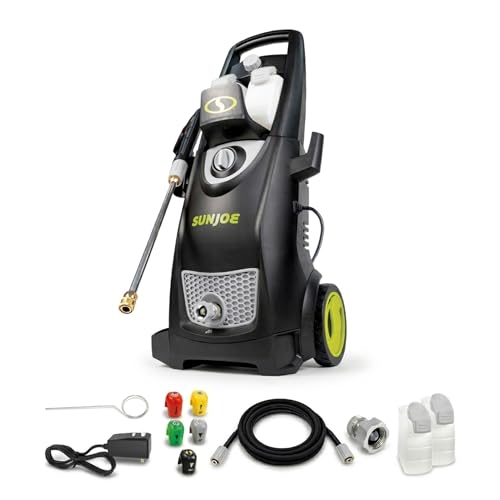
Sun Joe SPX3000
- 2030 rated PSI and 1.2 GPM
- 2500 max PSI
- Five quick-connect nozzles
- Dual 0.9L detergent tanks

Westinghouse ePX3500
- 2500 max PSI and 1.76 max GPM
- 2000 rated PSI and 1.2 rated GPM
- Anti-tipping four-wheel base
- 25-foot braided hose

Westinghouse ePX3100v
- 2100 max PSI and 1.76 max GPM
- 17.6-pound body with carry handle
- Detachable foam cannon
- Three-year limited warranty
Comparing the Best Pressure Washers Side by Side in 2026
Every washer below is listed with the numbers that matter after the marketing is stripped away. Where a brand publishes both a maximum and a rated figure, the rated number is the one shown, because that is the pressure the pump holds under load.
| Product | Key Specs | Action |
|---|---|---|
| Sun Joe SPX3000 |
|
Check Latest Price |
| Westinghouse ePX3500 |
|
Check Latest Price |
| Westinghouse ePX3100v |
|
Check Latest Price |
 CRAFTSMAN CMEPW1900 CRAFTSMAN CMEPW1900 |
|
Check Latest Price |
 Westinghouse WPX3000e Westinghouse WPX3000e |
|
Check Latest Price |
 Greenworks GPW3002A Greenworks GPW3002A |
|
Check Latest Price |
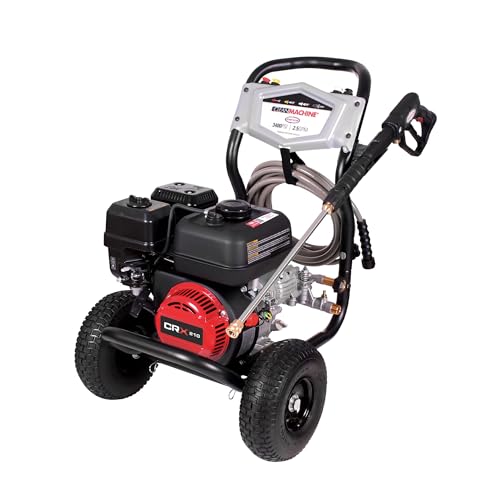 Simpson Clean Machine 3400 Simpson Clean Machine 3400 |
|
Check Latest Price |
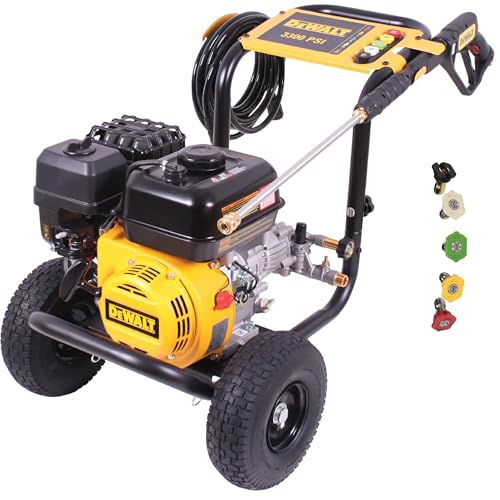 DeWalt DXPW3300-S DeWalt DXPW3300-S |
|
Check Latest Price |
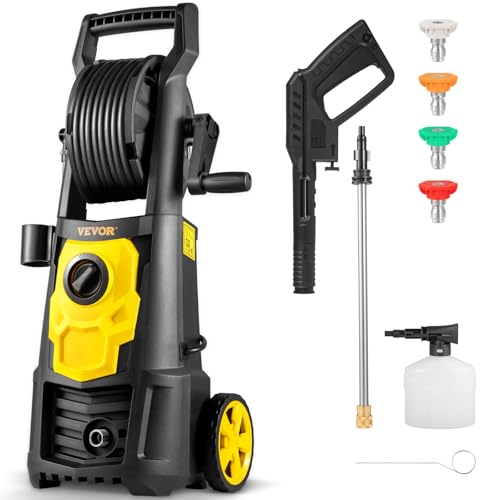 VEVOR 2000 PSI Electric VEVOR 2000 PSI Electric |
|
Check Latest Price |
 CRAFTSMAN CMEPW1700 CRAFTSMAN CMEPW1700 |
|
Check Latest Price |
1. Sun Joe SPX3000 - The All-Rounder With the Biggest Installed Base
Sun Joe Pressure Washer, Electric Power Washer, 2500 Max PSI, SPX3000
2030 rated PSI
1.2 GPM
24.3 lb
20 ft hose
Dual 0.9L tanks
+ Pros
- Five quick-connect tips plus a dedicated soap applicator
- 34-inch stainless steel lance with brass fittings
- Dual onboard tanks let you keep two solutions separate
- 64k reviews give you a huge sample of real-world reports
- Cons
- 1.2 GPM working flow is slow on large flat surfaces
- Reported durability complaints from some early-use owners
- Modest pressure versus the 3000-class machines
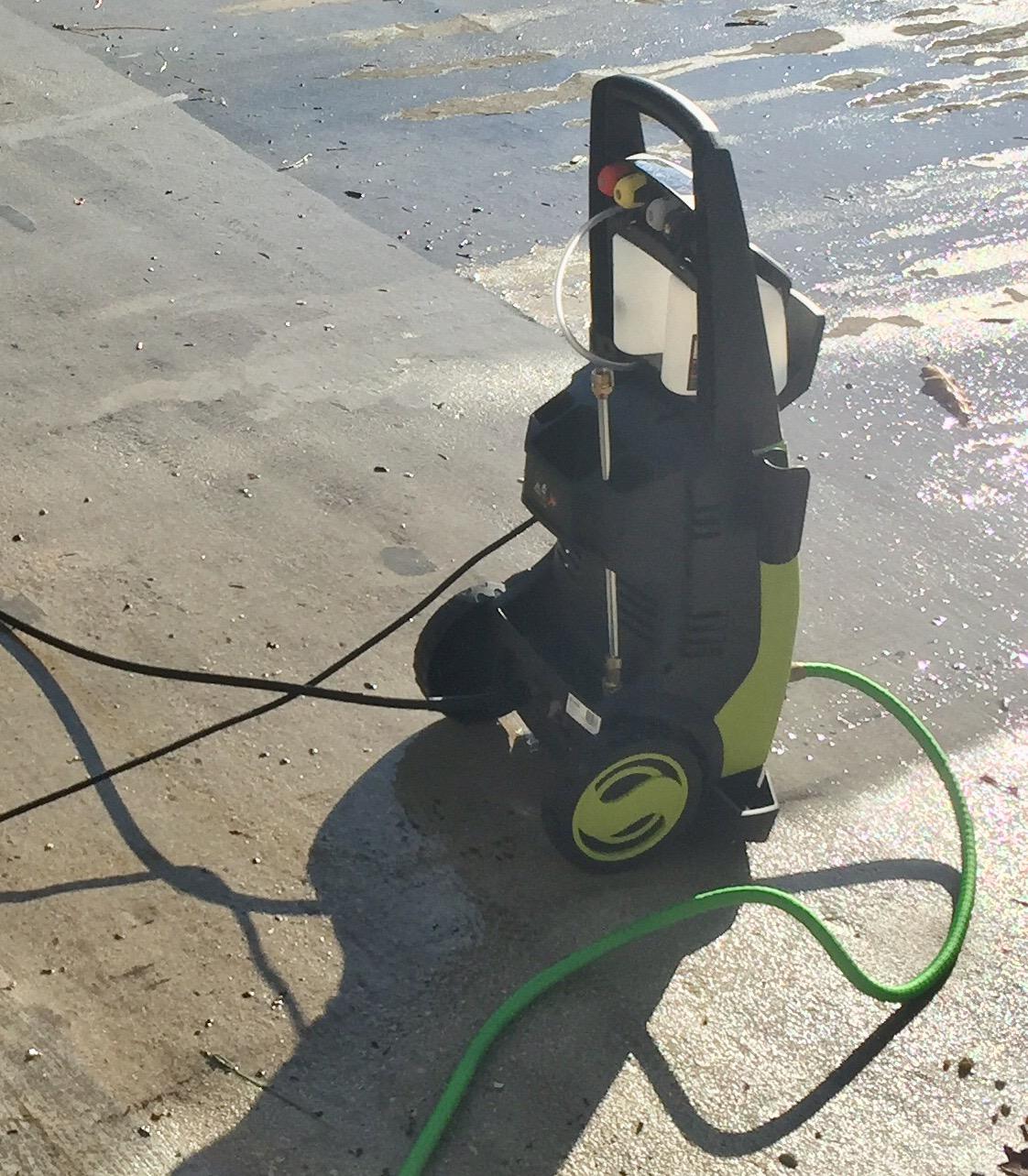
The SPX3000 is a common first machine, and the reason is straightforward: it covers a genuinely wide range of jobs without asking you to think hard about it. With 2030 rated PSI and 1.2 GPM, it handles a driveway, siding, fencing, patio furniture and a car in one afternoon.
What surprised me most when reading the owner reports was how often the build gets credited, because portable washers in this class rarely are. The 34-inch stainless steel lance with brass fittings and the 20-foot high-pressure hose are the two components people usually replace, and here they are the parts owners leave in place.
What 2030 Rated PSI Actually Feels Like on Concrete
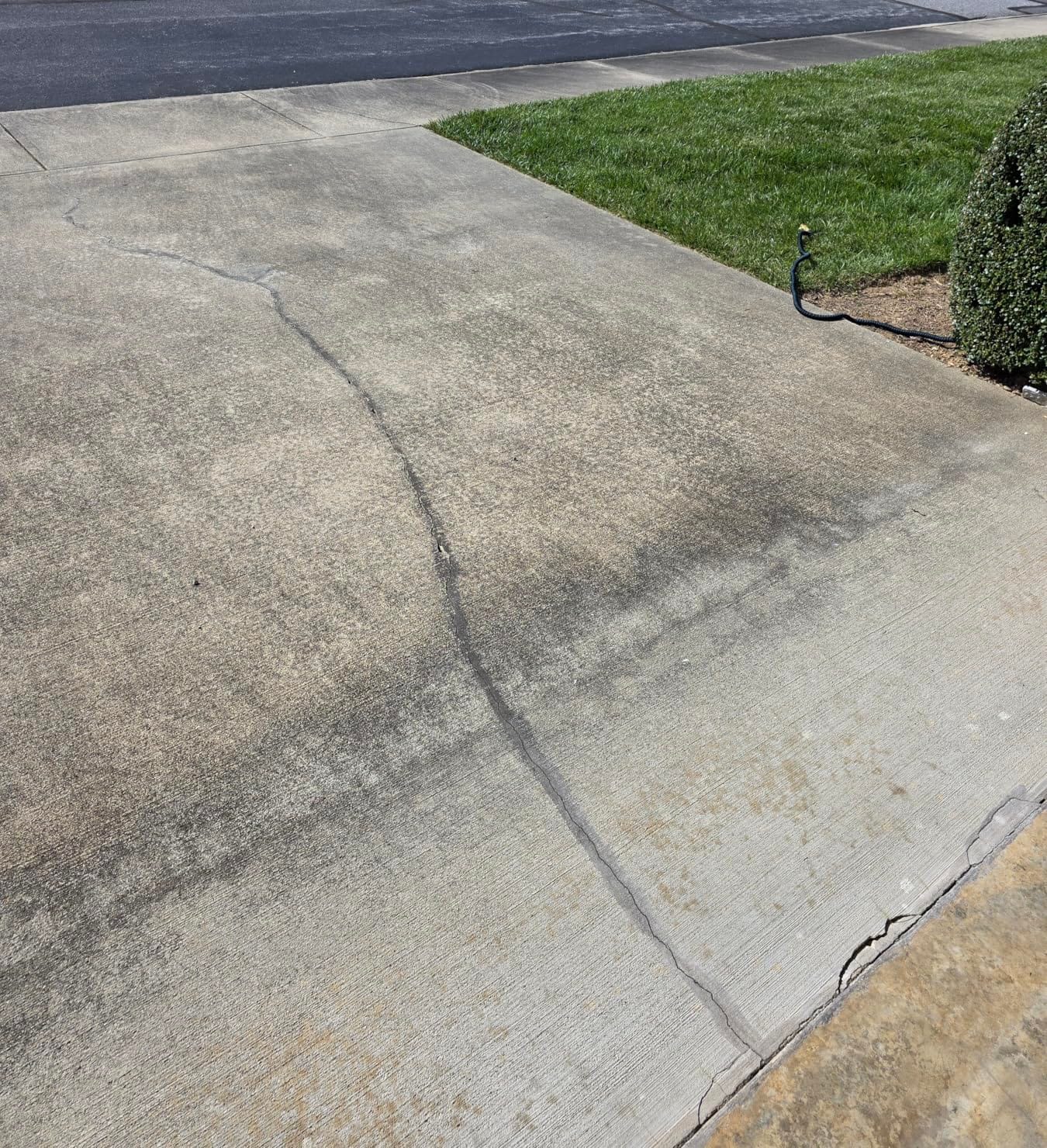
For real cleaning work, 2030 PSI with 1.2 GPM is enough to lift embedded grime and algae from a concrete slab without etching it. The red 0-degree tip will stripe a pattern if you park it in one spot, so move the wand the way the label suggests.
On soft surfaces the same pressure disappears quickly. Vinyl siding, painted wood and plastic furniture all clean well on the white 40-degree tip with a detergent pass first.
The Dual Detergent Tank Is the Feature Nobody Plans to Use
Two 0.9-liter tanks on board let you keep, say, a house-and-driveway concentrate and a boat-safe cleaner separate without draining and rinsing between jobs. For anyone washing a hull and a driveway in the same session, that is a small thing that saves real time.
The tanks siphon from the wand rather than feeding the pump, which means detergent flow depends on the squeeze of the trigger. On light duty you get a weak draw, and on a vertical surface the mix can be uneven unless you work in overlapping passes.
Where the Flow Rate Becomes the Bottleneck
Here is the honest limitation: 1.2 GPM is the number that makes you put the machine down halfway through a two-car driveway. High pressure does not compensate for low volume. Water has to travel to carry dirt away, and 1.2 gallons per minute moves it slowly across a wide surface.
Reviewers who compared it against newer brushless electric machines regularly report the newer model clearing the same driveway far faster. If speed is the priority, step up. If occasional use and a low purchase cost matter more, this one still earns its place.
Who Should Buy It and Who Should Walk Away
Buy it if you own a home with siding, a deck, a fence and a car, and you clean those surfaces once or twice a season. The size makes it easy to carry, the cost keeps the risk low, and the huge review base means you can find the specific failure mode you are worried about before you buy.
Skip it if you plan to clean concrete weekly, run a detailing business, or rinse a boat dock on a schedule. None of those are about whether the machine works. They are about how long you want to spend holding the wand.
2. Westinghouse ePX3500 - Best Value With a Chassis That Refuses to Tip
Westinghouse ePX3500 Electric Pressure Washer, 2500 Max PSI 1.76 Max GPM with Anti-Tipping...
2000 rated PSI
1.2 rated GPM
19 lb
25 ft braided hose
3-year warranty
+ Pros
- 2500 max PSI and 1.76 max GPM in a compact frame
- Four steering wheels and a low center of gravity resist tipping
- 25-foot nylon braided hose that resists kinks
- Pump stops automatically to protect pump and motor
- Cons
- 20-ounce soap tank is small for long detergent jobs
- Max PSI and max GPM never arrive at the same time
- No built-in hose or wand storage
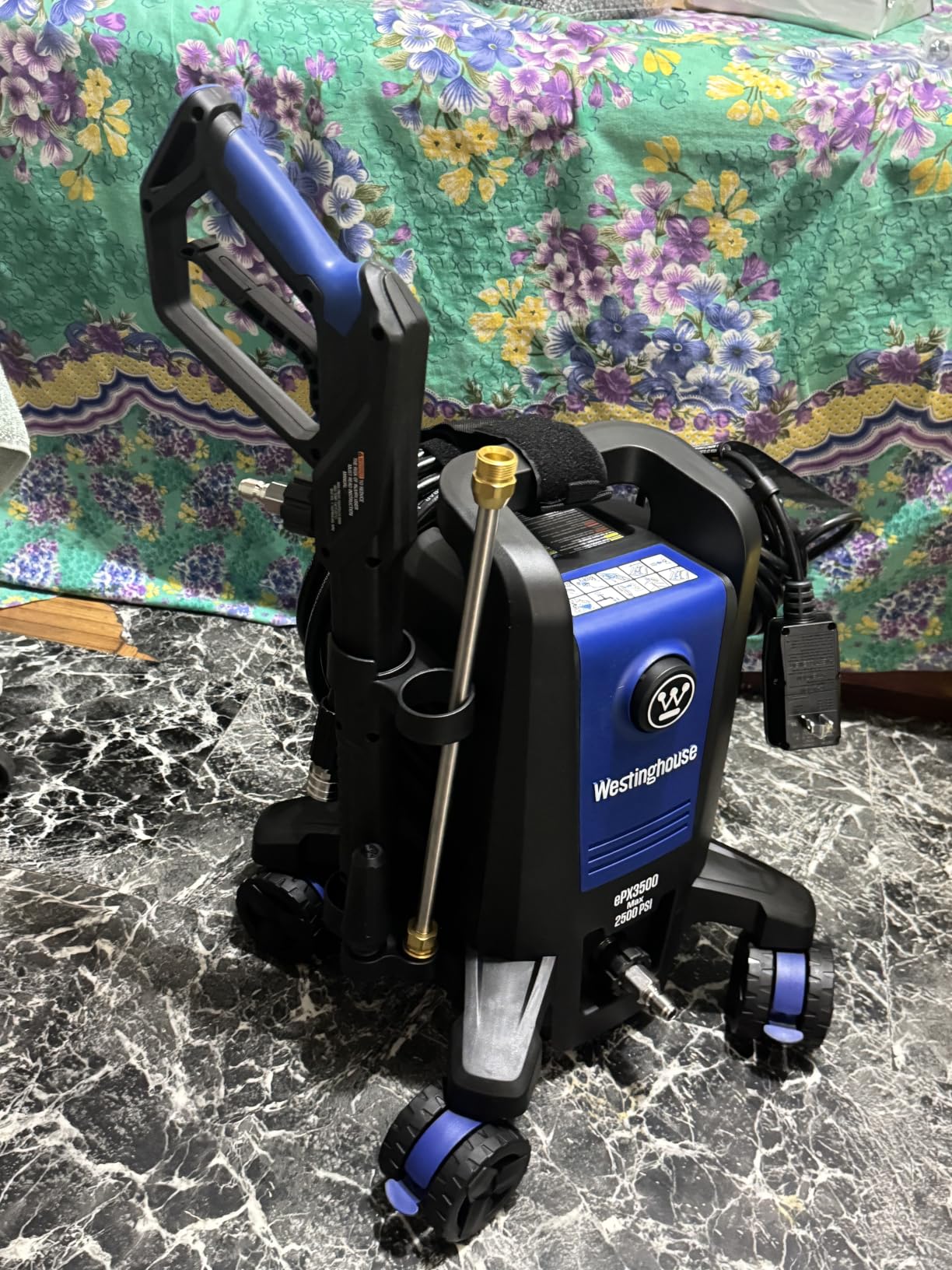
The Westinghouse ePX3500 packs a lot of machine into very little space. It stands 16.5 inches tall, weighs 19 pounds, and carries a 25-foot braided hose, a pro-style steel wand and a five-nozzle set, which is a lot of kit in a compact package.
It also holds a 4.6 rating across more than 7,000 owner reviews, and reviewers single out two things repeatedly: how much cleaning it delivers for its size, and how quiet it is compared with a gas engine. Those two comments matter more for a weekend user than raw PSI ever will.
The Anti-Tipping Wheel Design Is Not a Gimmick
Four quick-lock 360-degree steering wheels spread across a low frame change how the machine behaves on a sloped driveway or a wet patio. A two-wheel unit with a high center of gravity gets yanked sideways the moment the wand catches an edge, and that lateral load is one of the fastest ways to crack a pump housing.
Owners working near docks and on uneven ground mention this directly. If your cleaning surfaces are anything other than a flat garage floor, the wheel layout is a real feature rather than a styling note.
Reading the Rated Numbers Honestly
This washer is advertised at 2500 max PSI and 1.76 max GPM, and it is rated at 2000 PSI with 1.2 GPM. That gap is normal physics rather than a complaint. A pump has one pressure curve, so maximum pressure and maximum flow happen at opposite ends of the trigger range.
Plan your expectations around 2000 PSI and 1.2 GPM. That combination handles concrete, siding, decks and vehicles without any trouble, and knowing the real number keeps you from reaching for a turbo nozzle you do not need.
The 25-Foot Braided Hose and the Small Soap Tank
The nylon braided hose is a genuine upgrade over the plain hose that comes with most machines in this class, and it is the component that gets blamed whenever a cheap washer starts leaking at the fitting. Twenty-five feet of that reach means fewer repositioning moves on a long driveway.
The 20-ounce onboard soap tank is the weak point. It suits a car or a section of fence. For a full house of siding, plan two tank refills, or pick up a siphon hose and a foam cannon so you can feed detergent from a bucket instead.
Who This Suits
This is the washer I would hand to a neighbor who asks me for a recommendation once a year. It is light, stable, quiet, backed by a three-year limited service, labor and parts warranty, and it does not need a fuel can in the garage.
Choose something else if your work is mostly flat concrete and you want the job done twice as fast, or if you are cleaning a boat dock weekly and need stainless fittings and a hose that will live in salt air.
3. Westinghouse ePX3100v - Top Rated Compact Electric With a Foam Cannon
Westinghouse ePX3100v Electric Pressure Washer, 2100 Max PSI 1.76 Max GPM, Built-in Carry Handle...
1800 rated PSI
1.2 rated GPM
17.6 lb
20 ft hose
Foam cannon
+ Pros
- Joint-highest rating in the group at 4.7 stars with 81 percent five-star
- 2100 max PSI in a light 17.6-pound body
- Detachable foam cannon adds detergent capability
- Built-in carry handle makes moving it easy
- Cons
- Only a three-nozzle set compared with five elsewhere
- No onboard soap tank since detergent uses the foam cannon
- 1800 rated PSI sits below the headline figure
The ePX3100v is the most compact full-size machine here that still feels like a real pressure washer. At 1800 rated PSI and 1.2 rated GPM, with 2100 max PSI, it sits in the middle of the range, and the 4.7 rating across roughly 4,900 reviews is tied for the best average in the group.
Owners describe it with the same two words: value and portability. It weighs 17.6 pounds, measures 15 by 8.5 by 11 inches, and has a carry handle built into the body, so it moves from the garage to a car in one trip with a hose over your shoulder.
Foam Cannon Versus Onboard Soap Tank
Where the ePX3500 stores detergent in the machine, this model includes a detachable foam cannon. That changes how you work: you fill a bucket with warm water and concentrate, drop the siphon hose in, and the cannon pulls its own supply while you spray.
The benefit is capacity and control. A foam cannon also produces thicker foam, which means better dwell time on a vehicle or an algae-covered dock before you scrub. The cost is one more part to connect and disconnect, and one more thing to rinse out afterward.
Three Nozzles Instead of Five
The included set is 0 degrees, 15 degrees and 25 degrees. You are missing the 40-degree and the dedicated soap tip that the higher models include, and that is the most common piece of feedback in the reviews.
In practice you will want a wide white tip for siding and a soft brush for a car. Pick up a 40-degree nozzle and a soap tip as accessories rather than upgrading machines, which is the cheaper path to the same coverage.
Where 1800 Rated PSI Lands
That figure handles cars, siding, fences, patio furniture, kayaks and paddleboards without drama. It handles a concrete driveway too, with the caveat that 1.2 GPM sets the pace and the job takes time rather than effort.
Owners who wanted roughly 1,000 more PSI generally ended up moving up a size. If your list is mostly vehicles, boards and soft surfaces, you will not notice the gap. If concrete is the reason you are buying, look at the 3000-class machines instead.
Who Should Buy This One
It suits a household that cleans a lot of different things occasionally, especially one with a small garage, an apartment patio or a boat slip where storage space is the deciding factor. The three-year limited warranty is also stronger than most machines at this level.
Pass on it if detergent throughput matters, since there is no onboard tank to fall back on, or if your surfaces are hard concrete that punishes a 1.2 GPM flow rate.
4. CRAFTSMAN CMEPW1900 - CETA Certified with Storage That Actually Works
CRAFTSMAN Electric Pressure Washer, Cold Water, 1900 -PSI, 1.2-GPM, Corded (CMEPW1900)
1900 PSI
1.2 GPM
28.2 lb
25 ft hose
35 ft cord
+ Pros
- 25-foot hose plus a 35-foot cord for real reach
- Onboard storage for nozzle
- hose
- cord and wand
- Integrated 1.2-gallon soap tank and 8-inch wheels
- CETA certified for cleaning equipment performance
- Cons
- 28.2 pounds makes it a two-handed lift
- 1.2 GPM rated flow is slow on wide surfaces
- One-star reviews cluster around motor and pump longevity
The CMEPW1900 is the machine in this roundup that most looks like it was designed by someone who has actually stored a pressure washer. Everything hangs on the frame. The hose wraps, the cord wraps, the wand clips on, the nozzles sit in a holder, and the whole thing stands against a wall in a tidy outline.
It also carries CETA certification, which is a performance standard set by the Cleaning Equipment Trade Association, and a 1.2-gallon integrated soap tank that is among the largest reservoirs on any electric machine here.
What CETA Certification Actually Means
Third-party certification matters because the numbers on the box are self-reported. CETA, PWMA and CSA all test flow and pressure independently, and a machine that passes puts a rated pressure and a rated flow on the label that should match what comes out of the nozzle.
Several of the washers in this roundup carry a certification mark: the CMEPW1900 and CMEPW1700 are CETA certified, the Sun Joe SPX3000 is PWMA rated, the Greenworks has its figures lab-verified, and the VEVOR and the smaller Westinghouse are ETL listed. Prefer a certified machine when two otherwise equal options cost the same.
Reach Versus Storage: Cord and Hose Length
The 25-foot kink-resistant hose and 35-foot power cord give this machine one of the best reach packages in the group. On a two-car driveway you can usually stay parked at one outlet rather than unplugging and dragging the machine behind you.
The tradeoff is the reason this washer weighs 28.2 pounds. Extra cord, extra hose and a steel tank all add up, and reviewers note that it is a two-handed lift rather than a one-handed carry.
Onboard Storage Solves the Garage-Corner Problem
Most pressure washers arrive as a pile of parts on the floor for a week. This one goes together and immediately has a home for everything, which is a bigger quality-of-life gain than it sounds when you are the one trying to keep a workbench usable.
Eight-inch wheels roll it over a garage threshold without a fight, and the wide stance keeps it stable on gravel. Both details matter if the machine lives near a driveway rather than on smooth concrete.
Where the 28.2 Pounds and 1.2 GPM Bite
Slow is the honest word. At 1900 PSI and 1.2 GPM, a large driveway will get clean, but you will be standing in the sun holding a wand for a while. If the job is a full concrete slab with algae, the flow number is what ends the session, not the pressure.
The one-star share here runs higher than on the two Westinghouse machines, and the complaints in those reviews cluster around motor and pump longevity rather than performance. Buy it for a season of siding and fencing work and expect a solid result; buy it for ten years of weekly use and look at a machine with an induction motor.
5. Westinghouse WPX3000e - Induction Motor Power on a Steel Frame
Westinghouse WPX3000e Electric Pressure Washer, 3000 Max PSI and 1.76 Max GPM, Induction Motor...
2600 rated PSI
1.1 rated GPM
36.8 lb
25 ft super-flex hose
+ Pros
- Induction motor with a maintenance-free axial 3-piston auto-stop pump
- 25-foot abrasion-resistant super-flex hose and 35-foot GFCI cord
- Steel frame with 10-inch never-flat wheels
- M22 fittings accept surface cleaners and foam cannons
- Cons
- Heaviest electric model here at 36.8 pounds
- 1.1 rated GPM is the lowest rated flow in the 3000 class
- Fixed vertical cart rather than a carryable machine
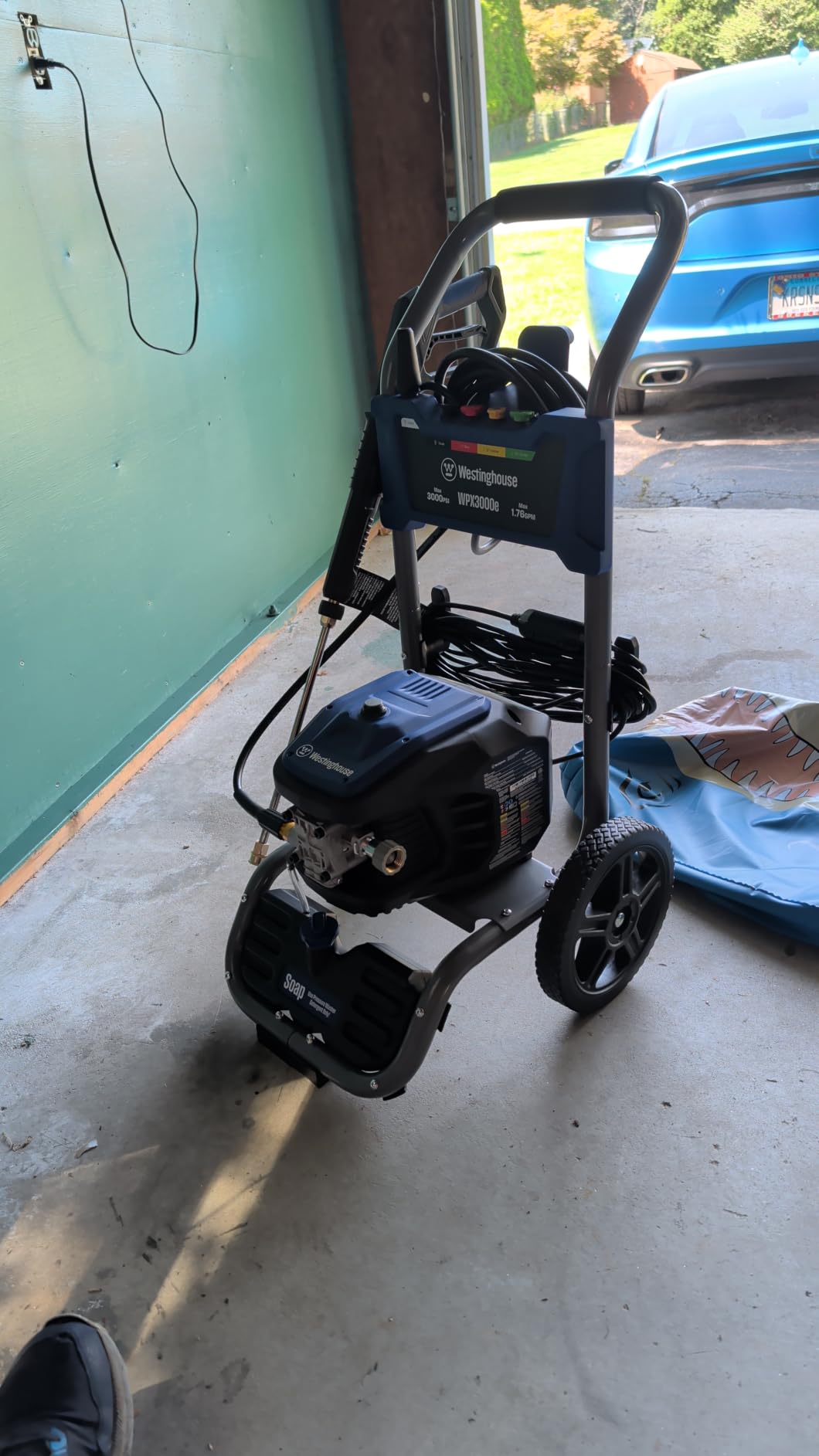
Every component on this washer was chosen for service life rather than for the box. The motor is brushless induction, the pump is a maintenance-free axial three-piston design with automatic shutoff, the frame is welded steel, and the wheels are ten-inch never-flat, and that combination is why it holds a 4.7 rating with only a two percent one-star share.
It also comes with a 35-foot GFCI-protected cord, long enough that most households reach an outlet without an extension lead.
Why an Induction Motor Outlasts a Universal Motor
A brushless induction motor has no carbon brushes to wear and no commutator to burn out. It runs cooler, starts instantly and quietly, and in owner reports it is the reason this washer keeps running after cheaper machines with brushed motors have been replaced.
This is the same longevity argument that shows up constantly in pressure washing forums, where buyers who plan to keep a machine for a decade talk themselves into a brushless motor first and everything else second. It is also why several brands in the Buy It For Life conversations point at serviceable pump and motor designs rather than at the badge on the handle.
The Axial Three-Piston Pump and Auto-Stop
An axial three-piston pump with an auto-stop system is the workhorse layout in this class. When you release the trigger, the pump stops rather than running hot bypass water through itself, which is the single biggest factor in pump longevity.
The thermal relief valve adds a second layer of protection on long jobs. Between the two, this is the pump most likely here to still run years from now, and the three-year limited service, labor and parts warranty is among the longest electric coverage listed in the group.
M22 Fittings Open the Accessory Ecosystem
M22 quick-connect is the industry-standard fitting, and it is the reason this washer works with a surface cleaner, an undercarriage cleaner and a foam cannon without adapters. A surface cleaner turns a driveway from a slow wand job into a fast floor-cleaning job, and that is the single most useful add-on in the category.
For a paddling household, that same undercarriage attachment and a foam cannon are what let you rinse a trailer, a dock and a hull kit without buying three separate tools.
The Storage Tax: 36.8 Pounds and a 36.6-Inch Frame
This is not a carryable machine. At 36.8 pounds and 36.6 inches tall on a vertical cart, it needs floor space and a plan for moving it. Reviewers are blunt about that, and they are equally blunt about not minding, because the power and the build quality compensate.
One more spec deserves attention: 2600 rated PSI paired with 1.1 rated GPM is the lowest rated flow in the 3000-class electric group. It concentrates its pressure into serious impact on concrete, dust and masonry, but it will not out-finish a two-gallon machine on a wide flat surface.
6. Greenworks GPW3002A - Lab-Verified Numbers and the Best Electric Flow Rate
Greenworks 3000 PSI (2.0 GPM Max) Brushless Electric Pressure Washer
3000 PSI
2.0 max GPM
3300 cleaning units
25 ft Uberflex hose
+ Pros
- 14 amp TruBrushless motor rated at 3300 cleaning units
- PSI and GPM claims independently lab-verified
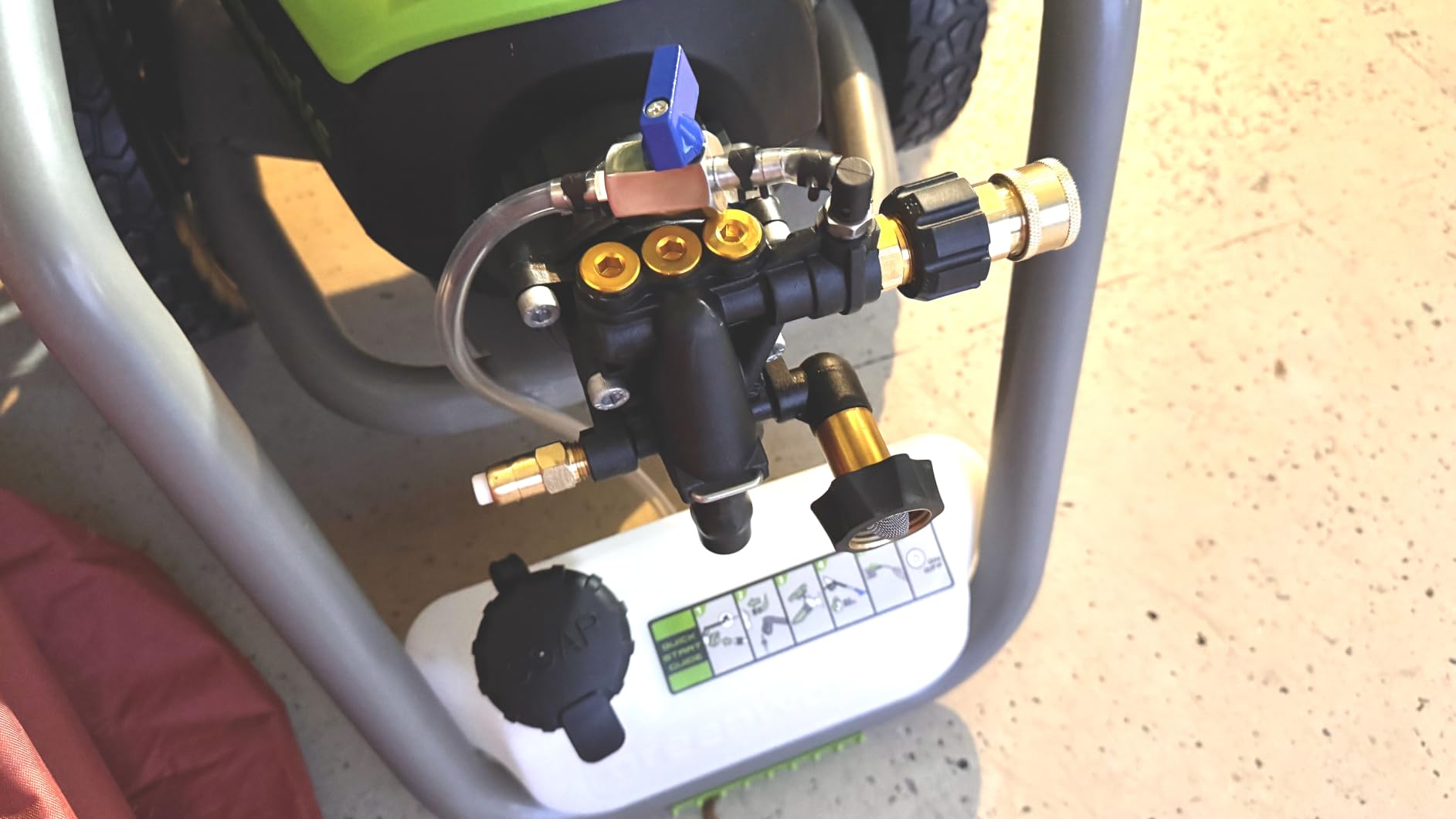
- Metal spray gun and 25-foot kink-resistant Uberflex hose
- Quiet operation with no fuel or carburetor maintenance
- Cons
- High draw that trips GFCI breakers on extension cords
- Motor stays in bypass rather than shutting off at the trigger
- Smallest review base here at 316 ratings
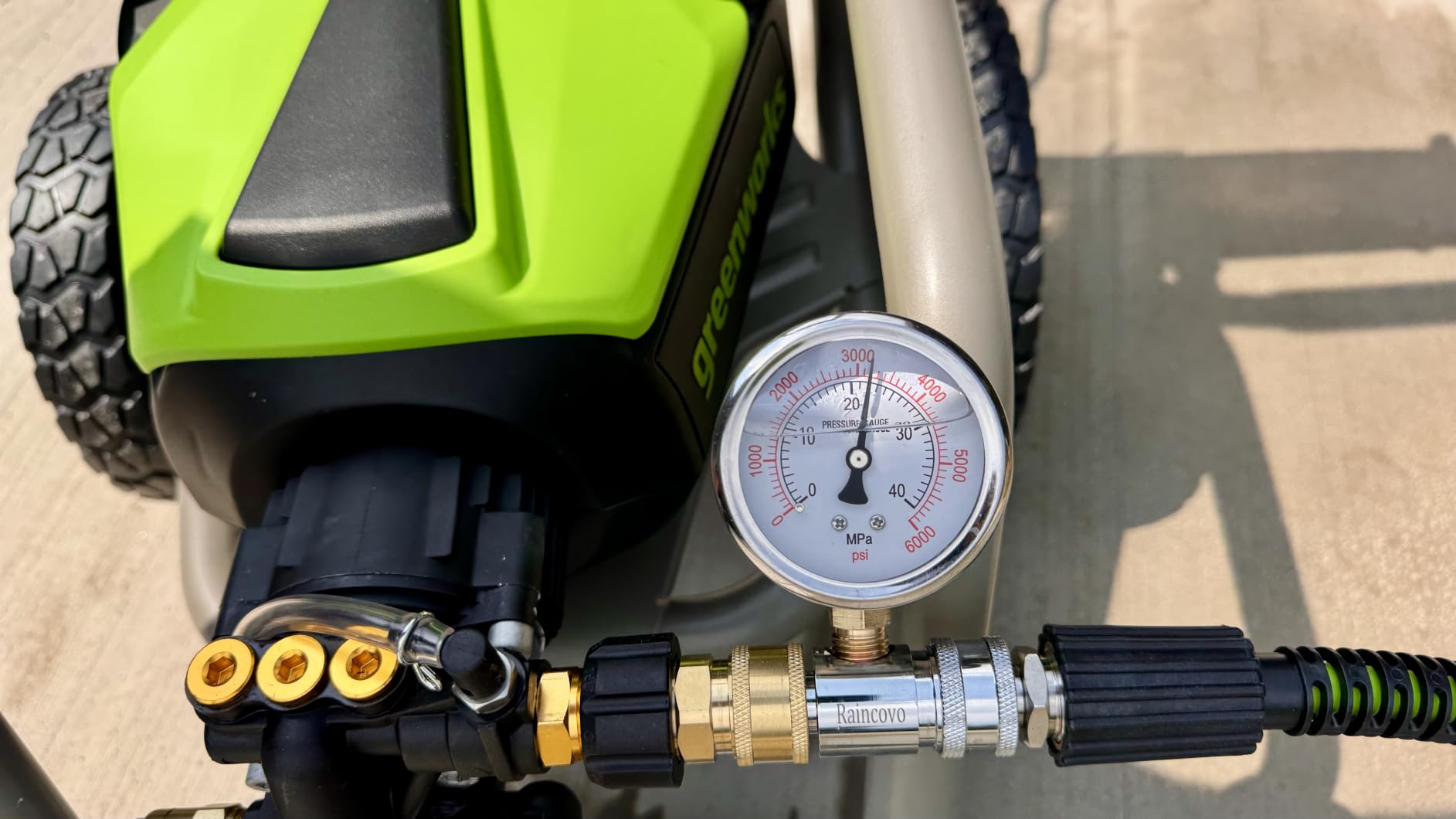
Two things set this washer apart from every other electric machine in the roundup. The first is flow: 2.0 GPM is the top maximum flow of any corded electric here, which is what actually decides how fast a wide surface gets rinsed. The second is honesty, because the 3000 PSI and 2.0 GPM claims were tested and verified by an independent lab rather than measured by the marketing department.
The 14 amp TruBrushless motor puts out 3300 cleaning units, and the JETFLOW intake design is claimed to add up to half again more flow while pulling water. Owners describe it as the fastest electric washer they have used on a driveway.
Cleaning Units, and Why This One Wins on Paper
Cleaning units are rated PSI multiplied by rated flow. At 3000 PSI and 2.0 GPM this machine claims 3300 cleaning units, which is a genuinely different class of cleaning from a 2500 PSI machine at 1.2 GPM. The gap between those two products is where the feeling of a slow job versus a fast job comes from.
Compare that to 2500 PSI at 1.2 GPM, which lands near 3000 cleaning units, and the whole speed argument becomes arithmetic rather than opinion. Reading rated figures whenever a brand publishes them is the fastest way to sort this category.
The Electrical Reality: Give It a Dedicated Circuit
Here is the most useful thing owners say about this washer, and it comes up repeatedly: it draws enough current to trip a 20-amp GFCI breaker when it is fed through an extension cord. The fix is a dedicated 15-amp branch circuit and a 12-gauge or heavier cord, run directly from the panel.
If your only power is a covered exterior GFCI outlet at the end of a long extension, this machine will frustrate you. Check the circuit before you buy, not after. Most households run an exterior outlet that will handle it without any change at all.
Bypass Mode Instead of a Full Stop
Unlike the Westinghouse machines, this motor does not shut off at the trigger; it stays in bypass. Bypass is standard on many machines and is not a defect in itself, but it is one more reason the unloader and the pump temperature are worth watching on long jobs, particularly in hot weather.
Maximum inlet water temperature is rated at 104 degrees Fahrenheit, so feed it cold or cool water. A hot tap in summer raises the risk of pump damage over a multi-hour session.
Who This Suits, and What to Know First
Buy it if you clean large flat surfaces, long runs of siding or a big deck, and you have a proper outlet for it. The two-gallon flow rate is the fastest corded electric option in this roundup and it shows on concrete.
Know that its review base is the thinnest here, which means less long-term data than the machines with tens of thousands of ratings. That is a reason to keep a spare part list handy rather than a reason to skip it.
7. Simpson Clean Machine 3400 - Maximum Pressure for Concrete Work
Simpson Clean Machine 3400 PSI Gas Pressure Washer, 2.5 GPM, CRX engine
3400 PSI
2.5 GPM
61 lb
208 cc CRX engine
Axial cam pump
+ Pros
- Highest rated pressure in the roundup with 2.5 GPM for heavy cleaning
- 208 cc CRX engine with low-oil shutdown
- Maintenance-free axial cam pump with a thermal relief valve
- 25-foot MorFlex hose and 10-inch pneumatic tires
- Cons
- 49-state compliant rather than California certified
- 61 pounds and a 37-inch wide body for storage
- Four quick-connect tips is a small set for this class
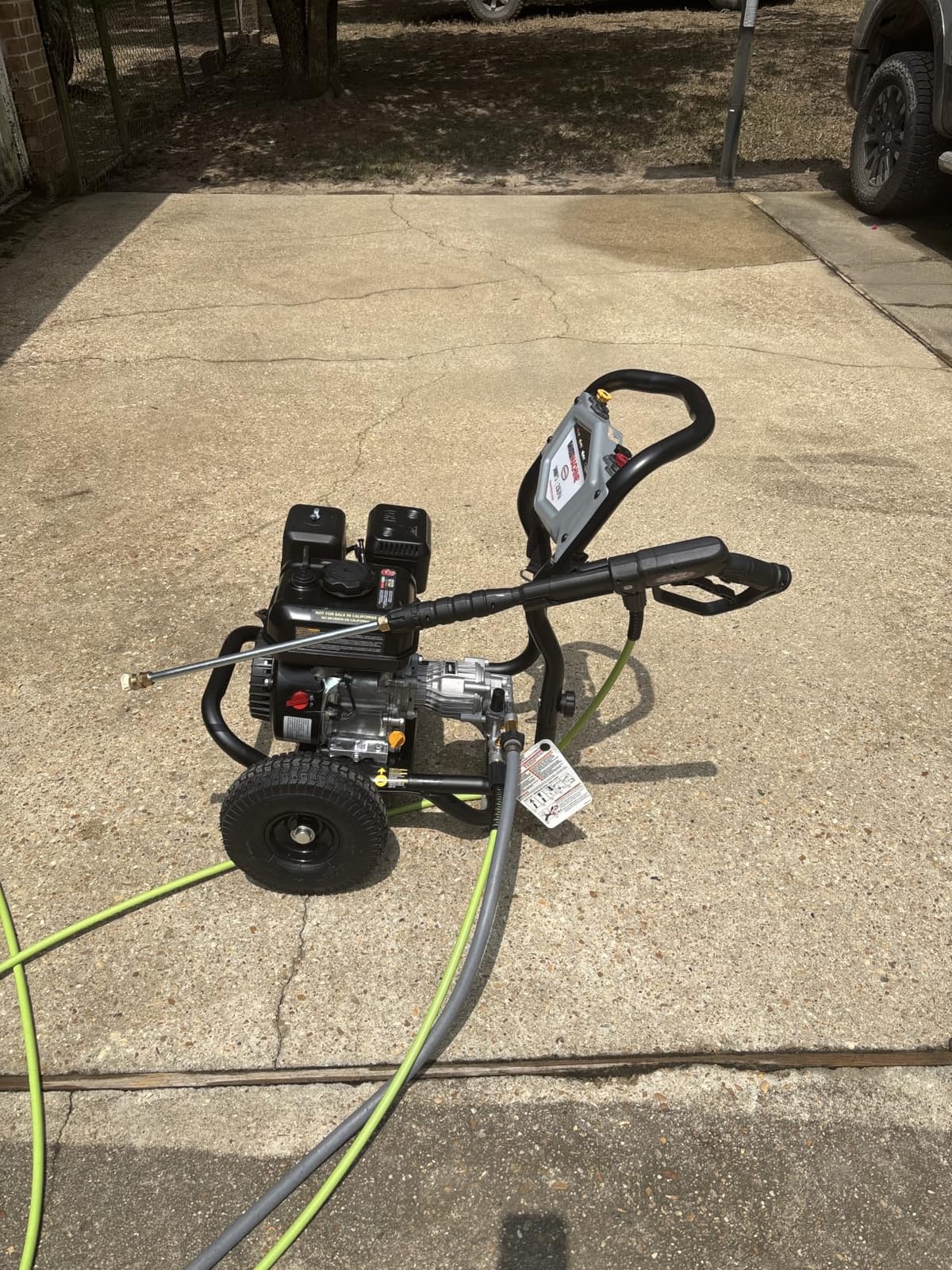
Nothing else here matches 3400 PSI at 2.5 GPM, which works out to 8500 cleaning units by the headline figures. That combination is the difference between a surface that needs scrubbing and a surface that rinses clean, and it is why gas still makes sense for concrete, masonry and long commercial-style jobs.
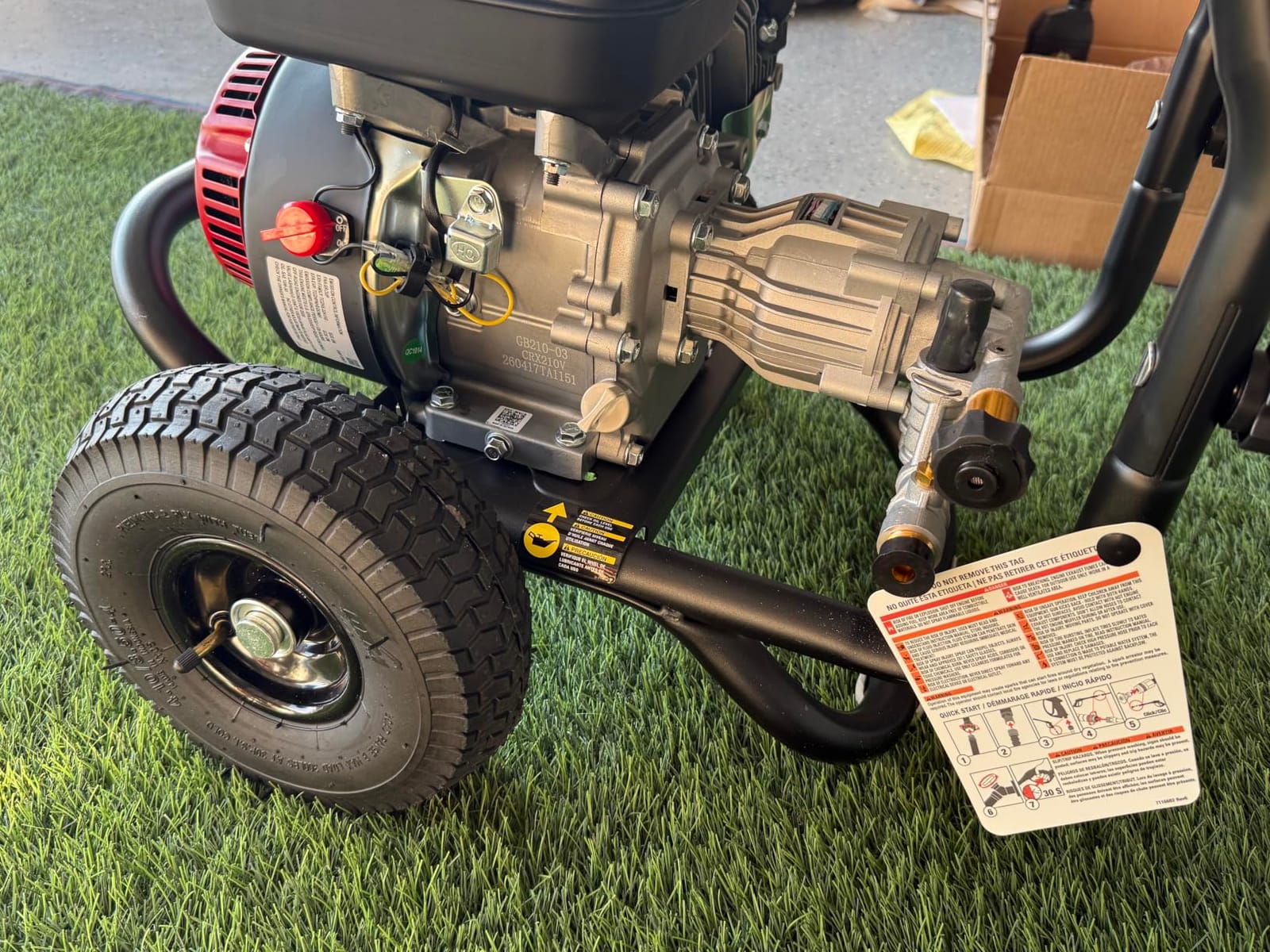
The Simpson pairs it with a 208 cc CRX engine that starts easily and shuts down on low oil, plus an OEM Technologies axial cam pump with a thermal relief valve. Owners report a machine that starts on the first pull and cleans faster than any electric unit in this roundup.
When 3400 PSI Is the Right Answer
Concrete with algae, oil-stained garage floors, driveways with years of packed dirt, and pool decks all reward pressure in a way siding and paint do not. On those surfaces, the extra pressure means fewer passes with a surface cleaner and far less time holding the wand.
The same power is a liability on a car body, painted wood, vinyl siding and a kayak hull. This is not a machine for soft surfaces, and you should treat the white nozzle as a real tool rather than a decoration.
Engine and Pump: The Two Components That Matter
Veteran users in pressure washing forums have a consistent rule: specify the pump and the engine, not the brand on the housing. Professional crews name triplex and axial cam pumps, and CAT and General pumps, as the hardware that decides whether a machine survives daily work.
This washer uses an axial cam pump with a thermal relief valve, which sits in the same family of hardware professionals trust, and the 208 cc CRX engine is a serviceable unit with conventional parts rather than a sealed proprietary block.
Compliance, Weight and What Storage Looks Like
Two practical notes. First, this is a 49-state compliant machine rather than a California-certified one, so California buyers need to check local rules before planning around it. Second, it weighs 61 pounds and measures 37 inches wide, which is a serious corner of a garage.
The 10-inch pneumatic tires and powder-coated welded steel frame roll over gravel and curbs without complaint, so moving it is annoying rather than impossible. The 10 percent one-star share sits higher than most of the electric machines here, and the reviews attribute most of it to engine upkeep rather than to the cleaning.
Who Should Buy Gas at All
Buy this if you clean a lot of hard, flat, dirty concrete and you can keep a fuel can in a ventilated part of the garage. The 2.5 GPM flow means a two-car driveway finishes in a fraction of the time an electric machine needs, and nothing electric here matches that.
Skip it for cars, siding, decks and anything near a boat slip. For a paddling household the noise, exhaust and the storage footprint cost more than the pressure is worth, and a 3000 PSI electric machine handles a hull rinse with less fuss.
8. DeWalt DXPW3300-S - The Longest Warranty in the Gas Class
DeWalt 3300 PSI Gas Pressure Washer, 2.4 GPM, Residential Model DXPW3300-S
3300 PSI
2.4 GPM
64 lb
208 cc engine
5 quick-connect nozzles
+ Pros
- Five-year frame
- three-year pump and two-year engine coverage
- 3300 PSI at 2.4 GPM from an axial cam pump
- Most complete nozzle set among the gas machines here
- 25-foot abrasion-resistant hose with steel wand
- Cons
- Heaviest machine in the roundup at 64 pounds
- 49-state compliant rather than California certified
- Highest one-star share here at 12 percent on assembly and starting
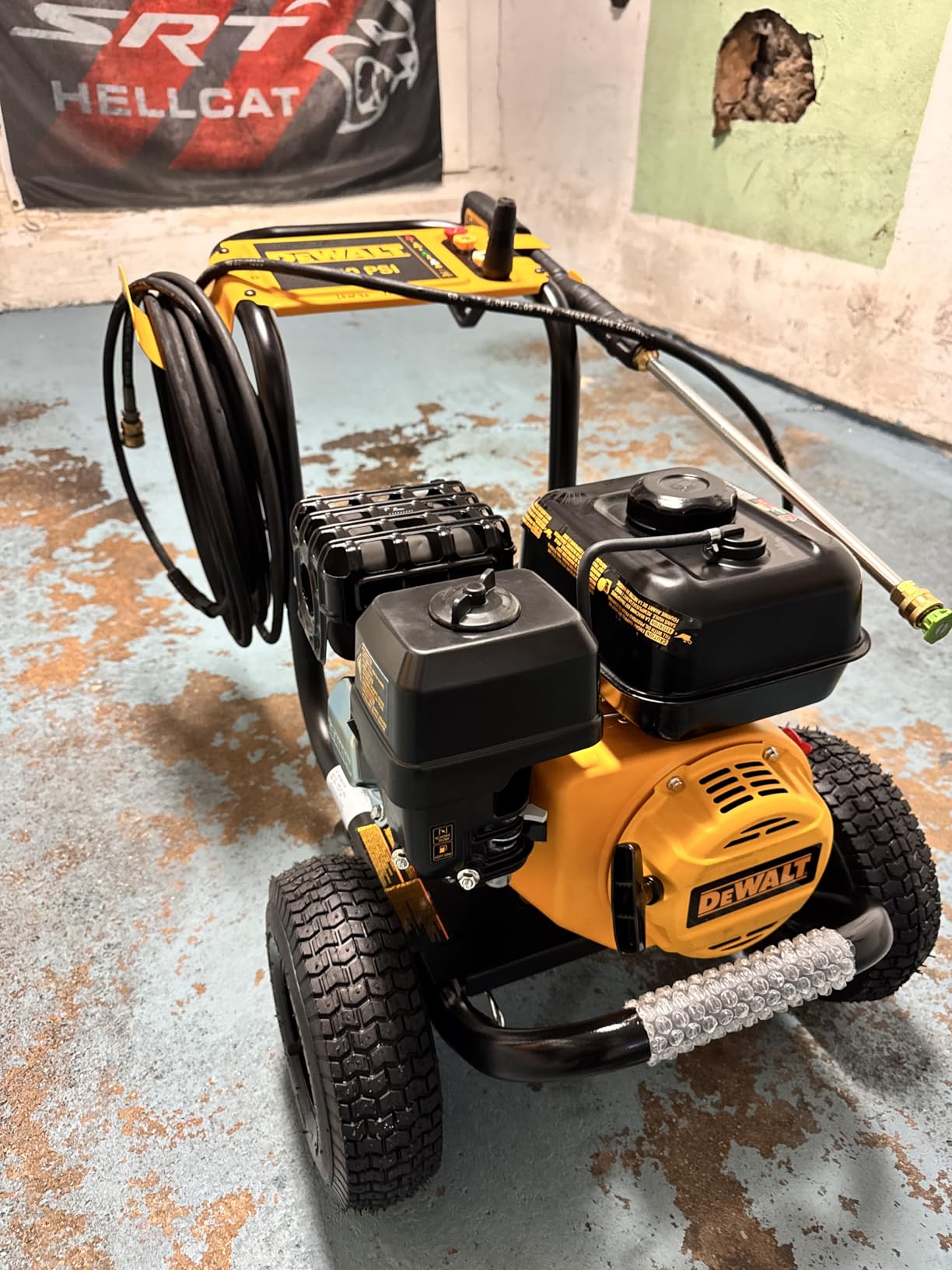
On paper the DeWalt is the most thoroughly covered machine in this guide: five years on the frame, three on the pump, two on the engine. No other washer here offers anything close, and for a buyer who plans to keep a machine past the warranty of most rivals that is worth more than a few hundred PSI.
Underneath the warranty it delivers 3300 PSI at 2.4 GPM from an OEM Technologies axial cam pump with a thermal relief valve, driven by a 208 cc engine designed for easy starting.
The Accessory Package Is the Quiet Advantage
Five quick-connect nozzles at 0, 15, 25 and 40 degrees plus a soap tip, a 25-foot abrasion-resistant hose, an ergonomic spray gun and a 16-inch steel wand. The Simpson includes four tips in the same category. That extra 40-degree tip is the one you will reach for on siding every single time.
A metal wand also resists the drop-on-concrete damage that cracks plastic wands, and the oil in a metal wand thread keeps the fitting from seizing after a season in a damp shed.
Why Warranty Length Beats Headline PSI
Buy It For Life conversations online tend to skip the badge and look at what happens in year four: can you buy a pump, a motor or an unloader valve for this brand. A five-year frame warranty is a signal that the manufacturer expects the frame to outlast the warranty, and three years on the pump is a signal about the pump specifically.
The Westinghouse electrics offer three-year coverage across service, labor and parts, which is competitive. The DeWalt goes further on the frame than anything here, and gas pumps are the component most likely to need replacing first.
Assembly, Starting and the One-Star Reviews
The 12 percent one-star share is the highest in this roundup, and it is worth being honest about the cause. Those reviews concentrate on assembly confusion and pull-start difficulty rather than on cleaning power, which is a solvable problem: read the manual, check the oil, and prime the pump before the first pull.
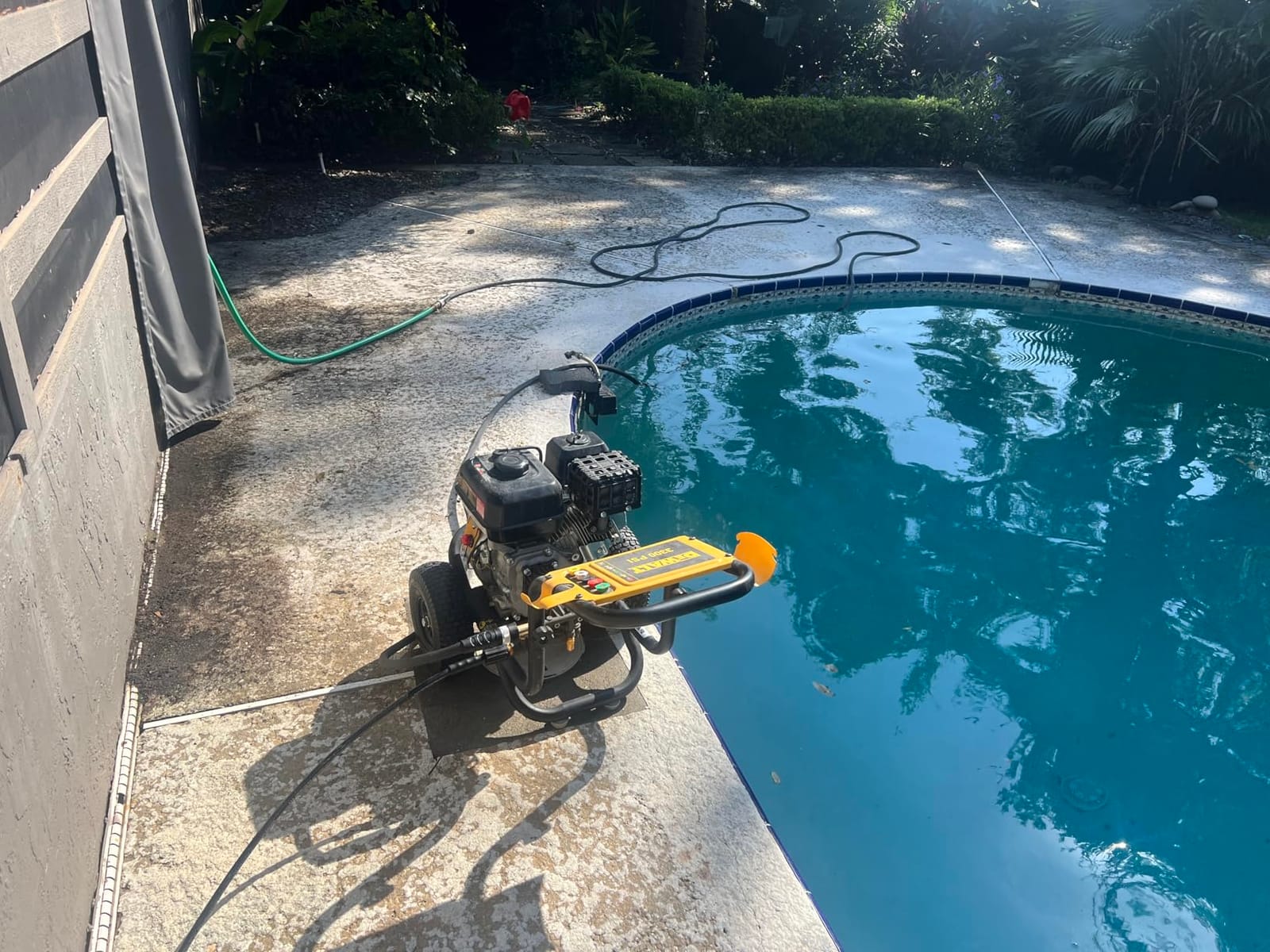
At 64 pounds and 41 inches long it is also the largest and heaviest machine here. Plan the storage spot before you buy, because the 41-inch body and 21-inch width decide where it lives.
Who This Is For
This is the gas washer for someone who wants the biggest machine in the category and intends to keep it. A five-year frame warranty plus a metal frame, a triplex-family axial cam pump and a 10-inch pneumatic tire package is a long-ownership package.
It is not for a small garage, a quiet street or a household that mainly washes a car. And buyers in California should confirm the compliance status locally, since this is a 49-state compliant configuration.
9. VEVOR 2000 PSI - Compact Machine With a Built-In Hose Reel
VEVOR Electric Pressure Washer, 2000 PSI, Max 1.65 GPM Power Washer w/ 20 ft Hose & Reel, 4 Quick...
2000 PSI
1.65 GPM
1500 W motor
20 ft hose on reel
+ Pros
- 2000 PSI from a 1500 W motor
- Built-in hose reel plus metal water inlet and fittings
- Total Stop System shuts the pump off at the trigger
- Four quick-connect metal nozzles and ETL certified
- Cons
- Lowest rating in the group at 4.0 stars
- 11 percent one-star share with durability complaints
- Manufacturer advises against running more than three hours
The VEVOR stands apart from the other nine for one design decision: the hose reels into the machine. On a 20-foot hose that is a storage trick rather than a necessity, but on a machine you have to keep in a corner of a small garage or on a balcony, folding the hose away is a genuine advantage.
It is also the most compact machine in the roundup, with a 1500 W motor, four metal quick-connect nozzles, a 500 ml self-spraying detergent bottle, an ETL certification and a Total Stop System that shuts the pump off the moment you release the trigger.
Metal Fittings and Auto Shutoff, the Parts That Matter Most
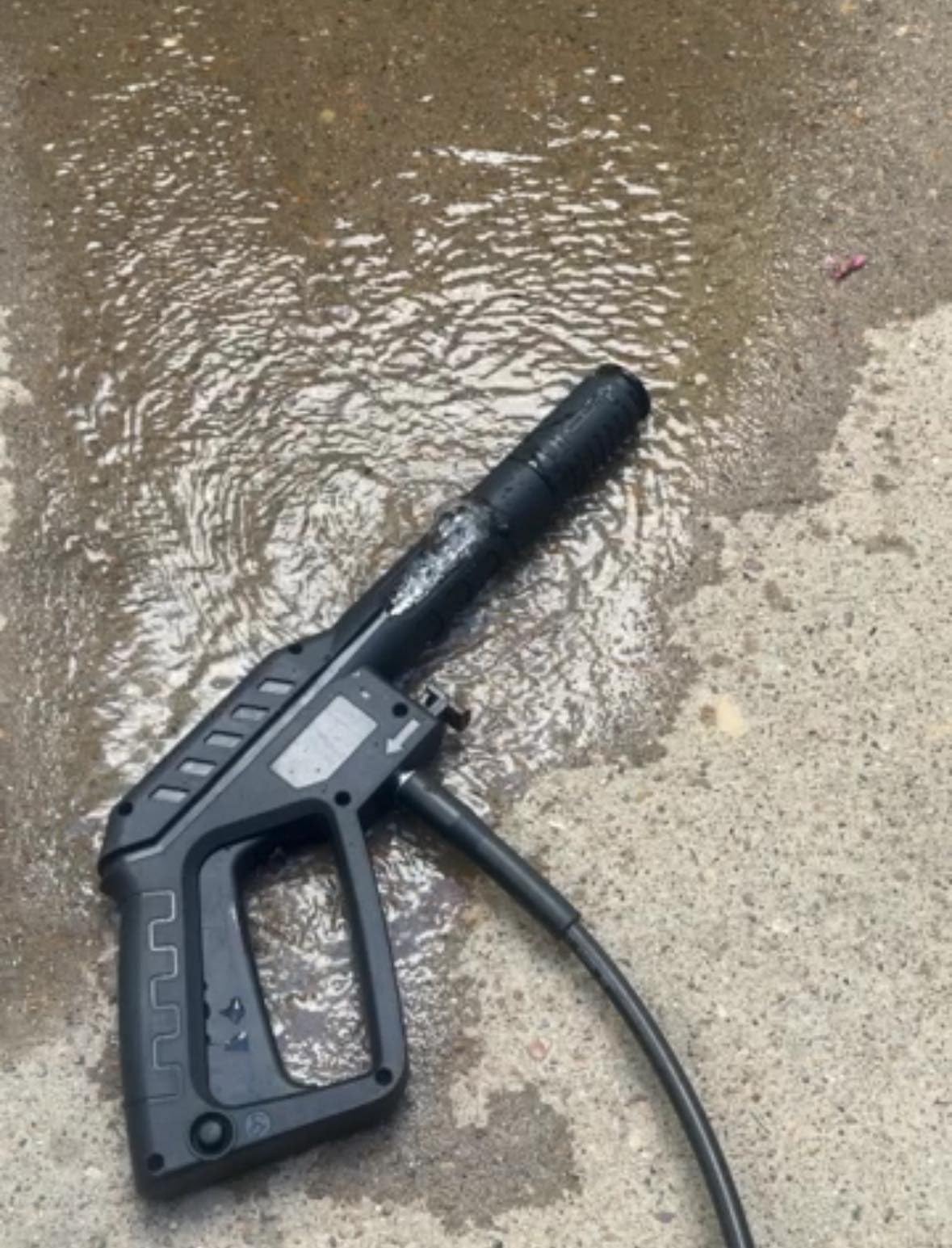
The water inlet and outlet are metal rather than plastic, which matters more than it sounds. Those two fittings take the full pressure cycle and the hose tug every time you move the machine, and plastic threads crack there first. The auto shutoff above 105 degrees Celsius is a simple thermal guard that protects the pump in a hot shed.
The 500 ml detergent bottle is a spray bottle, not a tank, and it attaches inline behind the soap nozzle. Fine for a car or a piece of outdoor furniture. Not a solution for cleaning a whole house of siding.
The Three-Hour Manufacturer Limit
The instruction material states that the machine is not recommended for continuous runs beyond about three hours. That is a duty-cycle statement, and it is the clearest signal in this roundup that the pump and motor are built for intermittent work rather than for a contractor's day.
Take it at face value. Two hours on a Saturday driveway, twenty minutes on the car, forty minutes on a fence. If your cleaning schedule involves whole weekends, choose a machine with an induction motor and a longer warranty.
Where the 4.0 Rating Comes From
The 4.0 rating with 59 percent five-star and 11 percent one-star is the weakest distribution in the group, and reviewers say the same two things: build quality is inconsistent, and 1.65 GPM is below what the electric rivals move.
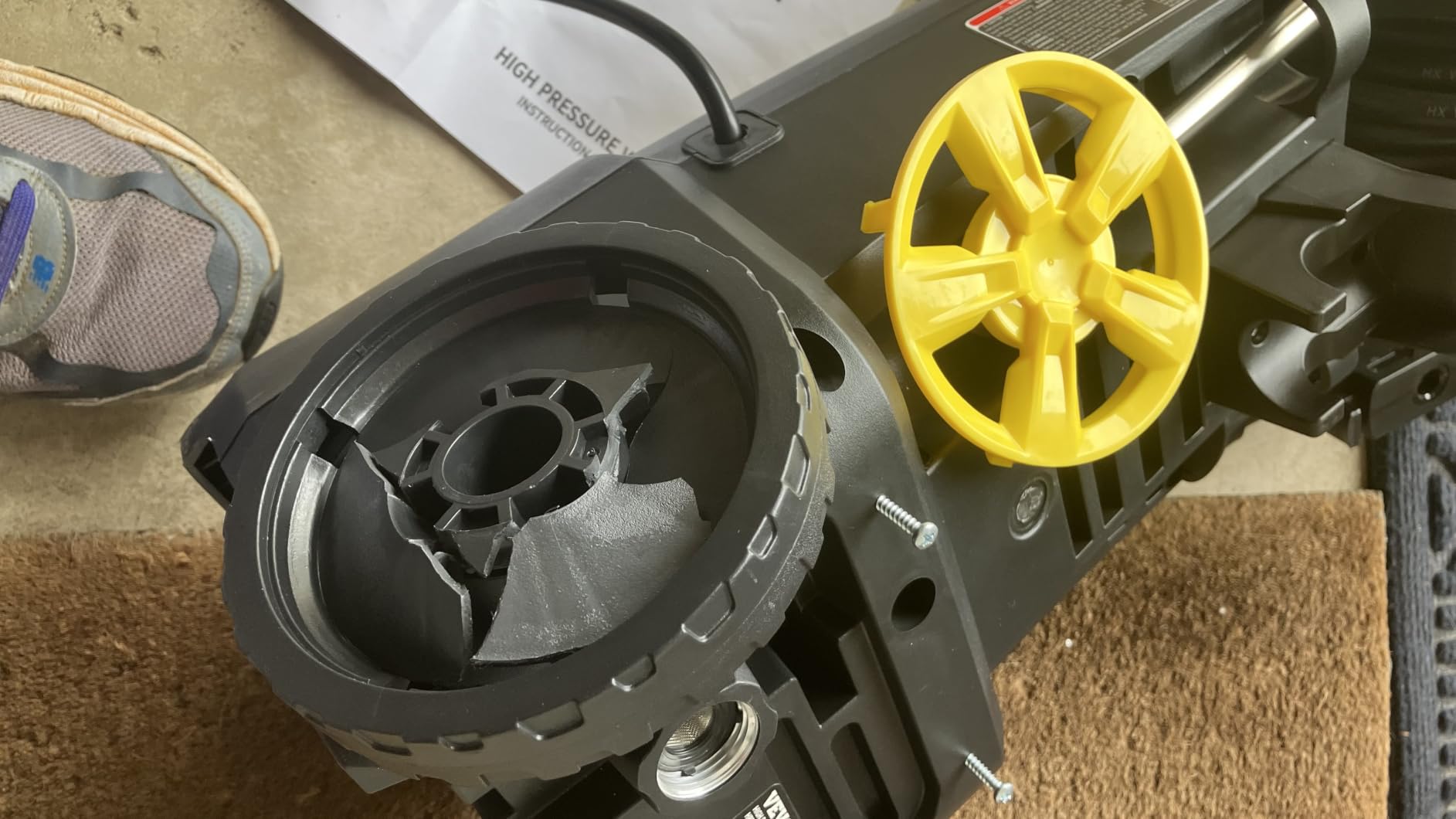
The housing is compact polypropylene rather than steel, which is fine in a dry shed and a poor choice for a damp marine garage where salt gets into every seam. If you live on the water, that single material fact should settle the decision.
Who Should Buy It
Buy it if your cleaning is occasional, your surfaces are cars, fences and patio furniture, and storage space is the binding constraint. The hose reel, the compact body and the one-person assembly are all aimed at exactly that buyer.
Look elsewhere if you plan to store it near salt water, if you want detergent capacity, or if you need a machine that will still work in five years. The rating distribution tells you that story more honestly than any spec sheet.
10. CRAFTSMAN CMEPW1700 - The Compact Body That Disappears Into a Garage
CRAFTSMAN Electric Pressure Washer, Cold Water, Lightweight Corded Power Washer for Cars, Driveways...
1700 PSI
1.2 GPM
17.5 lb
20 ft hose
35 ft cord
+ Pros
- Light and compact at 17.5 pounds for one-handed carrying
- Shelf-storable body instead of a wheeled cart
- 35-foot cord and 20-foot hose for real reach
- CETA certified with a 3-year limited warranty
- Cons
- Lowest pressure here at 1700 PSI
- Included hose and soap applicator widely criticised for quality
- Multiple reports of pump or motor failure after a season
At 17.5 pounds and 18 by 10 by 11 inches, the CMEPW1700 is the machine here you can lift with one hand, carry to the far end of a driveway, and put back on a shelf rather than the floor. Owners who cannot lift the gas units single it out for that reason more than any other.
It is also CETA certified, carries a three-year limited warranty, and comes with a 35-foot power cord that gives you real reach from a single outlet. That combination of reach, weight and certification is unusual at this size.
1700 PSI Is Enough, With a Clear Boundary
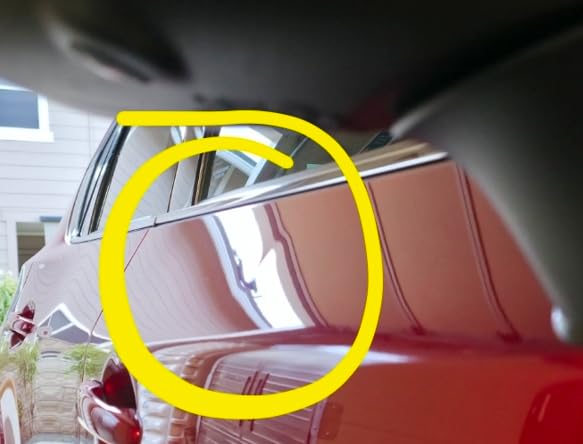
Owners report it being gentle enough for aged plastic, a car finish, a camper and a kayak hull, and that is exactly its strength. At 1700 PSI with 1.2 GPM, using the 40-degree tip and a detergent pass, nothing gets etched.
The boundary is concrete. A 1900 PSI machine with 1.2 GPM takes significantly longer, and 1700 PSI takes longer again. If a driveway is on your list, choose a bigger machine and save yourself an afternoon.
Onboard Storage in a 11-Inch-Tall Package
There is onboard storage for the nozzle, hose, cord and wand, packed into a body you can shelve. Most owners mention the same benefit: nothing ends up lying on the garage floor, and the machine does not occupy the corner permanently.
The 35-foot cord is longer than the 20-foot hose, which is the correct priority for electric use. A short cord means an extension lead, and extension leads plus high-draw machines are the most common cause of tripped breakers.
Replace the Hose and the Soap Applicator on Day One
The most repeated complaint in the reviews is accessory quality. The hose and the soap applicator are singled out as low quality, and several owners replaced both immediately. Treat that as a 30-minute job rather than a disappointment, and buy a spare hose before you need one.
There is also a small inconsistency in the listing itself, since the stated 1.2-gallon tank volume does not appear in the included-components list, which shows a soap applicator bottle. If detergent capacity matters to you, confirm what is in the box before you commit.
Durability Reports and the Honest Verdict
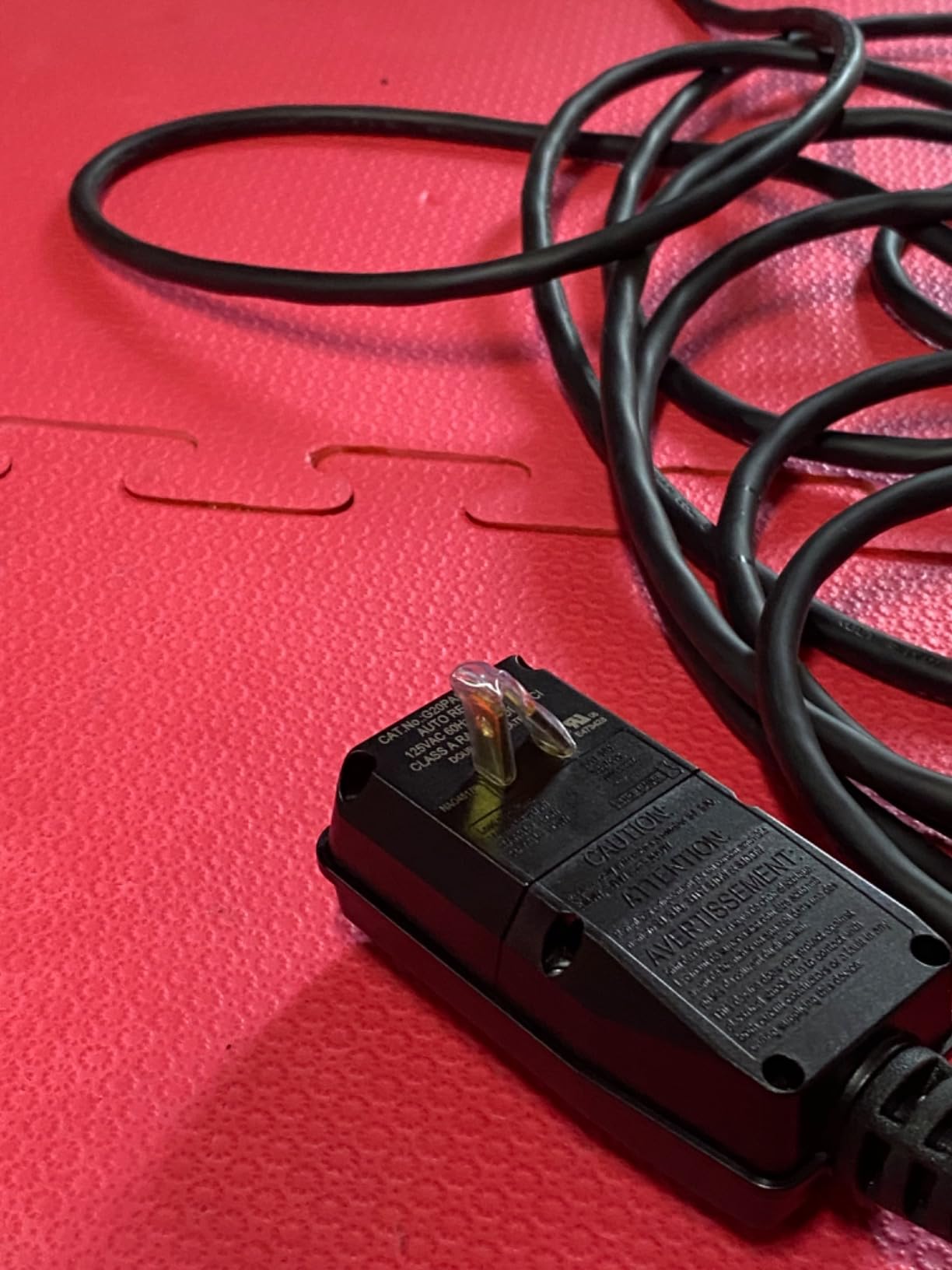
Across 3,520 reviews the rating sits at 4.3, with a nine percent one-star share. The failures described in those reviews are pump and motor failures after one or two seasons, including one owner reporting a burned-out motor at first start.
So the verdict is fair. It is the machine to buy here if storage and low weight matter most, and it is not the one to buy if your plan is to keep a washer for a decade.
How to Choose a Pressure Washer in 2026
Ignore the marketing number on the front of the box and work through these questions in order. The right machine for a board and a kayak is completely different from the right machine for a concrete apron.
How Much PSI Do You Actually Need?
For a car, you need 1200 to 2000 PSI with a wide white nozzle. Anything above 2500 PSI used at close range will cut clear coat and paint, and a jet of water that thin has no margin for a parking slip.
For a driveway, 2500 PSI is enough to clean concrete. Below that you will be scrubbing, and scrubbing concrete is how people end up etching a slab they meant to clean. The limiting factor is usually flow, not pressure.
For a wood deck, stay at 1200 to 1500 PSI with a 25 or 40-degree tip. Higher pressure strips soft grain, and once the grain lifts, water gets in and the deck starts to rot.
For a kayak, paddleboard or boat hull, stay at 1500 PSI or below with the widest spray pattern, and never use a turbo or chisel tip. Gelcoat and infused hulls are smooth and slippery; concentrated pressure etches them permanently.
GPM and Cleaning Units Decide How Fast the Job Goes
Flow rate is how much water reaches the surface, and it is what carries dirt away. Two machines with identical pressure will finish a driveway at very different speeds based on flow alone. Multiply rated PSI by rated GPM for CU, the single most useful cross-brand number in the category.
As a rough guide, 1.2 GPM suits cars, siding and boards. 1.6 to 1.8 GPM suits driveways and patios. 2.0 GPM and above suits large flat surfaces and anyone who cleans weekly.
Max PSI Versus Rated PSI, and What Certification Means
Max PSI is the peak the pump produces with the trigger open and no load. Rated PSI is the pressure it holds while you are actually spraying, and it is the number that predicts results. Several machines here advertise 2500 or 3000 max while being rated at 1800 to 2600.
Look for CETA, PWMA or CSA certification, and treat an independently verified figure as the strongest claim on the box. A machine that publishes both a max and a rated number, like the Westinghouse e-series, is telling you more than one that publishes only a max.
Electric, Gas or Cordless: Which Power Type Fits the Job
Corded electric is quiet, starts instantly, needs no fuel and fits in a closet, but it is limited by your outlet and by the fact that most electric machines run at 1.2 to 1.8 GPM. It is the right answer for roughly nine out of ten homeowners.
Gas gives you 2.4 to 2.5 GPM, no cord, and no dependence on a circuit. It costs you noise, exhaust, oil changes, a spark plug, an air filter and winterization, plus 60 to 64 pounds to move.
Cordless battery machines remove the cord entirely and are genuinely useful for a boat slip, a camper or an apartment patio where a hose connection is awkward. The tradeoff is runtime and battery cost, and neither machine in this roundup is cordless, because the capacity of corded models on flow still leads for large jobs.
Motor Type Sets Your Service Life
Universal motors with carbon brushes are the shortest-lived option, and they are what most budget washers use. Brushless induction motors have no brushes to wear, run cooler and start instantly, and they are what separates the Westinghouse WPX3000e from a machine with the same headline PSI.
Pump type is the second half of that equation. Triplex and axial cam pumps are the layouts professionals specify for daily work, and a pump with an auto-stop system lives considerably longer than one that dumps bypass water through itself all afternoon.
Storage and Footprint Are a Real Buying Criterion
Two wheels, four wheels or a flat shelf, the question is where the machine lives between uses. The Westinghouse ePX3500 and ePX3100v and the CRAFTSMAN CMEPW1700 are small enough for a shelf or a corner. The Westinghouse WPX3000e and both gas machines need genuine floor space.
If your problem is hauling equipment across a yard rather than around a single property, a wall-mounted unit with a retractable hose is the answer, and several owners ask for exactly that setup. Nothing in this roundup is a wall-mount model, so treat that as a separate category and a separate search.
Detergent Delivery, Foam Cannons and Surface Cleaners
Detergent needs to sit on a surface and dwell before you scrub, which is the whole reason a machine has a soap tank. The two designs are a tank mounted in the body, which the CRAFTSMAN machines use with a 1.2-gallon reservoir, and a siphon fed bottle or cannon that draws from a bucket.
The two most valuable add-ons are a foam cannon, which thickens the mix for vehicles and algae, and a surface cleaner, which spreads pressure over a disc so a driveway cleans evenly instead of in stripes. Both attach to any M22 fitting, which is the standard across this roundup.
Boats, Kayaks and Saltwater: Rinse and Rust
Any washer will strip salt off a hull, and a car wash soap is the wrong product for the job, since it leaves a film that attracts more salt. Use a purpose-made marine soap, rinse from the bottom up, and let the hull air dry before you put the boat back in the water.
Two waterfront warnings. Stainless fittings in a saltwater environment corrode faster than the same fittings in fresh water, so rinse the gun, wand and quick-connects after every session. And keep the machine off a wet dock floor, because a damp marine garage is where plastic housings fail and where steel frames rust from the inside.
Safety: Rules Before You Pull the Trigger
Wear eye protection. A 0-degree nozzle in particular can cut skin, and the rebound from hard surfaces is the reason eye protection is not optional even on a car.
Always plug into a GFCI-protected outlet, and never run a high-draw machine through a long extension lead. Check the nozzle color code every time: white and green are gentle, yellow is stronger, red and black are for concrete and masonry only.
Never spray an electrical fixture, a window, a light fixture or a pressure gauge, and never point the wand at a person or a pet. Start every job with detergent and a wide tip, then step down to pressure, not up. And on a boat hull, keep the tip moving.
Winterization and Storage Between Seasons
For electric machines, the checklist is short: disconnect the water, run the pump briefly with the inlet clear to clear the check valve, drain the detergent tank, and coil the hose without a tight bend. Store indoors somewhere that will not freeze.
For gas machines, add the oil change, a clean air filter, a fresh spark plug, drain the fuel tank or add a stabilizer, and run the engine until it dies so the carburetor does not hold varnish. A gas washer stored in a closed garage over winter is the most common way an engine gets written off.
Frequently Asked Questions
Is 3000 psi too much to wash a car?
Yes, 3000 PSI is too much for car paint if you use it at close range with a narrow nozzle. Wash vehicles with 1200 to 2000 PSI, the widest white 40-degree nozzle, and a pH neutral car soap so the detergent does the work. Keep at least 12 inches between the tip and the panel, never use a turbo or chisel tip, and if you have already seen dull streaks in the clear coat, that is etching that polishing may not fully remove.
Is 2500 PSI enough to clean a driveway?
Yes, 2500 PSI is enough to clean a concrete driveway, and you do not need the advertised max PSI figure to do it. What matters more is flow rate: 1.2 GPM will get the slab clean but slowly, while 1.8 to 2.0 GPM finishes the same job far quicker. Work in overlapping passes with a 25 or 40-degree tip, keep the wand moving, and use a surface cleaner for even coverage.
What is the most common problem with pressure washers?
The most common failures are a dead motor, a pump that will not prime after sitting unused, and a tripped GFCI breaker. Motors fail most often in brushed universal machines and from a clogged inlet filter restricting flow. Pump priming problems usually trace to trapped air or a stuck check valve. Breaker trips come from high-draw machines run through long extension leads, so use a direct GFCI outlet and a 12-gauge or heavier cord.
How do I know if my pressure washer unloader is bad?
A failing unloader valve shows up as pressure that pulses or hunts when you hold the trigger open, water that gets hot in the pump during a long job, or a trigger that stays engaged after you release it. The machine may also lose pressure while spraying and recover it slowly, or leak at the trigger assembly. If the spray stutters rather than running steady, stop using the machine, because a bypassed unloader sends hot water through the pump.
What is the most reliable pressure washer?
Reliability comes down to motor type, pump type and whether parts exist in five years. Brushless induction motors and triplex or axial cam pumps outlast brushed universal motors, and a brand with a real service network matters more than the badge. In the Buy It For Life communities the names that come up most for long-term ownership are Kranzle and AR Blue Clean, while Westinghouse comes up in detailing circles for cheap, compact and dependable machines.
Before you settle on a machine, it is worth checking how weather and water pressure change the way you use the gear around a dock and on the water. We covered that in our guide to how barometric pressure affects fishing, and we keep a close eye on the weather in how shifting barometric pressure changes fish behavior.
The Bottom Line: Match the Machine to the Surface
If you want one washer that handles almost everything a home throws at it, the Sun Joe SPX3000 is our pick: 2030 rated PSI, five nozzles, dual detergent tanks and a stainless steel lance, backed by the largest review base in the roundup. If you want the most machine per unit of money and a chassis that will not tip on a slope, take the Westinghouse ePX3500. If rating and portability are your criteria, the Westinghouse ePX3100v holds the highest score here and still fits in a hand.
For concrete, choose by flow rate rather than brand: the Greenworks GPW3002A moves 2.0 GPM on a dedicated 15-amp circuit, and the Simpson Clean Machine 3400 moves 2.5 GPM off its own engine. For a machine that outlasts the purchase, the Westinghouse WPX3000e gives you an induction motor and a three-year parts warranty, and the DeWalt DXPW3300-S backs its frame for five years.
For storage, weight and occasional use, the CRAFTSMAN CMEPW1700 and the Westinghouse ePX3100v are the practical answers. Whichever one you choose, start with detergent and the widest nozzle, keep the tip moving, and match the pressure to the surface. That habit matters more than any number on the box.