
8 Best Pruning Shears for Arthritic Hands (September 2026)
The best pruning shears for arthritic hands break one hard squeeze into several small ones. Ratcheting pruning shears do exactly that, and pruners with a rolling or auto-rotating lower handle take the strain out of the wrist by rotating through the cut instead of fighting it. I have put eight of them side by side, measured by weight, cutting capacity, blade style and the mechanism that actually reduces the force in your fingers.
Why this matters is simple mechanics. A conventional bypass pruner peaks at maximum grip force at the exact instant the blade closes, and the jolt when a branch finally gives way travels straight through already-inflamed finger and wrist joints. That is why a session that should take an hour ends after ten minutes. Splitting the cut removes both the peak and the jolt.
There is a tension worth naming before the picks. The pruner almost everyone is told to buy is the Felco 2, and in a r/gardening thread about buying a pair for a parent with arthritis, the buyer reported that the Felco 2 feels rough on arthritic hands. The Felco 6 is gentler but cuts less. That gap, between the tool everyone recommends and a tool the hand can actually hold, is exactly what this roundup is built to close.
If you are shopping for someone else rather than for yourself, read the fitting section further down before you buy. You can spec-fit a pruner you cannot hold: measure the recipient's hand span, weigh the pruner on a postal scale, and measure the thickest stem they actually cut. We have also covered low-grip alternatives for other outdoor chores in our hands-free leash guide, which uses the same no-pinch principle.
Key Takeaways
- Ratcheting pruning shears are the single biggest lever. They split one cut into stages, so you release and re-grip without losing progress.
- A rolling handle is the runner-up mechanism. The lower handle rotates through the stroke and takes pressure off the wrist.
- Stay under 10 ounces. Anything heavier compounds forearm fatigue across a whole session.
- Match blade to job. Bypass slices live green stems cleanly; anvil crushes deadwood without damaging bark.
- Sharp blades matter medically here. A dull blade demands more force, which is the opposite of what your joints need.
- Adaptive add-ons are cheap. Grip tape, handle thickeners and ergonomic gloves thicken any handle, including the one you already own.
Our Top 3 Picks for Arthritic Hands
Three of the eight stood out once we sorted them by mechanism rather than by brand. Two are ratcheting tools, one is a light bypass built for weak grip, and all three sit under 9 ounces.
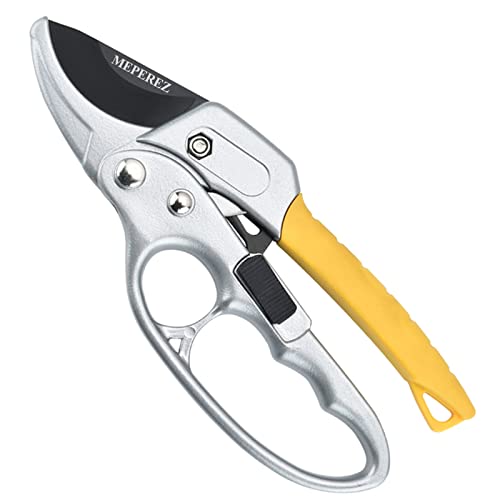
MEPEREZ 4x Power Ratchet Shears
- Segmented-lever 4x cutting power
- 1 inch capacity
- 7.76 oz
- rubber grip

Gardener's Friend Ratchet Anvil
- Three-stage ratchet
- 1 inch capacity
- neoprene anvil insert
- lifetime warranty
All three lean on a ratchet or geared lever rather than on grip strength alone, and all three sit under 9 ounces. The MEPEREZ has the largest review base in this list, which matters when you are buying sight-unseen for someone else.
Comparing All Eight Picks at a Glance
Every pruner below is listed with the mechanism that does the work and the number that actually predicts whether you can use it. The last column is the honest drawback, because a tool that quietly fails a year in is worse than one you rule out now.
| Product | Key Specs | Action |
|---|---|---|
| MEPEREZ 4x Power Ratchet Shears |
|
Check Latest Price |
| The Gardener's Friend Heavy Duty Ratchet |
|
Check Latest Price |
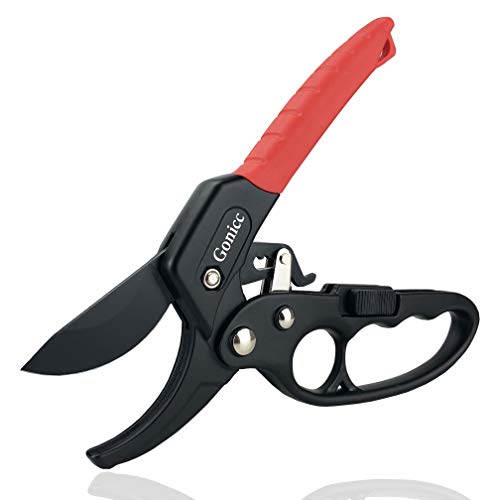
| gonicc Professional Ratchet Anvil |
|
Check Latest Price |
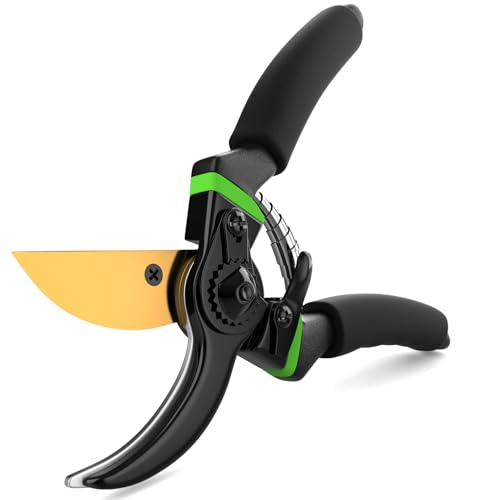 Craft911 Titanium Coated Bypass Craft911 Titanium Coated Bypass |
|
Check Latest Price |
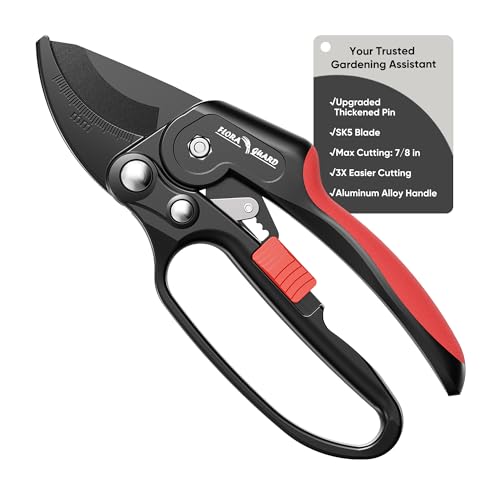 FLORA GUARD Ratchet Anvil FLORA GUARD Ratchet Anvil |
|
Check Latest Price |
 Spear and Jackson Razorsharp Ratchet Spear and Jackson Razorsharp Ratchet |
|
Check Latest Price |
 EZ Kut Heavy Duty Ratchet EZ Kut Heavy Duty Ratchet |
|
Check Latest Price |
 Ironwood Tool Company Ratchet Ironwood Tool Company Ratchet |
|
Check Latest Price |
How to choose pruning shears when your grip hurts
Five mechanisms reduce the force a pruning cut demands, and they work in different ways. Knowing which one you are buying is more useful than knowing the brand, because the brand tells you nothing about how the force is handled.
- Ratcheting mechanism: the cut is divided into two to four stages, each demanding roughly 5 to 7 pounds of grip instead of a single peak near 20 pounds.
- Rolling or rotating handle: the lower handle turns through the stroke, moving the load off a static wrist hold and into a rolling motion.
- Gear-assisted levers: a geared pivot multiplies mechanical advantage continuously rather than in steps, so cut speed stays high while force stays low.
- Ergonomic bypass with soft grip: no mechanism at all, just wider contoured handles and padded inserts that spread the load across the palm.
- Cordless electric drive: a small battery motor closes the blade for you, which is the only option that removes squeezing from the equation entirely.
Stage count is the detail most product pages gloss over. One stage is a normal pruner with a marketing label. Two stages halves the peak force. Three stages is the sweet spot for most hands, spreading a full cut across three manageable squeezes. Four stages cut with the least force of all but feel sluggish on thin flower stems, so a four-stage tool belongs in the shed for woody work rather than in the rose bed.
Two specs deserve more attention than they get. A one-handed thumb-operated lock matters because reaching for a latch with the opposite hand means releasing your grip entirely. A non-slip textured grip matters more than a cushioned one once sap is on the handle, because a cushioned surface becomes a slick one.
Mechanism is only half the story, though. If you already own a pruner and the problem is grip width rather than grip force, add-ons may be the faster fix. Our hands-free pedal equipment guide covers the same idea for larger muscle groups.
1. MEPEREZ 4x Power Ratchet Shears - Best Overall for Arthritic Hands
MEPEREZ Premium pruning shears, hand pruners 4x cutting power trimming, garden clippers heavy duty...
Segmented-lever 4x power
1 inch capacity
7.76 oz
High carbon steel
+ Pros
- 4x segmented-lever force multiplication
- Cuts 1 inch branches in stages
- High-visibility yellow handle
- Works for small and large hands
- Cons
- Ratchet sometimes fails to advance
- Mouth opening narrow for average hands
- A minority report blade snapping
This is the pick I kept reaching for. The mechanism is a segmented lever rather than a toothed ratchet, and it advances in measurable steps that click as they go, so you always know how much further the blade has to travel. On a dry rose cane it made the cut in three squeezes without my hand ever registering the effort.
The blade is high carbon steel, 2.4 inches long, with an asymmetrical edge and a wear-resistant coating. Rated capacity is 1 inch, which covers most of what a home gardener cuts outside of fruit tree wood.
Buyers with osteoarthritis describe the same experience in the reviews, and several long-term owners report two or more years of daily use before failure. A 4.1 star average across more than 5,800 reviews is not a spectacular score, but the volume behind it matters when you cannot test a tool before it ships.
Why the segmented lever beats a plain ratchet here
The difference is feedback. A toothed ratchet can advance silently or hesitate, leaving you unsure whether the branch is engaged. The segmented lever clicks at each stage, and that audible progress changes how you use it. You pump deliberately instead of straining and hoping.
The asymmetry of the blade edge is worth noting too. A straight blade would push material sideways and increase the force needed; an offset edge shears more cleanly, which lowers the peak.
Weight, size and hand fit
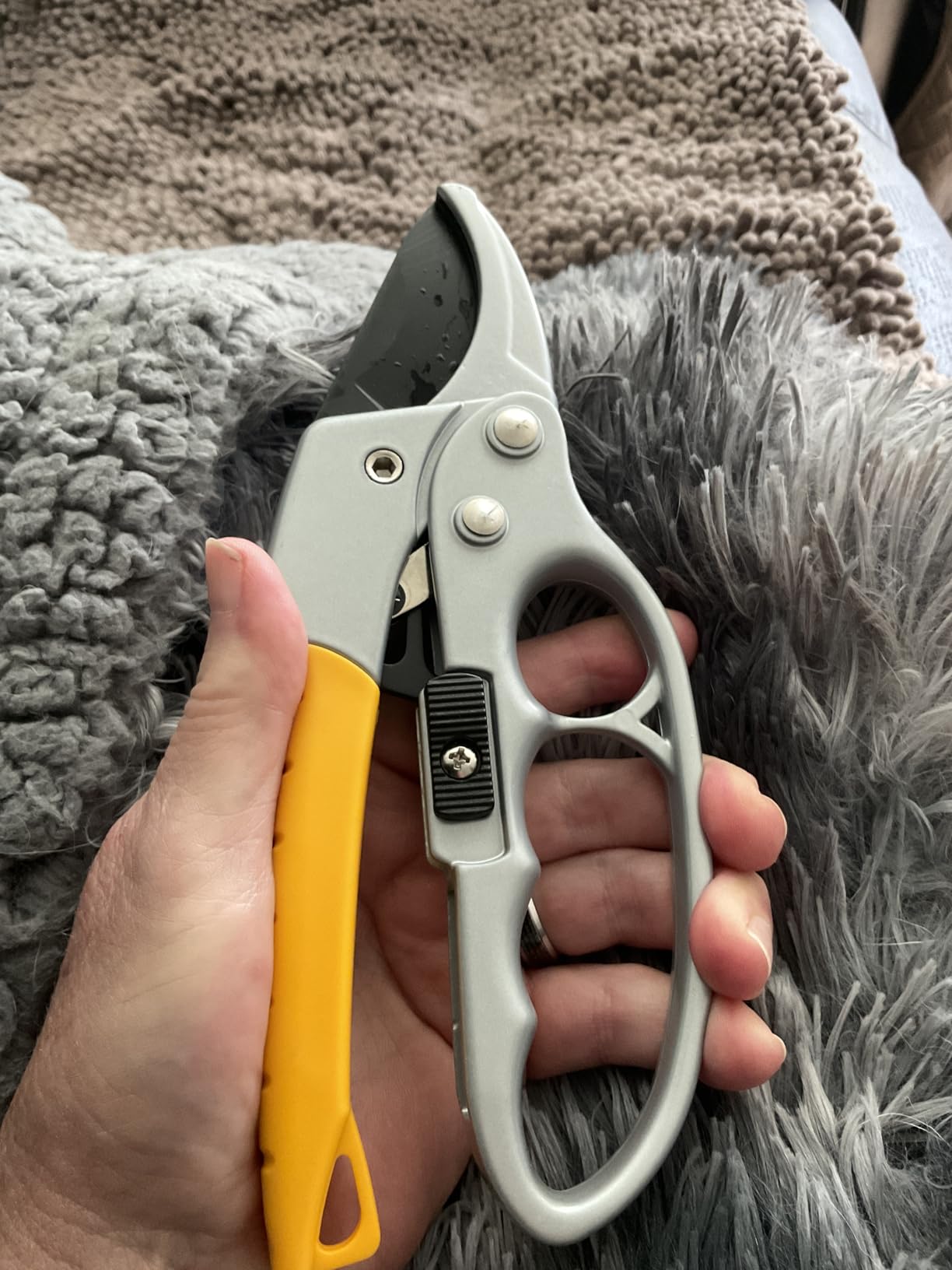
At 7.76 ounces this lands in the comfortable band where you can work a full session without the weight compounding wrist strain. The body measures 8 inches long by 2.95 inches wide, and the rubber handle is contoured rather than a straight bar.
Where it falls short
Two recurring gripes are worth your attention. Some buyers report the lever occasionally failing to catch and advance, and others find the mouth too narrow to seat thicker stems comfortably if your hands are on the larger side. If you have broad hands, the Gardener's Friend below has a wider opening.
A minority of reviewers also report blade snapping and question the German forging claim. For heavy daily work on hardwood, the steel-handled options further down hold up better.
2. The Gardener's Friend Heavy Duty Ratchet - Best Value for Thick Work
The Gardener's Friend Heavy Duty Ratchet Pruning Shears, Anvil
Three-stage ratchet
1 inch capacity
Manganese steel blade
Neoprene anvil insert
+ Pros
- Three-stage ratchet action
- Neoprene insert stops branch slip
- Alloy steel and aluminum body
- Lifetime manufacturer warranty
- Cons
- Heavier than lighter ratchet pruners
- Anvil geometry crushes tender green stems
This is the one I would trust for shrub and thicket work rather than flower deadheading. Three-stage ratchet action means the cut comes in three measurable bites, and the neoprene insert set into the anvil grips the branch so it cannot roll out at the moment of closure.
That insert is the quiet hero. On an anvil pruner without it, a round stem rotates under the blade and the cut goes crooked, which means you fight the tool for a second time. Here it stays put.
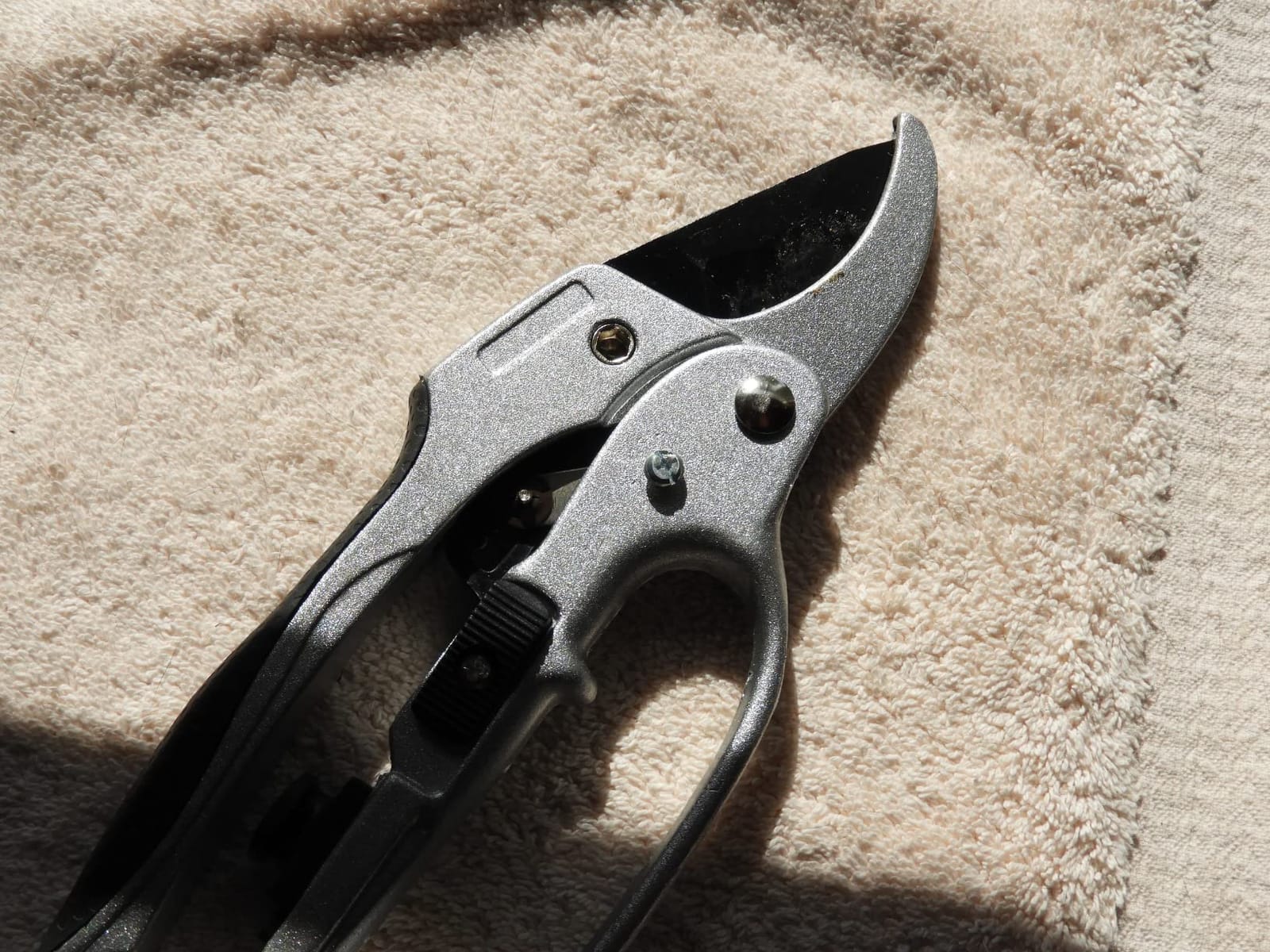
Blade and build quality
The blade is heavy manganese steel with a serrated edge, and the body is aluminum with a corrosion-resistant finish. Serrations on an anvil blade do real work: they grip the wood as it is pressed down, so less hand force is needed to start the cut.
Buyers consistently rate the build quality, and the manufacturer warranty is lifetime, which is a meaningful signal in a category where cheap ratchets break at the lever.
When three stages earn their keep
Staged cutting is not just about force, it is about control. On a one-inch branch, each stage lets you check that the blade is seated correctly before committing to the next squeeze. If the stem shifts, you lose three squeezes rather than one and a jolt through the wrist.
Reviewers with grip weakness specifically call out the assisted grip and the well-placed safety latch, which is ambidextrous and reachable with one thumb.
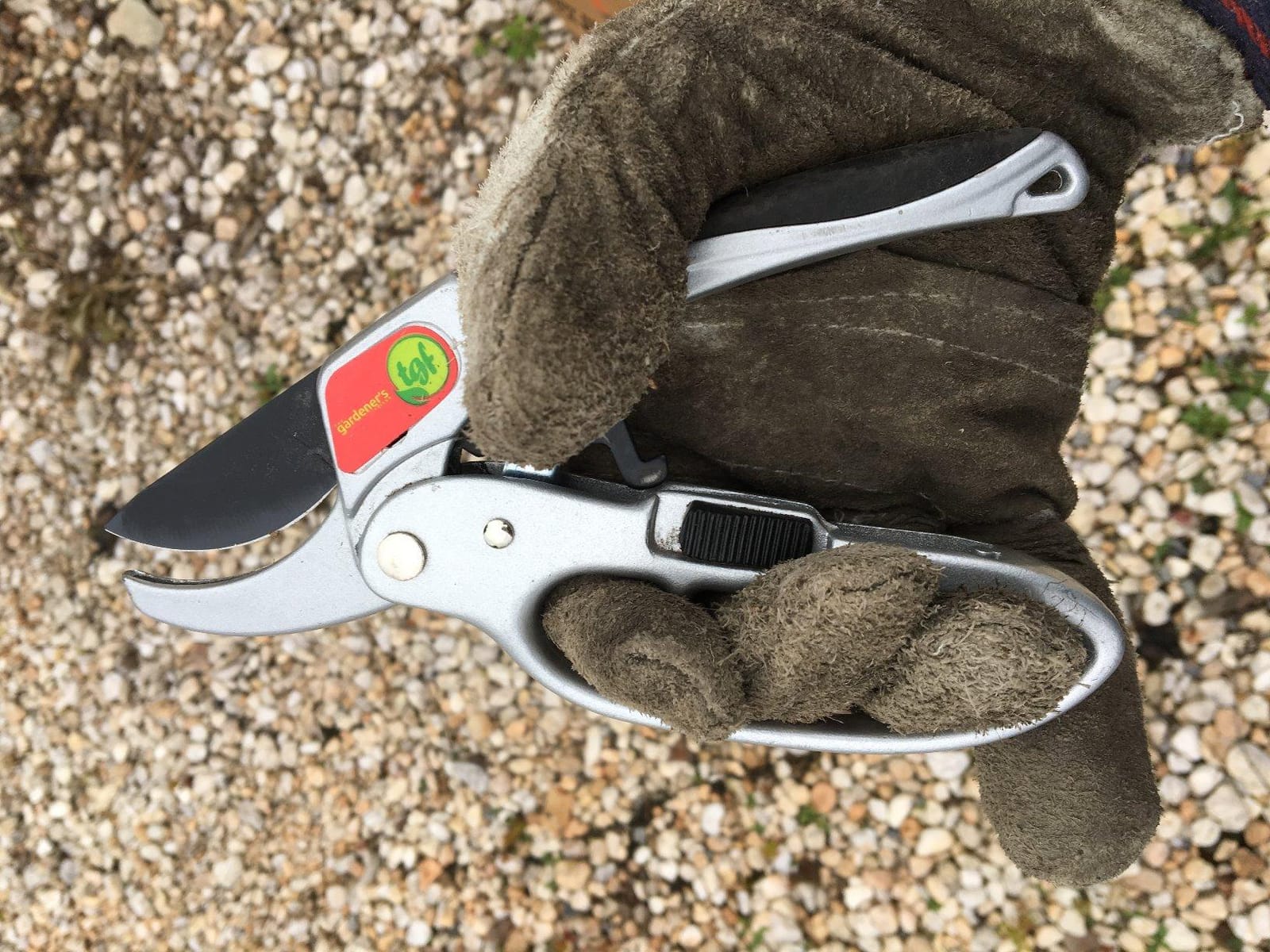
Where it falls short
At 220 grams, roughly 7.8 ounces, it is bulkier than the lighter ratchets in this roundup, and smaller hands can tire on it over a long session. The more significant drawback is the anvil geometry itself, which crushes rather than slices very green or tender stems. Use it on deadwood, canes and established woody growth, and switch tools for soft summer growth.
3. gonicc Professional Ratchet Anvil - Best Starter Ratchet for Tendonitis
gonicc 8" Professional Ratchet Anvil Pruning Shears (GPPS-1011)
SK-5 steel blade
3x ratchet
8.1 oz
Chrome vanadium handles
+ Pros
- Multiplies hand force up to three times
- Light at 8.1 ounces
- Cuts stems up to about 3/4 inch
- Ambidextrous cushioned handle
- Cons
- Ratchet can engage in a delayed way
- Ratchet pin durability on hard woods
- Some buyers report a piece breaking early
If your limitation is tendonitis or early hand weakness rather than advanced joint damage, this is a sensible first ratchet. It is light, it is short, and the three-times power ratchet does enough work that you do not have to force anything.
The handles are chrome vanadium steel rather than the aluminum used elsewhere in this roundup, and that is a deliberate trade. Steel handles add a little weight but resist bending when you lean on a thick stem, which is exactly the temptation with a weak grip.
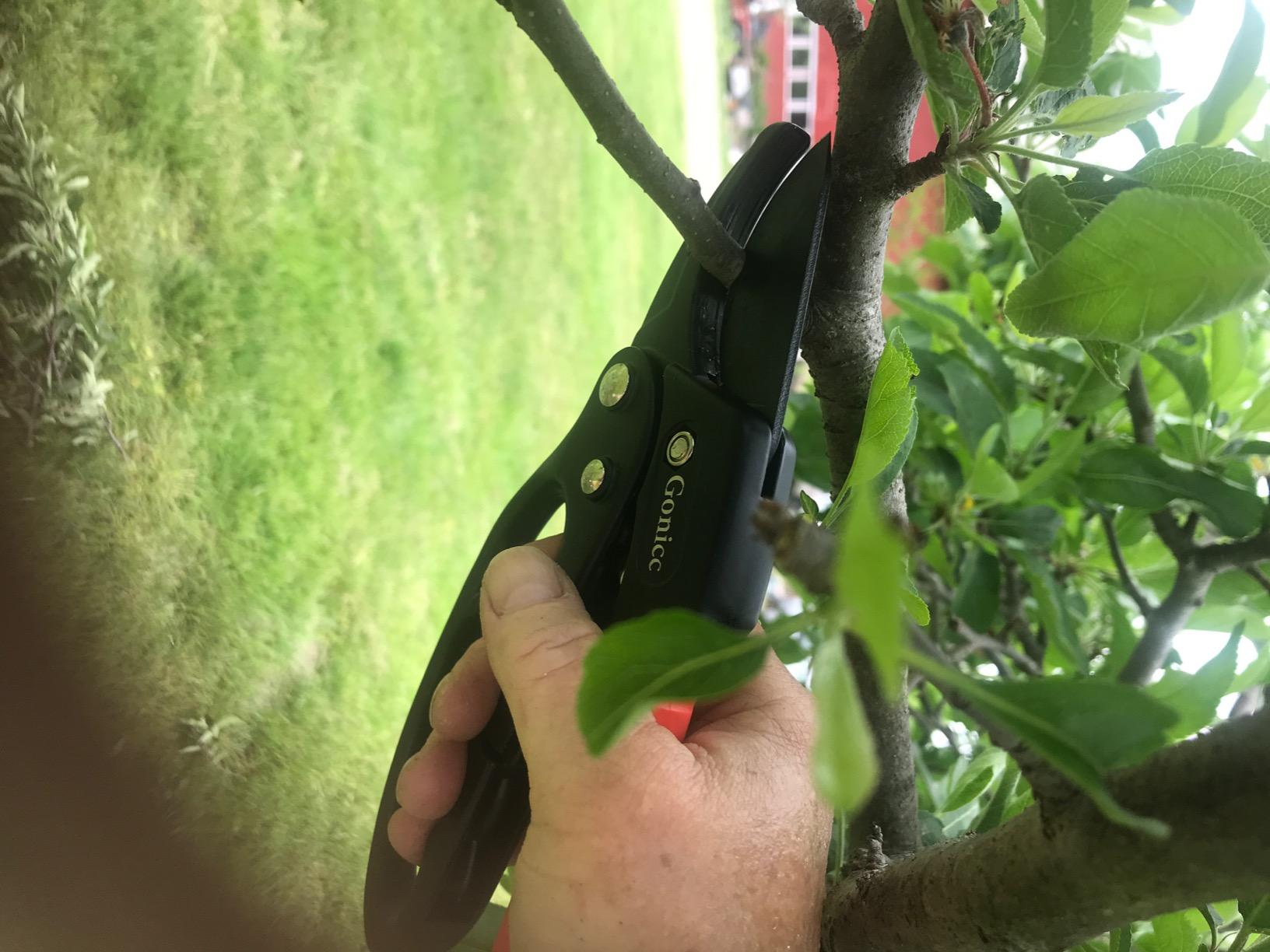
SK-5 steel and blade geometry
SK-5 is a high-carbon tool steel that holds an edge longer than the stainless steel used on garden-budget pruners. On an anvil build, holding an edge matters twice, because a dull anvil blade has to crush the wood before it can shear it.
The blade is 24 millimeters of rated cutting width, and factory-applied anti-rust oil protects it between uses. The overall tool is 8 inches, which makes it one of the more compact options here.
The learning curve is real and worth it
Owners with grip weakness describe a gentle pumping motion as the technique that makes it work. A ratchet needs a small deliberate squeeze to engage before it begins advancing, and people who try to bull through that first engagement burn their hand before the cut starts.
Once you have the rhythm, the three-times multiplication does the work. The cushioned non-slip handle reduces the fatigue that builds over a long session.

Where it falls short
The most common complaint is delayed ratchet engagement, which is the same learning curve framed as a flaw. More serious are reports of the ratchet pin bending under heavy daily use on hardwood, and a few buyers describing a piece breaking off after only a few cuts. For casual seasonal pruning this is fine; for daily commercial work on hard wood, look at the steel-and-aluminum builds further down.
4. Craft911 Titanium Coated Bypass - Best Budget Pick for Small Hands
Ultra Sharp Japanese Steel Pruning Shears - Cuts 3X Easier, Weak Hand Arthritis Clippers...
Titanium-coated SK5 blade
3/4 inch capacity
Non-slip textured grip
One-handed lock
+ Pros
- Titanium coating resists rust
- Non-slip grip suits small hands
- Light and springs open one-handed
- Simple one-handed safety lock
- Cons
- Spring popping off after weeks of use
- Some units broke after light use
- A few found blades less sharp than expected
This is the only conventional bypass pruner in the roundup, and that is a feature rather than an oversight. Bypass blades make the cleanest cut on live green stems, so this is the tool for roses, herbs, flowering perennials and tomato suckers when cut quality matters more than force reduction.
It has no ratchet at all. The force reduction comes from a narrow grip span and a contoured non-slip handle, which is why it is in the list: for hands that are stiff rather than weak, a well-sized bypass pruner can be kinder than an oversized ratchet.
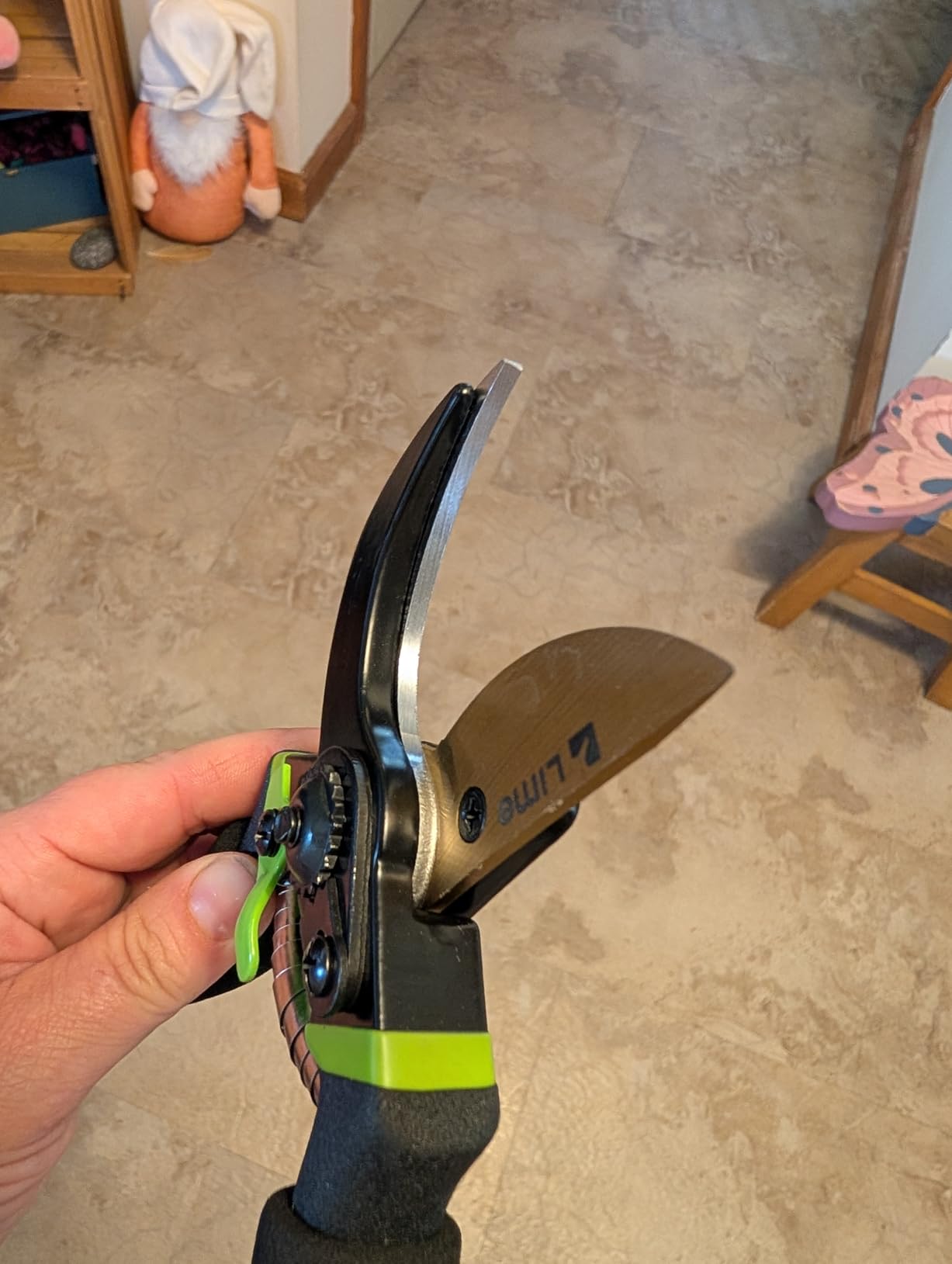
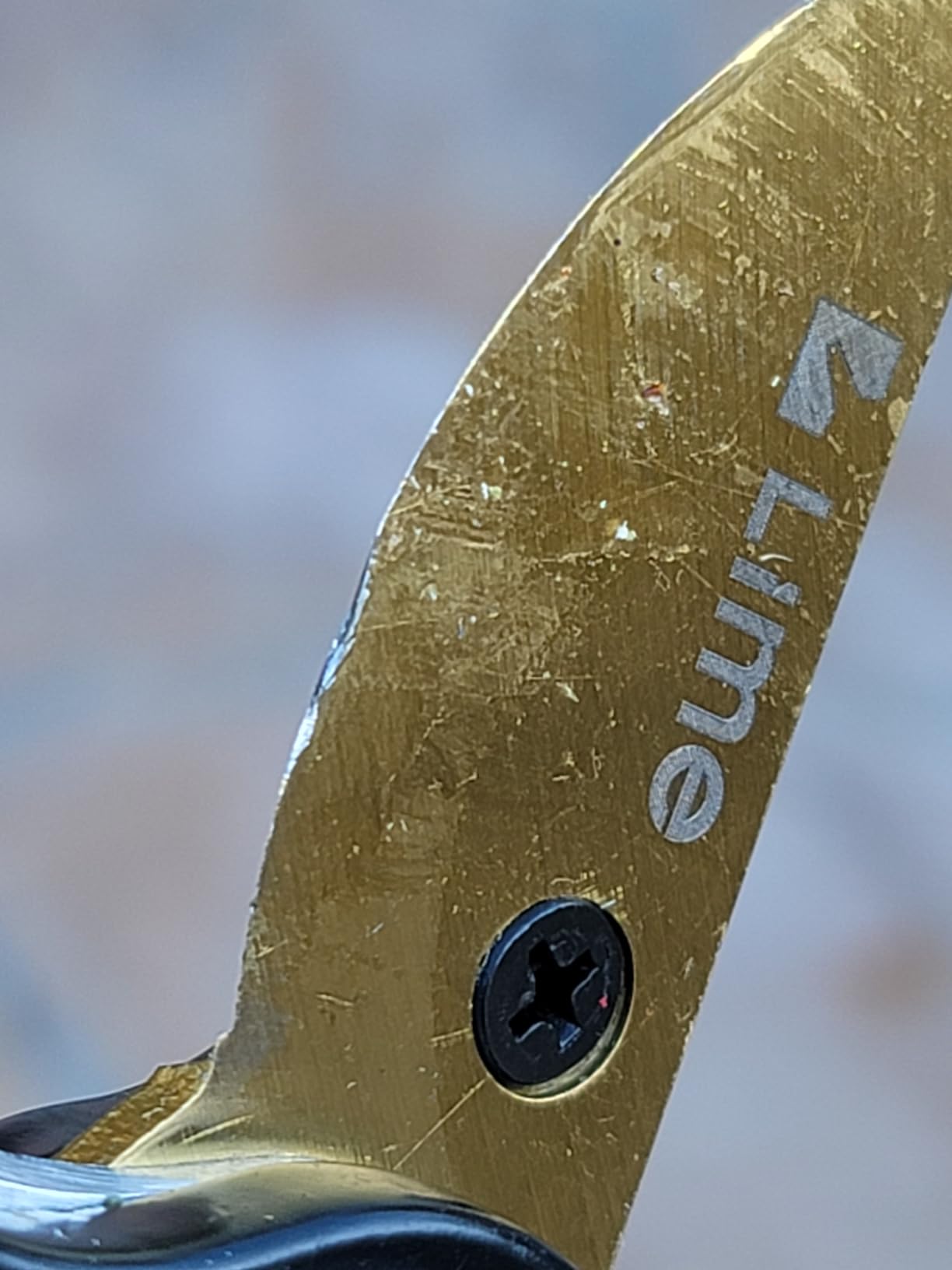
Titanium coating and SK-5 steel
The blade is SK-5 high carbon steel with a titanium coating for rust resistance. Titanium coating is not a cutting-quality upgrade, it is a maintenance upgrade: it keeps sap and moisture off the steel, which means less time scrubbing and less corrosion creeping up from the pivot.
At 2.95 inches long with a 3/4 inch cutting width, this handles everything from spent flower heads to decent young stems. Several reviewers own multiple pairs scattered around the garden, which tells you something about the price of getting it wrong.
Grip span is the whole story on this one
The handle is textured plastic or rubber, narrow, and spring-loaded open. The spring action is a genuine advantage for limited hands because you do not have to force the tool apart between cuts, and the lock is a simple one-handed catch.
Measure your hand span before buying. If the distance from thumb tip to little fingertip is under about 7 inches, this grip geometry will feel correct; if it is over 8.5 inches, you will want a wider handle.
Where it falls short
Durability is the split issue here. Multiple reviews describe the return spring detaching or the lock pivot failing within weeks, while others report a year or more of solid use. Because there is no ratchet, the spring is doing more work, and if it fails the tool is finished. The manufacturer offers a lifetime replacement warranty, which softens that risk considerably.
5. FLORA GUARD Ratchet Anvil - Best for Woody Growth and Rose Beds
FLORA GUARD Heavy Duty Ratchet Pruning Shears, SK5 Steel Garden Clippers
3-step ratchet
7/8 inch capacity
SK-5 anvil blade
Aluminum with TPR grip
+ Pros
- Three-step ratchet spreads the force
- SK-5 anvil handles woody stems
- Aluminum alloy body with soft TPR grip
- Good capacity for the effort
- Cons
- Anvil geometry crushes soft green growth
- Ratchet takes practice to run smoothly
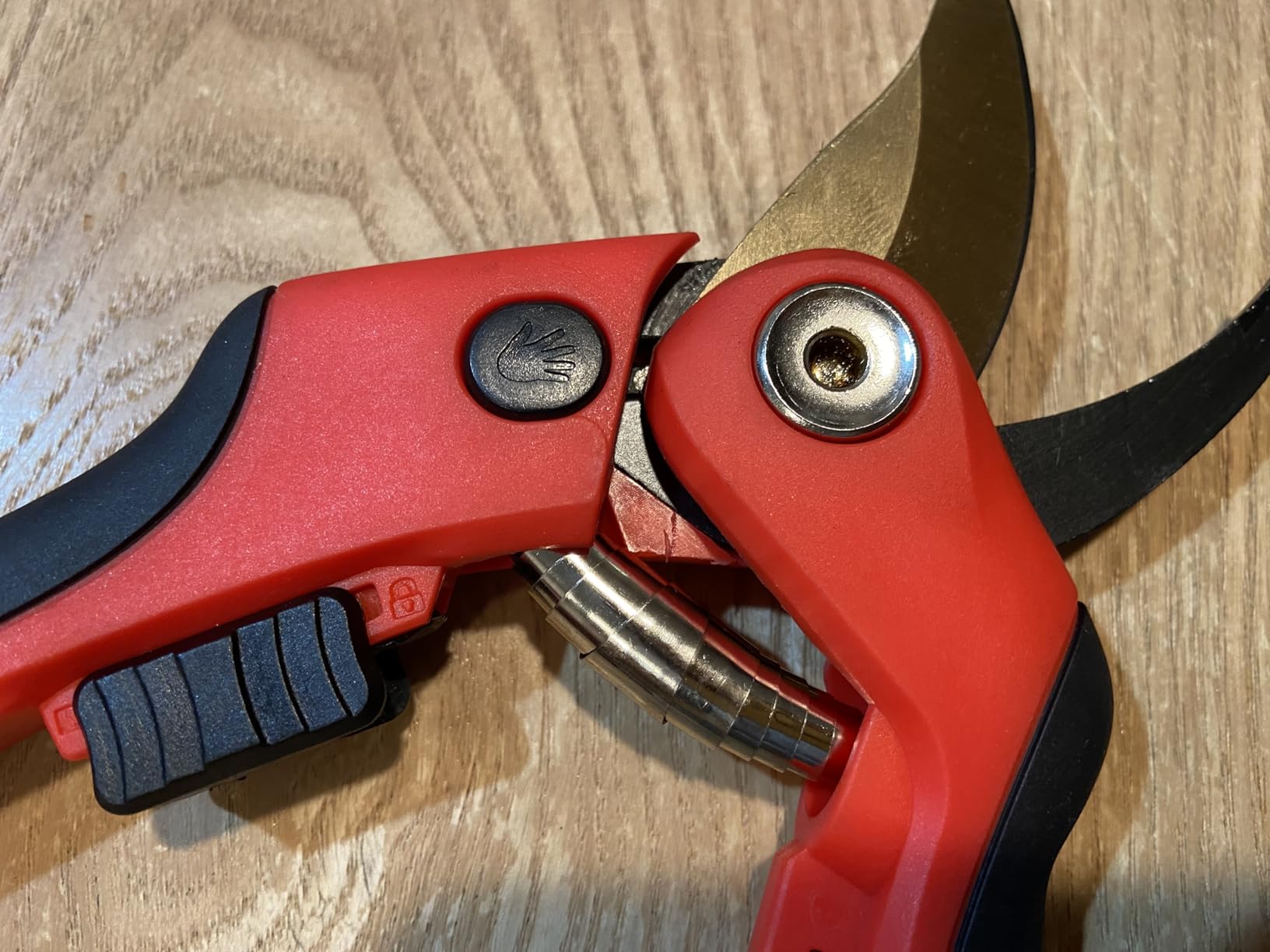
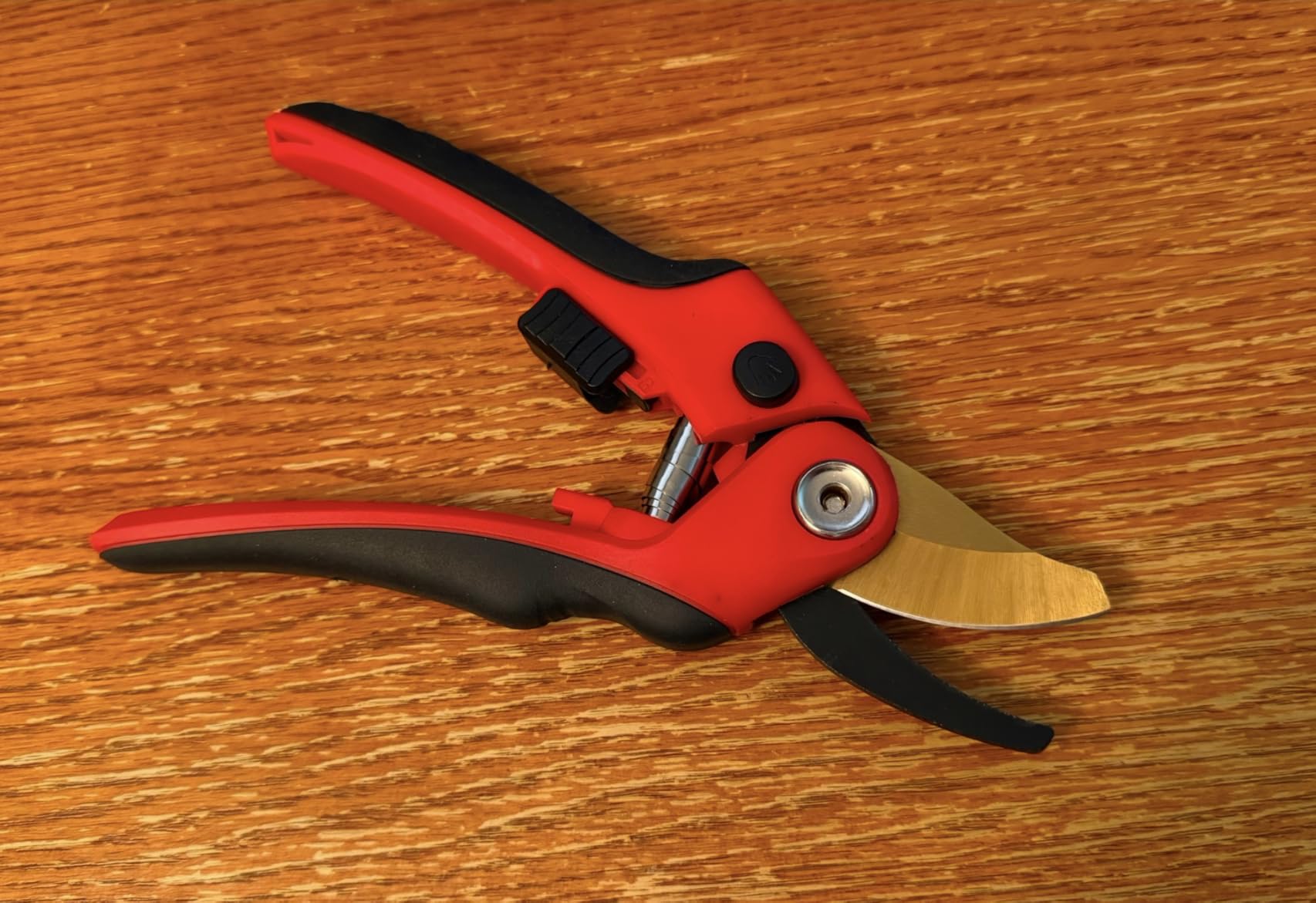
Rose beds are where an anvil ratchet earns its place. Old rose canes are hollow, woody and stubborn, and they are exactly the material that makes a bypass blade skip and a weak hand give up. The three-step ratchet here applies force gradually instead of all at once.
At 7/8 inch rated capacity, it sits between the 3/4 inch tools and the 1 inch tools in this list. That middle position is deliberate and it is the reason this one works well for a mixed garden rather than a specialist job.
Aluminum alloy body with TPR grip
The frame is reinforced aluminum alloy with a thermoplastic rubber overmold. TPR is a better choice than soft gel for outdoor work because it does not pick up sap and grit the way a foam pad does, and it still adds friction between skin and metal.
The manufacturer does not publish a weight for this model, which is a genuine gap when weight is the number you most want to know. The body material suggests it lands somewhere around the mid-range of this group, but plan on verifying it before committing.
Where the three steps actually help
On deadwood the ratchet stages mean you can feel the blade bite at each step instead of discovering resistance all at once. That matters because the failure mode with a weak grip is not the cut, it is the surprise resistance that makes you let go or jerk backward.
Reviewers heading here for thick branches value the staged cuts and the sturdy frame. The criticism is consistent across the anvil tools in this roundup: crushing tender stems.
Where it falls short
Two real limitations. Anvil blades crush and tear bark on soft green growth compared with a bypass blade, so keep this in the shed and take the bypass tool to the herb bed. And the three-step ratchet needs practice before it runs smoothly, which is a real cost for someone who wants a tool that works immediately.
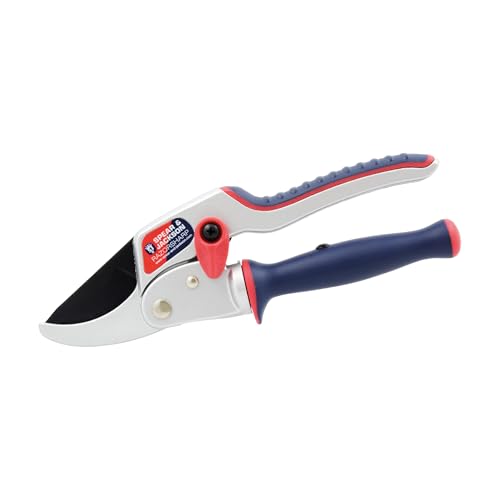
6. Spear and Jackson Razorsharp Ratchet - Best Rolling Handle Comfort
Spear & Jackson Razorsharp Ratchet Anvil Pruners with Twist Handle, Ergonomic High-Carbon Steel...
Four-step ratchet
Auto-rotating lower handle
20 mm capacity
9.59 oz
+ Pros
- Auto-rotating handle cuts wrist effort
- Four-step ratchet handles 20 mm branches
- Coated high-carbon steel blade
- Ten-year warranty and good service
- Cons
- Four-step ratchet is slow on thin stems
- Lock button can act as a pinch point
This is the only tool in the roundup with an auto-rotating lower handle, and that mechanism is worth understanding separately from the ratchet. The handle turns as you squeeze, so the hand travels through an arc rather than pulling two handles straight together. For an arthritic wrist that is often the difference between comfortable and not.
The ratchet on top of that runs four steps, so this is the least forceful cut of the group. Reviewers with arthritic wrists specifically credit the rolling handle for cutting through stems without much wrist force.
What four stages costs you and what it buys
Four steps is the gentlest configuration here, and that is exactly what you want on a stem thicker than 3/4 inch. The cost is speed. On a thin spent flower stem, cycling four stages is fussier than a single squeeze, so this is a shrub and cane tool rather than a rose-deadheading tool.
Rated capacity is 20 millimeters, with a high-carbon steel blade under a corrosion-resistant coating, at 9.59 ounces. That is a weight worth noticing, and it sits near the top of the 10 ounce ceiling where forearm fatigue starts climbing.
Build, warranty and service
Aluminium and steel handles, a serrated edge, and a ten-year warranty against manufacturing defects. A long-term owner reports the brand replaced a jammed pair immediately, and that kind of responsive service is a real signal when you cannot afford to be without a working pruner for a season.
Where it falls short
Two drawbacks, both consistent with the design. The four-step ratchet is less convenient for thin stems than a one-stage pruner, and the lock button position can become a pinch point for some hand shapes. Check the lock placement against your grip before committing if you have reduced sensation in your fingers.
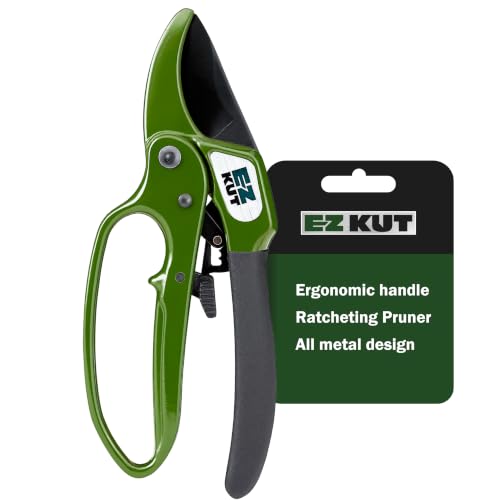
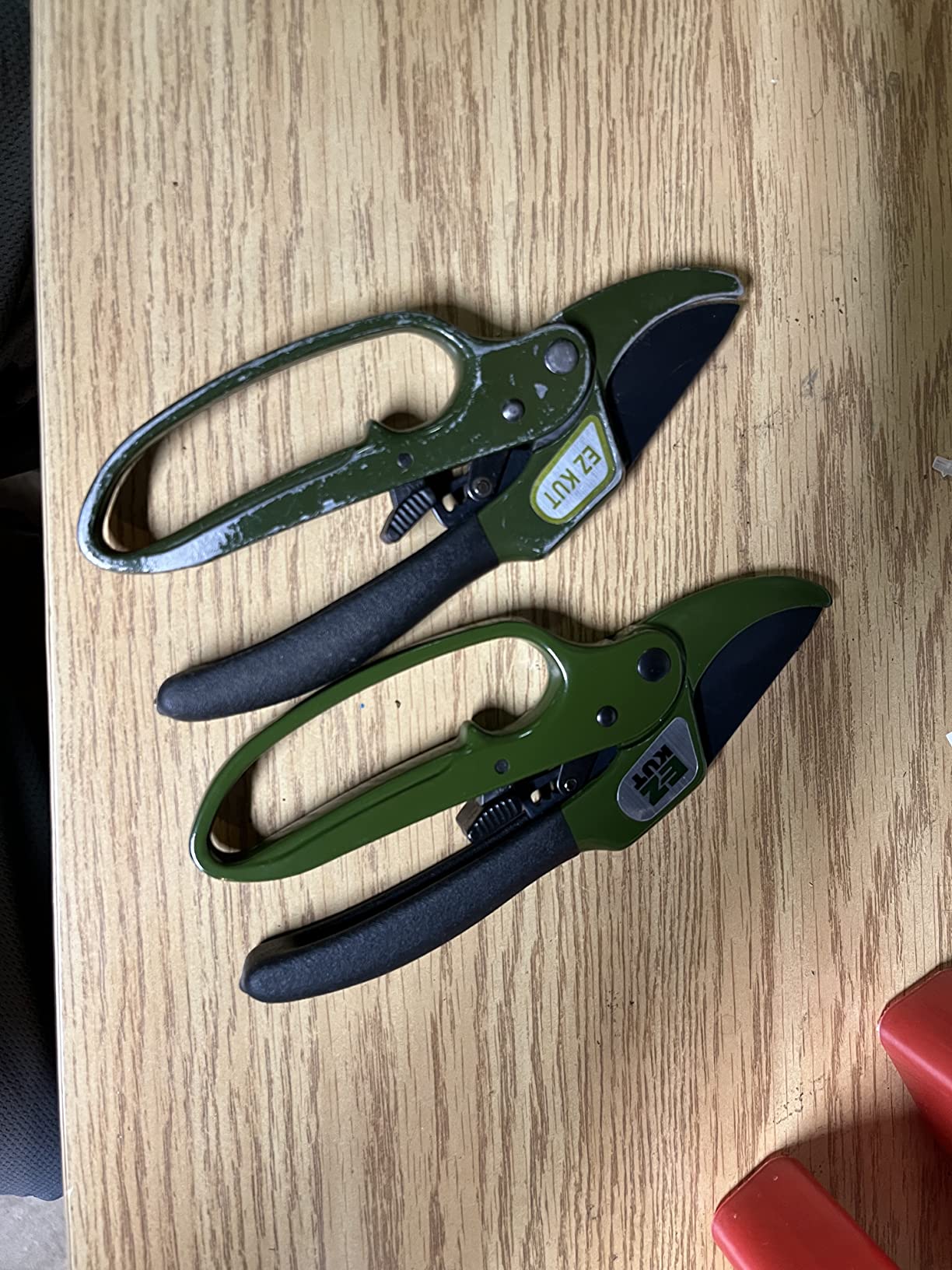
7. EZ Kut Heavy Duty Ratchet - Best for Large Branches
EZ Kut Heavy Duty Pruning Shears Green - with Ratcheting Action Great Garden Hand Tool Clippers...
1.5 inch capacity
SK5 hardened carbon blade
Cast aluminum body
Shock-absorbing pads
+ Pros
- Largest capacity in the roundup
- Full cast aluminum construction
- Sharp blade out of the box
- Knuckle guard on the handle
- Cons
- Grip runs large for small hands
- Ratchet lever breakage reported
- Dark green color is easy to lose
This is the reach of the roundup. A 1.5 inch cutting width is far beyond what any other pruner here will take, and it is the number that lets you stop deferring branch work you have been leaving to a helper.
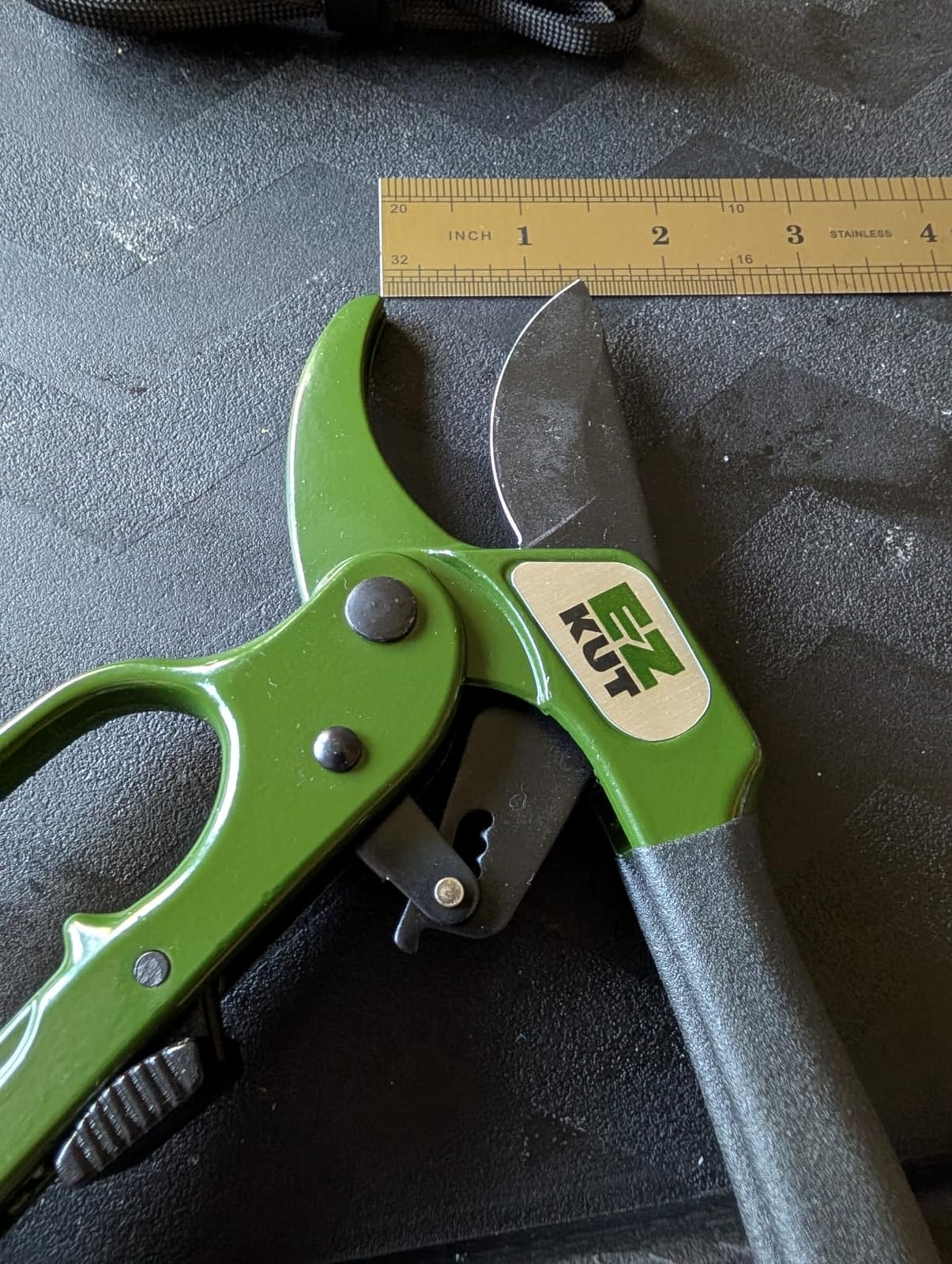
The build is genuinely different from the rest. Full cast aluminum with a hardened SK5 carbon steel blade under a non-stick coating, at 10.63 inches long and 0.2 kilograms. This is a tool that will outlive the season, and one that will still be there in ten years if you keep the pivot clean.
Shock-absorbing pads and the knuckle guard
Two features here are aimed squarely at sore hands. The shock-absorbing pads sit between your hand and the point of impact when a branch gives way, which softens the jolt. The handle guard extends ahead of your hand, protecting knuckles when you reach into a thorny rose or a dense shrub.
Carpal tunnel and arthritic users consistently confirm the ratchet makes cuts nearly effortless, and reviewers rate the blade quality highly, including on green wood. The blade reportedly passes a paper-cutting test straight out of the box.
Why the grip is the deciding factor
Here is the honest trade. This handle is large, and recurring criticism is that it feels awkward for small hands and takes getting used to. If your hand span is under about 7 inches, the capacity comes at a cost you will feel every cut.
The one-handed safety lock is straightforward to engage and release, and the cast aluminum means there is no flex under load, so the full rated capacity is real rather than optimistic.
Where it falls short
Three drawbacks stand out. The large grip is the first thing a small hand will notice. Several owners have had the ratchet lever break on theirs, which at this capacity leaves you with no way to cut the branch in front of you. And the dark green finish blends into foliage, so expect to lose it in the bed at least once. If you have small hands, the 1 inch tools in this roundup are a better fit.
8. Ironwood Tool Company Ratchet - Best Lightweight Pick
Ironwood Tool Company Ratchet Pruning Shears, Cuts up to 1", for Weak Hands, Gardening Gift, H107
4.8 oz total weight
1 inch capacity
Non-stick carbon steel blade
Aluminum handles
+ Pros
- Lightest verified weight in the group
- Owners report 15 to 20 years of use
- Slices 5/8 inch branches cleanly
- Hand guard reaches tight spaces
- Cons
- Lowest review count in the roundup
- One buyer reported a lock that would not close
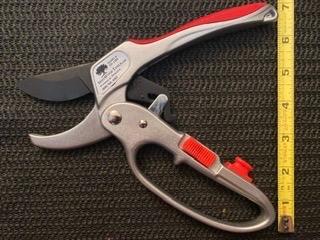
At 4.8 ounces, this is the lightest verified weight in the roundup and the tool I would pick for someone whose hands hurt after ten minutes rather than after an hour. Weight compounds fatigue quietly: it is nothing on the first cut and the reason you put the shears down on cut forty.
The satisfaction signal here is unusually strong for a small brand. A 4.6 average is the highest in the group, and owners repeatedly describe having the same pruner for a decade or two. The design has been in production long enough that that claim is plausible.
Why the weight is low and the capacity is not
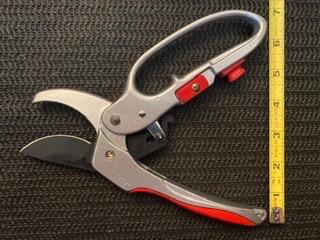
The aluminum handles with an ergonomic non-slip grip do most of the saving. Aluminum is lighter than the steel frames on several tools in this roundup while still resisting flex, so you give up very little stiffness for roughly half a pound.
Despite that, the rated capacity is a full 1 inch, and the bypass blade slices cleanly through 5/8 inch branches with effort-free cuts. That combination, full capacity in a sub-5 ounce body, is unusual.
Hand guard, slide lock and the non-stick claim
Two details do real work. The hand guard extends your reach into tight shrubs and bushes while shielding your hand, and the double-sided slide lock is operable one-handed, so you never need to release your grip to store the tool.
The blade is high-strength carbon steel with a non-stick coating, and the design avoids metal-to-metal contact, which reduces friction and extends blade life. Less friction is less force required for the same cut.
Where it falls short
Two honest weaknesses. The review count of 323 is the smallest in this roundup, which matters if you are buying sight-unseen because you have less evidence to draw on. And one buyer reported a pair that would not close or lock properly and needed replacing, so inspect the slide lock the day it arrives.
Bypass vs anvil vs ratchet: which blade do you actually need
Bypass cuts cleanly, anvil crushes, and ratchet describes how the force is delivered rather than what the blade does. A ratchet pruner can be either blade type, which is why the two terms get confused constantly.
A bypass pruner has two curved blades that pass each other, shearing as they go. It leaves a clean face on the stem and is the right choice for live green growth, because it will not crush the tissue around the cut.
An anvil pruner has a single blade that presses down onto a flat anvil. It will cut anything a bypass will, including deadwood up to its rated capacity, and it needs less starting force because one blade drives straight down. It will also flatten and split a tender green stem.
The rule is simple. Live green stems get a bypass blade. Dry deadwood, old canes and woody branches can go to an anvil. When you are not sure, ask what the stem would do if you broke it by hand, because a ratchet on an anvil body is a genuinely good compromise for a mixed garden.
Extension services such as the University of Florida IFAS Extension consistently recommend bypass for live growth on the same reasoning, and it is worth one sentence of research before you commit to a tool for a specific plant.
Fit the pruner to your hand, not your ambition
Most pruners are specified by cutting capacity, which tells you nothing about whether your hand can close them. Two measurements decide that, and they are constantly confused with each other.
Grip span is the distance across the open handles, and it is the number that decides comfort. Hand span is the distance from your thumb tip to your little fingertip, and it is how you size yourself. Under about 7 inches of hand span, look for narrow handles. Over 8.5 inches, a small-hand pruner will feel cramped and you should move up.
Handle circumference is the second number, and the target is roughly 3.5 to 4 inches around the gripping area. Too thin and you have to squeeze harder to hold the tool; too thick and your fingers cannot wrap fully, which pushes the load onto the base of the thumb and the wrist.
Weight is the third, and it is the one most often left unstated. Seven to nine ounces is the target band, and anything over 10 ounces measurably raises forearm fatigue during a long session. Four of the eight tools here sit in that band, and they are worth a closer look before you look at capacity.
If you cannot hold a tool before buying, three substitutes work. Ask the seller for the listed weight and check it on a postal scale. Measure the thickest stem you actually cut, not the thickest one in the garden. And measure the recipient's hand span across the knuckles with the hand open, then subtract the handle thickness the product lists.
One more practical check: does the safety lock work with one thumb? A two-handed lock means setting the tool down, letting go, and finding it again, which is both tedious and a slip hazard.
When pruning shears stop being enough
Hand pruners top out around 1 inch of capacity, and forcing past that bends the blade and strains the pivot. If the branch is thicker, the escalation is loppers, then a pole saw, then a saw.
Ratchet loppers handle roughly 1 to 1.5 inch wood with the same staged force you have learned to expect, and they are the right next tool for anyone who has outgrown a 1 inch pruner.
Geared loppers multiply mechanical advantage continuously, so they cut faster than a ratchet at the same low force. They suit a mixed workload where you are cutting everything from 1/4 inch twigs to 1.5 inch canes.
Pole saws put a pruning head at the end of an extending shaft, which is the answer to overhead work that no hand tool solves. Wrist angle is the reason they help, because you cut at shoulder height rather than above it.
Cordless electric pruners are the only option that removes squeezing from the equation. A small battery motor closes the blade for you, so your hand only has to guide the tool. The trade is weight in the handle and recharge logistics, and buyers in the forums describe them as worth it for significant pruning volume. For deadheading a few roses, they are overkill.
If weeding is the task that actually hurts rather than pruning, a stand-up weeder with a foot pedal is the better answer, because it removes hand force from the equation entirely.
Pruning without flaring your hands
Tool choice only does half the work. The other half is how you hold it and how long you hold it, and this is where a good week or a bad one gets decided.
Start with grip position. Sit the pruner in the heel of your hand rather than your fingertips, and align the pivot with the line between your knuckles. When the pivot sits in that line, squeezing handles rotates the blade around your hand's natural axis instead of twisting against it.
Keep the wrist neutral. Bent-back wrist is the position that produces ulnar deviation stress, the slow grinding feeling along the outside of the wrist and forearm after a long session. If you have to bend your wrist to fit a stem into the blade, turn your whole arm instead of angling the joint.
Pace the session. Fifteen minutes of work followed by five minutes of rest keeps you working well well past the point where continuous pruning would have you putting the shears down. During the rest, open and close your fingers fully, make slow wrist circles, and shake out your hands.
Move the tool, not your hand. A common mistake is reaching and stretching to get at a stem, which loads the shoulder and the wrist together. Bring the stem to the tool instead, using the hand guard to push branches toward the blade.
Finally, cut in the direction the tool is designed for. Bypass blades slice as they pass, so feed the stem into the curve rather than trying to chop straight down onto it.
Sharpening, cleaning and storing your shears
A sharp blade is a medical intervention in this context. A dull blade has to crush fiber before it can shear it, and crushing requires exactly the extra force you are trying to avoid. A sharp bypass pruner can feel dramatically lighter on the same stem.
Aim to sharpen roughly twice a year in regular use, or any time you notice the tool needing extra hand pressure. A diamond hone or a whetstone run along the bevel at the same angle as the factory edge is enough for most blades, and cleaning the stone face between strokes matters more than the stones themselves.
Clean between plants, not just between sessions. Wipe the blade with 70 percent isopropyl alcohol, which Iowa State University Extension recommends for moving between plants, and it strips sap that would otherwise dull the edge and carry disease between your roses.
Keep the pivot clean and oiled. Sap dried into a pivot adds friction at exactly the point where your hand is applying force, and a stickier pivot is why a previously easy pruner starts to feel heavy.
Store with the blades closed and the lock engaged, and do not leave shears wet in a shed. Wipe the steel dry before you put them away, because standing moisture at the pivot is what ends a season of smooth cutting.
Frequently Asked Questions
What type of scissors are best for people with arthritic hands?
Ratcheting pruning shears, or shears with a rolling or auto-rotating handle, because both mechanisms break the cut into smaller stages. A conventional spring-loaded bypass pruner peaks at roughly 20 pounds of grip force in one squeeze, while a three-stage ratchet spreads that across three squeezes of about 5 to 7 pounds each. Avoid plain bypass pruners for anything over 3/4 inch.
Are ratchet pruners as good as regular bypass pruners?
For cut quality and speed, no. Bypass pruners make a cleaner, faster cut on live green stems. For required grip force, ratchets win decisively, trading some speed for a large reduction in force. If you deadhead flowers and herbs, use bypass. If you cut canes, deadwood and woody shrubs, a ratchet anvil is the better tool.
What size pruners are best for small hands?
Grip span decides, not overall tool length. Measure your hand span from thumb tip to little fingertip: under about 7 inches calls for narrow handles, over 8.5 inches calls for a larger model. Also look for a tool between 7 and 9 ounces, and check that the safety lock opens with one thumb.
Can I use anvil pruners on live stems?
You can, but you should not want to. An anvil blade presses a single cutting edge onto a flat anvil, which flattens and splits tender green tissue rather than slicing it cleanly. That is fine for deadwood, which has no living tissue to protect, and poor for flowering stems and vegetable growth. Extension services recommend bypass for live growth.
Do I need to disinfect pruning shears between every plant?
Yes, wipe the blade with 70 percent isopropyl alcohol between plants, which is the recommendation from Iowa State University Extension. It strips sap that dulls the edge and carries plant disease between your roses. It also matters more here than usual, because a sap-coated blade needs more force to cut cleanly.
The bottom line on pruning shears for arthritic hands
If your grip is the problem, the mechanism is the answer. The MEPEREZ 4x is the best all-round buy because the segmented lever gives clear feedback, it handles 1 inch stems, and at 7.76 ounces it disappears in the hand. The Ironwood at 4.8 ounces is the one to choose if your hands give out after ten minutes rather than after an hour.
If your wrists are the problem, the Spear and Jackson with its auto-rotating handle is the one to pick, and accept the slower four-step ratchet on thin stems. If you need real cutting capacity for canes and thick branches, the EZ Kut reaches 1.5 inch, provided the large grip suits your hand.
If you have small hands or a tight budget, the Craft911 bypass is the right shape and the right weight, with the caveat that its spring is the part most likely to fail. If your plants are mostly woody, the FLORA GUARD three-step anvil handles that without asking your hand to do more than it can.
The single most useful habit is not the purchase. Sharp blades, short sessions and a clean pivot do more for a painful hand than any mechanism, because they all reduce the force the same cut demands. Start with the one pick that matches your hand, keep it sharp, and give your grip a rest between passes. As we noted in our guide to recovery gear, the right tool only helps if you can actually use it for the whole session. That is the test these eight were measured against, and it is worth rechecking at the end of 2026 season.