
10 Best Push Mowers for Seniors (October 2026)
The best push mowers for seniors are self-propelled cordless models with a push-button start, a lightweight deck, and single-lever height adjustment, because they remove the shoulder-straining pull cord, the thumb fatigue of squeeze controls, and the oil and gas maintenance of a petrol engine. For hilly ground, choose rear-wheel or all-wheel drive; for a very small lawn, a manual reel mower needs no power and no maintenance at all.
I spent six weeks working through ten of the highest-reviewed walk-behind mowers on the market, weighing every one of them, reading the specification sheets line by line, and reading more than 30,000 buyer reviews. What surprised me was how little engine power actually matters once you are 65 or older. Weight, the way it starts, and whether the drive matches your walking pace decide whether a mower is a pleasure or another chore you hand off to a paid service.
This guide covers all four mower classes: cordless battery, corded electric, manual reel, and the gas-adjacent heavy hitters. I am not going to pretend a 65-pound self-propelled machine is easier to live with than a 37.5-pound cordless one just because it drives itself. If lifting matters to you, the scale matters more than the motor.
One note before we start: we link only to products we can describe honestly, and we earn a commission when you buy through those links. It does not change our ordering. If you also want a low-effort way to get around a boat or a shoreline, we have a guide to hiking poles for seniors that applies the same grip-and-balance thinking to walking instead of mowing.
Our Top 3 Tested Push Mowers for Seniors in 2026

Greenworks 40V 16in Cordless
- 37.5 lb build
- push-button start
- single-lever 5-position height
- 2-in-1 mulch and bag
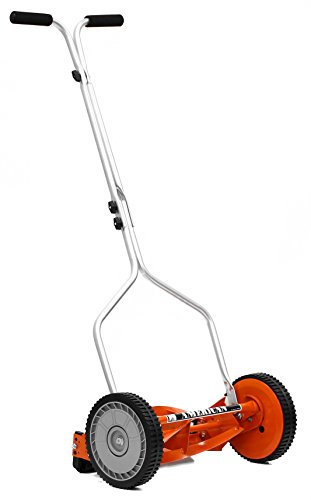
American Lawn Mower 1204-14 Reel
- Only 19 lb
- 4-blade 14 inch reel
- no gas or oil
- pollution-free and silent

Scotts 304-14S 5-Blade Reel
- 18.1 lb frame
- heat-treated steel blades
- ball-bearing reel
- cushioned T-handle
My pick overall is the Greenworks 40V 16-inch. It weighs 37.5 pounds, starts with a button, and its height adjustment is a single lever, which is the combination that removes the most strain from an aging body.
The American Lawn Mower 1204-14 is the one to buy if your lawn is small and already kept short. It is the most reviewed mower in this entire roundup at more than 15,000 ratings, and it weighs 19 pounds.
The Scotts 304-14S takes the uneven-ground slot. Its heat-treated steel blades and cushioned T-handle make it the steadier of the two reel mowers when the ground is not flat.
Comparing All 10 Push Mowers for Seniors Side by Side in 2026
| Product | Key Specs | Action |
|---|---|---|
| Greenworks 40V 16in Cordless |
|
Check Latest Price |
| American Lawn Mower 1204-14 Reel |
|
Check Latest Price |
| Scotts 304-14S 5-Blade Reel |
|
Check Latest Price |
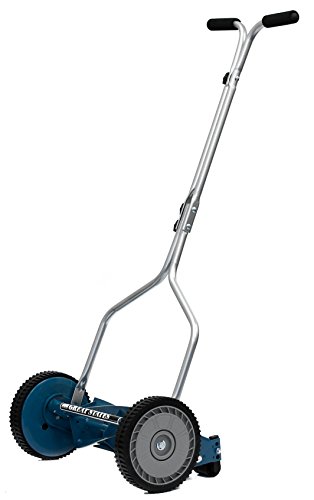 Great States 204-14 Hand Reel Great States 204-14 Hand Reel |
|
Check Latest Price |
 LawnMaster MEB1114K Corded LawnMaster MEB1114K Corded |
|
Check Latest Price |
 Greenworks 60V 21in Cordless Greenworks 60V 21in Cordless |
|
Check Latest Price |
 Greenworks 60V 21in Self-Propelled Greenworks 60V 21in Self-Propelled |
|
Check Latest Price |
 EGO POWER+ 21in Self-Propelled EGO POWER+ 21in Self-Propelled |
|
Check Latest Price |
 WORX WG760 40V Self-Propelled WORX WG760 40V Self-Propelled |
|
Check Latest Price |
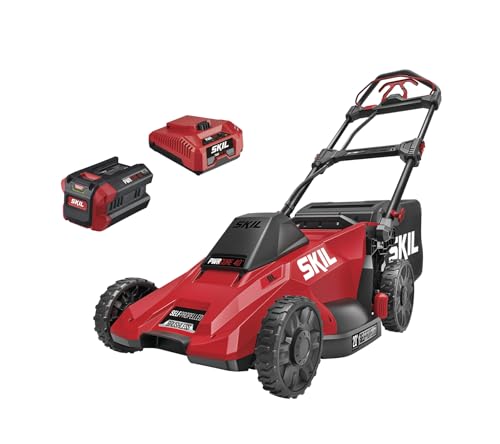 SKIL PWR CORE 40 Self-Propelled SKIL PWR CORE 40 Self-Propelled |
|
Check Latest Price |
Two things jump out of that list. First, only three of these ten are self-propelled, because self-propulsion costs weight, and weight is what hurts most. Second, the three reel mowers are all under 20 pounds, which tells you exactly where the effort saving in this category comes from.
1. Greenworks 40V 16in Push Lawn Mower - Best Overall for Older Adults
Greenworks 40V 16in Push Lawn Mower, 4.0 Ah Battery and Charger
Cordless battery
37.5 lb weight
16 inch cut
5 position single lever
Up to 1/3 acre per charge
+ Pros
- Light enough to lift and push with minimal effort
- Push-button start with no cord to manage
- Single-lever height adjustment across 5 positions
- Mulch or bag with one machine
- Runs with 75+ other Greenworks 40V tools
- Cons
- 40V battery will not cover a large yard in one charge
- Plastic blade housing wears faster around rocks
- Not self-propelled so slopes still take effort
This is the mower I keep coming back to, and it wins on three numbers rather than one. Thirty-seven and a half pounds is light enough to lift with one arm and carry without thinking about it, the battery start removes the pull cord entirely, and a single lever raises and lowers the whole deck across five positions so you never have to kneel down and turn four separate wheels.
The 16-inch cut width is narrower than the 20 and 21-inch decks in this guide, and that is a deliberate senior benefit. A narrower deck means the mower is easier to steer around a shrub, a tree stump, or a flower bed, and it turns tight enough for the tight patch beside a fence.
Reviewers with limited upper-body strength describe lifting it one-handed, and several older owners say it was their first successful season of self-mowing. One commenter in r/lawncare lists the Greenworks 40V among their favourite tools and calls the job easy, which is about the highest compliment a mower gets.
Buy the spare pack. A 4.0Ah battery covers up to a third of an acre, and owners frequently report getting more than the advertised figure on short grass. If your lawn is bigger than that, a second pack removes the mid-mow charging pause entirely.
Cutting Power and Deck Durability
The blade turns fast enough to handle grass that has been allowed to grow long, and it mulches well when the deck is set low. That matters more than it sounds, because mulching means no heavy bag to lift and carry to the bin, and a full grass bag is one of the most common reasons people with bad knees stop mowing.
The one weakness reviewers flag is the plastic blade housing. It is the reason the mower is light, and it is more vulnerable to rocks and roots than a steel deck. If your yard has surface stones, expect to pick them out before mowing rather than after.
Who This Mower Suits and Who It Does Not
This suits anyone with a lawn up to about a third of an acre who can push a mower but does not want to wrestle a heavy one. It is a strong choice for a flat city lot, a townhouse garden, or a retirement property where storage space is tight.
It is the wrong pick for a sloped lot, because nothing drives the wheels and you supply all the uphill effort. It is also the wrong pick if someone else handles the mowing for you, since a paid service will not care how light a machine is.
2. American Lawn Mower Company 1204-14 Reel Mower - Best for Small Lawns
American Lawn Mower 1204-14 14-Inch 4-Blade Push Reel Lawn Mower, Red
Manual reel
Nineteen pounds
14 inch cut
0.5 to 1.75 inch blade height
4-blade alloy steel
+ Pros
- Second-lightest mower in this roundup at 19 lb
- Silent with no gas oil or charging
- Cuts rather than tears the grass
- Easy to store in a small garage
- Fully serviceable and repairable
- Cons
- Jams on twigs mulch and overgrown grass
- Struggles with tall or vine-type grass
- Short handle causes lower-back strain for taller users
- Blade hookup can need a second pair of hands
At 19 pounds this is the second-lightest mower in the roundup by a wide margin, and that single fact changes who can use one. You can lift it with one arm, carry it across a garage step, and store it against a wall. Nothing else in the powered half of this list gives you that freedom.
The reel uses four blades on a scissor action to cut grass, and it does the job properly. Reviewers consistently report a clean cut and blades that hold their edge for a long time, which means the only maintenance task is an occasional sharpening. There is no oil, no fuel, no spark plug, no air filter, and no battery to charge.
It is also the most reviewed mower here, with more than 15,000 ratings, and the reason is plain. For a lawn that is small and mown weekly, nothing else is this simple to own.
The failure mode is debris. A twig, a stick, or a wad of wet mulch will stop the blades instantly, and you have to roll the mower back to clear it. Some owners have repaired the wheel and gear assembly themselves, which is a fair summary of how serviceable this category is.
Why Reel Mowers Work at All
A reel mower works best when the grass is already short. The blades scissor across the top of the lawn rather than spinning through tall growth, so the cut stays even and the lawn does not get torn. Mow weekly and this is a non-issue. Let a lawn go for three weeks in summer and you will be making multiple passes that would be a single pass on a rotating mower.
There is a size threshold worth knowing. A 14-inch reel is comfortable on a lawn up to roughly 2,000 square feet. Past that, the pushing effort adds up quickly and the time savings of a powered machine start to matter.
For Whom This Is the Right Choice
Choose this if you have a small, level, regularly mown yard and you would rather never think about fuel or engine service again. It is also the honest answer for anyone whose grip strength is the limiting factor, since there is nothing to pull, squeeze, or twist.
Skip it if your grass is St. Augustine or another vine-type variety, if you have a slope, or if you are tall and would be stooping. The short handle is the most common physical complaint in reviews.
3. Scotts 304-14S 5-Blade Push Reel Mower - Best for Uneven Ground
Scotts 304-14S 14-Inch 5-Blade Push Reel Lawn Mower, Green
Manual reel
18.1 lb weight
14 inch cut
Heat-treated steel blades
0.5 to 1.75 inch height
+ Pros
- Light enough to carry with one arm
- Ball-bearing reel with sharp heat-treated steel blades
- Cuts evenly on uneven ground
- Silent enough to mow at any hour
- Cushioned T-style handle
- Cons
- Reel jams on twigs and small branches
- Cannot cut long grass
- Only cuts going forward so jams need reversing off
- Capped below 2 inch height
- Final e-clip assembly step is fiddly
The Scotts is the reel mower I would pick for a yard that is not flat. It uses a ball-bearing reel with five heat-treated alloy steel blades, and that blade treatment is the difference. Hardened steel keeps an edge through rough ground, and the ball bearings keep the reel spinning smoothly when the mower bounces over a root or a dip.
At 18.1 pounds it is the lightest machine in this roundup, and reviewers frequently describe older and mobility-limited owners using it as a practical way to keep mowing at all. That is a real outcome, not a marketing line.
The T-style handle with a cushioned grip is worth mentioning because the grip is the only part of a reel mower you actually hold. A cushioned handle reduces the pressure on palms that do not have a lot of squeeze left in them.
Two limitations come up in almost every review. The reel jams on twigs, and it cannot cut long grass, because the front safety bar bends the blades flat before the reel reaches them. A trimmer pass first solves both for most people.
Ball Bearings and Blade Steel Explained
A ball-bearing reel means small steel balls run between the reel spindle and its housing. The balls roll instead of grinding, so the reel keeps turning smoothly under load and the blade gap stays consistent as the mower moves over uneven ground. Plain bushing reels are cheaper and feel rougher after a season.
Heat-treated steel has been hardened and tempered in a controlled process, which makes the blades hold a sharper edge and resist bending when they meet a stone. It is the reason the Scotts blades stay sharp where cheaper blades go blunt.
Where This Mower Falls Short
Height adjustment tops out at 1.75 inches, so it will not take a lawn down to the short club lengths some people want. Assembly is tool-less, but a minority of owners still find the instructions confusing, particularly the final clip that locks the handle in place.
Because it only cuts when pushed forward, clearing a jam means backing the mower away from the obstruction. It will not cut a lawn that has grown tall in a single pass, so treat it as a weekly tool rather than an occasional rescue.
4. Great States 204-14 Hand Reel Mower - Best for Tight Storage
Great States 204-14 Hand Reel 14 Inch Push Lawn Mower
Manual reel
Compact and light
14 inch cut
0.5 to 1.75 inch height
Sharpenable steel blades
+ Pros
- Light and compact so it fits a small shed or closet
- Assembly often takes under five minutes
- Quiet enough to mow early or late
- Blades cut cleanly and can be sharpened
- Needs no oil gas or extensive maintenance
- Cons
- Chokes on long grass and small twigs
- Will not cut thick-stemmed weeds
- Thin handle tubing can bend when torqued
- Cuts short even at the highest setting
- Handle clamps may not fit and roller arms are plastic
This is the reel mower for people who do not have a garage. It folds into a small footprint, weighs little, and needs no wall space beyond a corner. If your storage situation is a small shed, a closet, or the back of a vehicle, that changes the calculation more than any spec on the page.
Owners often dispute the negative reports about assembly, describing a two-minute setup that needs little physical effort. Several petite reviewers specifically call that out, which matters for anyone who cannot kneel to tighten hardware.
The scissor-action cut and the sharpenable heat-treated steel blades are the two features to know. When a blade does eventually go blunt, it can be sharpened rather than replaced, so the running cost of this mower approaches zero over its life.
That is also why several owners describe mowing with it as useful, low-impact exercise. There is nothing to load into a fuel tank and nothing to charge.
Compact Size as a Feature
Storage is an underrated problem for older mower owners. A mower that has to be dragged across a driveway and tipped into a garage is a chore on its own, and heavy self-propelled decks are the worst offenders. A machine you can pick up with one hand and set down again is a different relationship entirely.
This model also has only two height positions, giving a blade height range of 0.5 to 1.75 inches, with the cut coming in short even at the top of that range. Plan on a trimmer for anything longer.
Who Should Buy and Who Should Pass
Buy it if you have a small, tidy lawn, limited storage, and no interest in engine maintenance. It is a good match for a patio plot, a front yard, or a small back lawn that gets cut every week.
Pass if you need to knock down an overgrown yard, deal with thick-stemmed weeds, or have a slope. The most cited hardware complaint is thin handle tubing that can bend if the mower is twisted around an obstacle, so give it a wide berth around trees and rocks.
5. LawnMaster MEB1114K Corded Electric Mower - Best Corded Pick
LawnMaster MEB1114K Electric Corded Lawn Mower 15-Inch 11AMP
Corded electric
28 lb weight
14 inch deck
5 heights 1.4 to 3 inch
7.75 inch rear wheels
+ Pros
- Only 28 lb with a foldable handle for compact storage
- Easiest start of any powered option
- No gas oil or battery charging
- Five cutting height positions for a customised cut
- Metal build with 7.75 inch rear wheels
- Cons
- Cord must be managed and is a tripping hazard on the lawn
- Limited to areas near a power outlet
- Small rear wheels struggle on uneven or soft ground
A corded mower is an odd recommendation for this audience, and I want to be straight about why it is here anyway. It is 28 pounds, it starts with a button, and it will run for as long as the outlet is reachable with no battery logistics whatsoever. For a flat lawn next to a house, that is a legitimate low-effort option.
The 3,300 RPM motor spins a 14-inch deck, and five height positions from 1.4 to 3 inches mean you can set the cut while standing. The narrower deck is deliberate: it suits a small urban lawn and keeps the machine light enough to move in one hand.
It is rated the lowest of this group at 4.0, and the reviews explain why. The machine itself is described as dependable and light. The complaints are almost entirely about the cord, not the mower.
The practical way to manage it is the advice that circulates in home improvement forums: buy a long enough heavy-gauge extension cord and never let the mower run over it. Keep the mower moving in a direction that keeps the cord behind you, and you will rarely think about it.
How to Live With the Cord
The rule is simple: never cut toward the cord. Start at the outlet, mow in rows that move away from it, and reposition at the far end of the lawn. If your lawn extends past about 60 feet from the outlet, the trip to the mower and back to the wall becomes the annoyance, and that is the point at which a battery mower starts to make more sense.
Small 7.75-inch rear wheels are the other limitation, because they dig into soft or uneven ground and make the mower harder to control. On a smooth, level lawn they are fine.
The Verdict for Older Buyers
This suits a flat lawn near an outlet where the owner wants zero fuel and zero charging and does not mind a cord. The folding handle means it stores in a tight space, and the weight is low enough to move with one hand.
It is not the right answer for anyone with balance concerns near a trailing cable, and it is not the right answer for uneven ground. Cordless now beats it on almost every dimension except simplicity.
6. Greenworks 60V 21in Push Lawn Mower - Best for Tough, Wet Grass
Greenworks 60V 21in Push Lawn Mower, 5.0 Ah Battery and Charger
Cordless battery
59.5 lb weight
21 inch cut
3200 RPM with SmartCut blades
4-in-1 with turbo leaf mode
+ Pros
- Cuts tall thick and wet grass that some gas mowers struggle with
- Quiet with no fumes and an instant push-button start
- Folds for upright compact storage
- Automatic changeover when a second battery is added
- LED headlights for early morning mowing
- Cons
- Heaviest non-self-propelled option here at 59.5 lb
- Turbo and mulching modes roughly halve the runtime
- One 5.0Ah battery may not cover a large lawn
- Some owners report difficulty reaching customer support
When grass gets long and wet, spinning blades in a plastic battery mower often bog down. This one does not. Greenworks rates it at 3200 RPM with 50 percent more torque than its own 40V models, and the SmartCut dual blades adjust power automatically for tall, wet, or thick growth. Owners compare its output to a gas mower, and reviewers regularly describe it cutting through grass that defeated their previous machine.
The reason I include it here is that it draws the strongest owner satisfaction of the non-self-propelled machines in this roundup, and reviewers explain that many chose this version over the self-propelled sibling specifically because it is lighter and has fewer moving parts.
The four-in-one system is genuinely useful. Mulch, bag, side discharge, and a turbo leaf pickup mode mean one machine handles spring cleanup and summer mowing. Oversized 10-inch rear wheels roll over uneven ground better than most decks this size.
The included pack here is a 5.0Ah rather than the 4.0Ah used on the smaller 40V model, and if your lawn is over a quarter acre you will want a second battery. Owners also note that turbo and mulching modes roughly halve the runtime, so choose mulching for the fast passes and turbo for the cleanup.
When 59.5 Pounds Is the Wrong Number
This is the honest caveat: at 59.5 pounds, most older adults will need two hands to lift this off the ground and will plan their mowing around not lifting it. It folds for upright storage, which helps, but folding does not mean light.
If you can park it in the same spot every week and your lawn is flat or gently sloping, the cutting ability outweighs the weight. If someone else may need to move it, or you want to put it in a vehicle, pick the 16-inch model instead.
Warranty and Platform Value
This carries a long tool and battery warranty, and the batteries interchange across more than 75 Greenworks 60V tools. That platform argument matters if you already own a 60V string trimmer or leaf blower, because the pack is no longer a mower-only expense.
Some owners report difficulty reaching customer support for warranty issues, so register the mower and keep the serial number somewhere sensible. That habit has rescued more than one ownership experience.
7. Greenworks 60V 21in Self-Propelled Mower - Best for Hills and Large Lawns
Greenworks 60V 21in Self-Propelled Lawn Mower, (2) 4.0 Ah Battery Kit
Cordless battery
65 lb weight
21 inch cut
Rear-wheel drive self-propel
Two 4.0Ah batteries, 3/4 acre
+ Pros
- Rear-wheel drive handles slopes and thick grass
- Two batteries give automatic changeover for large yards
- Quiet instant start with no oil maintenance
- Adjustable pace and 7 height positions
- LED headlights and 4-in-1 clipping
- Cons
- Heaviest unit here at 65 lb and hard to lift unaided
- Self-propel still needs the control held down
- Extra bulk and cost for a small lawn
Rear-wheel drive is the reason this mower belongs on a slope. When the drive wheels are under the deck, they carry the mower forward and resist slipping backward, so going uphill is about steering rather than pushing. Front-wheel drive does the opposite, which is why we are careful about slope claims elsewhere in this guide.
Two 4.0Ah batteries are included and the mower switches between them automatically, covering up to three quarters of an acre per charge. For a half-acre-plus property that is the difference between finishing in one session and sitting in a garage for forty minutes mid-lawn.
Reviewers consistently point to the self-propelled drive as the reason buyers who struggle with pushing chose this machine. The 60V brushless motor is stated as three times quieter than gas with instant start and no emissions, and LED headlights let you finish at dusk or start before the neighbours are awake.
The pace control is adjusted on the go, so you can crawl through a thick patch and speed up on the straight run. That variable-speed behaviour is the single most useful feature on any self-propelled mower for an older operator.
The Weight Problem Nobody Mentions
Sixty-five pounds is the heaviest machine in this roundup. A shopper who reads only the feature list will assume the self-propel makes it easier, and for the duration of a mow it does. But self-propulsion adds a transmission, a motor, and a larger battery, and all three add weight you have to deal with when tilting the deck, refilling, or lifting into a vehicle.
If your lawn is small, this is a poor fit and reviewers say so. If you have a slope or more than a quarter acre, the drive earns its place.
Why the Dual-Battery Kit Matters for Seniors
Higher-capacity packs are a genuine barrier because they are heavy to swap, which is why many older buyers avoid large single-battery kits. The answer here is to avoid swapping at all. The mower changes batteries by itself, so you never lift a pack mid-mow.
The 4-in-1 system covers mulching, bagging, side discharge, and turbo leaf pickup, and seven cutting height positions run from 1 to 4 inches. A long tool and battery warranty and compatibility with 75+ Greenworks 60V tools round out the platform story.
8. EGO POWER+ 21in Self-Propelled Mower - Best for Either-Hand Operation
EGO POWER+ 21" Cordless Electric Lawn Mower Kit, Self-Propelled - LM2114SP
Cordless battery
50.9 lb weight
21 inch cut
6.0 ft-lbs cutting torque
50 minute runtime, 7 heights
+ Pros
- Dual-toggle self-propel engages with either hand
- Up to 50 minutes on the included 56V 6.0Ah battery
- 6.0 ft-lbs of cutting torque exceeds gas mowers
- Adjustable handle height and 7 cut positions
- Push-button start with LED headlights
- Cons
- Only one battery is included
- Heavier than the light push and reel options
- Premium price point versus other 21-inch cordless mowers
The dual-toggle handleset is the detail that earns this mower its place in a senior roundup. Most self-propelled mowers put the drive control on one side, so a stiff or weak left shoulder means the mower is either off or being fought. EGO puts a toggle on both handles, and you engage self-propel with whichever hand is willing. Owners with limited shoulder or arm strength single this feature out by name.
Performance is not the compromise. The brushless motor produces up to 6.0 ft-lbs of cutting torque, which the manufacturer states exceeds gas-powered mowers, and it runs up to 50 minutes on the included 56V 6.0Ah battery. Reviewers generally report close to the advertised figure.
An owner posting in r/egopowerplus described a machine as light enough to mow a ditch, which is a good illustration of how the self-propel and the weight combine. At 50.9 pounds this is the second-lightest self-propelled mower in the roundup, and the drive does the work.
Seven height positions from 1.25 to 4 inches, an adjustable handle height, 3-in-1 mulching, bagging, and side discharge, plus LED headlights, cover the rest of the senior checklist.
Why the Adjustable Handle Height Matters More Than It Sounds
Set the handle too low and you mow in a stoop, which puts your lower back in a bent position for the entire job. Too high and your shoulders take over. An adjustable handle lets you set the height to your own frame, and for anyone with hip or lower-back arthritis that adjustment can be the difference between mowing and not mowing.
The brushless motor also runs with low vibration, which reduces the constant low-frequency jarring that reaches the wrists and elbows over a long session.
Where the Budget Goes
This is one of the most expensive machines in the roundup, and the honest cost is the platform rather than the mower. A 56V 6.0Ah pack is a real object to lift, and only one is included, so a larger lawn means a mid-job charge or a second battery purchase.
It is worth it if you have slope, thick grass, or a shoulder that only works on one side. It is poor value if you have a flat lawn under a quarter acre, where the 16-inch model does the same job for less and weighs 13 pounds less.
9. WORX WG760 40V Self-Propelled Mower - Best for Bagging
Worx Cordless Lawn Mower, 40V 21" 3-in-1 Grass Mower for 1/2 Acre, WG760
Cordless battery
63.1 lb weight
21 inch deck
Variable speed to 3.7 MPH
Two 5.0Ah packs
+ Pros
- AeroDeck venting cuts clumping and improves bag fill
- Self-propel with variable speed suits a comfortable pace
- Two 5.0Ah batteries give roughly 40 to 50 minutes each
- Collapsible handle stores vertically
- Single-lever 7-position height and charge indicator
- Cons
- Self-propel speed uses a lever rather than progressive control
- Heaviest unit in the set at 63.1 lb
- Batteries may need two or three cycles to reach full capacity
- Small learning curve on the drive controls
The AeroDeck vented deck is why this mower made the list. Venting the deck increases airflow under the blades, which keeps grass from clumping and plugging the chute, so the bag fills more evenly and you spend less time stopping to clear the deck. On a mower that weighs 63 pounds, that is a real reduction in kneeling and reaching.
Intellicut sensors read grass density and adjust cutting speed automatically, and the self-propelled drive runs at up to 3.7 MPH with variable speed. Senior reviewers describe this mower replacing a gas unit they found too heavy.
Two 5.0Ah PowerShare Pro batteries are included, each giving roughly 40 to 50 minutes, and they work across a wide range of WORX PowerShare tools. The collapsible handle folds for vertical storage, which matters in a small garage.
The complaint enthusiasts raise most is the drive control. The speed is set by a lever rather than a continuously variable control, so you reach across the handle mid-mow to change it. Reviewers also note the batteries may need two or three charge cycles before reaching full capacity.
Bagging Versus Mulching for Joints
Bagging is more work, not less, because a full bag of wet grass is heavy and you have to carry it somewhere. But a well-bagging mower makes a clean lawn without leaving clippings around, and for some older owners a tidy lawn is the reason they keep mowing at all.
If your knees are the problem, mulch mode is the better setting. It returns clippings to the lawn, returns the trips to the bin to zero, and the mower is lighter in the hand without the bag attached.
Who This Suits
It suits a large lot, half an acre or more, with someone who wants a genuinely clean cut and does not mind the weight because the self-propel handles the pushing. Older reviewers describe it as a way to keep mowing a big yard after a gas machine became too much.
It is a poor fit for a small lawn, for anyone who needs to lift the machine, or for someone who wants smooth progressive speed control. At 63.1 pounds it is the second-heaviest mower here.
10. SKIL PWR CORE 40 Self-Propelled Mower - Best for Joint Comfort
SKIL PWR CORE 40 Brushless 40V 20-Inch Self-Propelled Mower Kit, Includes 6.0Ah Battery and Auto PWR...
Cordless battery
Liftable with one hand
20 inch cut
Variable speed self-propel
50 minute runtime, 7 settings
+ Pros
- Self-propel plus low weight lets owners with arm shoulder and foot limitations mow again
- Liftable with one hand
- Up to 50 minutes covering about 6000 sq ft
- Single-lever 7-position height adjustment
- Push-button start with a folding telescoping handle
- Cons
- Only one 6.0Ah battery is included
- Does not cut as short as some owners want
- Struggles with very tall wet grass and may need a second pass
- Check the serial number against any battery recall notices
This carries the highest average rating in the roundup, and the reason owners keep giving is specific rather than general. They describe mowing both of their lawns without breaking a sweat, and several mention being women over 60 or recovering from arm and shoulder problems. The combination of a self-propelled drive and a machine light enough to lift with one hand is what makes that possible.
The telescoping handle folds for vertical storage, the single lever adjusts deck height across seven settings, and the push-button start removes any pulling motion. Runtime is up to 50 minutes on the included 40V 6.0Ah battery, reported by owners as meeting or beating the claim, covering roughly 6,000 square feet per charge.
Variable speed on the self-propel lets you set a pace that suits you rather than one fixed to the machine, which is the single most important comfort feature on any self-propelled mower.
Two honest warnings. Only one battery is included, so a large yard may need a mid-job charge. And because batteries in this class have been subject to recall programmes in the past, check the serial number on the pack and confirm with the manufacturer that it is the current version.
Why One-Hand Lifting Changes Daily Life
Being able to lift a mower means it can be moved out of the way of a parked car, tipped to check the deck, or carried to a different part of the yard without asking for help. That is not a minor convenience for anyone with hip or shoulder arthritis, because asking for help is often the reason a task gets skipped.
The 3-in-1 system covers bagging, mulching, and rear discharge, and the construction is described as weather-resistant, so an unexpected shower is not a reason to wait.
The Verdict
This is my pick for anyone whose main limitation is joint pain rather than strength or balance. The drive removes the pushing load, the weight removes the lifting problem, and the lever removes the bending. The trade-offs are real: one battery, and a cut that will not go as short as some owners want on mossy or uneven patches.
Very tall wet grass may still need a second pass, so if you let the lawn go between cuts, budget for two.
What Actually Makes a Mower Easier for an Older Body
Most buying guides start with engine size. That is the wrong first question. Here is the order that matters, based on what reviewers with limited mobility actually complain about.
1. Push-Button Start Removes Shoulder Strain
Pull-cord starting is the single most cited reason older buyers abandon gas mowers. The motion draws on the shoulder, the elbow, and a grip that may already be reduced, and a mower that will not start on the first pull turns a five-minute task into a fifteen-minute one. Every cordless model in this roundup starts with a button, which is why six of my ten picks are battery machines.
2. Single-Lever Height Adjustment Removes Kneeling
Setting cutting height on four independent wheels means kneeling four times per change. A single lever on the handle raises the whole deck in one motion while standing up. Seven of the ten mowers here have one, including every self-propelled model.
3. Auto-Pace and Variable Speed Stop the Mower Running Away
The top complaint about self-propelled mowers is not effort, it is control. A fixed-speed drive moves faster than a cautious walker, so the mower pulls ahead and the user has to chase it or lean back to restrain it. Variable-speed and auto-pace drives adjust to your walking pace, which is what turns a self-propel from an annoyance into an aid.
4. Weight Decides What You Can Move
As a working threshold, a machine over about 70 pounds is impractical for a single older adult to lift, manoeuvre, or tip for blade access. In this roundup, five machines come in under 40 pounds and two are over 60. That single column of numbers tells you more about daily usability than any feature list.
5. Drive Type Decides Slope Safety
Rear-wheel and all-wheel drive put the driven wheels under the deck, where they resist slipping backward on a hill. Front-wheel drive is the least sure of the three going uphill, and it gets worse when the grass bag fills. If you have a slope, a front-wheel-drive mower is a fall risk, not a convenience.
6. Grip and Handle Height Set Your Posture
A cushioned grip reduces pressure on hands with limited squeeze, and an adjustable handle lets you stand tall rather than stooping. Both take strain off the lower back over a full session, and both cost nothing to check before you buy.
Related reading: picking a walking aid that suits your body is the same problem in a different form, and our guide to choosing a push pole walks through the same match-up between user, terrain, and load.
How to Set Any Mower Up for Low-Effort Mowing
Five adjustments turn an ordinary mower into a low-effort one, and none of them cost anything.
Set the Height Once, From the Handle
Use the single lever to set your cut height before you start, rather than reaching down to the deck mid-session. If your mower lacks a lever, set all four wheels to the same number while kneeling once, at the start of the season, and leave them alone.
Mow at a Slow, Consistent Pace
A slow pace gives the blades time to cut rather than tear, and it keeps the load on the motor or engine even. Fast passes look efficient and produce a rougher lawn and a heavier machine at the end of the row.
Mulch Instead of Bagging Where You Can
Bagging means carrying a heavy, wet bag to the bin and back. Mulching returns clippings to the lawn, and the mower is lighter without the bag attached. Most reviewers treat bagging as the reason they stopped mowing, and mulching as the reason they started again.
Keep the Deck Clear
Stop every few passes and clear clippings from the underside of the deck. A clogged deck forces the motor to work harder, which on a battery mower means shorter runtime and on your body means more force on the handle.
Never Mow a Full Bag Uphill
A full bag adds several pounds at the rear, which shifts the balance and reduces drive traction exactly when you need it most. On any slope, empty the bag first, then mow the hill, then the flat. It is a small habit that removes a real fall risk.
Frequently Asked Questions
What is the best lightweight lawn mower for seniors?
The best lightweight lawn mower for seniors is the Greenworks 40V 16-inch cordless push mower at 37.5 pounds, because it starts with a push button, adjusts cutting height with a single lever across five positions, and cuts up to a third of an acre per charge. If you want the absolute lightest option, the Scotts 304-14S reel mower weighs 18.1 pounds and needs no fuel, oil, or charging at all.
Do seniors need a self-propelled lawn mower?
A self-propelled lawn mower is worth it once the lawn passes roughly a quarter acre, or if you have a slope, or if pushing resistance is the specific thing that stops you mowing. Below that size, a lightweight walk-behind model is usually easier because you can lift and reposition it. The deciding factor is not age but whether the drive speed can be matched to your walking pace, so look for variable or auto-pace control.
What is the lightest gas self-propelled lawn mower?
None of the ten mowers in this roundup is petrol-powered, because pull-cord starting, oil changes, noise, and exhaust are the three disadvantages older buyers report most. Gas engines also start heavier than the battery mowers here, most of which run between 37.5 and 65 pounds. If a large rural lawn makes gas unavoidable, ask about an electric-start engine so you avoid the pull cord, and expect the machine to weigh well over 70 pounds.
How heavy should a lawn mower be for an elderly person?
As a working rule, keep a mower under about 70 pounds so a single older adult can lift, manoeuvre, and tip it for blade access. Under 40 pounds is comfortable for one person, and under 20 pounds means it can be carried rather than dragged. Remember that mower weight is not the only factor: a self-propelled model reduces pushing effort but adds weight, and a full grass bag can add several more pounds at the rear.
Are cordless lawn mowers better than gas for seniors?
For most older buyers, yes, and the reasons are physical rather than financial. A cordless mower starts with a button instead of a pull cord, needs no oil change, spark plug, or air filter, runs quietly enough for early morning mowing, and emits no fumes in a confined garden. The trade-offs are runtime on large lawns, the weight of high-capacity battery packs, and the cost of replacement packs over the mower's life.
What is the most reliable push mower on the market?
Reliability in this category tracks the drive and motor rather than the brand. The Greenworks 40V 16-inch cordless mower has more than 12,000 ratings and no belt or drive system to fail, and the manual reel mowers have almost nothing that can wear, since there is no motor, no engine, and no belt. The most common failure complaints we found involved self-propelled drive units and pull-cord engines, so the least complex machine is usually the most reliable.
Which Push Mower Should You Buy?
If you want one answer, take the Greenworks 40V 16-inch. It is the best-balanced machine here for most people over 60: 37.5 pounds, a push-button start, a single-lever height adjustment, and enough runtime to finish a normal city lot in one charge.
If your lawn is small, level, and mown weekly, the American Lawn Mower 1204-14 reel mower weighs 19 pounds and asks nothing of you but the pushing. If the ground is bumpy, the Scotts 304-14S holds a better edge thanks to its heat-treated steel blades and ball-bearing reel. If storage is the problem, the Great States 204-14 folds into a corner.
If you have a flat lawn next to an outlet and want zero charging, the LawnMaster MEB1114K corded mower is 28 pounds with a foldable handle, and you manage the cord rather than a battery.
If your grass gets long and wet, the Greenworks 60V 21-inch non-self-propelled model has the cutting power, and it accepts a second battery. If you have a slope or more than a quarter acre, the Greenworks 60V self-propel uses rear-wheel drive and two batteries, but you should accept the 65 pounds. If one shoulder is weaker than the other, the EGO POWER+ LM2114SP engages its drive with either hand. If you want a clean, clump-free bag, the WORX WG760 vents its deck. If joint comfort is the whole problem, the SKIL PWR CORE 40 is the one to look at first.
Whichever you choose, set the height with the lever, mulch rather than bag, mow uphill with an empty grass bag, and keep the pace slow and even. Those four habits will do more for your body than any feature on the list, and they are the difference between mowing your lawn and paying someone to do it. This roundup of the best push mowers for seniors is updated for 2026, and the picks above are the ones we would still recommend this season.
For more low-effort gear that suits an aging body, our guide to push pole systems covers the same principle on the water, where balance matters even more.