
10 Best Saltwater Chlorine Generators for Home Pools (October 2026)
Most pool owners who go looking for the best saltwater chlorine generators for home pools are not trying to become pool chemists. They are trying to stop carrying 25-pound chlorine buckets to the equipment pad in July, stop guessing at test readings after a heavy rain, and stop explaining red eyes to their kids. I have spent the last few months going through the current crop of salt systems line by line, checking published chlorine output, warranty length, plumbing requirements, and what happens when something fails.
Here is the honest starting point. A salt chlorine generator is not a different kind of pool. It is a chlorine pool with a small chlorine factory plumbed into the return line, and the cell that does the work is a consumable you will replace several times over the life of the system. Get that straight in the first ten minutes and the buying decision becomes much simpler.
What I found is that the huge gap in this category is not chlorine output. Almost every unit listed here will sanitize a properly sized pool. The gap is in longevity, warranty honesty, and whether the thing installs itself or lands you in the pool with a union wrench on day one. I broke the ten systems below into those two camps and ranked them accordingly. If you have a metal frame or a soft stone deck and are worried about salt damage over time, our guide on preventing corrosion in salt water covers the same chemistry ideas from another angle.
I also want to set expectations on the worth-it question early, because it comes up in every single owner forum. Salt saves you the weekly chemical run. It does not save you water testing, pH adjustment, stabilizer top-ups, or cell replacements. Owners who frame a salt system as a luxury first and a money-saver second tend to be far happier with it, and that is exactly how I scored the ten systems below for 2026.
Our Top 3 Saltwater Chlorine Generators for 2026

Hayward AquaRite W3AQR15
- Up to 40
- 000 gallons
- LED monitor with service alerts
- Plugs into existing Hayward plumbing

CircuPool RJ45+
- Up to 1.9 lb chlorine per day
- 7-year limited warranty
- DIY install keeps warranty
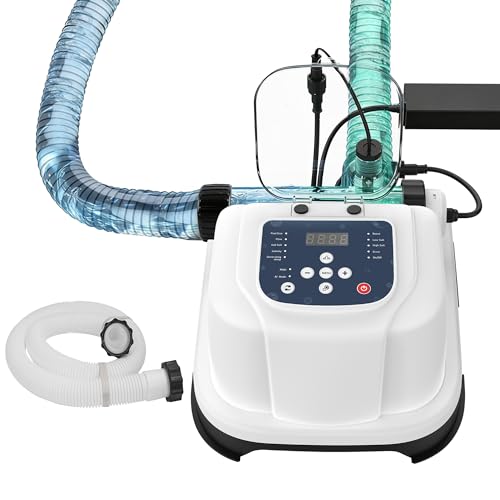
EverCrystal ECSCG10DA
- AI auto-adjust mode
- Salt dosing shown in pounds
- Polarity reversal every 8 hours
Comparing the Best Saltwater Chlorine Generators in 2026
| Product | Key Specs | Action |
|---|---|---|
| Hayward AquaRite W3AQR15 |
|
Check Latest Price |
 Zodiac AquaPure PLC1400 Cell Kit Zodiac AquaPure PLC1400 Cell Kit |
|
Check Latest Price |
 Solaxx Saltron Retro CLG10A Solaxx Saltron Retro CLG10A |
|
Check Latest Price |
| CircuPool RJ45+ |
|
Check Latest Price |
| EverCrystal ECSCG10DA |
|
Check Latest Price |
 Pureline Crystal Pure PL7700 Pureline Crystal Pure PL7700 |
|
Check Latest Price |
 APX Performance E-CHLOR 32,000 gal APX Performance E-CHLOR 32,000 gal |
|
Check Latest Price |
 Fengind 15,000 Gallon Chlorinator Fengind 15,000 Gallon Chlorinator |
|
Check Latest Price |
 Fengind 26,500 Gallon All-in-One Fengind 26,500 Gallon All-in-One |
|
Check Latest Price |
 WESTAHO EL-032 40,000 Gallon WESTAHO EL-032 40,000 Gallon |
|
Check Latest Price |
What Is a Saltwater Chlorine Generator?
A saltwater chlorine generator is a two-piece system that makes chlorine by electrolysis. A wall-mounted control box sends current to a plumbed cell filled with titanium plates, and the cell separates dissolved pool salt into sodium and chlorine, which sanitizes the water while the pump runs.
Two numbers define it. Salt concentration has to sit between roughly 2,800 and 4,500 parts per million, which is about 3,000 ppm or one teaspoon per gallon, and that is genuinely mild compared to seawater. The second number is the low-temperature cutoff, usually around 50 to 52 degrees Fahrenheit, below which most cells stop producing so they do not crystallize and crack in winter.
The two pieces wear at completely different rates, and this distinction is the single most useful thing a pool owner can learn. The control box is a sealed electronic unit that commonly runs 7 to 15 years. The titanium cell is a consumable that typically lasts 3 to 7 years. When a salt system quits producing, it is almost always the cell, and replacing the cell alone instead of the whole system typically saves 50 to 70 percent of what a full swap costs.
One myth worth killing right now: a salt pool is not chlorine-free. It is a chlorine pool where the chlorine is manufactured on site instead of carried home from the store. The chemistry that keeps algae away and kills pathogens is identical, which means you still test free chlorine, pH, alkalinity, calcium hardness, and cyanuric acid stabilizer on the same schedule.
Is a Saltwater Chlorine Generator Worth It?
For a lot of owners, yes, and for a specific set of reasons. The water is noticeably gentler on skin, hair, and swimsuits because there is no chlorine stabilizer dumping into the pool every week. There is no chlorine odor at the equipment pad. Nobody is carrying jugs down a wet path in the dark. And for anyone with a vacation home or a pool they use on a schedule, automation is the whole ballgame.
The honest counter-case is also worth hearing. Several owners maintain pools with liquid chlorine from a discount retailer and report identical chemistry outcomes, because it is the same active ingredient. If you are diligent, enjoy a routine walk around the pool with a test kit, and never travel without someone else watching the water, a salt system is a lifestyle upgrade rather than a financial one. One regular on the forums put it plainly: salt water is a luxury first, and if it saves money, great.
Then the ownership realities nobody sells you. Salt at 3,000 ppm is aggressive on metal over years, so heaters, light fixtures, ladders, and soft stone coping need attention, and zinc anodes are cheap insurance. Electrolysis pushes pH upward, so expect more frequent acid dosing than you did on tablets. If your municipality restricts salt discharge near landscaping, check before you convert. And the cell is a scheduled expense, not a one-time purchase.
Our advice: convert if you travel, hate chlorine handling, or have a pool surface that tolerates salt. Stay on liquid chlorine if you already have good habits and a good testing routine.
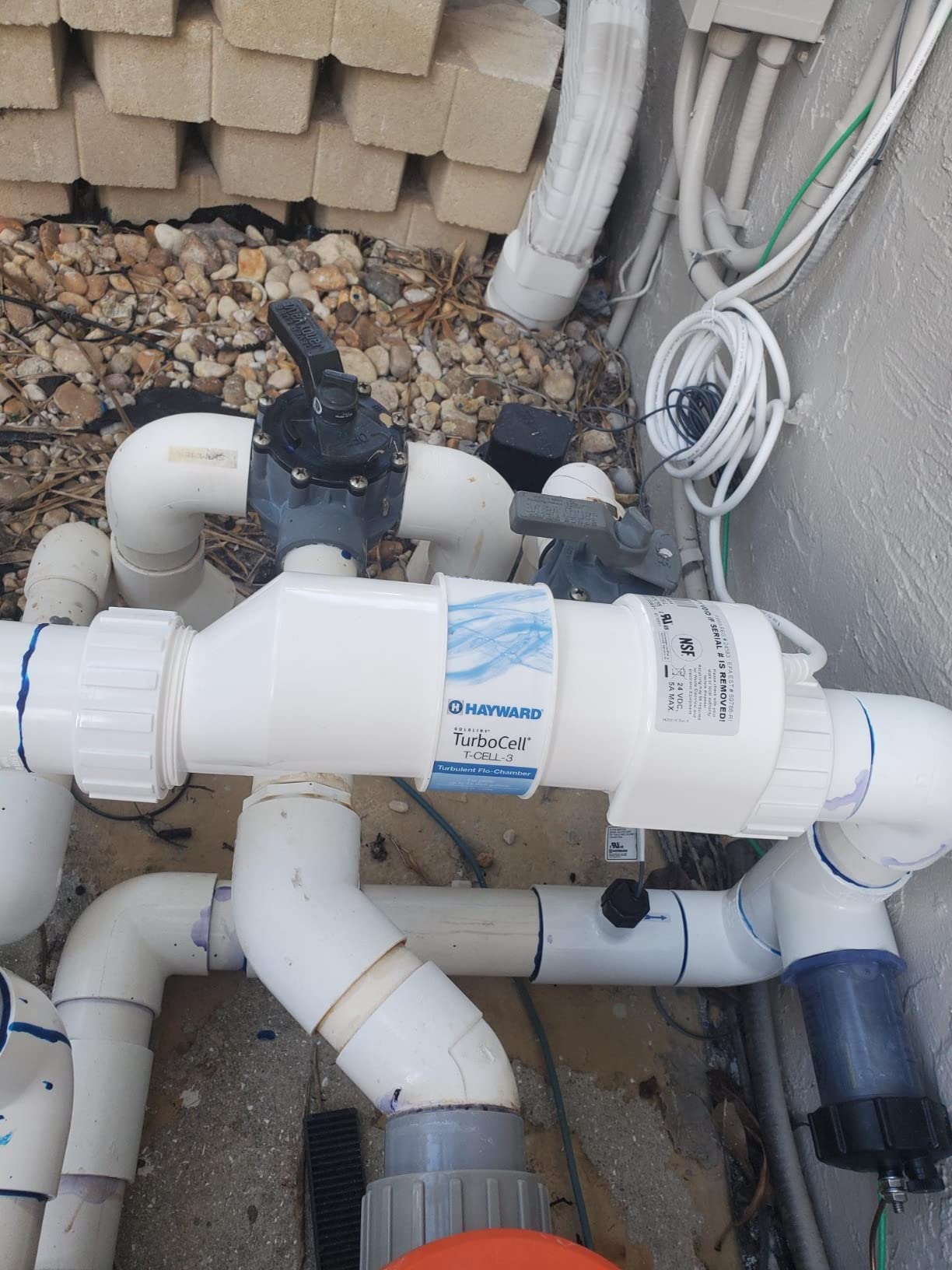
1. Hayward AquaRite W3AQR15 - The Installed-Base Standard for In-Ground Pools
Hayward Aquarite Salt Chlorine Generator for Swimming Pools 40,000 Gallons
Pools up to 40,000 gallons
LED monitor with service alerts
Fits existing Hayward plumbing
+ Pros
- Largest installed base
- so parts and knowledge are everywhere
- Like-for-like replacement path
- Service alerts flag cell attention
- Large 40000 gallon ceiling
- Cons
- Owner's manual is dense
- Some reports of cell or board failure in 6-10 months
- Warranty service can hinge on authorized-dealer installation
The AquaRite is the reason most pool shops stock one salt system and not five. It has been installed in North American backyards for decades, and that installed base is worth more to a buyer than any spec sheet. When something needs diagnosing, there is always someone nearby who has seen it before. My pick here rests on that compatibility advantage, not on a claim that it outproduces the CircuPool.
Owners consistently report a clean like-for-like swap. The cell unscrews and the new unit goes in the same plumbing, so if your existing system is a Hayward, nothing about the layout has to change. That single fact removes the most expensive part of a salt conversion, which is rework.
The LED monitor is more useful than it sounds. It reports system status and flags when service attention is due instead of leaving you to deduce cell condition from a water test. Long service lives do show up in owner reports, including one owner describing a 17-year replacement unit, though that is an exception rather than the pattern.
The friction points are real and I will not gloss over them. Several reviewers report cell or control board failures inside the first 6 to 10 months on a minority of units, and the printed manual is famously unfriendly to anyone who does not already know what a salt reading means. Buyers also report the manufacturer declining warranty service when the unit was not installed by an authorized dealer, so read that clause before you buy.
Output, Cell Life, and the 40,000 Gallon Ceiling
This listing covers pools up to 40,000 gallons, with 15,000 and 25,000 gallon variants in the same family. That range puts it at the upper end of residential sizing, which matters for owners of large in-ground pools who would otherwise need an oversized unit. A 4.2-star average across 994 reviews is the largest review base in this roundup, and the complaints cluster on documentation and warranty process rather than on water quality.
Chlorine production is steady rather than spectacular, and owners report the ongoing saving against tablets and liquid chlorine as the reason they stayed. For a pool with a high bather load, you still want to size up rather than run a unit at 100 percent output constantly, because a cell pinned at maximum burns through its life faster than one working inside its range.
Who It Fits and Where It Falls Short
Choose the AquaRite if you have a large in-ground pool, if you already own Hayward equipment, or if you value parts availability and a service network above headline warranty length. It is the safe pick for a reason.
Pass on it if you plan to install it yourself and want zero warranty friction, or if your priority is the longest possible consumable cell life. Those buyers should read the CircuPool and Pureline sections next.
Corrosion and Installation Reality
Mount the control box where it stays dry, plumb the cell downstream of the filter, and confirm your flow switch is sized right, because undersized flow is the classic cause of a cell that never reaches full output. This is a plumbed, hardwired style install rather than a plug-and-play unit, so budget real time for it. Our notes on rinsing gear after salt exposure translate directly to how much you should be rinsing down the cell and its fittings on a schedule.
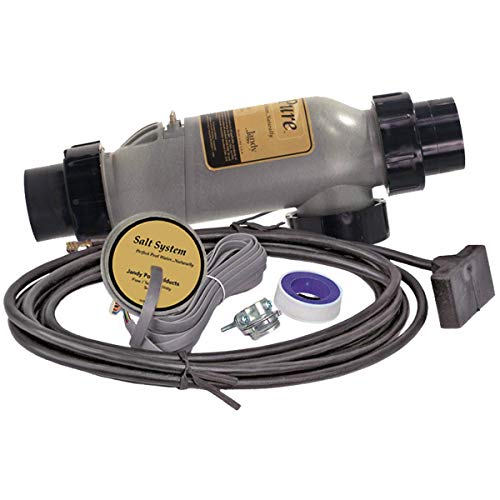
2. Zodiac AquaPure PLC1400 Cell Kit - Titanium Build Quality for Retrofits
Jandy Zodiac AquaPure PLC1400 PLC 1400 Saltwater Cell Kit Aqua Pure
Cell only with 3-port kit
90 degree plumbing flexibility
Multiple precious-metal coatings
+ Pros
- Solid titanium plates with layered metal coatings
- Automatic reversing cycle limits calcium buildup
- Three-port layout with 90 degree flexibility
- Larger unions and integrated sensor
- Cons
- No control unit included
- Costs more than basic above-ground plug-in units
Read the listing carefully before you add this to a cart, because this is a cell kit and not a complete system. Buyers consistently praise the build quality, and that praise is specific: solid titanium plates manufactured with multiple coatings of precious metals, which reviewers connect to both chlorine efficiency and longer cell life.
The three-port design is the part that wins me over for retrofits. With plumbing flexibility at 90 degrees and larger unions, the cell fits into tighter equipment pads and is easier to hand-tighten than a standard two-port cell. A sensor integrated into the third port also simplifies monitoring.
The automatic reversing cycle helps keep the cell free from calcium buildup, which matters more than most buyers expect. Scale is the leading cause of cell death in hard-water regions, and polarity reversal is the first line of defense before you ever open a bottle of muriatic acid.
Two constraints are worth naming. There is no integrated control unit, so you need a compatible panel already in place, and the total cost lands well above basic above-ground plug-in systems. If you are starting from nothing, this is the wrong box to buy. If you already own a compatible control unit and want to upgrade the cell only, it is exactly the right one.
Plumbing Flexibility on a Tight Equipment Pad
At 25 by 8.5 by 5 inches and roughly 8 pounds, this is a compact cell that does not dictate the layout of your pad. The three-port configuration means the inlet and outlet can be oriented to match your existing plumbing direction, which removes the need to move pipes or add elbows. For a retrofit in a cramped corner, that saves real labor.
Buyers who came from a failed OEM cell report the swap going smoothly, and the 4.2-star average across 464 reviews sits comfortably in the middle of the category with very few outlier complaints.
Who It Fits and Where It Falls Short
This is the pick for a pool owner who has a working control panel and wants a better cell, or for anyone replacing a worn cell while keeping a compatible existing system. The coating quality and reversing cycle justify the spend on a cell-only purchase.
Skip it if you need a complete, self-contained system. You would be buying a cell and then sourcing a control box, which costs more and complicates the warranty picture.
3. Solaxx Saltron Retro - The Easiest Above-Ground Install on This List
Solaxx Saltron Retro Salt Chlorine Generator | USA-Made | Above Ground Pool
No plumbing required, plug-and-play
Built-in timer, 3,000 ppm salt
Handles pools up to 20,000 gallons
+ Pros
- Plug-and-play with zero plumbing
- Built-in timer runs without the filter pump
- Users report big cuts in daily testing time
- Replaceable inner cell available
- Cons
- Internal timer drifts and needs periodic re-syncing
- Typical service life only 3-4 years
- Does not replace balance chemicals
- salt or acid
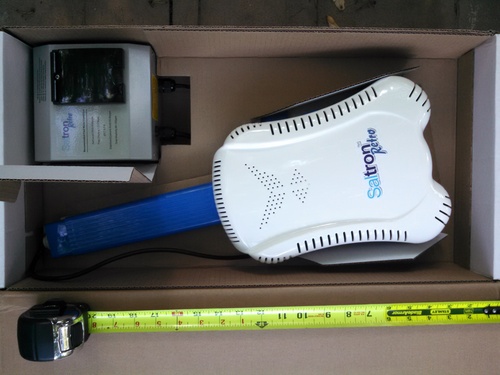
The Saltron Retro solves one problem better than anything else here: above-ground pools do not always have a plumbed return line you can cut into, and they usually do not have an equipment pad with electrical service. This unit hangs on the wall, plugs in, and starts working. Made in the USA, it has a 1-year manufacturer warranty and a replaceable inner cell designated CLG10A-010.
The built-in timer is the feature most owners did not expect to care about. Because it produces chlorine on its own schedule rather than only while the pump runs, you are not tied to filter runtime, which for an above-ground pool on a basic timer is a genuine advantage.
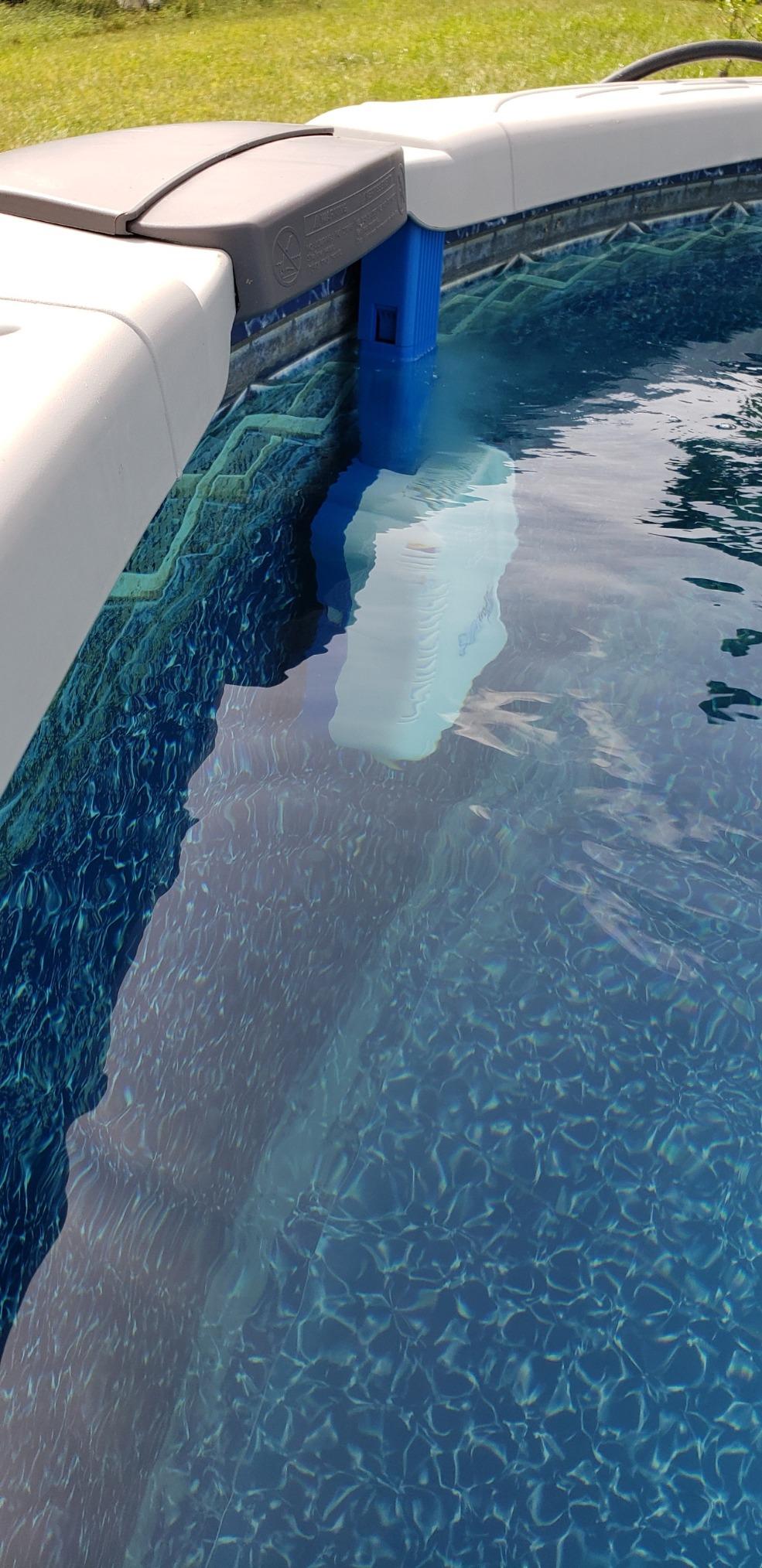
Owners consistently report major reductions in daily testing and chlorine handling time, and several treat it as a multi-year replacement unit rather than a one-off. The salt requirement is modest at about 3,000 ppm, and it handles pools up to 20,000 gallons.
The complaints are consistent enough to plan around. The internal timer drifts and loses a few minutes per day, so it needs periodic re-syncing. Typical service life is about three to four years before the inner cell is replaced. And it does not touch balance chemicals, salt, or acid, so a pool kit and a testing habit are still on your list.
Why Above-Ground Owners Love It
The install is genuinely plug-and-play. No unions, no cutting pipe, no electrician. At about 2 pounds, mounting it takes minutes, and because there is no plumbing to freeze or leak in winter, the freeze exposure that causes warranty disputes on hardwired systems simply does not apply here.
That simplicity is the whole value proposition. A 4.1-star average across 538 reviews tells you it is not the most refined unit, and it is not trying to be. It is the least complicated way to stop buying chlorine.
Who It Fits and Where It Falls Short
Pick it for an above-ground pool up to 20,000 gallons, especially if you want zero plumbing work and a USA-made unit with a simple replacement cell path. It is also a reasonable seasonal companion for a pool you only use part of the year.
Pass if you have a large in-ground pool, if you need remote monitoring or automation integration, or if a drifting timer sounds like an extra chore you do not want. For detailed diagnostics, the APX and WESTAHO units cover that ground better.
The Cell Replacement Reality
Budget for a replacement inner cell on a three-to-four-year cycle and the 1-year warranty is short by category standards. For a plug-and-play unit that is an acceptable trade because the failure mode is a scheduled consumable, not an electronics fire. Just do not confuse the two parts when something quits.
4. CircuPool RJ45+ - The Output and Warranty Champion
CircuPool RJ45+ Salt Chlorine Generator System | 45,000 Gallon Pool Max
Up to 1.9 lb chlorine per day
7-year limited warranty
Install it yourself without losing warranty
+ Pros
- Output rated at 1.9 lb chlorine per day
- Clear cell housing makes scale easy to spot
- OLED display gives clear status readouts
- DIY install does not void coverage
- Cons
- Control cover latch will not stay closed
- Rest or standby feature is poorly documented
- Cleaning cap sold separately
- No built-in user timer or app
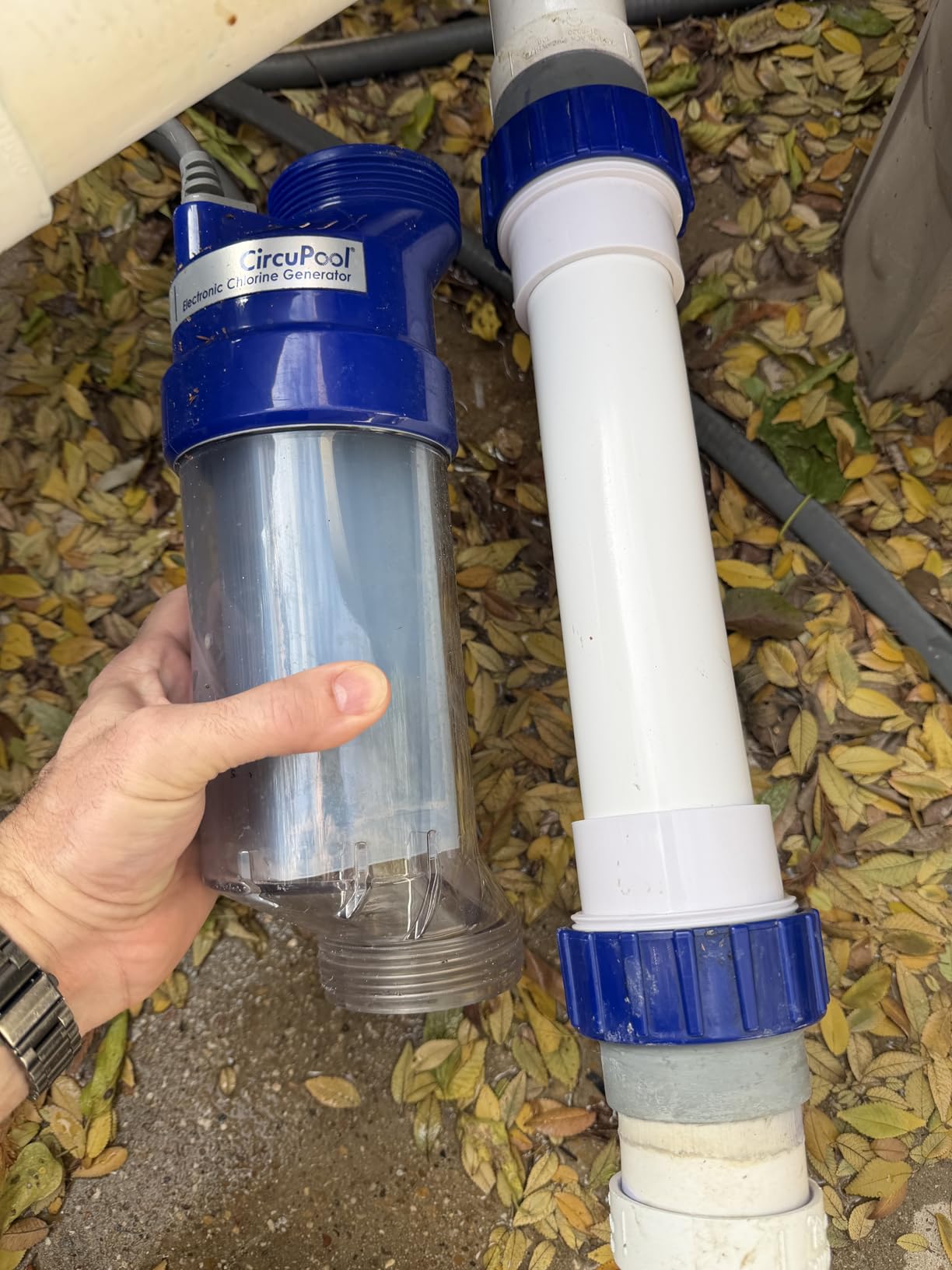
The RJ45+ pairs 1.9 pounds per day of chlorine output with a 7-year limited warranty, one of the strongest combinations in this roundup. The 4.5-star average is the top rating among the ten units, and owners install it themselves in roughly 30 to 60 minutes when the plumbing already fits. Crucially, CircuPool supports self-installation without sacrificing warranty coverage, which removes the single biggest risk in this category.
Third-generation RJ hardware has been around long enough that the platform is well understood, and the die-cast aluminum construction feels like a step up from plastic housings. The clear cell housing lets you inspect the plates without guessing.
Customer service is repeatedly praised for walking DIY installers through problems, which matters a lot for first-time salt owners. It works with 120V or 240V, fits virtually any existing pump and filter setup, and includes both 1.5 inch and 2 inch PVC fittings, so the plumbing side of the install is mostly decided before the box arrives.
Not everything is polished. The plastic control cover latch will not stay closed without a workaround. The rest or standby cell feature is poorly documented and looks like a fault the first time you see it. The cleaning cap is not included and must be bought separately, which makes descaling wasteful without it. And despite an embedded controller, there is no built-in user timer or wireless monitoring, so scheduling still needs an external timer.
Output and Sizing Headroom
With 1.9 pounds per day, this is the unit you pick when chlorine demand is the concern: hot climate, heavy bather load, or a large pool. A 45,000 gallon variant also exists, so this chassis covers the upper residential range. Owners cite clear water results and sturdy construction more than any other specific praise.
Output headroom matters because an undersized cell pinned at 100 percent burns out dramatically faster. If your pool is anywhere near the middle of a rated range, you want the ceiling, not the ceiling of a smaller unit.
Who It Fits and Where It Falls Short
Choose the RJ45+ for large in-ground pools, high chlorine demand, and installers who want a long warranty without hiring a dealer. The 7-year term and DIY-friendly terms make it the most complete risk profile here.
It is not the right pick if you want app control, a built-in timer, or a system that drops into an existing Hayward plumbing footprint without adaptation. Check your cell compatibility first.
5. EverCrystal ECSCG10DA - The Most Helpful Screen in the Budget Tier
Salt Chlorine Generator, Salt Water System for Above Ground Pool
AI mode auto-adjusts production time
Digital panel shows salt needed in pounds
Polarity reversal every 8 hours
+ Pros
- Digital panel tells you how many pounds of salt to add
- AI mode adjusts output from size
- salt and temperature
- Polarity reversal every 8 hours limits scale
- Fits common 1.25 inch and 1.5 inch hose lines
- Cons
- Some units stopped responding within days with a false flow fault
- Flow fault can trigger while water is clearly moving
- Long-term cell durability is unproven after one season
The EverCrystal's distinguishing feature is that it removes the math. The digital control panel reports diagnostics and tells you how many pounds of salt to add, which is exactly the step most first-time salt owners get wrong. Getting salinity to the right range is the number one cause of a new cell producing nothing.
Its AI mode automatically adjusts production time based on pool size, salinity, and temperature readings, so the unit is doing the seasonal thinking for you. A manual mode is there when you want direct control.
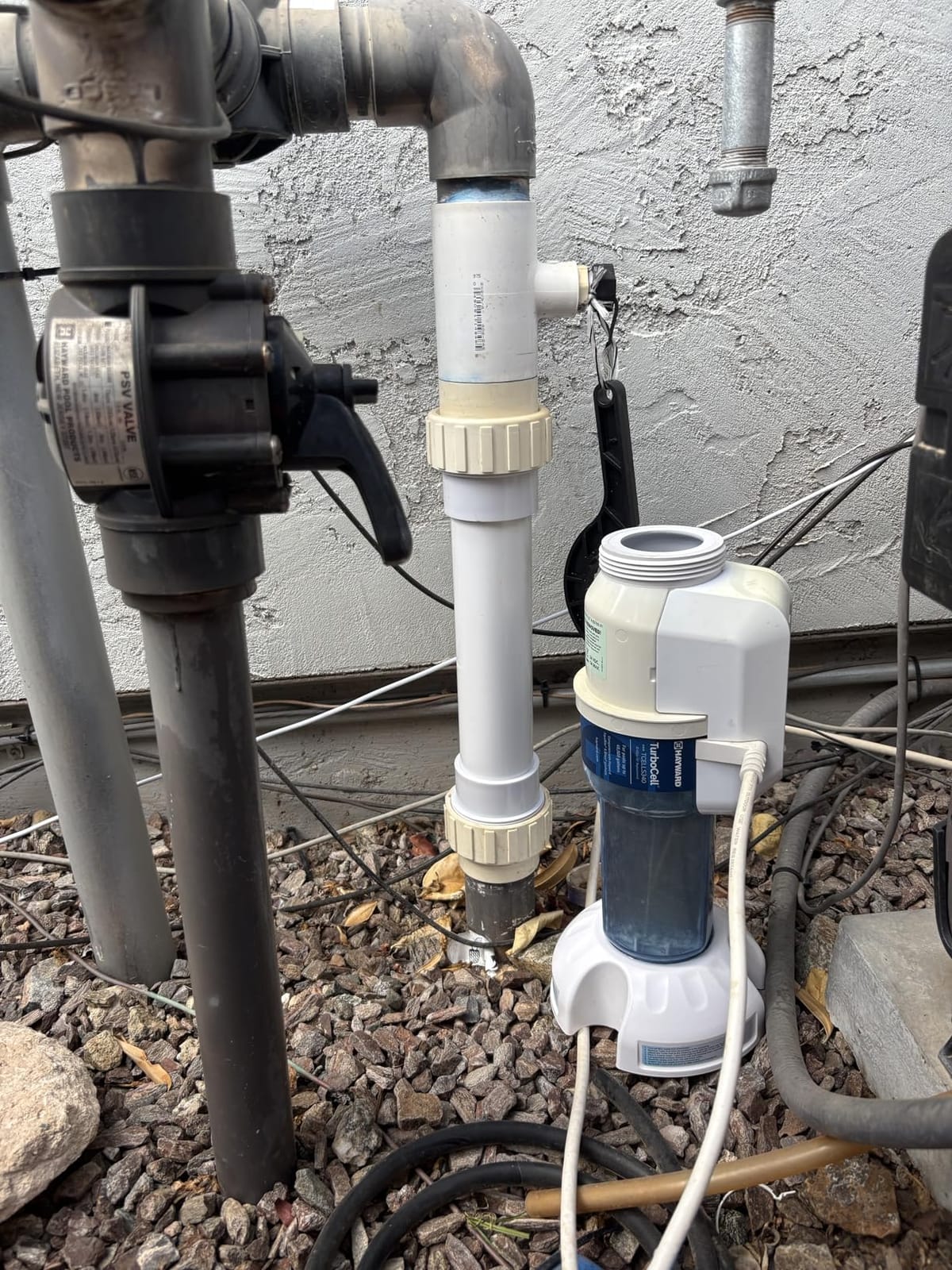
The self-cleaning cycle reverses polarity every 8 hours to slow scale buildup, and a child lock is built in. It fits inner and outer hose diameters of 1.25 inch and 1.5 inch, which covers most above-ground setups, and it sets up quickly. A 4.4-star average across 102 reviews puts it among the better-rated units in the roundup.
The caution is real. A minority of units stopped responding after only a couple of days, with a false flow fault and dead buttons, and buyers report the flow fault triggering even when water is clearly moving through the cell. Long-term cell durability is simply unproven for owners of a single season, and the review base is small enough that a pattern like that matters.
Why the Salt Readout Changes Everything
Salt calibration is the step that trips up new salt pool owners. Too little salt and the cell produces little or nothing; too much and it runs hot and wears faster. A panel that reports the deficit in pounds removes the single most common failure reason from the equation.
This is why I rank it as best value despite the small review base. The feature set, screen quality, and self-cleaning interval are usually found on pricier units, and the practical effect is fewer wasted cells.
Who It Fits and Where It Falls Short
Buy it for an above-ground pool up to 15,000 gallons, for anyone who wants informative readouts without an app, and for owners who want the salt math done for them. It is also a practical bypass or replacement component in some existing setups.
Look elsewhere if you need a large in-ground system, a long warranty, or proven multi-season cell durability. If reliability history is what you are buying, this is not it.
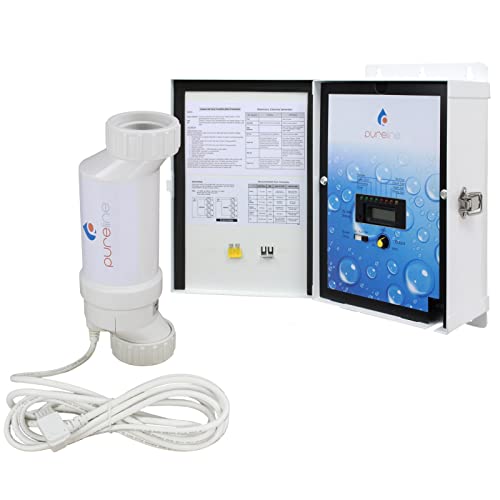
6. Pureline Crystal Pure PL7700 - The Drop-In Value Play
Pureline Crystal Pure Salt System, PL7700, Universal Pool Salt Chlorination System, Includes Control...
Up to 2.1 lb chlorine per day
RJ-35 style drop-in cell and flow switch
1 year warranty, 50F to 140F range
+ Pros
- Cell and flow switch drop into RJ-35 style plumbing
- Often cited as a cost-effective alternative to premium brands
- Clear digital readouts with adjustable output
- Two-hour DIY conversion reported
- Cons
- Only a 1-year warranty
- Thin instructions and no wiring cable included
- Support reported as unresponsive
- Cell cost can approach a whole competing unit
The Pureline is the value story of this roundup. The cell and flow switch are drop-in equivalents of the widely used RJ-35 type, so conversions from CircuPool, Gold Line, or AquaRite systems come apart and go back together without touching the plumbing. Owners report completing a two-hour DIY conversion and saving roughly half what a premium-brand system costs.
Chlorine production of up to 2.1 pounds per day is the highest published figure in this list. The control panel has digital displays, LED indicators, adjustable output, self-cleaning, a super chlorination mode, a water flow detector, and low-sodium and overload indicators.
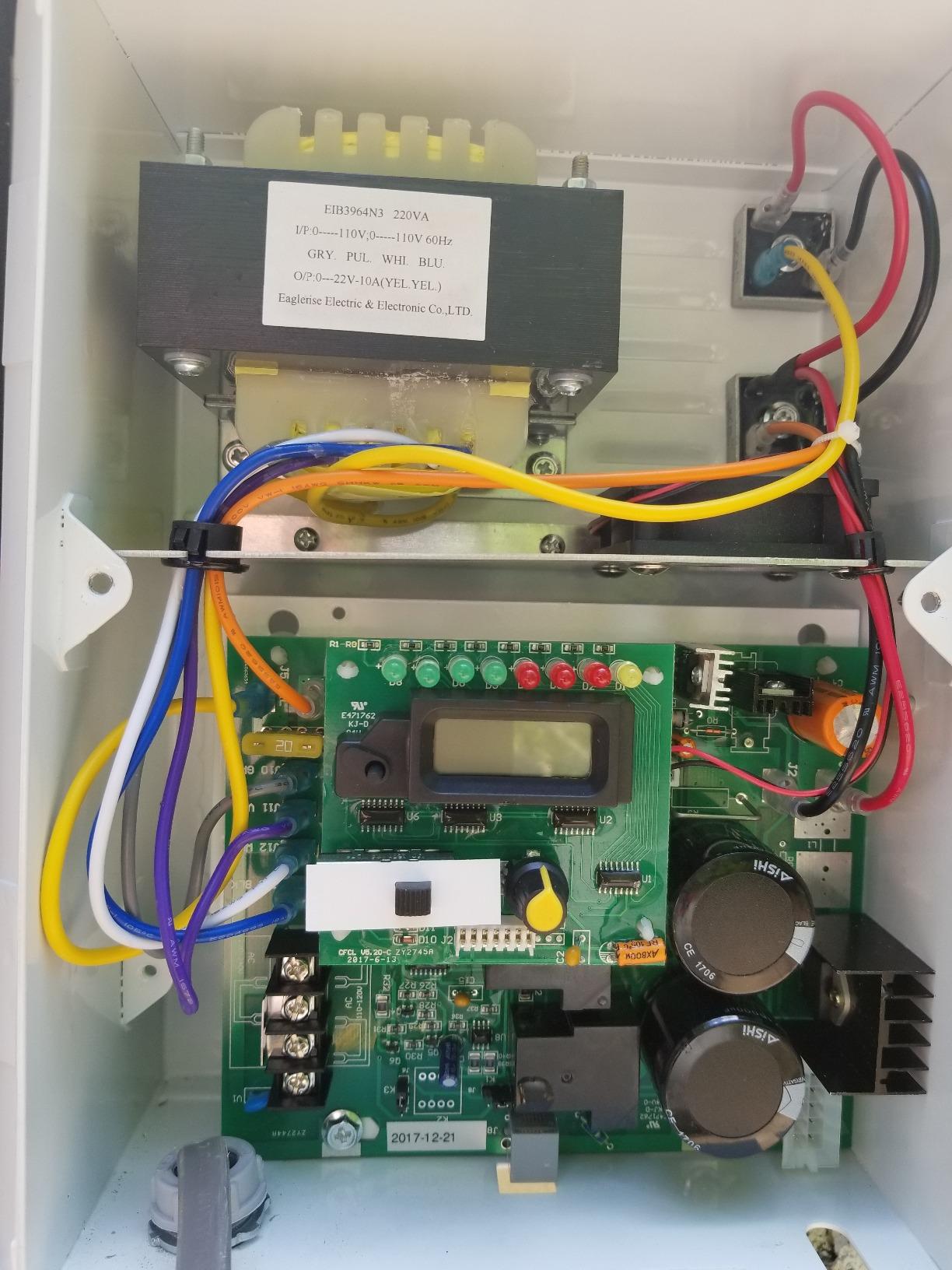
It ships as a 240V application with a jumper change for 120V, works from 50 to 140 degrees Fahrenheit, and is compatible with INYO. At a 4.4-star average, the ratings reflect satisfied buyers rather than complaints about water quality.
The 1-year warranty is the headline drawback, and owners consider it too short for the price. Instructions are thin, the unit does not include a wiring cable for a timer connection, and support has been reported as unresponsive to some failure reports. A cell replacement can also approach the cost of an entire competing unit, which erodes the value story over time.
Output and Feature Depth
With up to 2.1 pounds per day and a 40,000 gallon variant, this covers large pools and demanding climates. The super chlorination mode is a nice addition for shock treatment, and the flow detector gives you early warning when something in the plumbing has changed.
Low energy consumption is claimed, which matters if you are running the cell on a long schedule. Energy use over a season is a real line item people forget when comparing systems.
Who It Fits and Where It Falls Short
Choose the Pureline when your existing cell is RJ-35 style, when budget matters more than warranty length, and when you are confident in basic plumbing work. The drop-in path is the entire appeal.
Pass if you want a long warranty, thick documentation, or responsive support when something fails. The 1-year term is the trade you make for the price, and it is a real trade.
7. APX Performance E-CHLOR - The Compact Plug-In With Genuine Sensors
E-CHLOR Plug-in Salt Chlorine Generator | 32,000 gal Max | APX Performance
Plug-in all-in-one design, up to 32,000 gallons
Tracks salt, temperature, scaling and cell life
3-year manufacturer warranty
+ Pros
- Compact plug-in install is two unions and a 110V outlet
- Cleaning plug included
- Works well at mid output on smaller pools
- Sensors give actionable alerts
- Cons
- Power cord is short
- Needs an external timer to control run windows
- Output must be tuned down if starting chemistry is off
The E-CHLOR packs more instrumentation into a small housing than anything else at this tier. Multiple smart sensors independently track salt level, temperature, cell scaling, and cell lifespan, and the alerts are specific and actionable rather than bare error codes. For a first-time salt owner, that difference is worth more than raw output.
Installation is the other headline. The compact plug-in design comes with an accurate cut template, so the whole job is two unions and a 110V outlet. The 3-year manufacturer warranty is longer than most plug-in units carry, and the cleaning plug is included.
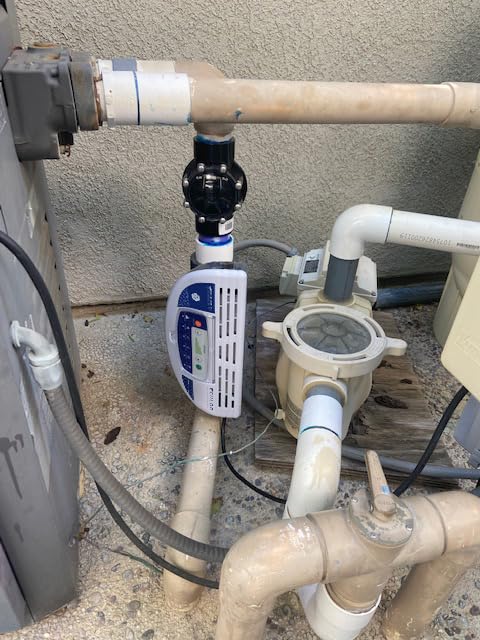
Buyers who switched from a failed Pentair IC40 call the install and monitoring excellent and report crystal-clear water at mid output. It is stated to run up to 15 percent more powerfully than other compact salt chlorinators, and it works with variable-speed pumps and in winter conditions, which is more than most compact units claim.
The nits are practical. The power cord is short and may not reach a panel-mounted outlet, so plan your mounting point before you drill. You need an external timer if you want to control run windows. And if your starting chlorine chemistry is off, you have to tune the output down or it will over-chlorinate. As a newer product with a smaller review base, it has no long-term track record yet.
Variable-Speed Pump and Winter Compatibility
Two claims matter for a broad group of owners. Variable-speed pump compatibility means the cell can be installed on a modern efficient pump setup without the flow switch reading low. Winter operation means it is designed to keep working in cold shoulder seasons rather than cutting out entirely.
Neither claim replaces a low-temperature cutoff on an extreme winter, but both widen the usable season compared with units that only function when the pump is running at full speed.
Who It Fits and Where It Falls Short
Buy it for a mid-size in-ground or above-ground pool up to 32,000 gallons, for anyone who wants a true DIY install with a cut template, and for owners who want cell scaling and lifespan tracked rather than guessed. The 3-year warranty is among the longest offered on a plug-in in this roundup.
Pass if you need app control, a built-in timer, or a proven service history. A 4.5-star average across 54 reviews is encouraging but small.
8. Fengind 15,000 Gallon Chlorinator - App Control for Smaller Above-Ground Pools
Fengind Salt Water Chlorinator Above Ground Pool up to 15000 Gallons
Wi-Fi app remote control
Polarity reversal every 8 hours, cleaning icon at 500 hours
2 inch or 1.5 inch pipe adapters
+ Pros
- App gives temperature and salinity readings with low-flow alerts
- Output is strong enough to run at 50 percent
- A fraction of the cost of premium inline cells
- Polarity reversal reduces electrode scale
- Cons
- Scale can shut the unit off after several 10-hour filter runs
- Cleaning solution is an ongoing cost
- Will not run until set up through the app
- Support can be hard to reach
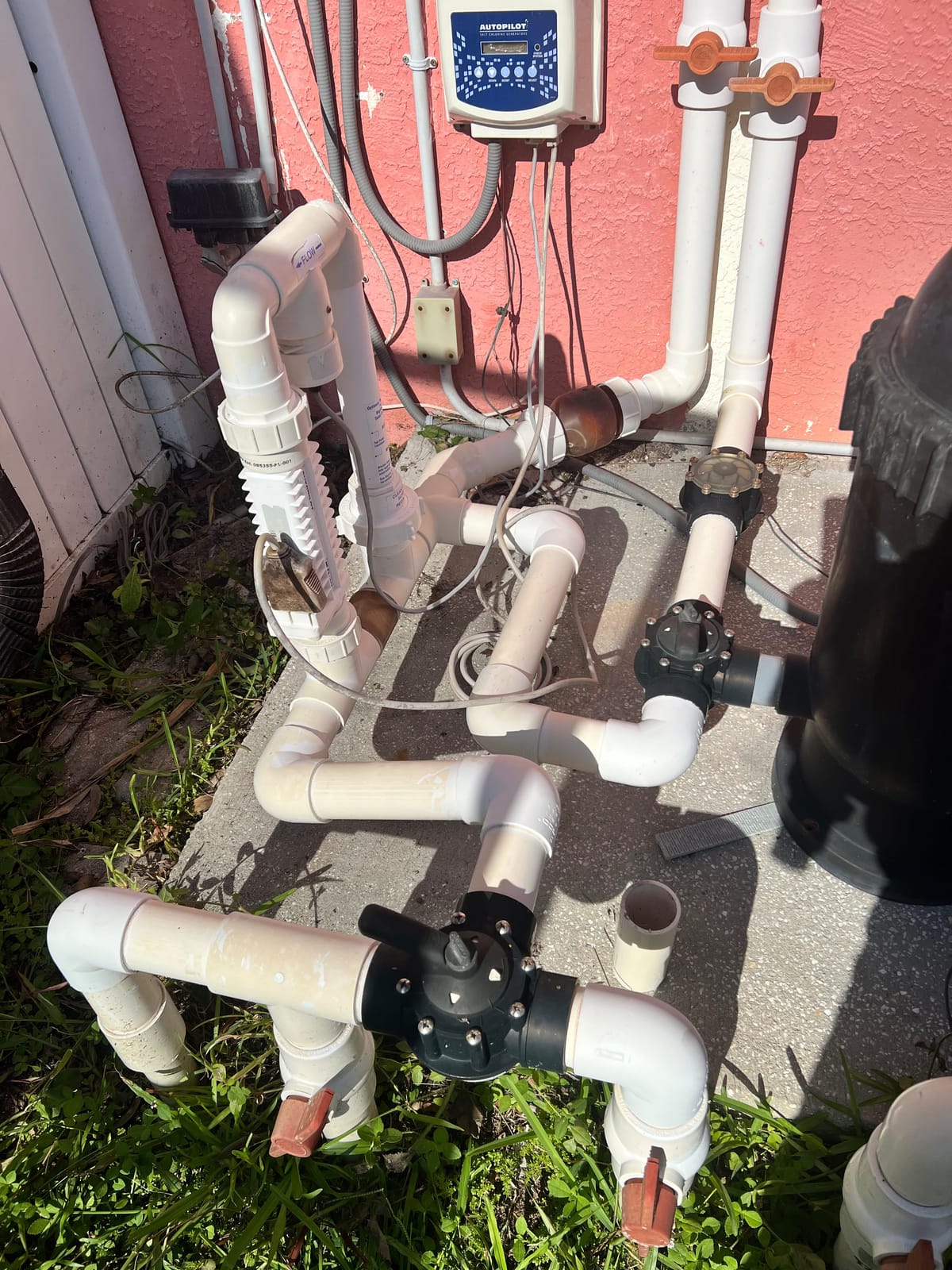
This unit puts live telemetry on your phone. The Wi-Fi app lets you monitor and adjust chlorine level, run time, and cleaning schedules remotely, and it reports water temperature and salinity readings along with low-flow alerts. For a second home or a pool you use on a schedule, that visibility is the feature you are actually paying for.
Chlorine output is strong enough that owners often run it at 50 percent, which extends cell life. Self-cleaning titanium plates reverse polarity every 8 hours of operation, and a cleaning icon appears after 500 hours so you know when to look at the plates.
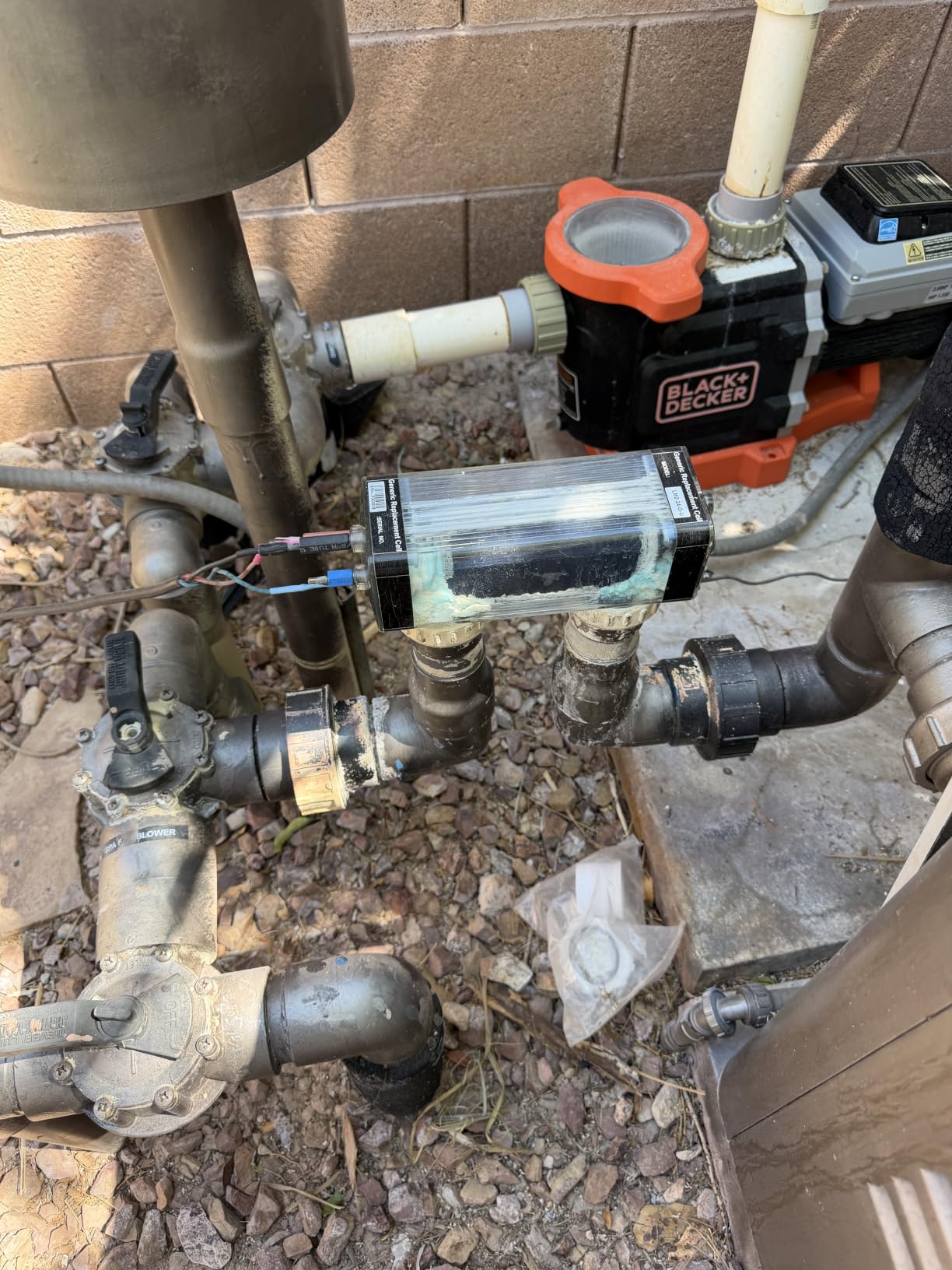
Two pipe interface options are included, a 2 inch adapter for 60.3mm PVC or a 1.5 inch adapter for 48.3mm PVC, so verify your pipe size before you buy. A 40,000 gallon variant exists, and the service period is 2 years.
The recurring complaint is scale. Reviewers report buildup can shut the unit off after only several 10-hour filter runs, which means frequent cleaning, and cleaning solution is an ongoing cost. The unit also will not run until it is set up through the app, which requests personal information. One buyer received a unit with a faulty flow sensor out of the box, and some users report difficulty reaching the manufacturer.
App Control and the Scale Trade-Off
Remote monitoring solves the problem where you find out about a fault days after the water has started to go. Low-flow and salinity alerts turn a silent failure into a notification. That is genuinely useful at a distance.
What the app cannot do is prevent calcium scale on the plates. With polarity reversal every 8 hours and a 500-hour cleaning icon, expect to be soaking the cell more often than you would with a larger commercial-style system. Budget for that in your ownership math.
Who It Fits and Where It Falls Short
Choose it for a smaller above-ground pool up to 15,000 gallons, for travel-owned or vacation-home pools, and for owners who want app visibility more than long cell life. Chlorine punch per dollar is its strongest argument.
Pass if you dislike app-gated setup, if you cannot get your hands dirty with cell cleaning regularly, or if support responsiveness matters to you.
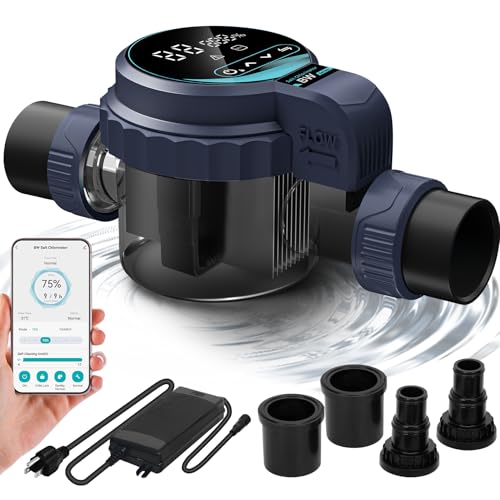
9. Fengind 26,500 Gallon All-in-One - Compact Housing, Modest Output
Salt Chlorine Generator for Pools up to 26,500 Gallons with App Control
All-in-one control unit and cell
1.1 lb per day chlorine output
Tri-sensor monitoring with auto-shutdown
+ Pros
- All-in-one housing removes the extra box and wiring
- Standard and Boost modes with memory
- Tri-sensor monitoring with auto-shutdown
- Child lock and surge protection
- Cons
- Smallest output in the roundup at 1.1 lb per day
- Output adjustment tops out at 100 percent
- Requires pipe size verification before purchase
- 4.0 star rating with a 14 percent share of one-star reviews
The all-in-one design is the reason to consider this unit. The control unit and the electrolytic cell live in one housing, which removes the extra box, the extra wiring, and the wall space a split design needs. For a tight equipment area, that is a real advantage.
Protection features are unusually thorough. Tri-sensor monitoring of salinity, temperature, and flow triggers auto-shutdown below 10C or at low salt, and there is a child lock, voltage surge protection, and audible alarms. The IPX5 waterproof rating suits a permanent outdoor post.
The app offers Standard and Boost modes with a memory function that retains settings across seasonal changes, plus output adjustment from 25 to 100 percent. Self-cleaning titanium plates reverse polarity at 4, 8, or 12 hours. Fits 1.5 inch (50mm) or 1.25 to 1.5 inch (32mm to 38mm) pool pipes, with 3-year service.
Chlorine output of 1.1 pounds per day across a 10C to 42C range is the lowest in this roundup, so larger pools need longer run times. Output adjustment caps at 100 percent, which limits headroom in high chlorine demand. Pipe size has to be verified before purchase to guarantee a watertight fit. It also carries a 4.0 star rating, with a 14 percent share of one-star reviews, which is a fair signal to weigh.
Output Ceiling and What It Means for Sizing
With 1.1 pounds per day, this unit suits a pool where the daily demand is modest. On larger pools the fix is longer run time rather than a bigger unit, which increases the hours the cell spends energized and can shorten its life.
Auto-shutdown below 10C is a genuine protection feature, but it also means the system produces nothing in genuinely cold water. Pool owners in cold climates should think about whether they need winter chlorine support at all.
Who It Fits and Where It Falls Short
Choose it when space is tight, when you want everything in one weatherproof housing, and when your pool is small enough that 1.1 pounds per day is enough. The memory function is a genuine convenience for seasonal pools.
Pass for large pools, hot high-demand climates, or anyone who wants headroom above 100 percent output. There are better options for those, including the Pureline and the CircuPool.
10. WESTAHO EL-032 - The Most Detailed On-Screen Diagnostics
Salt Chlorine Generator, Westaho Pool Salt System for Inground Pools Up to 40,000 Gallons, 1.4 lb...
Real-time salt, temperature, cell usage, voltage and current
Built-in power supply, no external box
1.4 lb per day, pools up to 40,000 gallons
+ Pros
- Integrated power supply removes the separate control box
- Panel reports voltage and current in real time
- Cell rated up to 10000 hours
- IP66 housing with magnetic flow switch
- Cons
- Automatic shutdown below 52F stops cold-season production
- 4.0 star rating with a 21 percent share of one-star reviews
- Newer brand with limited long-term history
- No app monitoring despite detailed readouts
The WESTAHO EL-032 shows more diagnostic data than anything else here, and for a buyer who wants to understand their system rather than just turn it on, that is the appeal. The smart display panel shows real-time salt levels, water temperature, cell usage, voltage, and current, which is exactly the information you need when a cell starts to fade.
Because the power supply is built in, there is no separate control box, which simplifies wiring considerably. Chlorine output is 1.4 pounds per day for pools up to 40,000 gallons, and the housing carries an IP66 waterproof rating for permanent outdoor mounting.
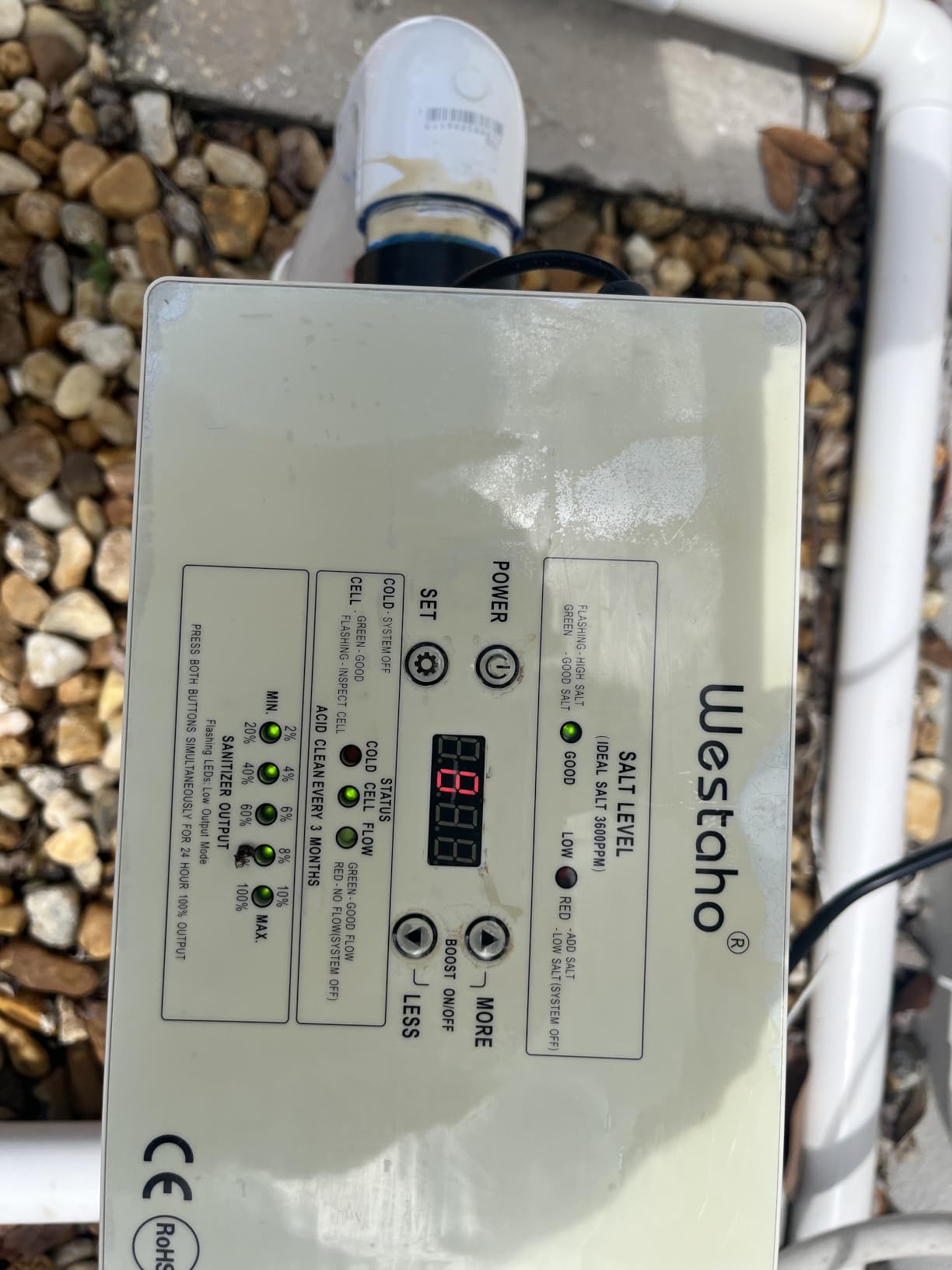
The cell is rated at up to 10,000 hours, which the listing converts to roughly seven years, across 11 USA-made titanium cells. The magnetic flow switch is described as more sensitive and durable than mechanical switches, and a 2 inch to 1.5 inch adapter is included for standard 2 inch pipe.
The trade-offs are real. Automatic shutoff below 52F interrupts chlorine generation for cold-season pools. This is the smallest review base in the roundup, and 21 percent of its ratings are one star. It is a newer brand with limited long-term field history to validate the seven-year cell claim. And despite the detailed on-screen readouts, there is no app monitoring and no built-in user timer.
Voltage and Current: The Numbers That Diagnose a Cell
Most control boxes only tell you chlorine is or is not being produced. A panel showing voltage and current at the cell lets you distinguish a scaled cell, a failed flow switch, and a dead board without opening anything. That is the working diagnostic that experienced owners rely on.
If a cell reads normal voltage and current but the water test shows no chlorine generation, the plate is spent. If voltage reads zero, look at the flow switch and the connections first. Having those numbers on screen saves an afternoon.
Who It Fits and Where It Falls Short
Choose it for large in-ground pools up to 40,000 gallons, for owners who want real diagnostics on the panel, and for anyone who would rather not wire a separate control box. The built-in power supply is a genuine install advantage.
Pass if you need cold-season production, a long field history, or app-based remote control. And read the one-star feedback before you buy, because a 21 percent one-star share is substantial and a newer brand cannot offer a track record to put it in context.
How to Choose the Right Saltwater Chlorine Generator
Size up, not to the edge of the range. The common rule of thumb is to rate a system at 1.5 to 2 times your actual pool volume. A 20,000 gallon pool running a 15,000 gallon unit sits at 100 percent output permanently, and cells held at maximum burn through their rated life dramatically faster. If you are choosing between two sizes, take the larger one, especially in a hot climate or a home with heavy bather use.
Match the unit to your pool type, not just your gallons. Above-ground pools frequently have no plumbed return line to cut into, and in-ground pools almost always do. That single fact decides between a plug-and-play unit like the Saltron Retro and a hardwired, plumbed system like the AquaRite or the CircuPool. Buying an in-ground system for an above-ground pool means fittings you cannot use.
Read the output number, not just the gallon rating. Chlorine output in pounds per day is the only figure that tells you how hard the cell is working. Two units rated for the same 40,000 gallons with 1.1 and 2.1 pounds per day are very different machines in a summer. More output means shorter daily run times and a longer cell life.
Check the warranty for DIY language first. This is the most consequential line of fine print in the category. Some manufacturers support self-installation with no penalty, which is what you want. Others tie coverage to an authorized-dealer installation, and buyers have reported warranty service being declined for that reason. CircuPool explicitly supports DIY installation without losing coverage; other brands make it a condition.
Look for self-cleaning and a flow switch you can trust. Automatic polarity reversal slows calcium scale, which is the leading cause of cell death. A bi-directional or magnetic flow switch is more reliable than a basic mechanical one. If a unit also includes a cleaning plug, you can descale the cell without wasting solution.
Factor in the control box separately from the cell. Control boxes commonly last 7 to 15 years, cells 3 to 7. Buying a unit with a strong cell and a weak electronics package can be a worse deal over ten years than a moderate unit with both covered.
Protect metal before you add salt. Salt at 3,000 ppm is corrosive to metal over time. Zinc anodes, fresh bonding, and attention to soft stone coping, light fixtures, and metal ladders should happen before conversion, not after you see corrosion. Our walkthrough on how salt attacks metal over time is worth reading before you pour in the bag. A salt system will also raise pH, so plan for more frequent acid dosing than you did on tablets.
Do You Need a New System, or Just a New Cell?
This is the biggest money mistake in the category, and it comes up constantly on owner forums. Owners assume that when a salt system stops producing, the whole unit is finished, when in most cases only the titanium cell has died. Cell-only replacement typically saves 50 to 70 percent of the cost of a full system swap.
Run through this sequence. Read the control box output percentage first, because a reading below 75 percent is the standard threshold that experienced owners use to flag a cell for replacement. Then check that salt is in the 2,800 to 4,500 ppm range, since a new cell in low-salt water will produce almost nothing and looks broken. Confirm the flow switch is reading flow, then inspect the plates by removing the unions.
If the plates are scaled but intact, a soak in muriatic acid often restores function. If the plates are physically eroded, pitted, or shedding, the cell is done and the control box can stay.
Salt Cell Troubleshooting: What the Readouts Actually Mean
When something goes wrong, the readouts tell you where to look. A control box showing under 75 percent output points at the cell. A flow fault with water clearly moving through the cell points at the switch, the impeller, or the sensor. A low-salt or low-temperature shutdown means the system is protecting itself and the cell is fine.
New cells that produce nothing usually share three causes. Salt is not yet at the correct concentration, the cell was installed without a flow switch or with a switch that never opened, or there is no voltage reaching the cell because of a wiring or board problem. Check those in order, cheapest first.
Scale deserves its own note. If a cell has been sitting in hard water without reversal cycles or a cleaning plug, soak it in muriatic acid as the manufacturer directs, rinse thoroughly, and reinstall. Owners running units in high-demand conditions report that scale forces cleaning far more often than the manufacturer suggests, so factor cell cleaning supplies into your budget from day one. Our routine for washing salt-exposed gear down properly works just as well on pool fittings and cell unions.
And in winter, remember the cutoff. Most systems stop producing below roughly 50 to 52 degrees Fahrenheit to prevent crystallization. If your chlorine drops in cold weather and the display shows a temperature shutdown, that is correct behavior, not a failure.
Frequently Asked Questions
Is a salt chlorine generator worth it?
A salt system is worth it for owners who travel, dislike carrying chlorine, or want gentler water on skin and eyes. It removes daily dosing but not water testing, pH adjustment, or cell replacement. The control box commonly lasts 7-15 years while the titanium cell is a consumable lasting 3-7 years, so budget for roughly two cell changes over a decade.
How long should a salt chlorine generator last?
Split the answer in two. The control box, which is the sealed electronics unit, typically lasts 7 to 15 years. The titanium cell, the plumbed part with the plates, lasts 3 to 7 years and is designed to be replaced. Replacing the cell alone instead of the whole system usually saves 50 to 70 percent, and it is the most common repair in the category.
How do you know if a salt cell is not working?
Start with the output percentage on the control box. A reading below 75 percent is the standard threshold that indicates the cell needs attention. Then confirm salt sits between 2,800 and 4,500 ppm, verify the flow switch is reading flow, and inspect the plates after undoing the unions. Scale can often be cleaned with a muriatic acid soak; erosion means replacement.
Why is my new salt cell not producing chlorine?
The three usual causes are low salt, a flow switch that never opened, and no voltage reaching the cell. A brand new cell in under-salinated water will produce almost nothing. Check the salt reading first, then confirm flow, then test for voltage at the cell. A low-temperature shutdown below roughly 50 to 52 degrees Fahrenheit also stops production by design.
Can I install a salt chlorine generator myself?
It depends on the design. Plug-in all-in-one units need two unions, a cut template, and a 110V outlet, which most owners can handle. Plumbed, hardwired systems need a return-line cut, a flow switch sized to the pipe, and a properly located control box, which is a weekend job or a plumber call. Crucially, check the warranty first, because some manufacturers tie coverage to an authorized-dealer install.
Final Verdict
If you want the installed-base standard and zero compatibility headaches on a large in-ground pool, the Hayward AquaRite is the pick, and its 994-review base is the deepest evidence base in the category. If you want maximum chlorine output with a warranty that survives a self-install, take the CircuPool RJ45+ at up to 1.9 pounds per day and seven years of coverage. If you are replacing an RJ-35 style cell on a budget, the Pureline PL7700 saves the most and drops straight into the plumbing.
For an above-ground pool with no plumbing, the Solaxx Saltron Retro is the least complicated route, and the EverCrystal wins if you want the salt amount shown to you in pounds. If diagnostics are what interest you, the WESTAHO EL-032 displays voltage and current in real time, and the APX E-CHLOR tracks cell scaling and lifespan. Travel-owned pools get the most from the Fengind 15,000 app control.
Whichever of the best saltwater chlorine generators for home pools you choose, get the salt concentration right before you judge the cell, and remember that you are buying a cell, not just a box. Check the current price on any of these units, then start protecting your metal fittings before you pour in the salt.