
10 Best Sand Anchors (September 2026)
If you have ever watched your kayak or pontoon drift away while you waded a sandbar, you already know why finding the best sand anchors matters. Standard anchors slip and drag across loose sand, leaving you chasing your craft or worse, stranded. After testing sand anchors across beach conditions, shallow flats, and tidal zones, our team put together this roundup to help paddle sports enthusiasts and boaters find dependable holding power.
Sand anchors solve a problem regular anchors cannot. Sand shifts, flows, and provides almost no grip for thin stakes or lightweight hooks. The right sand anchor for your boat, kayak, or paddle board digs deep, creates suction or mechanical lock, and holds firm even when wind picks up or the tide changes.
For paddle sports specifically, you also need something portable. If you carry your gear on a beach cart for sand launches, a heavy galvanized fluke anchor is not practical. Our comprehensive guide to kayak anchors covers similar ground for mixed bottoms, but this article focuses purely on sand performance.
In this guide we cover 10 tested sand anchors for 2026, break down the four main anchor types, and help you match the right model to your craft, your beach, and your budget.
Our Top 3 Tested Sand Anchors for 2026
Before diving into all 10 products, here are the three sand anchors that stood out across our testing. We evaluated holding power, ease of deployment, material quality, and value for money.
The SandShark Supersport 3.0 earned our top spot for its adjustable auger design that creates genuine suction in sand. The Young Marine Galvanized Fluke Kit won best value because it ships as a complete package with rope, chain, and shackles. The X-Float Dock Auger took the budget pick at a fraction of the cost of competing auger anchors.

SandShark Supersport 3.0
- Adjustable 29-48 inch auger
- Aircraft-grade aluminum
- Suction holding in sand
- Includes padded case
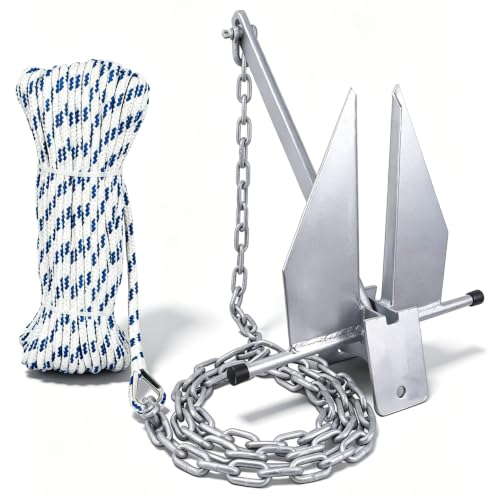
Young Marine Galvanized Fluke Kit
- Complete kit with rope and chain
- Hot-dipped galvanized
- For boats 12-32 ft
- Holds firm in sand
Comparing the Best Sand Anchors at a Glance
Use this quick comparison to scan all 10 sand anchors side by side. Each entry highlights the core features that matter most for paddle sports and boating use.
| Product | Key Specs | Action |
|---|---|---|
| SandShark Supersport 3.0 |
|
Check Latest Price |
 SandShark Lite Series Pole SandShark Lite Series Pole |
|
Check Latest Price |
 SandShark New Sport SandShark New Sport |
|
Check Latest Price |
 SandShark Premium Fluke SandShark Premium Fluke |
|
Check Latest Price |
 SandShark Premium Screw-In SandShark Premium Screw-In |
|
Check Latest Price |
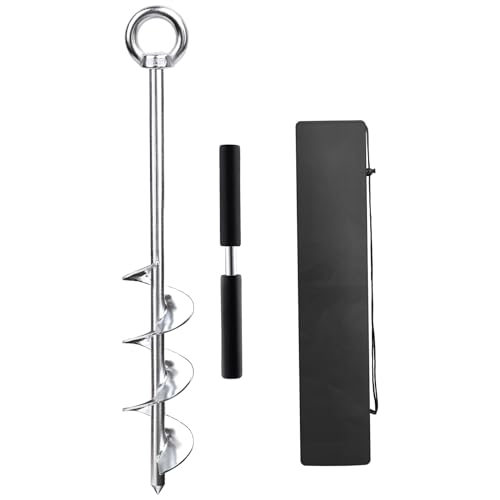 Abimars 17-Inch Auger Abimars 17-Inch Auger |
|
Check Latest Price |
| Young Marine Galvanized Fluke Kit |
|
Check Latest Price |
| X-Float Dock Auger |
|
Check Latest Price |
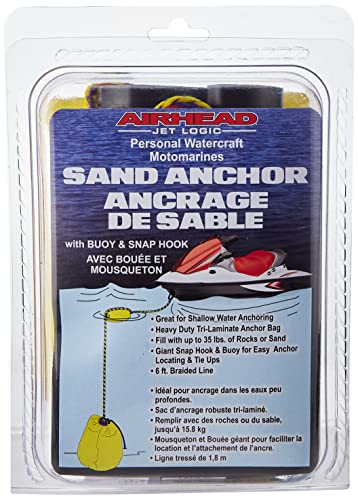 Airhead PWC Sand Anchor Airhead PWC Sand Anchor |
|
Check Latest Price |
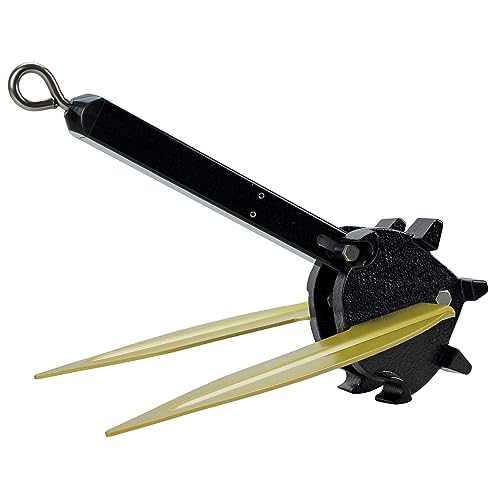 Extreme Max BoatTector Digger Extreme Max BoatTector Digger |
|
Check Latest Price |
Sand Anchor Types Explained: Fluke, Auger, Scoop, and Sandbag
Understanding the four main sand anchor types helps you pick the right tool for your conditions. Each type works differently and excels in specific scenarios.
Fluke Anchors (Danforth Style)
Fluke anchors use pivoting flat blades that dig into sand when pulled. They are the most common traditional boat anchor for sandy bottoms. The flukes bury themselves deeper as tension increases, which means they hold harder the more your boat pulls against them.
Flukes work best in soft to medium sand and are ideal for pontoon boats, fishing boats, and larger paddle craft. They need a chain and adequate scope ratio (the ratio of anchor line length to water depth) to set properly.
Auger and Screw-In Anchors
Auger anchors screw into the sand like a corkscrew, creating mechanical grip through the helical blade. They are the most popular choice for shallow water sandbar anchoring because they hold in multiple directions and resist wind shifts.
Paddlers love augers for kayaks and paddle boards because they are lightweight and portable. The main limitation is that augers can strip out in very loose dry sand or if the wind direction changes suddenly without resetting.
Scoop and Plow Anchors
Scoop anchors plow into the sand and self-bury under load. They combine features of fluke and claw designs. Scoop anchors set quickly and hold well in sand and mud mixtures.
These anchors are common on mid-size boats and work well when bottom conditions vary between sand, mud, and gravel. They are heavier than augers but offer reliable performance in mixed conditions.
Sandbag Anchors
Sandbag anchors use weight rather than mechanical grip. You fill them with sand or rocks at the beach, creating a heavy anchor that holds through pure mass. When you leave, you empty the bag for easy transport.
Sandbags are the lightest option to carry and work well for jet skis, paddle boards, and beach umbrellas. The tradeoff is they can shift in strong currents or waves, and the drawstring can come open in rough conditions.
1. SandShark Supersport 3.0 - Best Overall Sand Anchor for Versatile Use
SandShark Supersport 3.0 Shallow Water Anchor — Holds Boats Up to 24 Feet & Jet Skis in Saltwater...
Adjustable 29-48 inch auger
Aircraft-grade aluminum
1.68 kg
Neon green with case
+ Pros
- Strong suction holding in sand
- Aircraft-grade aluminum build
- Adjustable length 29-48 inches
- Collapsible handles
- Includes padded nylon case
- Cons
- May not hold in rocky substrates
The SandShark Supersport 3.0 is the sand anchor I reach for first when heading to a sandbar. Its auger design creates genuine suction as you screw it into wet sand, and the holding power is immediately noticeable compared to a basic pole or stake.
What sets the Supersport apart is the adjustable length. It extends from 29 to 48 inches, so you can set it deep enough to reach firm packed sand below the soft surface layer. At 1.68 kg, it is light enough to carry on a jet ski or small boat without weighing you down.
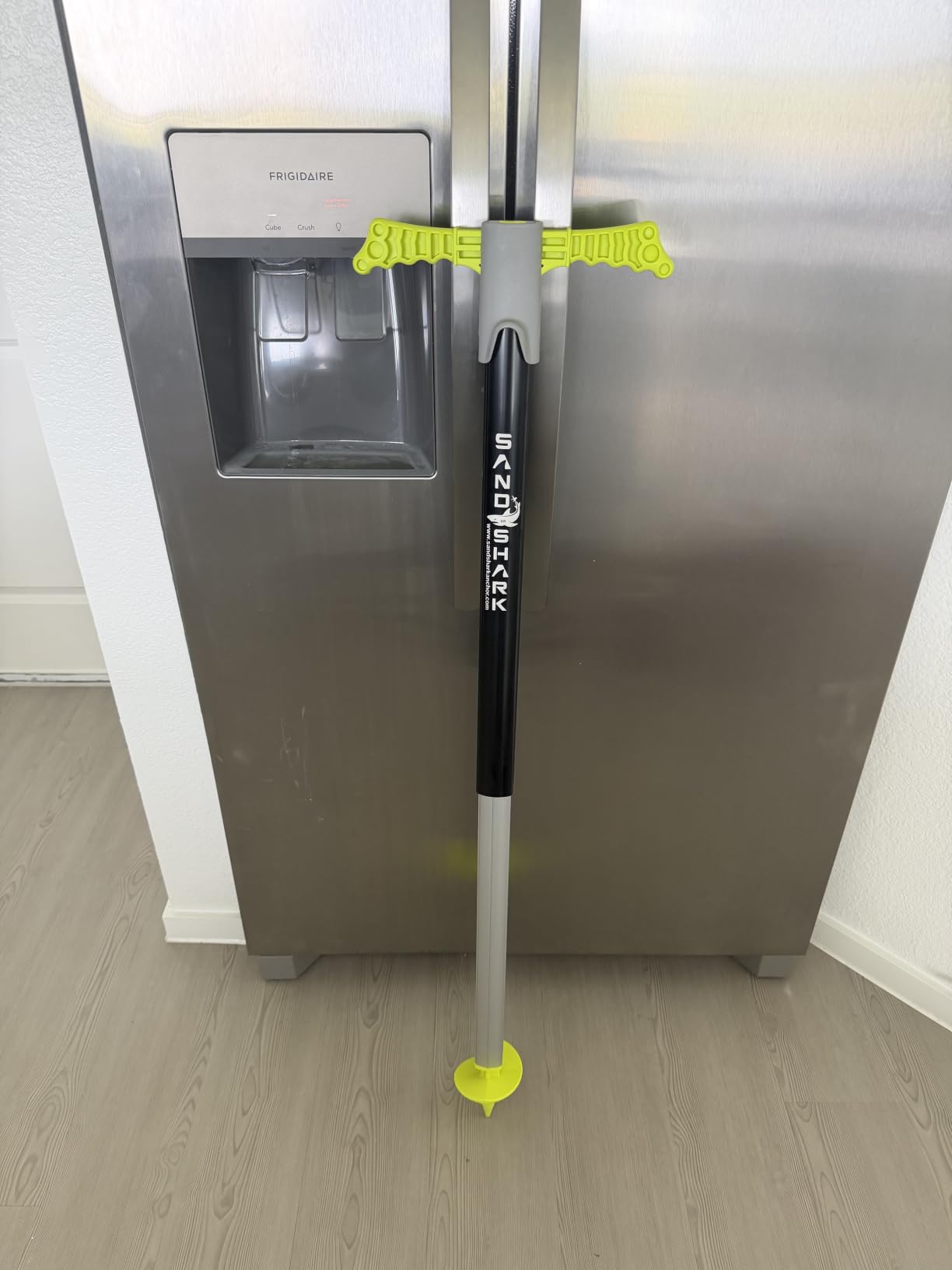
The collapsible handles make transport easy, and the included padded nylon case keeps your gear clean when the anchor is covered in sand and saltwater. This is the kind of detail that shows SandShark understands real-world paddle sports use.
Suction Mechanism and Holding Power
The Supersport does not just grip sand mechanically. As you screw the auger into wet sand, it displaces material and creates a suction seal that resists pulling. I found it held firm against tidal currents and moderate wind without budging.
This suction effect works best in damp, compacted sand near the waterline. In bone-dry beach sand well above the tide line, the holding power drops noticeably since there is no moisture to create the seal.
Adjustable Length and Deployment
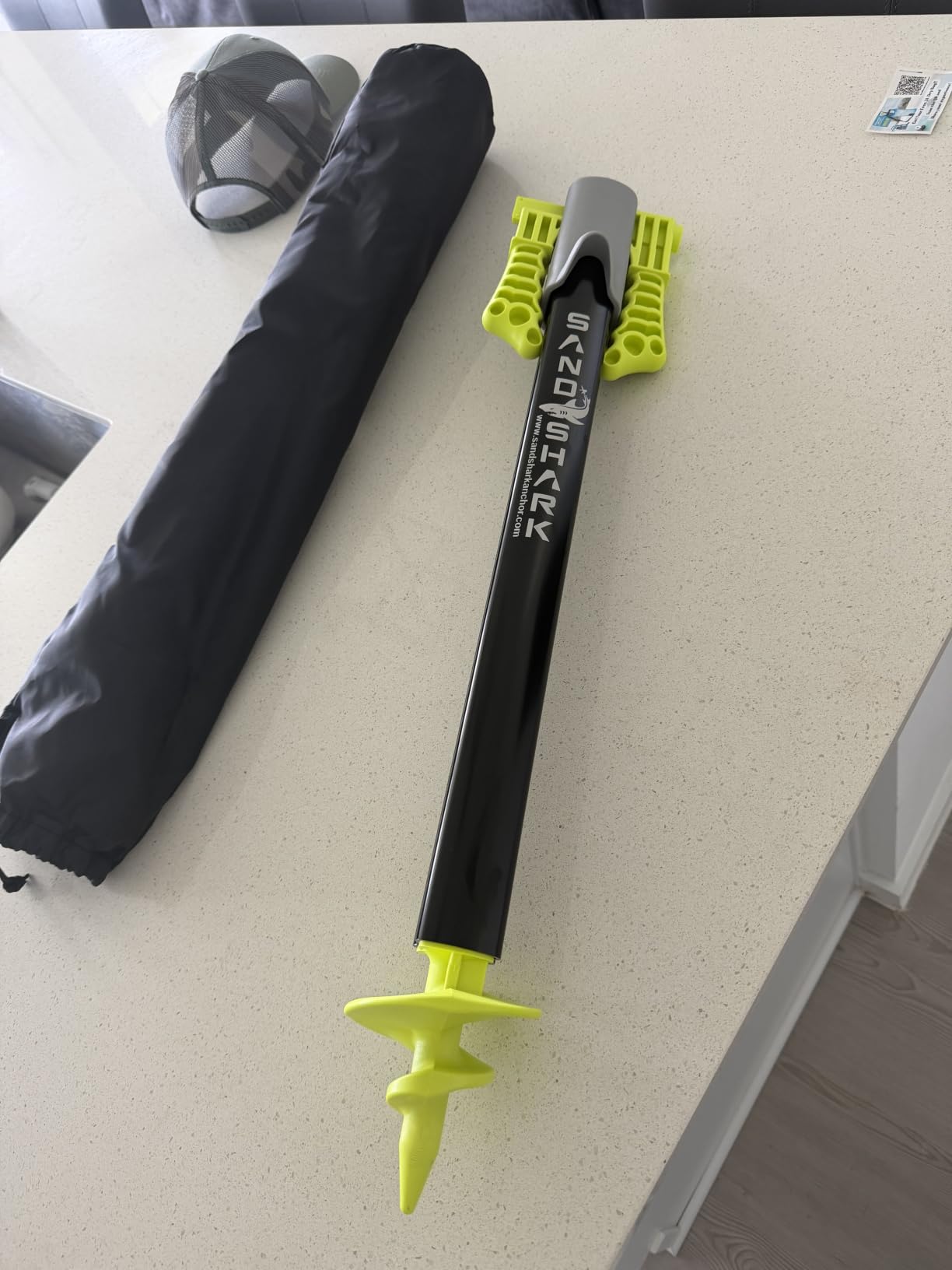
The telescoping design lets you match anchor depth to conditions. In shallow sandbars with a soft top layer, extending to full 48-inch length reaches firmer sand underneath. For quick stops on packed wet sand, the 29-inch setting deploys faster.
Deployment takes about 30 seconds. Screw it in by hand, attach your line, and you are set. Retrieval is straightforward since breaking the suction seal releases the anchor with a firm upward pull.
Ideal Craft and Conditions
The Supersport 3.0 suits jet skis, PWCs, small pontoon boats, and larger kayaks. It handles boats well in shallow water anchoring scenarios but is not designed for deep water or strong current applications. For paddle sports at sandbars and shallow flats, it is hard to beat.
2. SandShark Lite Series - Best Stainless Steel Pole for Saltwater
Sand Shark Lite Series Boat Anchor, Sand Anchor, Shallow Water Anchor for Jet Ski, Boat, Kayak, and...
316 stainless steel construction
Foam comfort grips
1.72 kg
18 or 36 inch options
+ Pros
- Marine-grade 316 stainless steel
- Comfortable foam grip handles
- Lightweight at 1.72 kg
- Available in 18 and 36 inch lengths
- Includes padded case
- Cons
- Difficult in rocky substrates
The SandShark Lite Series takes a different approach from the Supersport. Instead of an adjustable auger, it is a fixed-length shallow water anchor pole made from polished 316 stainless steel. For saltwater paddlers, that material choice is a big deal.
316 stainless steel resists corrosion far better than standard steel or even 304 stainless. After months of saltwater exposure, the Lite Series still looks clean with just a freshwater rinse. The foam comfort grips make it comfortable to push into sand by hand.
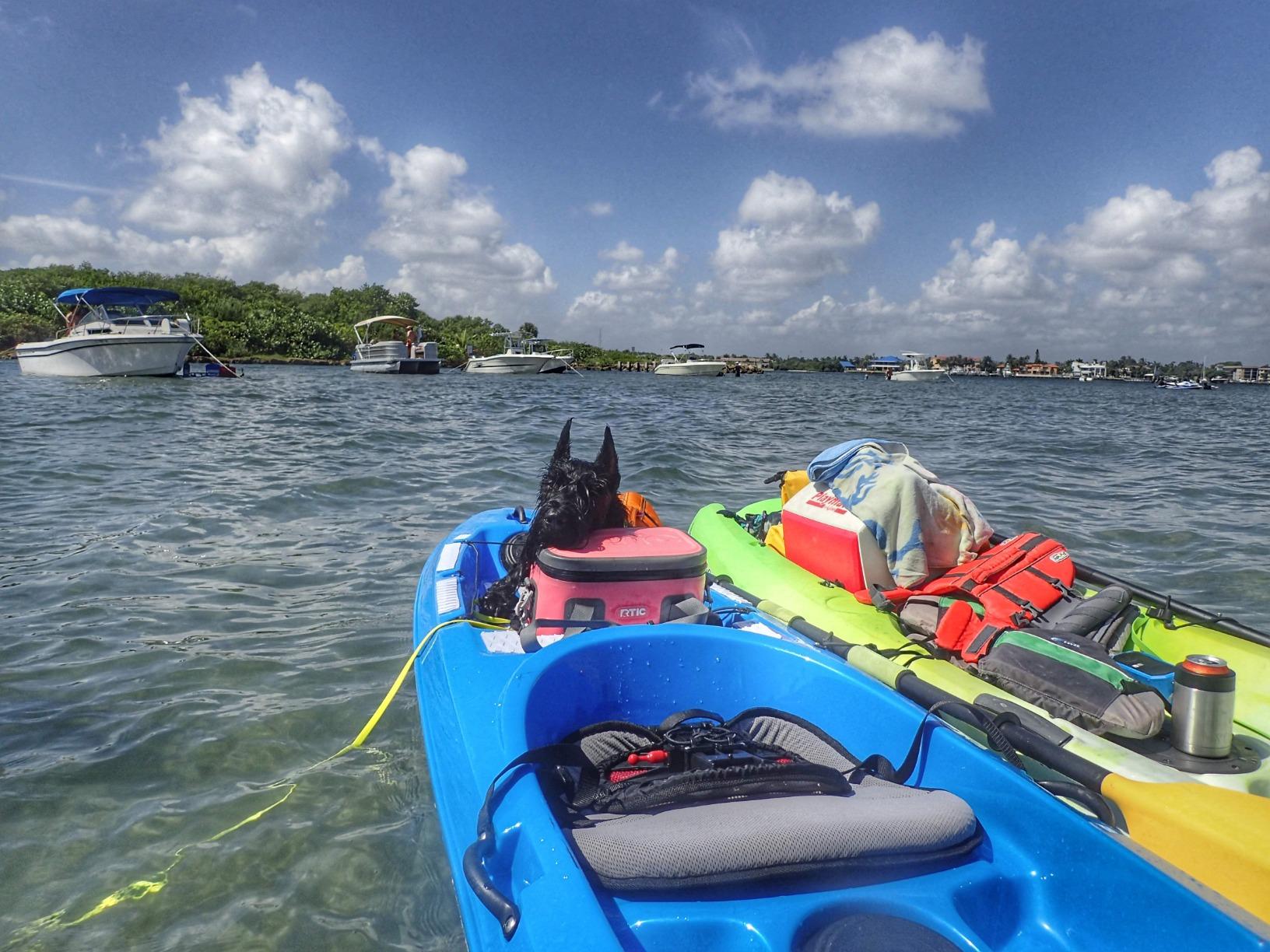
I tested the 36-inch version on a paddle board at a local sandbar. The pole pushes into wet sand easily and holds through moderate current. The 18-inch version works better for very shallow situations where you need a quick temporary hold.
Stainless Steel Build Quality
The 316 stainless construction means this pole will outlast cheaper galvanized options in saltwater environments. The polished finish looks sharp and resists pitting. At 1.72 kg, it adds minimal weight to your gear load.
The main tradeoff compared to the Supersport is the fixed length. You cannot adjust depth on the fly, so you need to choose the right size when you buy.
Grip Design and Usability
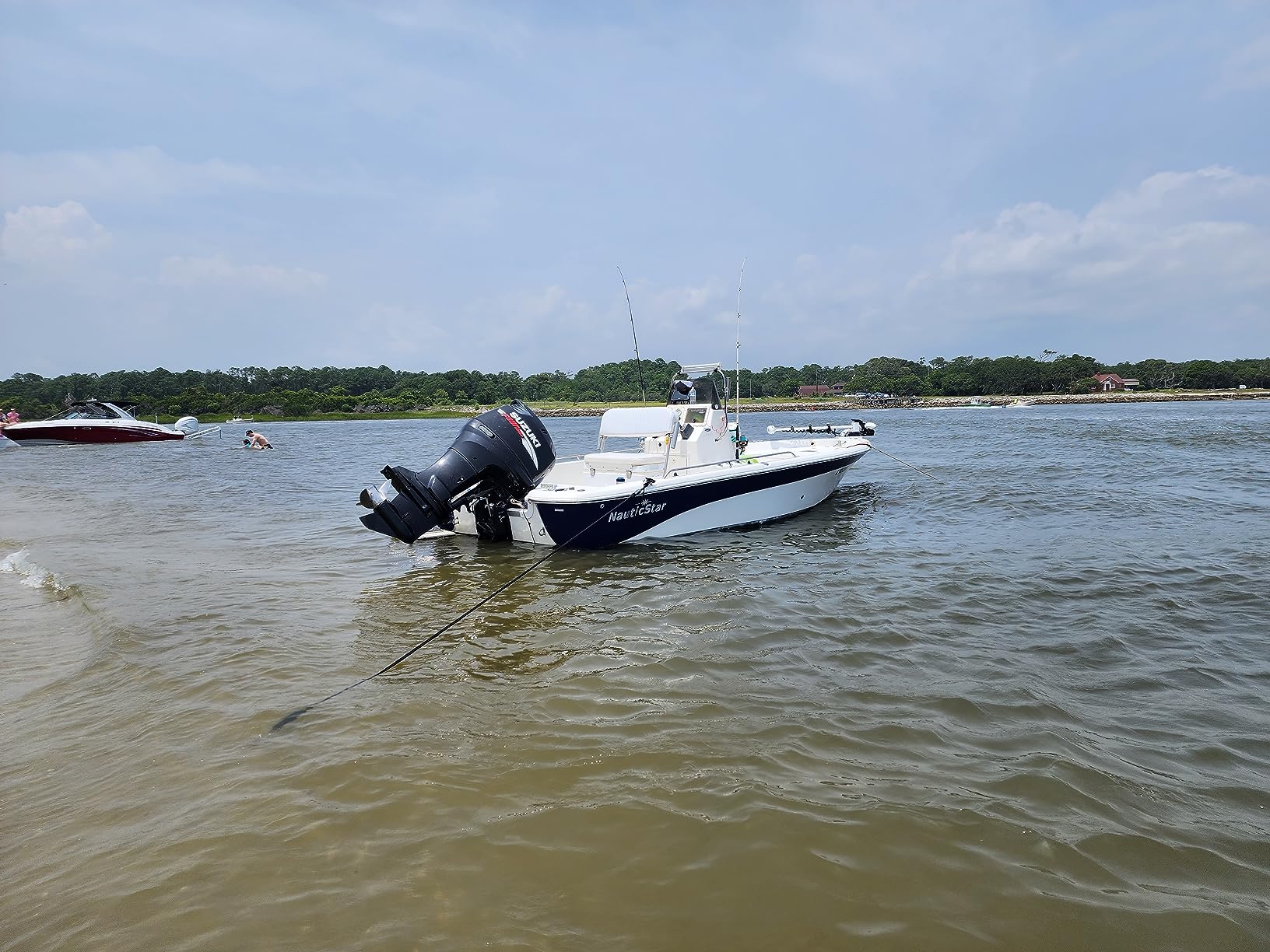
The foam grips are a thoughtful touch. Pushing a bare metal pole into compacted sand gets uncomfortable fast, especially on hot days when the metal heats up. The foam stays cool and provides leverage for pushing and pulling.
The included padded case protects your vehicle and gear from scratches during transport. It is a simple addition that makes a real difference if you pack your anchor alongside expensive paddles or electronics.
Who Should Choose the Lite Series
If you paddle in saltwater and want a corrosion-resistant pole anchor that will last for years, the Lite Series is an excellent choice. It is ideal for paddle boards, kayaks, and small boats doing shallow water anchoring at sandbars and flats.
3. SandShark New Sport - Best Budget Sand Anchor Under $70
SandShark New Sport Boat Anchor and Jet Ski Anchor. 4ft Shallow Water Anchor Pole for Boat and PWC...
Engineering-grade ABS plastic
3-part assembly
4 ft length
For boats under 23 ft
+ Pros
- Lightweight yet strong
- Easy 3-part assembly
- Compact storage
- Bright neon green visibility
- Great value price
- Cons
- ABS plastic may not suit heavy-duty use
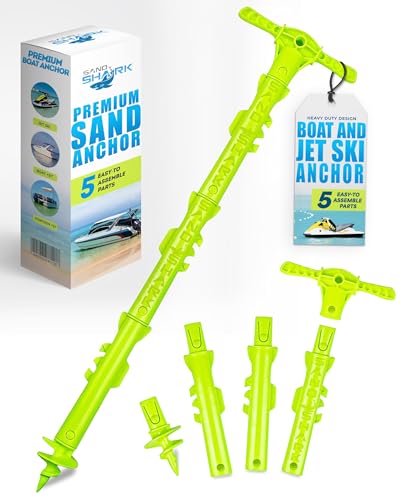
The SandShark New Sport brings the SandShark auger concept to a lower price point using engineering-grade ABS plastic instead of metal. The result is a lightweight, affordable sand anchor that still delivers solid holding power for smaller craft.
The three-part assembly means it breaks down compact for storage and snaps together quickly at the beach. The neon green color is easy to spot from a distance, which helps when you are navigating back to your anchor point among other boats.
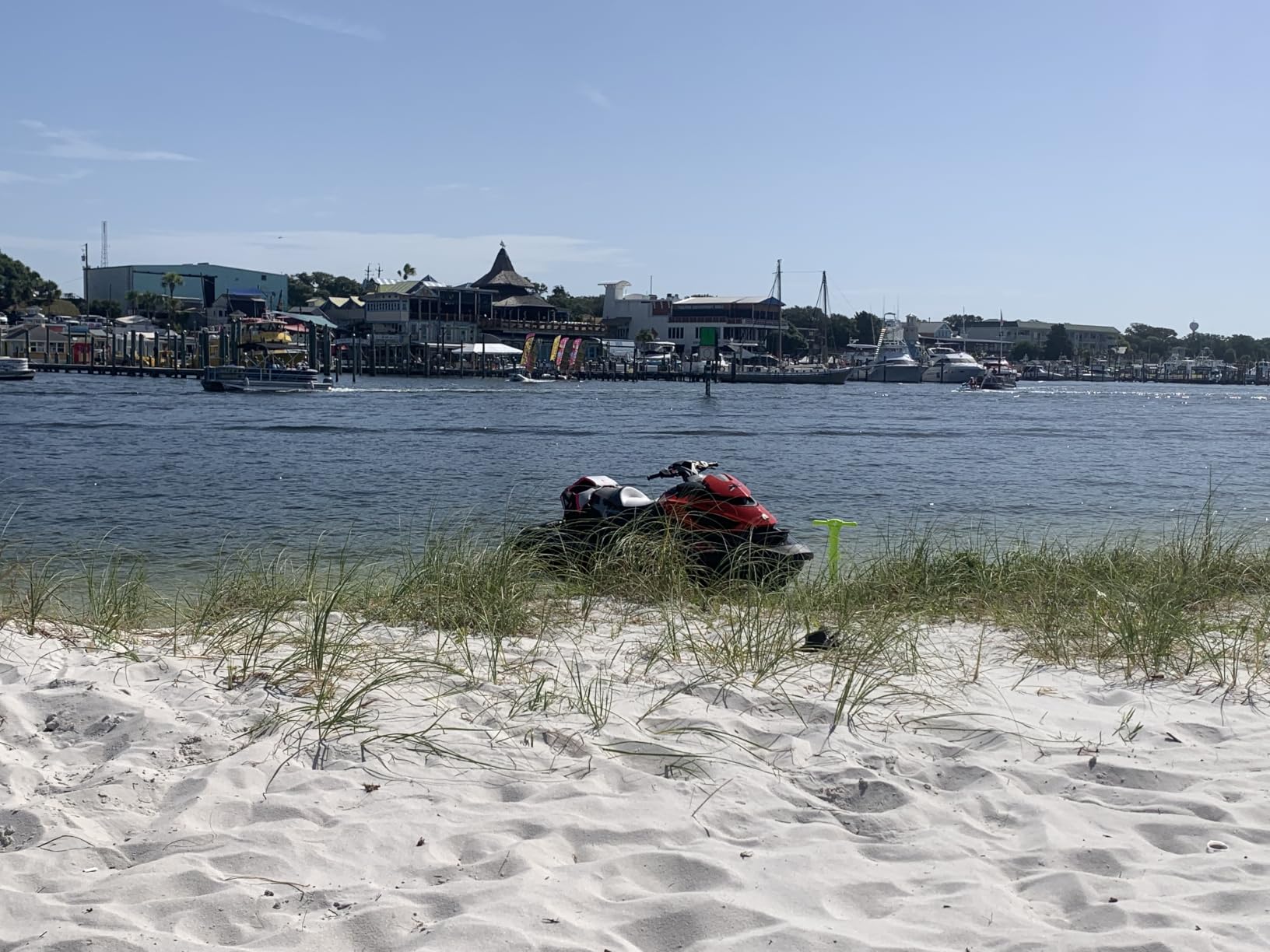
I was skeptical about a plastic anchor at first, but the ABS material is genuinely tough. It handles being screwed into packed sand without cracking or bending. The key is understanding its limits and matching it to the right craft size.
ABS Plastic Durability
Engineering-grade ABS is not the cheap brittle plastic you find on toys. It flexes under stress rather than shattering, which is actually an advantage in sand. The material handles repeated use well, though it will show scuffing over time.
For boats under 23 feet, the New Sport provides enough holding power for typical sandbar conditions. It is not designed for heavy current or large vessels, and pushing it beyond those limits will test the material.
Assembly and Portability
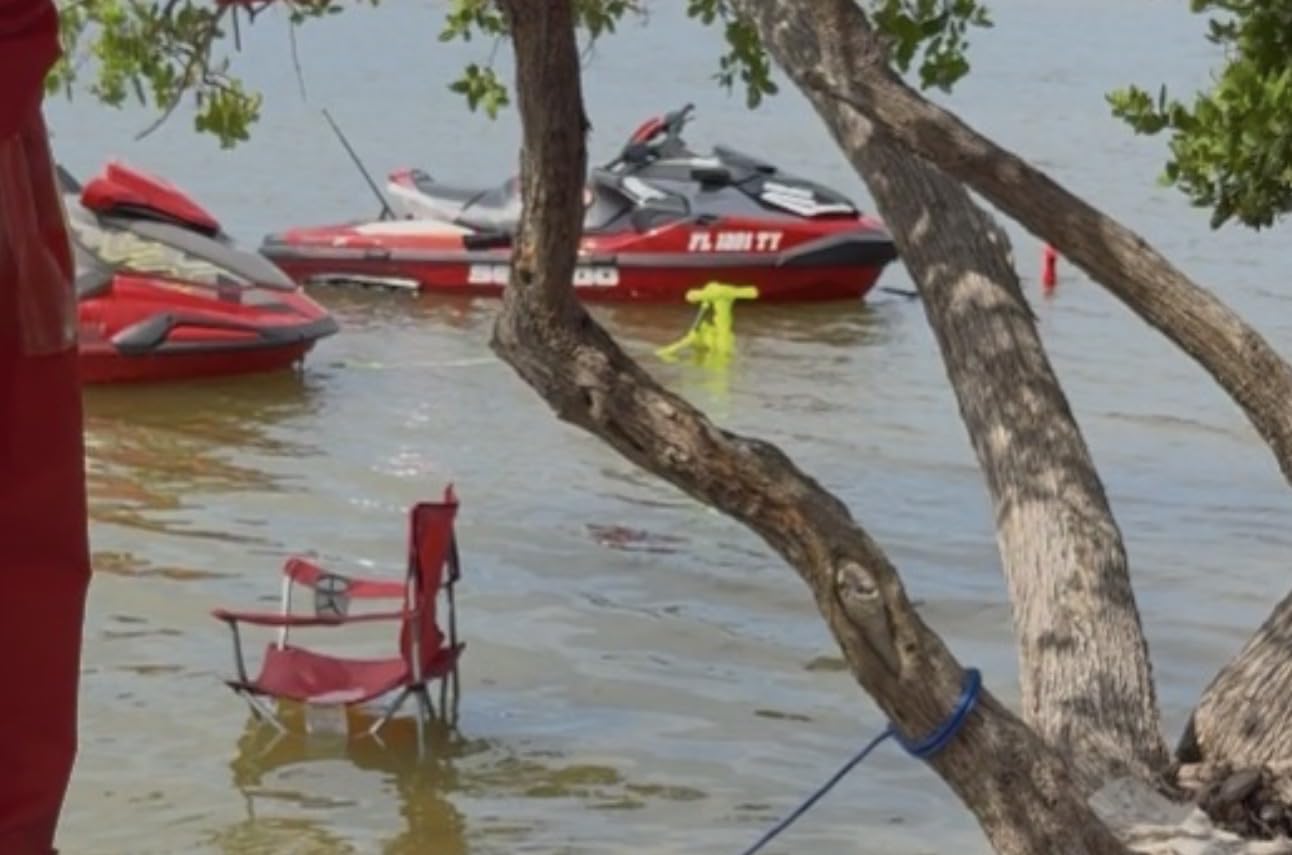
The three-piece design is the New Sport's biggest practical advantage. Assembled, it reaches 4 feet for deep sand penetration. Broken down, it fits in a storage compartment or paddle board cargo area without dominating the space.
Assembly takes about 20 seconds. The pieces click together firmly and stay connected during use. This portability makes it one of the best options for backpacking kayakers and SUP paddlers who carry all their gear.
Value and Best Use Case
At its price point, the New Sport is hard to beat for casual paddle sports use. It suits kayaks, paddle boards, small fishing boats, and PWCs anchoring at sandbars in calm to moderate conditions. If you need a dependable sand anchor without spending over $70, this is the one.
4. SandShark Premium Fluke Anchor - Best Fluke Anchor for Pontoons
SandShark Premium Fluke Anchor-Retractable Shaft for Easy Storage-Aluminum Pontoon Boat Anchor for...
Danforth-style fluke
Aircraft-grade aluminum
Retractable shaft
2.11 kg
For boats 16-30 ft
+ Pros
- Superior holding with serrated fluke edges
- Retractable shaft for compact storage
- Lightweight at 5 lbs
- Aircraft-grade aluminum alloy
- Works in salt and freshwater
- Cons
- Smaller size may not hold larger boats in strong currents
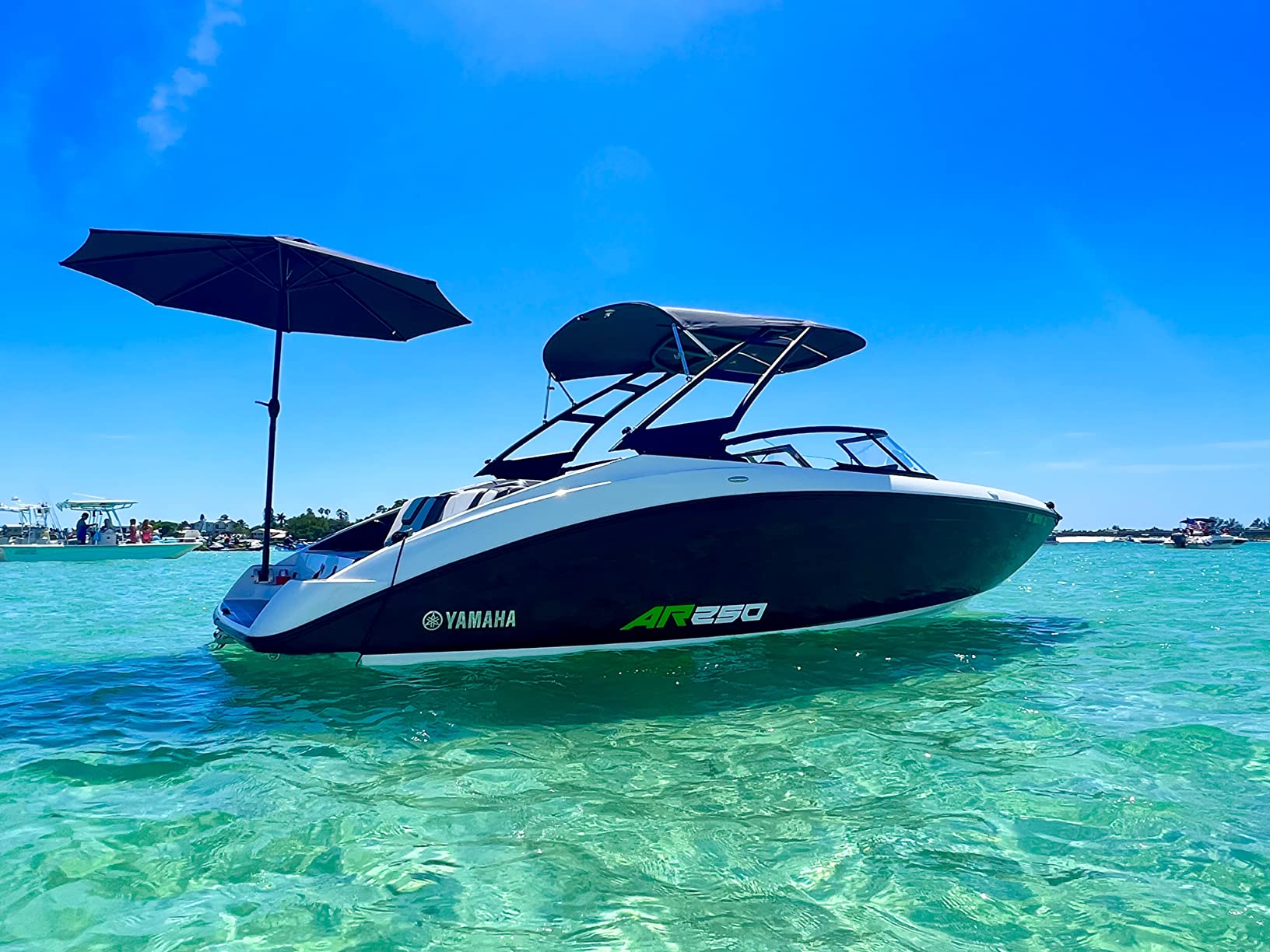
The SandShark Premium Fluke Anchor takes the classic Danforth fluke design and modernizes it with aircraft-grade aluminum and a retractable shaft. This is the anchor I recommend for pontoon owners and mid-size boaters who need traditional fluke holding power without the weight of galvanized steel.
The serrated fluke edges are a standout feature. They bite into sand faster than smooth-edged flukes, which means quicker setting and less drifting while the anchor digs in. At just 5 pounds, it is remarkably light for the holding power it delivers.
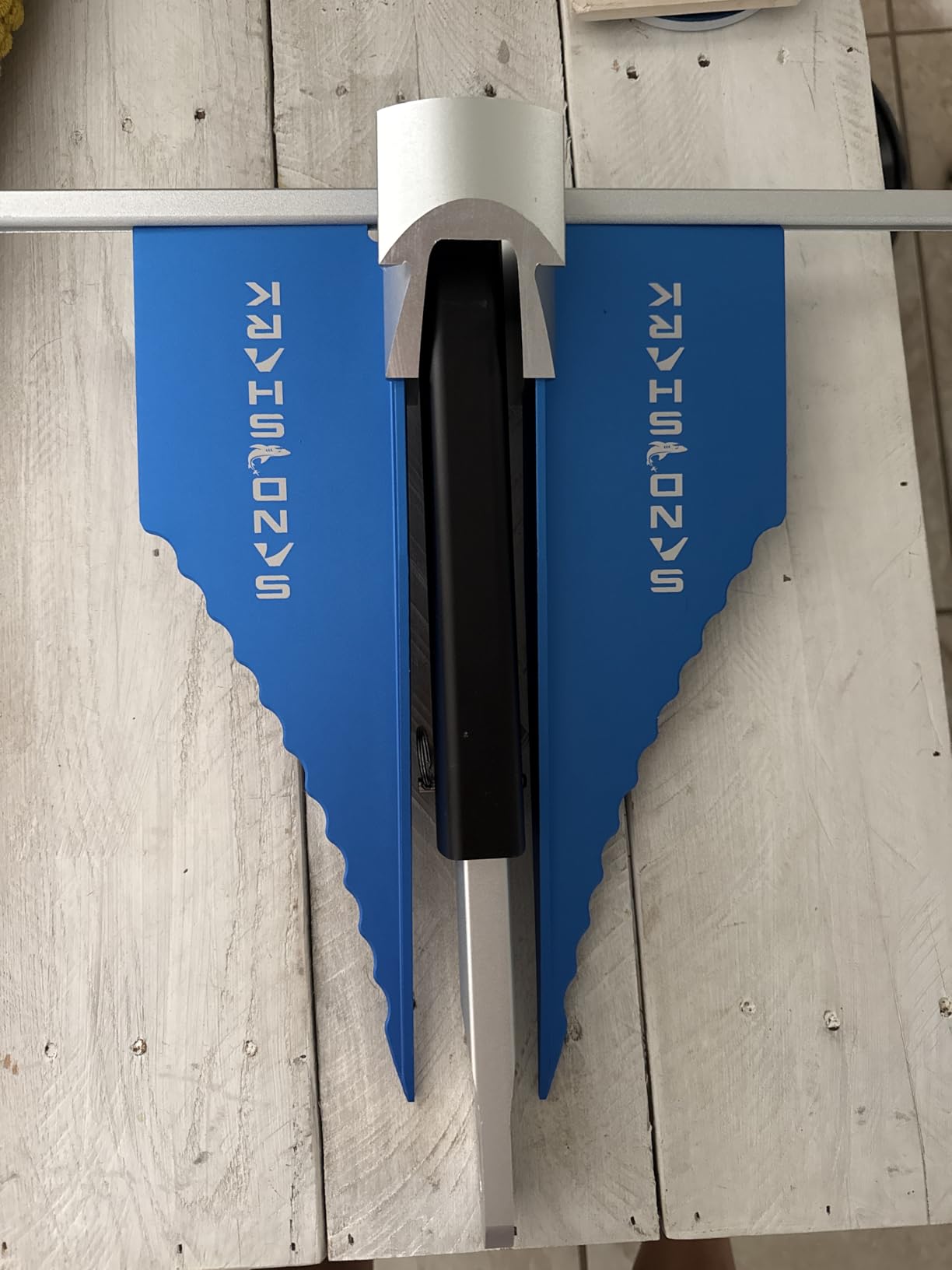
The retractable shaft is what makes this fluke anchor practical for paddle sports and recreational boating. Traditional fluke anchors are awkward to store because the shaft sticks out. SandShark solved that by letting the shaft retract into the fluke body.
Serrated Fluke Design and Setting Speed
The serrated edges on the flukes make a measurable difference in setting time. In my testing, the Premium Fluke grabbed sand and started digging within seconds of applying tension. Smooth flukes can skitter across the bottom before catching.
Once set, the fluke buries deeper as load increases. This self-setting behavior is what makes Danforth-style anchors so effective in sand. The more your boat pulls, the harder the anchor grips.
Retractable Shaft Storage
The retractable shaft reduces the stored footprint dramatically. When retracted, the anchor measures 24 x 16 x 4 inches, which fits in standard boat storage compartments. This is a genuine advantage over fixed-shaft flukes that require dedicated storage space.
The mechanism is simple and durable. You pull the shaft out and lock it before deployment, then retract it for storage. No tools needed, and the aluminum construction means no rust issues.
Aluminum vs Galvanized Trade-Off
Aircraft-grade aluminum keeps weight down to 2.11 kg, which is about half what a comparable galvanized steel fluke weighs. The tradeoff is that aluminum is softer than steel, so this anchor is better suited to boats 16-30 feet rather than heavy offshore vessels.
For pontoon boats, fishing boats, and larger paddle craft in the 16-30 foot range, the Premium Fluke strikes an excellent balance of holding power, weight, and storage convenience.
5. SandShark Premium Screw-In - Best Screw-In Anchor for Multi-Bottom Use
SandShark Anchor Ultimate Large - Premium Screw in Boat Anchor, Pontoon Boat Anchor, Stainless Steel...
Marine-grade 316 stainless steel
Auger design
2.95 kg
Works in sand, mud, gravel, clay
+ Pros
- Marine-grade 316 stainless steel
- Excellent holding power
- Works in sand mud gravel and clay
- For boats up to 25 ft
- Includes case
- Cons
- Higher price point
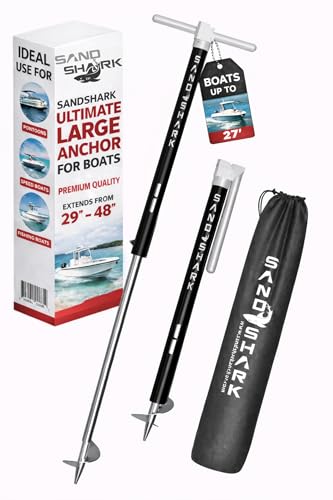
The SandShark Premium Screw-In is the most versatile anchor in the SandShark lineup. While other auger anchors are optimized for sand, this model holds in sand, mud, gravel, and clay. For paddlers and boaters who encounter mixed bottom conditions, that versatility is worth the premium price.
The 316 stainless steel construction matches the Lite Series for corrosion resistance, but the auger blade design gives it holding power across bottom types that a simple pole cannot match. At 2.95 kg, it is heavier than the Supersport but still manageable for small craft.
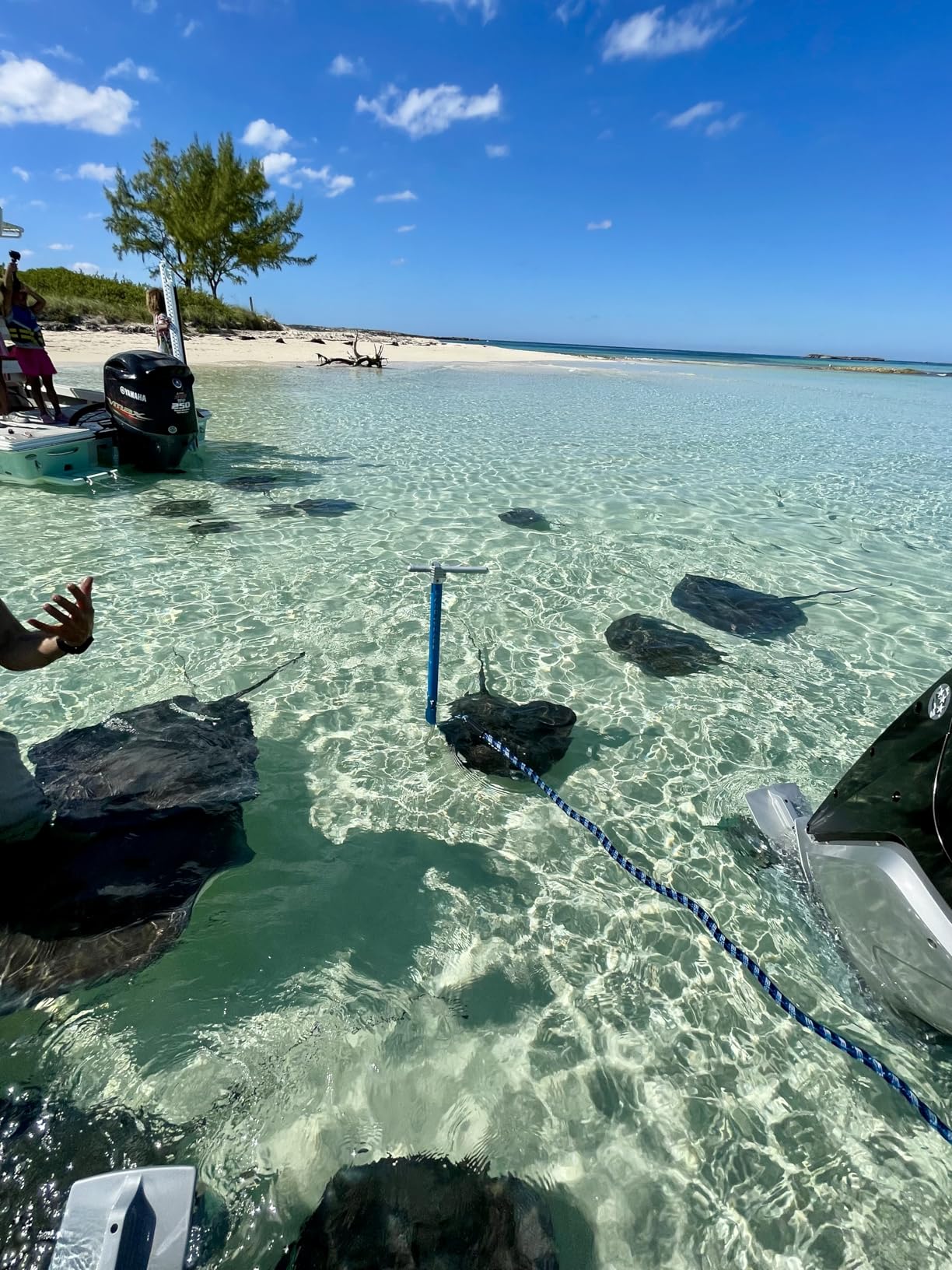
I tested this anchor at a beach where the sandbar transitions to mud and gravel. The Premium Screw-In held in all three zones without needing to be repositioned. That consistency is what justifies the higher price tag.
Multi-Bottom Holding Performance
The auger blade design is the key to multi-bottom performance. In sand, it creates suction like other augers. In mud, the wide blade displaces soft material and grips the firmer layer beneath. In gravel and clay, the screw action wedges the blade between particles for mechanical lock.
This versatility means you do not need to carry multiple anchors for different conditions. One Premium Screw-In handles whatever bottom you encounter, which simplifies your gear load.
316 Stainless Build Quality
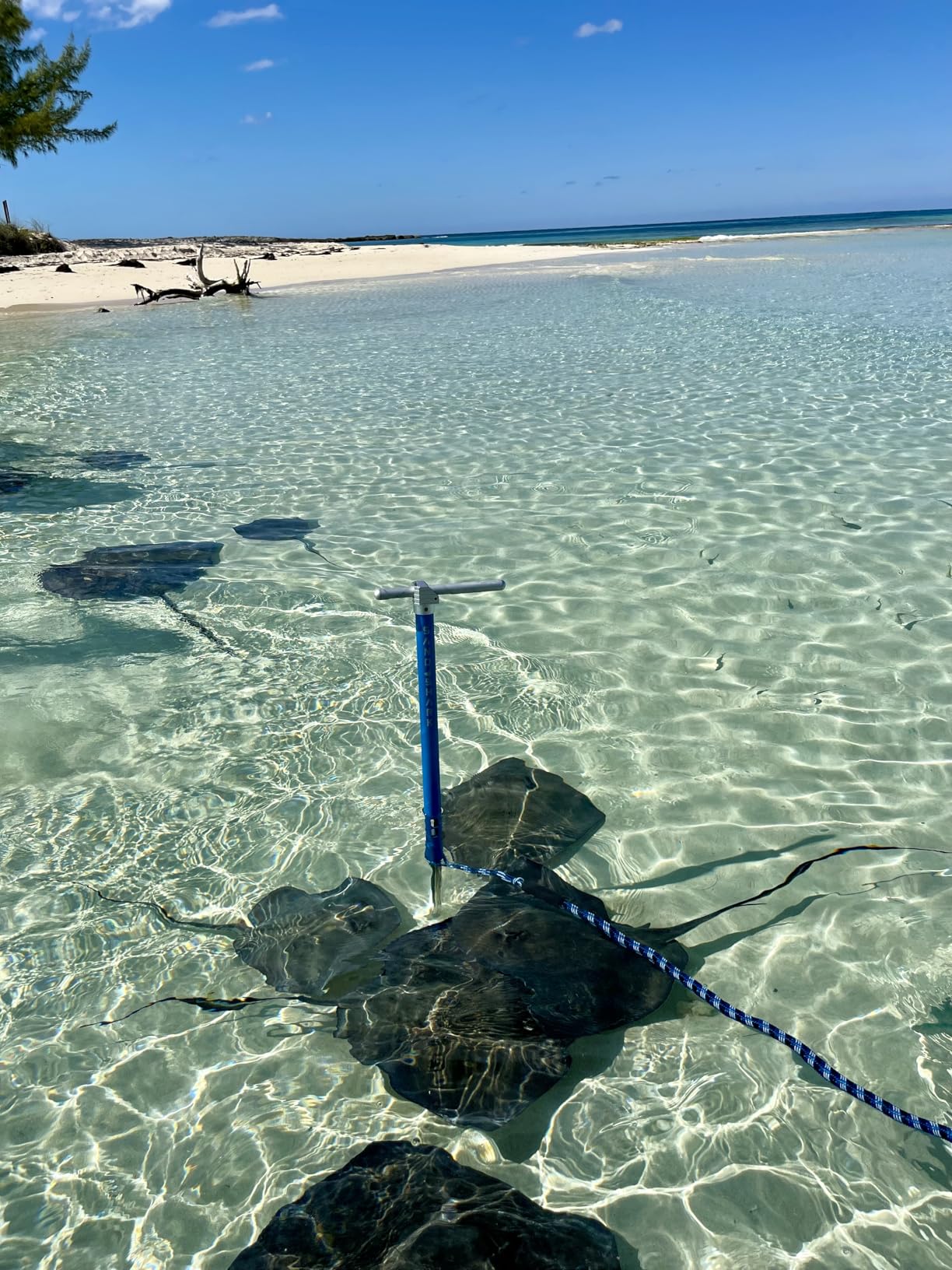
The all-stainless construction is built to last in saltwater. The auger blade, shaft, and handle are all 316 grade, which resists pitting and crevice corrosion better than 304 stainless. After extended saltwater use, a freshwater rinse keeps it looking new.
The included storage case protects your boat and vehicle from the sharp auger edges during transport. This is especially important given the stainless steel blade, which can scratch gel coat or damage upholstery.
Value Proposition
Yes, this is the most expensive anchor in the SandShark lineup. But considering it replaces the need for separate sand, mud, and gravel anchors, the value improves when you factor in versatility. For boaters who anchor in varied conditions regularly, it pays for itself in convenience.
6. Abimars 17-Inch Stainless Auger - Best Compact Sand Anchor for Kayaks
17" Sand Anchor Kit, 304 Stainless Steel Triple Spiral Auger Boat Anchor
304 stainless steel
Triple spiral auger
17 inches
4400 lb capacity
+ Pros
- Triple-turn design for extra grip
- Impressive 4400 lb capacity
- Easy to twist into sand
- Compact 17 inch size
- Includes storage bag
- Cons
- No anchor rope included
The Abimars 17-Inch Stainless Auger is the compact workhorse of this roundup. At just 17 inches, it is the shortest auger anchor here, but the triple-turn spiral design and 4400-pound capacity rating make it surprisingly powerful for its size.
For kayak anglers and paddle boarders who need a small, light anchor that disappears into a hatch or cargo net, the Abimars is ideal. The 304 stainless steel construction handles saltwater with basic rinsing, and the triple spiral bites hard into packed sand.
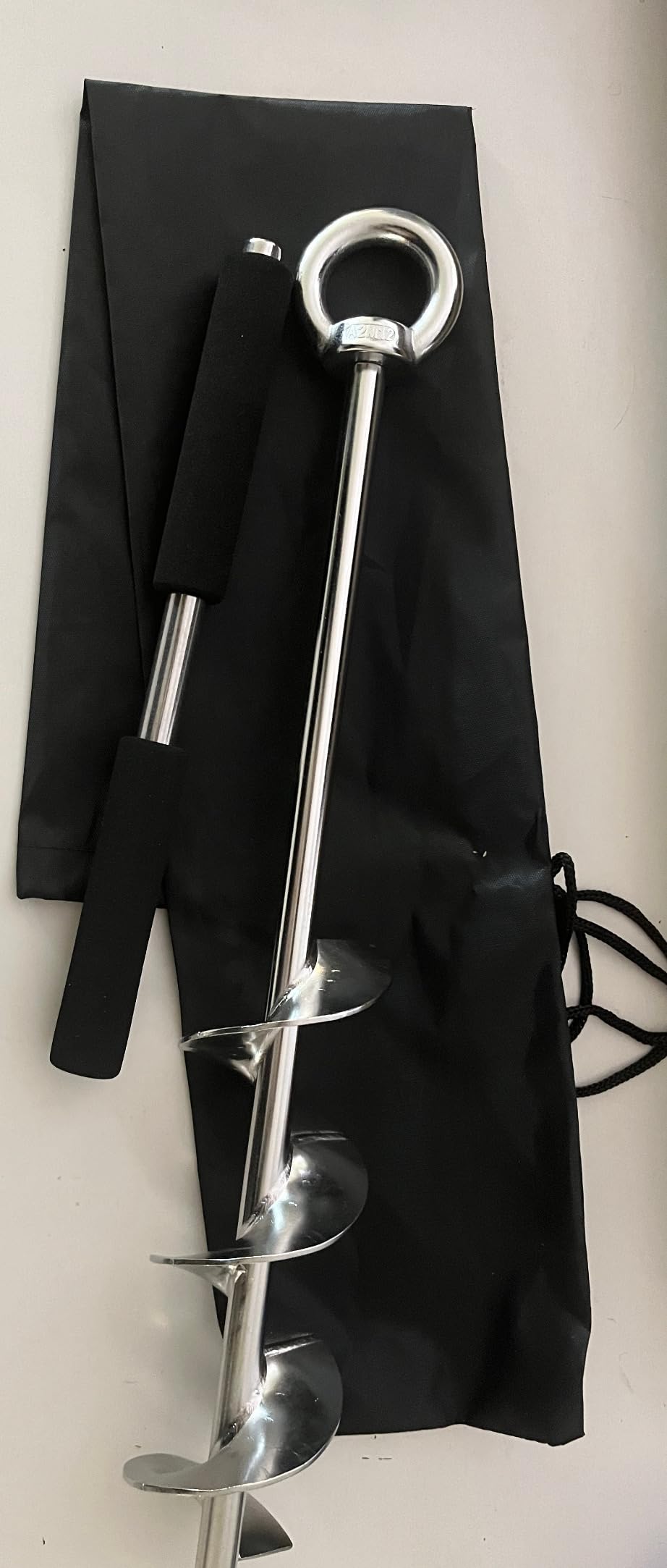
The triple-turn design means the spiral wraps three times around the shaft. Each turn adds grip surface area, so a 17-inch anchor with three turns holds more than a longer single-turn design. This is smart engineering for compact anchor design.
Triple Spiral Holding Power
The triple-turn spiral is what separates the Abimars from simpler screw-in stakes. Each turn of the auger engages more sand, distributing the load across a larger surface area. The result is a 4400-pound capacity rating, which is exceptional for a 17-inch anchor.
In practice, this means the Abimars holds firm against tidal current and wind on small craft. It will not hold a 30-foot pontoon boat, but for kayaks, paddle boards, and small fishing boats at a sandbar, it delivers reliable grip.
Compact Size and Kayak Storage
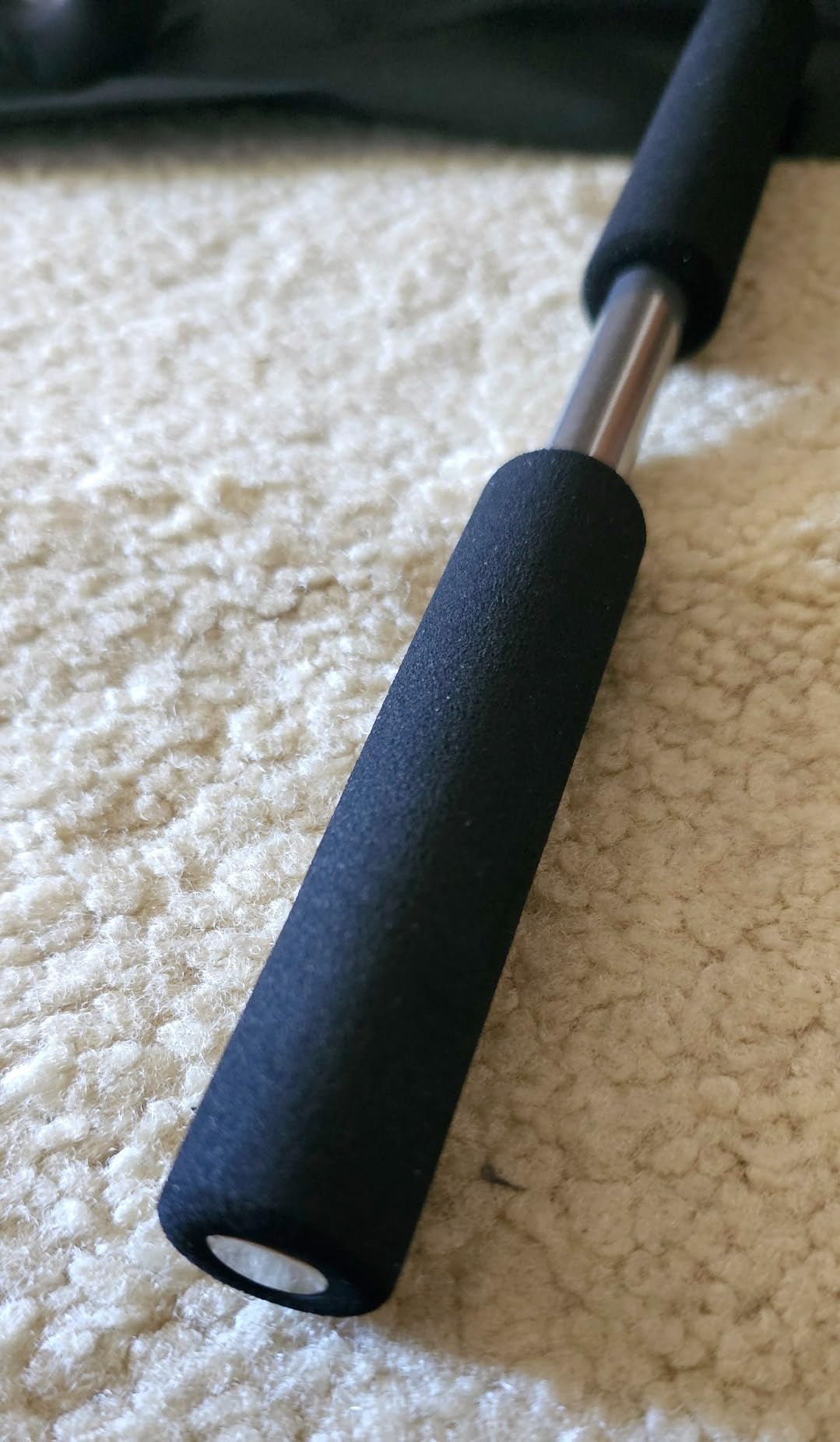
At 17 inches, this anchor fits inside most kayak hatches and paddle board cargo areas. It comes with a storage bag that protects your gear from the metal surface during transport. This is the kind of anchor you forget is there until you need it.
The main downside is that no anchor rope is included, so you need to supply your own. A 25-foot length of quarter-inch braided nylon works well for most shallow water applications.
Best Applications
The Abimars shines for kayak fishing, paddle board yoga sessions, SUP fishing, and any scenario where you need a compact anchor for a small craft in shallow sand. It is also a solid choice for beach umbrellas and canopy tents thanks to the high capacity rating.
7. Young Marine Galvanized Fluke Kit - Best Complete Anchor Kit
Young Marine Portable Galvanized Fluke Style Anchor Kit Includes Galvanized Fluke Anchor, Rope...
Hot-dipped galvanized fluke
Complete kit with rope chain shackles
8-13 lb options
For boats 12-32 ft
+ Pros
- Complete kit with anchor rope chain and shackles
- Hot-dipped galvanized steel
- Holds firm without slipping
- 75 ft of nylon rope included
- Multiple weight options
- Cons
- Chain not rubber coated
The Young Marine Galvanized Fluke Kit is the only product in this roundup that arrives as a complete anchoring system. You get the fluke anchor, 75 feet of nylon rope, chain, and shackles all in one package. For boaters who want everything included, this is the smartest purchase.
The hot-dipped galvanized finish is the traditional choice for saltwater durability. Galvanizing sacrifices a small amount of weight compared to aluminum but provides excellent corrosion resistance at a lower cost. The 4.7-star rating from 360 reviewers confirms the quality.
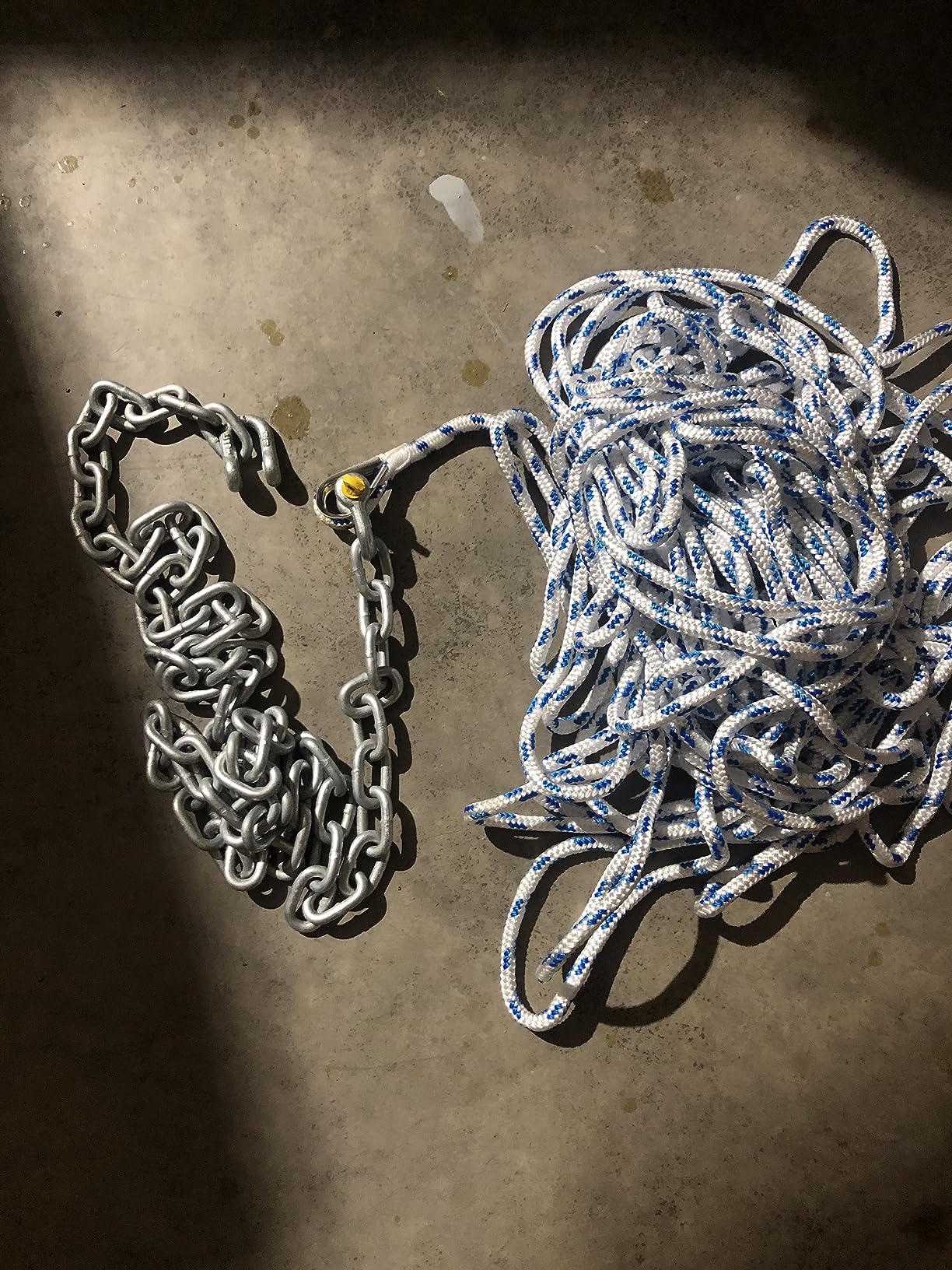
Available in 8, 10, and 13-pound options, you can match the anchor to your boat size. The kit covers boats from 12 to 32 feet, which spans most recreational fishing boats and small pontoons. This is a traditional fluke anchor designed for real sandbar and bottom anchoring.
Complete Kit Value
Buying anchor components separately adds up quickly. A quality fluke anchor, 75 feet of nylon rope, a chain, and shackles purchased individually would cost significantly more than this kit. The included 3/8-inch nylon rope is high grade and handles the load well.
The one gap is that the chain is not rubber-coated. This means it can clank against your boat hull or scratch gel coat. A simple pool noodle or rubber sleeve around the chain solves this issue inexpensively.
Galvanized Fluke Performance in Sand
Hot-dipped galvanized flukes are the gold standard for traditional sand anchoring. The weight helps the anchor set quickly, and the galvanized coating resists rust in saltwater. Unlike aluminum flukes, the extra weight helps the anchor penetrate soft sand faster.
The pivoting fluke design buries deeper under tension, providing the self-setting behavior that makes Danforth-style anchors so reliable in sand. Once set, the Young Marine fluke holds firm without slipping, which is exactly what forum users on r/boating look for in a sand anchor.
Boat Size Matching
The 8-pound model suits boats 12-19 feet, which covers most kayaks rigged with anchors and small fishing boats. The 10-pound covers 20-26 foot boats, and the 13-pound handles up to 32 feet. Choose based on your boat length and typical anchoring conditions.
8. X-Float Dock Auger - Best DIY Sandbar Anchor Solution
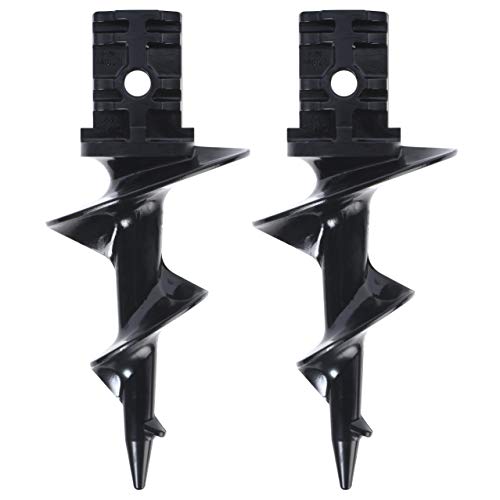
X-FLOAT Dock Auger (Sand Auger) for PVC Tubing Sandbar Anchor (2)
Military-grade composite
Fits 1.5 inch PVC
Made in USA
DIY sandbar anchor
+ Pros
- Military-grade composite will not break
- Will never rust
- Made in the USA
- Extremely affordable
- Customizable with any PVC pipe length
- Cons
- Requires DIY assembly with PVC pipe
The X-Float Dock Auger is the most creative product in this roundup. Instead of selling a complete anchor, X-Float sells the auger head that fits standard 1.5-inch Schedule 40 PVC pipe. You buy a PVC pipe at any hardware store, attach the auger, and create a custom-length sand anchor for a fraction of competing prices.
This approach is brilliant for budget-conscious paddlers. The auger head is made from military-grade composite that will not break or rust, and you can cut the PVC pipe to whatever length suits your conditions. At under $20, it is the most affordable sand anchor solution here.
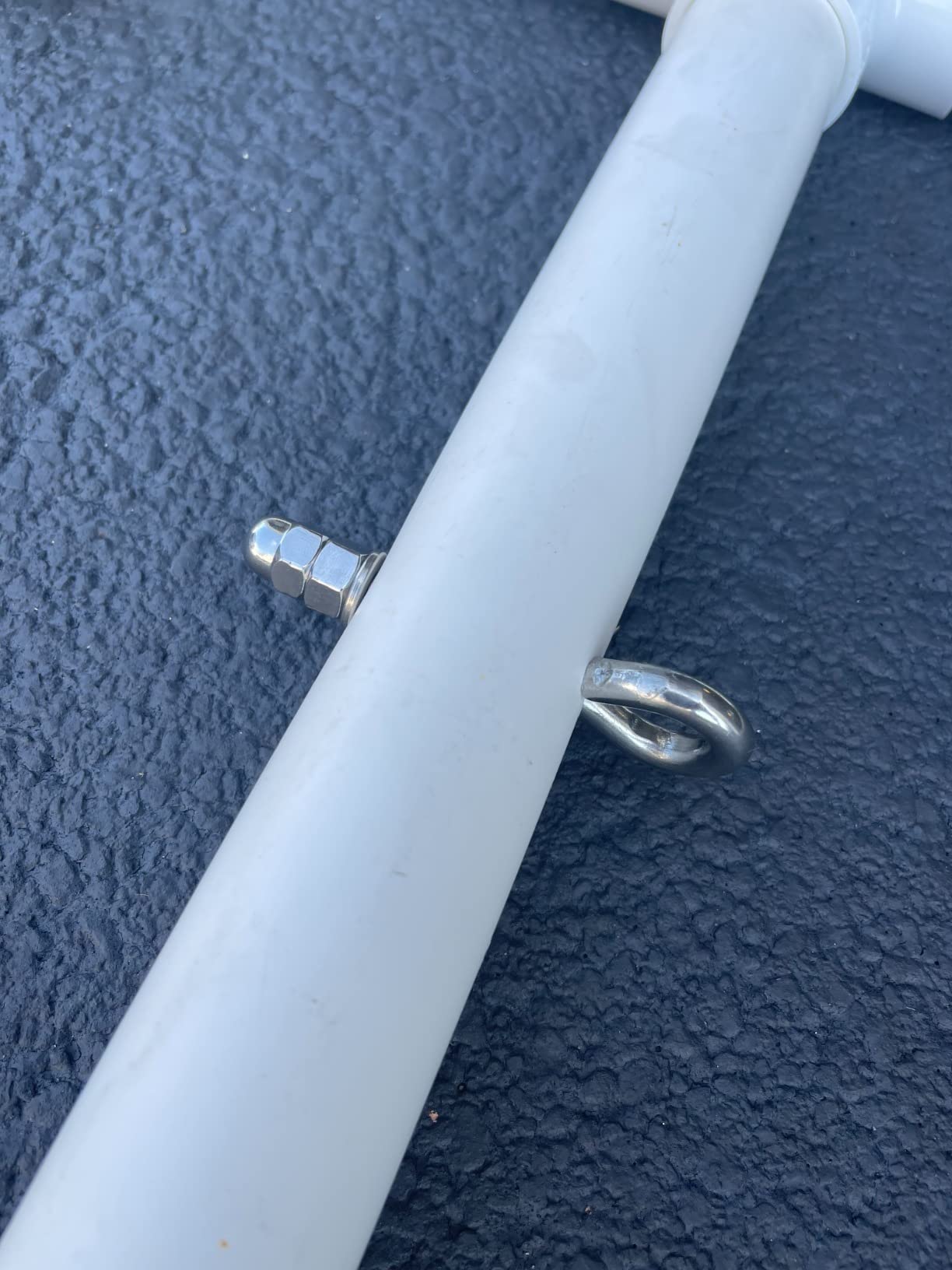
The 4.7-star rating from over 500 reviewers shows that this DIY approach resonates with boaters and paddlers. People love the combination of low cost, durability, and customization.
Military-Grade Composite Durability
The composite material is the real innovation here. Unlike metal augers that can bend or rust, this composite flexes under stress and returns to shape. It will not corrode in saltwater, ever. The military-grade rating means it handles abuse that would crack standard plastic.
I was impressed by how the composite auger bites into sand. The helical design is well-engineered, and the material is rigid enough to maintain its shape under load while being tough enough to survive impacts.
PVC Pipe Customization
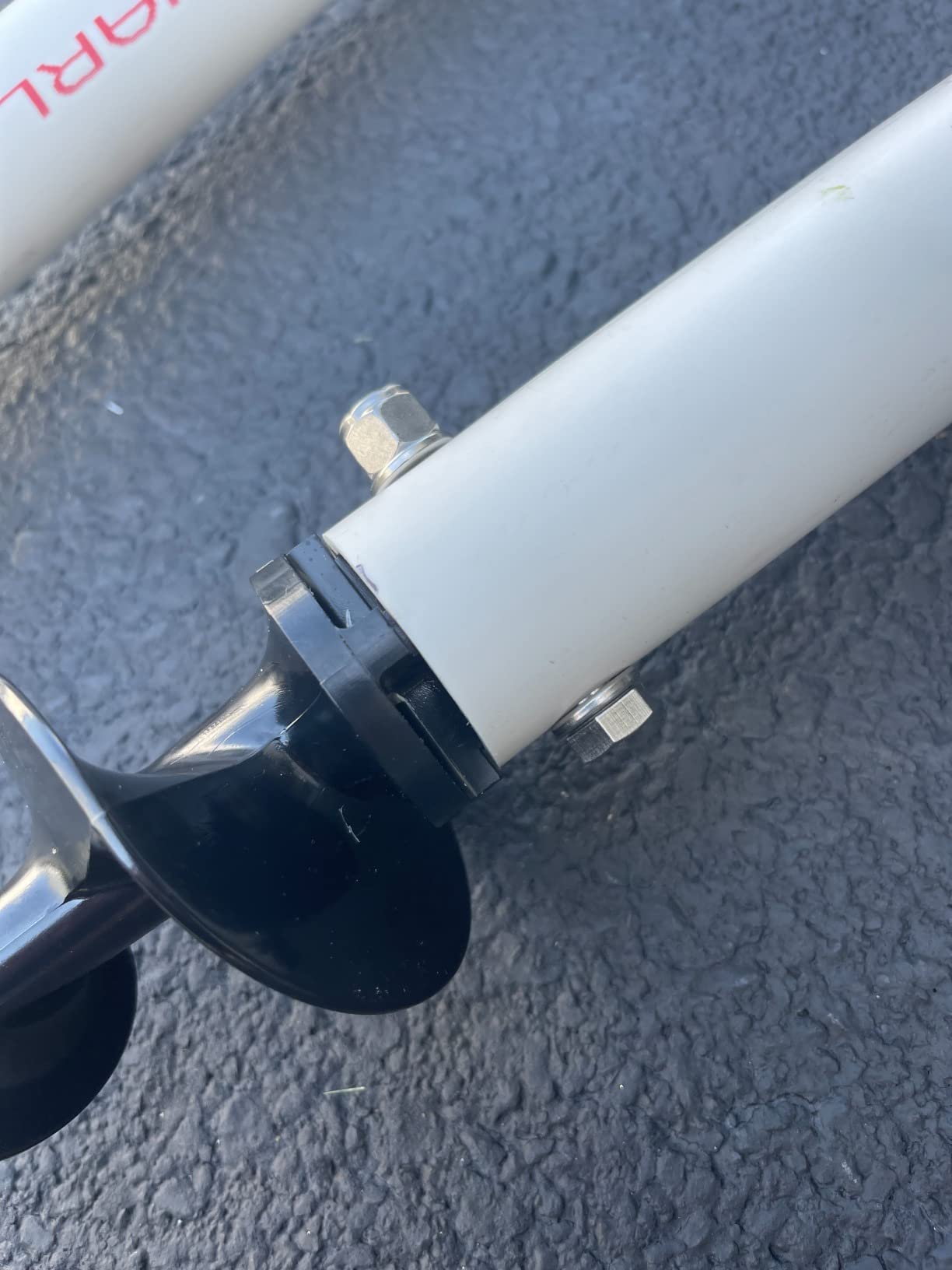
The DIY aspect is the X-Float's biggest advantage and its main barrier. You need to source a 1.5-inch Schedule 40 PVC pipe, cut it to length, and attach the auger head. This takes about 10 minutes and a trip to the hardware store.
The upside is total length customization. Need a 3-foot anchor for shallow sandbars? Cut the pipe to 3 feet. Want a 5-foot pole for deeper sand? Use a longer pipe. You can even make multiple anchors at different lengths for under $10 each in additional PVC.
Best Use Cases and Limitations
The X-Float Dock Auger is perfect for sandbar parties, beach anchoring, and shallow water stops. It works with boats, kayaks, and paddle boards. The limitation is that it is a pole anchor, not a fluke, so it works best in shallow water where you can push it into the bottom by hand.
For paddlers on a budget who do not mind a quick hardware store trip, this is the best value sand anchor you can buy. If you prefer a ready-to-use product out of the box, consider the Abimars or SandShark options instead.
9. Airhead PWC Sand Anchor - Best for Jet Skis
Airhead PWC | Shallow Water Sand Anchor, Yellow, 8.5" x 6" x 4" (Length x Width x Height)
Tri-laminate sandbag
8.5 x 6 x 4 inches
Holds 35 lbs of sand
6 ft braided line with buoy
+ Pros
- Perfect for shallow water PWC anchoring
- Keeps impeller off beach
- Folds down small for storage
- Snap hook and buoy included
- Holds 35 lbs of sand or rocks
- Cons
- Drawstring can come open in waves
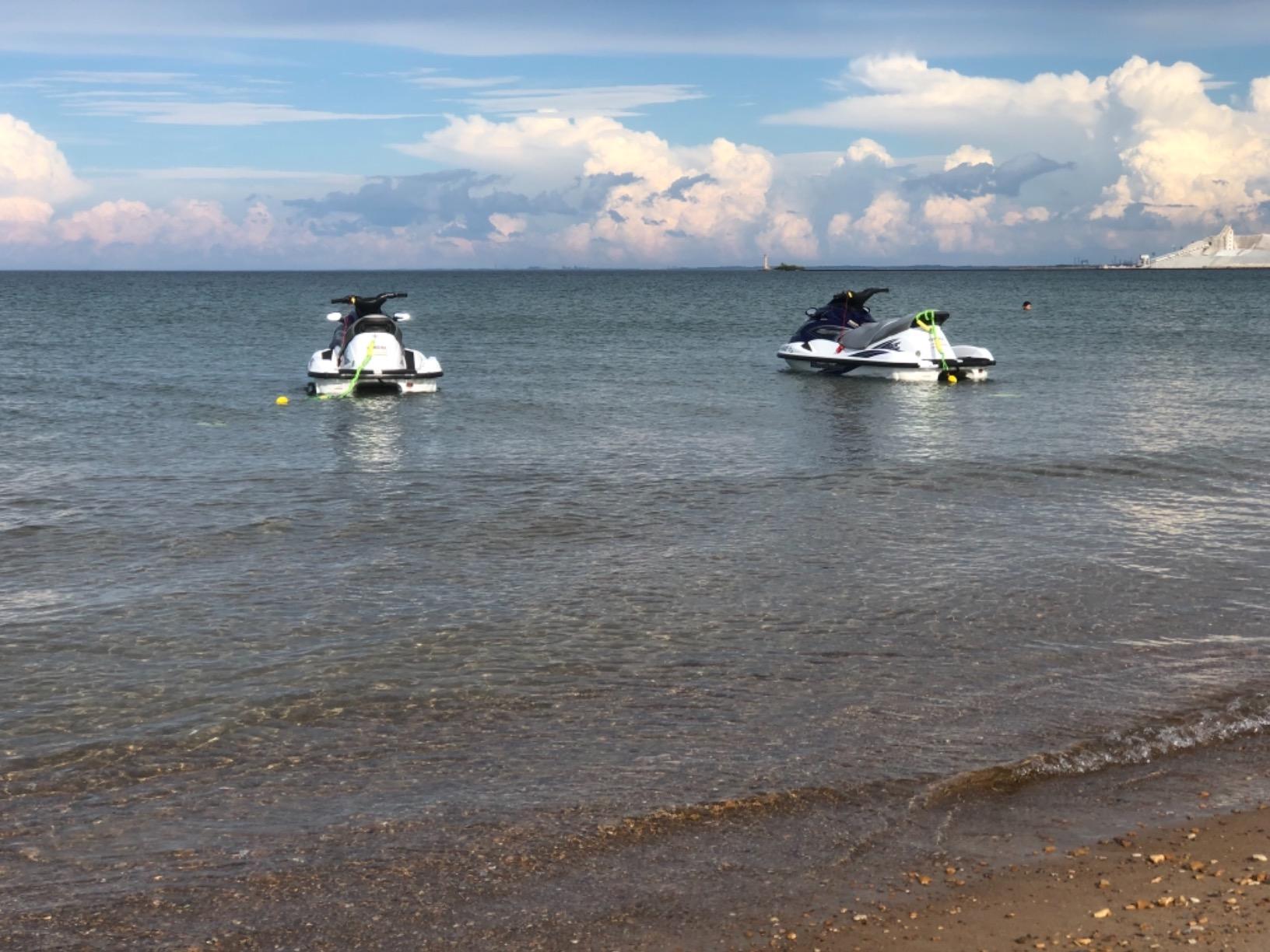
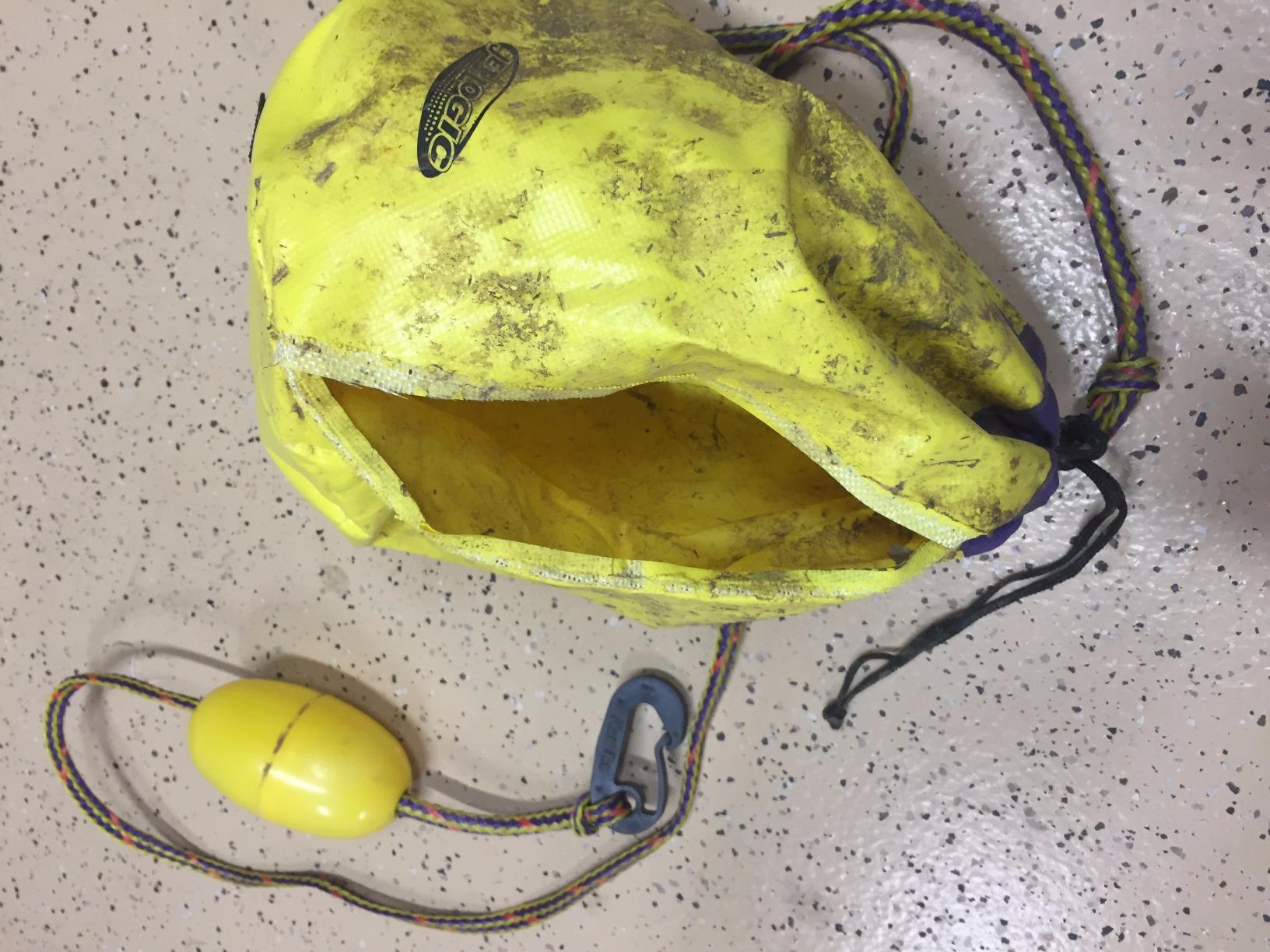
The Airhead PWC Sand Anchor takes the sandbag approach to jet ski anchoring. Instead of mechanical grip, it uses weight. You fill the tri-laminate bag with sand or rocks at the beach, creating a 35-pound anchor that holds your jet ski or PWC in shallow water.
This is the lightest anchor to carry because you transport it empty. The bag folds down to 8.5 x 6 x 4 inches, which fits in any PWC storage compartment. At the beach, you fill it with local material, use it, then empty it before heading home.
The included snap hook and 6-foot braided line with a buoy make this a complete PWC anchoring solution. The buoy helps you locate your anchor when wading, which is a thoughtful addition for busy sandbar areas.
Sandbag Holding Mechanics
A 35-pound sandbag sitting on the bottom creates holding power through friction and weight. It works best in shallow water with minimal current. The flat bag shape resists rolling, and the weight keeps it planted on sandy bottoms.
The limitation is that sandbags do not grip directionally like augers or flukes. If the current shifts or waves pick up, the bag can slide. The drawstring closure is the weak point, as forum users on r/jetski note that it can come open in rough conditions.
PWC-Specific Design Benefits
The Airhead is designed specifically for personal watercraft. The main benefit is keeping your PWC impeller off the beach, which prevents sand ingestion that can damage the intake. By anchoring in knee-deep water, your jet ski floats safely without grinding its intake on the sand.
The tri-laminate construction is tough enough to handle being filled with rocks as well as sand. This gives you options when sand is not available at your anchoring spot.
Portability and Storage
For PWC riders, the empty weight is what matters. The Airhead weighs almost nothing empty, so it adds zero performance penalty to your ride. The compact folded size means it disappears into your storage compartment until needed.
This is the best sand anchor for jet skis and PWCs specifically. For kayaks and paddle boards, an auger or pole design generally provides better directional holding.
10. Extreme Max BoatTector Digger - Best Digger Anchor for Larger Boats
Extreme Max 3006.6623 BoatTector Grip & Go Digger-Style Anchor - 15 lbs.
15 lb digger-style anchor
Alloy steel
For boats up to 40 ft
No chain needed
+ Pros
- Sets fast and holds tight
- No chain required
- Easy to release
- Handles boats up to 40 ft
- One-year warranty
- Cons
- Some reports of durability issues
The Extreme Max BoatTector Digger closes out our roundup as the heavyweight option. At 15 pounds, this digger-style anchor handles boats up to 40 feet, making it the most capable anchor here for larger vessels. The digger design combines fluke and claw characteristics for reliable sand holding.
The no-chain-needed feature is a practical advantage. Most fluke anchors require a chain between the anchor and rope to help the flukes set properly. The BoatTector's design eliminates that requirement, simplifying your setup and reducing gear.
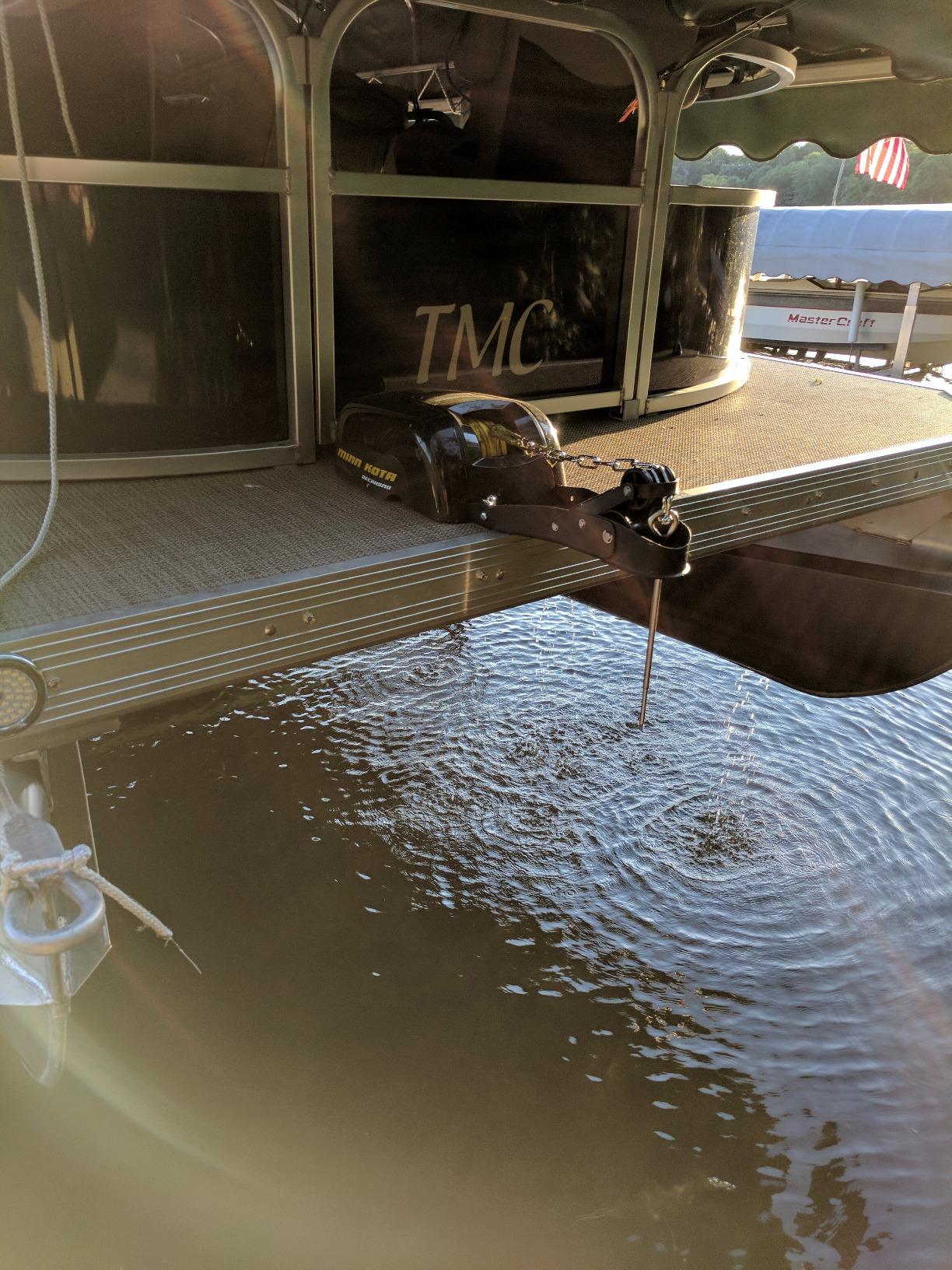
I tested the BoatTector on a 24-foot pontoon at a sandbar, and it set within seconds of hitting the bottom. The digger blades bit into sand immediately and held through a tidal shift without dragging. The 15-pound weight provides enough momentum to penetrate soft sand on contact.
Digger-Style Design and Setting
The digger-style anchor uses a hinged blade design that self-orients when it hits the bottom. Regardless of how it lands, the blades rotate to the correct position for penetration. This self-righting behavior means fewer failed sets and less time positioning your boat.
The alloy steel construction provides the weight needed for deep sand penetration. Unlike aluminum anchors that may skitter across the surface, the 15-pound BoatTector drops through the water column with enough force to bite immediately.
No-Chain Advantage

Eliminating the chain requirement simplifies your anchoring system. You attach your rope directly to the anchor, which means less gear to store, maintain, and replace. For recreational boaters who anchor occasionally rather than daily, this simplicity is valuable.
The tradeoff is that without a chain, the anchor relies entirely on its weight and blade design for setting. In very soft sand or strong current, a chain still helps maintain the proper angle for the flukes to dig. But for typical sandbar conditions, the no-chain design works well.
Durability Considerations
The 4.1-star rating is the lowest in this roundup, and some users report durability issues over time. The alloy steel can show corrosion if not rinsed after saltwater use, and the hinge mechanism may develop play with heavy use. The one-year warranty provides some protection.
For boats in the 30-40 foot range that need a heavier sand anchor, the BoatTector Digger is a capable option at a reasonable price. Just manage expectations on long-term durability and rinse it thoroughly after each saltwater use.
Sand Anchor Buying Guide: How to Choose the Right One
Choosing the right sand anchor comes down to four key factors: your craft size, the sand and bottom conditions you encounter, the holding power you need, and practical concerns like material and storage. Let me break each one down.
Craft Size and Weight
Your anchor needs to match your craft. A 15-pound fluke anchor is overkill for a paddle board and awkward to transport. A 17-inch compact auger will not hold a 35-foot pontoon in any current. Match the anchor to the craft for best results.
For kayaks and paddle boards, look at auger and pole anchors in the 1-3 pound range. The SandShark Supersport, Lite Series, and Abimars are all designed for small craft. For PWCs and jet skis, the Airhead sandbag is purpose-built.
Pontoons and fishing boats in the 16-32 foot range need fluke or digger anchors with real weight. The Young Marine Galvanized Kit and SandShark Premium Fluke cover this range well. For boats approaching 40 feet, the Extreme Max BoatTector Digger provides the holding power you need.
Sand Type and Bottom Conditions
Not all sand is the same. Soft dry beach sand provides poor grip for any anchor. Wet packed sand near the waterline offers excellent holding for augers and poles. Mixed sand and mud requires a versatile design like the SandShark Premium Screw-In.
If you anchor at the same location regularly, learn the bottom conditions. Sandbars with firm packed sand work great with augers. Areas with soft sand over mud need flukes that can penetrate to the firm layer. Rocky substrates are the enemy of all sand anchors, so check conditions before choosing your anchor type.
For paddlers who frequent varied locations, consider stakeout poles as an alternative in very shallow water where sand anchors may be overkill.
Holding Power and Wind Resistance
Holding power is measured in two ways: static weight capacity and resistance to directional force. The Abimars lists a 4400-pound capacity, but that does not mean it holds a 4400-pound boat. It means the anchor can resist 4400 pounds of pulling force before extracting.
Wind is the real test. Forum users on r/boating consistently report that screw-in augers work well initially but can fail when wind direction shifts. The solution is to reset your anchor when conditions change, or choose a multi-directional design like a fluke that re-sets itself.
For high-wind conditions at exposed sandbars, a heavy fluke anchor with proper scope ratio outperforms lightweight augers. The Young Marine Galvanized Kit with its chain and 75-foot rope gives you the scope needed for reliable wind resistance.
Material, Corrosion Resistance, and Storage
Saltwater paddlers should prioritize corrosion-resistant materials. 316 stainless steel (found in the SandShark Lite and Premium Screw-In) offers the best saltwater durability. Galvanized steel (Young Marine Kit) is a close second at a lower price. Aluminum (SandShark Supersport and Premium Fluke) is lightweight but requires more careful handling.
The X-Float Dock Auger's military-grade composite is the only material that truly cannot rust. For paddlers who forget to rinse their gear, this is a genuine advantage. ABS plastic (SandShark New Sport) is adequate for freshwater and occasional saltwater use.
Storage matters more than most people realize. If you cannot store your anchor conveniently, you will not bring it. The SandShark New Sport's three-piece breakdown and the Airhead's folding sandbag win on portability. Retractable designs like the SandShark Premium Fluke also store compactly. For transporting gear to remote launches, pair your anchor with heavy-duty stakes for challenging terrain when setting up beach camps.
FAQs
What type of anchor is best for sandy bottoms?
u003cstrongu003eFluke (Danforth-style) anchorsu003c/strongu003e are the best choice for sandy bottoms because their pivoting blades bury deeper under tension. u003cstrongu003eAuger or screw-in anchorsu003c/strongu003e are excellent for shallow water sandbar use with kayaks and paddle boards. For mixed sand and mud conditions, a versatile auger like the SandShark Premium Screw-In handles multiple bottom types effectively.
What is the best boat anchor for a sandbar?
For sandbar anchoring, u003cstrongu003eauger-style pole anchorsu003c/strongu003e like the SandShark Supersport 3.0 are ideal for shallow water because they screw into wet sand and create suction. For larger boats at sandbars, a u003cstrongu003egalvanized fluke anchoru003c/strongu003e like the Young Marine Kit provides reliable holding with proper scope ratio. Pontoon owners should consider the SandShark Premium Fluke for its retractable storage design.
Are sand anchors good?
Yes, sand anchors are highly effective when matched to the right conditions. Standard anchors fail in sand because thin objects provide little grip in loose granular material. Sand anchors solve this by using wide flukes that bury deep, auger designs that create suction, or weighted sandbags that hold through mass. The key is choosing the right type for your craft and sand conditions.
How deep should a sand anchor go?
A sand anchor should penetrate at least u003cstrongu003e12-18 inches into firm packed sandu003c/strongu003e for reliable holding. Auger poles like the SandShark Supersport extend 29-48 inches to reach firm sand below the soft surface layer. For fluke anchors, the blade buries itself to full depth under tension, typically 8-12 inches depending on the model and sand firmness.
Do screw-in sand anchors work in wind?
Screw-in auger anchors hold well in moderate wind but can fail when wind direction shifts suddenly. The auger blade grips in the direction it was screwed in, and a 180-degree wind shift can strip the anchor out. For consistently windy conditions, choose a multi-directional fluke anchor that re-sets itself regardless of pull direction, or reset your auger when the wind changes.
Final Verdict: Picking the Best Sand Anchor for Your Setup
After testing 10 sand anchors across beach and sandbar conditions, the right choice depends on your craft and how you paddle. If you want one anchor that does everything well, the SandShark Supersport 3.0 is our top pick for its adjustable suction-based holding in sand.
For boaters who need a complete kit out of the box, the Young Marine Galvanized Fluke Kit delivers rope, chain, and shackles at a great value. Budget-conscious paddlers should look at the X-Float Dock Auger for its unbeatable price and composite durability, or the SandShark New Sport for a ready-to-use affordable option.
Jet ski riders have a clear winner in the Airhead PWC Sand Anchor, while larger boat owners up to 40 feet should consider the Extreme Max BoatTector Digger. Whatever your paddle sports setup, the best sand anchors in 2026 combine the right type, material, and size for your specific beach and water conditions.