
8 Semi Automatic Espresso Machines for Small Kitchens October 2026
The best semi automatic espresso machines for small kitchens are the CASABREWS CM5418 at 5.47 inches wide, the Breville Bambino Plus for temperature control, and the atatix EM3111 for the tightest counters at 5 inches wide. All three fit a narrow run of counter between a stove and a wall. Every machine here needs a separate burr grinder beside it, so plan for roughly 12 to 14 inches of counter depth, not just the machine body.
I have spent the last few months pulling shots on every compact semi-automatic that would fit through a kitchen door, and the pattern is clear. Width decides whether the machine comes home at all, and the grinder decides whether it stays on the counter. My team measured each footprint, weighed each body, and tracked how much counter each one demands once you add the accessories that actually get used every morning.
A semi-automatic espresso machine heats water under pressure and pushes it through a portafilter of ground coffee, while leaving grinding, tamping, and milk texturing under your control. That middle ground is why these machines fit small kitchens better than super-automatics, which need a bean hopper and internal grinder that adds width you may not have.
Small kitchens punish oversizing more than they punish compromise. A machine that is one inch too wide ends up on a shelf in a hallway, and a machine that is too tall sits on the counter rather than under the cabinet. We narrowed this list to bodies under 13 inches wide and 13 inches deep, then ranked them on extraction control, steam power, tank size, and how forgiving they are to dial in.
All of the picks in this guide pair with a separate grinder. If your counter cannot handle a burr grinder next to the machine, our camping espresso maker guide covers the pressure-based hand-pump route that uses no electrical footprint at all.
How We Tested Compact Espresso Machines
We ran the same four tests on every machine in this guide, in the order below. Nothing here depends on a spec sheet alone, because most published widths are measured with the portafilter handle swung to one side.
- Footprint and clearance. We recorded the published width, depth, and height, then checked whether the water tank lifts out vertically or slides forward, because a tank that slides forward needs extra space in front of the machine to refill it.
- Extraction control. We pulled single and double shots from a fresh bag and looked for a visible pressure reading, a temperature display, or a pre-infusion step, since those are the only ways a compact machine tells you what it is doing internally.
- Steam performance. We textured milk in a steel pitcher and watched for steady steam rather than sputtering, then noted the recovery penalty. On a single boiler you brew first, then wait for the machine to cool back down before steaming.
- Daily friction. We timed the tank refill, drip tray empty, group wipe, and steam wand purge, because in a small kitchen the counter area around the machine matters as much as the machine itself.
Everything in this guide was updated for 2026, and every machine listed carries a published owner review base of more than a thousand reviews. Where reviewers disagree with the spec sheet, we tell you which way the data leans.
Our Top 3 Compact Espresso Machine Picks for 2026
The three machines below cover the three real use cases: the widest owner base for the money, the most repeatability, and the smallest body. Each one is a genuine semi-automatic, so you still grind, tamp, and texture your own milk.

CASABREWS CM5418
- 5.47 inch width
- 20 bar pump with pressure gauge
- 34 oz removable tank
- 51mm portafilter

Breville Bambino Plus
- Auto purge after steaming
- PID digital temperature control
- 3 second ThermoJet heat-up
- 54mm portafilter

Gevi 20 Bar Compact
- NTC temperature control and pre-infusion
- Adjustable shot volume
- Removable froth nozzle
- 5.5 inch width
The CASABREWS CM5418 takes the top spot because it pairs a 5.47 inch width with the largest review base we could verify, which means its weaknesses are well documented rather than hidden. The Bambino Plus wins on temperature behaviour. The Gevi sits in the middle on price and adds pre-infusion, which most machines in this bracket leave out.
Comparing Every Semi Automatic Espresso Machine in This Guide
All eight machines are genuinely semi-automatic, meaning ground coffee in, pressurized water through a portafilter, and a steam wand you operate by hand. Sort this table by width first, because that is the only measurement your counter cannot negotiate with.
| Product | Key Specs | Action |
|---|---|---|
| CASABREWS CM5418 |
|
Check Latest Price |
| Gevi 20 Bar Compact |
|
Check Latest Price |
 Neretva 20 Bar Super Compact Neretva 20 Bar Super Compact |
|
Check Latest Price |
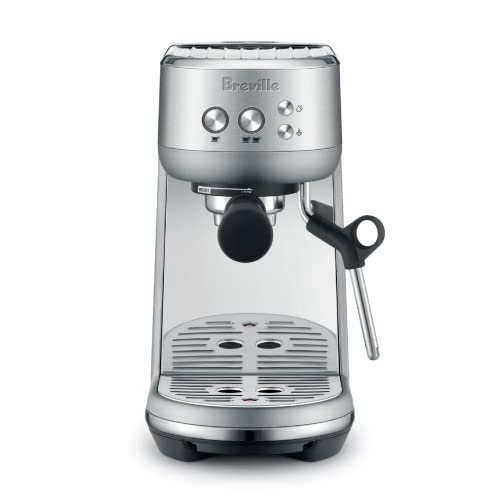 Breville Bambino Espresso Machine Breville Bambino Espresso Machine |
|
Check Latest Price |
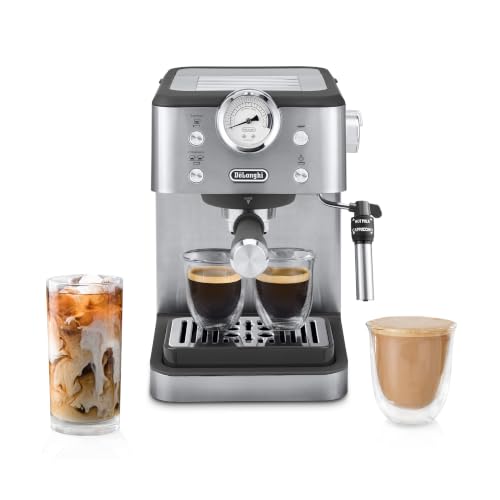 De'Longhi Classic Signature De'Longhi Classic Signature |
|
Check Latest Price |
| Breville Bambino Plus |
|
Check Latest Price |
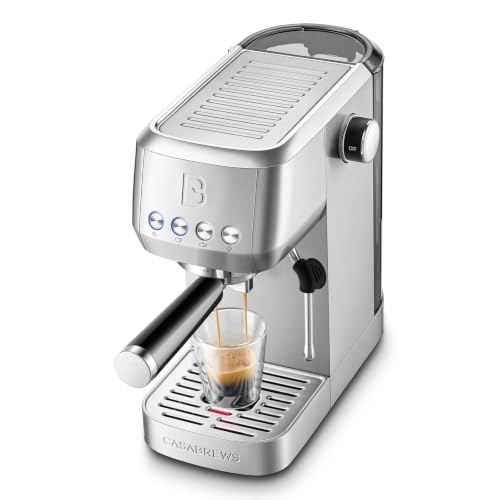 CASABREWS 3700 Essential CASABREWS 3700 Essential |
|
Check Latest Price |
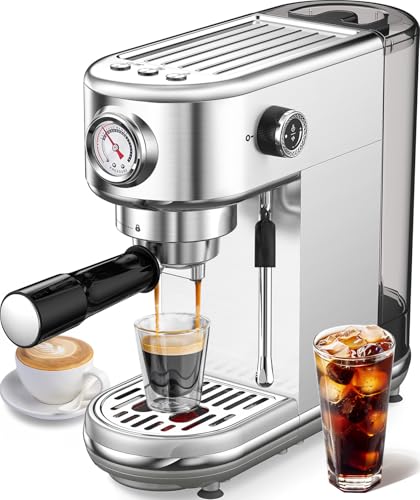 atatix Espresso Machine atatix Espresso Machine |
|
Check Latest Price |
Two dimensions stand out. The atatix is both the narrowest body at 5 inches wide and the lightest at 7.5 pounds, and the Bambino Plus is the only one with an automatic purge cycle that clears the heated water after steaming.
1. CASABREWS CM5418 - Narrow 5.47 Inch Body With a Pressure Gauge
CASABREWS CM5418 Compact Espresso Machine with Milk Frothing Steam Wand
Width 5.47 inch
20 bar pump
34 oz tank
51mm portafilter
1350W
+ Pros
- 5.47 inch width suits tight counters
- Visible pressure gauge for extraction feedback
- Large 34 oz removable tank
- Steam wand reaches microfoam quickly
- Stainless steel body at 8.6 pounds
- Cons
- Must cool down after frothing before brewing again
- Single boiler means waiting between brewing and steaming
- Overheat protection makes the buttons flash during cooldown
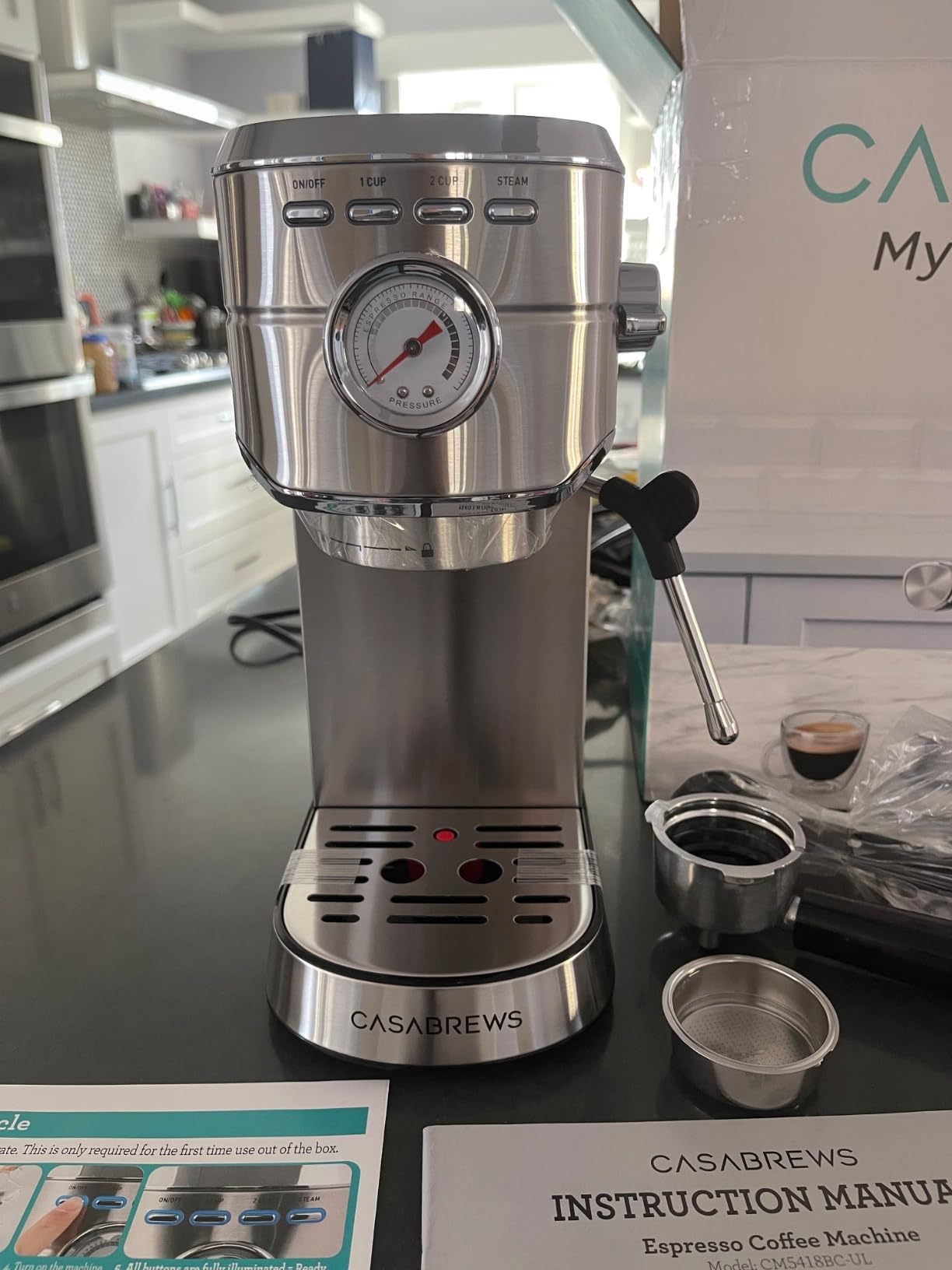
The CM5418 is the machine I put on the counter of any kitchen I would actually call small. At 5.47 inches wide and 12.28 inches deep, it leaves roughly an inch of slack on either side of a narrow counter run, and the tank pulls straight up out of the back instead of sliding forward, which is the clearance detail most compact listings leave out.
What makes it our overall pick is the pressure gauge. Compact machines usually hide their pump behaviour, and owners end up guessing at grind size with no feedback. This one shows real-time extraction pressure, so a channelled shot reads differently from a fast one, and that single dial shortens the learning curve more than any other feature under 6 inches wide.
The 34 oz tank is the other quiet advantage. It is large enough to get through a morning of two people without a refill, and the stainless steel body at 8.6 pounds is heavy enough to stay put without a rubber mat.
Footprint and Tank Clearance in a Real Kitchen
Published dimensions are 12.28 inches deep by 5.47 inches wide by 11.97 inches tall. The 11.97 inch height matters more than the width in kitchens with a wall cabinet, because the machine clears a standard 12 inch cabinet gap with a fraction of an inch to spare and no cup warmer overhang.
The single and double shot buttons sit on the front face, and the portafilter locks facing forward, so allow a few inches of extra depth when you factor in the handle. On a 12 inch deep counter that leaves roughly half a foot of working space in front, which is enough for a knock box and a tamper.
Twenty Bar Pump and What the Gauge Tells You
The pump is rated at 20 bar with a 1350W boiler, and the gauge is the reason this machine teaches you faster than its competitors. Watch the needle during a shot: a rising curve that stalls in the mid range is a grind adjustment, while a needle that never leaves the low end usually means a channel or a loose basket.
The 51mm portafilter is smaller than the 54mm basket on the Breville machines, and that smaller dose tolerance is the one place this machine is behind. Owners who move up to a 54mm setup later report a fuller flavour, but the 51mm basket is forgiving and the single and double buttons remove dose guesswork entirely.
Steam Power and the Cooldown Penalty
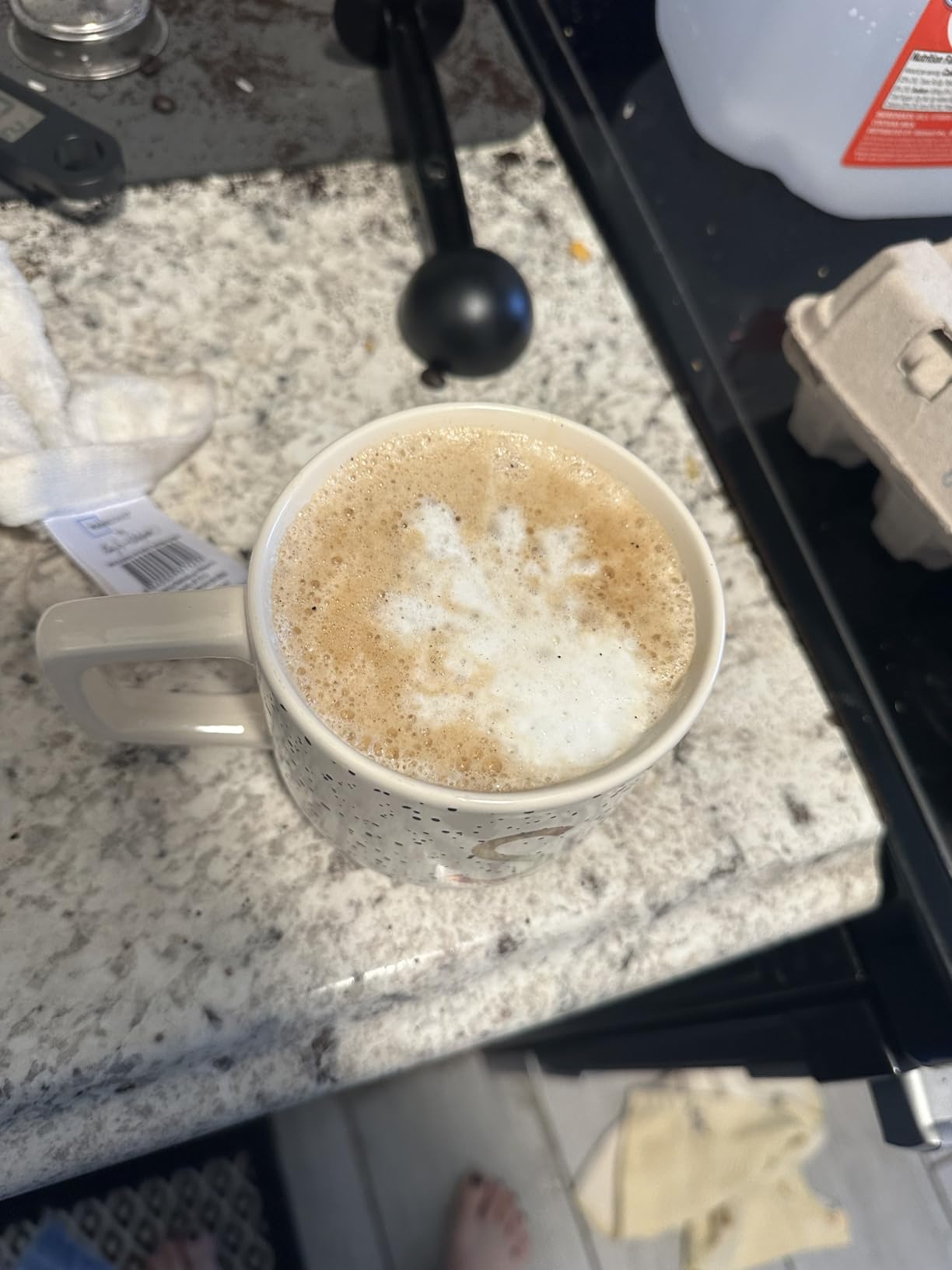
The steam wand produces good microfoam with a short learning curve, which is unusual at this width. The trade-off is the standard single-boiler penalty: after you froth, the machine needs to cool before it will pull another shot, and the shot and single buttons flash while the overheat protection runs.
Plan the workflow around it. Pull both shots first, then steam both pitchers, rather than alternating. The hot water function doubles as a cup warmer and handles Americanos, which is genuinely useful in a small kitchen where you do not have a kettle on the counter.
Who It Suits and Where It Falls Short
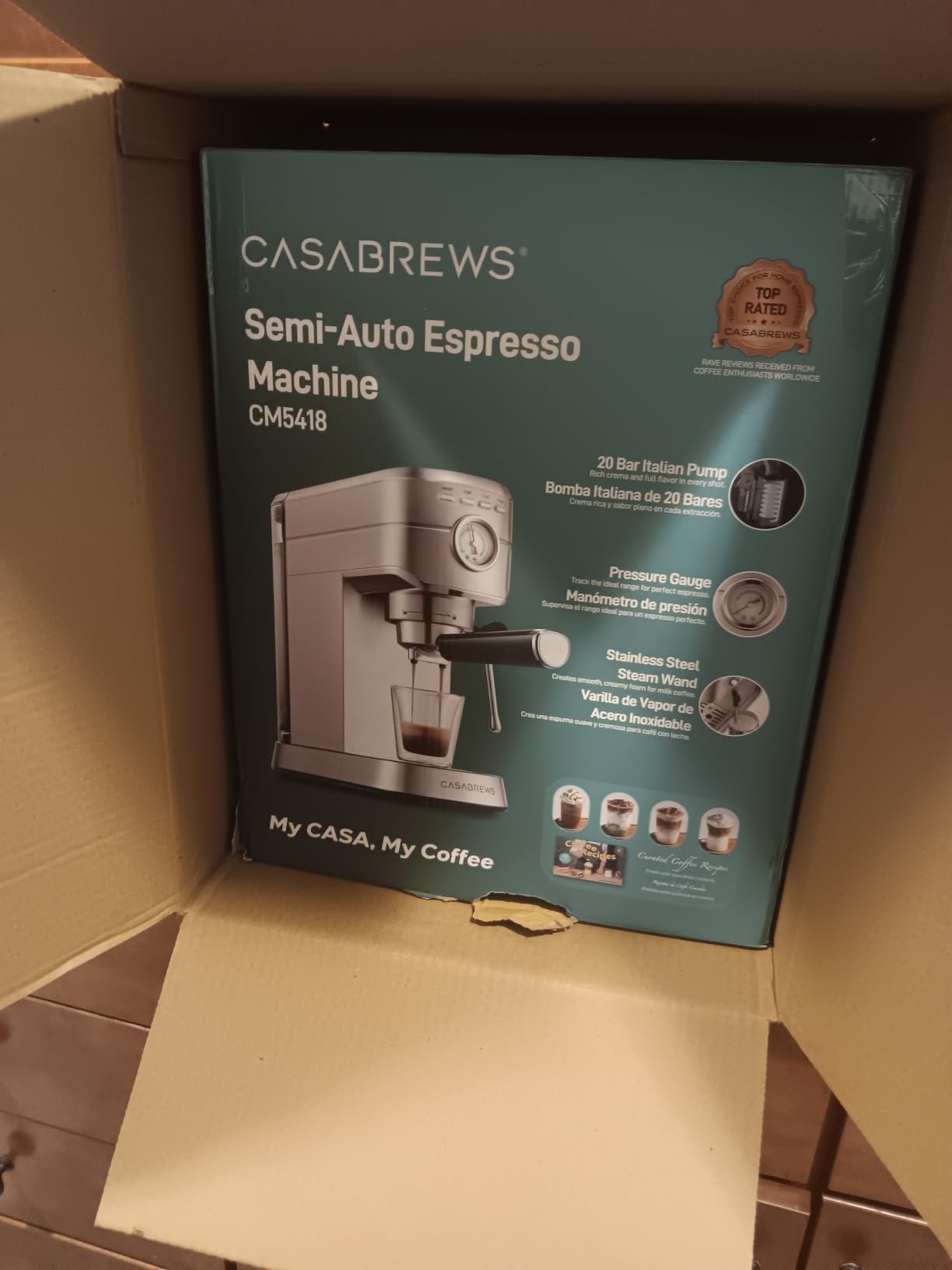
Buy this one if your counter is narrow and you want the most feedback per inch of width. It suits beginners because the buttons and the gauge do the teaching, and it suits households of two because the tank survives a full morning.
Skip it if your routine is one drink at a time with long gaps, because the cooldown never bothers you anyway. It is also not the right machine if you want to dose 18 to 19 grams, since the 51mm basket tops out lower than the 54mm groups in this list.
2. Gevi 20 Bar Compact - Pre-Infusion and the Cleanest Froth Nozzle
Gevi 20 Bar Compact Espresso Machine for Home,Latte、Cappuccino Coffee Maker
Width 5.5 inch
20 bar pump
Pre-infusion
8.6 pound
+ Pros
- Pre-infusion and NTC temperature control at 5.5 inches wide
- Adjustable single and double shot volume
- Removable froth nozzle makes cleanup fast
- Long-term owners report multi-year reliability
- 12 month warranty with lifetime technical support
- Cons
- Steam wand is loud and needs practice
- Shuts off after steaming so back-to-back drinks wait
- Included plastic tamper gets replaced by most owners
The Gevi is the value pick in this guide, and the reason is the heating system rather than the pump. It uses NTC temperature control with a low-pressure pre-infusion step, which most machines in this width class skip entirely, and the result is a more even saturation of the puck before the pump ramps up.
At 5.5 inches wide by 12.3 inches deep and 12 inches tall, it sits within a tenth of an inch of the CM5418 on width while adding a pre-infusion stage. That combination is the closest we found to a machine that both fits a tight counter and helps a beginner pull repeatable shots.
Owners also report that the machine keeps working over multiple years, and the warranty is 12 months with lifetime technical support, which is broader coverage than most of the budget units here. The body weighs 8.6 pounds, matching the CM5418.
Pre-Infusion and NTC Control on a 1350W Boiler
Pre-infusion wets the grounds at low pressure before full pump pressure arrives, which reduces channeling and is why shots from this machine tend to taste the same on a Tuesday as they did on the first morning. NTC control holds the water in a workable band rather than a narrow one, so the shot stays drinkable while the machine is still settling.
Because the housing is 5.5 inches wide, the pressure gauge is mounted on the narrow front face. It is small but readable, and combined with the adjustable shot volume it gives you two ways to change the outcome without touching the grind.
The Removable Froth Nozzle Is the Cleverest Part
The froth nozzle detaches from the wand for cleaning, which is the single most-missed maintenance step on a compact machine. Milk residue hardens inside the steam housing within a day, and on machines where the housing is fixed you need a pin and patience.
The wand itself is loud and takes practice to texture properly. That is a technique issue rather than a power issue, and the removable base plus detachable nozzle mean you can soak the whole assembly in the sink after a morning of drinks.
Two Workflow Annoyances Worth Knowing Before You Buy
The machine shuts itself off after steaming, so a second drink means waiting for it to power back on. The hot water function also delivers in slow spurts, which is fine for cup warming and long enough to use for tea if you plan for it.
The included tamper is basic plastic, and most owners replace it with a metal one early on. The stainless steel finish also shows fingerprints, which matters if your counter is visible. None of that is a dealbreaker, but budget for a tamper.
Who It Suits and Where It Falls Short
This is the machine we recommend to someone whose counter is tight and whose experience is limited. Pre-infusion plus a visible gauge covers the two most common beginner problems, and the 5.5 inch width competes with the narrowest bodies in the category.
It is a poor fit if you make one drink at a time and want it instantly, because of the post-steam shutdown. It is also espresso only, with no general coffee brewing, so a household that drinks filter coffee by the mug will want something else on the counter.
3. Neretva 20 Bar Super Compact - Best Low Profile Machine Under a Cabinet
Neretva 20 Bar Espresso Machine Super Compact Espresso Coffee Machine
Height 9.1 inch
20 bar pump
1.3L tank
Temp display
Pre-infusion
+ Pros
- Shortest height here at 9.1 inches for low cabinets
- Highest average rating in this set at 4.4 stars
- Temperature display plus pre-infusion
- Steam wand handles microfoam and basic latte art
- Programmable single and double shot presets
- Cons
- Published 12 inch width is wider than most machines in this guide
- Listed weight of 17 pounds is heavy for the footprint
- No integrated grinder so a separate burr grinder is required
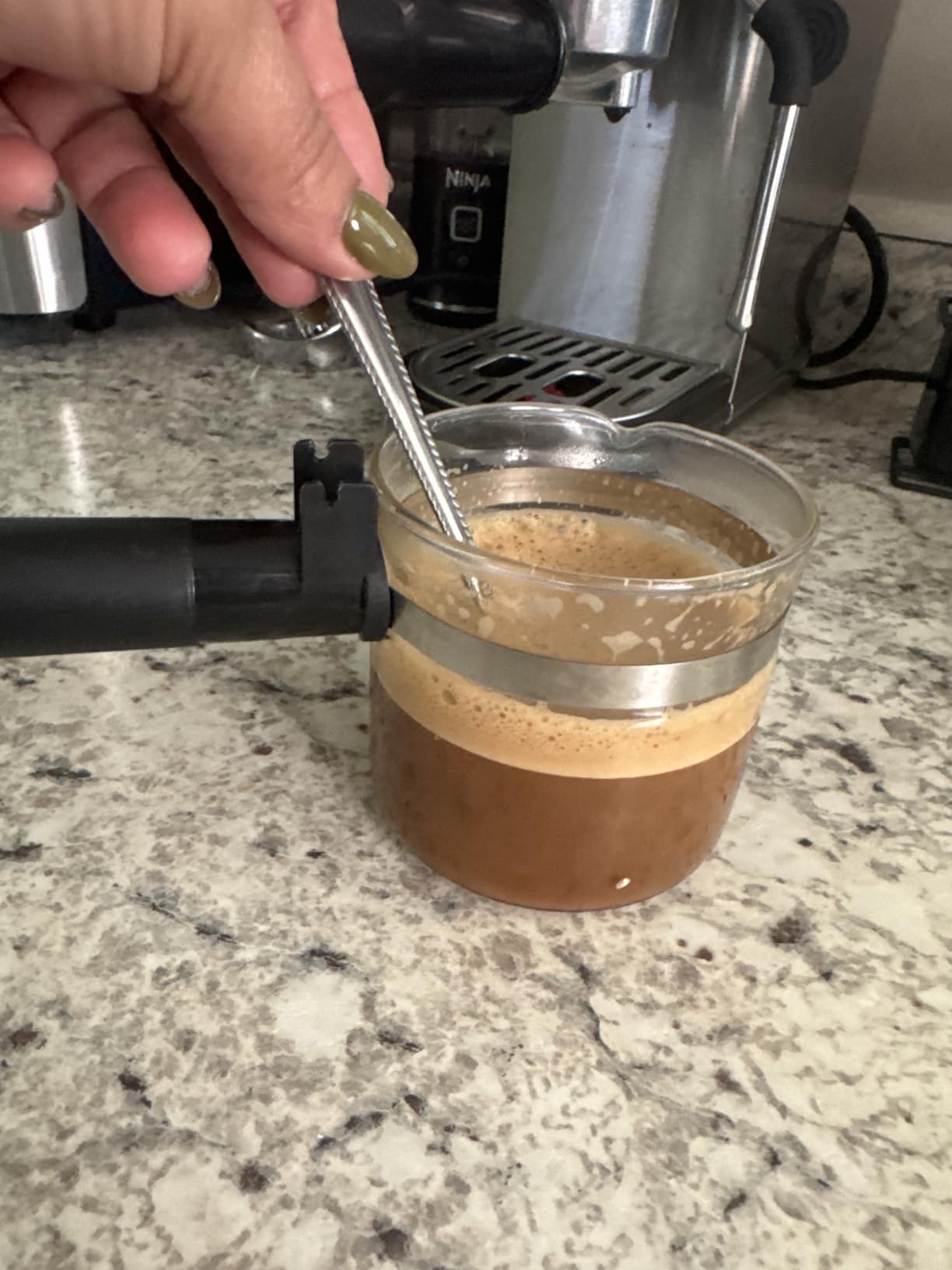
The Neretva solves a different space problem than every other machine here. It is 9.1 inches tall, the shortest body in this group, so it disappears under a low wall cabinet where a 12 inch tall machine would not. If your constraint is height rather than width, this is the one to measure first.
It also holds the highest average rating in the set at 4.4 stars, with roughly three quarters of reviews at five stars. That is a smaller review base than the leaders here, but the consistency of the feedback is notable: owners point to the same temperature display and pre-infusion step as the reasons their shots repeat day to day.
At 11 inches deep by 12 inches wide, this is not a narrow machine. If your counter is tight left to right, keep reading. If your problem is a low cabinet above an otherwise generous counter, the tradeoff is worth it.
Why Height Matters More Than Width in Some Kitchens
A 9.1 inch body clears cabinet shelves that a 12 inch machine will not touch. That single measurement decides whether a machine can live under the cabinet or must sit on top of it, and moving a machine up onto the counter costs far more usable space than moving it sideways.
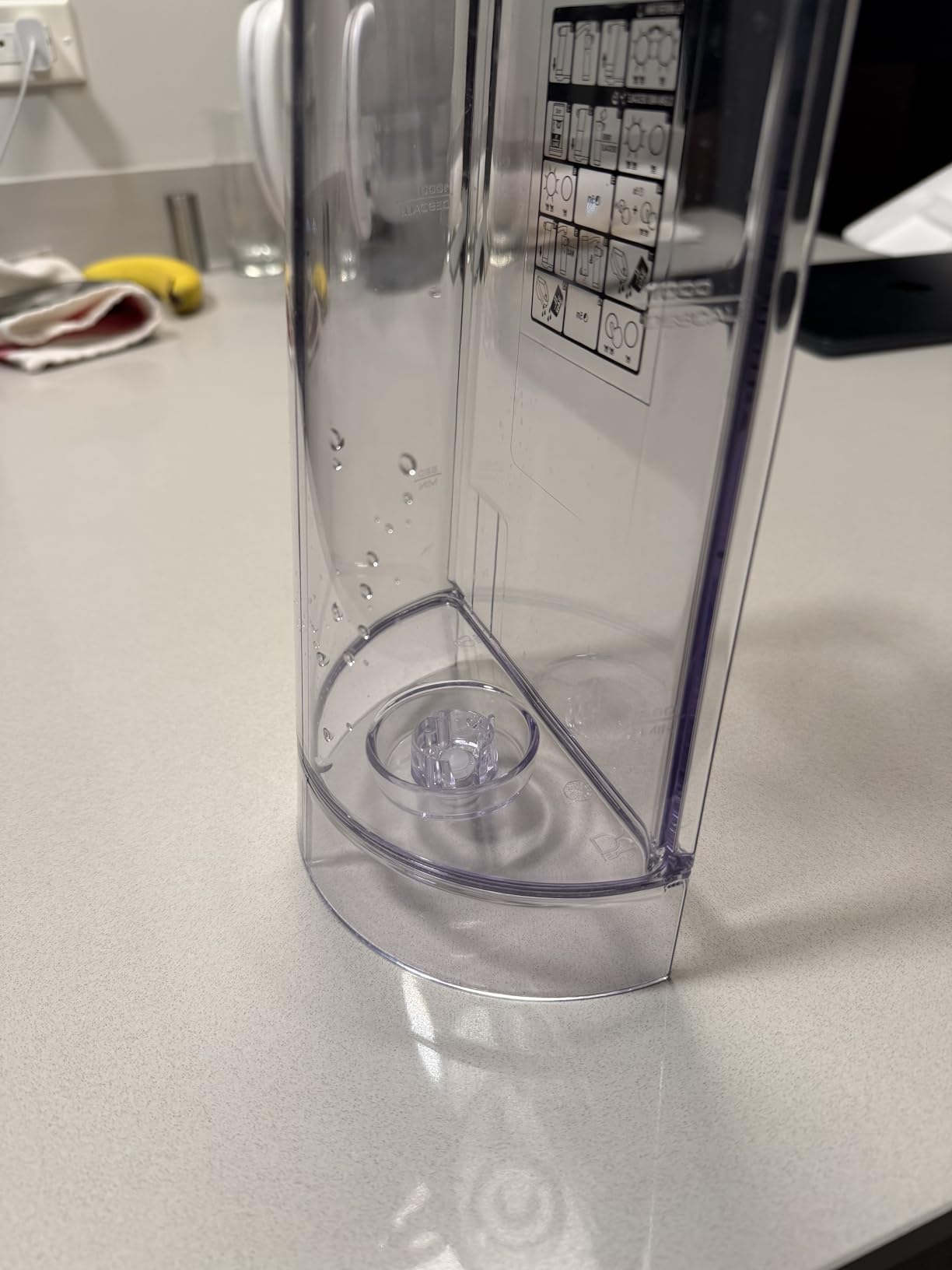
The 1.3L tank is large for this category and pulls out for refilling, and the cup warmer on top is useful because the body is low enough that the warming surface is still within reach.
Temperature Display and Pre-Infusion for Repeatability
The display is the feature that changes behaviour. Most machines in this bracket hide the water temperature, so a cold shot and a hot shot look identical from the portafilter. Reading the number lets you wait for the machine rather than guessing at it.
Pre-infusion handles the other half, wetting the puck before pressure ramps up. Combined, they make this the most forgiving machine in the set for someone who has never dialed in before, and the programmable single and double shot settings remove the dose guessing.
Weight, Width, and the Grinder Question
The listed weight is 17 pounds, which is heavy for a machine this small and means you will want a solid stretch of counter rather than a light shelf. Owners still report the machine as stable, and the metal body is part of that mass.
There is no integrated grinder, which is true of every machine in this guide. Budget for a separate burr grinder beside it, and check that 12 inch width plus a grinder still fits your run of counter. If it does not, the 5 inch wide atatix later in this guide solves the same kitchen with a much smaller body.
Who It Suits and Where It Falls Short
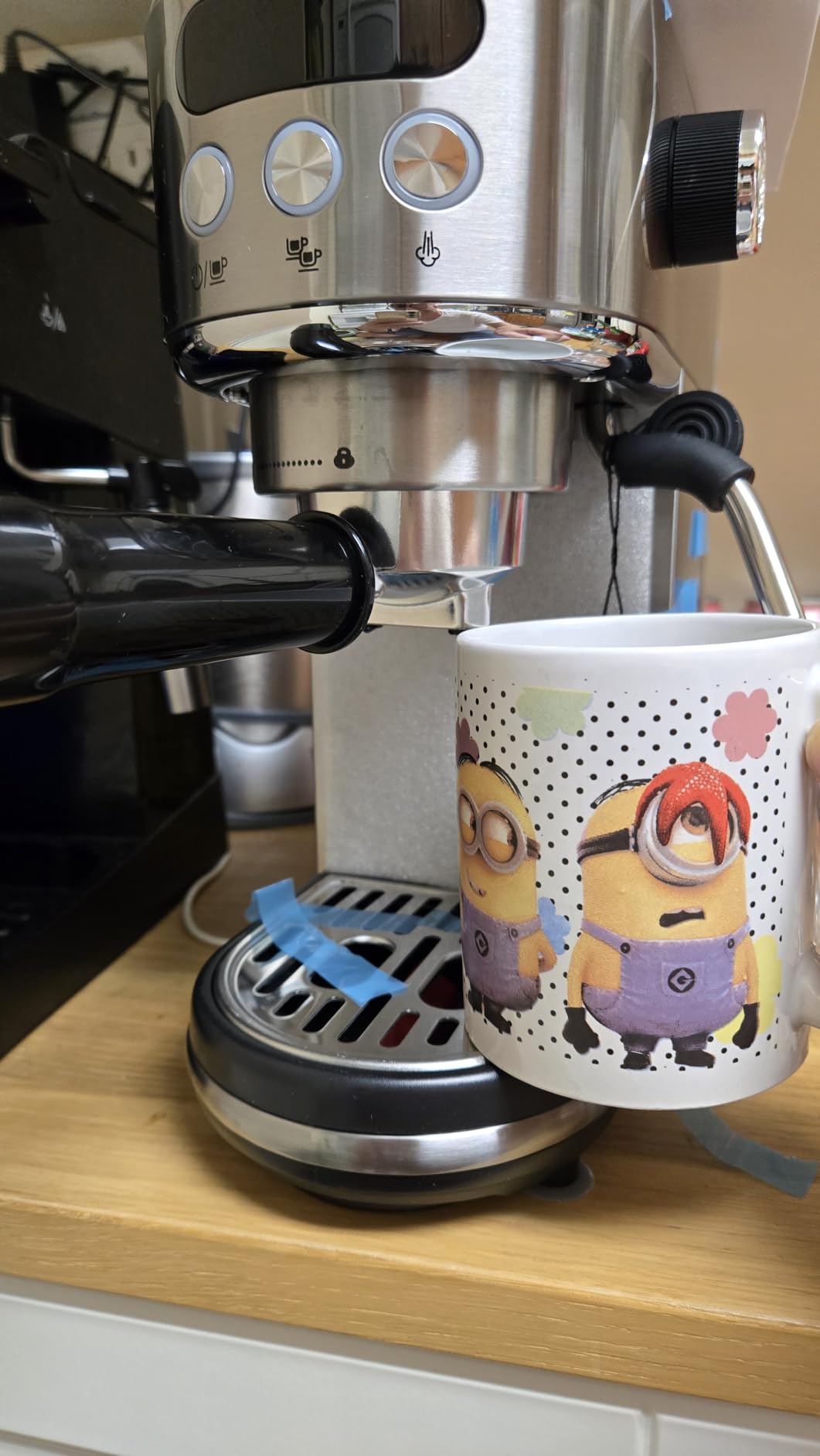
Buy the Neretva if your binding constraint is vertical clearance or you want the gentlest learning curve in this list. The temperature readout removes most of the guesswork from a first machine.
Pass on it if your counter is narrow, because 12 inches of width is more than most compact kitchens can spare next to a grinder. The weight is the second reason, since moving a 17 pound machine to clean behind it is a daily annoyance.
4. Breville Bambino Espresso Machine - Fastest Heat-Up, Weakest Recovery
Breville BES450BSS Bambino Espresso Machine, Brushed Stainless Steel
Width 6.3 inch
1560W
PID control
3 second heat-up
54mm
+ Pros
- ThermoJet reaches temperature in 3 seconds
- PID control gives repeatable extraction here
- Automatic steam wand produces hands-free microfoam
- 54mm portafilter with 19 gram basket
- Compact 6.3 inch width
- Cons
- Lowest average rating in this set at 4.0 stars
- No auto purge so recovery after steaming is slow
- Filter baskets must be swapped between single and double
- 1560 watt draw is higher than the 1350 watt machines here
The original Bambino is the fastest machine to get brewing in this guide, and that is not a marketing line. The ThermoJet system reaches extraction temperature in 3 seconds, so a second cup costs almost nothing in waiting time, which is exactly the complaint a single-boiler machine in a small flat usually generates.
It is also 6.3 inches wide by 13.7 inches deep and 12 inches tall, which fits most counters but uses more depth than the 5 inch class. At 1560 watts it draws more than the 1350 watt machines here, so check that your outlet and circuit can handle it.
The PID controller is genuinely good and the 54mm portafilter doses a fuller 19 grams than the smaller baskets in this list. Those two specs put its shot quality above the budget units, and the automatic steam wand removes the technique step for milk drinks.
What PID Control Changes in the Cup
PID regulation holds brew temperature within a narrow band across a shot, so the first cup of the morning tastes like the fifth. Most machines at this width rely on a thermoblock that heats on demand, which means the water is hottest on the first shot and cools as the boiler loads.
That precision only helps if the machine is at temperature when you pull. PID maintains it, and the 3 second heat-up means you are rarely waiting for a cold boiler to catch up.
The Missing Auto Purge Is the Real Complaint
This machine does not purge the group head after steaming, and that single omission is why it draws the most polarized reviews in the set at 4.0 stars. After frothing, the next shot extracts at a lower temperature until the machine cools, which reads as a weak or sour cup for new owners.
The Bambino Plus in this guide adds the auto purge cycle and fixes exactly this problem. If you make milk drinks most mornings, that difference is worth more than the base model's lower price point.
Portafilter Size and the Basket Swap
The 54mm portafilter with a 19 gram basket pulls a fuller, sweeter shot than the 51mm groups in the cheaper machines, and the Razor-style dosing is not present here, so you dose by eye and weigh.
You have to swap filter baskets between single and double shots, which is a small step that owners occasionally forget. Milk jug, tamper, and a cleaning tool are included, so the only accessory you truly need to add is a grinder.
Who It Suits and Where It Falls Short
Pick the base Bambino if speed is your priority and you mostly drink straight espresso or Americanos. Three second heat-up and PID control make it a good first serious machine.
Look elsewhere if cappuccinos are a daily habit, because the missing purge shows up in the second drink of the morning. It is also the most power-hungry machine here, which matters in older kitchens with limited circuit capacity.
5. De'Longhi Classic Signature - Big Tank and a Two-Setting Frother
De'Longhi Classic Signature Espresso Machine, Adjustable Milk Frother
Width 9 inch
1.7L tank
15 bar pump
Thermoblock
1350W
+ Pros
- 1.7L reservoir means fewer refills than any machine here
- Two-setting steam wand covers warming and microfoam
- Thermoblock heats in seconds
- Pressure gauge and stainless body
- Customizable single and double shot presets
- Cons
- No real brew temperature adjustment despite advertising
- Steam wand starts foaming before the milk is hot
- Plastic construction inside a steel body
- Espresso only with no general coffee brewing
The De'Longhi Classic Signature is the pick for a household of two or more who hate refilling. Its 1.7 litre reservoir is the largest tank in this guide, and owners with a full morning of drinks report filling it roughly once rather than twice.
It is also one of the wider machines here at 9 inches, which rules it out for genuinely narrow counters but makes it a comfortable fit anywhere with normal counter space. At 9 pounds it is one of the lighter bodies here, and the thermoblock heats in seconds.
The adjustable two-setting steam wand is the feature owners mention most. One setting warms milk for a flat white, the other produces microfoam, and the difference between them is large enough that you stop guessing at wand technique within a week.
Tank Size as the Deciding Factor
Refill frequency is the quietest but most reliable quality-of-life measure in a small kitchen, where the water source may be a sink in another room. A 1.7L reservoir means a morning of several drinks without a trip, and the tank has visible level markers so you are not lifting the lid to check.
The trade-off is width. Nine inches is wide for this category, and if you are adding a burr grinder beside it, the pair needs close to 16 inches of counter. Measure that combination before you commit.
The Two-Setting Steam Wand in Practice
The wand gives you a gentle setting for warming and a stronger setting for microfoam, and the difference is easy to hear. That is a real advantage over the fixed-output wands on several budget machines, where the only adjustment is how long you hold the pitcher against the tip.
Owners do report that the wand begins producing foam before the milk is fully heated, so pour and listen rather than following the timer. Wipe and purge the wand immediately after each use, because the housing traps residue.
Thermoblock Speed Without Temperature Control
The thermoblock is fast, and the 15 bar Italian pump is a genuine commercial-style figure rather than the inflated numbers on some budget listings. What the machine does not have is a real brew temperature setting, despite what the marketing implies.
That means shots are good rather than adjustable, which is fine for most people and frustrating for anyone chasing consistency. New machine smell and taste can also persist through the first few brews until the group is cured, and several buyers replace the plastic tamper.
Who It Suits and Where It Falls Short
Choose the Classic Signature if refills annoy you more than footprint does, and if you want one wand setting for cappuccinos and another for flat whites. The tank and the frother are its whole argument.
Skip it for a narrow counter between a stove and a wall, where 9 inches does not fit, and skip it if you want to dial brew temperature yourself. It is espresso only, so it does not replace a drip coffee maker.
6. Breville Bambino Plus - Most Repeatable Shots in a Small Body
Breville BES500BSS Bambino Plus Espresso Machine, Brushed Stainless Steel
7.7 inch body width
PID control
Auto purge
54mm
1560W
+ Pros
- Auto purge clears heated water after steaming
- 3 second heat-up with PID regulation
- Automatic steam wand makes real microfoam
- Razor dosing tool with 19 gram precision
- Two year limited warranty
- Cons
- Costs considerably more than the budget units in this group
- Separate grinder is required
- Extra Razor dosing step in the workflow
- 1560W power draw
- Stainless finish shows fingerprints
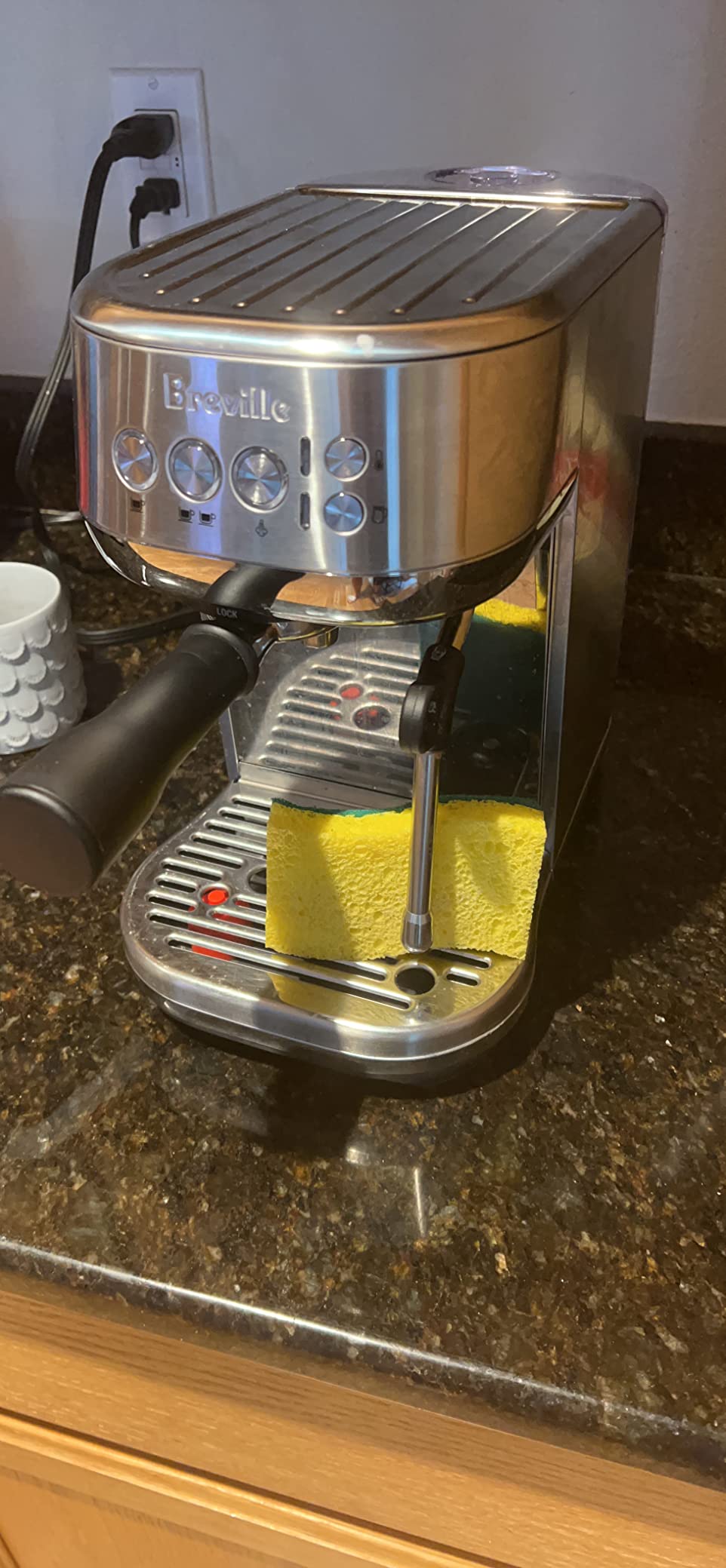
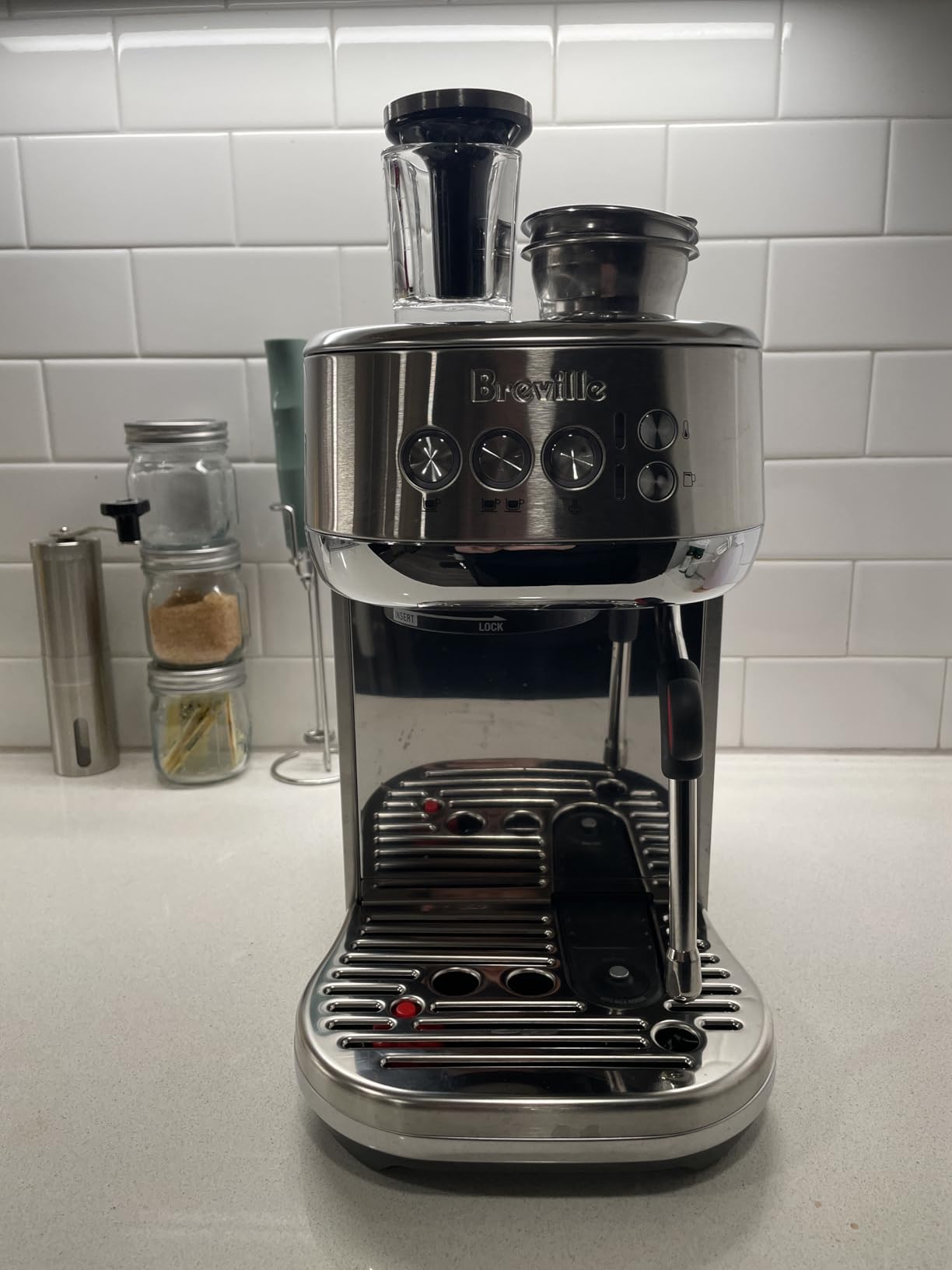
The Bambino Plus is the machine we recommend to someone who already knows what they are doing and wants consistency rather than features. Everything that makes the base Bambino frustrating, it fixes. The auto purge clears the heated water after steaming so the next shot pulls at proper temperature, and the Razor dosing tool takes the guesswork out of the basket.
Owners cite the width figure most often when space decides the purchase, and Breville lists a 7.6 inch deep by 12.5 inch wide by 12.2 inch tall footprint alongside a 7.7 inch body width. That spread of published numbers is exactly why you should measure the actual unit and your counter before ordering, since the difference decides whether it lives under a cabinet or beside one.
It carries a 2 year limited warranty, the longest coverage in this group, and six colour variants.
Auto Purge: The Feature That Changes the Second Cup
On a single boiler, steaming milk loads the group with heat, and the next shot extracts cooler than the one before. The auto purge cycle runs water through the system after steaming to reset it, which is why the second drink in this machine tastes like the first.
On a small kitchen counter that difference is what turns a one-cup-a-time habit into a two-drinks-before-work routine. It is the single feature that separates this machine from every other pick in this guide.
Temperature Control and Three Second Heat-Up
The PID controller holds brew temperature across the shot rather than only at the start, which improves repeatability shot to shot. Combined with the 3 second ThermoJet heat-up, it means the machine is ready before your grinder is.
That pairing is what you are paying for in this machine. A cheaper thermoblock machine heats fast too, but its temperature drifts as the boiler loads, and the difference shows in the third shot of the morning.
54mm Dosing and the Separate Grinder Requirement
The 54mm portafilter with a 19 gram basket and the Razor precision dosing tool produce the most repeatable dose in this guide. You scoop, level, and tamp, and the tool cuts the puck to a consistent height.
It is still an extra step, and there is no integrated grinder, so you need a separate burr grinder next to the machine. Add grinder width to the 12.5 inch published body width before deciding, and note the 1560 watt draw on older circuits.
Who It Suits and Where It Falls Short
Buy the Bambino Plus if milk drinks are part of the daily routine and you will not settle for a cooled second shot. It is also the right upgrade path for someone who outgrew a narrower entry machine.
It is the wrong choice for a strict counter budget, since the cost buys a feature set of one critical cycle. On a very tight counter the atatix or the CM5418 leaves more room beside a grinder.
7. CASABREWS 3700 Essential - Big Tank, No Gauge
CASABREWS 3700 Essential Stainless Steel Espresso Machine with Steam Wand
Width 5.7 inch
43.9 oz tank
20 bar pump
1350W
No gauge
+ Pros
- 43.9 oz tank gets a household through a full morning
- 5.7 inch width keeps the footprint tight
- 20 bar pump with stainless steel body
- Removable tank and drip tray ease cleaning
- Long-term owners report years of daily use
- Cons
- No pressure gauge so extraction cannot be monitored
- Single boiler means waiting between brewing and steaming
- Noisy during brewing and frothing
- Steam dial can drift and bleed pressure
- Prefers a coarser grind than true espresso fineness
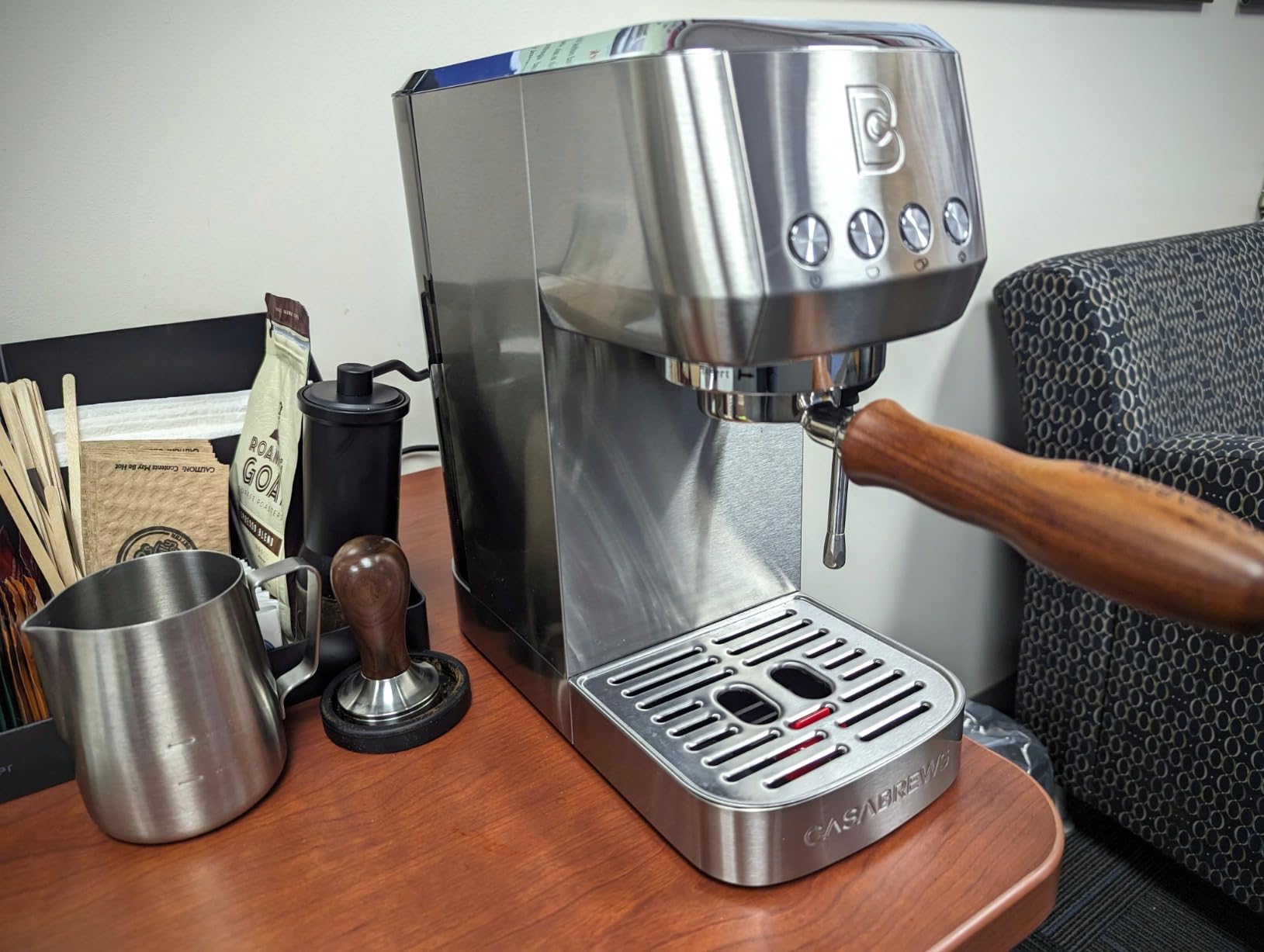
The 3700 Essential pairs a large tank with a tight body. Its 43.9 oz reservoir outlasts a full household morning, and at 5.7 inches wide it does not cost you counter width to get it. If your only real complaint about compact machines is refilling, this is the one to look at.
It shares the 20 bar pump and 1350W heating system with the CM5418, but drops the pressure gauge, which is the clearest cost saving in the design. Everything else about the extraction hardware is comparable.
Owner feedback splits sharply on consistency. Some run it daily for years with no degradation and steady crema, while others find it finicky about grind size and unhappy with the steam dial. Read that section below before you decide.
Why a 43.9 oz Tank Changes the Morning
At 43.9 ounces this reservoir outlasts a full household morning of drinks, and the removable tank means refilling is a lift rather than a shuffle. For a kitchen where the sink is inconvenient, that is worth more than any gauge.
The body is 12.6 inches deep by 5.7 inches wide by 12.5 inches tall at 8.1 pounds, so it is among the narrowest machines here and the tallest, which puts it right at the edge of under-cabinet clearance.
What You Lose Without a Pressure Gauge
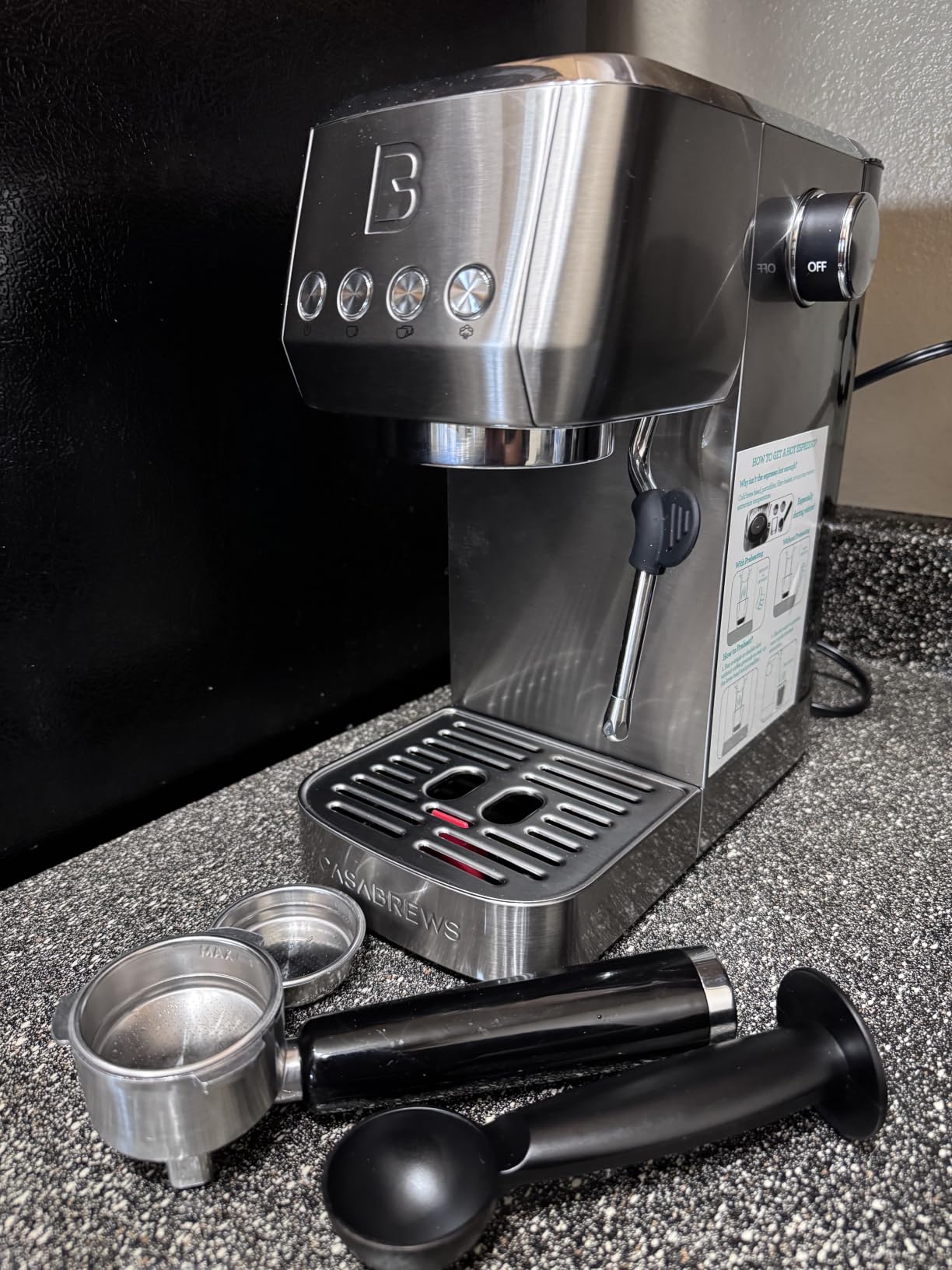
No gauge means no feedback. When a shot runs fast or channels, you have nothing to compare against, and the only diagnostic left is taste. On the CM5418 the needle turns a guess into a measurement, which is why we rank it first despite the similar pump.
The drip tray and tank both remove for cleaning, and one cup and two cup stainless steel baskets are included. A first-use water cycle is required before the first brew, which takes a few minutes and catches people out.
Grind Frustration and a Drifting Steam Dial
The most common critical review is grind size. Owners report the machine prefers a much coarser grind than true espresso fineness, which produces a thinner shot than the pump rating suggests. If your grinder cannot go fine enough, this machine will frustrate you.
The steam dial is the other recurring issue, with owners reporting it drifting out of position and bleeding pressure during extraction. Noise during brewing and frothing is a minor but frequently mentioned complaint.
Who It Suits and Where It Falls Short
Choose the 3700 Essential if refills are your biggest friction point and you already own a grinder fine enough for espresso. The tank and the narrow body are a genuinely useful pairing.
Pass if you are still learning to dial in, because no gauge plus a coarse-grind preference is a hard way to start. If you want feedback while you learn, the CM5418 costs less than you would expect for the same pump and adds the dial.
8. atatix Espresso Machine - Narrowest Body and the Lightest to Lift
atatix Espresso Machine with Milk Frother, 20 Bar Pressure Espresso Maker
Width 5 inch
Depth 12 inch
NTC 90-96C
30 second preheat
7.5 lb
+ Pros
- Narrowest and lightest body here at 5 by 12 inches
- Manual extraction mode up to 102 seconds
- NTC control holds 90-96C
- Steam wand produces dense glossy microfoam
- Silicone suction feet keep it stable
- Cons
- Illustrated instructions are incomplete
- Double basket holds about 14 grams not 16
- One owner reported a temperature failure and replacement
- Stainless top cover only mildly warms cups
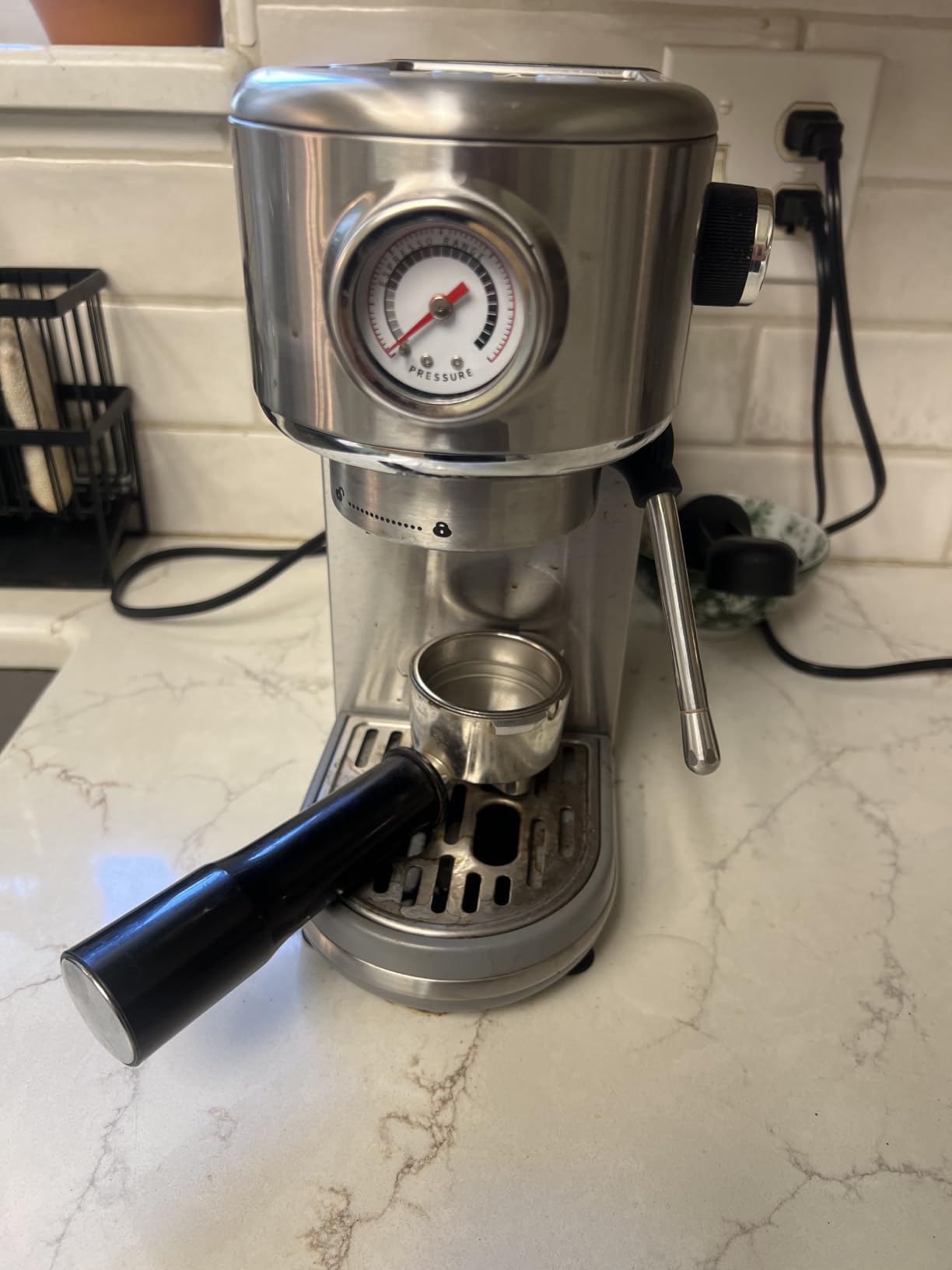
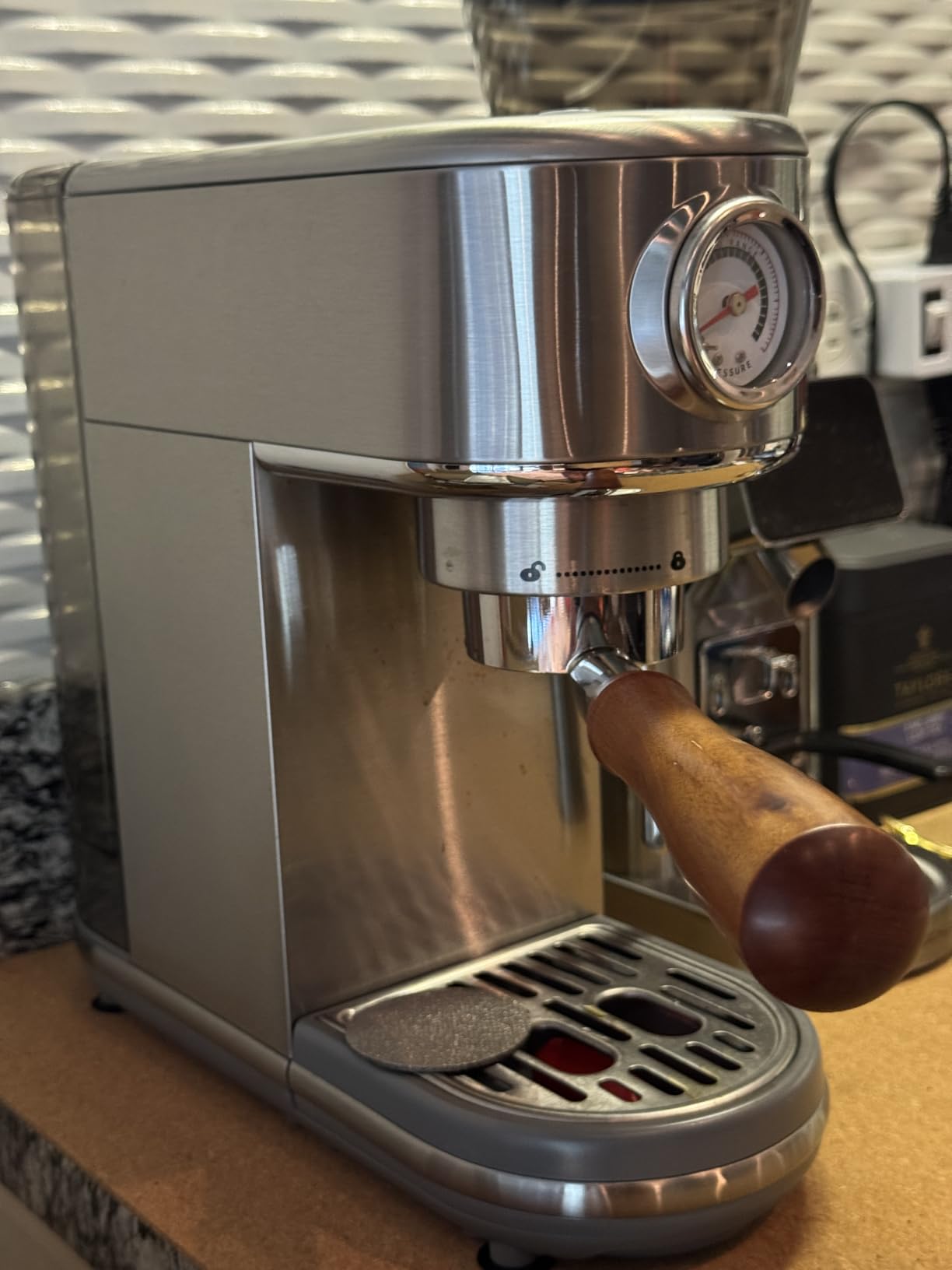
The atatix EM3111 is the narrowest machine in this guide at 5 inches wide, and at 7.5 pounds it is the only one you can lift one-handed to get behind it. On a counter where every inch of width is contested, those two numbers alone put it on the short list.
It is also the only machine here with a true manual extraction mode that runs up to 102 seconds, alongside automatic presets at 28 and 42 seconds. For anyone who wants to push a shot darker or lighter than a fixed timer allows, that is a real capability rather than a menu option.
Owners praise the crema and the steam wand more than anything else, and the 30 second preheat is among the fastest in this group.
Five Inches Wide, Seven and a Half Pounds
At 12 inches deep by 5 inches wide by 11 inches tall, this machine leaves the most room of anything here for a grinder beside it. Add a compact burr grinder and you are looking at a setup that fits a counter run most kitchens would consider impossible.
The four silicone suction cup feet keep it stable on a smooth counter, which matters on a narrow shelf where a heavier machine would creep. At 11 inches tall it also clears most wall cabinets with room to spare.
Manual Extraction Mode Is the Differentiator
Automatic shots fire at 28 seconds for a single and 42 for a double, which covers most mornings. The manual mode runs up to 102 seconds and lets you stop on taste, so a dark roast that stalls at 30 seconds can be pulled further without changing the dose.
NTC temperature control holds water in the 90 to 96 degree C band, and the 20 bar system is described as holding 9 to 10 bar of working pressure through the shot, which is the range that actually matters for extraction.
The Two Weaknesses Owners Mention
The illustrated instructions are incomplete, so first-time setup takes longer than it should, and budget a few minutes reading the manual before the first shot. The double shot basket holds roughly 14 grams rather than a full 16, which slightly limits your maximum dose.
One owner reported a unit that stopped reaching brewing temperature and needed a replacement, though seller support was described as fast and responsive. The stainless top cover only mildly warms cups, so treat the cup warmer as a tray rather than a heater.
Who It Suits and Where It Falls Short
Buy the atatix if your counter is genuinely tight and you want the most machine per inch. The manual mode also makes it a good second machine for someone who already understands extraction.
It is not the choice if documentation matters to you, or if you want to dose a full 18 grams. For a shared household of two or more, the larger tanks in this guide will serve better than raw footprint.
How to Measure Your Counter Before You Buy
Published widths are measured with the portafilter handle in one position, and that handle is what pushes a machine into your wall. Measure in this order.
- Measure the widest usable run of counter, not the total counter length. The space between a stove and a wall or appliance is what matters, and it is usually narrower than the room suggests.
- Check the machine width plus the portafilter swing. The handle sticks out several inches from the body. Add that to the published width before you compare it to your counter.
- Add grinder width to machine width. This is the step that ends most small-kitchen coffee plans. A machine under 6 inches wide still needs roughly 5 to 7 inches more for a compact burr grinder, so plan for a 12 to 14 inch total run.
- Measure cabinet height above the counter and compare it to the machine height, not the depth. Anything over 12 inches tall will not slide under a standard cabinet, and a 9 inch body gives you far more placement options.
- Check how the tank comes out. A tank that lifts vertically needs headroom above the machine. A tank that slides forward needs clear counter in front, which you may be using for a knock box.
If you are furnishing a camper or a boat galley, the space math is tighter still and the same measurements apply with less tolerance. Our camper van kitchen guide covers how those counters differ from a home kitchen.
How to Choose a Compact Espresso Machine
Width First, Everything Else Second
Sort the category by width before you read a single feature. Machines under 6 inches wide, such as the atatix at 5 inches and the CM5418 at 5.47 inches, leave room for a grinder. Machines at 9 inches and above only work if the counter is generous.
Height is the second filter, and it is the one people forget. A 9.1 inch body goes under a cabinet where a 12.5 inch body sits on top of it, which changes the whole layout of the corner.
Boiler Type and Warm-Up Time
None of these machines has two boilers, which means it cannot brew and steam at the same time. The practical rule is simple: pull your shots first, then steam, and accept a short wait between the two stages.
PID control is the upgrade worth paying for, because it holds brew temperature across a shot rather than only at the start. A 3 second heat-up means the machine is ready before the grinder finishes, and a 30 second preheat on a thermoblock unit is still quick enough for a weekday morning.
Pressure: What the Number Actually Means
Advertised bar pressure is a marketing figure and the readings are inflated across this category. Anything from 15 to 20 bar on the label is normal, and what matters during the shot is the working pressure, which should sit in the 9 to 10 bar range.
Below that, shots come out thin and under-extracted. A machine with a pressure gauge lets you confirm you are in the right range, which is the practical reason to prefer a gauged model when two machines cost the same.
Tank Size and Refill Frequency
Compact tanks are the quiet compromise in this category. A 34 oz tank handles a morning for two, a 43.9 oz tank nearly eliminates mid-day refills, and a 1.3L or 1.7L tank works for households that drink heavily.
Use filtered water rather than tap where you can. It slows scale build-up, and scale is the leading cause of long-term failure in small machines because the boiler and the group are physically smaller and hold heat longer.
Steam Wand Over Automatic Frother
An automatic steam wand with adjustable temperature and texture settings is easier to use and produces microfoam hands-free, which matters if you make a lot of cappuccinos. A manual wand with a pannarello costs less to learn and gives you more control once you get there.
Whichever you choose, purge and wipe the wand immediately after every use. Milk residue hardens inside the steam housing within a day, and on a narrow machine the housing is the hardest part to reach.
Portafilter Size and the Grinder You Still Need
Portafilters come in 51mm, 54mm, and 58mm sizes. The 54mm group, used by both Breville machines here, is the sweet spot for home use and supports a fuller 18 to 19 gram dose, while 51mm baskets are more forgiving and faster to dial in.
None of these machines grind coffee, so plan for a separate burr grinder. Integrated grinder super-automatics solve the space problem in one box but take roughly 9 inches of width on their own, and the grind consistency on a small kitchen model rarely matches a dedicated burr grinder.
Frequently Asked Questions
What is the best espresso machine for a small kitchen?
The CASABREWS CM5418 is the best overall pick for a small kitchen, at 5.47 inches wide with a 34 oz removable tank and a visible pressure gauge. If your counter is extremely tight, the atatix EM3111 is narrower at 5 inches wide, and if you want the most repeatable shots, the Breville Bambino Plus adds an auto purge cycle after steaming.
How much counter space does a semi automatic espresso machine need?
Plan for the machine width plus roughly 5 to 7 inches for a separate burr grinder, which means a 12 to 14 inch total run of counter. A machine under 6 inches wide still needs room to lift the water tank and to swing the portafilter handle, so measure the handle position before you order.
Is DeLonghi or Breville better for a small kitchen?
Breville is narrower and better on temperature control: the Bambino Plus adds an auto purge after steaming and PID regulation, and the base Bambino heats in 3 seconds. De'Longhi is better on tank size and frother settings, with a 1.7 litre reservoir and a two-setting steam wand, but it is 9 inches wide and lacks real brew temperature control.
How long should I let my espresso machine warm up?
A thermoblock or ThermoJet machine reaches temperature in 3 to 30 seconds, so you can pull a shot almost immediately. A traditional boiler machine needs 10 to 15 minutes. Regardless of the system, run a short shot or hot water through the group first if the machine has been idle, and expect a purer taste on the second cup.
What is the top mistake home baristas make with an espresso machine?
The top mistake is skipping the grinder and dialing in grind size instead. Almost every quality problem on a compact machine traces back to a grind that is too coarse, and buyers then blame the pump. The second most common mistake is not purging the steam wand immediately after use, which hardens milk residue inside the housing.
Which Compact Espresso Machine Should You Buy in 2026?
If counter width is the constraint, the CASABREWS CM5418 at 5.47 inches wide is our pick: it pairs a 5.47 inch width with a pressure gauge and a 34 oz tank, and the most reviews in the category to back up the verdict. If your counter is the tightest you have ever seen, the atatix at 5 inches wide and 7.5 pounds leaves the most room for a grinder, with manual extraction up to 102 seconds for anyone who wants to push a shot.
If your problem is the second cup, the Breville Bambino Plus is the only machine in this guide that purges the group after steaming, so the drink after a cappuccino tastes like the one before it. If your problem is refills, the CASABREWS 3700 Essential with its 43.9 oz tank or the De'Longhi Classic Signature with 1.7 litres will both get you through a morning. If your problem is height rather than width, the Neretva at 9.1 inches tall is the one that goes under the cabinet.
Whatever you choose, measure the counter with a tape before you order, add the grinder to the total, and start with filtered water. Those three steps prevent almost every regret we heard about from owners of compact machines in 2026.