
12 Best Suitcases for College Students (October 2026)
If you are moving into a dorm in the next few months, the best suitcases for college students are not the biggest bags on the market. They are bags that fit the square footage of a dorm room, roll with one hand across a parking lot while the other hand is full of boxes, and still work in year four. I have spent the last several months comparing twelve carry-ons and checked bags on exactly those terms, and this roundup covers every size and shell type worth your money.
Most of the advice out there is written for vacationers, and it is misleading for students. A vacation bag gets used twice a year and then sits in a closet. A college bag gets dragged to the airport four times a year, doubles as an under-bed storage unit between semesters, and is loaded with textbooks, a laptop, and an entire season of clothes. That changes which features actually matter.
Here is my short version before the details. If you want one bag and you are not picky, the Amazon Basics 21-inch Hardside Carry-On is the one I would buy, because it has the deepest review history on this list and it slides anywhere a dorm needs a bag. If you plan to fly rather than drive, weight matters more than capacity, and the Travelpro Maxlite 5 is the lightest full-size softside here. If you drive home every break, skip the carry-on entirely and look at the 28-inch DUKAP Inception.
Quick picks: the short list
- Best overall suitcase for college students: Amazon Basics 21-inch Hardside Carry-On with spinner wheels, expandable up to 25 percent, 34 liters, and a scratch-resistant ABS shell.
- Best value: Rockland Melbourne 20-inch Hardside Expandable, 38 liters, 360-degree spinners, aluminum telescoping handle, and a 5-year manufacturer warranty.
- Best durable hardside: Samsonite Freeform Hardside Carry-On, a polycarbonate shell weighing 6.5 pounds with a 10-year warranty and a built-in TSA lock.
- Best for dorm storage: Amazon Basics 18-inch Medium Softside, 31 liters and 5.5 pounds empty, small enough to tuck under most lofted dorm beds.
- Best for driving home with a full semester: DUKAP Inception 28-inch checked bag, a 28-inch hardshell for students hauling clothes and bulky items between a dorm and home.
- Top rated with a large review base: LEVEL8 Grace 20-inch Expandable, 4.5 stars across more than 6000 reviews, with a front laptop bay and eight rubber-covered spinner wheels.
A note on how I picked these. Every bag below has spinner wheels, because two-wheel rollers are miserable to move across a campus sidewalk and forum complaints about them are constant. I weighted empty weight heavily, warranty length second, and shell material third. I ignored capacity beyond a point, because students almost always overpack and then cannot store what they bought. A College Confidential parent who posted about trying Travel Pro, Briggs and Riley, Tumi, Samsonite spinners, Away, and Pathfinder over years of family travel settled on warranty terms as the deciding factor, and that matches what I saw in the review data here.
Our top 3 college suitcases for carry-on-heavy school years

Amazon Basics 21-inch Hardside Carry-On
- 34-liter expandable capacity
- 21-inch cabin-friendly size
- Four 360-degree spinner wheels
- Scratch-resistant ABS hard shell
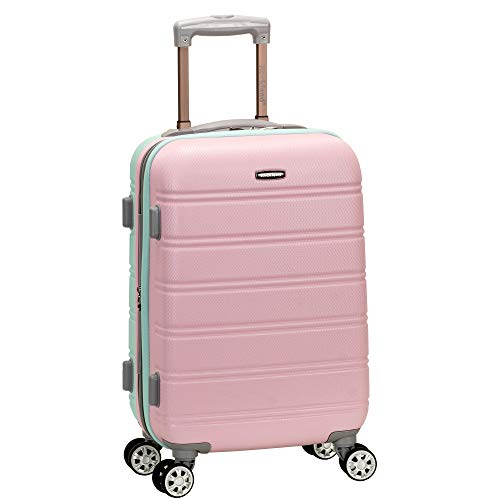
Rockland Melbourne 20-inch Hardside
- 38-liter capacity
- Aluminum telescoping handle
- 360-degree spinner wheels
- 5-year warranty
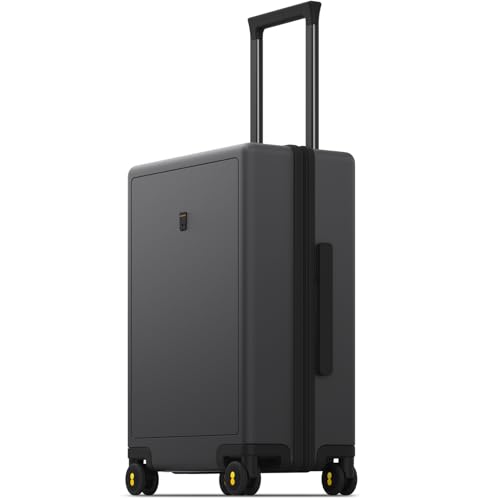
LEVEL8 20-inch Polycarbonate Carry-On
- 3-layer polycarbonate shell
- 8 quiet spinner wheels
- 4-level aluminum handle
- 40-liter capacity
The Amazon Basics 21-inch takes the top slot on evidence, not on prestige. More than 62000 reviews at a 4.4 average is the largest sample on this list, and a large sample is what tells you whether a failure mode is real or just a handful of complaints. The Rockland earns its spot on warranty: 5 years is unusual in this price class, and 38 liters is more usable space than the Amazon Basics offers. The Samsonite is here because it answers the failure question directly, with a polycarbonate shell that survives baggage handling and a 10-year warranty behind it.
Comparing all 12 best suitcases for college students in 2026
| Product | Key Specs | Action |
|---|---|---|
| Amazon Basics 21-inch Hardside Carry-On |
|
Check Latest Price |
| Rockland Melbourne 20-inch Hardside |
|
Check Latest Price |
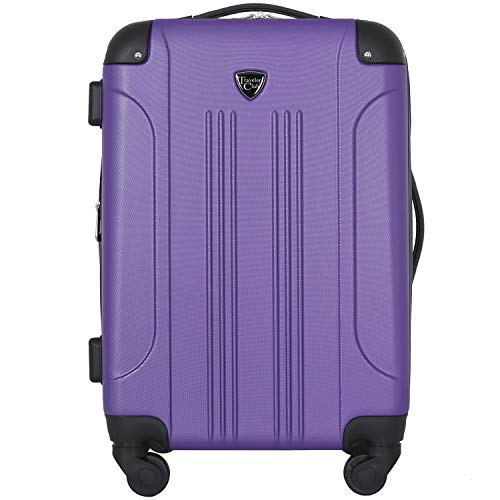 Travelers Club Chicago 22-inch Hardside Travelers Club Chicago 22-inch Hardside |
|
Check Latest Price |
 Samsonite Freeform Hardside Carry-On Samsonite Freeform Hardside Carry-On |
|
Check Latest Price |
 Travelpro Maxlite 5 Softside Carry-On Travelpro Maxlite 5 Softside Carry-On |
|
Check Latest Price |
 LEVEL8 Grace 20-inch Expandable Carry-On LEVEL8 Grace 20-inch Expandable Carry-On |
|
Check Latest Price |
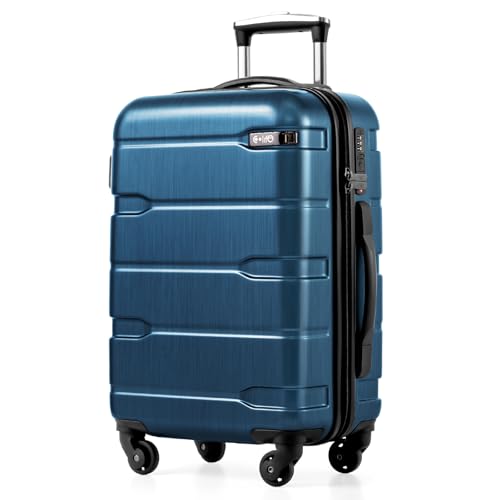 Coolife 20-inch Hardside Carry-On Coolife 20-inch Hardside Carry-On |
|
Check Latest Price |
 Amazon Basics 18-inch Softside Carry-On Amazon Basics 18-inch Softside Carry-On |
|
Check Latest Price |
| LEVEL8 20-inch Polycarbonate Carry-On |
|
Check Latest Price |
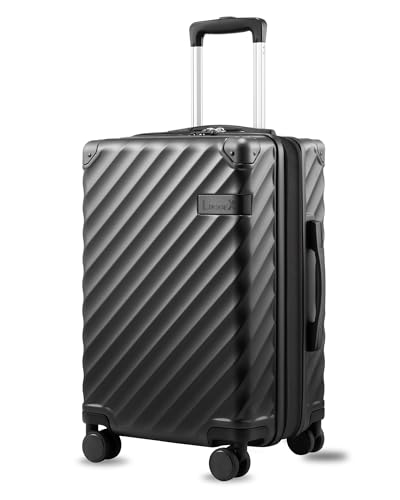 LUGGEX 20-inch Carry-On LUGGEX 20-inch Carry-On |
|
Check Latest Price |
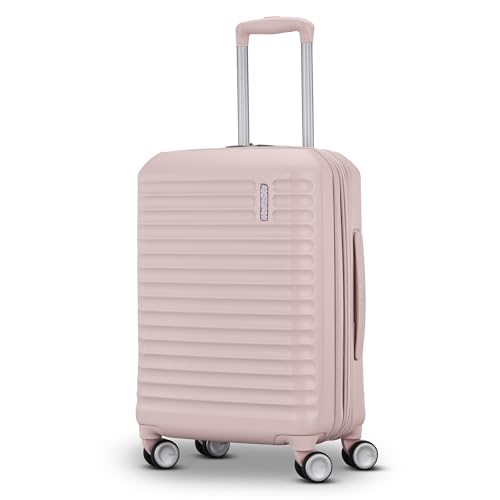 American Tourister Stratum 3.0 Carry-On American Tourister Stratum 3.0 Carry-On |
|
Check Latest Price |
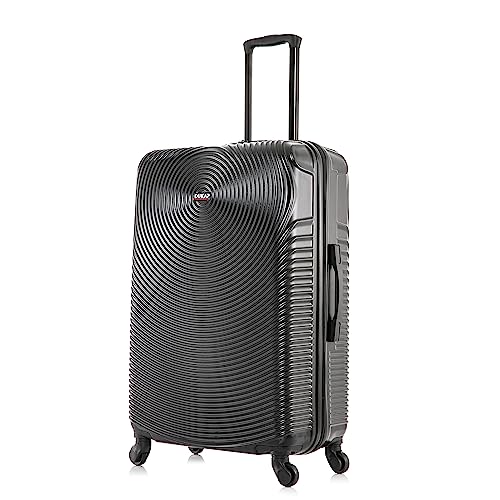 DUKAP Inception 28-inch Checked Luggage DUKAP Inception 28-inch Checked Luggage |
|
Check Latest Price |
Read that table for shape first, not size. Every bag here is a carry-on except the DUKAP, and the difference between a 20-inch and a 22-inch case is the difference between a bag that tucks under a lofted bed frame and one that does not. Material is the second thing to check. Pure polycarbonate shells appear on the Samsonite, the LUGGEX, and the LEVEL8, and they flex rather than crack. Cases listed as ABS plus polycarbonate blend the two, and the rest are ABS, which is lighter and cheaper but dents permanently.
1. Amazon Basics 21-inch Hardside Carry-On - the best all-around college suitcase
Amazon Basics 21" Hardside Carry-On Luggage with Spinner Wheels, Expandable for Up to 25% More...
34 L
21.7 in tall
7.7 lb empty
ABS hard shell
Expands 25 percent
+ Pros
- Largest review base of any bag tested
- Over 62000 reviews at 4.4 stars
- Scratch-resistant shell that handles baggage handling
- Expands 25 percent for a full break of clothes
- Four spinner wheels roll one-handed
- Cons
- No built-in lock
- ABS flexes rather than springs back under heavy impact
This is the bag I keep coming back to, and it wins on evidence rather than on the badge on the front. It has been the highest-volume seller in its category for years, which means the failure modes are well documented and mostly minor. When you can read tens of thousands of reviews, you learn that the complaints cluster around the lock and the shell flex, not around the wheels or the handle.
At 21.7 inches tall including wheels and 13.6 by 9.5 inches across, it is a standard carry-on shape that clears the cabin limit of most major carriers. The 34-liter interior is on the modest side, but the expansion zipper adds up to 25 percent when you are heading home with a full semester of laundry. The interior divider and three zippered pockets keep a nine-day trip from turning into a pile.
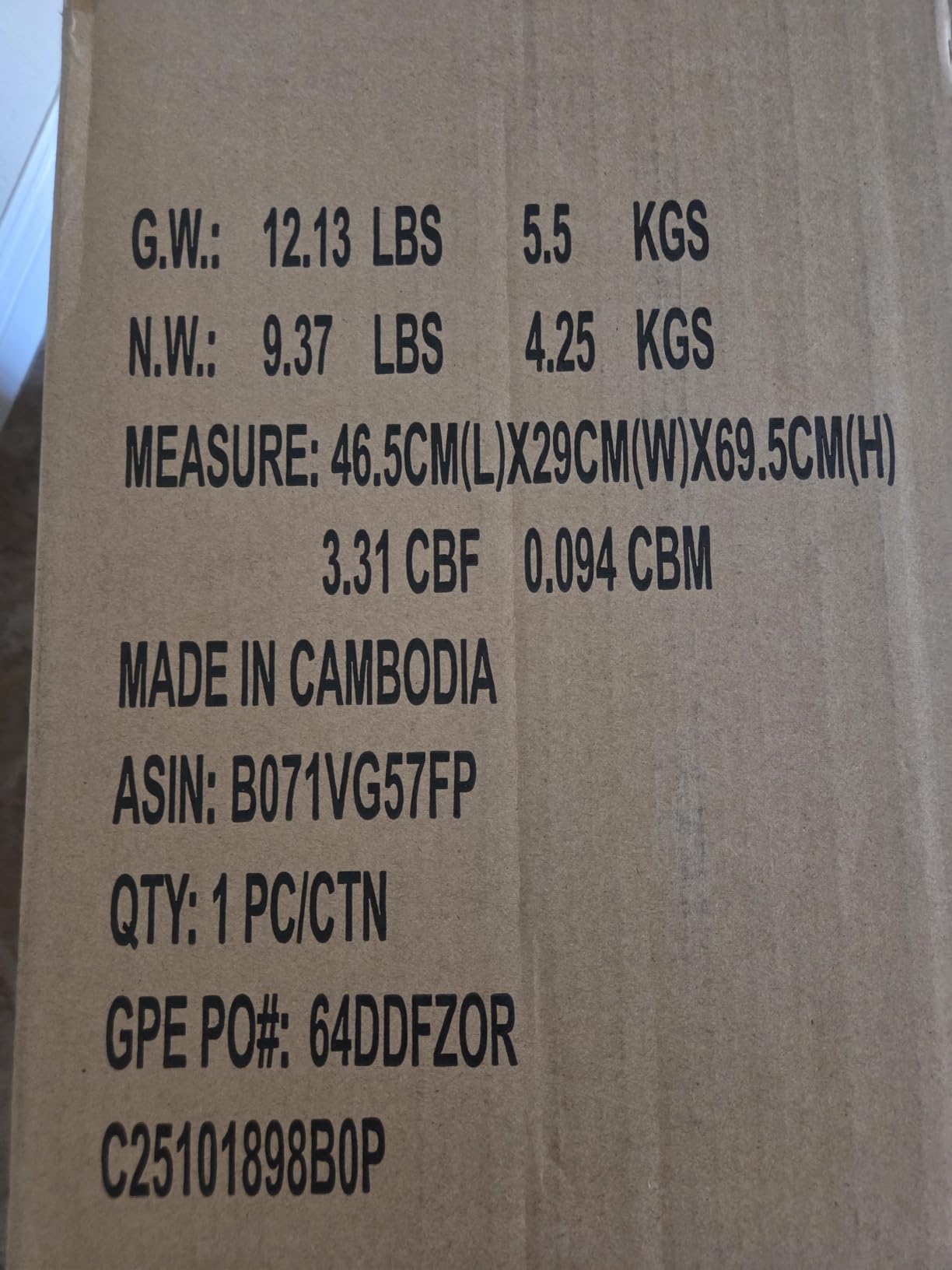
The shell is ABS rather than polycarbonate, and that single material choice explains both the low weight and the main complaint. ABS is scratch-resistant, which is the right finish for a bag that lives in a car trunk and gets dragged across concrete. It also flexes when you drop it on a stair landing, where a polycarbonate case would bounce back. For most students that trade is worth taking, because a dent is a cosmetic issue and a cracked spinner mount is not.
Empty weight is 7.7 pounds, right in the middle of this group. The four multi-directional spinner wheels and the telescoping handle with a short lift handle mean you can get it into an overhead bin one-handed, and the short handle matters more than it sounds when the bin is above your head and full.
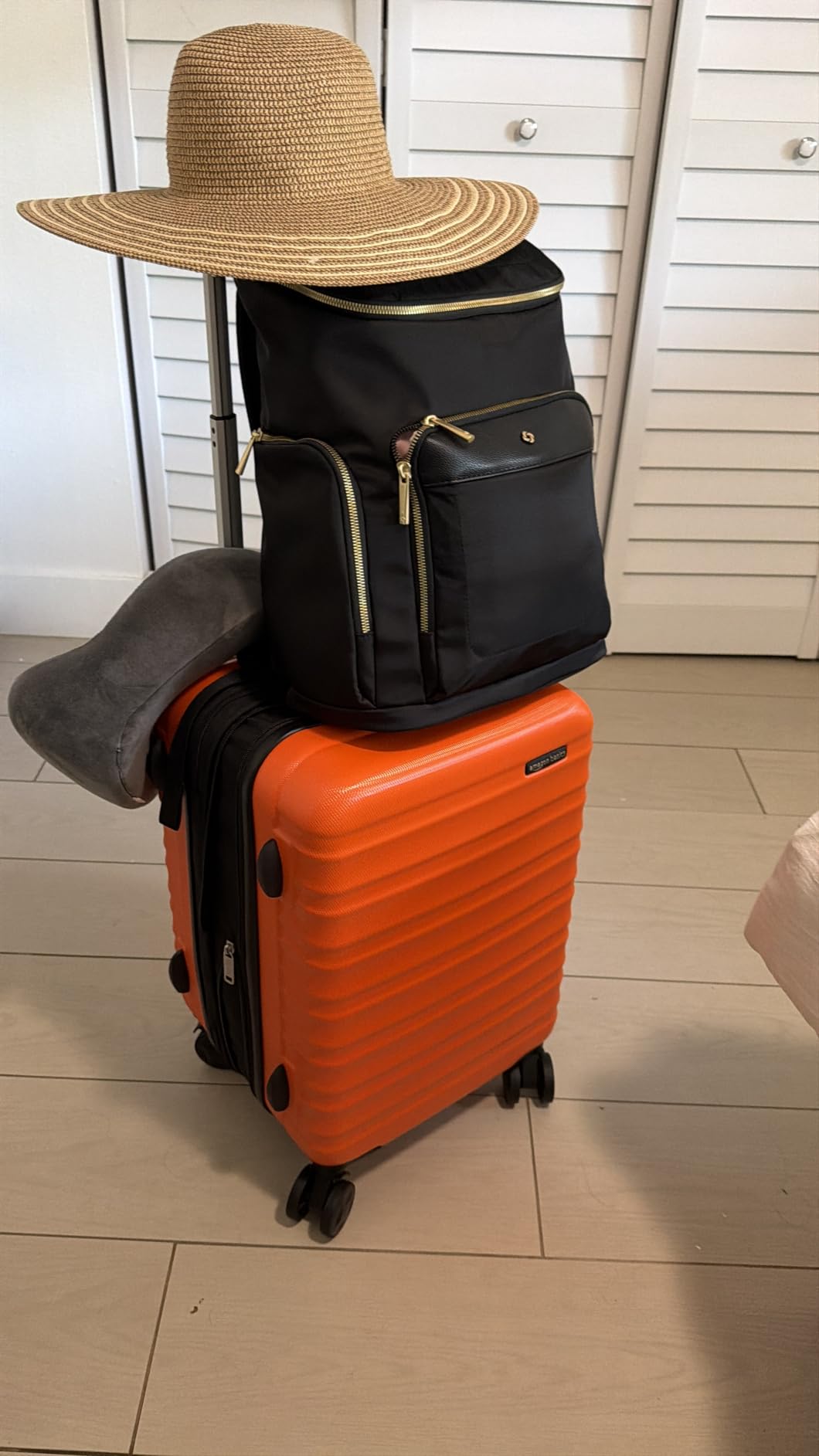
Why the 21-inch size works in a dorm
The 21-inch form factor is the sweet spot for student housing. A bag this tall stands on its wheels beside a desk, sits in a closet, or slides under a standard lofted bed frame without becoming an obstacle. Bigger 28-inch cases take up the whole footprint of a closet, and a Zhihu answer on dorm luggage made the same point from a student's side: a dorm shelf sized for a 24-inch case works well, and anything larger is eating floor space you need.
Because it is a carry-on, you can keep clothing in it year-round. Between semesters, packed, it functions as a drawer. That is the single most underrated use of college luggage, and it means the bag should be something you are happy to look at when you open your closet door.
What the no-lock spec means for you
There is no built-in lock, so plan on a small padlock or a luggage strap if you fly. For dorm life this is a non-issue. The zip pulls are large enough to grab with cold hands, and the interior divider runs the full height of the case so you are not digging through the bottom half to find a sock.
Where it falls short
If your breaks involve three weeks of cold-weather gear, 34 liters plus 25 percent expansion is tight, and you will end up checking it. The ABS shell is also the first thing to pick up scuffs, so if appearance matters to you, spend up for a polycarbonate option. Everything else on this list is a genuine step up in build quality rather than in feature count.
2. Rockland Melbourne 20-inch Hardside - the best value pick with a real warranty
Rockland Melbourne Hardside Expandable Spinner Wheel Luggage, Carry-On 20", Mint
38 L
3.4 kg empty
ABS hard shell
Pad lock included
5-year warranty
+ Pros
- 5-year manufacturer warranty is unusual in this class
- 38 liters of usable capacity
- Light enough to lift into an overhead bin
- Aluminum telescoping handle
- 360-degree spinner wheels
- Expands for extra room
- Cons
- Basic two-pocket interior with limited organization
- Hard plastic exterior scuffs with heavy use
The Rockland is the pick I recommend when a student tells me their budget is tight but they do not want the bag to fall apart in February. What makes it different from the other budget hardshells is a 5-year manufacturer warranty, and warranty length is the quality signal that experienced travelers in the forums talk about more than any spec sheet. One Reddit buyer in the buy-it-for-life community described a big-box-store bag breaking on a flight out of Newark and went looking specifically for warranty coverage as the deciding factor.
At 20 inches by 13 by 9 inches, with overall dimensions of 23 by 10 by 15.5 inches including wheels, it is a compact case that fits the cabin allowance of most airlines. The 38-liter figure is a genuinely useful number: it holds a full week of clothes plus shoes without the compression gymnastics you get in a 31-liter bag.
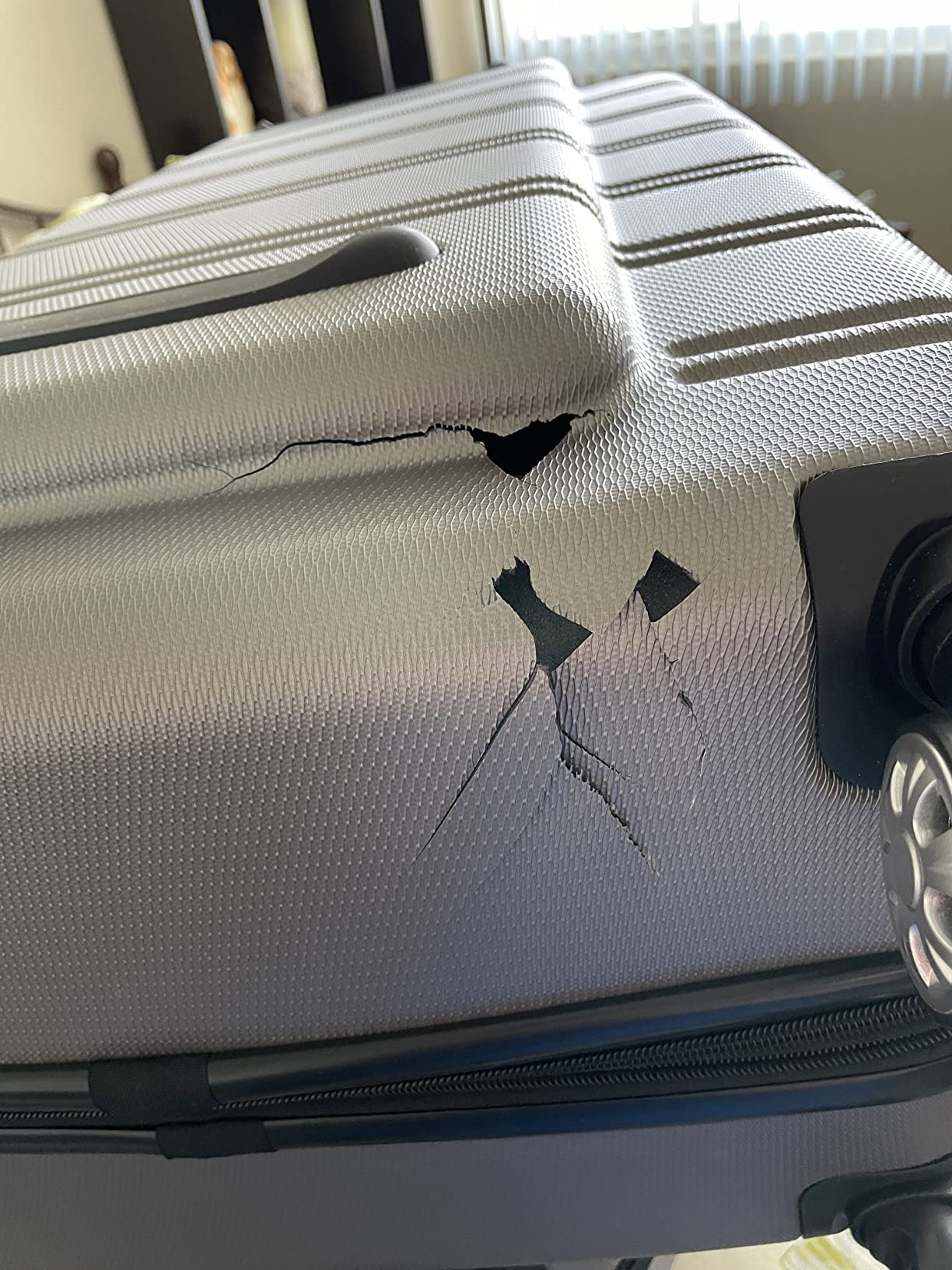
The aluminum telescoping handle is a step above the plastic handles on cheaper cases, and it is the component most likely to fail under load. The 360-degree spinner wheels roll smoothly enough for airport tile and campus sidewalk, and the case includes an interior mesh zip pocket plus elasticated pockets so a charger is not loose at the bottom on the whole trip.
A pad lock comes in the box, which is a small detail that removes one decision. The expansion zipper gives you a little extra depth when you are packing winter clothes home in January, and the case stays inside the 20-inch class until you use it.
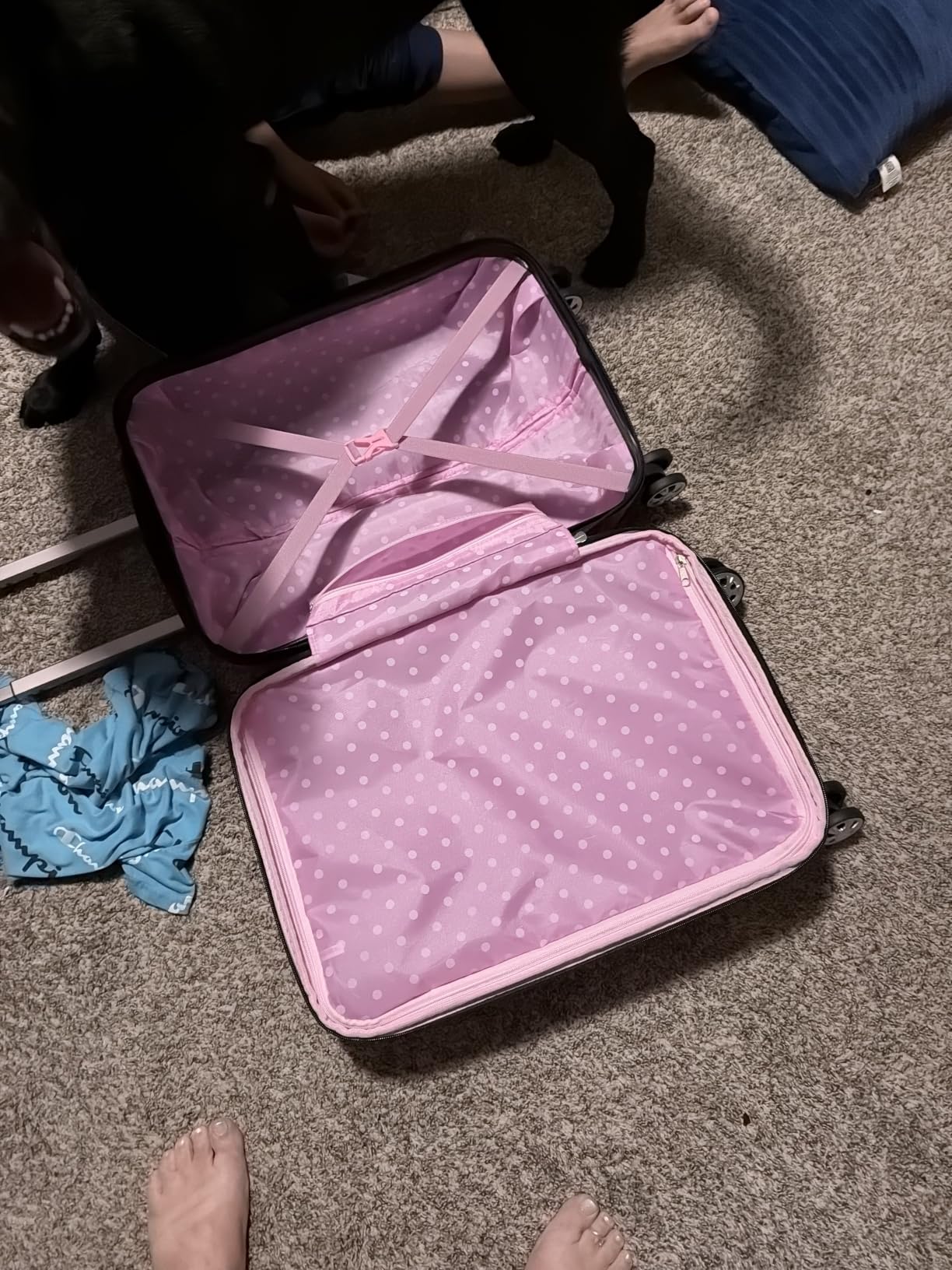
What 5 years of warranty actually buys you
A warranty is only useful if the company still exists in year five and the failure is a covered manufacturing defect. Still, a multi-year warranty is a signal about how a brand builds, and it is the difference between a bag that fails in a month and one that gets repaired. When you spread a purchase across four years of school, a warranty converts a possible mid-semester replacement into nothing at all.
The lock type here is a pad lock rather than a TSA combination. If you fly internationally, you will need to unlock it at each security checkpoint, which is a minor inconvenience but worth knowing before you buy.
Why it beats the cheaper budget shells
Two things separate this from similarly sized budget cases. The aluminum handle resists the twisting that cracks plastic handle housings, and the warranty means the shell is not the weakest link in the design. The trade-off is the interior, which is a mesh pocket and elastic straps. If you use packing cubes, that is plenty. If you like everything in its own zippered compartment, look at the Travelers Club below.
For whom I would skip it
If you plan to check this bag regularly on rough baggage belts, the ABS shell will show wear, and reviewers do mention scuffing over time. Cosmetic scuffs are not a functional problem, but if you are the kind of person who notices them, a polycarbonate case holds its finish better. For a student who mostly carries on, the warranty is worth more than the finish.
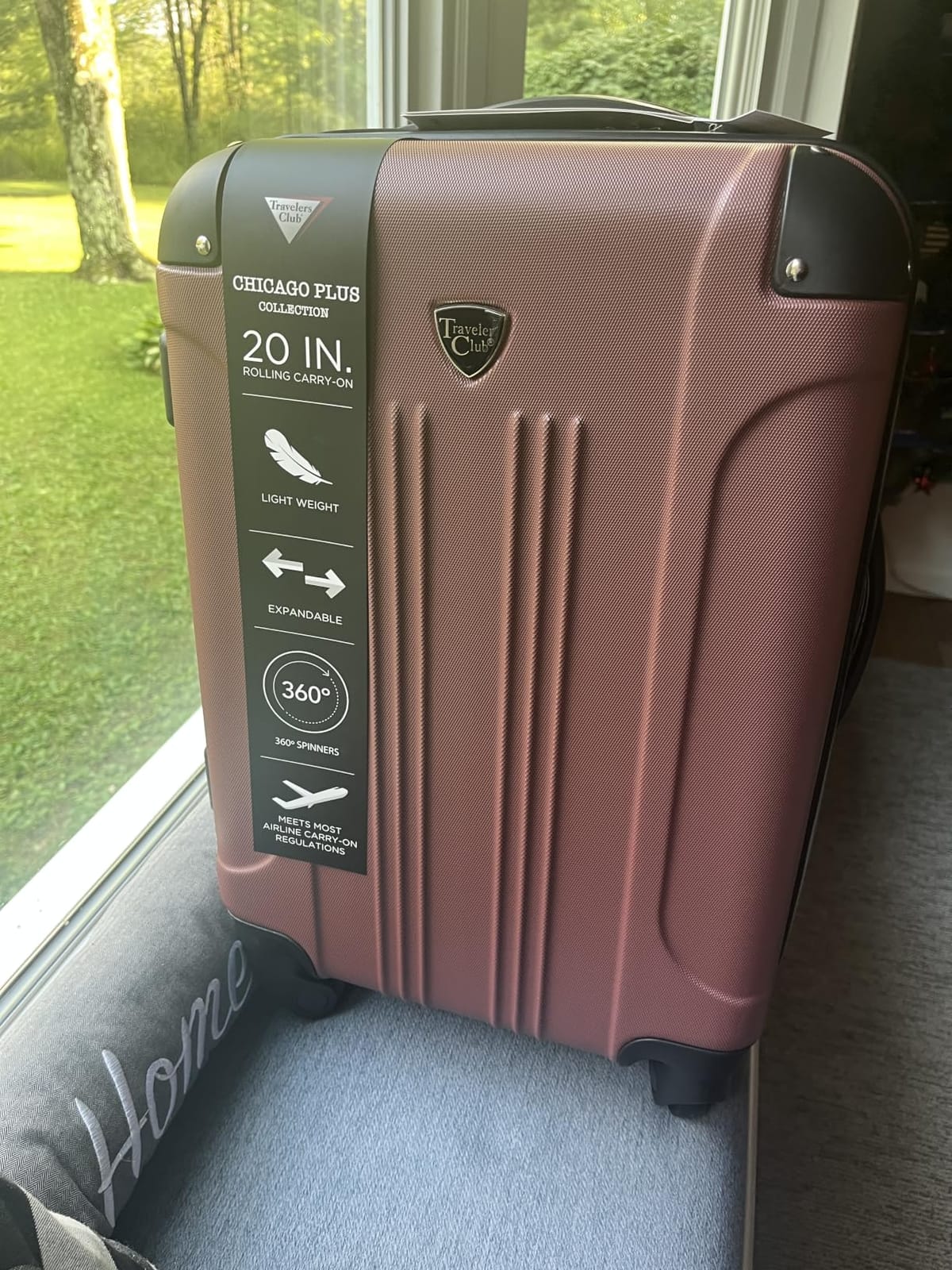
3. Travelers Club Chicago 22-inch Hardside - the most usable volume in a compact footprint
Travelers Club Chicago Hardside Expandable Spinner Luggage, Purple, 22" Carry-On
47 L
2.55 kg empty
ABS hard shell
TSA combination lock
5-year warranty
+ Pros
- 47 liters is the largest interior in this roundup
- Built-in TSA-style combination lock
- Wheelbase widens with the expansion zipper
- Handle rails sit flush for more packing space
- Only 2.55 kg empty
- 5-year manufacturer warranty
- Cons
- ABS shell is not scratch resistant and can mark out of the box
- Thin see-through interior lining
- Compression buckle strap is very stretchy
- Telescoping handle can wobble when fully extended
At 47 liters this is the biggest stated interior in the group, and it gets there without going to a checked-bag size. That is unusual and it is the reason to look at this model. Most carry-ons land between 31 and 40 liters, which is fine for a long weekend and tight for driving a semester of clothes home in a single trip. The Chicago gives you room to close the gap between flying and driving.
The design detail I like most is how the expansion works. Instead of the zipper adding depth in a fixed spot, the wheelbase widens with the body, so the case stays level and the wheels keep tracking straight when expanded. Owners who bought this in threes for family travel mention it repeatedly, and it is the kind of small engineering decision that separates a case that feels stable from one that fishtails.
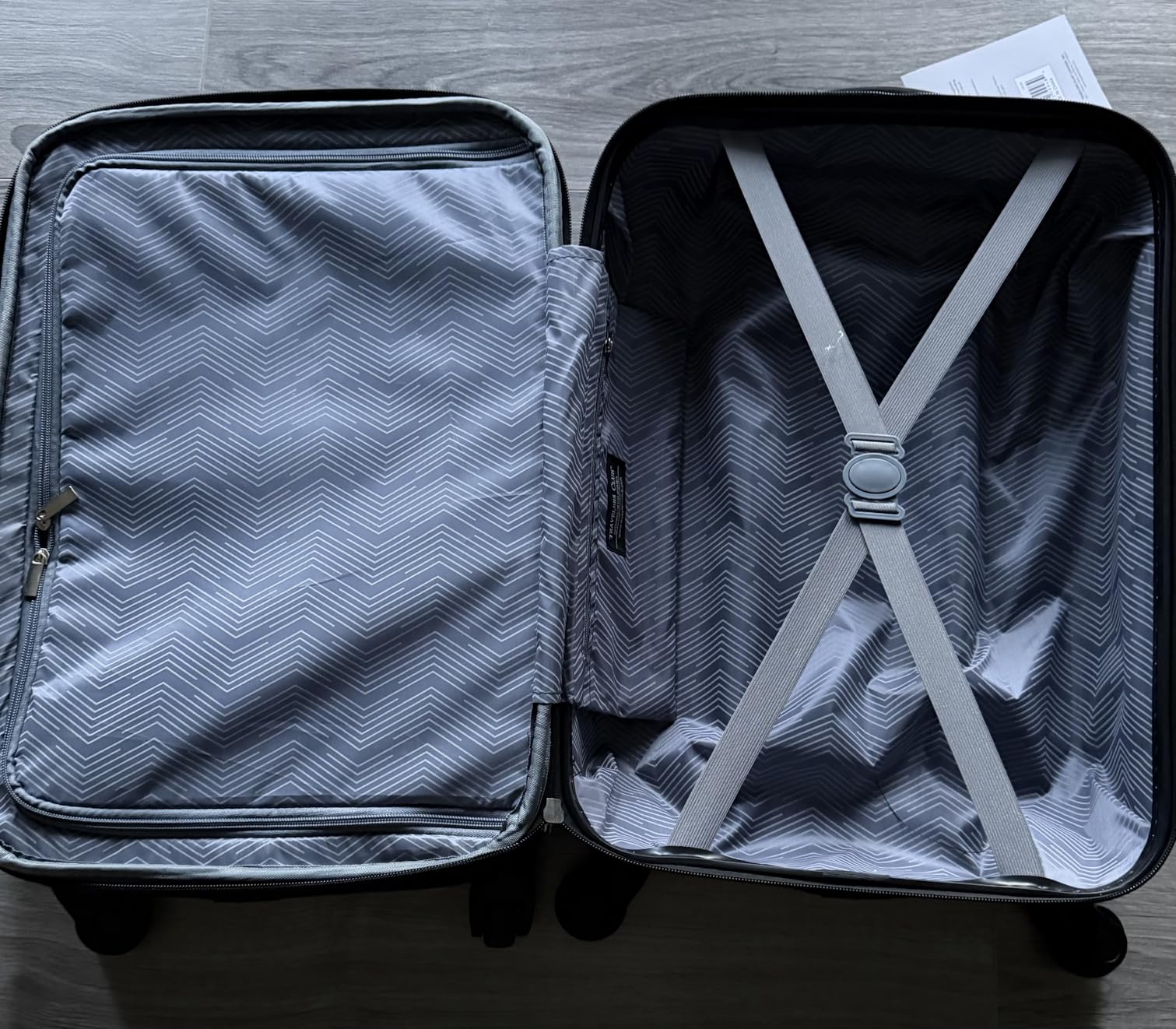
Empty weight is 2.55 kg, about 5.6 pounds, which puts it among the lighter cases here despite the volume. Lifting it into an overhead bin is uneventful. The built-in TSA-style combination lock means no keys, and the handle rails sit flush against the interior walls, which preserves usable packing depth rather than stealing a couple of inches.
Three interior pockets give you more organization than the Rockland. The shell is ABS, and the brand describes it as designed to absorb impact under stress and flex back into shape, which is the standard behavior for this material.
The math on 47 liters for a student
A liter of soft clothing is roughly two to three items. Forty-seven liters comfortably holds two weeks of clothes, a pair of shoes, and a laundry bag, which means a student driving home for winter break can do it in one trip instead of two. For a flyer it is more than you need, but for a driver it is the difference between fitting and rearranging the trunk twice.
Because the case is 22 inches tall, it will not slide under a lofted dorm bed. Stand it upright in a closet, on a shelf, or at the foot of the desk. It is also not water resistant, so if you walk across campus in the rain with a laptop in the bag, the shell will not protect the electronics.
Where the complaints actually come from
Reviewers mention four things consistently. The shell is not scratch resistant, so marks can show before you have even travelled. The interior lining is thin and partly see-through. The compression buckle strap is very stretchy, which lets items shift when the case is open. And the telescoping handle can develop wobble at full extension. None of these stop the bag from working; all of them are fair to know before you buy.
Who this suits best
If you drive to school and live somewhere more than a short flight away, this is the volume-to-footprint answer. If you fly on strict budget carriers with tight cabin rules, a 22-inch case is closer to the limit than you want, and the 20-inch models on this list are the safer bet.
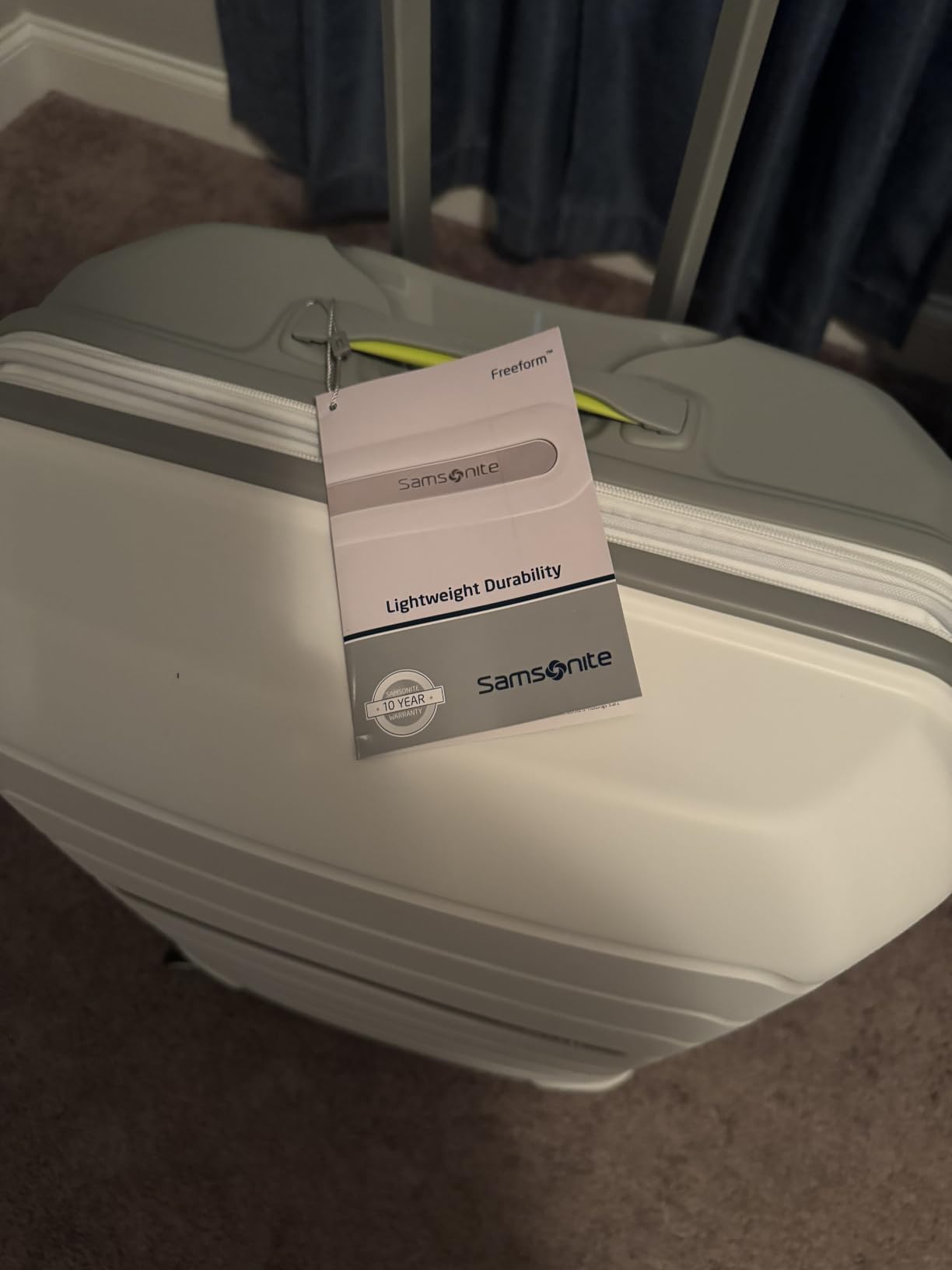
4. Samsonite Freeform Hardside Carry-On - the best warranty and best shell material here
Samsonite Freeform Hardside Carry-On Luggage with Spinner Wheels - Hardshell Suitcase - TSA...
34 L
23 inches tall
6.5 lb empty
Polycarbonate shell
10-year warranty
+ Pros
- Polycarbonate shell resists scuffs and impact far better than ABS
- Only 6.5 pounds empty while holding a large load
- Four oversized multidirectional spinner wheels
- Built-in TSA-approved combination lock
- 10-year warranty
- Top and side grab handles
- Cons
- Textured shell shows scratches fairly easily
- Divider panel opens inward so you must lay it over the other half
- May exceed cabin limits on stricter European carriers
Polycarbonate is the reason to spend more here, and the Freeform is the clearest example in this roundup. ABS is cheaper and lighter but it takes a permanent dent. Polycarbonate flexes and springs back, so the same baggage conveyor that would flatten a corner on an ABS case leaves this one dent-free. If your bag is going to be checked on a connecting flight in winter break traffic, that difference is the whole purchase decision.
It is also the lightest polycarbonate option here at 6.5 pounds empty, which undercuts the assumption that better material means a heavier bag. The 34-liter interior is on the small side, but the case expands when you need it, and the zip divider is positioned high so it does not eat into your packing depth.
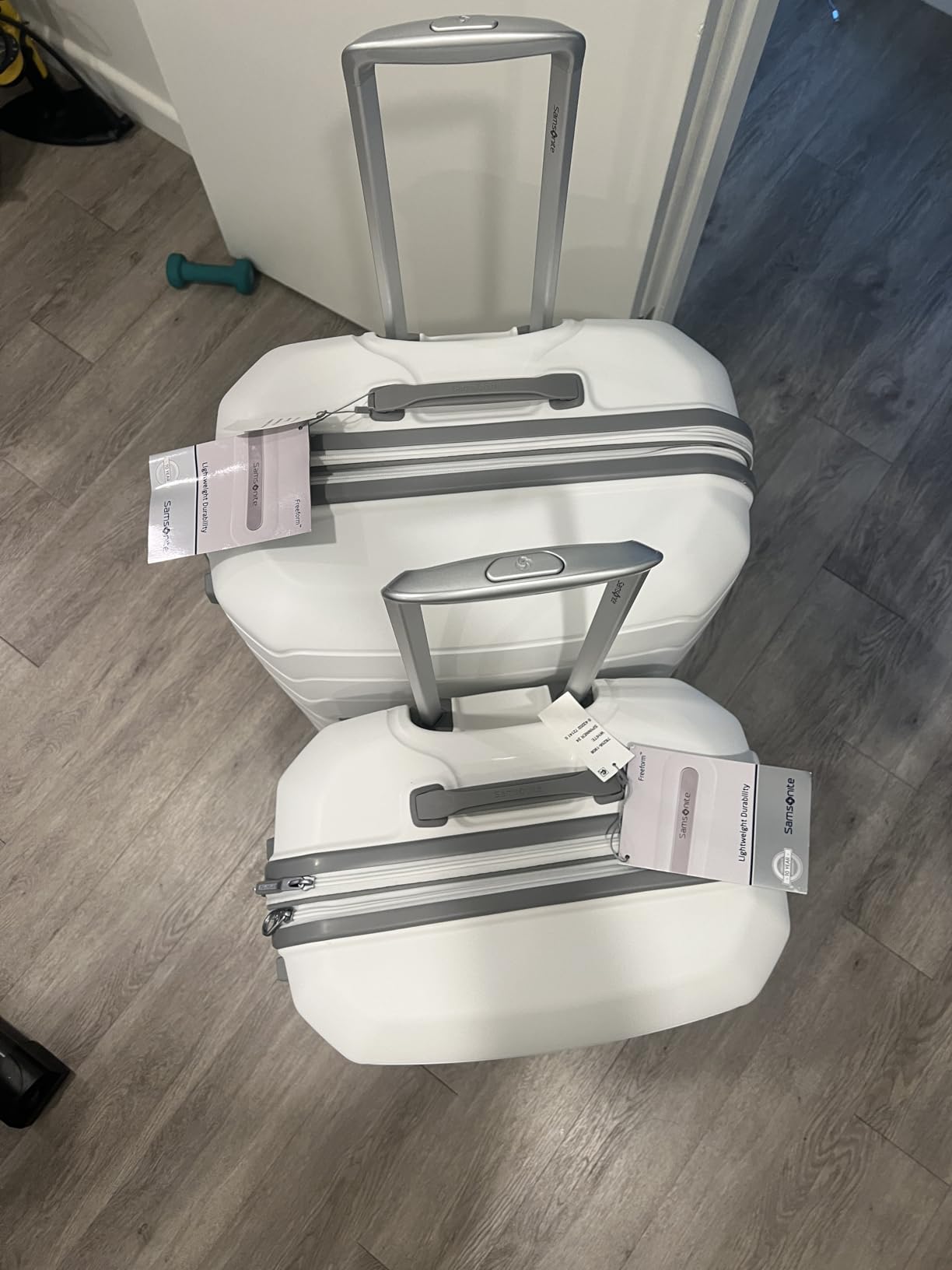
The four oversized multidirectional spinner wheels are noticeably larger than the standard set on most of the budget cases, and they roll over uneven airport carpet and parking-lot asphalt without bogging down. Frequent fliers who test cases packed heavy rate them well, and the top and side grab handles make the overhead bin lift a one-hand operation.
The built-in TSA-approved combination lock is the version you do not need a key for, which matters if you fly domestically out of several airports. The 10-year warranty is the longest on this list, and that is not a small part of why it is my durability pick.
Cabin size and the European carrier question
Overall dimensions with wheels are 23 by 15.3 by 9.8 inches. That clears the cabin restriction of most US carriers comfortably, but owners flying Lufthansa or KLM report it can exceed their tighter limits. If you are studying in Europe or connecting through a strict European carrier, look at the 20-inch options on this list instead.
The interior is 20.5 by 14.5 by 9.8 inches with elastic straps, a divider, and a pouch. The divider opens inward rather than outward, so to see one half you have to lay the panel over the other. It is a genuine annoyance, but it also means the shell is more resistant to being forced open in transit.
How the 10-year warranty compares
Warranty length is not a marketing trick if you understand what it measures. It is a proxy for how confident a manufacturer is in the failure-prone parts. Two years is a token. Five years is a real commitment. Ten years is a company telling you the handle housing, the zippers, and the wheel housings are engineered to outlast a normal service life. A Reddit buyer in the buy-it-for-life community described Briggs and Riley as having the best lifetime warranty in the business, and that sentiment is exactly why people accept a higher spend on a carry-on.
Who should pay up for this one
Students who check bags on long winter-break itineraries, and students whose parents are buying a move-in gift that needs to survive four years of abuse. If you are a light packer who carries on, the lighter softside below does the same job for less money, and you give up very little.
5. Travelpro Maxlite 5 Softside Carry-On - the lightest carry-on for flying students
Travelpro Maxlite 5 Softside Carry-On Luggage Spinner, Black, 20-Inch
38 L
5.1 lb empty
Polyester soft shell
22 x 14 x 9 inches
Limited lifetime warranty
+ Pros
- 5.1 pounds is among the lightest full-size carry-ons here
- Stain-resistant polyester with a water-resistant coating
- PowerScope Lite handle stops at two heights
- Bottom tray design adds stability and durability
- Two exterior pockets plus lid and side pockets
- Limited lifetime warranty
- Cons
- Softside fabric gives less crush protection than a hardshell
- Costs more than any other case in this roundup
Weight is the reason this one exists. At 5.1 pounds empty it is roughly 2.6 pounds lighter than the average hardshell here, and on a campus with stairs between the library and the dorm that difference is felt every single day. It is also the only softshell with a full 38-liter capacity in this group, so you are not trading weight for space.
The case measures 22 by 14 by 9 inches overall with a 19.5 by 13.75 by 9 inch shell, which lands right on the international carry-on standard. That makes it a sensible pick for a study-abroad semester where you will move between several countries and want the same bag in every airport.
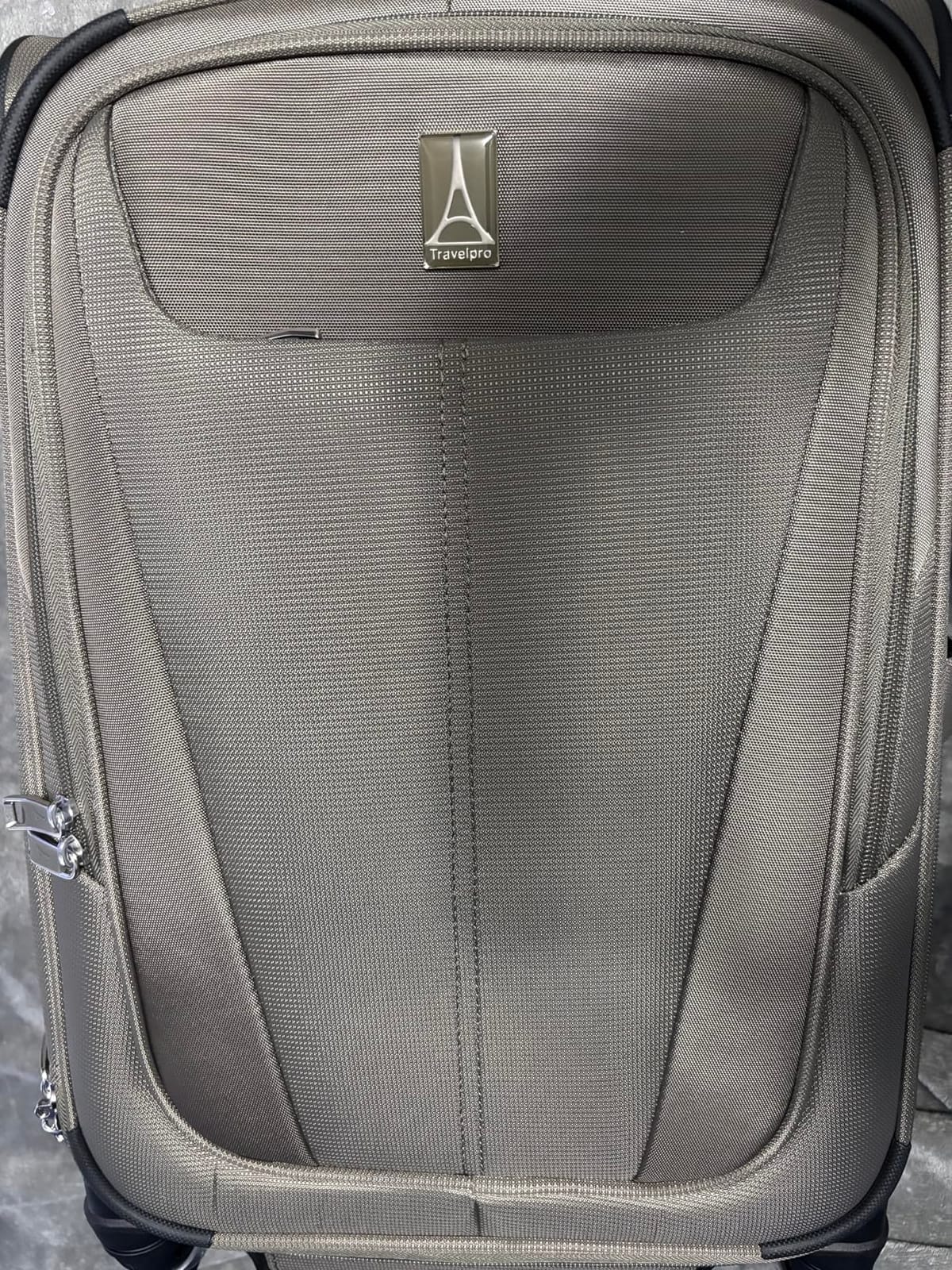
The polyester shell has a stain-resistant, water-resistant coating, so a coffee spill on the concourse or a wet campus lawn at 8 am is not a permanent mark. The interior lining uses recycled plastics with moisture protection, and the zippers are described as high-strength. Both of those matter because zippers are the second most common failure point after wheels.
Two exterior pockets are the feature softsides have that hardshells cannot easily offer. You can pull a laptop, a phone, or a library book out at security without opening the main case, which saves you repacking into a bin. The case expands up to 2 inches as well, and the PowerScope Lite handle stops at two heights so you can set it to your height rather than shrugging.
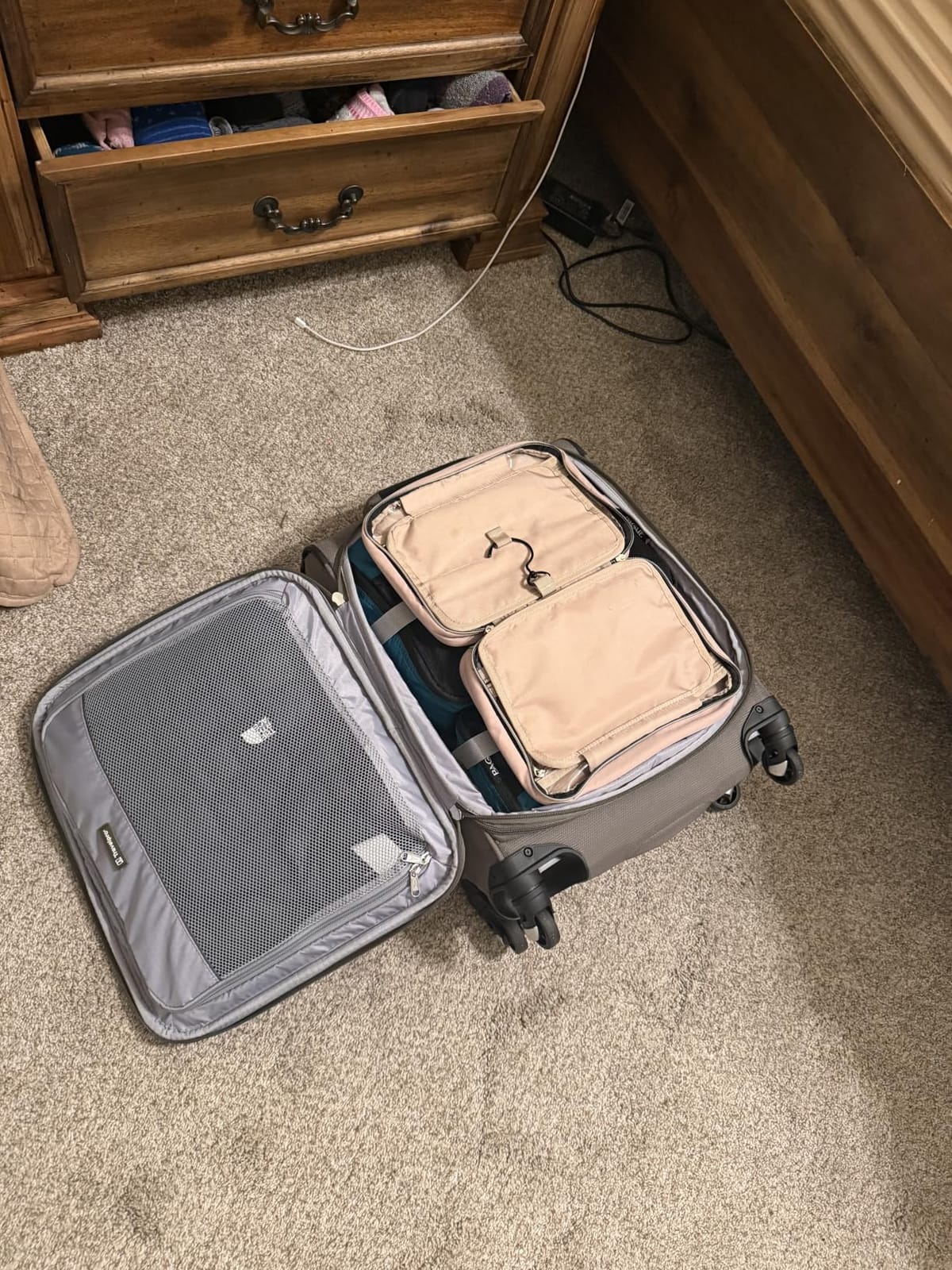
Softshell behavior on rough ground
A soft bag absorbs impact rather than transferring it. If a bag is handled roughly, a fabric case dents inward and springs back, while a hardshell case concentrates the force on the shell. The trade-off is crush protection: a soft bag will not protect a laptop or a camera from a heavy stack on top of it. If your laptop rides in the suitcase, put it in the exterior pocket or carry it separately.
Softside also flexes to fit, which is genuinely useful in a tight overhead bin on a regional jet. The bottom tray design adds structure where the case meets the ground, and that is where soft bags usually wear through first.
The warranty detail most people miss
The limited lifetime warranty covers repair for damage caused by airlines for one year when you register the bag after purchase. Registration takes a few minutes and is easy to forget, so do it the week the bag arrives. Without registration, the airline-damage coverage does not apply, and that is the coverage students actually use.
Who should buy it
Students who fly often, students with a study-abroad plan, and anyone who will carry this bag up dorm stairs more than they check it. If you mostly drive and your breaks involve physical gear, buy a hardshell instead, because a soft case can pick up punctures from a car trunk.
6. LEVEL8 Grace 20-inch Expandable - the best carry-on when your laptop rides in the case
LEVEL8 Carry on Luggage Airline Approved, 20“ Expandable Carry on Suitcase
36 L expanding to 42 L
9 lb empty
PC and ABS shell
Front laptop bay
8 spinner wheels
+ Pros
- Front-access compartment holds a laptop up to 15.6 inches
- Includes a separate lock for the laptop bay
- 8 rubber-covered spinner wheels roll quietly
- Expands 1.57 inches and still fits overhead bins collapsed
- PC and ABS micro-diamond textured shell
- Cons
- Heaviest carry-on in this roundup at 9 pounds
- Front bay is tight for chargers and cords
- Front compartment reduces clothing space
- Some colorways cost extra
The reason to pick this case is the front compartment. It is a dedicated bay that holds a laptop up to 15.6 inches, separate from your clothes and reachable without opening the main shell. For a student, that means the laptop can sit in the roller and you do not need a separate bag just to survive a security line. The compartment also has its own lock in the box, separate from the built-in TSA lock.
The trade-off is honest and worth stating: at 9 pounds empty, this is the heaviest carry-on in the group. A soft laptop and clothing add up quickly. If you are already carrying a backpack full of textbooks, the front bay stops being a convenience and starts being dead weight.
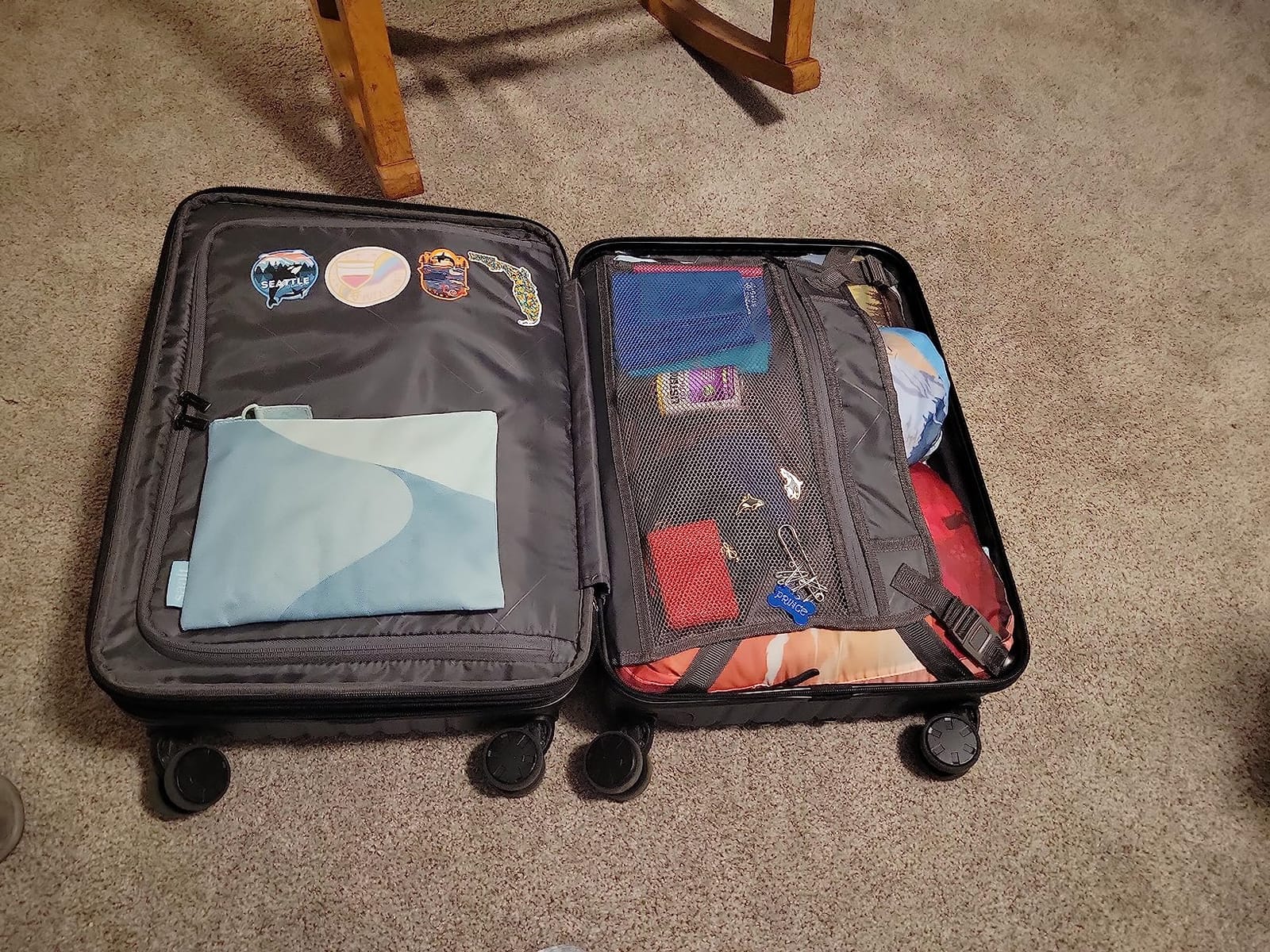
What you get in return is a shell made from polycarbonate and ABS with a three-layer micro-diamond texture, eight rubber-covered 360-degree spinner wheels, and an aluminum telescopic handle with multiple height stops. Eight wheels means four points of contact on each corner pair, which is why these roll quietly and track straight over tile, carpet, and sidewalk.
Size is 21.8 by 14.5 by 9.8 inches including wheels and handles, and it expands an extra 1.57 inches. Capacity runs from 36 to 42 liters. The expansion is designed to be used only when you are not boarding, which keeps the collapsed size inside the overhead bin limit.
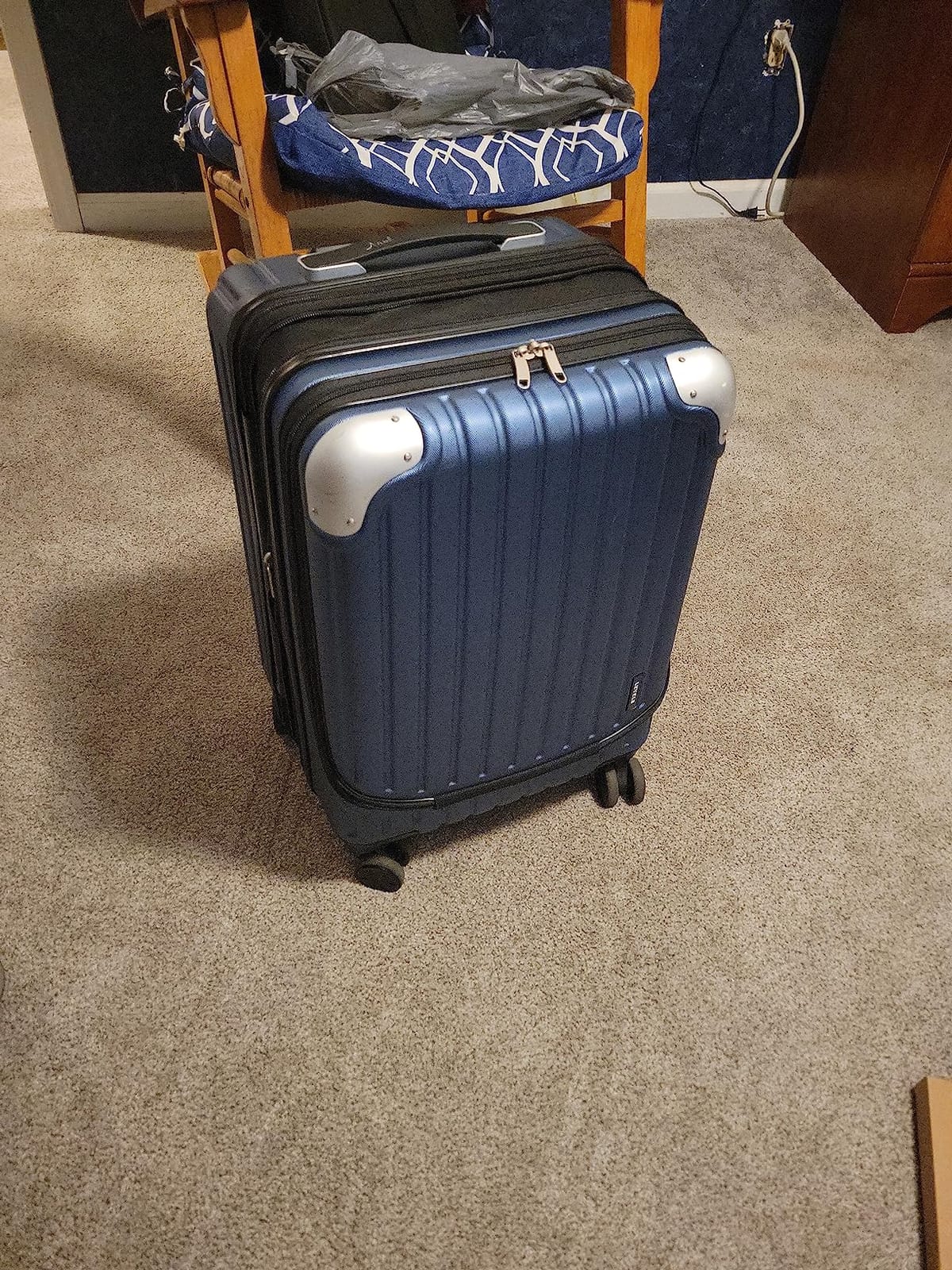
Is a front laptop bay worth the extra weight?
Compare it against what it replaces. If you currently carry your laptop in a separate sleeve or small bag, the bay consolidates that into one case and the difference largely disappears. If you already travel with a backpack that holds your laptop, you are carrying the same device twice.
Reviewers who use the bay for a laptop report it fits well, but several note it is tight for the charger, cables, and mouse. Treat the bay as a laptop slot rather than a full tech organizer, and keep small electronics in a pouch in the main compartment.
Who should skip it
Skip this one if you travel with a separate backpack anyway, or if your dorm is more than a short walk from the airport. Nine pounds plus clothes is a lot to lift into a regional jet with a full overhead bin, and the front compartment eats into the clothing space you need for a long break. The lighter Travelpro above covers the same use case with more interior room.
How the shell holds up over four years
The three-layer micro-diamond texture is a scratch pattern, not a smooth gloss, and that matters more than it sounds. A textured surface hides small marks in a way a glossy one does not, so the case looks acceptable after a semester in a trunk even though the finish has been tested by a lot of gravel. The polycarbonate content in the blend is what keeps the corners from going white after a drop.
What the expansion is for
The 1.57 inch expansion is a trip-specific allowance, not a permanent state. Plan to expand when you are checking the bag or driving home, and to collapse it when you are flying, because the expanded depth is what pushes a case over the cabin limit.
Why the 9-pound weight is the deciding factor
Every feature above is real, and the weight still dominates. At 9 pounds empty this is the heaviest carry-on in the group, and you will be lifting it into an overhead bin with one arm on a tired evening. If you already own a backpack that holds your laptop, the front bay is dead weight rather than a convenience, and a lighter case serves you better.
7. Coolife 20-inch Hardside - silent wheels and upgraded zippers in the budget tier
Coolife Carry On Luggage Hardside Suitcase with Spinner Wheels, 20in
38 L
6.4 lb empty
ABS and PC shell
Custom YKK zippers
TSA lock
+ Pros
- Silent 360-degree spinner wheels glide over carpet and tile
- Custom YKK zippers resist jamming
- Shell tested for drop and scratch and compression
- Three-position aluminum telescopic handle
- Five pockets including a zippered divider
- 2-year warranty
- Cons
- Wheels can catch on textured surfaces and tip the case
- Some owners add extended warranty coverage as spinners wear
The wheel claim on this one is the selling point, and it checks out. These are described as silent 360-degree spinners, and owners confirm they stay quiet rolling over carpet, tile, and sidewalk. That last surface matters more than any airport reviewer would admit, because campus walkways are paved, and a case that rattles loudly on concrete for four years gets old fast.
The other component worth calling out is the zippers. Custom YKK zippers on a case in this tier are unusual, and it is the difference between a bag that opens on the first try in year three and one you fight in a hurry. Combined with a built-in TSA lock for customs inspection, the closure system here is the most complete in the budget group.
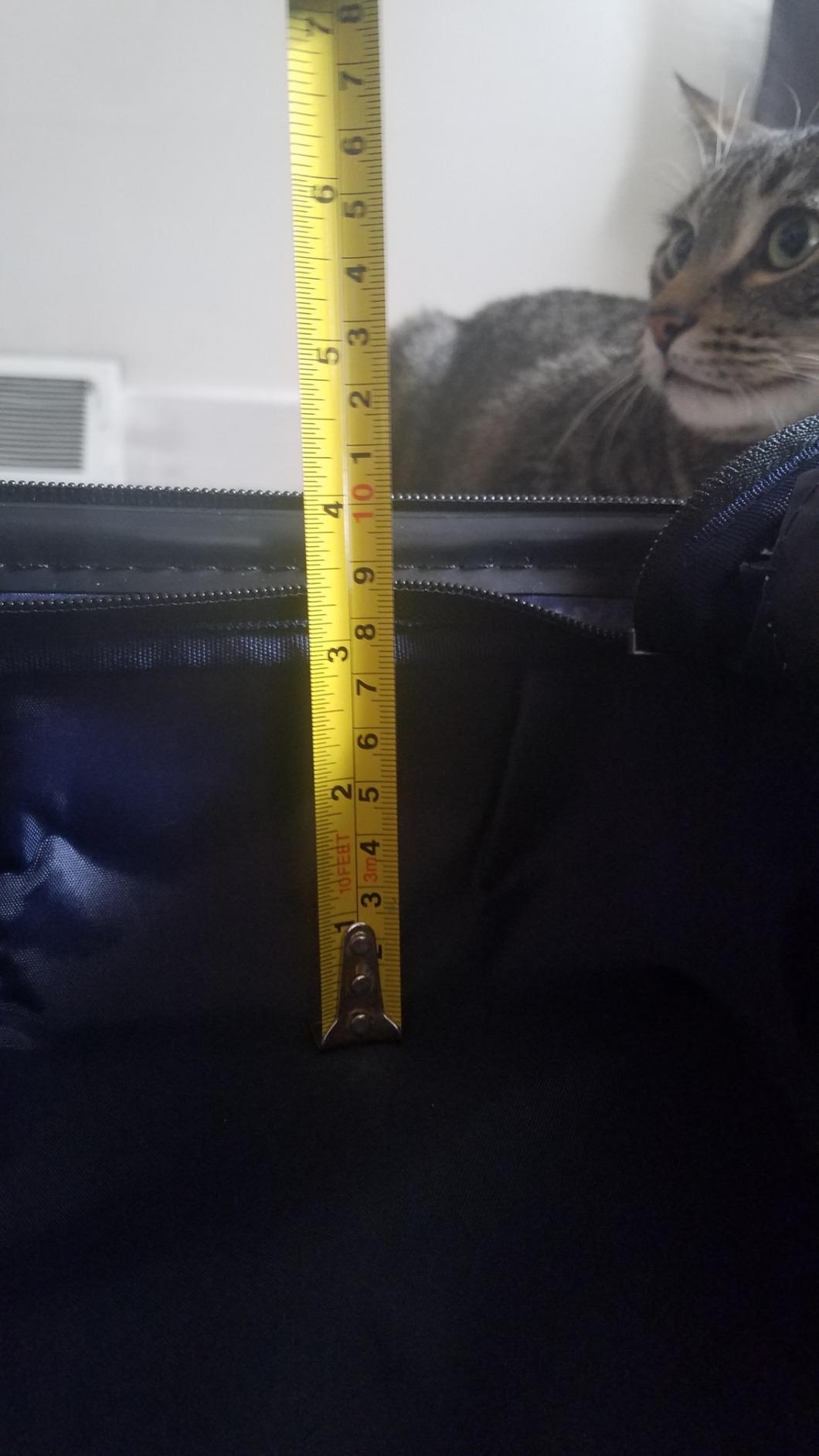
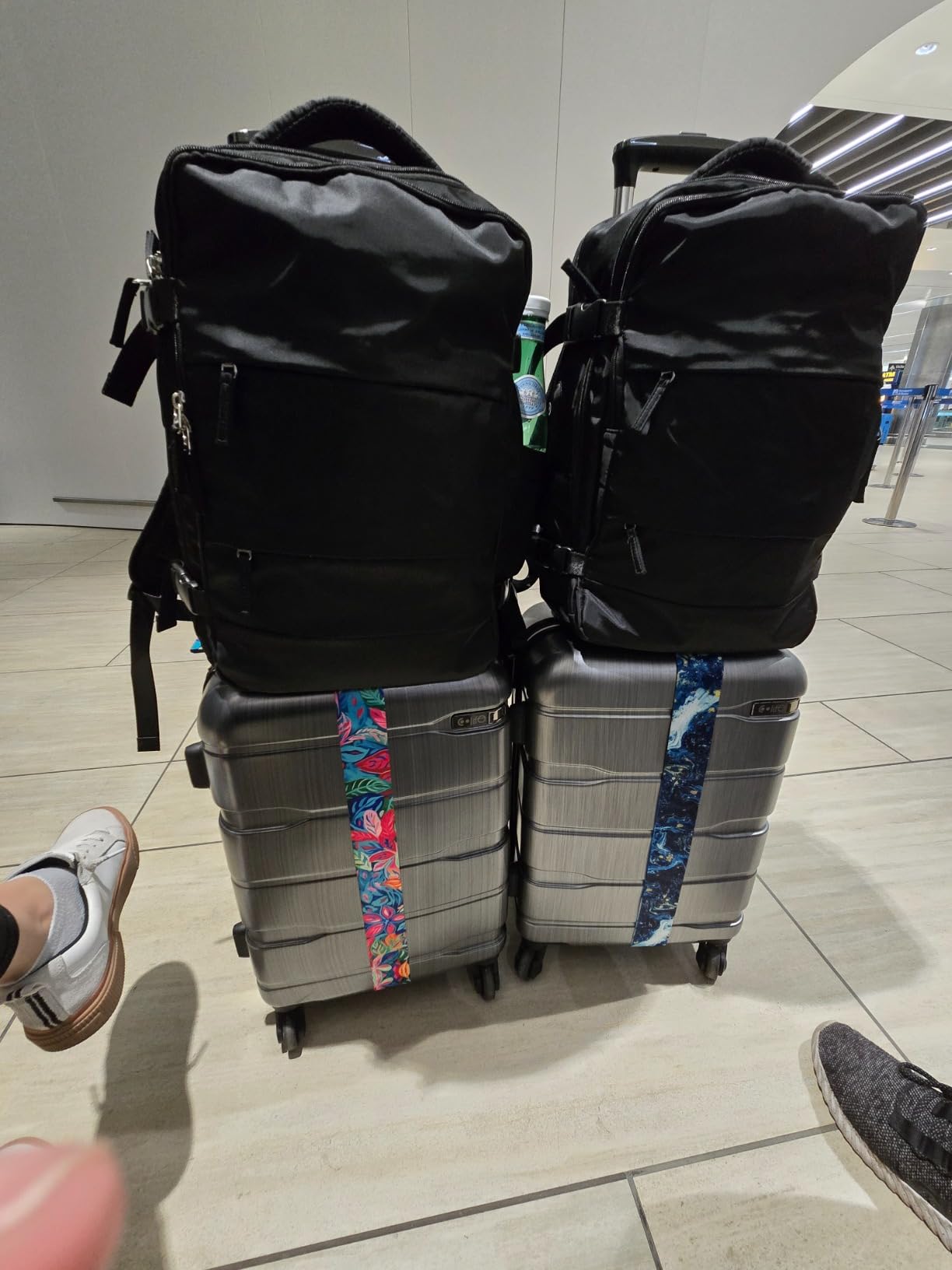
Overall size is 21.7 by 14.9 by 9.2 inches including wheels, with a case body of 19.13 by 13.46 by 8.62 inches. It fits the carry-on limits of many major airlines and stores easily in overhead bins, and the shell is a blend of ABS, polycarbonate, and aluminum that the brand says was tested for drop, scratch, and compression.
Empty weight is 6.4 pounds, comfortably light, and the pure aluminum telescopic handle has three height settings. The interior has a full lining with divided compartments and multiple storage pockets, five in total, which is more organization than most cases in this range provide.
The wheel caveat that actually matters
The one consistent complaint is that the wheels can catch on textured surfaces and cause the case to tip. On smooth airport tile this is a non-issue. On rough ground, a cobbled plaza, or the textured rubber mats at the entrance of some gyms, the case can catch and stop abruptly. Slow down slightly and it passes through. If you know you will be crossing a lot of uneven surface, the eight-wheel cases on this list have more contact points and are steadier.
Reviewers also mention buying extended warranty coverage because spinner wheels wear with heavy daily use. That is a fair expectation for any spinner. The 2-year manufacturer warranty is short relative to the Rockland and the Samsonite, so factor that in if you travel weekly.
Long-term reports
Several owners describe using this case for four years without breakage, which is exactly the horizon this roundup is built for. The 2-year warranty is shorter than some, but four years of service in practice is worth more than a warranty year. If durability over a school career is your priority, this case is a reasonable middle ground between a two-year budget option and a ten-year premium one.
8. Amazon Basics 18-inch Softside - the smallest footprint for a tight dorm
Amazon Basics 18" Medium Carry-On Softside Expandable Suitcase with 360-Degree Spinner Wheels...
31 L
18 inch softside
5.5 lb empty
Nylon shell
Expands 18 percent
+ Pros
- 5.5 pounds empty is very light to carry
- Soft sides flex to fit tight overhead bins and car trunks
- Expands about 18 percent
- Exterior front pocket for documents and a phone
- Canvas-like exterior wipes clean
- Cons
- Capacity is smaller than the size suggests
- Space between the wheels is unusable
- No built-in lock
- Not water resistant
This is the dorm storage answer. At 18 inches tall and 5.5 pounds empty, it is the smallest and lightest bag in this roundup, and that is exactly what you want when the bed frame is lofted and the closet is shared. The dorm discussions we pulled for this roundup came back to the same constraint again and again: a shelf sized for a 24-inch case is fine, and anything larger is taking floor space you need. Going smaller than that solves more problems than it creates.
The 31-liter capacity is genuinely small. Owners are clear that it is better suited to one to three day trips than to a week, and that the space between the wheels is dead space you cannot use. If your breaks are long, pack a duffel for clothing and use this for the overflow. If your breaks are short, this is all you need.
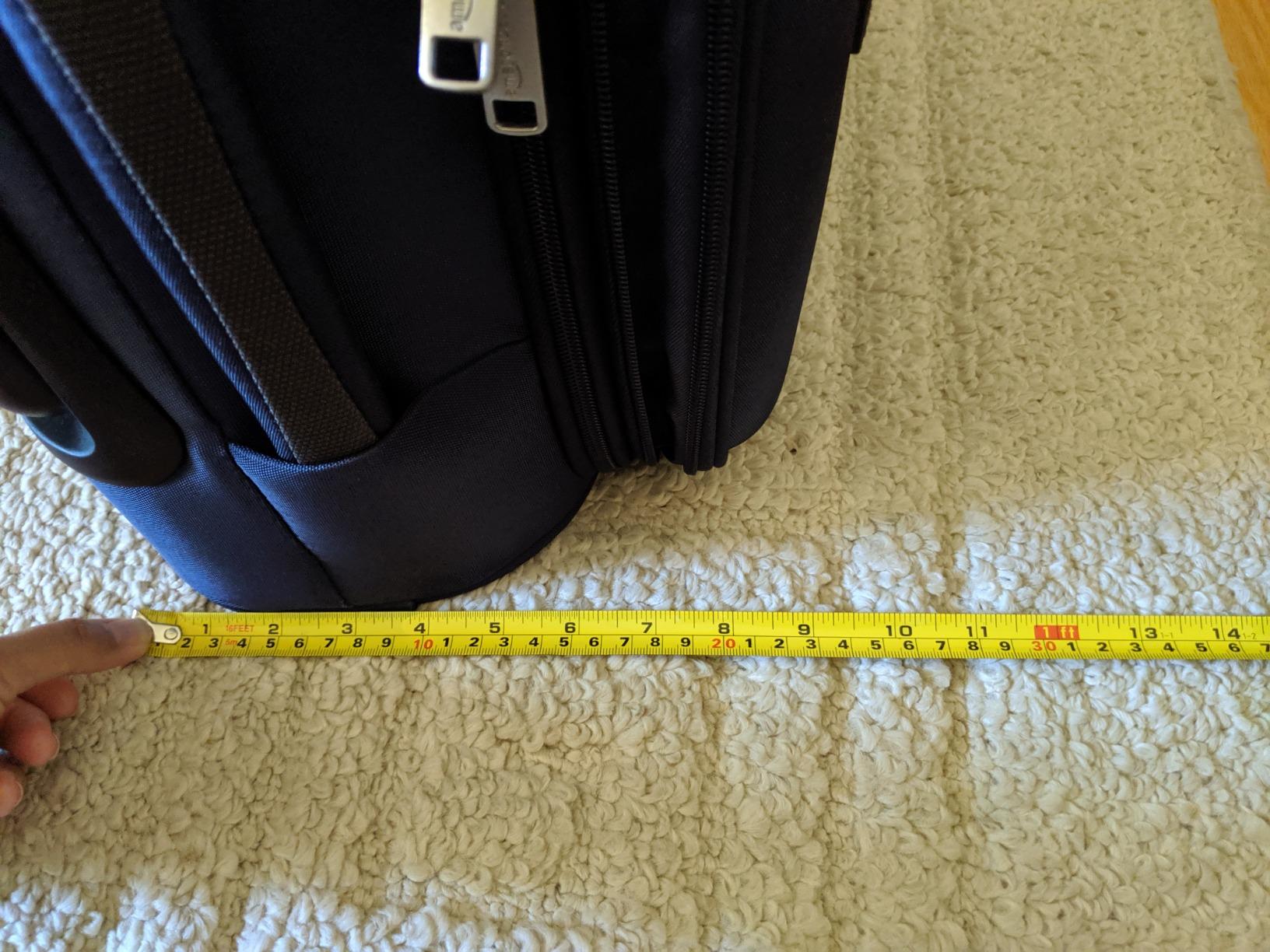
What you trade for the small footprint is flexibility. The nylon sides compress, so this case squeezes into a tight overhead bin on a regional jet or into the footwell of a car, which is where a rigid hardshell simply will not go. The exterior is described as canvas-like and wipes clean, and owners report it surviving years of checked-bag handling without damage.
Expansion adds about 18 percent, which is enough to take the edge off a three-day trip. Inside there are two zippered pockets and buckled compression straps, and outside there is a front pocket for documents and a phone, which is genuinely useful at the airport and useless nowhere else.
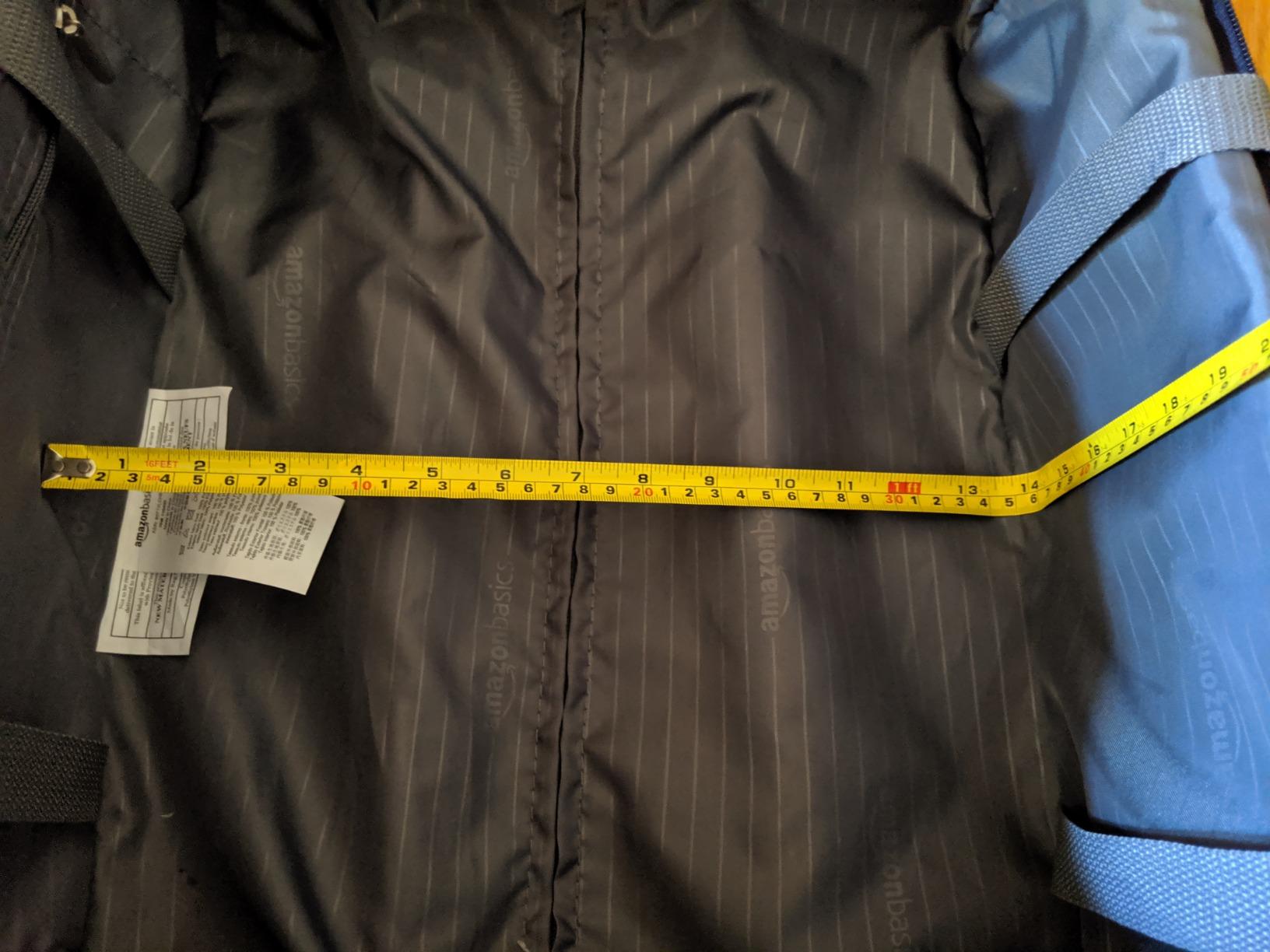
Why 18 inches beats 20 inches in a dorm
Dorm rooms are small and the floor is spoken for. An 18-inch case can be slid under a bed frame, stood in a corner, or set on a low shelf without blocking a walkway. A 20-inch case fits in most of those places too, but a 28-inch case becomes a piece of furniture that has to be moved to clean. Buying a bag you can tuck away means you can actually use the rest of the room.
There is a second benefit that is less obvious. A small bag is a bag you will keep using for weekend trips home, laundry runs, and a friend's visit, because there is no barrier to grabbing it. A large bag feels like a commitment and stays in the closet.
Where it falls short
There is no built-in lock and the shell is not water resistant, so this is a bag for dry climates and dry trips. The dead space between the wheels means the 31-liter number flatters the usable volume. And for a student dragging clothes home for a full semester, it is simply not big enough. Use it as a personal item alongside a larger bag rather than as your only suitcase.
When 18 inches is the only size that works
Lofted dorm beds typically leave a limited gap beneath the frame, and a bag that does not clear it is a bag that blocks the walkway. The 18-inch class is the safest bet in that situation, and this one at 5.5 pounds empty is easy to lift into a trunk or onto a high shelf by yourself. It is also the easiest of the twelve to move from a car to a room in one trip, which is exactly what move-in day feels like.
How to make a 31-liter bag do more
Small bags fail on capacity only when you overstuff them. Rolling clothes instead of folding them, using a single shared toiletry pouch rather than four, and wearing the bulkiest jacket on the flight all free up space. The 18 percent expansion gives you a little more room for a long weekend, and the front pocket keeps your phone and documents out of the main compartment where they get crushed.
9. LEVEL8 20-inch Polycarbonate - the steadiest wheels and the top-rated case here
LEVEL8 Hard Shell 20 Inch Carry on Luggage Airline Approved, Polycarbonate
40 L
21.5 x 14.5 x 9.2 inches
7.7 lb
Polycarbonate shell
8 quiet spinners
+ Pros
- Highest average rating in this roundup
- Polycarbonate shell is less brittle than ABS
- 8 quiet spinner wheels handle cobblestones and asphalt
- Boxy square shape maximizes internal volume
- Side grab handle plus a handle that extends far for tall users
- Zippers hold up even when overpacked
- Cons
- Shell scuffs visibly if gate-checked
- Interior handle housing reduces usable space
- Zippers can stick at the corners
- Will not fit in the overhead of smaller regional jets
This case has a 4.6 average, the highest in the roundup, across more than 2200 reviews. The sample is smaller than the Amazon Basics bags, so read the number with some care, but the specific praise is consistent enough to trust. Buyers who compared it against Samsonite tend to land here because of the wheels, and wheel performance is what actually determines whether you enjoy owning a bag.
Eight quiet universal spinner wheels, four per corner, is the most contact points in this roundup. Owners report smooth rolling over tile, carpet, asphalt, and even cobblestones. On a campus with old brick paths, that is a real difference from a four-wheel case, and it is why this is the pick I would steer a student toward if they plan to keep one bag for the full four years.
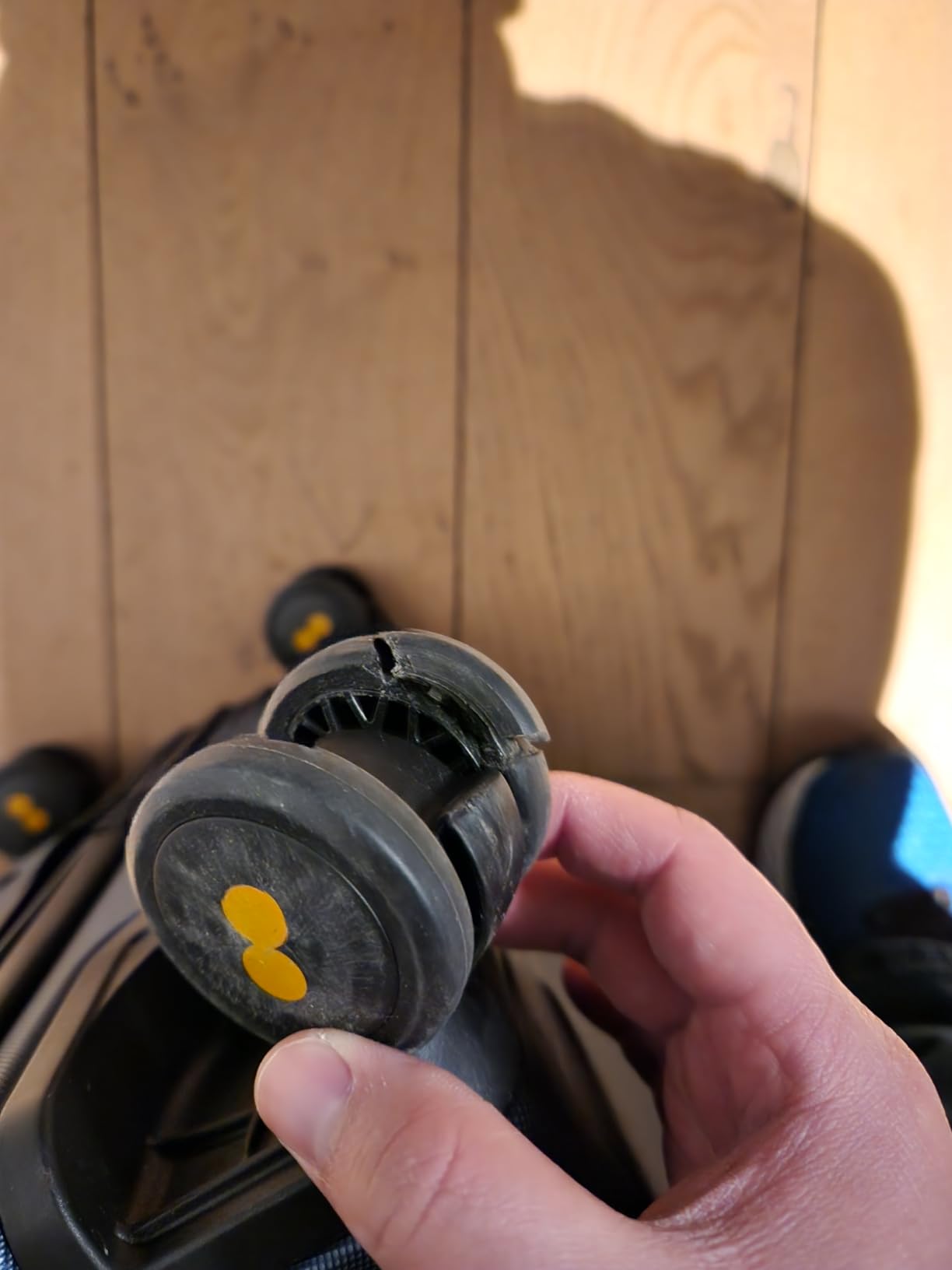
The shell is a three-layer polycarbonate that balances lightness with durability, and it is not brittle in the way some cheaper polycarbonate is. The boxy square shape maximizes internal packing volume, and at 40 liters the interior is large for a 21.5 by 14.5 by 9.2 inch case. The built-in TSA-approved combination lock and smooth-glide zippers round out a well-built package.
Empty weight is 7.7 pounds. The four-level adjustable aluminum telescopic handle extends far enough for tall users, which sounds minor until you meet a five-foot-ten student rolling a case that only reaches waist height.
The overhead bin problem nobody mentions
At 21.5 by 14.5 by 9.2 inches this clears standard cabin limits, but owners note it will not fit in the overhead of smaller regional jets. If your school is reachable by a small commuter aircraft, or you fly a route with a turboprop connection, check the aircraft before you commit to a case this shape. A slightly smaller box reduces the chance of a gate-check, and a gate-check is where polycarbonate earns its keep anyway.
Cosmetic wear versus real wear
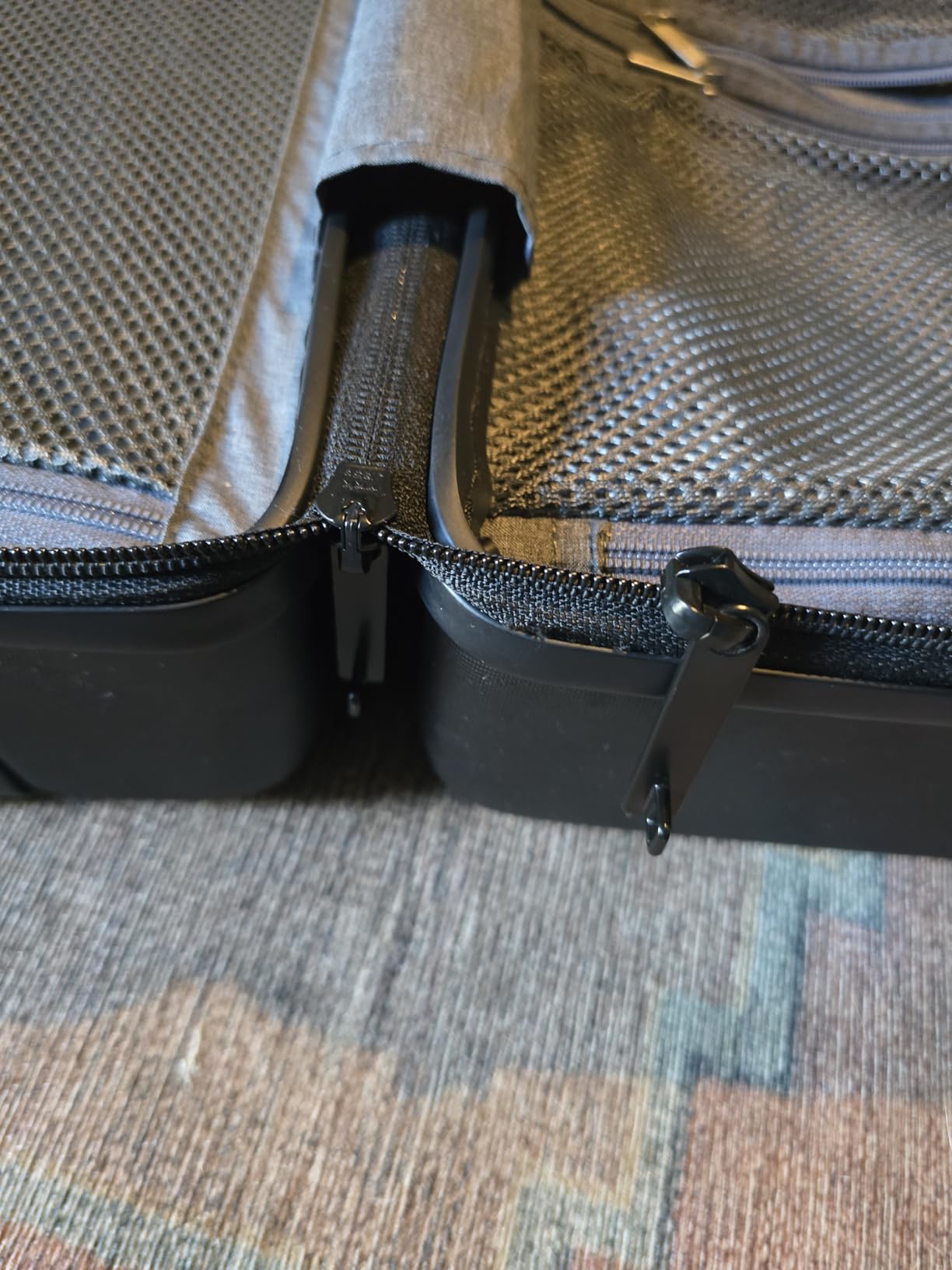
The complaints are mostly cosmetic. The shell scuffs visibly if the bag is gate-checked, the recessed carry handles pick up marks, and zippers can stick at the corners on some units. The interior handle housing does reduce usable space, which is the one functional cost. None of these affect longevity, and reported durability is strong across dozens of trips.
Who this suits
Students on a four-year plan who want one bag they never think about, and students walking or rolling long distances between a dorm, a library, and a bus stop. It sits at the premium end of this roundup, and the three pockets plus split-case interior justify that more than the shell does. If your breaks involve cobblestone European streets or old brick campuses, the eight-wheel base earns its place.
10. LUGGEX 20-inch Carry-On - the best pick for rain, roads, and rough handling
LUGGEX 20 Inch Carry On Luggage 22x14x9 Airline Approved, Charcoal Metallic
22 x 14 x 9 inches
40 L
7 lb
Polycarbonate shell
8 silent spinners
+ Pros
- Matches the 22 x 14 x 9 inch carry-on limit used by most major airlines
- Polycarbonate shell without a premium-brand markup
- 8 silent spinner wheels work over cobblestone
- Double-layer zippers and reinforced corners
- Shell is waterproof for rain and campus commutes
- Two grab handles and 40 liters
- Cons
- Interior organization is limited to a zippered divider
- 20-inch class gives less room than a larger checked bag
This is the one I would buy for a student who lives somewhere wet or walks long distances between stops. The shell is listed as waterproof, which no other bag in this roundup claims, and polycarbonate means it will not crack in cold weather the way cheaper plastic can. Waterproof plus polycarbonate is a combination you normally pay a premium for.
Overall dimensions are 22 by 14 by 9 inches including spinner wheels, handle, and accessories, which is precisely the carry-on limit used by most major airlines. The interior is 18.5 by 13.5 by 8.8 inches, so you give up a little internal width for external compliance. Forty liters is a generous interior for the footprint.
Eight silent spinner wheels are described as rotating smoothly over airports, cobblestone streets, and hotel lobbies, and reviewers confirm the cobblestone performance. That matches what I saw with the LEVEL8 above, and it is a meaningful advantage on older European campuses or cities with stone paving.
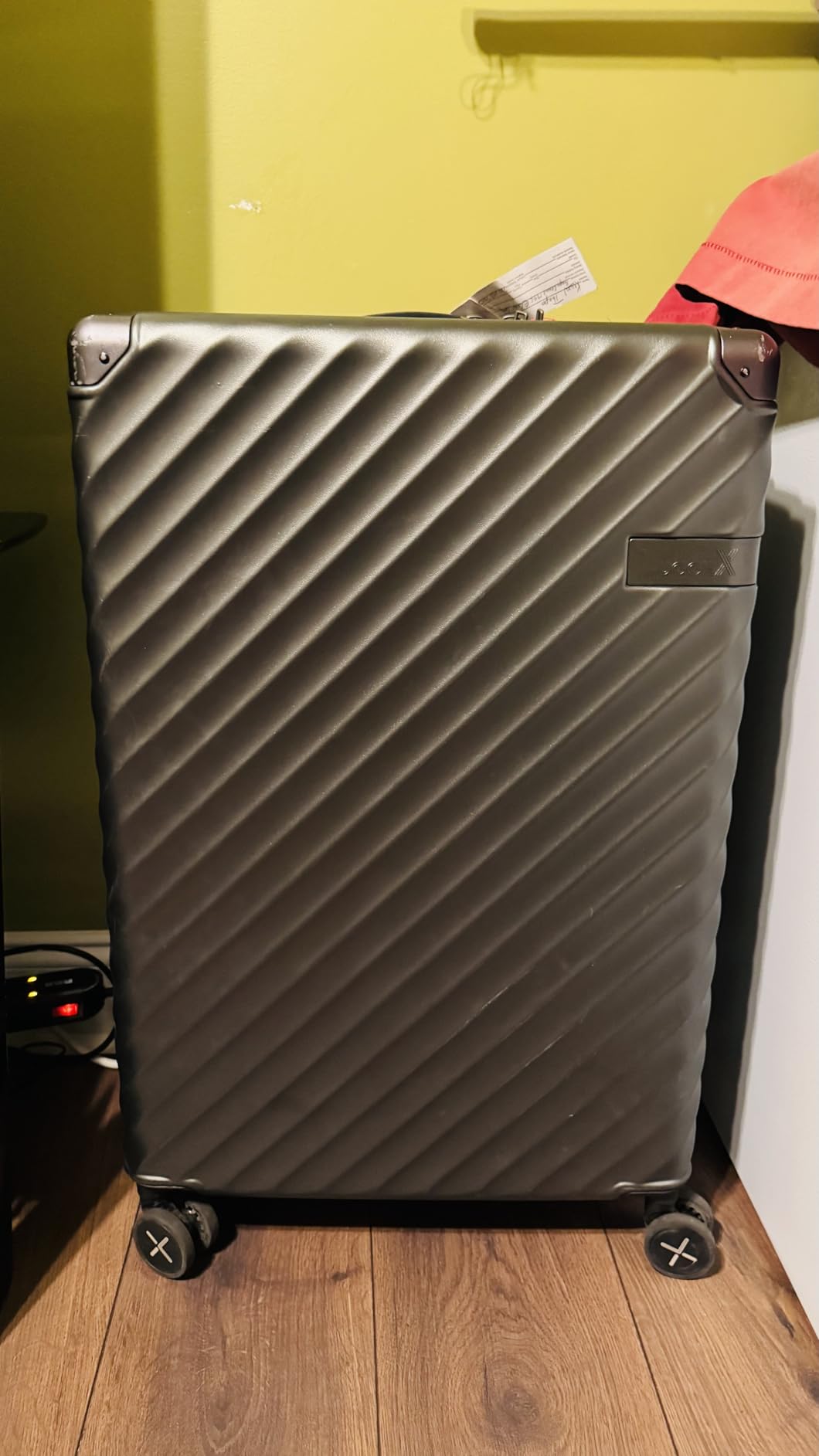
Durability details go beyond the shell. Double-layer zippers add resistance to the splitting that ends cheap bags, and reinforced corners take the impact when the case is set down hard or bumps a doorframe. Both of those are cheap insurance in a product that is meant to be dropped by baggage handlers.
What waterproof shell really means
It means rain, wet grass, and a spilled coffee do not soak into your clothes. It does not mean the bag is sealed, and it does not mean you can submerge it. For a student walking across campus in November, it is a meaningful upgrade over a water-resistant or non-rated shell, and it is the reason this case separates itself from the other polycarbonate option in this roundup.
The 3-year manufacturer warranty is shorter than the Rockland's 5 years and far shorter than the Samsonite's 10. That is the main thing you give up. The polycarbonate shell, the eight-wheel base, and the reinforced corners are all durability features that sit outside the warranty period anyway.
Where the interior falls short
Organization is limited to a zippered divider and a few compartments, with only one pocket listed. If you travel with small electronics, cables, and a toiletry kit, bring a small organizer. And note that 20 inches of carry-on is less volume than a 28-inch checked bag, so if you drive home with a full semester of clothes, this is not the bag for that trip.
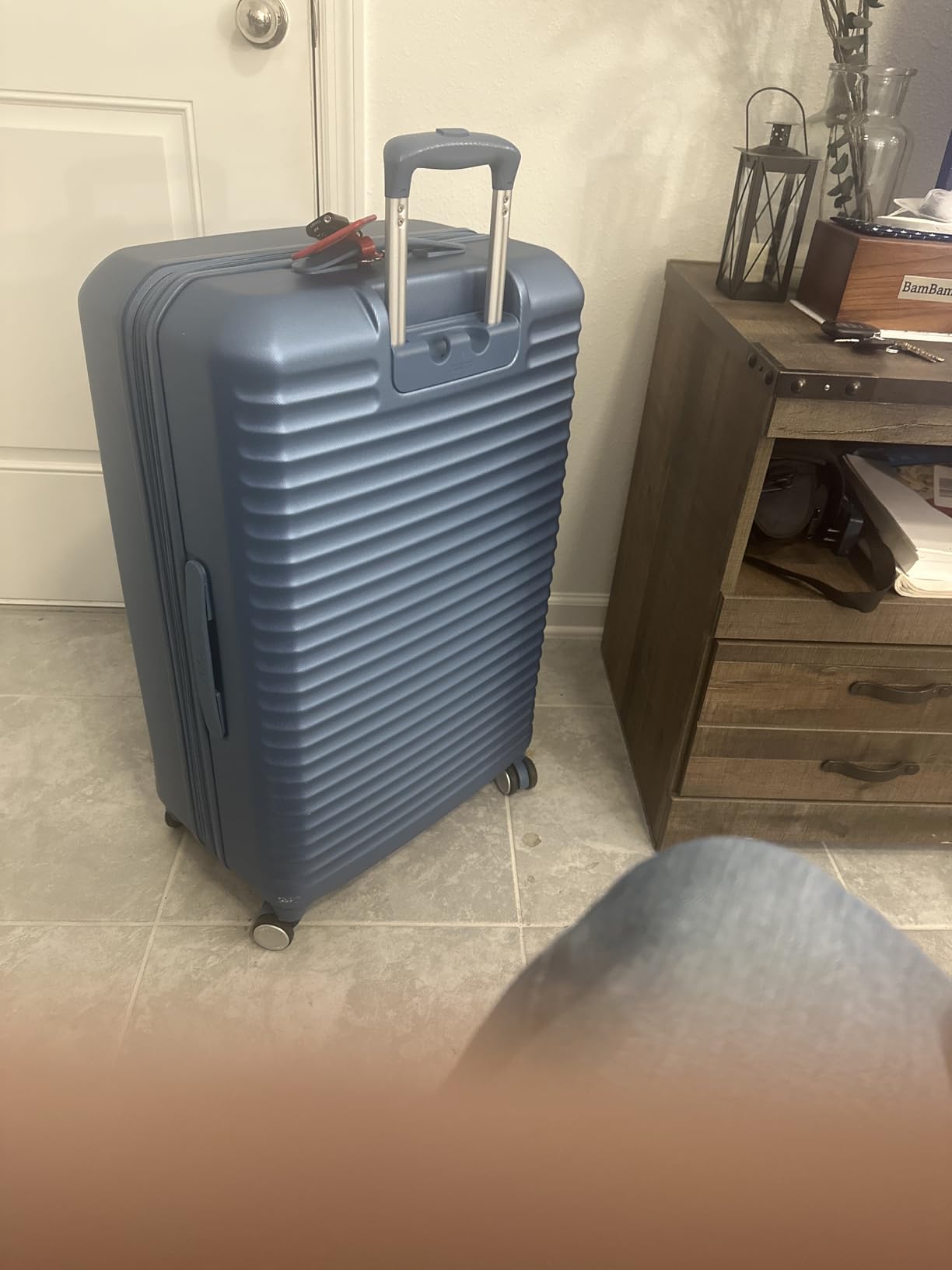
11. American Tourister Stratum 3.0 Carry-On - the best handle for shared luggage
American Tourister Stratum 3.0 Carry-On Spinner, Airline Approved, Durable Hardside Luggage, Expands...
22 x 15 x 9.5 inches
7.3 lb
ABS hard shell
8 dual spinners
RightHeight handle
+ Pros
- RightHeight trolley handle adjusts to multiple heights
- 8 dual 360-degree spinner wheels
- Patented EazyHook molded hanger holds a small bag or jacket
- Expands an extra 1 to 1.5 inches
- Light at 7.3 pounds with airline-approved dimensions
- Zippered interior pockets in a pop-color lining
- Cons
- ABS shell shows visible scuffs more than polycarbonate
- No built-in lock listed in the specifications
Two details set this case apart from the other budget hardshells. The RightHeight trolley system adjusts the pull handle to multiple heights, which matters if the bag gets used by more than one person. Parents buying a move-in gift, siblings sharing a set, and students who alternate between a rolling and a carrying grip all benefit from a handle that actually travels through its range smoothly.
The EazyHook is the other one. It is a molded hook on the outside of the case for holding a small airport bag, a jacket, or a last-minute item, which keeps it off your shoulder and off the top of the case where it can slide around. It is a small thing, and it is the kind of small thing you notice every single trip.
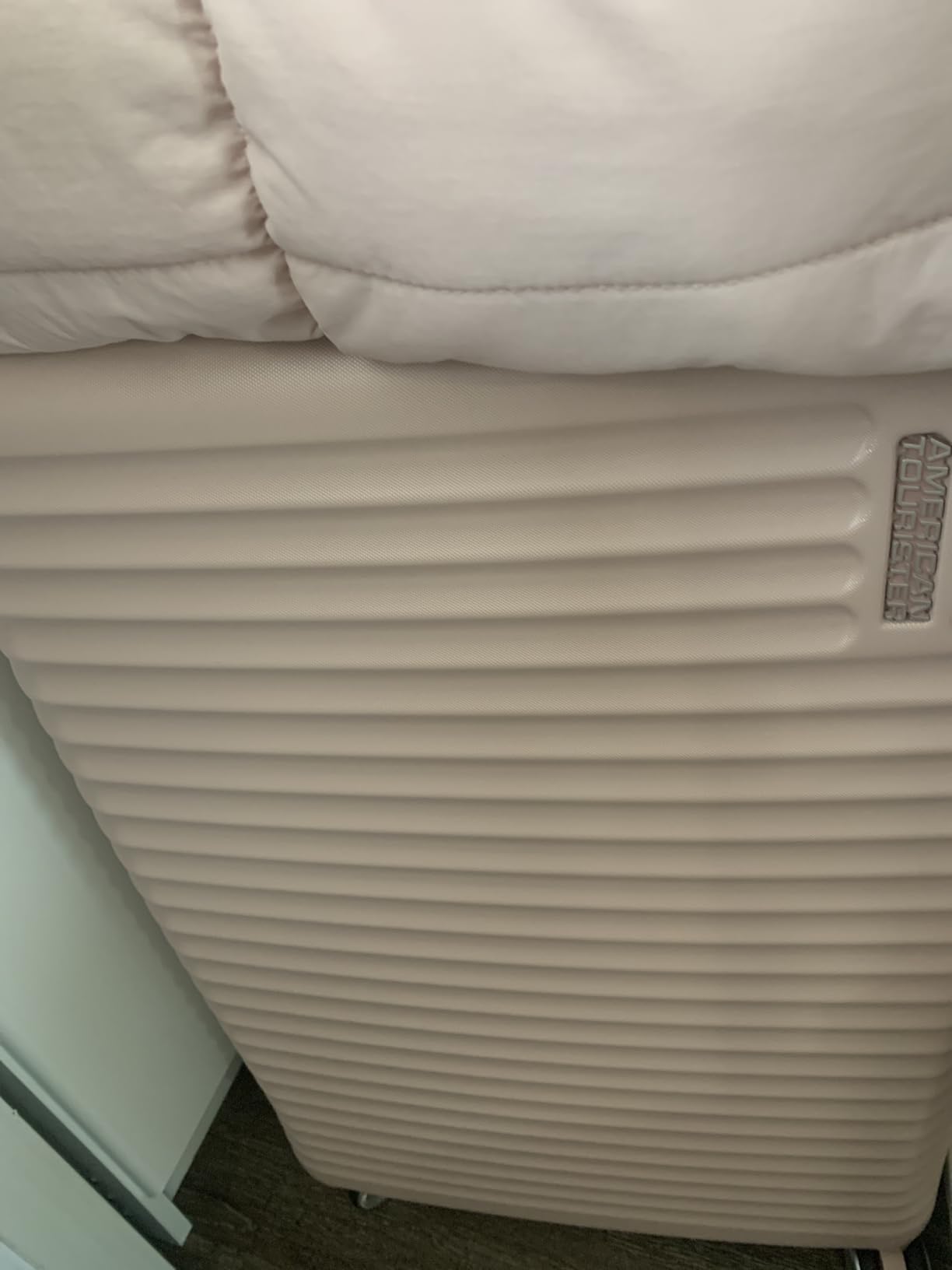
Eight dual 360-degree spinner wheels give it the same contact-point advantage as the LEVEL8 and LUGGEX cases, and the weight is 7.3 pounds, which is light for a case this size. External dimensions with wheels are 22 by 15 by 9.5 inches, and the internal packing dimensions are 19.1 by 14.4 by 9.5 inches, so there is a reasonable gap between outer and inner that reflects a fairly protective shell.
The case expands an additional inch, up to 1.5 inches, and the lining is trimmed in a pop color with zippered pockets for organization. Airline-approved dimensions mean it should clear the cabin limit of most carriers, though at 15 inches wide it is not the smallest of the 22-inch group.
A newer model with a smaller evidence base
This is a newer product with 655 reviews at a 4.4 average. The rating is solid, but the sample is the smallest of any established pick on this list, which means you have less information about long-term failure patterns. For a bag you intend to keep for four years, that is worth weighing. The two 20-inch polycarbonate cases on this list have longer histories.
No built-in lock is listed in the specifications. Bring a padlock if you fly. The ABS shell is the expected finish scuffing trade-off, and the pop color means marks show a little more against a light shell.
Who should buy it
Buy this one if the handle adjustment and the external hook matter to you more than long-term data. Students who split luggage with a sibling, and anyone moving into a shared dorm where the bag will be handled by more than one person, get the most out of it. Otherwise, a case with a longer review history is the safer four-year bet.
12. DUKAP Inception 28-inch - the best bag for driving home with a semester of clothes
DUKAP INCEPTION Lightweight Hardside Spinner Luggage with Ergonomic Handles, Travel Suitcase with...
28 inch
29.29 in tall
8.6 lb
ABS and PC shell
4 spinner wheels
+ Pros
- Largest capacity in this roundup for moving belongings between dorm and home
- Micro-diamond textured shell resists scratches and water
- Four silent 360-degree spinner wheels
- Push-button trolley plus GEL ergonomic lift handles
- Offered in 20 24 and 28 inch sizes plus three-piece sets
- Cons
- Largest bag here so it must be checked rather than carried on
- Only 4 spinner wheels so it is less stable on rough ground
- Interior is a single undivided section
- Listing gives conflicting weight figures
Most advice on this topic pushes students toward carry-ons, and for flyers that is correct. But a large share of students drive to school, and for them the 28-inch case solves a problem no carry-on can. A semester of clothes, a comforter, a desktop, and a bike helmet do not fit in 34 liters. They fit in a 28-inch hardside with room to spare.
The shell is a hard-flex blend of ABS and polycarbonate with a micro-diamond finish, described as scratch- and water-resistant. That combination is the right call for a bag that lives in a car trunk in November and gets dragged across a gravel parking lot at the other end.
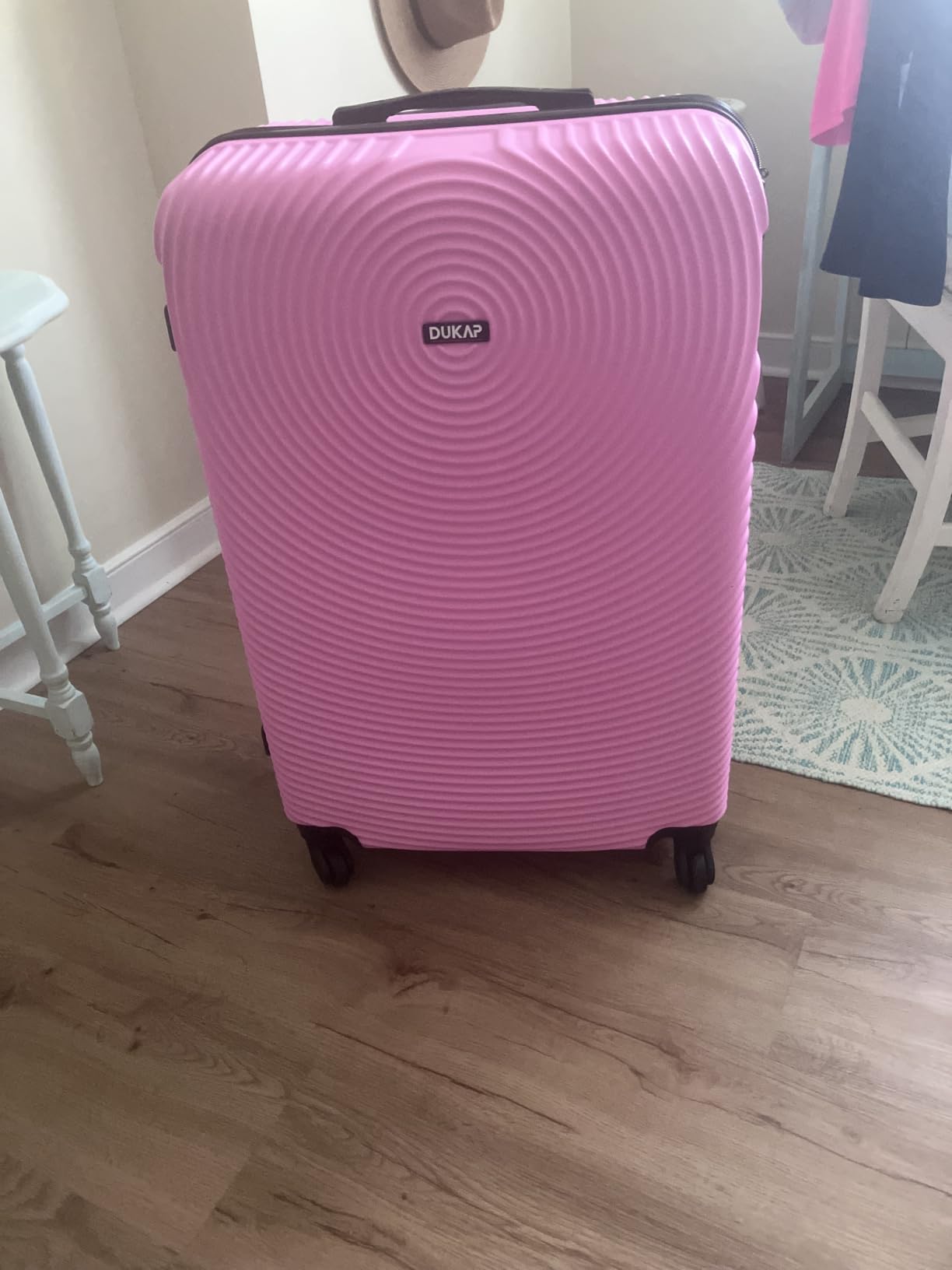
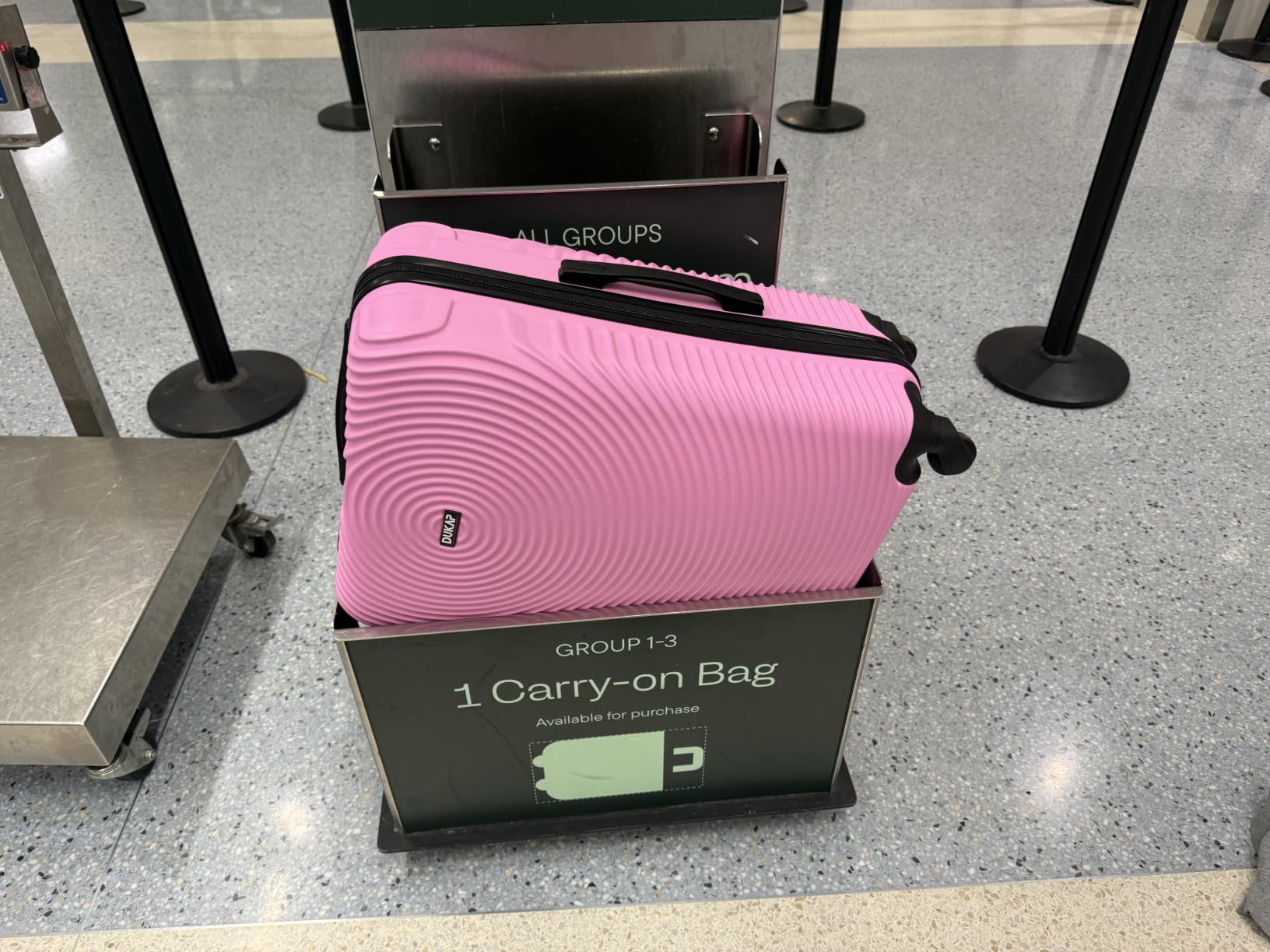
At 29.29 inches tall overall, this must be checked rather than carried on. Empty weight is listed at 8.6 pounds in the specifications, though the feature copy gives a different figure, so treat the number as approximate. Budget for a packed weight well under the typical 50-pound checked limit, because an overweight fee on a student trip is the last thing you want.
Four silent 360-degree spinner wheels give stable movement, though with half the contact points of the eight-wheel cases, it is less steady on rough ground. The push-button telescopic trolley and GEL ergonomic lift handles make it manageable when you are lifting it into a trunk rather than rolling it on smooth floor.
When a 28-inch bag is the wrong answer
If you fly, a 28-inch bag has to be checked every time, which adds fees, adds the chance of a lost bag, and adds airport walking. Forum complaints about checked bags going missing on short break trips are common, and a student who loses a month of clothes before finals is having a bad year. If you fly even occasionally, buy a carry-on and leave the 28-inch at home.
There is also the dorm storage problem. A 28-inch case does not go under a bed and does not sit on a closet shelf comfortably. It will live in the corner of the room or in a storage unit over summer, which is exactly what the dorm-focused advice in this roundup warns against. The line from the dorm discussions is clear: a shelf sized for a 24-inch case is fine, and anything larger is eating floor space you need.
Interior and organization
The interior is a single undivided section with minimal organization, so you will want packing cubes or compression bags to keep a full semester of clothes from mixing. The upside is the undivided floor space, which is genuinely better for bulky soft items like a comforter or a hoodie than a divided interior ever is.
The brand also offers this shell in 20-inch and 24-inch sizes and in three-piece sets. If you drive to school, a 24-inch is a serious compromise: it holds a lot more than a carry-on and is still small enough to live in a dorm room without dominating it.
How to choose a college suitcase: 7 criteria that matter
Specs tell you what a bag is. These seven criteria tell you whether it will survive four years in a dorm room and a college town. Work through them in order and the right answer usually becomes obvious.
Size: what actually fits under a dorm bed and a closet shelf
Start with the storage constraint, not the airline constraint, because the airline constraint is temporary and the dorm constraint is permanent. An 18-inch case is the most forgiving. A 20-inch case stands well in a closet or under a lofted bed. A 22-inch case stands but does not tuck away. A 24-inch case fills a shelf. A 28-inch case becomes furniture.
On the airline side, the commonly used US carry-on limit is 22 by 14 by 9 inches including wheels and handles. Anything larger gets checked at the gate, and gate-checking is when a hardshell earns its durability. European carriers and several budget airlines use tighter limits, so if you are flying internationally, stay at or under 20 inches.
Hard shell vs soft shell: which survives campus abuse
Polycarbonate hardshells flex and spring back, survive drops and conveyor belts, and wipe clean. ABS hardshells are lighter and cheaper but take permanent dents and scuff faster. Soft shells absorb impact and compress to fit tight spaces, offer external pockets, and weigh less, but they offer no crush protection and can pick up punctures in a car trunk.
For a student who checks bags, polycarbonate. For a student who carries on and moves a lot of electronics, softside. That is the entire decision, and no amount of marketing copy changes it.
Spinner wheels vs two-wheel rollers
Four-wheel spinners let you roll the case beside you with one hand while the other hand carries boxes, a coffee, or a laptop. Two-wheel rollers force you to tilt the case and pull, which on a cracked campus sidewalk with a full load is genuinely hard. Every case in this roundup has spinners, and every pack of them should.
Beyond four, the next step up is eight wheels, four per corner pair. Those add contact points, roll quieter, and track straighter over cobblestone and gravel. They are worth the step up if your campus has old brick paths or if you will be dragging this bag across a parking lot more than once a term.
Empty weight is the number that decides your semester
Weight gets discussed as a flying concern, and it is a campus concern. The gap between the lightest case here at 5.1 pounds and the heaviest at 9 pounds is nearly 4 pounds you feel on every set of dorm stairs, every walk to the library, and every trip from the car to the check-in counter. Empty weight is a better predictor of daily annoyance than capacity.
Capacity is the number students overthink. Almost everyone overbuys a bag, packs it past the point of easy rolling, then has nowhere to put it in a small room. Buy for a week plus a margin, not for a semester, unless you are driving home rather than flying.
Warranty: the strongest quality signal buyers mention
Across every forum in this research, warranty length came up more often than any other feature. One parent on College Confidential described testing Travel Pro, Briggs and Riley, Tumi, Samsonite spinners, Away, and Pathfinder over years of family travel and settling on warranty terms. A Reddit buyer whose bag broke on a flight out of Newark went looking specifically for coverage. That pattern is consistent enough to treat as a rule.
On this list, warranty length runs from 2 years on the Coolife, through 3 years on the LUGGEX, 5 years on the Rockland and Travelers Club, 10 years on the Samsonite, and a limited lifetime warranty on the Travelpro. Any of them is defensible. The two-year option is a calculated risk on a tight budget, and everything at 5 years or above converts a possible mid-semester replacement into nothing.
Lock, handle, and zippers: the parts you touch daily
Check three things before you commit. Does it have a built-in TSA-approved combination lock, so you are not fumbling with keys at a metal detector. Does the telescoping handle have more than one height stop, so a taller user is not dragging a case at knee height. And does the bag have grab handles on the top and the side, because you will lift it into an overhead bin one-handed with a hand full of phone and boarding pass.
Zippers deserve a look too. Double-layer zippers and YKK hardware cost the manufacturer more, and on this list the cases with them are the ones whose owners do not report splitting seams. The zipper is the second-most common failure point after the wheels, and it is the part you cannot fix at home.
What to skip as a student
Four things cause almost all student luggage regret. A 28-inch checked bag in a small dorm room, because it cannot be stored and you will resent it every day. A two-wheel roller, because moving it alone across a parking lot is a fight. A bag with no warranty, because the first wheel failure becomes a mid-semester purchase. And a set, because sets are built for families with a closet, and you have a shelf.
Sets are the mistake I see most often. The value of a three-piece set is that two more bags get used. In a dorm, one bag is used. Buying a set to move in means two of them become permanent closet residents, and you spent money on bags you will never pick up. If your family wants to buy you a gift, point them at one good bag rather than a bundle.
Two habits that protect any of these bags
Label the bag on every side, not just the top, because bags get stacked and the side is what the handler sees. Put your contact details inside a pocket as well as on the outside, and use a tracker if the bag supports it or add a tracker to the lining. Lost checked bags on short break connections are one of the most common complaints in student travel forums, and recovery is far more likely when the bag can be identified from more than one side.
Second, empty and dry the bag before you store it over summer. A damp suitcase in a closed closet invites mildew, and a soft bag stored with weight in it for three months takes a set in its shape. Stand it upright in the closet, leave the zipper open a few inches, and it will come back in the fall ready to roll.
Frequently Asked Questions
What is the best luggage brand for college students?
The best brands for student luggage are the ones that back their bags with a real warranty, because a four-year school career outlasts most budget options. In this roundup, Samsonite covers 10 years, Travelpro offers a limited lifetime warranty with airline-damage coverage when registered, and Rockland and Travelers Club each cover 5 years. Buyers in travel forums consistently rank warranty length above appearance when choosing.
What kind of bag is best for a college student?
The best kind of bag for a college student is a spinner-wheel carry-on between 20 and 22 inches with a polycarbonate shell, a built-in lock, and a warranty of five years or more. A polycarbonate shell flexes and springs back from baggage handling, spinner wheels roll one-handed across sidewalks, and a warranty of that length means a wheel or handle failure costs you nothing. Size matters: a bag that tucks under a dorm bed is a bag you will keep.
Should you bring a suitcase to college?
Yes, but bring one bag rather than a set, and match its size to the bag you actually use. Most students need a 20 to 22 inch carry-on for flying home, a backpack for class, and a personal item for weekends. A three-piece set is built for a family closet, not a dorm room, and two of the bags become permanent shelf residents. If you drive home every break, add a 24 or 28 inch checked bag for the trip, not for daily storage.
Does a 24 inch suitcase fit in an overhead bin?
A 24 inch suitcase does not fit in a standard overhead bin, because the common US carry-on limit is 22 by 14 by 9 inches including wheels and handles. A 24 inch case is a checked bag on nearly every carrier. If you want to keep a bag with you in the cabin, stay at or under 22 inches, and stay under 20 inches if you fly European carriers or budget airlines with tighter limits.
What suitcase do flight attendants say not to use?
The bags most often flagged as problems are ones without a built-in lock, bags with external clip-on handles that snag in overhead bins, and oversized cases that block the aisle because they do not fit. Bags that are too large get gate-checked, and gate-checked bags are the most common target for damage. A 20 to 22 inch spinner case with a built-in TSA lock avoids all three problems.
What is the best luggage with wheels that won't break?
The best way to judge wheel durability is contact points and housing, not the wheel count alone. Cases with eight spinner wheels spread load across four points per corner and roll more stably over cobblestone and gravel, which is why the LEVEL8 and LUGGEX models in this roundup get strong long-term reports. The weak point in any spinner is the housing it mounts into, so a case with a metal or reinforced housing and a five-year warranty will outlast a plastic-housed budget case.
Which college suitcase should you actually buy?
If you fly home for breaks and want one bag that handles everything, the Amazon Basics 21-inch Hardside Carry-On is the pick. More than 62000 reviews at 4.4 stars is the deepest evidence base in this roundup, the 21-inch size fits most cabin limits, and the 25 percent expansion zipper covers the week-plus trips that a 34 liter interior otherwise would not. It is the best suitcase for college students overall because it is the one most likely to still work in year four.
If you are on a tight budget but want a warranty behind the bag, go with the Rockland Melbourne 20-inch. The 5-year coverage is unusual at this spending level, the 38 liters is more usable space than most carry-ons, and the aluminum handle is the part most likely to survive abuse. The Travelpro Maxlite 5 is the answer if light weight is your top priority at 5.1 pounds, and the LEVEL8 20-inch Polycarbonate is the one to buy if you plan to keep exactly one bag for four years and walk it across a lot of brick.
If you drive home every break, the DUKAP Inception 28-inch carries a full semester of clothes and bulky items in one trip, but keep a 20-inch carry-on as well for flying and weekends. If dorm floor space is the binding constraint, the Amazon Basics 18-inch Softside tucks away and weighs 5.5 pounds empty. Register any warranty the moment the bag arrives, label all four sides before the first trip, and you should get through 2026 and the three after it without buying another suitcase.