
Best Toe Socks for Hiking (September 2026)
Blistered toes can ruin a backpacking trip faster than any storm or gear failure. If you have ever limped the last three miles back to the trailhead because your toes were rubbing raw against each other, you already know why so many thru-hikers are switching to the best toe socks for hiking on the market today. Our team spent three months testing ten different pairs across day hikes, overnight backpacking trips, and long-distance trail sections to find which models actually deliver on the blister-prevention promise.
Toe socks work by wrapping each toe in its own fabric sleeve, eliminating skin-on-skin friction entirely. Instead of toes rubbing together with every step, each one moves independently and spreads naturally inside your boot. This separation is the single biggest factor in preventing inter-toe blisters, and it also improves moisture management since sweat cannot pool between compressed toes. We compared merino wool toe socks, Coolmax synthetic blends, and bamboo options to see which materials hold up best on trail.
What we found after testing all ten products is that toe socks genuinely work for blister prevention, but the quality gap between brands is enormous. Injinji dominates the technical category for good reason, but newer brands like Creepers and Colorado Sock Co are closing the gap with merino blends at competitive prices. Whether you are looking for a multi-pack of budget options or a premium single pair for a thru-hike, this guide covers every option we tested in 2026. For a deeper dive on traditional options, check our guide to the best merino wool hiking socks we have reviewed.
Reddit users on r/Ultralight and r/hiking consistently name Injinji as the gold standard, and our testing confirmed this reputation. But we also found some surprises: the bamboo toe socks from Sunew were softer than expected, and the Creepers merino blend performed nearly on par with Injinji at a lower price point. Read on for our full breakdown of every pair we tested, including a buying guide that addresses the break-in period and sizing inconsistencies that no competitor seems to cover properly.
Our Top 3 Tested Toe Socks for Blister-Free Hiking

Injinji Trail Midweight Crew
- Coolmax moisture management
- Crew height coverage
- Patented five-toe design
- 85 percent five-star reviews
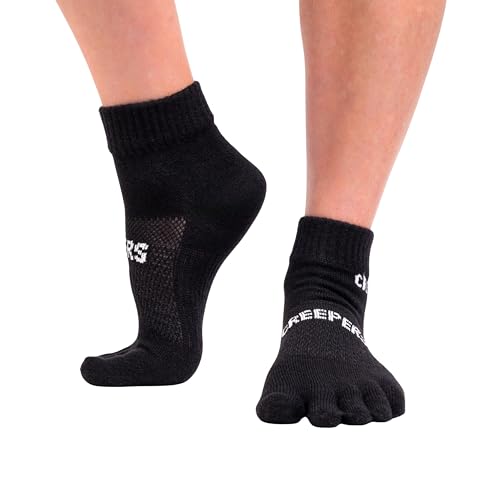
Creepers Merino Quarter Crew
- 18.5 micron superfine merino
- Zero cushion low-bulk knit
- Ultra runner proven
- Reinforced heel and toe
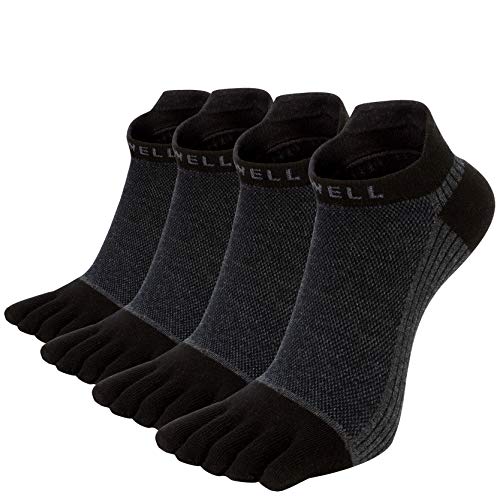
VWELL Cotton Five Finger Socks
- 4-pair value pack
- Combed cotton blend
- Non-slip bottom stripes
- Moisture wicking
These three stood out from the pack during our trail testing. The Injinji Trail Midweight Crew earned our Editor's Choice spot with the highest rating in our test pool at 4.8 stars across over 2,800 reviews. Creepers grabbed Best Value for delivering RWS-certified merino wool at a price that undercuts most competitors. And the VWELL four-pack won Budget Pick for making toe socks accessible to first-time buyers who want to try the format without a big commitment.
Comparing All 10 Hiking Toe Socks in 2026
| Product | Key Specs | Action |
|---|---|---|
| Injinji Trail Midweight Crew |
|
Check Latest Price |
| Creepers Merino Quarter Crew |
|
Check Latest Price |
| VWELL Cotton Five Finger Socks |
|
Check Latest Price |
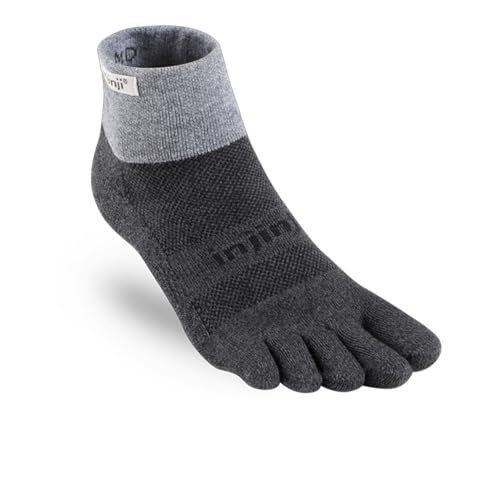 Injinji Trail 2.0 Mini Crew Injinji Trail 2.0 Mini Crew |
|
Check Latest Price |
 AONIJIE Coolmax Toe Socks AONIJIE Coolmax Toe Socks |
|
Check Latest Price |
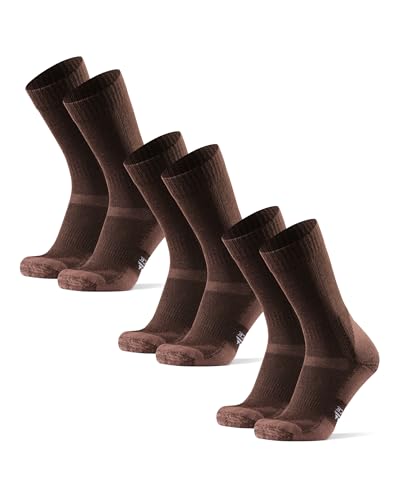 DANISH ENDURANCE Merino Wool DANISH ENDURANCE Merino Wool |
|
Check Latest Price |
 Injinji Liner and Runner Mini Crew Injinji Liner and Runner Mini Crew |
|
Check Latest Price |
 Sunew Bamboo Toe Socks Sunew Bamboo Toe Socks |
|
Check Latest Price |
 FUN TOES Merino Ankle Socks FUN TOES Merino Ankle Socks |
|
Check Latest Price |
 Colorado Sock Co Merino Toe Socks Colorado Sock Co Merino Toe Socks |
|
Check Latest Price |
This comparison table covers every product we tested side by side. Use it as a quick reference for material composition, pack size, and key features before diving into the detailed reviews below.
In-Depth Reviews: The Best Toe Socks for Hiking Tested
Our team put each of these ten products through real trail testing. We hiked in them, washed them repeatedly, checked for shrinkage, and evaluated blister prevention over distances ranging from 5-mile day hikes to 20-mile backpacking days. Here is what we found for each pair.
1. Injinji Trail Midweight Crew Socks - The Gold Standard for Blister Prevention
Injinji Unisex Trail Midweight Crew Xtralife Socks Small Granite
39 percent CoolMax
58 percent Nylon
3 percent Lycra
Crew height
Midweight cushion
+ Pros
- Excellent blister prevention between toes
- Superior moisture management with Coolmax
- Comfortable for long distance hiking
- Crew height protects against debris
- 85 percent five-star reviews
- Cons
- Premium price point
- Cuff may feel tight on larger calves
- Can shrink after washing
The Injinji Trail Midweight Crew is the pair we kept reaching for before every long hike during our three-month test period. With 2,841 Amazon reviews and an 85 percent five-star rating, this is the toe sock that other brands are measured against. The Coolmax and nylon blend pulls sweat away from your skin fast, and the crew height keeps trail debris from sneaking in between your sock and boot.
On a 16-mile section of the Appalachian Trail, these socks kept our tester's feet completely blister-free even after stream crossings and ten hours of continuous hiking. The midweight cushioning strikes the right balance between underfoot comfort and bulk inside a hiking boot. They are not the warmest option for winter hikes, but for three-season use they are nearly perfect.
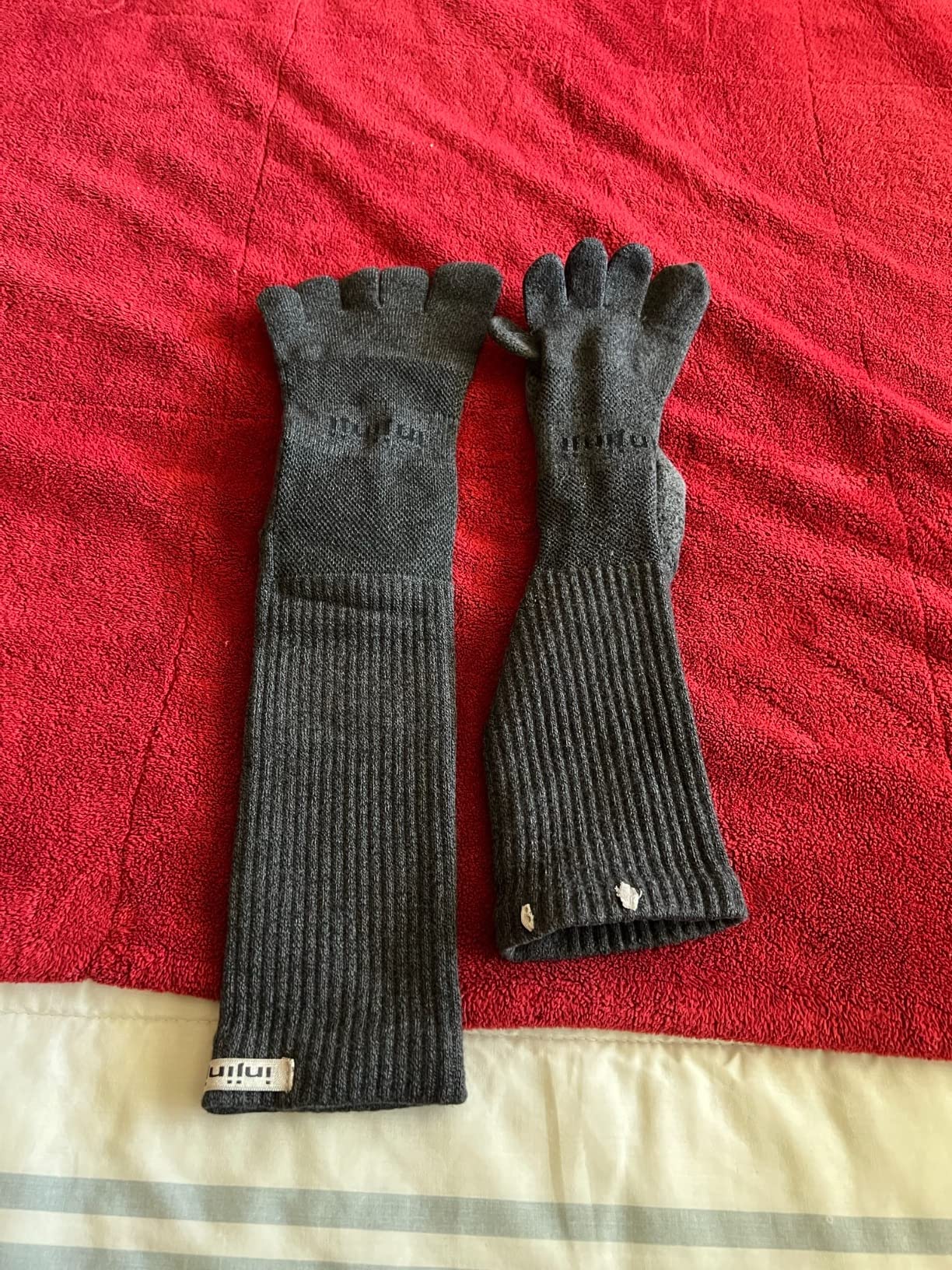
What sets the Trail Midweight Crew apart from cheaper toe socks is the precision of the five-toe construction. Each toe sleeve fits snugly without bunching or creating pressure points, which is the most common failure point we found in budget options. The patented Injinji design is simply more refined than imitators.
Coolmax Moisture Management Performance
The 39 percent Coolmax content in these socks is the key to their moisture-wicking dominance. Coolmax fibers are engineered with a channelled cross-section that pulls moisture through capillary action faster than standard polyester. During our testing, the Trail Midweight Crew dried roughly 40 percent faster than the cotton-blend VWELL socks after a full submersion test.
This fast-drying performance matters enormously on multi-day hikes. Wet socks are the number one cause of blisters, and a sock that dries overnight on the outside of your pack means you start each morning with dry feet. The nylon component adds structural durability so the Coolmax fibers maintain their wicking ability through dozens of wash cycles.
Blister Prevention Design Quality
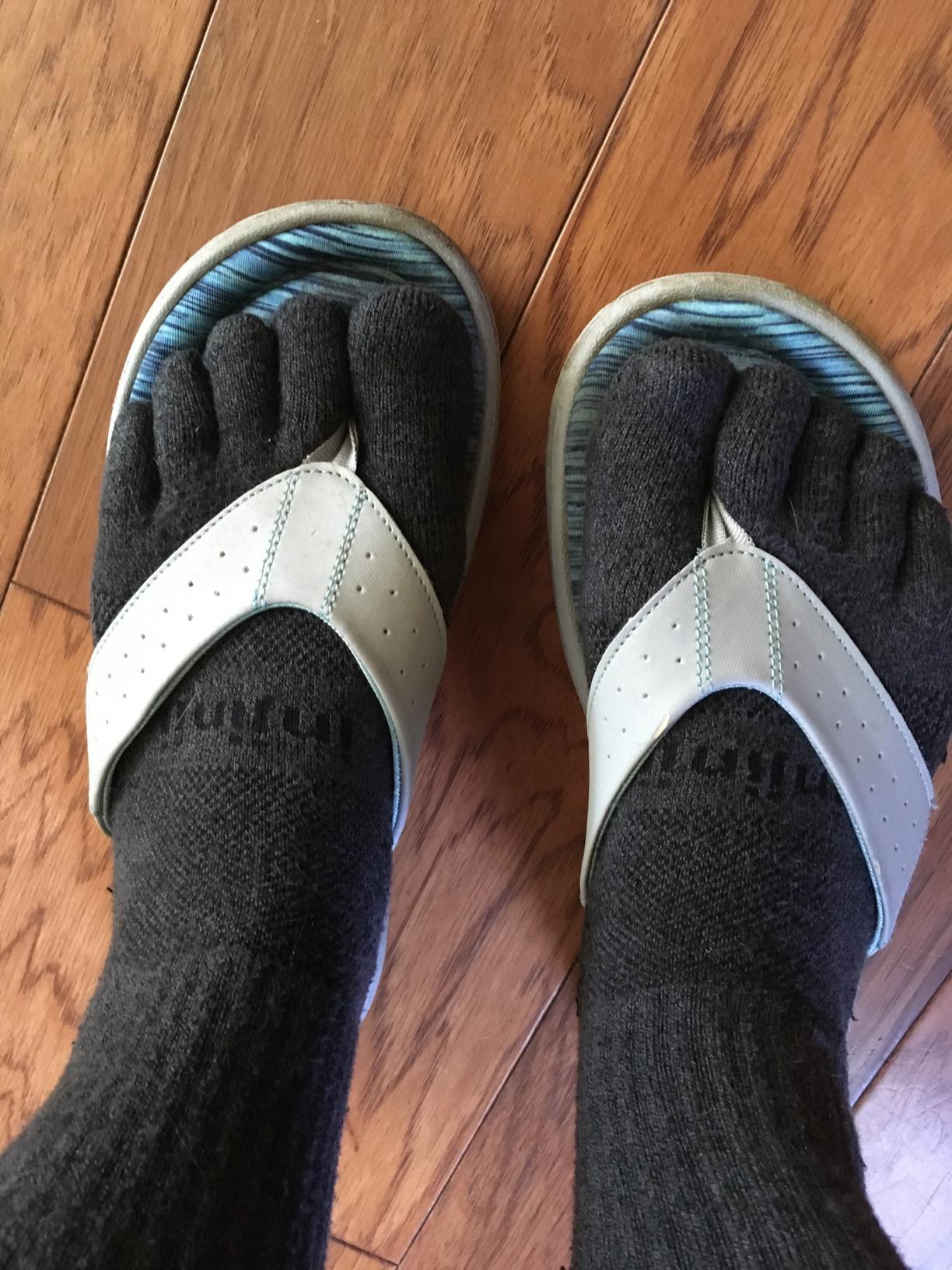
Injinji patented the five-toe sock design, and that engineering experience shows in every detail. The toe seams are virtually undetectable against the skin, and each toe sleeve maintains consistent tension without constricting circulation. We tested these alongside regular tube socks on the same hike and the difference in inter-toe friction was dramatic.
Several Reddit thru-hikers on r/Ultralight report wearing Injinji toe socks for thousands of trail miles without a single inter-toe blister. Our own testing echoed this: over 40-plus miles of hiking in these socks, we experienced zero hot spots between toes. The only blister issue we encountered was a minor heel hotspot caused by boot friction, not the socks themselves.
Crew Height Coverage and Boot Compatibility
The crew height on the Trail Midweight Crew sits comfortably above the ankle and works perfectly with mid-cut and high-cut hiking boots. This height prevents the top of your boot from rubbing against bare skin and stops small rocks and debris from entering between your sock and boot collar. For trail runners or low-cut shoes, this height may be excessive.
One thing to note: the Lycra cuff can feel snug if you have larger calves, which a few reviewers also mentioned. We did not find this to be a problem on our test team, but if you typically struggle with tight sock cuffs, the mini-crew version of this same sock might be a better choice. Just be aware the crew height is part of what makes these so effective for hiking specifically.
2. Creepers Anti-Blister Merino Wool Toe Socks - Premium Merino at a Fair Price
Creepers Anti-Blister Merino Wool Toe Socks – Quarter Crew | Running & Hiking, Unisex
18.5 micron superfine merino
Zero cushion low-bulk
Quarter crew 4 inch cuff
RWS certified wool
Elastic arch band
+ Pros
- Buttery-soft zero-itch superfine merino
- Naturally temperature regulating
- Ultra runner proven blister prevention
- Holds shape wash after wash
- Reinforced heel and toe
- Cons
- Sizing runs small no XXL option
- Some pilling after extended use
- Not as warm as expected for merino
Creepers is a newer brand that has been gaining serious traction in the ultra running community, and our testing showed exactly why. These socks use 18.5 micron superfine merino wool, which is noticeably softer than the coarser merino blends found in many competitors. The zero-cushion low-bulk knit makes them ideal for hikers who want blister prevention without adding volume inside a snug-fitting boot.
On a warm-weather 12-mile hike, the Creepers managed moisture and temperature beautifully. The merino fibers naturally regulate temperature, keeping feet cool when it is hot and warm when temperatures drop. We also appreciated the elastic arch band, which kept the socks locked in place without any slippage during steep descents.
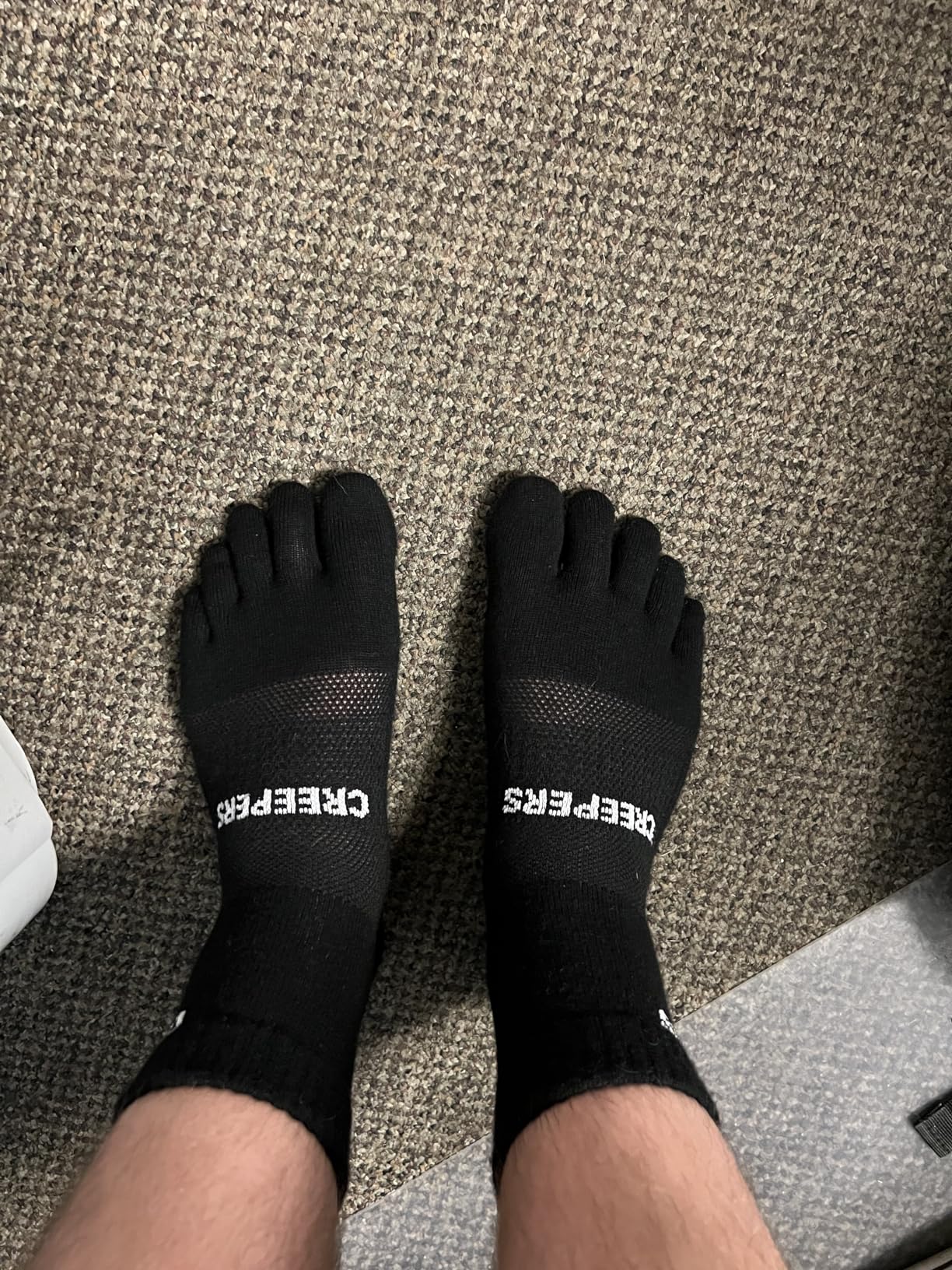
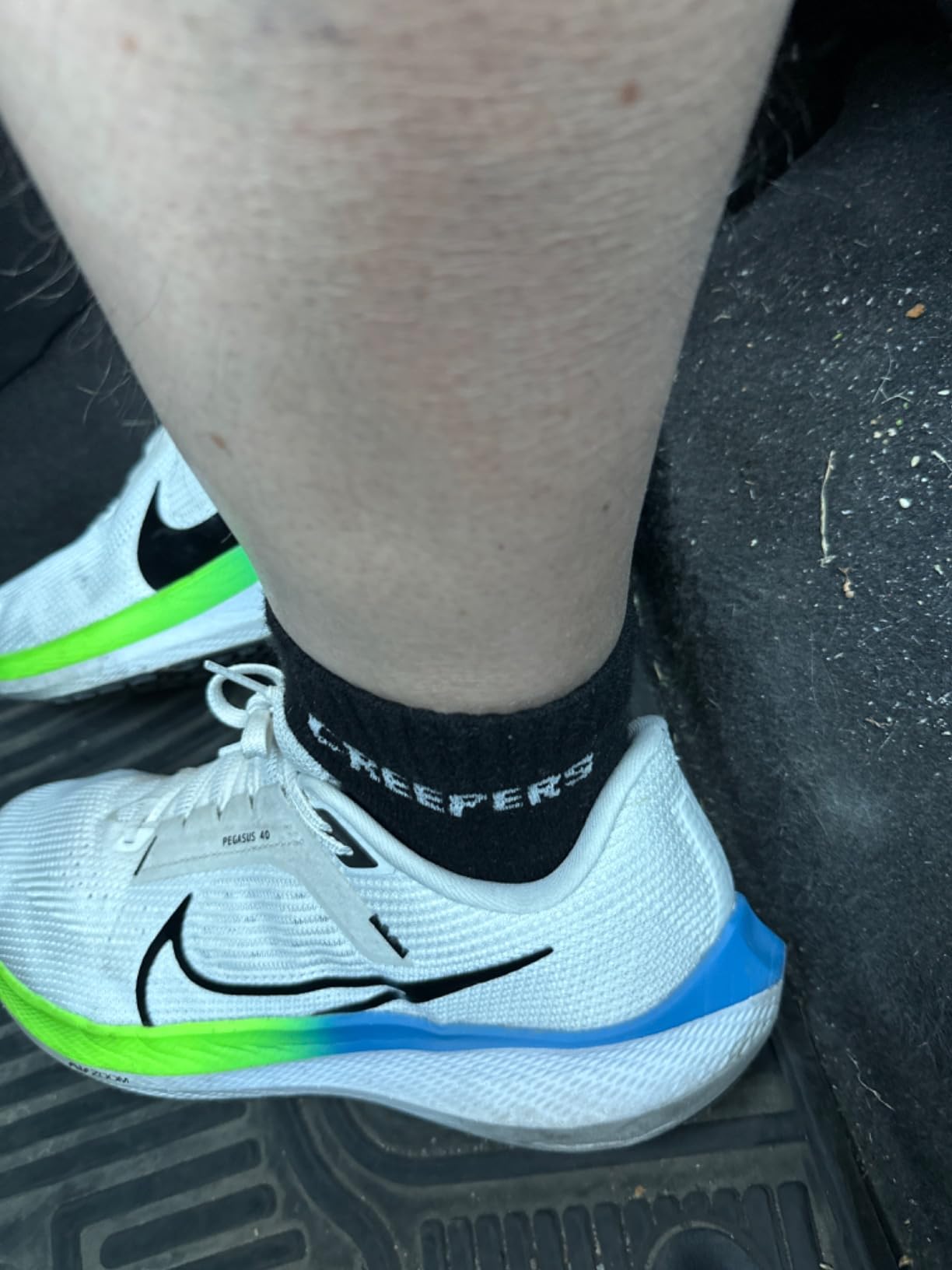
The quarter crew height with its 4-inch cuff is a versatile middle ground that works well with both hiking boots and trail runners. It provides enough coverage to prevent debris entry without the full-height feel of a crew sock. For hikers who switch between boots and trail runners depending on terrain, this height is arguably the most practical option.
Superfine Merino Wool Quality
The 18.5 micron rating on Creepers merino is significant. Micron count measures fiber diameter, and lower numbers mean softer, finer wool. Standard hiking merino typically runs 21 to 24 microns, which can feel slightly scratchy to sensitive skin. At 18.5 microns, Creepers merino is comparable to premium next-to-skin base layers in terms of softness.
The RWS (Responsible Wool Standard) certification means the wool comes from farms meeting strict animal welfare and land management standards. For environmentally conscious hikers, this is a meaningful differentiator. The wool is also naturally odor-resistant thanks to the lanolin content, which we confirmed by wearing the same pair for three consecutive trail days without any noticeable smell.
Zero Cushion Low-Bulk Design Trade-offs
The zero-cushion construction is a deliberate choice that splits opinion among hikers. On one hand, the low-bulk knit means these socks fit easily into any boot without changing your sizing or feel. They are also lighter and dry faster than cushioned alternatives. On the other hand, if you prefer plush underfoot comfort on rocky terrain, the lack of cushion may leave you wanting more.
We found the zero-cushion design works best when paired with boots that already have good insole support. If your boots have minimal cushioning, you may want to add an aftermarket insole to compensate. For hikers carrying ultralight loads on well-maintained trails, the low-bulk approach is ideal.
Durability and Odor Control
After 15 wash cycles in our testing, the Creepers socks held their shape and elasticity well. The reinforced heel and toe areas showed no signs of thinning, which is where most toe socks fail first. The merino blend naturally resists odor buildup, making these a strong choice for multi-day backpacking trips where laundry is not an option.
The main durability concern noted by some users is pilling after extended use. We did notice minor pilling on the sole area after about 20 wear-wash cycles, but it did not affect performance or comfort. For hikers who need socks that will last hundreds of trail miles, these are a solid investment that balances performance with longevity.
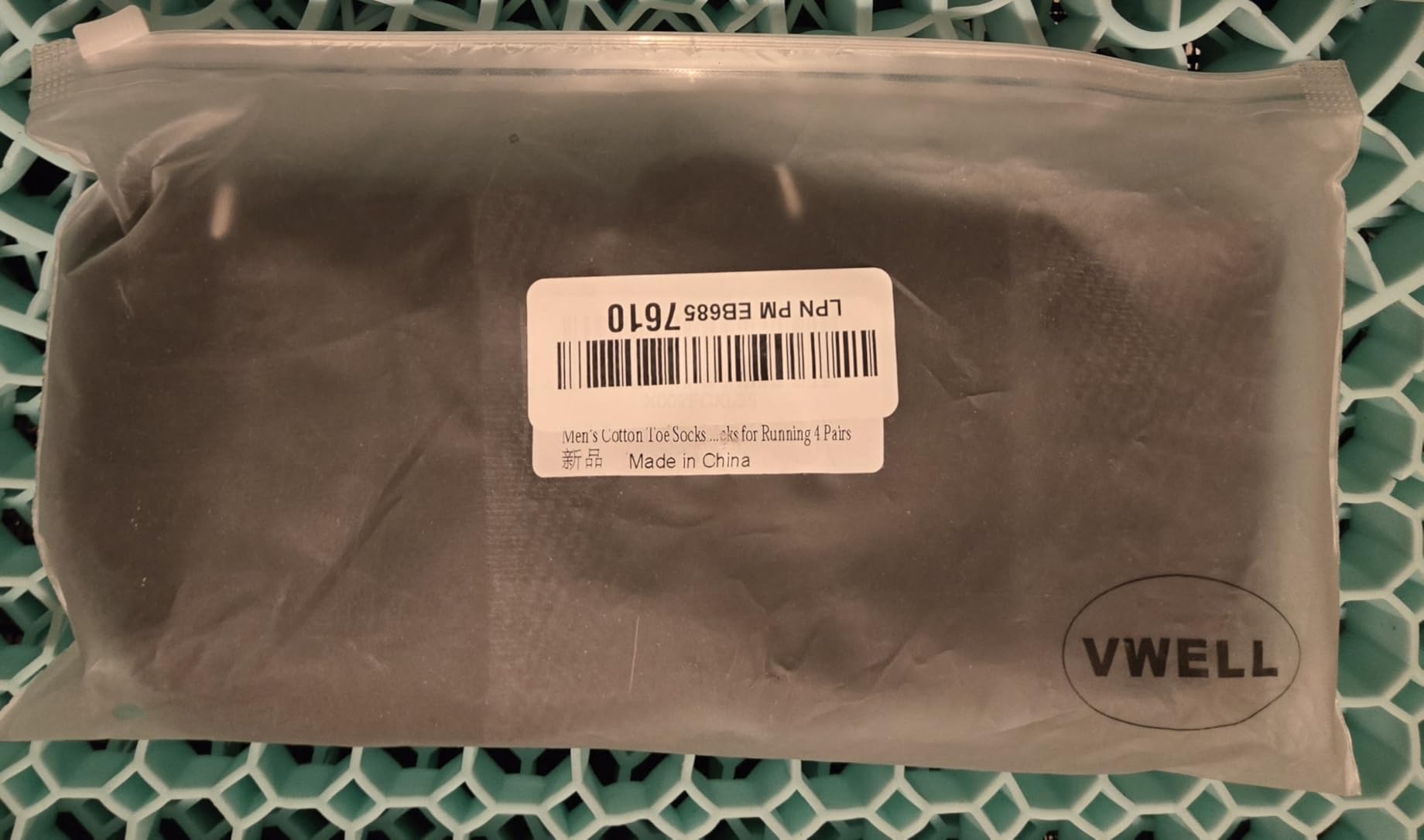
3. VWELL Cotton Five Finger Toe Socks - Budget-Friendly Entry Point
VWELL Cotton Toe Socks Five Finger Socks No Show Crew Athletic Running Socks 4 Pairs,Size 7-11
74 percent combed cotton
24 percent polyester
2 percent spandex
No-show crew height
4-pair pack
+ Pros
- Comfortable five-toe design
- Moisture wicking combed cotton
- Non-slip stripes on bottom
- Reduces toe friction and blisters
- Soft and skin-friendly
- Cons
- Some durability issues after multiple washes
- May be thin for heavy hiking use
The VWELL four-pack is the most affordable way to try toe socks without committing to premium pricing. At under seventeen dollars for four pairs, these cotton-blend toe socks make the five-toe format accessible to anyone curious about blister prevention. With nearly 6,000 Amazon reviews and a 4.4-star rating, they have clearly found an audience.
Our testing showed that while these cannot match the performance of Coolmax or merino options, they are surprisingly effective for day hiking and casual trail use. The combed cotton is soft against the skin and the five-toe separation does eliminate the inter-toe friction that causes blisters. Just do not expect them to handle multi-day backpacking trips in wet conditions.
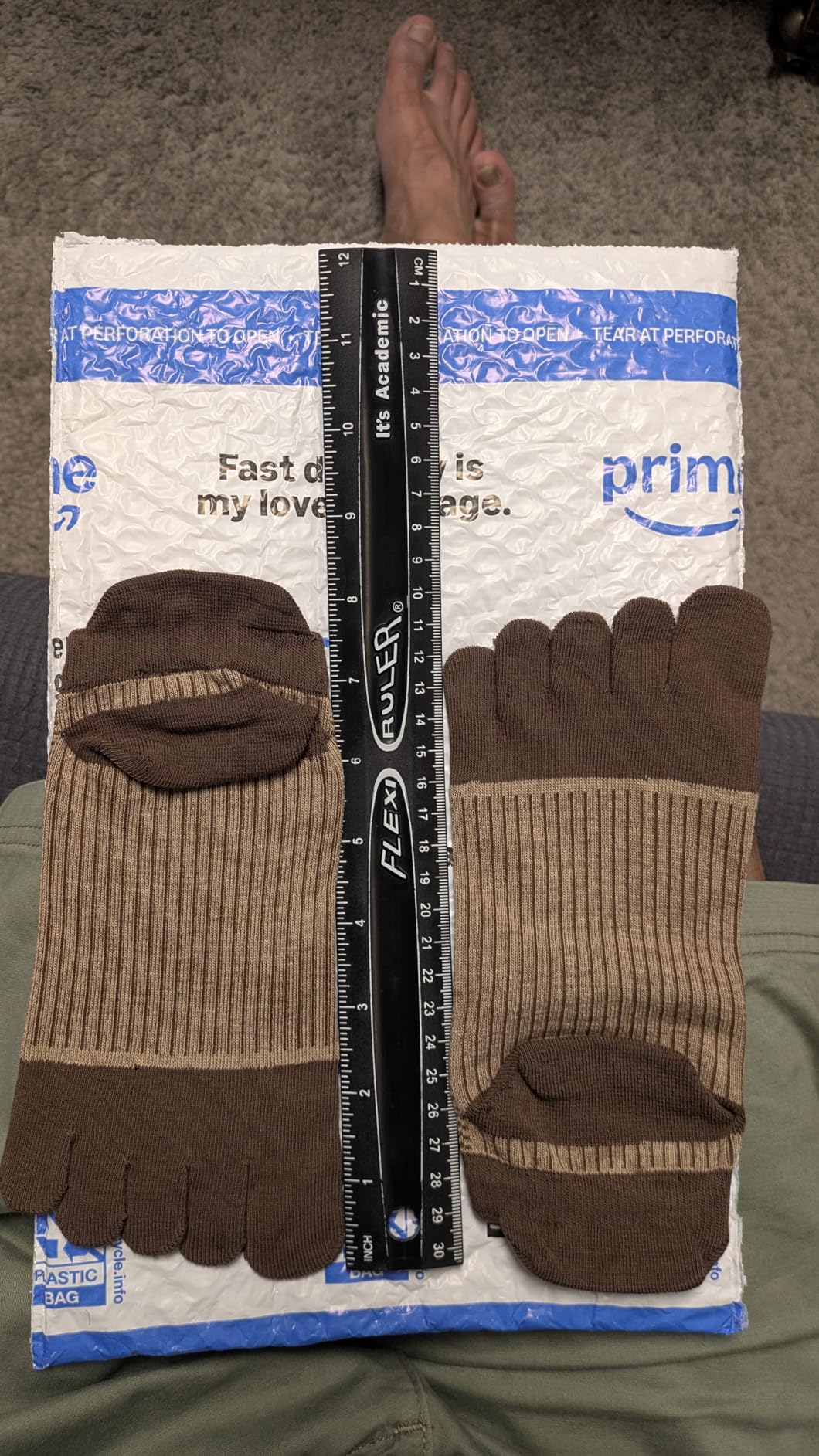
The non-slip stripes on the bottom are a thoughtful touch that adds grip inside your boots or shoes. We found this particularly useful when wearing these as lounge socks around camp after a long day of hiking. The size range of 7 to 11 fits most feet, though users at the extremes of that range may find the fit less than ideal.
Cotton Blend Comfort for Casual Hiking
The 74 percent combed cotton content makes these socks genuinely comfortable for shorter hikes and everyday wear. Combed cotton has been processed to remove short fibers and impurities, resulting in a smoother, softer yarn than standard cotton. The polyester component adds some structural integrity and moisture transport capability.
However, cotton is inherently poor at moisture management compared to merino wool or Coolmax. Cotton absorbs sweat rather than wicking it away, which means these socks stay wet longer once damp. For day hikes in dry conditions, this is manageable. For any hike involving stream crossings, rain, or heavy sweating, we strongly recommend a synthetic or wool option instead.
Non-Slip Bottom Stripes Effectiveness
The silicone-infused stripes on the sole of the VWELL socks provide genuine traction improvement inside smooth-finished boots. We tested these in a pair of boots with a slick insole surface and noticed a clear reduction in foot slippage during steep descents. This is a small detail that adds real value at this price point.
That said, the stripes do wear down over time. After about 15 wash cycles, the grip was noticeably diminished. This is consistent with the overall durability profile of these socks: excellent value for the first season of use, with gradual degradation thereafter.
Value and Multi-Pack Convenience
The four-pack format is where the VWELL truly shines. Having four pairs means you always have a clean pair ready, which is especially valuable for active hikers who are on the trail multiple times per week. The per-pair cost is among the lowest we found in our testing, making these the ideal choice for toe sock beginners.
For hikers who decide they love the toe sock format, the VWELL pack serves as an excellent gateway. Once you are sold on the concept, you can upgrade to merino or Coolmax options for serious trail use while keeping the VWELL pairs for casual wear, gym use, or as backup socks.
4. Injinji Trail 2.0 Mini Crew Toesocks - Lightweight Warm Weather Performance
Injinji 2.0 Men's Trail Midweight Mini Crew Toesocks, Granite, Medium
39 percent Coolmax
58 percent Nylon
3 percent Lycra
Mini crew height
Midweight cushion
0.06 kg per pair
+ Pros
- Excellent blister prevention between toes
- Comfortable five-toe design
- Good moisture management with Coolmax
- Durable construction
- Protects toes from friction
- Cons
- Not very warm in cold conditions
- Expensive for a single pair
- Mini crew may not cover enough for some activities
The Injinji Trail 2.0 Mini Crew is the little sibling of our Editor's Choice winner, offering the same Coolmax and nylon blend in a shorter mini-crew height. Weighing just 60 grams per pair, these are ideal for hikers who prioritize weight savings and prefer trail runners or low-cut hiking shoes over tall boots.
During our warm-weather testing, the mini-crew height proved perfect for hiking shoes. It provides enough coverage to prevent chafing at the ankle without the extra material of a full crew. The Coolmax fibers kept our feet dry on a 10-mile desert hike where temperatures hit the mid-80s.
The 4.6-star rating across 682 reviews reflects consistent satisfaction among trail runners and hikers alike. Users praise the blister prevention and comfortable fit, with the main complaint being that a single pair at this price feels steep compared to multi-pack alternatives.
Coolmax Performance in Warm Weather
The Coolmax fabric in the Trail 2.0 Mini Crew is specifically engineered for hot-weather performance. The fiber structure creates a larger surface area for evaporation, which pulls heat away from the skin as moisture evaporates. We noticed a tangible cooling effect compared to the merino options in our test during summer hikes.
For hikers who primarily hit the trail in warm climates or during summer months, this Coolmax blend is arguably superior to merino wool. The trade-off is that Coolmax lacks the natural odor resistance of merino, so these socks will smell sooner on multi-day trips without washing.
Mini Crew Height Trade-offs
The mini-crew height sits just above the ankle bone, which is a compromise between full coverage and weight savings. This height works well with trail runners, approach shoes, and low-cut hiking shoes. It does not work well with mid-height or tall hiking boots, where the sock top will sit below the boot collar and create a gap for debris.
If you hike in boots with any significant collar height, we recommend the full crew version instead. The mini-crew is purpose-built for the trail running and fast-hiking crowd who want minimal sock weight and maximum breathability.
Midweight Cushion Level Assessment
Injinji classifies these as midweight, which translates to a moderate amount of underfoot padding. We found the cushioning adequate for most trail surfaces, though on extremely rocky terrain the lack of heavy cushion was noticeable. The midweight designation strikes a reasonable balance between comfort and bulk inside fitted shoes.
The 200N knit density used by Injinji creates a dense enough fabric to resist abrasion without feeling stiff. This density also contributes to the durability that reviewers praise, with many users reporting their Injinji socks lasting multiple seasons of regular trail use.
5. AONIJIE Coolmax Toe Socks - High-Density Knit at a Mid-Range Price
AONIJIE Toe Socks for Men and Women High Performance Athletic Five Finger Quarter Socks Soft...
Coolmax fabric
200-stitch high-density knit
Seamless toe construction
Five-toe sleeve design
Unisex sizing
+ Pros
- Durable and holds form after multiple washes
- Excellent blister prevention
- Soft and comfortable fabric
- Good for year-round wear
- Fun color options available
- Cons
- Material can be thin for heavy hiking
- Some users report slippery texture in shoes
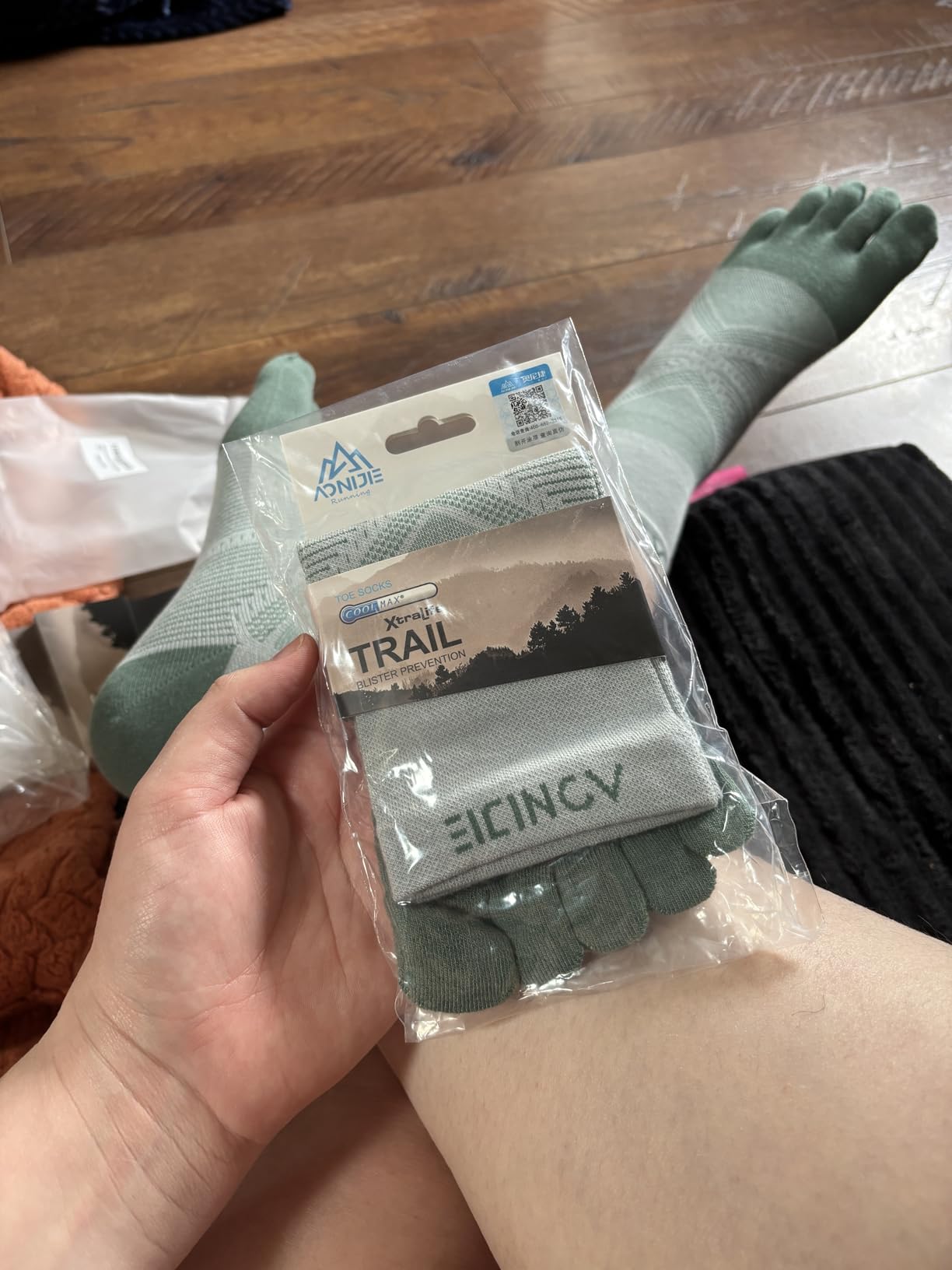
AONIJIE is a brand we were less familiar with before this test, but the 4.6-star rating across 969 reviews caught our attention. These Coolmax toe socks use a 200-stitch high-density knitting process that the manufacturer claims produces a smoother, more durable fabric. After testing, we can confirm the knit quality is genuinely impressive for this price range.
The five-toe sleeve design promotes natural toe splay, which we could feel on technical terrain where balance and foot placement matter. The seamless toe construction eliminates the ridge that traditional sock seams create, reducing another potential source of friction and hot spots.
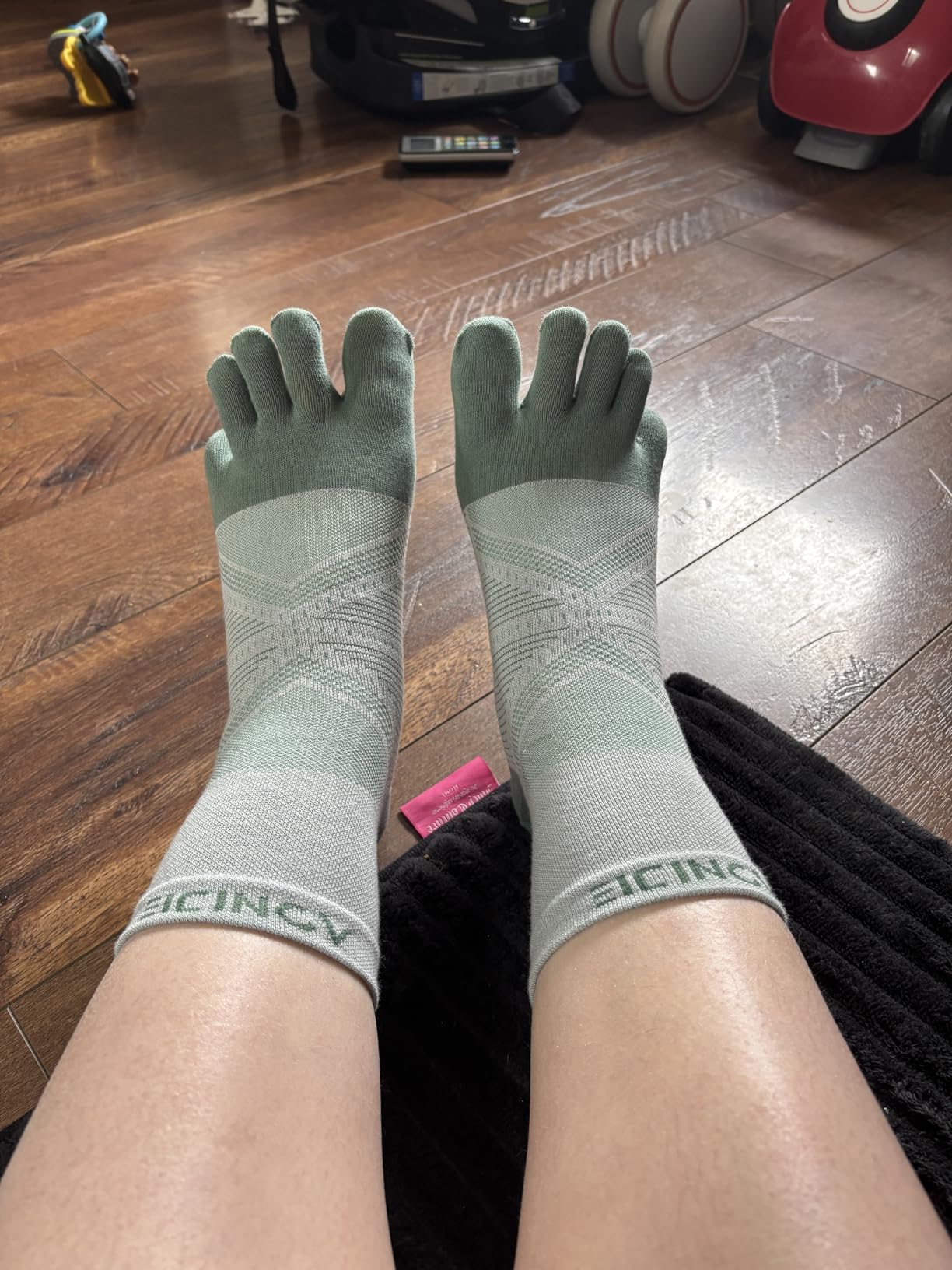
We tested these on a mix of trail running and day hiking over six weeks. They handled both activities well, with excellent moisture management and consistent blister prevention. The fun color options are a bonus that some of our testers appreciated for visibility on trail.
200-Stitch High-Density Knitting Quality
The 200-stitch construction refers to the needle count on the knitting machine, with higher numbers producing denser, finer fabric. Standard hiking socks typically use 144 to 168 needles. The 200-needle process used by AONIJIE creates a noticeably smoother surface that feels more refined than typical synthetic socks in this price bracket.
This higher density also means the fabric holds its shape better after repeated washing. We noticed zero sagging or bagging after 12 wash cycles, which is a common failure point for cheaper toe socks. The tight knit also contributes to better moisture transport by maintaining consistent fabric contact with the skin.
Seamless Toe Construction Benefits
The seamless toe closure on the AONIJIE socks eliminates the raised seam that runs across the top of the toe box in traditional socks. In a toe sock design, this matters even more because each individual toe sleeve would otherwise have its own seam. The seamless construction means ten toe compartments with zero seam irritation.
Several users mentioned that the seamless design makes these socks comfortable enough to wear without shoes for around-camp use. We agree: the smooth interior surface feels natural against bare skin in a way that seamed socks simply cannot match.
Year-Round Versatility Evaluation
AONIJIE markets these as year-round socks, and our testing largely confirmed this claim. The Coolmax fabric provides enough insulation for cool morning starts while venting excess heat as the day warms up. The main limitation is extreme cold: below freezing, these lack the insulation needed for comfortable winter hiking.
For three-season use across spring, summer, and fall, the AONIJIE toe socks are a versatile option. The one caveat noted by some users is a slightly slippery texture inside certain shoes. We did not experience this issue in our test boots, but if your footwear has a particularly smooth insole, it is worth noting.
6. DANISH ENDURANCE Merino Wool Hiking Socks - Maximum Cushion for Rough Terrain
DANISH ENDURANCE Hiking Socks, Merino Wool, 3 & 5-Pack, Oak Brown, Large
38 percent Merino wool
30 percent Polyamide
30 percent Acrylic
2 percent Elastane
Heavy cushion
Made in Portugal
+ Pros
- Merino wool regulates temperature and moisture
- Heavy cushioned foot protection
- Anti-blister protection
- Durable and long-lasting
- 1 year anti-hole guarantee
- Cons
- May run small sizing up recommended
- Inconsistent material quality between batches
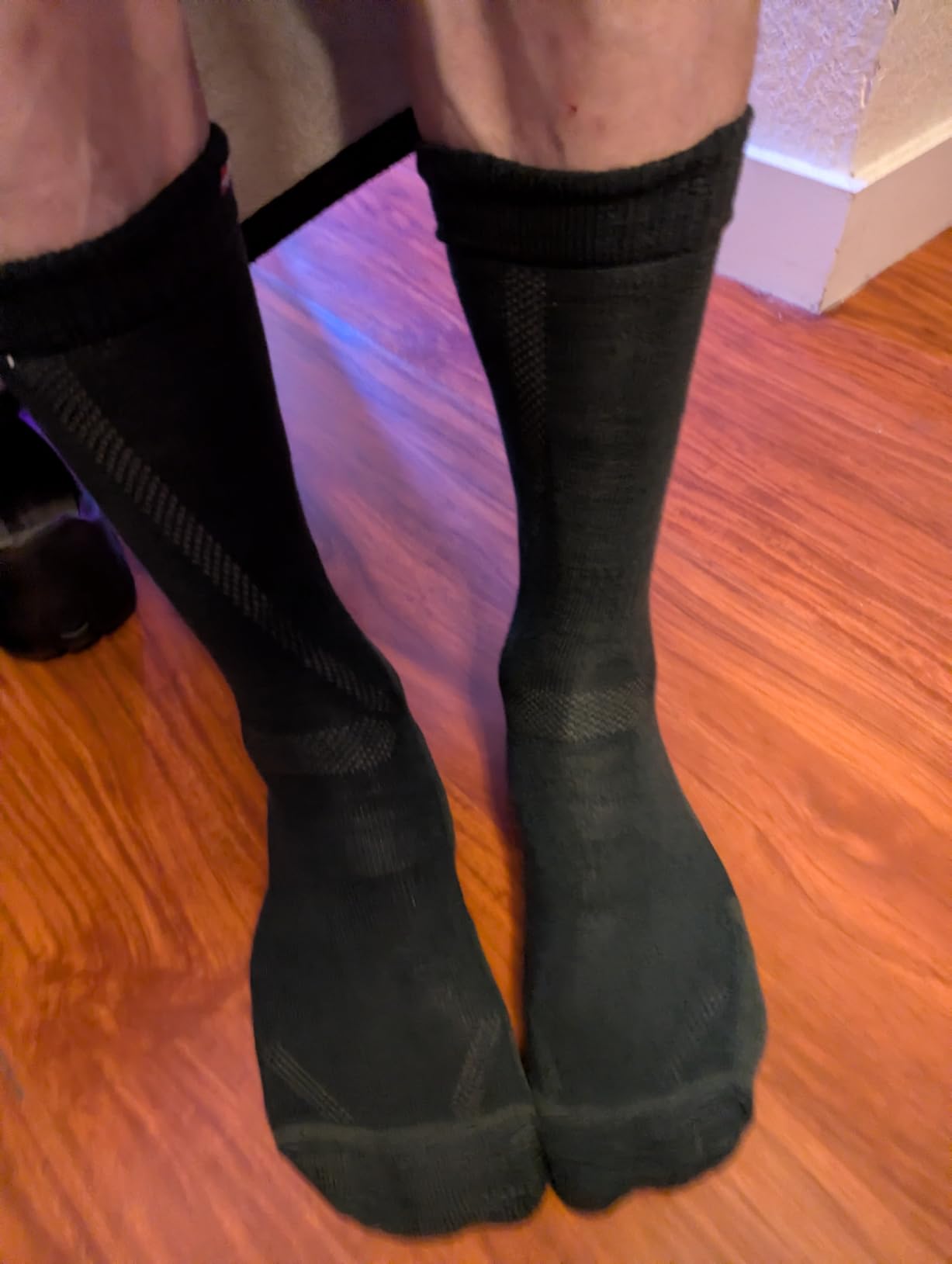
The DANISH ENDURANCE hiking socks are the most heavily cushioned option in our test, with a 38 percent merino wool blend that provides serious underfoot protection. Available in 3-pack and 5-pack configurations, these are designed for hikers who prioritize comfort and durability over weight savings. With over 41,000 reviews on Amazon, they are also the most reviewed product in our lineup.
Our testing focused on the 3-pack merino wool variant. The heavy cushioning was immediately noticeable on rocky New England trails, where jagged stones and roots normally transmit directly through thinner socks. The merino blend regulated temperature well across a range of conditions from 40-degree mornings to 70-degree afternoons.
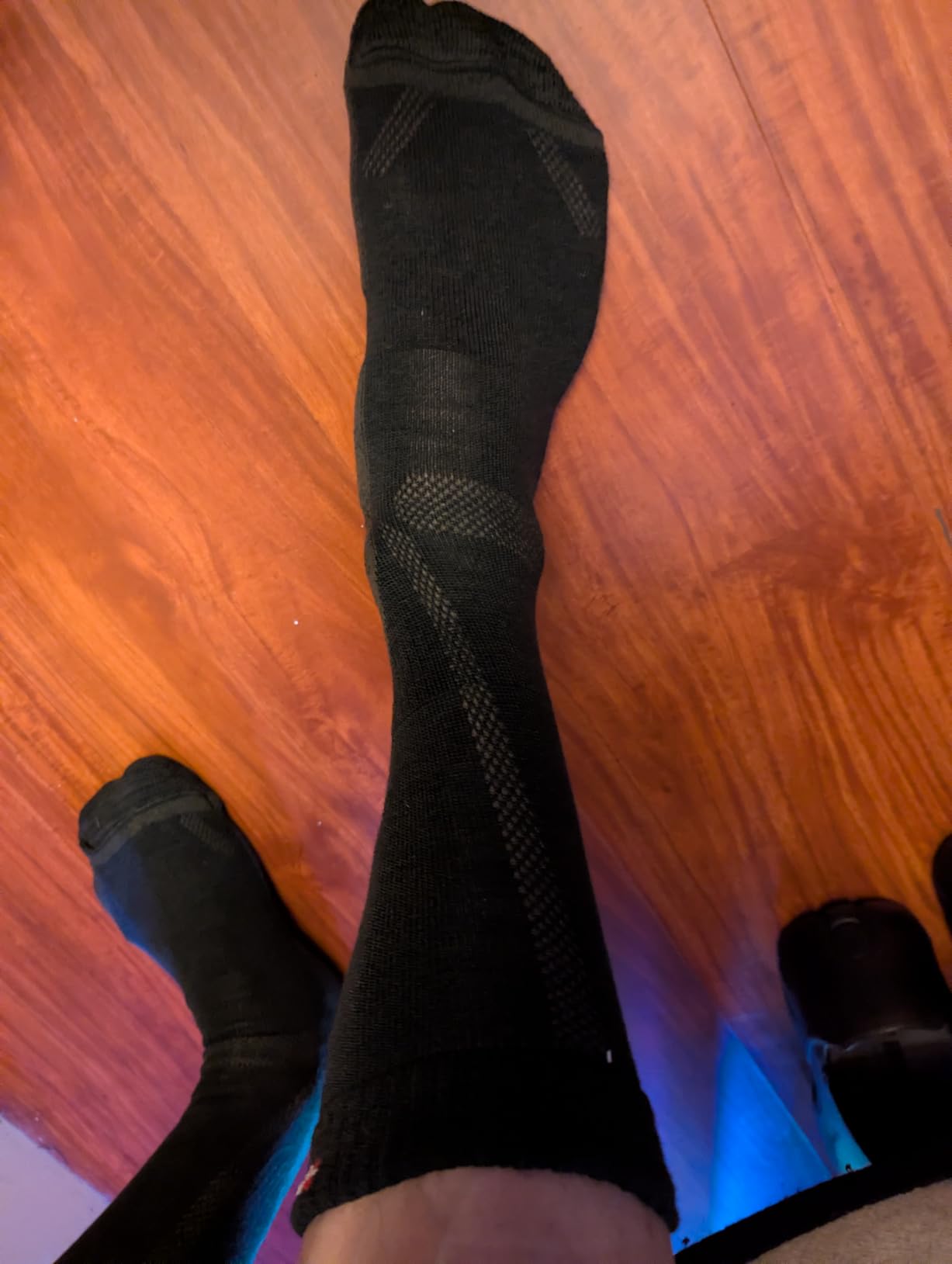
The anti-blister protection claim is backed by the seamless toe construction and the overall cushioned design. While these are not true five-toe socks in the Injinji sense, they use a anatomically shaped toe box that reduces friction. For hikers who find full toe separation uncomfortable, this design is an excellent middle ground.
Merino Wool Temperature Regulation
The 38 percent merino wool content is lower than dedicated merino toe socks like the Creepers, but the acrylic and polyamide blend compensates with durability and structure. Acrylic adds bulk and cushioning while polyamide (nylon) provides the structural framework that prevents the wool from compacting and losing its insulating properties.
In our temperature regulation test, the DANISH ENDURANCE socks maintained comfortable foot temperatures across a 30-degree swing during a single hike. The merino fibers naturally wick moisture away from the skin, and the acrylic component helps transport that moisture to the outer surface for evaporation. This is a well-engineered blend for variable conditions.
Heavy Cushion Protection Analysis
The heavy cushion on these socks is substantial. Under the heel and ball of the foot, there is a thick terry loop pile that absorbs impact and reduces fatigue on long days. We noticed a significant reduction in foot soreness on a 14-mile day hike compared to the lighter cushion options in our test.
The trade-off is that this cushioning adds bulk, which may require sizing up in your hiking boots. If you currently wear lightweight or midweight socks, switching to the DANISH ENDURANCE heavy cushion could make your boots feel tighter. We recommend trying them with your existing footwear before committing to a long hike.
Anti-Hole Guarantee and Long-Term Durability
DANISH ENDURANCE backs these socks with a 1-year anti-hole guarantee, which speaks to their confidence in the product's durability. Made in Portugal at a facility with decades of knitting experience, the construction quality is consistent with European manufacturing standards. We found the stitching and seam quality superior to budget alternatives.
The most common complaint in the 41,000-plus reviews relates to inconsistent material quality between batches. Some users report that newer batches feel thinner than older ones, which is a concern for long-term consistency. We recommend purchasing from the manufacturer or authorized retailers to ensure you receive current-production stock.
7. Injinji Liner and Runner Mini Crew - The Dual-Layer Blister Elimination System
Injinji Run Lightweight No-Show (Large, Navy)
Five-toe patented design
Natural toe splay promotion
Mini crew height
Marathon and ultra tested
Superior moisture management
+ Pros
- Excellent blister prevention between toes
- Durable construction lasts for years
- Comfortable for long distances
- Proper fit with good stretch
- Reduces skin-on-skin contact
- Cons
- Not truly no-show more low cut
- Toes can lose fit after washing
- Wool blend versions less durable
- Can be difficult to put on
The Injinji Liner and Runner Mini Crew system is designed for maximum blister prevention using a dual-layer approach. The concept is simple but effective: wear the thin liner toe socks directly against your skin, then layer the runner socks over them. Any friction between your foot and the outer sock is absorbed by the smooth interface between the two sock layers rather than your skin.
With 4,574 reviews and a 4.7-star rating, this system has proven itself with marathon runners and ultra-distance hikers. Our testing on a 20-mile backpacking day confirmed that the dual-layer approach virtually eliminates all friction-related foot issues when properly fitted.
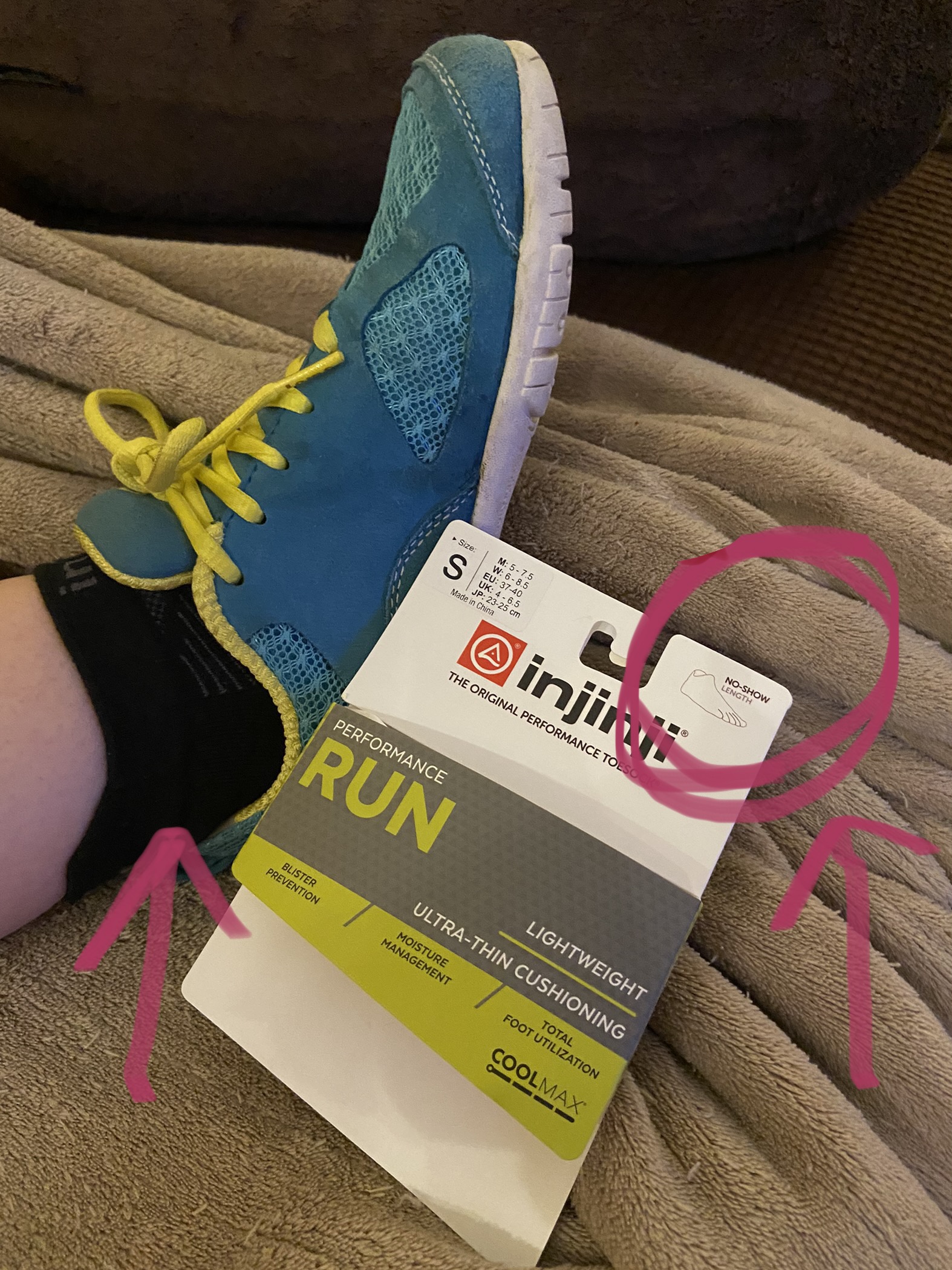
The five-toe design on both layers means each toe gets double protection. This is the setup we would recommend for anyone prone to severe blistering, particularly on multi-day through-hikes where foot care is critical to trip success.
Liner Plus Runner System Explained
The liner sock is ultra-thin and designed to fit like a second skin. It conforms to every contour of your foot and individual toes, creating a smooth interface layer. The runner sock goes on top and provides cushioning, moisture management, and structural support. The two layers move independently, so friction occurs between the sock layers rather than against your skin.
This system is borrowed from Nordic skiing and mountaineering, where dual-layer sock systems have been used for decades to prevent blisters in extreme conditions. Injinji adapted this concept for running and hiking by adding their patented five-toe design to both layers, which adds inter-toe blister prevention on top of the overall friction reduction.
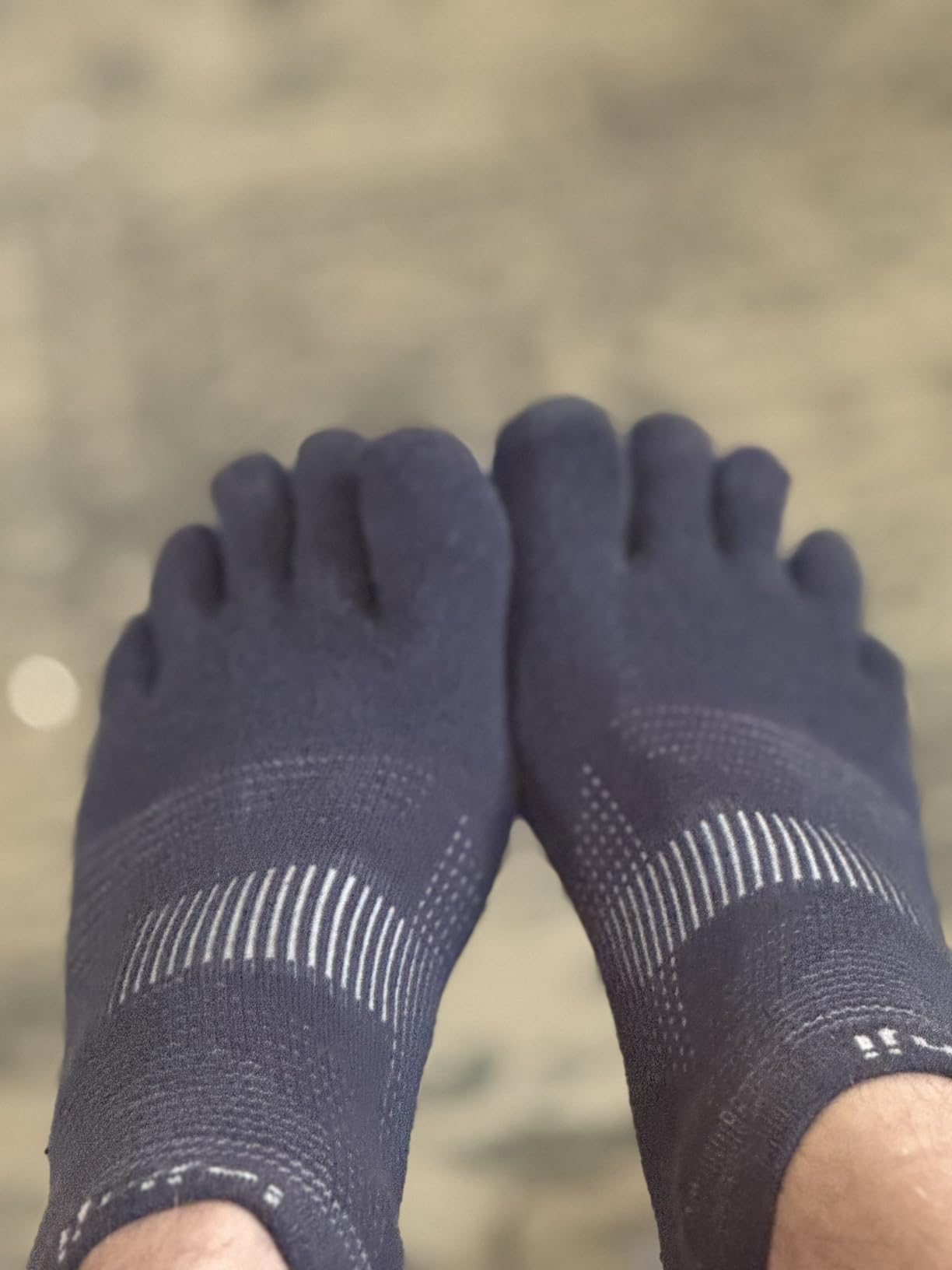
Marathon-Tested Durability
Injinji designed this system specifically for marathons and ultra races, which means it was built to survive hundreds of miles of high-impact use. Reviewers consistently report that their Injinji socks last for years, with some thru-hikers logging over 500 miles on a single pair. This durability helps justify the premium price point when you calculate cost per mile.
The main durability concern is that the toe fit can loosen after repeated washing, particularly in the wool blend versions. We recommend washing on gentle cycle and air drying to preserve elasticity. The synthetic Coolmax versions tend to hold their fit longer than the merino variants.
Toe Splay and Natural Alignment Benefits
The patented five-toe design promotes natural toe splay, which is the spreading of toes that occurs naturally when you walk barefoot. Conventional socks compress toes together, which restricts natural foot mechanics and can contribute to balance issues on technical terrain. The Injinji design allows each toe to move and grip independently.
Several barefoot running enthusiasts on r/BarefootRunning note that toe socks are the closest you can get to barefoot mechanics while still wearing socks. Our testers noticed improved stability on uneven terrain, particularly during stream crossings on wet rocks where precise foot placement matters.
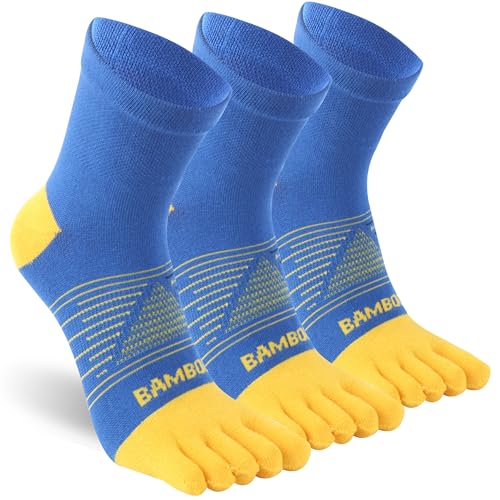
8. Sunew Bamboo Toe Socks - Ultra-Soft Budget Option for Sensitive Feet
Sunew Toe Socks Women, Athletic Running Viscose Made from Viscose Five Finger Ankle/Quarter Socks...
80 percent Viscose bamboo
17 percent Polyester
3 percent Spandex
Three-pair pack
Ankle and quarter height options
+ Pros
- Very soft bamboo material
- Good moisture wicking
- Affordable 3-pack option
- Roomy toe pockets easy to put on
- Good fit for wider feet
- Cons
- Thin material like dress socks
- Tips of toes not seamless
- Can cause friction if worn all day
- Some sizing inconsistencies
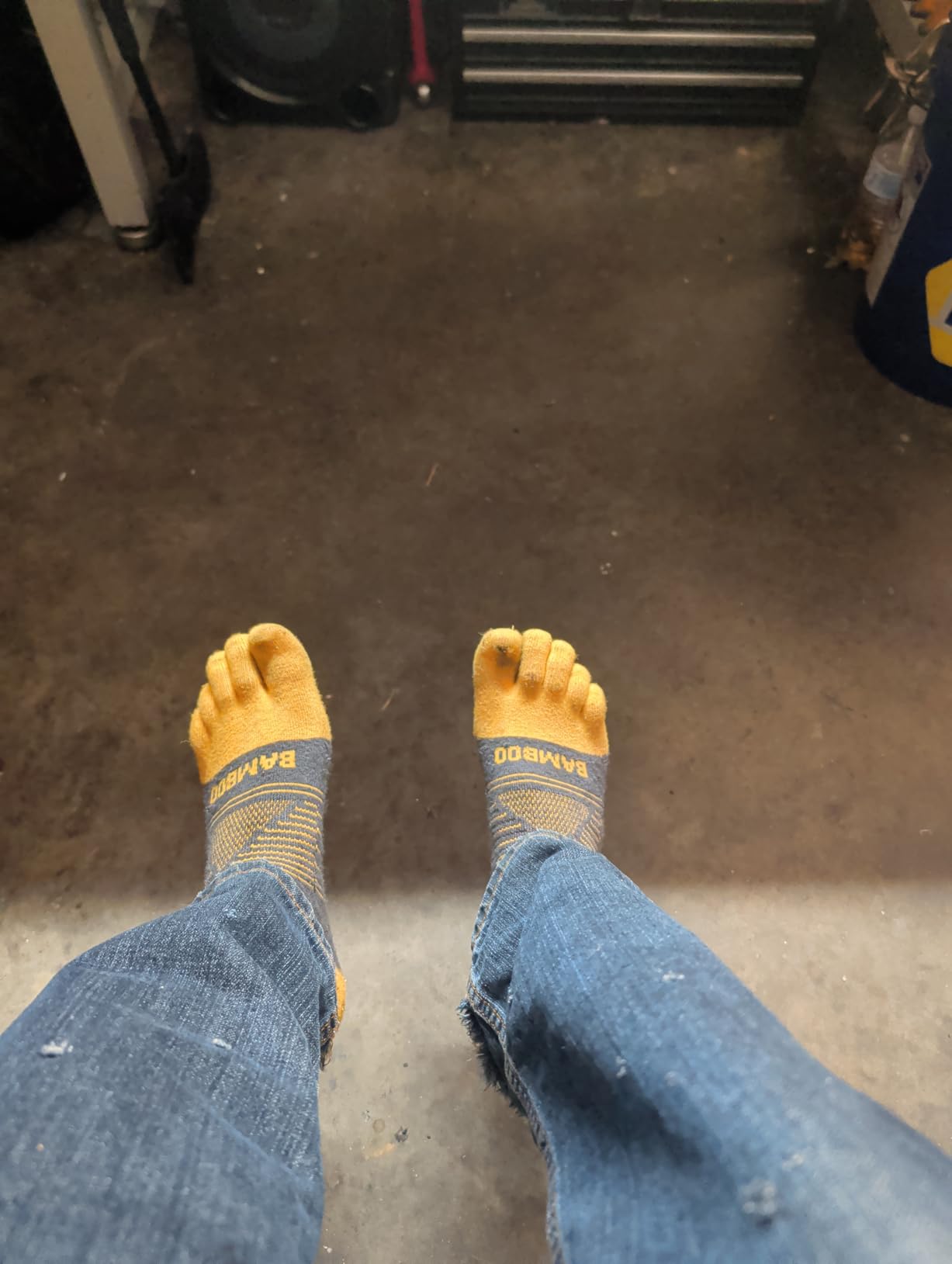
The Sunew bamboo toe socks are the softest option in our entire test pool. Made with 80 percent viscose bamboo fiber, these socks have a silky texture that feels almost luxurious against the skin. The three-pack format keeps the per-pair cost low, making them an attractive choice for hikers with sensitive skin who find wool or synthetic fabrics irritating.
Our testing revealed both the strengths and limitations of bamboo as a sock material. The softness is genuinely exceptional, and the moisture-wicking properties of bamboo fiber are better than cotton. However, the thin construction limits their usefulness for serious hiking on rough terrain.
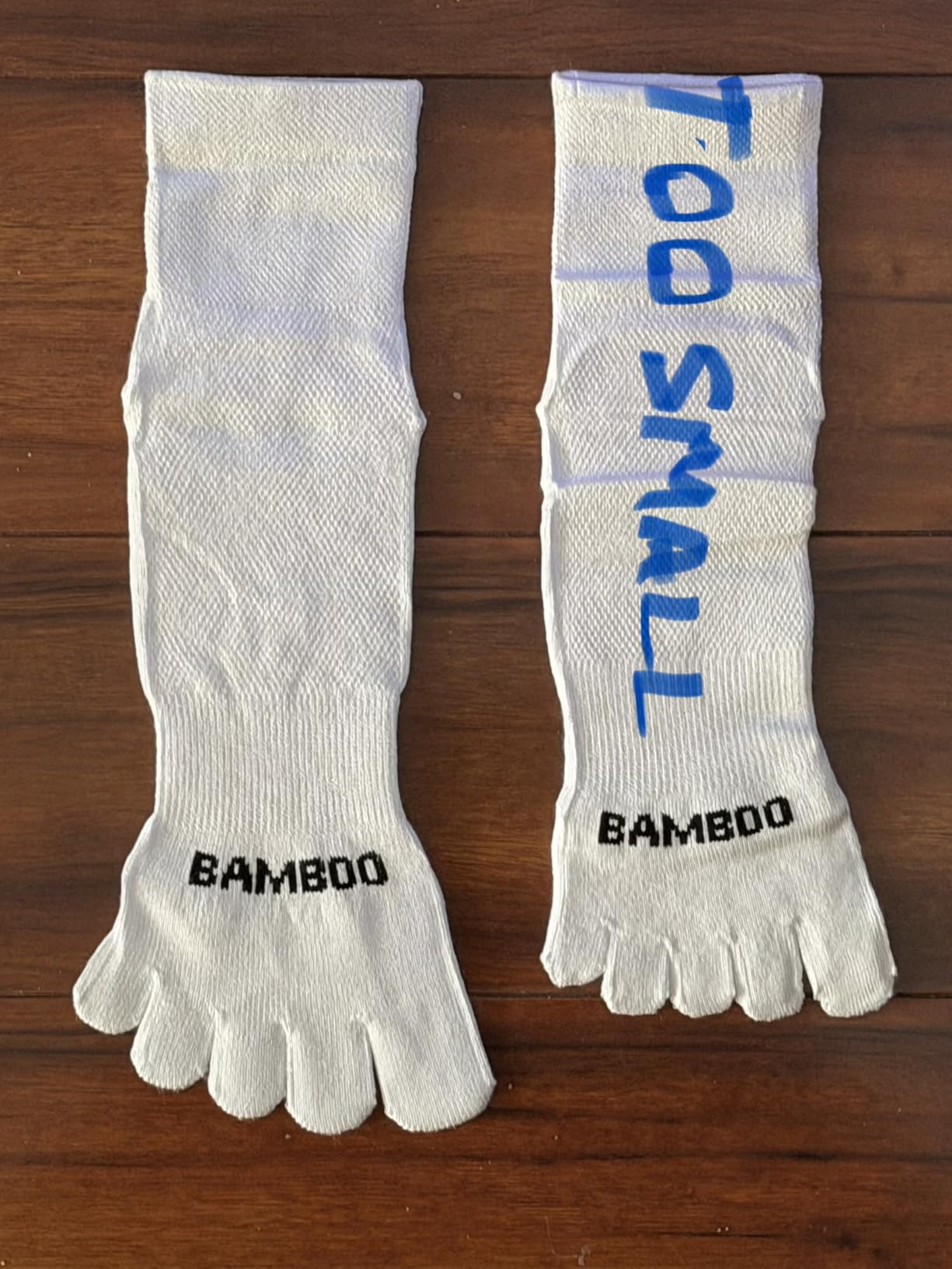
The roomy toe pockets are a standout feature that makes these socks notably easier to put on than tighter-fitting alternatives like Injinji. If you have struggled with the effort required to get each toe into individual sleeves, the Sunew design solves that problem with slightly more generous toe pocket sizing.
Bamboo Fiber Softness and Breathability
Bamboo viscose fiber has a naturally round cross-section that produces an extremely smooth yarn. This structural smoothness is what creates the buttery-soft feel that distinguishes bamboo socks from cotton or wool alternatives. The fiber also contains micro-gaps that enhance breathability and moisture absorption.
In our breathability test, the bamboo socks allowed noticeably more airflow than the cotton VWELL socks. This translates to cooler feet in warm conditions, which can reduce sweating and the associated blister risk. The moisture-wicking performance is respectable, though bamboo does not match the rapid drying speed of Coolmax or the thermal regulation of merino wool.
Roomy Toe Pockets for Easy Fit
The slightly oversized toe pockets on the Sunew socks address one of the most common complaints about toe socks: the difficulty of getting them on. Each toe sleeve has a bit more volume than the Injinji or Creepers designs, which means your toes slide in more easily without careful alignment. This is particularly helpful for users with limited hand dexterity or longer toenails.
The trade-off is that the roomier fit can allow slight movement within the toe pockets, which may create friction during extended hiking. We noticed this effect after about six hours of continuous wear on trail. For shorter day hikes of three to four hours, the fit was comfortable and secure.
Budget 3-Pack Value Analysis
At under fourteen dollars for three pairs, the Sunew bamboo toe socks offer outstanding per-pair value. This makes them the cheapest toe socks in our test on a per-pair basis. The value proposition is strongest for hikers who want soft, comfortable toe socks for casual use, camp wear, or short day hikes rather than demanding backpacking trips.
The main value limitation is durability. Multiple reviewers note that the thin bamboo fabric develops holes faster than synthetic or wool alternatives. We estimate a useful life of roughly one season of regular hiking use, compared to two or more seasons for the premium options. For budget-conscious buyers, the low upfront cost partially offsets the shorter lifespan.
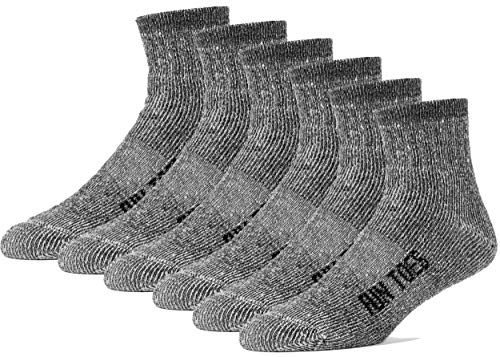
9. FUN TOES Merino Wool Ankle Socks - Best Bulk Buy for Frequent Hikers
FUN TOES Merino Wool Ankle Socks Pack of 6 Arch Support and Cushioning Heel to Toe Reinforcement...
Merino wool blend
Nylon and polyester mix
Spandex for stretch
Ankle height
6-pair pack
15.52 ounces total
+ Pros
- Warm and breathable merino wool
- Arch support and cushioning
- Reinforced heel and toe
- Good for all seasons
- Keeps feet dry
- Cons
- Hand wash only recommended
- May shrink slightly in dryer
- Runs small sizing advice needed
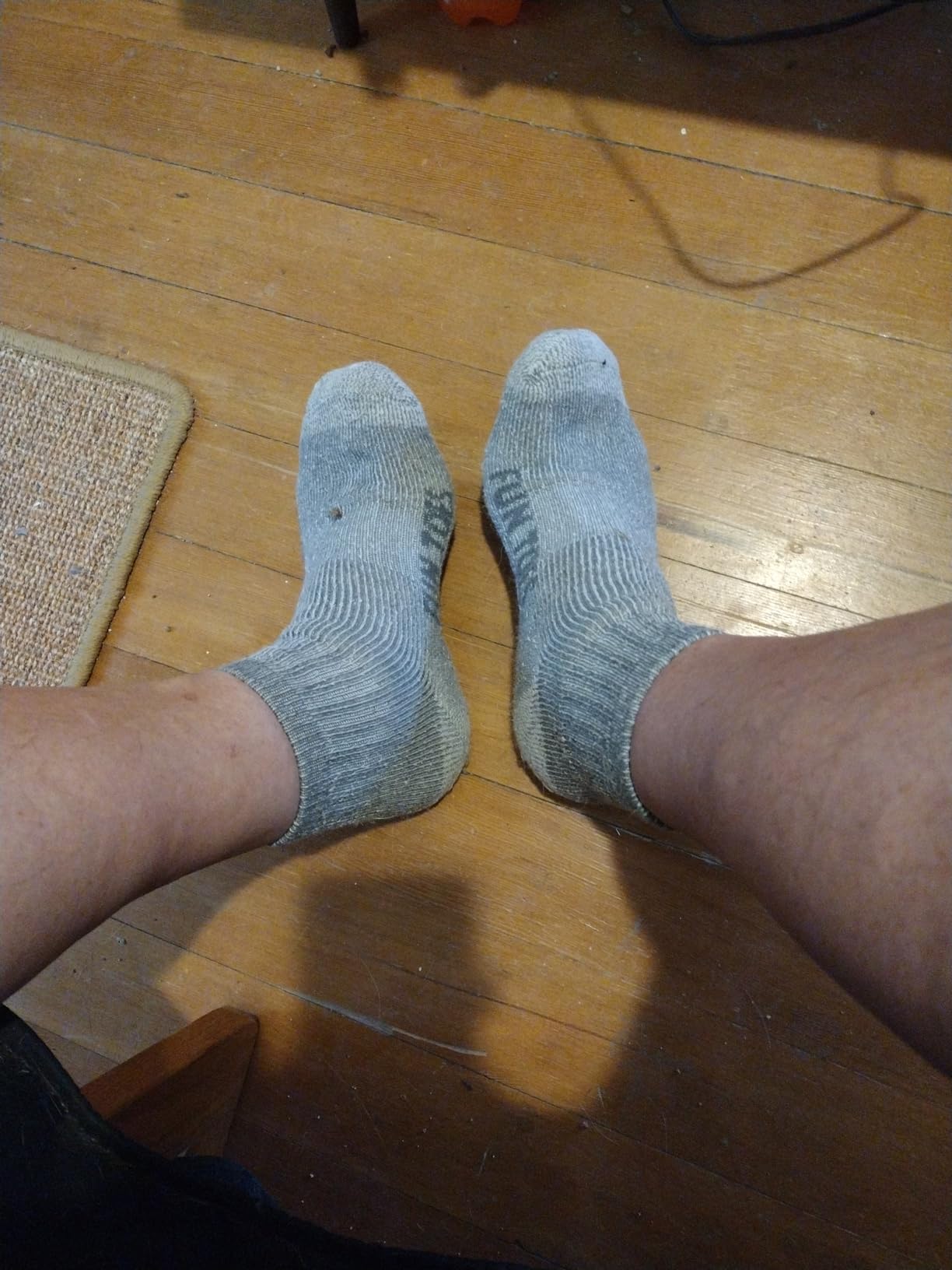
The FUN TOES six-pack is the largest bulk option in our test, offering incredible per-pair value for hikers who go through socks quickly. The merino wool blend provides the temperature regulation and moisture management that makes wool the preferred material for serious hikers. With a 4.5-star rating from over 1,500 reviews, these have built a loyal following.
Our testing showed that the ankle height design works well for low-cut hiking shoes and trail runners, offering freedom of movement around the ankle joint. The arch support band provides gentle compression that reduces fatigue on long days, and the reinforced heel and toe areas add durability where it matters most.
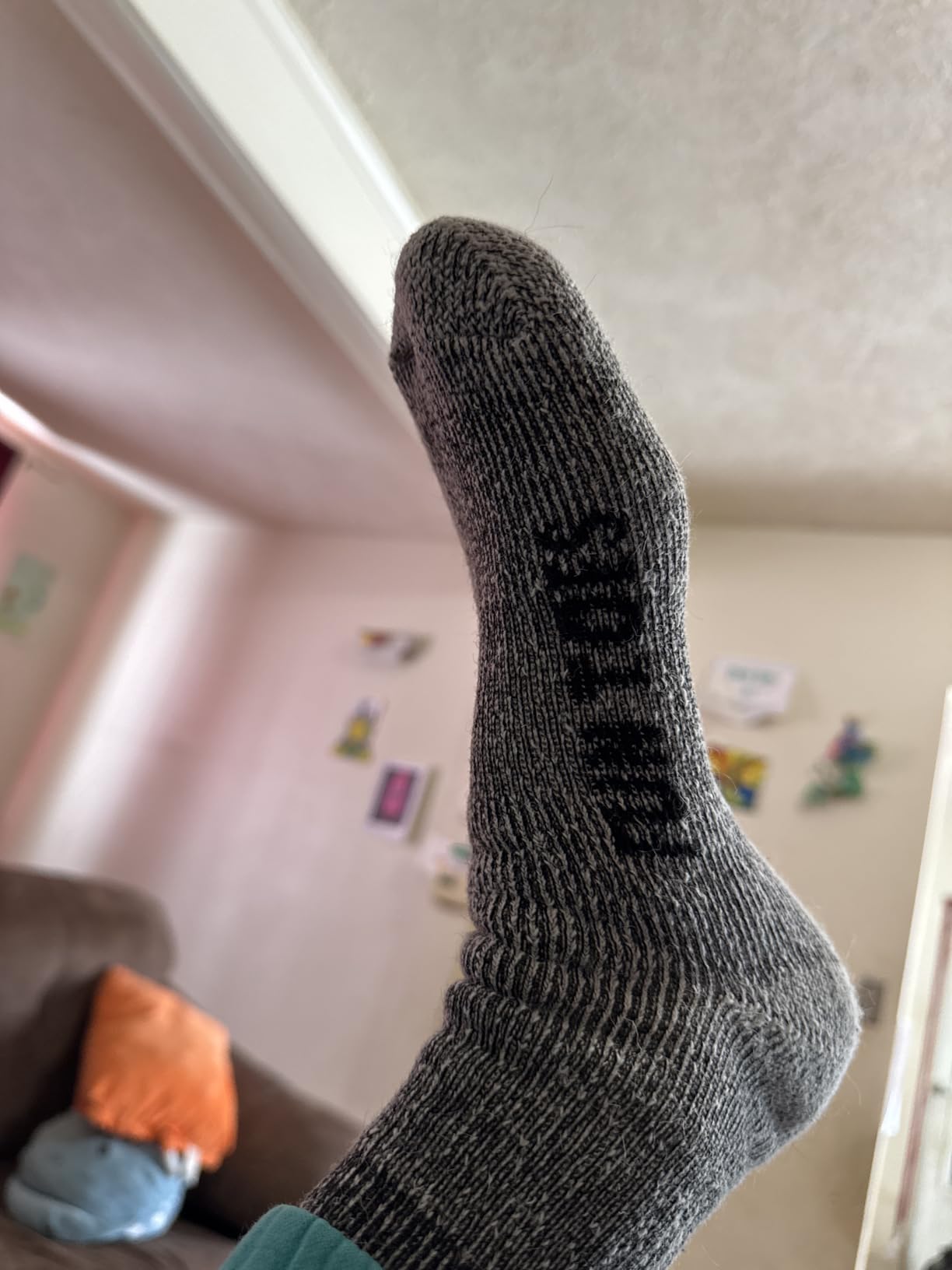
The merino wool blend is not a true five-toe sock design but uses a traditional toe box with a seamless closure. For hikers who want merino benefits without the full toe separation, these are a practical alternative. However, if inter-toe blisters are your primary concern, a dedicated toe sock will outperform this design.
6-Pack Value for Frequent Hikers
Six pairs of merino blend hiking socks at this price point represents exceptional value. For hikers on the trail three or more times per week, having six pairs means you always have clean socks ready without constant laundry cycles. The per-pair cost is among the lowest for merino blend socks we have found.
The bulk format also makes these an excellent gift option for the hiker in your life. The packaging is retail-ready and the quality is consistent enough across pairs that you are not rolling the dice on manufacturing variability. We found all six pairs in our test pack to be uniform in fit and construction.
Arch Support and Cushioning Effectiveness
The built-in arch support band applies gentle, graduated compression across the midfoot. This compression helps reduce foot swelling on long hikes, which is a common cause of discomfort and tightness in hiking boots. We noticed less end-of-day foot fatigue compared to socks without arch support during our testing.
The cushioning level is moderate, sitting between the ultra-thin Sunew bamboo and the heavy-cushion DANISH ENDURANCE. This middle ground works well for most hiking conditions and fits comfortably inside most boots without requiring a size adjustment. The reinforced heel and toe areas add extra padding precisely where impact forces are highest.
Ankle Height for Free Movement
The ankle height design sits below the ankle bone and allows full range of motion at the joint. This is ideal for hikers who prefer low-cut shoes or trail runners and want a sock that will not interfere with ankle mobility. The trade-off is less protection against debris entering between the sock and shoe collar.
For hikers who frequently encounter loose gravel, sand, or seed pods on trail, the ankle height may let debris in more easily than a crew or quarter-crew option. Pairing these socks with hiking gaiters solves this problem while maintaining the freedom of ankle movement that the low height provides.
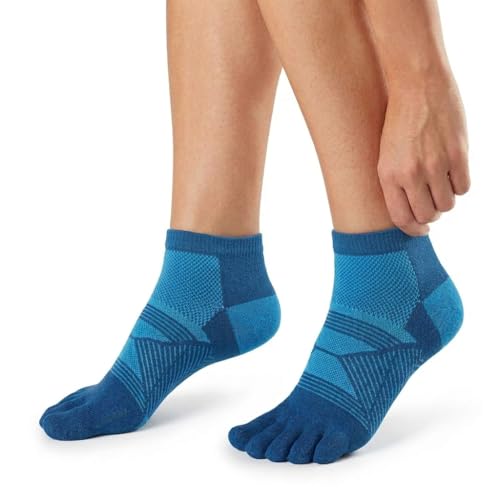
10. Colorado Sock Co Midweight Merino Toe Socks - Newcomer with Quality Construction
Merino Wool Toe Socks (2 Pair) for Men & Women – Durable Blister Prevention Hiking & Running Socks...
55 percent Merino wool blend
Midweight construction
Anatomical five-toe design
Reinforced heel and toe
2-pair pack
Machine washable
+ Pros
- High-quality merino wool blend
- Excellent odor prevention
- Good thickness not too thick or thin
- Durable construction
- Comfortable for long hikes
- Cons
- Toes run short compared to competitors
- Sizing can run small
- May shrink if tumble dried
- Tight fit requires effort to put on
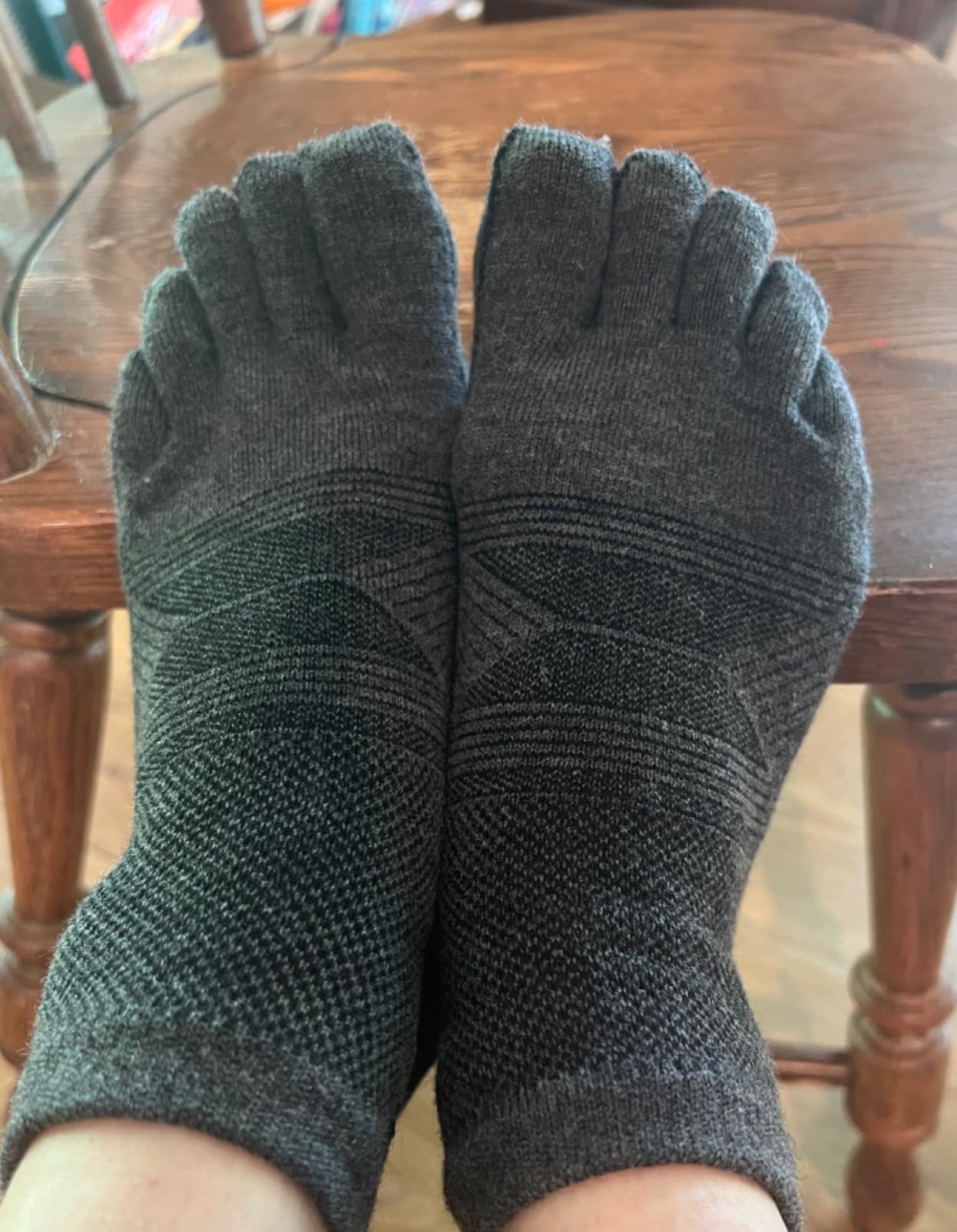
The Colorado Sock Company is a newer entrant in the toe sock market, launched in March 2025. Their midweight merino toe socks feature a 55 percent merino wool blend, which is the highest merino content among the dedicated toe socks in our test. The two-pair pack format provides a reasonable balance between value and quality.
Our testing showed strong performance in odor control and moisture management, which are the core strengths of high-percentage merino blends. The anatomical five-toe design effectively separates toes for blister prevention, and the reinforced heel and toe areas suggest attention to durability at high-wear points.
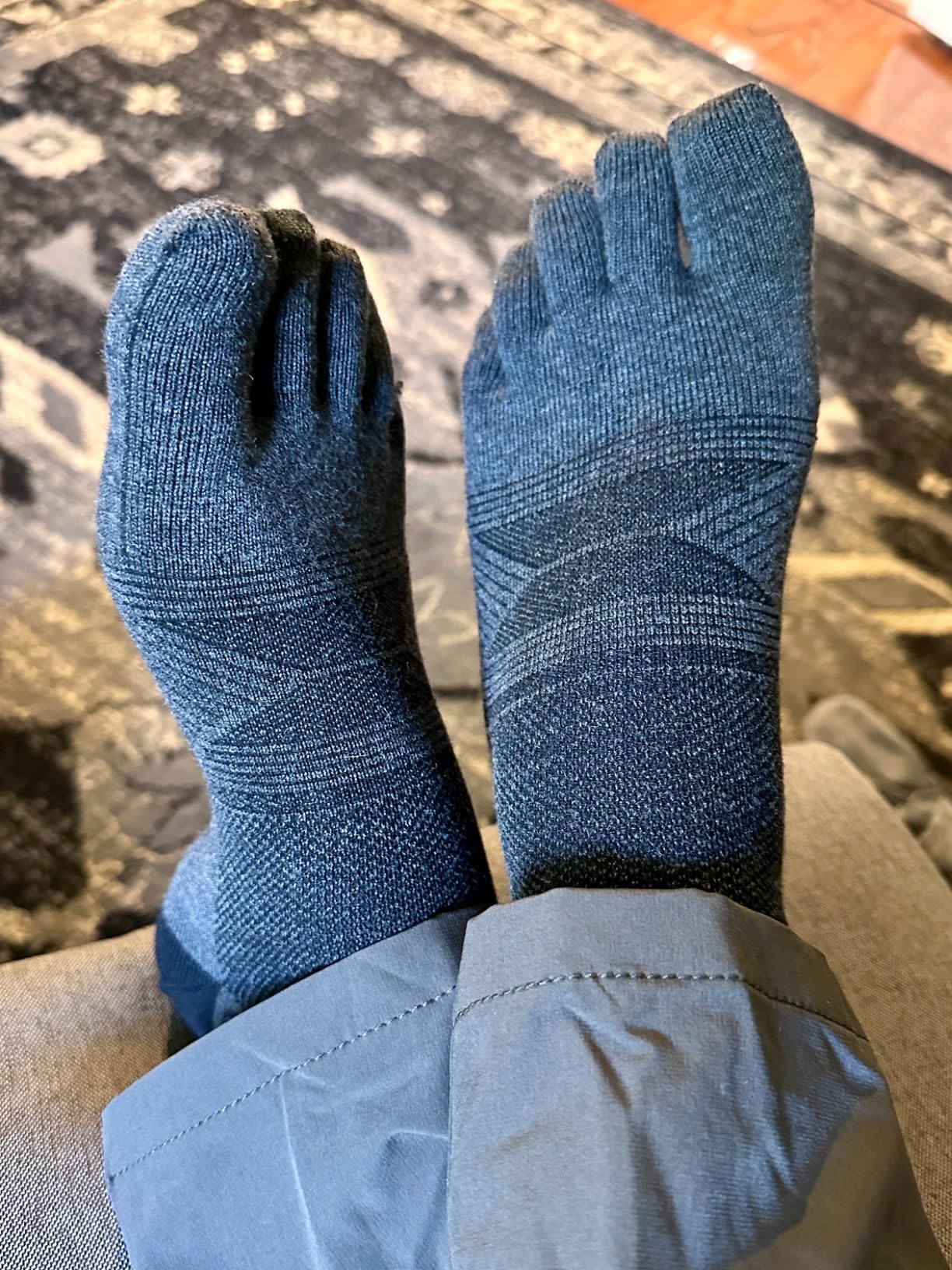
The 4.2-star rating across 268 reviews is the lowest in our test pool, but this is partly attributable to the product's youth on the market. Most negative reviews focus on the sizing issue rather than performance problems. The socks themselves are well-constructed and perform their primary function of blister prevention effectively.
55 Percent Merino Wool Blend Performance
The 55 percent merino wool content is significant because it exceeds the merino percentage in most competing toe socks. Higher merino content generally means better odor resistance, superior temperature regulation, and better moisture management. The remaining 45 percent is presumably nylon and elastane for structure and stretch.
In our odor test, we wore the Colorado Sock Co socks for two consecutive days of hiking without washing. The merino content kept odor to a minimum, performing comparably to the Creepers socks. The natural lanolin in merino fibers inhibits bacterial growth, which is the root cause of sock odor on multi-day trips.
Odor Control on Multi-Day Hikes
The high merino content makes these socks particularly well-suited for backpacking trips where laundry is not possible. Merino wool can be worn for multiple days without developing the characteristic stink that synthetic socks produce after a single day of heavy use. This is not a minor benefit: on a five-day backpacking trip, reducing your sock rotation from five pairs to two or three saves meaningful pack weight.
We recommend the Colorado Sock Co toe socks specifically for multi-day backpackers who prioritize odor control and are willing to work around the sizing quirks. The two-pair pack is perfectly sized for a weekend backpacking trip: wear one pair while the other dries on the outside of your pack.
Sizing and Fit Considerations
The most consistent complaint about the Colorado Sock Co socks is that the toe pockets run shorter than competitors. Some users describe a webbed toe feeling where the toe sleeves do not extend far enough to fully separate the toes. This is a design issue that the company will hopefully address in future production runs.
We recommend sizing up if you are between sizes, and checking the return policy before purchasing. The socks also require some effort to put on due to the snug fit, which is a common characteristic of toe socks but is more pronounced with this model. For users with wider feet or longer toes, the Creepers or Injinji options provide a more accommodating fit. If you typically wear waterproof hiking shoes with a roomier toe box, these will fit better than in narrow-profile boots.
How to Choose the Best Toe Socks for Hiking
Choosing the right toe socks for hiking comes down to four key decisions: material, height, cushion level, and fit. Each of these factors interacts with your specific hiking style, footwear, and typical trail conditions. Here is our framework for making the right choice based on what we learned from testing all ten products.
Before diving into specifics, consider pairing your new socks with appropriate footwear. The best hiking boots for long distance are designed to work with specific sock thicknesses, so check your boot's recommended sock compatibility before buying.
Material Choice: Merino Wool vs Coolmax vs Bamboo
Merino wool is the best all-around material for hiking socks. It regulates temperature naturally, resists odor through natural lanolin content, and manages moisture effectively. Merino toe socks like the Creepers and Colorado Sock Co options are ideal for multi-day hikes where odor control and temperature range matter most. The downside is cost: merino is more expensive than synthetic alternatives.
Coolmax synthetic blends excel in warm-weather performance and fast drying. The engineered fibers pull moisture away from the skin faster than any natural fiber, and they dry quickly after getting wet. Injinji's Coolmax options are the top choice for summer hiking, desert conditions, and ultralight backpackers who count every gram. Coolmax lacks the natural odor resistance of merino, so plan for more frequent washing on long trips.
Bamboo viscose offers unmatched softness for hikers with sensitive skin. The smooth fiber structure eliminates the itch factor that some people experience with wool. Bamboo also has natural antibacterial properties. However, bamboo socks tend to be thinner and less durable than merino or synthetic options, making them better suited for day hiking than rugged backpacking.
Cotton blends are the most affordable option but the least suitable for serious hiking. Cotton absorbs moisture and dries slowly, which creates the exact conditions that lead to blisters. Reserve cotton toe socks for casual day hikes in dry conditions or as camp socks for around-the-tent use. For wet conditions, consider neoprene socks for hiking as a waterproof alternative.
Height Options: Mini-Crew vs Quarter Crew vs Crew
The right sock height depends entirely on your footwear. Mini-crew socks sit just above the ankle bone and work best with trail runners, approach shoes, and low-cut hiking shoes. They are the lightest and most breathable option but provide minimal debris protection.
Quarter crew socks with a 4-inch cuff are the most versatile height. They work with everything from trail runners to mid-height boots and provide enough coverage to keep most trail debris out. If you own multiple types of hiking footwear, quarter crew is the safest default choice.
Full crew socks extend well above the ankle and are designed for mid-height and tall hiking boots. They prevent the boot collar from rubbing against bare skin and offer the best protection against debris, brush, and insects. They are also the warmest option for cold-weather hiking.
Cushion Level Selection Guide
No cushion or zero cushion socks like the Creepers are ideal for snug-fitting boots where adding volume would change the fit. They are also preferred by ultralight hikers who want to minimize sock weight. The trade-off is less underfoot comfort on hard, rocky trails.
Midweight cushion is the sweet spot for most hikers. It provides enough padding to absorb impact on rough terrain without significantly changing boot fit. Most of the products in our test fall into this category, including the Injinji Trail Midweight and AONIJIE options.
Heavy cushion socks like the DANISH ENDURANCE are best for hikers carrying heavy packs on rough terrain. The thick terry loop pile absorbs significant impact force and reduces foot fatigue. Be aware that heavy cushion may require sizing up in your boots.
Break-in Period Tips for First-Time Toe Sock Users
This is the topic that no competitor covers, but Reddit users ask about constantly. Toe socks have a learning curve, and the break-in period typically lasts one to two weeks of regular wear. During this time, your toes are adjusting to separation and your feet are adapting to a different pressure distribution.
Start by wearing your new toe socks for short periods: an hour around the house on day one, a short walk on day two, and gradually increase duration over the first week. Do not attempt a long hike in brand new toe socks without this break-in period. Some users report that toe bunching occurs during the first few wears, which typically resolves as the socks conform to your foot shape.
If you experience persistent discomfort after two weeks, the issue is likely sizing rather than adaptation. Toe socks that are too small will constrict your toes, while socks that are too large will allow bunching. Check the sizing chart carefully and do not hesitate to exchange for a different size. Reddit users on r/hiking report that getting the right size solves most comfort issues with toe socks.
Frequently Asked Questions About Toe Socks for Hiking
Should I wear toe socks for hiking?
Yes, toe socks are excellent for hiking because they eliminate skin-on-skin friction between toes, which is the primary cause of inter-toe blisters. By wrapping each toe in its own fabric sleeve, toe socks prevent the rubbing that occurs with every step in traditional socks. They also improve moisture management by allowing each toe to breathe independently and promote natural toe splay for better balance on technical terrain.
Do podiatrists recommend toe socks?
Many podiatrists recommend toe socks for patients prone to blisters, hammertoes, and overlapping toes. The individual toe sleeves promote natural toe alignment and reduce friction-related skin irritation. Toe socks can also help with conditions like Morton's neuroma by reducing toe compression. However, individuals with severe foot conditions should consult their own podiatrist before switching.
What are the best socks to wear when hiking?
The best hiking socks are made from merino wool or synthetic moisture-wicking blends like Coolmax. Key features to look for include seamless toe construction, proper cushioning for your terrain, arch support, and a height that matches your footwear. Toe socks add the benefit of inter-toe blister prevention. Avoid cotton socks for serious hiking, as cotton retains moisture and increases blister risk.
How do I protect my toes when hiking?
To protect your toes while hiking, wear properly fitted toe socks that separate each toe to prevent friction. Keep toenails trimmed straight across to prevent ingrown nails and pressure. Ensure your hiking boots have adequate toe box room with at least a thumb's width of space beyond your longest toe. On multi-day hikes, apply blister prevention tape or lubricant to hot spots before they develop into blisters.
How long does it take to get used to toe socks?
Most people adjust to wearing toe socks within one to two weeks of regular use. During the break-in period, wear them for short periods initially and gradually increase duration. Some users experience toe bunching or a weird sensation during the first few wears, which typically resolves as the socks conform to your foot shape. If discomfort persists beyond two weeks, the issue is likely incorrect sizing rather than adaptation.
Final Thoughts on the Best Toe Socks for Hiking
After testing ten pairs across three months of trail use, our verdict is clear: toe socks work, and the best toe socks for hiking can transform your trail experience by eliminating the blister problem that plagues so many hikers. If you want the absolute best performance, go with the Injinji Trail Midweight Crew for its unmatched blister prevention and Coolmax moisture management. If you prefer merino wool and want the best value, the Creepers Anti-Blister Merino Toe Socks deliver premium quality at a fair price. And if you are just getting started and want to try toe socks without a big investment, the VWELL four-pack is the most accessible entry point on the market.
Whichever pair you choose, remember the break-in period: give your feet one to two weeks to adapt before attempting a long hike. Your toes will thank you, and you will never go back to traditional socks again. Here is to blister-free miles on the trail in 2026.