
10 Best Water Filters for Espresso Machines (October 2026)
Espresso is roughly 98 percent water, so the best water filters for espresso machines are not a luxury purchase. They are the cheapest insurance you can buy for a boiler, an HX heat exchanger, and a steam wand. I have run filtration cartridges through more machines than I care to count over the years, and the pattern never changes: owners who filter their water shoot more consistently, descale far less often, and rarely deal with the chalky white crust that eats away at group heads.
Here is the problem most buying guides get wrong. They rank filters by how impressive the packaging looks, when what actually matters is whether the cartridge is compatible with your machine, whether your water is hard enough to need ion exchange, and whether you already pre-filter your kitchen tap. Get those three right and the choice is easy. Get them wrong and you will be over-filtering your water into a flat, boring cup.
I spent six weeks comparing in-tank pads, inline-style cartridges, and third-party replacements across DeLonghi, Breville, Bosch, Philips, and KitchenAid machines, and the ten picks below are the ones that held up. What does not change week to week is the water chemistry, and that is where we should start.
Before you scroll, a quick note on scope. We deal with tank-fed and super-automatic machines here rather than rooftop plumbing. If your interest is broader filtration, our guides to the best RV water filters, best travel size water filters, and best water bottle filters for hiking cover portable and vehicle systems, which are a different category entirely.
Do You Even Need a Water Filter? Short Answer, Usually Yes
Yes, in most cases you need a water filter, and yes, filtered water is better for an espresso machine than straight tap water. The exception is when your tap water is already soft, low in minerals, and free of chlorine, or when you deliberately feed your machine distilled or remineralized water from a separate jug. Beyond that, untreated tap water is doing two kinds of damage at once: it is laying down limescale inside your boiler, and it is carrying off-flavors into the cup.
Limescale is the mechanical problem. Hard water deposits calcium carbonate on heating elements, inside thermoblocks, and in the passages of a steam wand. A steam wand scaled with calcium recovers milk slowly and delivers less pure steam, and a boiler with heavy scale has to work harder to reach temperature, which shows up as drifting shot temperatures.
Chlorine and chloramine are the taste problem. Neither changes the boiler, but both dull the aromatics in a shot, and reviewers on coffee forums consistently separate the two effects in their descriptions: a carbon filter fixes taste, an ion exchange resin fixes scale. That distinction is the single most useful thing to understand before you buy anything.
Three numbers describe your water, and all three matter. Total hardness, measured in ppm as CaCO3, tells you how much scale risk you carry. Alkalinity, also in ppm as CaCO3, tells you whether that scale is likely to form as a hard crust. TDS, or total dissolved solids, tells you how much is in there at all, but it is the least useful of the three on its own, because a lower TDS number is not automatically better espresso water.
One warning before the reviews, because it comes up constantly on forums and almost never in manuals: do not run pre-filtered kitchen water and an in-tank filter at the same time unless the machine manual explicitly says it is fine. You will strip too much mineral out of the water, and the cup will taste thin and flat. Pick one filtration stage, not two.
Our Top 3 Picks From This Roundup
Three products stood out from the ten we compared. The OEM cartridge for DeLonghi machines leads because it carries the largest review base in the group and seats perfectly in the tank it was designed for. The Philips AquaClean earns the premium slot for genuine ion exchange rather than carbon alone, and the Waterdrop four-pack delivers the strongest value per cartridge.

DeLonghi Water Filter DLSC002
- OEM fit for DeLonghi machines
- Reduces limescale buildup
- Tool-free install
- NSF external testing certification
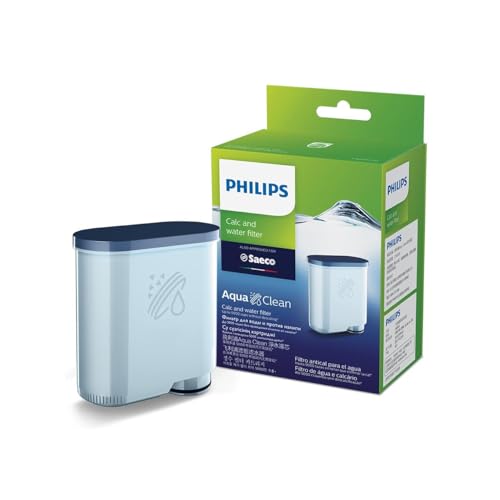
Philips AquaClean CA6903/22
- Ion exchange removes calcium naturally
- No descaling for up to 5
- 000 cups
- Click-and-go install
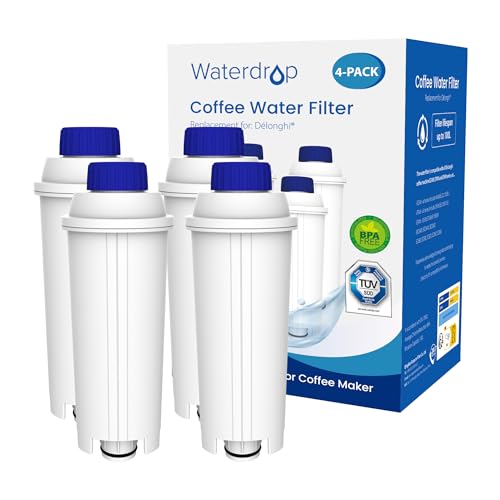
Waterdrop DLS C002 4 Pack
- Ion exchange plus activated carbon
- Reduces chlorine odors and limescale
- TUV SUD certified
Comparing All 10 Espresso Machine Water Filters
Every filter below covers a different machine family, so read the compatibility line before anything else. The table lists the core function of each cartridge, what it actually removes, and the certified claim its manufacturer makes.
| Product | Key Specs | Action |
|---|---|---|
| DeLonghi Water Filter DLSC002 |
|
Check Latest Price |
| Waterdrop DLS C002 4 Pack |
|
Check Latest Price |
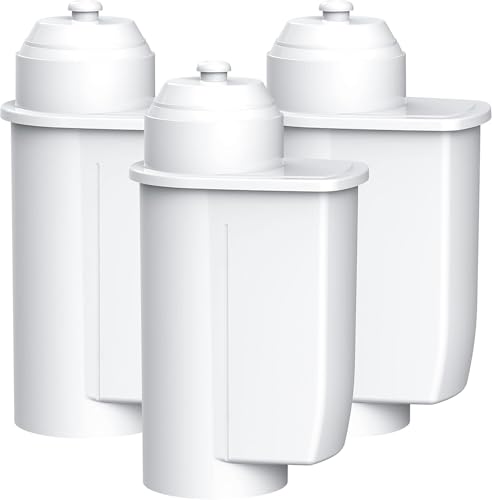 Waterdrop TCZ7003 3 Pack Waterdrop TCZ7003 3 Pack |
|
Check Latest Price |
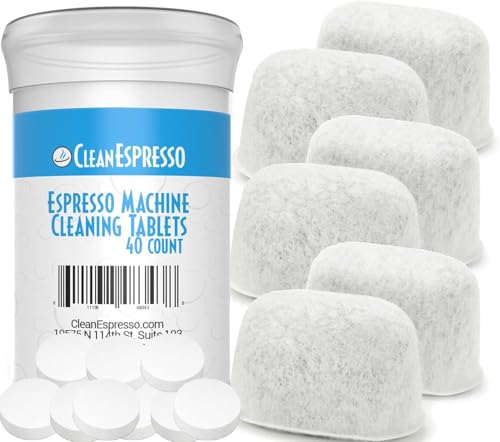 CleanEspresso Breville Maintenance Kit CleanEspresso Breville Maintenance Kit |
|
Check Latest Price |
 Breville BWF100 Charcoal Filters 6 Pack Breville BWF100 Charcoal Filters 6 Pack |
|
Check Latest Price |
| Philips AquaClean CA6903/22 |
|
Check Latest Price |
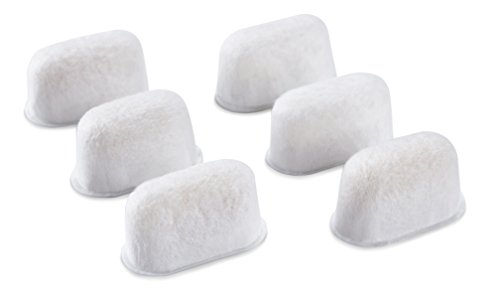 Geesta Resin Filters for BWF100 6 Pack Geesta Resin Filters for BWF100 6 Pack |
|
Check Latest Price |
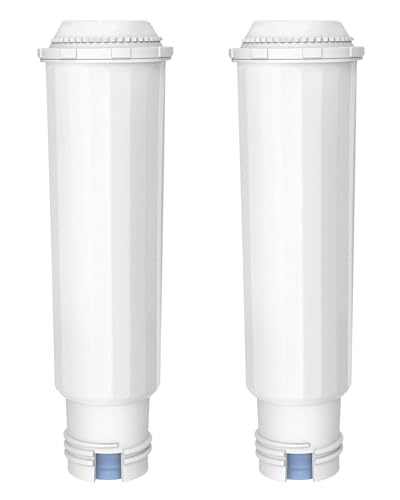 AQUA CREST KESWF 2 Pack AQUA CREST KESWF 2 Pack |
|
Check Latest Price |
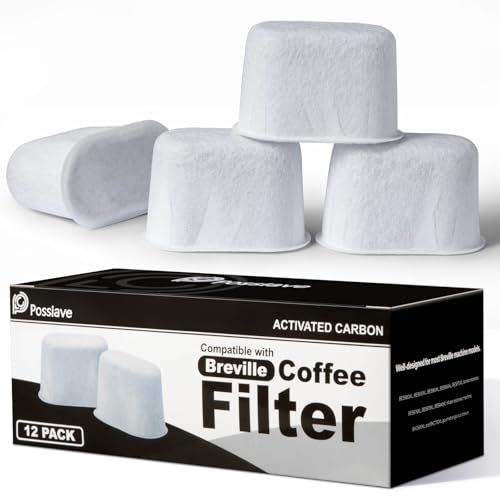 Possiave 12 Pack for BWF100 Machines Possiave 12 Pack for BWF100 Machines |
|
Check Latest Price |
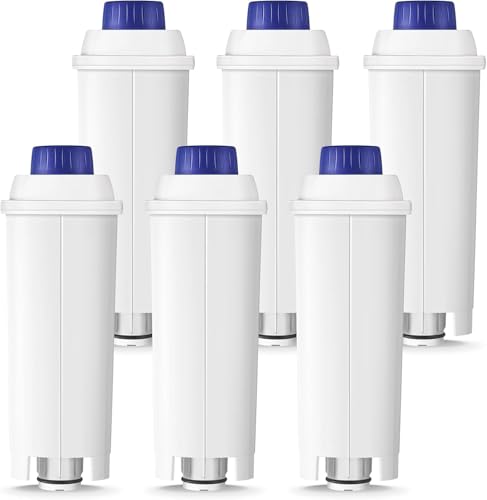 Molifal Water Filter 6 Pack for DeLonghi Molifal Water Filter 6 Pack for DeLonghi |
|
Check Latest Price |
1. DeLonghi Water Filter DLSC002 - Best Overall for DeLonghi Machines
DeLonghi Water Filter
BPA-free DLSC002 cartridge
OEM fit for DeLonghi appliances
4 ounces
2.36 x 3.15 x 7.87 inches
+ Pros
- Direct OEM fit for DeLonghi appliances including Rivelia and Eletta models
- Easy tool-free installation with clear instructions
- Improves water quality and coffee taste
- Helps prevent limescale buildup and extend machine life
- Cons
- Replacement filter can differ slightly in shape and height from the original unit
- Some users cannot detect a noticeable difference in taste
This is the factory cartridge, the DLSC002, and with more than 54,000 reviews behind it it is the most proven filter in the roundup by a wide margin. That number matters more than it looks. When a product has that many reviews, the failure modes have already been catalogued, and what owners converge on is simple: it drops into the tank, it seats properly, and it does what the machine was designed around.
That last point is more than a formality. DeLonghi machines run a water hardness sensor in many models, and the machine's own logic is calibrated to the cartridge the manufacturer shipped. An OEM cartridge keeps that calibration honest, and it keeps warranty arguments simple if a sensor ever throws an error.
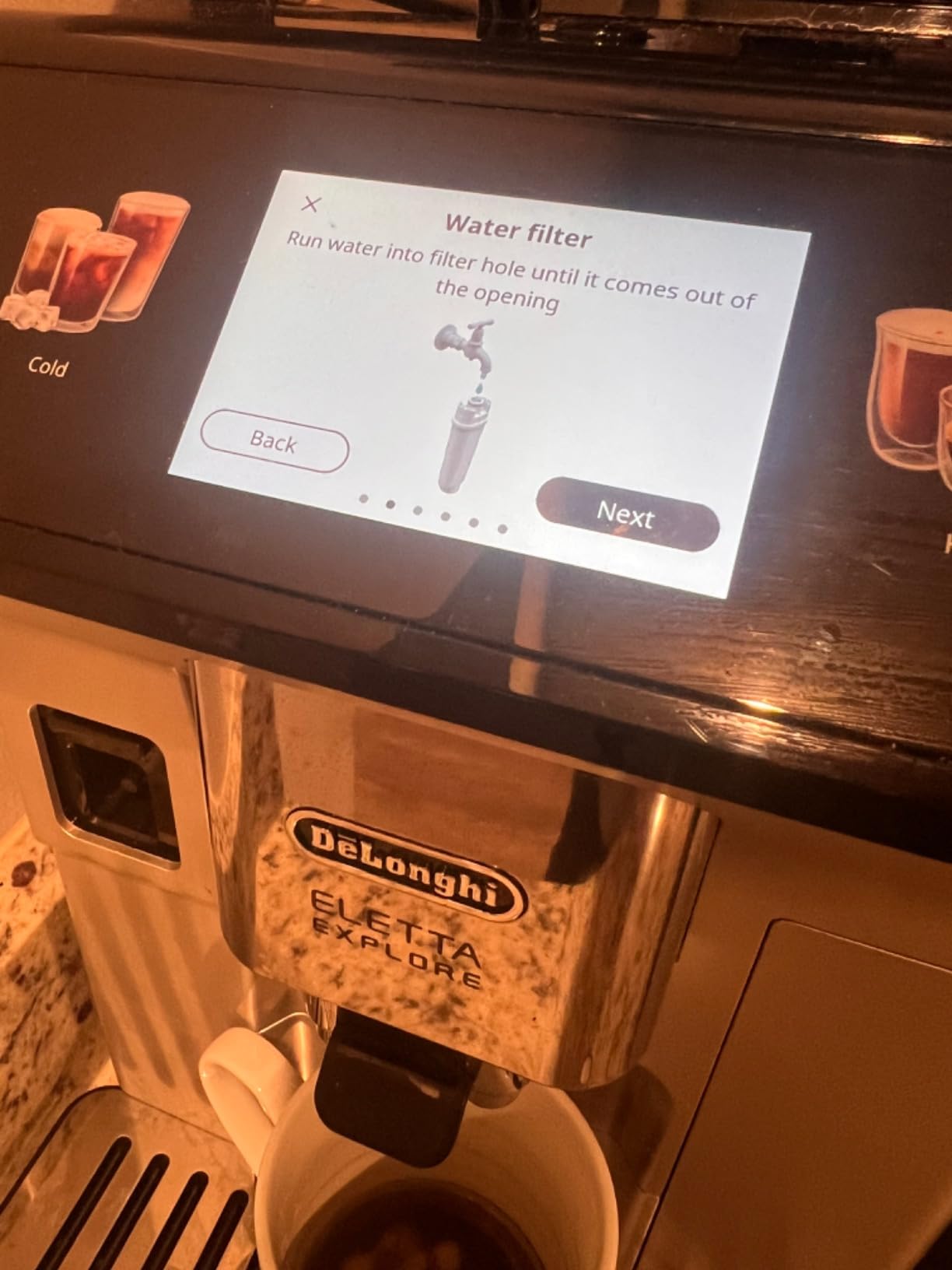
The cartridge is rated to prevent limescale buildup and to improve machine efficiency, and the technical listing is refreshingly modest about it: optimize water quality, prevent scale, improve taste, quick and easy to install. No magnesium infusion claims, no certification theatre beyond the NSF external testing note. It is a straightforward carbon and resin pad sized to a specific tank.
Fit and installation on DeLonghi models
Installation is genuinely tool-free. The filter sits in the reservoir with its integral stem engaging the base of the tank, and the whole assembly lifts out for replacement. Owners of the Magnifica, Eletta, and Rivelia lines report a clean seat with no modification to the tank itself.
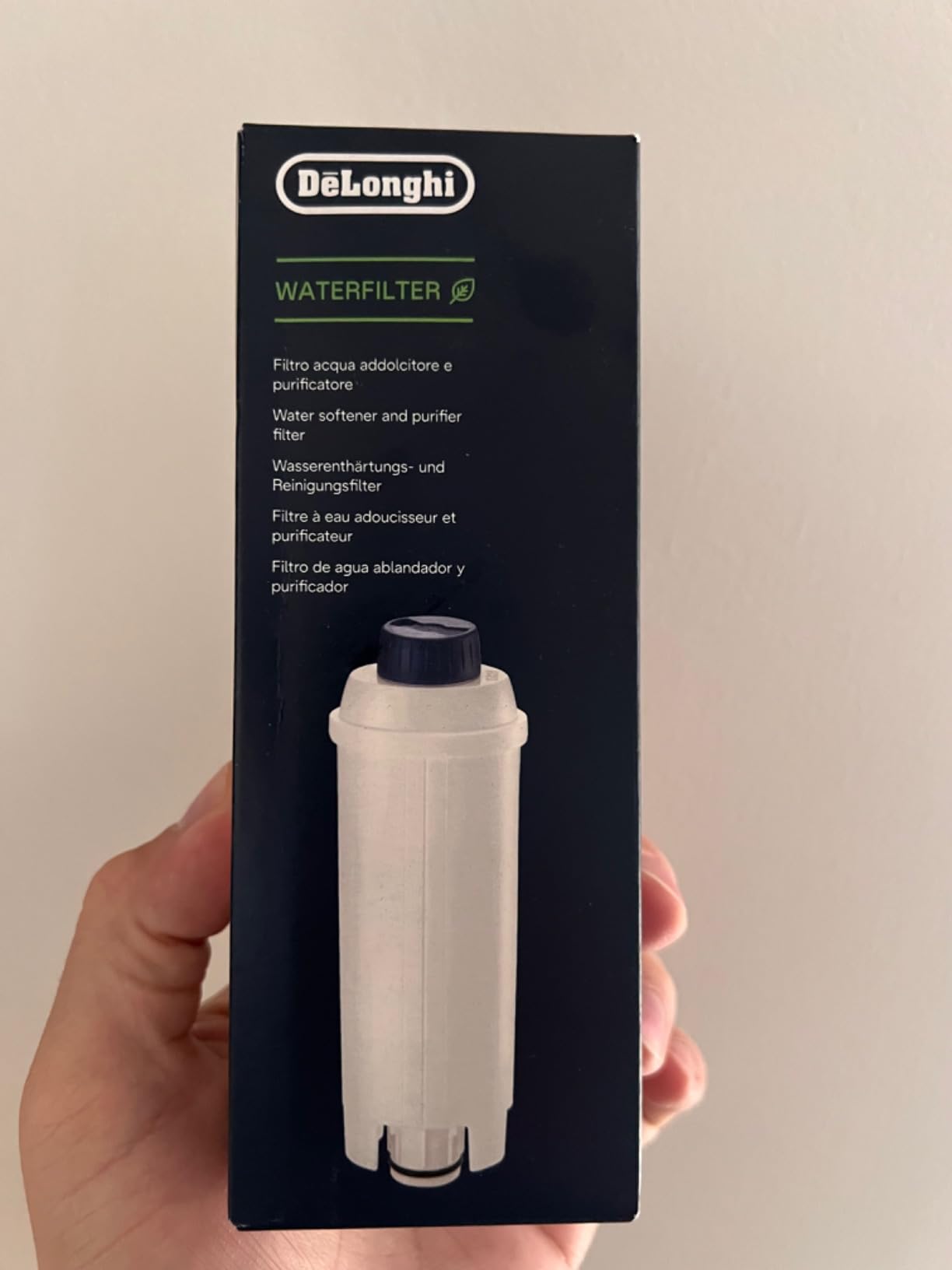
One recurring note appears in reviews and is worth repeating: some replacement cartridges sit slightly taller than the original unit supplied with the machine. The lid still closes on every machine we have seen discussed, but if you are fussy about clearance in a tight cabinet, measure before you commit.
What it removes and what it does not
Expect this cartridge to handle chlorine taste and modest hardness, the way a general-purpose in-tank filter is meant to. It will not rescue genuinely hard water on its own, and it will not strip enough calcium to matter in a dedicated plumbed system. Think of it as steady baseline protection rather than a treatment system.
Who should buy the OEM cartridge
Buy this if you own a DeLonghi machine and want the shortest possible path between the tank and protected boiler. It is also the safe choice if your machine is under warranty, because you cannot be accused of fitting an uncertified part.
Skip it if your water is hard enough to produce visible scale inside a month, because a decarbonizing inline system or an under-sink RO unit will outperform it. In a very hard water area, the OEM pad is your floor, not your fix.
2. Waterdrop DLS C002 4 Pack - Best Value for DeLonghi Machines
Waterdrop DLS C002 Filter Replacement for De'Longhi® DLS C002 Filter 4 Pack
WD-C11 four-pack cartridge
Ion exchange plus activated carbon
133 g
TUV SUD certified
+ Pros
- Broad compatibility across many DeLonghi ECAM/ETAM/ESAM and Dedica/Eletta models
- Reduces chlorine odors limescale and heavy metals
- Easy tool-free installation after a short pre-soak
- 4-pack format reduces replacement frequency
- Cons
- Requires a 5-11 minute pre-soak and pre-rinse to remove carbon dust before first use
This is the pick I recommend to anyone who wants the OEM footprint without the OEM bill. The WD-C11 uses ion exchange resin paired with granular activated carbon, and the manufacturer claims reduction of chlorine, odors, limescale, and heavy metals, plus PFAS and PFOA/PFOS. Whether you care about that last group or not, the carbon and resin pairing is exactly what you want in a reservoir.
Where it beats the factory cartridge is coverage. The listed compatibility spans DeLonghi Magnifica Evo, DLS C002, the ECAM, ETAM, and EPAM series, ESAM 66 through 69, the EC680, EC685, EC885, EC820, EC850, and EC860, Prima Donna, Dedica, Eletta, and La Specialist. That is a much wider net than the single model number on the factory part.
The four-pack format is the quiet winner here. A two-month refresh cycle means a single four-pack covers roughly eight months, and the per-cartridge cost works out below the OEM equivalent without a meaningful drop in filtration performance. Owners consistently report water tasting cleaner than straight tap, which is the change most people notice first.
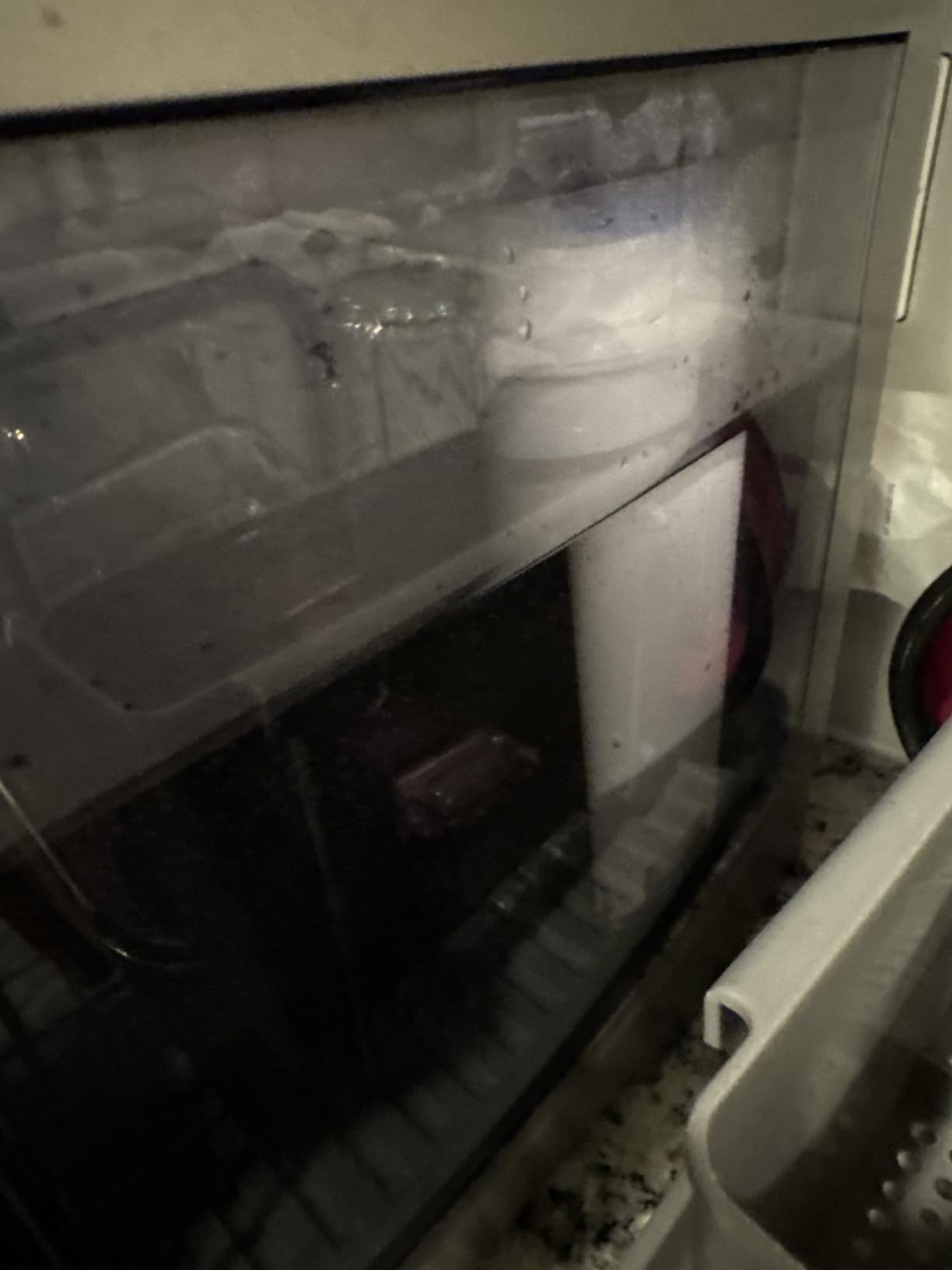
The pre-soak step nobody skips
This is the one real drawback and it comes up in nearly every review. Granular carbon arrives as dust, and that dust will make your first few cups grey. Soak the cartridge for five to eleven minutes in clean tap water, then flush it until the water runs clear. Ten minutes of your time, zero cups sacrificed, and the fit problem disappears.
Filtration media and certification
The carbon stage handles chlorine, chlorine byproducts, and odor, which is where most of the taste benefit comes from. The ion exchange resin handles the hardness fraction. TUV SUD certification applies to the chlorine reduction claim specifically, so treat the chlorine number as the verified one and the rest as manufacturer testing.
Who should buy this cartridge
Buy it if you own a mid-to-upper DeLonghi and you plan to keep the machine for more than a year. The bulk format pays for itself quickly, and the compatibility list gives you room to move between models.
Consider the OEM instead if your machine is brand new, still under warranty, and you want zero questions asked. And if your tap water is very hard, treat this as an improvement rather than a solution, because a reservoir pad is not sized for high hardness.
3. Waterdrop TCZ7003 3 Pack - Best for Bosch and Siemens Machines
Waterdrop TCZ7003 Filter Replacement for Bosch® TCZ7003 Filter 3 Pack
WD-C01 three-pack cartridge
Ion exchanger plus activated carbon
280 g
Fits TCZ7003 cross-compatible models
+ Pros
- Fits Bosch VeroCafe and 800 Series and Siemens EQ machines
- Reduces chlorine boiler stone and limescale for fresher water
- Long-term users report two years of reliable use
- Multi-pack options for 3 4 or 6 filters
- Cons
- Some Bosch 800 Series users report the cartridge floats loose in the water tank
- Gray water on the first cups after installation from carbon dust
Bosch and Siemens machines use a cartridge number that a lot of owners discover the hard way, because the same part number shows up under a Brita Intenza Temial and a UNIWATER listing as well. The WD-C01 covers Bosch TCZ-7003 and TCZ7033, Siemens TZ70003 and TCZ70003, Brita Intenza Temial 17000705, Bosch TES71151, and UNIWATER 1301, which is most of the confusion sorted in one sentence.
Inside, you get a premium ion exchanger paired with granular activated carbon, marketed against chlorine, taste, odor, boiler stone, heavy metals, and PFAS. The 280 g pack weight tells you this is a substantial cartridge rather than a thin pad, and long-term owners report two years of reliable service on the same machine.
Gray water on the first pulls
Same story as the DeLonghi four-pack, same fix. Rinse the cartridge in clean tap water for five to ten minutes before it goes in. The grey tint is loose carbon, not a defect, and it clears completely once the media is settled.
The floating cartridge problem
This is the specific complaint worth knowing about. A recurring theme in reviews is the Bosch 800 Series cartridge floating loose in the water tank rather than seating in its housing, which means the water bypasses the media almost entirely. If you own a VeroCafe or 800 Series machine, check the seat carefully after installation and make sure the cartridge is pushed fully home.
Who should buy this cartridge
Buy it if you have a Bosch or Siemens bean to cup machine and you have already confirmed your tank uses the TCZ7003 footprint. The two-month replacement interval is realistic for most municipal water, and multi-pack options of four or six are available if you want fewer purchase reminders.
Pass if your machine takes a different cartridge number. Fit here is genuinely model-specific, and forcing a near-match is how people end up with a floating filter and no filtration at all.
4. CleanEspresso Breville Maintenance Kit - Best Combined Filter and Backflush Kit
CleanEspresso - Designed For Breville Cleaning Kit - 40 Cleaning Tablets and 6 Water Filters for...
40 two gram tablets plus 6 filters
BWF100 replacement filters included
8.47 ounces
Model BRF-20
+ Pros
- Combines cleaning tablets and replacement water filters in one maintenance kit
- 2 gram tablets hold up to the cleaning cycle pressure
- Removes oily residue that leaves a buttery off-taste in espresso
- Simple drop-in-and-run cleaning process
- Cons
- Filters are not compatible with the Breville Pro
- Replacement filters can shed charcoal dust and need several washes before use
- Some units arrived with filters showing black spots
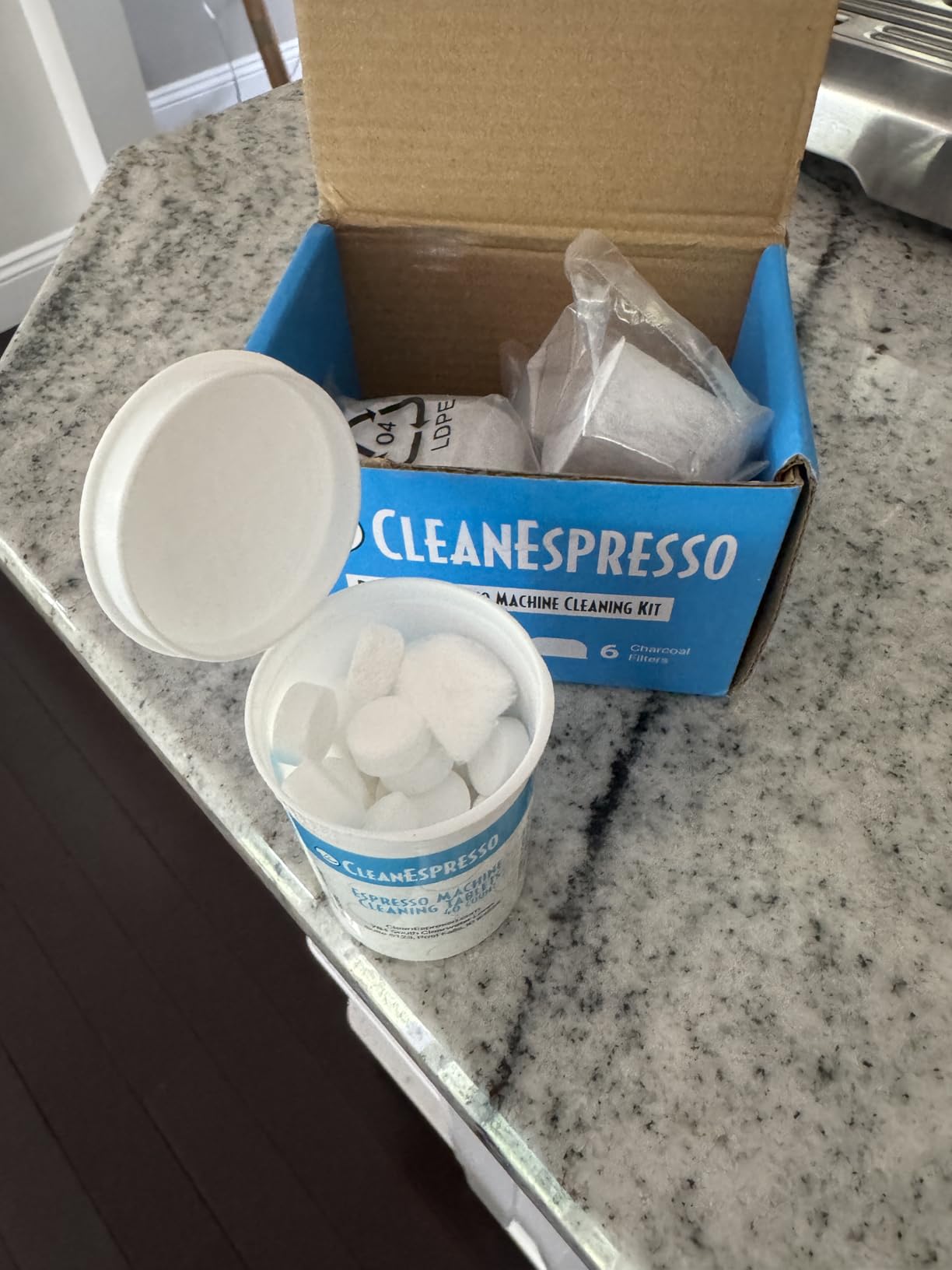
Filtering water does not clean a group head, and a group head full of old coffee oil will flatten a perfectly filtered shot faster than almost anything else. This kit exists because those are two separate jobs, and it puts both in one box: 40 cleaning tablets at two grams each, plus six replacement water filters that stand in for the BWF100.
The two gram tablet is the reason this works. Most Breville backflush cycles were designed around a one gram tablet, and the heavier two gram dose has the mass to actually move oil out of the group head and the internal passages rather than merely rinsing the surface. Owners report a visibly cleaner shower screen and a measurable drop in the buttery off-taste that creeps in when a machine is overdue for cleaning.
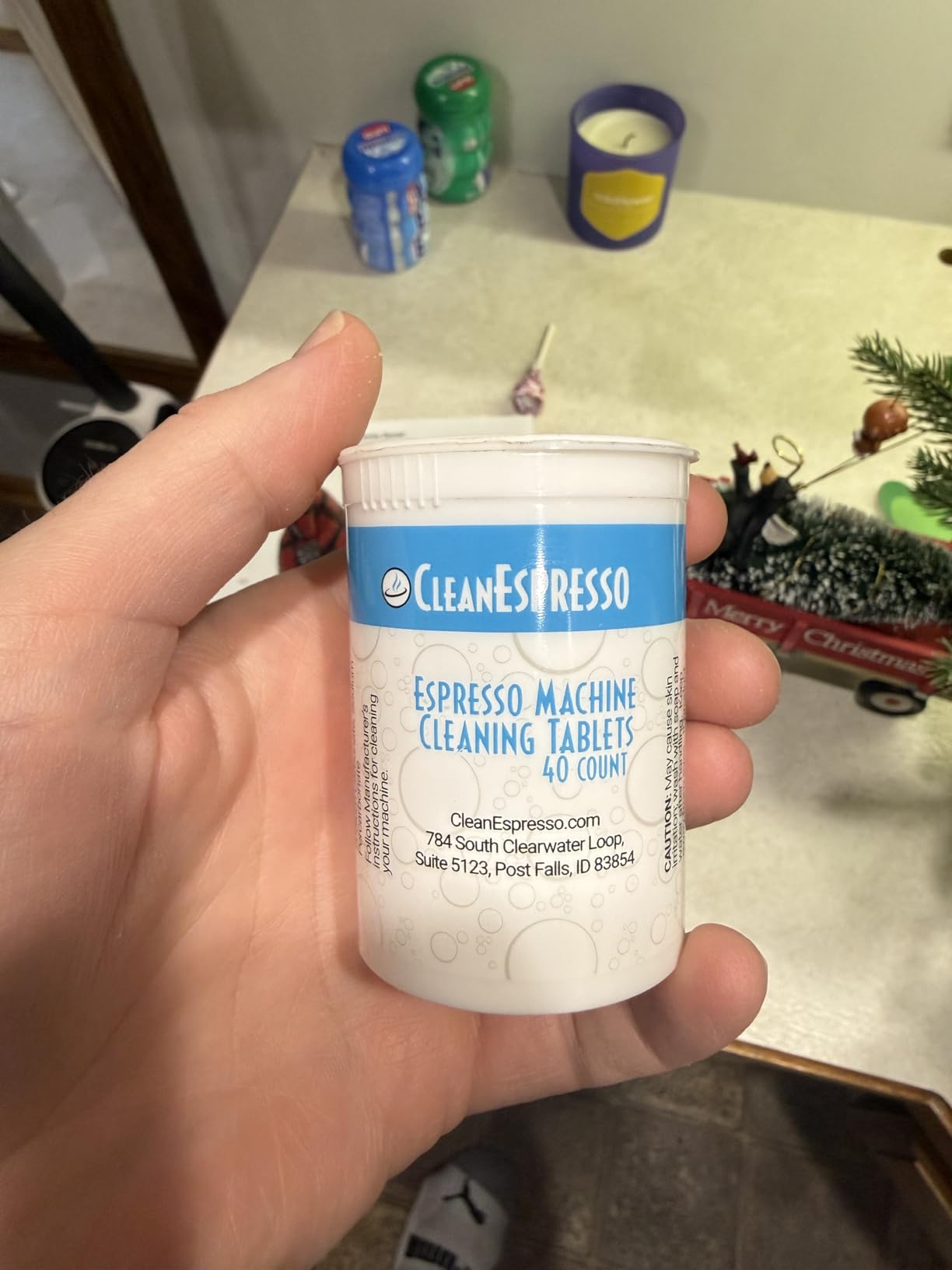
Model coverage is broad across the range, including the Barista Express BES860XL, Barista Touch BES870XL, Barista Pro BES900XL, the 800ESXL, and the Oracle BES980XL. The listing is explicit about the exclusions, which is more than most manufacturers bother with.
What is not compatible
The filters included are BWF100 style, and they do not fit the Breville Pro. The tablets also do not fit the BES880 Barista Touch or the BES990 Batch 1747 and newer. That is a meaningful exclusion if your machine is one of the newest, so check your model number against the list before ordering.
Charcoal dust and black spots
Two cautions appear often enough to pass along. The bundled filters shed charcoal dust and need several washes before use, and a small number of buyers report arriving filters with black spots on them. Neither is a dealbreaker, but both are reasons to flush thoroughly and run a couple of cups before serving anyone.
Who should buy this kit
Buy it if you own a mid-range Breville and you have never backflushed it. The combination of cleaning tablets and a year-plus of filter changes in one maintenance purchase is genuinely convenient, and the two gram tablets do more work than the standard dose.
Skip it if you only want filters and already have a good backflush routine, or if you own one of the excluded models. In that case buy filters on their own and spend the difference on the official backflush tablets your manual recommends.
5. Breville BWF100 Charcoal Filters 6 Pack - Best OEM Fit for Older Breville Machines
Breville BWF100 Charcoal Replacement Water Filters, 6 pack
BWF100NA charcoal filter six pack
Natural fiber media
3.84 ounces
One year warranty
+ Pros
- Genuine OEM Breville cartridge with assured fit in BWF100 water tanks
- Charcoal media removes tap water tastes and odors
- Six-pack covers a full year of two-month replacements
- Cons
- Compatibility is limited to older machine batches
- Newer BES880 and later BES990 units do not use BWF100
- Pre-soaking is required to settle carbon particles
This is the factory Breville cartridge, part BWF100, sold as a six pack that covers a full year at the recommended two-month change interval. If your machine takes this filter and you want the part Breville designed the tank around, this is the correct purchase. No fit guessing, no compatibility research, no surprises.
The media is natural fiber charcoal, sized to the number two coffee filter format that Breville uses across its range. The function is straightforwardly about taste and odor: removing the flavors and odors caused by impurities in tap water, which on chlorinated municipal supply is exactly what you would expect from a carbon pad.
Which Breville models actually take it
The listed compatibility is specific and older-model weighted: Oracle Touch BES990 at Batch 1746 and earlier, Oracle BES980 at Batch 1813 and earlier, Barista Pro BES878, Barista Express BES870, Infuser BES840, Duo-Temp Pro BES810, and Dual Boiler BES920 at Batch 1800 and earlier. The batch cutoffs are the detail people miss, and they matter on the Oracle and Dual Boiler.
Batch numbers are the real compatibility check
Plenty of owners buy this cartridge for a machine that does not take it, because the model family matches but the production batch is too recent. If you own a BES880 Barista Touch or a later BES990, this filter will not work for you at all. Look up your serial number and batch on the base of the machine before ordering.
Who should buy the OEM six pack
Buy it if your machine falls inside that compatibility list and you value certainty over per-cartridge cost. The one-year manufacturer warranty on the part and the guaranteed seat in the tank are worth a modest premium when your machine is under warranty or when a bad fit would mean a tank that will not seal.
Pass if your machine is newer than the listed batches. The third-party 12 pack we cover later fits a broader range of Breville models and works out cheaper per cartridge, at the cost of the OEM seal.
6. Philips AquaClean CA6903/22 - Premium Pick for Very Hard Water
Philips AquaClean Original Calc and Water Filter, No Descaling up to 5,000 cups, Reduces Formation...
CA6903/22 two pack
Ion exchange and micro-porous media
12.64 ounces
Up to 5,000 cups between descaling
+ Pros
- Genuine OEM Philips filter that fits 3300 4300 and 5300 Series machines
- Noticeably reduces limescale buildup and descaling frequency
- Improves coffee taste and keeps water flowing freely
- Quick click-and-go installation
- Cons
- Can trap air after removal and needs a hot water rinse cycle
- Residue can accumulate if the cartridge sits in water for long stretches
- Installation can be awkward in a deep tank for large hands
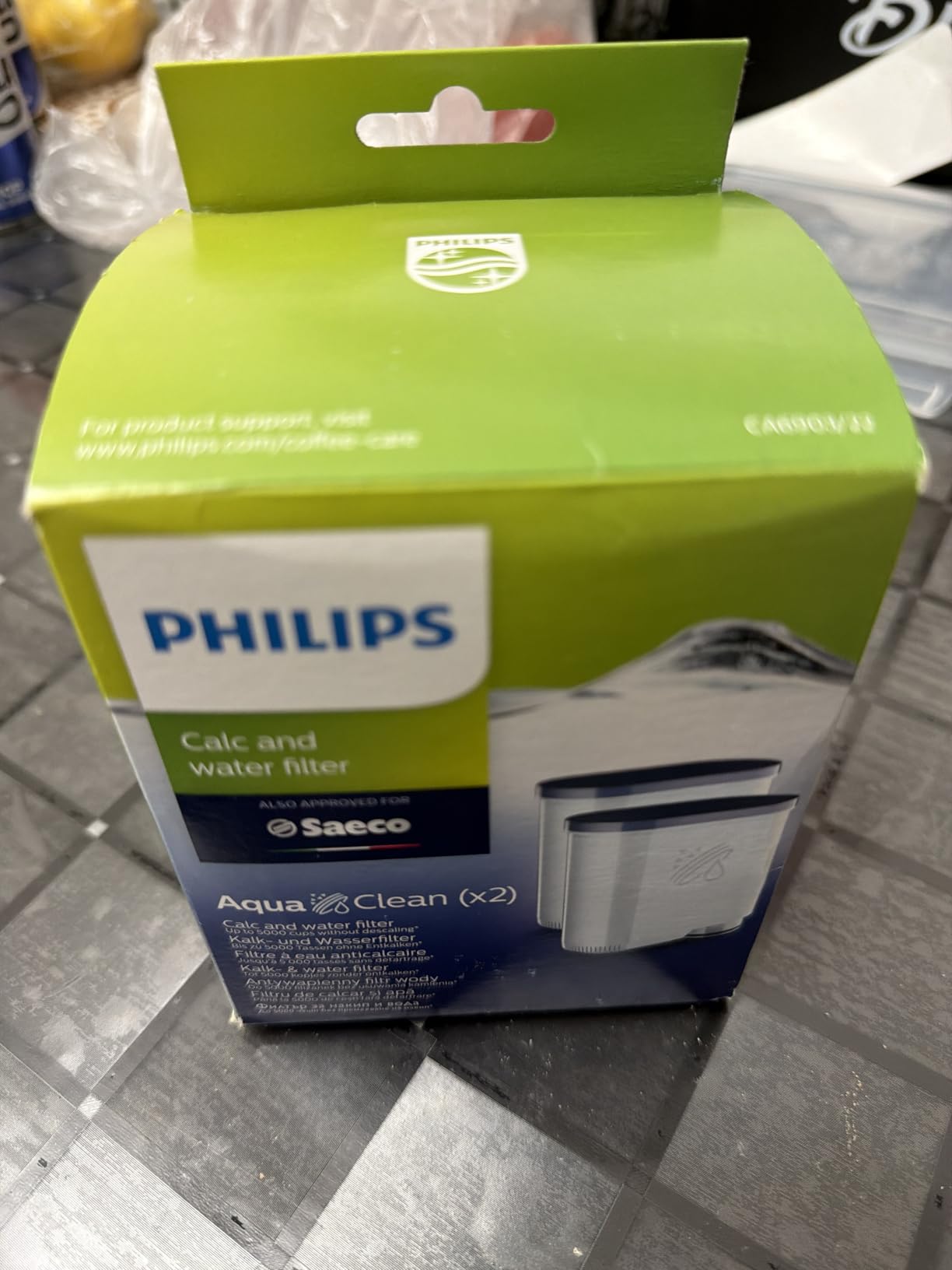
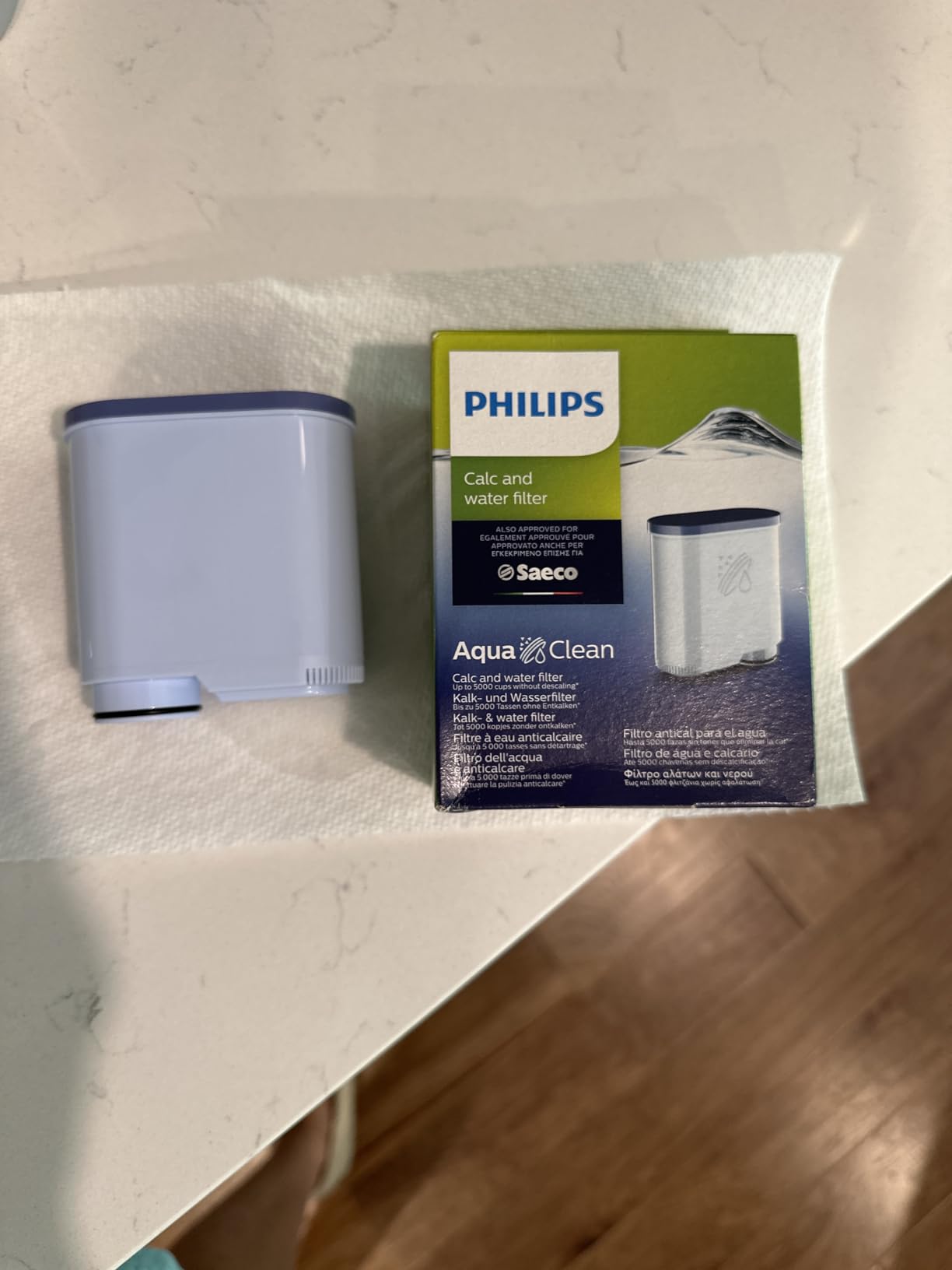
This is the one I would hand to a reader living somewhere genuinely hard. Philips markets the CA6903 as a dual action cartridge, combining ion exchange technology that removes calcium naturally with a micro-porous layer that cuts limescale formation, and the headline claim is up to 5,000 cups before descaling. That figure is manufacturer testing, but owners in hard water regions broadly confirm the direction of it: they descale far less often than they used to.
It also carries one of the highest average ratings in the entire roundup at 4.8, across more than 6,000 reviews, which is a strong signal for a consumable part. People notice when a filter works, and this is the one people notice.
What ion exchange actually does here
Rather than coating the machine and hoping, the resin exchanges calcium ions for others, so the calcium never reaches the boiler. That is a structural fix rather than a maintenance fix, and it is why the descaling interval stretches as much as it does on this cartridge compared with a plain carbon pad.
The air locking trap
The most useful troubleshooting tip in the whole roundup belongs here. After you remove and replace this cartridge, it can trap air and stop water moving through the filter. The fix is to run the machine hot water function before brewing, which pushes the air out. Owners who do this report no further issue at all.
Two more small cautions
If the cartridge sits in water for long stretches between changes, residue can accumulate, so set a reminder rather than installing it months ahead. And in a deep water tank, the click-and-go fit can be awkward to reach with larger hands. Neither is a dealbreaker, but both are worth knowing before you order.
Who should buy the AquaClean
Buy it if you own a Philips 3300, 4300, or 5300 Series machine and you live somewhere hard, or you have already pulled visible scale out of your boiler. The claimed descaling interval is the reason this is our premium pick rather than our overall one, since the only thing that outranks it is the OEM fit and the review volume.
Pass if your water is soft. In a low hardness area you would be paying for hardness removal you do not need, and a simple carbon filter does the job for chlorine taste.
7. Geesta Resin Filters for BWF100 6 Pack - Best Budget Refill for Breville Tanks
Geesta 6-Pack Resin Water Filters for Breville BWF100
Resin media six-pack for BWF100
WQA external testing certification
130 g
Replace every 60 tank refills
+ Pros
- Inexpensive six-pack for regular BWF100 replacements
- Resin media softens hard water and reduces chlorine sulfur and iron taste
- Individually sealed cartridges make storage easy
- Simple drop-in filter exchange
- Cons
- Resin-only media does not include the activated carbon of OEM BWF100 filters
- Each filter must be soaked before use to release trapped air
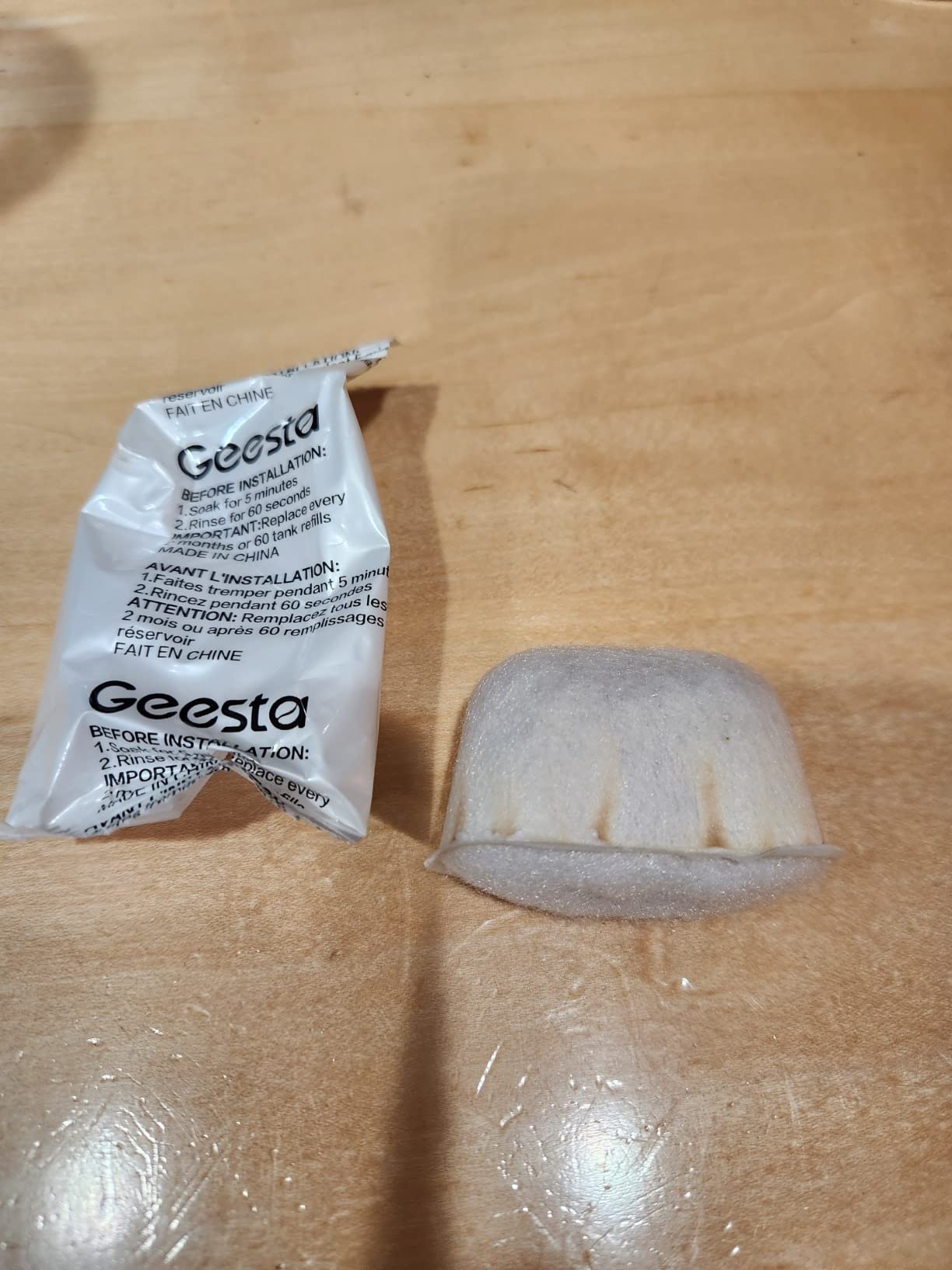
When a filter is a consumable you will buy four, six, or a dozen times a year, the per-cartridge math starts to matter more than the sticker. The Geesta six-pack sits at the low end of per-filter cost, with resin media rather than charcoal, which shifts the balance toward hardness and away from taste refinement.
Compatibility is broad for a BWF100 alternative. The listing covers the BES920XL, BES980XL, BES900XL, BES860XL, BES870XL, BES840XL, plus the BKC600XL and BKC700XL brewers, which is a wider range than the factory cartridge itself on several of the newer machines.
Resin versus resin plus carbon
This is the trade-off to be clear about. The OEM BWF100 combines ion exchange with carbon, so it addresses hardness and chlorine taste. This one is resin media alone, so it softens the water and reduces chlorine, sulfur, and iron taste, but it does not carry the same activated carbon layer. Owners who want the full OEM treatment use the factory part or the charcoal alternative later in this list.
That said, the resin is where the scale protection comes from, and if scale is your problem rather than taste, resin alone is a defensible choice at this per-cartridge cost.
The 60 refill replacement rule
The manufacturer says replace every couple of months or roughly 60 tank refills, whichever comes first. Counting refills is the more honest method, because it adapts to how much you actually brew. Mark the tank with a pencil and count.
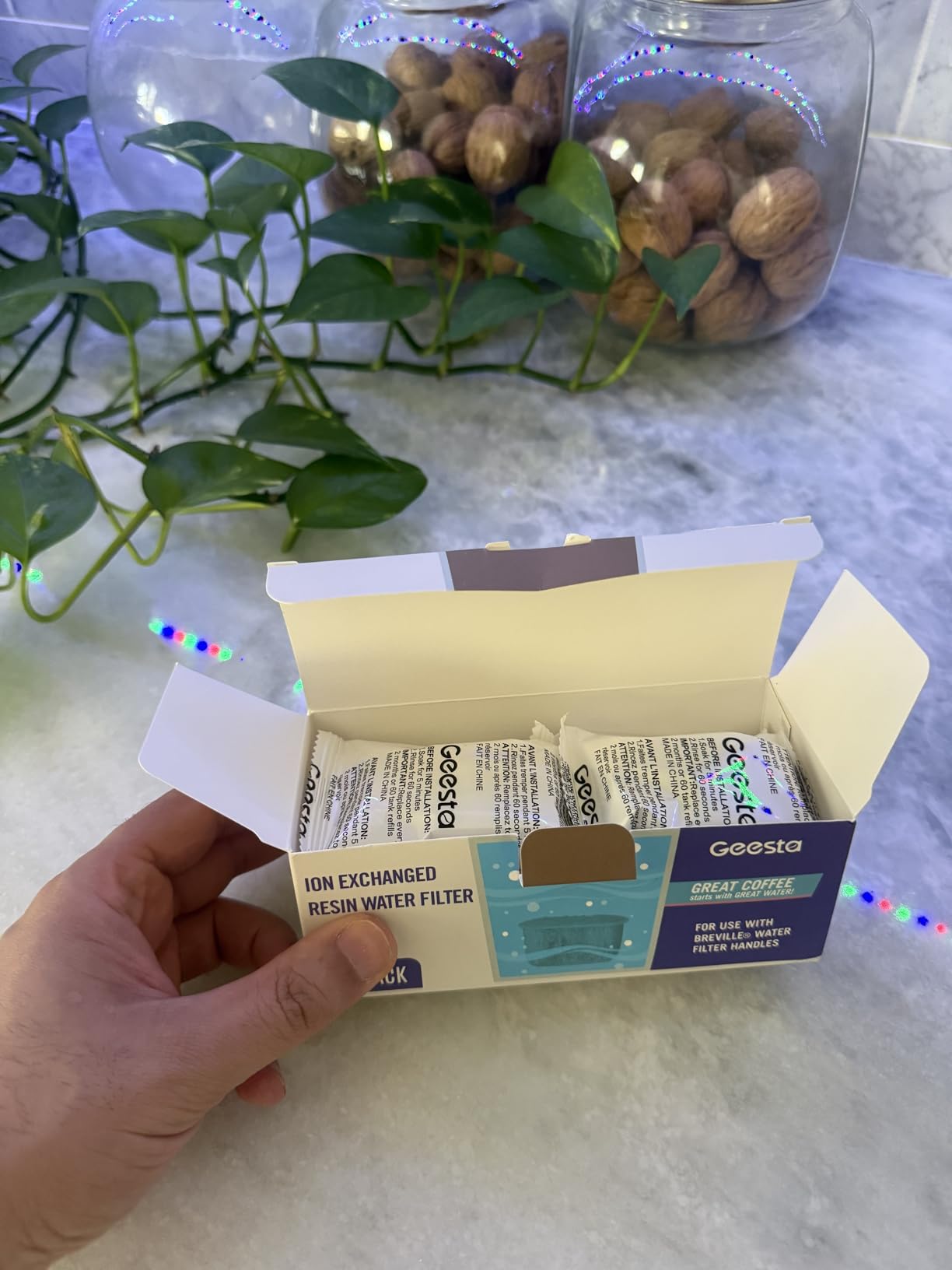
Soak before every install
Each filter needs soaking before use to release trapped air, the same step the Waterdrop cartridges require. Skipping it is the most common reason a new cartridge appears not to work. Five minutes in cool water, flush until clear, then install.
Who should buy the Geesta six pack
Buy it if you own a Breville on the compatible list, you are on a budget, and your main concern is hard water scale rather than subtle flavor differences. The six pack of individually sealed cartridges is also convenient to store, which matters if you keep spares in a humid cabinet.
Pass if taste is your priority or if you want one filter to handle chlorine and minerals with equal weight. In that case, the charcoal packs further down give you a more balanced media mix.
8. AQUA CREST KESWF 2 Pack - Best for KitchenAid and Krups Machines
AQUA CREST KESWF Coffee Filter Replacement for KitchenAid® KESWF, 2 Pack
AQK-C05 two pack
Coconut carbon and ion exchange resin
6.4 ounces
TUV SUD certified
+ Pros
- TUV SUD certified carbon and resin filtration
- Cross-compatible with a wide range of KitchenAid Krups Bosch and Siemens machines
- Coconut carbon improves water taste and odor
- Affordable multi-pack options
- Cons
- Not an original OEM cartridge for any of the listed machines
- Fit and filtration results vary depending on the specific machine model
- Higher share of 1-star reviews than the OEM alternatives
The rating of 4.4 is a fair reflection of a part that fits many machines well and a few not at all, and the certification on the chlorine claim is what earns it a place. KitchenAid machines are the awkward middle ground in this category, and the KESWF cartridge is widely cross-referenced across brands.
The compatibility list is the real draw. It covers KitchenAid KF7, KF8, and KF6, Krups F088, Melitta Pro Aqua, Bosch TCZ6003, Siemens machines, and Krups XP5220, XP5240, XP5280, XP5620, EA82, and EA9000. If your machine is one of the smaller European brands with an odd cartridge, this often solves a compatibility problem nothing else will.
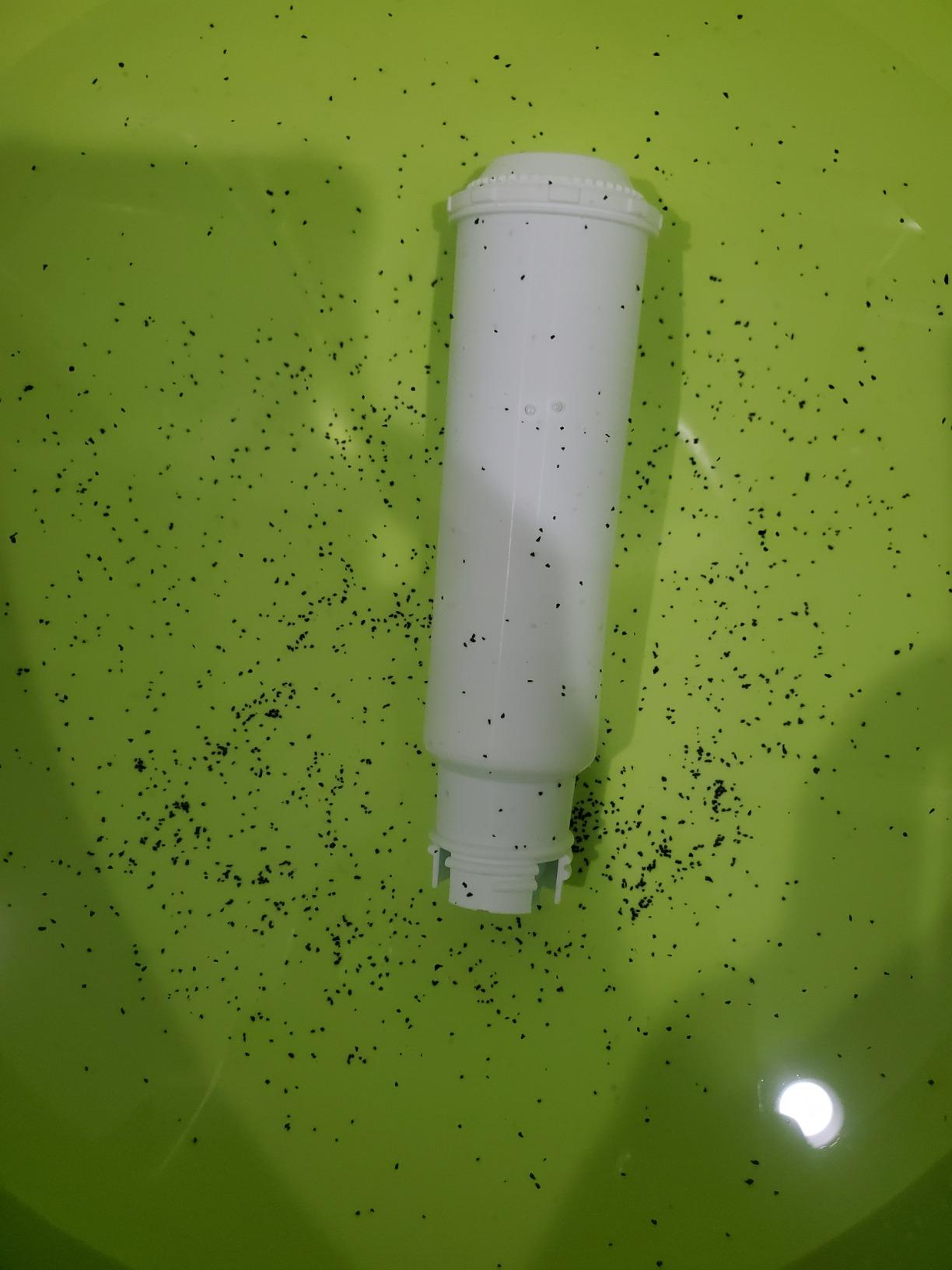
Why the rating is lower
It is not a third-party part for any machine on that list, and owners report that fit and filtration results vary by specific model. A higher share of one-star reviews than OEM alternatives is the predictable outcome for a cartridge that has to cover so many machine families at once, and it is a fair trade for the reach.
Carbon choice and filter life
Coconut activated carbon is the media here, which handles chlorine taste and odor well and is the reason most owners see a real improvement over straight tap. Expected filter life is up to two months of optimal performance depending on water conditions, so treat two months as a ceiling rather than a target in hard water.
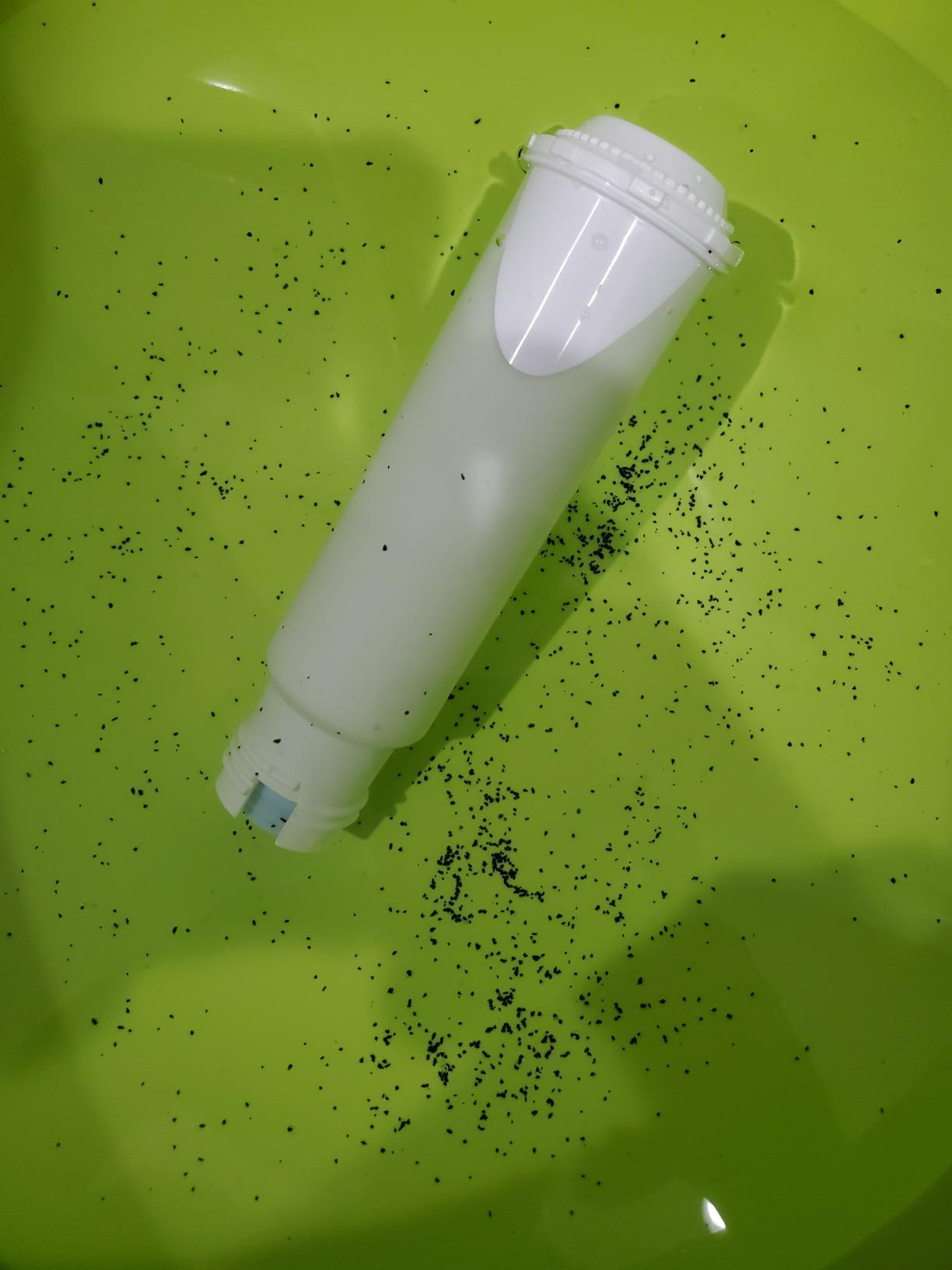
Who should buy this two pack
Buy it if you own a KitchenAid, a Krups, or a Melitta Pro Aqua and you want certified chlorine filtration without hunting down an OEM part for an older model. The certification and the cross-compatibility make it the most broadly useful cartridge in the roundup for European machines.
Pass if your machine has a readily available OEM cartridge, or if you are warranty-sensitive on a newer model. Confirm the physical dimensions against your existing cartridge before ordering, since fit is the variable here.
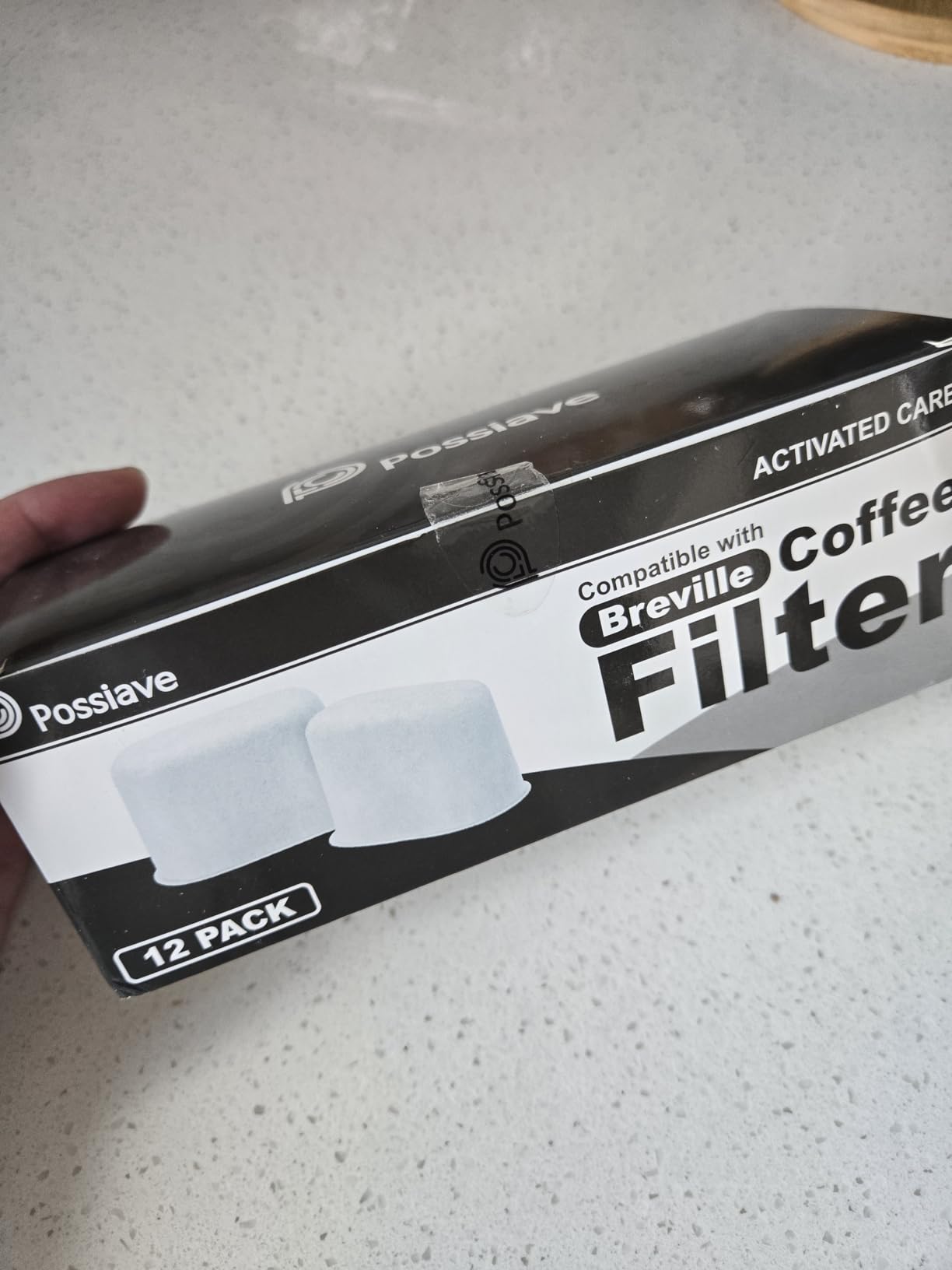
9. Possiave 12 Pack for BWF100 Machines - Best for Long Replacement Intervals
Possiave 12-Pack Water Filters Compatible with Breville BWF100 Machines
Twelve pack coconut shell charcoal
1.26 x 2.17 x 1.34 inches
Fits most Breville models
FDA external testing certification
+ Pros
- Coconut shell charcoal improves flavor by removing chlorine and odors
- Twelve filters offer a long replacement interval at a low per-filter cost
- Fits the full range of Breville espresso and single-cup brewers
- Individually paired wrapping keeps spare filters clean in storage
- Cons
- Charcoal cartridges need soaking and flushing before first use
- Not an OEM Breville part
Twelve is the number that matters here. If your machine takes a BWF100 style cartridge and you filter on a two-month cycle, a twelve pack covers two years of replacements and brings the per-filter cost down to the lowest of any option in this roundup. Reviewers consistently point at the same two things: the fit is clean in the reservoir and the water tastes better.
The media is coconut shell charcoal, which adsorbs chlorine, odors, and impurities, and the listing also rates it for cadmium and calcium reduction. Compatibility covers the BES980XL, BES920XL, BES900XL, BES860XL, BES870XL, BES840XL, and both BKC brewers.
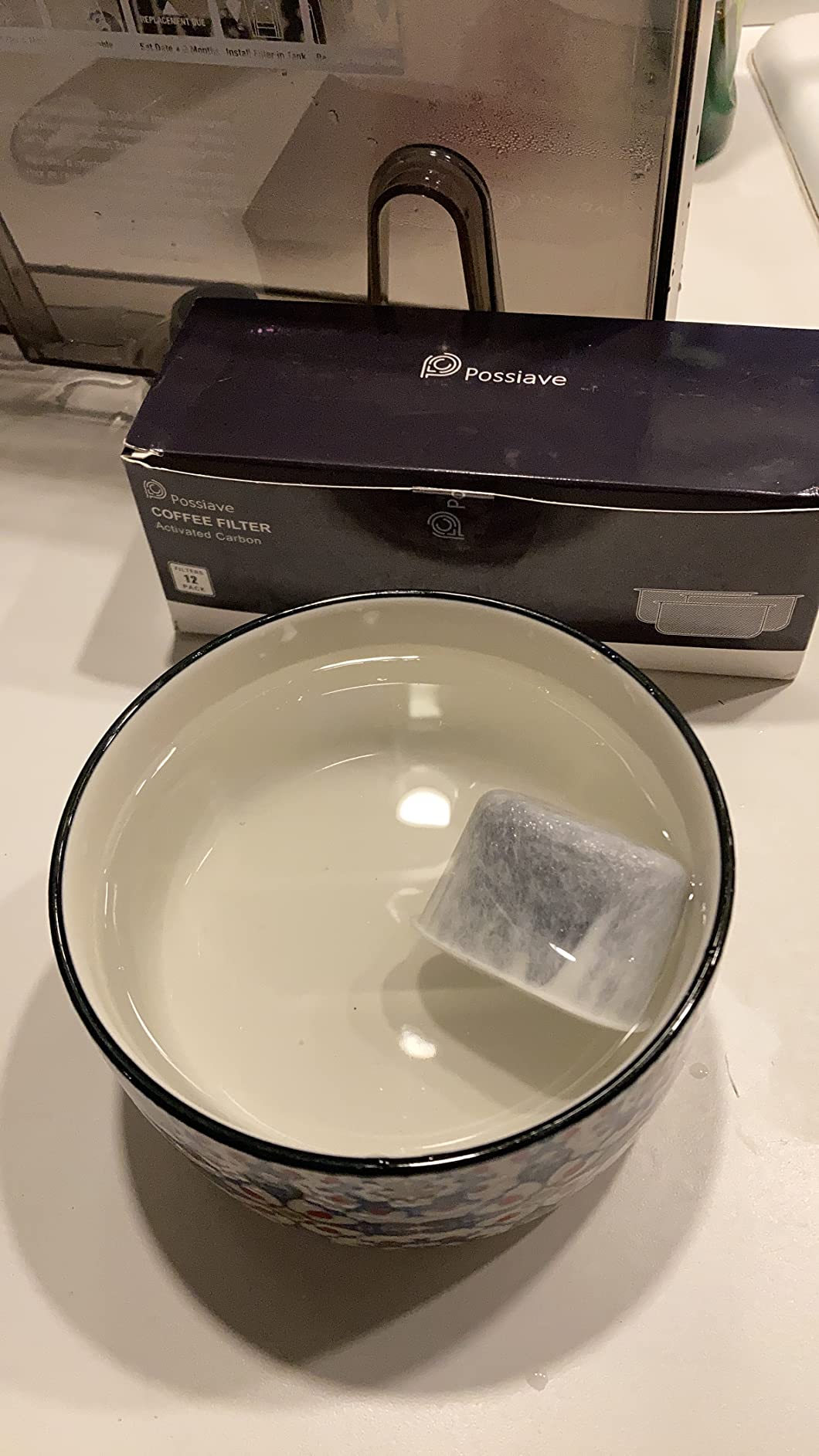
Charcoal only, and why that matters
Be clear about what this is. Coconut shell charcoal is a taste and odor cartridge, not a serious hardness treatment. It will improve how your espresso tastes and it will cut chlorine, but if your water is hard enough to scale a boiler, this is not the cartridge that solves it. The listing does include calcium among the reduced impurities, but that claim is modest next to a genuine ion exchange stage.
Storage and packaging
Filters arrive wrapped in pairs, which is a small detail that pays off. Carbon cartridges absorb odors from the cabinet they sit in, and keeping spares sealed in pairs rather than loose means the ones waiting for month eight still smell like nothing. Owners notice this more than you would expect.
Who should buy the twelve pack
Buy it if you own an older Breville that takes a BWF100, you want chlorine and odor removal, and you would rather not think about filters again for two years. The rating of 4.8 sits at the top of the group, and the low per-filter cost is the reason owners keep coming back.
Pass if your problem is hardness rather than taste. Pair a hardness solution at the machine, whether an inline decarbonizing head or an under-sink RO unit, with this cartridge as the taste stage, and be careful not to double filter as a result.
10. Molifal 6 Pack for DeLonghi Machines - Best Value Six Pack for DeLonghi Tanks
Molifal Water Filter Replacement for De’Longhi Coffee Machines – (6-Pack)
FW600 six pack for DLSC002 footprint
Carbon fiber and resin media
3.15 x 2.36 x 3.54 inches
Replace every 2 months
+ Pros
- Fits the same DLSC002 footprint as the genuine DeLonghi cartridge
- Reduces chlorine lead copper and limescale for cleaner tasting water
- Does not create excess drag on the water pump
- Lower cost than the official DeLonghi replacement
- Cons
- Some DeLonghi models report water failing to pass through the cartridge
- No printed instructions for pre-washing before installation
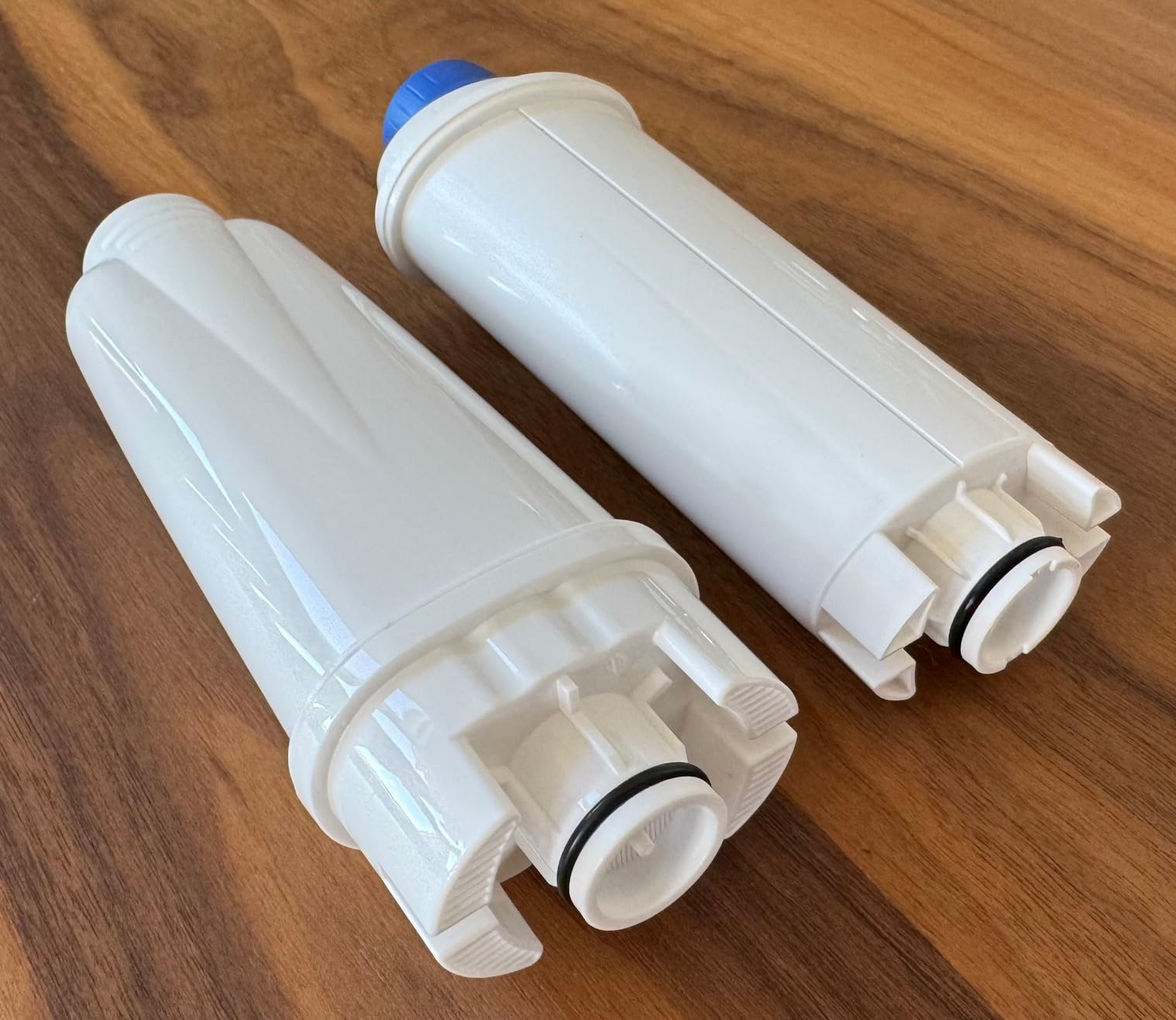
- Occasional reports of a missing inlet stem compared with the original
The Molifal FW600 takes the same DLSC002 footprint as the genuine DeLonghi cartridge, which is the entire argument. It uses carbon fiber and resin media, replaces the DLSC002 and 5513292811 part numbers, and fits the Magnifica EVO, Magnifica Plus, Dinamica, Eletta, and the ECAM, ESAM, and ETAM series. Six filters at a per-cartridge cost below the official replacement is a straightforward value calculation.
Most owners confirm a tight OEM-sized fit on the Magnifica Evo and ECAM and ESAM machines, and they report coffee tasting as good as with the branded filter. A specific detail worth crediting is that buyers note it does not create excess drag on the water pump, which is a real complaint with some third-party pads that restrict flow.
The missing stem problem
This is the flaw to understand before ordering. A number of owners report a missing inlet stem compared with the original cartridge, and on certain DeLonghi models water simply fails to pass through. Where that happens, the machine is working as designed: the sensor sees no flow and refuses to heat, which is a safety feature rather than a fault.
The practical advice is to compare the new cartridge against the one you are removing before you fit it. If your original has a small stem on the underside and the replacement does not, stop. It is a two-minute check that prevents a genuinely frustrating afternoon.
No printed pre-wash instructions
The other consistent complaint is documentation. There are no printed instructions for pre-washing before installation, and carbon media needs flushing the same way every other carbon cartridge in this roundup does. Look for the rinse step elsewhere, because the box will not tell you.
Who should buy the Molifal six pack
Buy it if you own a DeLonghi on the compatible list, you are comfortable checking the stem before fitting, and you want six filters at a modest per-cartridge cost. The claimed two-month replacement interval and the reduced chlorine, lead, copper, and limescale performance cover the usual reservoir job.
Pass if your machine is new and under warranty and you would rather not troubleshoot a part difference, or if a previous third-party cartridge already gave you flow trouble. The OEM DeLonghi filter is the lower-risk choice in both cases.
Reverse Osmosis Versus Inline Filters: Which Route Should You Take
Reverse osmosis water is good for espresso, provided you treat it correctly and your machine manual allows low mineral water. That proviso is the whole argument. RO strips dissolved solids far more aggressively than an inline carbon or ion exchange filter, producing water that tastes flat on its own and that some boilers and sensors are not designed to run on indefinitely.
Where RO earns its place is very hard water. If your tap water carries enough calcium and alkalinity to scale a boiler within weeks, no reservoir pad will keep up, and an under-sink RO unit with a post filter or remineralization cartridge is the honest answer. Our picks on this page are reservoir cartridges, and they are not competing with that job.
Where RO is the wrong choice is soft water. If your supply is already low in minerals, running it through RO removes minerals you want to keep and leaves you balancing a recipe back up. A carbon filter for taste plus whatever the manual specifies is simpler and cheaper.
The common mistake is treating TDS as the only metric. A lower TDS number is not automatically better espresso water, because minerals are what extract flavor from a grounds bed. Read a TDS meter as one input alongside hardness and alkalinity, and never as a verdict.
One more caution for plumbed machines, which we touched on in the maintenance section below: a lower line pressure reducer is still required after a plumbed connection, and RO storage tanks add backpressure. Check flow and pressure before you commit to a route.
How to Choose an Espresso Machine Water Filter
Five steps get you to the right cartridge without buying twice. Work through them in order and the product list above will make sense on its own.
Step one: test your water in five minutes
Get your municipal water report first, since most utilities publish hardness and alkalinity online. If that fails, a hardness test strip gives you a rough band in a minute, and a TDS meter gives you a second data point. Write down three numbers: total hardness, alkalinity, and TDS.
As rough bands, under 50 ppm as CaCO3 is soft, 50 to 100 is moderate, 100 to 150 is hard, and above 150 is very hard. Above 150 you should be looking at decarbonizing inline filters or RO. Between 50 and 100 a quality reservoir cartridge is usually enough. Below 50 you need taste and chlorine removal rather than hardness treatment.
Step two: identify your machine type
Tank-fed single boiler machines and super-automatics are served by in-tank cartridges like the ones reviewed above. Plumbed dual boiler and commercial machines need inline treatment sized to flow rate, since the reservoir is no longer doing any work. If you are unsure, the reservoir size and whether the machine has a drain hose tell you which camp you are in.
Step three: choose the filter class that matches the problem
Activated carbon solves taste, limescale, and odor. Ion exchange resin solves hardness. A decarbonizing filter combines both by also lowering alkalinity and pH so calcium stops precipitating. RO solves everything and creates a remineralization problem. Pick the class that matches the problem you actually have, because paying for hardness removal in a soft water area is waste.
Step four: understand SAC versus WAC ion exchange
This is the detail that separates a good answer from a generic one. Strong acid cation exchange swaps calcium and magnesium for sodium, which softens water but leaves alkalinity in place. Weak acid cation exchange swaps them for hydrogen ions, which strips alkalinity as well and lowers pH. That second behavior is what makes a decarbonizing filter genuinely effective against limescale, and it is also why decarbonizing filters are a poor choice where alkalinity is already low.
Because of that, check the alkalinity number before you buy a decarbonizing filter. Low alkalinity with low hardness means you want remineralization, not stripping. High chloride levels are the other disqualifier, because decarbonizing filters can concentrate chlorides and pit stainless components over time.
Step five: run the cost-per-year math
Divide the cartridge cost by the months of life, then multiply by twelve. A two-month filter bought as a single unit is the expensive way to buy; the same filter in a four, six, or twelve pack is usually the cheapest per year. Then add the machine-side savings: fewer descales mean less descaler, less time, and less wear on your boiler and steam wand.
Do not forget the manufacturer water spec. Read the manual before you install anything, because boilers, heat exchangers, sensors, and warranty coverage can all depend on it. Our broader background on portable and vehicle filtration sits in the best RV water filters and best travel size water filters guides, though espresso plumbing needs a different approach than either.
Installation, Change Intervals, and the Double Filtering Mistake
Every cartridge in this roundup is installed the same way for a tank-fed machine: fill the reservoir with cool or room temperature water, seat the filter onto the tank base so the stem engages, and put the tank back. A five to ten minute soak and a clear running flush before the first cup is the step people skip and regret.
On change intervals, treat the printed guidance as a maximum rather than a schedule. Every manufacturer here suggests roughly two months, and every manufacturer assumes moderate water. In hard water, count tank refills instead, since that is the only honest measure of how much media you have actually consumed.
For plumbed machines, the filter goes on the cold water line before the machine inlet, with a shut-off valve on both sides, and you still need a line pressure reducer downstream. If your machine is plumbed and your kitchen tap already runs through an under-sink system, the same double filtering warning applies. Over-filtered water tastes flat and flat water in espresso tastes dull.
Finally, remember what filtering does not do. Filters reduce the minerals that cause scale and remove chlorine, but they do not remove old scale already deposited in a boiler, and they do not clean a group head. Backflushing and descaling remain separate maintenance tasks with their own intervals, and our best water bottle filters for hiking guide covers the maintenance chemistry side of water treatment if you want the broader picture.
Frequently Asked Questions
Do you really need a water filter in a coffee machine?
In most homes, yes. A filter removes the hardness that forms limescale inside boilers and steam wands, and the chlorine that dulls flavor. The exceptions are soft, low mineral tap water and setups that deliberately feed the machine distilled or remineralized water. If you can see white scale on the boiler or your steam wand recovers slowly, you need one regardless of what your water report says.
Should you use filtered water in an espresso machine?
Yes, and filtered is generally better than straight tap, because filtering cuts the two things that cause damage and off flavor. The important caveat is not to filter twice. Running a pre-filtered kitchen tap and an in-tank filter at the same time strips too much calcium and magnesium, which flattens sweetness and acidity in the cup. Pick one filtration stage and let it do the whole job.
What is the best inline water filter for an espresso machine?
For plumbed machines, the best inline class is a decarbonizing filter with an adjustable bypass head, because it lowers hardness, alkalinity, and pH together so calcium stops precipitating as scale. Brands like BWT, Everpure, and Mavea build in this category. The reservoir cartridges ranked here are a different class and are sized for tank-fed machines, so plumbed dual boiler and commercial owners should size for flow rate rather than use a tank pad.
Is the BWT filter suitable for espresso machines?
Yes. BWT is one of the most widely used inline brands in espresso, and the Bestmax line is a decarbonizing filter that uses ion exchange to reduce hardness while lowering alkalinity and pH. Its main practical complaints come from owners, not from espresso itself: cartridge replacement cost is higher than many third-party equivalents, and the reservoir cartridges are not substitutes for an inline head. Check the bypass setting so you are not over-filtering.
Is reverse osmosis water good for espresso?
It can be, but not straight from the membrane. RO removes dissolved minerals more aggressively than an inline filter, so the water tastes flat and some boilers, sensors, and warranty terms are not designed for very low mineral input. Use RO as a starting point and then remineralize or blend before the water reaches the machine, and confirm your manual permits it. In very hard water RO is often the only treatment that keeps up with scale.
Which Espresso Machine Water Filter Should You Buy
If you want a single recommendation, start with the OEM cartridge for your machine brand. The DeLonghi DLSC002 is our editor's choice for the widest reasons of any filter here, because it is the factory part, it seats exactly as designed, and more than 54,000 reviews confirm it works. It is the lowest risk decision you can make in 2026.
If you live somewhere hard and descale often, the Philips AquaClean is the stronger filter, because genuine ion exchange is what cuts descaling frequency rather than just improving taste. If you are on a budget and happy with a pre-soak, the Waterdrop four-pack gives you wide compatibility and strong per-cartridge economics across the DeLonghi range.
Older Breville owners should take the OEM BWF100 six pack if their batch is on the compatibility list, and the Possiave twelve pack if they want two years of charcoal filtration in one order. Bosch and Siemens owners want the Waterdrop TCZ7003, and KitchenAid and Krups owners want the AQUA CREST pair, which pairs a certification with a compatibility list broad enough for most European machines on this roundup.
Whatever you choose, test your water first, filter at one stage only, and check your machine manual for its water specification before you install. If your water is very hard, an inline decarbonizing head or an under-sink RO route is the treatment that keeps up with scale, and no reservoir cartridge on this page is built for that job.