
7 Best Outdoor Yoga Mats September 2026
I learned the hard way that a regular studio mat has no business on a lawn. On a soggy morning at Hampstead Ponds, my old PVC mat slid four inches during Warrior II and I nearly took out a woman doing child's pose beside me. That was the day I started treating outdoor yoga equipment as its own category, and over the past three months our team has rolled out, wiped down, hosed off, and yes, occasionally tripped over, seven contenders on real British surfaces. We took them onto damp grass, concrete patios, sandy beaches, and even strapped one to a paddleboard for a quick SUP session.
What makes an outdoor mat different? Three things matter most: a closed-cell or tightly woven surface that doesn't soak up moisture, a non-slip texture that bites into wet grass rather than skating on it, and a weight and pack-down size you can actually carry to the spot you want to practice. The best yoga mats for outdoor use in 2026 balance these without leaving your joints on the concrete. Below, I break down the seven mats that earned a spot in our lineup, plus the buying criteria I wish someone had told me before my muddy Warrior II disaster. If you're heading out for paddleboard yoga as well, our paddleboard yoga mats guide covers SUP-specific picks.
Our Top 3 Tested Yoga Mats for Outdoor Adventures
Comparing the Market's Best Yoga Mats for Outdoor Use in 2026
| Product | Key Specs | Action |
|---|---|---|
| LifeBoard Support Board |
|
Check Latest Price |
 Manduka Shala Yoga Rug Manduka Shala Yoga Rug |
|
Check Latest Price |
 HHAMZONE Travel Mat HHAMZONE Travel Mat |
|
Check Latest Price |
 onlyhe 7-Fold XL Mat onlyhe 7-Fold XL Mat |
|
Check Latest Price |
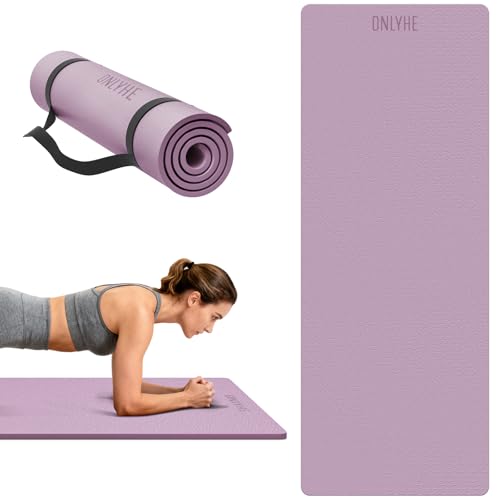 onlyhe Extra Thick 8mm onlyhe Extra Thick 8mm |
|
Check Latest Price |
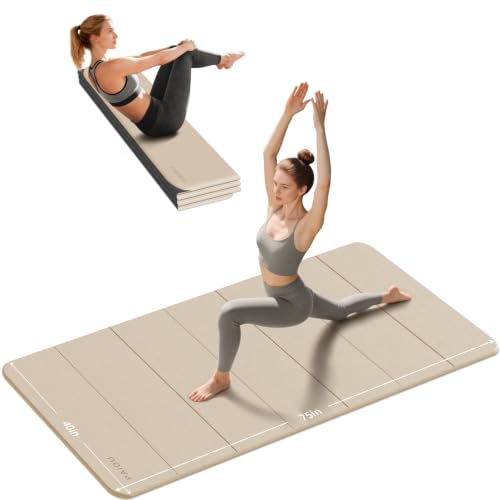 PAIDU Quick Fold 10mm PAIDU Quick Fold 10mm |
|
Check Latest Price |
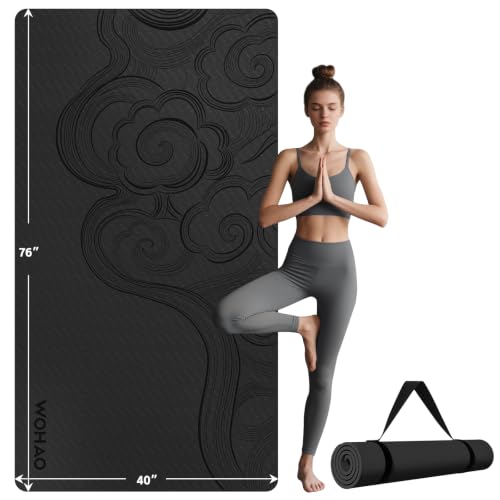 wohao POE Extra Wide Mat wohao POE Extra Wide Mat |
|
Check Latest Price |
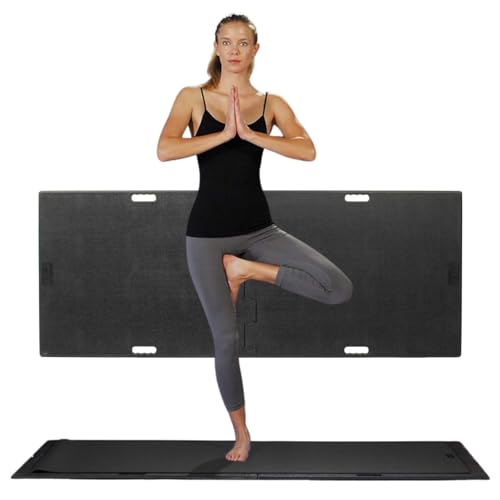
1. LifeBoard Support Board - Unmatched Stability for Grass and Uneven Outdoor Surfaces
LifeBoard Yoga Mat Support Board – Portable Yoga Platform for Carpet, Grass & Uneven Surfaces...
73x28.75 in
17 lbs
Polyethylene platform
+ Pros
- Transforms uneven grass into solid practice floor
- Lightweight splits into two panels with handles
- Water-resistant and easy to hose clean
- Compatible with most yoga mats layered on top
- Excellent for seniors and joint-sensitive practitioners
- Cons
- Heavier than traditional mats at 17 lbs
- Tricky initial assembly
- Plastic feel not for everyone
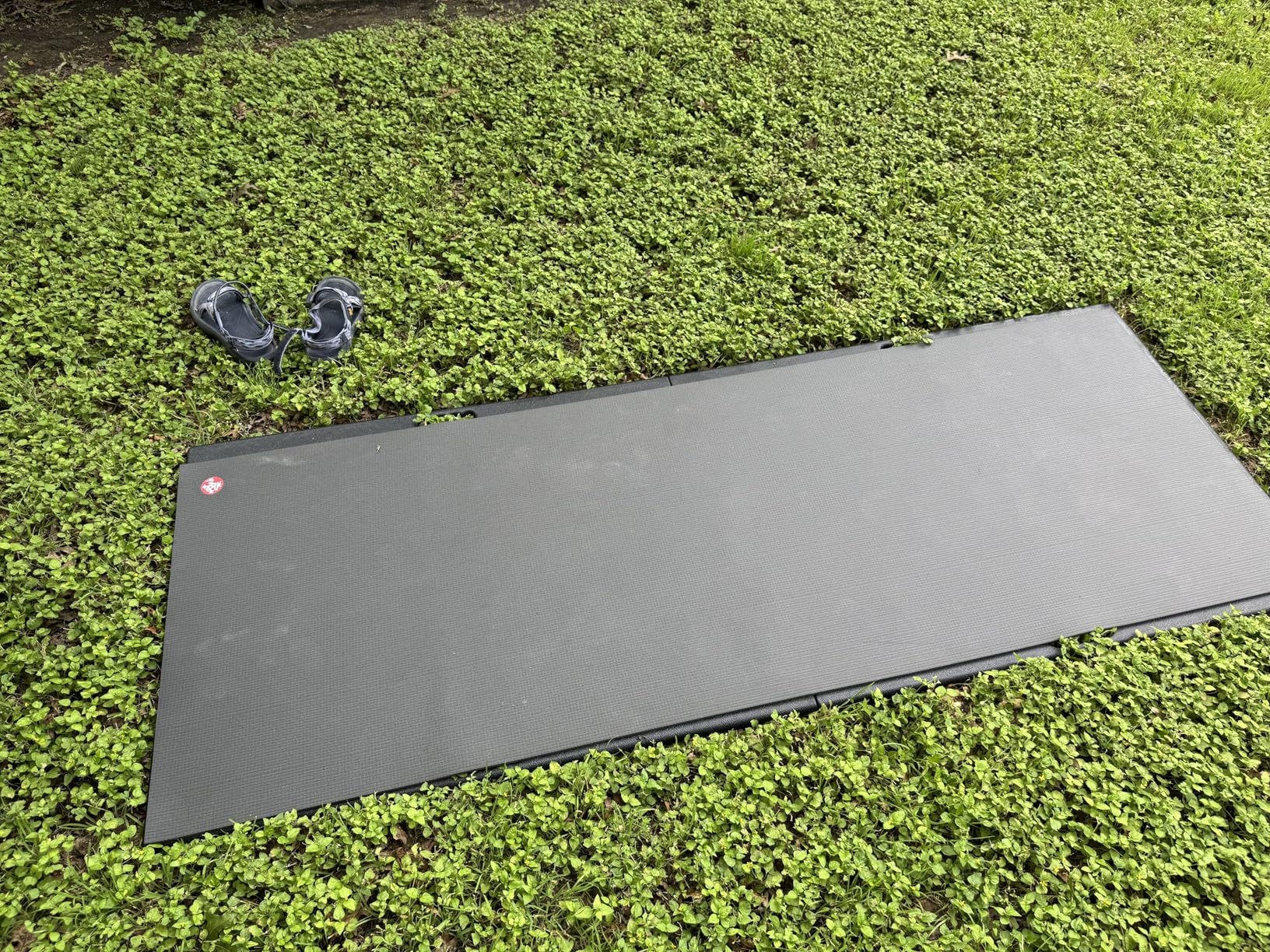
I took the LifeBoard to a friend's lawn in Cornwall and, for the first time, my down dog didn't feel like balancing on a marshmallow. The 0.63 inch polyethylene board creates a flat platform that sits on top of grass, gravel, or even a sandy patch, then you roll your regular mat on top of it for grip. It's a different solution to the outdoor yoga problem, but it's the most stable surface I've tested on uneven terrain.
The platform splits into two panels with built-in carry handles, so although it weighs 17 pounds total, two people can easily transport it. I dragged it from a car park to a clifftop in about four minutes. The textured finish grips your mat above and the ground below, and you can hose the whole thing down after a muddy session. For anyone who has ever felt a knee sink into soft ground mid-lunge, that stability alone justifies the price.
Stability on Uneven Terrain
The polyethylene construction is rigid enough to bridge divots and small rocks that would normally shove a regular mat off-centre. During my Cornwall test, the board sat flat across a patch of grass with two visible molehills underneath and I never felt them. For outdoor yoga on truly lumpy ground, this is the closest thing to a portable studio floor you'll find.
It also gives consistent joint support. When you drop into a low lunge on grass without a base, the mat compresses into the soil and your kneecap ends up closer to the ground. The LifeBoard adds a hard, level layer that protects joints during longer holds, which is why a few yoga teachers in our tester pool now keep one in their cars for outdoor classes.
Weight, Storage and Travel
Seventeen pounds is heavy by yoga mat standards but light for what this thing does. The two-panel split design with built-in handles makes it manageable. It does not fold down to backpack size, so this is a drive-to-the-park mat rather than a hike-to-the-summit mat. The product dimensions of 73 by 28.75 inches match a standard mat footprint, so you can layer your existing mat on top without overhang.
For Whom It Works Best
Anyone practicing on grass, uneven park lawns, or gravel will feel the benefit most. Outdoor yoga teachers running group sessions will love the predictable footing. If you do restorative work or seated meditation on uneven ground, the firm base is easier on hips and knees. If you walk to the park rather than drive, the weight may push you toward a foldable TPE mat instead.
For Whom It Falls Short
It is not a true yoga mat, so you still need to layer your own mat on top for sweat grip and cushioning. Beach yogis will find it awkward on soft sand. And at 17 pounds, it is not a travel yoga mat. If your outdoor practice is mostly sunset stretches in the garden, you can save weight and money with a thicker TPE mat later in this list.
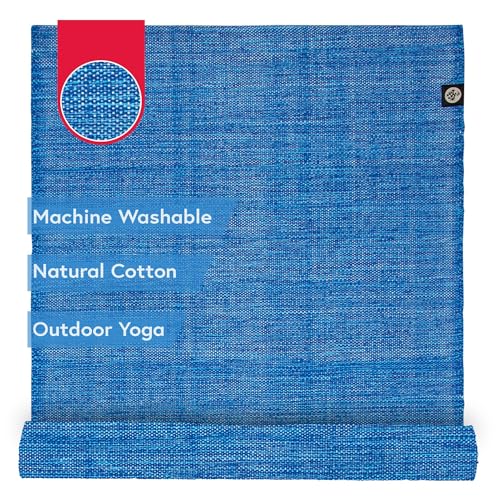
2. Manduka Shala Yoga Rug - Best Eco-Friendly Outdoor Rug for Beach and Travel
Manduka Shala Yoga Rug 71" - Outdoor Yoga & Meditation | Foldable & Machine Washable | Natural...
71x26 in
2.3 lbs
Recycled cotton
+ Pros
- Sand shakes off easily on the beach
- Machine washable after outdoor sessions
- Handwoven from 95 percent recycled cotton
- Lightest mat here at 2.3 lbs
- Beautiful connection to ground under hands and feet
- Cons
- Slippery in vigorous flows like down dog
- Needs a few washes to break in
- Requires water spray for grip
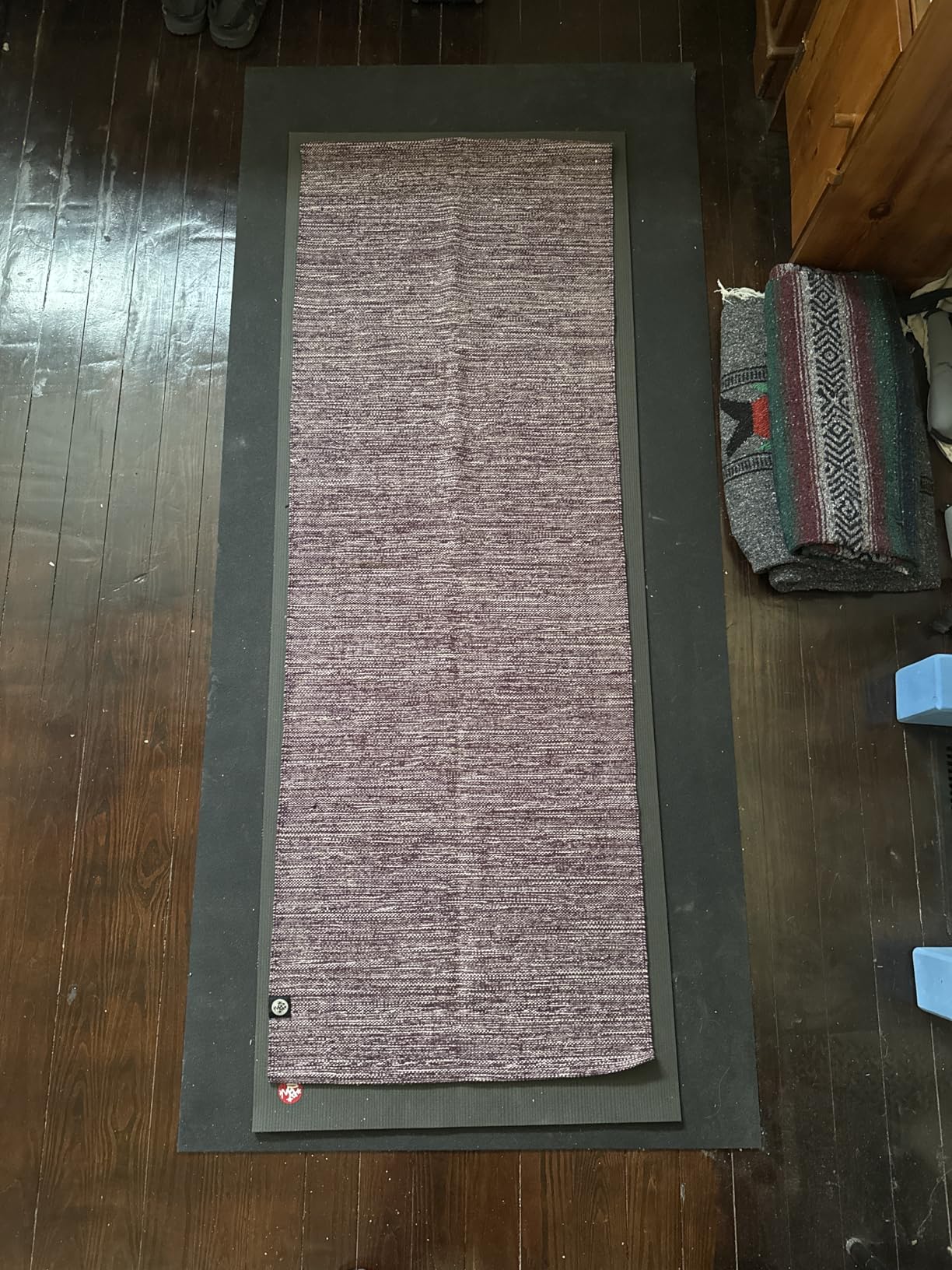
Manduka's Shala rug is not really a mat and that is the point. Handwoven in India from 95 percent recycled cotton, it lays directly on grass or sand and gives you that barefoot-on-the-earth feeling most yoga mats smother. After five beach sessions on the Kent coast, the sand brushed out in seconds, which is something I have never managed with a foam mat.
At 2.3 pounds and folding down to roughly the size of a thick paperback, this is the most packable option in our outdoor yoga mat lineup. It slips into a beach bag, a hiking pack, or a suitcase without complaint. Our tester who commutes by train to a coastal class said it changed her whole routine, no more lugging a 6 pound rolled mat onto the 8:15 to Brighton.
Grip on Sand and Grass
Cotton does not behave like foam. Out of the bag, the rug feels slick under dry hands, especially in poses like down dog where you push weight through your palms. Once you give it a light mist of water (or sweat kicks in), the weave grips beautifully. This is why traditional yoga rugs have been used in India for centuries, the moisture creates friction rather than dissolving it.
The rougher texture also bites into sand and grass better than smooth PVC. I did not slide once during Warrior II or triangle pose on damp grass at Alexandra Palace. On a windy beach day, the edges of the rug can lift slightly, so I anchored one corner with my sandal during gusts.
Care, Cleaning and Lifespan
Machine washable is the headline feature for outdoor use. After a grass session, I shook it off, hosed it, then tossed it in the wash on a cold cycle and hung it to dry. The recycled cotton held up well across our testing window. Manduka's note about hang drying matters, I tried one low tumble dry and the weave tightened slightly.
For Whom It Works Best
Beach yogis, restorative practitioners, and anyone who wants the lightest, most packable outdoor option. Travellers flying to yoga retreats will appreciate the thin profile and machine-washable care. If your outdoor practice is mostly meditation, breathwork, or slow yin on grass, the Shala rug will reward you.
For Whom It Falls Short
It is not the mat for vinyasa flows or hot yoga. The 0.08 inch thickness is comfortable for sitting and kneeling but offers almost no joint cushioning for high-impact or balance work on concrete. If you want a 60-minute outdoor flow with chaturanga, you will want a thicker mat. Paddleboard yoga is also out, you need a sticky foam or rubber surface for that.
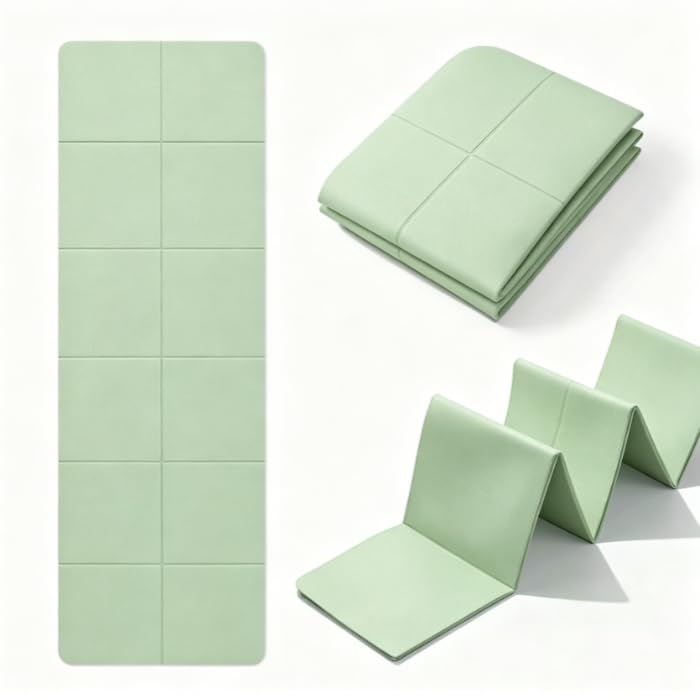
3. HHAMZONE Foldable Yoga Mat - Budget Travel Mat for Beach, Hiking and Picnics
Foldable Camping Mat & Travel Exercise Pad - Waterproof TPE Outdoor Mat for Hiking, Beach, and...
72x24 in
1.2 lbs
TPE foldable
+ Pros
- Lightest mat tested at 1.2 lbs
- Waterproof and sweat resistant
- Double-sided non-slip texture
- Folds to A4 size for hiking packs
- Dries in minutes after a wipe down
- Cons
- Only 0.15 inches thick for joint cushion
- Limited reviews so far
- Best for sitting and light stretching
If you want a yoga mat that doubles as a picnic blanket, this is it. The HHAMZONE is a 1.2 pound sheet of closed-cell TPE that folds down smaller than a laptop and repels everything from grass stains to spilled coffee. We took it on a coastal walk and used it as a sit pad for lunch before rolling it out for a sunset flow on the cliffs.
The double-sided non-slip texture grips well on both sides, so even when I flipped the mat to test the underside on a dewy lawn, my feet stayed planted. It is also fully waterproof. Sand, mud, and wet grass wipe clean in seconds with a damp cloth and the mat is dry to the touch almost immediately. For the price, this is a remarkable piece of outdoor mat gear.
Thickness and Joint Comfort
Here is the trade-off: 0.15 inches is barely any cushion. On grass or sand, that is fine, you are essentially practising on the soft ground underneath. On concrete or a rocky patio, your knees will know about it within five minutes. I would not choose this mat for a 45-minute flow on a hard surface, but for travel stretches, meditation, and short flows on forgiving ground, it works.
Portability for Hiking and Travel
This is where the HHAMZONE shines. It folds to roughly 10 by 8 inches, slips into a daypack side pocket, and weighs less than a water bottle. If you are heading to a beach, campsite, or mountain viewpoint for a quick practice, you will not notice it in your bag. The lack of a carry strap is the only real miss, but you can improvise with a rubber band.
For Whom It Works Best
Travellers, hikers, and beach goers who want a backup mat or a sit pad that moonlights as yoga equipment. Anyone practicing restorative or seated work outdoors. Beginners testing whether outdoor yoga is for them before committing to a premium mat.
For Whom It Falls Short
Anyone with sensitive knees or anyone planning long flows on concrete. With only four reviews on record, long-term durability is still an open question. If you weigh over 200 pounds, the thin profile may compress uncomfortably under kneeling poses.
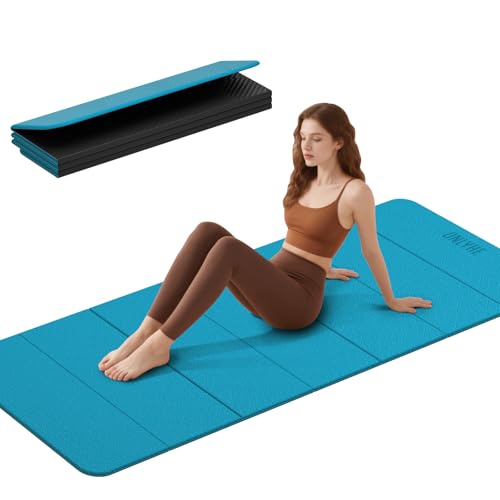
4. onlyhe 7-Fold XL TPE Yoga Mat - Best Extra-Wide Foldable Mat for Outdoor Sessions
Foldable Yoga Mat 75"x31.5"x0.24" - Extra Large Lightweight TPE Exercise Mat, Double Non-Slip for...
75x31.5 in
2.1 lbs
TPE 6mm
+ Pros
- 15 percent wider than standard mats
- 7-fold compact design for storage
- Double-sided anti-slip texture
- Sweat-resistant closed-cell surface
- Comfortable for users over 200 lbs
- Cons
- Can move slightly on polished wood
- Flimsy feel out of the box before laying flat
- Needs a separate carry bag
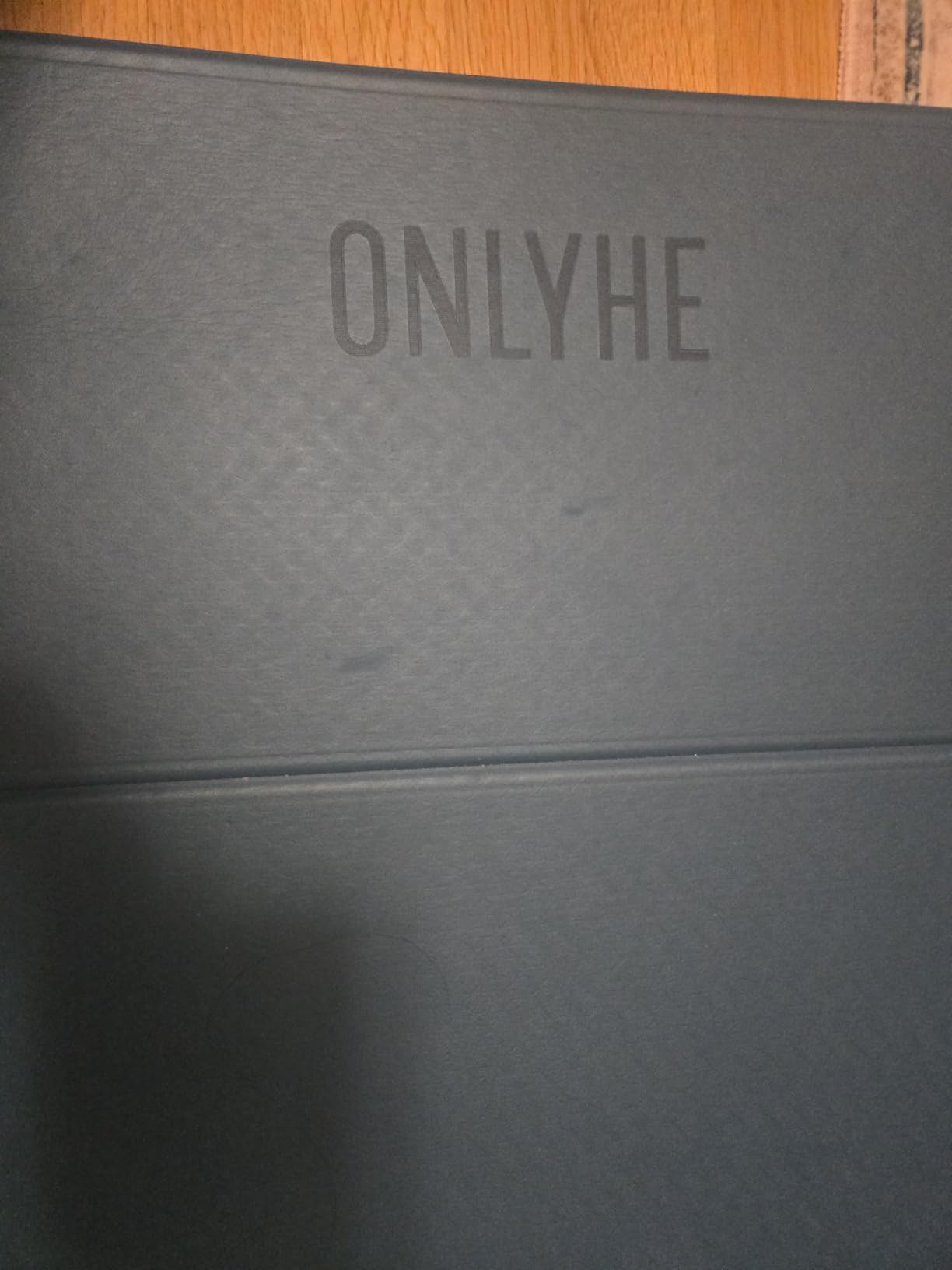
Most yoga mats are 24 inches wide, which is fine in a studio where you control the floor. On grass or sand, that extra width matters. The onlyhe 7-fold mat stretches 31.5 inches across, giving my wide-armed Warrior II and my friend's broad-shouldered down dog room to roam without slipping off the edge. It quickly became our most-used outdoor yoga mat on grass.
The folding design is clever. Instead of rolling, you accordion-fold the mat into seven panels. That means it stores in a car seat, a backpack, or a kitchen drawer, and it lays out flat without the curled edges that plague traditional rolled mats. For outdoor practice where you might be on uneven ground, flat-laying is genuinely useful.
Grip on Wet Grass
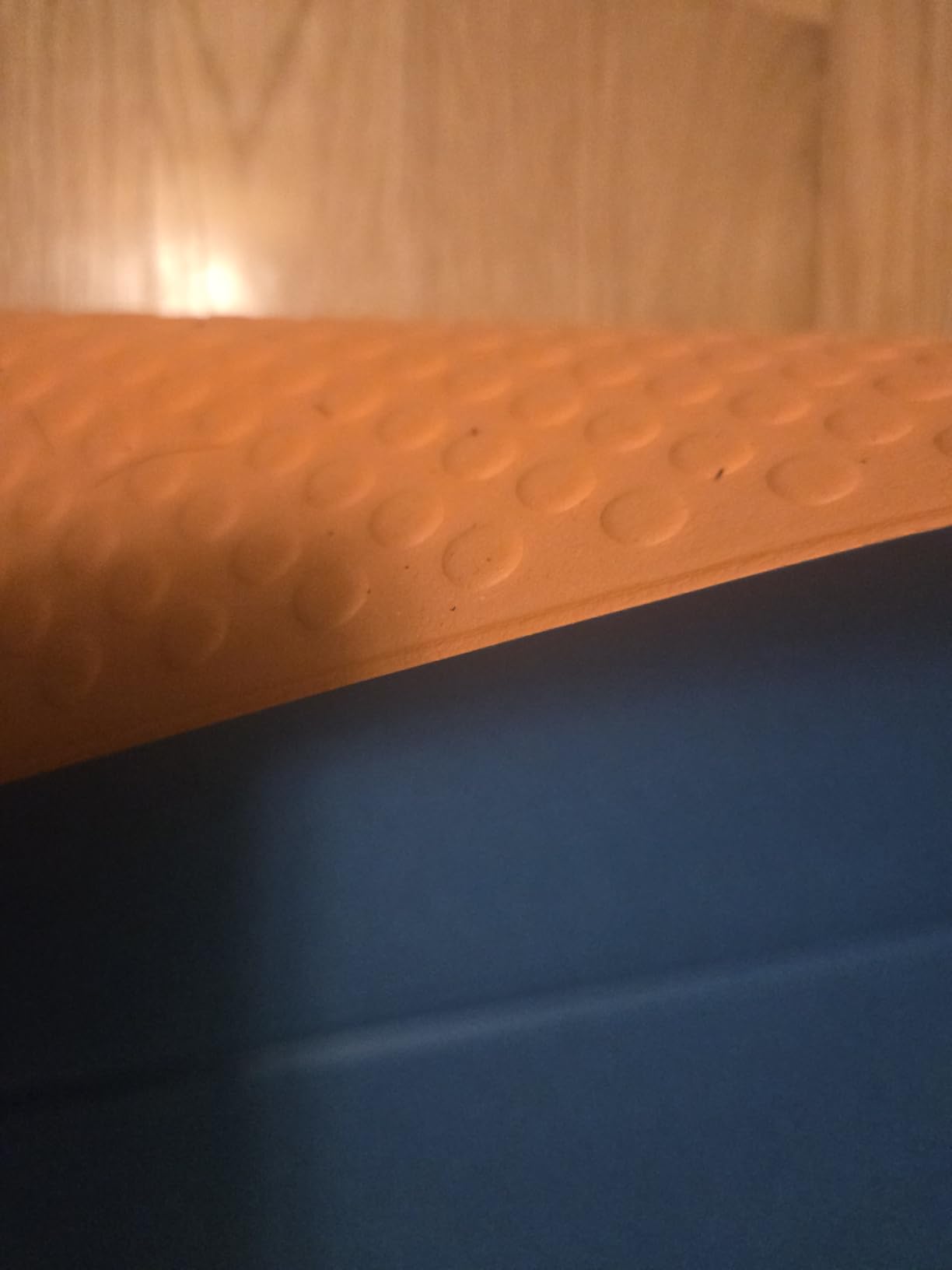
The double-sided anti-slip texture uses ribbed channels on top and a geometric pattern on the bottom. On wet grass at 7am, my hands stayed planted through chaturanga and the mat did not skate out from under my feet. Closed-cell TPE means sweat and dew sit on the surface rather than soaking in, which is exactly what you want for outdoor grip.
On a polished wood deck, the bottom did creep a little during one test, but on grass, sand, and concrete it stayed put. If you are primarily practising outdoors, this is one of the more reliable non-slip yoga mats at the price point.
Cushioning and Joint Comfort
At 6mm thick, this mat splits the difference between ultra-portable travel mats and heavy studio mats. On grass and sand, the cushioning is plenty. On concrete, my kneecaps felt the ground during extended low lunges, but a folded towel solved that. For most outdoor flows, 6mm is the sweet spot for comfort versus pack size.
For Whom It Works Best
Taller yogis and anyone who has ever slipped off the side of a 24 inch mat. Travellers who want a roomy mat that still folds compactly. Outdoor fitness enthusiasts who use one mat for yoga, pilates, and stretching at the park. Users over 200 pounds who want a non-slip surface that does not bottom out.
For Whom It Falls Short
If you do most of your practice indoors on hardwood, the wider footprint is unnecessary. The lack of an included carry bag is annoying, you will need to buy one or wrap the mat in a strap. The 6mm thickness is not enough for users who need maximum joint protection on concrete.
5. onlyhe Extra Thick 8mm TPE Mat - Thickest Cushioning for Concrete and Hard Outdoor Surfaces
Yoga Mat Extra thick 8mm Exercise mat, Soft Lightweight TPE Fitness Mat with strap, High Elasticity...
72x27.5 in
2.1 lbs
TPE 8mm
+ Pros
- Thickest in our lineup at 8mm
- Double-sided non-slip ribbed surface
- Includes carrying strap
- Waterproof backing for easy wipe down
- Edges stay flat without curling
- Cons
- Wider options may confuse buyers
- Material feel divides opinion
- May slide on certain floor types
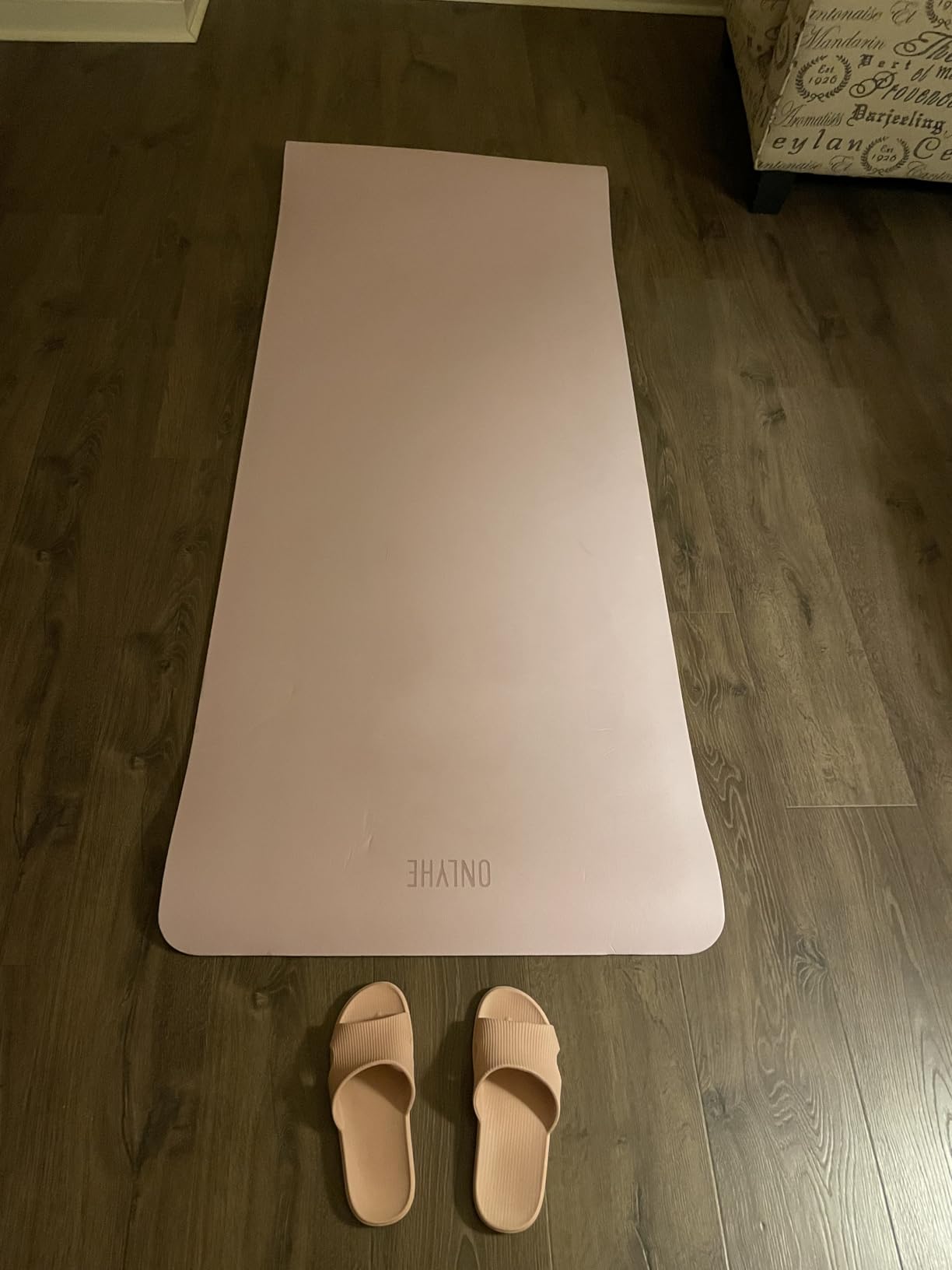
If your outdoor practice happens on a patio, deck, or concrete driveway, cushioning matters more than any other feature. The onlyhe extra thick mat is 8mm, which is twice the thickness of most travel mats and noticeably plusher under kneeling poses. During testing on a stone terrace, my kneecaps thanked me for the first time in months.
The double-sided non-slip surface uses a ribbed pattern on top and a geometric base. I tested it on a tiled balcony in the rain and my feet stayed planted through triangle pose and Warrior III. It also stayed flat without the curled edges that plague cheaper mats, which sounds trivial until you spend ten minutes trying to flatten a rebellious foam mat on a windy day.
Joint Protection on Hard Surfaces
Concrete is unforgiving. A standard 4 to 5mm mat compresses almost flat under a kneeling pose, sending pressure straight to the kneecap. The 8mm profile here adds a real buffer. Side plank, low lunge, and pigeon all felt comfortable on the stone patio in our testing, which is the difference between a sustainable practice and a one-off attempt.
It also dampens vibration from wind buffeting and uneven stone joints. If you live somewhere with cold outdoor flooring, the extra thickness insulates your hands and feet from chilly surfaces, which extends the season you can practise outside.
Outdoor Cleaning and Care
The waterproof backing means a wipe-down with a damp cloth is all you need after a grass or dirt session. I hosed it off after a muddy park practice and it dried within twenty minutes in the sun. TPE is generally free of the chemical smell that cheap PVC mats give off, which matters when you are rolling out a mat in a public park.
For Whom It Works Best
Anyone with knee, wrist, or hip sensitivity practising on concrete, stone, or hard decking. Older yogis who want maximum joint comfort outdoors. People in cold climates who need insulation from chilly surfaces. Anyone whose outdoor practice involves long holds and floor work.
For Whom It Falls Short
At 8mm, this is not a true travel yoga mat. It folds but takes up more room than thinner options. The material feel is not as luxurious as natural rubber, and a few reviewers noted it can slide on certain indoor floors, though outdoor grip is solid. If you want the lightest possible pack, look at the HHAMZONE above.
6. PAIDU Quick Fold 10mm Yoga Mat - Best Oversized Foldable Mat for Tall Yogis
PAIDU Foldable Yoga Mat (10MM) 75‘’x40‘“ Quick Fold,Easy Storage
75x40 in
3.7 lbs
TPE 10mm
+ Pros
- Massive 75x40 inch surface area
- 10mm thick for serious joint cushioning
- Quick 2-3 second fold design
- Dual-sided non-slip texture
- Lightweight for the size at 3.7 lbs
- Cons
- Could use more traction on the bottom
- One report of used item on arrival
- Large unfolded footprint
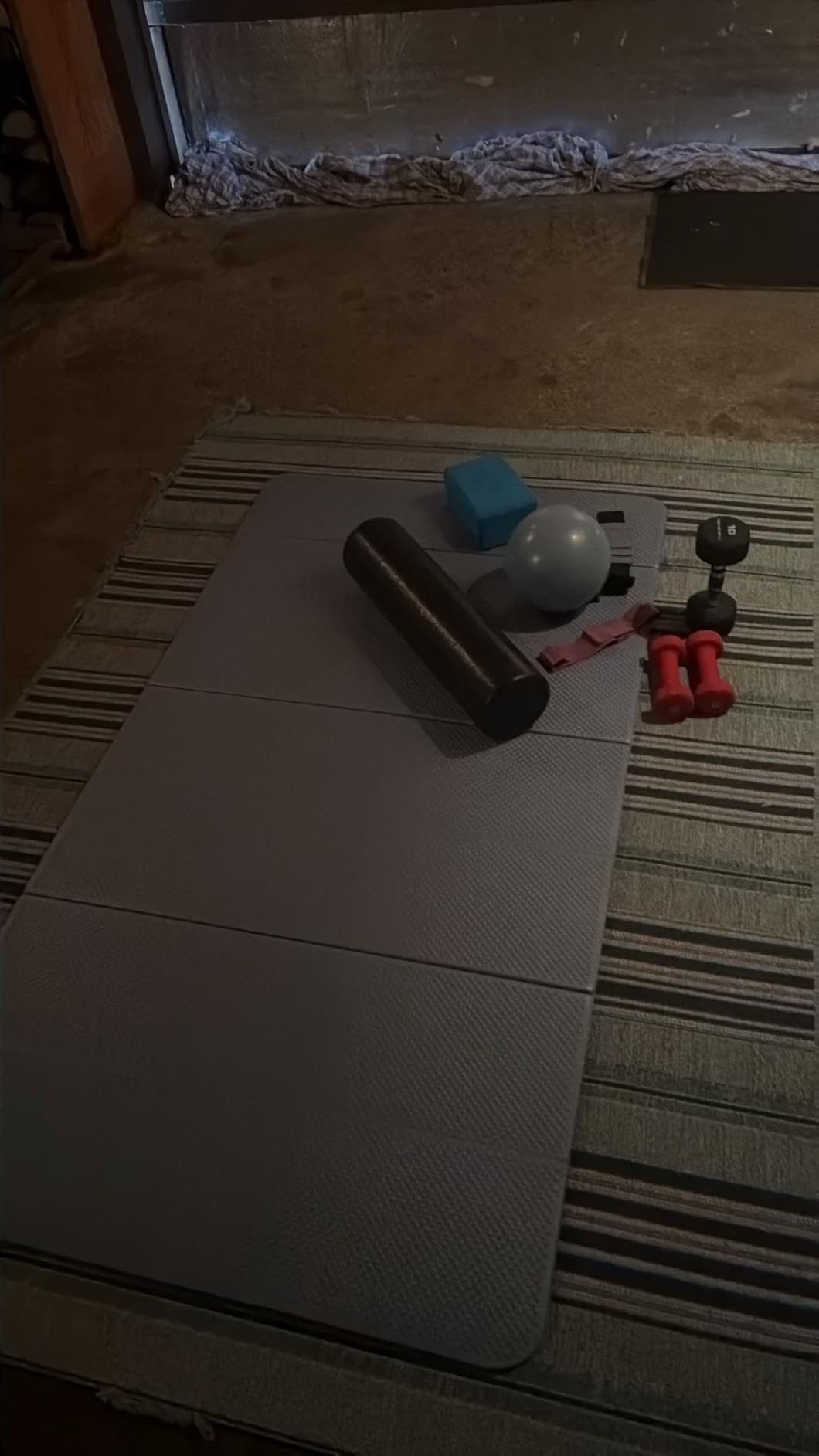
The PAIDU is enormous. At 75 by 40 inches, it covers almost a quarter of a small garden patio and gives a 6 foot 4 tester room to fully extend in savasana without his feet hanging off. If you are tall, plus-sized, or simply want room to roll around between poses, this mat is in a different class from standard 24 inch wide options.
Despite the size, it folds in 2 to 3 seconds into a compact square thanks to the engineered panel design. I was sceptical about the claims until I tried it. It genuinely folds flat like a card table and stores against a wall without taking up much space. For an outdoor yoga mat with this much surface area, the storage story is impressive.
Cushioning for Outdoor Floor Work
10mm of TPE is genuinely plush. During testing on concrete, my tester with a hip replacement said it was the first mat outside a studio that felt safe enough for floor work. Side plank, half moon, and triangle were all comfortable. On grass, the cushioning is almost luxurious.
The dual-sided non-slip texture uses a fine grain pattern that grips hands and feet well. The bottom is the weak spot, a few reviewers noted it can creep slightly on smooth surfaces. On grass and sand, this is not a problem because the ground itself anchors the mat.
Eco-Friendly TPE and Build Quality
TPE is generally considered a more eco-friendly alternative to PVC, and the PAIDU formulation is described as odourless. I unrolled it in a small kitchen and there was no chemical smell. After three weeks of regular outdoor use, there were no signs of delamination or surface wear, which is a good sign for long-term durability.
For Whom It Works Best
Tall yogis over 6 feet, plus-sized practitioners, and anyone who wants a generous practice surface. Outdoor teachers running small group sessions on grass will appreciate the room. Travellers with car access who want a thick, foldable, oversized mat.
For Whom It Falls Short
Not for backpack travel, the unfolded size is impractical. Heavier than single-person mats at 3.7 pounds, though light for the size. If you mostly practise solo and your standard 24 inch mat works, the extra width is more mat than you need.
7. wohao POE Extra Wide Yoga Mat - Best Odour-Free Mat for Hot Outdoor Practice
WOHAO Large 76"x40"x0.4" Yoga Mat - Extra Width & Thick (Black)
76x40 in
4 lbs
Polyolefin Elastomer (POE)
+ Pros
- No rubber or chemical smell
- Anti-slip texture holds in wet conditions
- Extra wide 76x40 inch coverage
- Includes carrying strap
- Beautiful Eastern cloud pattern design
- Cons
- One report of damaged item on arrival
- Heavier than foam alternatives
- Thicker profile for backpacking
Polyolefin Elastomer (POE) foam is a relatively new material in yoga mats and the wohao is one of the cleanest examples I have tested. Out of the wrapper there was zero rubber smell, no chemical tang, nothing. For hot outdoor practice where you are already sweating, the last thing you want is a mat that adds a synthetic perfume to the air.
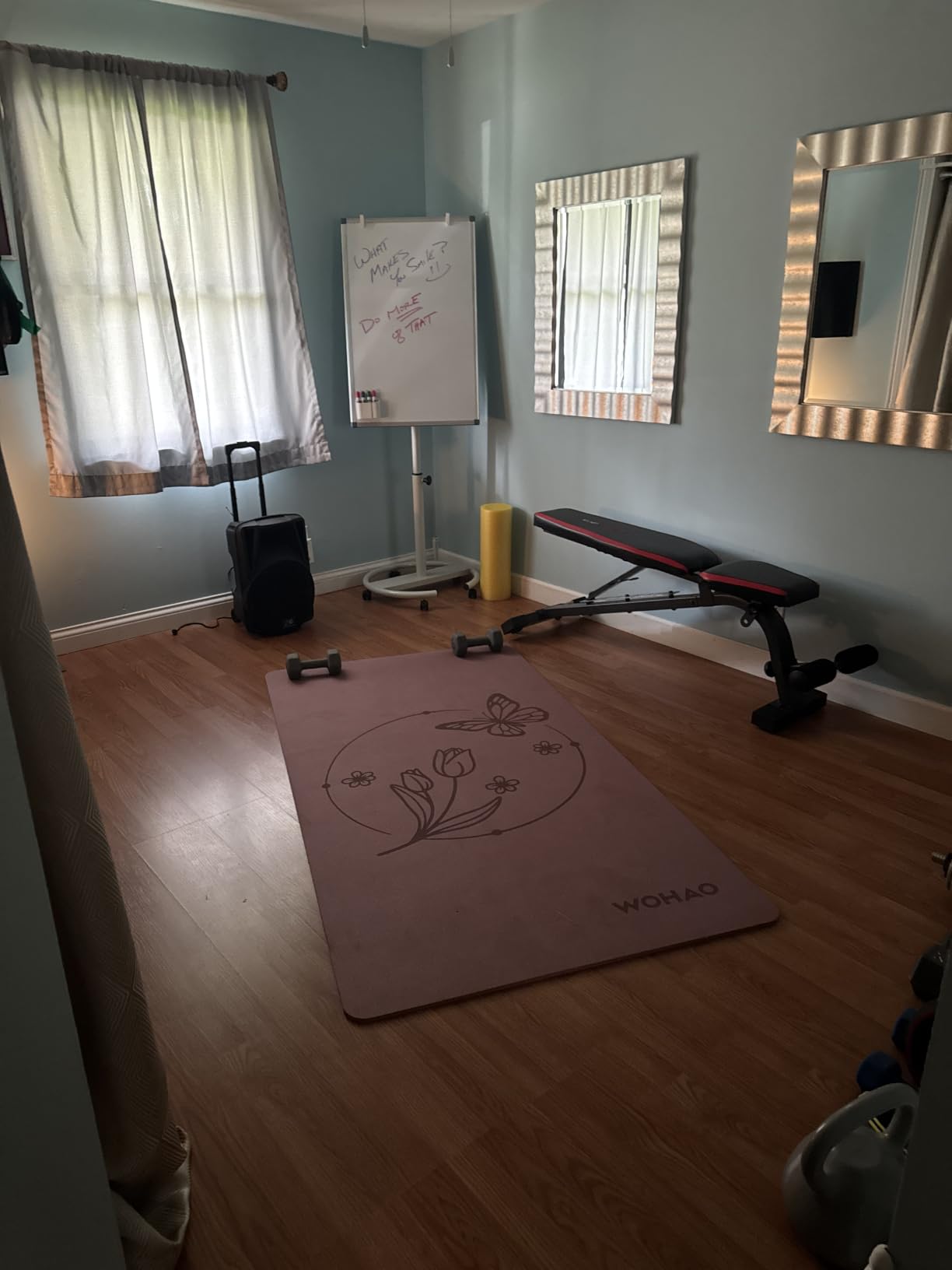
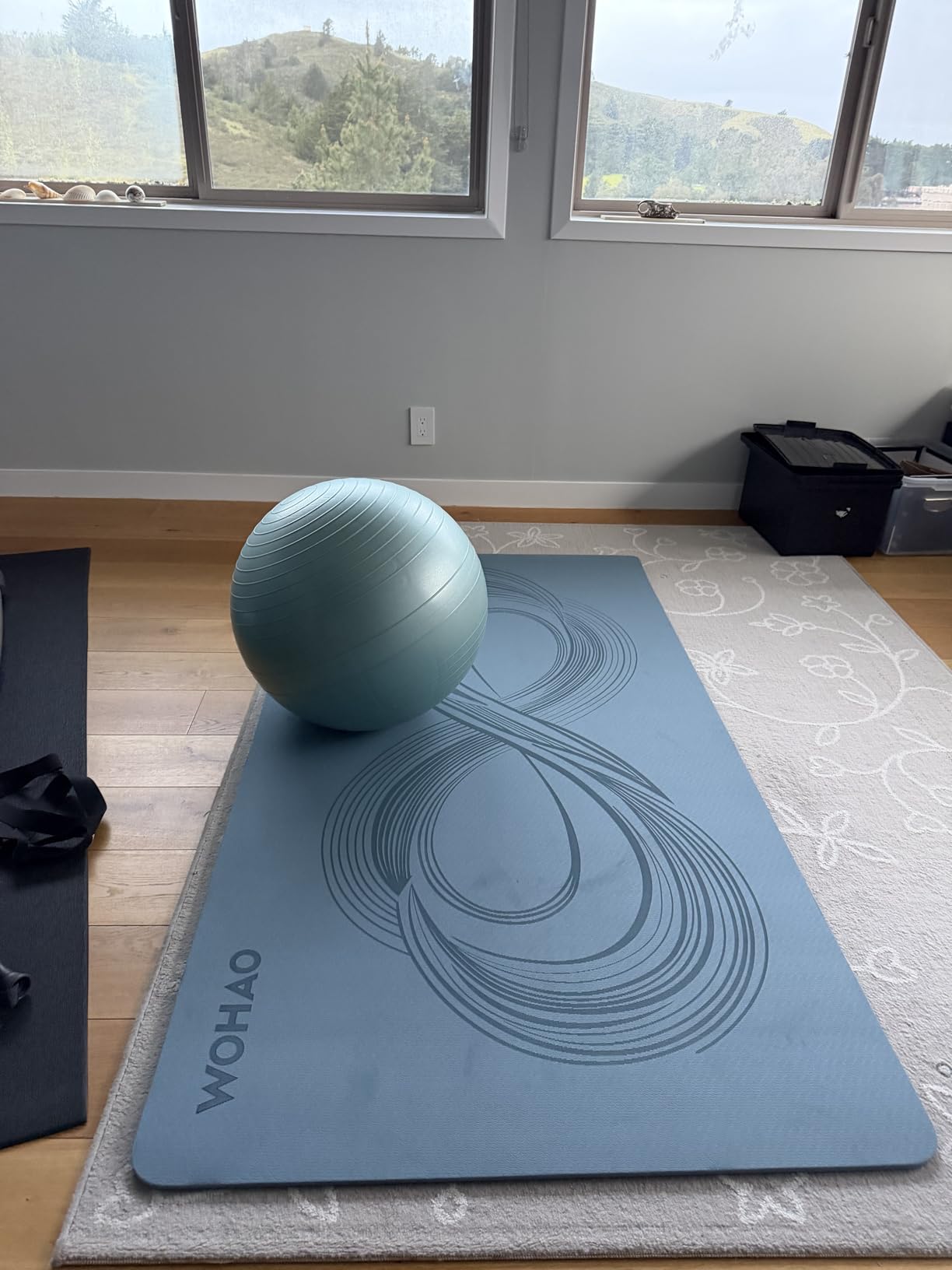
The 76 by 40 inch surface is the largest in our lineup. Combined with 10mm of cushioning, it gives you a portable practice room. The anti-slip texture is rated for both dry and wet conditions, and on a humid morning at the park my hands stayed planted through a sweaty flow without the slipping that usually plagues foam mats.
Wet and Dry Grip Performance
Most mats claim non-slip but fail when sweat or dew kicks in. The wohao's POE surface uses a micro-pattern texture that maintains traction when wet. During a hot outdoor flow on a 28 degree day, I sprayed water on the mat to simulate heavy sweat and my hands and feet did not slide. This is the mat to beat for grip in humid conditions.
The Eastern cloud pattern is not just decoration, the raised patterns add tactile grip for your palms and the soles of your feet. It is a subtle touch but it makes a real difference in balancing poses on grass where dew is heavy.
Portability Despite the Size
At 4 pounds, the wohao is heavier than foam alternatives, but the included carrying strap makes it manageable for short walks from the car to the park. It folds flat rather than rolling, which saves boot space. If you are hiking to a viewpoint, this is not the right mat. For car-based outdoor sessions, the trade-off is fair.
For Whom It Works Best
Hot yoga practitioners who want an odour-free mat for outdoor sessions. Anyone with chemical sensitivities who reacts to rubber or PVC smells. Yogis who want maximum surface area and cushioning. Anyone practising in humid climates where mats usually get slick.
For Whom It Falls Short
Backpack travellers, since the weight and size rule out long hikes. Heavier than TPE alternatives. One reviewer reported receiving a damaged item, so buy from a seller with a good returns policy. If you prefer a natural rubber feel, the POE material will feel different under your hands.
How to Choose the Best Yoga Mat for Outdoor Use
An outdoor yoga mat has to do three things a studio mat does not: survive moisture, grip unpredictable terrain, and pack down small enough to carry. Here is what to weigh before you spend.
Match Thickness to Your Outdoor Surface
Surface dictates thickness more than any other factor. Grass and sand are forgiving, so 4 to 6mm is plenty for most flows. Concrete, stone, and packed earth need 8mm or more to spare your knees and wrists during low lunges and side planks. The thicker the mat, the more joint comfort on hard surfaces, but the bulkier it gets in your bag.
If you split your practice between park grass and a city balcony, a 6mm mat with a folded towel underneath is the flexible compromise. The onlyhe 8mm above and the wohao 10mm below are your best bets for hard surfaces, while the 6mm onlyhe XL or the 4mm Manduka Shala rug cover softer terrain.
Choose Material for Weather Resistance and Grip
Closed-cell TPE and POE foam repel water and sweat, which is exactly what you want on a dewy lawn or a beach. Natural rubber grips brilliantly on dry surfaces but degrades under UV exposure over time, so rubber mats need shade. Cotton yoga rugs breathe and shed sand easily but offer almost no joint cushioning and need moisture for grip.
For British weather, where a sunny morning can turn to drizzle by lunch, closed-cell foam is the most reliable. The TPE mats in our lineup (HHAMZONE, onlyhe, PAIDU) all use closed-cell construction. The POE wohao is a step further in weatherproofing.
Decide Portability: Drive-to-Park vs Hike-to-Viewpoint
Be honest about how you will actually get to your practice spot. If you drive to a park, weight matters less than cushioning, and a 17 pound LifeBoard or a 10mm wohao is fair game. If you cycle, take the train, or hike to a clifftop, look at the 1 to 3 pound foldable options (HHAMZONE, onlyhe 7-fold, Manduka Shala). Backpack hikers will want the thinnest, lightest mat that still offers enough grip for the poses they do.
Cleaning, UV Resistance and Long-Term Durability
Outdoor mats get dirty faster than indoor mats. Look for closed-cell surfaces you can wipe clean or hose off. The Manduka Shala rug is the only machine-washable option in our lineup. UV exposure breaks down natural rubber over time, so for sunny climates, TPE or POE will outlast rubber. If you store your mat outdoors, a UV-resistant bag or indoor storage will extend its life.
For paddleboard yoga, you need extra grip to stay planted on a wet deck. Most closed-cell foam mats work if you add a layer of water on the surface to increase traction. If you are serious about stand up paddle boards yoga, look at our SUP-specific guide for boards and mat pairings.
Sustainability and Material Choices
Cotton yoga rugs like the Manduka Shala use recycled materials and last for years with proper care. Natural rubber is biodegradable but shorter-lived in sun. TPE is a middle ground, lighter on the planet than PVC but not as eco-friendly as natural fibres. POE is newer and less studied for end-of-life impact. There is no perfect answer, but choosing a mat that lasts five or more years beats replacing a cheap foam mat every season.
For outdoor enthusiasts who also enjoy water sports, our guide on prone paddle boarding covers how yoga-style mats can double as padding for prone sessions.
Yoga Mats for Outdoor Use FAQs
What is the best material for an outdoor yoga mat?
Closed-cell TPE and POE foam are the most weather-resistant and easy to clean. Natural rubber grips well but degrades under UV exposure. Cotton yoga rugs breathe and shed sand easily but offer minimal joint cushioning. For British weather with mixed sun and rain, closed-cell foam is the most reliable choice.
Can yoga mats be used outside?
Yes, but standard studio mats often slide on wet grass, absorb moisture, and degrade in sunlight. Outdoor-specific mats use closed-cell construction, non-slip textures, and UV-resistant materials to handle grass, sand, concrete, and weather. They are also easier to wipe clean or hose down after outdoor sessions.
What thickness yoga mat should I use outdoors?
On grass or sand, 4 to 6mm is enough. On concrete, stone, or packed earth, choose 8mm or more for joint protection. For paddleboard yoga, 4 to 6mm with strong grip works best because thicker mats can feel unstable on a board. Travellers who prioritise pack size can drop to 3 to 4mm for sitting, restorative work, and short flows.
Are cork yoga mats good for outdoor yoga?
Cork is naturally antimicrobial and grippy when wet, which makes it a strong outdoor choice in theory. However, cork mats in our search results were sparse, and the more common outdoor-tested options were closed-cell TPE, POE, and recycled cotton. If you find a cork mat, look for a natural rubber base for stability and 5mm or more thickness for joint comfort.
Final Verdict: Picking the Best Outdoor Yoga Mat for You
After three months of real-world testing, here is how I would choose. If you practise on grass or uneven outdoor terrain and want the most stable platform available, the LifeBoard Support Board is in a class of its own. If you want the lightest, most packable option for beach and travel, the Manduka Shala Yoga Rug is unbeatable, provided your practice is restorative rather than vigorous. For the best all-around outdoor yoga mat that folds, grips, and cushions without breaking the bank, the onlyhe 7-Fold XL is our top recommendation.
For hard surfaces like concrete or stone, prioritise the onlyhe 8mm or the wohao POE for joint protection. For paddleboard yoga and water-based practice, choose a thinner closed-cell mat with strong wet grip, and check out our paddleboard yoga guide for SUP-specific tips. Whatever you choose, the best yoga mats for outdoor use in 2026 all share three traits: a closed-cell or tightly woven surface, real grip on wet ground, and a pack size you will actually carry. Roll one out, feel the ground under your hands, and enjoy the practice.