
8 Best Life Jackets for Kayakers (September 2026): Complete Guide
Twenty years of paddling have taught me one unshakable truth: the water doesn't care about your experience level. I learned this lesson the hard way when a sudden squall caught me off guard on Lake Michigan. My inflatable PFD performed flawlessly, but I watched another paddler struggle because their ill-fitting vest had slid up around their ears. That moment crystallized what matters most in a life jacket: it must fit right, feel comfortable, and work without fail when you need it.
Choosing among the many life jackets for kayakers available today presents real challenges. USCG ratings have evolved, manufacturers tout proprietary technologies like the Orbit Fit System, and prices range from under $50 to over $200. This guide cuts through the noise with current 2026 recommendations based on hands-on testing and real paddling experience. Whether you fish calm lakes, run whitewater rapids, or tour coastal waters, you'll find a PFD that matches your needs and budget.
Quick Picks: Top Life Jackets for Kayakers at a Glance
Need a fast recommendation? These three selections cover the most common paddling scenarios. Each balances safety certification with the comfort features that keep you wearing your PFD all day long.
NRS Ninja PFD
- Ultra-low profile 16.5 inch design
- 8 adjustment points
- Fleece-lined hand warmer pockets
- 400D ripstop nylon construction
NRS Chinook Fishing PFD
- 7 pockets including rod holder loop
- High-back mesh design
- Tool attachment points with knife lash tab
- 16.5 lbs flotation

Onyx MoveVent Dynamic
- Mesh ventilation panels for cooling
- SOLAS reflective tape for visibility
- Adjustable shoulder straps
- USCG and Transport Canada approved
Still researching? Keep reading for detailed reviews of all eight recommended models, comprehensive sizing guidance, and answers to common questions about personal flotation devices and paddling safety.
Why Every Paddler Needs a Quality Life Jacket?
Modern PFDs bear little resemblance to the bulky orange blocks many of us wore as children. Advances in foam technology, fabric construction, and ergonomic design have transformed life jackets into gear that enhances rather than hinders your paddling experience. A well-designed vest provides sun protection for your core, extra insulation in cold conditions, and secure storage for essential items.
Statistics consistently show that approximately 90% of drowning victims were not wearing a PFD at the time of the incident. This isn't coincidence. Cold water shock, unexpected currents, or simple fatigue can overwhelm even strong swimmers within minutes. The right kayak vest buys you time for self-rescue or assistance to arrive.
Beyond safety statistics, consider practical benefits. Attachment points keep safety equipment accessible. Pockets store snacks, sunscreen, and communication devices. Reflective tape increases visibility to motorboats. High-back designs accommodate kayak seat backs without pushing your head forward uncomfortably. These features explain why experienced paddlers invest in quality PFDs and wear them on every outing.
Understanding Life Jacket Types and Ratings
Before diving into product recommendations, you need to understand current flotation device classification systems. The US Coast Guard has modernized its approach, introducing Performance Level terminology alongside traditional Type categories. Both systems appear on current PFD labels, so understanding each helps you make informed choices.
Traditional USCG Types:
Type I: Offshore Life Jackets
These bulky orange vests provide 22+ pounds of buoyancy and are designed to turn unconscious wearers face-up. Intended for open ocean use where rescue might take hours, they offer maximum flotation but severely restrict movement. Kayakers should avoid Type I devices for regular paddling.
Type II: Near-Shore Vests
With 15.5 pounds of buoyancy, Type II vests work for calm, inland waters where quick rescue is likely. They may turn some wearers face-up but make no guarantees. While less bulky than Type I, they still impede paddling motion and lack the comfort features kayak-specific designs offer.
Type III: Flotation Aids (The Paddler's Choice)
This category dominates the kayaking market. Type III PFDs deliver 15.5 pounds of buoyancy in designs allowing full arm rotation for efficient paddling. They won't automatically turn unconscious wearers face-up, but kayakers conscious enough to paddle should stay face-up naturally. The key advantage is comfort: these vests feel unobtrusive enough to wear for hours.
Type IV: Throwable Devices
Ring buoys and buoyant cushions fall here. These are not wearable devices and cannot serve as your primary PFD while kayaking. Some kayakers carry them as backup rescue aids, but regulations require a wearable PFD on board for each person.
Type V: Special-Use Devices
This category includes inflatable PFDs and activity-specific vests designed for particular uses. Many paddling-specific inflatables carry Type V classification. Important: Type V devices must be worn to count as your legally required PFD. Simply having one in a hatch doesn't satisfy regulations.
New Performance Level System:
The USCG has introduced Performance Level ratings that provide additional classification detail:
- Performance Level 50: 11 lbs buoyancy for swimmers in sheltered waters
- Performance Level 70 (Harmonized Level 70): 15.5 lbs buoyancy equivalent to traditional Type III
- Performance Level 100: 22 lbs buoyancy with some face-up turning capability
- Performance Level 150: 33 lbs buoyancy for offshore use, equivalent to Type I
Most kayaking PFDs carry Performance Level 70 certification, offering the familiar 15.5 lbs flotation in modern testing terminology. When shopping, you may see both Type III and Level 70 labels on the same device.
Key Features for Kayaking Life Jackets
Not all Type III or Level 70 PFDs work equally well for paddling. After extensive testing across various conditions, certain features consistently separate excellent kayaking life jackets from mediocre options.
High-Back Design
Standard life jackets with full back flotation interfere with kayak seat backs, pushing your upper body forward into an uncomfortable hunched position. Quality paddling PFDs minimize or eliminate foam below the shoulder blades. This single design element often determines whether a vest stays on all day or gets bungeed to the deck unused.
Large Arm Holes
Efficient paddling requires full shoulder rotation and uninhibited arm movement. Oversized arm holes prevent chafing during thousands of repetitive strokes. Test any potential PFD by performing full paddle motions in the store. Restrictions you notice during a brief trial become painful irritations after hours on the water.
Multiple Adjustment Points
Proper fit demands adjustability across multiple locations:
- Waist straps on both sides
- Shoulder strap length
- Side panel cinching (on premium models)
- Cross-chest straps (especially important for women's models)
More adjustment points accommodate different body shapes, clothing layers, and seasonal variations in attire.
Front Pockets
Storage matters on the water. Look for at least one zippered pocket large enough for a phone in a waterproof case. Fishing-specific models often include multiple pockets, rod holder loops, and lash tabs for tools. Clamshell pockets provide easy access while maintaining security.
Mesh Panels and Ventilation
Paddling generates significant body heat. Mesh back panels, side vents, and perforated foam keep you cooler on warm days. Full foam construction without ventilation turns into a portable sauna by midday in summer conditions. Some premium models incorporate proprietary systems like mesh drainage channels or breathable foam structures.
Sizing Your Life Jacket: Getting It Right
Fit represents the most critical factor in PFD selection. A poorly fitting life jacket provides false security and may fail when needed most. Reputable manufacturers specify sizing by chest measurement rather than generic S/M/L categories.
Adult Life Jacket Sizing
Standard sizing follows chest circumference:
- 30-34" chest: Youth/Small Adult
- 35-39" chest: Small/Medium
- 40-44" chest: Large
- 45-49" chest: XL
- 50-54" chest: 2XL
- 55-60" chest: 3XL
- 60"+ chest: 4XL+
Measure around the fullest part of your chest, keeping the tape snug but not compressed. If you fall between sizes, choose the larger option. You can always tighten straps, but you cannot expand a too-small PFD.
Women's Specific Sizing
Women-specific PFDs address anatomical differences through:
- Contoured foam panels that accommodate curves
- Princess seaming and graded sizing
- Shorter torso lengths
- Built-in bust support through cross-chest cinch straps
For women's models, measure at the fullest part of your bust rather than bra band size. Many women find unisex vests ride up or create pressure points that women-specific designs eliminate.
Kids and Youth Sizing
Children's PFDs use weight-based sizing rather than chest measurement:
- Infant: 8-30 lbs (must include head support and crotch strap)
- Child: 30-50 lbs
- Youth: 50-90 lbs
Never purchase oversized PFDs for children to "grow into." Proper fit ensures safety. Once children exceed 90 pounds, transition to adult sizing based on chest measurement.
The Proper Fit Test
Selecting the correct size represents only the starting point. Verify proper fit using these steps:
- Wear typical paddling clothes: A PFD fitting over a t-shirt may prove too tight over a drysuit or paddling jacket. Test with your usual gear.
- Adjust all straps: Begin loose, then tighten waist straps first, followed by shoulders and side panels.
- Perform the lift test: Have someone grasp the shoulder straps and lift straight up. The PFD should rise no more than 2 inches and should not approach your ears.
- Test in water if possible: In shallow water, float on your back. Your mouth should remain well clear of the surface.
- Check seated comfort: Sit in paddling position. Pressure points or restrictions become painful over extended trips.
Standard vs. Inflatable Life Jackets
The choice between foam and inflatable PFDs generates ongoing debate among paddlers. Each type serves different needs and conditions.
Standard Foam PFDs
Advantages:
- Always ready with no maintenance beyond visual inspection
- Continue functioning even if torn or punctured
- Provide insulation in cold water
- Lower long-term cost without recharge kits
- Superior choice for rough water and whitewater
Limitations:
- Bulkier and warmer in hot weather
- Can restrict movement compared to uninflated alternatives
- Occupy more storage space
Inflatable PFDs
Advantages:
- Ultra-low profile when uninflated
- Cooler in warm conditions
- Minimal restriction during paddling
- Higher buoyancy when inflated (often 26+ lbs)
Limitations:
- Require regular maintenance and inspection
- Must be activated (manually or automatically)
- Not appropriate for non-swimmers
- Higher cost including CO2 cartridge replacements
- Can fail if improperly maintained
For most paddlers, starting with a quality foam PFD makes sense. Once you gain experience and understand the maintenance requirements, consider an inflatable for specific applications like flatwater touring in warm conditions.
Top Life Jacket Recommendations for 2026
After extensive testing across diverse conditions from flatwater lakes to challenging rapids, these eight models represent the best options for different paddling scenarios. Each balances safety certification with practical features that enhance your time on the water.
Comparison Table: Key Specifications at a Glance
| Product | Key Specs | Action |
|---|---|---|
| NRS Ninja PFD |
|
Check Latest Price |
| NRS Chinook Fishing PFD |
|
Check Latest Price |
| Onyx MoveVent Dynamic |
|
Check Latest Price |
 Stohlquist FIT Stohlquist FIT |
|
Check Latest Price |
 Mustang MIT 100 Mustang MIT 100 |
|
Check Latest Price |
 Stearns Kids Life Vest Stearns Kids Life Vest |
|
Check Latest Price |
 Stohlquist Edge Stohlquist Edge |
|
Check Latest Price |
| Stohlquist FIT Oversized |
|
Check Latest Price |
Best Overall: NRS Ninja PFD
16.5 lbs flotation
8 adjustment points
16.5 inch low-profile design
400D ripstop nylon
+ Pros
- Ultra-low profile stays clear of kayak seats
- Excellent mobility for paddling
- Fleece-lined hand warmer pockets
- Comfortable for all-day wear
- Cons
- Minimal storage space
- Higher price point than budget options
The NRS Ninja revolutionized paddling PFDs with its ultra-low profile design. At just 16.5 inches long, it stays completely clear of tall seat backs while providing full USCG Type III and Performance Level 70 certification. This vest represents the gold standard that competitors measure themselves against.
Recent updates to the Ninja incorporate lessons from NRS's Orbit Fit System development. The current model features refined foam placement that moves with your body rather than fighting against it. Eight adjustment points let you dial in fit precisely, whether wearing a t-shirt or layered for cold weather.
The hand warmer pockets might seem like a minor feature until you're fishing on a chilly morning or waiting for your paddling partner to catch up. Reflective accents increase visibility during low-light conditions, while the 400D ripstop nylon shell withstands years of abuse.
Best for Fishing: NRS Chinook Fishing PFD
16.5 lbs flotation
7 pockets including rod holder
High-back mesh design
Tool attachment points
+ Pros
- Excellent organized storage options
- Comfortable for long fishing sessions
- Rod holder loop included
- Knife lash tab for safety
- Cons
- Bulkier than minimalist PFDs
- Added pockets increase weight slightly
Purpose-built for kayak anglers, the Chinook balances storage capacity with paddling comfort. I've worn this vest for twelve-hour fishing marathons without the fatigue that lesser PFDs generate. The mesh high-back design works harmoniously with kayak seat backs while promoting airflow.
Seven pockets provide dedicated spaces for tackle boxes, pliers, line clippers, and safety equipment. The rod holder loop keeps your rod secure when you need both hands free. Tool attachment points and a knife lash tab put essential equipment within easy reach.
Like the Ninja, the Chinook benefits from NRS's ongoing design refinements. The current version offers improved ventilation and slightly repositioned pockets based on angler feedback. For serious kayak fishermen, this PFD delivers capabilities that generic vests cannot match.
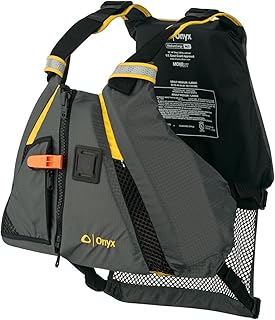
Best Budget Option: Onyx MoveVent Dynamic
Onyx MoveVent Dynamic Paddle Vest Adult Life Jacket, USCG/TC Approved
USCG Type III approved
16 lbs flotation
Mesh ventilation panels
SOLAS reflective tape
+ Pros
- Excellent value for the price
- Good ventilation for hot weather
- SOLAS reflective tape for visibility
- Adjustable shoulder fit system
- Cons
- Limited adjustability compared to premium models
- May not fit larger paddlers optimally
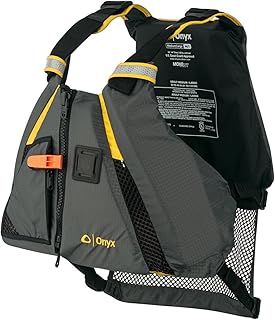
Don't let the affordable price mislead you. The MoveVent Dynamic includes features typically found in PFDs costing twice as much. It represents proof that safety and comfort need not drain your wallet.
Mesh ventilation panels allow airflow across your back, preventing the overheating common in budget foam vests. The large front pocket accommodates essentials, while SOLAS-grade reflective tape significantly exceeds standard visibility requirements.
Adjustable shoulders help achieve proper fit, though the range doesn't match premium models with multiple adjustment zones. For casual paddlers, anglers on a budget, or families outfitting multiple kayakers, the MoveVent Dynamic delivers genuine value without compromising safety certification.
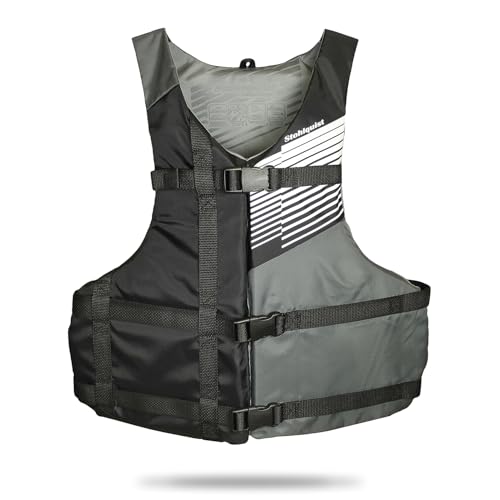
Best for Women: Stohlquist FIT
Stohlquist FIT Adult Life Jacket, US Coast Guard Approved Type III Life Vest, PFD for Men and Women...
Universal fit 30-52 inch chest
USCG Type III approved
Cross-chest cinch straps
Contoured foam panels
+ Pros
- Universal sizing accommodates most women
- Excellent adjustability system
- Lightweight and comfortable
- Quality construction materials
- Cons
- Unisex design may fit some women poorly
- Limited color selection available
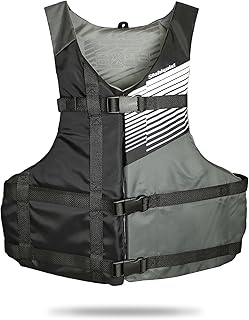
The Stohlquist FIT addresses fit issues that plague women in unisex vests. Cross-chest cinch straps and contoured foam panels work together to create secure positioning without pressure points. The graded sizing system accommodates various body shapes within the universal range.
Women-specific designs matter because generic PFDs often ride up, create uncomfortable pressure on the bust, or restrict movement in ways that reduce comfort and safety. The FIT's wrap-around fit keeps the vest positioned correctly through wet exits, rolls, and active paddling.
While some women prefer dedicated women's models with princess seaming and shorter torsos, others find the FIT's adjustability more versatile across different clothing combinations. The lightweight construction doesn't sacrifice durability, using quality materials that withstand regular use.
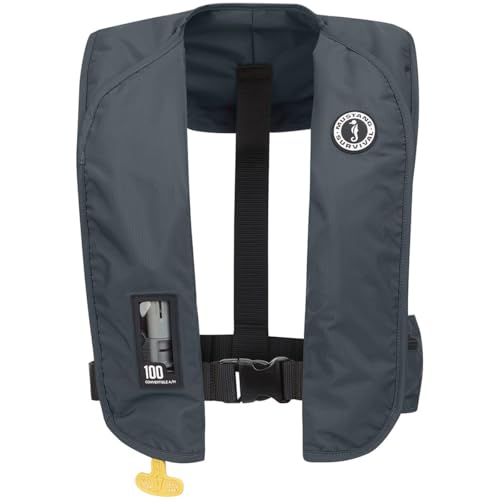
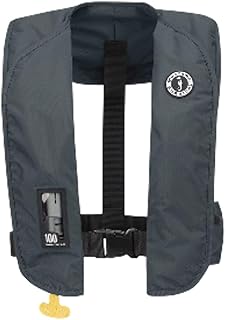
Best Inflatable: Mustang Survival MIT 100
MUSTANG SURVIVAL MIT 100 Convertible A/M Inflatable PFD Life Jacket Single
26 lbs buoyancy when inflated
Automatic/Manual A/M inflation
USCG Type V approved
Neoprene neckline
+ Pros
- High buoyancy when inflated
- Auto and manual inflation options
- Comfortable for extended wear
- Very low profile when uninflated
- Cons
- Requires regular maintenance
- CO2 cartridges need replacement
- Not for rough water or non-swimmers
- Higher initial price point
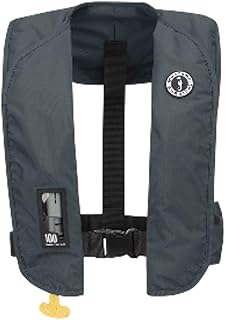
For experienced paddlers in appropriate conditions, the MIT 100 offers comfort that foam PFDs cannot match. The convertible A/M system provides both automatic hydrostatic inflation and manual backup activation, ensuring redundancy if one system fails.
When uninflated, the vest nearly disappears against your body, allowing unrestricted movement and excellent ventilation. Upon activation, it delivers 26 pounds of buoyancy, substantially exceeding standard foam PFDs. The neoprene neckline prevents chafing during long days on the water.
This PFD requires commitment to maintenance. Regular inspection of the inflation mechanism, replacement of CO2 cartridges after activation, and awareness of the arming status are essential. Additionally, inflatables are not appropriate for non-swimmers, rough water, or paddling with young children. For the right user in suitable conditions, however, the comfort advantage is significant.
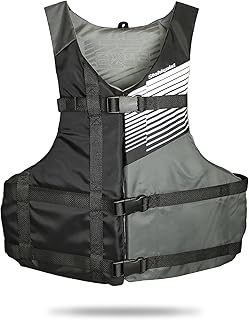
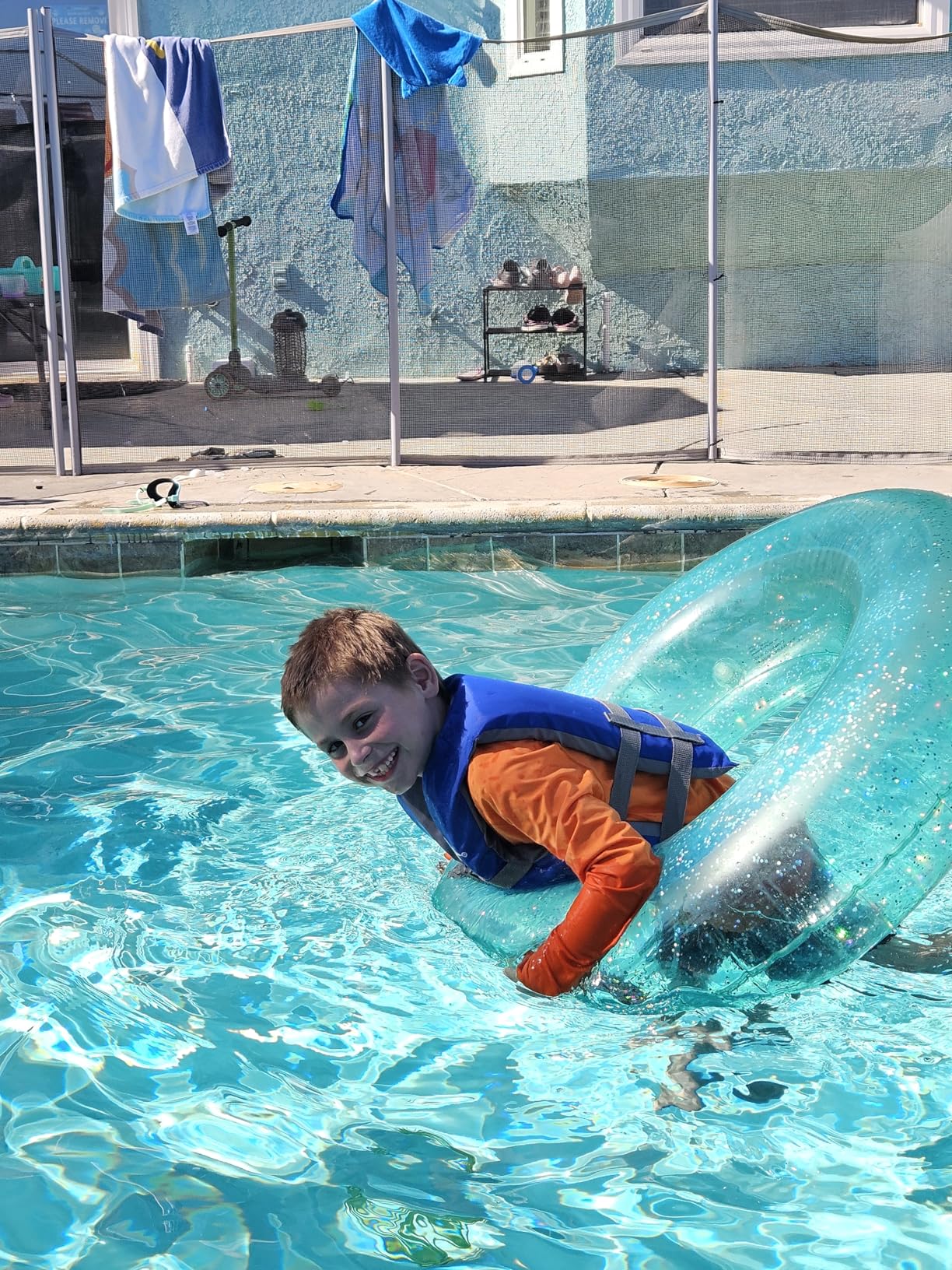
Best for Kids: Stearns Kids Life Vest
Stearns Kids Life Vest, USCG Approved Type III Life Jacket for Children 50 to 90 lbs, Youth PFD for...
For children under 90 lbs
USCG Type III approved
Lightweight flotation foam
Fun safety colors
+ Pros
- Excellent value for families
- Proven design with thousands of reviews
- Lightweight for comfort
- USCG approved safety
- Cons
- Kids outgrow quickly
- Basic design without advanced features
Getting children to consistently wear PFDs requires comfort and appealing design. The Stearns Kids Life Vest delivers with lightweight foam that doesn't weigh small bodies down and bright colors that kids actually want to wear.
USCG Type III approval ensures the vest meets safety standards for children under 90 pounds. The secure fit system keeps the PFD positioned correctly during swimming and unexpected immersion. Drainage channels prevent water retention that would otherwise make the vest heavy and uncomfortable.
Parents should understand that children outgrow PFDs rapidly. Plan on replacement every one to two seasons as your child grows. Never purchase oversized vests intending to "grow into them." Proper fit is essential for safety. With nearly 9,000 reviews, this vest has proven itself across countless family paddling adventures.
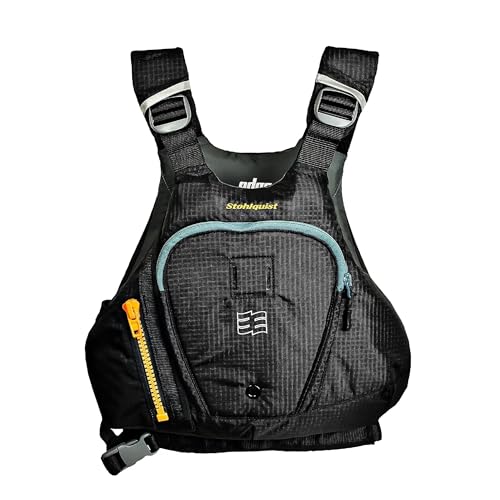
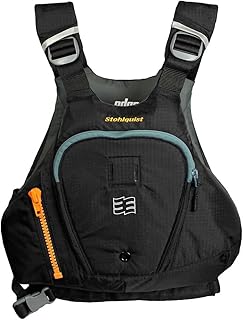
Best Whitewater PFD: Stohlquist Edge
Stohlquist Edge Adult Men's Life Jacket PFD - High Mobility, Low Profile Boating Vest, Ultra Soft...
USCG Level 70N certified
Whitewater specific design
Rescue harness included
High flotation rating
+ Pros
- Purpose-built for river running
- Rescue harness for advanced safety
- High flotation for rough water
- Durable construction
- Cons
- Specialized for whitewater use
- Higher price point
- Smaller review count as newer model
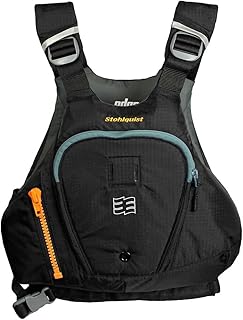
Whitewater kayaking demands more from a PFD than recreational paddling. The Stohlquist Edge addresses these specialized requirements with full foam construction, a rescue harness for Class IV+ water, and reinforced materials that withstand contact with rocks and river features.
Level 70N certification provides confidence in rough conditions where you might be submerged or fighting strong currents. The high-back design accommodates kayak seat backs while the multiple adjustment points ensure the vest stays put during violent motion.
Quick-release belts and lash tabs add functionality for technical river running. While overkill for flatwater paddling, these features become essential when things go wrong in rapids. The Edge represents purpose-built protection for paddlers who push boundaries.
Best Plus-Size: Stohlquist FIT Oversized
48-60 inch chest range
USCG Type III approved
Adjustable side panels
Plus size specific design
+ Pros
- True plus-size availability
- Adjustable for custom fit
- Comfortable for extended wear
- Quality construction
- Cons
- Limited color options
- May still be tight on very large frames
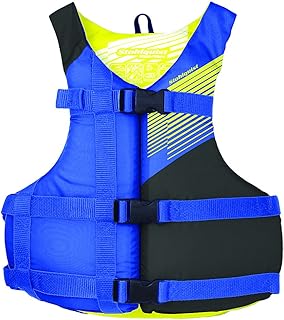
Finding quality PFDs for larger paddlers has historically proven frustrating. The Stohlquist FIT Oversized solves this with genuine 48-60 inch chest sizing that actually fits plus-size paddlers properly. Extended shoulder straps and adjustable side panels accommodate different body shapes within the range.
Many universal-fit vests claim to accommodate larger chests but prove uncomfortable or inadequate in practice. The FIT Oversized uses proportionally scaled components rather than simply lengthening straps on standard models. This results in balanced flotation distribution and proper fit.
The affordable price makes this vest accessible for paddlers who might otherwise skip safety gear due to fit frustrations. While color options remain limited compared to standard sizes, the functionality and comfort satisfy the essential requirement: a PFD that fits well enough to wear all day.
Special Considerations for Different Paddling Styles
Recreational Kayaking
Calm lake and slow river paddling prioritizes comfort over specialized features. A basic Type III PFD with good ventilation serves perfectly. The stability of recreational kayaks means capsizing occurs less frequently, but accidents still happen during skill development.
Focus on mesh panels for hot weather, adequate pockets for snacks and phones, and colors you find appealing. You're more likely to wear a vest you like looking at. Budget options like the Onyx MoveVent Dynamic work excellently for casual paddling.
Sea Kayaking and Touring
Offshore paddlers face different risks requiring specific PFD features. Visibility becomes crucial for avoiding motorboat collisions. Bright colors and SOLAS-grade reflective tape significantly improve your odds of being seen.
Attachment points allow securing safety gear like flares, whistles, and communication devices. Pockets sized for VHF radios or satellite communicators keep essential equipment accessible. Some touring kayakers carry inflatable backup PFDs in day hatches as redundancy for long crossings.
Consider ocean kayaking safety requirements when selecting your vest. The NRS Ninja excels here due to its low profile that doesn't interfere with paddling stroke efficiency over long distances.
Whitewater Kayaking
River running demands specialized PFD construction. Full foam construction is mandatory; inflatables have no place in rapids. High flotation (16+ lbs) helps keep you on the surface in aerated, turbulent water.
Rescue harnesses with quick-release belts become necessary for Class IV+ water where live bait rescues might be required. Reinforced construction withstands impacts with rocks and withstands the abrasion of technical whitewater runs. The Stohlquist Edge addresses these specific requirements.
Kayak Fishing
Anglers need storage capacity without sacrificing paddling comfort. Multiple pockets organized for tackle, tools, and safety gear separate fishing PFDs from general models. Rod holder loops, tool attachment points, and knife lash tabs put equipment where you need it.
High-back designs accommodate the elevated seats common on fishing kayaks. Neutral colors avoid spooking fish, though safety considerations suggest keeping some high-visibility elements for motorboat encounters. The NRS Chinook remains the benchmark purpose-built option.
Life Jacket Maintenance and Care
Proper maintenance extends PFD lifespan from a few seasons to a decade or more. Following consistent care routines protects your investment and ensures your vest functions when needed.
After Each Use:
- Rinse thoroughly with fresh water, especially after saltwater exposure
- Hang to dry completely, avoiding direct sunlight that degrades fabrics
- Inspect buckles, straps, and zippers for damage or corrosion
- Store loosely rather than compressed
Monthly Checks:
- Inspect fabric for tears, UV fading, or mildew
- Test all zippers and buckles for smooth operation
- Check foam for compression or waterlogging (heavy PFDs indicate water absorption)
- For inflatables: verify CO2 cartridge status and arming pin position
Annual Maintenance:
- Deep clean with mild soap, following proper cleaning procedures
- Lubricate zippers with wax or silicone
- Replace worn straps or damaged components
- Update emergency contact information on any ID tags
- For inflatables: replace CO2 cartridges according to manufacturer schedule
When to Replace:
Know when to retire your PFD. Replace immediately if you notice:
- Significant fabric fading or deterioration
- Straps that won't maintain adjustment
- Foam that feels compressed or waterlogged
- Cracked or damaged buckles
- Any damage from serious impact
- Inflatables that fail manual inflation tests
Common Life Jacket Mistakes to Avoid
Learning from others' errors prevents painful lessons. These common mistakes repeatedly appear in rescue reports and accident investigations.
Buying Based on Price Alone
That bargain PFD at the big box store meets minimum USCG requirements, but will you wear it? Uncomfortable vests end up unused. Invest in comfort and fit. Your safety warrants spending more than the absolute minimum.
The "Dashboard PFD"
Keeping your life jacket in the car "just in case" fails the safety test. A PFD only helps when worn. Make putting on your vest part of your launch routine, just like checking your paddle and securing loose gear.
Ignoring Fit Changes
Weight fluctuations, different clothing layers, and foam compression alter PFD fit over time. Re-check adjustment every few trips, especially when changing seasonal gear. A vest that fit perfectly in summer may need re-adjustment over a drysuit.
Sharing Without Adjusting
Loaning gear builds paddling community, but ensure borrowers understand proper fit. Multiple swimmers have been rescued wearing borrowed PFDs that slipped off because nobody performed the lift test before launching.
Modifying Your PFD
Cutting foam, removing straps, or adding non-approved attachments voids USCG approval. Sewing through foam compromises waterproofing and structural integrity. If your PFD requires modification to work properly, you need a different model.
Life Jackets for Swimming Considerations
While kayaking PFDs aren't designed specifically for swimming, you'll occasionally need to swim while wearing one during wet exits, self-rescue practice, or cooling off on hot days. Certain design elements facilitate swimming better than others.
Minimal bulk around shoulders prevents stroke interference. Side-entry designs allow easier arm movement. Higher cuts at the hips reduce leg restriction. Adjustable torso lengths accommodate different body proportions.
Always practice swimming in your PFD in controlled conditions before relying on it in emergencies. Some paddlers find the buoyancy surprising compared to swimming unaided. Understanding how your vest affects position and propulsion prevents panic during actual incidents.
State Laws and Regulations
Beyond federal USCG requirements, states impose additional paddling safety rules. Understanding both levels prevents citations and ensures compliance.
Universal Requirements:
- One wearable PFD per person on board
- Properly sized for intended wearer
- USCG approved (current standards)
- In serviceable condition (no damage, expired inflatables)
- Readily accessible (not buried in hatches)
Common State Additions:
- Children under 13 must wear PFDs at all times (varies by state)
- All paddlers must wear PFDs during cold water seasons
- Specific PFD requirements for whitewater sections
- Inflatable PFD restrictions for children under 16
- Required sound-producing devices (whistles) attached to PFDs
Always verify local regulations before paddling new waters. Rangers and marine patrol don't accept "But my state allows..." as justification for violations.
Special Situations and Adaptive Options
Plus-Size Paddlers
As mentioned earlier, dedicated plus-size PFDs now accommodate chest measurements up to 60 inches and beyond. Look for adjustable side panels that customize fit within the size range, extended shoulder straps that don't dig into necks, and models specifically proportioned for larger bodies rather than scaled-up standard sizes.
Paddlers with Disabilities
Adaptive features make PFDs accessible to more paddlers:
- One-handed buckles for limited dexterity
- Extended zipper pulls for easier gripping
- High-visibility colors for cognitive impairments
- Extra flotation for limited swimming ability
- Custom modifications (always consult manufacturers)
Dog Life Jackets
Taking your dog paddling requires proper canine flotation:
- Size by weight AND chest girth for proper fit
- Grab handles for lifting dogs back into kayaks
- Bright colors for visibility
- D-rings for leash attachment
- Quick-release buckles for emergency removal
See our complete guide to kayaking with dogs for more information on keeping your canine companion safe on the water.
Making the Final Decision
Selecting your life jacket ultimately requires balancing several factors:
- Your paddling style: Match features to your specific activities
- Proper fit: Non-negotiable for safety
- Comfort: You'll only wear what feels good
- Budget: Buy the best you can reasonably afford
- Local conditions: Consider water temperature and remoteness
No single "perfect" PFD exists for everyone, but the perfect PFD for your specific needs definitely exists. Invest time in trying different models, reading detailed reviews, and consulting local paddlers about what works in your waters. Consider our expanded life vest roundup for additional options.
FAQ Section
What type of life jacket is best for kayaking?
Type III (Performance Level 70) flotation aids are best for kayaking. They provide 15.5 lbs of buoyancy while allowing full arm movement for paddling. Look for high-back designs that clear kayak seats and large arm holes that don't chafe during repetitive strokes.
What is the 120 rule in kayaking?
The 120 rule states that if the water temperature plus air temperature equals less than 120 degrees Fahrenheit, you risk hypothermia if immersed. In these conditions, wear a wetsuit or drysuit in addition to your PFD. This rule helps paddlers understand when cold water becomes dangerous.
Do kayakers wear life vests?
Yes, all kayakers should wear life vests (PFDs) at all times while on the water. USCG regulations require a wearable PFD for each person on board, and many states require children under 13 to wear them continuously. Statistics show 90% of drowning victims weren't wearing a PFD.
What are the three golden rules of kayaking?
The three golden rules are: 1) Always wear your life jacket/PFD, 2) Never paddle alone in unfamiliar or challenging conditions, and 3) Know your limits and paddle within your skill level. These principles form the foundation of safe paddling practices.
Should you wear a life jacket when kayaking?
Absolutely yes. A properly fitting, Coast Guard-approved life jacket should be worn every time you kayak, regardless of water conditions, weather, or your swimming ability. Accidents happen instantly, and having your PFD on your boat rather than your body provides no protection.
What is the most comfortable life jacket for kayaking?
The NRS Ninja PFD is widely considered the most comfortable for kayaking due to its ultra-low profile 16.5-inch design, 8 adjustment points, and fleece-lined pockets. Inflatable PFDs like the Mustang MIT 100 offer even less bulk but require more maintenance and aren't suitable for all conditions.
How much is a ticket for not having a life jacket on a kayak?
Fines vary by state but typically range from $75 to $250 for not having a properly sized, USCG-approved PFD on board. Fines are higher if children are involved or if the violation occurs in hazardous conditions. Some states also add court costs and fees.
When should you not use an inflatable PFD?
Don't use inflatable PFDs for whitewater, rough water, cold water conditions, or if you're a non-swimmer. They're also unsuitable for children under 16 and should be avoided in situations where unconsciousness is possible. Inflatables require maintenance and can fail if not properly armed.
Can I use a wakeboarding vest for kayaking?
While wakeboarding vests meet USCG requirements, they're not ideal for kayaking. They typically have more bulk in the shoulders, restricting paddle movement, and shorter torsos that ride up when seated. Kayaking-specific PFDs include features like high-back designs and large arm holes that enhance paddling comfort.
How tight should a life jacket be?
A life jacket should be snug but not restrictive. You should be able to breathe normally and move freely. The two-finger rule works well: you should be able to slip two fingers under any strap, but not your whole hand. The lift test is crucial: if someone pulls up on your shoulder straps, the PFD shouldn't rise more than 2 inches.
Do inflatable life jackets work for non-swimmers?
No. Inflatable PFDs require the wearer to be conscious and capable of activating them. Even automatic models can fail. Non-swimmers should always wear inherently buoyant foam Type III PFDs that provide flotation without any action required.
How often should I replace my life jacket?
With proper care, PFDs last 5-10 years. Replace immediately if you notice fading, tears, compressed foam, or broken hardware. Sun damage weakens fabric before it's visible. Inflatable PFDs need CO2 cartridge replacement after activation or according to manufacturer schedules, typically every 1-3 years.
Can I add pockets or accessories to my PFD?
Minor additions like whistle clips are generally fine, but avoid modifications that affect flotation or structural integrity. Sewing through foam compromises waterproofing. Adding significant weight can affect buoyancy. If you need more features than your current PFD offers, purchase a different model with those features built-in.
Are Type V PFDs safe for kayaking?
Yes, Type V PFDs are safe for kayaking IF worn according to their specific use label. Many paddling-specific inflatables carry Type V classification. Read labels carefully, as some must be worn at all times to count as your required PFD. Type V includes specialized devices that require proper understanding of their limitations.
Should kids wear inflatable PFDs?
Never. USCG regulations prohibit inflatable PFDs for anyone under 16. Children need inherently buoyant foam PFDs sized by weight. Infant models must include head support and crotch straps. Kids outgrow PFDs quickly, so check fit every season and replace as needed rather than buying oversized vests to grow into.
Do I need a whistle on my life jacket?
While not federally required for all kayakers, many states mandate sound-producing devices. Attaching a whistle to your PFD ensures you always have emergency signaling capability. Whistles work when wet, don't require batteries, and can be heard over wind and waves. They're inexpensive insurance that takes up minimal space.
Can I kayak at night with just a regular life jacket?
Night paddling requires additional safety gear beyond your standard PFD. You'll need 360-degree white lights visible to other boaters. Reflective tape on your PFD helps significantly, and some paddlers add LED strobes to their life jackets for extra visibility. Check u003ca href=u0022https://paddleroundthepier.com/night-kayaking-safety-law/u0022u003enight kayaking safety requirementsu003c/au003e for complete regulations.
The Bottom Line
Your life jacket represents the most critical safety investment you'll make as a paddler. Don't compromise on fit, comfort, or certification quality. Whether you select a minimalist design for mastering rolls or a feature-rich fishing vest, make wearing it automatic and non-negotiable.
I've assisted too many paddlers who thought they didn't need their PFD "just this once." Water conditions change instantly. Equipment fails unexpectedly. Cold shock incapacitates even strong swimmers. The best life jackets for kayakers share one defining characteristic: they're actually being worn when the unexpected happens.
Find a PFD you genuinely enjoy wearing, maintain it properly through regular care, and put it on before your boat touches the water. Every single time. No exceptions. Because the best life jacket is the one you're wearing when you need it.
Stay safe, paddle smart, and I'll see you on the water!
Verify current prices and availability before purchasing. Life jacket models and regulations evolve continuously. Confirm current USCG approval and state requirements before finalizing your choice. For more options, explore our inflatable PFD guide or complete kayaking clothing recommendations.