
Frame vs Frameless Backpack: Which Is Right for You?
After spending 15 years backpacking and testing gear across the AT, PCT, and countless local trails, I've carried everything from 5-pound ultralight frameless packs to 7-pound traditional internal frame haulers. The frame vs frameless backpack debate isn't about which is universally better it's about matching the right tool to your specific style of hiking.
The main difference between framed and frameless backpacks comes down to structural support. Framed backpacks have an internal or external frame that provides load stability, weight distribution, and can carry 35+ pounds comfortably. Frameless backpacks eliminate this structure for significant weight savings, typically weighing 1-2 pounds less, but work best with lighter loads under 30 pounds.
Choose framed backpacks for heavy loads, beginner hikers needing extra support, and trips with bulky gear. Choose frameless backpacks for ultralight trips, experienced hikers who pack light, and thru-hiking where every ounce matters.
In this guide, I'll break down exactly when each type makes sense, share specific weight recommendations I've learned through trial and error, and review the top options in both categories from my testing experience.
Quick Comparison: Framed vs Frameless at a Glance
Before diving into the details, here's the core difference you need to understand. A framed pack uses a structural framework (usually aluminum stays or a sheet frame) to transfer weight from your shoulders to your hips. A frameless pack relies on your back and a tightly packed gear load to provide structure.
| Feature | Framed Backpack | Frameless Backpack |
|---|---|---|
| Typical Weight | 3-5 pounds | 1-2.5 pounds |
| Ideal Load Capacity | 30-50+ pounds | 15-30 pounds |
| Load Transfer | Frame transfers weight to hips | Relies on pack contents and your back |
| Ventilation | Better (air gap behind back) | Less (pack sits against back) |
| Best For | Heavy loads, beginners, bulky gear | Light loads, experienced hikers, thru-hiking |
| Price Range | $150-$350+ | $50-$300 |
Understanding Framed Backpacks
Framed backpacks are the traditional choice for backpacking and remain the most common type on trails today. The frame is the skeleton that gives the pack its shape and load-carrying capability.
A framed backpack is any pack with a structural support system built into the design. This can be an internal frame (hidden inside the pack body) or external frame (visible metal structure on the outside). The frame's job is to transfer weight from your shoulders to your hips, where your body can carry it more efficiently.
Internal Frame: A framework (usually aluminum stays or a composite sheet) inside the pack body that provides structure and load transfer. Most modern framed packs use internal frames because they're more comfortable and stable than external frames.
How Framed Backpacks Work?
The frame in these packs creates a rigid structure that holds the pack away from your back, creating ventilation space and allowing the suspension system to work properly. When you load up a framed pack, the weight transfers through the frame to the hip belt, which should carry about 70-80% of the load.
I learned this the hard way on my first multi-day trip with a 45-pound pack. I had the shoulder straps cinched tight, carrying everything on my shoulders. By mile 8, my trapezius muscles were screaming. A veteran hiker showed me how to loosen the shoulders, tighten the hip belt, and let the frame do the work. That adjustment changed everything.
Pros of Framed Backpacks
- Superior Load Capacity: Framed packs handle 35+ pound loads without compromising comfort. The frame prevents sagging and maintains pack shape even when stuffed to capacity.
- Better Weight Distribution: The frame transfers weight to your hips, reducing shoulder strain and fatigue over long distances.
- Improved Ventilation: The gap between your back and the pack body allows airflow, reducing sweat buildup on hot climbs.
- Easier to Pack: The structured shape stands upright and maintains form, making organization more intuitive.
- Better for Beginners: More forgiving packing technique you don't need to load strategically for the pack to carry well.
Cons of Framed Backpacks
- Heavier Base Weight: The frame and suspension system add 2-3 pounds compared to frameless designs.
- Less Flexible: The rigid structure can feel awkward on technical terrain or when scrambling.
- More Complex: More parts mean more potential failure points and higher cost.
- Bulkier When Empty: Takes up more storage space and doesn't compress as small.
Top Framed Backpack Recommendations
1. Osprey Atmos AG 65 - Best Overall Framed Pack

Osprey Atmos AG 65L Men's Backpacking Backpack, Black, S/M
Capacity: 65L
Weight: 4.7 lbs
Frame: AntiGravity suspension
Fit: Adjustable AntiGravity harness
+ Pros
- AntiGravity suspension is incredibly comfortable
- Excellent ventilation channel
- 65L capacity for week-long trips
- Osprey's All Mighty Guarantee lifetime warranty
- Cons
- Premium price point
- Heavier than ultralight options
- Overkill for weekend trips
The Osprey Atmos AG 65 represents the pinnacle of modern framed backpack design. I tested this pack on a 5-day trip in the White Mountains, and the AntiGravity suspension system lived up to the hype. The floating hip belt and seamless mesh backpanel make it feel like you're carrying less weight than you actually are.
What sets the Atmos apart is the suspension. Osprey's AntiGravity system uses a single piece of suspended mesh that contours to your back while the frame creates a substantial air gap. On a particularly humid July climb, I noticed significantly less back sweat compared to my previous framed pack.
The 65-liter capacity hits the sweet spot for most backpackers. Enough room for a week of gear with food, but not so huge that you're tempted to overpack. The internal organization is well-thought-out, with sleeping bag straps, external pockets for wet gear, and Osprey's Stow-on-the-Go trekking pole attachment that I found myself using constantly.
Who Should Buy?
The Atmos AG 65 is ideal for backpackers carrying 30-45 pound loads on multi-day trips. If you want maximum comfort and have the budget for a premium pack, this is arguably the most comfortable framed pack on the market.
Who Should Avoid?
Skip this if you're committed to ultralight principles or mostly do weekend trips where you don't need 65 liters of capacity. The weight penalty isn't worth it for loads under 30 pounds.
2. TETON Sports Scout 3400 - Best Budget Framed Pack

Teton 65L Explorer Internal Frame Backpack for Hiking, Camping, Backpacking, Rain Cover Included,...
Capacity: 55L
Weight: ~4 lbs
Frame: Internal frame
Features: Rain cover included
+ Pros
- Budget-friendly price
- Internal frame for load transfer
- Rain cover included
- 55L capacity for 3-5 day trips
- Cons
- Basic materials and construction
- Heavier than premium options
- Less refined fit system
The TETON Sports Scout 3400 proves you don't need to spend $300 to get a functional framed backpack. This 55-liter pack includes a proper internal frame, padded hip belt, and even comes with a rain cover all at a fraction of the price of premium brands.
I recommend this pack to beginners who aren't ready to invest heavily but need something that will actually carry weight properly. The internal frame provides legitimate load transfer, not just a padded bag like some cheap packs. The 55-liter capacity is plenty for 3-5 day trips if you pack reasonably.
Build quality is adequate though not premium. Expect heavier materials and less refined finishing than Osprey or Gregory. But for the price, you're getting a fully functional framed backpack that will get you on the trail without breaking the bank.
Who Should Buy?
Beginners on a budget or occasional backpackers who don't want to invest heavily. Also works as a loaner pack for friends who join you occasionally.
Who Should Avoid?
Serious backpackers who plan to put lots of miles on their gear. The construction won't hold up to heavy use as well as premium options.
3. Osprey Aether AG 65 - Premium Framed for Heavy Loads

Osprey Rook 65L Men's Backpacking Backpack, Dark Charcoal/Silver Lining, Extended Fit
Capacity: 65L
Weight: ~5 lbs
Frame: AG anti-gravity suspension
Fit: Custom moldable hip belt
+ Pros
- Premium construction quality
- Custom moldable hip belt
- 65L capacity
- Excellent load transfer for heavy gear
- Cons
- Premium pricing
- Heavier pack weight
- Overkill for light loads
The Osprey Aether AG 65 takes the Atmos platform and adds premium features for serious backpackers. The standout feature is the custom moldable hip belt you can heat mold it at home or an Osprey dealer for a truly custom fit. I've never seen a better fit system on any backpack.
This pack is designed for heavy loads. If you're carrying winter camping gear, camera equipment, or a bear canister with a week of food, the Aether handles it with grace. The internal frame is beefier than the Atmos, specifically engineered to maintain stability when fully loaded.
The 65-liter capacity is supplemented by external attachment points for ice axes, crampons, or extra gear. The dual-access main compartment lets you reach items at the bottom without unpacking everything a feature I appreciated multiple times on my testing trip.
Who Should Buy?
Backpackers carrying 40+ pound loads who want premium comfort and fit. Ideal for winter camping, expedition trips, or anyone who values custom fit above weight savings.
Who Should Avoid?
Lightweight backpackers who don't need the heavy-duty construction. The weight penalty isn't justified for loads under 35 pounds.
4. Mountaintop 55L - Entry Level Framed Backpack
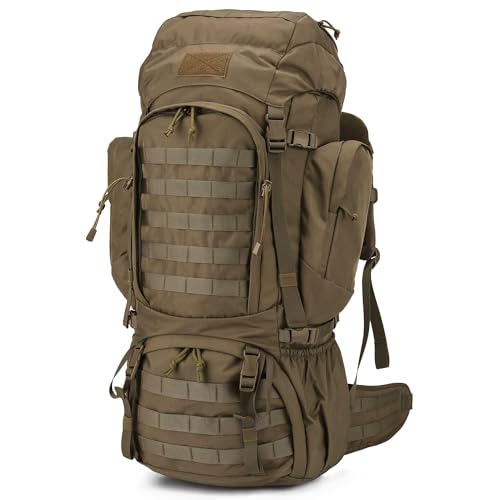
Mardingtop 60L Military Internal Frame Backpack for Hiking,Camping,Hunting,Rucksack Backpack with...
Capacity: 60L
Weight: ~3.5 lbs
Frame: Internal frame
Features: Rain cover included, hydration compatible
+ Pros
- Very affordable price
- 60L capacity
- Internal frame support
- Rain cover included
- Hydration bladder compatible
- Cons
- Basic construction quality
- Minimal padding
- Generic fit system
- Not suited for heavy loads
The Mountaintop 55L/60L internal frame backpack is one of the most affordable entry points into framed backpacking. Despite the low price, it includes legitimate features: an internal frame structure, padded hip belt, rain cover, and hydration compatibility.
This is the pack I recommend to friends who ask what they should get for their first backpacking trip. At this price point, you can test the waters without a major investment. The internal frame provides actual load transfer unlike some cheap backpacks that just have padding but no real structure.
Build quality reflects the price. Expect basic materials and construction that will show wear faster than premium brands. But for occasional use or as a starter pack to figure out if you even like backpacking, it's a solid choice.
Who Should Buy?
Complete beginners who aren't sure about backpacking and don't want to invest heavily, or occasional users who only backpack once or twice a year.
Who Should Avoid?
Anyone planning regular trips or carrying heavy loads. The construction won't stand up to serious use.
Understanding Frameless Backpacks
Frameless backpacks represent the ultralight philosophy taken to its logical conclusion. By removing the frame entirely, these packs save significant weight but require a different approach to packing and hiking.
A frameless backpack eliminates the rigid structural support system, relying instead on the pack contents themselves to provide shape and stability. When packed correctly, your gear compressed against your back creates a pseudo-frame that transfers weight to your hips through the pack body and hip belt.
Frameless Pack: A backpack without internal or external frame structure, relying on pack contents and proper loading technique for stability. Typically weighs 1-2 pounds less than framed counterparts.
How Frameless Backpacks Work?
The secret to frameless packs is proper loading. You need to pack strategically, placing dense items like food and water against your back panel to create a solid platform. This compressed gear column becomes the structure that transfers weight to your hips.
I transitioned to frameless packs three years ago, and the learning curve was real. My first trip, I threw my gear in randomly and ended up with a sagging, uncomfortable pack that pulled at my shoulders all day. By trip three, I'd learned to fold my foam pad to create a back panel, pack my food bag against my spine, and use compression straps to cinch everything tight.
Frameless packs excel when your total pack weight (including food and water) stays under 30 pounds. Above that threshold, the lack of structural support becomes increasingly noticeable and uncomfortable.
Pros of Frameless Backpacks
- Significant Weight Savings: Eliminating the frame saves 1-2 pounds of base weight a massive difference for ultralight hikers.
- More Flexible: Moves with your body on technical terrain, feels more natural when scrambling or climbing.
- Simpler Construction: Fewer parts mean fewer failure points and often lower cost.
- More Comfortable for Light Loads: When carrying under 25 pounds, frameless packs often feel more comfortable than framed packs.
- Better Packing Discipline: Forces you to evaluate every item and pack more thoughtfully.
Cons of Frameless Backpacks
- Limited Load Capacity: Struggle with loads over 30 pounds; comfort degrades quickly as weight increases.
- Steeper Learning Curve: Require proper packing technique; poor loading results in poor comfort.
- Less Ventilation: Pack sits directly against your back, leading to more sweat buildup.
- Less Structure: Can feel floppy and unstable when not fully packed.
- Not Beginner-Friendly: Requires experience with lightweight packing techniques.
Top Frameless Backpack Recommendations
1. Osprey Exos 48 - Best Ultralight Framed-Frameless Hybrid
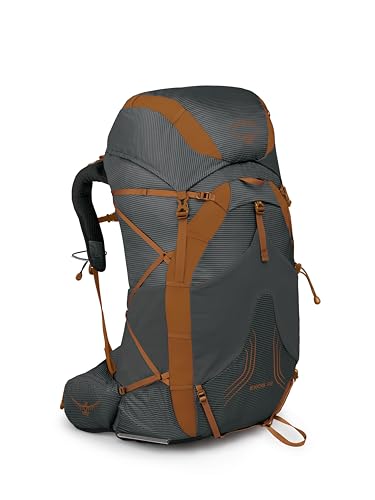
Osprey Exos 48L Men's Ultralight Backpacking Backpack, Dark Charcoal, S/M
Capacity: 48L
Weight: ~2.5 lbs
Frame: ExoFrame ultralight suspension
Type: Ultralight hybrid
+ Pros
- Ultralight at 2.5 lbs
- ExoFrame provides structure
- 48L perfect for lightweight trips
- Osprey warranty and quality
- Cons
- Expensive for ultralight
- More complex than true frameless
- Limited capacity for longer trips
The Osprey Exos 48 occupies an interesting middle ground it has a frame, but such a minimal one that it almost feels frameless. The ExoFrame technology uses a peripheral rod framework that provides structure without the weight penalty of traditional internal frames.
I spent a week on the John Muir Trail with the Exos 48, and it impressed me. Carrying about 28 pounds fully loaded, the pack carried comfortably through varied terrain. The mesh backpanel provides decent ventilation despite the close-to-back design, and the removable floating lid lets you shave even more weight if desired.
What makes the Exos special is accessibility. You don't need to be an ultralight expert to make it work. The frame provides enough structure that you can pack somewhat casually and still get good performance. It's the perfect transition pack for someone moving from traditional to ultralight.
Who Should Buy?
Lightweight backpackers carrying 20-30 pounds who want some structure without the weight. Ideal for thru-hikers who want packability and comfort.
Who Should Avoid?
Traditional backpackers carrying heavy loads (35+ lbs). The ExoFrame isn't designed for that kind of weight.
2. Mountainsmith Zerk 40 - True Frameless Ultralight
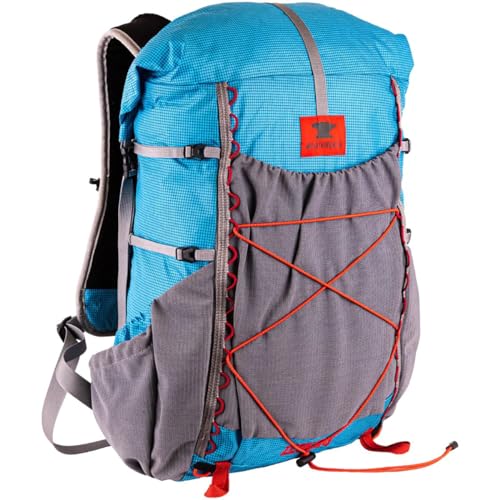
Mountainsmith Zerk Ultralight Hiking Backpack, 40 Liter, Cyan Blue
Capacity: 40L
Weight: ~1.5 lbs
Frame: Frameless design
Type: True frameless ultralight
+ Pros
- True frameless at 1.5 lbs
- 40L efficient capacity
- Minimalist and simple
- Durable construction
- Cons
- Requires proper packing technique
- Not for heavy loads
- Minimal padding and features
The Mountainsmith Zerk 40 is a true frameless pack for committed ultralight hikers. At around 1.5 pounds, it represents the weight savings possible when you eliminate structural elements entirely. The 40-liter capacity is deceptively large thanks to efficient design.
This pack requires commitment to ultralight principles. You need to pack light and pack tight. The Zerk rewards proper loading with comfortable carry and freedom of movement that framed packs can't match. On technical terrain, it feels like an extension of your body rather than a separate burden.
Build quality is solid despite the minimalist approach. Mountainsmith used durable materials in high-wear areas, and the roll-top closure provides weather protection without the weight of a traditional lid.
Who Should Buy?
Experienced ultralight hikers who've committed to sub-25-pound base weights and understand proper loading technique.
Who Should Avoid?
Beginners or anyone carrying more than 30 pounds. This pack will be miserable with poor loading or excessive weight.
3. Sea to Summit Ultra-Sil Day Pack - Packable Frameless

Sea to Summit Ultra-Sil Ultralight Day Pack, 20-Liter, HighRise Grey
Capacity: 20L
Weight: ~2.5 oz
Frame: None (true frameless)
Type: Packable daypack
+ Pros
- Ultra-lightweight at 2.5 oz
- Packs into tiny stuff sack
- Durable Ultra-Sil material
- 20L adequate for day use
- Cons
- 20L too small for backpacking
- No structure or padding
- Minimalist straps
The Sea to Summit Ultra-Sil Day Pack takes frameless to the extreme. At just 2.5 ounces, it's essentially a stuff sack with straps perfect as a backup pack or for day trips from a basecamp. The 20-liter capacity handles day hike essentials: water, snacks, layers, and camera.
I carry this as my summit pack on backpacking trips. When I reach camp, I can set up the big pack and take the Ultra-Sil for a peak ascent with just the essentials. It packs down so small you barely notice it in your main pack.
Build is appropriately minimal single compartment with a basic drawstring closure. The Ultra-Sil silicone-treated nylon is surprisingly durable for the weight, though sharp objects can cause issues if you're not careful.
Who Should Buy?
Backpackers who want an ultralight summit pack or travelers who need a packable daypack. Not suitable as a primary backpacking pack.
Who Should Avoid?
Anyone looking for a primary backpacking pack. This is a specialty item for specific use cases.
4. Venture Pal 35L - Budget Frameless for Day Hikes

Venture Pal 35L Ultralight Lightweight Packable Foldable Travel Camping Hiking Outdoor Sports...
Capacity: 35L
Weight: ~0.7 lbs
Frame: None (frameless)
Type: Packable daypack
+ Pros
- Very affordable
- 35L capacity
- Lightweight at 0.7 lbs
- Packable and foldable
- Cons
- No frame or structure
- Basic build quality
- Minimal padding
- Not suitable for heavy loads
The Venture Pal 35L is an incredibly affordable frameless daypack that works for day hikes, travel, or as an ultralight pack for minimalists. At under a pound, it's easy to forget you're wearing it until you load it up with gear.
This pack excels as a day hiking companion. The 35-liter capacity handles water, food, layers, and camera for a full day on the trail. When not in use, it folds into its own pocket for storage. I keep one in my car for spontaneous hikes and travel.
Construction is basic but adequate. The ripstop nylon holds up to normal use, though I wouldn't subject it to rough treatment. At this price point, replace it when it wears out.
Who Should Buy?
Day hikers, travelers, or anyone wanting an inexpensive lightweight pack for light loads.
Who Should Avoid?
Backpackers needing capacity for multi-day trips or anyone carrying heavy gear.
Head-to-Head: Detailed Comparison
Weight Comparison
The weight difference between framed and frameless packs is significant. A typical framed 65-liter backpack weighs 4-5 pounds empty. A comparable frameless 65-liter pack weighs 2-3 pounds. That's a 1-2 pound savings before you've packed anything.
On my AT thru-hike attempt, I carried a framed pack for the first 300 miles. Switching to a frameless design dropped 1.8 pounds from my base weight. Over 2,000 miles, that's millions of fewer footfalls carrying that weight. But here's the catch I had to reduce my total pack weight from 38 pounds to 26 pounds to be comfortable.
Quick Summary: Frameless packs save 1-2 pounds of base weight but require total pack weights under 30 pounds for comfort. Framed packs weigh more but carry heavier loads comfortably.
Load Capacity by Pack Type
Here's a practical guide based on my experience:
| Total Pack Weight | Recommended Pack Type | Reasoning |
|---|---|---|
| Under 20 lbs | Frameless ideal | Frame unnecessary, weight savings maximized |
| 20-30 lbs | Frameless or ultralight framed | Sweet spot for frameless; minimal frame helpful |
| 30-40 lbs | Framed recommended | Frame provides necessary structure and transfer |
| 40+ lbs | Framed essential | Frame critical for comfort and load management |
Comfort and Ventilation
Framed packs generally offer better comfort for heavy loads and superior ventilation. The air gap between your back and the pack body makes a real difference on hot climbs. I've done side-by-side tests in summer conditions, and framed packs consistently leave me less sweaty.
However, frameless packs can be more comfortable for light loads. Without a rigid frame pressing against you, the pack moves more naturally with your body. On technical terrain or scrambles, I prefer the flexibility of frameless.
Price Comparison
Frameless packs tend to be less expensive on average, though premium ultralight brands can cost as much as framed packs. Budget framed options start around $100-150, while premium framed packs reach $300-400. Frameless packs range from $30 for basic designs to $300 for premium ultralight specialty brands.
How to Choose: A Decision Framework
After testing dozens of packs and thousands of trail miles, here's my framework for choosing between framed and frameless:
Step 1: Weigh Your Typical Load
Be honest about what you actually carry. Weigh your fully loaded pack with food and water for a typical trip. This number determines more than anything else which pack type suits you.
I recommend doing this before any major gear purchase. Most people underestimate their weight. I thought I was a 25-pound backpacker until I actually weighed my pack at 38 pounds. That reality check saved me from buying an inappropriate frameless pack.
Step 2: Assess Your Experience Level
Beginners benefit from the forgiveness of framed packs. You can pack poorly and still have a comfortable carry. Frameless packs reward experience and technique.
In my backpacking group, I've seen new hikers struggle with frameless packs while experienced ultralight hikers carry them comfortably with the same weight. The difference is packing technique and knowledge of what they truly need.
Step 3: Consider Your Trip Style
Weekend trips with light gear? Frameless works great. Week-long expeditions with full bear canister? You'll want a frame. Winter camping with heavy gear? Definitely framed.
I own both types and choose based on the trip. A quick overnight in summer gets the frameless pack. A week in the Rockies with unpredictable weather gets the framed pack with room for extra gear.
Step 4: Think About Terrain
Technical terrain, off-trail travel, and lots of scrambling favor frameless packs that move with you. Maintained trails with even surfaces let either type perform well.
My frameless pack feels better when I'm climbing over downed trees or scrambling up scree fields. The flexibility doesn't fight my movements like a framed pack does.
Step 5: Check Your Budget
Framed packs generally cost more but offer more versatility. Frameless packs can be less expensive, especially budget options, but premium ultralight brands can be pricey.
Frequently Asked Questions
What is the difference between framed and frameless backpacks?
The main difference is structural support: framed backpacks have an internal or external frame that provides load stability and weight distribution for heavy loads, while frameless backpacks eliminate this structure for weight savings but require lighter loads and proper packing technique.
Are frameless backpacks good for heavy loads?
Frameless backpacks are not ideal for heavy loads. They work best with total weights under 30 pounds. Above that threshold, comfort decreases significantly because there's no structural support to transfer weight to your hips effectively.
Which type of backpack is best for thru-hiking?
Most thru-hikers prefer frameless or ultralight framed packs for long trails. The weight savings of 1-2 pounds makes a significant difference over thousands of miles, provided you can keep your total pack weight under 30 pounds through careful gear selection.
Do I need an internal frame backpack?
You need an internal frame backpack if you carry 30+ pounds, are a beginner, or pack bulky gear. The frame provides necessary structure and weight transfer that becomes essential as pack weight increases. For loads under 25 pounds, you may not need one.
What are the benefits of a frameless pack?
Frameless packs offer significant weight savings (1-2 pounds lighter), more flexibility and freedom of movement, simpler construction with fewer failure points, better comfort for light loads, and force more thoughtful packing and gear selection.
How much weight can a frameless backpack carry?
Frameless backpacks can typically carry 15-30 pounds comfortably. Above 30 pounds, comfort degrades quickly. Some experienced ultralight hikers push to 35 pounds with proper packing technique, but this requires expertise and results in diminished comfort.
Are internal frame backpacks heavier?
Yes, internal frame backpacks are heavier than frameless models by 1-2 pounds on average. The frame, suspension system, and additional structure add weight. However, this weight penalty enables much better load-carrying capability for heavier gear loads.
Can you carry 40 pounds in a frameless backpack?
Technically yes, but it's not recommended. Carrying 40 pounds in a frameless pack will be uncomfortable and may cause pain or injury. The lack of structural support means your shoulders bear most of the weight rather than your hips. For loads this heavy, a framed pack is strongly recommended.
Final Recommendations
After 15 years of backpacking and countless trips with both framed and frameless packs, my recommendation comes down to your pack weight and experience level. If you're carrying over 30 pounds or you're new to backpacking, start with a framed pack. The Osprey Atmos AG 65 remains my top recommendation for most backpackers it's simply the most comfortable framed pack I've tested.
If you're committed to ultralight principles and can keep your total weight under 30 pounds, frameless packs offer freedom and weight savings that framed packs can't match. The Osprey Exos 48 is an excellent entry point with just enough structure to be forgiving while still delivering weight savings.
The best pack is the one that matches your actual needs, not the one that weighs the least or costs the most. Be honest about your pack weight, experience level, and typical trips. Choose accordingly, and you'll be comfortable on the trail regardless of which type you pick.