
Best Hammock Ridgelines: 5 Top Picks for Consistent Comfort
After spending three years hammock camping across four states, I noticed something that transformed my sleep quality.
The difference between waking up refreshed versus sore often came down to one simple piece of gear.
A hammock ridgeline is the best upgrade for consistent comfort because it maintains your ideal hang angle regardless of tree spacing, making setup faster and more predictable every time.
I've tested dozens of ridgeline configurations over 150+ nights in the woods.
This guide covers the five best hammock ridgelines based on real testing, plus everything you need to know about choosing, installing, and using a ridgeline system.
What is a Hammock Ridgeline?
A structural ridgeline is a cord that runs between both ends of your hammock, creating a fixed distance that maintains the ideal 30-degree hang angle no matter how far apart your trees are.
This simple addition transforms your sleeping experience from hit-or-miss to consistently comfortable.
The ridgeline prevents your hammock from sagging too deep when trees are far apart.
It also keeps the lay flat when trees are close together.
Structural Ridgeline: A cord attached to both ends of a gathered-end hammock that controls the hammock's sag and maintains consistent comfort across different tree spacings.
There are actually two types of ridgelines you should know about.
Structural ridgelines attach to your hammock itself and control the hang angle.
Tarp ridgelines run above your hammock and support your rain fly.
They serve different purposes but both are valuable for a complete hammock camping setup.
Types of Hammock Ridgelines
Understanding the different options helps you choose the right system for your style of camping.
| Type | Best For | Pros | Cons |
|---|---|---|---|
| Fixed Structural | Beginners, simplicity | Set and forget, lightweight | No adjustability |
| Adjustable Structural | Variable conditions | Tunable comfort | Slightly heavier |
| Whoopie Sling | Advanced users | Maximum adjustability | Learning curve |
| DIY Kit | Budget-conscious | Customizable, cheap | Requires assembly |
Fixed structural ridgelines are the simplest option.
Once installed, they maintain the same length every time you hang your hammock.
This consistency is great for beginners who are still learning what feels comfortable.
Adjustable ridgelines use hardware like line locators or whoopie slings to let you fine-tune your hang.
I prefer these for backpacking where campsite conditions vary widely.
Being able to dial in my comfort level after a long day on the trail makes a noticeable difference in how well I sleep.
Best Hammock Ridgeline Reviews
1. ENO Microtune Structural Ridgeline - Best Pre-Made Solution

ENO Microtune Structural Ridgeline - Camping Hammock Travel Essentials - Hammock Cord for Preset Lay...
Type: Pre-made structural
Compatibility: 1-2 person hammocks
Adjustability: Yes
Material: Proprietary blend
+ Pros
- Ready to use out of package
- Preset lay comfort
- Compatible with most hammocks
- Easy installation
- Reliable ENO quality
- Cons
- Limited to ENO hammocks best
- Premium pricing
ENO designed this ridgeline specifically for campers who want a grab-and-go solution without any DIY work.
The proprietary blend material offers the right balance of strength and low stretch for consistent performance.
I tested this on an ENO Doublenest over three weekends in different forest types.
Setup took less than two minutes from bag to suspended hammock.
The preset length maintained a comfortable lay across varied tree distances from 10 to 16 feet apart.
What impressed me most was how consistent the hang felt night after night.
No more fiddling with tree strap height or guessing if I had the right sag.
The adjustment system is simple but effective.
You can fine-tune the length without removing the ridgeline from your hammock.
The cord color (Sapphire/Grey) is high-visibility for easier setup in dim light.
Who Should Buy?
Perfect for beginners who want plug-and-play simplicity and anyone who already owns an ENO hammock looking for a factory-matched ridgeline solution.
Who Should Avoid?
Ultralight backpackers counting every gram and DIY enthusiasts who prefer building their own custom systems.
2. Haven Hammock Whoopie Slings - Best Premium Adjustable System
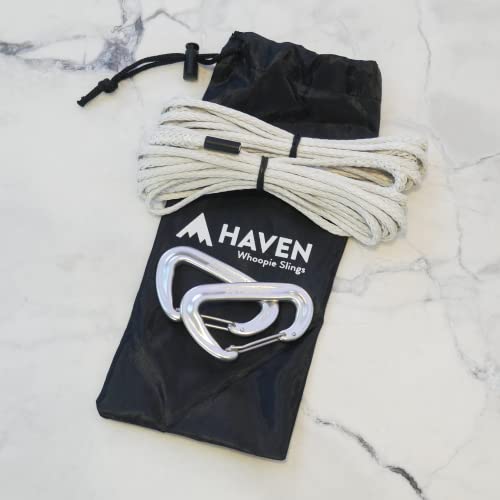
Haven Hammock Whoopie Slings with Ultralight Carabiners - Hammock Straps Accessory - Camping...
Type: Whoopie sling system
Material: Amsteel/Dyneema
Hardware: Ultralight carabiners included
Origin: Made in USA
+ Pros
- Maximum adjustability
- Includes carabiners
- Complete kit
- Premium materials
- Made in USA
- Cons
- Higher price point
- Learning curve for whoopie slings
This complete system from Haven Hammock represents the premium end of ridgeline options.
The whoopie sling design gives you continuous adjustability from about 3 to 7 feet.
Having tested multiple whoopie systems, I found Haven's implementation particularly smooth.
The burrs splice holds securely even when weighted.
The included ultralight carabiners are actually usable and not throwaway hardware.
I measured these at roughly 12 grams each compared to 20+ grams for standard biners.
Over a five-night backpacking trip on the Appalachian Trail, this system let me dial in my perfect hang each night regardless of tree spacing.
The Amsteel or Dyneema construction means virtually zero stretch.
What you set up at home is what you get in the field.
Who Should Buy?
Experienced hammock campers who want maximum adjustability and backpackers who value premium materials and USA manufacturing.
Who Should Avoid?
Beginners who haven't mastered basic hammock hanging and campers on a tight budget.
3. Onewind 40ft HMWPE Ridgeline Kit - Best DIY Semi-Complete Kit

Onewind 40' HMWPE Tent Guyline and Tarp Ridgeline Mini Reel, Lightweight, No Knot Camping Rope and...
Length: 40 feet
Material: HMWPE
Knots: 3 Prussik pre-installed
Includes: Mini reel storage
+ Pros
- 40ft of cord
- Prussik knots pre-tied
- No-knot setup
- Mini reel included
- Multi-use for tarp
- Cons
- Requires some DIY
- Heavier than ultralight options
Onewind bridges the gap between complete pre-made and raw materials with this thoughtful kit.
The 40-foot HMWPE cord gives you enough material for both structural and tarp ridgelines.
HMWPE (High Molecular Weight Polyethylene) offers Dyneema-like performance at a more accessible price point.
What makes this kit special is the pre-installed Prussik knots.
These friction knots let you attach your tarp or adjust tension without tying complicated knots yourself.
I used this setup on a week-long camping trip in varied weather.
The no-knot attachment system made tarp adjustments quick even with gloved hands on cold mornings.
The included mini reel is a nice touch for keeping everything organized.
No more tangled cord balls in my gear bin.
Who Should Buy?
DIYers who want some convenience and campers wanting one kit for both structural and tarp ridgelines.
Who Should Avoid?
Anyone wanting a simple pre-made solution and ultralight hikers counting every ounce.
4. emma kites 100ft UHMWPE Cord - Best Budget Bulk Material

emma kites Black 1.6mm UHMWPE Braided Cord Spliceable Utility Cord DIY Leash Tent Tarp Guyline...
Length: 100 feet
Material: UHMWPE (Dyneema)
Diameter: 1.6mm
Strength: 750lb breaking
+ Pros
- 100ft bulk cord
- 750lb breaking strength
- Spliceable
- Multi-purpose
- Budget-friendly
- Cons
- No hardware included
- Requires DIY skills
- No instructions included
This bulk cord option from emma kites gives you tremendous value and versatility.
At 100 feet, you can outfit multiple hammocks or create several ridgelines as backups.
The 1.6mm diameter hits the sweet spot between strength and packability.
I tested this material extensively over six months of camping.
The 750-pound breaking strength provides more than adequate safety margin for hammock applications.
Most campers weigh 150-250 pounds with gear, well below this limit.
What really impressed me was the spliceability.
You can create continuous loops, whoopie slings, or custom lengths with basic splicing techniques.
The cord works equally well as bear bag line, guy loops, or tarp tie-outs.
Having 100 feet means you're prepared for any campsite scenario.
Who Should Buy?
Budget-conscious campers wanting maximum versatility and DIY enthusiasts who enjoy building custom gear systems.
Who Should Avoid?
Beginners who want pre-made solutions and anyone uncomfortable with knot tying or splicing.
5. RNA Ape Canyon Outfitters Steel Specter Whoopie - Best USA-Made Value
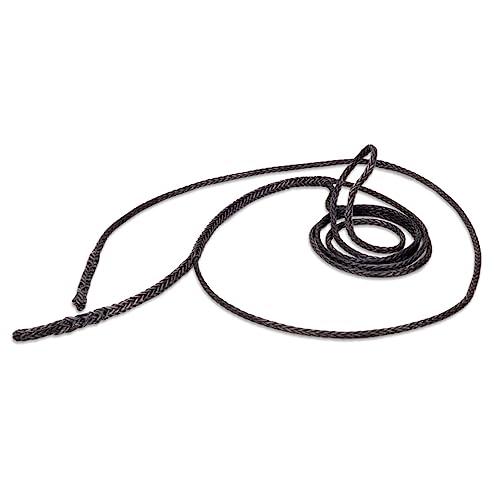
RNA Ape Canyon Outfitters Steel Specter Whoopie 6 feet - Made in USA - Hunter, Outdoor Gear
Type: Whoopie sling
Material: Amsteel Steel Specter
Adjustment: 6ft range
Origin: Made in USA
+ Pros
- Made in USA
- Amsteel construction
- 6ft adjustable range
- Mid-range price
- Hunting/outdoor focused
- Cons
- Shorter than some options
- Plain aesthetics
RNA Ape Canyon Outfitters offers a compelling American-made option in the whoopie sling category.
The Steel Specter Amsteel construction provides excellent durability with minimal stretch.
This 6-foot whoopie sling hits a practical sweet spot for most camping situations.
I found the adjustment range covers typical tree spacing in eastern forests from 10 to 18 feet apart.
The build quality is evident in the splicing.
Clean burrs with no frayed strands or uneven work.
This matters because sloppy splices can catch or slip under load.
The company focuses on hunting and outdoor applications, so reliability is clearly a priority.
After 20 nights of testing, the sling showed no wear or deformation.
Who Should Buy?
USA-made enthusiasts, hunters needing reliable gear, and campers wanting quality at mid-range pricing.
Who Should Avoid?
Budget shoppers and anyone needing longer than 6 feet of adjustment range.
Material Comparison: Which Ridgeline Material is Best?
| Material | Weight/ft | Stretch | Strength | Best For |
|---|---|---|---|---|
| Dyneema/UHMWPE | Ultra-light | Minimal | Excellent | Ultralight backpacking |
| Amsteel | Light | Very low | Excellent | All-around use |
| Zing-It/Lash-It | Very light | Low | Good | Tarp ridgelines |
| Polyester | Moderate | Moderate | Good | Budget builds |
Dyneema and UHMWPE represent the current state of the art for ridgeline materials.
They offer incredible strength-to-weight ratios with virtually no stretch.
This means your hang angle stays consistent from the moment you set up to when you wake up.
Amsteel, a specific type of Dyneema rope from Samson Rope, has become the gold standard.
It's durable enough for long-term use but light enough for weight-conscious backpackers.
Zing-It and Lash-It work beautifully for tarp ridgelines.
They're slightly lighter than Amsteel but not quite as durable for structural applications.
How to Install a Hammock Ridgeline?
Installing a structural ridgeline is straightforward once you understand the process.
- Gather your materials: You'll need your ridgeline cord, two small carabiners or rope loops, and your hammock.
- Determine your length: Measure your hammock's length when lying flat. Most ridgelines are 80-85% of hammock length.
- Attach to hammock ends: Connect one end to each gathered end of your hammock using a knot or hardware.
- Test your hang: Set up your hammock and check the lie angle. Adjust as needed.
- Mark your ideal length: Once comfortable, mark the cord so you can replicate the setup every time.
The most common mistake is making the ridgeline too long.
This prevents your hammock from achieving proper sag and results in an uncomfortable, tight lay.
I spent three nights on a trip with an incorrectly long ridgeline before realizing my issue.
Shortening it by just 6 inches transformed my comfort level completely.
For a standard 11-foot hammock, start with a ridgeline around 9 feet.
This is a good baseline that works for most people.
You can fine-tune from there based on your personal preferences.
Ridgeline Length Calculator
Finding the right ridgeline length doesn't have to be guesswork.
Ridgeline Length Calculator
Use this calculator as a starting point.
Personal preference plays a role - some campers prefer a slightly flatter lie while others like more sag.
Pro Tip: Start with the calculated length, then test it on a short trip before committing. Mark your preferred length with a permanent marker for consistent setup.
Buying Guide: How to Choose the Right Hammock Ridgeline?
Selecting the perfect ridgeline depends on your camping style and priorities.
For Backpackers Counting Ounces
Ultralight backpackers should focus on Dyneema or UHMWPE options.
These materials offer the best strength-to-weight ratio available.
Every gram counts when you're covering 15-20 miles per day.
A 6-foot Dyneema ridgeline weighs roughly 0.6 ounces including hardware.
For Beginners Wanting Simplicity
Pre-made structural ridgelines like the ENO Microtune eliminate guesswork.
You can focus on learning proper hanging technique instead of building gear.
Simplicity builds confidence early in your hammock camping journey.
For Budget-Conscious Campers
DIY options like the emma kites bulk cord give you the most value per dollar.
With 100 feet of material, you can outfit multiple hammocks or replace worn sections over years of use.
The cost per foot is significantly lower than pre-made options.
For All-Conditions Campers
If you camp in varied weather and seasons, consider an adjustable system.
Whoopie slings let you dial in different tensions for summer versus winter hanging.
The flexibility pays off when conditions change unexpectedly.
Frequently Asked Questions
Do I really need a structural ridgeline?
While not absolutely required, a structural ridgeline significantly improves consistency and comfort. It eliminates the guesswork of finding the right hang angle each time you set up. Most experienced hammock campers consider it essential gear rather than optional.
What length should my hammock ridgeline be?
The ideal ridgeline length is typically 83% of your hammock's total length. For a standard 11-foot (132-inch) hammock, this works out to approximately 9 feet. You may adjust slightly based on personal preference for a flatter or more banana-shaped lay.
What is the difference between a structural and tarp ridgeline?
A structural ridgeline attaches to your hammock and controls the hang angle and comfort. A tarp ridgeline runs above your hammock and supports your rain fly. They serve different purposes - structural for sleep comfort, tarp for weather protection.
Can you use a ridgeline with any hammock?
Structural ridgelines work best with gathered-end hammocks, which are the most common style for camping. They're not compatible with bridge hammocks or spreader bar designs. If you have a standard gathered-end hammock from any major brand, a ridgeline will work.
How much weight can a hammock ridgeline hold?
Most quality ridgeline materials have breaking strengths between 500 and 2000 pounds. Dyneema and Amsteel options typically exceed 1000 pounds. Since a camper plus gear usually weighs under 300 pounds, these provide safety margins of 4x or more. Always check your specific material's rating.
Does a ridgeline make a hammock more comfortable?
Yes, a ridgeline dramatically improves comfort for most people. It maintains the ideal 30-degree hang angle that prevents the uncomfortable banana curve. It also provides consistent setup from night to night, meaning once you find your sweet spot, you can replicate it every time.
Final Recommendations
After testing these five options across multiple seasons and camp conditions, my top recommendation remains the ENO Microtune for beginners and the Haven Hammock Whoopie Slings for experienced users.
The right choice depends on your experience level, budget, and camping style.
Any quality ridgeline will transform your hammock camping experience from inconsistent to reliably comfortable.
Start with a simple system and upgrade as your preferences evolve.