
Hard Paddle Board 2026: Complete Buying Guide
Hard paddle boards (also called rigid, epoxy, or composite boards) are the traditional choice for serious paddlers seeking unmatched glide performance, stability, and responsiveness on the water. Unlike their inflatable counterparts, these solid SUP boards are crafted from EPS foam cores wrapped in layers of fiberglass, epoxy resin, and sometimes carbon fiber or wood veneer. The result is a board that tracks straighter, surfs better, and handles rough water with confidence.
Whether you are just starting your paddleboarding journey or looking to upgrade from an inflatable model, understanding what makes a quality hard paddle board is essential. The market has evolved significantly in 2026, with manufacturers introducing advanced construction technologies like Gatorshell, Tuflite V-Tech, and Ricochet that offer improved durability without sacrificing performance.
This comprehensive guide covers everything you need to know about choosing, maintaining, and enjoying a hard paddle board. From understanding different board types and modern construction methods to comparing hard versus inflatable options and finding the right board for your budget, we will help you make an informed decision that matches your paddling goals.
Types of Hard Paddle Boards
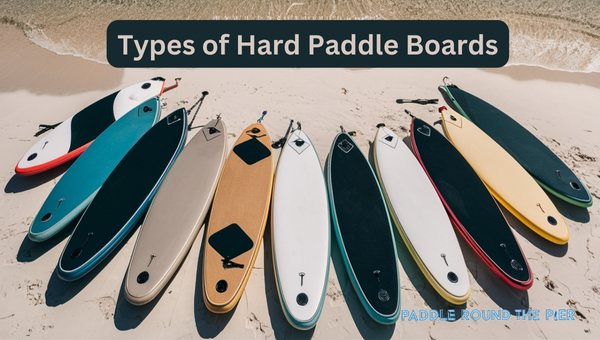
When selecting a hard paddle board, understanding the different types available is crucial. Each category is designed with specific activities, skill levels, and water conditions in mind. The right board type will significantly impact your enjoyment and progression in the sport.
Below is a comparison of the four main hard paddle board categories, highlighting their ideal use cases and characteristics:
| Board Type | Length Range | Width Range | Best For | Skill Level |
|---|---|---|---|---|
| All-Round | 10'-11'6" | 30"-34" | Recreation, yoga, light surf | Beginner to Intermediate |
| Touring | 11'6"-14' | 28"-32" | Long-distance paddling, expeditions | Intermediate to Advanced |
| Racing | 12'6"-14' | 24"-28" | Competition, speed training | Advanced |
| Surfing | 7'-10'6" | 28"-32" | Wave riding, ocean paddling | Intermediate to Advanced |
1. All-Round Boards
All-round boards are the most popular choice for beginners and recreational paddlers due to their exceptional versatility. These boards typically measure between 10 and 11 feet 6 inches in length and 30 to 34 inches in width, offering a stable platform that works well across various water conditions.
The planing hull design found on most all-round boards sits on top of the water rather than cutting through it. This creates excellent stability for beginners learning to balance, practicing SUP yoga, or paddling with children or pets on board. The wider deck provides ample space for gear, making these boards suitable for casual day trips and fishing excursions.
While all-round boards do not excel in any single category, their jack-of-all-trades nature makes them ideal for paddlers who want one board that can handle flatwater cruising, light surf, and family recreation. Popular models in this category include the ISLE Versa and BOTE HD, both offering durable construction and user-friendly designs that help new paddlers build confidence quickly.
2. Touring Boards
Touring boards, also called expedition or displacement hull boards, are engineered for efficiency over long distances. Their defining characteristic is the pointed nose (displacement hull) that slices through the water rather than skimming across the surface. This design reduces drag and improves tracking, allowing paddlers to cover more miles with less fatigue.
These hard paddle boards typically range from 11 feet 6 inches to 14 feet in length, with narrower widths between 28 and 32 inches. The increased length provides better glide performance, meaning the board maintains momentum between paddle strokes. This efficiency is essential for day touring and multi-day expeditions where conserving energy matters.
Most touring hard boards feature additional deck rigging for securing gear, drainage holes for shedding water, and multiple fin configurations for different conditions. The Pau Hana Endurance and Starboard Touring are excellent examples of this category, offering the speed and stability needed for serious paddling adventures.
3. Racing Boards
Racing hard paddle boards represent the pinnacle of performance design. Built for maximum speed and efficiency, these boards prioritize glide and tracking over stability. They feature extremely narrow widths (often 24 to 28 inches), extended lengths (12 feet 6 inches to 14 feet), and lightweight carbon fiber construction that minimizes weight while maintaining rigidity.
The displacement hull on racing boards is more pronounced than on touring models, with a deep V-shaped bottom that cuts through chop and maintains straight-line tracking. Every design element serves the goal of reducing drag and maximizing speed. The boards sit lower in the water, which improves stability at speed but requires advanced balance skills when stationary.
Racing boards are not recommended for beginners due to their tippy nature and specialized handling characteristics. However, for competitive paddlers and fitness enthusiasts seeking the ultimate workout tool, boards like the SIC Maui RS and Naish Javelin deliver exceptional performance that can make the difference between podium finishes and also-ran status.
4. Surfing Boards
Surf-specific hard paddle boards combine the glide of a SUP with the maneuverability of a traditional surfboard. These boards are significantly shorter than other types, typically measuring 7 to 10 feet 6 inches, with rockered noses that prevent pearling (nose-diving) when dropping into waves.
The design emphasizes responsiveness and turning ability. A curved rocker profile from nose to tail allows the board to pivot quickly, while narrower tails and specialized fin setups provide the grip needed to carve along wave faces. Thicker rails add volume for stability when waiting for sets, while maintaining the sensitivity required for radical turns.
Construction durability is critical for surf SUPs since they endure repeated impacts with waves, rocks, and the ocean floor. Many manufacturers reinforce the nose and tail with additional fiberglass layers or specialized composites. The Surftech Generator and BOTE Flood are popular choices that balance surf performance with enough stability for flatwater paddling when the surf is flat.
Hard vs Inflatable Paddle Board Comparison
One of the most common questions prospective paddlers ask is whether to choose a hard paddle board or an inflatable SUP. The answer depends on your specific needs, storage situation, transportation options, and performance expectations. Both types have distinct advantages and trade-offs that are worth understanding before making an investment.
Hard paddle boards generally offer superior performance characteristics. The rigid construction provides better glide, more efficient tracking, and immediate response to paddle strokes. When surfing or racing, this responsiveness translates to better wave-catching ability and higher potential speeds. Hard boards also tend to be more stable for their width since they do not flex under the paddler's weight.
However, inflatable paddle boards have improved dramatically in recent years and offer compelling advantages for certain users. Their portability is unmatched; a deflated iSUP fits in a backpack and can be checked as luggage when flying. Storage is equally convenient, requiring only a closet corner rather than garage wall space or ceiling racks. Modern construction using military-grade PVC and drop-stitch technology has made quality inflatables surprisingly rigid and durable.
| Feature | Hard Paddle Board | Inflatable Paddle Board |
|---|---|---|
| Performance | Superior glide, tracking, and speed | Good for recreation, some flex noticeable |
| Storage | Requires dedicated space, wall or ceiling rack | Fits in closet, minimal space needed |
| Transport | Requires roof rack or truck bed | Fits in car trunk, can fly with it |
| Durability | Rigid but prone to dings and cracks | Bounces off rocks, highly impact-resistant |
| Weight | Generally lighter (15-30 lbs) | Heavier due to pump and bag (20-35 lbs) |
| Price Range | $800 - $3,500 | $400 - $1,500 |
| Repair | Requires fiberglass/epoxy skills | Simple patch kit repairs |
Choose a hard paddle board if you prioritize performance, plan to surf or race, have adequate storage space, and own a vehicle with roof racks. Opt for an inflatable if you need maximum portability, have limited storage, travel frequently, or are just getting started and want a lower-cost entry point. For those considering the inflatable route, foldable paddle boards offer another space-saving alternative worth exploring.
Materials and Construction
Modern hard paddle boards are sophisticated composite structures that balance weight, durability, and performance through careful material selection and manufacturing techniques. Understanding these construction methods helps you evaluate quality and choose a board that matches your priorities.
The foundation of nearly every hard paddle board is an EPS (expanded polystyrene) foam core. This lightweight foam provides the board's basic shape and buoyancy while keeping overall weight manageable. The density of the foam core affects both durability and weight; higher density cores resist denting better but add ounces to the finished product.
Traditional Fiberglass and Epoxy
The most common construction method involves wrapping the EPS core in multiple layers of fiberglass cloth, then saturating the fabric with epoxy resin. This creates a hard, protective shell that gives the board its rigidity and strength. The number of fiberglass layers, their orientation, and the quality of the resin all impact the final product's characteristics.
Entry-level boards typically use two layers of fiberglass, while premium boards may incorporate three or more layers in high-stress areas like the nose and tail. The fiberglass-to-resin ratio is also important; too much resin adds unnecessary weight, while too little compromises structural integrity. Quality manufacturers use vacuum bagging techniques to achieve optimal resin distribution and eliminate excess material.
For more detailed information on paddle board materials, visit our guide on what paddle boards are made of.
Advanced Composite Technologies
Leading manufacturers have developed proprietary construction technologies that push the boundaries of performance and durability. These advanced methods often command premium prices but deliver meaningful benefits for serious paddlers.
Carbon Fiber Construction: High-end racing and touring boards frequently incorporate carbon fiber layers, which offer exceptional stiffness-to-weight ratios. Carbon fiber is significantly stronger and lighter than fiberglass, allowing manufacturers to create boards that are both lighter and more responsive. The downside is cost; carbon fiber boards typically start around $2,000 and can exceed $3,500 for elite models.
Gatorshell Technology (BOTE): This proprietary construction uses a specialized composite material that is highly impact and scratch-resistant. Gatorshell boards are significantly more durable than standard epoxy boards, making them ideal for fishing, river paddling, and family use where bumps and scrapes are inevitable. The material has a slightly textured finish that also provides better grip when wet.
Tuflite V-Tech (Surftech): Surftech's Tuflite construction combines a molded EPS core with fiberglass and epoxy layers, then wraps the board in a protective PVC shell. The result is a board that resists dings, dents, and UV damage better than traditional hand-shaped boards while maintaining excellent performance characteristics.
Ricochet Construction (Pau Hana): Pau Hana's Ricochet technology uses a specialized composite blend that bounces back from impacts that would crack or dent standard epoxy boards. This makes Ricochet boards particularly popular for whitewater river paddling and surf applications where board-to-rock contact is a regular occurrence.
Wood and Bamboo Veneers
Many manufacturers offer boards with wood or bamboo veneers as both an aesthetic choice and a performance enhancement. These thin layers of natural material are laminated over the fiberglass shell, providing additional rigidity and a distinctive appearance. The wood grain pattern is unique to each board, giving owners a one-of-a-kind product.
Beyond aesthetics, wood veneers add compressive strength to the board's structure. Bamboo is particularly popular due to its sustainability credentials and excellent strength-to-weight ratio. Pau Hana and Starboard both offer attractive bamboo veneer options on many of their touring and all-round models.
Choosing the Right Hard Paddle Board
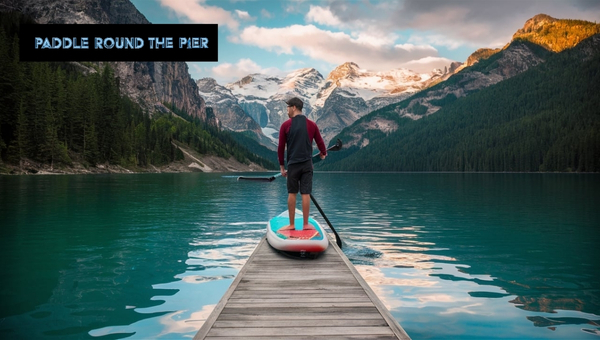
Selecting the perfect hard paddle board requires balancing multiple factors including your physical characteristics, skill level, intended use, and budget. This section breaks down the key decision points to help you narrow down the overwhelming number of options on the market today.
Board Length, Width, and Volume
The dimensions of a hard paddle board directly impact its stability, speed, and maneuverability. Understanding how length, width, and volume work together helps you find a board that matches your abilities and goals.
Length: Longer boards track straighter and glide more efficiently, making them ideal for touring and racing. However, they are also more difficult to turn and transport. Shorter boards (under 10 feet) offer exceptional maneuverability for surfing and playing in waves but sacrifice straight-line stability. For most beginners and recreational paddlers, a board between 10 and 11 feet 6 inches offers the best balance of glide and handling.
Width: Width is the primary factor determining stability. Boards wider than 32 inches provide excellent stability for beginners, yoga practitioners, and larger paddlers. Narrower boards (under 30 inches) are faster and more efficient but require better balance skills. As a general rule, add one inch of width for every 25 pounds of body weight above 150 pounds to maintain proportional stability.
Volume: Measured in liters, volume indicates how much weight a board can support while maintaining proper flotation. To calculate your minimum volume requirement, multiply your body weight in pounds by 1.2 for beginners, 1.0 for intermediate paddlers, or 0.8 for advanced paddlers. Add extra volume if you plan to carry significant gear, children, or pets.
Weight Considerations
Board weight affects both on-water performance and off-water handling. Lighter boards accelerate faster, are easier to carry to the water, and simpler to load onto roof racks. However, achieving low weight often requires expensive materials like carbon fiber, which drives up the price significantly.
Most quality hard paddle boards weigh between 20 and 30 pounds. Boards under 25 pounds are considered lightweight and are excellent choices if you will be transporting your board frequently or need to carry it long distances. However, lightweight paddle boards often sacrifice some durability to achieve their reduced weight, so consider your typical paddling environment when making this trade-off.
For paddlers who cannot lift heavy objects or have physical limitations, consider boards with integrated wheels or look into accessories like SUP carts that can transport the board from your vehicle to the water's edge without lifting.
Hull Design and Rocker Profile
The shape of a board's bottom (hull) and the curve from nose to tail (rocker) significantly impact how it interacts with the water. These design elements should match your intended paddling environment.
Displacement Hulls: These V-shaped or rounded hulls cut through the water, creating less drag and better tracking. They are ideal for flatwater paddling, touring, and racing where efficiency matters. Displacement hulls tend to be less stable when stationary but more efficient when moving.
Planing Hulls: These flat bottoms ride on top of the water, providing better stability and maneuverability. They excel in surf conditions and are the standard design for all-round boards. Planing hulls are more versatile but less efficient for long-distance paddling.
Rocker: Boards with more rocker (upward curve at the nose) handle choppy water and waves better by preventing the nose from diving. Flatter rockers provide better speed and tracking on calm water but can submarine in surf or rough conditions.
Price Guide and Budget Considerations
Hard paddle boards span a wide price range from budget-friendly options to high-performance investments. Understanding what you get at different price points helps you set realistic expectations and find the best value for your budget.
Entry Level ($500 - $900): Budget hard boards typically use basic fiberglass construction with lower-grade components. While functional, they are often heavier and less durable than premium options. This tier is suitable for occasional recreational use or paddlers just testing whether the sport is right for them. Brands like Wavestorm and some Costco offerings fall into this category.
Mid-Range ($900 - $1,500): This is the sweet spot for most paddlers. Mid-range boards offer quality construction, reasonable weight, and reliable performance. You will find excellent all-round boards from reputable brands like ISLE, BOTE, and Pau Hana in this range. These boards balance durability and performance with accessible pricing.
Premium ($1,500 - $2,500): Premium boards incorporate advanced materials, refined shapes, and superior construction quality. Expect carbon fiber reinforcements, specialized hull designs, and meticulous attention to detail. This tier is ideal for serious enthusiasts and those seeking specialized performance for racing, touring, or surfing.
Elite ($2,500+): Elite boards represent the cutting edge of paddle board design. Full carbon fiber construction, custom shaping, and race-proven designs dominate this category. These are investments for competitive paddlers and those who demand the absolute best performance regardless of cost.
Top Hard Paddle Board Recommendations by Category
While specific product recommendations change year to year as manufacturers release new models, certain boards have established reputations for excellence in their respective categories. Here are the standout options worth considering in 2026 based on performance, value, and user feedback.
Best All-Round Hard Paddle Board
The ISLE Versa continues to dominate the all-round category with its versatile 10'5" x 32" dimensions, durable construction, and attractive wood veneer finish. Priced around $1,100, it offers exceptional value with features like a full deck pad, bungee cargo system, and three-fin configuration. The Versa excels at everything from casual lake paddling to light surf sessions, making it a true do-it-all board.
Best Touring Hard Paddle Board
For dedicated touring enthusiasts, the Starboard Touring 12'6" represents the gold standard. Its efficient displacement hull cuts through chop while maintaining excellent stability for a board of its length. The integrated bungee cargo systems, FCS inserts for additional gear, and lightweight wood construction make it ideal for multi-day expeditions. Expect to invest around $1,800 to $2,200 for this premium option.
A more budget-friendly touring option is the Pau Hana Malibu Tour, which offers similar performance characteristics at a mid-range price point. Its Ricochet construction adds durability for expedition use where contact with rocks and debris is likely.
Best Racing Hard Paddle Board
Competitive paddlers consistently rank the SIC Maui RS 14' among the top racing boards available. Its carbon fiber construction keeps weight under 25 pounds while the refined hull design maximizes glide and tracking. The RS excels in both flatwater and open ocean conditions, making it a versatile race machine. This performance comes at a premium, with prices starting around $2,800.
Best Surf Hard Paddle Board
The Surftech Generator strikes an excellent balance between surf performance and flatwater usability. Its 10'6" length provides enough glide for casual touring while the rocker profile and narrow tail excel in waves up to head-high. Tuflite construction ensures the board can handle the inevitable bumps and scrapes of surfing without showing excessive wear. Pricing typically falls in the $1,200 to $1,400 range.
Most Durable Hard Paddle Board
If durability is your top priority, the BOTE HD with Gatorshell construction is nearly indestructible. This board can be dropped, scraped against rocks, and subjected to family use without showing significant damage. The trade-off is slightly higher weight (around 30 pounds), but for fishing, river paddling, or shared family boards, the durability advantage is worth it. The HD retails for approximately $1,200 to $1,400.
Common Mistakes When Buying Hard Boards
Avoiding common pitfalls can save you money, frustration, and the hassle of selling a board that does not meet your needs. Here are the mistakes we see most often and how to avoid them.
Buying a Board That Is Too Small
Many beginners, influenced by surfing culture or wanting to save money, choose boards that are too short and narrow for their skill level. A board that is unstable leads to frustration, frequent falls, and often premature abandonment of the sport. Start with a board that offers more stability than you think you need; you can always sell it and size down as your skills improve.
Ignoring Weight and Transport Logistics
A beautiful 14-foot touring board is worthless if you cannot lift it onto your vehicle or store it in your apartment. Before purchasing, verify that you can transport and store the board you are considering. Measure your storage space and vehicle carrying capacity, then test-lift boards at a local shop to ensure you can handle the weight comfortably.
Choosing the Wrong Board Type
Be honest about how you will actually use the board. If 90% of your paddling will be casual lake outings, do not buy a specialized racing board because you might someday enter a race. Conversely, if you dream of multi-day expeditions, resist the temptation to buy a short, surf-oriented board. Match the board type to your primary intended use.
Buying Used Boards Without Inspection
The used hard paddle board market offers excellent value, but uneducated buyers often end up with damaged goods. When inspecting a used board, check for delamination (soft spots where the fiberglass has separated from the foam core), stress cracks around the fin box and handle, and evidence of previous repairs. A board with minor scratches is fine, but soft spots or structural damage often indicate expensive problems.
Used Hard Paddle Board Buying Tips
Purchasing a used hard paddle board can save you 40% to 60% compared to retail prices while still delivering excellent performance. The key is knowing what to look for and where to shop.
Start your search at reputable sources like local paddle shops that sell demo boards, dedicated SUP retailers with used sections, and verified online marketplaces. Avoid buying sight unseen unless the seller has an excellent return policy and provides detailed photos of every surface.
When evaluating a used board, perform a thorough inspection following this checklist:
- Press Test: Press firmly on the deck and bottom, especially around the rails and fin boxes. Soft spots indicate delamination, which is expensive to repair properly.
- Visual Inspection: Look for spiderweb cracks, stress fractures, and discoloration that might indicate UV damage or water intrusion.
- Fin Box Check: Ensure fin boxes are intact with no cracks. Damaged fin boxes are among the most expensive repairs.
- Repair History: Ask about previous repairs. Quality repairs are fine, but amateur epoxy jobs often hide bigger problems.
- Weight Check: A waterlogged board will be noticeably heavier than its specifications indicate. If possible, weigh the board to verify.
Expect to pay between $300 and $800 for a quality used hard paddle board depending on age, condition, and brand. Premium boards from reputable manufacturers hold their value better and are safer bets in the used market.
Maintenance and Care Tips for Hard Paddle Boards
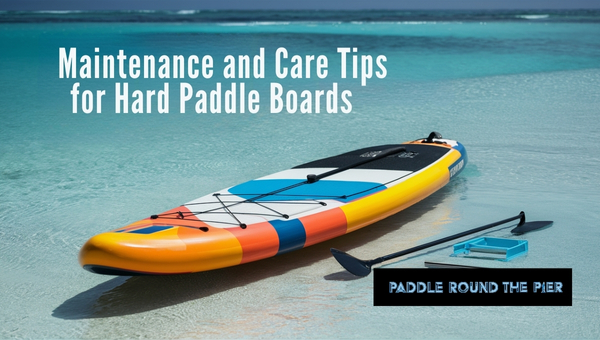
Proper maintenance extends the life of your hard paddle board and preserves its performance characteristics. A few simple habits can prevent costly repairs and keep your board looking great for years.
Routine Cleaning Practices
Rinse your board with fresh water after every use, especially after paddling in saltwater. Salt residue attracts moisture and can corrode metal components over time. Use a mild soap solution and soft sponge for periodic deep cleaning, avoiding harsh chemicals that might damage the finish.
Pay special attention to the fins, fin boxes, and leash plug, as these areas collect debris that can affect performance or cause damage. Remove the fins periodically to clean out sand and salt buildup from the boxes.
Always dry your board completely before storing it. Moisture trapped in storage can lead to mold, mildew, and eventual delamination. A quick wipe-down with a towel prevents most moisture-related issues.
Storage and Transport Tips
Store your hard paddle board in a cool, dry place away from direct sunlight. UV exposure degrades fiberglass and epoxy over time, causing yellowing and brittleness. If outdoor storage is necessary, invest in a quality board bag with UV protection.
Use wall racks or ceiling hoists to keep your board off the ground and protected from accidental damage. Ensure racks have padding to prevent pressure points that can cause dents. Never store heavy objects on top of your board, as this can permanently deform the shape.
During transport, secure your board properly using roof racks with appropriate padding or interior padding if carried inside a vehicle. Use cam straps rather than bungee cords, which can snap and allow the board to shift. Check straps periodically on long drives to ensure they remain tight.
Repair Guidelines
Even with careful handling, dings and scratches happen. Addressing damage promptly prevents water intrusion and more serious problems like delamination.
For minor scratches and surface damage, a small amount of waterproof epoxy resin or clear nail polish prevents water from seeping into the foam core. Apply carefully and allow to cure completely before returning the board to the water.
Cracks and dings requiring fiberglass repair need more attention. Clean the damaged area thoroughly, sand lightly around the edges, and apply fiberglass cloth with epoxy resin following a repair kit's instructions. Professional repair shops typically charge $75 to $200 for significant repairs, while DIY kits cost $30 to $50.
Fin box repairs and major structural damage should be handled by professionals. Attempting complex repairs without experience often makes the problem worse and more expensive to fix properly.
Frequently Asked Questions
Is a hard or inflatable paddle board better?
Neither is universally better; it depends on your priorities. Hard paddle boards offer superior performance, glide, and responsiveness, making them ideal for surfing, racing, and dedicated touring. Inflatable boards provide unmatched portability, easier storage, and better durability against impacts. Choose a hard board if performance is your top priority and you have storage space. Choose an inflatable if you need portability, travel frequently, or have limited storage.
What do you call a hard paddle board?
Hard paddle boards are also called rigid paddle boards, epoxy boards, composite boards, solid SUPs, or hardboard SUPs. These terms all refer to boards with a solid construction, typically EPS foam core wrapped in fiberglass and epoxy resin, as opposed to inflatable boards that deflate for storage.
Are hard paddle boards better for beginners?
Hard paddle boards can be excellent for beginners because they offer superior stability and easier balance compared to inflatables of the same width. The rigid platform feels more secure underfoot. However, beginners should choose wider all-round boards (32+ inches) rather than narrow performance models. The downside is that hard boards are more expensive and harder to store and transport than beginner-friendly inflatables.
How much does a hard paddle board cost?
Hard paddle boards range from $500 to over $3,500 depending on construction quality and features. Entry-level boards cost $500-$900, mid-range quality boards run $900-$1,500, premium boards with advanced construction are $1,500-$2,500, and elite carbon fiber racing boards can exceed $3,500. Most recreational paddlers find the best value in the $900-$1,500 range.
How do you carry a hard paddle board?
Most hard paddle boards have a center carry handle that allows one-person transport. Grip the handle and balance the board against your hip or thigh while walking. For longer distances, balance the board on your head using the center handle or a shoulder strap system. When transporting by vehicle, use roof racks with padding or store the board inside with adequate padding to prevent damage.
Do hard paddle boards flip easily?
Hard paddle boards do not flip easily when properly matched to the paddler's skill level. Wider boards (30+ inches) offer excellent stability for beginners and are very difficult to flip accidentally. Narrow racing boards (under 28 inches) are inherently less stable and require advanced balance skills. Board width, not the hard construction itself, determines stability. Most hard all-round boards are more stable than comparable inflatables.
Is paddleboarding good for osteoporosis?
Paddleboarding can be beneficial for osteoporosis prevention and management. The activity provides weight-bearing exercise that helps maintain bone density while being low-impact and easy on joints. Balancing on the board engages core muscles and improves overall stability, which helps prevent falls. However, individuals with severe osteoporosis should consult their doctor before starting and may want to begin with wider, more stable boards.
How long do hard paddle boards last?
Quality hard paddle boards can last 10 to 20 years or more with proper care. The EPS foam core does not degrade, and fiberglass/epoxy construction is highly durable. UV exposure, impact damage, and water intrusion are the primary factors that shorten board lifespan. Storing the board properly out of direct sunlight and repairing dings promptly will maximize its longevity. Many paddlers pass well-maintained boards down through generations.
How many calories does paddle boarding burn?
Paddle boarding burns approximately 300 to 430 calories per hour for recreational paddling. More vigorous activities like SUP racing or surfing can burn 500 to 700 calories per hour. A two-hour paddle session typically burns 600 to 860 calories, making it an excellent full-body workout that engages the core, shoulders, back, and legs while being low-impact on joints.
What is the best hard paddle board brand?
Top hard paddle board brands include ISLE, BOTE, Pau Hana, Surftech, Starboard, SIC Maui, and Naish. ISLE and BOTE excel at all-round recreational boards, Pau Hana and Surftech lead in durability technologies, and Starboard and SIC Maui dominate the touring and racing categories. The best brand depends on your specific needs, budget, and intended use. Look for brands with established reputations and good warranty support.
Conclusion
Choosing the right hard paddle board is an investment in years of water-based enjoyment and fitness. By understanding the different board types, construction technologies, and key selection factors outlined in this guide, you are well-equipped to make an informed decision that matches your paddling goals and lifestyle.
Remember that the best hard paddle board for you is one that fits your skill level, intended use, storage situation, and budget. Whether you choose a versatile all-round board like the ISLE Versa, a touring specialist from Starboard, or a budget-friendly entry model to get started, the key is getting on the water and enjoying the unique experience that only a rigid SUP can provide.
As paddle board technology continues to advance in 2026, we are seeing better durability, lighter weights, and improved performance across all categories. Take care of your board with proper maintenance, and it will reward you with a decade or more of adventures on the water. For more paddle boarding guides, tips, and recommendations, explore our other resources and get ready to paddle round the pier!