
How to Store Food Safely From Bears (September 2026)
If you have ever watched a black bear rip open a cooler like it was a sandwich wrapper, you understand why learning how to store food safely from bears is not optional in bear country. Our team has spent over 80 combined nights camping and paddling in grizzly and black bear habitat across Yellowstone, Glacier, the Adirondacks, and the Sierra, and the mistakes we have seen (and made) could fill a small book.
Most food-related bear incidents are not aggressive attacks. They are burglary. A bear learns that coolers, packs, and tents contain food, and it helps itself. The fix is not a louder whistle or a bigger knife. The fix is a system: a bear-resistant container, a 100-foot buffer between your sleeping area and your food, and a consistent cleanup routine. This guide walks through every step, from pre-trip planning to what to do if a bear walks into camp. We also break down six of the most trusted storage products we have personally used or tested so you can match the right gear to your trip.
Our Top 3 Bear Food Storage Picks

BearVault BV425 Sprint
- Lightest hard canister
- IGBC approved
- Transparent polycarbonate
- Doubles as camp stool
How to Store Food Safely From Bears: 8 Rules That Work
Before we get into gear and techniques, these are the rules our team follows on every trip into bear country. Print them, memorize them, and tape them to the inside of your pack lid.
- Store all food, trash, and scented items in a bear-resistant container 100 feet or more from your tent.
- Cook and eat at least 100 feet downwind from where you sleep, never in or near your tent.
- Never keep food, snacks, toiletries, or pet food inside your tent, even in a stuff sack.
- Hang a bear bag at least 12 feet off the ground and 6 feet from the trunk, or use an IGBC-approved canister.
- Strain all dishwater through a fine mesh and pack out the food particles. Scatter the strained water.
- Sleep in clean clothes. Stash your worn cooking layers with your food, not in your sleeping bag.
- Pack out every scrap of trash, including biodegradable peels, fish guts, and grease.
- Carry bear spray on your hip, not in your pack, and know how to use it before you need it.
What Counts as "Food" for Bears (Hint: Almost Everything)
The single most common mistake first-timers make is treating "food" as just the dinner in their pot. Bears investigate anything with a smell, and a black bear's nose is roughly seven times more sensitive than a bloodhound's. That includes deodorant, toothpaste, sunscreen, lip balm, bug repellent, and yes, the wrapper from the granola bar you ate at the trailhead.
Here is the practical rule our team uses: if a curious raccoon could smell it through your tent wall, treat it as bear food and store it with the rest of your rations. That includes:
- All human food, including energy bars, jerky, and freeze-dried meals
- Pet food and dog treats (more on this below)
- Scented toiletries, soaps, and sunscreens
- Cookware, utensils, and water bottles that have touched food
- Trash, fruit peels, and empty packaging
- Used tampons, diapers, and anything else with human scent
The "low odor" food trend helps, but do not confuse lower odor for no odor. As BearWise points out, freeze-dried meals still register as food to a bear. Low-odor simply buys you more time and distance before a curious bear investigates.
The 4 Bear-Resistant Storage Methods Compared
There is no single best way to store food in bear country. The right method depends on your trip length, the regulations where you are going, and whether you have trees, a car, or a boat. Here is how the four most common methods stack up.
Bear Canisters (Hard-Sided)
Hard-sided canisters made from polycarbonate or proprietary polymer blends are the gold standard for backpackers. They are IGBC-approved (Interagency Grizzly Bear Committee tested), they require no hanging, and they work above tree line where a traditional bear hang is impossible. The trade-off is weight. Most weigh 2 to 3.5 pounds empty, which adds up fast on a long trip.
Bear Bags (Fabric)
Fabric bear bags like the Ursack Major XL are IGBC-approved in many regions and weigh a fraction of a hard canister (8.8 ounces versus 2 to 3 pounds). They pack flat and slide into tight pack pockets. The trade-off is that they are not always legal. Some national parks, including sections of the Sierra and parts of the Adirondacks, require hard-sided canisters only. Fabric bags also do not protect against rodent chewing, only against bear bites.
Bear Hangs
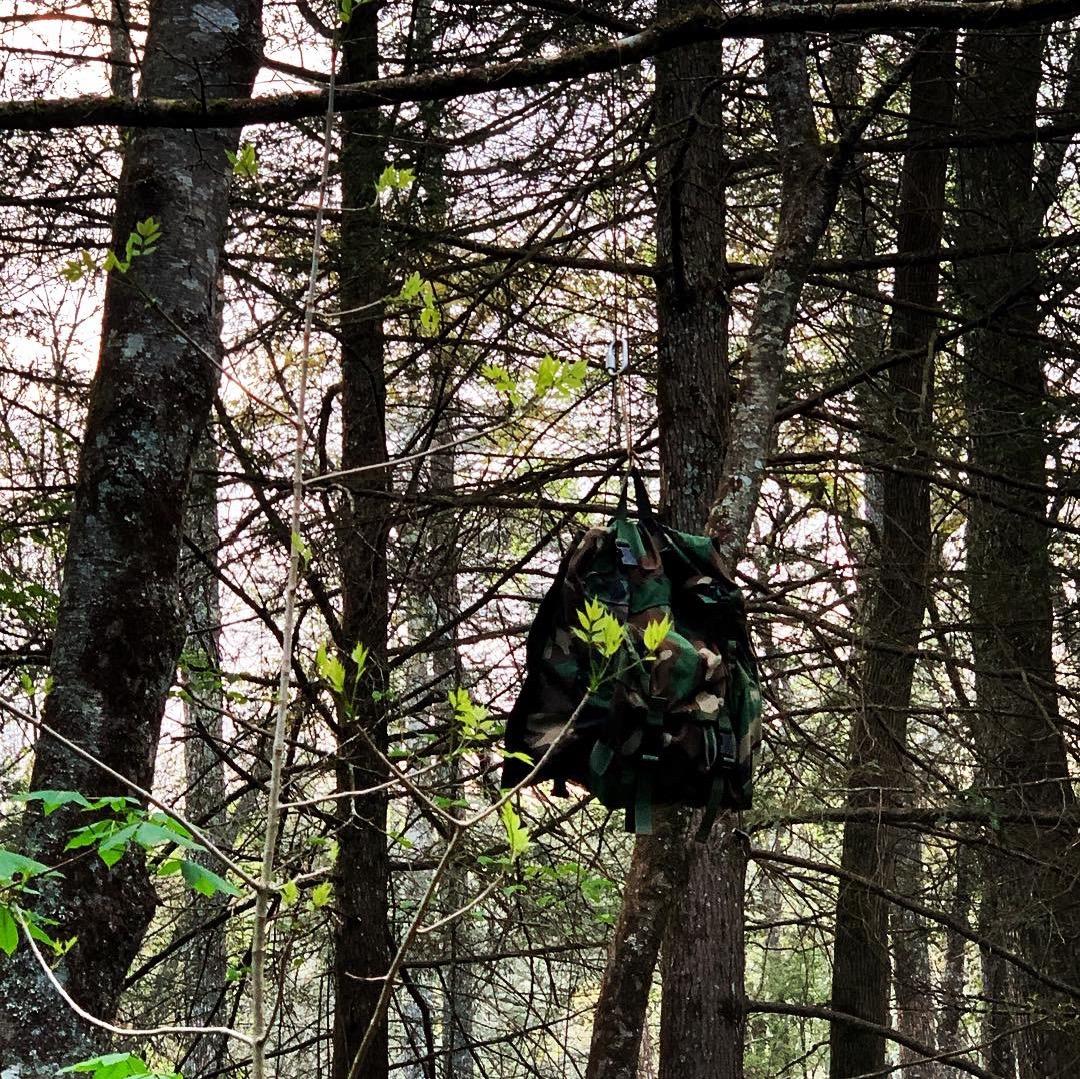
The classic PCT-style counterbalance hang uses a rope and two stuff sacks hoisted 12 feet off the ground and 6 feet from the trunk. Hangs are free, lightweight, and require almost no gear. They also fail more often than canisters. Bears in the Sierra and Rockies have learned to cut ropes, break branches, and wait for hangs to drop. Hangs also take 20 to 30 minutes to set up correctly the first few times.
Metal Food Lockers
Most established frontcountry campgrounds in grizzly country (Yellowstone, Grand Teton, Glacier) provide thick metal food lockers at each campsite. These are the easiest option when available. Just confirm the lid closes fully and lock it every time, even during the day. A bear that learns an unlocked locker contains food will work the door indefinitely.
Distance Rules and the Campsite Triangle
The National Park Service and most land management agencies require a 100-foot buffer between your sleeping area, your cooking area, and your food storage area. This forms what experienced outfitters call the campsite triangle.
Set your tent upwind of your cooking spot. Cook and eat at one corner of the triangle, store food at the second corner 100 feet away, and sleep at the third corner another 100 feet from the cook site. Wind matters because odor travels. If the wind blows from your cook site directly into your tent, you have created an attractant corridor right into your sleeping bag.
Within your cook area, keep the bear canister or hang as far from the heat source as practical. Spilled grease, crumbs, and food wrappers all add up, and a single bacon-greasy pan left in an open pack has drawn bears from more than a mile away in the Rockies.
How to Hang a Bear Bag the Right Way
If you are going to hang, do it the way the Pacific Crest Trail does it: the counterbalance method.
You will need roughly 50 to 75 feet of paracord or 550 cord, two stuff sacks, and a tree branch at least 15 feet off the ground and 6 feet out from the trunk. Split your food between two bags. Tie each bag to one end of the rope, throw the rope over the branch, and hoist one bag up until the other hangs at the same height on the opposite side of the branch. The idea is that a bear cannot pull either bag down without first pulling the other one up, and most bears figure out that game is not worth the effort.
Three common hang mistakes: hanging too low (anything under 10 feet gets reached), hanging too close to the trunk (bears climb), and using thin cord (bears chew). Bring proper rope, not dental floss.
Choosing and Packing a Bear Canister
If you are going to buy one piece of bear storage gear, buy a canister. They are the most foolproof method and they double as a camp stool. Here is what to look for.
IGBC certification is non-negotiable. The Interagency Grizzly Bear Committee maintains the list of products that have passed their standardized bear-resistance testing. If a canister is not IGBC-approved, it is not actually bear-resistant, no matter what the marketing says.
For solo trips of 1 to 4 nights, a compact 7 to 9 liter canister is the sweet spot. For groups or week-long trips, look at 11+ liter options or plan to split food across two canisters. Pack efficiently: heavy dense food at the bottom, frequently accessed snacks on top, and toiletries in their own labeled bag inside the canister. Our team has found that pre-bagging every meal in a quart-sized zip before packing saves 20 minutes of fumbling every evening.
Car Camping vs Backcountry Storage
Many campers assume their car is a bear box. It is not. Yosemite bears in particular have learned to open locked car doors, and reports from Yellowstone and the Smokies document bears peeling back soft-top Jeeps and popping camper shells. Even a fully closed sedan is vulnerable if the windows are cracked for ventilation.
If you car camp in bear country, the safest options are: an established metal food locker, an IGBC-approved canister inside the vehicle with all doors locked, or storing food inside the trunk with a carabiner-style lock. Never leave food, coolers, or even empty peanut butter jars on the picnic table or in plain view inside the car.
Backcountry storage is simpler. You are far from a vehicle, so a canister or hang is your only realistic option. Plan your food weight around the canister. We have learned to budget roughly 1.5 pounds of food per person per day, which means a 5-day trip needs a larger canister than a 2-day trip, even for the same person.
Cleanup, Dishwater, and Trash Handling
A clean camp is just as important as a properly stored one. Bears investigate lingering smells for days after the food is gone.
After every meal, strain your dishwater through a fine mesh screen or bandana to catch every food particle. Pack out the particles in a dedicated trash bag. Scatter the strained water at least 200 feet from any water source, campsite, or trail. Do not pour grease or food scraps into the cat hole. Bears dig for buried food and will rip up the ground for a tablespoon of bacon grease.
Pack out all trash, including biodegradable peels, apple cores, and fish guts. "Biodegradable" applies to a compost pile at home, not to a grizzly's memory. Used menstrual products, soiled diapers, and pet waste all go into your trash bag and out with you.
What to Do If a Bear Approaches Camp
Most bear encounters in camp are not aggressive. The bear is curious, you have food (or smell like food), and it wants to investigate. The right response depends on the bear's behavior.
If the bear is at the edge of camp and has not seen you, back away quietly, make noise so it knows you are human, and give it space to leave. Do not approach for photos. If the bear has already gotten food (ripped a cooler, opened a pack), back away and let it finish. Fighting a bear over a sandwich is how people get hurt.
If the bear charges, that is where bear spray earns its keep. SABRE and Counter Assault sprays are the most cited in Reddit recommendations from backcountry rangers. Spray when the bear is within 30 to 40 feet, aim slightly downward to create a cloud, and keep spraying as the bear moves through it. Do not run. Running triggers chase behavior. As BearWise recommends, talk in a calm low voice, back away slowly, and never make direct eye contact.
Paddling and Boat-Camping Food Storage
Our audience spends a lot of time on the water, and bear storage on a kayak, canoe, or raft trip is its own puzzle. You rarely have a car. You often camp on islands or gravel bars with no suitable hang tree. And every piece of gear that goes into the boat has to fit a hatch.
For multi-day paddle trips, a hard-sided canister is still our top pick. They slide into most kayak hatches, they double as a stool on shore, and they are bear-proof on islands where a curious grizzly might swim across to investigate your camp. If you cannot fit a canister in your hatch, an IGBC-approved fabric bag stows flatter and lighter, but check the regulations for the river or lake you are running. Some, like sections of the Bowron Lakes in British Columbia, require hard canisters.
Two tricks our team has used on kayak trips: rig a small dry bag for trash separate from your food canister (so the smell of a tuna-foil wrapper never ends up next to your freeze-dried dinners), and bring a small piece of Dyneema cord for emergency hangs on the rare beach that has a sturdy branch.
Common Mistakes First-Timers Make
After watching dozens of new backpackers and car campers fumble through their first bear-country trip, here are the mistakes we see most often.
Stashing a snack in the tent vestibule "just for the night." A granola bar in a vest pocket is a granola bar a bear will reach for. Sleep without snacks in the tent, period.
Treating the canister like a lockbox. Canisters work because bears learn they are not worth the effort. They only work if they are closed. A bear that finds an open canister once teaches every other bear in the drainage to check every canister. Always close and lock the lid, even in your tent vestibule.
Leaving dog food in the tent. Dog food smells stronger to a bear than most human food. Treat kibble and treats exactly like your dinner and store them in the canister or hang.
Trusting a Ziploc bag. Ziplocs are splash-proof, not smell-proof. A bear can smell through one in still air. Use Ziplocs inside your canister for organization, never as the primary barrier.
Skipping bear spray because "I have a canister." Canisters store food. Bear spray buys you the 5 to 10 seconds you need if a bear charges your tent at 3 a.m. Carry both.
Recommended Bear Food Storage Gear
Now that you know the system, here is the gear our team trusts. We picked six products across the major categories (hard canisters, fabric bags, bear spray) and the major use cases (solo backpacking, group trips, paddling, car camping). Every product on this list is IGBC-approved or, in the case of bear spray, EPA-registered.
Comparing the Best Bear Food Storage Options
| Product | Key Specs | Action |
|---|---|---|
| BearVault BV425 Sprint |
|
Check Latest Price |
 SABRE Frontiersman MAX SABRE Frontiersman MAX |
|
Check Latest Price |
 Backpackers' Cache Backpackers' Cache |
|
Check Latest Price |
| UDAP Bear-Resistant Canister |
|
Check Latest Price |
| Ursack Major XL |
|
Check Latest Price |
 Counter Assault Bear Keg Counter Assault Bear Keg |
|
Check Latest Price |
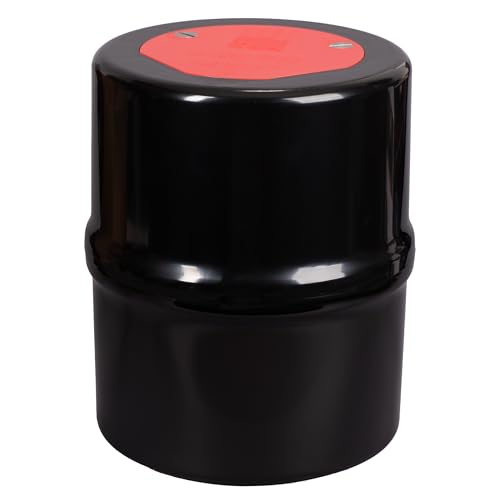
1. BearVault BV425 Sprint - Best Bear Canister for Solo Backpackers
BearVault BV475 Trek Portable Bear Resistant Canister - Large
Weight: 2 lbs
Capacity: 7+ liters
Material: Polycarbonate
IGBC certified
+ Pros
- Lightest hard canister in the BearVault line
- Transparent sides make food easy to locate
- Doubles as a camp stool
- Tool-free opening with practice
- Grizzly-tested and IGBC approved
- Cons
- Threads can stick if food bags are packed too close to lid
- Smallest sizes harder to grip and open in cold weather
- Not approved in some specific regions such as the Adirondacks
The BV425 Sprint is the smallest and lightest hard canister BearVault makes, and it is the one our team reaches for on overnight and weekend trips. At 2 pounds empty and roughly 7 liters of usable space, it fits easily into a 50-liter pack with room to spare for a sleeping bag and shelter. On a recent 3-night trip in the Sierra, it swallowed 9 dehydrated dinners, 6 bars per day, and the cook kit with room left over.
The transparent polycarbonate body is a small detail that makes a huge difference in camp. You can spot the peanut butter at the bottom without dumping everything out. The wide opening fits most freeze-dried meal pouches flat, which is faster than funneling them into a narrow neck.
Why we picked it for first-time buyers
The BV425 is the lowest-friction entry into bear canisters. It opens without tools once you get the technique down (twist while pressing the lid), it does not require any tree to function, and it is accepted in nearly every national park that mandates canisters. If you only buy one canister and you mostly do solo or duo trips under four nights, this is the one.
Capacity and packing strategy
For 1 to 4 nights with normal caloric intake, the BV425 is plenty. For longer trips, plan to either upgrade to the BV500 or split food with a partner who carries a second canister. A good packing order is dense calorie items first (nuts, cheese, tortillas), then full meal pouches flat in the middle, then daily-access snacks and toiletries on top in their own bag.
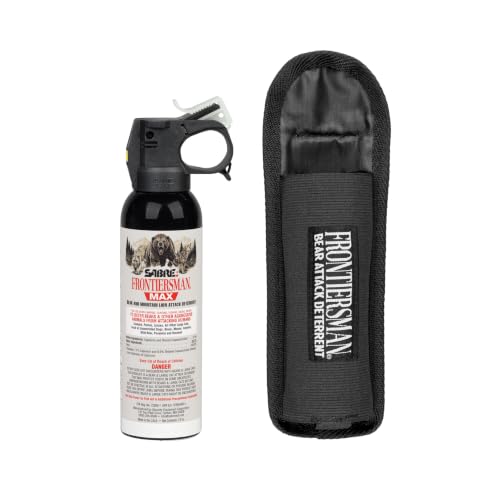
2. SABRE Frontiersman MAX Bear Spray - Best for Reactive Defense
SABRE Frontiersman MAX Bear Spray, EPA Registered for 9 Animal Species
Range: 40 ft
Formula: 2.0% Capsaicinoids
EPA registered for 9 species
Includes holster
+ Pros
- EPA registered to deter 9 species including bears and mountain lions
- 40-foot effective range with 6-foot fog pattern
- Maximum strength 2.0% major capsaicinoids formula
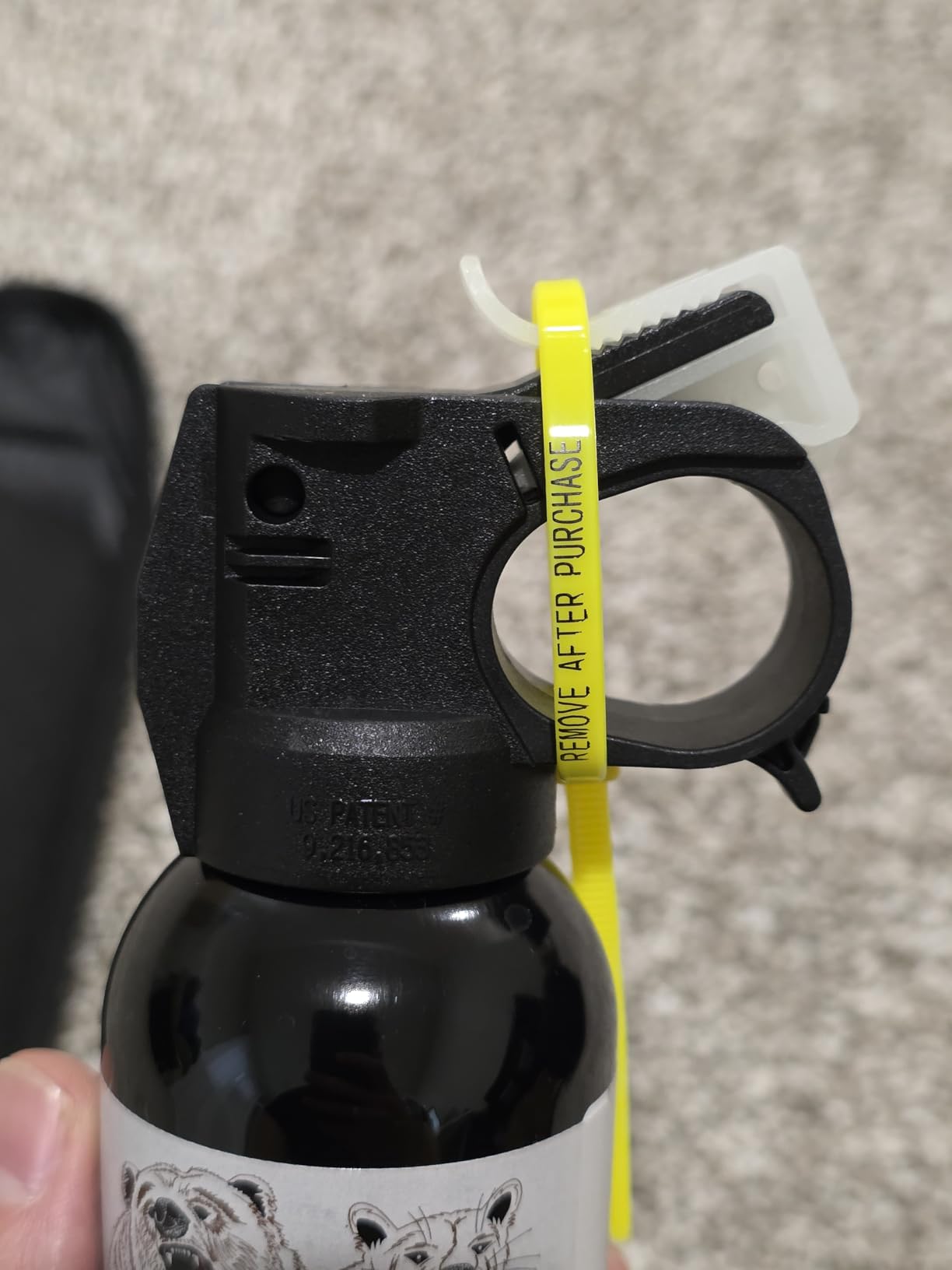
- Glow-in-the-dark safety clip for fast night access
- Quiet quick-draw belt holster included
- Cons
- Adds noticeable bulk and weight to a belt or pack strap
- Safety tab can feel stiff and needs practice
- Not allowed on airplanes even in checked luggage
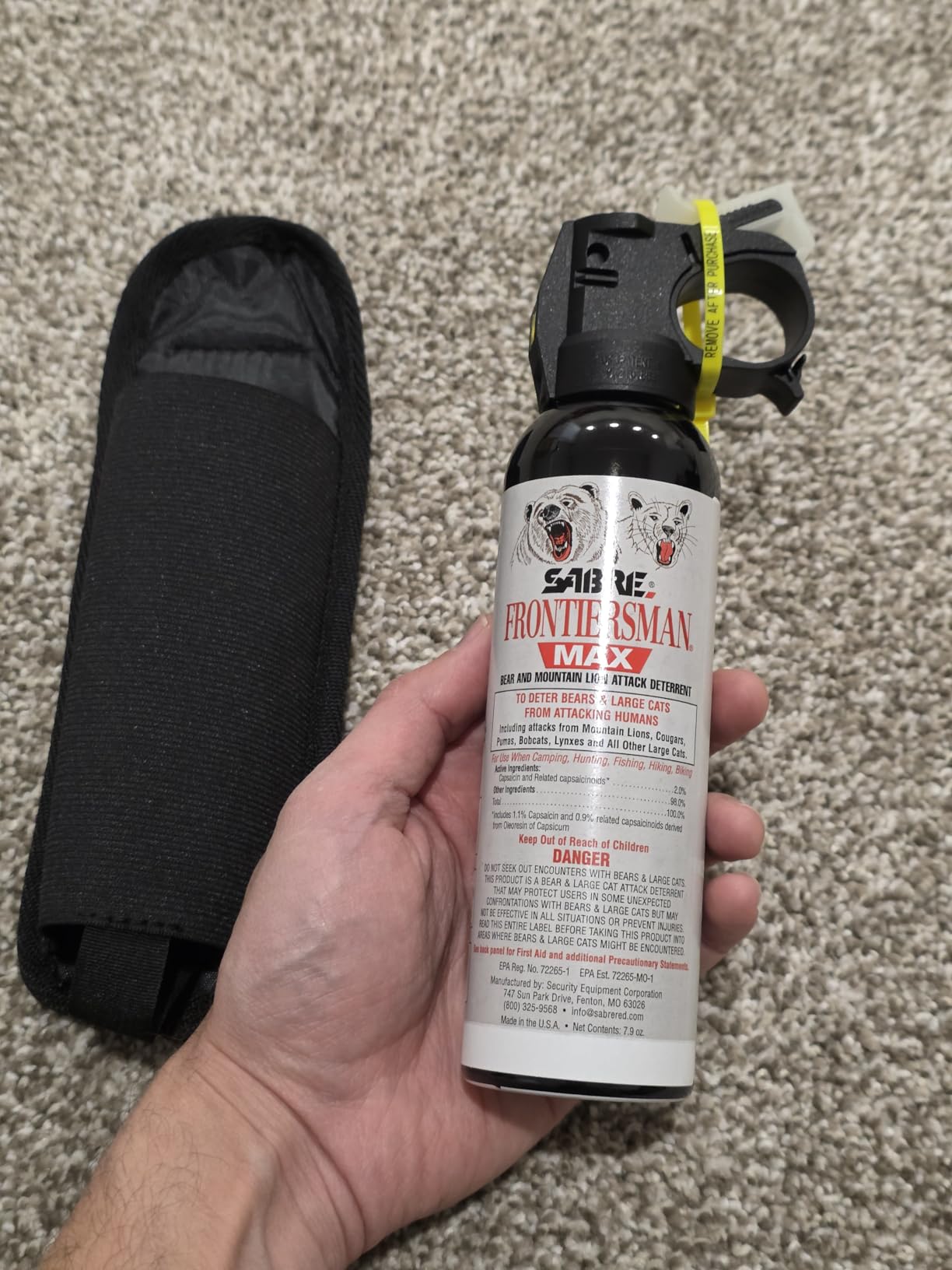
Canisters store food. Bear spray buys you the 5 to 10 seconds you need if prevention fails. SABRE is the spray our team carries on every trip into grizzly country, and the Frontiersman MAX is their top-tier option with a 40-foot effective range and 2.0% major capsaicinoids, which is the EPA maximum.
What we like about this specific can is the holster system. The quiet elastic belt holster lets you draw without Velcro noise that might spook a curious bear into charging, and the glow-in-the-dark safety clip is genuinely useful at 3 a.m. when you do not want to fumble for a headlamp just to find the safety.
Range and deployment in real conditions
40 feet sounds far until you are standing in a clearing at dawn with a grizzly closing fast. In our team's practice drills, the fog pattern is wide enough (6 feet) that you do not need pinpoint aim. You do need to deploy early. Once a bear is inside 20 feet, even a perfect shot is unlikely to stop a committed charge.
How it fits in the system
Bear spray is not a substitute for food storage. It is the last line of defense. The belt holster adds noticeable bulk on long days, but if you are in grizzly country, that bulk is the cheapest insurance you can carry. Practice drawing it before your trip. Reviewers consistently mention that the safety tab requires a firm thumb push that is harder than it looks when your hands are shaking.
3. Backpackers' Cache - Most Durable Hard Canister
Backpackers' Cache - Bear Proof Container
Weight: 3 lbs
Material: ABS polymer
Shape: Rectangular
IGBC compliant
+ Pros
- Solid ABS polymer construction that handles rough use
- Rectangular shape packs efficiently and doubles as a camp chair
- IGBC compliant and accepted in many national parks
- Lid locks securely and opens with a coin or fingernail
- Good storage capacity for 3 to 5 day trips
- Cons
- Heavier than some competing canisters at 3 lbs empty
- Requires a coin or flat tool to open the latch
- Only available in black which is harder to find in the dark
- Large size may be bulky for solo overnight trips
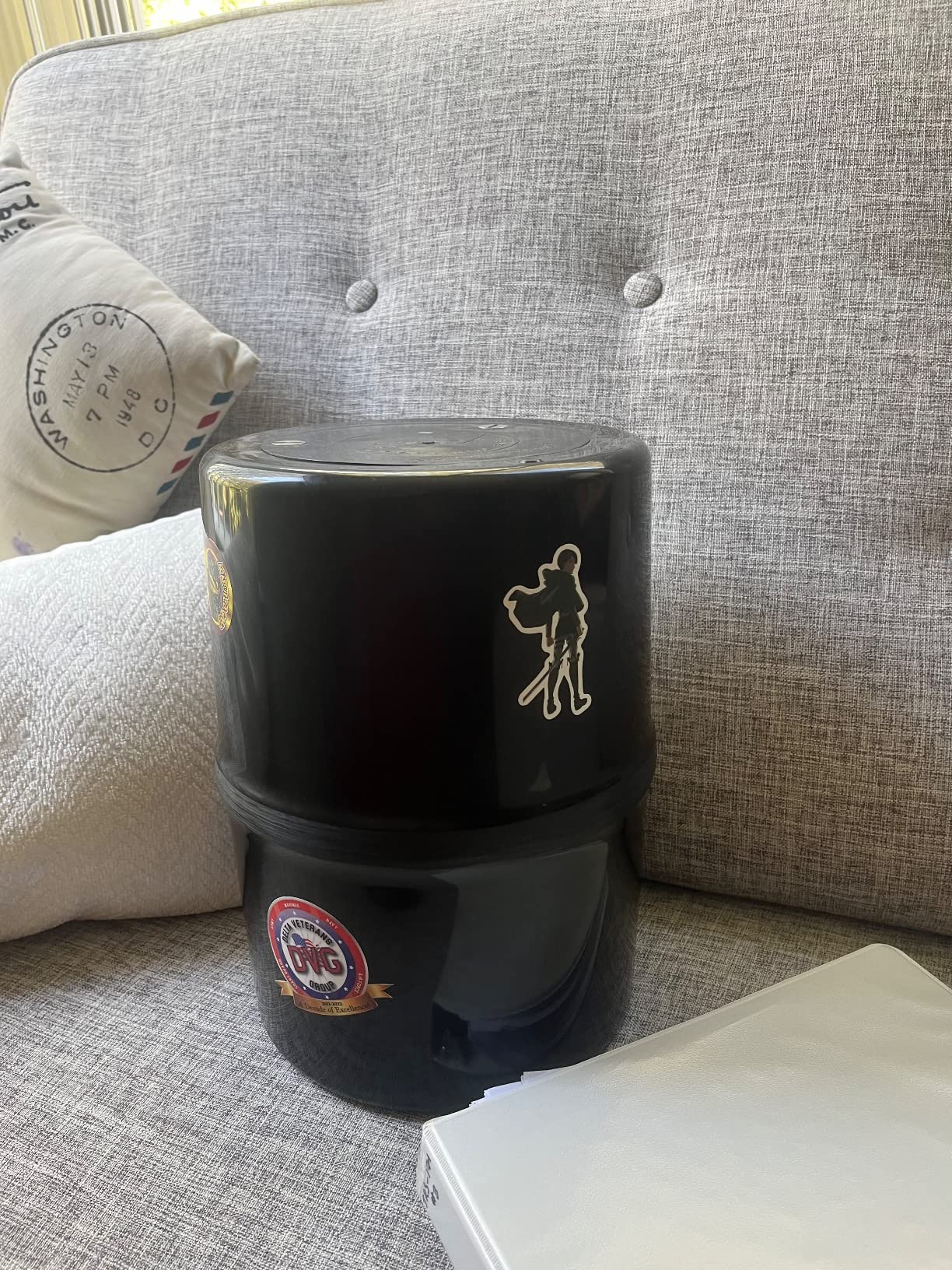
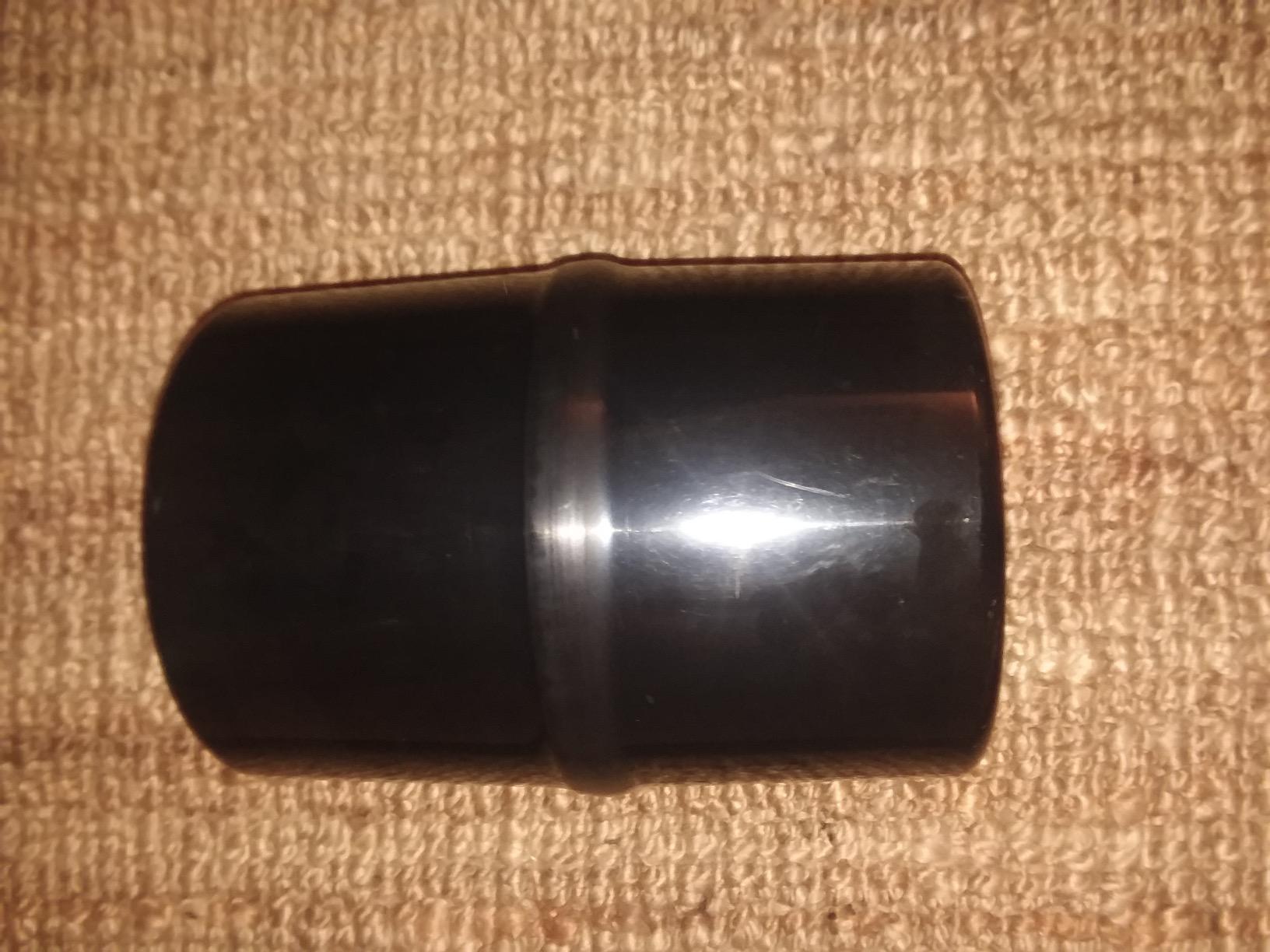
The Backpackers' Cache is the most rugged-feeling canister in our lineup. The ABS polymer shell is thicker and more impact-resistant than the polycarbonate used on most bear canisters, and after years of being dragged over granite, dropped off tailgates, and kicked down slopes, ours still looks brand new.
The rectangular shape is the killer feature. It slides into a backpack vertically in a way that round canisters cannot, which leaves room for a sleeping bag or tent on either side. It also doubles as a camp chair more comfortably than a round canister because the flat sides do not roll.
Who this canister is for
If you are a hard-use backpacker who does not baby gear, this is the canister. It is heavier than the BearVault options, but for trips where you are tossing the pack around (river descents, hunting trips, off-trail bushwhacking) the extra durability is worth the weight. Our team has also found it ideal for car camping as a dedicated food locker substitute when the campground does not provide one.
Opening mechanism trade-offs
The lid locks with a metal fastener that needs a coin or flat tool to open. Reviewers consistently mention this as a downside, but in practice it is fast once you build the habit of keeping a coin in your pocket. The benefit is that no bear, no matter how determined, is opening that latch.
4. UDAP Bear-Resistant Canister - Best Value Hard Canister
Udap BRC No-Fed-Bear Food Container Bear Resistant Black/Red
Weight: 2.4 lbs
Capacity: 8 liters
Material: Proprietary polymer
IGBC approved
+ Pros
- IGBC-approved bear-resistant design from a grizzly attack survivor
- Lightweight at 2.4 lbs and fits in most 60L packs
- Holds 4 to 6 days of food depending on packing density
- Opens easily with a coin while resisting claws and teeth
- Durable polymer blend with metal fasteners
- Cons
- Heavier than some competing canisters for the storage volume
- Opening requires a coin or tool which may be misplaced
- Must be stored upside down to remain waterproof
- Narrow opening impedes access to contents
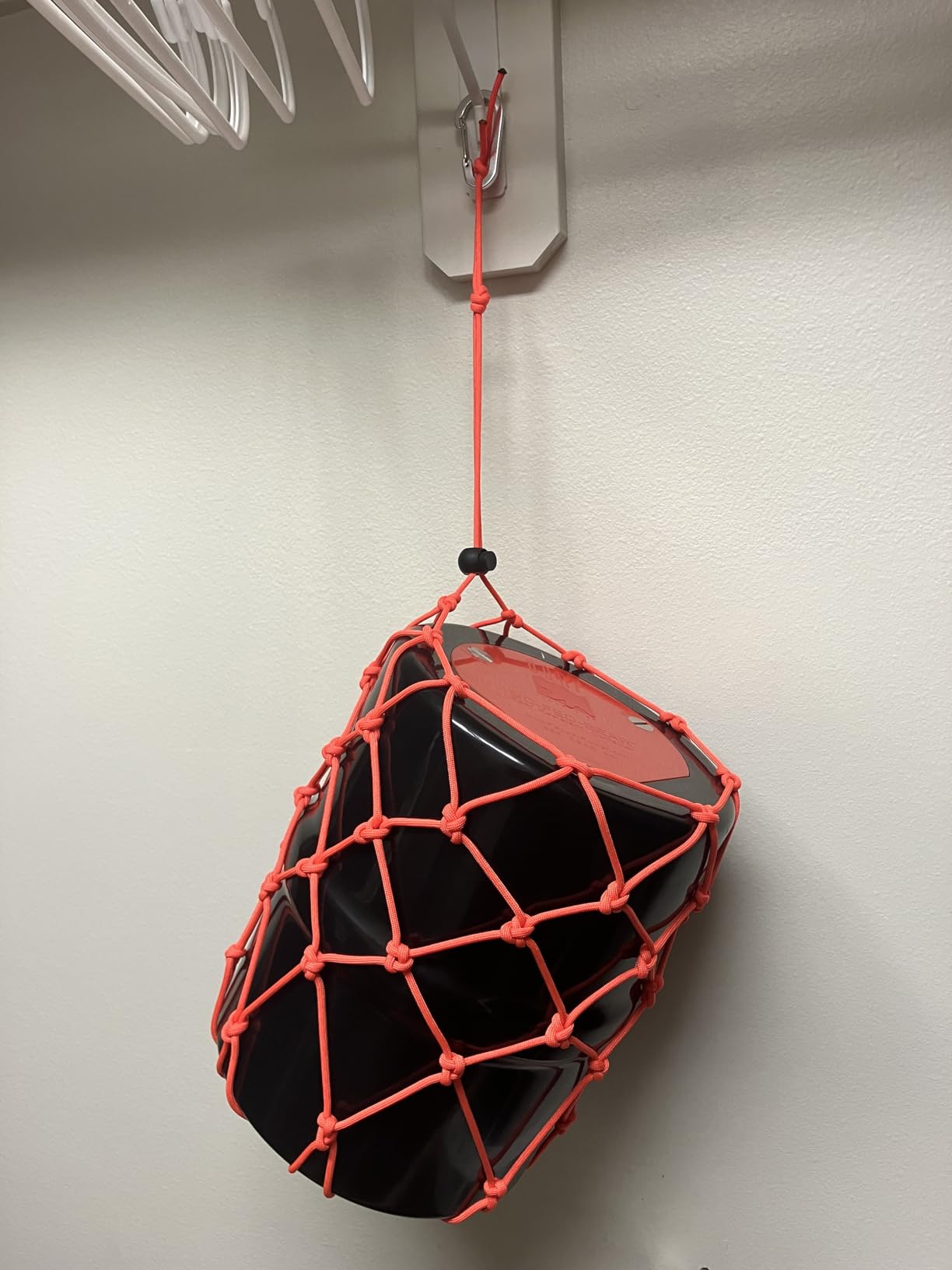
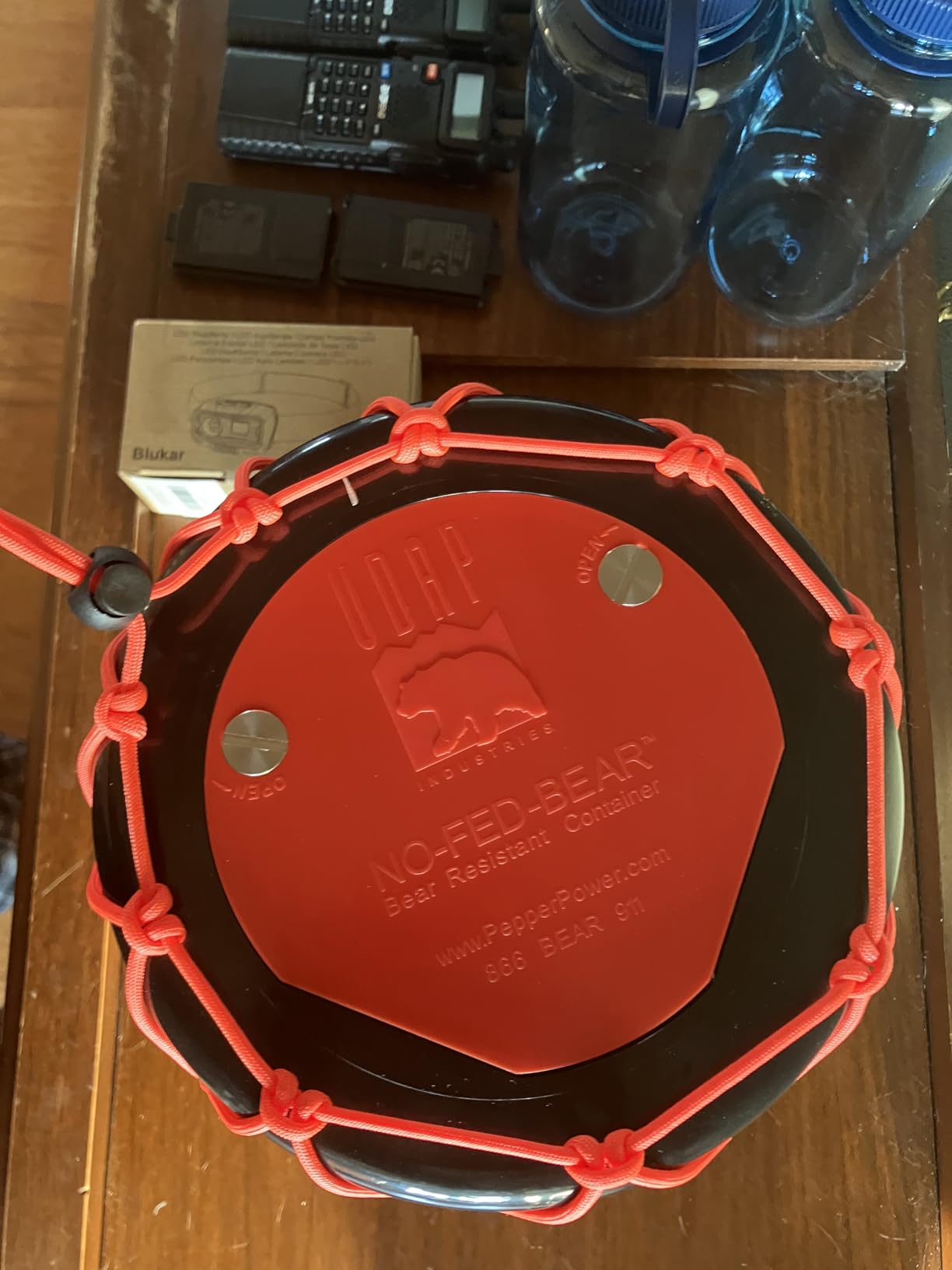
The UDAP canister is the value pick in the hard canister category, and the story behind it matters. It was designed by Mark Matheny, a grizzly attack survivor, and the build shows that experience. At 2.4 pounds empty and 8 liters of capacity, it is in the sweet spot for 4 to 6 day solo trips or shorter group trips.
What we like about the UDAP is the form factor. At 8 inches in diameter and 10 inches tall, it slides into the brain of most 60-liter packs with room for a sleeping pad on top. The coin-operated latch is simple, fast, and reliably bear-resistant.
Capacity and packing strategy
UDAP rates this canister for 4 to 6 days depending on packing. Our team's experience is that 4 days of dense calories (nuts, cheese, tortillas, dehydrated dinners) is realistic for one person, and 6 days if you are an ultralight packer willing to compress everything. Pre-bagging every meal saves a lot of fumbling around a narrow opening.
Who this is for
Budget-conscious backpackers who still want a certified IGBC canister. The UDAP is the cheapest hard canister we tested that holds a multi-day food load, and it does not cut corners on the bear-resistance certification. If you have never owned a canister and want a low-risk first purchase, this is a strong starting point.
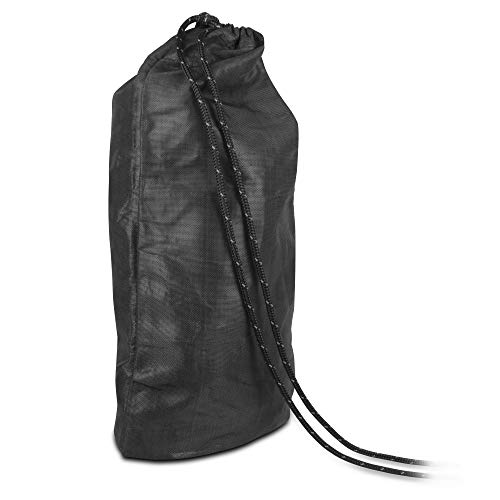
5. Ursack Major XL - Best Lightweight Bear Bag
Ursack Major XL Bear Backpack - Bear Bag for Backpacking - Camping Pack
Weight: 8.8 oz
Capacity: 15 liters
Material: Bear-resistant fabric
IGBC approved
+ Pros
- Passed IGBC bear-resistance testing at only 8.8 oz
- Holds about 15 liters or 7+ days of food for one person
- Flexible fabric packs flat into any pack pocket
- Comes with integrated 6 ft 2500 lb tensile cord
- Effective against rodents and small critters
- Cons
- Not legal in every park where hard canisters are required
- Food may still be crushed by wildlife even if not accessed
- Not waterproof
- food can get wet in rain
- Only rodent-resistant
- not fully rodent-proof
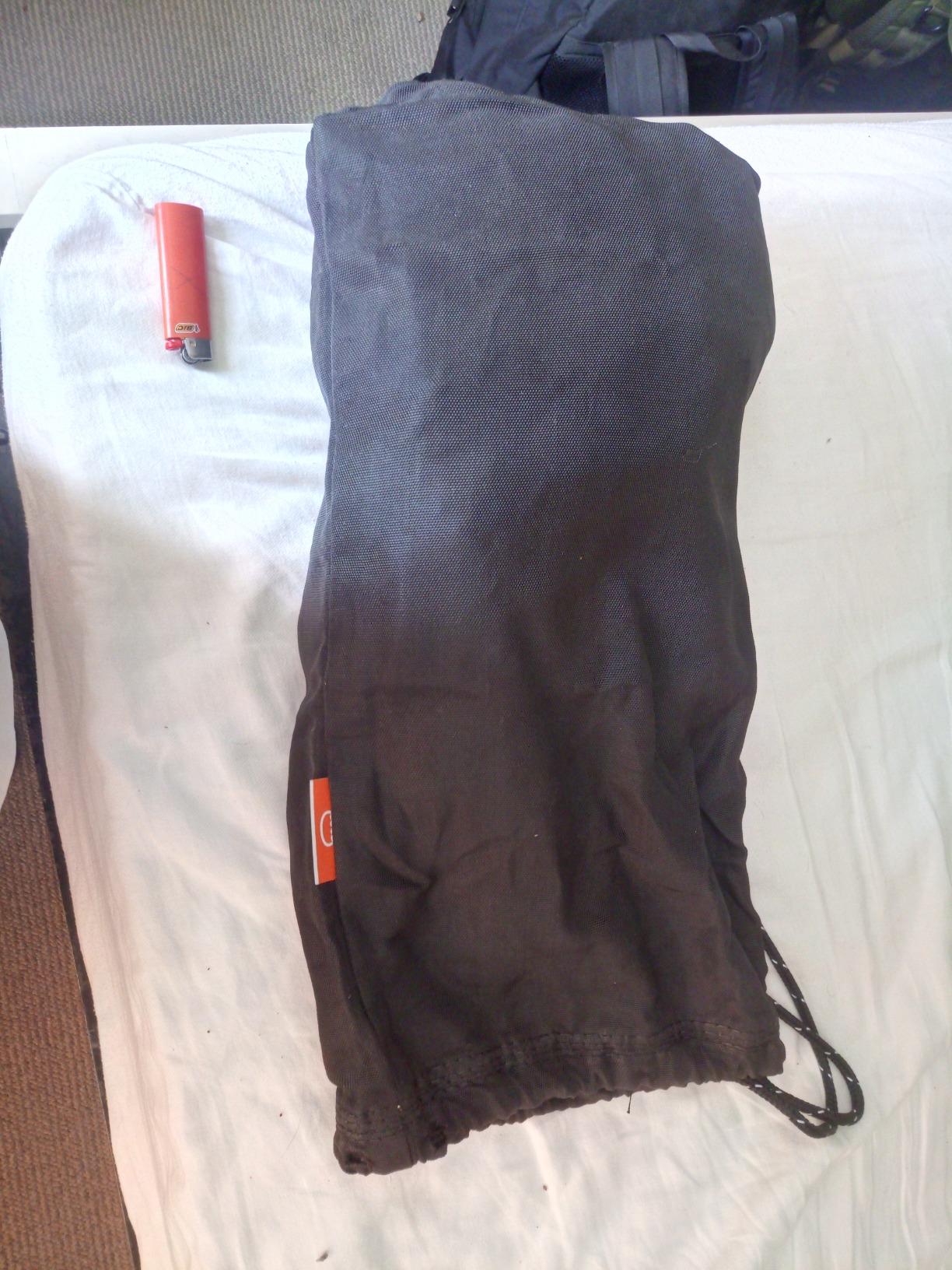
The Ursack Major XL is the lightest IGBC-approved food storage you can buy at 8.8 ounces. That is roughly a tenth of the weight of a comparable hard canister, and on a week-long trip where every ounce matters, that difference is huge.
We have used the Major XL on multiple Sierra trips where hard canisters were not required. The fabric is genuinely bear-resistant. In testing by the IGBC, the bag has been dragged, bitten, and clawed by captive grizzlies without breach. In real-world conditions, a bear can still crush the contents inside without breaking the fabric, so pack your tortillas on top, not your freeze-dried dinners.
Where the Ursack shines
Thru-hiking, ultralight backpacking, and trips where weight matters more than absolute security. The 15-liter capacity swallows a full week of food for one person, especially if you are willing to repackage into smaller bags. The integrated 6-foot cord is rated to 2,500 pounds, which is far more than any bear needs.
Where the Ursack falls short
It is not universally accepted. Some national parks, including parts of the Adirondacks, Adirondack High Peaks, and certain Sierra wilderness areas, require hard-sided canisters only. Always check the specific regulations for your trip before committing. Also, the bag is not waterproof, so line it with a trash compactor bag or dry sack if rain is in the forecast.
6. Counter Assault Bear Keg - Top Rated for Groups and Frontcountry
Counter Assault Bear Keg Food Storage Container Yellow
Weight: 3.5 lbs
Capacity: 716 cubic inches
Material: Proprietary polymer
IGBC and SIBBG approved
+ Pros
- Extremely durable polymer construction that handles hard use
- Approved by both IGBC and SIBBG for use in many national parks
- Bright yellow color makes the canister easy to spot in the woods
- Doubles as a camp stool
- Easy-to-use screw fasteners that resist bear intrusion
- Cons
- Heavier than competing bear canisters at 3.5 lbs empty
- Larger size is overkill for short or solo trips
- Lid must be carefully aligned for fasteners to lock
- Opaque design means you must dig to see contents inside
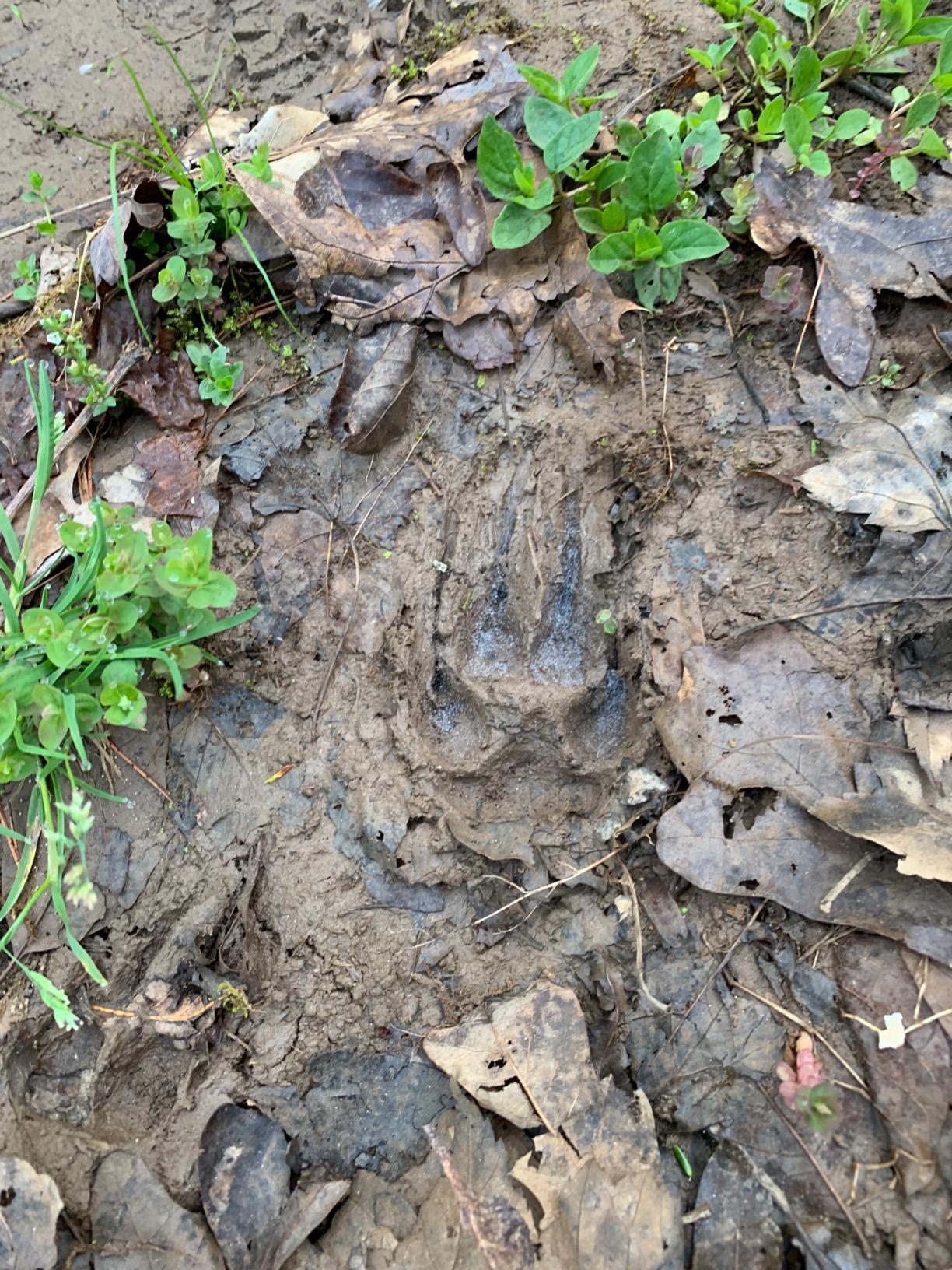
The Counter Assault Bear Keg is the most popular canister in established frontcountry campgrounds, and it is the one our team sees most often in Yellowstone, Grand Teton, and Glacier. At 716 cubic inches of storage and 3.5 pounds empty, it is overkill for solo trips but perfect for groups, family camping, or week-long expeditions.
The bright yellow color is not just aesthetic. After 14 years of camping in bear country, our team has lost track of how many times we have walked through a campsite and spotted a yellow Bear Keg from 50 yards away that an exhausted camper forgot at the site. The high-visibility color alone is worth it.
Who this canister is for
Group trips, family camping, and any situation where you want a single oversized container rather than splitting food across multiple smaller canisters. The Bear Keg is also a smart pick for car camping as a substitute when the campground does not provide a metal food locker.
Real-world performance
The Bear Keg is approved by both the IGBC and the SIBBG (Sierra Interagency Black Bear Group), which means it is accepted in both grizzly and black bear country. Reviewers consistently praise the screw-fastener lid, which closes securely when aligned correctly. The main complaint is the alignment itself. You have to rotate the lid until all four fasteners click into place, which takes a few tries to learn.
How to Choose the Right Bear Storage for Your Trip
Buying bear storage gear without a clear sense of where you will use it is how people end up with the wrong canister. Here is how our team decides.
Check the regulations first
Every national park, national forest, and BLM district has its own food storage rules, and those rules are not optional. The Adirondack High Peaks, the Sierra wilderness above 9,000 feet, and parts of Olympic National Park require hard-sided canisters. The PCT, the AT, and most lower-elevation backcountry both accept and forbid depending on the section. Look up the specific ranger district before you buy anything, especially for fabric bags, which are not universally accepted.
Match capacity to trip length
Solo trips under 4 nights fit in a 7 to 9 liter canister. Longer solo trips need 11+ liters or a fabric bag. Groups should plan on one canister per 2 to 3 people or one oversized canister per 4 to 6 people. Overestimate slightly. Running out of canister space forces bad decisions like leaving food in the tent.
Weight vs convenience
If you are counting ounces for a thru-hike or fastpacking trip, the Ursack is the clear winner at 8.8 ounces. If you are car camping or doing a short backpacking trip where you can afford 2 to 3 pounds of canister, the hard-sided options are more foolproof. There is no shame in carrying a heavier canister if it means you actually use it correctly.
Verify IGBC certification
Any canister or bag worth buying is on the IGBC-approved products list. The certification means the product has passed standardized bear-resistance testing by a captive grizzly. Marketing claims of "bear-proof" or "bear-resistant" without IGBC certification are not meaningful. Counter Assault, UDAP, BearVault, and Ursack are all on the current list.
Frequently Asked Questions
Are ziploc bags smell proof for bears?
No. Ziploc bags are splash-proof, not smell-proof. A black bear's nose is roughly seven times more sensitive than a bloodhound's, and bears can smell through a Ziploc in still air. Use Ziplocs inside your bear canister for organization, never as the primary barrier between food and a bear.
How far should a bear canister be from your tent?
The National Park Service and most land management agencies recommend at least 100 feet between your sleeping area, your cooking area, and your food storage area. This forms the campsite triangle and prevents cooking odors from drifting directly into your tent while you sleep.
Can I keep food in my tent in bear country?
No. Anything with a smell (food, snacks, toiletries, pet food, used cookware) should be stored in your bear canister, bear hang, or metal food locker, not in your tent. A granola bar in a tent vestibule is a granola bar a bear will reach for, and a bear that finds food in your tent is a bear that will come back.
Does pet food need to be stored away from bears?
Yes. Dog kibble and pet treats often smell stronger to a bear than human food. Treat pet food exactly the way you treat your dinner: store it in the bear canister, bear hang, or metal food locker at least 100 feet from your sleeping area. If you camp with a dog, feed your dog away from your tent and pack away any uneaten food immediately.
Do you need bear spray if you have a bear canister?
Yes. A bear canister stores food. It does not stop a charging bear. Bear spray is the last line of defense if a bear ignores your food storage and approaches your camp. Most experienced backcountry rangers and outfitters carry both: a canister for prevention and bear spray on the hip for the 5 to 10 seconds you need if a bear charges.
Final Thoughts: Match the System to Your Trip
How to store food safely from bears comes down to a consistent system, not a single piece of gear. If you are a solo backpacker doing 1 to 4 night trips where trees are scarce, the BearVault BV425 Sprint is our top pick: light, transparent, and IGBC-approved. If you are counting every ounce on a thru-hike, the Ursack Major XL trades some durability for an 8.8-ounce weight class that is hard to beat. If you are car camping with a family or running a group trip, the Counter Assault Bear Keg gives you capacity and high-visibility in one package.
Whatever you choose, pair it with the campsite triangle, the 100-foot rule, and a can of bear spray on your hip. A bear that finds food once becomes a problem bear, and a problem bear often does not survive long. The point of learning how to store food safely from bears is not just to keep your dinner safe. It is to keep the bears wild and the backcountry open for the rest of us. For more on planning trips that touch bear country, our team has written a guide on storing inflatable kayaks for river trips and on kayaking alone safely in remote water, both of which cover bear storage for paddle-campers in more detail.