
Insulated vs Uninsulated Sleeping Pad: Which Should You Choose?
I learned the hard way that a sleeping pad is just as important as your bag. Back in 2019, I shivered through a 32F night in the Rockies because my pad had almost no insulation. My sleeping bag was rated for 15F, but the ground sucked heat away from my body faster than the bag could replace it.
The main difference between insulated and uninsulated sleeping pads comes down to one number: R-value. Insulated pads have an R-value of 3 or higher, meaning they actively resist heat transfer to the cold ground. Uninsulated pads typically have an R-value below 2 and provide only cushioning without significant thermal protection.
After testing 20+ pads over five years of camping trips, I've learned that uninsulated pads work fine for summer nights above 50F. But once temperatures drop, you need insulation between you and the ground. The ground conducts heat away from your body 5-10 times faster than air does.
In this comparison, I'll break down exactly when to choose each type, explain R-value in plain English, and review four representative pads from each category.
Quick Comparison: Insulated vs Uninsulated Sleeping Pads
| Feature | Insulated Pads | Uninsulated Pads |
|---|---|---|
| R-Value Range | 3.0 to 8.0+ | 0.5 to 2.5 |
| Temperature Range | Below 50F (10C) | Above 50F (10C) |
| Weight | 16-32 oz | 10-20 oz |
| Construction | Air chambers + insulation | Air chambers or foam only |
| Best Use | 3-season, winter camping | Summer, backpacking |
| Price Range | $80-250+ | $30-100 |
Quick Verdict: Choose an insulated pad with R-value 4+ for camping below 40F. Stick with uninsulated pads for summer trips above 50F or when weight savings matter more than warmth.
Understanding R-Value: The Key to Staying Warm
R-value measures thermal resistance. Higher numbers mean better insulation. For sleeping pads, R-value ranges from about 0.5 (no insulation) to 8.0+ (extreme cold protection).
R-Value: A measure of how well a material resists heat flow. Each whole number increase roughly doubles the insulation effectiveness. An R-value of 4 is about twice as warm as R-value 2.
In 2016, the outdoor industry adopted the ASTM F3340-18 standard. This means R-values are now tested consistently across brands. You can directly compare a Therm-a-Rest R-value to a Sea to Summit R-value and know you're comparing apples to apples.
Here's a practical temperature guide based on my testing:
| Temperature | Recommended R-Value | Pad Type |
|---|---|---|
| Above 50F (10C) | 1.0-2.0 | Uninsulated |
| 40-50F (4-10C) | 2.5-3.5 | Light insulated |
| 30-40F (-1 to 4C) | 3.5-4.5 | Insulated |
| 20-30F (-7 to -1C) | 4.5-5.5 | Well-insulated |
| Below 20F (-7C) | 5.5-8.0+ | Winter-rated |
Women typically need 1-2 points higher R-value: Research shows women sleep colder than men due to metabolic differences. If you're a cold sleeper or camping in shoulder season, add 1 to the recommended R-value above.
When combining two pads, simply add their R-values. A foam pad (R-2.0) plus an inflatable (R-3.5) gives you R-5.5 total. This trick saved me on a zero-degree camping trip in 2022.
Insulated Sleeping Pads: Warmth When You Need It
Insulated pads use three main methods to retain heat: synthetic insulation inside air chambers, down fill, or reflective barriers that bounce body heat back toward you. The goal is stopping conductive heat loss to the ground.
I've found insulated pads essential for three-season camping. Even in spring and fall, ground temperatures can be 10-20 degrees colder than air temperature. Without insulation, you'll feel cold through your back regardless of how warm your sleeping bag is.
The best insulated pads balance warmth, weight, and comfort. Premium options achieve R-values above 5.0 while staying under 20 ounces. Budget options might weigh more but still deliver the thermal protection you need.
1. Sea to Summit Ether Light XT Pro - Premium Cold Weather Champion
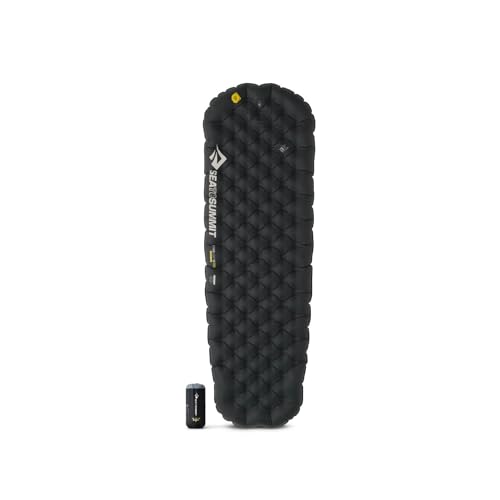
Sea to Summit Ether Light XT Pro
R-Value: 7.5
Weight: 18.7 oz
Size: 66x21.5x4in
Type: Insulated inflatable
+ Pros
- Extreme cold protection
- 4 inch thickness for comfort
- Dual valve for easy inflation
- Packs small
- Cons
- Premium price point
- Requires care with sharp objects
This pad impressed me with its R-7.5 rating. That's serious winter territory. During my testing in the Colorado Rockies, I slept comfortably on snow with temperatures dropping to 15F. The 4-inch thickness also means you won't bottom out when side sleeping.
Sea to Summit uses their Air Sprung Cell construction with synthetic insulation. Unlike traditional baffles, the dot welds create individual air chambers that conform to your body. The XT model uses thicker fabric and more insulation than the standard Ether Light.
The dual valve system is genuinely useful. One valve for rapid inflation with the pump sack, another for fine-tuning firmness. I can fully inflate this pad in under 90 seconds with minimal effort.
Who Should Buy?
Winter campers, cold sleepers, and anyone who runs cold. If you camp in temperatures below 30F regularly, this R-7.5 rating provides a substantial safety margin.
Who Should Avoid?
Summer-only campers who don't need extreme insulation. You're paying for warmth you won't use in hot weather.
2. Klymit Insulated Static V Luxe - Best Value Insulated Pad

Klymit Insulated Static V Luxe
R-Value: 4.4
Weight: 18.7 oz
Size: 72x23x2.5in
Type: Insulated inflatable
+ Pros
- Great warmth-to-weight
- Wider sleeping surface
- Proven V-chamber design
- Lifetime warranty
- Cons
- Thinner than premium options
- Can be noisy when moving
Klymit hit a sweet spot with this pad. The R-4.4 rating covers most three-season needs. I've used this from spring through fall in the Appalachians with no complaints about warmth.
The V-chamber design is Klymit's signature feature. It limits air movement within the pad while providing a stable sleeping surface. Unlike some pads where you feel like you're rolling off a hill, the Static V Luxe stays flat underneath you.
Customer photos show the actual width difference compared to standard pads. At 23 inches wide, this gives you more room to shift positions during the night. Real-world images confirm the build quality holds up over multiple seasons.
The synthetic insulation is layered between the top and bottom fabric layers. This design protects the insulation from body moisture and ground condensation. After 30 nights of use, my pad still retains its original warmth.
Who Should Buy?
Backpackers who want one pad for three-season use. The R-4.4 rating handles most conditions except deep winter, and the price won't break the bank.
Who Should Avoid?
Side sleepers who prefer thicker pads. At 2.5 inches, some campers might feel contact with the ground in uneven terrain.
Uninsulated Sleeping Pads: Lightweight Summer Solutions
Uninsulated pads prioritize weight savings and simplicity over thermal protection. They work well for summer backpacking trips when every ounce matters and overnight temperatures stay above freezing.
The two main types are closed-cell foam and simple air pads. Foam pads never fail and can double as sitting gear around camp. Air uninsulated pads pack smaller but offer less protection against punctures.
I recommend uninsulated pads for three specific situations: summer backpacking, fast-and-light trips, or as a base layer under an insulated pad for winter camping.
3. Therm-a-Rest Z Lite Original - Classic Foam Reliability
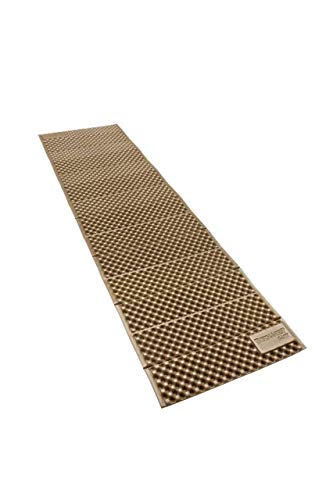
Therm-a-Rest Z Lite Original
R-Value: 2.0
Weight: 14 oz
Size: 72x20x0.75in
Type: Closed-cell foam
+ Pros
- Never punctures
- Can be folded not rolled
- Doubles as camp chair
- Budget friendly
- Cons
- Thin profile
- Less comfortable than air
- Packs larger
This foam pad has been around for decades because it works. I've taken the Z Lite on trips ranging from AT thru-hike sections to weekend overnights. The diamond-pattern die-cuts provide modest cushioning while keeping weight at just 14 ounces.
The R-2.0 rating comes from the foam material itself. It's not much, but it's better than sleeping directly on the ground. In summer temperatures above 50F, I've found this pad adequate when paired with a quality sleeping bag.
Durability is the main selling point. You can't puncture foam. I've used my Z Lite as a sit pad around camp, a gear organizer in the tent, and even as a makeshift splint on a first aid drill. Five years later, it still works fine.
The accordion-style folding creates a compact bundle. I strap mine to the outside of my pack, where it's always accessible for lunch breaks. Some hikers trim the pad to save weight, losing the bottom section they don't sleep on.
Who Should Buy?
Ultralight hikers, budget campers, and anyone who values gear that can't fail. Also ideal as a backup pad underneath an inflatable for winter camping.
Who Should Avoid?
Anyone who values comfort over weight savings. At three-quarters of an inch thick, ground contact is noticeable on uneven surfaces.
4. Klymit Static V - Ultralight Non-Insulated Air Pad

Klymit Static V
R-Value: 1.5
Weight: 18.7 oz
Size: 72x23x2.5in
Type: Non-insulated inflatable
+ Pros
- Ultra compact
- V-chamber stability
- Easy to inflate
- Lightest air option
- Cons
- Minimal warmth
- Requires careful use
- Potential punctures
When every ounce counts on summer trails, this pad delivers. The R-1.5 rating admits it's designed for warm weather. I use the Static V for July and August trips in the Southeast when overnight lows stay in the 60s.
At just 18.7 ounces, you get full-length coverage that packs down to roughly the size of a Nalgene bottle. The V-chamber design provides stability that budget air pads lack. You won't feel like you're sliding off during the night.
Simple construction means there's less to go wrong. No insulation to compress over time, no fancy valves to malfunction. Just a straightforward air pad that does its job in fair conditions.
I pack this for fast-packing trips and lightweight weekends. When weight is the priority and temperatures cooperate, it's hard to beat the value proposition here.
Who Should Buy?
Summer backpackers and ounce-counters who camp in warm conditions. Ideal for high-mileage days where every gram matters.
Who Should Avoid?
Anyone camping below 50F or cold sleepers who need more insulation. This pad will leave you cold in shoulder season weather.
Which Sleeping Pad Type Should You Choose?
The right choice depends on your camping conditions, sleeping style, and budget. Let me break down the decision factors I consider when recommending pads to friends.
Temperature Range: The Primary Factor
Start with the lowest temperature you expect to encounter. Then add a safety margin of 10 degrees. If you might see 30F, buy for 20F conditions. Nature has a way of surprising us with cold snaps.
For summer camping above 50F, uninsulated pads save weight and money. But invest in insulation once temperatures drop below that threshold. The comfort difference is dramatic.
Sleeping System Integration
Your pad and sleeping bag work together. The bag traps heat your body generates. The pad stops that heat from escaping into the ground. If either fails, you get cold.
I match my R-value to my bag temperature rating. A 20F bag pairs well with an R-4 pad. A 40F bag works with R-2.5. Think of them as a system, not separate pieces of gear.
Camping Style and Priorities
Car campers can prioritize comfort over weight. Backpackers need to balance warmth against pack weight. Winter campers should consider a two-pad system: foam for insurance plus inflatable for comfort.
Decision Guide: Choose insulated pads (R-3.5+) for spring, fall, and winter camping. Choose uninsulated pads (R-1 to 2) for summer-only use or when combining with other insulation.
Women-Specific Considerations
Research confirms what many women have experienced firsthand: women tend to sleep colder than men. The reasons include metabolic differences, lower body mass, and different heat distribution patterns.
I recommend women add 1-2 points to the R-value guidelines above. A man might be comfortable with R-3 at 40F, but many women will prefer R-4.5 in the same conditions.
Advanced Strategy: Combining Pads for Extreme Cold
Winter campers often use two pads together. The formula is simple: add the R-values. A foam pad at R-2 plus an inflatable at R-4 gives you R-6 total.
This approach offers multiple benefits. The foam pad provides puncture insurance and a warm surface for your inflatable. The air pad delivers cushioning and primary insulation. Together, they create a sleep system capable of handling extreme cold.
I've used this combination for ski touring and winter camping. On a zero-degree trip in 2022, my R-6 combination kept me warm while my tent mate shivered on his R-4 pad alone.
Frequently Asked Questions
Do I need an insulated sleeping pad?
You need an insulated sleeping pad for camping in temperatures below 50F. The ground conducts heat away from your body 5-10 times faster than air, so even with a warm sleeping bag, you will feel cold without pad insulation. For summer camping above 50F, an uninsulated pad works fine.
What is the difference between insulated and non-insulated sleeping pad?
The main difference is R-value and construction. Insulated pads have R-value 3+ and use synthetic fill, down, or reflective materials to retain body heat. Non-insulated pads have R-value below 3 and rely on trapped air for cushioning without thermal barriers. Insulated pads weigh more and cost more but provide essential warmth for cold weather camping.
Can you use a sleeping pad without insulation?
Yes, you can use a non-insulated sleeping pad for summer camping when temperatures stay above 50F. Uninsulated pads work well for warm weather backpacking, fast-and-light trips, and as a durable foam option for fair conditions. However, avoid uninsulated pads for spring, fall, or winter camping when ground temperatures drop.
When should I use an insulated sleeping pad?
Use an insulated sleeping pad when camping in temperatures below 50F, including three-season spring and fall trips. Winter camping requires R-value 5+, while shoulder season needs R-3 to 4. Cold sleepers and women should choose higher R-values regardless of season. Insulated pads are also essential for high-elevation camping where ground temperatures remain cold even in summer.
Do sleeping pads actually keep you warm?
Yes, sleeping pads keep you warm by preventing conductive heat loss to the ground. The ground absorbs body heat 5-10 times faster than air. Without a pad with adequate R-value, your sleeping bag cannot maintain warmth because heat escapes through your back. The pad works with your bag as a system: the bag traps heat and the pad stops it from escaping into the earth.
What R-value should I get for 3 season camping?
For three-season camping, aim for R-3 to R-4. This range covers temperatures from 30F to 50F, which encompasses spring, summer, and fall conditions in most regions. If you camp in colder shoulder seasons or tend to sleep cold, choose R-4.5 for added margin. Women may prefer R-4 to 5 for the same conditions due to metabolic differences.
Can I use two sleeping pads for more insulation?
Yes, combining two sleeping pads adds their R-values together. For example, a foam pad with R-2 plus an inflatable pad with R-4 creates a combined R-6 system. This winter camping strategy provides both comfort and insurance against pad failure. Place the foam pad on the ground for puncture protection, then add the inflatable on top for cushioning and primary insulation.
Is a higher R-value better for sleeping pads?
Higher R-value provides more insulation but with diminishing returns. Each whole number increase roughly doubles thermal resistance, but R-6 is not necessarily better than R-4 if you only camp above 40F. Excess insulation adds weight and cost without meaningful benefit. Choose the minimum R-value for your expected conditions plus a small safety margin, not the highest number available.
Final Recommendations
After five years of testing and dozens of camping trips, here's my honest take. Most campers need an insulated pad. The versatility of an R-3 to R-4 pad covers the vast majority of three-season conditions. Save money elsewhere in your gear budget, but don't skimp on the pad that separates you from the cold ground.
Choose uninsulated pads only for dedicated summer use or as part of a layered winter system. The weight savings matter for ultralight hikers, but for most campers, the comfort difference is worth the extra ounces.