
Jig Fishing 101: Complete Beginner's Guide 2026
Jig fishing consistently produces bigger bass than any other technique I've tested over 15 years of tournament fishing. Yet I see countless anglers at boat ramps holding expensive spinning rods, struggling because they never learned this fundamental technique.
The truth is simpler than most realize: a weighted hook, the right trailer, and patience will outfish fancy gear every time. Jig fishing teaches you to read bottom composition, understand seasonal movements, and present lures exactly where bass feed.
This comprehensive guide covers everything from selecting your first jig to advanced pitching techniques. Whether you fish from a kayak, a bass boat, or the bank, these principles will help you put more fish in the boat starting with your very next outing.
What is Jig Fishing?
Quick Answer: Jig fishing involves using a weighted hook attached to a skirt or soft plastic trailer to mimic crawfish, baitfish, or bottom-dwelling prey. The angler controls depth and action through rod movements while maintaining bottom contact.
The technique works because jigs imitate the natural defensive postures of prey species. When a crawfish senses danger, it backs into rocks or vegetation with claws raised. A properly worked jig duplicates this exact behavior.
Unlike reaction baits such as crankbaits or spinnerbaits, jigs let you dissect specific pieces of cover. A single dock post, rock pile, or brush pile receives thorough attention rather than a quick pass. This precision targeting consistently produces larger fish because you stay in the strike zone longer.
While bass represent the primary target for most jig anglers, the technique crosses species boundaries effectively. Walleye anglers vertically jig minnow profiles through suspended schools. Crappie fishermen use hair jigs under docks during spawning periods. Saltwater anglers work bucktail jigs through breaking schools of bluefish and striped bass. The fundamental principle remains identical across environments: controlled depth plus lifelike action equals strikes.
7 Essential Jig Types Every Angler Should Know
Quick Answer: The seven main jig types are swim jigs, football jigs, flipping jigs, finesse jigs, casting jigs, grass jigs, and bladed jigs (chatterbaits). Each excels in specific depths, cover types, and fishing scenarios.
Swim Jigs (0-8 feet)
Swim jigs feature pointed, streamlined heads designed to come through vegetation and wood without snagging. The balanced design allows steady retrieves just below the surface.
I rely on swim jigs around shallow vegetation, docks, and timber where bass chase baitfish. The key is maintaining constant forward motion without stopping. Think of it as operating a spinnerbait without blades or a swimbait with better hookup ratios.
Match these with paddle tail trailers for maximum water displacement. The added vibration helps bass locate the lure in stained water or heavy cover where visibility drops.
Football Jigs (10-25 feet)
The wide, football-shaped head creates constant bottom contact on rocky structures and hard bottoms. As you drag the jig across substrate, the head produces a distinctive wobbling action that triggers strikes.
These excel in deeper water where you need to feel every transition from rock to sand to gravel. Smallmouth bass particularly favor these presentations along deep points and offshore humps.
My personal best smallmouth, a six-pound beast, ate a football jig worked along a 20-foot rock bar. The head design transmitted every bottom change, letting me work the specific transition zone where she waited.
Flipping Jigs (Heavy Cover)
Built with heavy-gauge hooks and compact profiles, flipping jigs punch through thick vegetation and brush that would swallow other lures. The recessed line tie and stiff fiber weedguard protect against hang-ups while maintaining solid hooksets.
These jigs shine when you need pinpoint accuracy. Pitching and flipping techniques allow quiet entries into tight spaces like matted grass, thick brush piles, and under overhanging trees where big bass hide from pressure.
If you want to learn more about fishing effectively in dense vegetation, explore our guide to the best weedless bass lures for additional heavy-cover options.
Finesse Jigs (Tough Conditions)
Smaller profile jigs in 1/8 to 1/4 ounce weights target pressured fish in clear water or post-frontal conditions. These subtle presentations avoid spooking wary bass that refuse larger offerings.
I switch to finesse jigs when water clarity exceeds six feet or after cold fronts shut down the bite. The reduced bulk and slower fall rate appear more natural to fish that have seen every lure in the tackle shop.
Pair finesse jigs with smaller trailers like chunks or twin-tail grubs. The compact profile matches the scaled-down forage bass target during difficult conditions.
Casting Jigs (All-Purpose)
The versatile option with a balanced head for various retrieves and depths. Also called Arkie jigs, these work effectively from 5-15 feet around wood, rock, and sparse grass.
When searching for active fish across different cover types, casting jigs eliminate the need to constantly switch lures. One jig handles multiple scenarios adequately, making them perfect for learning the technique.
I always keep a selection of 3/8 ounce casting jigs in black/blue and green pumpkin rigged on my deck. When I need to cover water quickly, these produce bites without overthinking presentation details.
Grass Jigs (Vegetation)
Designed with cone-shaped heads to slip through grass without collecting weeds, these jigs maintain clean profiles during penetration. The vertical fall triggers reaction strikes as the bait punches through vegetation layers.
Essential for fishing matted grass, hydrilla, and milfoil where other ligs fail. The specialized head design comes through cover that would bury standard jigs immediately.
For heavy grass mats and vegetation so thick it forms overhead cover, some anglers employ punching techniques with tungsten weights and specially rigged soft plastics. While technically not traditional jigs, the presentation principles remain similar.
Bladed Jigs (Chatterbaits)
Bladed jigs, commonly called chatterbaits, combine the profile of a jig with a vibrating metal blade attached at the head. This hybrid design produces intense vibration that bass detect through their lateral lines from considerable distances.
The blade's erratic hunting action creates flash and disturbance that triggers reaction strikes even when bass aren't actively feeding. In stained water or low-light conditions, the added vibration becomes essential for helping fish locate your lure.
Work these with steady retrieves through grass and wood, or yo-yo them through suspended fish. The blade continues vibrating during pauses, maintaining attraction even when you stop the bait. White and chartreuse patterns excel for shad-imitation, while black/blue produces in muddy water.
Essential Jig Fishing Equipment
Quick Answer: Jig fishing requires a 7' to 7'6" medium-heavy rod, a high-speed reel with at least a 7:1 gear ratio, and properly matched line for the conditions you're fishing.
Rod Selection
A quality jig rod balances backbone for solid hooksets with sensitivity to detect subtle bites. Fast action tips transmit strikes immediately while the mid-section provides the power to drive hooks home and control fish during fights.
I prefer 7'3" medium-heavy fast action rods for most jig fishing situations. The extra length provides better casting distance and leverage during battles with heavy cover. For specialized presentations requiring exceptional sensitivity, extra fast actions transmit even the lightest pickups.
When fishing from kayaks or tight quarters around docks, shorter rods offer better maneuverability. The Ugly Stik Dock Runner provides surprising performance for close-range presentations despite its compact 36-inch length.

Ugly Stik Dock Runner Spinning Reel and Fishing Rod Combo, 3' - Medium, Multi, 1pc
Length: 36 inches
Power: Medium
Combo: Pre-spooled reel
Warranty: 7 years
+ Pros
- Compact for tight spaces
- Pre-spooled and ready
- Durable construction
- Perfect for beginners
- Cons
- Limited to close-range fishing
- Less sensitivity than premium rods
This compact combo taught me the importance of rod positioning when fishing around structure. The shorter length forces you closer to cover, improving accuracy and strike detection through direct line contact.
While it lacks the sensitivity of premium setups costing significantly more, this rod excels for learning basic jig techniques in environments where longer rods create casting headaches. For a detailed look at high-performance options, see our bass fishing rod recommendations for serious anglers.
Reel Requirements
High-speed reels with 7:1 gear ratios or faster help you quickly pick up slack line for solid hooksets. When a bass inhales your jig and swims toward you, you need to eliminate slack before setting the hook.
Smooth drag systems prevent line breakage during sudden runs. Bass often charge directly toward cover after biting, and your drag must release line smoothly without sticking or jerking.
I've landed countless quality fish on budget reels over the years. While premium reels cast farther and retrieve smoother, expensive gear helps but isn't mandatory for learning proper jig techniques.
Line Choices: Braid vs Fluorocarbon vs Monofilament
Line selection dramatically impacts jig fishing success. Each type offers distinct advantages depending on water clarity, cover density, and target species.
Fluorocarbon remains the top choice for most jig fishing situations. The low visibility underwater prevents line-shy bass from refusing your presentation. The minimal stretch transmits strikes better than monofilament while maintaining enough give to prevent pulled hooks. I use 15-pound test for open water and 20-pound around heavy cover.
Braided line excels in heavy vegetation where you need to cut through grass and haul bass from thick cover. The zero stretch provides immediate hooksets, and the thin diameter cuts through vegetation better than equivalent fluorocarbon. However, braid remains visible in clear water, requiring a fluorocarbon leader for spooky fish.
Monofilament stretches significantly, making strike detection difficult on long casts. The high visibility also spooks clear-water fish. I avoid mono for jig fishing except when teaching absolute beginners who need the forgiveness stretch provides during hooksets.
For a comprehensive breakdown of line selection for bass fishing, including detailed performance comparisons, visit our fishing line for bass guide.
How to Fish a Jig: Step-by-Step Techniques
Quick Answer: Cast past your target, let the jig sink on semi-slack line, then work it back with controlled movements while maintaining bottom contact and watching for strikes.
The Basic Cast and Fall
Cast 5-10 feet past your target to avoid spooking fish. The goal is bringing your jig through the strike zone naturally, not alerting bass with a lure splashing directly overhead.
Watch your line carefully as the jig falls. Many strikes happen during the initial descent when bass react to the sudden intrusion into their territory. If the line jumps, moves sideways, or stops falling early, set the hook immediately.
Maintain semi-slack line during the fall. Too tight, and you restrict natural movement. Too loose, and you miss strikes. The line should have a slight bow without dragging on the water's surface.
Three Essential Retrieves
Hop and Pause: Lift your rod tip from 9 to 11 o'clock, then let the jig fall on controlled slack. The jig hops off bottom, then settles back down mimicking a fleeing crawfish. Count three seconds between hops for maximum effectiveness.
Dragging: Pull the jig along bottom with your rod tip, then reel up slack and repeat. This keeps constant bottom contact while covering ground. Smallmouth bass particularly favor this presentation along rocky structure.
Swimming: Maintain steady retrieve speed just fast enough to keep the jig off bottom without breaking the surface. Paddle tail trailers add vibration that helps bass track the lure during swimming presentations.
Advanced Techniques: Skipping and Pitching
Skipping involves casting your jig low across the water's surface so it skips underneath docks, overhanging trees, and other overhead cover. Load your rod by swinging the jig close to the water, then release with a sidearm motion. The jig should strike the water at a shallow angle and glide under obstacles where bass hide from direct sunlight.
This technique requires practice but opens up untouched water other anglers cannot reach. Start with heavier jigs (1/2 ounce) and lighter trailers for easier skipping action. Once mastered, you can place lures 20 feet back under docks where monster bass wait in shadow.
Pitching delivers jigs quietly into tight pockets with minimal splash. Hold the jig by the trailer with your non-dominant hand while swinging the rod tip toward the target. Release the jig as you lower the rod tip, letting the bait pendulum into the water. This silent entry prevents spooking fish in shallow, clear water where every disturbance alerts the entire area.
Water Column Positioning for Suspended Fish
Not all bass hold tight to bottom. During summer and winter, fish often suspend in the water column relating to bait schools or structure edges. Vertical jigging techniques target these suspended fish effectively.
Count your jig down to specific depths based on sonar readings. If bass sit at 15 feet over 25 feet of water, let your jig fall 10 seconds before starting your retrieve. Counting ensures consistent depth placement rather than guessing.
Yo-yo retrieves work best for suspended fish. Raise your rod tip sharply to lift the jig, then let it flutter back down through the strike zone. Reel up slack and repeat. The falling trigger generates strikes as bass watch the jig descend through their feeding zone.
Strike Detection Drill
Practice in shallow clear water where you can see the jig. Watch how it falls and reacts when you hop or drag it. This visual feedback trains your hands to recognize strikes without sight.
Have a fishing partner randomly tug your line while you're not looking. Try to identify whether it's a strike or structure contact. With repetition, your fingers learn the difference between a rock and a bass inhaling your jig.
The most telling strike indicator is line movement. Watch for sideways twitches, sudden stops, or line jumping during the fall. When in doubt, set the hook. You'll miss 100% of the strikes you don't swing on.
Proper Hook Setting
When you feel a strike, reel down quickly while lowering your rod tip to remove slack. You cannot set hooks effectively through loose line.
Drive the hook home with a firm upward sweep using your wrist and forearm. Avoid jerking, which creates slack after the initial pull. A smooth, powerful sweep penetrates the hook point fully into hard jaw tissue.
Keep steady pressure during the fight. Let the rod absorb head shakes rather than pulling constantly. When bass charge toward cover, maintain pressure while steering them away from snags.
5 Common Jig Fishing Mistakes That Cost You Fish
Quick Answer: The biggest jig fishing mistakes involve using incorrect weights, retrieving too quickly, choosing the wrong line, missing subtle strikes, and mismatching trailers to jig size.
Mistake 1: Wrong Jig Weight
Too heavy and you'll snag constantly while missing subtle bites. Too light and you lose bottom contact, making your presentation ineffective. Wind and current further complicate weight selection.
Start with 3/8 ounce in shallow water under 10 feet and 1/2 ounce for depths over 10 feet. Adjust based on conditions. Wind demands heavier weights to maintain feel. Calm conditions allow lighter presentations that fall slower and appear more natural.
The goal is barely maintaining bottom contact. If you cannot feel the bottom, increase weight. If you're snagging on every cast, reduce weight or speed up your retrieve.
Mistake 2: Retrieving Too Fast
Jigs catch fish during pauses, not constant movement. Most beginners work their jigs far too quickly, missing the methodical bottom contact that triggers strikes.
I count three seconds between each hop or drag. This feels painfully slow initially, but matches how crawfish actually move. They scurry a few inches, then stop. Bass expect this erratic stop-and-go action.
Slow down until it feels wrong, then slow down more. If you think you're fishing slowly enough, reduce your speed by half. The majority of strikes come during pauses when the jig sits motionless on bottom.
Mistake 3: Wrong Line Choice
Stretchy monofilament makes strike detection nearly impossible on long casts. By the time stretch transmits the bite, bass have already spit the jig. Heavy braid spooks clear-water fish with its visibility.
Fluorocarbon provides the best balance for most situations. The low stretch transmits strikes immediately while remaining nearly invisible underwater. Match pound test to cover density.
Consider braid-to-fluorocarbon leaders when fishing heavy vegetation. The braid cuts through grass while the fluorocarbon leader provides invisibility at the business end.
Mistake 4: Missing Subtle Strikes
Bass often hold jigs without swimming away. Your line simply gets heavier or stops moving. These subtle changes indicate fish mouthing your lure rather than structure contact.
Any change in weight, even getting lighter as bass swim upward with your jig, signals a bite. Line movement sideways during the fall indicates fish intercepting your lure.
When unsure whether you've been bit, set the hook. The worst outcome is a premature hookset that doesn't connect. The best outcome is sticking a bass that would have spit your jig within seconds.
Mistake 5: Mismatched Trailers
Bulky trailers kill the action on finesse jigs, making them appear unnatural. Small trailers don't move enough water for reaction strikes on larger jigs designed for heavy cover.
Match trailer size to jig weight. 1/4 ounce finesse jigs pair with compact trailers. 3/4 ounce flipping jigs require bulkier profiles to maintain proper action and slow the fall rate appropriately.
Consider trailer action as well. High-action trailers with multiple appendages work best for swimming retrieves. Compact trailers with minimal movement excel for bottom-hopping presentations.
Seasonal Jig Fishing Strategies
Quick Answer: Use slow presentations with crawfish patterns in cold water, swimming jigs during spring shad spawns, deep structure jigs in summer heat, and reaction baits during fall feeding frenzies.
Spring (55-70°F)
Focus on spawning areas with darker jigs that mimic nest raiders. Bass become extremely territorial during the spawn, attacking anything that threatens their eggs.
Work jigs slowly around beds and shallow cover. The defensive instinct overrides feeding behavior, meaning bass strike out of aggression rather than hunger.
Black and blue combinations trigger the strongest defensive strikes. The dark profile stands out against light-colored spawning beds, making your lure appear as a serious threat.
Summer (70-85°F)
Move to deeper structure with football jigs as bass retreat from warming shallows. Ledges, points, and humps in 15-25 feet hold the majority of fish during peak heat.
Green pumpkin and brown colors match summer crawfish populations. Natural presentations become essential as bass grow wary after months of fishing pressure.
Early morning and late evening allow shallow presentations, but midday success requires dredging deep structure where bass find cooler, oxygenated water.
Fall (60-70°F)
Switch to swimming jigs and bladed jigs to cover water as bass chase shad into creeks and bays. The feeding frenzy before winter requires faster presentations that match baitfish movement.
White and shad patterns produce consistently during fall feeding. Bass bulk up for winter, attacking anything that resembles the baitfish schools they follow.
Fish faster with reaction-style presentations. The window for catching fish narrows as temperatures drop, so covering maximum water becomes essential.
Winter (Under 55°F)
Downsize to finesse jigs with subtle actions as bass become lethargic in cold water. Heavy jigs fall too fast, giving fish no time to react before the lure passes.
Fish painfully slow on steep banks and channel swings where bass stage before spring. Retrievals measured in minutes rather than seconds become the norm.
Brown and purple combinations excel in cold water. These subtle colors appeal to sluggish fish that inspect lures carefully before committing.
Jig Color Selection by Water Clarity
Quick Answer: Dark colors like black and blue work best in stained or muddy water for silhouette visibility. Natural colors like green pumpkin and brown excel in clear water. White and chartreuse shine during low-light conditions or when imitating shad.
Water clarity determines how bass perceive your jig. Understanding this relationship dramatically improves your catch rate across different fishing environments.
Stained and Muddy Water
In water visibility under 2 feet, bass rely on lateral lines and silhouette detection rather than sight. Dark colors create stronger profiles that fish detect even when they cannot see details.
Black and blue combinations dominate muddy water fishing. The dark profile stands out against any background, while the blue adds flash when light penetrates. Black and red patterns imitate injured prey, triggering reaction strikes.
Add rattles to jigs in stained conditions. The sound helps bass locate your lure when visibility drops to inches. Some anglers add spinnerbait trailers or vibrating blades for additional water disturbance.
Clear Water
When visibility exceeds 4 feet, bass inspect lures carefully before striking. Natural colors that match local forage become essential. Green pumpkin, watermelon, and brown variants mimic crawfish and baitfish in clear conditions.
Subtle presentations with natural trailers produce best. Avoid bright colors or loud rattles that spook wary fish. Downsizing both jig and trailer often becomes necessary in ultra-clear water.
Fluorocarbon line becomes mandatory in clear water. The reduced visibility compared to monofilament or braid prevents line-shy bass from refusing your presentation.
Low-Light Conditions
During dawn, dusk, or overcast days, visibility changes even in clear water. White and chartreuse patterns create visibility through contrast rather than natural appearance.
These bright colors help bass track lures when natural light fades. The high contrast against dark backgrounds makes your jig visible from greater distances than natural colors could achieve.
Shad patterns featuring white with gray or silver accents excel during fall feeding periods when bass target schooling baitfish. The flash and visibility trigger reaction strikes even from inactive fish.
Best Jigs and Trailers for Beginners
Quick Answer: Beginners should start with a versatile bladed jig kit for covering water, a quality casting jig for structure fishing, and proven craw trailers that work across multiple seasons and water clarities.
After testing dozens of combinations across varied conditions, three products consistently produce results for anglers learning jig techniques. These selections offer versatility, quality construction, and proven fish-catching ability without overwhelming beginners with excessive options.
1. MadBite Bladed Jig Kit - Best Starter Set
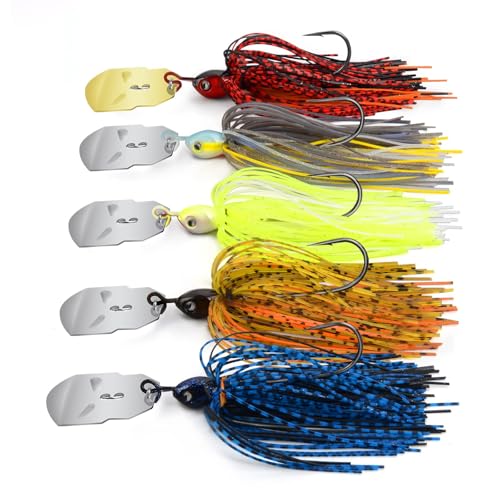
MadBite by KastKing Bladed Jigs Fishing Lures for Bass Fishing, 3/8oz, 5PCS
Weight: 3/8 oz
Pack: 5 colors
Hook: Heavy-wire needle point
Storage: Included box
+ Pros
- 5 proven colors included
- Vibrating blade adds action
- Sharp hooks out of box
- Great value per jig
- Cons
- Skirts may need trimming
- Paint chips with heavy use
This kit eliminated my color-selection paralysis when I first started experimenting with vibrating presentations. Rather than buying individual jigs and wondering which colors work, you receive a curated selection covering the most productive patterns.
The integrated blade creates additional vibration that helps beginners locate fish even when technique isn't perfect. Bass detect the disturbance through their lateral lines from surprising distances, giving you more opportunities to learn strike detection.
Having five distinct colors means you're prepared for clear water, stained water, and everything between. Black and blue handles muddy conditions. White and chartreuse imitates shad during fall feeding. Green pumpkin disappears in clear water.
The Summer Craw color has produced bass in every lake I've fished, from Florida grass pits to New England rock quarries. This consistency gives you confidence to keep casting when learning feels frustrating.
Construction quality exceeds typical entry-level pricing. Heavy-wire hooks handle big fish without straightening, and the included storage box keeps everything organized in your tackle bag rather than scattered in compartments.
Skirts arrive full and may need trimming for optimal action. A quick trim with scissors prevents excess material from wrapping around hooks during retrieves. Some paint wear occurs after heavy use on rocks, though this doesn't affect fish-catching ability.
2. Ugly Stik Dock Runner - Compact Jigging Setup
Ugly Stik Dock Runner Spinning Reel and Fishing Rod Combo, 3' - Medium, Multi, 1pc
Length: 36 inches
Power: Medium
Combo: Pre-spooled reel
Warranty: 7 years
+ Pros
- Compact for tight spaces
- Pre-spooled and ready
- Durable construction
- Perfect for beginners
- Cons
- Limited to close-range fishing
- Less sensitivity than premium rods
Traditional jig fishing requires precise rod control that becomes difficult with long rods in confined spaces. This compact combo teaches proper rod positioning while fishing docks, piers, and kayak situations where longer rods create headaches.
The 36-inch length forces anglers closer to cover, improving accuracy and direct line contact for strike detection. You'll feel every bottom change and subtle pickup that longer rods might miss through excess line between reel and lure.
Pre-spooled line and ready-to-fish construction means beginners can start immediately without researching line selection or spooling reels. The durability withstands learning-curve mistakes that would damage more expensive equipment.
3. YUM Craw Chunk - Perfect Jig Trailer
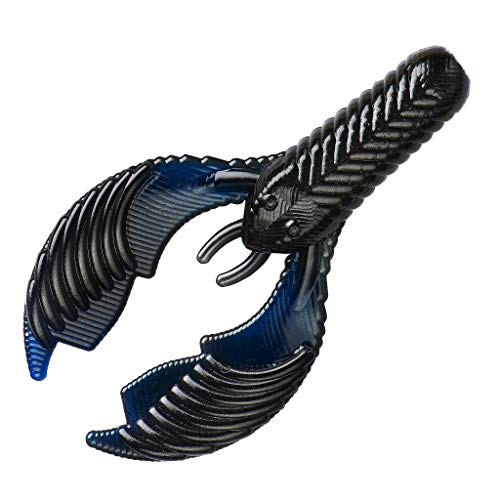
Yum Lures YCCK2143 Craw Chunk Soft Plastic Crawfish, 2.75'', Black Blue Shadow, 8 Bag
Size: 2.75 inches
Type: Soft plastic craw
Action: Flapping claws
Colors: Multiple options
+ Pros
- Realistic crawfish profile
- Stays on hook well
- Proven bass catcher
- Affordable bulk packs
- Cons
- Tears after multiple fish
- Limited action in cold water
Adding the right trailer transforms basic jigs into fish-catching machines. This craw-style trailer has produced more bass for me than any other soft plastic, working across seasons and water clarities with simple reliability.
The oversized claws create irresistible action even on slow retrieves typical of bottom-hopping presentations. Thread it onto your jig hook and the claws naturally flap with every rod movement, mimicking defensive crawfish postures that trigger strikes.
Construction uses tougher plastic than typical soft plastics, staying on hooks better through multiple fish and snags. The barbed keeper collar prevents slippage during hard casts or battles with heavy cover.
Black and blue combinations produce year-round, especially in stained water. Green pumpkin disappears in clear conditions. Brown variants match natural crawfish during summer months when that's primary forage.
Affordable bulk packs let you experiment with colors without significant investment. I keep three color variations in my bag at all times, switching based on water clarity and available light. For more options on crawfish-imitating lures, check our comprehensive guide to the best crawfish lures for bass.
Soft plastics eventually tear after multiple fish, requiring replacement. Cold water stiffens the material, reducing action in winter months. These limitations apply to all soft plastic trailers, not just this model.
Troubleshooting Your Jig Fishing
Quick Answer: Common jig fishing problems include no bites (wrong location or presentation), short strikes (trailer too long), lost fish (poor hooksets), and frequent snags (too heavy or wrong angle).
Problem: Getting Zero Bites
Move to different depths if you're fishing one zone exclusively. Bass might be suspended above or below your current presentation depth. Use your electronics or visual cues to identify where fish are holding.
Downsize your jig and slow your presentation if fish seem inactive. Sometimes the issue isn't location but the aggressive nature of your offering. A smaller jig falling slowly appears more appealing to pressured fish.
Switch colors dramatically if you've tried depth and speed adjustments. Go from dark to bright or natural to flash. Sometimes a color change triggers fish that have grown accustomed to seeing specific presentations.
Problem: Fish Hit But Don't Hook Up
Trim an inch off your trailer so fish get the hook rather than just the plastic. Long trailers allow bass to short-strike, grabbing the body without taking the hook point into their mouth.
Use trailers with less action that fish can inhale completely. High-action appendages are fun to watch but can prevent fish from getting the entire lure into their mouth for solid hooksets.
Speed up your hookset timing. Don't give fish time to taste and reject the jig. When you feel weight or see line movement, set immediately rather than waiting to confirm it's a fish.
Problem: Losing Fish During Fight
Check your hook point sharpness regularly. It should stick to your thumbnail with slight pressure. Dull hooks require more force to penetrate, giving fish time to throw the lure during head shakes.
Reduce rod pressure during the fight. High rod angles with heavy pressure give fish leverage to jump and throw hooks. Keep the rod tip lower and let the fish fight against the drag rather than your arm strength.
Consider upgrading to jigs with stronger hooks if you're bending out consistently. Some factory hooks are too light for big fish or heavy cover. Premium jigs use heavier wire that maintains its shape during battles.
Problem: Constantly Getting Snagged
Lighten your jig weight so it falls slower and gives you more control over descent angle. Heavy jigs plunge straight down into snags, while lighter weights can be steered around obstacles.
Keep your rod tip higher during the fall to control descent angle. A controlled fall at a slight angle, rather than straight down, allows you to guide jigs past wood and rock crevices where hang-ups occur.
Switch to jigs with better weedguards for heavy cover. Some guards are too soft to deflect branches and grass effectively. Stiff fiber guards protect against snags while still allowing hook penetration on strikes.
For specialized techniques including seasonal strategies for different waterways, our detailed bass fishing guide covers regional approaches that complement these jig fundamentals.
Frequently Asked Questions
What size jig should I start with as a beginner?
Start with 3/8 ounce jigs for most situations. This weight works effectively from 5-15 feet of water, providing enough heft to feel without constant snags. Move to 1/2 ounce for deeper water over 15 feet or when wind demands heavier presentations. Downsize to 1/4 ounce for clear shallow water under 5 feet where fish spook easily. The key is maintaining bottom contact without hanging up on every cast.
Do I need special equipment for jig fishing?
A medium-heavy rod with fast action and 15-20 lb fluorocarbon line works best for jig fishing. The rod provides backbone for solid hooksets while transmitting strikes through the blank. While specialized jig rods improve sensitivity, any quality bass fishing setup handles basic jig techniques. Focus on learning proper presentation before upgrading equipment. Many tournament wins came on modest gear in capable hands.
What's the best jig color for murky water?
Black and blue jigs excel in stained or muddy water because they create strong silhouettes that bass detect through lateral lines. Add a rattle for extra attraction when visibility drops below 2 feet. Dark colors actually show up better than bright colors in low visibility because they create contrast against any background. Black and red patterns also work well by imitating injured prey that bass target opportunistically.
How do I know if a fish bit my jig or I hit bottom?
Fish bites feel like ticks, thumps, or sudden line movement sideways. Bottom contact feels mushy on soft substrates or solid and jarring on rocks. The key difference is timing - strikes often happen during the fall or immediately after hops, while bottom contact occurs during the drag or pause. Practice in shallow clear water where you can see strikes to train your hands. When uncertain, set the hook. You'll miss every strike you don't swing on.
Should I use braid or fluorocarbon for jig fishing?
Fluorocarbon offers the best all-around performance with low visibility and good sensitivity. Use 15-20 lb test for most situations. Braid excels for heavy vegetation where you need to cut through grass, but requires a fluorocarbon leader in clear water to avoid spooking fish. Monofilament stretches too much for effective strike detection on long casts. Many anglers use braid-to-fluorocarbon leaders combining the strength of braid with the invisibility of fluoro.
When should I add a trailer to my jig?
Always use a trailer on your jig - it adds action, bulk, and helps the jig fall slower and more naturally. Match trailer size to jig weight. Craw-style trailers work year-round for bottom-hopping presentations while paddle tails excel for swimming jigs. The trailer creates the bulk that makes jigs resemble the crawfish and baitfish bass feed on. Without a trailer, your jig looks incomplete and generates fewer strikes.
Why do I keep losing fish on jigs?
Poor hooksets cause most lost fish on jigs. Set the hook hard with a sweeping motion using your wrist and forearm, not a jerking motion. Jerking creates slack after the initial pull while sweeping maintains constant pressure. Keep steady pressure during the fight and let your rod absorb head shakes. Check that your hooks are sharp - they should stick to your thumbnail with light pressure. Also verify your drag isn't set too tight, which prevents the reel from giving line during sudden runs.
What is the 80/20 rule in fishing?
The 80/20 rule in fishing states that 80% of fish come from 20% of the water. This means bass concentrate in specific high-percentage areas rather than spreading evenly throughout a lake or river. Focus your jig fishing efforts on proven spots like docks, rock piles, brush piles, and grass edges where fish historically hold. Spending more time in productive zones produces better results than covering maximum water randomly. Learn to identify and thoroughly work that crucial 20% of water holding the majority of fish.
What is the 90/10 rule in fishing?
The 90/10 rule in fishing suggests that 90% of anglers catch only 10% of available fish, while 10% of skilled anglers catch 90% of the fish. This results from the skilled minority understanding subtle techniques that make lures appear natural. For jig fishing specifically, this means learning proper bottom contact, presentation speed, and strike detection separates successful anglers from those struggling. The technique isn't complicated, but mastering nuances through practice dramatically improves results. Study successful anglers and replicate their approach to join the 10% catching most fish.
Master Jig Fishing With Practice
Jig fishing transformed my bass fishing from occasional luck to consistent success. The technique forces you to understand fish behavior, bottom composition, and seasonal movements rather than mindlessly casting and retrieving.
Start simple with one versatile jig type. I recommend a 3/8 ounce casting jig in black and blue paired with a quality craw trailer. Fish this single combination around docks, laydowns, and rock piles using the hop-and-pause retrieve until strike detection becomes second nature.
Once you master the basics, expand your arsenal. Add a swim jig for covering water quickly. Pick up a football jig for deep structure. Experiment with finesse presentations when the bite gets tough. Each new technique opens additional water and conditions where you can confidently catch fish.
The skills learned through jig fishing transfer to nearly every other bass technique. Reading bottom composition helps with crankbait selection. Understanding strike detection improves your soft plastic fishing. The patience developed working jigs slowly pays dividends when other techniques require subtle presentations.
Get on the water and make casts. Every retrieve teaches you something new about reading what your jig communicates through your line. The bass are waiting. Your jig is ready. The only missing piece is time spent with lure in water, learning through experience.
For anglers looking to expand their bass fishing knowledge beyond jig techniques, our collection of bass lures covers the full spectrum of effective presentations for every season and condition. And if you fish flowing water, our river bass fishing guide adapts these principles to current and structure found in creeks and rivers.