
7 Kayak Fishing Tips (October 2026): Beginner to Pro Guide
There's something almost magical about the first light of dawn when you're sitting inches above the water, paddle in hand, waiting for that telltale tug on your line. After six years and thousands of hours chasing fish from kayaks across Texas, Florida, and the Pacific Northwest, I've learned that kayak fishing isn't just about catching fish. It's about accessing places power boats can't reach, experiencing nature from a front-row seat, and discovering patience you never knew you had.
Whether you're a complete beginner wondering if kayak fishing is right for you, or an experienced angler looking to refine your technique, this guide shares the hard-won wisdom that'll help you catch more fish, stay safer, and genuinely enjoy your time on the water. I've made every mistake in the book (and invented a few new ones), so you don't have to. Let's dive into 25+ game-changing kayak fishing tips that actually work.
Essential Kayak Fishing Tips for Beginners
1. Start With the Right Kayak (But Don't Overthink It)
My first fishing kayak was a beat-up Perception I bought for $200 on Craigslist. It wasn't pretty, but it taught me what I actually needed versus what the forums said I needed. If you're just starting out, focus on stability over speed. A wider kayak (32-34 inches) might paddle like a barge, but you'll appreciate not swimming every time you reach for your tackle box.
For those ready to invest in a quality fishing platform, check out our guide to the best fishing kayaks - it covers everything from hull designs to weight capacity considerations, including whether you should choose a sit-on-top or sit-inside model.
2. The Three Golden Rules of Kayak Fishing Safety
Every experienced kayak angler lives by three simple principles that form the foundation of safe paddling. Understanding and applying these rules from day one will save you from countless headaches and potentially dangerous situations.
Dress to Swim
In March, fishing the Everglades backcountry, I watched a buddy ignore this rule. One aggressive snook later, he was swimming in 58-degree water wearing jeans and boots. Not fun. Always wear quick-dry clothing appropriate for the water temperature, not the air temperature. If the water is cold, wear a wetsuit or drysuit even if the day feels warm.
Rig to Flip
Assume your kayak will capsize at some point. Secure everything with leashes or in watertight hatches. Your phone goes in a waterproof case, rods get leashes, and tackle stays in closed containers. I learned to use gear tethers after donating three pairs of pliers to Poseidon.
Keep Spine Aligned With Centerline
Maintain proper posture with your spine aligned to the kayak's centerline for maximum stability. Reaching outside the kayak's footprint is what causes most capsizes. Keep your movements slow and deliberate, especially when reaching for gear or fighting fish.
3. Your PFD Isn't Optional - Make It Work for You
I get it - life jackets can be hot and uncomfortable. But after witnessing a kayaker get knocked unconscious by his own paddle in 2-foot chop off Galveston, I never launch without one. Modern fishing PFDs are game-changers. Our guide to the best kayak fishing PFDs highlights models with pockets for tools and high-back designs that work with kayak seats.
Look for a personal flotation device specifically designed for fishing, with features like rod holder loops, tool attachment points, and breathable mesh panels. The best PFD is the one you'll actually wear, not the one stuffed behind your seat.
4. Learn to Paddle With One Hand (You'll Need It)
Picture this: 4-pound smallmouth on the line, wind pushing you toward a fallen tree, paddle in your lap. This scenario plays out weekly for kayak anglers who never practiced one-handed paddling. Spend 30 minutes in calm water learning to control your kayak with one hand.
Lock the paddle shaft along your forearm and use short, controlled strokes. This skill alone will boat you more fish than any fancy lure. Consider adding a paddle leash as well - losing your paddle while fighting a fish creates a nightmare scenario you'll want to avoid.
5. Start Small With Your Tackle Selection
When I first started, I'd load my kayak like I was stocking a bass boat. Big mistake. Now I carry one small tackle box with carefully selected lures that work in my local waters. Overpacking leads to fumbling, lost time, and frustration.
- 5 soft plastics (green pumpkin Senko, white fluke, black/blue craw)
- 3 hard baits (squarebill crank, lipless crank, topwater)
- Terminal tackle in a waterproof container
- Retractable gear tether for securing tools
Less gear means less fumbling, less to lose overboard, and more time with your line in the water. Keep everything within arm's reach to maintain your centerline stability.
6. Master Your Launch and Landing
Nothing announces "rookie" faster than a chaotic launch. I've seen grown men struggle trying to launch from rocky shores in January. Here's what works: Load your kayak completely before approaching the water. Straddle the kayak in ankle-deep water, sit down, then bring your legs in. For landing, reverse the process.
If you're launching from a boat ramp, please - for the love of all that's holy - load your gear off to the side, not on the ramp itself. Other boaters will thank you, and you'll avoid the stress of blocking traffic while you fumble with rod holders.
7. Invest in Proper Anchoring and Anchor Trolley Systems
Trying to fish without an anchor system is like trying to eat soup with a fork - technically possible but frustratingly ineffective. A simple grapnel anchor with 50 feet of rope will change your fishing game entirely. But to truly maximize your anchoring, you need an anchor trolley system.
An anchor trolley allows you to position your anchor point anywhere from bow to stern, which is crucial for fishing in current or wind. This lets you adjust your boat position without moving the anchor itself. For about a year, I used a 5-pound dumbbell as an anchor. It worked, but upgrading to a proper anchor trolley was like switching from a flip phone to a smartphone.

BOOMERANG TOOL COMPANY Fishing Small Retractable Gear Tether, Carabiner, 24" Retractable Cord, 4 oz...
36-inch retractable cord
6 oz retraction force
Rotating belt clip
Universal attachment
+ Pros
- Durable Kevlar cord
- Lightweight at only 1.6 oz
- Easy rotating clip attachment
- Secure tool retention
- Cons
- Clip may fail after extended use
- Logo may detach over time
I learned the hard way that losing gear overboard gets expensive fast. After donating three pairs of pliers, a fillet knife, and my favorite multi-tool to the lake gods, I started using retractable gear tethers for everything. The Boomerang tether's 36-inch Kevlar cord gives you plenty of reach while keeping your tools secured to your PFD or belt.
The rotating belt clip makes attachment easy, and at just 1.6 ounces, you won't even notice it's there until you need it. The shatter-proof polycarbonate housing has survived countless seasons of abuse on my kayak. Whether you're reaching for pliers to unhook a fish or grabbing your fillet knife, having that security makes fishing more enjoyable.
One tip from experience: attach these to your PFD rather than the kayak itself. If you do flip, your tools stay with you, not the boat. I've watched too many anglers lose their entire tackle setup because everything was clipped to the kayak rather than their person.

PLUSINNO Floating Fishing Net for Steelhead, Salmon, Fly, Kayak, Catfish, Bass, Trout Fishing...
15.8-inch hoop with foam padding
Floats if dropped
Rubber coated non-snag net
Lightweight aluminum handle
Foldable design
+ Pros
- Floats if dropped overboard
- Rubber coating prevents hook snags
- Lightweight at only 12.5 oz
- Foldable for compact storage
- Excellent value
- Cons
- Handle may flex under heavy load
- Hooks can still embed in holes
The floating net was a revelation after watching my old mesh net sink to the bottom of Lake Travis. The PLUSINNO net's foam-padded hoop keeps it on the surface even if you drop it while wrestling with a fish. The rubber-coated mesh prevents hooks from snagging, which means faster releases and less frustration.
The 15.8-inch hoop is the perfect size for most freshwater species, and the foldable design means it stows easily behind your seat. At just 12.5 ounces, it won't tip your kayak when you reach for it. The aluminum handle is long enough to give you reach but short enough to maneuver in tight spaces.
I particularly appreciate the rubber coating when practicing catch-and-release. Traditional mesh nets can damage fish scales and slime coating, but the rubber material is much gentler. When you're landing that fish of a lifetime, the last thing you want is your net failing or the hook snagging in the mesh.
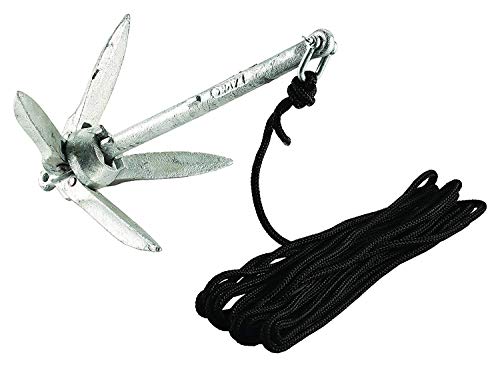
Attwood 11959-1 Universal 3 lb Folding Grapnel Anchor Kit with Rope
3 lb folding grapnel design
Includes 20-foot MFP rope
Mesh storage bag included
Galvanized corrosion resistance
Compact folding storage
+ Pros
- Excellent price point
- Includes rope and storage bag
- Folds flat for easy storage
- Good holding power
- Easy to use
- Cons
- Factory knot needs checking
- Retaining ring may slip
- Rope may be short for deep water
For years I used a dumbbell as an anchor until I discovered how much better a proper grapnel anchor performs. The Attwood's folding design grips various bottom conditions - mud, sand, rock, or gravel - and the 3-pound weight is perfect for kayaks. The included 20-foot rope is sufficient for most fishing situations.
One lesson I learned: always check and re-tie the factory knot before your first use. The included mesh bag keeps everything organized in your kayak's storage compartment. The galvanized finish prevents rust even after saltwater exposure.
Pair this with an anchor trolley system and you'll have precise control over your boat position. Being able to anchor from the bow, stern, or side depending on wind and current direction makes a huge difference in your fishing effectiveness. For the price, this anchor system delivers exceptional value.
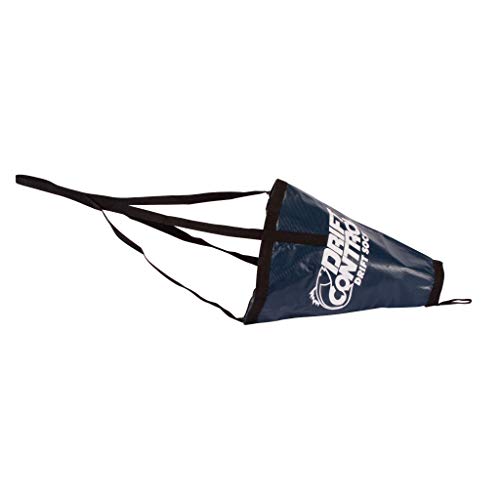
Fishermans Series Drift Sock 24"
24-inch parachute design
Reinforced coated nylon
Spin-resistant construction
Dump line for easy retrieval
Ideal for kayaks
+ Pros
- Effectively slows drift speed
- Compact storage size
- Durable reinforced nylon
- Easy to deploy and retrieve
- Great for controlled drifts
- Cons
- Does not float
- Size selection important
- Some stitching issues reported
When the wind picks up and you need to slow your drift to fish a breakline effectively, a drift sock becomes essential gear. The Lindy drift sock deploys easily and can make the difference between catching fish and just passing over them too quickly. It packs small enough to stow in any hatch.
The reinforced coated nylon construction holds up to repeated deployments, and the spin-resistant design means less tangling. The dump line allows quick retrieval when you hook into a fish that requires mobility. I carry both a traditional anchor and a drift sock - different tools for different situations.
For kayak anglers, the 24-inch size is ideal. It provides enough resistance to slow your drift without creating so much drag that it becomes difficult to manage. The quick-drying material means you can pack it away without worrying about mold or mildew in your storage compartments.
Intermediate Kayak Fishing Strategies
8. Use Electronics Wisely - Including Forward-Facing Sonar
You don't need a $2,000 fish finder to catch fish from a kayak. I fished successfully for years without one. But when I finally installed a basic unit, it opened up a whole new world - especially for finding structure in unfamiliar water. Start simple - even a $150 unit will show depth, temperature, and basic structure.
The latest trend sweeping kayak fishing is forward-facing sonar. This technology lets you see fish swimming in real-time ahead of your kayak, revolutionizing how you target specific fish. While expensive, many tournament anglers now consider it essential. For most recreational anglers, a standard fish finder with GPS is still the best starting point.
9. Learn to Read Water From a Low Angle
Sitting just inches above the water changes everything about reading conditions. What looks like nothing from shore often reveals feeding lanes, current breaks, and ambush points from kayak level. Last fall on Lake Fork, I watched bass crushing shad in 6 inches of water that would've been invisible from a bass boat.
Being low has advantages - use them. Learn to spot subtle current seams, temperature changes, and surface activity that higher vantage points miss. Sight fishing becomes much more effective when you're eye-level with the water.
10. Perfect the Kayak Drift
Current is your friend if you know how to use it. Most fishing kayaks are short enough to tuck entirely into an eddy, letting you fish a spot thoroughly without paddling. I've caught more smallmouth using controlled drift techniques than any other approach.
Find where fast water meets slow water. Position your kayak in the slack water and cast into the current seam. Let the current work your lure while you barely move. Magic happens in these transition zones. Use a drift sock when wind or current pushes you too fast.
11. Upgrade Your Paddle (It Matters More Than You Think)
I paddled with a $40 aluminum paddle for two years, thinking it didn't matter. Then I borrowed a friend's carbon fiber paddle for a day. The difference was like switching from work boots to running shoes. A quality paddle reduces fatigue, improves control, and makes long days enjoyable instead of exhausting.
Our breakdown of carbon vs fiberglass paddles explains why the investment pays off. Consider paddle length carefully - kayak fishing often benefits from a slightly shorter paddle than recreational paddling due to the higher seat position.
12. Master Different Anchor Positions
Most beginners drop anchor and fish. Experienced kayak anglers know that anchor position is everything. With an anchor trolley system, you can position your anchor point to optimize your fishing angle.
- Anchor off the bow for fishing into the wind
- Side anchor for working parallel to structure
- Stern anchor for backing down on spots
- Use a drift sock for controlled drifts when anchoring isn't practical
13. Stand-Up Fishing and Stand Assist Bars
Not every kayak is stable enough for standing, but if yours is, learning when and how to stand opens up new possibilities. Stand assist bars make this much safer by giving you something to grip when getting up or sitting down. I stand for sight fishing in shallow water, working topwater lures, fighting big fish near structure, and simply stretching on long trips.
Practice in shallow, calm water first. Start by kneeling, then slowly rise using the stand assist bar for support. Keep your feet shoulder-width apart and knees slightly bent. A marine deck mat provides stable, non-slip footing and dampens noise that might spook fish. Stand assist bars attach to gear tracks and fold down when not needed.
Advanced Kayak Fishing Techniques
14. Night Fishing From a Kayak
Some of my best catches have come after dark, but night kayak fishing requires extra preparation. Beyond the obvious required navigation lights, you need multiple headlamps (one always fails), glow sticks for marking gear, simplified tackle selection, and a float plan left with someone on shore.
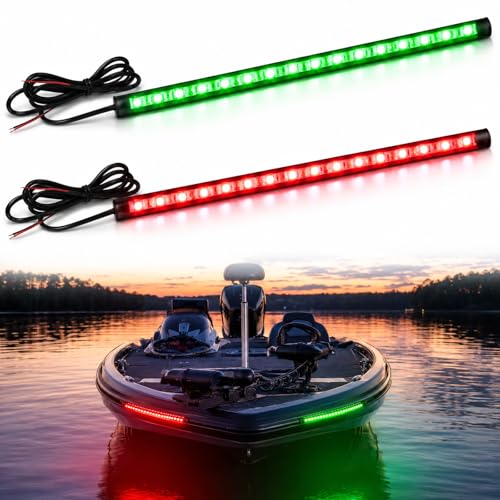
Botepon Navigation Lights for Boats led, Adhesive Install Red and Green Bow and Deck Lights for...
LED bow navigation lights
Red and green colors
IP67 waterproof rating
Flexible strip design
3x brighter than factory
+ Pros
- Extremely bright LEDs
- Easy peel-and-stick installation
- Flexible design conforms to boats
- Very affordable
- IP67 waterproof
- Cons
- Requires 12V power source
- Adhesive may need marine silicone
- Wire gauge could be thicker
Proper NAV lights aren't optional for night fishing - they're legally required and essential for safety. The Botepon LED strip lights provide red and green bow lighting that's three times brighter than factory options. The flexible design conforms to any kayak shape, and the IP67 waterproof rating handles rough conditions.
Installation takes minutes with the peel-and-stick backing. The bright LEDs ensure you're visible to other boaters, which is critical when fishing busy lakes or near boat ramps at dawn and dusk. At this price point, there's no excuse for skipping proper lighting.
Always test your navigation lights before heading out. I also recommend adding a safety flag for daytime visibility and carrying a waterproof flashlight as backup. Last summer, night fishing for stripers on Lake Texoma, I boated 15 fish between 10 PM and 2 AM while the day shift got skunked.
15. Use Your Feet as Rudders
This sounds weird until you try it. Experienced kayak anglers often use their feet to steer while fighting fish, hold position against logs or rocks, stop drift in shallow water, and push off obstacles. The technique becomes second nature with practice.
Just remember - in gator country, keep those toes inside the kayak. I learned this lesson the easy way (by watching someone else learn it the hard way). For pedal drive kayaks, this technique works differently since your feet are occupied with propulsion.
16. Modify Your Kayak for Efficiency
You don't need to go crazy with modifications, but a few smart kayak mods make a huge difference: Rod holders positioned for YOUR fishing style, gear tracks for mounting accessories, upgraded seat for all-day comfort, and tackle storage within arm's reach.
Consider adding a keel guard to protect your investment when dragging the kayak to launch points. A marine deck mat provides stable footing and noise dampening. Through-hull wiring kits let you install fish finder transducers cleanly. My current setup has evolved over five years. Start simple and add what you actually need, not what looks cool on YouTube.
17. Learn Multiple Fighting Positions
Big fish don't care about your comfort. I've fought tarpon with my legs over the side, bass with the rod under my armpit, and pike while basically lying down in the kayak. The key is keeping your center of gravity low and the rod tip high. Don't try to horse fish - use the kayak's mobility to your advantage.
Practice different positions before you hook that trophy - muscle memory matters when a 40-pound red is peeling drag. Big fish often tow kayaks around (called a "sleigh ride") which is half the fun.
18. Understand Kayak-Specific Lure Retrieves
The resistance from retrieve actually moves lightweight kayaks. Use this to your advantage: Cast crankbaits at angles to steer your drift, use the kayak's movement to create unique lure action, and let the kayak's rock add action to soft plastics.
This takes practice but becomes second nature. I've literally steered my kayak back to the launch using nothing but strategic casts. The relationship between lure resistance and kayak movement is something bank anglers and boat fishermen never experience.
19. Perfect Your Stealth Approach
Kayaks let you get scary close to fish - if you do it right. My approach rules: Stop paddling 50 feet before your target. Use momentum and wind to drift in. Keep your profile low. Avoid banging anything against the hull. A marine deck mat helps dampen the noise of footsteps and gear movement.
I've had redfish swim under my kayak in 8 inches of water. That doesn't happen if you're splashing around like a wounded manatee. Check out our clear water fishing tips for more stealth strategies.
Weather and Seasonal Considerations
20. Read Weather Like Your Life Depends on It (Because It Does)
Three years ago, I ignored building clouds while chasing schooling bass on Lake Amistad. The storm hit so fast I barely made it to shore before 4-foot waves started breaking. Now I check weather obsessively before launching, watch the sky more than my fish finder, know multiple exit points, and cancel trips when conditions look sketchy.
No fish is worth risking your safety. Period. Learn to read cloud formations and wind patterns. Sudden temperature drops often precede dangerous weather. Always have an escape plan.
21. The 120 Rule for Cold Water Safety
The 120 rule is a critical cold water safety guideline every kayaker should know. If the combined air and water temperature is below 120 degrees Fahrenheit, you must wear thermal protection like a wetsuit or drysuit. For example, if the air is 70F and the water is 50F (totaling 120), you need protection. If the air is 80F and the water is 60F (140 total), no thermal protection is needed.
Cold water shock can incapacitate you in minutes. Even strong swimmers become helpless when their muscles seize up from cold water immersion. The 120 rule helps you make smart decisions about what to wear. For cold water kayaking, consider a sit-inside kayak for better protection from the elements.
22. Adjust for Seasonal Changes
Summer kayak fishing in Texas means launching at 5 AM and being off the water by 10 AM. Winter in the Pacific Northwest means neoprene everything and accepting that you'll get wet. Each season demands different approaches:
- Spring: Fish shallow, warming water
- Summer: Go deep or go early/late
- Fall: Follow the baitfish migrations
- Winter: Slow down, fish deeper, dress appropriately using the 120 rule
23. Cold Water Fishing Preparation
Beyond following the 120 rule for thermal protection, cold water kayak fishing requires additional preparation. Take shorter trips because cold saps energy faster than you realize. Pack emergency supplies in a dry bag including a change of clothes. Tell someone your exact plans and check-in time. Stay closer to shore so you can reach safety quickly if needed.
Consider a sit-inside kayak for cold weather because they offer less exposure to the elements. Check out our guide to the best sit inside fishing kayaks for cold water options. A bilge pump becomes even more critical in cold conditions.
Location-Specific Tips
24. Ocean Kayak Fishing
Saltwater changes everything. The fish are bigger, the water's rougher, and the stakes are higher. If you're ready to take your kayak fishing offshore, start with our guide to the best ocean kayaks.
Key ocean tips: Always fish with a buddy. Carry VHF radio, not just a phone. Understand tides and currents. Start close to shore and work out gradually. Ocean kayak fishing demands respect for the conditions and proper safety equipment.
25. River Kayak Fishing
Rivers offer incredible fishing but demand respect. Current never stops, and hazards like strainers (fallen trees) can be deadly. My river rules: Never anchor in strong current from the side - if you flip, the kayak fills with water and the current pushes it under. Scout rapids before running them. Wear your PFD religiously. Carry a knife within reach to cut yourself free if tangled.
Some of my best smallmouth days have been on rivers, but I've also had my closest calls there. The combination of moving water, submerged obstacles, and changing conditions requires constant vigilance.
26. Small Water Strategies
Don't overlook farm ponds, small lakes, and hidden backwaters. These spots often hold surprising fish and see minimal pressure. I've caught my personal best largemouth from a 5-acre pond I can paddle across in two minutes. For specific regional advice, see our New Jersey bass fishing guide as an example of location-specific techniques.
Small water tips: Go ultra-stealth. Downsize your presentation. Fish the entire water column. Return often - patterns emerge quickly on small waters. The skills you develop on small water translate directly to larger bodies.
Safety and Best Practices
Know Your Limits
Ego has no place in kayak fishing. If conditions feel sketchy, they probably are. I've scratched more trips than I can count, and I've never regretted playing it safe. Wind, weather, and water conditions can change rapidly. Know when to call it a day.
Join the Kayak Fishing Community
Find local kayak fishing groups on social media or through tackle shops. The knowledge shared in these communities is invaluable, plus fishing with others is safer and more fun. Demo days hosted by local shops let you try different kayaks before buying.
Practice Self-Rescue
Spend an afternoon in warm, shallow water practicing: Re-entering your kayak from the water, recovering a flipped kayak, swimming with your kayak, and using your paddle as a stabilizer. These skills build confidence and could save your life.
If you paddle a sit-inside kayak, a bilge pump is essential equipment for removing water after a wet exit. Practice using it in calm conditions before you need it in an emergency.
Must-Have Kayak Fishing Gear
Based on thousands of hours on the water, here's gear that actually matters for kayak anglers:
- Quality PFD: Non-negotiable. Get one designed specifically for fishing with attachment points.
- Waterproof phone protection: Because emergencies happen and phones don't float.
- Sharp knife: Attached where you can reach it quickly for cutting line or emergencies.
- Whistle: Louder than yelling, required by law in many states for signaling.
- Bilge pump: Essential for sit-inside kayaks after wet exits or rain.
- First aid kit: In a waterproof container, sized for kayak storage.
- Sun protection: Hat, sunglasses, and sunscreen - dehydration and sunburn sneak up fast.
- Paddle leash: Prevents losing your paddle when you need both hands free.
- Anchor trolley system: For precise boat positioning in wind and current.
- Stand assist bars: For kayaks stable enough to stand in - makes standing safer.
- Marine deck mat: Provides stable, quiet footing and protects the kayak deck.
- Keel guard: Protects your investment when dragging to launch points.

CACOE Floatable Waterproof Phone Pouch 2 Pack Up to 7.0",Black+Green
IPX8 waterproof to 30m
Four-sided airbags for floating
Fits phones up to 7 inches
TPU for sensitive touch
Snap-and-lock seal
+ Pros
- Excellent price for 2-pack
- Floats if dropped in water
- Touch screen works through case
- Universal fit
- IPX8 certified
- Cons
- Face ID may not work
- Underwater photo quality varies
- Thick cases must be removed
Your phone is your lifeline for emergencies, navigation, and catching photos of trophy fish. The CACOE waterproof case provides IPX8 protection down to 30 meters while the four-sided airbag design ensures it floats if dropped overboard. The TPU material maintains touch sensitivity for using your phone through the case.
The snap-and-lock seal is secure enough for submersion while remaining easy to open when you need your phone. At this price for a two-pack, you can keep one as backup or share with a fishing buddy. The adjustable lanyard keeps it accessible around your neck.
I've tested waterproof cases extensively, and this one performs reliably. Just remember to remove any thick protective case from your phone before inserting it - the waterproof case needs direct contact to maintain the seal. Test it with tissue paper first to verify the seal is working properly.
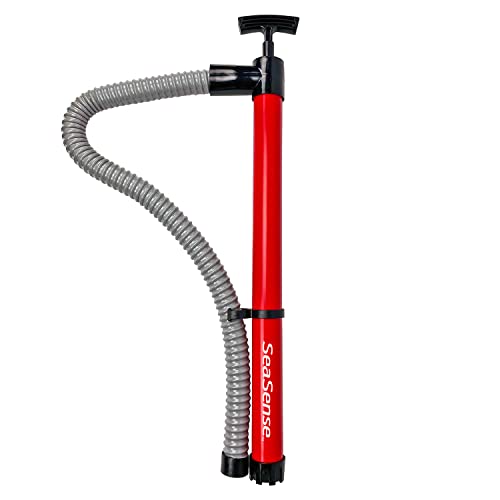
SeaSense Hand Bilge Pump - Self-Priming, Manual Bilge Pump for Water Removal on Small Boats, Kayaks...
Self-priming hand pump
Removable hose for storage
Ergonomic grip and handle
Corrosion-resistant construction
1 GPM flow rate
+ Pros
- Moves large volume per stroke
- Self-priming works immediately
- Breaks down compact
- Corrosion-resistant
- Easy ergonomic handle
- Cons
- Hose connection can leak
- Hose does not float
- Large sticker not waterproof
If you paddle a sit-inside kayak, a bilge pump isn't optional - it's essential safety equipment. Whether it's rain, paddle drip, or a wet exit, water accumulates in the cockpit. The SeaSense pump moves a surprising amount of water with each stroke and the self-priming design means it works immediately without pre-pumping.
The removable hose breaks down compact for storage in a hatch or behind your seat. The ergonomic handle prevents hand fatigue during extended pumping sessions. Practice with it in warm, shallow water before you need it in an emergency situation.
For sit-on-top kayaks with scupper holes, a bilge pump is less critical but still useful for removing water from storage compartments or after waves over the bow. The corrosion-resistant construction handles both freshwater and saltwater exposure.
FAQ Section
What are the three golden rules of kayaking?
The three golden rules of kayak fishing are: 1) Dress to swim - wear clothing appropriate for the water temperature, not the air temperature. 2) Rig to flip - secure all gear with leashes and dry bags in case of capsize. 3) Keep your spine aligned with the centerline of the kayak to maintain stability.
What is the 120 rule in kayaking?
The 120 rule is a cold water safety guideline stating that if the combined air and water temperature is below 120 degrees Fahrenheit, you must wear thermal protection like a wetsuit or drysuit. For example, if air is 70F and water is 50F (120 total), protection is required. If air is 80F and water is 60F (140 total), no thermal protection needed.
What is the 80/20 rule in fishing?
The 80/20 rule (Pareto Principle) applied to fishing means 80% of your catches come from 20% of your efforts. In kayak fishing, this means 80% of fish are found in 20% of the water, and 80% of success comes from 20% of techniques. Focus on high-percentage areas and proven techniques rather than trying to cover everything.
Is it better to fish in a sit-in or sit-on kayak?
For fishing, sit-on-top kayaks are generally better because they offer easier entry/exit, self-draining scupper holes, better stability for casting, and easier gear access. Sit-inside kayaks are better for cold weather (less exposure to elements) and touring, but harder to recover if flipped. Most beginners should choose sit-on-top for fishing.
What is the best kayak for fishing beginners?
Start with a stable sit-on-top kayak in the 10-12 foot range. Look for something 32-34 inches wide with a weight capacity at least 150 pounds above your body weight plus gear. Used kayaks in the $400-600 range work perfectly for learning.
Do I need a special fishing kayak or can I fish from any kayak?
You can fish from any kayak, but dedicated fishing kayaks make life easier with features like rod holders, storage options, and stable platforms. I fished from a recreational kayak for two years before upgrading - it is totally doable.
How do I transport fishing rods on a kayak?
Horizontal rod holders behind your seat work best for transport. While fishing, vertical holders keep rods accessible but out of your way. I use three holders - two vertical for rods I'm using, one horizontal for a backup.
What is the best anchor system for kayak fishing?
A 3-4 pound grapnel anchor with an anchor trolley system gives maximum versatility. The trolley lets you position the anchor point anywhere from bow to stern, crucial for fishing in current or wind.
Is kayak fishing dangerous?
Like any water sport, kayak fishing has risks. But with proper preparation, safety gear, and common sense, it is no more dangerous than bank fishing. Most accidents result from poor decisions, not equipment failure.
How do I launch a fishing kayak by myself?
Load completely on shore, carry/cart to water's edge, straddle in shallow water, sit down, then bring legs in. For heavy kayaks, consider a kayak cart or choose launches with gradual slopes. A kayak winch can help load onto a vehicle rack.
What fishing techniques work best from a kayak?
Finesse techniques excel from kayaks - think drop shots, Ned rigs, and small soft plastics. The quiet approach lets you get close, so accurate casting to specific targets beats covering water.
Should I get a pedal drive kayak?
Pedal drives are amazing for covering water and hands-free fishing, but they add weight, cost, and complexity. Master paddle kayaking first - you can always upgrade later. Demo a pedal drive before committing to the expense.
How do I fight big fish from a kayak?
Let the kayak move with the fish, keep rod tip high, and stay low. Don't try to horse fish - use the kayak's mobility to your advantage. Big fish often tow kayaks around (called a 'sleigh ride') which is half the fun.
What do I do if I flip my kayak while fishing?
Stay calm, hold onto your paddle, and focus on getting yourself safe before worrying about gear. If you've practiced self-rescue and secured your equipment properly, it's an inconvenience, not a disaster. Always follow the 'rig to flip' rule.
Final Thoughts
Kayak fishing changed my life. It's taken me to places boats can't reach, shown me sunrises that photos can't capture, and taught me patience I didn't know I had. Sure, I've donated plenty of tackle to the fishing gods and taken a few unplanned swims, but every minute has been worth it.
Whether you're just starting out or looking to refine your technique, remember that kayak fishing is about the journey, not just the destination (or the fish). Follow the three golden rules - dress to swim, rig to flip, and keep your spine aligned. Respect the 120 rule when paddling in cold conditions. And never forget that no fish is worth risking your safety.
Stay safe, respect the water, and don't take yourself too seriously. The best kayak anglers I know are the ones who remember that we're all just playing in boats and trying to outsmart fish with brains the size of peas. Now quit reading, load up that kayak, and get out there. The fish are waiting, and trust me - they don't care how expensive your gear is. They just care that you showed up.
See you on the water!