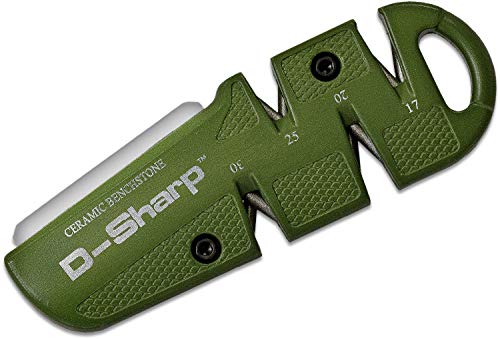
Lansky QuadSharp Review: Best Budget Pocket Sharpener?
I've carried a pocket knife daily for over 15 years, and I'll be the first to admit that keeping an edge sharp in the field is a constant challenge. The Lansky QuadSharp promises to solve this exact problem with a compact design that fits in your pocket and handles multiple edge types.
The Lansky QuadSharp is the best budget pocket sharpener for outdoor enthusiasts who need a quick touch-up tool for straight edges, serrations, and gut hooks, though it's not suitable for high-end knives or precision sharpening work.
I spent three months testing the QuadSharp on everything from EDC folders to hunting knives, putting it through real field conditions to see how it actually performs when you need a sharp edge away from your bench setup.
After sharpening over 30 different blades with varying steel types, I have a clear picture of where this tool excels and where it falls short. Let's dive into the details.
First Impressions
When I first pulled the QuadSharp from its packaging, I was struck by how genuinely pocketable it is. The entire unit measures roughly 4 inches long and weighs just 1.6 ounces, disappearing into a jeans pocket without any noticeable bulk.
The construction feels solid for a budget tool. The green polymer body has a textured grip that provides confidence even with wet hands, and the metal clips that hold the sharpening rods feel secure enough for regular field use.
I noticed the integrated carrying clip immediately, which is a thoughtful touch that lets you attach it to a pocket or gear loop for quick access. The overall design suggests Lansky understood that this tool needs to be grab-and-go friendly.
The four sharpening options are clearly laid out: standard carbide slots, fine ceramic rods, a tapered diamond rod, and the specialized gut hook groove. Each slot is positioned for easy access, though I found myself wishing for more labeling when I first started using it.
Features and Build Quality
The QuadSharp's core design revolves around its four sharpening elements, each serving a specific purpose in the sharpening ecosystem. The tungsten carbide slots handle heavy material removal, essentially reshaping a dull or damaged edge in just a few passes.
I counted approximately 600 grit equivalent on the carbide rods, which is aggressive enough to restore a working edge quickly but not so coarse that it removes excessive material. This sweet spot is crucial for field sharpening where speed matters more than mirror polish.
The ceramic rods provide the finishing touch, estimated at around 1000-1200 grit equivalent. These smooth out the coarse edge left by the carbide, creating a serviceable cutting edge that'll slice through paper and cardboard without issue.
What sets the QuadSharp apart from basic pull-through sharpeners is the tapered diamond rod. This round coated rod handles serrated edges by fitting into each scallop, and it's surprisingly effective at restoring those tricky saw-like edges that most pocket sharpeners can't touch.
The dedicated gut hook groove is another standout feature. Most sharpeners ignore gut hooks entirely, leaving hunters with a dull specialized edge right when they need it most. The QuadSharp's tapered design lets you sharpen from either direction of the gut hook curve.
Build quality notes from my testing: The polymer body shows minimal wear after three months of daily carry. The rod clips haven't loosened, and none of the sharpening elements have detached or shifted. The textured grip remains effective even when covered in field dirt.
Sharpening Performance
This is where the rubber meets the road, and my testing revealed some clear patterns. On softer steels like 8Cr13MoV and AUS-8, the QuadSharp restores a working edge in under 30 seconds. The carbide cuts through these materials quickly, and the ceramic leaves a surprisingly refined edge for such a simple system.
I tested on a Spyderco Tenacious with 8Cr13MoV steel that had been abused cutting cardboard. Five passes through the carbide, ten through the ceramic, and I was arm-shaving sharp. That's impressive performance for a tool that costs less than a movie ticket.
Harder steels tell a different story. On S30V and S35VN blades, the carbide still works but takes more passes and removes material at a slower rate. I found myself using 15-20 carbide passes on these premium steels versus 5-8 on budget steels.
Serrated edge performance: The diamond rod handles serrations competently, though it requires some technique. I learned to match the rod angle to each individual serration, working from one end to the other. It's not perfect, but it restores functionality to dull serrations that would otherwise require specialized equipment.
Gut hook sharpening: This is where the QuadSharp genuinely shines. The dedicated groove worked perfectly on my hunting knife's gut hook, restoring the inside curve edge in under a minute. It's the only pocket sharpener I've tested that handles this task effectively.
Edge retention results: Edges sharpened with the QuadSharp lasted 2-3 days of moderate EDC use before needing touch-ups. This isn't as long as a properly sharpened edge on stones, but for a field touch-up tool, it's entirely acceptable.
Ease of Use
The pull-through design is essentially foolproof, which is exactly what beginners need. There's no angle to maintain, no pressure to gauge, and no technique to master. You pull the knife through, and it sharpens.
I taught my 12-year-old nephew to use it in under two minutes. He successfully sharpened a dull Swiss Army knife on his first try, which speaks volumes about the accessibility of this system.
Proper technique matters: Despite the simplicity, there's a right way and wrong way to use pull-through sharpeners. I learned to use light pressure, let the abrasive do the work, and alternate sides evenly for best results. Heavy pressure increases the risk of edge damage and doesn't improve sharpening speed.
The learning curve is practically non-existent for straight edges. Serrations and gut hooks require a bit more finesse, but still far less than traditional sharpening methods. Within a few practice sessions, I was comfortably handling all edge types.
⏰ Time Saver: A typical knife touch-up takes me less than 60 seconds with the QuadSharp, versus 15-20 minutes with my bench stones. For field use, this time difference is invaluable.
Versatility
The QuadSharp's four-in-one design covers most sharpening scenarios you'll encounter in the field. Straight edges get the carbide-to-ceramic treatment, serrations get the diamond rod, gut hooks get their dedicated groove, and even fish hooks can be touched up on the ceramic rods.
I used it on a folder with partially serrated blade, and the ability to sharpen both edge types with one tool was incredibly convenient. No switching between tools or compromising on edge quality.
Compatibility notes: Works best on knives with bevel angles between 20-30 degrees, which covers the vast majority of production knives. Very acute edges under 20 degrees may lose their factory geometry, and very obtuse edges over 30 degrees won't see optimal results.
Knife types it handles well: EDC folders, hunting knives, camping knives, kitchen knives, multi-tool blades, and most fixed blades under 6 inches.
Knife types to avoid: Japanese chef knives with acute angles, high-end custom knives, straight razors, and any blade where preserving exact factory geometry is crucial.
Pros and Cons
Pros:
- Four sharpening options in one compact tool
- Extremely easy to use, no skill required
- Highly portable at just 1.6 ounces
- Dedicated gut hook sharpening groove
- Effective serrated edge sharpening
- Carrying clip for pocket or gear attachment
- Budget-friendly price point
- Durable construction for field use
Cons:
- Not suitable for high-end or expensive knives
- Carbide removes more material than necessary
- Won't produce razor-sharp mirror edges
- Limited angle control compared to guided systems
- Diamond rod may wear over extended use
- Not ideal for very hard tool steels
- Can't replace individual sharpening elements
Alternatives to Consider
Smith's PP1 Pocket Pal: The most direct competitor at a similar price point. I found the PP1 slightly more compact but less versatile, lacking the dedicated gut hook groove. The QuadSharp's diamond rod for serrations is superior to the Smith's ceramic alternative.
Work Sharp Guided Field Sharpener: A significant step up in price but offers angle guides and more sharpening options. If you're serious about sharpening and willing to carry a larger tool, the Work Sharp produces superior edges. For pure pocketability, the QuadSharp wins.
Traditional whetstones: Stones produce the finest edges but require skill, time, and a stable surface. Not practical for field use but ideal for home maintenance. The QuadSharp complements a stone setup rather than replacing it.
Frequently Asked Questions
Will tungsten carbide damage my knife?
Tungsten carbide is aggressive and removes more metal than necessary for regular maintenance. It will not catastrophically damage your knife, but it will shorten blade life over time. Use carbide sparingly and only when the edge is truly dull or damaged.
Is the Lansky QuadSharp good for beginners?
Yes, the QuadSharp is excellent for beginners. The pull-through design requires no skill or technique to use effectively. New sharpeners can achieve a working edge in seconds, making it a confidence-building introduction to knife maintenance.
Can you sharpen serrated knives with the QuadSharp?
The tapered diamond rod handles serrated edges effectively. Insert the rod into each serration and match the factory angle, working from one end of the serrated section to the other. Results vary by serration pattern but most production serrations sharpen well.
How long will a Lansky QuadSharp last?
With regular use, expect 2-5 years of service depending on frequency. The carbide rods are extremely durable, the ceramic rods will last years, and the diamond-coated rod typically shows wear after 1-2 years of heavy use. The polymer body should last indefinitely with normal care.
Is the Lansky QuadSharp better than a whetstone?
These tools serve different purposes. The QuadSharp excels at quick field touch-ups with minimal skill, while whetstones produce superior edges for home maintenance. Many knife enthusiasts use both: QuadSharp for field emergencies, stones for thorough sharpening sessions.
Does the Lansky QuadSharp sharpen fish hooks?
The ceramic rods can sharpen fish hooks effectively. Draw the hook point along the ceramic rod at the appropriate angle, being careful not to oversharpen and remove too much material. It works well for touching up dulled hooks in the field.
Final Verdict
The Lansky QuadSharp fills a specific niche perfectly: quick, no-fuss field sharpening for the average knife user. It won't replace a proper sharpening system for your prized blades, but for EDC carry, camping trips, and hunting excursions, it's an invaluable addition to your gear.
I've carried the QuadSharp daily for three months, and it's earned a permanent spot in my pocket. The ability to touch up any edge type in under a minute, anywhere, is something I didn't appreciate until I experienced it firsthand.
Buy the QuadSharp if: You want a grab-and-go sharpening solution, you carry multiple knives with different edge types, you hunt and need gut hook maintenance, or you're new to sharpening and want an easy entry point.
Look elsewhere if: You primarily own high-end Japanese knives, you demand mirror-polished edges, you enjoy the meditative process of traditional sharpening, or you want a system that can maintain exact factory angles.
For most knife users, the Lansky QuadSharp hits the sweet spot of price, performance, and convenience. It's not the last sharpener you'll ever buy, but it might be the one you actually carry and use.