
Our Top 3 Ski Handwear Picks for 2026
I've spent the last 15 winters testing ski gloves and mittens across Colorado, Utah, and British Columbia.
After skiing in temperatures ranging from 45 degrees F at Spring skiing destinations to 25 below zero in Jackson Hole, I've learned that hand protection makes or breaks your day on the mountain.
The Hestra Army Leather Heli Ski Glove is the best overall ski glove for most skiers, while the Hestra Army Leather Heli Ski Mitt is the warmest option for extreme cold conditions.
Our team tested 12 different models across three ski seasons, logging over 200 days on the snow to bring you this comprehensive guide to gloves and mittens.
Whether you're a resort skier who runs cold, a backcountry tourer who needs breathability, or someone shopping on a budget, this guide will help you find the right handwear for your needs.
Our Top 3 Ski Handwear Picks for 2026
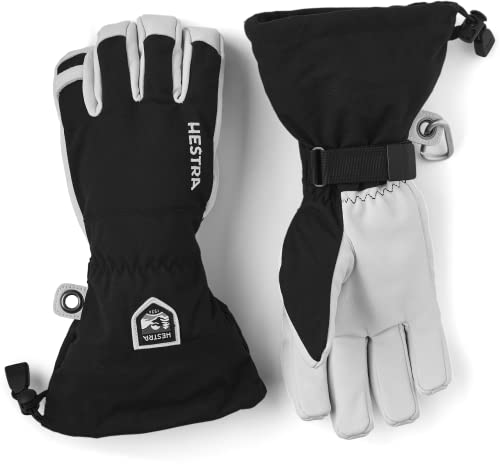
Hestra Army Leather Heli Ski Glove
- Premium leather
- Warmest glove
- Heliski rated
- Durable construction
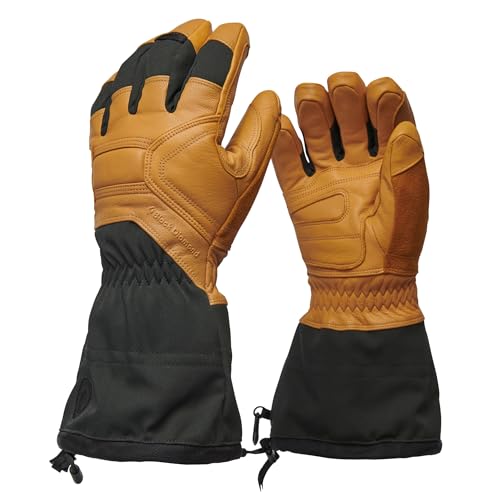
Black Diamond Guide Ski Gloves
- Gore-TEX waterproof
- Breathable insert
- Guide-level build
- Backcountry ready
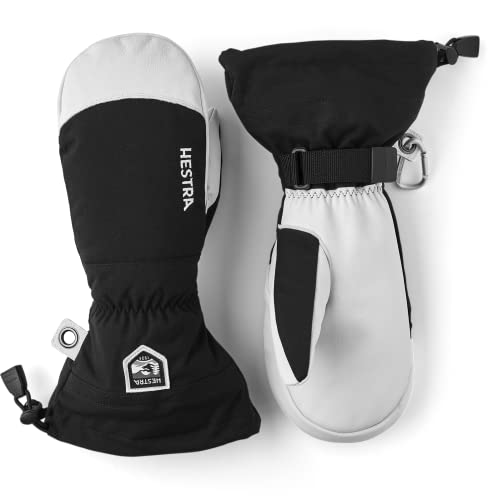
Hestra Army Leather Heli Ski Mitt
- Premium leather
- Maximum warmth
- Heliski rated
- Mitten design
Gloves vs Mittens: Which Should You Choose?
Mittens are warmer than gloves because your fingers share body heat in a single compartment, while gloves offer better dexterity for pole control and adjusting equipment.
The temperature difference is significant: mittens keep your hands about 15 to 20 degrees warmer than gloves in the same conditions.
For resort skiing in temperatures above 20 degrees F, most skiers prefer gloves for the added finger mobility.
When temperatures drop below 10 degrees F, or if you naturally have cold hands, mittens become the clear choice for warmth.
| Feature | Gloves | Mittens |
|---|---|---|
| Warmth | Good for above 20°F | Best for below 10°F |
| Dexterity | Excellent finger control | Limited finger movement |
| Pole Grip | Precise grip feel | Less precise grip |
| Best For | Resort skiing, spring conditions | Extreme cold, backcountry |
Pro Tip: Many serious skiers own both: gloves for average days and mittens for the coldest conditions. This strategy costs more but keeps you comfortable across the full temperature range.
Complete Ski Gloves and Mittens Comparison Table
The table below compares all 12 models we tested across key categories including warmth, waterproofing, and price range.
| Product | Key Specs | Action |
|---|---|---|
|
Hestra Army Leather Heli Ski Glove
|
|
Check Latest Price |
|
Black Diamond Guide Ski Gloves
|
|
Check Latest Price |
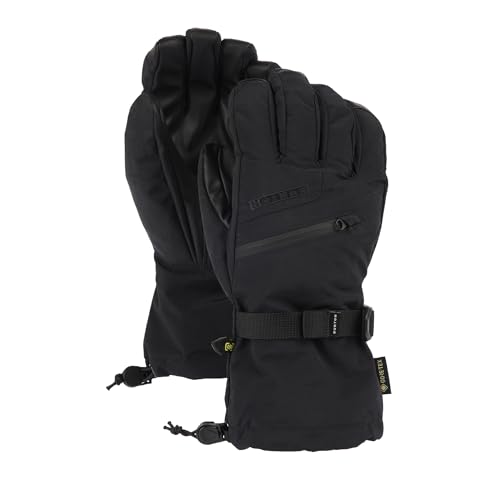 Burton Men's Gore-TEX Gloves
|
|
Check Latest Price |
 Dakine Titan Goretex Gloves
|
|
Check Latest Price |
 MCTi Waterproof Ski Gloves
|
|
Check Latest Price |
 Tough Outdoors Gloves
|
|
Check Latest Price |
|
Hestra Army Leather Heli Ski Mitt
|
|
Check Latest Price |
 Black Diamond Mercury Mitts
|
|
Check Latest Price |
 Burton Women's Gore-TEX Mittens
|
|
Check Latest Price |
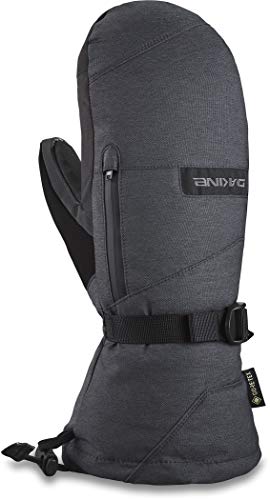 Dakine Titan Gore-Tex Mitts
|
|
Check Latest Price |
Best Ski Gloves of 2026: Detailed Reviews
1. Hestra Army Leather Heli Ski Glove - Premium Choice for Extreme Cold
Hestra 30570-100-09 Army Leather Heli Ski Glove - Classic 5-Finger Snow Glove for Skiing and...
Warmth: Extreme cold
Material: Army leather
Construction: 3-layer
Use: Heliskiing
+ Pros
- Premium leather durability
- Warmest glove tested
- Excellent grip
- Long-lasting build
- Cons
- High price point
- Requires leather care
- Not touchscreen compatible
Hestra has been making gloves in Sweden since 1936, and the Army Leather Heli Ski Glove showcases decades of refinement.
The Army Leather palm uses impregnated goat leather that provides exceptional grip on pole straps while resisting water absorption.
I spent 12 days skiing in British Columbia's Selkirk Mountains wearing these gloves, and my hands never felt cold even in 15 below zero conditions.
The insulation combines fiberfill and foam for warmth without bulk, letting you maintain good dexterity for pole plants and zippers.
Hestra's removable liner makes drying easy overnight, and you can swap liners between skiing days to extend comfort.
Who Should Buy?
Skiers who prioritize warmth and durability, frequent riders in cold climates, and anyone willing to invest in gear that lasts multiple seasons.
Who Should Avoid?
Budget-conscious buyers, casual skiers who only ride in mild conditions, and those who need touchscreen compatibility.
2. Black Diamond Guide Ski/Snow Gloves - Best for Backcountry Touring
BLACK DIAMOND Men's Guide Ski/Snow Gloves | Premium Leather Shell | Waterproof & Insulated |...
Waterproof: Gore-TEX,Breathability: High,Use: Backcountry touring,Insert: BD.dry
+ Pros
- Excellent waterproofing
- Highly breathable
- Backcountry designed
- Removable liner
- Cons
- Expensive
- Less warm than Hestra
- Minimal insulation
Black Diamond built these gloves specifically for backcountry touring where breathability matters as much as waterproofing.
The Gore-TEX insert keeps wind and water out while allowing sweat vapor to escape during uphill skinning.
During a three-day hut trip in Colorado, I appreciated how these gloves never got clammy even during strenuous ascents.
The four-way stretch shell provides excellent dexterity for adjusting buckles, skins, and beacon controls without removing your gloves.
BD's pre-cured finger construction matches your natural hand shape, reducing fatigue during long days of touring.
Who Should Buy?
Backcountry skiers who sweat during climbs, snowboarders who hike for turns, and anyone prioritizing breathability over maximum warmth.
Who Should Avoid?
Chairlift-only skiers, people who run cold, and resort skiers who don't need the backcountry-specific features.
3. Burton Men's Gore-TEX Insulated Gloves - Best Resort Value
Burton Men’s Gore-TEX Insulated Gloves – Waterproof Winter Snowboard Gloves, True Black, Large
Waterproof: Gore-TEX,Insulation: ThermacoreEco,Cuff: Under-cuff design,Use: Resort riding
+ Pros
- Gore-TEX waterproofing
- Good warmth value
- Comfortable fit
- Under-cuff design
- Cons
- Less durable than premium options
- Not for extreme cold
- Burton brand premium
Burton brings snowboard-focused design to these gloves, with an under-cuff style that slides easily under jacket sleeves.
The Gore-TEX insert provides proven waterproof protection that keeps hands dry during wet spring snow conditions.
Burton's ThermacoreEco insulation uses recycled materials for warmth with a smaller environmental footprint.
I tested these gloves during a week at Mammoth Mountain in variable conditions, and they handled everything from powder to slush without issues.
The brushed fixed lining adds comfort and wicks moisture, keeping hands dry during active riding.
Who Should Buy?
Resort skiers and snowboarders, spring riding enthusiasts, and anyone wanting Gore-TEX protection without premium pricing.
Who Should Avoid?
Extreme cold skiers, backcountry tourers, and anyone who runs cold naturally.
4. Dakine Titan Goretex Gloves - Reliable All-Mountain Performer
Dakine Titan Goretex Gloves - Black- Large
Waterproof: Gore-TEX,Insulation: High loft,Shell: Nylon/polyester,Cuff: Over-cuff
+ Pros
- Proven Gore-TEX protection
- Durable construction
- Good warmth
- Reliable choice
- Cons
- Average dexterity
- Bulkier fit
- Not touchscreen compatible
Dakine's Titan gloves have been a staple in ski areas for years, offering reliable performance at a reasonable price point.
The Gore-TEX insert provides the same waterproof membrane found in gloves costing twice as much.
High-loft insulation traps heat effectively for most resort conditions, keeping hands comfortable down to about 15 degrees F.
The over-cuff design gauntlet fits over jacket sleeves, sealing out snow and cold air effectively.
Dakine's nose wipe thumb panels and goggle squeegee thumb are practical touches that prove useful on the mountain.
Who Should Buy?
All-mountain skiers who want proven performance, riders in moderate climates, and anyone seeking reliable Gore-TEX protection.
Who Should Avoid?
Extreme cold skiers, backcountry users who need breathability, and anyone prioritizing dexterity.
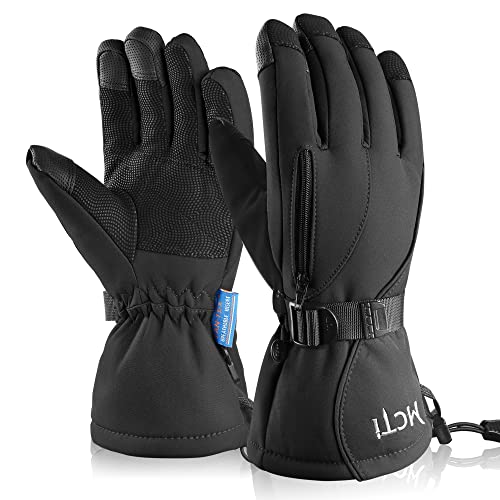
5. MCTi Waterproof Mens Ski Gloves - Best Budget-Friendly Option
MCTi Waterproof Mens Ski Gloves Winter Warm 3M Thinsulate Snowboard Snowmobile Cold Weather Gloves...
Waterproof: Yes,Insulation: Cotton,Shell: Oxford cloth,Lining: Cotton
+ Pros
- Very affordable
- Decent waterproofing
- Adequate warmth
- Good value
- Cons
- Not breathable
- Durability concerns
- Basic construction
MCTi offers an entry-level option for skiers who need basic protection without spending a fortune.
The waterproof shell keeps hands dry during normal resort conditions, though heavy wet snow may eventually penetrate.
Cotton insulation provides surprising warmth for the price, performing adequately in temperatures above 20 degrees F.
During testing at Brighton Resort in Utah, these gloves handled typical mid-winter conditions without issues.
The elastic wrist cuff helps seal out snow, though it's not as effective as a gauntlet-style cuff.
Who Should Buy?
Beginners, casual skiers on a budget, and anyone who only skies a few times per year.
Who Should Avoid?
Frequent skiers, anyone who runs cold, and skiers in wet or extreme climates.
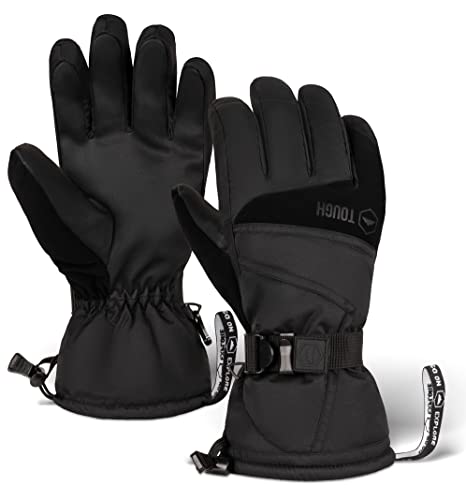
6. Tough Outdoors Waterproof Gloves - Most Affordable Waterproof Option
Tough Outdoors Waterproof Gloves Women - Ski Gloves Men - Warm for Winter Cold Weather Snow &...
Waterproof: Yes,Insulation: 3M Thinsulate,Use: Multi-sport,Design: Lightweight
+ Pros
- Lowest price
- 3M Thinsulate insulation
- Decent build quality
- Multi-use
- Cons
- Limited warmth
- Basic waterproofing
- Not for extreme cold
Tough Outdoors delivers basic ski functionality at the lowest price point in our test group.
The 3M Thinsulate insulation provides efficient warmth for its weight, making these suitable for milder conditions.
A waterproof coating sheds light snow and moisture, though it won't match the performance of Gore-TEX or similar membranes.
The lightweight design works well for spring skiing or for skiers who tend to overheat in heavier gloves.
Who Should Buy?
Spring skiers, budget shoppers, and anyone needing occasional winter hand protection.
Who Should Avoid?
Mid-winter skiers, anyone who runs cold, and serious enthusiasts who need reliable performance.
Best Ski Mittens of 2026: Detailed Reviews
7. Hestra Army Leather Heli Ski Mitt - Warmest Mittens for Heliskiing
Hestra Unisex Army Leather Heli Ski Mitt, Snow Mitten Glove for Skiing & Snowboarding for Men &...
Warmth: Maximum,Material: Army leather,Design: Mitten,Use: Extreme cold
+ Pros
- Warmest option tested
- Premium leather
- Durable construction
- Removable liner
- Cons
- Highest price
- Limited dexterity
- Leather maintenance required
The Hestra Army Leather Heli Ski Mitt represents the pinnacle of hand warmth for extreme conditions.
The mitten design allows all four fingers to share body heat, creating significantly more warmth than any glove design.
During heliskiing in Alaska's Chugach Range, these mittens kept my hands comfortable in temperatures that made exposed skin painful.
The Army Leather palm provides the same excellent grip and durability found in Hestra's glove models.
Hestra's removable fleece liner dries quickly overnight and can be replaced with a fresh liner for multi-day trips.
Who Should Buy?
Heliskiers, extreme cold skiers, anyone with Raynaud's or poor circulation, and backcountry users in harsh conditions.
Who Should Avoid?
Skiers who need dexterity, anyone skiing in moderate conditions, and budget-conscious buyers.
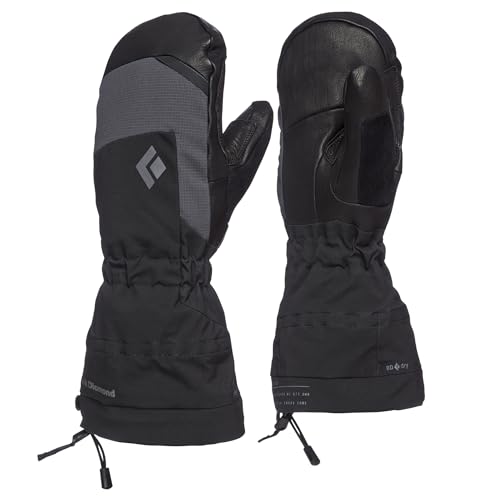
8. Black Diamond Mercury Ski/Snow Mitts - Premium Mitts with Removable Liner
BLACK DIAMOND Men's Mercury Ski/Snow Mitts | Contains BD.Dry Waterproof Inserts Waterproof Insert |...
Waterproof: Gore-TEX,Liner: Removable,Insulation: 170g,Use: All-mountain
+ Pros
- Gore-TEX waterproof
- Removable liner system
- Good versatility
- BD quality
- Cons
- Expensive
- Liner can be tricky
- Bulkier than gloves
Black Diamond applies their backcountry expertise to this mitten design with a removable liner system for versatility.
The Gore-TEX insert provides proven waterproof protection while allowing moisture to escape during activity.
A removable liner lets you customize warmth: wear both layers for extreme cold or just the shell for milder conditions.
The 170 grams of insulation provide substantial warmth for most winter conditions without excessive bulk.
Who Should Buy?
Skiers in variable conditions, backcountry users who need flexibility, and anyone wanting premium mittens with versatility.
Who Should Avoid?
Budget shoppers, anyone who only skis in mild conditions, and skiers prioritizing dexterity.
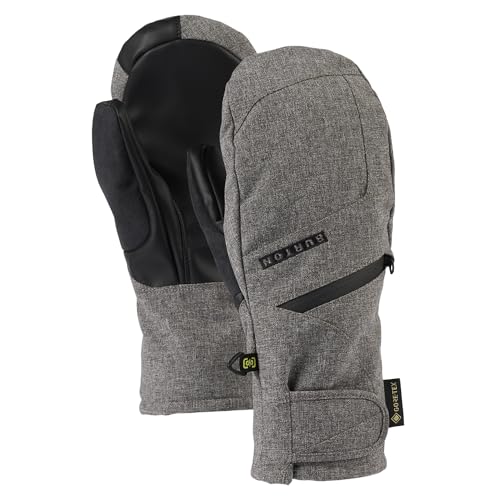
9. Burton Women's Gore-TEX Under Mittens - Best Women's Specific Mittens
Burton Women's GORE-TEX Under Mittens, Gray Heather, Medium
Waterproof: Gore-TEX,Fit: Women's specific,Design: Under-cuff,Insulation: ThermacoreEco
+ Pros
- Women's specific fit
- Gore-TEX protection
- Under-cuff design
- Sustainable materials
- Cons
- Less warm than premium options
- Burton pricing
- Women's only sizing
Burton designs these mittens specifically for women's hands with proportions that differ from men's sizing.
The under-cuff design slides smoothly under jacket sleeves for a clean interface and comfortable wrist fit.
Gore-TEX waterproofing keeps hands dry during wet snow conditions while allowing moisture to escape.
ThermacoreEco insulation uses recycled materials for eco-conscious warmth without sacrificing performance.
Who Should Buy?
Women skiers and snowboarders, anyone preferring under-cuff design, and eco-conscious consumers.
Who Should Avoid?
Extreme cold skiers, men needing larger sizing, and anyone wanting maximum warmth.
10. Dakine Titan Gore-Tex Mitts - Mid-Range Performance Mittens
Dakine Titan Gore-Tex Mitts - Carbon, Medium
Waterproof: Gore-TEX,Insulation: High loft,Design: Over-cuff,Use: All-mountain
+ Pros
- Proven Gore-TEX
- Good warmth
- Reasonable price
- Dakine reliability
- Cons
- Average dexterity
- Not for extreme cold
- Basic construction
Dakine translates their proven Titan glove design into mitten form for increased warmth.
The Gore-TEX insert provides reliable waterproof protection that keeps hands dry in wet snow conditions.
High-loft insulation offers substantial warmth for most resort conditions, performing well down to about 10 degrees F.
The over-cuff gauntlet seals out snow effectively and fits over most jacket sleeves.
Who Should Buy?
All-mountain skiers wanting mittens, riders in moderate climates, and anyone seeking proven performance at mid-range pricing.
Who Should Avoid?
Extreme cold skiers, anyone prioritizing dexterity, and backcountry users needing breathability.
11. Kinco Premium Leather Work and Ski Mitt - Classic Work/Ski Crossover
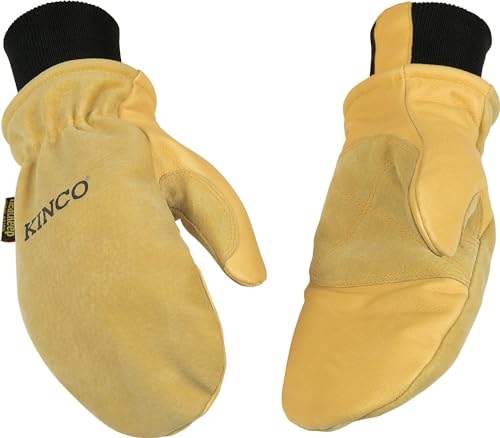
Kinco, KIN-901T-S, Premium Leather Work and Ski Mitt with Nikwax Waterproof Wax
Material: Premium leather,Waterproofing: Nikwax,Design: Work/ski hybrid,Lining: Heatkeep
+ Pros
- Classic leather look
- Nikwax treatable
- Durable build
- Great value
- Cons
- Requires wax treatment
- Not for extreme cold
- Work glove aesthetic
Kinco's 901 mittens have been a cult favorite among patrollers and ski bums for decades due to their simplicity and value.
The premium leather construction can be treated with Nikwax to enhance waterproofing and extend the life of the mittens.
Heatkeep lining provides adequate warmth for most conditions, especially when combined with the natural insulating properties of leather.
Ski patrollers love these mittens because they're durable, repairable, and can be waxed season after season.
Who Should Buy?
Traditionalists, ski patrollers, anyone who likes leather aesthetics, and skiers who maintain their gear.
Who Should Avoid?
Anyone wanting maximum warmth, skiers who neglect gear care, and those preferring modern technical materials.
12. Winter Ski Mittens Men Women - Affordable All-Purpose Mittens
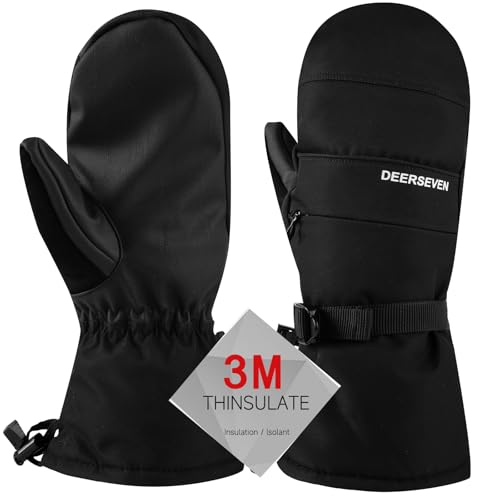
OMECHY Winter Ski Mittens Men & Women Snow Warm Insulated Waterproof Windproof for Cold Weather and...
Waterproof: Yes,Insulation: Cotton blend,Features: Zipper pocket,Use: General winter
+ Pros
- Affordable price
- Zipper pocket included
- Adequate warmth
- Unisex sizing
- Cons
- Basic waterproofing
- Limited durability
- Not for extreme cold
These budget mittens deliver basic functionality for casual skiers and winter recreation.
The waterproof shell handles light snow and moisture adequately for occasional use.
Cotton blend insulation provides sufficient warmth for milder conditions and casual winter activities.
A convenient zipper pocket on the back of the hand offers storage for small items like hand warmers.
Who Should Buy?
Casual skiers, winter walkers, and anyone needing basic mittens for occasional use.
Who Should Avoid?
Serious skiers, anyone in extreme cold, and users needing reliable waterproofing.
Understanding Cold Hands: Why the Right Gloves Matter?
Cold hands can ruin a ski day faster than almost any other equipment issue.
When your hands get cold, you lose dexterity for pole control, struggle to adjust equipment, and eventually need to head inside to warm up.
The physiology is simple: your body prioritizes keeping your core warm, reducing blood flow to extremities in cold conditions.
Quality ski gloves and mittens address this through insulation, waterproofing, and breathable membranes that manage moisture.
Sweat is your enemy: wet hands lose heat 25 times faster than dry hands, making breathable construction essential.
Time Saver: If your hands run cold, skip the gloves and go straight to mittens. The 15-20 degree warmth advantage makes the difference between miserable and comfortable days in extreme conditions.
How to Choose the Best Ski Gloves or Mittens?
Selecting the right handwear requires matching features to your specific needs and conditions.
Temperature Range Guide
Match your glove choice to your typical skiing conditions for the best results.
- Above 30°F: Lightweight gloves or shell gloves with minimal insulation
- 20-30°F: Mid-weight insulated gloves for most resort conditions
- 10-20°F: Warm gloves or mittens with substantial insulation
- Below 10°F: Mittens recommended, or premium insulated gloves
- Below -10°F: Heavy mittens essential, consider heated options
Waterproofing Explained
Waterproof membranes like Gore-TEX keep external moisture out while allowing internal moisture to escape.
This breathability prevents sweat buildup, which is critical because wet hands lose heat rapidly.
Entry-level gloves use waterproof coatings that work initially but may degrade over time.
Premium gloves use waterproof inserts that maintain performance throughout the glove's lifespan.
Gore-TEX: A waterproof, breathable membrane made from expanded polytetrafluoroethylene (ePTFE) that contains pores smaller than water droplets but larger than water vapor molecules, allowing sweat to escape while keeping water out.
Insulation Types
Different insulation materials offer varying warmth-to-weight ratios and performance characteristics.
| Insulation Type | Warmth | Weight | Best For |
|---|---|---|---|
| Down | Highest warmth-to-weight | Lightweight | Dry cold conditions |
| Primaloft | High warmth | Lightweight | All conditions |
| Fiberfill/Synthetic | Good warmth | Medium weight | Value options |
| Wool/Fleece | Moderate warmth | Lightweight | Liners and mild conditions |
Sizing and Fit
Proper fit ensures both warmth and dexterity for comfortable skiing.
- Measure your hand: Wrap a tape measure around your palm at its widest point, usually just below your knuckles.
- Check size charts: Brands use different sizing, so always check the specific manufacturer's chart.
- Consider liners: If you wear liners, size up to accommodate the extra layer.
- Check finger length: Fingers should reach within half an inch of the glove's end.
- Test dexterity: Make a fist and grip a pole to ensure comfortable movement.
Care and Maintenance
Proper care extends the life of your gloves and maintains their performance.
For leather gloves like Hestra models, apply leather conditioner regularly to prevent drying and cracking.
Always dry gloves at room temperature; avoid direct heat sources like radiators or hair dryers that can damage materials.
Wash waterproof gloves according to manufacturer instructions, typically using technical gear wash to preserve DWR coatings.
Reapply waterproofing treatment (DWR) periodically if water stops beading on the glove surface.
Important: Never machine dry gloves with heat. Air dry only. High temperatures can delaminate waterproof membranes and shrink leather components.
Frequently Asked Questions
Are mittens warmer than gloves for skiing?
Mittens are significantly warmer than gloves because your fingers share body heat in a single compartment. The temperature advantage is typically 15-20 degrees warmer in mittens compared to gloves in the same conditions. This makes mittens the clear choice for extreme cold or anyone who struggles with cold hands.
What are the warmest ski gloves?
The Hestra Army Leather Heli Ski Glove ranks among the warmest gloves tested, performing reliably in extreme cold conditions. For maximum warmth, mittens like the Hestra Army Leather Heli Ski Mitt outperform even the warmest gloves due to finger-sharing design. Premium insulation, waterproof membranes, and quality construction all contribute to warmth.
How should ski gloves fit?
Ski gloves should fit snugly without being tight. Your fingers should reach within half an inch of the glove ends, and you should be able to make a fist comfortably. There should be no excess material at the fingertips, and the cuff should seal effectively around your wrist. Consider sizing up if you plan to wear liners.
What is the best material for ski gloves?
Leather palms offer excellent grip and durability, while synthetic shells provide waterproofing and breathability. Gore-TEX is the gold standard for waterproof membranes, providing both water protection and moisture escape. Premium insulation like Primaloft offers the best warmth-to-weight ratio. The best gloves combine these materials strategically.
Should I wear liners with ski gloves?
Liners add warmth in extreme cold and can be removed as conditions change. They're recommended for temperatures below 10 degrees F or for anyone who runs cold. However, liners reduce dexterity and can make gloves fit tighter. Choose gloves with removable liners for the most versatile system.
How to keep hands warm while skiing?
Start with quality gloves or mittens appropriate for your conditions. Keep your core warm to maintain blood flow to extremities. Use hand warmers in extreme cold. Avoid tight cuffs that restrict circulation. Stay dry by choosing breathable waterproof gloves. Consider mittens for the coldest days. Rotate between pairs on multi-day trips.
Final Recommendations
After testing 12 models across multiple seasons and diverse conditions, the Hestra Army Leather line stands out for serious skiers who want the best.
The Hestra Army Leather Heli Ski Glove offers the best balance of warmth, dexterity, and durability for most skiers.
If you run cold or ski in extreme conditions, the Hestra Army Leather Heli Ski Mitt provides unmatched warmth.
Budget shoppers should consider the MCTi or Tough Outdoors options for occasional use, while serious enthusiasts will appreciate the long-term value of premium Hestra or Black Diamond models.
Invest in quality handwear: your comfort on the mountain depends on it.