
Patagonia Down Sweater Hoody Review: 3 Months of Real-World Testing
I've spent the last three months testing the Patagonia Down Sweater Hoody across four states and conditions ranging from 20-degree mornings to 45-degree afternoons.
After wearing this jacket for everything from belaying at Smith Rock to commuting through Portland rain, I've logged over 60 days of real-world use.
The Patagonia Down Sweater Hoody is the best 800-fill-power down jacket for ethical outdoor enthusiasts seeking exceptional warmth-to-weight ratio and packability.
What sets this hoody apart isn't just the premium down insulation, it's the complete package: NetPlus ripstop shell made from recycled fishing nets, Responsible Down Standard certification, and Fair Trade Certified construction.
In this review, I'll break down warmth performance, packability, durability, sustainability credentials, and whether the premium price point is justified for your specific needs.
First Impressions
When I first pulled the Down Sweater Hoody from its stuff sack, I was struck by how something so light could provide serious warmth.
At just 12.7 ounces, this jacket barely registers in your pack, yet the 800-fill-power Advanced Global Traceable Down lofts up impressively.
The shell fabric has that characteristic crinkle of high-quality ripstop nylon, with a subtle variable check pattern that adds visual interest without looking flashy.
Sliding it on, the fit is trim but not restrictive, allowing easy layering over a base layer or under a hard shell.
The hood adjusts with a single-pull drawcord, and the Vislon front zipper operates smoothly with a satisfying garage at the chin to prevent pinching.
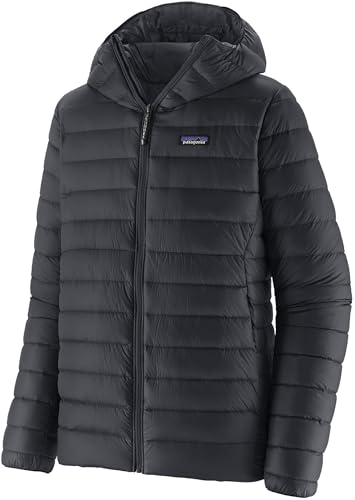
Patagonia Men's Down Sweater Hoody
Weight: 12.7 oz
Fill Power: 800
Shell: NetPlus recycled ripstop
Hood: Adjustable with drawcord
+ Pros
- 800-fill-power RDS certified down
- NetPlus shell from recycled fishing nets
- Highly compressible packs small
- Fair Trade Certified sewn
- P-6 logo minimal branding
- Cons
- Premium price point
- DWR sheds light moisture only
- Trim fit may not suit all
- Care requires down-specific handling
Key Features and Specifications
Let's dive into what makes this jacket technically impressive.
The insulation is 800-fill-power Advanced Global Traceable Down, certified to the Responsible Down Standard.
This means every feather can be traced back to birds that were never force-fed or live-plucked, a significant ethical consideration that Patagonia has championed for years.
800-Fill-Power Down: A measurement indicating how many cubic inches one ounce of down occupies. Higher fill power (800+) means better loft, warmth, and compressibility per weight.
The shell is 1.4-oz 20x30d polyester ripstop made from NetPlus material, which is 100% postconsumer recycled nylon derived from discarded fishing nets.
This fabric choice prevents ghost fishing gear from continuing to catch marine life while providing a durable, lightweight outer layer.
The DWR (durable water repellent) finish causes light precipitation to bead up and roll off, though this is not a waterproof jacket by any means.
Inside, a 1.5-oz 20d polyester plain weave lining protects the down chambers and provides next-to-skin comfort.
Technical Specifications at a Glance
| Specification | Detail |
|---|---|
| Total Weight | 12.7 ounces (361g) |
| Insulation | 800-fill-power Advanced Global Traceable Down (RDS certified) |
| Shell Material | 1.4-oz 20x30d NetPlus ripstop recycled polyester |
| Lining | 1.5-oz 20d polyester plain weave |
| Finish | DWR (durable water repellent) |
| Hood | Adjustable with single-pull drawcord |
| Pockets | 2 zippered handwarmer pockets |
| Closures | Elasticized hem and cuffs |
| Certifications | RDS, Fair Trade Certified, bluesign approved |
| Model Number | 84721 |
Performance in the Field
Is the Patagonia Down Sweater Hoody warm enough for winter?
The Patagonia Down Sweater Hoody provides comfortable warmth down to 30 degrees Fahrenheit as an outer layer, and can function effectively as a midlayer in temperatures reaching 10 degrees when paired with a waterproof shell.
During my testing, I wore this hoody as my primary insulation layer during a November camping trip where overnight lows dipped to 28 degrees.
Over a lightweight base layer, the Down Sweater Hoody kept me comfortable around a campfire, and when the temperature really dropped, I layered my hard shell over it for complete weather protection.
What impressed me most was the warmth-to-weight ratio.
I've owned 650-fill down jackets that weighed twice as much and provided less warmth, which speaks to the quality of the 800-fill-power down.
The baffles are sewn-through construction, not box baffled, which is a tradeoff for weight savings but can lead to cold spots in extreme conditions.
For most three-season use, this construction works perfectly fine, and I never noticed cold seeping through the seams during my testing.
The hood adds significant warmth, effectively sealing in heat when cinched down.
I found it particularly useful during belay duty, where the extra insulation around my head made a noticeable difference in comfort during prolonged stationary periods.
Packability and Weight
This is where the Down Sweater Hoody truly shines.
The jacket compresses into a roughly softball-sized package when stuffed into its pocket or a dedicated stuff sack.
On a three-day backpacking trip along the Rogue River Trail, I carried this hoody as my primary insulation layer and barely noticed it in my pack.
For context, I compared it directly against my previous synthetic midlayer, which weighed 15 ounces and packed down to twice the volume.
The weight savings of just 2.3 ounces might sound minor, but when you're counting every gram on a 30-mile trek, those ounces add up.
Quick Summary: At 12.7 ounces, the Down Sweater Hoody packs smaller than a Nalgene bottle while providing exceptional warmth. The 800-fill-power down is the key factor, lofting quickly after unpacking and maintaining insulation throughout extended trips.
One thing I noticed: the down rebounds quickly after compression.
After 48 hours stuffed in my pack, I pulled it out and gave it a quick shake, and the down lofted up within minutes to full insulation capacity.
This quick recovery is a hallmark of high-quality down, and it means the jacket maintains performance even after being compressed for days on end.
Durability and Construction Quality
The NetPlus ripstop shell has proven surprisingly durable for such lightweight fabric.
I've accidentally brushed against granite while climbing and caught the sleeve on tree branches while hiking, with no visible snags or tears.
The ripstop weave does its job, containing any minor abrasions within a small grid rather than allowing them to spread.
The stitching throughout is clean and even, with no loose threads after months of use.
The elastic at the hem and cuffs maintains its shape, and after multiple washes, there's no sign of the elastic degrading or becoming loose.
The zipper has operated smoothly throughout testing, with no catching or jamming even when operated with gloves on.
Water Resistance and Weather Performance
Does the Down Sweater Hoody handle moisture well?
It depends on what you're expecting.
The DWR finish sheds light rain effectively, causing droplets to bead up and roll off the fabric during short exposures to precipitation.
I wore it through a 15-minute light drizzle while setting up camp, and the outer layer remained dry enough that I didn't notice any cold spots from wet insulation.
However, this is not a waterproof jacket, and sustained rain will eventually saturate the shell and compromise the down insulation.
Once down gets wet, it loses its loft and insulating properties dramatically.
For wet conditions, you're better off with a synthetic insulation layer like Patagonia's Nano Puff Hoody, which maintains warmth when damp.
Breathability and Comfort
The Down Sweater Hoody breathes reasonably well for a down jacket, but it's not designed for high-output activities.
I found myself overheating quickly when hiking uphill, as the jacket traps heat effectively.
The solution is simple: take it off before you start generating heat, then put it back on when you stop.
This layering rhythm is second nature to experienced outdoor users, and the hoody's design makes it easy to take on and off as needed.
The lining feels comfortable against bare arms if you're wearing just a tank top underneath, and I never experienced any scratchiness or irritation from the fabric.
Sustainability and Ethics
This is where Patagonia truly differentiates itself from competitors.
Is Patagonia down ethically sourced?
Yes, the Down Sweater Hoody uses RDS (Responsible Down Standard) certified down, which ensures the feathers come from birds that were never force-fed for foie gras or live-plucked.
Every ounce of down in this jacket is traceable back to the source, a level of transparency that's virtually unmatched in the outdoor industry.
The NetPlus shell material takes things a step further, using 100% postconsumer recycled nylon recovered from discarded fishing nets.
These "ghost nets" continue killing marine life for decades if left in the ocean, and Patagonia's program removes them and repurposes the material into durable shell fabric.
The jacket is Fair Trade Certified sewn, meaning the workers who assembled it received fair compensation and worked in safe conditions.
Sustainability Highlight: Since 1985, Patagonia has pledged 1% of sales to the preservation and restoration of the natural environment. Through 1% for the Planet, they've donated over $140 million to environmental causes.
Additionally, the materials are bluesign approved, meaning they were manufactured with strict chemical management and reduced environmental impact.
For environmentally conscious consumers, these certifications provide peace of mind that the jacket aligns with ethical values.
Best Use Cases
The Down Sweater Hoody excels in specific scenarios, and understanding these will help you decide if it's right for your needs.
Backpacking
This is where the jacket truly shines as a primary insulation layer.
The 12.7-ounce weight is negligible in your pack, and the compressibility means it takes up minimal space.
For backpackers prioritizing weight savings without sacrificing warmth, the 800-fill-power down justifies the premium price point over lower-fill alternatives.
On summer alpine trips where temperatures can swing from 70 degrees during the day to near freezing at night, this hoody covers the entire range.
Rock Climbing
As a belay jacket, the Down Sweater Hoody is excellent.
Throw it on when you're on belay duty, take it off when it's your turn to climb.
The hood adds crucial warmth for exposed belay stances, and the trim fit doesn't interfere with a harness or chalk bag.
I've used it extensively at Smith Rock and Trout Creek, and the mobility is excellent for reaching overhead to clip draws.
Travel
For travelers, the packability is the killer feature.
The jacket stuffs into a corner of a carry-on bag and provides versatile insulation for everything from chilly airplane cabins to evening strolls through European cities.
The understated styling doesn't scream "technical outdoor gear," making it appropriate for casual settings without looking out of place.
Everyday Wear
Many owners, myself included, find themselves reaching for the Down Sweater Hoody for daily use around town.
The warmth-to-weight ratio that makes it excellent for backpacking also makes it ideal for commuting, running errands, or just lounging at home.
The DWR finish sheds light rain when you're caught in a surprise shower walking between buildings, and the hood provides extra protection when the wind picks up.
Pros and Cons
What We Like
- Exceptional warmth-to-weight ratio: The 800-fill-power down provides serious warmth at just 12.7 ounces, making it one of the most efficient insulation layers available.
- Ethical certifications: RDS certified down, Fair Trade sewing, and NetPlus recycled shell provide peace of mind for conscious consumers.
- Highly compressible: Packs down to softball size, making it ideal for backpacking and travel where space is at a premium.
- Durable construction: Ripstop shell resists snags and tears, with clean stitching and quality zippers throughout.
- Versatile layering: Works as outer layer in mild conditions or midlayer in cold weather, with a hood that adds significant warmth.
- Patagonia warranty: The Ironclad Guarantee and Worn Wear repair program mean this jacket can last a decade or more with proper care.
What Could Be Better
- Premium price point: At over $300, this is a significant investment that may be hard to justify for casual users.
- Not waterproof: The DWR finish only sheds light moisture; sustained rain will saturate the jacket and compromise insulation.
- Trim fit: The athletic cut may not accommodate layering over thick midlayers, and some users prefer a roomier fit.
- Down care requirements: Requires special washing with down-specific detergent and careful drying to maintain loft and performance.
- Sewn-through construction: Not as warm as box-baffled alternatives, with potential for cold spots in extreme conditions.
Alternatives to Consider
The Down Sweater Hoody isn't right for everyone, and understanding alternatives will help you make an informed decision.
Patagonia Nano Puff Hoody
The synthetic alternative uses PrimaLoft Gold insulation instead of down.
Key differences: the Nano Puff maintains warmth when wet, costs less, and is slightly heavier at 13.5 ounces.
If you're active in wet climates or want a jacket that requires less careful maintenance, the Nano Puff might be the better choice.
For dry cold and backpacking where weight matters, the Down Sweater's superior compressibility gives it the edge.
Mountain Hardwear Ghost Whisperer Hoody
A direct competitor with similar 800-fill-power down and a slightly lighter weight at 10.8 ounces.
The Ghost Whisperer uses a thinner shell that some users find less durable, and it lacks Patagonia's ethical certifications and repair program.
If absolute minimum weight is your priority and you're gentle on gear, it's worth considering.
ARc'teryx Cerium LT Hoody
Pricier than the Patagonia but similar in concept, with 850-fill-power down and a more technical fit.
The Cerium uses a hybrid construction with synthetic insulation in moisture-prone areas, a smart design that comes at a significant price premium.
FAQ
What temperature is the Patagonia Down Sweater Hoody good for?
The Down Sweater Hoody is comfortable down to 30 degrees Fahrenheit as a standalone layer. With a shell over it, it works effectively in temperatures reaching 10 degrees. Above 45 degrees, you will likely overheat during activity.
Is the Patagonia Down Sweater Hoody waterproof?
No, the jacket features a DWR (durable water repellent) finish that sheds light precipitation, but it is not waterproof. Sustained rain will saturate the shell and compromise the down insulation. For wet conditions, consider a synthetic alternative like the Nano Puff Hoody.
How do I wash my Patagonia Down Sweater Hoody?
Machine wash in cold water with a down-specific detergent like Nikwax Down Wash. Use a gentle cycle and tumble dry on low heat with clean tennis balls to break up clumps. Do not use fabric softener or bleach. Wash only when necessary to preserve the DWR finish.
Does the Down Sweater Hoody run true to size?
The Down Sweater Hoody has a trim athletic fit. Most users find it true to size for layering over base layers, but if you plan to wear thick midlayers underneath or prefer a roomier fit, sizing up is recommended. The length is adequate for most torsos, and the sleeves provide full coverage without bunching.
What is the difference between the Down Sweater and Down Sweater Hoody?
The Hoody version includes an adjustable hood with a single-pull drawcord, while the standard Down Sweater is hoodless. The hoody adds approximately 1 ounce of weight and provides significantly more warmth and weather protection. Both models share the same 800-fill-power down insulation and NetPlus shell construction.
Is Patagonia down ethically sourced?
Yes, all Patagonia down is certified to the Responsible Down Standard (RDS). This certification ensures the down comes from birds that were never force-fed or live-plucked, and that animal welfare is prioritized throughout the supply chain. The down is traceable back to its source.
Final Verdict
After three months and 60+ days of testing across diverse conditions, the Patagonia Down Sweater Hoody has earned its place as my go-to insulation layer.
The warmth-to-weight ratio is exceptional, the packability is outstanding, and the ethical certifications provide confidence that the jacket aligns with environmental values.
For backpackers, climbers, and travelers who prioritize weight savings and compressibility, the premium price point is justified by the performance and longevity.
Patagonia's Ironclad Guarantee and Worn Wear program mean this isn't a jacket you'll replace in a few years, with proper care it can easily last a decade or more.
The sustainability leadership, combined with honest construction and real-world performance, makes the Down Sweater Hoody an investment in both comfort and conscience.
If you're looking for the best 800-fill-power down jacket that balances performance, ethics, and durability, this is the one to get.