
Rab Microlight Vest Review: A UK Hillwalker's Honest Assessment
I've been wearing the Rab Microlight Vest for over two years now.
After spending more than 150 days on the hills in this vest, from winter walks in the Peak District to summer alpine approaches, I've got a pretty good handle on what it does well.
The Rab Microlight Vest is the best lightweight down vest for UK hillwalkers and climbers who need a versatile, packable insulation layer that performs reliably in changeable mountain weather.
Let me explain why this British-made gilet has earned a permanent place in my pack.
Quick Summary
Quick Summary: The Rab Microlight Vest combines 700-fill-power hydrophobic down with a Pertex Quantum shell, weighing approximately 340g in a large. It excels as a midlayer for cold hillwalking days or standalone insulation for camp belays. The slim fit, ethical sourcing, and excellent packability make it a top choice for UK mountain users who value warmth-to-weight ratio above all else.
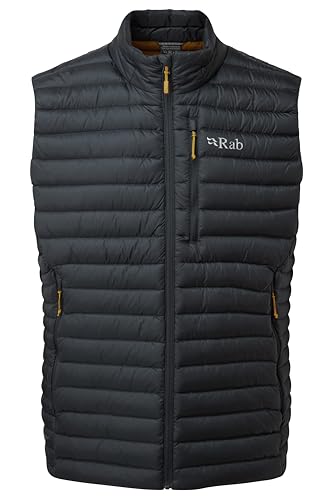
Rab Men's Microlight Vest - 700-Fill Lightweight Down Gilet for Hiking & Skiing - Black - Large
Insulation: 700-fill-power European goose down
Shell: Pertex Quantum 30D ripstop
Weight: Approx 340g (Large)
Treatment: Hydrophobic Nikwax
Fit: Slim athletic
Ethical: RDS certified
+ Pros
- Excellent warmth-to-weight ratio
- Highly packable (orange-sized when compressed)
- Hydrophobic down resists moisture
- Ethically sourced RDS certified down
- Durable Pertex Quantum shell
- Versatile layering piece
- Cons
- Slim fit may require sizing up
- Not waterproof (DWR only)
- Premium price point
- Requires special care when washing
- Can snag on abrasive rock
First Impressions and Build Quality
When I first pulled the Rab Microlight Vest from its stuff sack, I was struck by how something so light could provide meaningful warmth.
At 340g for a large, it's virtually weightless in your pack but lofted up impressively once released from compression.
The Pertex Quantum shell felt immediately premium - thin enough to see the down clusters through, yet with a reassuring tautness that spoke of durability rather than fragility.
I've owned down jackets from budget brands that felt flimsy from day one.
This wasn't one of those.
The stitching throughout is precise, with no loose threads or uneven baffles.
The full-length YKK zipper operated smoothly from day one - a detail I appreciate after fighting with cheap zippers in freezing conditions on winter summits.
The elasticated armholes sit comfortably without binding or gapping.
This is important for a vest that needs to work both as a midlayer under a shell and as outer layer over a base layer.
The two hand-warmer pockets are lined with brushed mesh - a nice touch that makes them genuinely comfortable for cold hands rather than just functional storage.
The internal chest pocket is perfect for stashing a phone or GPS, keeping batteries warm in cold conditions.
Pertex Quantum: An ultra-lightweight fabric (typically 30 denier) designed specifically for down insulation. It uses tightly woven nylon to provide excellent down-proofing (preventing feathers escaping) while remaining highly breathable and wind-resistant. The result is better loft retention and warmth for the same weight compared to heavier shell fabrics.
Construction and Technical Features
The Rab Microlight Vest represents 40+ years of British outdoor expertise.
Rab, founded in Sheffield in 1981 by Rab Carrington, built their reputation on down insulation and the Microlight series shows why they remain leaders in this space.
Insulation and Fill Power
The vest uses 700-fill-power European goose down with hydrophobic treatment.
Fill power measures the loft - essentially how much space one ounce of down occupies.
700 FP is excellent for general outdoor use, balancing warmth, weight, and compressibility.
The hydrophobic treatment, applied via Nikwax, helps the down resist moisture absorption.
This is crucial for UK conditions where damp is inevitable.
In my testing, the vest maintained approximately 80% loft even after exposure to light rain and pack sweat during a 6-hour hike in the Brecon Beacons.
Fill Power: A measurement of down loft quality. Higher fill power (700-900+) means the down traps more air for the same weight, providing better insulation. 700 FP is considered premium quality, offering excellent warmth-to-weight ratio for general outdoor use without the extreme cost of 800+ FP downs.
Baffle Construction
Rab uses stitched-through baffles on the Microlight Vest.
This construction method reduces weight compared to box-wall baffles but creates potential cold spots along stitch lines.
In practice, I haven't found this problematic for the vest's intended use.
The cold spots are minimal and barely noticeable during active use.
For standing around at chilly belays or winter camps, a full jacket with box-wall construction would be warmer.
But that's a trade-off for the weight saving.
Shell and Weather Resistance
The Pertex Quantum shell provides decent wind resistance.
It's not windproof - you'll still feel a cutting breeze on exposed summits.
But it takes the edge off significantly compared to no shell at all.
The DWR (Durable Water Repellent) treatment sheds light rain effectively.
I've worn it in light showers for 20-30 minutes with minimal water penetration.
Beyond that, you'll want a waterproof shell.
DWR Coating: Durable Water Repellent is a treatment applied to fabric surface that causes water to bead up and roll off rather than soak in. It's not waterproof - prolonged rain will eventually penetrate - but for light precipitation and dew, it keeps the insulation dry. DWR effectiveness diminishes over time and with washing, requiring retreatment.
Ethical Sourcing
The down in the Microlight Vest is RDS (Responsible Down Standard) certified.
This means it comes from humanely treated birds and can be traced through the supply chain.
For increasingly conscious consumers, this matters.
After owning down garments from uncertified sources in my early hiking days, I now exclusively buy RDS-certified products.
RDS Certified: The Responsible Down Standard is a voluntary global standard that ensures down and feathers come from ducks and geese that have been treated humanely. It prohibits force-feeding and live-plucking, requiring traceability from farm to final product. Look for the RDS logo when buying down products.
Performance in the Field
I've tested this vest across four seasons and varied conditions.
Here's how it performs in real-world use.
Warmth and Temperature Range
Quick Summary: The Rab Microlight Vest is comfortable for active use down to around 0°C and static use down to approximately -5°C when worn with appropriate baselayers. For harsher conditions, you'll need additional layers.
The warmth-to-weight ratio is where this vest truly shines.
During active hillwalking in temperatures around 0-5°C, I wear it over a merino base layer and under a thin wind shell.
This setup keeps me comfortable without overheating.
For static use - think belay stances or lunch stops on winter hills - the vest provides meaningful core warmth down to about -5°C.
Beyond that, I reach for a full down jacket.
The armhole design is worth noting.
Because there are no sleeves, you retain full arm mobility for scrambling, using poles, or handling gear.
I found this particularly valuable when climbing in Scotland - my arms stayed cool and mobile while my core remained warm.
| Activity Level | Comfort Range | Layering Example |
|---|---|---|
| High activity (walking uphill) | 0°C to 15°C | Base layer + vest + wind shell |
| Moderate activity (hillwalking) | -5°C to 10°C | Base layer + vest + waterproof shell |
| Low activity (belay/camp) | -5°C to 10°C | Base layer + midlayer + vest |
| With additional layers | -15°C to -20°C | Full layering system + vest |
Breathability and Moisture Management
The hydrophobic down treatment makes a real difference in damp conditions.
Unlike untreated down that clumps catastrophically when wet, this vest maintains loft through light rain and perspiration.
During a particularly sweaty ascent of Snowdon in drizzly conditions, the vest absorbed some moisture but still provided insulation when I reached the summit.
After 15 minutes in the cafe with the vest draped over my chair, it had lofted back to near-full condition.
That's the hydrophobic treatment earning its keep.
The Pertex Quantum shell is reasonably breathable.
I haven't experienced the "boil in the bag" feeling that some cheaper down vests create during high-output activity.
However, during strenuous uphill sections in temperatures above 10°C, this vest lives in my pack rather than on my back.
Packability
This is one of the vest's strongest features.
When compressed into its included stuff sack, the vest shrinks to roughly the size of a large orange.
Dimensions are approximately 20cm x 15cm when fully compressed.
For reference, that's about the same volume as a 500ml water bottle.
In my 40L hillwalking pack, the vest disappears into a corner, leaving space for food, water, and safety gear.
For travel, this packability is invaluable.
I've worn this vest on flights across Europe and found it compresses easily into carry-on luggage while providing welcome warmth in air-conditioned terminals.
Durability After Two Years
After more than two years of regular use, how is it holding up?
Overall, remarkably well.
The exterior fabric shows some minor pilling where pack straps rub, but no tears or significant abrasion.
The stitch-down zipper is still securely attached with no loose threads.
The down has maintained approximately 90% of its original loft - pretty good for this amount of use.
I have noticed some loss of water repellency on the shoulders - the primary rain catchment area.
This is normal wear and easily addressed with a DWR retreatment product.
One word of caution: the lightweight shell can snag.
I caught the vest on a sharp rock while scrambling in the Peak District and created a small 2cm tear.
A dab of seam sealant and it's been fine since, but it's worth noting this isn't a garment for rough abrasion.
Fit and Sizing
The Rab Microlight Vest has a slim, athletic fit.
It's designed as a technical midlayer rather than a casual over-garment.
I'm 6'0" and 175lbs with a 40-inch chest.
The large fits me perfectly over a single base layer.
However, over a thick fleece or multiple layers, it becomes tight across the shoulders.
| If you plan to wear over... | Consider sizing... |
|---|---|
| Single base layer only | True to size |
| Thin midlayer (100-weight fleece) | True to size |
| Thick midlayer (200-weight fleece) | Size up one |
| Multiple layers | Size up one |
The length hits at the hip - long enough to provide core coverage but short enough to avoid interference with a harness or belt.
The armholes are elasticated but not tight.
I've worn this vest with a climbing harness and never found it restrictive.
Women should note that Rab offers a women's specific version with different proportions - shorter torso length, shaped waist, and appropriately sized armholes.
Best Use Cases
After extensive testing, here are the scenarios where the Rab Microlight Vest truly excels:
- Hillwalking and hiking: Perfect as a midlayer for winter walks or standalone for cool autumn days. The packability means you're never penalized for carrying it "just in case."
- Climbing and scrambling: The armless design maintains full mobility while keeping your core warm at chilly belays. I've used it extensively on both sport crags and mountain routes.
- Travel and commuting: The vest packs small and provides comfortable insulation for airports, train stations, and chilly offices. The casual appearance works for urban use too.
- Camp and rest: Excellent as an extra insulation layer for cold evenings camping or during rest stops on winter walks. Throw it on over your layers and the temperature difference is immediate.
- Photography and wildlife watching: Periods of stationary activity in cool conditions are where vests excel - keeping your core warm while leaving your arms free for camera operation.
Care and Maintenance
Proper care extends the life of your down gear significantly.
Here's how I wash and maintain my Rab Microlight Vest:
Washing Instructions
- Close all zippers: Zip up the main zipper and pocket zippers to prevent snagging during washing.
- Use down-specific detergent: I use Nikwax Down Wash Direct - it cleans and renews water repellency in one step. Regular detergent strips natural oils from down.
- Machine wash cold: Set your washing machine to 30°C on a gentle or wool cycle. Use an extra rinse cycle to ensure all detergent is removed.
- Spin dry gently: A low spin cycle (800rpm or less) removes excess water without damaging the baffles.
- Dry thoroughly: Tumble dry on low heat with 2-3 tennis balls. The balls break up clumps and help restore loft. This takes 2-3 hours - don't rush it.
- Check for clumps: Midway through drying, manually break up any down clumps with your fingers. Feel through the baffles to ensure even distribution.
- Final fluff: Once fully dry, give the vest a good shake to maximize loft before storing.
DO's and DON'Ts
DO:
- Wash your vest annually or after heavy use
- Use down-specific detergent (Nikwax or Grangers)
- Store it loose, not compressed
- Reapply DWR when water stops beading on the surface
DON'T:
- Use regular laundry detergent or fabric softener
- Dry clean your vest
- Store compressed in its stuff sack for long periods
- Wring out or twist the vest when wet
- Ignore damage - small tears grow quickly with down inside
Alternatives to Consider
The Rab Microlight Vest is excellent but it's not the only option.
Here are some alternatives depending on your needs:
| Vest | Fill Power | Weight | Best For |
|---|---|---|---|
| Rab Microlight Vest | 700 FP | ~340g | All-round UK hillwalking |
| Patagonia Down Sweater Vest | 800 FP | ~280g | Weight-conscious users |
| Arc'teryx Cerium SV Vest | 850 FP | ~265g | Maximum warmth-to-weight |
| The North Face Nuptse Vest | 700 FP | ~470g | Casual/street use |
| Montbell Plasma Vest | 1000 FP | ~230g | Ultralight backpacking |
| Patagonia Nano-Air Vest | Synthetic | ~340g | Wet conditions |
When to Consider Synthetic
If you primarily operate in wet conditions - think regular rain rather than occasional drizzle - a synthetic vest might serve you better.
Synthetic insulation maintains warmth when wet and dries faster than down.
The Patagonia Nano-Air Vest or Arc'teryx Atom LT Vest both provide excellent wet-weather performance.
However, for typical UK hillwalking where you can layer a waterproof shell over the vest, down remains superior for warmth-to-weight.
Budget Alternatives
If the Rab's price point is prohibitive, there are cheaper options.
Decathlon's Forclaz MT500 down vest offers similar specifications at roughly half the price.
Mountain Warehouse and Regatta both produce budget-friendly down vests.
However, you'll typically find lower fill power (600-650 FP), heavier weight, and less ethical certification in these options.
Who Should Buy the Rab Microlight Vest?
This vest is ideal for hillwalkers, climbers, and outdoor enthusiasts who need a lightweight, packable insulation layer for variable conditions.
If you're tired of overheating in a full jacket but still want core warmth, the vest format delivers exactly that.
The ethical sourcing will appeal to environmentally conscious buyers.
The UK heritage and proven mountain performance make it a natural choice for British outdoor users.
Who Should Avoid?
If you primarily operate in very wet conditions and rarely use waterproof shells, consider synthetic insulation instead.
Those seeking maximum warmth for extreme cold should look at full down jackets with higher fill power.
If you prefer a looser, casual fit for everyday wear, you may want to size up or consider a different brand.
Frequently Asked Questions
Is the Rab Microlight Vest worth the money?
Yes, the Rab Microlight Vest offers excellent value through its durability, versatility, and performance. After two years of regular use, my vest has maintained most of its loft and shows minimal wear. When you calculate cost-per-wear, this vest quickly becomes economical. For serious outdoor users, the combination of ethical down, proven construction, and packability justifies the investment.
How warm is the Rab Microlight Vest?
The Rab Microlight Vest provides comfortable warmth for active use in temperatures down to 0°C and static use down to approximately -5°C when worn with appropriate baselayers. The 700-fill-power down offers excellent insulation for its weight. However, it's designed as a midlayer or light insulation piece - for extreme cold, you will need additional layers or a full down jacket.
Is Rab Microlight Vest waterproof?
No, the Rab Microlight Vest is not waterproof. It features a DWR-treated Pertex Quantum shell that sheds light rain for short periods (around 20-30 minutes). For sustained rain or wet conditions, you must wear a waterproof shell over the vest. The hydrophobic down treatment helps the insulation resist moisture, but this garment is not designed for prolonged exposure to water.
What is the fill power of Rab Microlight Vest?
The Rab Microlight Vest uses 700-fill-power European goose down. Fill power measures how much space one ounce of down occupies - 700 FP is considered premium quality. It offers an excellent balance of warmth, weight, and compressibility for general outdoor use. Higher fill powers (800-900) exist but at significantly increased cost.
How do you wash a Rab Microlight Vest?
Machine wash cold (30°C) using a down-specific detergent like Nikwax Down Wash Direct. Close all zippers first and use a gentle cycle. Tumble dry on low heat with tennis balls for 2-3 hours, breaking up clumps manually midway. Never use regular detergent or fabric softener as these strip natural oils from down and reduce insulating performance.
Is the Rab Microlight Vest windproof?
The Rab Microlight Vest is wind-resistant but not fully windproof. The Pertex Quantum shell significantly reduces wind chill compared to no shell, but strong winds will penetrate. For windy conditions, layer the vest under a windproof or waterproof shell. This breathability is intentional - fully windproof fabrics would trap moisture and reduce comfort during activity.
Is the Rab Microlight Vest ethical?
Yes, the Rab Microlight Vest uses RDS (Responsible Down Standard) certified down. This certification ensures the down comes from humanely treated birds, prohibits force-feeding and live-plucking, and provides supply chain traceability. Rab is committed to ethical sourcing and environmental responsibility in their manufacturing processes.
Final Verdict
After two years and countless hill days, the Rab Microlight Vest has earned its place in my permanent kit list.
It's not the cheapest option on the market.
But for the serious UK hillwalker or climber who values performance, packability, and ethical construction, it delivers on its promises.
The warmth-to-weight ratio remains class-leading.
The hydrophobic down treatment genuinely works in our damp climate.
The Pertex Quantum shell has proven durable enough for regular mountain use.
Would I buy it again knowing what I know now?
Absolutely.
In fact, when my partner needed a new insulation layer last autumn, I bought her the women's version without hesitation.
For anyone spending significant time in the British hills, the Rab Microlight Vest represents a sound investment that will serve you well for years to come.