
Tarp Over A Tent: The Complete Guide to Rain Protection
After waking up to a puddle in my tent during what was supposed to be a peaceful camping trip, I learned the hard way that factory rain flies don't always cut it. That weekend in the Pacific Northwest dumped three inches of rain in 12 hours, and my tent's built-in fly just couldn't keep up.
Putting a tarp over your tent creates an additional waterproof barrier that redirects rain away from your shelter, reduces condensation buildup, and adds thermal insulation for year-round protection.
I've spent the last seven years camping across the Pacific Northwest, Rockies, and Appalachia. In that time, I've tested every tarp configuration imaginable and learned what actually works when the weather turns nasty. The right tarp setup has saved more than a dozen camping trips for me.
In this guide, you'll learn exactly how to set up a tarp over your tent, which configurations work best for different situations, and the gear that makes the job easier.
Why Put a Tarp Over Your Tent?
A tarp over your tent provides multiple layers of protection that go beyond basic rain coverage.
- Double Rain Protection: Heavy rain can overwhelm even quality tent flies. A secondary tarp creates a runoff barrier that keeps the primary fly from saturating.
- Extended Tent Lifespan: UV exposure degrades tent materials over time. A tarp shields your investment from sun damage, potentially adding years to its life.
- Vestibule Space: Properly positioned tarps create covered storage areas for gear, muddy boots, and cooking space outside your living area.
- Temperature Regulation: The air gap between tent and tarp provides insulation. In summer, it reduces solar heating. In winter, it traps warmth.
- Snow Load Management: Winter camping brings snow accumulation that can collapse tents. A tarp distributes the weight and creates an easy-to-clear surface.
Tarp Configurations Compared
Different camping scenarios call for different tarp setups. I've used all of these in real conditions, and each has its place.
| Configuration | Best For | Wind Rating | Setup Difficulty |
|---|---|---|---|
| A-Frame | General rain protection | Good | Easy |
| Diamond | Weight-conscious backpackers | Fair | Easy |
| Flat Lean-To | Wind blocking, shade | Excellent (low profile) | Easy |
| Flying Diamond | Variable wind conditions | Very Good | Moderate |
Quick Recommendation: Start with the A-Frame configuration. It's the most versatile, handles rain from two directions, and provides good headroom. Master this one before trying advanced setups.
Step-by-Step Tarp Setup Guide
What You'll Need
- Tarp: Sized 2-3 feet larger than your tent footprint
- Guylines: 25-50 feet of paracord or dedicated tarp cord
- Stakes: 6-8 tent stakes or grounding pegs
- Ridgeline: Optional cord or strap for A-frame setups
- Tensioners: Adjustable tensioners save time and frustration
A-Frame Setup: The All-Purpose Configuration
- Position your tent first: Choose a flat spot with good drainage. Set up your tent completely before adding the tarp. This prevents you from having to move the whole setup later.
- Identify anchor points: Look for two trees approximately 10-15 feet apart, positioned so the line between them runs perpendicular to the prevailing wind direction. If no trees exist, you'll need trekking poles or tarp poles.
- Set the ridgeline: Tie a cord between your two anchor points at a height that will place your tarp 6-8 inches above the tent's highest point when suspended. The ridgeline should be tight enough to support weight without sagging.
- Drape the tarp: Center your tarp over the ridgeline so equal amounts hang on both sides. For most tents, this means positioning the tarp so it extends 2-3 feet beyond the tent ends.
- Secure the corners: Pull each corner taut at a 45-degree angle from the tarp body. Stake each corner, leaving the guylines slightly long for tension adjustment. The staking points should create a pitch that sheds water effectively.
- Adjust tension: Work around all four corners, tightening gradually until the tarp is drum-tight. Any sagging will collect water, so take your time with this step.
- Add side pull-outs: If your tarp has mid-panel tie-outs, secure them to expand coverage and create vestibule space. Don't over-tighten these or you may deform the main pitch.
- Check spacing: Verify at least 4-6 inches of clearance between tarp and tent everywhere. This gap allows airflow and prevents the tarp from contacting your tent during wind gusts.
No-Tree Setup: Using Poles
When camping above treeline or in open areas, I've learned to adapt. Pole-based setups require different techniques but work equally well once you master them.
- Position two poles: Place trekking poles or dedicated tarp poles at the center of each long side of your tent. Space them so the tarp will extend 2-3 feet beyond the tent when draped.
- Height matters: Set poles to a height that places the tarp peak 6-8 inches above your tent's highest point. For most tents, this is around 4-5 feet tall.
- Secure the ridgeline: If using trekking poles, loop your ridgeline over the pole tips. For dedicated tarp poles, use the provided attachment points or notch the tips.
- Anchor all corners: Pull the four corners taut and stake them. In windy conditions, add additional stakes along the edges for extra security.
- Double-check stability: Pole setups are more prone to collapse in wind. Ensure your stakes are solid and consider adding guylines to the pole tops for bracing.
Rain-Specific Setup Tips
When setting up during active rain, I use a modified approach that keeps the interior of my tent dry.
- Set up the tarp first: Create your complete tarp shelter before pitching the tent underneath. This keeps your tent dry during setup.
- Steeper pitch angle: Increase the angle of your tarp sides to 45-60 degrees for better water runoff. This reduces pooling and handles heavy rainfall more effectively.
- Extend coverage on the windward side: Position your tarp so the side facing prevailing rain extends further down. This creates a better water barrier for entry and exit.
- Create a drip line: Leave a slight gap between tarp edges and ground on the uphill side. This prevents water from wicking underneath.
⏰ Time Saver: Pre-attach guylines to your tarp at home with adjustable tensioners already in place. This saves 5-10 minutes per setup and eliminates the need to tie knots with cold, wet hands.
Choosing the Right Tarp Size
Selecting the correct tarp size is critical. Too small and you won't get adequate coverage. Too large and you're carrying unnecessary weight and creating a wind sail.
| Tent Size | Minimum Tarp Size | Recommended Tarp Size | Ideal Coverage |
|---|---|---|---|
| 1-2 person tent | 8x10 ft | 10x12 ft | Full coverage + vestibule |
| 3-4 person tent | 10x12 ft | 12x16 ft | Full coverage + gear storage |
| 4-6 person tent | 12x16 ft | 14x20 ft | Full coverage + entry shelter |
Tarp Materials Comparison
Not all tarps are created equal. The material significantly affects weight, durability, and performance.
| Material | Weight | Durability | Best For |
|---|---|---|---|
| Polyethylene | Heavy | Good | Car camping, budget setups |
| Silnylon | Light | Fair | Backpacking, weight-conscious |
| Canvas | Very Heavy | Excellent | Base camps, long-term setups |
| Cuben Fiber (DCF) | Ultralight | Good | Ultralight backpacking, premium |
Ridgeline: The cord or strap that runs between two anchor points (trees or poles) and supports the peak of your tarp in an A-frame or similar configuration.
Recommended Gear for Tarp Setup
Having the right equipment makes tarp setups faster, more secure, and more reliable. These are the products I recommend based on years of testing.
Swiss Outdoors Rain Fly Tarp - Budget-Friendly All-Purpose Tarp

Swiss Outdoors Rain Fly Tarp | Waterproof Tent Shelter Canopy | Lightweight Easy Setup for Hammock,...
Size: 12x9 ft
Material: Waterproof poly
Weight: Lightweight portable
Best For: Car camping, beginners
+ Pros
- Affordable price point
- Waterproof design
- Easy setup
- Large coverage area
- Lightweight construction
- Cons
- Not ultralight
- Basic grommets
- Polyethylene heavier than premium materials
This 12x9 foot tarp provides excellent coverage for most 2-4 person tents at a price point that won't break the bank. The waterproof polyethylene construction handles heavy rain reliably, and the lightweight design makes it easy to pack.
I recommend this tarp for car campers and beginners who want reliable protection without investing in premium materials. The 12x9 size is ideal for creating a vestibule area while keeping your tent completely covered.
The grommet placement works well for standard A-frame configurations. You'll want to add your own guylines, as the included cordage is typically basic.
MSR Groundhog Tent Stake Kit - Premium Anchoring Solution

MSR Groundhog Tent Stake Kit, 6-Pack, Regular - 7.5-Inch , Red
Quantity: 6 stakes
Length: 7.5 inch
Material: Aircraft aluminum
Best For: All soil types
+ Pros
- Excellent holding power
- Lightweight aluminum
- Y-shape design
- Durable construction
- Easy removal
- Cons
- Higher price point
- Only 6 included
- Can bend in rocky soil
Proper anchoring makes or breaks any tarp setup. These MSR Groundhog stakes are the industry standard for good reason. The Y-shaped design provides exceptional holding power in most soil types while remaining lightweight enough for backpacking.
After struggling with bent stakes and failed tarp setups during windy trips, I switched to Groundhogs and haven't looked back. The 7.5-inch length penetrates deeply enough for solid holding, and the aircraft aluminum construction withstands repeated hammering.
Note that this 6-pack may not be enough for a complete tarp setup with multiple guyout points. Consider buying two sets if you're outfitting a full tarp system.
Smithok Guy Lines with Tensioners - Complete Cordage Kit
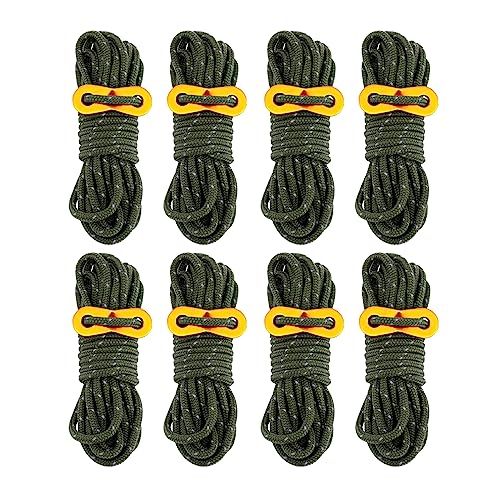
Smithok 8 Pack 4mm Guy Lines Ultralight Tent Cords with Aluminum Adjuster Tensioner Outdoor Camping...
Quantity: 8 cords
Length: 4mm thickness
Features: Aluminum tensioners
Best For: Quick setup
+ Pros
- Aluminum tensioners included
- Lightweight construction
- Adjustable design
- Complete set ready to use
- 4mm thickness durable
- Cons
- Basic cord quality
- Tensioners can slip under load
- Shorter than custom-cut lines
This 8-pack of guylines with integrated aluminum tensioners saves significant setup time. The adjustable design means you can tension your tarp without retying knots—a game-changer when making adjustments in rain or darkness.
The 4mm thickness provides a good balance between strength and weight. These cords work well for most tarp configurations, though ultralight enthusiasts might prefer thinner dyneema options.
Having tensioners pre-attached means faster setup and easier adjustments in changing conditions. The aluminum tensioners are lightweight and won't corrode, though they can slip under extremely high tension.
Pro Tips for Tarp Success
These are the techniques I've learned through trial and error over years of camping in varied conditions.
Managing Condensation
The number one complaint I hear about tarp setups is condensation. The problem isn't the tarp—it's improper ventilation.
Maintain at least 4-6 inches of gap between your tarp and tent everywhere possible. This airspace allows moisture to escape rather than getting trapped between layers. Keep your tent vents open even with the tarp deployed.
Orientation matters. Position your tarp opening to catch prevailing breezes, which will carry away moisture. In still conditions, creating a steeper pitch angle helps air circulation.
Wind Protection Strategies
High winds can turn a tarp into a noisy sail or worse—a failed shelter. In windy conditions, I lower my tarp profile significantly.
Reduce the height of your setup so wind passes over rather than catching the tarp. Add more guylines and stakes than you think necessary—eight to ten anchor points isn't excessive in serious wind.
Point the low end of your tarp into the wind. This orientation prevents wind from getting underneath and lifting your setup.
Seasonal Adjustments
Summer camping requires different approaches than winter trips. In hot weather, extend your tarp further to create shade and increase airflow. Position the tarp to block morning and afternoon sun based on your site's orientation.
Winter demands tighter setups with steeper pitches to shed snow. Knock off accumulated snow regularly—even the best setup can collapse under the weight of a foot of wet snow. Create a smaller footprint in winter to reduce the surface area collecting snow.
✅ Pro Tip: Practice your tarp setup at home before heading out. I can't count how many campers I've seen struggling in the rain because they're learning their tarp setup for the first time in bad conditions.
Common Mistakes to Avoid
I've made every mistake on this list. Learn from my failures so you don't have to repeat them.
- Insufficient gap between tarp and tent: When the tarp contacts your tent, it transfers water directly onto the fabric and defeats the purpose. Always maintain at least 4-6 inches of clearance.
- Wrong angle for rain runoff: A flat tarp will collect water and eventually collapse under the weight. Aim for at least a 30-degree pitch angle on all sides.
- Over-tightening corners: Excessive tension can rip grommets right out of cheap tarps. Apply firm but not extreme tension, and use quality tarps with reinforced tie-outs.
- Ignoring wind direction: Setting up without considering prevailing wind usually results in a noisy, flapping tarp that may fail during the night. Always orient your setup to shed wind.
- Skip the practice run: Trying to figure out your tarp setup in the dark during a rainstorm is miserable. Practice at home until you can set up quickly.
- Forgetting to check forecasts: A tarp pitched for light rain won't handle a thunderstorm. Adjust your setup based on expected conditions.
- Poor stake placement: Stakes placed at too shallow an angle will pull out. Drive stakes in at a 45-degree angle away from the pull direction for maximum holding power.
⚠️ Important: Never set up your tarp setup directly under dead trees or branches. These "widowmakers" can fall during windstorms and cause serious injury. Always look up before choosing your site.
Frequently Asked Questions
Why put a tarp over your tent?
A tarp over your tent creates an additional waterproof barrier that redirects rain away from your shelter, provides UV protection that extends tent lifespan, creates vestibule space for gear storage, adds thermal insulation, and helps manage snow load in winter conditions.
How do you hang a tarp over a tent for rain?
For rain protection, set up an A-frame configuration by tying a ridgeline between two trees above your tent, draping the tarp centered over the line, staking the corners at a 45-degree angle, and adjusting tension until the tarp is drum-tight with a pitch angle of at least 30 degrees for proper water runoff.
Should tarp be bigger than tent?
Yes, your tarp should be 2-3 feet larger than your tent on all sides. This provides adequate coverage while creating vestibule space. For a 2-person tent, a 10x12 ft tarp is typically recommended. Larger tents may require 12x16 ft or bigger tarps for full coverage.
How do you secure a tarp over a tent?
Secure your tarp using quality stakes driven at a 45-degree angle away from the pull direction, guylines with adjustable tensioners for easy adjustments, and multiple anchor points for stability. In windy conditions, use 8-10 anchor points rather than just the four corners.
What is the best tarp configuration for camping?
The A-frame configuration is the most versatile and widely recommended for general camping. It provides excellent rain protection from two directions, good headroom, and stable wind performance. For backpackers prioritizing weight, the diamond configuration offers good coverage with minimal gear.
How far should tarp be from tent?
Maintain at least 4-6 inches of clearance between tarp and tent everywhere possible. This gap allows airflow to prevent condensation buildup and ensures the tarp won't contact your tent during wind gusts, which would transfer water directly onto the tent fabric.
Do you need a tarp under your tent too?
A groundsheet or footprint under your tent protects the floor from abrasion and helps prevent ground moisture from seeping through. While not always necessary, using a tarp under your tent extends floor life and provides additional waterproofing protection.
Final Thoughts
Learning to properly set up a tarp over your tent is one of the most valuable skills in camping. After that rainy weekend in the Northwest, I committed to mastering tarp setups, and it's transformed my camping experience ever since.
Start with the A-frame configuration using basic equipment. Practice in your backyard until you can set up confidently. Once you've mastered the fundamentals, experiment with advanced configurations and specialized setups for different conditions.
The right tarp setup won't just keep you dry—it gives you confidence to camp in weather that would otherwise keep you home. That freedom is worth the effort of learning this essential outdoor skill.