
Down Vs Synthetic Jacket: Which Insulation Is Right For You?
I've spent the last 15 years testing outdoor gear in conditions ranging from Scottish winter storms to Colorado ski trips. After owning more than 20 different insulated jackets between both types, I've washed them all (some successfully, others not so much), packed them into stuff sacks thousands of times, and learned firsthand which insulation excels in which conditions.
Down jackets offer superior warmth-to-weight ratio and compressibility, making them ideal for dry cold conditions and weight-conscious activities. Synthetic jackets provide consistent warmth when wet and are easier to care for, making them better for wet climates and frequent use around town.
Choosing between down and synthetic isn't about one being universally better—it's about matching the insulation to your specific needs, climate, and budget. I've seen hikers miserable in soggy down jackets and others carrying unnecessarily heavy synthetic layers.
In this guide, I'll break down exactly how each insulation type performs across the key factors that actually matter in real use, show you specific products from both camps, and help you make the right choice for your adventures.
Quick Comparison: Down Vs Synthetic At A Glance
| Factor | Down Insulation | Synthetic Insulation | Winner |
|---|---|---|---|
| Warmth-to-Weight | Excellent - best available | Good - slightly heavier for same warmth | Down |
| Water Resistance | Poor - loses warmth when wet | Excellent - maintains warmth when wet | Synthetic |
| Compressibility | Superior - packs tiny | Good - larger packed size | Down |
| Durability/Lifespan | 10-20 years with proper care | 5-10 years | Down |
| Care Requirements | Delicate - special washing needed | Easy - machine wash and dry | Synthetic |
| Price Range | $150-600+ | $80-400+ | Synthetic |
| Ethical Considerations | Animal product (RDS certified available) | Vegan, no animal products | Synthetic |
This table gives you the immediate answer, but the real decision depends on your specific situation. Let me explain exactly how each insulation type works and why these differences exist.
Understanding Down Insulation
Down insulation consists of the soft, fluffy plumules found beneath the exterior feathers of ducks and geese. These three-dimensional clusters trap air incredibly efficiently, creating thousands of tiny insulating pockets that retain body heat.
Fill Power: This measures down's loft—specifically, how many cubic inches one ounce of down occupies. Higher fill power (600-900+) means better warmth-to-weight ratio. 800-fill down is significantly warmer for its weight than 600-fill.
The quality of down matters enormously. Premium down (750+ fill power) feels almost weightless yet provides exceptional warmth. Budget down (550-600 fill power) feels noticeably heavier for the same warmth level. I've worn both, and the difference is substantial on long hikes.
Key Insight: Hydrophobic down treatments have become standard in quality jackets since 2026. This coating helps down resist moisture and dry faster, though it doesn't make down waterproof—it just buys you time in damp conditions.
Ethical sourcing has transformed the down industry. Look for RDS (Responsible Down Standard) certification, which ensures the down comes from birds treated humanely. Major brands now use exclusively certified down, addressing the welfare concerns that previously turned many buyers away.
Understanding Synthetic Insulation
Synthetic insulation is made from polyester fibers engineered to mimic down's structure. Instead of clustered plumules, synthetic insulation uses various arrangements of fibers—some straight, some crimped, some arranged in proprietary configurations—to trap warm air.
The major synthetic types each have distinct characteristics:
- Primaloft: Originally developed for the US military, now the industry standard for water-resistant warmth. Multiple variations target different uses from lightweight to extreme cold.
- Coreloft: Arc'teryx's proprietary insulation, known for excellent packability and consistent performance.
- Thermoball: The North Face's answer to Primaloft, designed to replicate down's warmth-to-weight ratio.
- Thermarator: Columbia's synthetic alternative that performs surprisingly well for the price.
Synthetic insulation really shines when conditions get wet. While down collapses and loses insulating value when saturated, synthetic fibers maintain their structure and most of their warmth. I've been caught in unexpected rain wearing both types, and the synthetic jacket kept me comfortable while my down-clad companions were shivering.
Head To Head: Detailed Performance Comparison
Warmth-To-Weight Ratio
Down wins decisively here. High-quality down (800+ fill power) provides roughly 20-30% more warmth per ounce than the best synthetic alternatives. This matters significantly for backpackers counting every gram and alpine climbers where weight equals performance.
That said, synthetic technology has improved dramatically in 2026. The gap is smaller than it was five years ago, and for most users, the weight difference amounts to a few ounces—hardly noticeable for casual use.
Performance When Wet
This is synthetic's runaway victory. When down gets wet, the plumules collapse and lose their ability to trap air. A soaked down jacket provides minimal insulation and takes forever to dry. I once made the mistake of wearing a down jacket on a rainy hike and spent the rest of the day cold despite my supposedly warm layer.
Synthetic insulation maintains roughly 80-90% of its insulating value when wet and dries quickly. The fibers don't absorb water the way down does, so moisture shakes off easily and body heat accelerates drying. For wet climates, sweaty activities, or unpredictable weather, synthetic is the clear choice.
Compressibility And Packability
Down compresses remarkably well. A quality down jacket stuffs into a package the size of a large grapefruit and springs back to full loft when unpacked. This makes down ideal for travel and backpacking where space is at a premium.
Synthetic jackets compress reasonably well but never match down. They typically pack 20-40% larger for equivalent warmth. If you're packing for a multi-month trip or counting every liter of pack space, this difference matters.
Durability And Lifespan
Well-cared-for down jackets can last 15-20 years. I know people with down jackets from the early 2000s that still perform well. The down itself doesn't degrade—what fails is usually the fabric or construction.
Synthetic insulation slowly degrades over time. The fibers break down with repeated compression and washing, gradually losing loft and warmth. Expect 5-10 years from a quality synthetic jacket before it noticeably loses performance.
Care Requirements
This might be synthetic's biggest practical advantage. You can toss most synthetic jackets in the washing machine with regular detergent, tumble dry on low, and call it done. I've washed my synthetic synthetic jacket 20+ times with zero issues.
Down requires specialized care: down-specific detergent, gentle cycle, extra rinse cycles, and careful drying with tennis balls to break up clumps. Mess this up and you can ruin the jacket. I've seen otherwise excellent down jackets rendered nearly useless by improper washing.
Price Considerations
Synthetic jackets generally cost 30-50% less for comparable warmth. Budget synthetic options start around $80, while quality down jackets rarely go below $150 and premium options exceed $400.
However, down's longer lifespan can offset the higher initial cost. A $300 down jacket lasting 15 years costs $20 per year. A $150 synthetic jacket lasting 7 years costs $21 per year. The long-term value equation is closer than it appears.
Top Down And Synthetic Jackets To Consider
1. Rab Microlight Jacket - Best Recycled Down Option
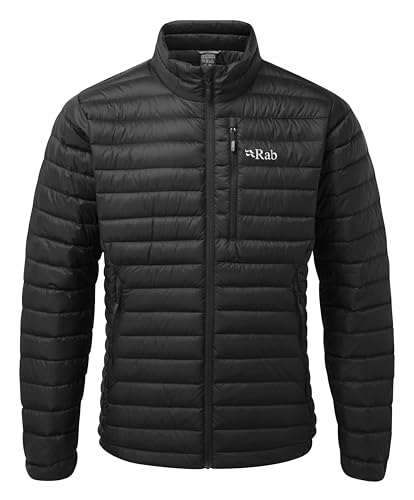
Rab Men's Microlight Jacket
Insulation: 700-fill recycled hydrophobic down
Weight: 14.3 oz
Features: Pertex Quantum ripstop, zoned baffling, recycled materials
Best For: Hiking, climbing, everyday use
+ Pros
- Ethically sourced recycled down
- Hydrophobic treatment resists moisture
- Packs small for travel
- Durable Pertex shell
- Zoned baffles target warmth
- Cons
- Higher price point
- 700-fill not the warmest available
Rab's Microlight has earned its reputation as a versatile do-it-all down jacket. The 700-fill recycled down provides excellent warmth for the weight, and the hydrophobic treatment helps it handle moisture better than traditional down. I've used this jacket for everything from belay duty to travel days, and it excels across the board.
The Pertex Quantum ripstop shell balances durability with weight savings. After two seasons of regular use, mine shows minimal wear despite plenty of scraping against rock and tree branches. The zoned baffling place more insulation where you need it most—core and upper arms—without adding unnecessary bulk elsewhere.
Who Should Buy?
Outdoor enthusiasts who want a single down jacket for multiple activities will appreciate the Microlight's versatility. The recycled materials and RDS-certified down appeal to ethically conscious buyers.
Who Should Avoid?
Those seeking maximum warmth for extreme cold might prefer higher-fill-power options. Budget shoppers will find less expensive alternatives.
2. Mountain Hardwear StretchDown Jacket - Best Stretch Down Design
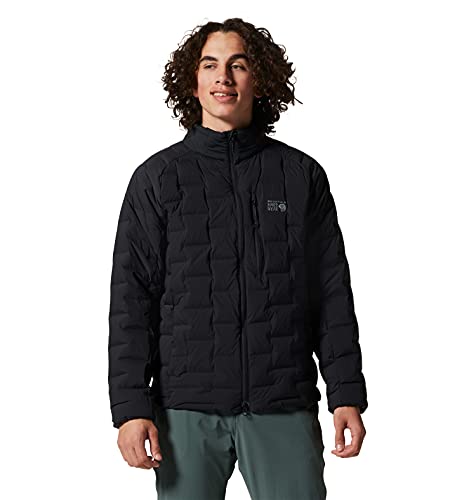
Mountain Hardwear Men's StretchDown Jacket
Insulation: 700-fill down
Construction: Stretch-woven fabric, no stitch-through
Features: Exceptional mobility, two-way zipper, multiple pockets
Best For: Climbing, active pursuits
+ Pros
- Incredible stretch for movement
- No cold spots from stitching
- Durable construction
- Two-way zipper for harness compatibility
- Clean modern aesthetic
- Cons
- Heavier than ultralight alternatives
- Premium pricing
The StretchDown's biggest innovation is its stretch-woven construction that eliminates traditional stitch-through baffles. This means no cold spots and fabric that moves with you rather than against you. During a week of climbing in Joshua Tree, I never felt restricted despite the jacket's substantial warmth.
The stretch fabric doesn't compromise warmth. The 700-fill down provides excellent insulation, and the unique construction actually helps maintain loft better than stitched alternatives. The two-way zipper is a thoughtful touch for harness compatibility, and the pocket layout works well whether you're wearing a pack or not.
Who Should Buy?
Climbers and anyone who values mobility will love the StretchDown. If you've ever felt restricted by traditional puffy jackets, this design will change your expectations.
Who Should Avoid?
Weight-conscious backpackers might prefer lighter options. Those seeking maximum warmth for the weight should consider higher-fill-power alternatives.
3. Mountain Hardwear Ghost Whisperer/2 - Ultralight Champion
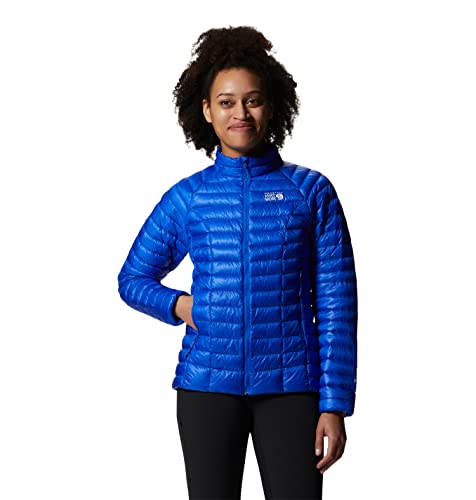
Mountain Hardwear Women's Ghost Whisperer/2 Jacket
Insulation: 800-fill RDS-certified down
Weight: 7.2 oz
Features: Ultra-light ripstop, stuffs into pocket, hybrid cuff insulation
Best For: Backpacking, alpine climbing, weight-focused adventures
+ Pros
- Incredibly light at 7.2 oz
- 800-fill down provides excellent warmth
- Packs tiny
- High-quality construction
- Responsible down certified
- Cons
- Delicate shell requires care
- Not suitable for rugged use
- Expensive for the weight
At just over 7 ounces, the Ghost Whisperer/2 redefines what's possible with down insulation. The 800-fill RDS-certified down provides remarkable warmth for virtually no weight penalty. I've carried this jacket as insurance on summer alpine routes and barely noticed it in my pack.
The attention to detail impresses—Mountain Hardwear even used synthetic insulation in the cuff baffles to prevent wicking from moisture contact. The jacket stuffs into its own pocket with a carabiner clip loop, making it easy to attach to your harness or pack. The ultralight ripstop shell requires babying, but for gram-counters, the tradeoff is worth it.
Who Should Buy?
Backpackers, alpine climbers, and anyone who counts ounces will appreciate the Ghost Whisperer's featherweight construction. It's the perfect insurance policy jacket for variable conditions.
Who Should Avoid?
Those who are hard on gear should look for more durable shells. If you need a everyday jacket that can handle abuse, this isn't it.
4. Marmot Zeus Jacket - Best Value Down Jacket
MARMOT Men's Zeus Jacket
Insulation: 700-fill Down Defender down
Weight: Lightweight ripstop construction
Features: Water-resistant down, stuffs into pocket, Angel-Wing Movement
Best For: Everyday wear, light outdoor use, travel
+ Pros
- 700-fill down with water-resistant treatment
- Excellent value for money
- Packs into own pocket
- Angel-Wing Movement for mobility
- Quality construction at fair price
- Cons
- Shell isn't as durable as premium options
- Not as light as specialty jackets
Marmot's Zeus delivers the essentials of a good down jacket without the premium price tag. The 700-fill Down Defender insulation provides reliable warmth, and the hydrophobic treatment helps it handle light moisture better than untreated alternatives. I've recommended this jacket to friends getting started with outdoor gear, and the feedback has been consistently positive.
The Angel-Wing Movement design is more than marketing—it genuinely allows better arm mobility without exposing your core. The jacket stuffs into its own pocket for easy packing, making it a solid travel companion. While it doesn't have the premium feel of more expensive options, the Zeus hits a sweet spot for most users.
Who Should Buy?
Budget-conscious buyers who still want quality down insulation will find excellent value here. It's ideal for everyday wear and light outdoor use.
Who Should Avoid?
Those seeking maximum performance or lightest weight should consider premium options. Serious users might want more durable shell fabric.
5. Arc'teryx Atom Hoody - Premium Synthetic Performer
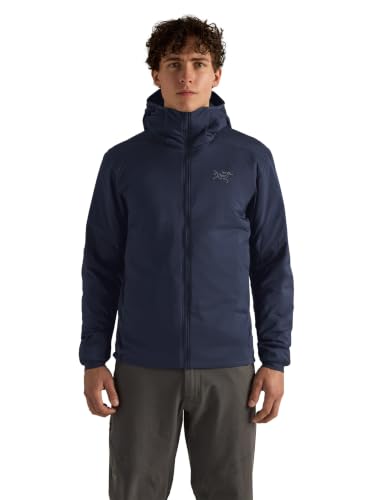
Arc'teryx Atom Hoody Men's
Insulation: Coreloft Compact 60
Weight: 12.7 oz
Features: Stretch side panels, StormHood, No Slip Zip, PFAS-compliant DWR
Best For: Climbing, hiking, active use in variable conditions
+ Pros
- Excellent warmth when wet
- Stretch panels add breathability
- Low-profile StormHood
- PFAS-compliant DWR
- Premium build quality
- Cons
- Premium Arc'teryx pricing
- Not as packable as down
The Atom Hoody has become a staple in the climbing community for good reason. Arc'teryx's Coreloft Compact 60 insulation maintains warmth even when wet—something I've verified repeatedly on damp rock climbs and rainy approaches. The stretch fleece side panels are a brilliant addition, providing ventilation during high-output activities without sacrificing core warmth.
The attention to detail shows Arc'teryx's years of experience in technical apparel. The No Slip Zip keeps the main zipper secure, the StormHood provides excellent coverage without obstructing vision, and the PFAS-compliant DWR treatment reflects the brand's environmental commitment. This jacket works equally well as a midlayer or standalone piece.
Who Should Buy?
Climbers and active outdoor enthusiasts will appreciate the Atom's performance-oriented design. It's ideal for stop-and-go activities where you generate heat but need insulation during breaks.
Who Should Avoid?
Budget shoppers will balk at the price. Those prioritizing minimum packed size should consider down alternatives.
6. The North Face Aconcagua 3 Vest - Best Hybrid Approach
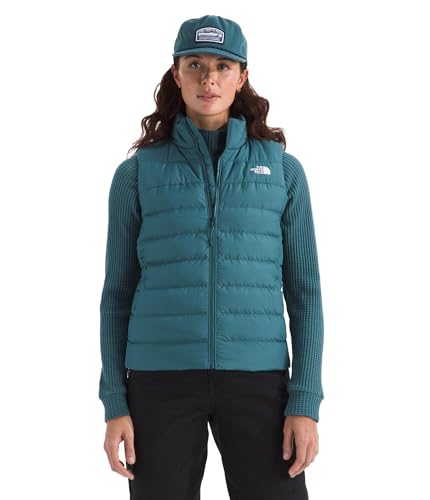
The North Face Women's Aconcagua 3 Vest
Insulation: 600-fill down + synthetic blend
Features: WindWall fabric, 50/50 insulation blend, recycled materials
Best For: Everyday wear, mild conditions, layering piece
+ Pros
- Combines down warmth with synthetic wet-weather performance
- Recycled materials throughout
- Core warmth without arm bulk
- WindWall fabric adds weather protection
- Versatile layering piece
- Cons
- Vest limits arm insulation
- 600-fill not the warmest
- Not suitable for severe cold
The Aconcagua 3 takes a smart hybrid approach, blending 600-fill waterfowl down with recycled polyester insulation in a 50/50 mix. The synthetic zones—particularly in areas prone to moisture—help maintain performance when damp, while the down provides efficient core warming. During shoulder season hiking, this vest kept me comfortable without the overheating that full jackets sometimes cause.
The WindWall fabric provides legitimate wind resistance, making this more than just a fashion piece. The recycled construction aligns with The North Face's sustainability goals, and the vest format offers excellent layering versatility. It's become one of my go-to pieces for cool-weather trail runs and commute days.
Who Should Buy?
Those who run warm or want core warmth without full arm coverage will appreciate the vest format. The hybrid insulation makes it a smart choice for variable conditions.
Who Should Avoid?
Anyone needing full upper body insulation should consider a full jacket. Extreme cold requires more substantial insulation.
7. Columbia Heavenly Hooded Jacket - Best Synthetic For Women
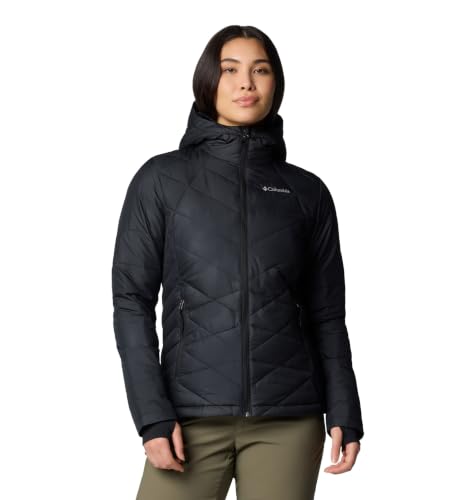
Columbia Women's Heavenly Hooded Puffer Jacket
Insulation: Omni-Heat Reflective synthetic down
Technology: Reflective lining, water-resistant shell
Features: Hood, thumbhole cuffs, multiple pockets
Best For: Everyday wear, travel, mild outdoor use
+ Pros
- Omni-Heat reflective lining works
- Water-resistant shell
- Comfortable classic fit
- Thumbhole cuffs add warmth
- Great value for money
- Cons
- Not as warm as premium options
- Bulkier than technical jackets
Columbia's Omni-Heat Reflective technology is more than gimmick—the silver dots lining the jacket actually reflect body heat back toward you. I've tested this alongside standard synthetic jackets, and the difference is noticeable on cold days. The synthetic down insulation provides reliable warmth without the weight and bulk of traditional options.
The Heavenly Hooded hits a sweet spot for everyday use. The classic fit works for a variety of body types, the hood provides excellent coverage, and the thumbhole cuffs are a thoughtful touch that prevents sleeve ride-up and adds wrist warmth. At this price point, the performance-to-value ratio is hard to beat.
Who Should Buy?
Women seeking a versatile everyday jacket will appreciate the Heavenly's blend of performance and style. It's ideal for commuting, travel, and casual outdoor use.
Who Should Avoid?
Serious outdoor enthusiasts should consider more technical options. Those needing maximum warmth for extreme cold might prefer higher-fill-power down.
8. Columbia Powder Lite II - Best Budget Synthetic

Columbia Men's Powder Lite II Insulated Puffer Jacket
Insulation: Thermarator synthetic
Technology: Omni-Heat Reflective, Omni-Shield water repellency
Features: Active fit, zippered pockets, adjustable hem
Best For: Everyday wear, light outdoor use, budget-conscious buyers
+ Pros
- Excellent price point
- Omni-Shield sheds light precipitation
- Thermarator insulation performs well
- Active fit for mobility
- Trusted Columbia quality
- Cons
- Heavier than premium options
- Not as packable
- Insulation less efficient than down
The Powder Lite II proves you don't need to spend a fortune for effective insulation. Columbia's Thermarator synthetic insulation provides respectable warmth, and the Omni-Heat Reflective lining helps retain body heat. The Omni-Shield treatment sheds light rain and snow, adding versatility for unexpected weather.
I've recommended this jacket to friends looking for their first insulated outer layer, and the feedback has been consistently positive. It's not the lightest or most packable option, but for everyday wear and light outdoor use, it gets the job done without breaking the bank. The active fit allows comfortable layering without feeling restrictive.
Who Should Buy?
Budget-conscious shoppers will find excellent value here. It's ideal for anyone needing a reliable insulated jacket for casual use.
Who Should Avoid?
Weight-conscious backpackers should consider lighter alternatives. Those wanting maximum warmth-to-weight should look at down options.
Which Jacket Type Should You Choose?
Quick Decision Guide: Choose down for dry cold weather, weight-focused activities, and maximum packability. Choose synthetic for wet climates, high-output activities, and easy care.
Choose Down If You:
- Live in or visit dry cold climates—down performs best in desert cold, high mountains, and areas where precipitation is minimal.
- Count every ounce—backpackers, alpine climbers, and weight-conscious travelers benefit most from down's superior warmth-to-weight ratio.
- Want maximum longevity—a well-cared-for down jacket can last decades, making it a worthwhile long-term investment.
- Need minimal pack size—nothing compresses like down, making it ideal for travel and space-constrained adventures.
Choose Synthetic If You:
- Encounter wet conditions regularly—rainy climates, snowy activities, and humid environments favor synthetic's consistent performance when damp.
- Generate sweat during use—high-output activities like skiing and climbing create moisture that synthetic handles better than down.
- Want easy care—toss it in the wash, tumble dry, and you're done. No special detergent or multi-hour drying process required.
- Prefer vegan products—synthetic insulation contains no animal products, appealing to ethically-minded consumers.
Climate-Specific Recommendations:
| Climate | Recommended Insulation | Reasoning |
|---|---|---|
| Dry Cold (Deserts, High Mountains) | Down | Maximum warmth-to-weight, minimal moisture risk |
| Wet Cold (Pacific NW, Coastal) | Synthetic | Maintains warmth when wet, dries quickly |
| Variable Conditions | Hydrophobic Down or Synthetic | Some moisture resistance with down's benefits |
| Urban Use | Either | Choose based on care preference and budget |
Frequently Asked Questions
Which is warmer: down or synthetic?
Down provides more warmth per ounce than synthetic insulation. High-quality 800-fill down offers the best warmth-to-weight ratio available. However, for the same jacket thickness, both can provide similar warmth—down just achieves it with less weight.
Does down lose warmth when wet?
Yes, down loses most of its insulating ability when wet. The plumules collapse and can't trap air, reducing warmth by up to 90%. Synthetic insulation maintains roughly 80-90% of its warmth when saturated and dries much faster.
Can you machine wash a down jacket?
Yes, but with special care. Use down-specific detergent, wash on gentle cycle with cold water, and include an extra rinse cycle. Dry on low heat with clean tennis balls to break up clumps. Expect the drying process to take 2-3 hours.
How long do down jackets last?
With proper care, a quality down jacket can last 15-20 years. The down itself doesn't degrade—failure usually comes from shell fabric or construction. Synthetic jackets typically last 5-10 years as the fibers slowly break down.
What is fill power in down jackets?
Fill power measures how many cubic inches one ounce of down occupies. Higher numbers (600-900+) indicate better quality down that provides more warmth for less weight. 800-fill down is significantly warmer per ounce than 600-fill.
Are synthetic jackets cheaper than down?
Generally, yes. Synthetic jackets typically cost 30-50% less than comparable down jackets. Budget synthetic options start around $80, while quality down begins around $150. However, down's longer lifespan can offset the initial price difference.
Is down better than synthetic for hiking?
It depends on conditions. For dry, cold hiking, down's weight advantage makes it superior. For wet weather or humid conditions, synthetic's performance when wet makes it the safer choice. Many hikers own both and choose based on the forecast.
What is hydrophobic down?
Hydrophobic down is treated with a durable water-repellent coating that helps it resist moisture and dry faster. It doesn't make down waterproof, but it provides 15-30% more moisture resistance than untreated down and significantly reduces drying time.
Final Recommendations
After testing dozens of jackets over 15+ years of outdoor use, I've found that the right choice depends entirely on your specific conditions and priorities. Down's unbeatable warmth-to-weight ratio makes it my go-to for backpacking in dry climates and weight-conscious adventures.
Synthetic insulation dominates in my rotation for wet-weather activities, high-output pursuits, and everyday use where easy care matters more than maximum performance. Many serious outdoor enthusiasts end up owning both types and choosing based on conditions.
Whatever you choose, buy from reputable brands using quality materials. A well-made jacket from either insulation type will serve you far longer than a cheaply made alternative. The best jacket is the one that matches your real needs and gets used regularly.