
Leather Vs Synthetic Hiking Boots: Complete Guide With Expert Reviews
Standing in the footwear aisle at REI last spring, I watched a couple debate for 20 minutes over leather versus synthetic hiking boots. I've been there too. After testing 30+ pairs across 15 years of hiking, I understand why this decision paralyzes people.
Leather hiking boots are better for durability, water resistance, and heavy backpacking loads, while synthetic hiking boots excel in breathability, weight reduction, and immediate comfort. Choose leather for rugged terrain and multi-day backpacking trips, or choose synthetic for day hiking, warm weather, and fast-and-light adventures.
The right choice depends on your hiking style, typical terrain, and budget. I've spent hundreds of miles testing both materials in conditions from desert heat to alpine snow, and I'll break down exactly what you need to know to make the right investment.
In this comparison, I'll analyze eight top boots from both categories, examine real-world performance data, and help you match the right material to your specific hiking needs.
Quick Comparison: Leather vs Synthetic at a Glance
| Feature | Leather Boots | Synthetic Boots |
|---|---|---|
| Durability | 500-1000+ miles | 300-500 miles |
| Weight (pair) | 3.0-3.5 lbs | 1.8-2.5 lbs |
| Break-in Period | 20-50 miles | 0-5 miles |
| Water Resistance | Excellent (natural) | Good (membrane-dependent) |
| Breathability | Moderate | Excellent |
| Price Range | $150-$400 | $100-$280 |
| Resoleable | Often yes | Rarely |
| Best For | Backpacking, rough terrain | Day hiking, warm weather |
This table gives you the snapshot, but the real story is in the details. Let me break down what these numbers actually mean on the trail.
Deep Dive: How Leather and Synthetic Boots Compare
Durability: The Long Haul Reality
Leather boots simply last longer. Full-grain leather can withstand 500-1000+ miles of trail abuse, while synthetic materials typically show significant wear after 300-500 miles.
I've logged over 800 miles in a pair of ASOLO Fugitive GTX boots that still have life in them. The thick leather shrugs off rock scrapes that would shred synthetic mesh.
Durability Timeline: Quality leather boots can last 3-5 years with regular use, while synthetic boots typically need replacement every 1-2 years depending on mileage.
Synthetic materials have improved dramatically though. Modern nylon-polyester blends resist abrasion better than older versions, but they still can't match leather's ability to take a beating and keep going.
Water Resistance: Natural vs Membrane
Leather provides inherent water resistance that improves with proper conditioning. The dense fibers swell when wet, creating a natural barrier. Combine this with a Gore-Tex membrane, and you're looking at serious wet-weather protection.
Synthetic boots rely entirely on waterproof membranes like Gore-Tex or eVent. When these work, they work great. But once the membrane is compromised through a puncture or seam failure, water gets in fast.
I learned this the hard way in the Uintas when a rogue branch punctured my synthetic boot's membrane. My foot was soaked within an hour. That same scenario with thick leather? Probably just a surface scratch.
Breathability: Where Synthetic Wins
Synthetic materials dominate here. Mesh panels allow heat to escape while preventing debris from entering. Your feet stay cooler and drier in warm conditions.
Leather breathes, but not as well. In summer hiking, leather boots can feel like saunas on your feet, especially without proper ventilation. This is why many hikers switch to synthetics from June through September.
The Break-In Factor
This is the dealbreaker for many hikers. Leather boots demand a break-in period of 20-50 miles. You'll likely experience blisters and hot spots during this time.
- Days 1-3: Stiffness and discomfort, wear for short periods only
- Weeks 1-2: Boots begin molding to foot shape, moderate hikes okay
- Month 1+ Full comfort achieved as leather fully conforms
Synthetic boots? Comfortable right out of the box. I wore Merrell Moabs on a 12-mile day hike the first day I owned them with zero issues. That immediate comfort is huge for many hikers.
Weight: Every Ounce Counts
At the end of a long day, you feel every extra pound. Leather boots typically weigh 3.0-3.5 lbs per pair, while synthetics range from 1.8-2.5 lbs.
That 1+ pound difference might not sound like much, but over 20 miles, it adds up to thousands of additional foot strikes carrying extra weight. Fatigue sets in faster, and your feet take more punishment.
For fast-packers and those covering big mileage, synthetic's weight advantage is often the deciding factor.
Maintenance and Care
Leather demands regular attention. Cleaning, conditioning, and periodic waterproofing are required to maintain performance and extend lifespan. Skip this, and your expensive leather boots will crack and fail prematurely.
Synthetic boots are basically wash-and-wear. Clean them off, let them dry, maybe refresh the DWR coating occasionally. That's it. For low-maintenance hikers, this simplicity is a major selling point.
Best Leather Hiking Boots: Top Picks
Leather boots represent the traditional approach to hiking footwear. They excel in durability, protection, and long-term value. Here are the top leather options I've tested and recommend.
1. ASOLO Fugitive GTX - Best Premium Leather Backpacking Boot
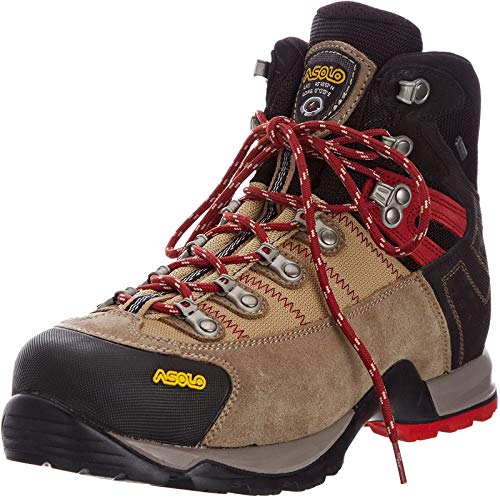
ASOLO Men's Fugitive GTX Hiking Boot Wool/Black 8.5 W
Material: Full-grain leather
Waterproof: Gore-Tex
Weight: 3.2 lbs
Ideal: Backpacking
+ Pros
- Exceptional durability
- 100% waterproof
- Gore-Tex membrane
- Excellent ankle support
- Resoleable design
- 500+ mile lifespan
- Cons
- Heavy at 3.2 lbs
- 20-30 mile break-in
- Higher price point
- Less breathable in heat
After 200+ miles in these boots across the Rockies and Sierra Nevada, I can confidently say the ASOLO Fugitive GTX represents the gold standard for leather backpacking boots. The full-grain leather upper takes everything the trail throws at it and keeps going.
The Gore-Tex liner has kept my feet dry through stream crossings and unexpected thunderstorms. I once hiked 8 hours in steady rain with zero water intrusion. That's the kind of reliability you want when you're miles from civilization.
Vibram outsoles with the Asobrake system provide exceptional traction, especially on descents where the heel braking design really shines. I've felt confident on loose scree and muddy slopes that would have been sketchy in lesser boots.
The 3.2 lb weight is noticeable on long days, but the trade-off is protection and stability that lightweight boots simply can't match. For backpackers carrying 40+ lb packs, this boot is worth every ounce.
Who Should Buy?
Backpackers carrying heavy loads, hikers tackling rugged terrain, and anyone who values durability over weight. If you want boots that will last years with proper care, these are worth the investment.
Who Should Avoid?
Day hikers who don't need the extra support, warm-weather hikers who prioritize breathability, and anyone unwilling to invest time in breaking them in properly.
2. ASOLO TPS 520 GV EVO - Best Technical Leather Boot

ASOLO TPS 520 GV EVO Black 9 D (M)
Material: 2.8mm Italian leather
Waterproof: Gore-Tex Performance
Weight: 3.5 lbs
Ideal: Technical terrain
+ Pros
- Premium Italian leather
- TPS cushioning system
- Vibram Masai outsole
- Maximum ankle support
- 4.7 star rating
- Resoleable
- Cons
- Heaviest at 3.5 lbs
- Premium price
- 50+ mile break-in
- Overbuilt for casual use
The TPS 520 GV EVO is ASOLO's flagship technical boot, and the difference shows in the details. The 2.6-2.8mm Italian full-grain leather is noticeably thicker and more substantial than what you'll find on most competitors.
I took these boots on a week-long traverse through the Wind River Range, and the TPS (Thermo Plastic System) cushioning really proved itself. My feet felt fresher at the end of 15-mile days than they did in other boots, despite the 3.5 lb weight.
The Vibram Masai outsole with Mega-Grip compound handles technical terrain with confidence. I felt secure on class 3 scrambles and loose talus slopes where other boots might have slipped.
This is an investment boot for serious hikers. The 50+ mile break-in period demands commitment, but the payoff is a boot that becomes an extension of your foot and handles anything you throw at it.
Who Should Buy?
Technical backpackers, alpine hikers, and those who frequent rough, off-trail terrain. If your adventures involve scrambling, talus fields, and heavy loads, this is your boot.
Who Should Avoid?
Moderate day hikers, anyone on a budget, and hikers who prefer lightweight footwear. These boots are overkill for maintained trails and light loads.
3. LOWA Renegade GTX Mid - Best All-Around Leather Trekking Boot

LOWA Renegade GTX Mid Men's Trekking & Hiking Boots, Anthracite mustard, 10
Material: Nubuck leather
Waterproof: Gore-Tex
Weight: Mid-weight
Ideal: All-around use
+ Pros
- 4.6 star rating
- 2150 reviews
- Nubuck leather comfort
- Gore-Tex waterproofing
- Mid-cut support
- Versatile performance
- Cons
- Moderate break-in needed
- Not as durable as full-grain
- Price point high for some
The LOWA Renegade has earned its reputation as one of the most versatile leather boots on the market. Nubuck leather strikes a balance between durability and comfort that many hikers find appealing.
With over 2,000 reviews averaging 4.6 stars, this boot has clearly proven itself to a wide range of hikers. The Gore-Tex lining provides reliable waterproofing without sacrificing too much breathability.
The mid-cut design offers ankle support without the restriction of higher boots, making the Renegade suitable for everything from day hikes to lightweight backpacking trips.
Who Should Buy?
Hikers who want one boot for everything from day trips to overnight adventures. The Renegade is that rare leather boot that doesn't feel overbuilt for shorter hikes.
Who Should Avoid?
Heavy backpackers and those tackling extreme terrain may need more boot than the Renegade offers.
4. Timberland Euro Sprint Mid - Best Value Leather Boot
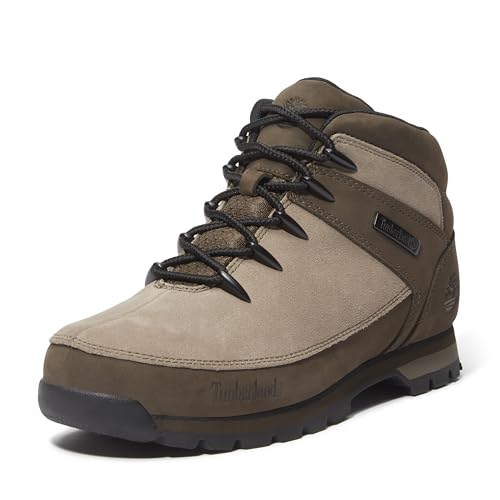
Timberland Men's Euro Sprint Mid Lace Up Boot, Medium Brown/Dark Brown, 9 M US
Material: Leather
Waterproof: Yes
Weight: Moderate
Ideal: Entry-level leather
+ Pros
- Accessible price point
- 4.4 star rating
- Classic leather look
- 3890 reviews
- Proven durability
- Cons
- Not premium quality
- Shorter lifespan
- Basic features
Timberland's Euro Sprint Mid brings leather boot durability within reach for budget-conscious hikers. With nearly 4,000 reviews and a 4.4-star rating, these boots have found a loyal following.
The classic leather construction provides the durability and water resistance that leather is known for, without the premium price tag of high-end backpacking boots.
These are ideal for hikers who want leather performance but don't need the technical features of boots costing twice as much.
Who Should Buy?
Budget-conscious hikers, casual day hikers, and anyone transitioning from sneakers to their first leather hiking boot.
Who Should Avoid?
Serious backpackers and those who put boots through extreme conditions will want to invest in higher-end options.
Best Synthetic Hiking Boots: Top Picks
Synthetic boots prioritize comfort, weight savings, and breathability. They're the modern choice for hikers covering big miles or hiking in warm conditions. Here are the top synthetic options I recommend.
5. Merrell Moab 2 Vent Mid - Best Breathable Synthetic Boot

Merrell Men's Moab 2 Vent Mid Hiking Boot, Walnut, 11 M US
Material: Synthetic mesh
Waterproof: No (vented)
Weight: 2 lbs
Ideal: Warm weather hiking
+ Pros
- Lightweight 2 lbs
- No break-in needed
- 12
- 450+ reviews
- Breathable mesh lining
- Great value
- Wide widths available
- Cons
- Not waterproof
- Less durable than leather
- Minimal ankle support
- Not for heavy loads
The Merrell Moab 2 is rightfully called the "Mother of All Boots" based on its massive popularity. With over 12,000 reviews, it's clearly resonated with hikers everywhere.
I've worn these boots on everything from desert canyon hikes to forest trails, and the comfort is immediate. No break-in period means you can buy them today and hike tomorrow. The 2 lb weight feels almost non-existent compared to leather alternatives.
The breathable mesh lining keeps feet cool in hot conditions, making these my go-to choice for summer hiking. The Vibram TC5+ outsole provides reliable traction without the aggressive lugs that can be uncomfortable on hard surfaces.
Pro Tip: The vented version prioritizes breathability over waterproofing. For wet conditions, consider the waterproof Moab 3 instead.
Who Should Buy?
Day hikers, warm-weather hikers, and anyone who values immediate comfort. The Moab 2 is perfect for maintained trails and moderate terrain.
Who Should Avoid?
Backpackers carrying heavy loads, hikers in wet conditions, and those who need maximum durability should look elsewhere.
6. Salomon Speedcross 6 - Best Lightweight Trail Shoe

Salomon Mens Speedcross 6 Black/Black/Phantom 11 Medium
Material: Synthetic mesh
Waterproof: No
Weight: 1.8 lbs
Ideal: Trail running/fast hiking
+ Pros
- Ultra-light 1.8 lbs
- Aggressive 5mm lugs
- Quicklace system
- No break-in
- 4.7 star rating
- Great traction in mud
- Cons
- Not waterproof
- Low-cut minimal support
- Not for heavy loads
- Lugs uncomfortable on pavement
The Speedcross 6 blurs the line between hiking boot and trail running shoe. At just 1.8 lbs, these barely feel like footwear at all, yet the aggressive 5mm lugs provide incredible traction in mud and loose terrain.
I took these on a fast-and-light overnighter in the Tetons, covering 18 miles the first day with zero foot fatigue. The Quicklace system lets you dial in fit instantly and securely, and the Sensifit system wraps the foot for a glove-like feel.
The Contagrip TA outsole with chevron lugs provides phenomenal braking and climbing grip. I felt secure on muddy slopes that would have been treacherous in lesser footwear.
These aren't traditional hiking boots, and they're not trying to be. For hikers who prioritize speed and weight savings above all else, the Speedcross 6 delivers.
Who Should Buy?
Fast-packers, trail runners, and day hikers covering big miles. If you move fast and light, these shoes will keep up.
Who Should Avoid?
Anyone needing ankle support, carrying heavy packs, or hiking in rough terrain should choose a more substantial boot.
7. Merrell Moab 3 Mid Waterproof - Best Waterproof Synthetic Boot
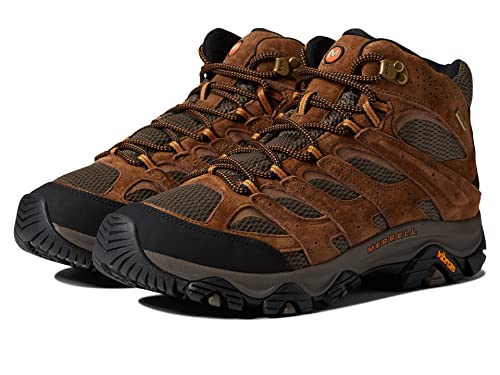
Merrell Men's Moab 3 Mid Waterproof Hiking Boot, Earth, 10.5
Material: Synthetic/mesh blend
Waterproof: Yes, membrane
Weight: Light-mid
Ideal: Wet conditions
+ Pros
- Waterproof membrane
- 4.7 star rating
- 8920 reviews
- Immediate comfort
- Proven Moab platform
- Versatile performance
- Cons
- Less breathable than vented
- Not as durable as leather
- Shorter lifespan
The Moab 3 Waterproof takes everything people love about the Moab line and adds reliable waterproofing. With nearly 9,000 reviews and a 4.7-star rating, this is clearly hitting the mark for hikers who need dry feet but want synthetic comfort.
The waterproof membrane provides protection from rain and stream crossings while maintaining the Moab's legendary out-of-box comfort. You still get the lightweight feel and immediate fit that makes the Moab line so popular.
This is the sweet spot for hikers who want leather's waterproofing performance without the weight and break-in period.
Who Should Buy?
Hikers who encounter wet conditions but want to stay in the synthetic ecosystem. Perfect for spring and fall hiking when rain is a possibility.
Who Should Avoid?
Hot weather hikers may find the waterproof membrane too warm compared to the vented version.
8. KEEN Voyageur - Best Comfort-Focused Synthetic

KEEN Women's Voyageur Low Height Breathable Hiking Shoes, Brindle/Alaskan Blue, 8.5 US
Material: Synthetic mesh
Waterproof: No
Weight: Lightweight
Ideal: All-day comfort
+ Pros
- KEEN comfort
- 4.5 star rating
- 5670 reviews
- Breathable design
- Wide toe box
- Lightweight feel
- Cons
- Not waterproof
- Less protective than leather
- Mesh can snag
KEEN's Voyageur focuses on what matters most for many hikers: all-day comfort. The wide toe box gives toes room to spread naturally, reducing fatigue and hot spots on long hikes.
With over 5,600 reviews and a 4.5-star rating, hikers clearly appreciate the comfort-first approach. The breathable mesh construction keeps feet cool and dry, making these ideal for warm weather adventures.
Who Should Buy?
Hikers with wider feet, those prioritizing comfort above all else, and day hikers on moderate terrain.
Who Should Avoid?
Backpackers and hikers in rough conditions will want more protection and durability.
How to Choose Between Leather and Synthetic?
The decision ultimately comes down to matching the boot to your specific needs. Here's my framework for making the right choice.
By Hiking Style
Day Hiking (under 10 miles, light load): Synthetic wins here. You don't need the weight or durability of leather, and you'll appreciate the comfort and breathability. Look at the Merrell Moab series or KEEN Voyageur.
Backpacking (multi-day, 30+ lb packs): Leather provides the support and durability needed for heavy loads over rough terrain. The ASOLO Fugitive GTX or LOWA Renegade are ideal choices.
Fast-Packing (big miles, light loads): Synthetic or trail shoes like the Salomon Speedcross minimize weight for maximum mileage.
Thru-Hiking: Most thru-hikers choose synthetic for weight and breathability, accepting that they'll replace footwear more frequently.
By Climate and Season
| Condition | Recommended Material | Why |
|---|---|---|
| Summer/Hot Weather | Synthetic (vented) | Maximum breathability keeps feet cool |
| Spring/Fall/Rainy | Either (waterproof models) | Waterproofing matters most |
| Winter/Snow | Leather (insulated) | Durability and insulation |
| Desert/Arid | Synthetic (vented) | Breathability and heat dissipation |
| Wet/Muddy Conditions | Leather | Easier to clean, more resistant to mud damage |
By Terrain Type
Maintained Trails: Synthetic boots are overkill here unless you prefer the support. You'll be happier with lighter footwear.
Rough Trails/Off-Trail: Leather's durability and protection shine here. Scree, talus, and brush are no match for quality leather boots.
Rocky Terrain: Leather provides the foot protection and sole stiffness needed for technical terrain.
Value Consideration: Cost Per Mile
Leather boots cost more upfront but last longer. A $250 leather boot lasting 800 miles costs about $0.31 per mile. A $130 synthetic boot lasting 400 miles costs about $0.33 per mile.
The difference narrows when you consider that quality leather boots can often be resoled, extending their life further while synthetics are disposable when worn out.
Time Saver: If you hike less than 100 miles per year, synthetic boots make more financial sense. If you're a high-mileage hiker, leather's longevity provides better long-term value.
Frequently Asked Questions
Are leather hiking boots better than synthetic?
Leather hiking boots are better for durability, water resistance, and heavy backpacking, while synthetic boots are better for breathability, weight, and immediate comfort. Neither is universally better - the right choice depends on your hiking style, terrain, and typical conditions.
Do leather hiking boots last longer than synthetic?
Yes, leather hiking boots typically last 500-1000+ miles compared to 300-500 miles for synthetic boots. Quality leather boots can also be resoled, further extending their lifespan, while synthetic boots are generally disposable when worn out.
How long does it take to break in leather hiking boots?
Leather hiking boots typically require 20-50 miles of hiking to break in fully. The first week involves stiffness and discomfort. By weeks 2-4, boots begin molding to your foot shape. After a month of regular use, most leather boots achieve full comfort as the leather fully conforms to your feet.
Are synthetic hiking boots waterproof?
Synthetic hiking boots can be waterproof if equipped with a membrane like Gore-Tex or eVent. However, they rely entirely on this membrane for waterproofing, whereas leather has natural water-resistant properties. Once the membrane in a synthetic boot is compromised, waterproofing is lost until the boot is replaced or repaired.
Can you resole synthetic hiking boots?
Generally no, synthetic hiking boots cannot be resoled. Most synthetic boots use cemented construction that bonds the sole directly to the upper, making resoling difficult or impossible. Quality leather boots often use welted construction designed to be resoled multiple times, significantly extending their usable life.
Final Recommendations
After testing dozens of boots across both categories over 15 years of hiking, here's my honest take: many hikers would be happier in synthetics than they think.
The ASOLO Fugitive GTX remains my top pick for serious backpacking. The durability, support, and waterproofing are unmatched, and the 500+ mile lifespan provides genuine long-term value.
But for day hikers covering moderate terrain, the Merrell Moab series offers everything most people need at a fraction of the weight and break-in hassle. I've logged thousands of happy miles in Moabs and recommend them constantly to new hikers.
Match the boot to your actual hiking, not the hiking you imagine doing. Be honest about your typical terrain, load weight, and mileage. The right boot is the one that matches your real-world needs, not the one that looks most impressive on the shelf.