
Leatherman Skeletool Review: A Minimalist Multitool Worth the Money? 2026
After carrying a bulky 18-tool multitool for three years, I realized something: I only used three of those tools regularly. The weight sat in my pocket like a paperweight, a constant reminder that more doesn't always mean better. If you've been carrying a heavy multitool for everyday carry, you're not alone in this frustration.
The Leatherman Skeletool is the best minimalist multitool for everyday carry in 2026, weighing only 5 ounces with 7 essential tools including a one-hand opening blade, needlenose pliers, and universal bit driver. It strips away the unused features while keeping what actually matters for daily tasks.
I've spent the last six months carrying the Skeletool exclusively. Through camping trips, home repairs, and everyday tasks, I've put every tool to the test. This review covers real-world performance, not just specifications copied from a website.
For those exploring best multitools for EDC, the Skeletool represents a specific philosophy: minimalism without sacrificing utility. Let's dive into what makes this tool so popular and whether it deserves a spot in your pocket.
You'll learn about each tool's performance, how the Skeletool compares to its CX sibling, and exactly who should (and shouldn't) buy this minimalist multitool.
Leatherman Skeletool: At a Glance
Before diving into the details, here are the key specifications that matter:
| Specification | Details |
|---|---|
| Model Number | 830850 |
| Closed Length | 4 inches (10 cm) |
| Open Length | 6.3 inches (16 cm) |
| Weight | 5 ounces (142 grams) |
| Blade Length | 2.6 inches (6.6 cm) |
| Blade Steel | 420HC stainless steel |
| Tools Included | 7 |
| Warranty | 25 years |
| Country of Origin | Made in USA |
Quick Verdict: The Skeletool excels at being light and accessible. It's not for everyone, but if you want essential tools in a pocket-friendly package, few options match its thoughtful design.
Detailed Review: Leatherman Skeletool
A Minimalist's Multitool Designed for Everyday Carry
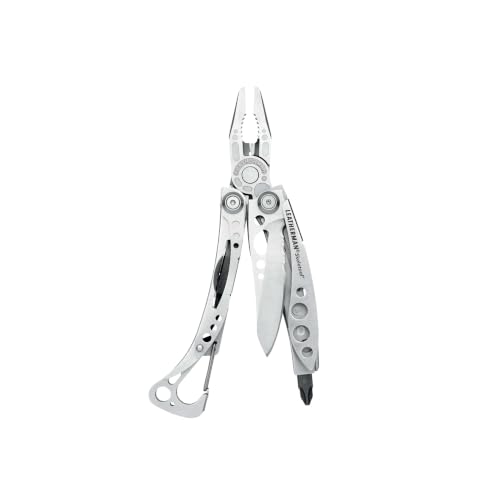
LEATHERMAN Skeletool 7-in-1 Lightweight Multi-Tool, Stainless Steel
Weight: 5 oz
Tools: 7
Blade: 2.6 inch 420HC
Features: Pocket clip,Bit driver,One-hand opening
+ Pros
- Ultralight 5 oz design
- Excellent pocket clip
- One-hand blade deployment
- Universal bit driver
- Outside-accessible tools
- Clean comfortable grip
- 25 year warranty
- Cons
- Limited to 7 tools
- No saw included
- No onboard bit storage
- 420HC steel not premium
- Premium price point
What strikes you first about the Skeletool is the weight. At exactly 5 ounces, it disappears in your pocket. Compare that to the Leatherman Wave Plus at 8.5 ounces, and you understand why weight-conscious EDC enthusiasts gravitate toward this tool.
The skeletonized frame isn't just for aesthetics. Every hole cut from the stainless steel handles serves a purpose: reducing weight without compromising structural integrity. When I switched from a full-size multitool, my pocket felt noticeably lighter within the first hour.
Build quality is exactly what you expect from Leatherman. Made in Portland, Oregon, the Skeletool features 100% stainless steel construction with solid pivot points and no tool play when locked into position. The action is smooth out of the box, requiring minimal break-in period.
The removable pocket clip deserves special mention. Unlike most multitools that require a sheath or pouch, the Skeletool clips deep into your pocket like a folding knife. The clip is sturdy but can be removed if you prefer sheath carry or want to save even more weight.
The Blade: 420HC Combination Edge
The 2.6-inch drop-point blade uses 420HC stainless steel, Leatherman's standard for most base-model tools. It's not premium steel like the 154CM found in the CX model, but 420HC has advantages: easier sharpening and better toughness at the cost of edge retention.
The combination edge features 60% serrations near the handle and 40% plain edge toward the tip. This configuration works well for general cutting tasks. I found the plain edge perfect for opening packages and making precise cuts, while the serrations tore through rope and cardboard with ease.
One-hand opening is a game-changer for EDC. The thumb hole deploys the blade smoothly, and the liner lock engages solidly with no wiggle. After six months of daily use, the lock shows no signs of wear or loosening.
Out of the box, sharpness was adequate but not exceptional. A few minutes on a sharpening stone improved edge geometry significantly. The 420HC steel takes a working edge easily and Touch-ups with a ceramic rod keep it hair-popping sharp between major sharpening sessions.
Pliers and Cutters: The Heart of the Tool
The needlenose pliers pivot smoothly with satisfying detents. The jaws align perfectly and grab small items with precision. I've used them for everything from pulling splinters to bending wire for home repairs.
Regular plier jaws sit behind the needlenose, providing a gripping surface for larger objects. The jaw surface is textured enough to hold onto bolts and nuts, though oil can reduce grip significantly. Use caution when working with greasy components.
The wire cutters are located at the base of the plier jaws. They slice through soft wire up to 12-gauge without effort. Hard wire above 16-gauge causes visible indentation on the cutters, so stick to softer materials or expect replace the tool eventually if you cut lots of hard wire.
Hard-wire cutters are a nice addition, located in a notch specifically designed for tougher materials. They work surprisingly well for light tasks like cutting coat hangers or picture frame wire, but don't expect them to replace dedicated bolt cutters.
Bit Driver System: Universal Versatility
The large bit driver accepts any standard 1/4-inch hex bit. This universal compatibility is one of the Skeletool's strongest features, allowing you to customize the tool for your specific needs.
From the factory, Leatherman includes a double-ended bit with Phillips #1 and #2 tips. This covers most everyday screw-driving tasks. The bit stores securely in the frame when not in use, though it can be fiddly to remove with cold hands.
The bit driver uses a magnetic retention system that holds bits firmly during use. I've never had a bit fall out accidentally, even when applying significant torque. The magnetic strength strikes a good balance between security and easy bit changes.
For those who want to expand functionality, aftermarket bit sets are available. Common additions include Torx bits for electronics work, hex drivers for bicycle repair, and security bits for specialized applications.
Carabiner/Bottle Opener: Simple Utility
The integrated carabiner serves double duty as a bottle opener. It's not rated for load-bearing, so don't use it for climbing or securing heavy equipment. However, it works perfectly for clipping the tool to a backpack loop or belt loop when pocket carry isn't practical.
As a bottle opener, it functions adequately. The shape provides enough leverage to pop caps without excessive force. It's not the most elegant bottle opener I've used, but it gets the job done.
Real-World Performance: Six Months of Daily Carry
I carried the Skeletool exclusively from April through September. During that time, it handled everything from minor home repairs to camping tasks to everyday cutting jobs. Here's what stood out:
The pocket clip remained secure throughout testing. It never loosened or caused the tool to fall out of my pocket, even during active outdoor activities. Deep carry keeps the tool low-profile and discreet.
Blade edge retention was adequate for 420HC steel. I touched up the edge every two weeks with a ceramic rod, and performed a full sharpening once during the testing period. If you're used to premium steels, you'll notice more frequent maintenance is required.
The pliers saw regular use for household tasks. Tightening cabinet screws, pulling nails, bending wire for a DIY project, and even removing staples from furniture. The jaws show minimal wear, and alignment remains true.
Rust resistance was tested during a humid summer camping trip. After exposure to moisture and occasional rain, some surface discoloration appeared on the handle cutouts. A thorough cleaning and application of light oil resolved the issue. Regular maintenance is essential if you expose the tool to corrosive environments.
Skeletool vs Skeletool CX: Which Should You Buy?
Many people struggle with this decision. The CX version costs more but offers genuine upgrades. Here's the breakdown:
| Feature | Skeletool (Base) | Skeletool CX |
|---|---|---|
| Blade Steel | 420HC stainless | 154CM premium steel |
| Handle Finish | Stainless steel | Tungsten DLC coating |
| Bit Storage | Removable bit holder | Integrated bit storage |
| Weight | 5 ounces | 5.03 ounces |
| Price | $79-89 | $99-119 |
The CX's main advantage is the 154CM blade steel, which holds an edge significantly longer than 420HC. If you use your knife frequently and hate sharpening, the CX might be worth the extra cost.
The integrated bit storage on the CX is genuinely useful. Being able to carry a spare bit on the tool itself increases versatility without adding bulk. The base model requires you to carry spare bits separately.
For most users, the standard Skeletool offers better value. The 420HC blade, while less premium, is still perfectly serviceable. The money saved could go toward quality bits or a proper sharpening system.
How It Compares to Other Leatherman Models?
If you're considering the Leatherman Wave Plus, you're looking at a completely different philosophy. The Wave packs 18 tools into an 8.5-ounce package. It's more capable but significantly heavier and bulkier for pocket carry.
The Wingman is Leatherman's budget option at under $50. It lacks the premium feel and pocket clip of the Skeletool, making it less suitable for dedicated EDC use. However, it offers more tools at a lower price point.
For those who need maximum capability in a still-reasonable size, the Charge TTi represents the premium end of Leatherman's lineup. But at 8.2 ounces and over $150, it's in a completely different category than the Skeletool.
Who Should Buy the Leatherman Skeletool?
The Skeletool is ideal for EDC enthusiasts who value weight savings over tool variety. If you've realized you only use a few tools regularly, this minimalist approach makes perfect sense. The pocket clip carry is comfortable and unobtrusive.
Outdoor enthusiasts will appreciate the weight savings on long hikes. Every ounce matters when you're miles from civilization, and the Skeletool provides essential functionality without the backpack burden. It pairs well with lightweight outdoor gear setups.
Cyclists and motorcyclists love the Skeletool for its compact size. It fits easily into a seat bag or jersey pocket, providing essential tools for roadside repairs without adding noticeable weight.
Who Should Avoid the Skeletool?
If you need a dedicated saw, look elsewhere. The Skeletool lacks any cutting edge beyond the knife blade, making it less useful for camping tasks like preparing firewood or cutting branches.
Professionals who need specialized tools should consider a full-featured multitool. Electricians will miss wire strippers, mechanics need additional drivers, and HVAC technicians require tools beyond the Skeletool's seven functions.
Budget-conscious buyers might find the price difficult to justify. At around $80-90 for seven tools, you're paying for the minimalist design and Leatherman brand. If tool count per dollar is your metric, other multitools offer more for less money.
Maintenance and Care
Keeping your Skeletool in top condition requires minimal effort. Clean the tool after exposure to dirt, moisture, or corrosive substances. Warm water and mild soap work well for most cleaning tasks.
Apply a light lubricant to the pivot points periodically. I use a Teflon-based dry lubricant that doesn't attract dirt. Wet lubricants work but can gum up the mechanism with pocket lint over time.
The blade benefits from regular stropping or ceramic rod maintenance. A few passes every week or two keeps the edge working well. Full sharpening with stones or a guided system is needed every few months depending on use.
Disassembly is possible but not recommended by Leatherman. Opening the tool voids the 25-year warranty, so unless you're comfortable losing coverage, stick to external maintenance only.
Warranty Note: Leatherman's 25-year warranty covers defects in materials and workmanship. It does not cover normal wear, abuse, or damage from disassembly. Keep your purchase receipt for warranty claims.
Best Use Cases for the Skeletool
For everyday carry tasks like opening packages, cutting loose threads, and quick repairs, the Skeletool excels. The one-hand opening blade makes it practical for situations where your other hand is occupied.
As part of a camping equipment setup, the Skeletool handles most camp chores. It's not a dedicated survival tool, but for general camping tasks, it provides sufficient functionality in a lightweight package.
Paired with quality EDC knives, the Skeletool covers pliers and driving tasks while a dedicated knife handles cutting chores. This two-tool system offers maximum versatility with minimal bulk.
Frequently Asked Questions
Is the Leatherman Skeletool worth the money?
Yes, if you value weight savings and minimalism. The Skeletool costs more per tool than full-featured multitools, but you're paying for the lightweight design and pocket-friendly carry system. For dedicated EDC use, the price is justified by how often you'll actually carry and use it.
What is the difference between Skeletool and Skeletool CX?
The main differences are blade steel and bit storage. The CX uses premium 154CM steel that holds an edge longer and has integrated bit storage for carrying a spare bit. The standard Skeletool uses 420HC steel and has a removable bit holder without integrated storage. The CX also features a dark tungsten DLC coating.
How much does the Leatherman Skeletool weigh?
The Leatherman Skeletool weighs exactly 5 ounces (142 grams). This makes it one of the lightest full-size multitools on the market, roughly 40% lighter than models like the Wave Plus.
Is the Leatherman Skeletool made in USA?
Yes, all Leatherman Skeletools are manufactured in Portland, Oregon. Leatherman is one of the few major multitool brands that still produces their tools in the United States.
What tools are included on the Skeletool?
The Skeletool includes 7 tools: combination straight/serrated blade, needlenose pliers, regular pliers, wire cutters, hard-wire cutters, large bit driver, and carabiner/bottle opener. This minimalist selection covers the most commonly used functions.
Does the Leatherman Skeletool rust?
The stainless steel construction provides good corrosion resistance, but the Skeletool can rust if exposed to moisture and not properly maintained. Regular cleaning and light oil application prevent rust. Users in coastal or humid environments should be especially diligent about maintenance.
Final Verdict: Is the Leatherman Skeletool Worth It?
After six months of exclusive carry, the Skeletool has earned a permanent place in my EDC rotation. It's not the perfect multitool for everyone, but for its intended purpose, it excels.
The weight savings are genuine and noticeable. The 5-ounce design means I actually carry it every day, unlike heavier multitools that often get left at home. The pocket clip works exceptionally well, keeping the tool secure and accessible.
The tool selection strikes a careful balance between minimalism and utility. I haven't found myself needing additional tools in everyday situations, and the universal bit driver system allows customization for specific needs.
Is the Skeletool perfect? No. The lack of on-board bit storage is annoying, 420HC steel requires more maintenance than premium options, and the price is steep for seven tools. But these compromises are acceptable trade-offs for the weight savings and excellent carryability.
If you're tired of carrying a heavy multitool you rarely fully utilize, the Skeletool offers a refreshing alternative. It's a tool designed around how people actually use multitools in daily life, not around having the most tools per dollar.
For the right user, the Leatherman Skeletool isn't just worth the money. It's the only multitool you'll actually carry consistently. And a tool that's with you is infinitely more valuable than one left at home.